Private LLM & Secure RAG | | 27 min read
Private LLM Data Governance: Lineage From Source to Answer

Key Takeaways
Govern the path that produced the answer, not just the file that entered the system
Source authority scores 100
A copied document is not an approved source unless the team can prove ownership, purpose, rights, identity, and version.
Every transformation changes meaning or risk
Parsing, cleaning, chunking, labels, embeddings, indexes, and model context must remain connected to the source.
A source fix must reach every derivative
Update or quarantine affected chunks, indexes, caches, sessions, outputs, exports, and retained evidence.
Private LLM data governance is not a catalog project. It is the operating discipline that proves which source entered an answer, why it was allowed, what changed it, and whether a correction reached every derivative.
A private deployment can keep data inside an approved boundary and still lose control of it. A team copies a repository into a pipeline. The parser drops headings. Chunking separates a restriction from the text it governs. An embedding job uses the wrong access context. A source owner fixes the record, but the old index keeps serving the stale version. The output looks credible because the lineage is invisible.
Privacy is not the same as governance. Private infrastructure controls location. Private LLM data governance controls authority, meaning, change, use, correction, retention, and proof.
This guide belongs to the Private LLM and Secure RAG hub and supports the private LLM and secure RAG implementation service. Use it with the private LLM access control architecture, private LLM evaluation framework, and private LLM red teaming guide.
Can you trace one important answer back to its source?
GS Consulting helps teams map the data path, assign authority, test correction and deletion, and build evidence that survives review.
Request a Private LLM Fit CheckPrivate LLM Data Governance: The Short Answer
Start with a named business decision or workflow. Register the authoritative sources and their owners. Record use rights, approved purpose, sensitivity, retention, stable identifiers, and current versions. Then preserve those facts through every copy, parser, transformation, chunk, embedding, index, retrieval, prompt, output, correction, and disposal action.
The minimum test is blunt: pick a consequential answer and reconstruct its path. The team should be able to identify the source versions used, the transformations applied, the permissions in force, the retrieved chunks, the output citations, the reviewer decision, and the current correction or retention state. If it cannot, the system has data movement. It does not yet have defensible lineage.
The Public Governance Surface Is Broader Than Metadata
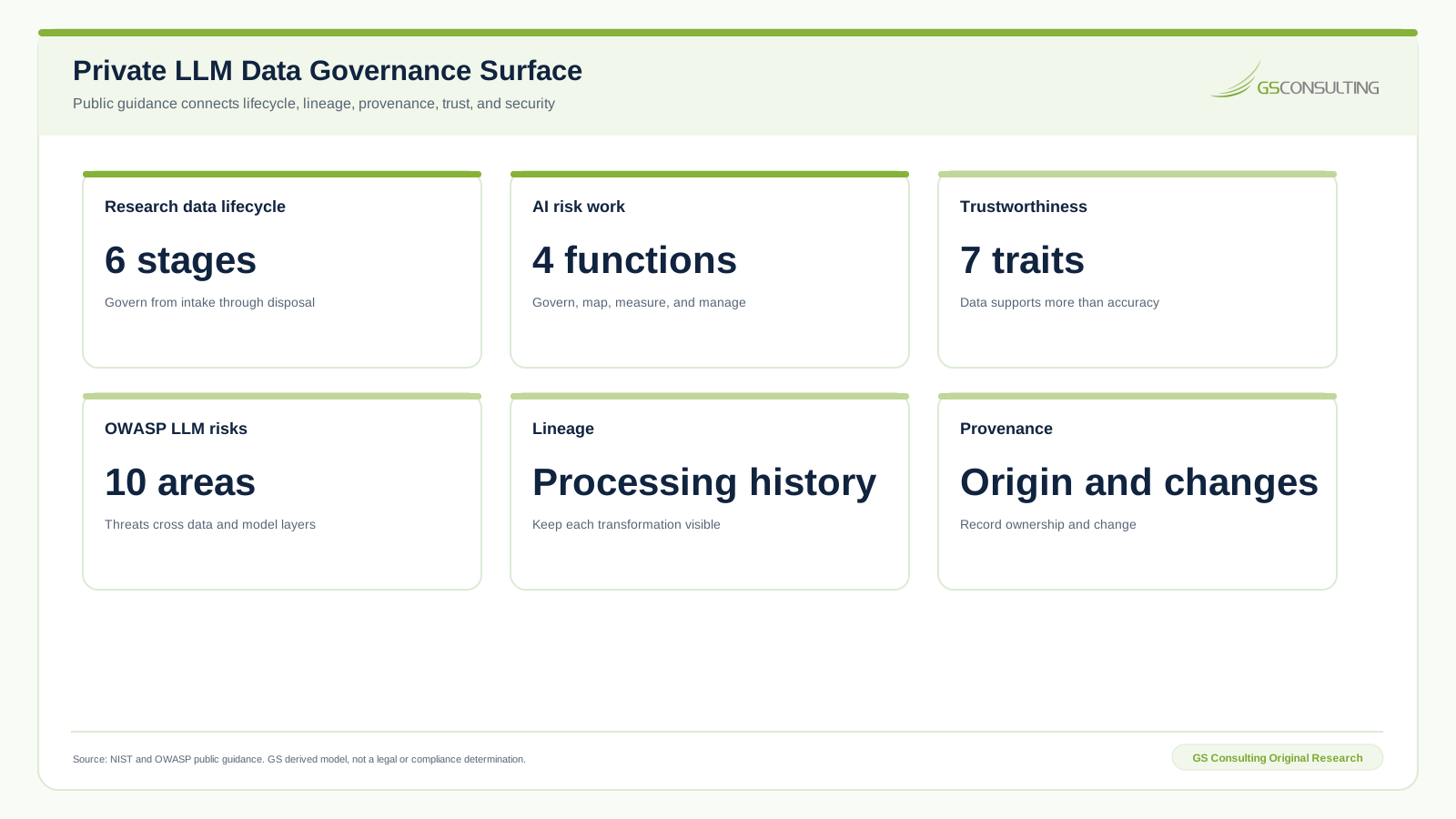
The NIST Research Data Framework describes six lifecycle stages and includes metadata, provenance, persistent identifiers, quality, stewardship, preservation, and disposal. It targets research data, so it is a useful design source rather than a private LLM implementation standard.
NIST AI RMF 1.0 organizes AI risk work around Govern, Map, Measure, and Manage and describes seven trustworthiness characteristics. The OWASP Top 10 for LLM and generative AI applications adds application risks that cross data and model layers. No single source supplies the complete operating design.
NIST is also developing a Data Governance and Management Profile. As of September 16, 2026, the profile remains in development. Treat the listed activities as work in progress, not final guidance.
GS Private LLM Lineage Control Priority Index
GS scored ten governance domains using five one to five ratings: decision consequence, transformation opacity, change exposure, evidence value, and recovery pressure. Base weights are 30, 25, 20, 15, and 10 percent. Each score is rounded to a whole point on a zero to 100 planning scale.
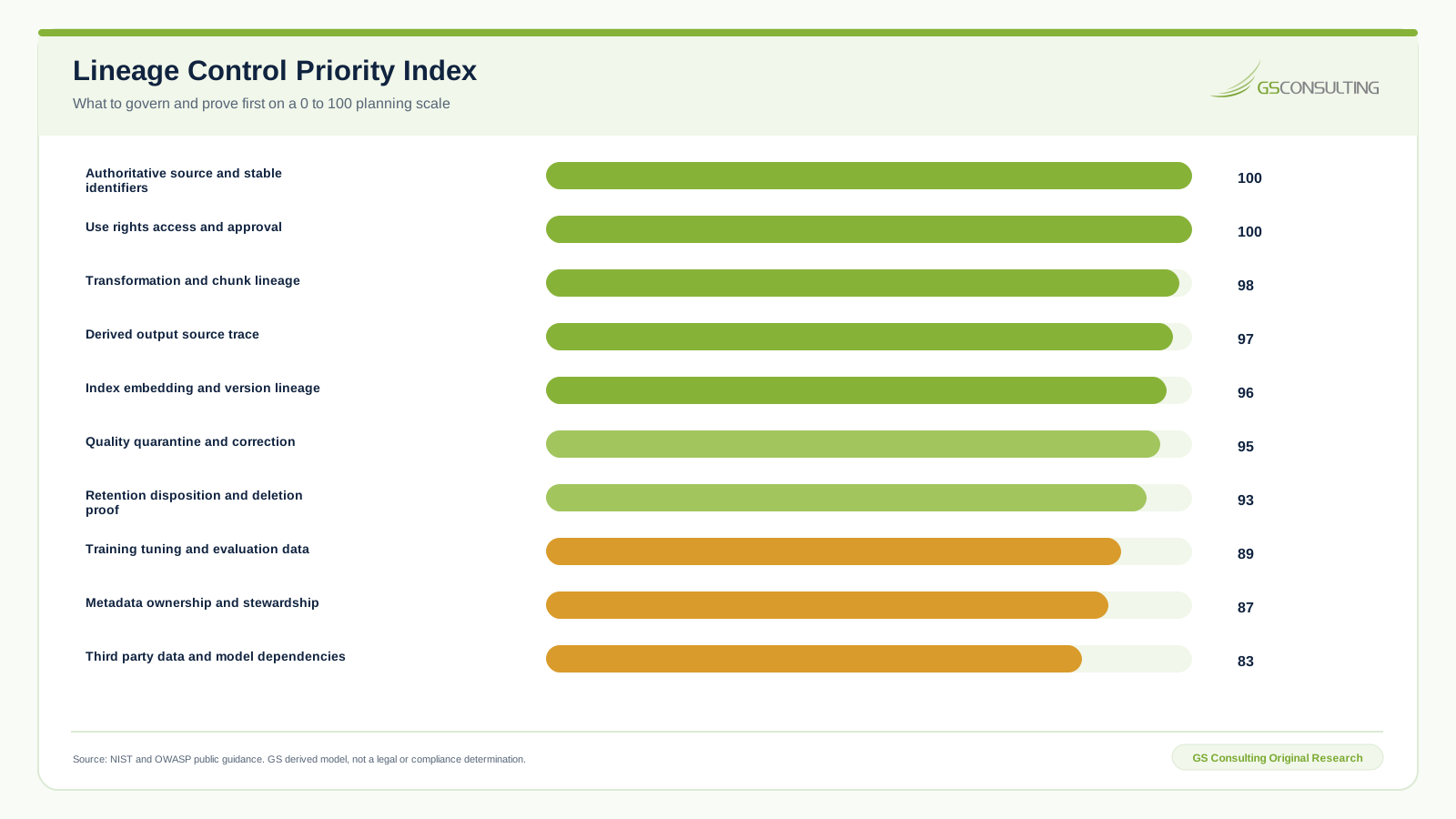
Authoritative source identity and use rights both score 100. Transformation and chunk lineage scores 98. Derived output trace scores 97. Index and embedding version lineage scores 96. These are release gates because a system cannot defend an answer if it cannot defend the source path.
Training, tuning, and evaluation data scores 89. Metadata ownership scores 87. Third party data and model dependencies score 83. Those are not optional. Their position means teams should first stop uncontrolled admission and invisible transformation, then mature the wider operating cycle.
The sensitivity case moves five percentage points from decision consequence to recovery pressure. No result moves more than one point, and the leading tier stays unchanged. That stability supports the sequence. It does not prove universal priorities.
The index is a GS Consulting derived planning tool based on cited public sources and documented assumptions. It is not an official legal, privacy, audit, compliance, NIST, OWASP, DoD, or regulatory determination. Replace the assumptions with the organization’s data, architecture, obligations, incidents, and approved risk decisions.
Register Authority Before Data Enters the Pipeline
Do not begin with a connector inventory. Begin with authority. For each source, name the owner, system of record, approved purpose, sensitivity, rights, contractual limits, retention rule, stable identifier, and current version. Record whether the source is authoritative, reference only, derived, disputed, expired, or prohibited.
Admission must be a decision, not a copy job. Validate that the source is allowed for this workflow, population, user group, and output. Scan for malicious content where appropriate. Check quality and completeness. Reject data that cannot be tied to a responsible owner or approved use. A technically reachable source is not automatically an authorized source.
Permission context belongs with the source record. The access control architecture should resolve current user and service authority before content reaches the model. Governance then records why the source is present, how that authority was applied, and what happens when it changes.
Treat Every Transformation as a Governed Record
Parsing is not neutral. Cleaning can remove caveats. Optical character recognition can change numbers. Chunking can detach a condition from the clause it limits. Labels can be wrong. Enrichment can add an unsupported classification. Embeddings can persist after the source changes. Summaries can become new sources without anyone deciding that they should.
Assign stable identifiers to the source and its material derivatives. Record the parser, code, configuration, input version, output version, date, owner, validation result, and exceptions. Connect chunks to their document section and permission context. Connect the index build to the embedding model, source versions, policy version, and expiration state.
The goal is not to save every transient byte forever. The goal is to preserve enough structure to answer four questions: what entered, what changed, what was used, and what must be corrected or removed.
Make Answers Correctable
Output lineage should identify the request, effective identity, policy decision, source IDs, retrieved chunks, versions, citations, model and prompt configuration, reviewer action, and final disposition. Store sensitive payloads only when the approved operating need justifies it. Structured identifiers and hashes can often support traceability without creating another uncontrolled content store.
A correction process must travel forward. When a source changes, identify affected transformations, chunks, embeddings, indexes, caches, sessions, outputs, and exports. Decide whether to rebuild, quarantine, annotate, notify, or withdraw. Verify the correction against the live path. Keep the trigger, owner, affected scope, action, test result, exception, and approval.
This is where data governance becomes operational. A policy that says data should be accurate is weak. A correction record that proves how an inaccurate source stopped influencing answers is useful.
Retention Must Follow Copies and Derivatives
A source retention rule does not enforce itself across an AI path. The same content may exist in a queue, parser output, object store, chunk table, vector index, cache, evaluation set, log, exported answer, backup, and support record. Map those copies and assign a disposition rule to each.
Deletion proof should name what was removed, what was rebuilt, what could not be removed, why an exception applies, and how the remaining risk is controlled. Legal holds, records duties, contract requirements, security investigation needs, and model improvement plans may conflict. Resolve those questions with authorized owners. Do not let a convenience default make the decision.
Private LLM Data Governance Carries a High Proof Burden
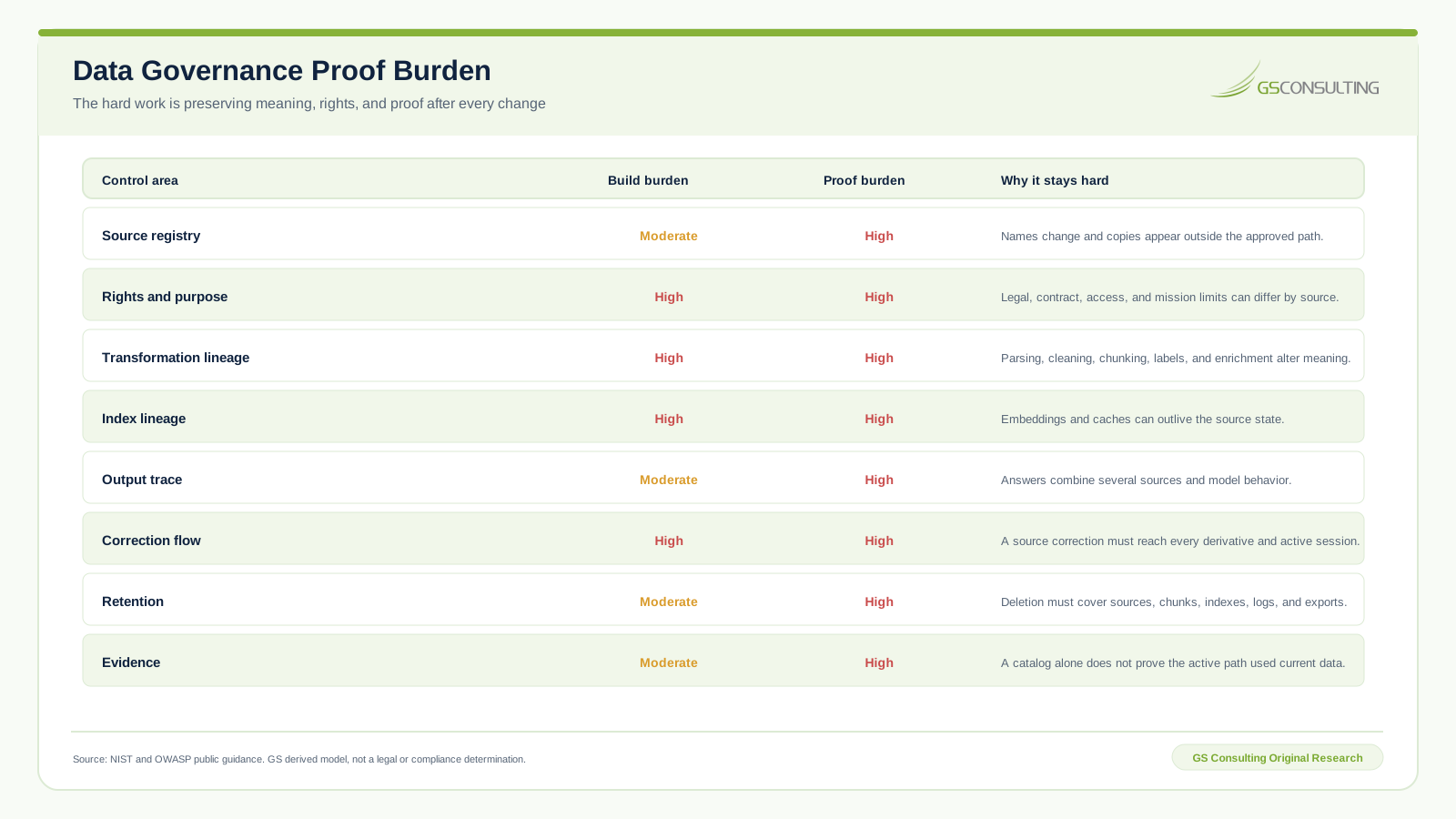
Every control area carries high evidence burden because the data and system keep changing. Rights expire. Sources move. Parsing changes. Indexes rebuild. Users copy outputs. Corrections arrive. Evidence must show the active path, not the architecture described at launch.
Use a Five Stage Lineage Decision Path
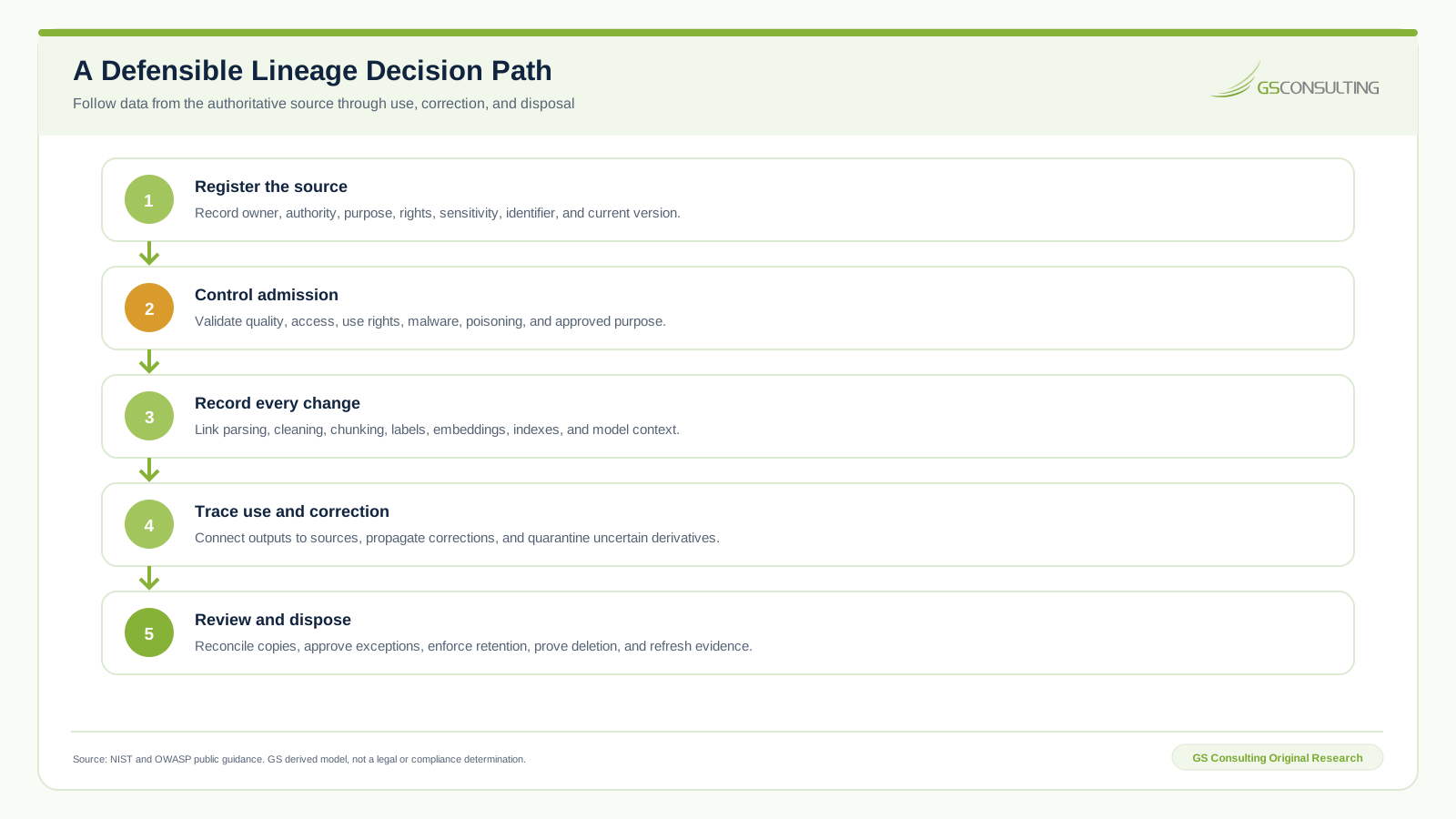
Make the path part of release and change management. A new connector, parser, embedding model, index pattern, retention rule, or output channel should trigger the relevant review. Material changes should also trigger targeted evaluation and red team scenarios.
Avoid Six Private LLM Data Failures
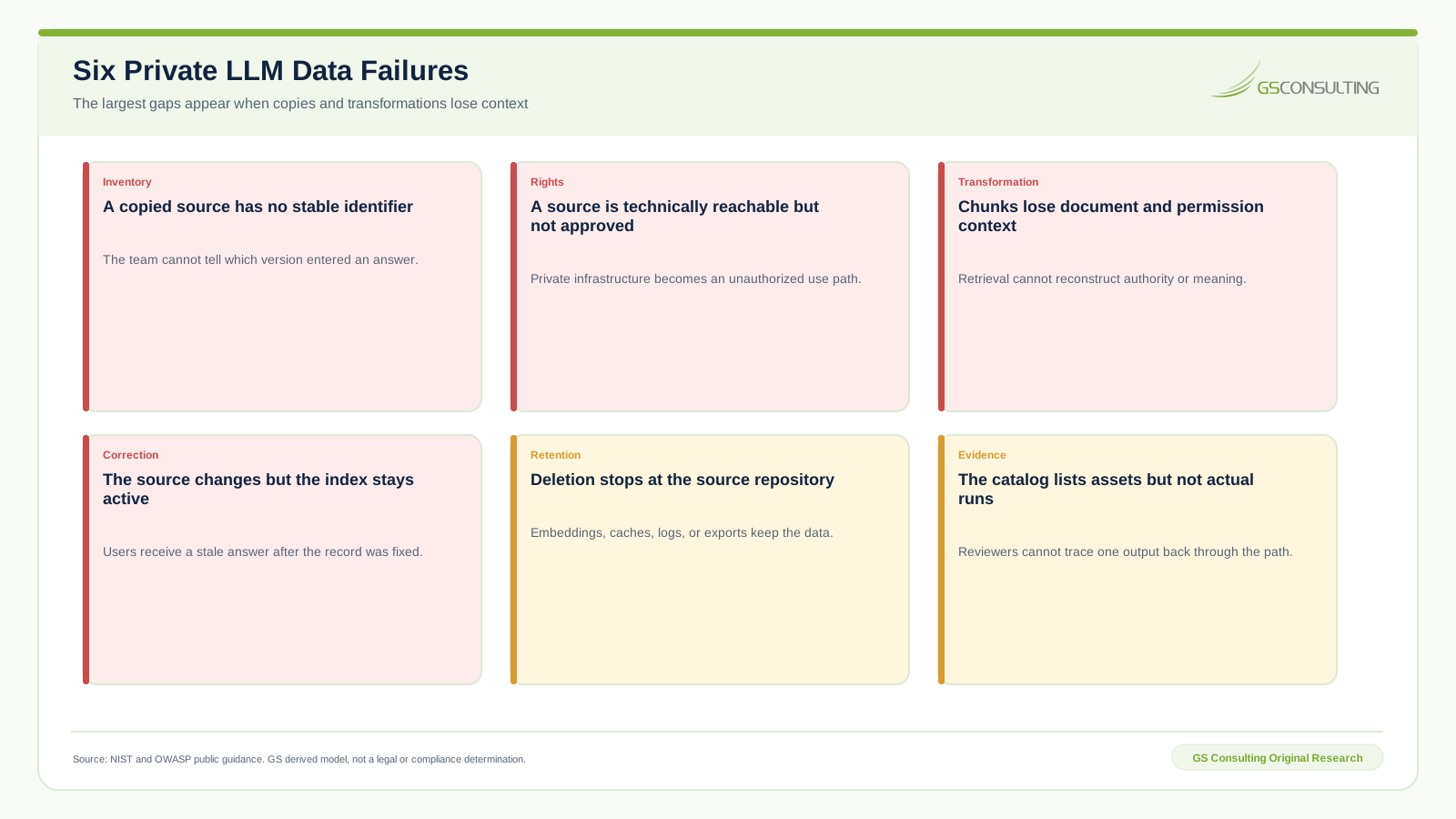
These failures often look harmless in a demonstration. The answer is fluent. The index is fast. The citation opens. The real test comes later: Which version was used? Was the source allowed? Did the chunk preserve the restriction? Did the correction reach the index? Can the team prove deletion? Build for those questions before they become an incident.
Build the Lineage Evidence Packet
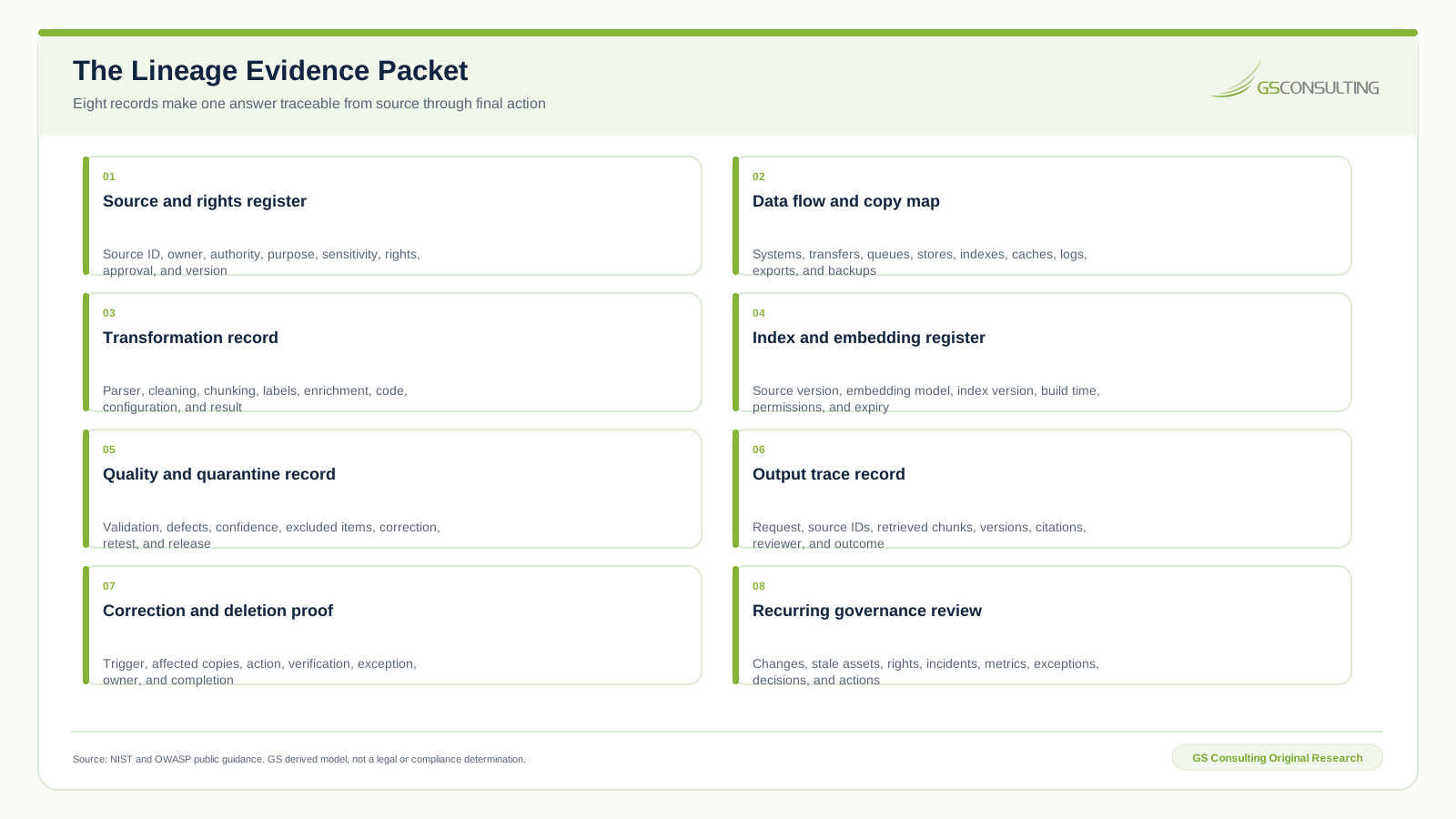
Keep the packet compact and connected. The source register should link to the data flow map. Transformation and index records should use the same identifiers. Output traces should point to retrieved versions. Correction proof should name every affected derivative. The recurring review should reconcile changes, stale assets, incidents, exceptions, and owner decisions.
A 60 Day Private LLM Data Governance Plan
| Period | Operator action | Required output |
|---|---|---|
| Days one through ten | Name the workflow, owners, authoritative systems, approved purposes, data classes, rights, retention duties, and release authority. | Governance charter and source scope |
| Days eleven through twenty | Map transfers, queues, stores, transformations, chunks, embeddings, indexes, caches, logs, outputs, exports, and backups. | Data flow and copy map |
| Days twenty one through thirty | Implement stable identifiers and version links across source, transformation, index, retrieval, and output records. | Lineage record and query |
| Days thirty one through forty | Test source admission, permission changes, stale content, quality quarantine, corrections, retention, deletion, and exceptions. | Test results and corrected controls |
| Days forty one through fifty | Build the evidence packet and trace consequential answers from output back to authority. | Reviewed trace samples |
| Days fifty one through sixty | Approve, limit, or pause release. Set recurring reconciliation, incident, change, and owner review triggers. | Release decision and review cadence |
Research Sources and Caveats
The GS research package uses public sources accessed September 16, 2026:
- NIST Data Governance and Management Profile project for the emerging governance surface. The profile remains under development.
- NIST Research Data Framework for lifecycle, metadata, provenance, quality, stewardship, preservation, and disposal concepts.
- NIST lineage definition and NIST provenance definition.
- NIST AI RMF 1.0 for risk functions and trustworthiness characteristics.
- NIST AI 600-1 Generative AI Profile for generative AI risk and data actions.
- NIST Privacy Framework 1.1 for data processing and privacy risk context.
- OWASP Top 10 for LLM and generative AI applications for data, supply chain, model, and application risk coverage.
- NIST SP 800-171 Revision 3 for controlled information requirements when it applies to the scoped environment.
The package separates public observations, GS assumptions, ratings, formula outputs, sensitivity results, operating tables, and figure data. Public frameworks do not provide a universal private LLM lineage score or release sequence. The scoring model is a transparent planning aid.
Private LLM Data Governance FAQ
Suggested Future Reading
- Private LLM and Secure RAG Hub
- Private LLM Data Residency Architecture
- Private LLM Access Control Architecture
- Private LLM Evaluation Framework
- Private LLM Red Teaming
- Private LLM Observability
- Secure RAG Design Patterns
- Private LLM and Secure RAG Implementation
Private data is not governed until the answer is traceable.
The operating standard is direct: named authority, approved purpose, stable source identity, recorded transformations, versioned indexes, traceable outputs, propagated corrections, enforced disposition, and evidence that can reconstruct the active path.
Request a Data Lineage Review