Private LLM & Secure RAG | | 28 min read
Private LLM Access Control Architecture: Identity, Retrieval, and Proof

Key Takeaways
Access control succeeds only when source authority survives every model hop
Source object permissions score 100
A valid login cannot replace current authority over the exact record that enters model context.
The service must not become a permission bypass
Bind delegated service rights to the initiating user, approved purpose, resource, action, and time window.
Revocation must reach every copy
Test the source, index, cache, memory, session, output, and tool path after access changes.
Private LLM access control is not a login screen. It is the decision path that determines which identity can reach which source, through which service, for which purpose, with which tools, under which limits.
The weak design authenticates a user once and trusts everything behind the application. The retrieval service holds broad read rights. The model sees whatever the index returns. A tool connector inherits an admin token. The output can be copied anywhere. When a source owner removes access, the old content still sits in an index or session.
That is not private LLM access control. That is a new route around the controls the organization already has.
This guide belongs to the Private LLM and Secure RAG hub and supports the private LLM and secure RAG implementation service. Use it with the private LLM data governance guide, private LLM red teaming guide, private LLM security controls guide, and secure RAG design patterns.
Carry authority through the whole private LLM path.
GS Consulting helps regulated teams map identity, source permissions, service authority, retrieval filters, tools, outputs, revocation, tests, and access evidence.
Review the Access ArchitecturePrivate LLM Access Control: The Short Answer
Bind every request to a current person or workload identity. Resolve tenant, program, role, purpose, device, session, and resource context. Enforce source object permissions before retrieval. Constrain service accounts, model tools, writes, exports, memory, and administrative access. Record the policy version, attributes, decision, obligations, and result. Test both allowed and denied paths, then prove that permission changes reach every stored and active copy.
Do not use network location as the main trust signal. NIST SP 800-207 focuses zero trust on users, assets, and resources rather than a static perimeter. NIST SP 800-207A adds application and service identities to the authorization problem. A private endpoint can narrow exposure. It cannot decide whether a particular user should see a particular source or take a particular action.
The Private LLM Access Control Surface
Access decisions cross more layers than a normal web page. The path includes the user, device, application, service identity, policy service, source repository, index, cache, model service, memory, tools, systems of record, output store, logs, support path, and export channel. Each layer can preserve, narrow, expand, or lose the original authority.
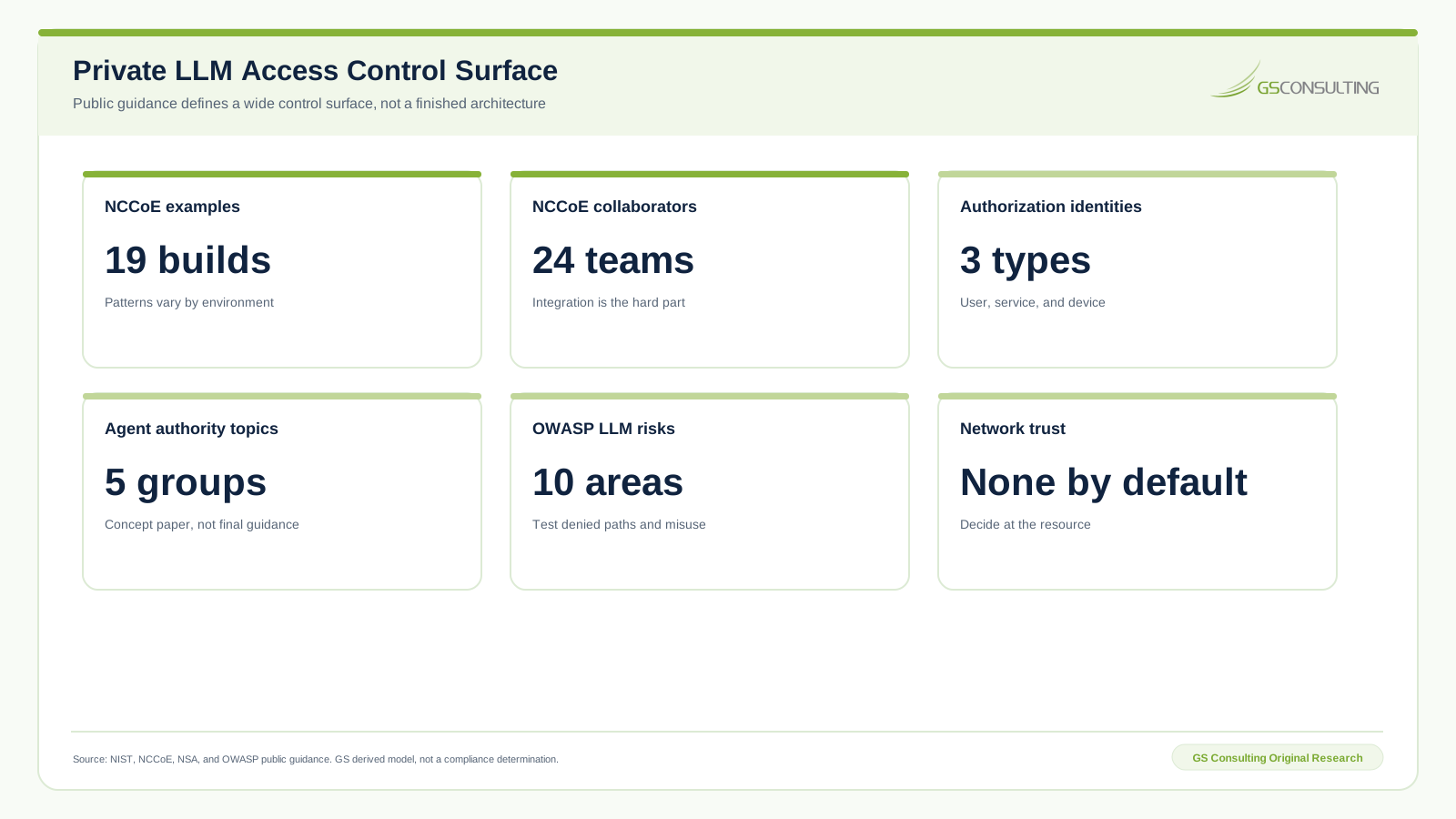
The NIST zero trust practice guide documents 19 example implementations built with 24 collaborators. That variety matters. There is no single product switch for private LLM authorization. The correct enforcement point depends on the source system, deployment pattern, identity infrastructure, retrieval design, service boundary, and action path.
GS Private LLM Access Decision Integrity Index
GS scored ten control domains using five one to five ratings: confidentiality consequence, privilege breadth, bypass exposure, evidence value, and recovery pressure. Base weights are 30, 25, 20, 15, and 10 percent. Each result is rounded to a whole point on a zero to 100 planning scale.
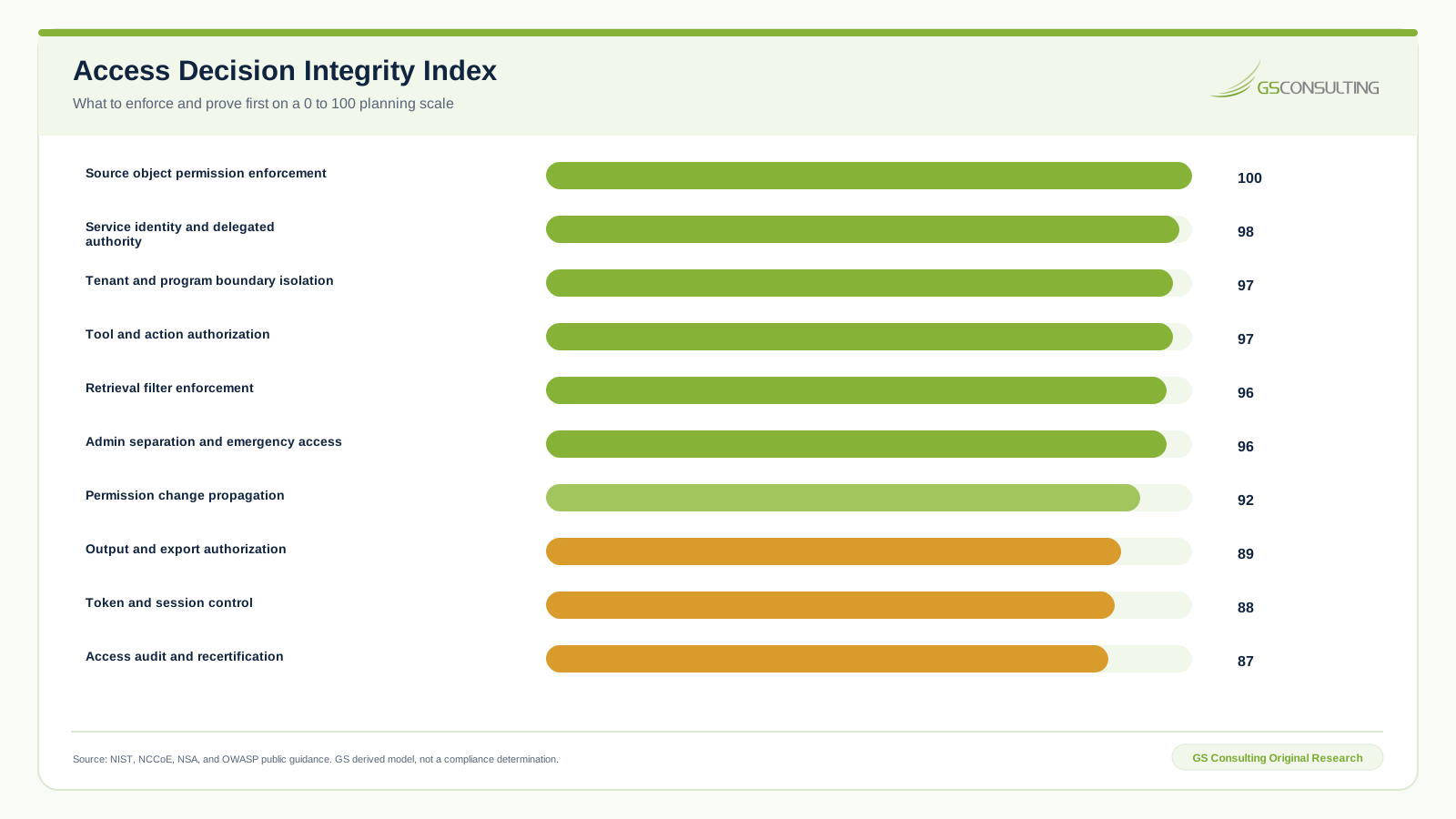
The ranking is blunt for a reason. The source object is the real access decision. If the model can retrieve a record the requester cannot open, the application is a permission bypass. Service identity follows because a broadly privileged connector can turn one narrow request into access across a repository. Tenant isolation and tool authority follow because they control the blast radius after a mistake or manipulated instruction.
The sensitivity case moves five percentage points from confidentiality consequence to recovery pressure. No score moves more than one point and the leading gate remains stable. That does not prove the weights are universal. It shows the first decision is not fragile under one reasonable change.
The index is a GS Consulting derived planning tool. It is not an official NIST, NSA, CISA, OWASP, DoD, legal, audit, compliance, certification, or regulatory determination. Replace ratings with architecture facts, access exports, incidents, tests, contract duties, and approved risk decisions.
Bind Human, Service, and Delegated Identity
Start with three identity classes: the person, the application or service, and the device or workload context. NIST SP 800-204B describes authorization based on user, service, or device identity. For a private LLM, the policy may also need tenant, program, contract, purpose, data class, resource owner, session state, and requested action.
A service account should have one documented purpose, named owner, minimum systems, minimum functions, credential method, rotation rule, expiration or review date, alert path, and incident response. Split read and write paths where practical. A service that only needs document text should not also inherit delete, share, permission change, or administrative functions.
Delegation needs an explicit record. The service is acting for a user, but it may use its own credential. Record the initiating identity, delegated scope, source object, permitted operation, time window, policy result, and final action. Do not let technical reach become user authority.
Preserve Current Source Permissions During Retrieval
Permission aware RAG is not a metadata label placed on a document once. It is an authorization decision made with current facts. Store stable source identifiers and enough permission context to locate the authoritative record. At query time, evaluate whether the requester may use each candidate source. Filter before content enters the model, not after the answer is written.
Tenant and program isolation should hold across chunk stores, vector indexes, keyword indexes, caches, memory, queues, traces, evaluation sets, backups, and support exports. A tenant identifier in the user interface does not prove isolation. Test cross tenant and cross program requests directly.
Permission changes need a measurable propagation target. Remove access at the source. Then test the index, cache, memory, open session, prior answer link, export path, and downstream tool. Record how long each layer took to deny the request. If a stale copy remains usable, the revocation design is incomplete.
Authorize Tools, Writes, Outputs, and Exports Separately
A model that can call tools can change records, send messages, create tickets, alter permissions, launch code, or release content. OWASP describes excessive agency through excessive functionality, permissions, or autonomy. The practical fix is to narrow all three.
- Function. Expose only the exact operation the workflow needs.
- Resource. Limit the tool to named systems, objects, fields, and tenants.
- Time. Use short credentials and bounded sessions where the platform supports them.
- Condition. Require deterministic policy checks before consequential actions.
- Approval. Bind high consequence actions to a credentialed human decision.
- Evidence. Record prior state, proposed action, approval, result, and reconciliation.
Output access is its own decision. A summary, extracted field, embedding, citation, or generated report can reveal protected source content. Control viewers, downloads, sharing, clipboard paths where appropriate, external recipients, retention, and deletion. Treat the derived answer according to what it contains, not according to the label on the model.
Design Revocation Before Grant
Every access design should answer one uncomfortable question: how does the team stop it? Define who can revoke a user, service, tool, tenant, data source, export route, model, or entire application. Decide which changes take effect immediately and which require index, cache, or session invalidation.
Emergency access needs separate ownership and proof. Keep the smallest practical number of emergency identities. Protect credentials outside the ordinary failure domain. Alert on use. Limit duration. Review every event. Test the path before an incident and verify that recovery does not quietly restore broad standing access.
The Proof Burden Does Not End at Configuration
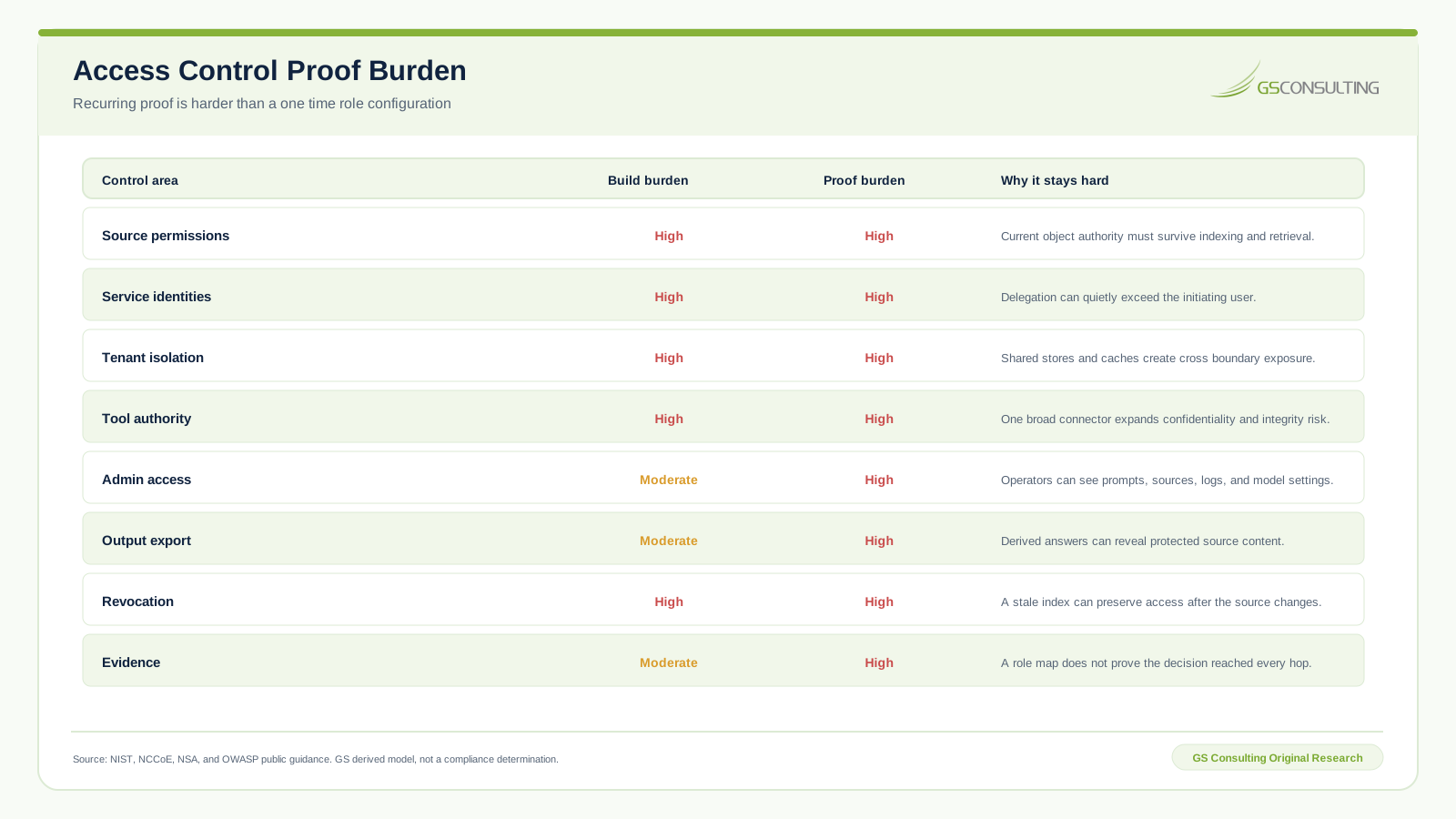
A role configuration export proves that a setting existed. It does not prove that an unauthorized source stayed out of context, a revoked user lost index access, a service used only delegated authority, or a denied tool call produced no downstream change. Pair configuration evidence with decision logs, test cases, effective access results, and correction records.
Use a Five Stage Access Decision Path
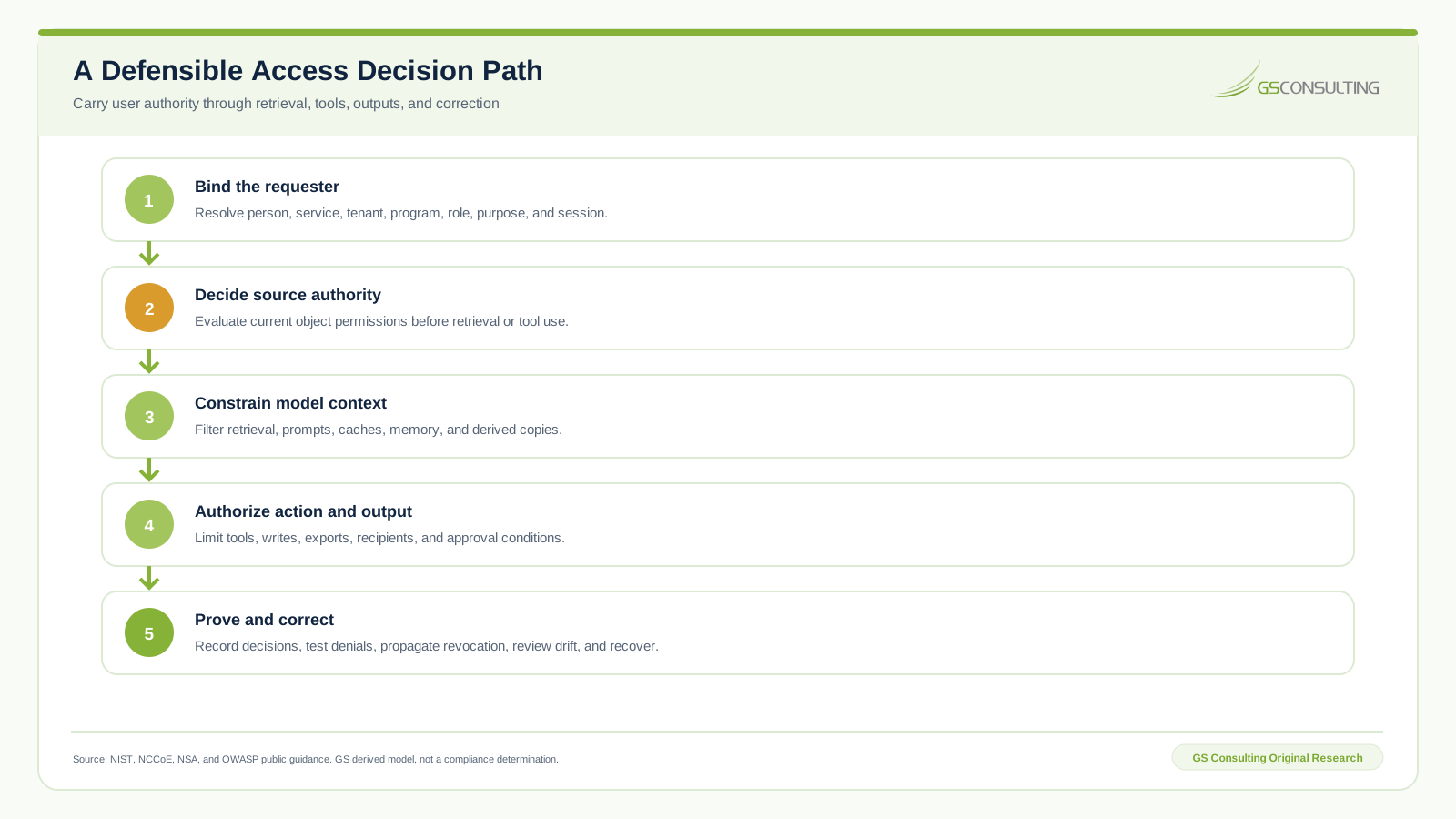
Keep one correlation identifier across the path. The final record should connect requester, service, tenant, purpose, source, policy, model context, tool, approval, output, exception, and result. That is how security and operations reconstruct the decision without copying every sensitive payload into the log platform.
Avoid Six Private LLM Access Failures
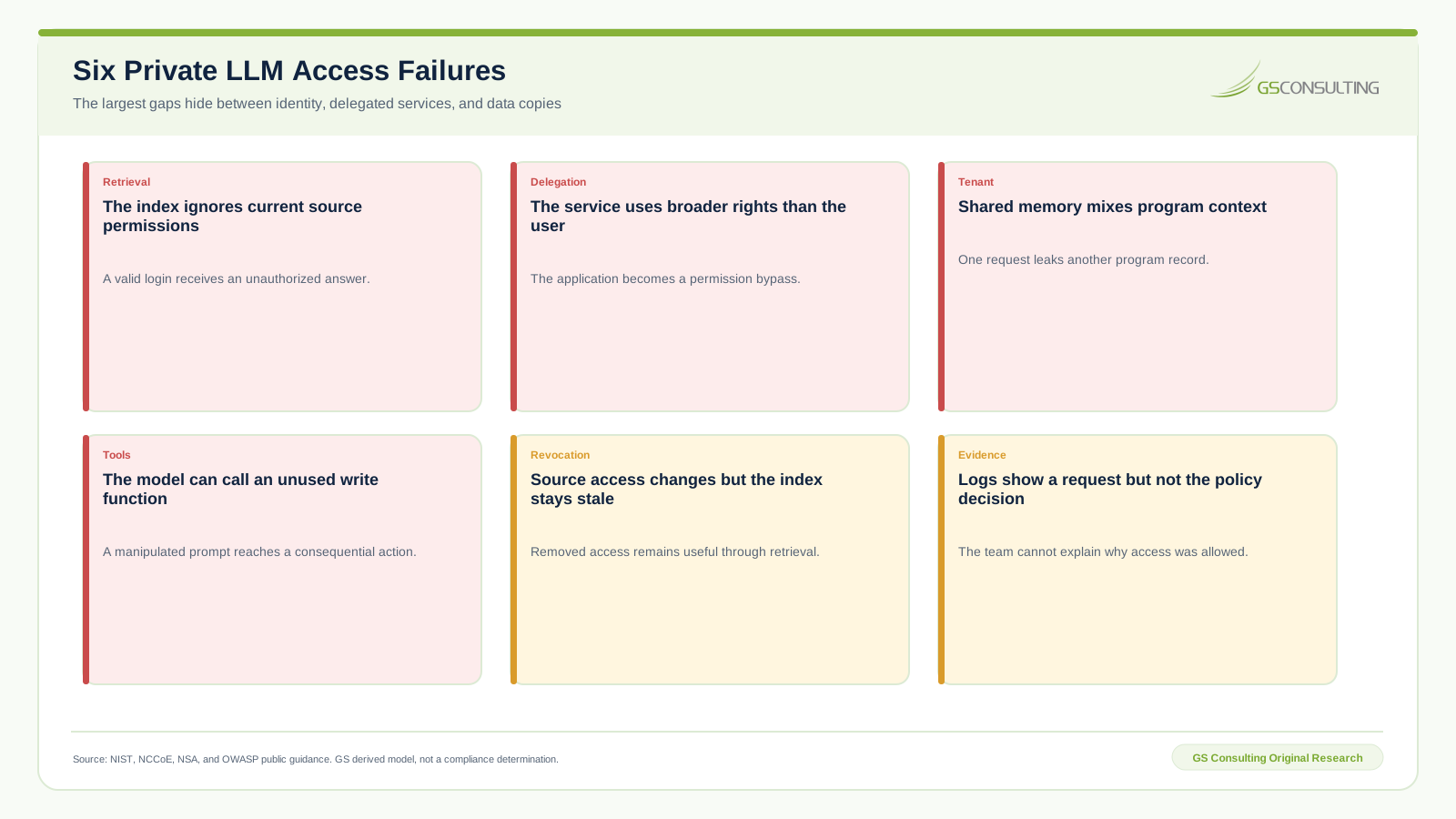
Test these failures with real architecture paths. Use a valid user who lacks one object, a service with a narrower delegated scope, two isolated tenants, a disabled tool, a revoked source, and a request that should leave a complete policy record. Correct the design, repeat the test, and preserve both results.
Build the Private LLM Access Control Evidence Packet
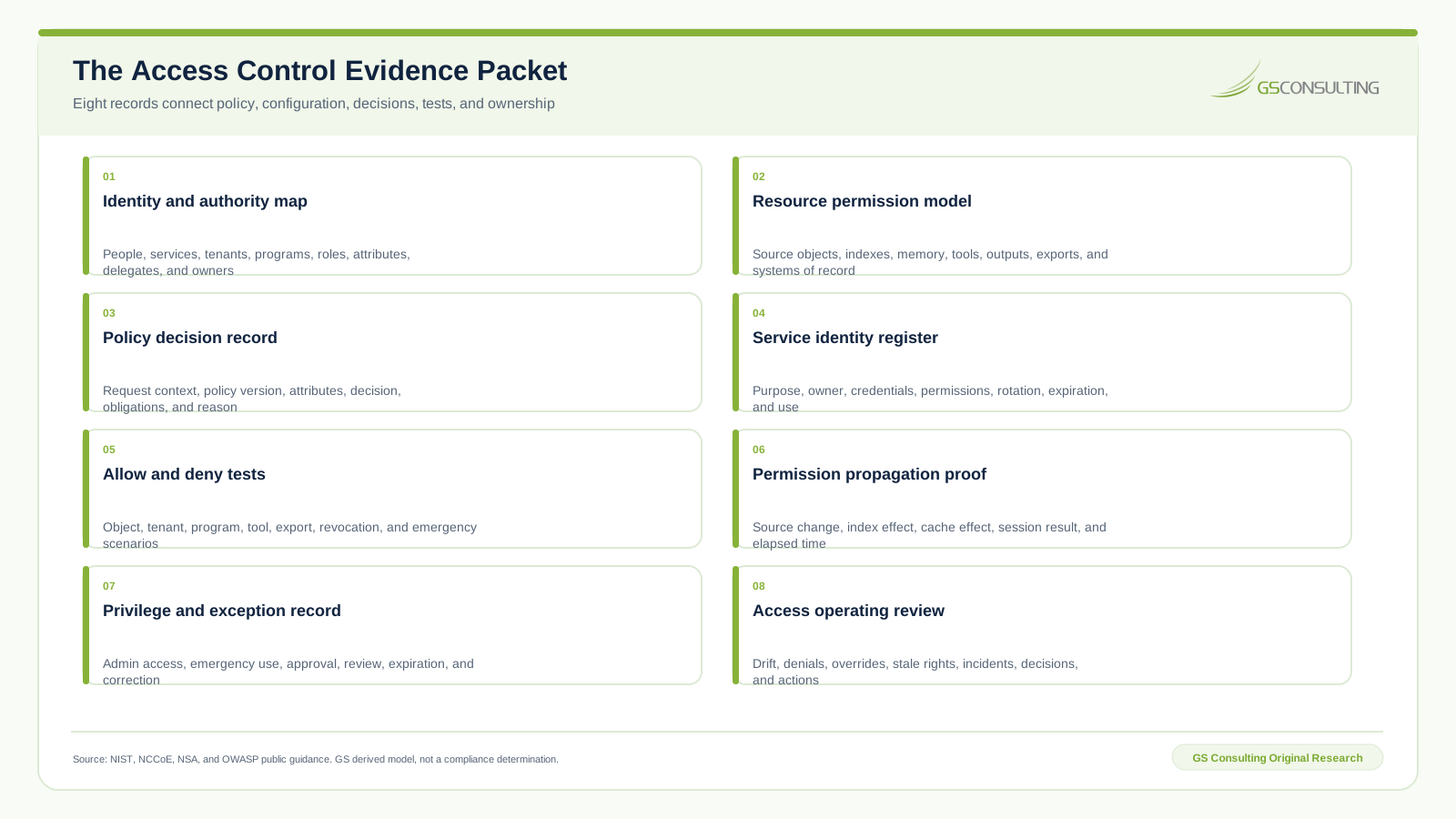
Keep the identity and authority map, resource permission model, policy decision record, service identity register, allow and deny tests, permission propagation proof, privilege and exception record, and recurring access review. Use stable identifiers so reviewers can trace one source object and one action from policy through result.
A 60 Day Private LLM Access Control Plan
| Period | Operator action | Required output |
|---|---|---|
| Days one through ten | Map users, services, devices, tenants, programs, sources, data classes, tools, outputs, admins, and current identity systems. | Authority map and resource inventory |
| Days eleven through twenty | Define policy attributes, source decisions, delegated authority, tenant isolation, tool limits, export rules, and revocation targets. | Access model and decision rules |
| Days twenty one through thirty five | Implement enforcement before retrieval, split service duties, limit tools, bind approvals, and record policy decisions. | Configured control path and logs |
| Days thirty six through forty five | Run object, tenant, program, service, tool, export, prompt injection, revocation, and emergency tests. | Allow and deny results with defects |
| Days forty six through sixty | Correct failures, repeat tests, measure propagation, approve exceptions, and assign recurring review. | Access evidence packet and operating cadence |
Research Sources and Caveats
The GS research package uses sources accessed September 5, 2026:
- NIST SP 800-207 for resource focused zero trust principles.
- NIST SP 800-207A for application and service identity policy.
- NIST SP 800-204B for attribute based authorization across user, service, and device identity.
- NIST SP 1800-35 for implemented zero trust patterns and public counts.
- NIST SP 800-171 Revision 3 for CUI access, authentication, audit, external system, and monitoring context.
- NCCoE software and AI agent identity concept paper for emerging authority, delegation, audit, and prompt injection questions. It is a concept paper, not final NIST guidance.
- OWASP Top 10 for LLM and generative AI applications for security risk categories.
- NSA secure AI deployment guidance for National Security System and Defense Industrial Base operating context.
The package separates public observations, GS ratings, formula outputs, sensitivity results, supporting operating tables, and figure data. I did not find a defensible public benchmark for private LLM permission accuracy, revocation speed, tenant isolation failure, or access evidence quality. Those outcomes must come from the real system.
The GS Private LLM Access Decision Integrity Index is a derived planning tool. It does not establish a compliant architecture, legal permission to process data, CMMC scope, NIST assessment result, authorization decision, or security certification.
Private LLM Access Control FAQ
Suggested Future Reading
- Private LLM and Secure RAG Hub
- Private LLM Data Governance
- Private LLM Red Teaming
- Private LLM Security Controls
- Private LLM Evaluation Framework
- Private LLM Observability
- Secure RAG Design Patterns
- Private LLM Disaster Recovery
- Private LLM and Secure RAG Implementation
Do not let the model become a new permission boundary nobody can prove.
The operating standard is direct: current identity, current source authority, narrow service rights, isolated context, bounded tools, controlled outputs, fast revocation, tested denials, and one reconstructable decision trail.
Request an Access Architecture Review