Private LLM & Secure RAG | | 24 min read
Open Source vs Commercial LLMs for Regulated Organizations

Key Takeaways
The operator view
Control and work move together
More deployment freedom usually shifts more security and reliability duties to the operator.
Self operation scores 88
The GS model shows high operator burden even when the organization gains strong control.
Choose evidence, not labels
Select the pattern whose duties, proof, change control, and exit can be sustained.
Open source is not a security control. Commercial is not a surrender of control. They allocate operating responsibility differently.
An open source LLM can give a regulated organization more freedom to inspect, deploy, change, and move a model. It can also make that organization responsible for infrastructure, hardening, updates, evaluation, monitoring, incident response, and capacity. A commercial service can remove much of that operating work, but it introduces provider evidence, contract, data handling, model change, and exit dependencies.
The right question is not “Which model is safer?” Ask which operating pattern can meet the data boundary, prove the required controls, survive change, and exit cleanly. Use this guide with the Private LLM and Secure RAG hub, the private, public, and hybrid AI deployment guide, the private LLM deployment options guide, the private LLM security controls guide, and the private LLM cost model.
Choose the operating model before the model.
GS Consulting helps regulated teams compare LLM deployment control, security duties, evidence, cost, change, and exit against one bounded use case.
Request an LLM Architecture ReviewThe Real Choice Is Responsibility
Teams often collapse five different decisions into one label. The model license, artifact openness, hosting location, service operator, and application control plane are separate choices. A model can release weights under a custom license and run in your cloud. A fully open model can run through a managed endpoint. A commercial model can run in a dedicated tenant with private network access. None of those facts alone proves the data path or security result.
Separate the decision into four layers:
- Model. Which weights, architecture, training information, code, evaluations, and known limits are available?
- License. What can the organization use, modify, distribute, name, and commercialize?
- Deployment. Who runs the inference service, where, on which infrastructure, with which network and identity controls?
- Application. How are prompts, retrieval, tools, output, logs, approvals, monitoring, and incidents controlled?
A strong application boundary can make a managed model suitable for sensitive work. A weak application boundary can leak data through a model running in the same building. Hosting matters. It is not the whole control system.
Open Source, Open Weight, and Commercial Are Not Synonyms
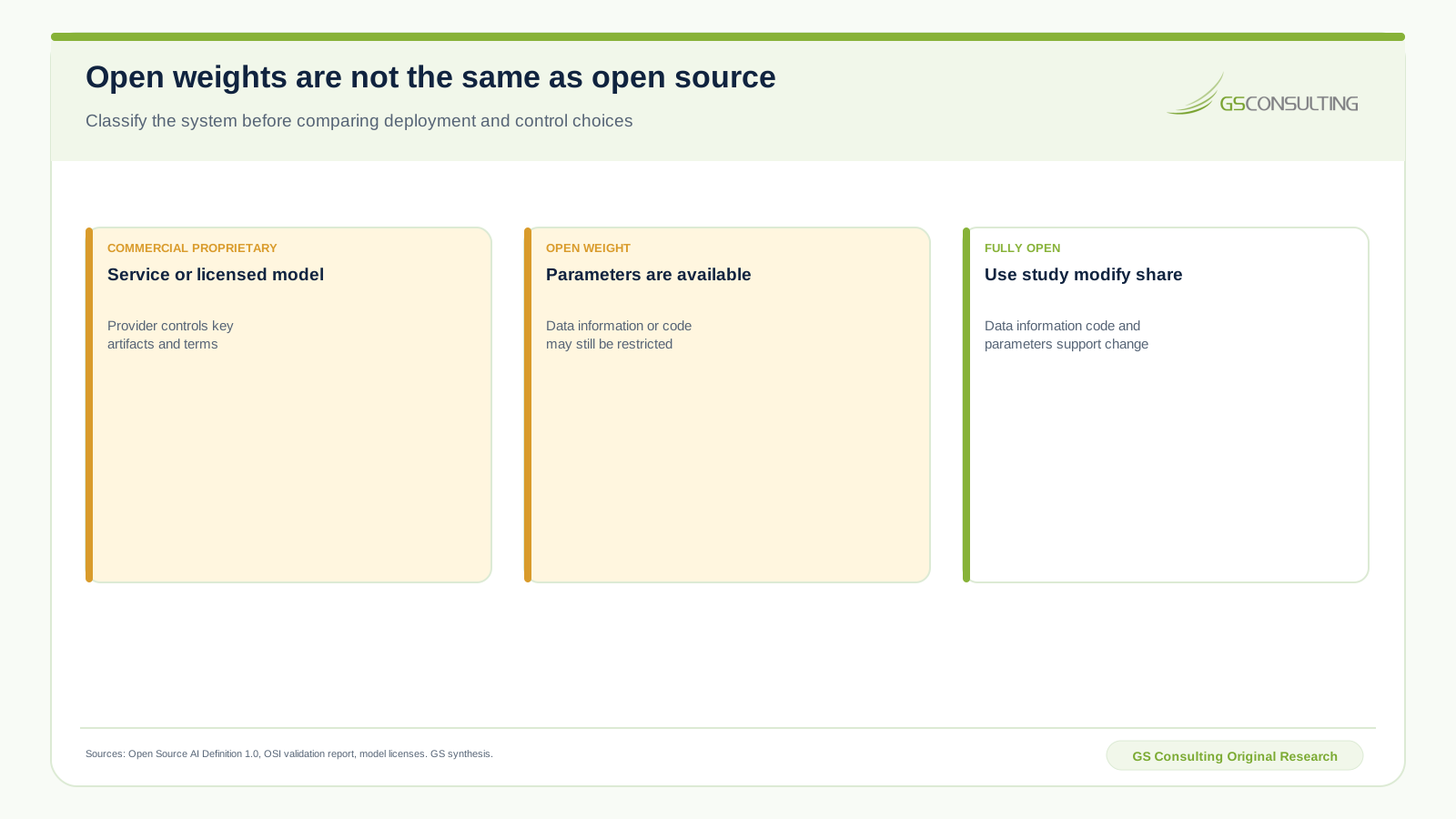
The Open Source AI Definition 1.0 requires freedom to use, study, modify, and share an AI system. It also requires access to the preferred form for modification. That includes information about the data, the source code used to train and run the system, and the model parameters.
An open weight release makes parameters available but may restrict use or withhold training data information, code, or other components. Meta Llama, for example, uses a custom community license with attribution, acceptable use, and a commercial term for very large services. That does not make it a bad choice. It makes exact classification and license review necessary.
A fully open pattern releases the components and permissions needed to study and change the system. Allen Institute for AI describes OLMo as releasing weights, training data, code, recipes, evaluations, and intermediate checkpoints. Mistral deployment guidance describes Apache 2.0 open weight models that can run on compatible infrastructure alongside commercial managed options. The unit of review is the exact model version and service, not the brand.
GS LLM Deployment Responsibility Matrix
GS Consulting built a derived comparison of five operating patterns: commercial managed API, commercial dedicated managed service, open weight managed endpoint, open weight self operation, and fully open self operation. The model produces two scores from 0 to 100.
Control discretion combines model transparency, deployment control, update control, provider independence, and exit control. Operator burden combines infrastructure operations, model security, monitoring, change management, and vendor assurance. Every input is a documented 1 to 5 analyst rating. The scores compare planning responsibility, not model quality or compliance.
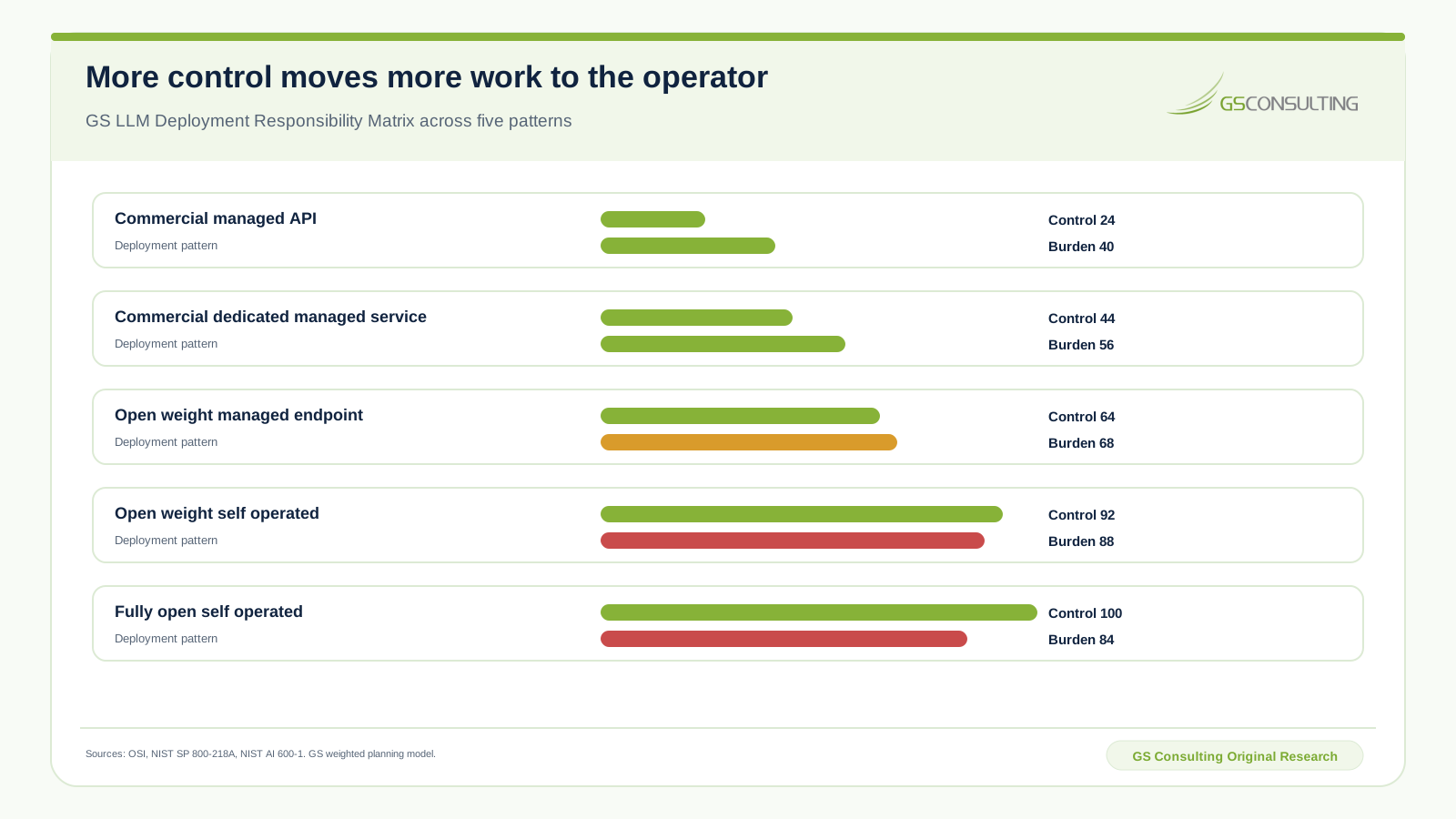
The commercial managed API pattern scores 24 for control discretion and 40 for operator burden. A commercial dedicated managed service scores 44 and 56. An open weight managed endpoint scores 64 and 68. Open weight self operation scores 92 for control and 88 for burden. Fully open self operation scores 100 for control and 84 for burden.
The last result needs care. Fully open does not remove infrastructure or security work. Its burden score is slightly lower only because the model assigns less vendor assurance dependency. That work is replaced by deeper internal provenance, change, and supply chain review.
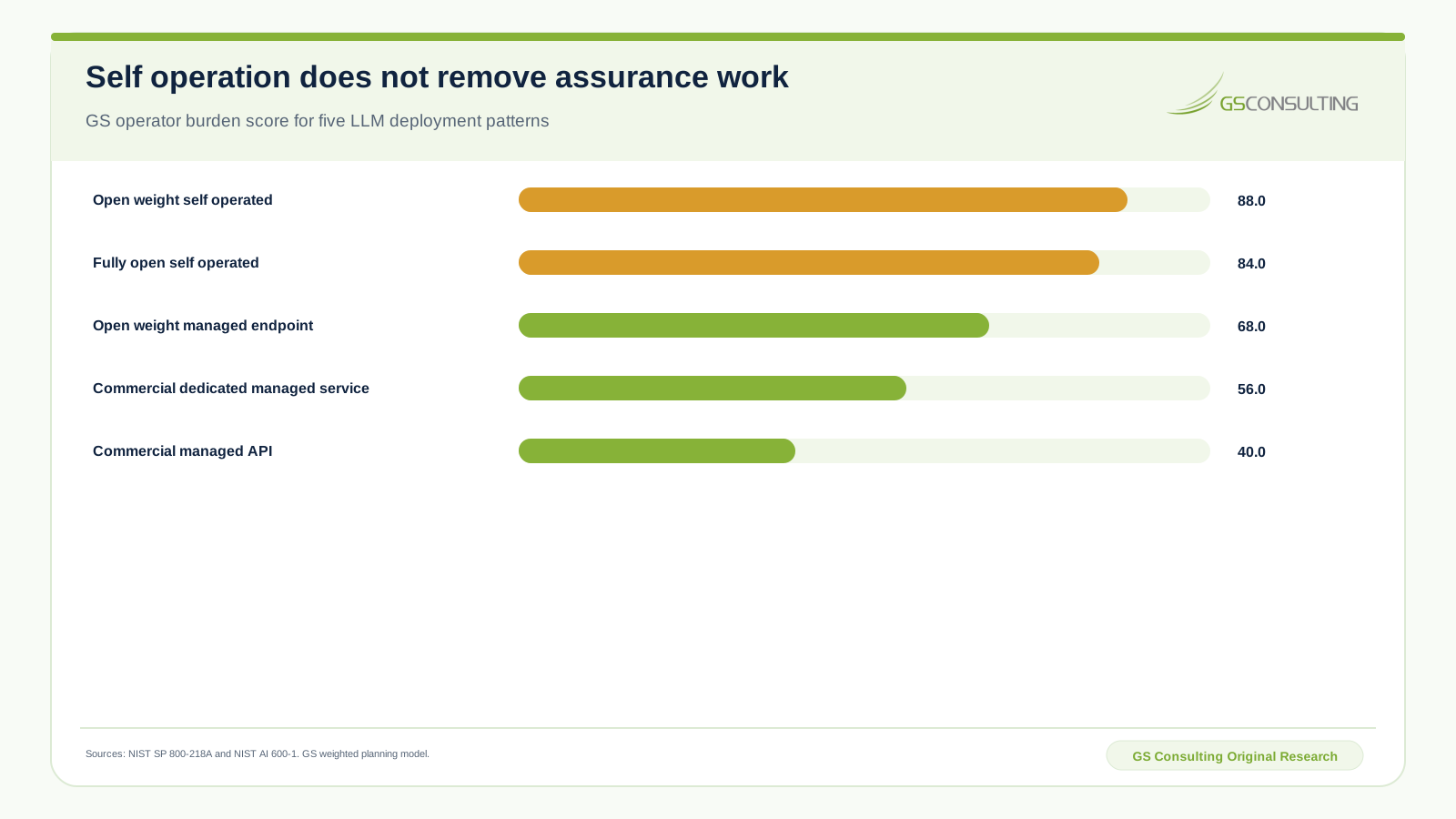
A sensitivity test increased transparency and infrastructure weights while reducing provider independence and vendor assurance. No pattern moved more than four points, and the operating order did not change. That does not make the ratings universal. Replace them with the organization’s actual cloud skills, accelerator capacity, security operations, vendor terms, model needs, and exit requirements.
The matrix is a GS Consulting derived planning tool based on cited public sources and documented assumptions. It is not a security rating, license opinion, compliance determination, model endorsement, or benchmark of output quality.
Security Duties Move; They Do Not Disappear
A managed provider usually owns the inference platform, hardware, base service patching, capacity, and some platform monitoring. The customer still owns identity, application access, data classification, retrieval, prompts, tools, output use, logs, approvals, and its configuration. Exact duties depend on the service and contract.
With self operation, the organization takes on more of the stack: image and package provenance, model artifact integrity, serving software, accelerator drivers, secrets, network isolation, capacity, patches, vulnerability response, abuse monitoring, backup, recovery, and retirement. Model access can be free while the control plane is expensive.
NIST SP 800-218A separates responsibilities for model producers, system producers, and acquirers. That is a useful frame for every deployment. Write down who produces the model, who packages it, who operates inference, who builds the application, who approves use, and who responds when something changes.
Do not accept “the data stays private” as a complete answer. Trace prompts, retrieved content, embeddings, caches, logs, support records, evaluation data, backups, telemetry, and outputs. Confirm where each record goes, who can access it, how long it stays, and whether it can be used to improve a model or service.
Compare Total Operating Cost, Not Access Price
Commercial pricing makes usage visible. Self operation hides more cost in people and capacity. A credible comparison includes:
- Model access, token, endpoint, or license cost.
- Accelerator compute, storage, network, backup, and capacity margin.
- Platform engineering, security, evaluation, observability, and support labor.
- Integration, retrieval, guardrails, identity, logging, and application controls.
- Model updates, regression tests, approval, rollback, and incident work.
- Availability, latency, peak demand, disaster recovery, and exit.
Run the same bounded workload through each credible pattern. Measure quality at an accepted threshold, not maximum benchmark score. Then compare cost per accepted task, not cost per token. A cheaper model that produces more review, retries, or exceptions can be the expensive operating choice.
Review the Exact License and Service Terms
“Open” is not a license conclusion. Record the exact model name, version, source, license text, acceptable use terms, notice duties, distribution rights, patent terms, commercial limits, and downstream obligations. Preserve the record used at approval time because links and model versions change.
For a commercial service, review the enterprise agreement, data terms, service description, region, subprocessors, support access, incident notice, service levels, model change notice, retention, deletion, export, suspension, and exit assistance. Provider documentation is evidence input, not the whole decision. Contract terms and actual configuration must agree.
Legal counsel should resolve material license or contract questions. The engineering team still needs to make the chosen terms operational. If the license requires notices, define where they appear. If the service offers a retention control, prove it is enabled. If a deployment right depends on a model version, prevent an unreviewed upgrade.
Control Model and Platform Change
A commercial service may change models, safety systems, limits, interfaces, or regional availability. A self operated stack may change weights, serving code, drivers, packages, prompts, retrieval data, or guardrails. Both need a controlled release path.
Keep a model and deployment register. For every approved version, record artifact hashes where available, license, source, evaluation result, known limits, deployment, data boundary, owner, approval, and rollback target. Trigger review when any part of the inference or application path changes.
Use the same evaluation set before and after change. Cover task quality, unsafe output, privacy, prompt injection, retrieval behavior, access, refusal, logging, latency, and cost. A version should not reach production because it is newer. It should reach production because it passes the accepted operating thresholds.
A Practical Selection Path
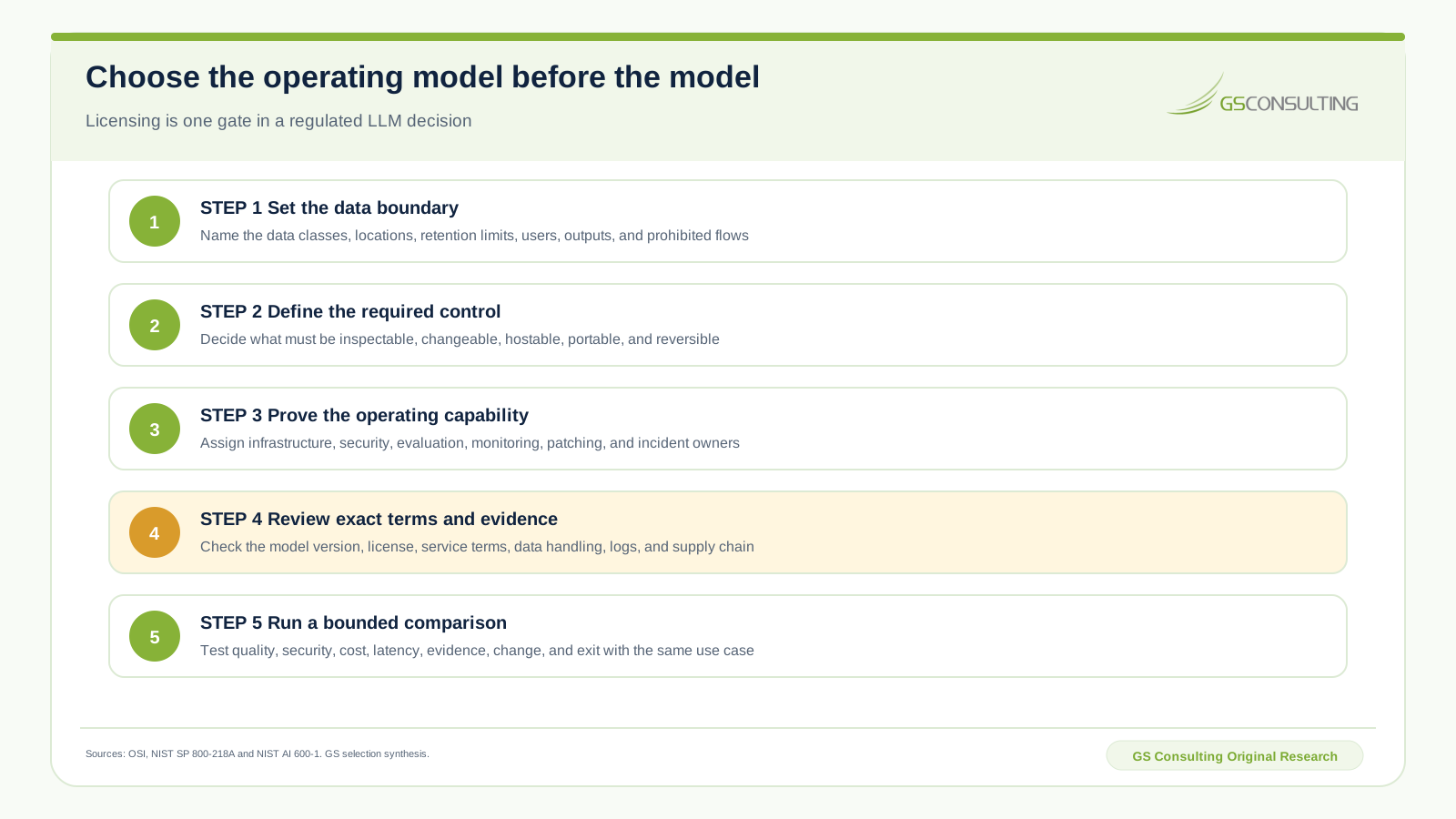
Choose one use case. Name the data, users, outputs, consequence, review, and required evidence. Then decide which control must remain internal and which duties can be inherited from a provider.
A commercial managed service is often credible when speed, elasticity, and provider operations matter and the contract, region, data terms, logs, and change process are acceptable. A dedicated managed service can add network and tenancy control while preserving provider operations. An open weight managed endpoint can improve model choice without moving the whole platform inside.
Self operation is credible when deployment control, fixed updates, provider independence, model inspection, or exit justify the work and the organization can actually run the stack. Fully open systems are strongest when the team needs deep study or modification and can govern the artifacts and derived versions.
A hybrid architecture is normal. One organization may use a managed commercial model for public research, a dedicated endpoint for internal records, and a self operated model for a narrow disconnected workflow. The private, public, and hybrid AI guide shows how to place those lanes behind one control model.
Keep a Reviewable Selection Packet
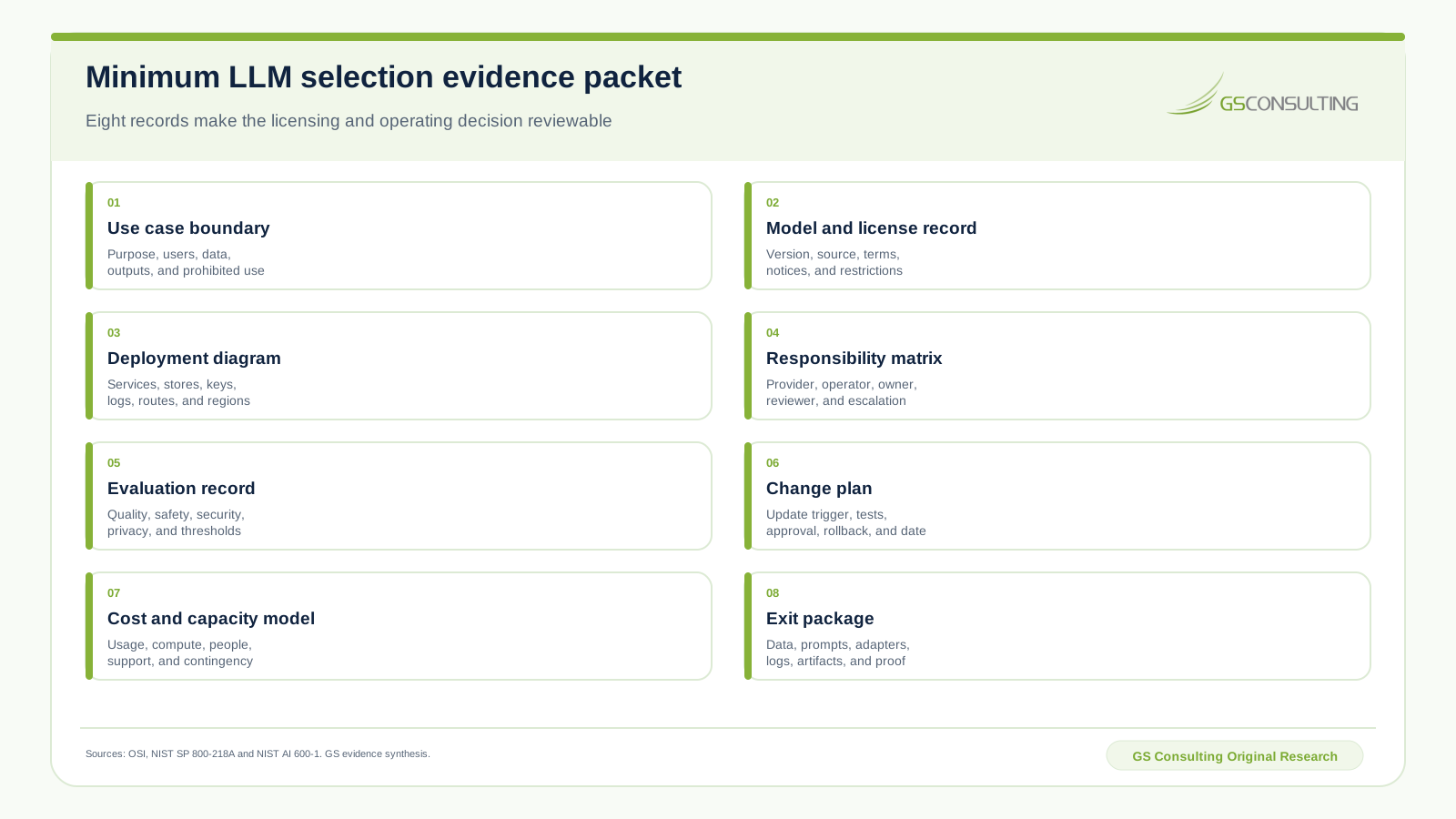
The packet is not procurement decoration. It should let a reviewer reproduce the decision. Keep the use case boundary, model and license record, deployment diagram, responsibility matrix, evaluation, change plan, cost model, and exit package.
For managed services, attach the approved service description, data terms, configuration evidence, provider reports that matter to the use case, and unresolved exceptions. For self operation, attach artifact provenance, hashes, build records, package inventory, hardening, patch process, monitoring, recovery, and named support ownership.
Test exit before approval. Export the prompts, retrieval configuration, evaluation set, adapters, logs, decision records, and required data. Prove that another deployment can use them or document the conversion work. Exit control that exists only in a contract clause is not yet an operating capability.
Six Selection Failures That Repeat
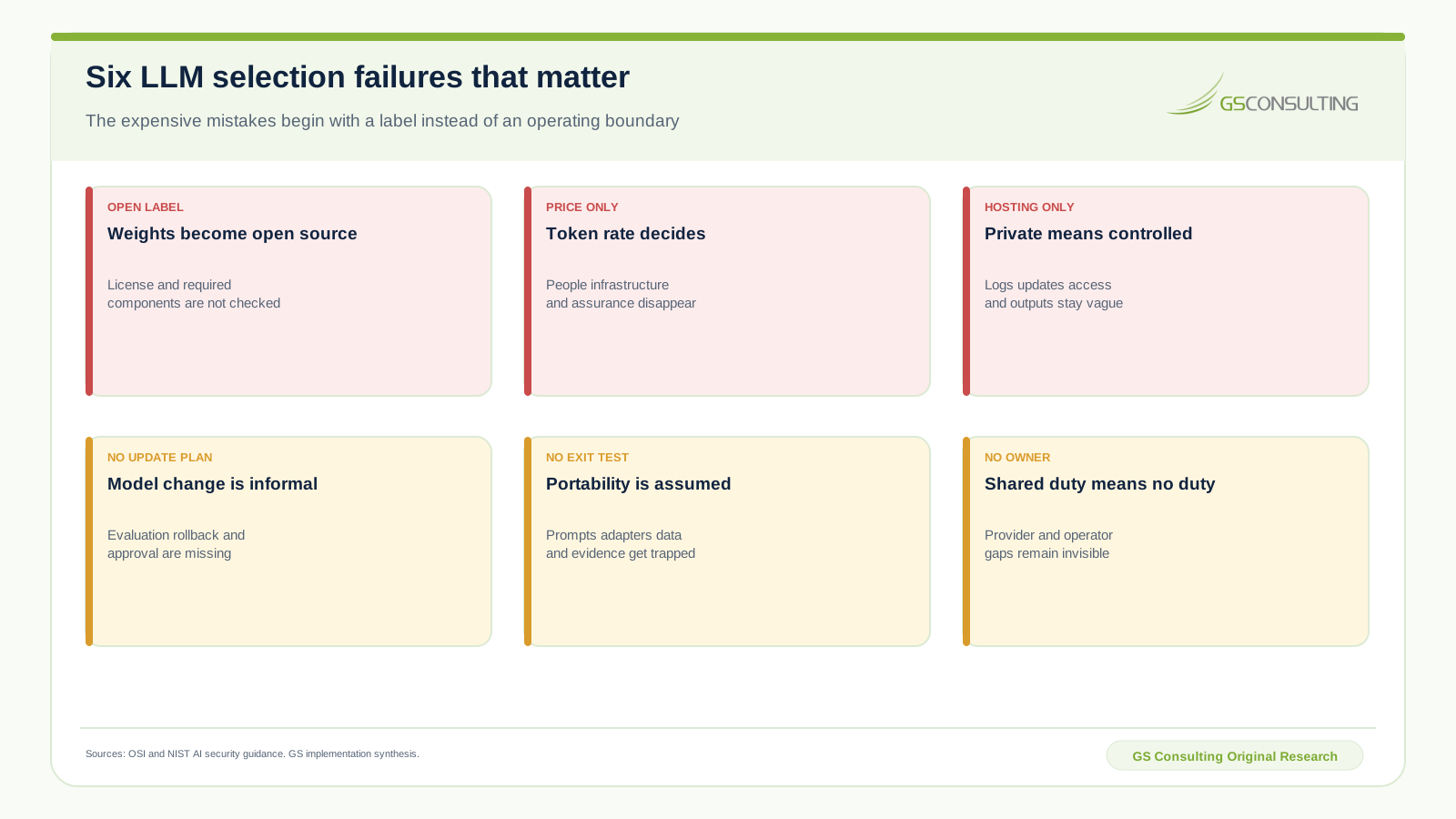
Open weights are mistaken for open source. Token price replaces total cost. Private hosting replaces a real data flow. Updates happen without regression tests. Exit is assumed but never exercised. Shared responsibility is discussed without assigning names.
Resolve each failure with a record and an owner. Classification needs the exact artifact and license. Cost needs the accepted task. Privacy needs the complete data path. Change needs a gate. Exit needs a test. Responsibility needs one accountable party for every control and evidence duty.
The operating standard is simple: choose the LLM pattern whose control, burden, evidence, and exit your organization can sustain after the demo ends.
Research Sources and Caveats
- Open Source Initiative: Open Source AI Definition 1.0
- Open Source Initiative: Open Source AI validation results
- NIST SP 800-218A
- NIST AI 600-1 Generative AI Profile
- Allen Institute for AI: OLMo release
- Meta: Llama 3.3 Community License
- Mistral AI: model deployment documentation
- Amazon Web Services: data protection in Amazon Bedrock
The research package separates public observations from GS analyst assumptions and includes formulas, sensitivity results, source limitations, figure data, and editable graphics. Results do not determine security, compliance, license status, model quality, or total cost for a specific system.
Frequently Asked Questions About Open Source LLMs
Is an open weight LLM the same as an open source LLM?
No. Open weights make model parameters available, but the Open Source AI Definition also requires freedoms to use, study, modify, and share plus access to the preferred form for modification, including data information, code, and parameters.
Are open source LLMs more secure than commercial LLMs?
Not automatically. Open systems can provide more inspection and deployment control, but the operator usually owns more patching, hardening, monitoring, evaluation, incident response, and supply chain work. A managed commercial service can be suitable when its controls, terms, data handling, and evidence meet the use case.
Are open source LLMs cheaper?
Sometimes, but model access price is only one cost. Include compute, storage, networking, engineering, security, evaluation, monitoring, support, capacity margin, upgrades, and incident work. Managed services trade some direct control for provider operations and usage pricing.
Can a regulated organization use a commercial LLM API?
Potentially. The organization should verify the exact service, region, data use and retention terms, encryption, access, logging, provider duties, subcontractors, incident terms, model change process, evidence, and contract requirements. A consumer chat product is not equivalent to an enterprise service.
When should a regulated organization self operate an LLM?
Self operation is strongest when the organization needs deployment control, model inspection, fixed change windows, provider independence, or a tested exit path and has the people and infrastructure to own model security, evaluation, monitoring, patching, and response.