GovCon Cybersecurity | | 26 min read
NIST SP 800-171A Assessments: How Evidence Gets Tested

Key Takeaways
The assessment view
Map to determinations
A folder full of screenshots is not an assessment trace. Connect each claim, record, person, and test to the determination it supports.
510 statements parsed
The current Revision 3 publication contains 130 procedures, 510 determination statements, and 88 organization parameters across 17 families.
Read the governing baseline
Revision 3 is current NIST guidance. CMMC Level 2 currently uses the Revision 2 control and June 2018 assessment baseline.
Not an evidence checklist. NIST SP 800-171A is a procedure for testing whether a security claim is supported.
That is why a polished policy library can still fail. The policy may say accounts are reviewed. The administrator may describe a different process. The system may show stale accounts that no one disabled. The assessment result comes from the supported determination, not the quality of the binder.
The practical job is to connect four things: the requirement, the specific determination statement, the evidence that can be examined, and the operator or mechanism that can be interviewed or tested. If those pieces agree for the assessed scope and period, the claim is defensible. If they conflict, more files rarely solve the problem.
This guide focuses on the current NIST SP 800-171A Revision 3 publication and explains how to use it without losing current acquisition nuance. The NIST SP 800-171 hub connects implementation, evidence, scoring, and remediation. Use the Access Control implementation guide and Incident Response requirements guide to see how the determination structure becomes operating proof. The guide to automating NIST SP 800-171 evidence collection covers the workflow layer after the evidence model is clear.
Test the claim before the assessment tests it.
GS Consulting helps contractors map determinations, clean evidence ownership, run interviews and tests, and build a traceable assessment packet.
Request an Evidence Readiness ReviewWhat NIST SP 800-171A Actually Does
NIST SP 800-171 states the security requirements for protecting CUI in covered nonfederal systems and organizations. NIST SP 800-171A supplies procedures for assessing those requirements. Revision 3 organizes the procedures by the same 17 families used in the standard.
Each procedure includes an assessment objective with one or more determination statements. It then lists potential methods and objects. The assessment team selects procedures, methods, depth, and coverage based on scope, the assessment purpose, system facts, risk, and customer direction.
NIST is explicit about flexibility. The listed documents, mechanisms, activities, and people are potential assessment objects. They are not a fixed count of artifacts that every organization must produce. That matters because copying every possible item into a tracker creates noise and hides the actual proof.
The result for a determination is generally satisfied or other than satisfied. Insufficient information may prevent a determination. That result should reflect evidence, discussion, and testing in the assessed scope. It should not be inferred from a document name or a control owner saying the right words.
Examine, Interview, and Test Must Tell One Story
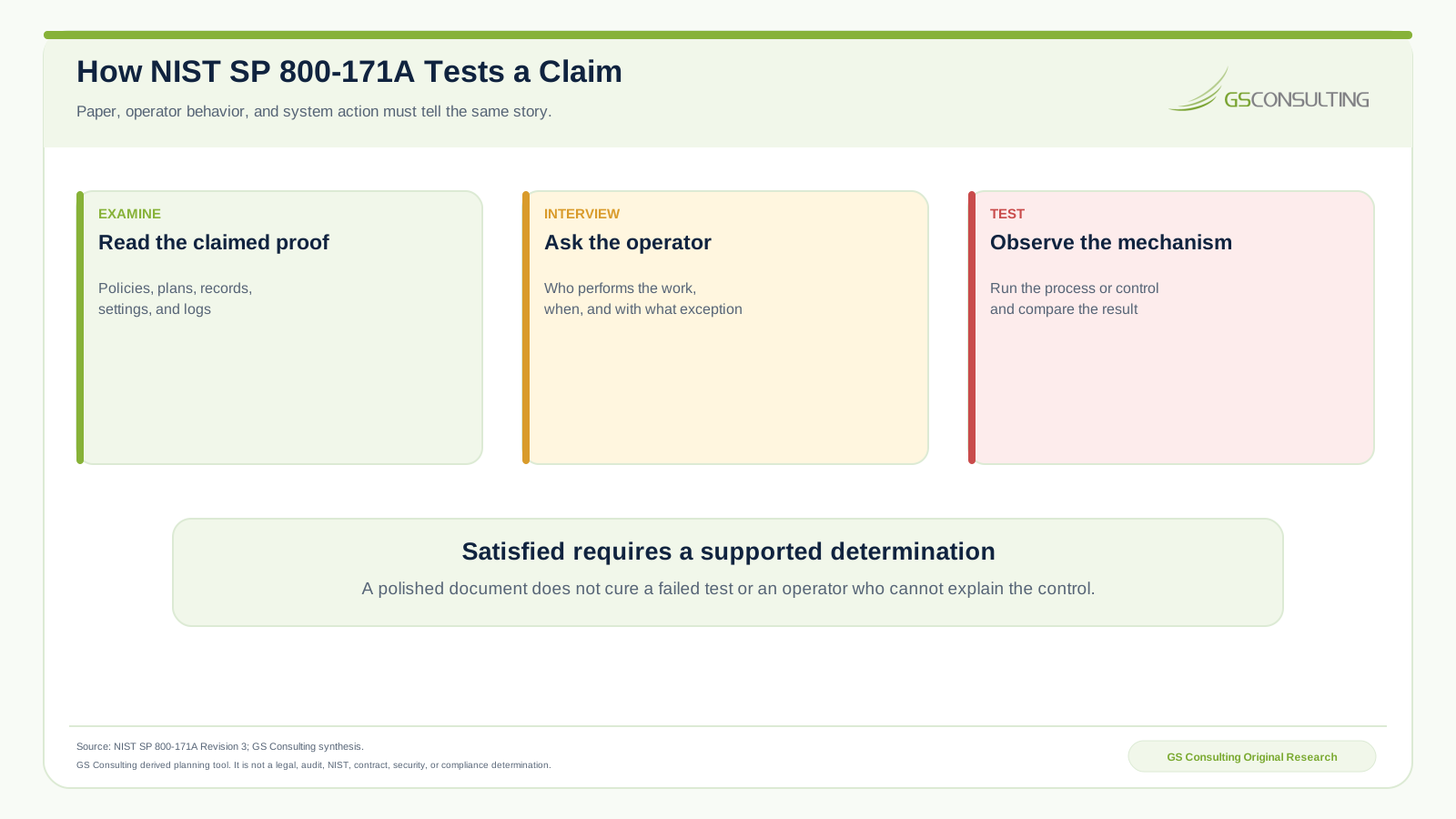
Examine the claimed proof
Examine means reviewing specifications, mechanisms, or activities through documents and records. Common evidence includes policy, procedure, the system security plan, configuration, access lists, tickets, approvals, logs, reports, and output from a system. The point is not to collect one file of every type. It is to find current evidence that supports the determination.
Interview the operator and owner
Interview tests whether people understand and perform the claimed process. Ask what triggers the work, who performs it, which system is used, how exceptions are handled, how often it occurs, where the result is recorded, and what changed recently. The best interview answers are concrete and point to the same evidence and mechanism as the written process.
Test the mechanism or process
Test means exercising or observing a mechanism or activity and comparing the result with expected behavior. A test may show that an inactive account is disabled, a denied connection stays denied, a log event is generated, a backup can be restored, or an incident workflow creates the required records. Use a repeatable script with a precondition, action, expected result, observed result, and evidence capture.
No single method is inherently stronger for every statement. A policy requirement may depend heavily on examine. A technical enforcement statement may need a test. An operating responsibility may need an interview and records. Use the procedure and assessment plan, then choose the smallest credible set that supports the determination.
Build the Evidence Map at the Determination Level
A requirement can contain several independent statements. One broad control status hides which parts are supported. Build the working map with one row per determination:
- Requirement and statement. Keep the official identifier and full text.
- Scope. Identify the applicable system, component, location, service, or process.
- Implementation claim. State what the organization does in plain language.
- Examine source. Link current documents, records, settings, and logs.
- Interview owner. Name the person who performs or owns the work.
- Test method. Record the repeatable action, expected behavior, and captured result.
- Period and version. Show when the evidence applies and which system state it represents.
- Status and gap. Separate unsupported, stale, conflicting, and not applicable claims.
Organization defined parameters need the same discipline. A frequency, time period, event, or value cannot stay blank or live only in an assessor conversation. Define it through the organization's governance process, use it consistently in implementation and evidence, and record who approved it.
GS Assessment Proof Friction Index
GS Consulting parsed the official Revision 3 HTML publication at the requirement level. The public data set contains 17 families, 130 security requirement procedures, 510 unique determination statements, 88 organization defined parameters, and 1,421 potential assessment object options across examine, interview, and test.
The GS index measures relative preparation surface. It weights normalized requirement count at 25 percent, determination count at 30 percent, potential object count at 20 percent, test method coverage at 15 percent, and organization parameter count at 10 percent. The model treats potential objects as a planning signal, not as required artifacts.
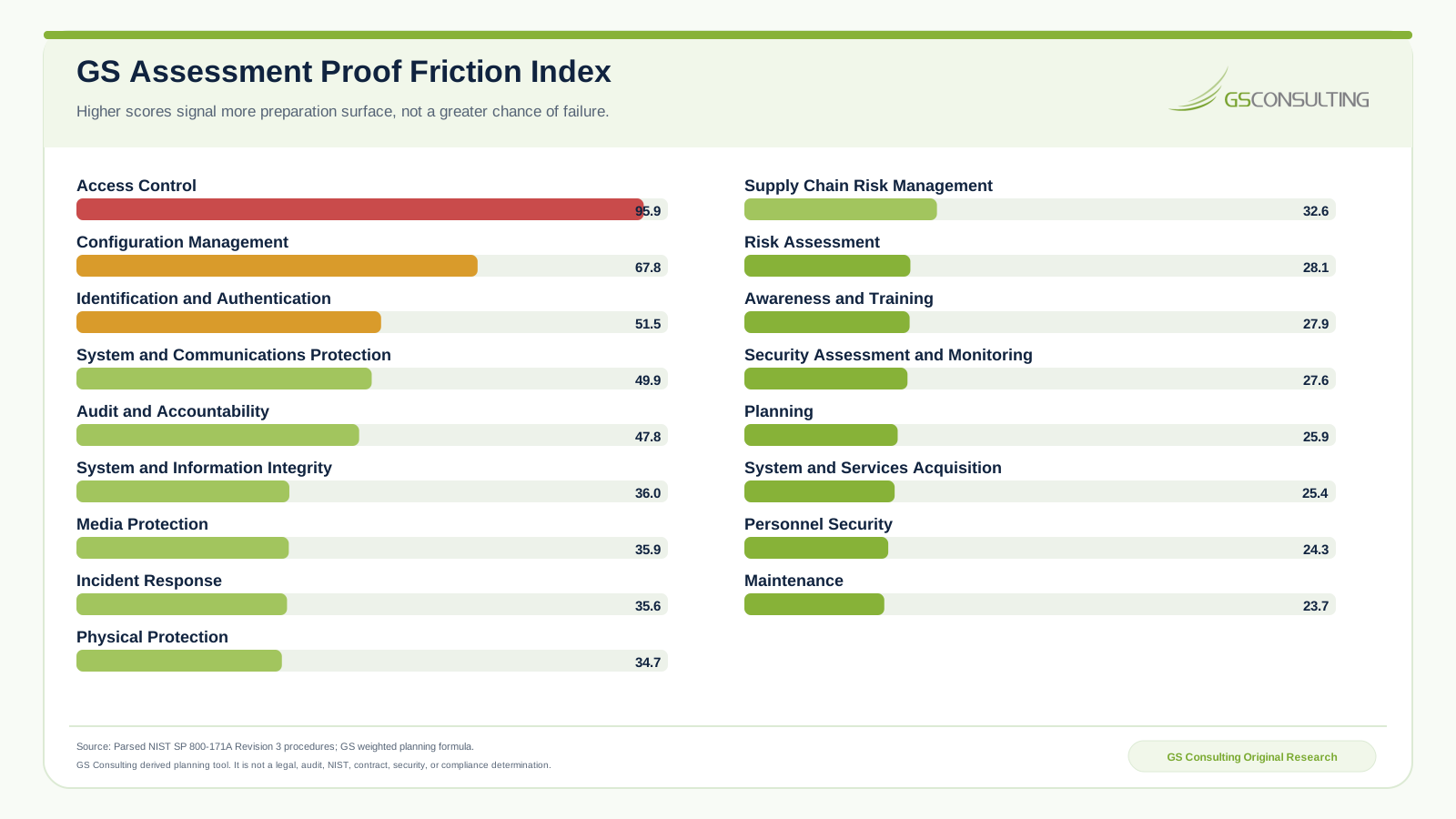
Access Control leads at 95.9 with 22 procedures, 92 determinations, and 238 potential objects. Configuration Management scores 67.8 with 12 procedures, 61 determinations, and 180 potential objects. Identification and Authentication scores 51.5. System and Communications Protection scores 49.9. Audit and Accountability scores 47.8.
Those results make operational sense. Access Control touches identity, authorization, privileges, remote access, wireless access, mobile devices, public systems, and session behavior. Configuration Management touches baselines, settings, inventories, changes, impact analysis, least functionality, and software use. These families produce many records and mechanisms across many owners.
An alternate weight set moves five points from requirement volume and determination count to potential objects and test coverage. The maximum family movement is 4.7 points. Access Control remains the largest preparation surface. This sensitivity test is limited and does not make the model an assessment standard.
Where Determination Volume Concentrates
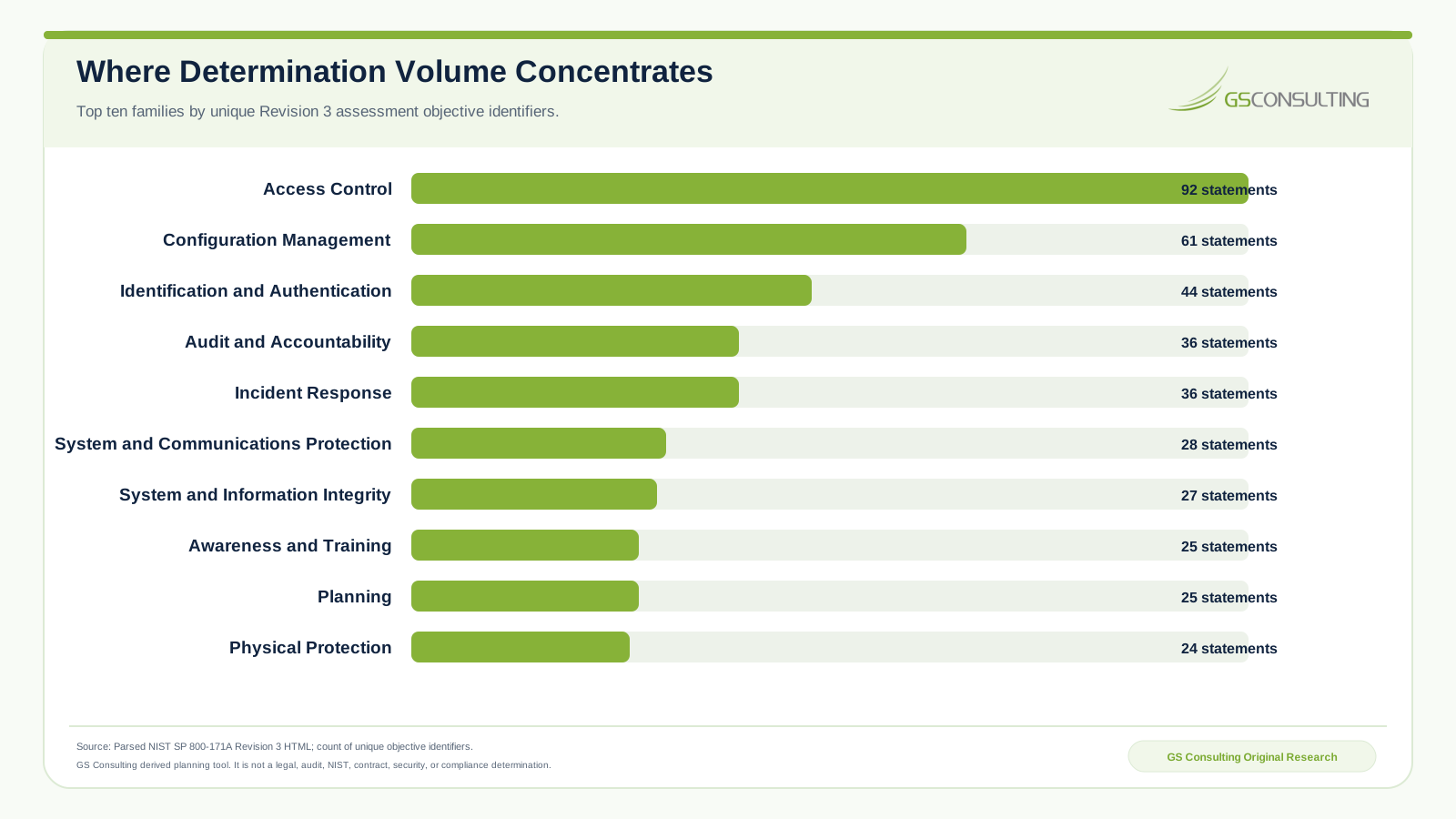
Access Control contains 92 determination statements. Configuration Management contains 61. Identification and Authentication contains 44. Audit and Accountability and Incident Response each contain 36. System and Communications Protection contains 28, System and Information Integrity contains 27, and Awareness and Training and Planning each contain 25.
Volume alone should not set the schedule. A small family can depend on difficult evidence or a shared service. Start with four filters:
- Boundary dependence. Complete scope, assets, information flow, external services, and the system security plan before interpreting evidence.
- Shared service dependence. Identify which identity, logging, endpoint, network, cloud, and provider evidence supports several families.
- Operating period. Start recurring records early enough to establish the period the assessment needs.
- Test consequence. Plan disruptive or privileged tests with safety, approvals, restoration, and evidence capture.
The Assessment Is a Four Stage Proof Process
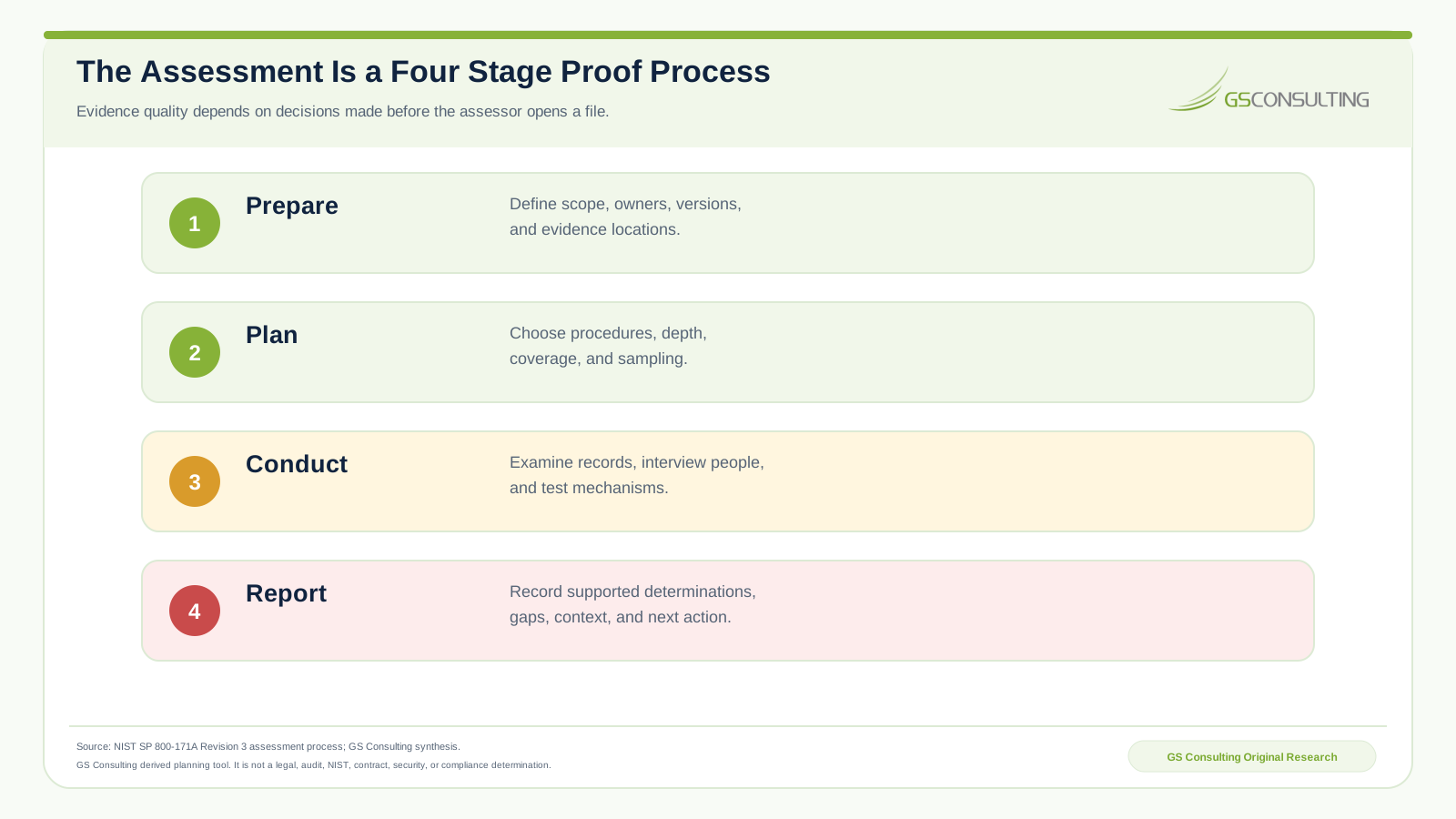
Prepare
Confirm purpose, controlling baseline, scope, systems, services, locations, owners, parameters, and evidence access. Resolve obvious conflicts between the system security plan, diagrams, inventories, and current operation.
Plan
Select the procedures and methods, then define depth, coverage, sampling, interview roles, test windows, evidence handling, and reporting. The assessment customer may define these choices. Do not assume that one prior assessment plan applies to a different contract, system, or purpose.
Conduct
Examine the records, interview responsible people, test the mechanisms, and preserve the basis for each determination. Record conflicts and insufficient information when they occur. Do not quietly replace a failed test with a better screenshot.
Report
Document results, scope, methods, evidence, limitations, and findings in the required form. A useful internal report also names the gap owner, corrective action, evidence needed for closure, and conditions that require another test.
How to Prepare Evidence That Holds Together
Start with scope, not screenshots
The system security plan, architecture, component inventory, information flow, service list, user populations, locations, and external connections define where claims apply. Evidence outside the boundary may be irrelevant. Evidence inside a hidden boundary may be missing.
Use evidence records with identity
Every evidence item needs an owner, source system, capture date, applicable period, version or configuration state, handling class, and determination links. A filename such as final screenshot does not supply any of that context.
Prepare people with the real process
Do not script employees to recite policy. Walk through the normal path, exception path, escalation, records, and recent changes. If an operator cannot explain a control without the control owner in the room, the responsibility model may be weak.
Make tests repeatable
Write test steps before the assessment. Define the precondition, input, action, expected result, observed result, evidence, cleanup, and owner. For higher risk tests, use an approved safe method or nonproduction environment and document any limitation.
Resolve evidence conflicts
When policy, procedure, setting, ticket, interview, and test disagree, treat the conflict as work. Identify which source is current, correct the implementation or record, update the system security plan, and test again where needed.
Six Evidence Failures That Create Findings
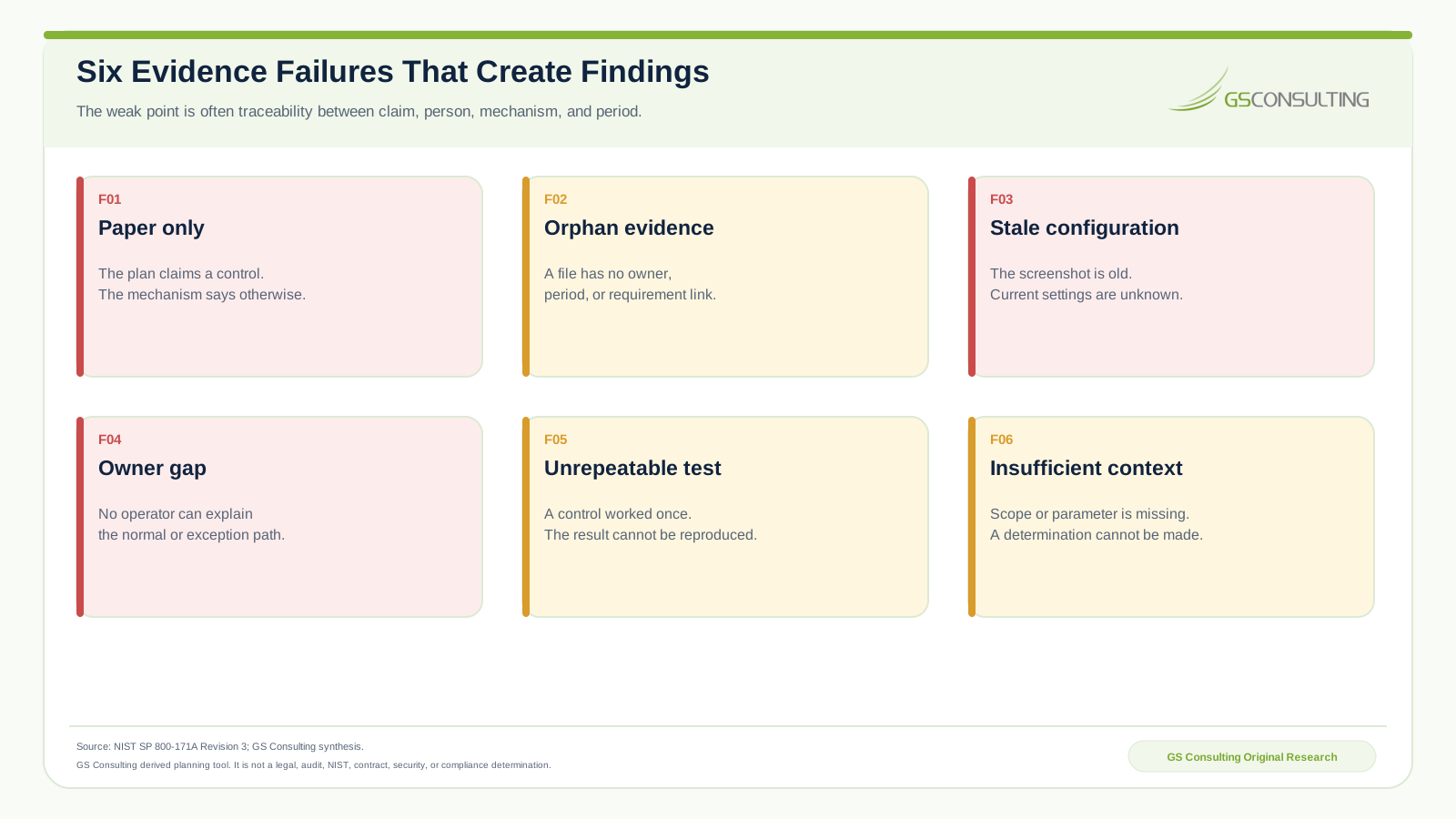
Paper only means the plan claims a control that the mechanism does not perform. Orphan evidence has no owner, period, source, or determination link. Stale configuration presents an old state as current. Owner gap appears when no operator can explain the normal and exception paths. Unrepeatable test records a successful event without a method that can reproduce it. Insufficient context leaves scope or an organization parameter unclear.
Fix the operating system, not merely the evidence folder. A fresh screenshot does not fix an undocumented owner. A new procedure does not fix a mechanism that allows the wrong action. A successful retest does not close the issue until the change, result, and applicable scope are recorded.
The Minimum Assessment Proof Packet
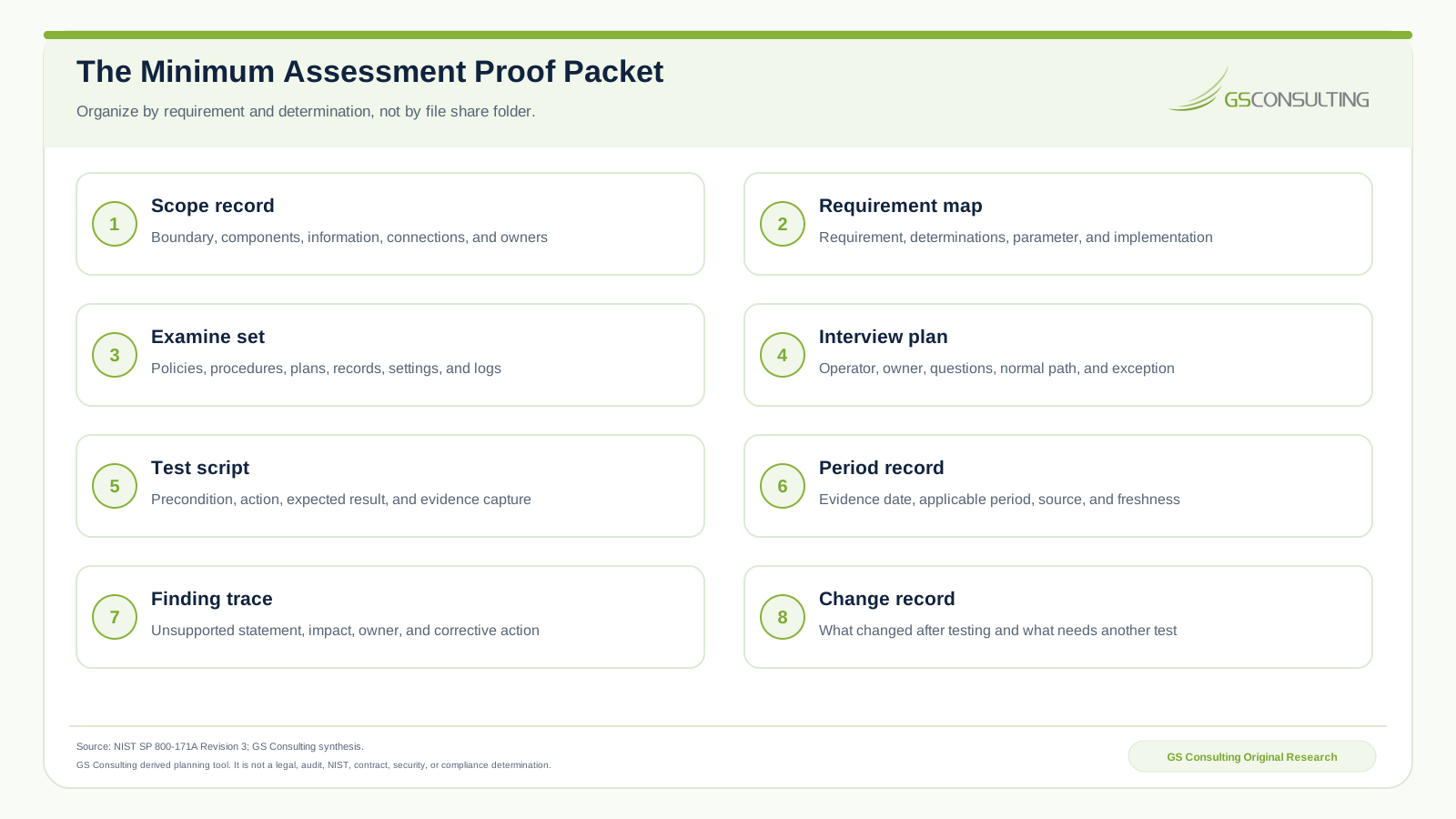
- Scope record. Boundary, components, information, connections, services, locations, and owners.
- Requirement map. Requirement, determinations, parameters, implementation claim, and responsibility.
- Examine set. Current policies, procedures, plans, records, settings, and logs with source and period.
- Interview plan. Operator, owner, questions, normal path, exception path, and supporting records.
- Test script. Precondition, action, expected result, observed result, evidence, and cleanup.
- Period record. Evidence date, applicable period, source, freshness, and known limitation.
- Finding trace. Unsupported statement, observed condition, impact, owner, corrective action, and closure evidence.
- Change record. What changed after evidence capture or testing and which determinations need another review.
Automation can collect and normalize records, but it should not decide that a determination is satisfied. The companion evidence automation guide explains how to use source connectors, freshness, owner queues, and immutable logs without hiding human judgment.
Revision 3, CMMC, and DoD Assessment Nuance
NIST SP 800-171 Revision 3 and NIST SP 800-171A Revision 3 were published in May 2024. They are the current NIST publications for the Revision 3 requirement set. That does not mean every contract or assessment program automatically moved to Revision 3.
The companion NIST 800-171 Rev 2 vs Rev 3 comparison uses the official NIST change analysis to rank transition work, explain the new parameter decisions, and build a contract driven migration path.
Current 32 CFR Part 170 defines CMMC Level 2 using NIST SP 800-171 Revision 2 and the June 2018 assessment procedures. The final rule states that the Revision 2 requirements and June 2018 procedures control that program baseline. Use current CMMC guides for program practice, and verify phased contractual applicability.
Current DFARS 204.7302 states that High DoD assessments use NIST SP 800-171A. DFARS 252.204-7020 describes Basic, Medium, and High assessment access and evidence expectations. The solicitation, award, assessment notice, contracting officer direction, and current rule decide the applicable version and method.
Do not merge different scores or statuses. A GS planning index is not an SPRS score. A NIST assessment determination is not a CMMC certification decision. A DoD Basic assessment is not a High assessment. Prepare one evidence system, but keep the governing baseline, scope, method, result, and reporting path explicit.
Bottom Line
NIST SP 800-171A turns security requirements into testable questions. The evidence has to do more than exist. It must be current, scoped, attributable, linked to the determination, consistent with operator behavior, and supported by the mechanism where testing applies.
That is the operating standard: one requirement map, current evidence, prepared operators, repeatable tests, explicit version control, and no unsupported claim marked complete.
Sources and Method Note
- NIST SP 800-171A Revision 3
- NIST SP 800-171A Revision 3 HTML
- NIST SP 800-171 Revision 3
- 32 CFR Part 170, CMMC Program
- DFARS Part 204
- DFARS 252.204-7020
- NIST SP 800-53A Revision 5
GS Consulting Original Research. The proof friction index is a derived planning tool based on a structured parse of the official Revision 3 HTML and documented weights. Potential assessment objects are counted as options, not mandatory artifacts. The scores are not NIST ratings, assessment results, SPRS scores, CMMC decisions, legal advice, contract interpretation, or a prediction of findings. Confirm the governing baseline, scope, methods, and reporting requirements with the authorized customer and assessor.
Frequently Asked Questions
What is NIST SP 800-171A?
NIST SP 800-171A provides assessment procedures for NIST SP 800-171. Revision 3 uses determination statements and examine, interview, and test methods across 17 families.
What is the difference between examine, interview, and test?
Examine reviews documents, records, settings, and other evidence. Interview asks responsible people to explain the work. Test observes or exercises a mechanism or process.
Does NIST SP 800-171A require every listed assessment object?
No. NIST presents the object lists as flexible options. The customer defines scope, depth, and coverage, so treat the lists as a planning menu rather than a mandatory artifact checklist.
Does CMMC Level 2 use NIST SP 800-171A Revision 3?
Not under the current 32 CFR Part 170 baseline. CMMC Level 2 currently uses NIST SP 800-171 Revision 2 and the June 2018 assessment procedures.
What evidence should be prepared for a NIST SP 800-171A assessment?
Prepare a scope record, requirement and determination map, examine set, interview plan, repeatable test script, period record, finding trace, and change record.
Related Reading
- NIST SP 800-171 Hub
- NIST SP 800-171 Explained
- Automating NIST SP 800-171 Compliance Evidence
- NIST SSP Guide
- CMMC Level 2 Controls and Evidence
- CMMC Compliance Guide
- Secure AI Automation
Turn the evidence folder into a proof system.
GS Consulting helps teams connect scope, determinations, evidence, interviews, tests, findings, and change into one defensible assessment trace.
Plan an Assessment Readiness Sprint