Cybersecurity | | 28 min read
NIST 800-171 System and Information Integrity Guide

Key Takeaways
System integrity succeeds when action ends in verified state
Five active requirements
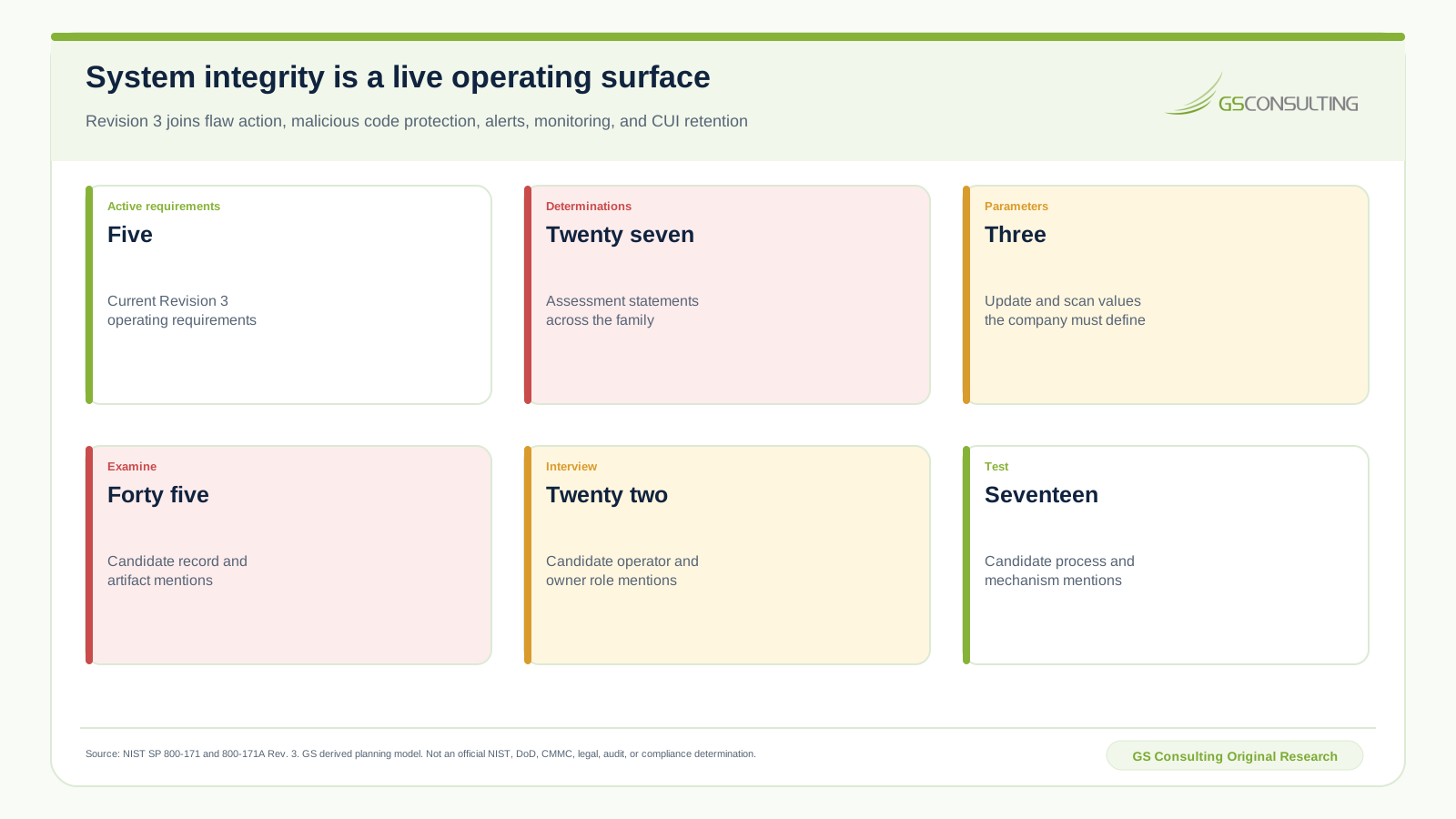
The family contains 27 determination statements, three parameter decisions, and 84 assessment method mentions.
Flaw remediation scores 98.2
Flaw action, malicious code protection, and system monitoring carry the highest modeled evidence pressure.
Close on proof, not activity
A ticket, alert, scan, quarantine, or retention rule is incomplete until the expected state is verified and reconciled.
System and Information Integrity is not an antivirus checklist. It is the operating system that turns flaws, malicious code, alerts, monitoring signals, and CUI records into verified action.
The family fails when these activities are separated. A scanner finds a flaw, but the asset owner never receives it. An advisory reaches security, but nobody checks whether the named product is present. A malicious file is quarantined, but the team does not determine its scope. A monitoring console stays green while one outbound path is not observed. A retention rule covers the original CUI record but misses its reports, exports, and derived output.
The practical standard is stronger than activity. Every important condition needs a known source, affected scope, accountable owner, approved decision rule, controlled action, repeated test, and current record. That chain lets operators manage risk and lets a reviewer reproduce what happened without relying on memory.
This guide belongs to the NIST 800-171 and CUI Security Hub and supports the secure AI and regulated automation service. Use it with the risk assessment guide, assessment and monitoring guide, configuration management guide, incident response guide, and assessment evidence guide.
Can your team prove the current integrity state?
GS Consulting helps contractors map coverage, define decisions, connect security operations, verify results, and prepare current assessment evidence.
Request an Integrity ReviewNIST 800-171 System and Information Integrity: The Short Answer
Operate the five active Revision 3 requirements as one connected process. Identify and correct flaws within approved periods. Protect relevant locations from malicious code and keep defenses current. Receive external alerts and distribute internal direction when action is needed. Monitor systems and communications for attacks, unauthorized connections, unauthorized use, and unusual activity. Manage and retain CUI and its output under the applicable authority. Verify every material response and preserve the result.
NIST SP 800-171 Revision 3 defines the required outcomes. NIST SP 800-171A Revision 3 defines the related determination statements and examine, interview, and test methods. Neither publication turns a policy, tool license, screen image, or closed ticket into sufficient proof by itself.
Confirm the Revision and Contract Gate First
Revision 3 is the current NIST publication, finalized in May 2024. Publication does not automatically change every existing award. DFARS 252.204-7012 ties the required NIST SP 800-171 publication to the version in effect when the solicitation is issued or to a version authorized by the Contracting Officer. Read the solicitation, award, clause, modifications, program direction, and authorized correspondence before choosing the assessment baseline.
The Department of Defense CMMC FAQs Version 3 say companies may implement Revision 3 using the Department values for organization defined parameters. They also say CMMC assessments remain against Revision 2 until the cited class deviation is withdrawn or superseded. A contractor can prepare for Revision 3 while maintaining the required Revision 2 assessment basis, but it should map the two explicitly.
Keep a revision decision record that names the contracts, CUI, components, applicable publication, parameter values, assessment basis, approver, transition work, and review trigger. Do not merge evidence from different revisions without labels. Do not claim that a newer publication replaced the contract. Do not delay sensible security improvements merely because the assessment reference remains older.
The Five Active Revision 3 Requirements
| Requirement | Operating outcome | Proof question |
|---|---|---|
| 03.14.01 Flaw Remediation | Identify, report, correct, and install software and firmware updates within approved periods. | Can the team trace a flaw from discovery through timing, action, exception, deployment, and verified result? |
| 03.14.02 Malicious Code Protection | Use current protection at relevant entry and exit points, run approved scans, and act on detected code. | Can the team prove coverage, updates, scan timing, detection, response, false positive handling, and recovery? |
| 03.14.03 Security Alerts, Advisories, and Directives | Receive external security information and create and distribute internal alerts or directives when needed. | Does each material alert reach the affected assets, accountable owner, required action, deadline, and closure record? |
| 03.14.06 System Monitoring | Observe systems and inbound and outbound communications for attacks, unauthorized connections, unauthorized use, and unusual conditions. | Can operators prove the required paths are observed and that known allowed, denied, and suspicious events are handled? |
| 03.14.08 Information Management and Retention | Manage and retain CUI and its output under the applicable laws, policies, standards, contracts, and operating requirements. | Can the team trace each source and output to its authority, location, owner, retention, disposition, and exception rule? |
Revision 3 withdraws three identifiers in this sequence. Requirement 03.14.04 is incorporated into Malicious Code Protection. Requirement 03.14.05 is addressed by Malicious Code Protection. Requirement 03.14.07 is incorporated into System Monitoring. Preserve those mappings when older plans, procedures, tickets, or evidence still use the former identifiers, but do not count them as active Revision 3 requirements.
Original Research: Where Evidence Pressure Concentrates
GS counted the official Revision 3 assessment surface for the five active requirements. It contains 27 determination statements and three organization defined parameters. The procedures list 45 candidate examine objects, 22 candidate interview roles, and 17 candidate test processes or mechanisms. These are method mentions, not required artifact quantities. One record, person, or test can support several determinations, and an assessment plan can tailor depth and sampling.
The GS System Integrity Evidence Pressure Index combines four public counts with four analyst ratings. Statement count carries 15 percent, parameter count five percent, examine breadth ten percent, and test breadth ten percent. Change velocity and system reach each carry 15 percent. Failure consequence carries 20 percent. Recurring evidence demand carries ten percent. Every input is normalized to the family maximum or to a one through five scale.
Flaw Remediation scores 98.2, Malicious Code Protection scores 97.5, System Monitoring scores 92.9, Information Management and Retention scores 73.8, and Security Alerts, Advisories, and Directives scores 71.5. A sensitivity case moves five weight points from statement count to failure consequence. The order remains stable, and no requirement moves by more than 2.1 points.
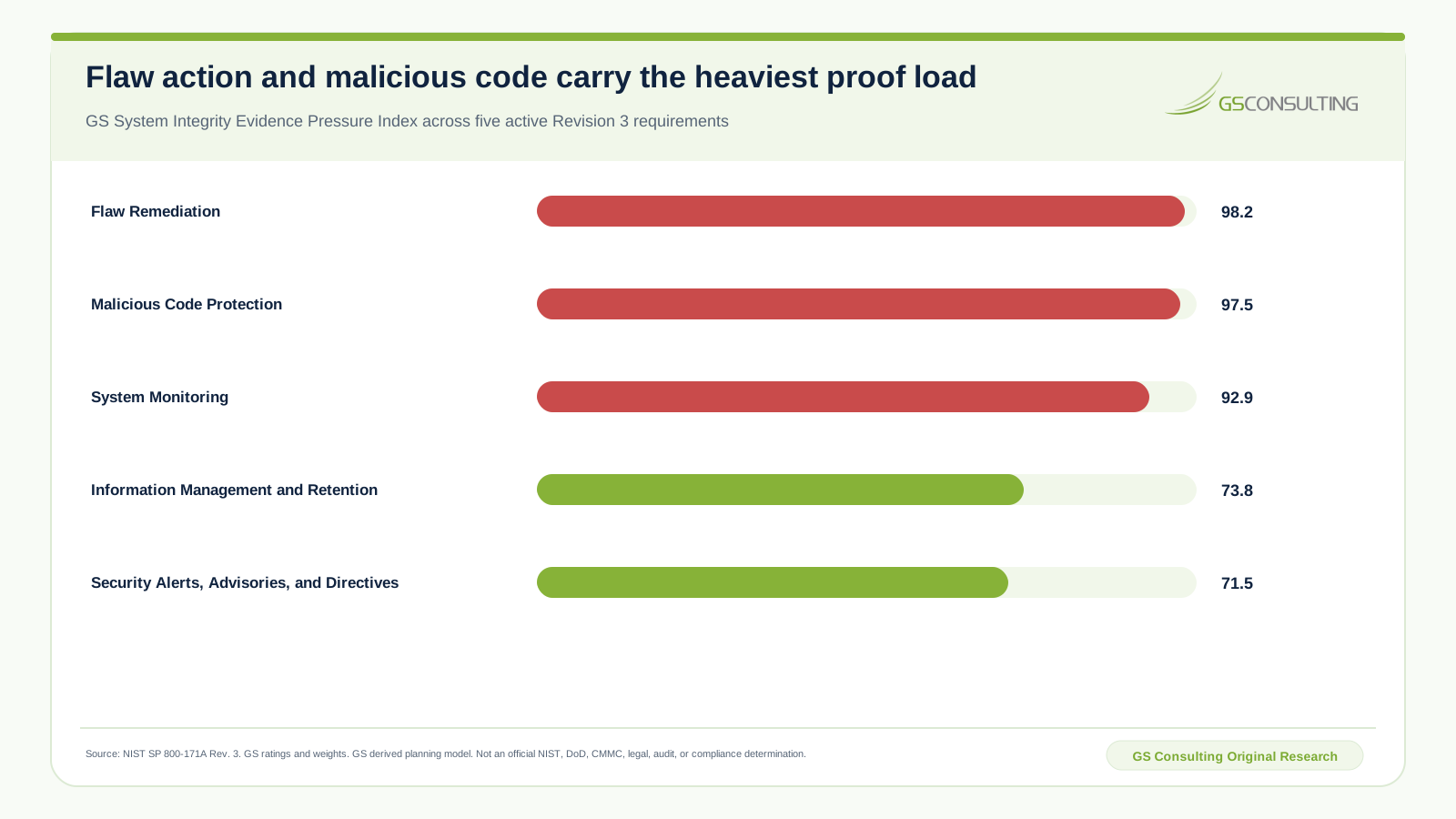
The result supports a sequence, not a compliance verdict. Build and test the three high pressure technical lanes first because their state changes quickly and their evidence ages quickly. Establish the alert and retention records in the same operating cycle so technical action follows current direction and produces governed output. The model is a GS planning tool, not an official NIST, Department of Defense, CMMC, legal, audit, assessment, certification, or compliance determination.
Run Five Connected Integrity Lanes
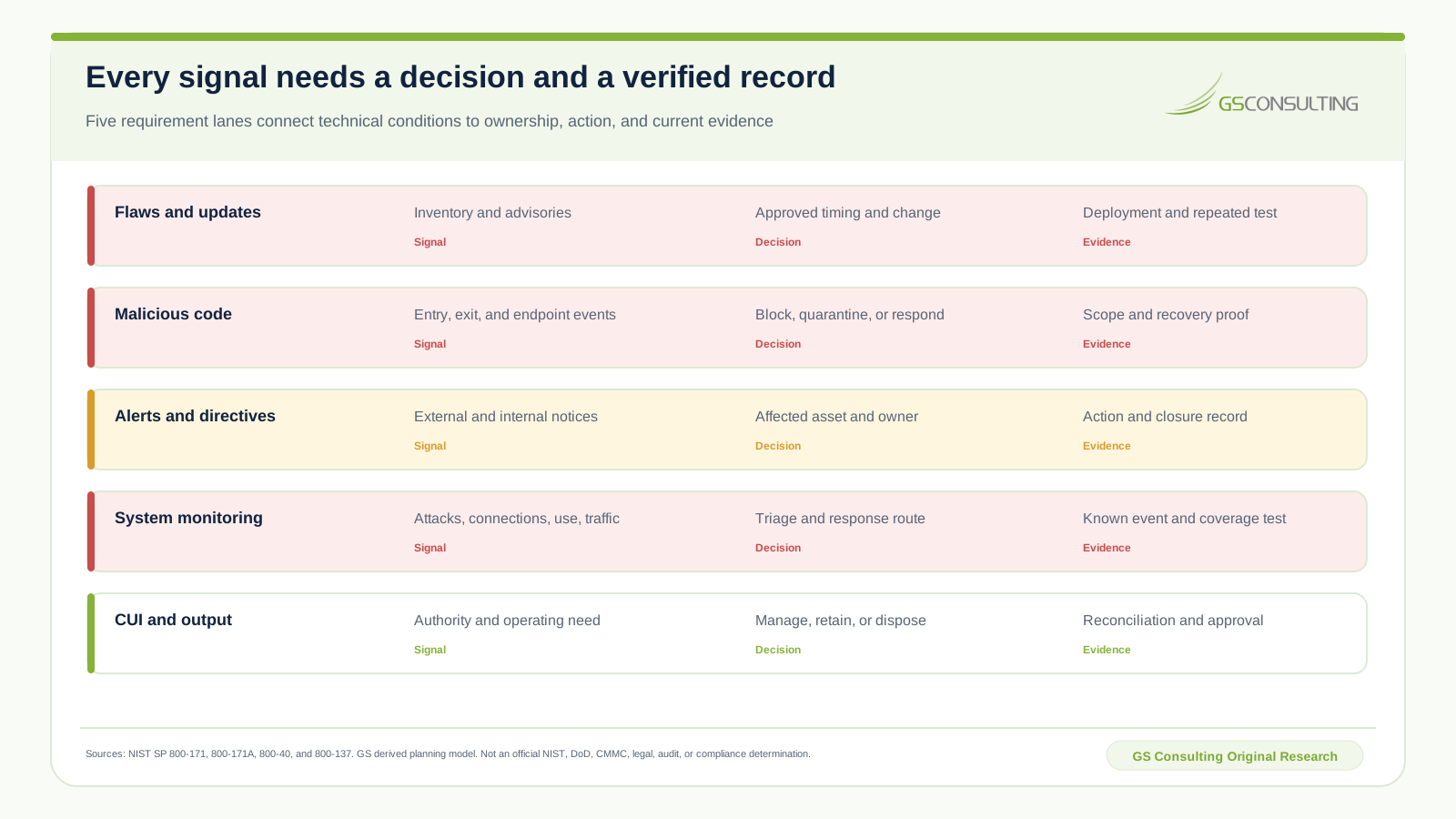
Use one shared operating vocabulary. A signal is a flaw, malicious code event, advisory, monitored condition, CUI record, or output condition that may require action. Scope identifies the affected component, path, identity, software version, provider, information, and owner. A decision rule defines severity, timing, response, exception, escalation, or retention authority. Execution changes the environment through an approved process. Verification proves the expected state and reconciles remaining risk.
Give each lane an accountable service owner and connect it to the same component and information inventory. A vulnerability scanner, endpoint protection console, alert mailbox, network monitor, and records system can each use different identifiers. Create stable mappings so an operator can move from a product name or address to the in scope component, CUI path, responsible team, contract, and evidence location.
Make Flaw Remediation a Verified Change Process
Start with authoritative asset and software records. Collect flaws from vendor notices, scanning, testing, threat intelligence, incident work, service providers, and operational observation. Normalize product, version, component, location, exposure, CUI role, owner, and source so duplicate signals resolve to one decision record without losing provenance.
Define the organization periods required by the applicable baseline. Separate the period to identify and report a flaw from the periods to correct it and install software or firmware updates. State when each clock begins, which severity or exposure rule applies, who can approve an exception, which interim protection is required, and which event restarts or escalates the clock. An undocumented service level target is not an approved parameter.
Prioritize with more than a base severity score. Product presence, exploitability, exposure, privilege, CUI path, compensating controls, operational consequence, and credible exploitation evidence all matter. The CISA Known Exploited Vulnerabilities Catalog is a useful input because it identifies vulnerabilities with evidence of exploitation in the wild. It is not a complete inventory and does not prove that the affected product exists in your environment.
NIST SP 800-40 Revision 4 frames enterprise patch management as preventive maintenance. Apply that discipline: obtain the update from an approved source, test it at the depth the change demands, approve the change, deploy it, watch for failure, and verify the original flaw condition. If an update cannot be installed, document the reason, interim protection, risk decision, owner, due date, review trigger, and later verification.
Close on measured state. Recheck the affected version, configuration, package, firmware, or vulnerability condition after deployment. Reconcile scanner results with change records and the asset inventory. A ticket that says “installed” cannot prove that the intended component received the update or that the flaw is no longer present.
Treat Malicious Code Protection as Coverage Plus Response
Map protection to the real entry and exit points. Include managed endpoints, servers, email, web traffic, file transfer, removable media where allowed, shared services, cloud workloads, virtual desktops, remote access paths, application uploads, downloads, and provider boundaries that process or protect CUI. Name the mechanism and owner for each location. Record accepted gaps and the protection that covers them.
Keep mechanisms and signatures or other detection content current. Define the approved scan frequency and when systems should scan files from external sources in real time. Preserve update status, policy version, exclusions, disabled states, missed scans, engine health, and any condition that prevents the expected protection. A console total is useful only when it reconciles to the actual component population.
Decide in advance how the mechanism and operators handle detection. Blocking and quarantine can be appropriate, but the requirement also allows other approved actions. The response must address affected scope, evidence preservation, lateral activity, CUI exposure, false positives, restoration, communication, and escalation. Connect confirmed or suspected compromise to the incident response process.
Test allowed, blocked, quarantined, and failed conditions without placing production or CUI at unnecessary risk. Use safe test artifacts and approved scenarios. Confirm the signal reaches the right queue, the record identifies the component and policy, the operator can investigate, and restoration works. Repeat the test after material changes to agents, gateways, policies, routing, or providers.
Turn Security Alerts into Owned Decisions
Maintain an approved set of external sources. It can include product vendors, service providers, customer direction, government notices, sector groups, threat intelligence, and internal findings that affect several teams. Record who monitors each source, the expected delivery method, backup coverage, review frequency, and how source health is checked.
For every material alert, determine whether the named product, version, service, behavior, threat, or information path exists. Record the source, receipt time, scope query, affected assets, owner, action, deadline, distribution, exception, and closure. When the alert does not apply, preserve the reason and the asset evidence used to reach that result.
Generate and distribute internal alerts, advisories, or directives when an external notice or internal condition requires coordinated action. Tailor the message to the recipient. An operator needs a component, action, and deadline. An executive may need risk, business effect, decision, and unresolved exposure. A provider needs the exact responsibility and proof expected under the agreement.
Test the route with a realistic advisory. Choose a known product or simulated condition, identify presence, assign an owner, issue direction, track response, and close on evidence. Measure missed recipients, asset query gaps, delayed ownership, unclear language, and unverified completion.
Prove System and Communication Coverage
System Monitoring reaches beyond collecting logs. Revision 3 calls for detecting attacks and indicators of potential attacks, unauthorized local network connections, unauthorized use, and unusual or unauthorized inbound and outbound communications. Translate each condition into a coverage statement: which component or path is observed, by what source, with what logic, by whom, and with what response.
Build a monitoring register tied to the system boundary. Include endpoints, servers, network segments, remote paths, cloud services, applications, external providers, administrative paths, and data transfer points. For each source, record collection health, expected volume or heartbeat, time alignment, retention, destination, detection rules, escalation, and evidence location.
NIST SP 800-137 connects monitoring to visibility into assets, threats, vulnerabilities, control effectiveness, and timely response. Apply the principle without confusing more telemetry with more coverage. A large data store can still miss one critical outbound route or a provider action. Reconcile actual traffic and component paths with the registered sensors.
Run known event tests. Generate an approved allowed event, a denied event, a suspicious event, a local connection condition, and representative inbound and outbound activity. Confirm collection, logic, queue delivery, context, triage, response, and closure. Also test source failure. The team should detect when monitoring stops, not merely when a monitored event occurs.
Govern CUI Sources and Outputs Together
Information Management and Retention connects cybersecurity operations to records, contracts, legal duties, privacy, customer direction, and business needs. Start with the CUI source and follow every meaningful output: copies, exports, reports, transformed data, summaries, logs, backups, indexes, temporary files, model prompts, model output, and derived records that remain CUI.
For each class, name the authority, location, owner, access, approved use, retention period, disposition action, hold process, exception, and review trigger. Do not invent one universal period. The governing authority can vary by contract, record type, investigation, claim, incident, litigation hold, customer instruction, or other duty. Escalate conflicts to the designated legal, records, contract, security, and customer authorities.
Test the full lifecycle. Create a representative record, apply the required label or handling rule, use it through an approved workflow, find every expected copy and output, place a hold where applicable, execute disposition in an approved test environment, and verify the result. Reconcile deletion records with backups, replicas, caches, search indexes, providers, and downstream systems.
Automation deserves special attention. A workflow can create new CUI even when its input is protected. Map prompts, context, retrieval results, model output, validation records, tickets, reports, and logs. The secure AI and regulated automation service begins with this information boundary before selecting the model or integration pattern.
Use One Decision Path from Signal to Closure
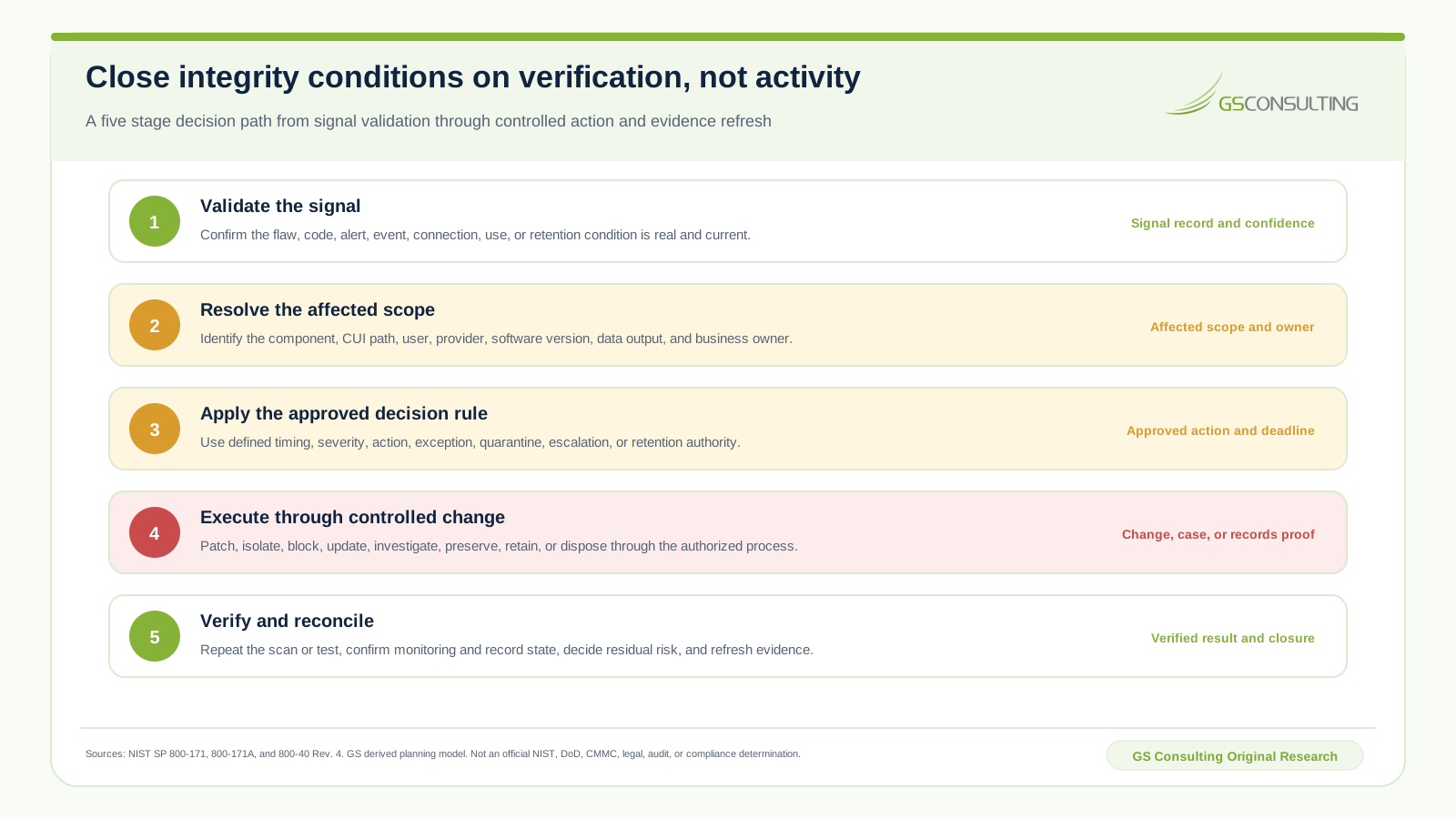
Validate the signal. Confirm the flaw, code, alert, event, connection, use, or retention condition is real and current. Preserve its source and confidence. Resolve affected scope. Identify the component, CUI path, user, provider, version, data output, and accountable owner. Avoid broad action based on an uncertain match.
Apply the approved decision rule. Use the defined timing, severity, response, exception, quarantine, escalation, or retention authority. Record the deadline and approver. Execute through controlled change. Patch, isolate, block, update, investigate, preserve, retain, or dispose through the authorized process. Connect the security record to the change, case, or records action.
Verify and reconcile. Repeat the scan or test, confirm monitoring and record state, explain defects, decide residual risk, and refresh the evidence. Reconcile the result with the asset inventory, system plan, risk register, plan of action, incident record, provider record, and retention map when those records are affected.
Avoid Six System Integrity Failures
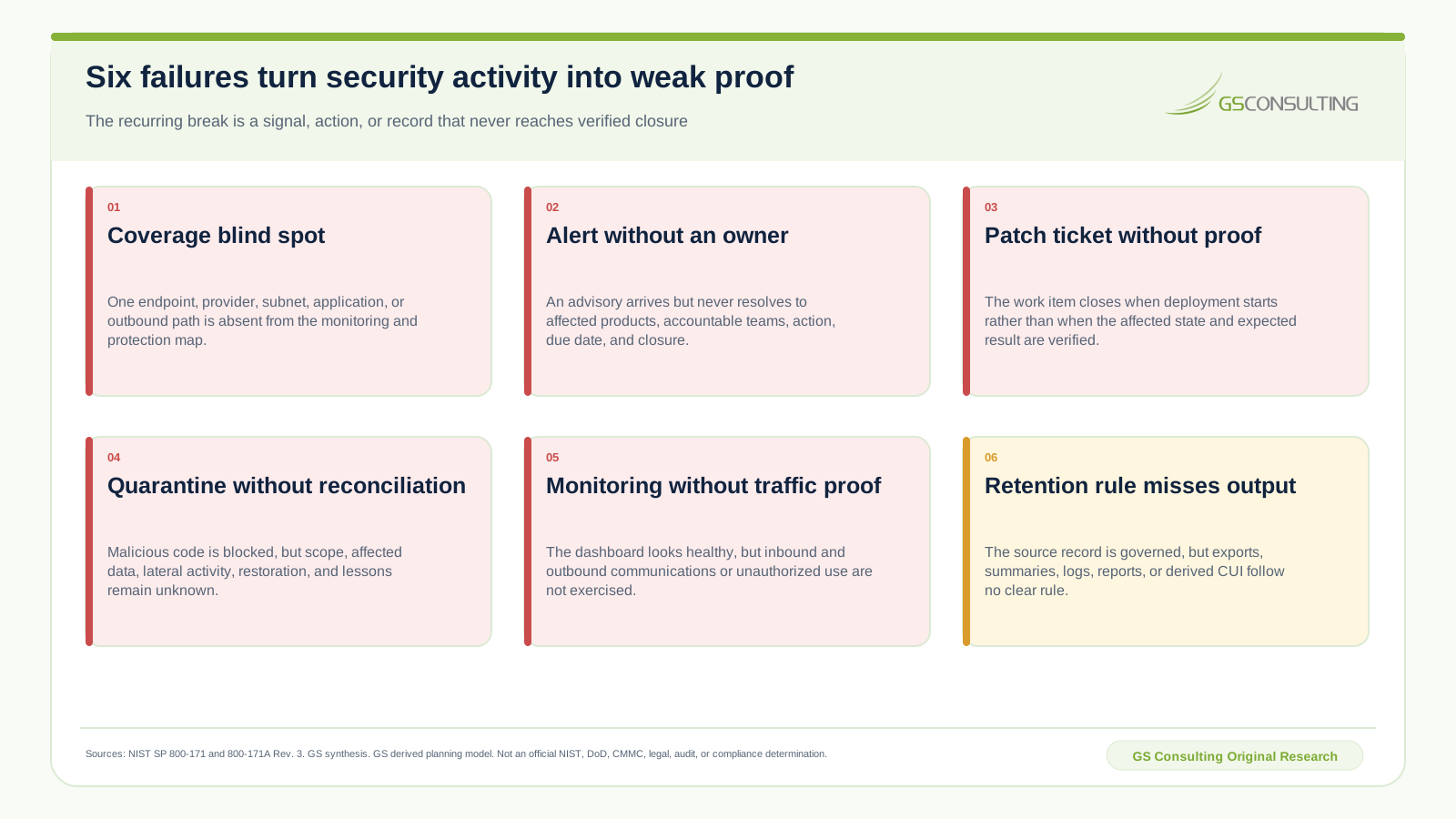
Coverage blind spot. One endpoint, provider, subnet, application, or outbound path is absent from the map. Alert without an owner. An advisory arrives but never resolves to affected products, action, deadline, and closure. Patch ticket without proof. Work closes when deployment starts instead of when the affected state is verified.
Quarantine without reconciliation. Malicious code is blocked, but scope, affected information, lateral activity, restoration, and lessons remain unknown. Monitoring without traffic proof. A dashboard looks healthy, but inbound and outbound paths or unauthorized use are never exercised. Retention rule misses output. The source record is governed while reports, exports, logs, summaries, or derived CUI follow no clear rule.
Build the Minimum Integrity Evidence Packet
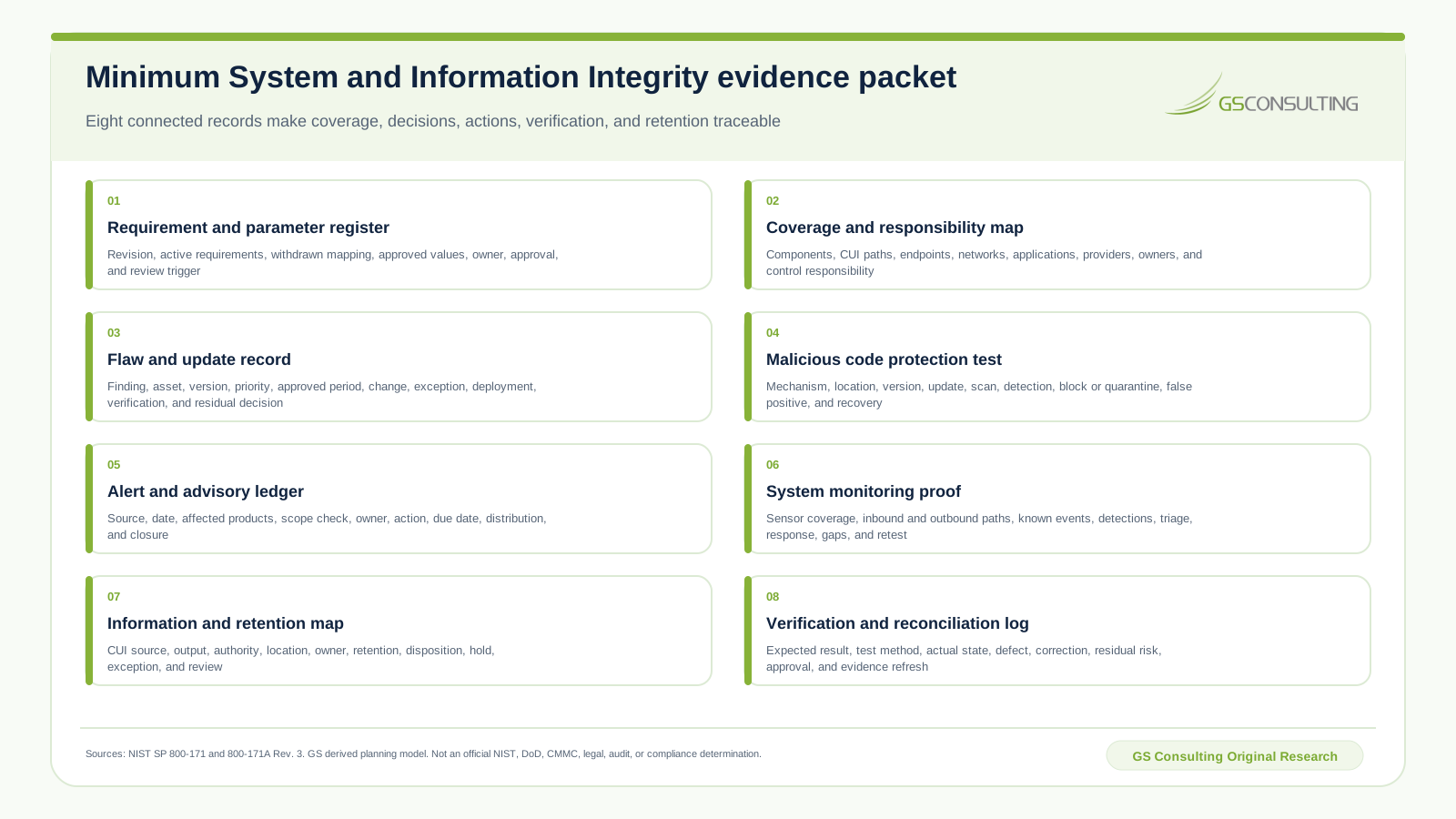
Requirement and parameter register. Record the revision, active requirements, withdrawn mappings, approved values, owners, approvals, and review triggers. Coverage and responsibility map. Connect components, CUI paths, endpoints, networks, applications, providers, mechanisms, and owners.
Flaw and update record. Preserve the finding, asset, version, priority, approved period, change, exception, deployment, verification, and residual decision. Malicious code protection test. Show mechanism, location, version, update, scan, detection, block or quarantine, false positive handling, and recovery.
Alert and advisory ledger. Track source, date, affected products, scope query, owner, action, due date, distribution, and closure. System monitoring proof. Show sensor coverage, inbound and outbound paths, known events, detections, triage, response, gaps, and repeated test.
Information and retention map. Connect CUI source and output to authority, location, owner, retention, disposition, hold, exception, and review. Verification and reconciliation log. Record the expected result, method, actual state, defect, correction, residual risk, approval, and evidence refresh.
A 60 Day System Integrity Plan
| Period | Operator action | Required output |
|---|---|---|
| Days one through ten | Confirm the contract revision, CUI boundary, active requirements, parameter values, providers, current tools, and decision authorities. | Revision record, parameter register, scope map |
| Days eleven through twenty | Reconcile components, software, entry and exit points, monitoring sources, alert sources, CUI records, outputs, and accountable owners. | Coverage and responsibility map |
| Days twenty one through thirty | Define flaw clocks, priority rules, update paths, malicious code policies, alert routes, monitoring conditions, and retention authority. | Approved operating rules and exception paths |
| Days thirty one through forty | Connect tickets, cases, changes, provider records, asset identity, evidence fields, source health, and escalation. | Integrated operating workflow and registers |
| Days forty one through fifty | Test a representative flaw, malicious code event, advisory, monitored traffic condition, source failure, and CUI output lifecycle. | Test records, defects, actions, and owners |
| Days fifty one through sixty | Correct defects, repeat failed tests, reconcile current state, approve the evidence packet, and set recurring reviews and change triggers. | Verified corrections, approved packet, review calendar |
Do not wait until day fifty to discover that a test could disrupt production. Choose safe methods and approved windows early. Use representative components and paths, but record limits. When a provider supplies a mechanism or record, confirm the contract permits the needed evidence and that responsibility is explicit. A service report can support assurance, but it does not automatically prove the contractor specific implementation and scope.
Research Sources and Caveats
The GS research package uses official sources accessed September 22, 2026:
- NIST SP 800-171 Revision 3 for the five active requirements, required outcomes, and withdrawn mappings.
- NIST SP 800-171A Revision 3 for determination statements, organization defined parameters, and assessment methods.
- NIST SP 800-40 Revision 4 for enterprise patch management planning.
- NIST SP 800-137 for monitoring strategy, visibility, and timely risk response.
- CISA Known Exploited Vulnerabilities Catalog for an exploitation informed prioritization signal.
- Department of Defense CMMC FAQs Version 3 for the current Revision 3 implementation and Revision 2 assessment transition statement.
- DFARS 252.204-7012 for the contract version rule.
- NIST SP 800-83 Revision 1 for supporting malicious code prevention and response context.
The research package contains a source register, public signals, requirement detail, model inputs, weights, formula driven workbook, cached scores, sensitivity analysis, decision path, failure modes, evidence packet, figure data, data dictionary, methodology, editable SVG files, and browser rendered PNG files. Public observations, GS ratings, and derived results remain separate.
Counts are GS calculations from the official Revision 3 procedures. Method mentions are candidate objects, roles, processes, and mechanisms, not mandatory quantities. The index supports sequencing. It does not determine legal duties, contract applicability, required evidence, assessment scope, audit results, certification, or compliance. Confirm the live solicitation, award, clause, program direction, customer instruction, system facts, and approved organization values.
NIST 800-171 System and Information Integrity FAQ
What are the NIST 800-171 System and Information Integrity requirements?
Revision 3 has five active requirements: Flaw Remediation, Malicious Code Protection, Security Alerts Advisories and Directives, System Monitoring, and Information Management and Retention. The governing contract or program determines the applicable revision.
How many assessment statements are in the Revision 3 family?
GS counted 27 determination statements and three organization defined parameters across the five active requirements. The procedures also list 45 examine mentions, 22 interview mentions, and 17 test mentions.
Does NIST 800-171 require a specific patch deadline?
Revision 3 uses organization defined periods for identifying, reporting, correcting, and updating flaws. Use the values approved for the applicable baseline and preserve decisions, exceptions, deployment, and verification.
Does antivirus software satisfy Malicious Code Protection?
A product alone is not enough. Prove protection at relevant entry and exit points, current updates, approved scans, external file checks, response actions, coverage, exceptions, and tested results.
What should System Monitoring detect?
The requirement covers attacks and potential attack indicators, unauthorized local network connections, unauthorized use, and unusual or unauthorized inbound and outbound communications. Evidence should show coverage, detection, triage, response, and testing.
What evidence supports System and Information Integrity?
Keep the requirement and parameter register, coverage map, flaw and update records, malicious code tests, alert ledger, monitoring proof, information and retention map, and verification log. Each record should identify scope, owner, time, result, exception, and current status.
Suggested Future Reading
- NIST 800-171 and CUI Security Hub
- NIST SP 800-171A Assessments
- NIST 800-171 Risk Assessment Controls
- NIST 800-171 Assessment and Monitoring
- NIST 800-171 Configuration Management
- NIST 800-171 Incident Response
- NIST 800-171 Audit and Accountability
- Secure AI and Regulated Automation
Make every integrity signal reach verified closure.
Connect scope, decision rules, operating action, repeated tests, retained evidence, and current risk in one accountable system.
Request an Integrity Review