GovCon Cybersecurity | | 27 min read
NIST 800-171 System Boundary and Asset Inventory Guide

Key Takeaways
The boundary is a record system, not a line on a diagram
The SSP names eight kinds of system context
Revision 3 connects components, information, threats, environment, dependencies, connections, requirements, safeguards, roles, and other relevant facts.
The CUI data flow record scores 100
It leads the GS priority model because the inventory, locations, exchanges, providers, diagrams, and SSP all depend on knowing the real information path.
Every boundary record must agree
A current inventory does not rescue a stale SSP. A polished diagram does not rescue an unknown provider path. Reconciliation is the control.
A NIST 800-171 system boundary is not a drawing around an enclave. It is a set of records that agree about where CUI moves, which components make that path work, who controls them, and what changed.
Teams get this wrong by starting with the easiest artifact. They export an asset list, draw a box around a subnet, paste a provider name into the SSP, and call the boundary complete. Then the contradictions surface. The inventory omits the log platform. The diagram omits a backup destination. The CUI register names a file share that no longer exists. The provider contract assigns duties nobody mapped. The SSP describes a system the operators are not running.
The practical standard is tougher. Pick a representative CUI item and trace it from receipt or creation through processing, storage, transmission, backup, provider access, and exit. Every component, person, location, interface, and service on that path needs a stated role. Every boundary record should tell the same story.
This guide connects that work to the NIST 800-171 hub, the Configuration Management guide, the Media Protection guide, the companion supplier flowdown guide, and GS Consulting services for secure AI automation.
Make the boundary match the environment.
GS Consulting helps contractors trace CUI, classify assets, map providers, reconcile system records, and build evidence around the operating system.
Plan the Boundary ReviewNIST 800-171 System Boundary: The Short Answer
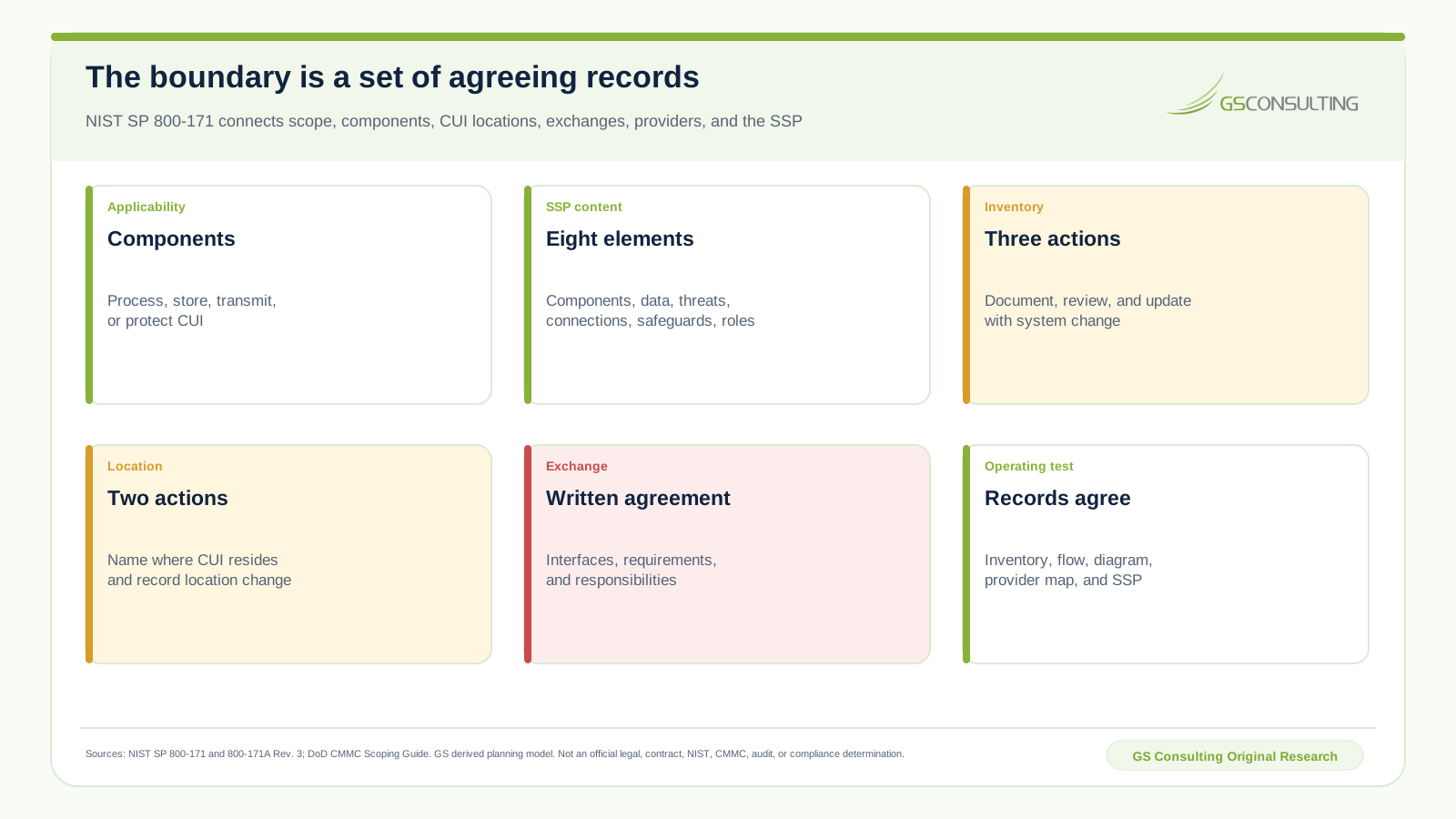
NIST SP 800-171 Revision 3 says its requirements apply to nonfederal system components that process, store, or transmit CUI and to components that protect those components. It does not reduce scope to devices that hold a CUI file.
Several requirements make the boundary concrete. System Component Inventory, 03.04.10, requires a documented inventory that is reviewed and updated. Information Location, 03.04.11, requires the locations of CUI and the components that process or store it. Information Exchange, 03.12.05, requires approved exchanges and documented interfaces, security requirements, and responsibilities. The System Security Plan, 03.15.02, ties those records into one controlled system description.
The short test is simple. Can the organization select a CUI item and explain every system, service, location, user path, protection component, provider responsibility, and exchange it touches? Can the team show that the inventory, diagram, agreement, location register, and SSP all reflect that answer? If not, the boundary is still an assertion.
The Official Requirements Form One Boundary Story
There is no single Revision 3 requirement titled system boundary. The operating obligation emerges from connected requirements and the assessment scope described in the SSP. Treating any one artifact as the complete answer hides the dependencies that assessors and operators need to test.
| Official anchor | What it adds | Boundary question |
|---|---|---|
| 03.01.03 Information Flow Enforcement | Approved information flow within and between systems | Which CUI paths are allowed, blocked, and enforced? |
| 03.04.10 System Component Inventory | Documented components and change based updates | What makes the covered system work now? |
| 03.04.11 Information Location | CUI and component locations plus location changes | Where is CUI processed and stored? |
| 03.12.05 Information Exchange | Approved exchanges, interface facts, security duties, and responsibilities | Which systems exchange information and under what agreement? |
| 03.15.02 System Security Plan | Components, information, threats, environment, connections, safeguards, and roles | What system is the organization claiming to protect? |
| 03.16.03 External System Services | Defined requirements, responsibilities, and monitoring for external services | Which provider services enter the boundary story? |
The official NIST SP 800-171A Revision 3 assessment procedures say assessment scope is guided and informed by the SSP. The procedures then test whether those system facts are defined, documented, reviewed, updated, approved, and protected. The listed assessment objects are potential evidence, not a universal list of mandatory filenames.
That nuance matters. A contractor may use a configuration database, an asset platform, controlled spreadsheets, architecture records, or several joined systems. The tool choice is flexible. The answers cannot be vague.
Let the Contract Set Applicability and Revision
A NIST publication does not rewrite a contract by itself. When DFARS 252.204-7012 is included, it connects covered defense information, the covered contractor information system, and the stated NIST baseline to the award. The solicitation, contract, subcontract, modifications, information terms, and authorized customer direction decide what applies.
Revision 3 is the current NIST publication. Current contract and CMMC paths may still point to Revision 2. Record the award, clause, publication, revision, covered information, covered system, customer direction, decision owner, date, and review trigger before declaring scope. Preparation can be decisive. Legal and contract conclusions still require cautious language grounded in facts.
Do not mix two questions. First ask which obligation governs. Then ask which components support the covered information path. A team that starts classifying assets before settling the contract and information facts can build a precise inventory for the wrong baseline.
Start With the CUI, Not the Network
The network is an implementation surface. CUI is the scope anchor. Start with actual information used on the award: drawings, specifications, test data, technical reports, source material, exports, support records, messages, backups, and derived work products. Confirm markings and contract context, but do not assume an unmarked file is public or assume every project record is CUI.
For each representative item, trace seven states: entry, creation, processing, storage, transmission, backup, and exit or disposition. Name the user action and the system action at each state. Include temporary files, local sync, print, export, mobile access, support access, logging, recovery, and provider administration where they occur.
A good trace is testable. Open a sample. Follow the application path. Inspect identity and access. Confirm the storage destination. Review the network or service interface. Find the backup. Inspect the logs and protection systems. Compare what happened with the documented flow. Discovery that relies only on interviews will miss quiet copies and provider paths.
The CUI data flow map guide provides a deeper method for tracing creation, use, transfer, and exit. The boundary work uses that trace to decide which assets and responsibilities belong in the controlled system record.
Classify Assets by What They Do
Asset category is a conclusion about function, not a label copied from a product catalog. The current DoD CMMC Level 2 Scoping Guide distinguishes CUI Assets, Security Protection Assets, Contractor Risk Managed Assets, Specialized Assets, and out of scope assets. Use that guide when the CMMC program applies. Preserve separate NIST and contract reasoning where it does not.
| Asset role | Practical test | Evidence to preserve |
|---|---|---|
| CUI processing role | The component processes, stores, or transmits CUI | CUI path, owner, location, access, configuration, and current state |
| Protection role | The component provides security functions for the covered environment | Protected assets, responsibility, settings, logs, tests, and provider facts |
| Managed risk role | The component can connect to or affect the environment under defined conditions | Risk decision, controls, restrictions, monitoring, and review trigger |
| Specialized role | The component has an operational technology, test, Internet of Things, or other specialized constraint | Purpose, limitation, connection, protection, and treatment decision |
| Out of scope conclusion | The component cannot process, store, transmit, or protect CUI and is effectively separated | Separation design, test result, owner, date, and change trigger |
Do not classify an identity platform, log service, backup tool, network device, or managed service as out of scope merely because CUI is not intended to rest there. Ask whether the component protects covered assets, carries security protection data, provides privileged administration, or can materially affect the security path.
GS Original Research: Boundary Record Priority Index
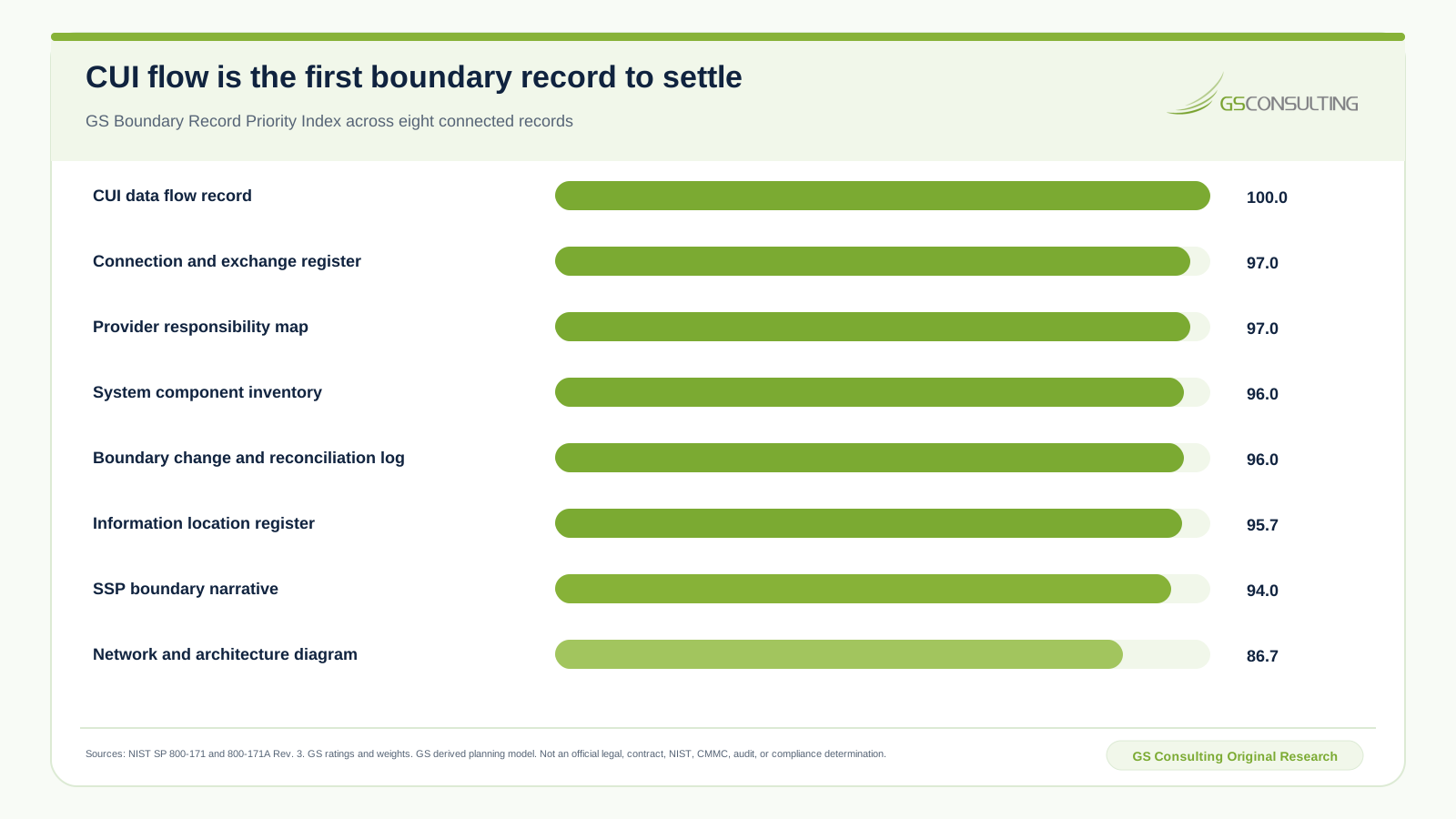
GS Consulting built the Boundary Record Priority Index to answer an operating question: which boundary records should a team settle first when scope is unclear or contradictory? The model compares eight connected records on a 100 point planning scale.
The model keeps public observations and analyst judgments separate. Public anchor count records the number of directly relevant NIST or DoD anchors, capped at three. Six GS ratings from one to five measure scope dependency, change exposure, discovery difficulty, evidence reuse, assessment consequence, and coordination demand.
| Factor | Base weight | Why it matters |
|---|---|---|
| Public anchor count | 10 points | Separates official grounding from the GS operating judgment |
| Scope dependency | 25 points | Rewards records that other boundary decisions depend on |
| Change exposure | 15 points | Recognizes records that drift quickly as systems and services change |
| Discovery difficulty | 15 points | Elevates facts that require technical tracing and coordination |
| Evidence reuse | 15 points | Rewards records reused across the SSP, assessment, and operations |
| Assessment consequence | 15 points | Reflects the damage caused by an unsupported boundary claim |
| Coordination demand | 5 points | Accounts for work across security, contracts, IT, engineering, and providers |
For a manual example, the System Component Inventory receives all 25 scope dependency points, 15 change exposure points, 12 discovery points, 15 evidence reuse points, 15 assessment consequence points, 4 coordination points, and 10 public anchor points. The resulting score is 96.0.
| Boundary record | Base score | Alternate score | What the score means |
|---|---|---|---|
| CUI data flow record | 100.0 | 100.0 | Settle first because the remaining records depend on the path |
| Connection and exchange register | 97.0 | 97.0 | Resolve interfaces, exchange terms, and responsibilities early |
| Provider responsibility map | 97.0 | 96.0 | Make shared duties and external evidence explicit |
| System component inventory | 96.0 | 96.0 | Join technical discovery to stable ownership and lifecycle state |
| Boundary change and reconciliation log | 96.0 | 96.0 | Keep the record set current after change |
| Information location register | 95.7 | 97.3 | Expose repositories, provider locations, and location change |
| SSP boundary narrative | 94.0 | 93.0 | Write after discovery so the narrative reflects the system |
| Network and architecture diagram | 86.7 | 88.3 | Use as a representation and test surface, not the sole scope authority |
The alternate case moves five points from public anchor count to change exposure. It preserves the decision relevant top tier and changes no record by more than 1.7 points. That sensitivity result supports the sequence without pretending the ratings are a public benchmark.
Important caveat: This is a GS Consulting derived planning model based on cited public sources and documented assumptions. It is not an official legal, contract, audit, compliance, NIST, CMMC, DoD, or regulatory determination.
Eight Records Define and Sustain the Boundary
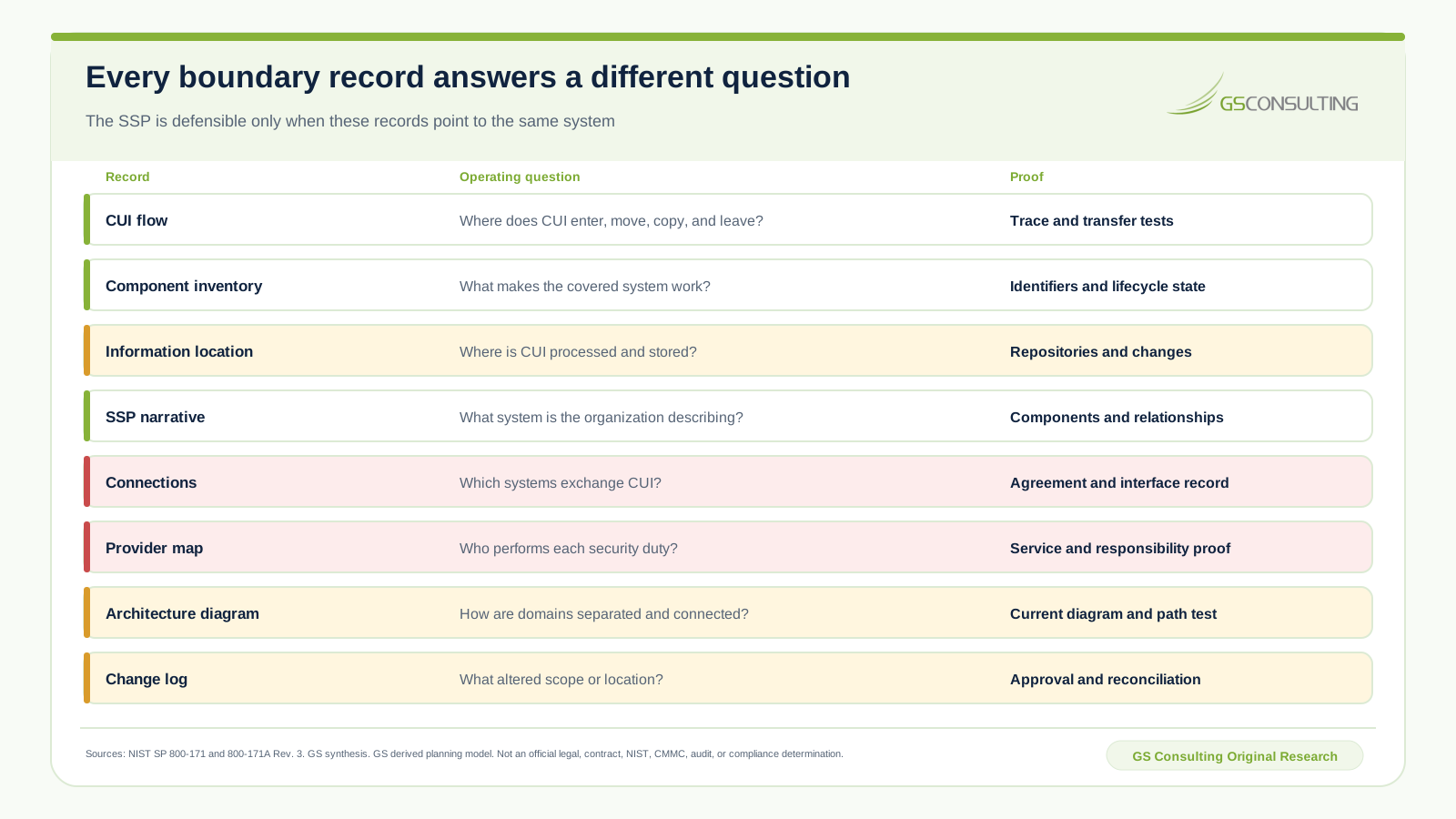
The applicability record names the award, clause, baseline, CUI, system, decision owner, and review trigger. It prevents scope work from drifting away from the actual obligation.
The CUI data flow record traces entry, creation, processing, storage, transmission, backup, provider use, and exit. It is the strongest discovery anchor because it forces the team to follow real information rather than presumed architecture.
The component inventory identifies what makes the covered system operate and what protects it. It needs enough context to distinguish a meaningful system component from a raw device export.
The information location register records repositories, components, providers, users, purposes, and location changes. An asset can stay constant while the CUI location changes through a new sync, backup, export, or service path.
The architecture and network map shows domains, interfaces, protection points, trust relationships, and separation. Test the documented routes against actual configuration and traffic.
The provider responsibility map assigns service, data, control duty, customer setting, provider evidence, incident action, and change notice. A provider name without mapped responsibility is not a boundary decision.
The exchange agreement register records the interface, information, authority, security requirement, responsibility, owner, approval, and review. It connects the technical path to the authorized relationship.
The reconciliation log preserves samples, differences, decisions, updates, retests, and approval. This is where a boundary becomes an operating control instead of a document project.
Use a Five Decision Boundary Path
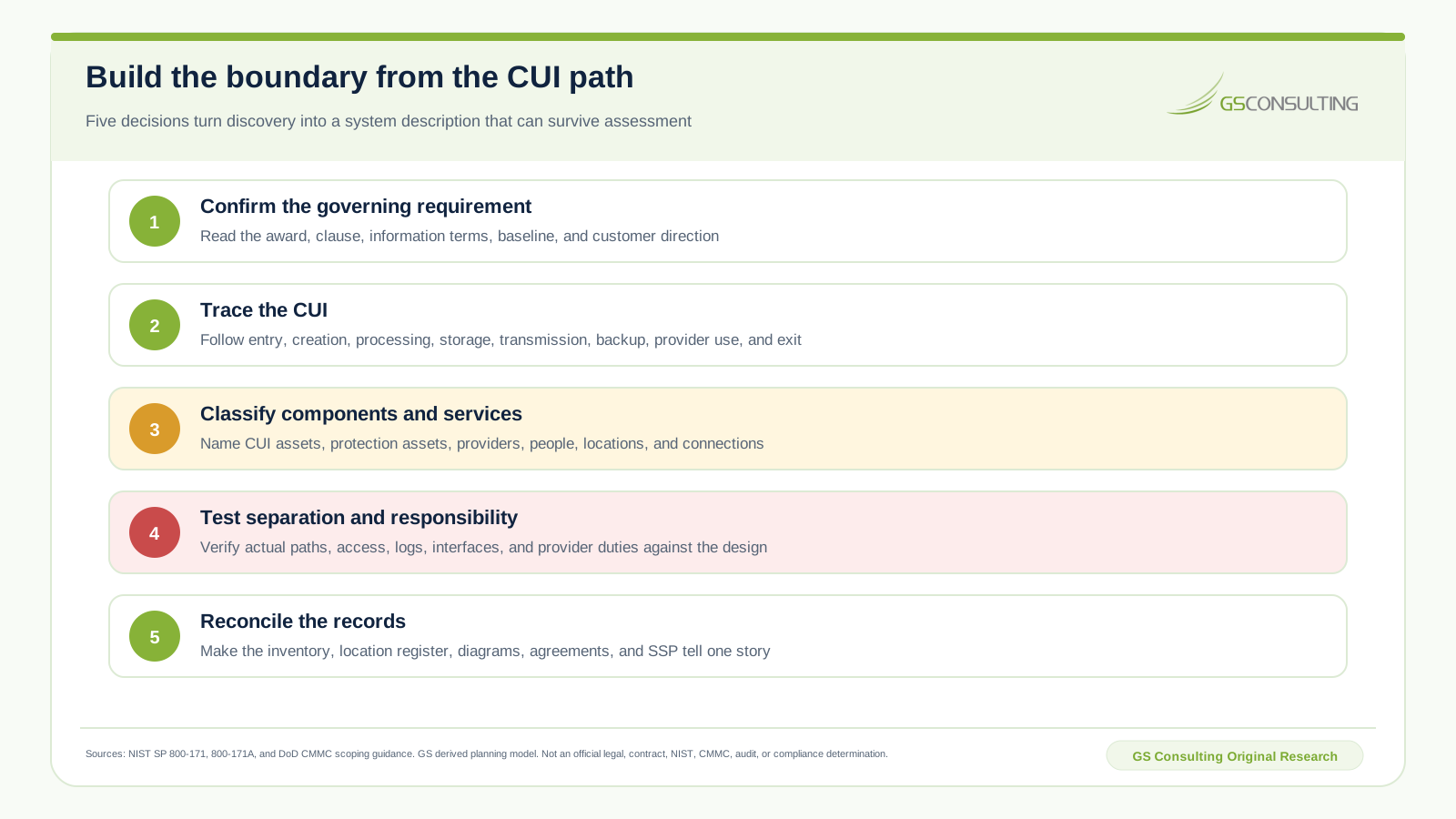
Confirm the governing requirement. Read the award, clauses, information terms, baseline, CMMC condition, and customer direction. Record what was reviewed and who owns the decision.
Trace the CUI. Follow representative items through normal work, exceptions, backup, support, transfer, and closeout. Use observation and technical evidence, not interviews alone.
Classify components and services. Name CUI assets, protection assets, providers, people, locations, and connections. Record the reason for each category and the evidence that supports it.
Test separation and responsibility. Inspect paths, access, logs, interfaces, provider duties, and blocked routes. A designed separation is useful. A tested separation is evidence.
Reconcile the records. Make the inventory, location register, diagram, agreements, provider map, and SSP reflect the tested environment. Preserve differences and decisions instead of silently editing history.
Build an Inventory That Can Explain the System
A raw discovery export is an input, not an inventory. Scanner and platform exports often identify devices, software, interfaces, or accounts. They rarely explain the component owner, system role, CUI relationship, protection role, service dependency, evidence source, or scope decision.
| Field group | Minimum fields | Why it exists |
|---|---|---|
| Identity | Stable ID, name, type, serial or service ID | Joins records without relying on changing display names |
| Ownership | Business owner, technical owner, operator, provider | Assigns decision and evidence responsibility |
| Technical state | Version, platform, network domain, location, lifecycle state | Supports baseline, vulnerability, and change reconciliation |
| Boundary role | CUI relationship, protection role, asset category, system role | Records why the component belongs and how it is treated |
| Connections | Interfaces, connected services, users, data path, provider path | Exposes exchanges and hidden dependencies |
| Evidence | Source, last verification, result, exception, reviewer | Separates an asserted record from a tested record |
| Change | Added date, removed date, last change, approval, review trigger | Keeps the inventory aligned with actual system change |
Use stable IDs across the inventory, CUI flow, diagrams, findings, changes, and SSP support records. Stable joins reduce the manual effort required to explain why an asset is present and what changed. They also expose duplicate or orphaned records that naming conventions hide.
Connect the inventory to the Configuration Management process. Component installation, removal, version change, service migration, new connection, and changed CUI location should trigger both technical control work and boundary record updates.
Reconciliation Is the Boundary Control
A boundary decays every time a system changes without updating the surrounding records. The answer is not an annual documentation sprint. It is a repeatable reconciliation test that samples the system from several directions.
| Test | Sample | Difference to resolve |
|---|---|---|
| CUI forward trace | Select a CUI item and follow it through the workflow | Unrecorded location, service, user path, export, backup, or exit |
| Asset reverse trace | Select an inventory component and trace its stated role | No supported CUI or protection relationship |
| Connection test | Select an interface and compare design, configuration, traffic, and agreement | Unknown exchange, duty, route, or security requirement |
| Provider test | Select a service and inspect data, administration, logs, settings, and evidence | Shared responsibility or provider path missing from the SSP |
| Change test | Select a recent install, removal, migration, or architecture change | Inventory, diagram, location, or SSP not updated |
| Separation test | Attempt representative prohibited paths from excluded assets | Designed boundary does not match enforced boundary |
Record the sample, expected result, actual result, evidence, difference, decision, owner, correction, retest, and approval. A mismatch is not automatically a failure. An unexplained mismatch that nobody owns is.
Six Boundary Shortcuts Fail Under Review
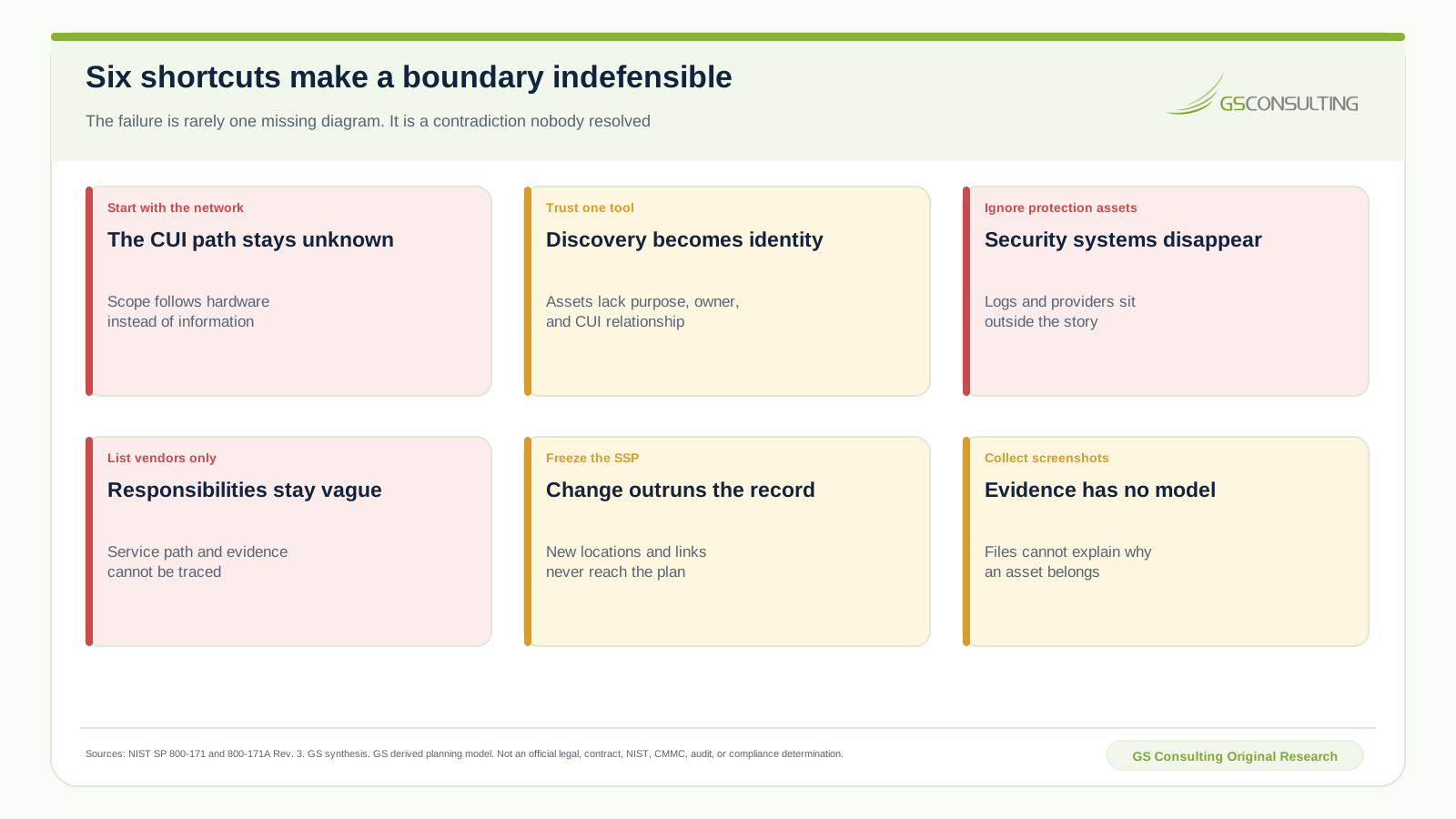
Starting with the network lets address space define scope while the CUI path stays unknown. Follow information first, then use network evidence to validate the path.
Trusting one discovery tool turns technical identity into a scope decision. Enrich the export with role, ownership, CUI relationship, protection duty, provider context, evidence, and change.
Ignoring protection assets leaves identity, logging, backup, monitoring, and network security outside the story even when those systems protect the covered environment.
Listing vendors without duties hides data routes, privileged access, customer settings, evidence sources, incident actions, and change notice.
Freezing the SSP lets new components, locations, services, and interfaces outrun the system description. Build event based updates into normal change work.
Collecting screenshots without a model creates files that cannot explain why an asset belongs, which requirement the evidence supports, or whether the state is current.
A Practical 60 Day Boundary Plan
Days 1 through 10: settle the obligation. Build the applicability record. Identify contracts, clauses, CUI sources, customer direction, current system descriptions, owners, and known providers. Select representative CUI items for tracing.
Days 11 through 25: trace and discover. Walk the CUI through normal and exception paths. Collect asset, identity, connection, storage, backup, logging, provider, and transfer evidence. Record unknowns instead of resolving them by assumption.
Days 26 through 40: classify and assign. Decide asset roles, name owners, map provider duties, document information locations, connect exchanges to authority, and capture separation claims that need testing.
Days 41 through 50: test the boundary. Run forward traces, reverse traces, connection tests, provider tests, change samples, and separation tests. Triage differences by CUI exposure, access, control dependency, and assessment consequence.
Days 51 through 60: reconcile and approve. Update the inventory, location register, diagrams, agreements, provider map, and SSP. Preserve the reconciliation file, open decisions, owners, dates, retest plan, and approval. Set the next interval and event triggers.
Minimum System Boundary Evidence Packet
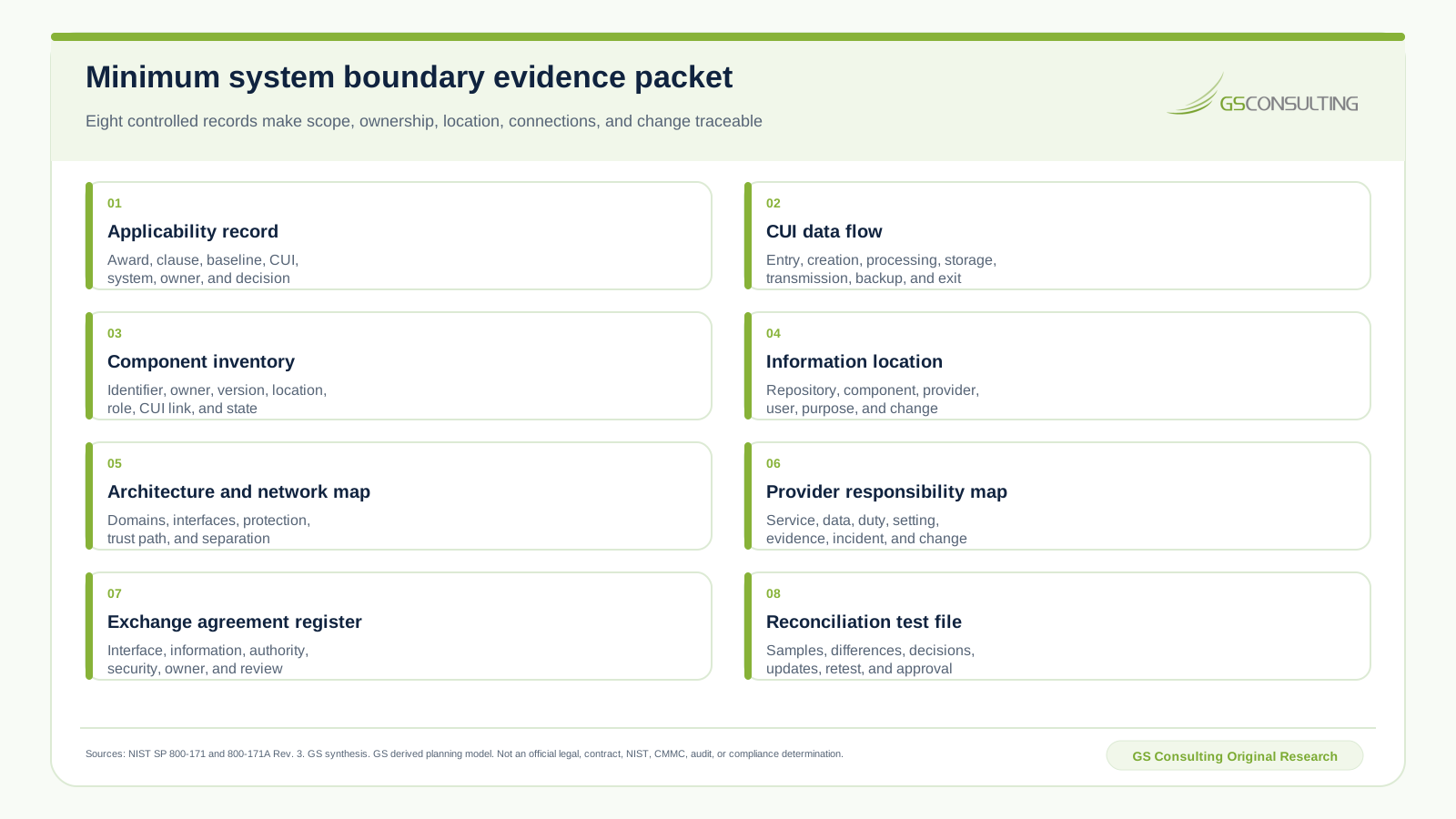
The evidence packet should include the applicability record, CUI data flow, component inventory, information location register, architecture and network map, provider responsibility map, exchange agreement register, and reconciliation test file. The names can change. The operating questions cannot.
Control the packet like a system record. Assign owners, stable IDs, approvals, review dates, access rules, change triggers, and retention. Link records instead of copying facts into disconnected files. Protect the SSP and related boundary information according to its sensitivity and the applicable requirement.
Assessment preparation should sample evidence from the packet, interview the owners, and repeat the technical tests. A beautiful inventory with an operator who cannot explain it is not ready. An operator who understands the system but cannot produce current records is not ready either.
Sources and Research Files
The model and guide use primary public sources: NIST SP 800-171 Revision 3, NIST SP 800-171A Revision 3, the DoD CMMC Level 2 Scoping Guide, and DFARS 252.204-7012.
The complete research package under research/insights/nist-800-171-system-boundary/ contains the source register, public signals, model inputs, formula driven workbook, derived scores, sensitivity analysis, figure data, methods, limitations, editable SVGs, and rendered PNGs. Public observations, GS ratings, and calculated outputs remain separate.
This guide provides preparation and operating guidance. It does not determine legal, contract, assessment, or certification status for a specific system.
Draw the boundary last.
Trace the CUI, classify the components, assign the duties, test the paths, and reconcile every record first. That is the operating standard.
Request a Boundary Assessment