Cybersecurity | | 28 min read
NIST 800-171 Risk Assessment Controls Explained

Key Takeaways
Risk assessment succeeds when the finding reaches a verified decision
A scanner reports conditions, not risk
Connect technical findings to CUI paths, mission effect, exploitation, exposure, control strength, ownership, and action consequence.
Vulnerability monitoring scores 100
It contains 11 of the family’s 17 assessment statements and four of the five organization defined parameters.
Close on verification, not ticket status
Test the condition after action, record the actual result, decide residual risk, and preserve the full decision history.
NIST 800-171 Risk Assessment is a continuous decision cycle. It connects current CUI and mission context to threat, vulnerability, exploitation, supply chain exposure, response, verification, and review.
A scan report is not a risk assessment. A red severity label does not explain whether the vulnerable component exists, supports a CUI path, is exposed to the threat, has working compensating controls, affects a critical mission, or has an approved response. A yearly risk register does not prove that new vulnerabilities, incidents, audits, suppliers, and system changes can alter a decision today.
The practical standard is simple: every material finding should resolve to a current context, analysis, decision, owner, response, due date, verification result, residual risk, approval, and next trigger. If the team cannot reconstruct that path, the risk program is an inventory.
This guide belongs to the NIST 800-171 and CUI Security Hub and supports the secure AI and regulated automation service. Use it with the system boundary guide, configuration management guide, audit guide, the incident response guide, the System and Information Integrity guide, and the assessment and monitoring operating guide.
Turn every important finding into an owned decision.
GS Consulting helps contractors define the risk method, improve vulnerability coverage, prioritize current signals, execute response, verify results, and prepare evidence.
Review the Risk ProgramNIST 800-171 Risk Assessment: The Short Answer
Confirm the CUI system and mission context. Assess risk, including supply chain risk, at the approved frequency and when material conditions change. Monitor and scan for vulnerabilities at approved frequencies, refresh scanner knowledge, react when new vulnerabilities affect the system, and remediate findings within approved response periods. Respond to findings from assessments, monitoring, and audits. Keep evidence that the response worked and the residual decision remains approved.
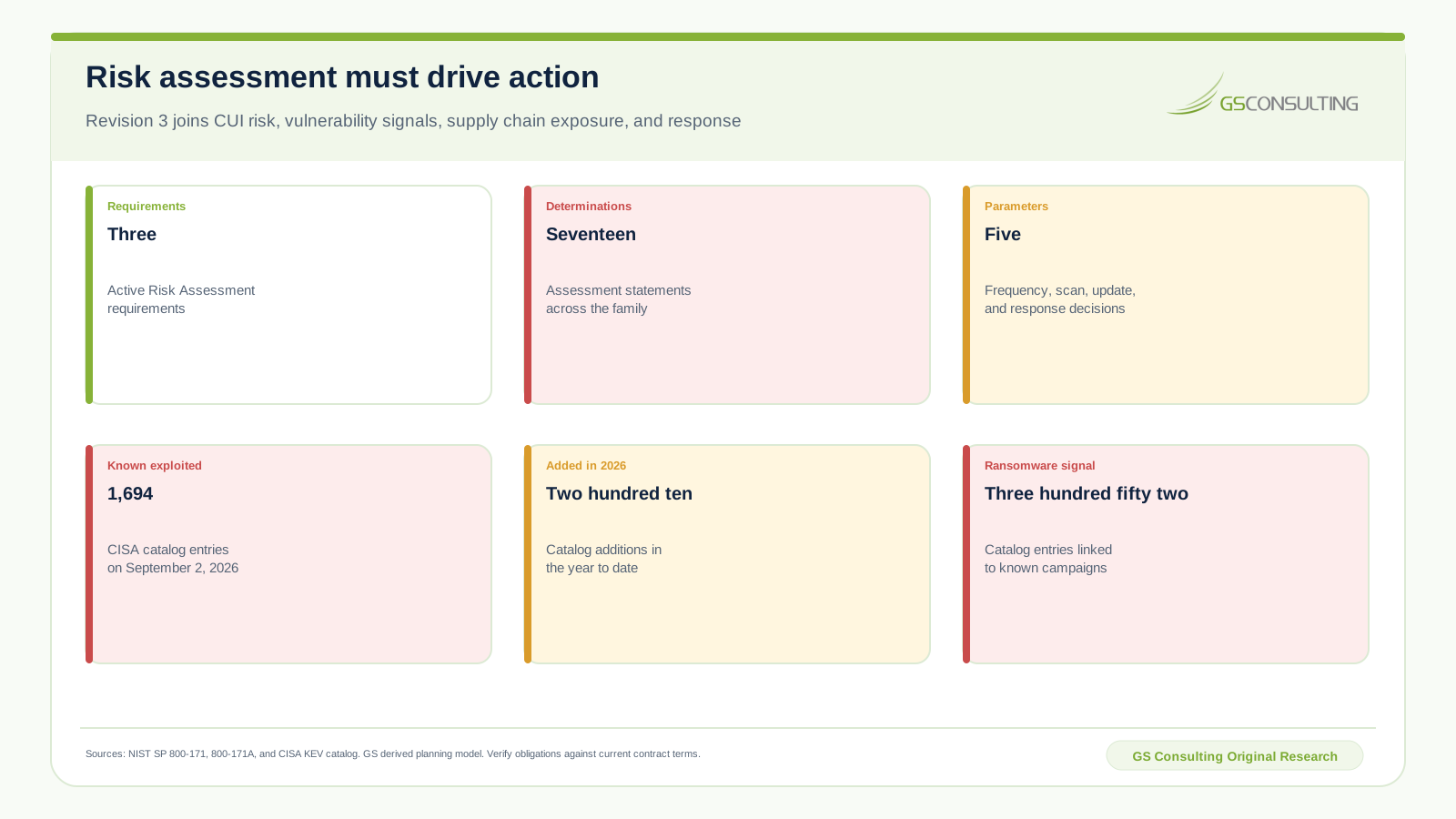
NIST SP 800-171 Revision 3 contains three active Risk Assessment requirements. NIST SP 800-171A Revision 3 defines 17 determination statements and five organization defined parameters across those requirements.
Confirm the Revision and Contract Gate First
Revision 3 is the current NIST publication, finalized in May 2024. It does not automatically amend an award. Confirm the solicitation, contract, clause version, program direction, required assessment method, and contracting officer authorization before changing a formal compliance claim.
The current DoD CMMC FAQ describes Level 2 using the 110 Revision 2 requirements and says future rulemaking will incorporate Revision 3. Keep a clear crosswalk if the operating program is preparing for Revision 3 while the assessment or award still points to Revision 2.
Record the revision decision beside the system boundary and risk method. The record should name the award, information, system, publication, approver, implementation effect, assessment effect, evidence effect, and trigger for review.
The Three Active Revision 3 Requirements
| Requirement | Operating outcome | Proof question |
|---|---|---|
| 03.11.01 Risk Assessment | Assess risk, including supply chain risk, from unauthorized CUI disclosure and update the assessment at the defined frequency. | Does the current assessment reflect the actual system, CUI path, mission, suppliers, threats, controls, and decision authority? |
| 03.11.02 Vulnerability Monitoring and Scanning | Monitor and scan at defined frequencies and after relevant new vulnerabilities, update scanner knowledge, and remediate within defined response periods. | Can the team prove complete coverage, current intelligence, event triggers, prioritization, owned action, exception, and verification? |
| 03.11.04 Risk Response | Respond to findings from security assessments, monitoring, and audits. | Does every material finding have an approved action, owner, date, interim protection, verification, residual decision, and closure? |
Requirement 03.11.03 is withdrawn in Revision 3 and incorporated into Vulnerability Monitoring and Scanning. Preserve its transition mapping when updating old plans or evidence, but do not count it as a fourth active requirement.
Use Current Public Signals Without Inventing a Benchmark
The CISA Known Exploited Vulnerabilities Catalog is an authoritative list of vulnerabilities with evidence of exploitation in the wild. CISA urges organizations to use the catalog as an input to vulnerability prioritization. It is not a complete vulnerability inventory and does not prove that a listed product exists in the assessed environment.
The machine readable catalog snapshot released September 2, 2026 contained 1,694 entries. GS counted 210 additions with 2026 catalog dates and 352 entries marked for known ransomware campaign use. These are dated public observations, not a claim about the rate or severity of vulnerabilities in a typical contractor environment.
Use exploitation as one decision signal. Join it with asset and version presence, CUI and mission path, exposure, reachability, privilege, control strength, supplier dependency, change risk, available mitigation, verification method, and response authority. A global signal becomes useful when it is connected to local context.
GS CUI Risk Decision Pressure Index
GS counted 17 determination statements and five organization defined parameters in the official Revision 3 assessment procedures. Vulnerability Monitoring and Scanning contains 11 statements and four parameters. Risk Assessment contains three statements and one parameter. Risk Response contains three statements and no parameter.
The GS CUI Risk Decision Pressure Index combines those public counts with five documented analyst ratings: decision dependency, change exposure, evidence reuse, action consequence, and coordination demand. Counts are normalized against family maxima. Base weights are 15, 10, 20, 20, 15, 10, and 10 percent. The sensitivity case moves five points from statement count to decision dependency.
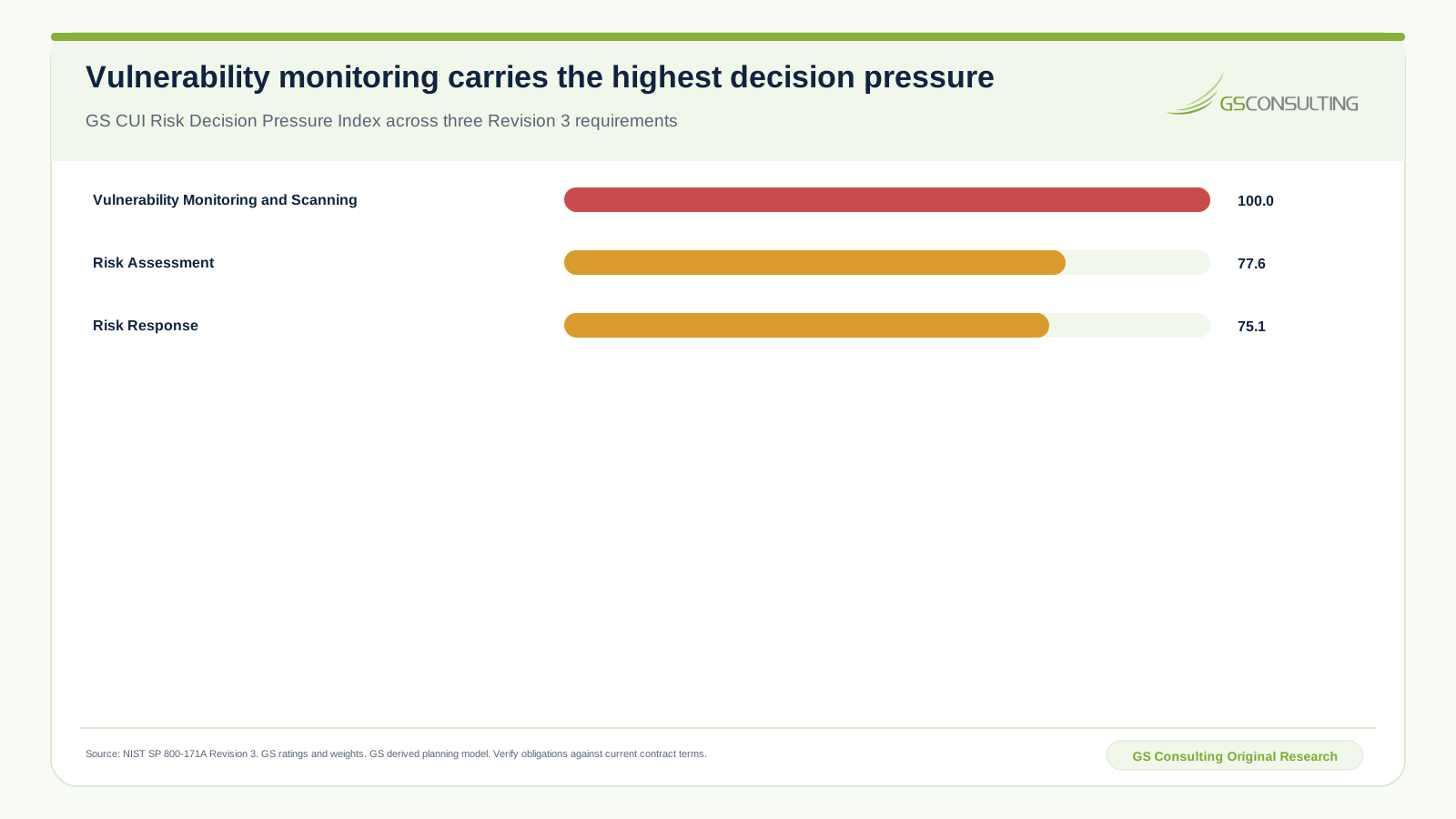
Risk Assessment scores 77.6 and Risk Response scores 75.1. Those values do not mean either requirement can wait. The three form one loop: understand context, collect and evaluate current conditions, decide and execute response, verify the result, and refresh the assessment. Alternate weights preserve the ordering, and no score moves more than 3.7 points.
Build a Risk Decision Record, Not a Red Number
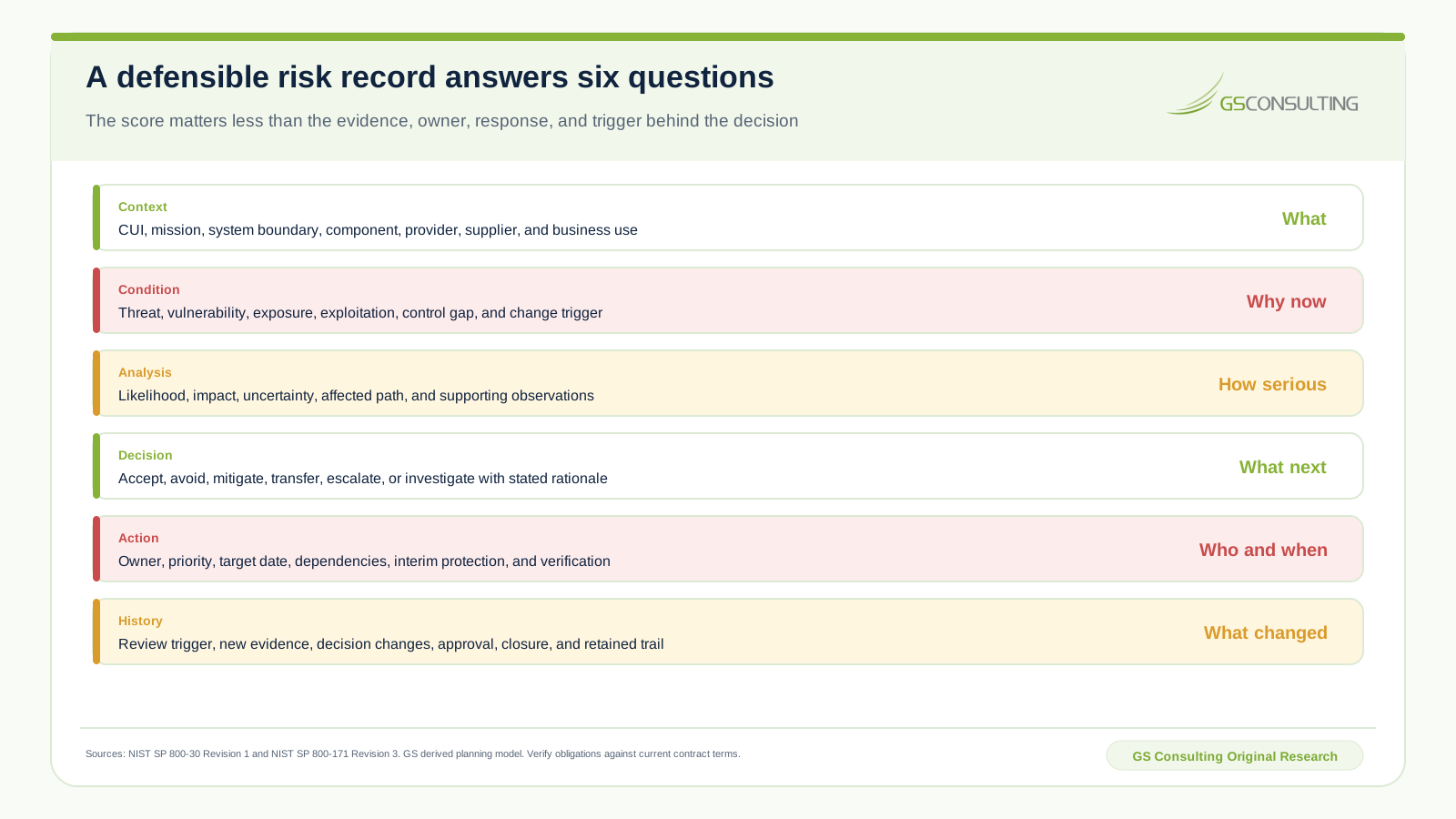
NIST SP 800-30 Revision 1 frames risk assessment as part of a broader risk management process across organization, mission, and system tiers. Translate that frame into a practical record.
Context should name the CUI, mission, system boundary, component, provider, supplier, user, data flow, and business purpose. The condition should cite the finding source, threat, vulnerability, exploitation, exposure, control gap, incident, change, or audit observation. Analysis should state likelihood, impact, uncertainty, assumptions, control strength, affected paths, and supporting evidence.
The decision should state whether the organization will avoid, mitigate, transfer, accept, escalate, or investigate the risk. Record who has authority, what happens next, who owns it, when it is due, which dependencies exist, what interim protection applies, how the result will be verified, and what triggers another decision.
Operate Vulnerability Monitoring as a Coverage System
Start with the component and software inventory. Map scanners, agents, cloud services, code tools, provider reports, penetration testing, advisories, threat intelligence, and manual checks to the real boundary. Record what each source covers, cannot cover, requires for authenticated depth, and reports under a provider responsibility.
Define four kinds of cadence: continuous or frequent monitoring, scheduled scans, updates to vulnerability knowledge, and event triggers when a newly identified vulnerability affects the system. Also define response periods by an approved risk method. A scan schedule alone does not satisfy the full operating need.
Test coverage and quality. Reconcile expected and observed assets. Verify credentials and agent health. Track exclusions, unsupported products, provider limits, failed jobs, duplicate findings, false positives, stale records, and assets without a successful scan. A clean report from incomplete coverage is a dangerous signal.
NIST SP 800-40 Revision 4 describes enterprise patch management as preventive maintenance that identifies, prioritizes, acquires, installs, and verifies patches. Patch deployment is one response. Configuration changes, isolation, service removal, access reduction, compensating controls, supplier action, monitoring, and formal risk decisions can also be necessary.
Connect Every Finding to Risk Response
Feed the response process from risk assessments, vulnerability monitoring, scans, security assessments, audit findings, incidents, supplier notices, provider reports, configuration drift, threat intelligence, and control tests. Use a stable finding identifier so the original condition remains traceable across tickets, changes, exceptions, retests, and risk records.
Prioritization should consider exploitation, exposure, access path, required privilege, CUI and mission impact, control strength, asset criticality, supplier dependency, fix availability, change consequence, uncertainty, and time. Record the rationale. A severity label without local reasoning cannot explain why one action displaced another.
Close on verified outcome. Confirm the vulnerable version, setting, path, or control condition changed as expected. Repeat the relevant scan or test. Check for unexpected system effect. Reconcile the inventory and baseline. Record residual risk and approval. If the response is deferred, document the authority, interim protection, expiry, review trigger, and escalation path.
Run Risk Assessment as a Five Stage Decision Cycle
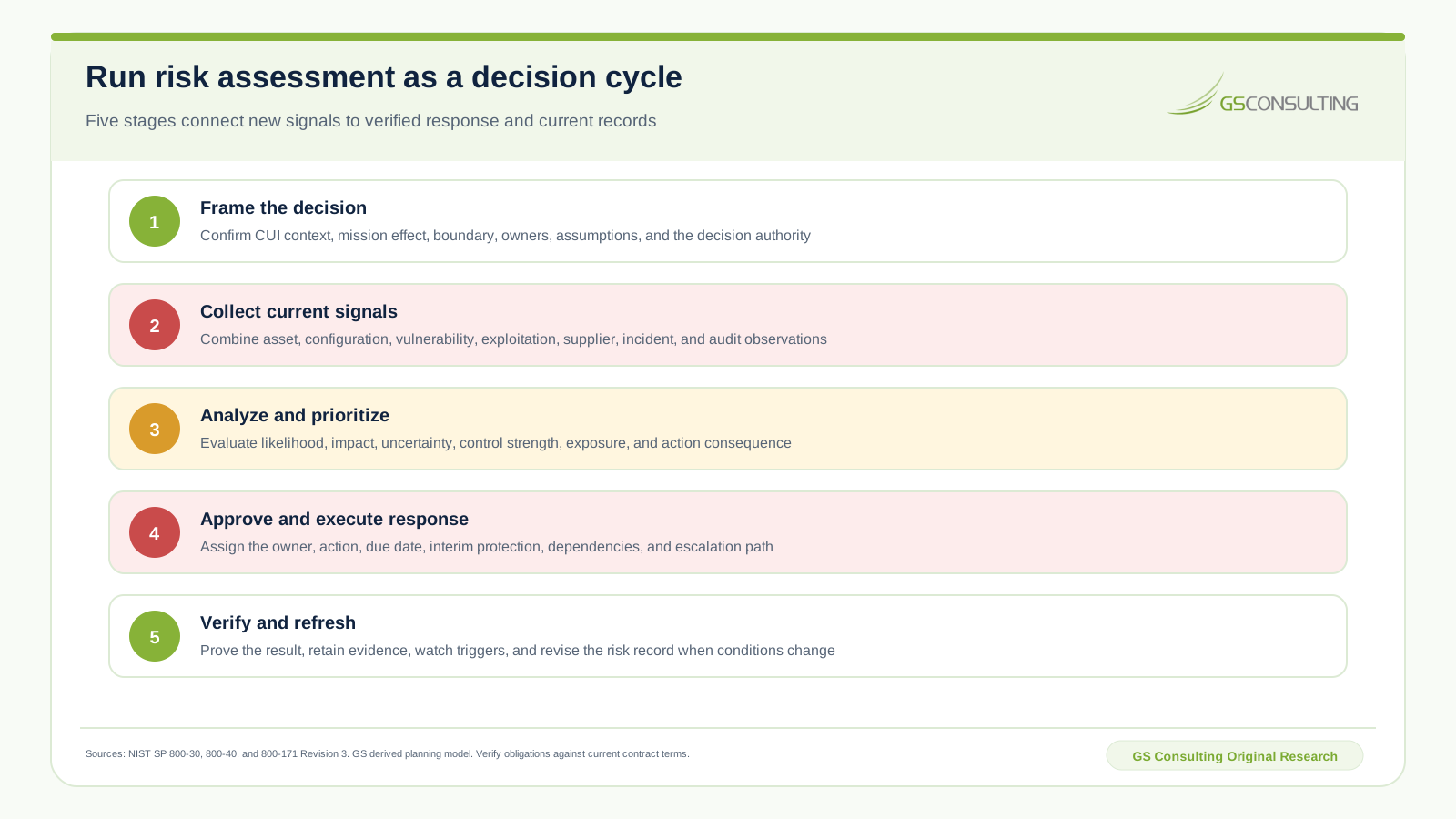
Frame the decision with system, CUI, mission, boundary, method, scale, authority, frequency, and triggers. Collect signals from assets, configurations, vulnerabilities, exploitation, suppliers, audits, incidents, and change. Analyze likelihood, impact, exposure, uncertainty, control strength, and response consequence.
Approve and execute the response with an owner, target date, interim protection, dependencies, evidence need, and escalation. Verify the result against the original condition. Refresh the risk record when new information, residual exposure, system change, supplier change, threat activity, or failed verification changes the answer.
Avoid Six Risk Program Failures
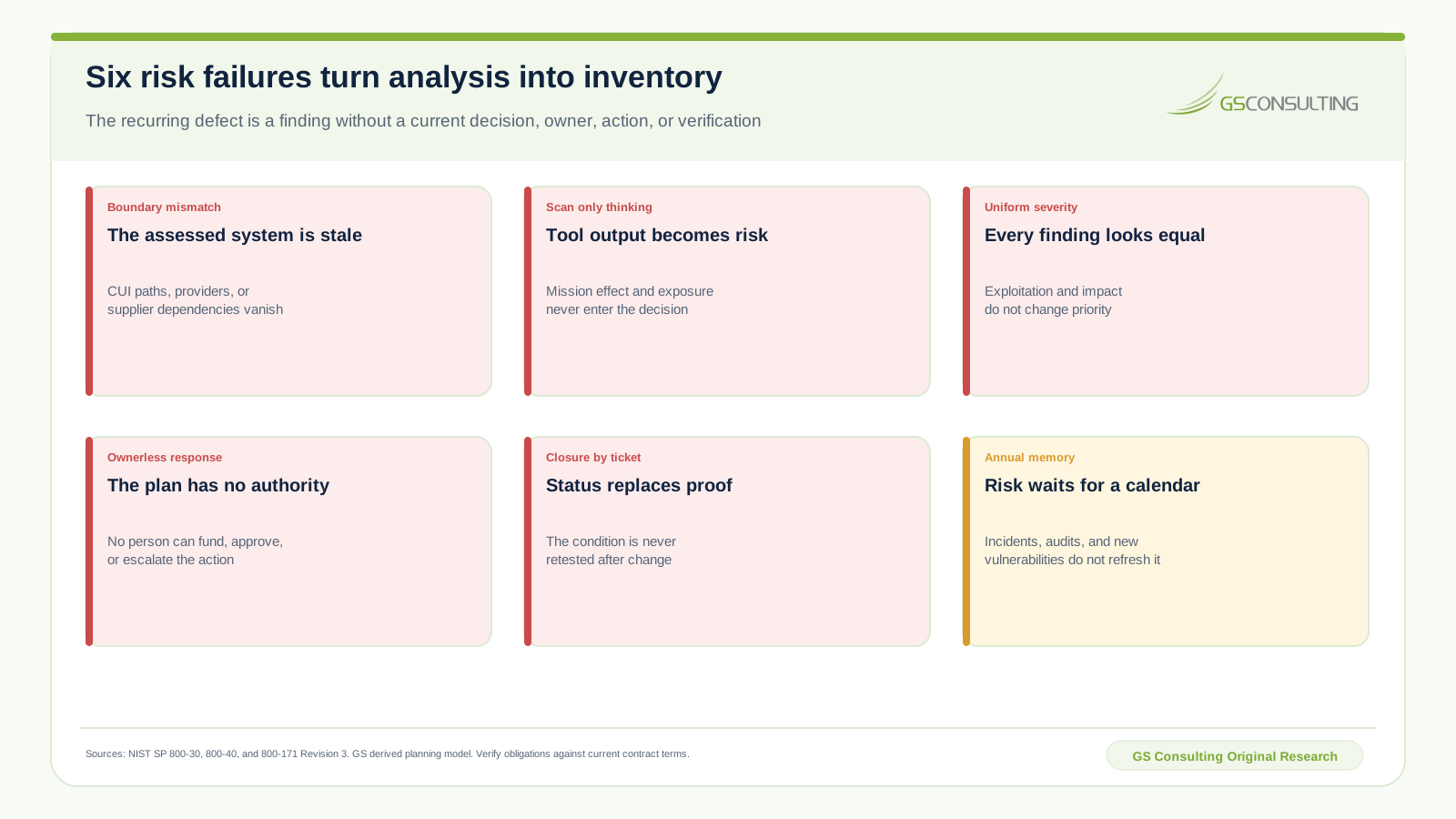
Boundary mismatch. The assessment omits a CUI path, provider, supplier, component, or data flow. Scan only thinking. Technical output replaces mission, exposure, and control analysis. Uniform severity. Exploitation, privilege, impact, and uncertainty never change priority.
Ownerless response. Nobody has authority to fund, approve, execute, or escalate the decision. Closure by ticket. Status replaces a repeated scan, test, or configuration check. Annual memory. Incidents, audits, changes, and newly discovered vulnerabilities do not refresh the record.
Build a Minimum Risk Evidence Packet
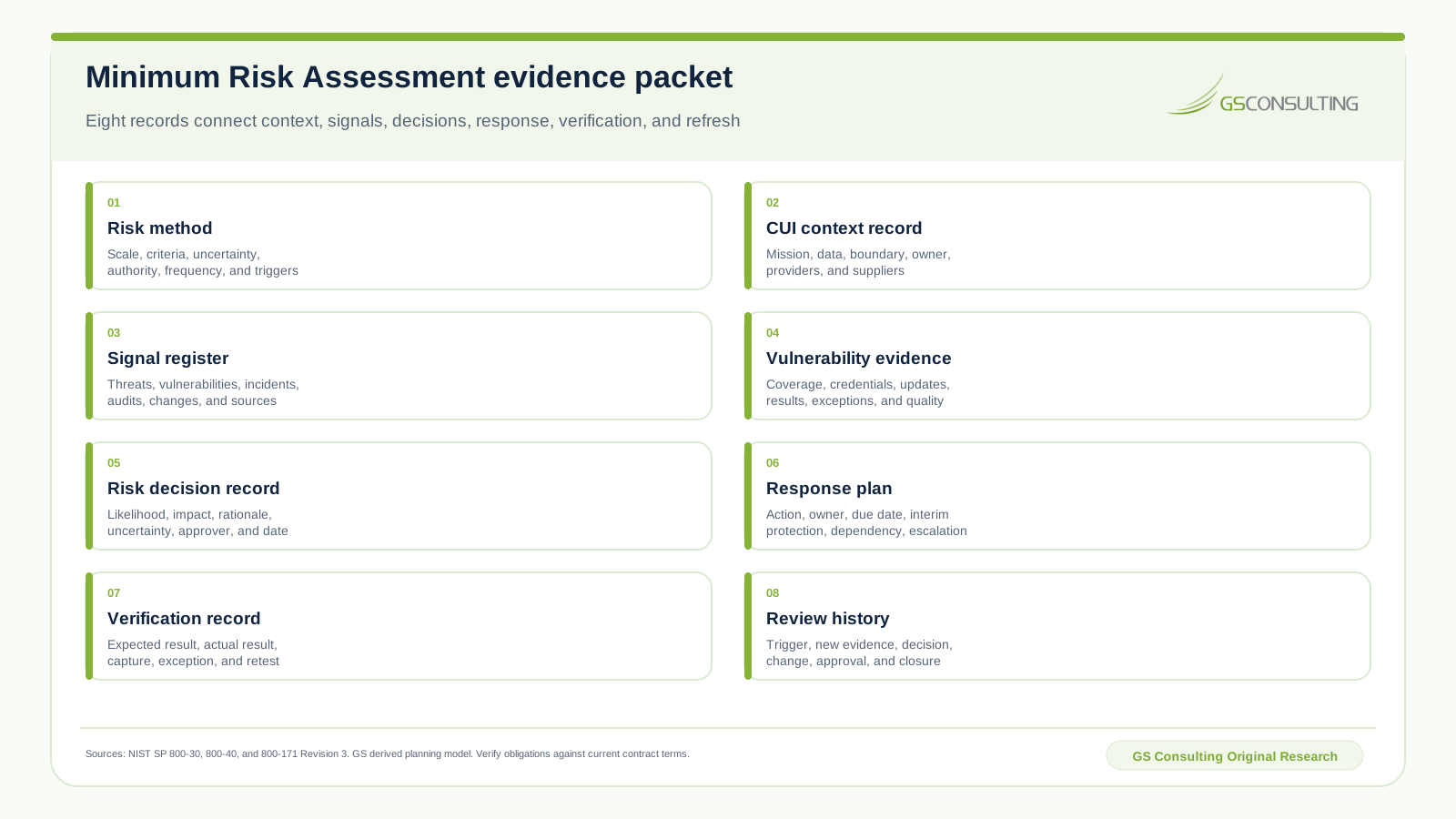
Keep authoritative links where practical. Each record needs a stable identifier, owner, source, system and scope, version, date or operating period, approval, sensitive content rule, retention, replacement, and assessment mapping. Sample real findings from different sources and outcomes.
The packet should prove an urgent response, a normal remediation, an exception, a supplier or provider dependency, a false positive, a failed verification, and a refreshed risk decision. Connect changes to the configuration management evidence, material events to the incident record, and findings to the audit review trail.
A 60 Day Risk Program Plan
| Period | Operator action | Required output |
|---|---|---|
| Days one through ten | Confirm revision, boundary, CUI and mission context, decision authority, method, scale, current assessments, and finding sources. | Revision record, risk method, source map, gap list |
| Days eleven through twenty | Approve assessment frequency, monitoring frequency, scan frequency, update frequency, response periods, and event triggers. | Parameter register, trigger matrix, response rules |
| Days twenty one through thirty five | Reconcile assets and software with scanner, provider, code, cloud, supplier, and manual coverage. Repair failed or shallow sources. | Coverage map, exception list, source quality tests |
| Days thirty six through forty five | Run representative findings through analysis, approval, response, interim protection, escalation, and verification. | Decision records, action evidence, repeated tests |
| Days forty six through sixty | Refresh the risk assessment, reconcile residual decisions, rehearse interviews and tests, and approve the evidence packet. | Current assessment, review history, approved package |
Research Sources and Caveats
The research package uses sources accessed September 4, 2026:
- NIST SP 800-171 Revision 3 for the three active requirements and required outcomes.
- NIST SP 800-171A Revision 3 for assessment statements, parameter counts, and examine, interview, and test procedures.
- NIST SP 800-30 Revision 1 for risk assessment method and risk management context.
- NIST SP 800-40 Revision 4 for enterprise patch management planning.
- CISA Known Exploited Vulnerabilities Catalog for the dated exploitation signal and prioritization guidance.
- DoD CMMC FAQ for the current Revision 2 and Revision 3 program distinction.
The research package contains the source register, public signals, model inputs, live workbook formulas, cached scores, sensitivity test, figure data, data dictionary, methodology, editable SVG files, browser rendered PNG files, and workbook. Public observations, GS ratings, and calculated outputs remain separate.
The GS CUI Risk Decision Pressure Index is a derived planning tool. It is not an official NIST score, CISA risk rating, legal opinion, contract interpretation, audit result, CMMC status, certification, or compliance determination. Verify the current award, required revision, boundary, finding, response, and residual decision with the responsible authority.
NIST 800-171 Risk Assessment FAQ
Suggested Future Reading
- NIST 800-171 and CUI Security Hub
- NIST 800-171 Audit and Accountability Controls
- NIST 800-171 Configuration Management Guide
- NIST 800-171 Incident Response Guide
- NIST 800-171 System Boundary Guide
- NIST SP 800-171A Assessment Guide
- Secure AI and Regulated Automation Services
Make the risk record drive a verified response.
The operating standard is direct: current context, complete signals, explicit reasoning, real authority, owned action, tested results, approved residual risk, and a visible review trigger.
Request a Risk Readiness Review