Cybersecurity | | 28 min read
NIST 800 171 Identification and Authentication: Controls and Evidence

Key Takeaways
Identity proof starts before the login screen
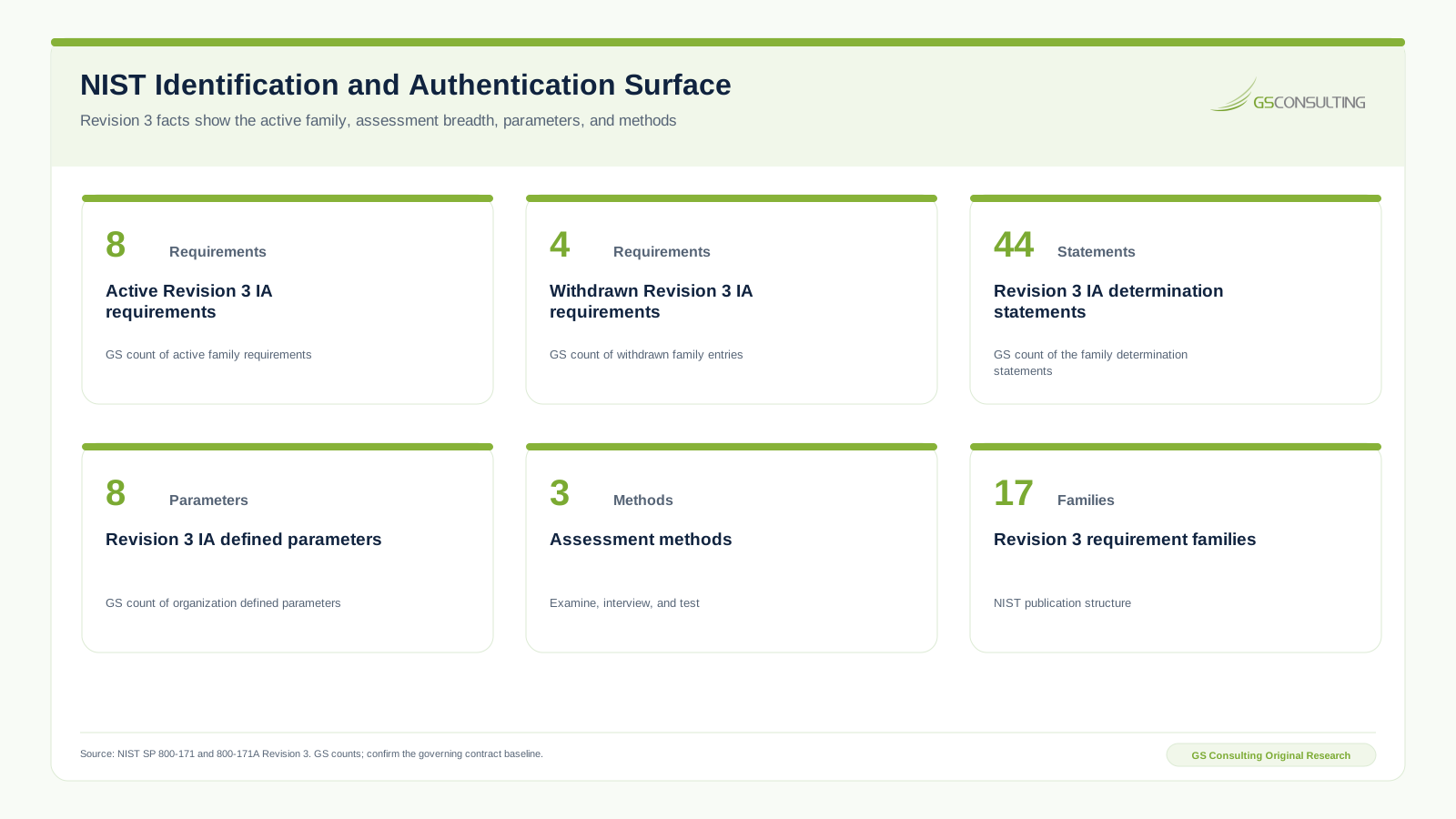
Eight active requirements
GS counted 44 determination statements and eight organization defined parameters in the current Revision 3 assessment procedures.
Authenticator management scores 100
Its broad lifecycle duties, identity reach, authentication paths, and failure consequences create the heaviest modeled proof load.
Inventory every identity population
People are only one population. Processes, devices, services, administrators, providers, and emergency identities also need authority and proof.
NIST 800 171 Identification and Authentication is not just a login policy. It is the evidence that every user, process, device, service, administrator, provider, and authenticator is known, controlled, current, and tested.
A screenshot of MFA settings does not prove device identity. A directory export does not prove stale identifiers were disabled. A password rule does not prove enrollment, recovery, replacement, compromise, and revocation. One successful sign in proves only one allowed path.
Not authentication alone. Identity authority plus lifecycle proof. The control family works when the team can explain who or what receives an identity, how it proves that identity, which paths accept it, when it changes, and how invalid use is denied.
Use the NIST 800-171 and CUI Security hub for the full program, the Access Control guide for the authorization layer, and the assessment guide for objective level proof. GS Consulting supports the operating layer through secure AI automation.
Make identity decisions traceable.
GS Consulting helps contractors reconcile identity populations, authentication paths, lifecycle records, parameters, settings, and tests.
Plan the Identity Evidence ReviewNIST 800 171 Identification and Authentication: The Short Answer
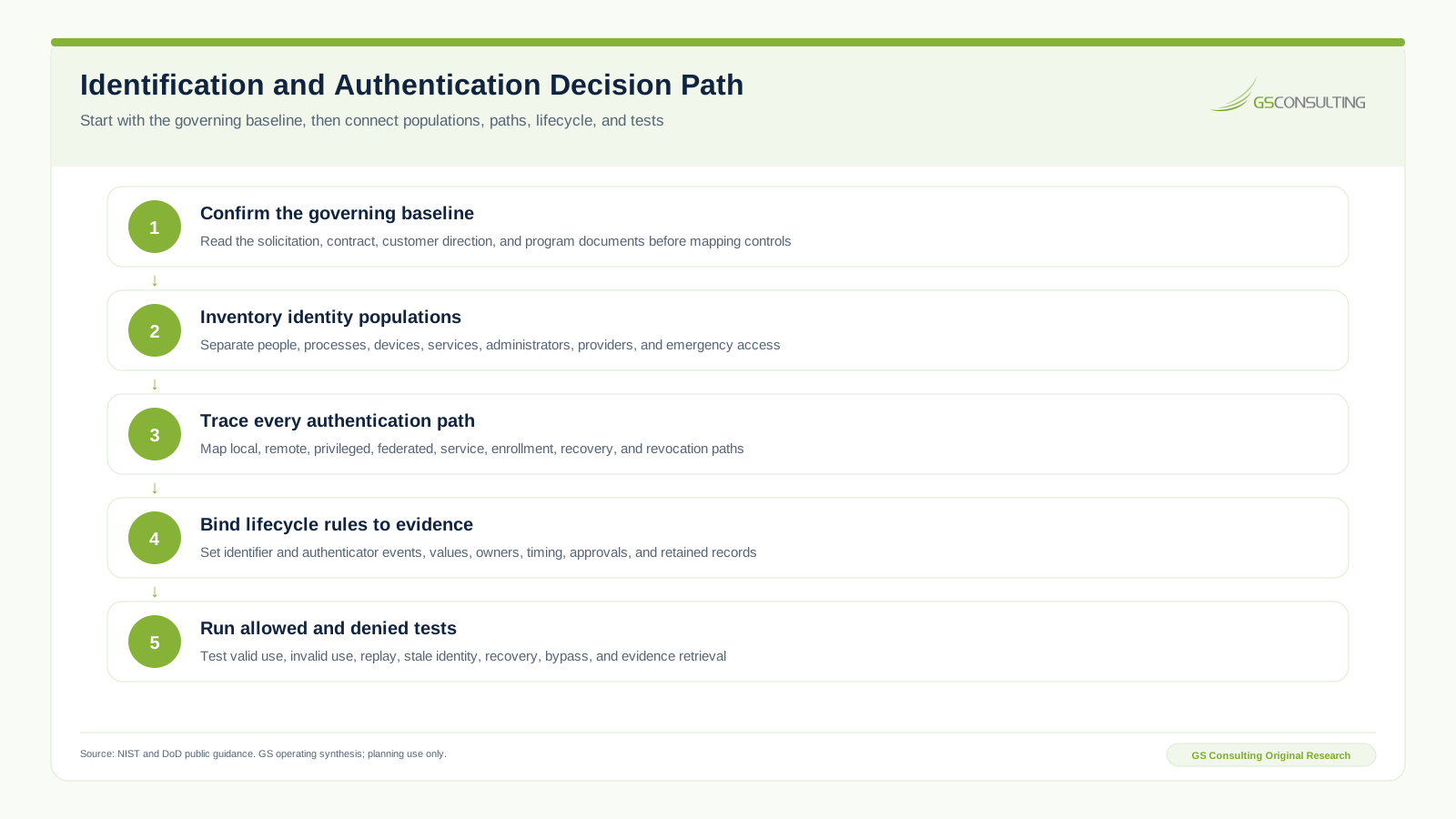
Start by confirming the governing revision. Then build one inventory for every identity population, one map for every authentication path, one register for every organization defined parameter, and one lifecycle model for identifiers and authenticators.
Connect that design to operating evidence. For a sampled identity, the team should be able to retrieve the authorization, identifier assignment, authenticator binding, settings, access event, review, change or revocation event, and an allowed or denied test. The records should agree across the identity provider, device system, application, cloud service, network control, service owner, and provider.
Confirm the Governing Baseline Before Mapping Evidence
The current NIST publication and the current contract baseline are not automatically the same thing. NIST SP 800-171 Revision 3 and NIST SP 800-171A Revision 3 were finalized in May 2024. Current CMMC Level 2 materials still use the program baseline reflected in the Version 2.13 guides.
Read the solicitation, contract, subcontract, modification, customer direction, CMMC requirement, and any contracting officer authorization. The relevant version of DFARS 252.204-7012 also matters. Do not move a control crosswalk to Revision 3 merely because the publication is newer, and do not ignore Revision 3 when a current contract or program instruction requires it.
| Question | Revision 2 and current CMMC guide structure | Revision 3 publication structure |
|---|---|---|
| Family count | Eleven requirements numbered 3.5.1 through 3.5.11. | Eight active requirements numbered 03.05.01 through 03.05.12, with four withdrawn entries. |
| Assessment source | NIST SP 800-171A Revision 2 and the current CMMC Level 2 Assessment Guide. | NIST SP 800-171A Revision 3. |
| Parameter model | Requirement language contains defined values or conditions in the baseline. | Organization defined parameters make selected values explicit. |
| Implementation decision | Use the baseline named by the governing obligation. Preserve the decision and do not mix identifiers across versions. | |
Keep separate source crosswalks when the organization supports multiple obligations. A mapping can show related intent, but it should not erase version specific language, parameters, objectives, or assessment evidence.
What the Eight Active Revision 3 Requirements Cover
The Revision 3 family is compact on paper and broad in operation:
- 03.05.01 User Identification, Authentication, and Re-Authentication. Identify and authenticate users and user processes, then apply the organization defined reauthentication conditions.
- 03.05.02 Device Identification and Authentication. Uniquely identify and authenticate devices with the organization defined strength.
- 03.05.03 Multi-Factor Authentication. Implement MFA for access to privileged and nonprivileged accounts.
- 03.05.04 Replay-Resistant Authentication. Use authentication processes that resist replay attacks.
- 03.05.05 Identifier Management. Authorize, assign, prevent reuse, disable, and manage identifiers through defined lifecycle rules.
- 03.05.07 Password Management. Control initial passwords, compromise, storage, transmission, strength, reuse, change, and protected handling.
- 03.05.11 Authentication Feedback. Obscure authentication information during the process.
- 03.05.12 Authenticator Management. Verify identity before issuing authenticators and manage default, individual, group, lost, compromised, and changed authenticators.
Four numbered entries are withdrawn in Revision 3: 03.05.06, 03.05.08, 03.05.09, and 03.05.10. Withdrawal does not mean the underlying concern vanished. For example, protected password handling is incorporated into the active password requirement. Follow the disposition in the official publication.
Original Research: The GS Proof Load Index
GS Consulting built the Identification and Authentication Proof Load Index to answer one planning question: which active Revision 3 requirements create the greatest combined assessment and operating proof load?
The model uses six factors. Assessment breadth carries 20 percent and starts with the number of determination statements. Parameter load carries 10 percent and starts with the number of organization defined parameters. Population breadth and lifecycle volatility each carry 20 percent. Authentication path reach and failure consequence each carry 15 percent.
GS counted 44 determination statements and eight organization defined parameters across the eight active requirements. Assessment breadth converts one or two statements to rating one, three through five to two, six through eight to three, nine through eleven to four, and twelve or more to five. Parameter load converts zero to one, one to three, and two to five. The other four ratings, all weights, tier thresholds, and operating actions are GS assumptions.
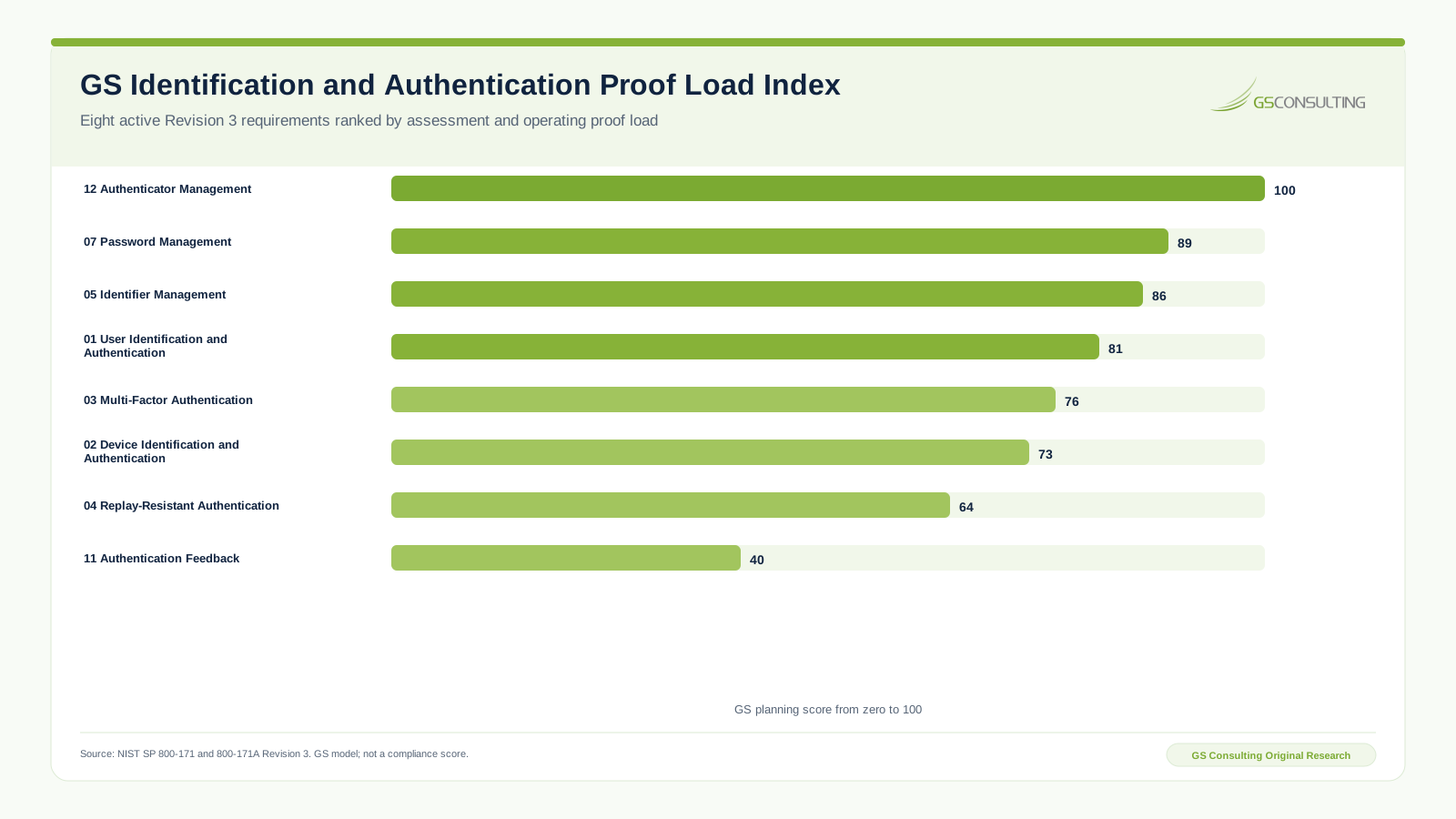
The result does not say MFA is unimportant because it scores 76. MFA has only two determination statements and no organization defined parameters in this assessment structure, which narrows two model factors. Its population, lifecycle, path, and failure ratings remain high. The score tells the team to design MFA with the wider identity system, not to defer it.
The sensitivity case moves five percentage points from assessment breadth to lifecycle volatility. Authenticator Management remains at 100. The largest movement is four points for MFA, which rises to 80. No requirement changes enough to reverse the central conclusion: lifecycle and path evidence matter as much as a clean configuration statement.
Inventory Every Identity Population
Employee accounts are only the easiest population to see. The system boundary can also contain contractors, customer users, processes acting for users, devices, service accounts, application identities, API clients, automation, privileged administrators, emergency access, recovery identities, provider personnel, and federated users.
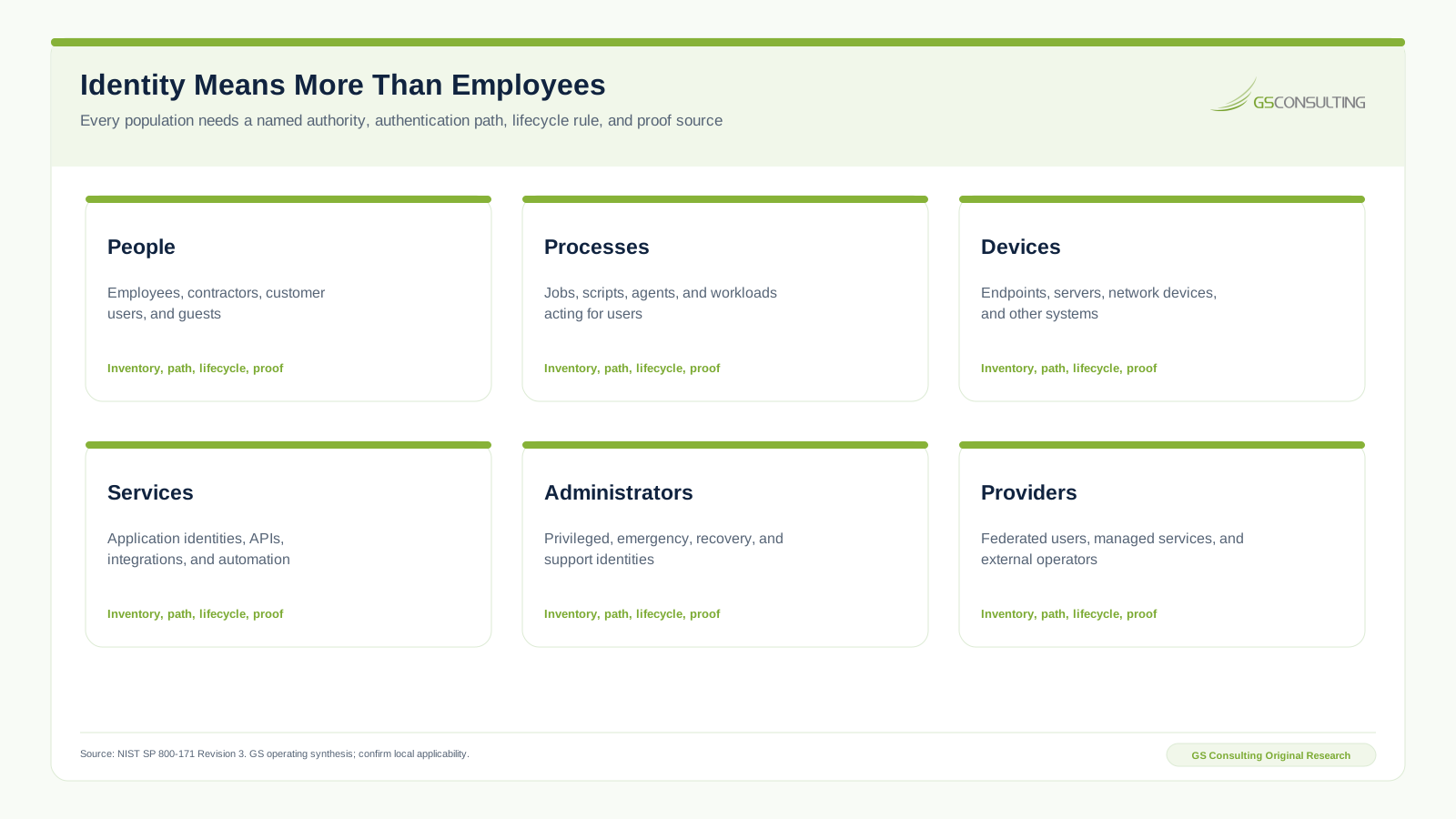
Give each population an authoritative source, naming rule, approval authority, sponsor, allowed systems, authentication method, lifecycle trigger, review schedule, and removal condition. For group or shared identities, document why individual identity is not used, who may use the authenticator, how use is attributable, and how access is revoked.
Reconcile populations across systems. A person can be disabled in the central directory and remain active in a local application. A device can disappear from endpoint management and retain a certificate. A provider identity can leave the service team and persist in a management console. A service account can lose its project and keep its privilege.
Map Every Authentication Path
Identity evidence fails when the team documents the central identity provider but not the paths around it. Map local console access, remote access, cloud consoles, privileged elevation, application sign in, device trust, service authentication, API access, federation, recovery, enrollment, emergency access, and provider support.
For each path, record the entry point, identity source, protocol, authenticator, factor count, replay protection, device condition, privilege, session control, recovery process, log source, and owner. Mark legacy paths and technical exceptions directly on the map.
Then test the path as a system. A federated user may pass MFA at one provider while a relying application accepts a stale session. A managed device may present a valid certificate after the asset record is retired. A help desk recovery process can bypass otherwise strong authenticators. Architecture and operation have to agree.
Treat Identifier Management as a Lifecycle Control
An identifier is not merely a user name. It is a controlled claim that a person, process, device, or service is the entity the system expects.
Define how identifiers are requested, sponsored, authorized, assigned, named, reviewed, disabled, revoked, retired, and reused. Set the organization defined inactivity period and reuse period where the governing baseline calls for them. Record who approved each value and where it is enforced.
Build event samples for hiring, role change, transfer, leave, termination, contract end, device retirement, service retirement, provider change, lost ownership, and inactivity. Measure the time from the authoritative event to effective disablement across every connected system.
Do not let synchronization errors disappear into averages. Track failed provisioning and deprovisioning, stale local identities, unmatched accounts, missing sponsors, duplicate identifiers, and manual exceptions. Close each event or document the approved risk decision.
Authenticator Management Carries the Heaviest Proof Load
Authenticator Management leads the GS model because it spans identity proof, issuance, binding, protection, default changes, refresh, replacement, compromise, revocation, group use, and lifecycle coordination.
For each authenticator type, document who can issue it, how identity is verified, how it is bound to the identifier, how secrets or tokens are protected, how initial values change, how loss or compromise is reported, how replacement works, how revocation reaches every relying system, and how disposal is recorded.
Include passwords, cryptographic keys, certificates, hardware tokens, software tokens, biometric factors, device credentials, API secrets, recovery codes, and any other mechanism used by an in scope path. The exact set depends on the architecture and governing requirements.
Recovery deserves its own test. Attempt a valid recovery with approved proof, an invalid recovery with insufficient proof, a replacement after compromise, and use of the old authenticator after revocation. Capture the timing and every system that accepted or rejected the result.
Prove MFA and Replay Resistance on the Real Paths
The Revision 3 assessment objectives for 03.05.03 state that MFA is implemented for access to privileged and nonprivileged accounts. Evidence should show coverage across the actual paths, not only a global setting.
Inventory every account type and entry point. Identify technical exclusions, emergency access, service identities, local access, legacy protocols, recovery paths, provider consoles, and federated applications. For each exception, record the authority, rationale, protection, monitoring, expiration, and closure plan.
Replay resistance is a property of the authentication process. Document which protocols and authenticators resist capture and reuse, where older methods remain, how sessions are protected, and how the system reacts to a replay attempt or reused credential artifact.
Run allowed and denied tests. A valid user should complete the approved path. A user without the required factor should be denied. A stale session, revoked token, captured response, retired device, invalid recovery attempt, or alternate protocol should produce the documented result.
Implement Password Management Without Inventing a Rule
Password rules should come from the governing baseline and approved organization defined parameters, not memory. Revision 3 consolidates several password concerns into 03.05.07 and makes selected values explicit.
Document initial password handling, forced change conditions, compromise response, storage protection, transmission protection, strength, prohibited content if used, reuse, minimum change conditions, and the systems that enforce each rule. Identify any local application that does not inherit the central configuration.
Password rotation by calendar alone is not a substitute for compromise detection, strong authentication, protected storage, recovery control, and MFA. At the same time, a broad claim that modern guidance eliminated every password change duty can conflict with the governing requirement or parameter. Record the actual obligation and the approved implementation.
Authentication Feedback is simpler but still testable. Verify that entry screens, interfaces, logs, support tools, and error messages do not expose the authenticating information in a way the requirement prohibits.
Use Examine, Interview, and Test as One Proof System
NIST SP 800-171A Revision 3 uses examine, interview, and test methods. The publication describes flexible procedures, so the evidence plan should fit the actual system and assessment objective.
- Examine. Review policies, architecture, identity inventories, parameters, approvals, settings, lifecycle records, provider evidence, access events, alerts, exceptions, and review records.
- Interview. Ask identity owners, administrators, device teams, application owners, help desk staff, security reviewers, users, and providers to explain the real process.
- Test. Exercise valid and invalid identity, enrollment, authentication, recovery, revocation, replay, feedback, and evidence retrieval scenarios.
Write every test before running it. State the objective, system, population, starting condition, input, expected result, actual result, evidence source, defect, correction, retest, date, and approver. Use authorized test identities and approved windows when a test can lock an account or affect production.
Sample across populations and paths. One employee on one cloud application cannot prove device identity, service authentication, local administrator access, provider federation, emergency access, or authenticator recovery.
Six Ways Identification and Authentication Proof Breaks
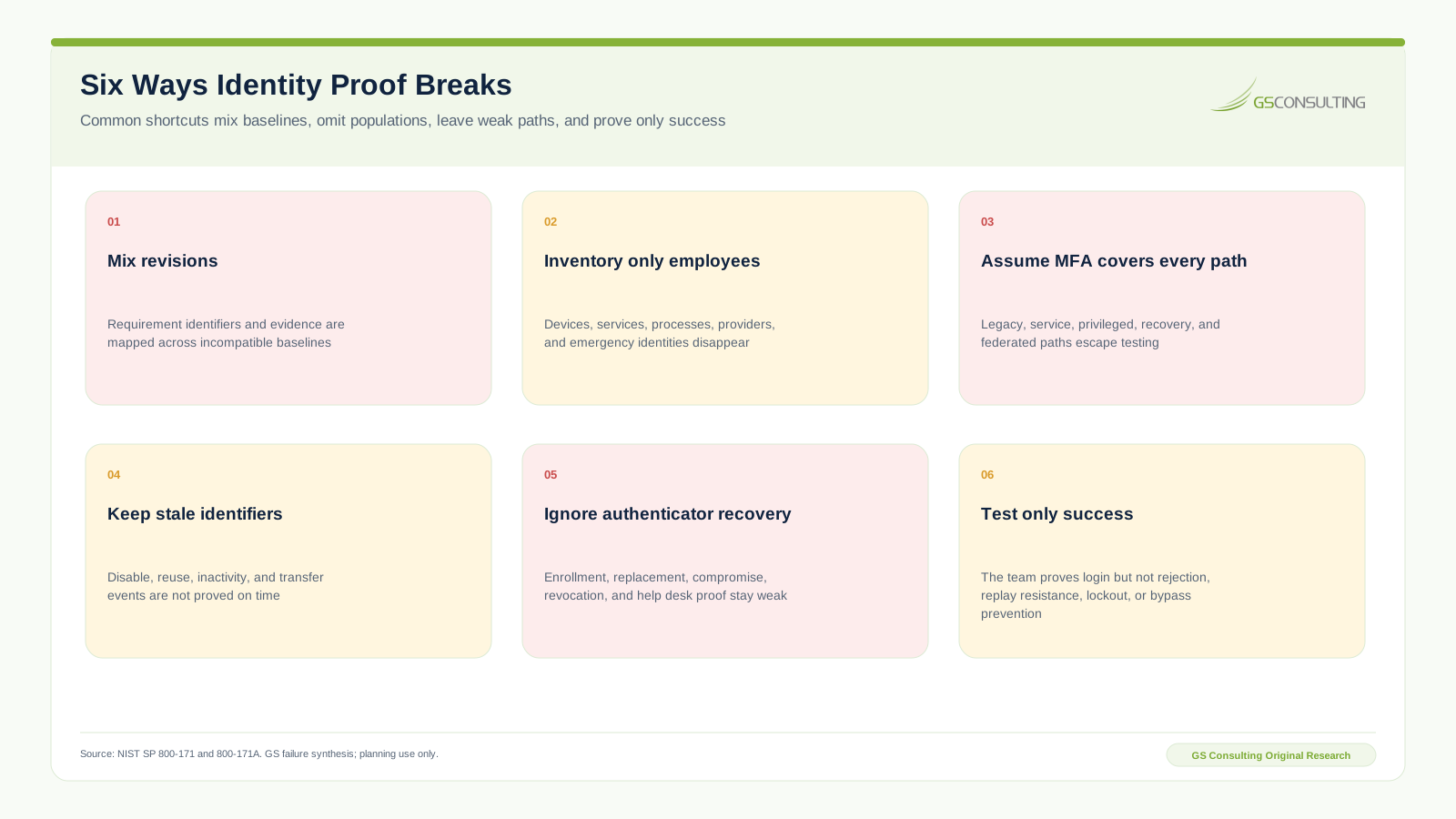
Look for these six defects before the evidence packet reaches final review:
- Mix revisions. Requirement identifiers and evidence are mapped across incompatible baselines.
- Inventory only employees. Devices, services, processes, providers, administrators, and emergency identities disappear.
- Assume MFA covers every path. Legacy, service, privileged, recovery, local, and federated paths escape testing.
- Keep stale identifiers. Disablement, reuse, inactivity, transfer, and termination events are not proved on time.
- Ignore authenticator recovery. Enrollment, replacement, compromise, revocation, and help desk proof remain weak.
- Test only success. The team proves sign in but not rejection, replay resistance, stale identity, lockout, recovery abuse, or bypass prevention.
A 60 Day Identification and Authentication Plan
Days 1 through 10: confirm the baseline and boundary
Record the governing source, revision, contract, customer direction, CUI environment, providers, scope owner, and review authority. Keep separate crosswalks for separate obligations.
Days 11 through 20: inventory populations and parameters
List people, processes, devices, services, administrators, providers, recovery identities, and emergency access. Approve every organization defined value and name the enforcement point.
Days 21 through 35: map authentication paths
Trace local, remote, privileged, federated, device, service, API, enrollment, recovery, revocation, emergency, and provider paths. Document factors, protocols, replay protection, logs, and technical exceptions.
Days 36 through 48: reconcile lifecycle operation
Sample identifier and authenticator events from authoritative trigger through every connected system. Repair stale accounts, missing sponsors, weak recovery, old authenticators, unmanaged service identities, and failed synchronization.
Days 49 through 60: test and approve the evidence packet
Run allowed and denied scenarios across representative populations and paths. Capture defects, corrections, and retests. Have a reviewer who did not build the packet retrieve proof by requirement and objective.
The Minimum Identification and Authentication Evidence Packet
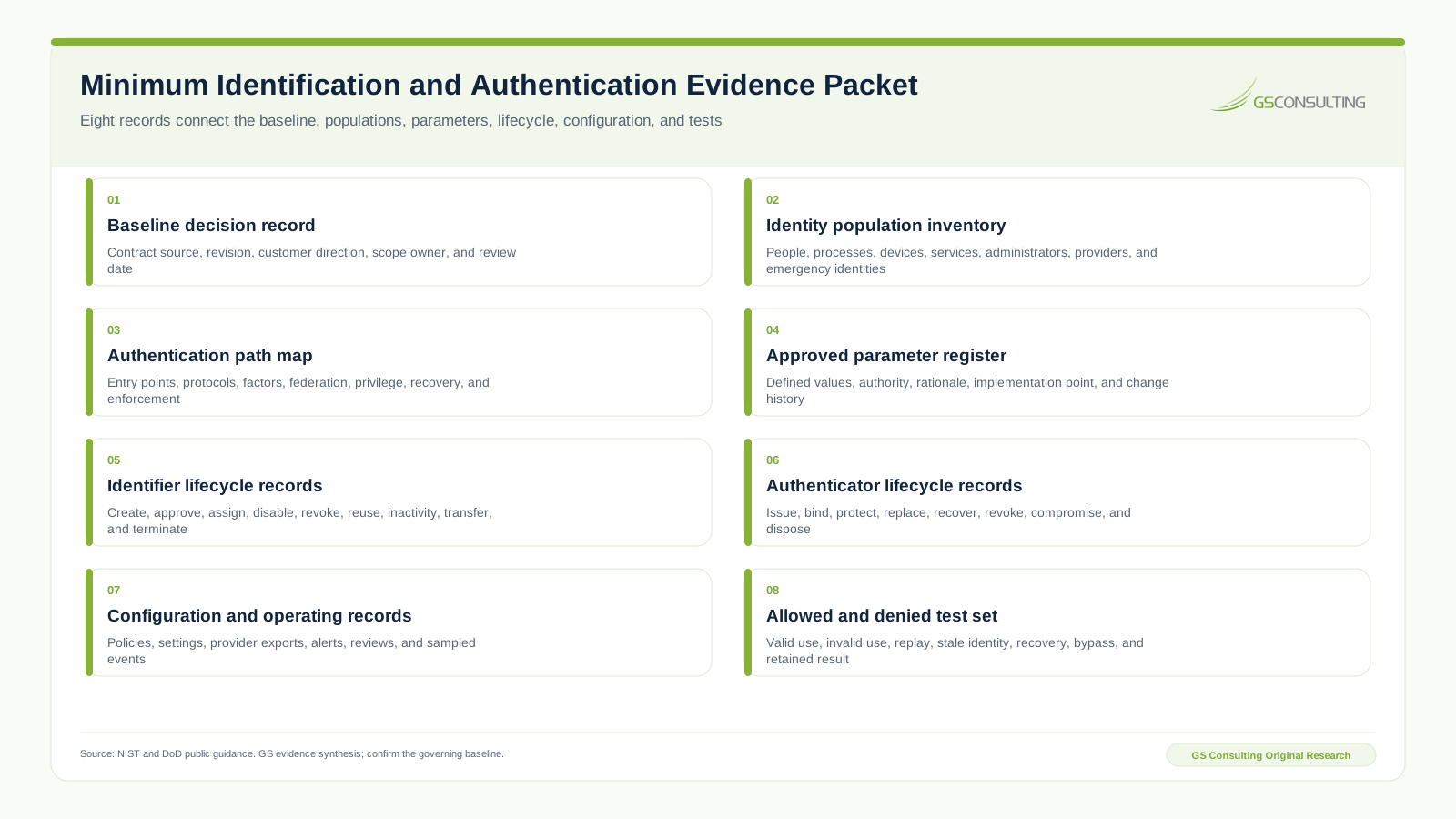
Keep these eight records connected by requirement, system, identity population, and test:
- Baseline decision record. Contract source, revision, customer direction, scope owner, and review date.
- Identity population inventory. People, processes, devices, services, administrators, providers, and emergency identities.
- Authentication path map. Entry points, protocols, factors, federation, privilege, recovery, and enforcement.
- Approved parameter register. Defined values, authority, rationale, implementation point, and change history.
- Identifier lifecycle records. Create, approve, assign, disable, revoke, reuse, inactivity, transfer, and terminate.
- Authenticator lifecycle records. Issue, bind, protect, replace, recover, revoke, compromise, and dispose.
- Configuration and operating records. Policies, settings, provider exports, alerts, reviews, exceptions, and sampled events.
- Allowed and denied test set. Valid use, invalid use, replay, stale identity, recovery, bypass, and retained result.
Research Sources, Method, and Caveat
The research package uses NIST SP 800-171 Revision 3, NIST SP 800-171A Revision 3, the DoD CMMC Resources and Documentation page, and DFARS 252.204-7012.
The full package under research/insights/nist-800-171-identification-authentication/ contains the source register, public observations, requirement detail with determination and parameter counts, analyst inputs and rationales, formula driven workbook, derived scores, sensitivity analysis, figure data, decision path, failure modes, evidence packet, editable SVGs, browser rendered PNGs, and display previews.
Model caveat: this is a GS Consulting derived planning tool based on cited public sources and documented assumptions. It is not an official legal, audit, compliance, NIST, CMMC, DoD, assessment, certification, contract, or regulatory determination. Confirm the governing baseline and replace the ratings with the actual architecture, populations, paths, providers, parameters, evidence, and operating facts.
Frequently Asked Questions About NIST Identification and Authentication
What is NIST 800 171 Identification and Authentication?
It is the requirement family that identifies users, processes, and devices and authenticates those identities before access. Revision 3 also covers identifier management, MFA, replay resistance, passwords, authentication feedback, and authenticator management.
How many Identification and Authentication requirements are in NIST SP 800-171 Revision 3?
Revision 3 has eight active requirements in the family. Four numbered entries are withdrawn. The companion Revision 3 assessment publication contains 44 determination statements and eight organization defined parameters across the active requirements.
Does CMMC Level 2 use NIST SP 800-171 Revision 3?
Do not assume that it does. Current NIST publications are Revision 3, while current CMMC Level 2 guides retain the program baseline reflected in their Version 2.13 materials. The solicitation, contract, customer direction, and current program documents determine the governing baseline.
Does MFA satisfy the entire Identification and Authentication family?
No. MFA is one requirement. The family also addresses user and device identification, replay resistance, identifier lifecycle, password management, authentication feedback, and the full authenticator lifecycle.
What evidence supports NIST Identification and Authentication?
Useful evidence includes the baseline decision, identity population inventory, authentication path map, approved parameter values, identifier and authenticator lifecycle records, settings, operating records, interviews, and allowed and denied tests.
Does the GS proof load index determine compliance?
No. It ranks planning attention using public assessment structure and documented GS assumptions. It does not determine applicability, implementation effectiveness, assessment results, contract compliance, or certification status.
The operating standard is decisive: every identity population has an authority, every authentication path has a control owner, every identifier and authenticator event leaves a current record, every parameter has an approved value, and every important denied path can be reproduced.
Build identity evidence that survives change.
GS Consulting helps government contractors connect identity architecture, lifecycle operation, provider duties, and assessment proof.
Start the Identity Control ReviewContinue the NIST 800-171 Research
Use these guides to connect identity proof to authorization, assessment, and the governing revision: