GovCon Cybersecurity | | 28 min read
NIST 800-171 Supplier and Subcontractor Flowdown Guide

Key Takeaways
Flowdown is an information and system decision, not clause copying
Different clauses create different gates
DFARS 7012, 7020, 7021, 32 CFR part 170, the prime award, and the information facts must be read together.
The information determination scores 100
It leads the GS pressure model because the clause, baseline, level, supplier system, transfer, and lower tier duties all depend on what the supplier receives.
Send only what performance needs
Data minimization is a scope control. Do not create supplier obligations and exposure by sending information the work does not require.
NIST 800-171 flowdown is not clause copying. It is a controlled decision about the prime award, the information a supplier needs, the system that will touch it, the required status, and the evidence that proves the path is operating.
Blanket language feels safe because it is fast. It often produces the opposite result. The supplier cannot tell which information is controlled. The buyer cannot name the covered system. A certificate is collected without confirming its scope. CUI moves through an unapproved transfer path. A cloud provider enters the work after award. A lower tier receives data nobody reclassified. The subcontract has words, but the operation has no control.
The better sequence starts before award. Read the prime contract. Decide what information the supplier needs. Minimize that set. Map the current clauses and program conditions. Confirm the supplier system and providers. Verify the required status in the right scope. Approve the transfer path. Then monitor incidents, changes, lower tiers, and closeout.
This guide connects that work to the NIST 800-171 hub and the system boundary and asset inventory guide. It also connects to the small business subcontractor guide, the external service provider guide, and GS Consulting services for secure AI automation.
Decide the supplier path before award and transfer.
GS Consulting helps contractors map clauses, classify information, verify supplier scope, control transfer, and build evidence for the complete subcontract path.
Plan the Supplier ReviewNIST 800-171 Flowdown: The Short Answer
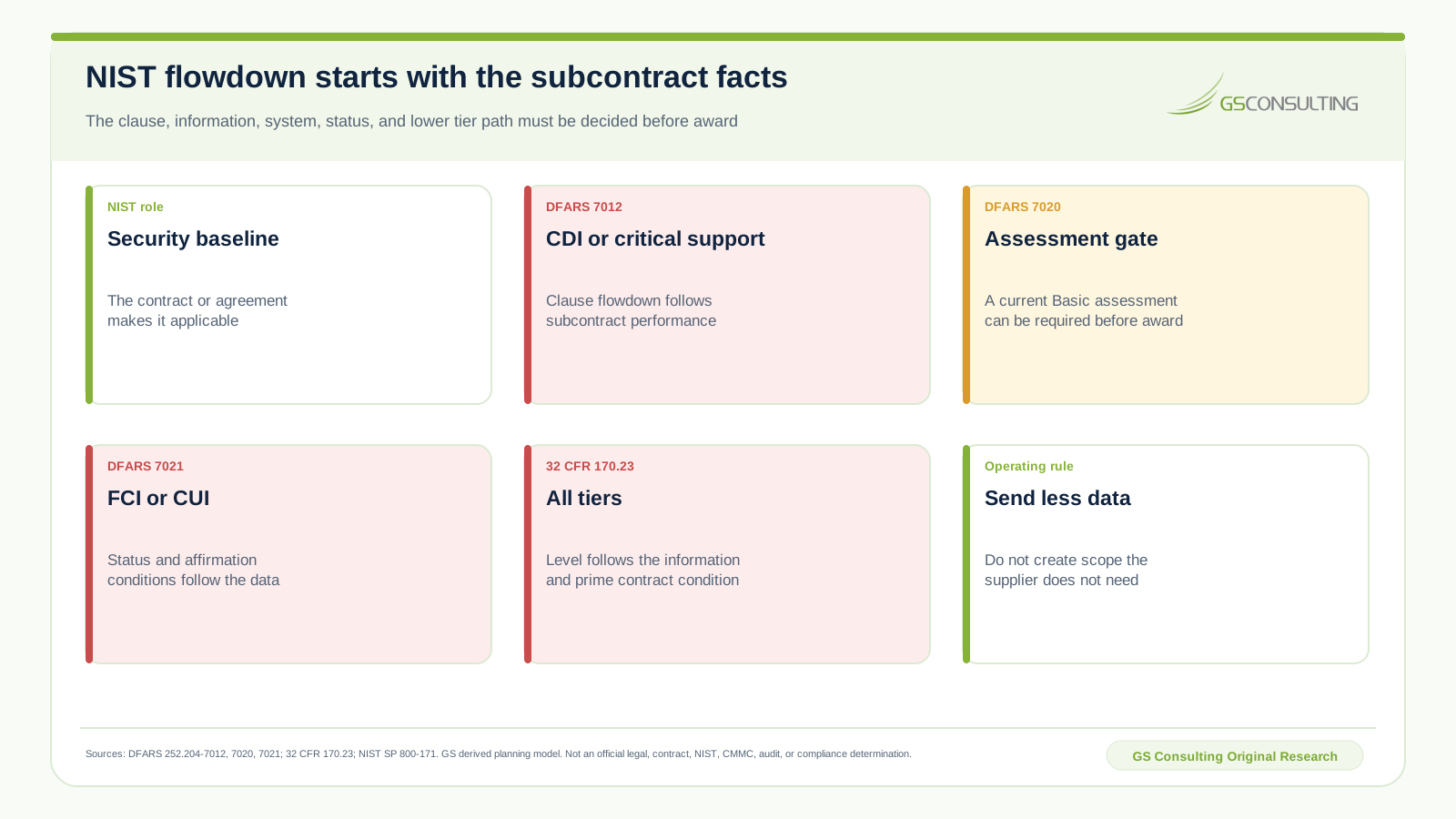
NIST SP 800-171 Revision 3 explains security requirements intended for use in contractual vehicles or other agreements that govern the protection of CUI. NIST supplies the baseline. It does not create one universal flowdown rule for every purchase.
The flowdown trigger comes from the governing award and current clause. DFARS 252.204-7012 paragraph (m), when included, addresses subcontracts for operationally critical support or subcontract performance involving covered defense information. DFARS 252.204-7020 paragraph (g) addresses its clause substance and the Basic DoD Assessment gate for applicable subcontracts. DFARS 252.204-7021 paragraphs (d) and (f) connect FCI or CUI, current CMMC status, affirmation, and subcontract award conditions.
The short test is concrete. Before the subcontract is signed, can the buyer show the governing clauses, information decision, required baseline, CMMC level, supplier system, providers, and verified status? Before information moves, can the buyer show the approved transfer, incident contacts, lower tier rule, and review owner? If one answer is missing, the flowdown record is not ready.
Read the Current Rule Set as a Stack
The relevant authorities do different jobs. Treating them as interchangeable produces bad contract language and bad operations.
| Authority | Role in the decision | Question to answer |
|---|---|---|
| Prime contract and subcontract | Creates the actual agreement and states included clauses, deliverables, information, and direction | What is this supplier being engaged to do? |
| NIST SP 800-171 | Provides the security requirement baseline named by the governing vehicle | Which baseline and revision does the agreement require? |
| DFARS 252.204-7012 | Addresses covered defense information, safeguarding, reporting, preservation, cloud use, and clause flowdown | Will performance involve the trigger stated in paragraph (m)? |
| DFARS 252.204-7020 | Addresses DoD Assessment access, status, and covered subcontract conditions | Is a current Basic Assessment required before award? |
| DFARS 252.204-7021 | Addresses current CMMC status, affirmation, maintenance, and flowdown | What current status must exist in the supplier scope? |
| 32 CFR part 170 | Defines the CMMC program, level conditions, assessments, affirmations, and subcontract application | How do FCI, CUI, and the prime contract condition set the minimum level? |
As of August 24, 2026, CMMC implementation remains phased. Contract inclusion and current program direction govern during the phase period, with broader Phase 4 implementation scheduled for November 10, 2028. Do not infer an obligation from a calendar alone. Read the actual solicitation, award, modification, and clause text.
Version matters too. Revision 3 is the current NIST publication, but a current contract or CMMC path may reference Revision 2. Record the exact baseline and change mechanism. Do not silently replace the contract baseline with the newest publication.
The Information Decision Comes Before the Clause Map
Start with purpose. What work will the supplier perform? What is the minimum information needed? Will the supplier receive, create, process, store, transmit, view, print, back up, support, or return FCI, CUI, covered defense information, security protection data, or public information?
Do not decide from markings alone. Markings are critical handling signals, but classification and contract context still require an informed owner. Record the source, category, purpose, recipient, minimum fields or documents, marking, transfer path, expected derivative work, retention, and exit.
Data minimization is a direct scope control. A supplier that needs dimensions from one controlled drawing may not need the complete design package. A support firm that can resolve an issue with redacted logs may not need production CUI. A report that can be produced inside the prime environment may not need local supplier storage. Reduce the information before adding systems and duties.
The decision is not complete until the actual supplier workflow is known. Ask where users sign in, which devices they use, which repositories receive files, and which services support the work. Then identify the administrators, backup path, lower tiers, and providers with access to the data or security path.
Map Each Clause to an Operating Gate
DFARS 252.204-7012 requires careful information and performance analysis. Current paragraph (m) reaches operationally critical support or subcontract performance involving covered defense information, including commercial products and services. The prime is responsible for deciding whether information needed for performance retains its identity as covered defense information. The clause also carries notice and incident number duties across tiers.
DFARS 252.204-7020 creates a different gate. Current paragraph (g) requires its substance in covered subcontracts other than commercially available off the shelf items and requires a current Basic DoD Assessment before applicable subcontract award unless another period is stated. Preserve the date, scope, score or status record, reviewer, and verification source.
DFARS 252.204-7021 connects the subcontract to CMMC. The current clause requires the contractor to maintain the stated current status, complete annual affirmation, ensure supplier affirmation as applicable, and verify the required current status before award where paragraph (f) applies. It also includes an exception for commercially available off the shelf items.
Do not collapse those clauses into a generic cyber requirement. A supplier can satisfy one gate and still fail another. A current Basic Assessment is not a substitute for the required CMMC status. A CMMC status does not prove that the proposed supplier system is inside the assessed scope. Neither one answers whether the supplier should receive the information.
Use Information and the Prime Condition to Set the CMMC Level
32 CFR 170.23 addresses application to subcontractors throughout applicable supply chain tiers. For FCI only work, the minimum stated condition is Level 1 Self. For a subcontractor that processes, stores, or transmits CUI, the minimum is Level 2 Self.
The prime contract condition can raise that minimum. When the prime is subject to Level 2 C3PAO, the regulation sets Level 2 C3PAO as the minimum for a subcontractor that processes, stores, or transmits CUI. When the prime is subject to Level 3, the stated minimum for that subcontractor is Level 2 C3PAO. DoD may provide more specific contract direction.
Verify more than a label. Record the supplier legal entity, unique identifiers, CMMC unique identifier where applicable, status level, assessment type, assessment scope, date, expiration or renewal point, affirmation, covered systems, source of verification, reviewer, and the connection to the proposed work.
A status outside the proposed supplier system does not clear the transfer. A verified system with no need for the information should not receive it. The information decision and status decision must meet in the same record.
GS Original Research: Supplier Flowdown Control Pressure Index
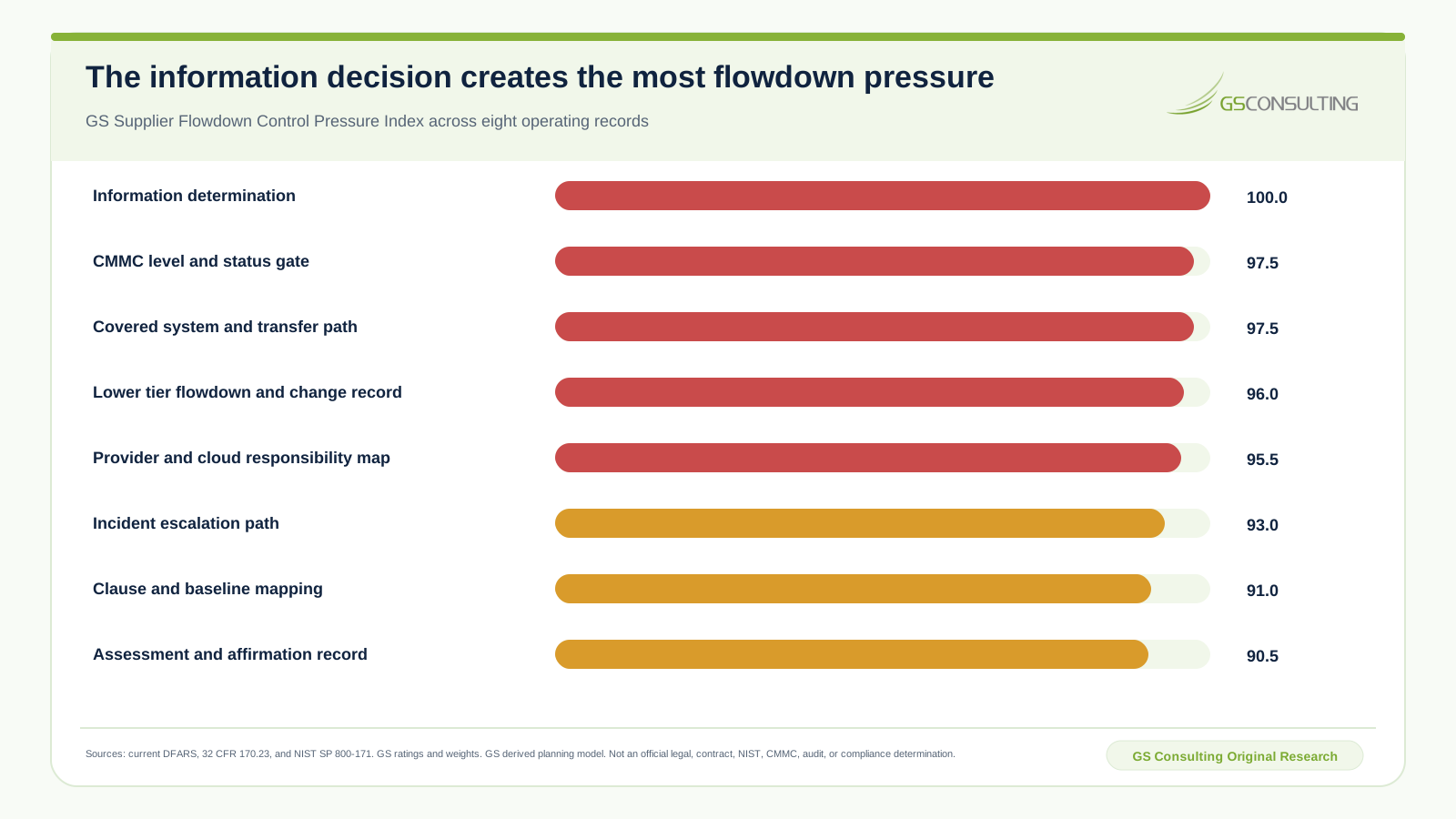
GS Consulting built the Supplier Flowdown Control Pressure Index to answer one question: which supplier records deserve the earliest and strongest control before award and information transfer? The model compares eight operating records on a 100 point planning scale.
Public anchor count captures the number of directly relevant official anchors, capped at four. Six GS ratings from one to five measure contract consequence, CUI exposure, coordination demand, recurring evidence, change sensitivity, and downstream propagation. This separates public facts from the analyst mappings used to sequence work.
| Factor | Base weight | Why it matters |
|---|---|---|
| Public anchor count | 10 points | Shows the official grounding for the operating record |
| Contract consequence | 20 points | Elevates decisions that can block award or create a false contract claim |
| CUI exposure | 20 points | Prioritizes records that control protected information movement |
| Coordination demand | 15 points | Recognizes work across contracts, security, procurement, IT, and suppliers |
| Recurring evidence | 15 points | Rewards records needed after award, not only during onboarding |
| Change sensitivity | 10 points | Elevates facts that can become wrong as systems, data, and status change |
| Downstream propagation | 10 points | Accounts for duties that continue through lower tiers |
For a manual example, the Clause and Baseline Mapping record receives 10 public anchor points, 20 contract points, and 16 CUI exposure points. It then receives 15 coordination points, 12 recurring evidence points, 8 change points, and 10 downstream points. The resulting score is 91.0.
| Flowdown record | Base score | Alternate score | Operating implication |
|---|---|---|---|
| Information determination | 100.0 | 100.0 | Decide purpose, category, and minimum information first |
| CMMC level and status gate | 97.5 | 98.8 | Verify the required status in the proposed system scope |
| Covered system and transfer path | 97.5 | 98.8 | Approve the actual system, provider, user, and transfer route |
| Lower tier flowdown and change record | 96.0 | 96.0 | Control continued sharing and decisions after award |
| Provider and cloud responsibility map | 95.5 | 96.8 | Make shared security and evidence duties explicit |
| Incident escalation path | 93.0 | 94.5 | Connect supplier discovery to contractual reporting and preservation |
| Clause and baseline mapping | 91.0 | 90.0 | Translate current text into owned operating conditions |
| Assessment and affirmation record | 90.5 | 91.8 | Maintain current verification throughout performance |
The alternate case moves five points from public anchor count to change sensitivity. The top tier remains intact and no score moves by more than 1.5 points. That supports the sequence while keeping the limitation visible: these are planning records, not a statistical sample or official benchmark.
Important caveat: This is a GS Consulting derived planning model based on cited public sources and documented assumptions. It is not an official legal, contract, procurement, audit, compliance, NIST, CMMC, DoD, or regulatory determination.
Every Supplier Fact Creates a Different Duty
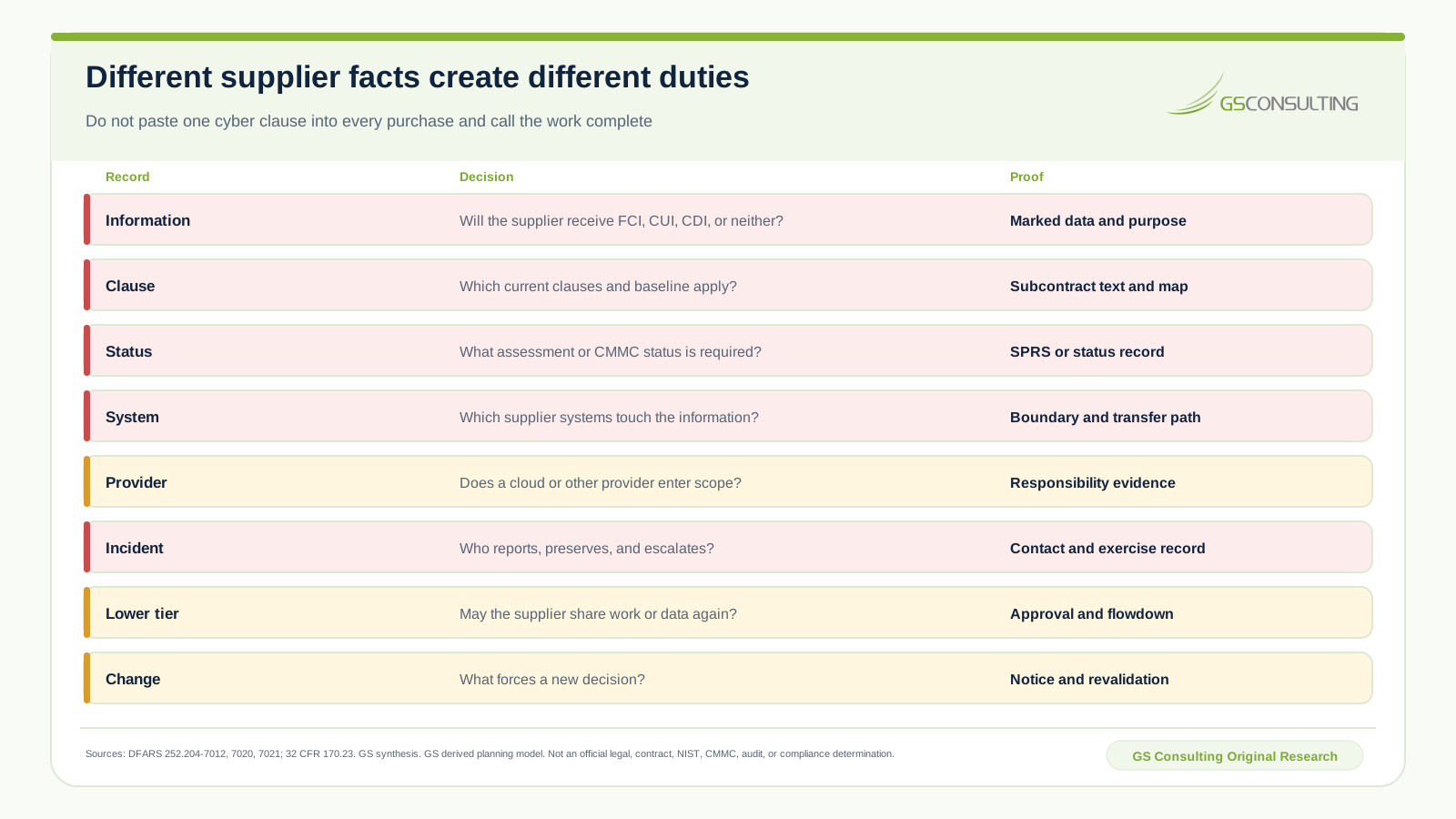
Information answers whether the supplier receives FCI, CUI, covered defense information, public information, or no government information. Preserve purpose, marking, source, and the minimum approved set.
Clause records the current clauses and baseline that apply to the specific purchase. Preserve the text, version, source, exceptions, interpretation owner, and approval.
Status identifies the assessment or CMMC condition required before award and during performance. Preserve the scope and verification source, not only a certificate or score.
System names the supplier users, devices, repositories, locations, services, boundaries, and transfer paths that will touch the information. Link to the system boundary method so the proposed work is traceable.
Provider records whether cloud, managed service, identity, logging, backup, security, support, or other provider services enter the path. Map responsibilities and evidence for each service.
Incident assigns discovery, containment, preservation, reporting, notice, escalation, and customer coordination. Test contact paths before an event.
Lower tier decides whether the supplier may share work or information again, under what approval, and with what proof. The first subcontract is not the end of the path.
Change identifies which facts force a new decision: information, purpose, system, provider, status, personnel, ownership, lower tier, incident, contract, or customer direction.
Use Five Gates Before the Subcontract Is Signed
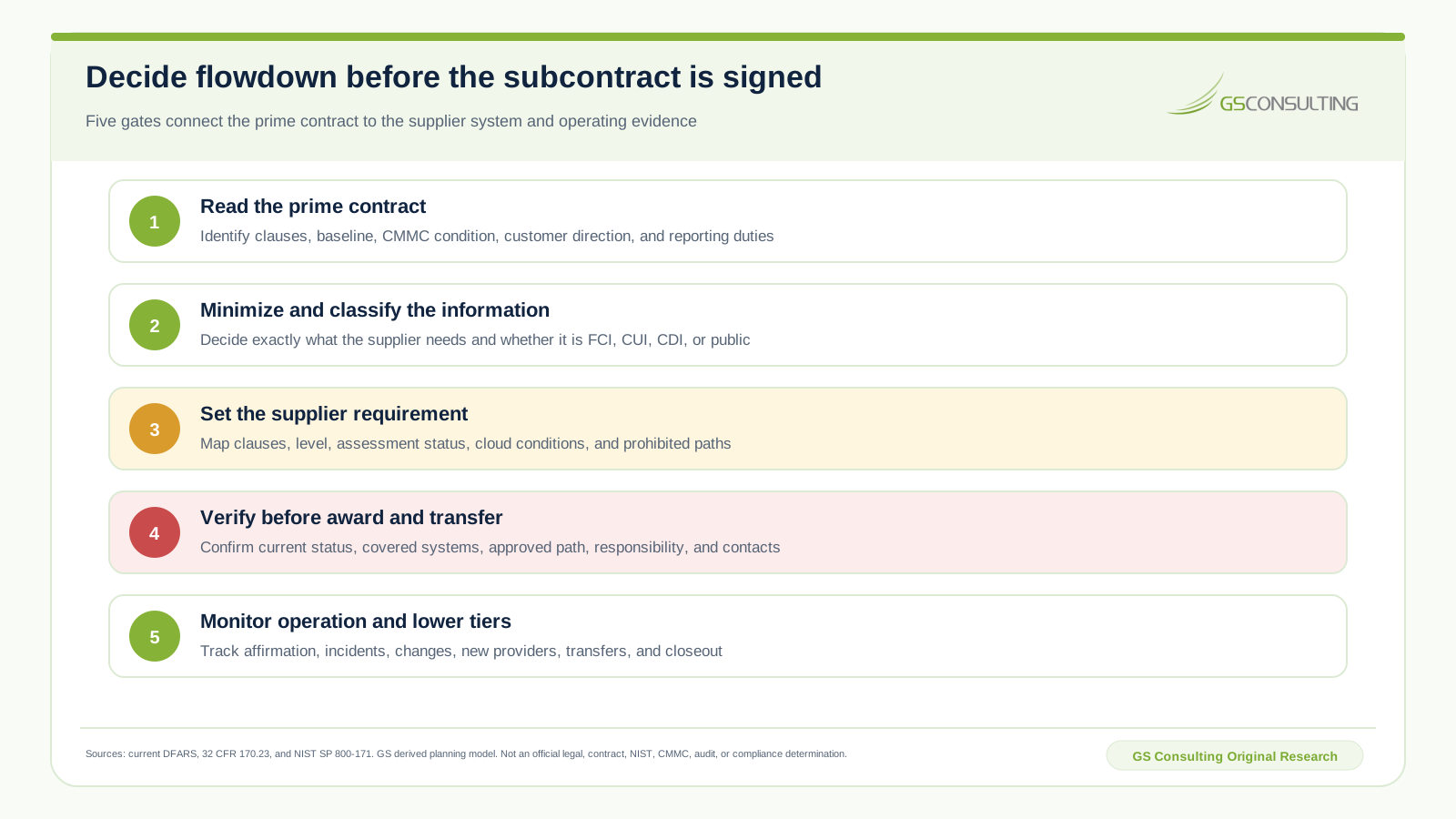
Read the prime contract. Identify clauses, baseline, CMMC condition, customer direction, reporting duties, and any restrictions on suppliers, systems, locations, services, or information sharing.
Minimize and classify the information. Decide exactly what the supplier needs and whether it is FCI, CUI, covered defense information, public, redacted, or unnecessary. Preserve the owner and reasoning.
Set the supplier requirement. Map the clauses, baseline, required status, provider conditions, approved paths, incident duties, lower tier rules, evidence, and closeout conditions into the subcontract record.
Verify before award and transfer. Confirm current status, covered systems, approved path, responsibilities, contacts, and any required assessment or affirmation evidence. Use a second reviewer for high consequence decisions.
Monitor operation and lower tiers. Track affirmations, status dates, incidents, changes, new providers, transfers, findings, lower tier requests, return, destruction, and closure. Flowdown is a lifecycle control.
Turn the Subcontract Into an Operating Record
A contract clause can assign a duty. It cannot prove the supplier workflow satisfies it. Join the subcontract to an operating register with stable supplier, award, system, information, and decision identifiers.
| Gate | Required record | Owner | Release condition |
|---|---|---|---|
| Need | Supplier purpose and minimum information decision | Program and information owner | Work cannot be done with less sensitive information |
| Clause | Prime to subcontract requirement map | Contracts with security review | Current text, baseline, exceptions, and duties are approved |
| Scope | Supplier system and provider boundary | Supplier technical owner | Users, systems, locations, services, and exclusions are testable |
| Status | Assessment, CMMC, and affirmation verification | Security or supplier risk owner | Current required status covers the proposed system |
| Transfer | Approved channel, recipient, access, and receipt test | Information owner and system owner | Representative transfer and access work as designed |
| Operation | Incident, change, lower tier, and review record | Supplier manager | Contacts, triggers, notices, and evidence cadence are active |
| Closeout | Return, retention, destruction, access removal, and approval | Contract and information owners | Information and access reach the approved final state |
Procurement, contracts, security, program, IT, and the supplier should see the same status. A sourcing platform can hold the award data. A governance or evidence system can hold technical proof. What matters is the controlled join between them and a clear owner for each incomplete gate.
Block information release when the system, status, provider path, transfer route, or incident contacts are unresolved. Schedule pressure does not change the data path. It only makes an undocumented exception more likely.
Map Providers and Lower Tiers Before They Enter the Work
A supplier environment often depends on cloud storage, identity, endpoint management, security monitoring, backup, managed service, support, and collaboration providers. Some may process CUI. Others may handle security protection data or provide controls for covered systems. Either path can create responsibility and evidence dependencies.
For each provider, record the service, purpose, information, administrative access, system role, customer setting, provider setting, security duty, evidence source, incident path, data location, subcontract terms, change notice, exit method, and owner. The CMMC external service provider guide gives a complete responsibility method.
Lower tier use deserves a separate approval gate. Require the supplier to identify the proposed entity, purpose, information, system, provider path, location, required clauses, status, and transfer method before sharing. Verify the record at the next tier. Do not accept a statement that the supplier manages its own vendors as the entire control.
NIST SP 800-161 Revision 1 Update 1 provides broader lifecycle guidance for cybersecurity supply chain risk. It strengthens supplier risk practice, but it does not replace the exact clauses and award conditions governing the transaction.
Connect Incident and Change Duties to the Same Record
DFARS 252.204-7012 includes cyber incident reporting, evidence preservation, malicious software, information access, cloud service, and subcontract notice duties. The supplier operating record should name who discovers, contains, preserves, reports, notifies, escalates, and coordinates. Keep the current contact path available to operators, not buried in a contract archive.
Exercise the path with a realistic scenario. A supplier user sends CUI through the wrong service. A managed provider detects suspicious access. A lower tier reports ransomware. A device holding covered defense information is lost. Confirm time capture, evidence preservation, report ownership, prime notice, report number handling, and decision authority.
Change can invalidate an approved flowdown decision without an incident. New information, a new repository, a different cloud region, a merger, expired status, changed assessment scope, new provider, new lower tier, remote access, personnel change, contract modification, or changed customer direction should trigger review.
Use effective dates. Keep the prior decision, the triggering fact, the new analysis, approval, any blocked transfer, correction, and revalidation. Silent edits destroy the history needed to explain why the supplier was approved at the time.
Six Flowdown Shortcuts Fail Under Pressure
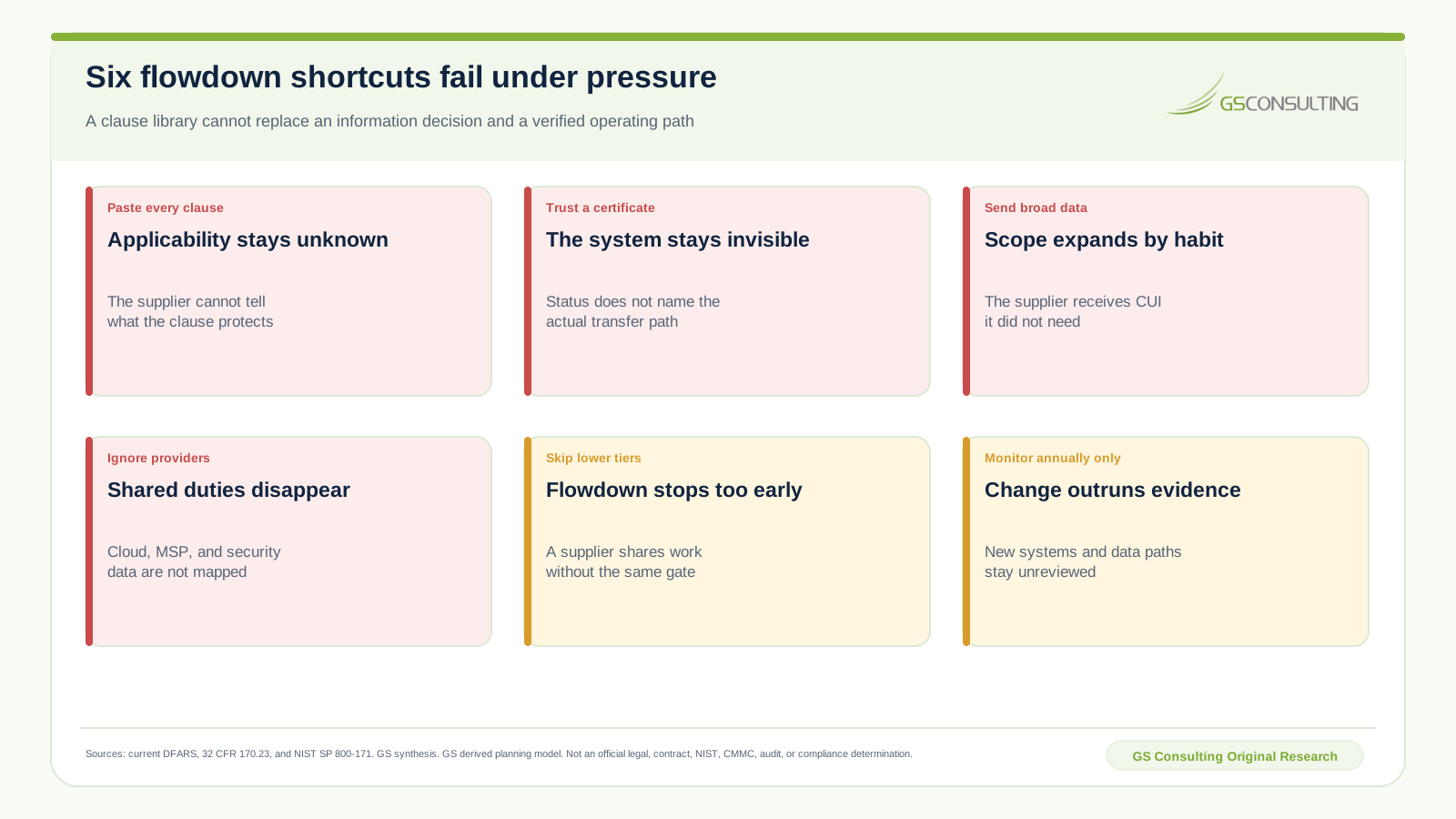
Pasting every clause leaves applicability unknown. Map each requirement to the work, information, system, exception, and operating owner.
Trusting a certificate leaves the supplier system invisible. Verify the legal entity, current status, scope, identifier, date, affirmation, and proposed system path.
Sending broad data expands scope by habit. Minimize documents, fields, recipients, locations, and duration before transfer.
Ignoring providers hides shared security duties, privileged access, security protection data, evidence, incident paths, and service change.
Skipping lower tiers lets work and information move beyond the original decision. Require approval and proof before continued sharing.
Monitoring annually only lets new systems, providers, data, status changes, and incidents outrun the record. Use event triggers and contract cadence together.
A Practical 60 Day Flowdown Plan
Days 1 through 10: inventory current paths. Identify active suppliers, prime awards, subcontracts, information shared, clauses, supplier systems, providers, status records, incidents, lower tiers, and owners. Mark unknowns without inventing answers.
Days 11 through 20: build the decision standard. Define the information categories, minimum data test, clause map, status gate, boundary record, provider map, approved transfer evidence, incident contacts, change triggers, lower tier approval, and closeout record.
Days 21 through 35: review high exposure suppliers. Start with suppliers receiving CUI, using broad cloud or managed service paths, sharing with lower tiers, holding expired or unclear status, or lacking tested transfer and incident paths.
Days 36 through 50: correct and verify. Amend records or agreements where authorized, reduce information, resolve system scope, verify status, test transfer, map providers, exercise incident contacts, and close unapproved lower tier paths.
Days 51 through 60: sustain the control. Connect award, supplier, information, system, status, provider, incident, change, and closeout records. Set event triggers, review cadence, escalation, blocked release rules, metrics, and leadership reporting.
Minimum Supplier Flowdown Evidence Packet
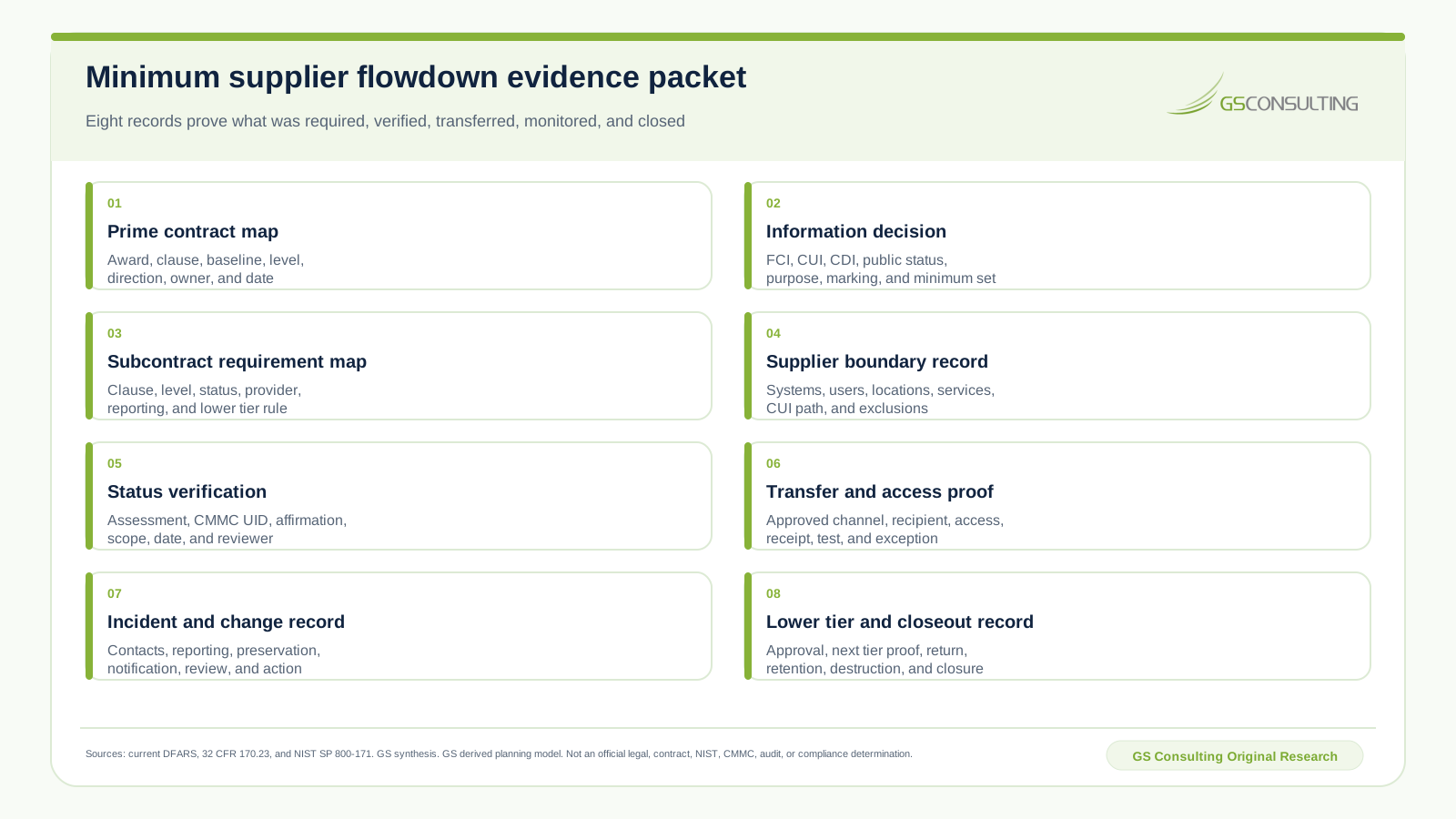
The minimum packet contains the prime contract map, information decision, subcontract requirement map, supplier boundary record, status verification, transfer and access proof, incident and change record, and lower tier and closeout record.
Join the packet with stable award, supplier, system, information, and decision IDs. Assign owners, dates, sources, approvals, exceptions, review triggers, and retention. Preserve evidence that shows what was true when the decision was made. Current truth and decision history are both necessary.
Use the packet in procurement review, security review, supplier onboarding, information release, incident exercises, periodic monitoring, change approval, and closeout. A record that exists only for assessment season is not operating.
Sources and Research Files
This guide uses primary public sources: DFARS 252.204-7012, DFARS 252.204-7020, DFARS 252.204-7021, 32 CFR 170.23, NIST SP 800-171 Revision 3, NIST SP 800-171A Revision 3, NIST SP 800-161 Revision 1 Update 1, and the DoD CMMC Level 2 Scoping Guide.
The complete research package under research/insights/nist-800-171-flowdown/ contains the source register, public signals, model inputs, formula driven workbook, derived scores, sensitivity analysis, figure data, methods, limitations, editable SVGs, and rendered PNGs. Public observations, GS ratings, and calculated outputs remain separate.
This guide provides preparation and operating guidance. It does not determine legal, contract, procurement, assessment, or certification status for a specific transaction.
Do not release the information until the path is proved.
Set the requirement, minimize the data, verify the system and status, test the transfer, control lower tiers, and keep the record current. That is the operating standard.
Request a Supplier Flowdown Review