Cybersecurity | | 28 min read
NIST 800-171 Configuration Management Guide

Key Takeaways
Configuration Management proves that approved state became deployed state
Ten active requirements create 49 assessment statements
Revision 3 joins baseline, settings, change, impact, access, functionality, software, inventory, CUI location, and high risk area decisions.
Least Functionality scores 95
It leads the GS evidence burden model because it combines the family maximum for statements and parameter decisions with broad reach and drift exposure.
Compare expected state with actual state
A baseline that cannot be tested against deployed components, settings, services, software, and exceptions is a paper claim.
NIST 800-171 Configuration Management is not a change ticket. It is the control that proves the environment you approved is the environment you are running.
Most weak implementations have documents. They have a baseline template, a ticket system, an asset export, a secure configuration standard, and a policy that requires approval. The evidence still breaks because those records do not reconcile. The inventory names one version. The baseline expects another. The ticket says complete. The scan shows the old setting. The exception has no end date.
Configuration Management closes that gap. It connects component inventory, approved baseline, required settings, allowed functionality, change authority, security impact, deployed result, drift detection, correction, and updated evidence. Every change must leave the system and its record in agreement.
This guide turns the family into an operating system. It connects to the NIST 800-171 hub, the companion Media Protection guide, the system boundary and asset inventory guide, the supplier flowdown guide, and GS Consulting services for secure AI automation.
Make approved state and deployed state agree.
GS Consulting helps contractors establish testable baselines, control change, expose drift, and build assessment evidence around the real environment.
Plan the Configuration ReviewNIST 800-171 Configuration Management: The Short Answer
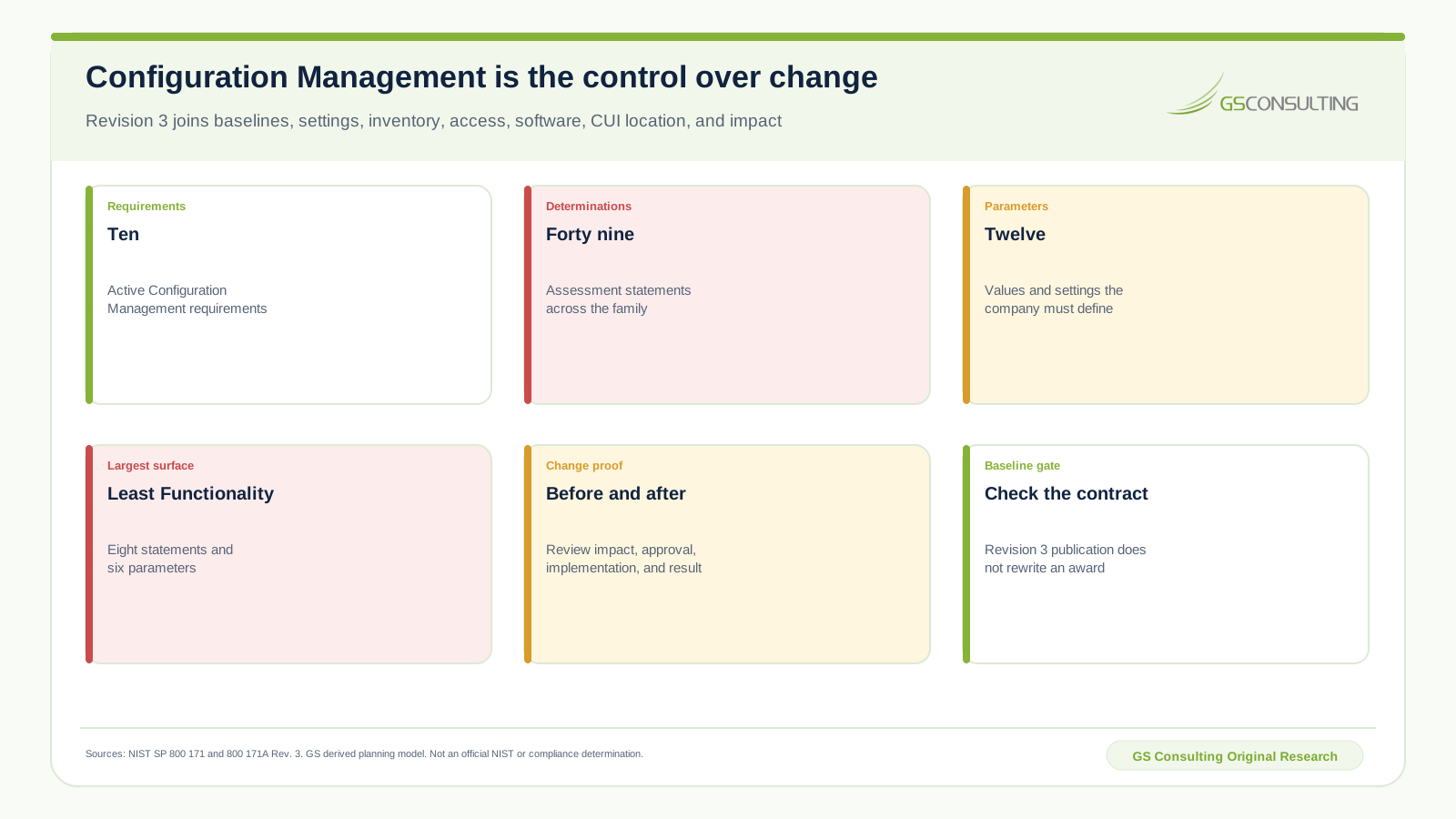
NIST SP 800-171 Revision 3 contains 10 active Configuration Management requirements. They cover Baseline Configuration, Configuration Settings, Configuration Change Control, Impact Analyses, Access Restrictions for Change, Least Functionality, Authorized Software, System Component Inventory, Information Location, and Configuration for High Risk Areas.
GS counted 49 determination statements and 12 organization defined parameters in the official NIST SP 800-171A Revision 3 assessment procedures. Least Functionality alone contains eight statements and six parameter decisions, the family maximum for both.
A complete implementation answers three questions with the same record: What state did the organization approve? What state is deployed? What happened when the two differed? A baseline, ticket, or scan that answers only one question is incomplete.
Let the Contract Set the Revision
NIST publication does not change a contract by itself. The DFARS 252.204-7012 clause, when included, connects the required NIST publication to the covered contractor system and acquisition. Read the solicitation, contract, subcontract, modifications, customer direction, and current program material before declaring the applicable revision.
Revision 3 reorganizes this family and includes two withdrawn identifiers whose outcomes moved or were incorporated elsewhere. Preserve a crosswalk when preparing for a different revision so renamed or moved outcomes do not disappear from the operating record.
Keep an applicability record that names the award, clause, publication, revision, covered system, CUI, customer direction, decision owner, date, and trigger for review. Strong preparation is wise. Claims about legal or contract duties still need cautious, facts based language.
The Ten Configuration Management Requirements
| Requirement | Operating question | Proof to expect |
|---|---|---|
| 03.04.01 Baseline Configuration | What approved state should each system follow and when is it reviewed? | Component scope, build, settings, approval, review, change, and test |
| 03.04.02 Configuration Settings | Which secure settings apply and how are deviations handled? | Setting source, value, scope, rationale, deployment, exception, and scan |
| 03.04.03 Configuration Change Control | Does every relevant change pass through request, review, approval, implementation, and verification? | Change record, authority, impact, deployment, result, and closure |
| 03.04.04 Impact Analyses | What security and CUI effects are considered before change? | Systems, data, controls, providers, risks, tests, and decision |
| 03.04.05 Access Restrictions for Change | Who may make physical or logical changes and through which paths? | Role, approval, privileged path, activity log, review, and denied test |
| 03.04.06 Least Functionality | Which functions, ports, protocols, services, software, and connections are essential? | Allowed state, prohibited state, exception, deployment, scan, and correction |
| 03.04.08 Authorized Software | How does the company prevent or detect unauthorized software? | Approved software, discovery, allow or deny control, alert, action, and review |
| 03.04.10 System Component Inventory | Can the team identify the components that make the covered system work? | Asset, version, owner, location, relationship, CUI role, and lifecycle state |
| 03.04.11 Information Location | Where is CUI processed and stored, including providers and backups? | Repository, system, owner, location, data flow, provider, and update record |
| 03.04.12 Configuration for High Risk Areas | What configuration applies when a system operates in an area the company defines as high risk? | Area definition, configuration, connection rule, approval, use record, and review |
The requirement name is only the index. Assessment follows the underlying statements. Build the crosswalk at that level and name the system, implementation, evidence, owner, test, result, and exception for every applicable statement.
Original Research: The GS Configuration Evidence Burden Index
The heaviest configuration work sits where broad system reach meets constant drift.
GS Consulting built a derived planning model across the 10 active Revision 3 requirements. Public inputs are the determination statement count divided by the family maximum of eight and the parameter count divided by the maximum of six. Five GS ratings from one to five capture system reach, change frequency, drift exposure, recurring evidence demand, and coordination demand.
The base model weights statement count at 15 percent, parameter count at 10 percent, system reach at 20 percent, change frequency at 15 percent, drift exposure at 15 percent, recurring evidence at 15 percent, and coordination demand at 10 percent. The sensitivity case moves five points from statement count to drift exposure.
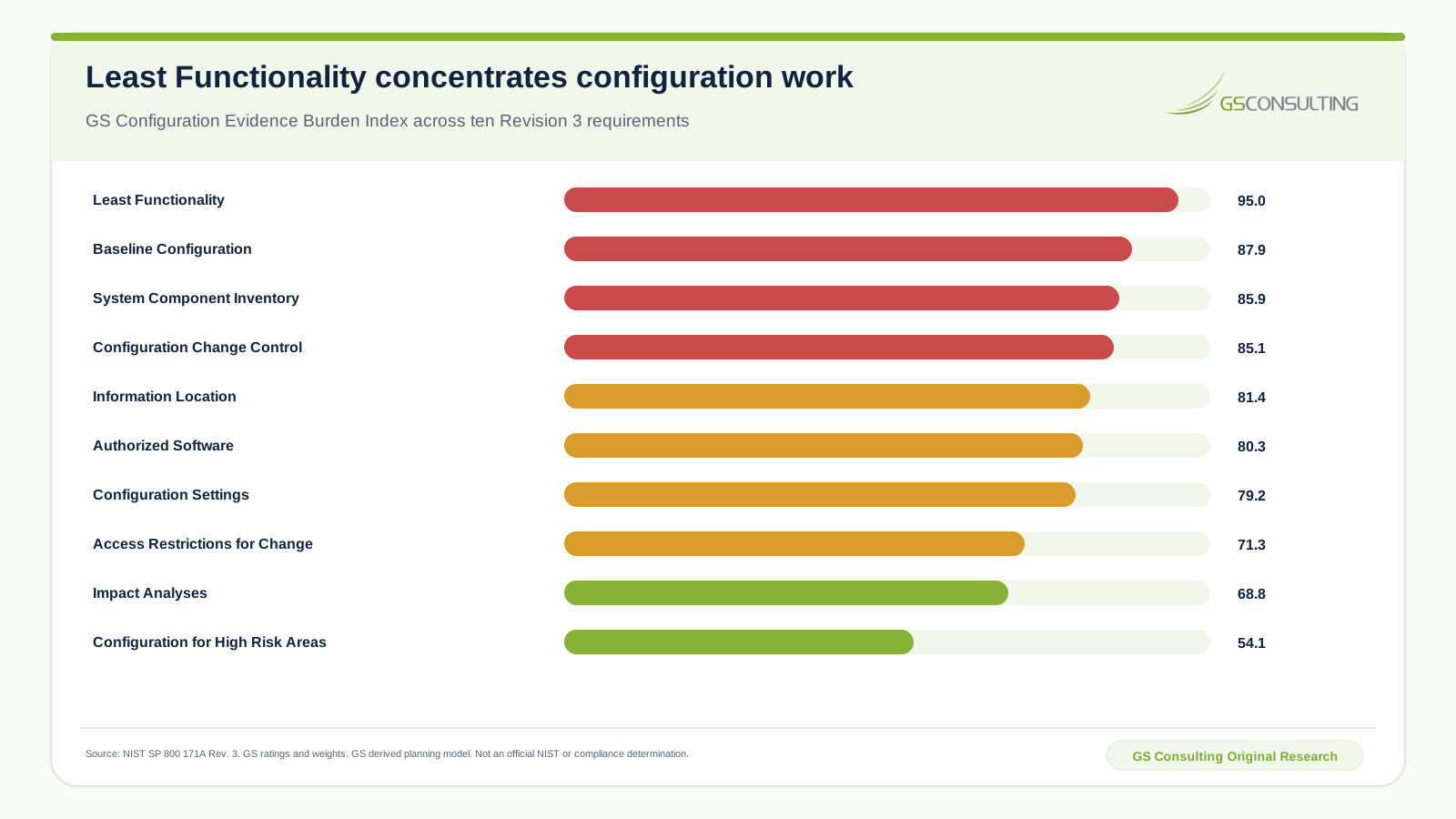
Least Functionality scores 95.0. Baseline Configuration scores 87.9. System Component Inventory scores 85.9, and Configuration Change Control scores 85.1. These four requirements deserve early attention because they touch broad parts of the environment and create continuing proof, not a one time document.
The alternate weights keep the same top three and move no score by more than 3.1 points. Authorized Software changes the most, from 80.3 to 83.4, because the alternate case gives more weight to drift exposure. The result supports a clear order: discover actual state, approve the expected state, control change, then reconcile drift.
This is a GS Consulting derived planning tool. It does not determine requirement importance, legal duties, contract applicability, audit results, CMMC status, or compliance. The full source register, observations, ratings, formulas, sensitivity analysis, figure data, and caveats are preserved in the repository research package.
Configuration Management Is a Reconciliation Loop
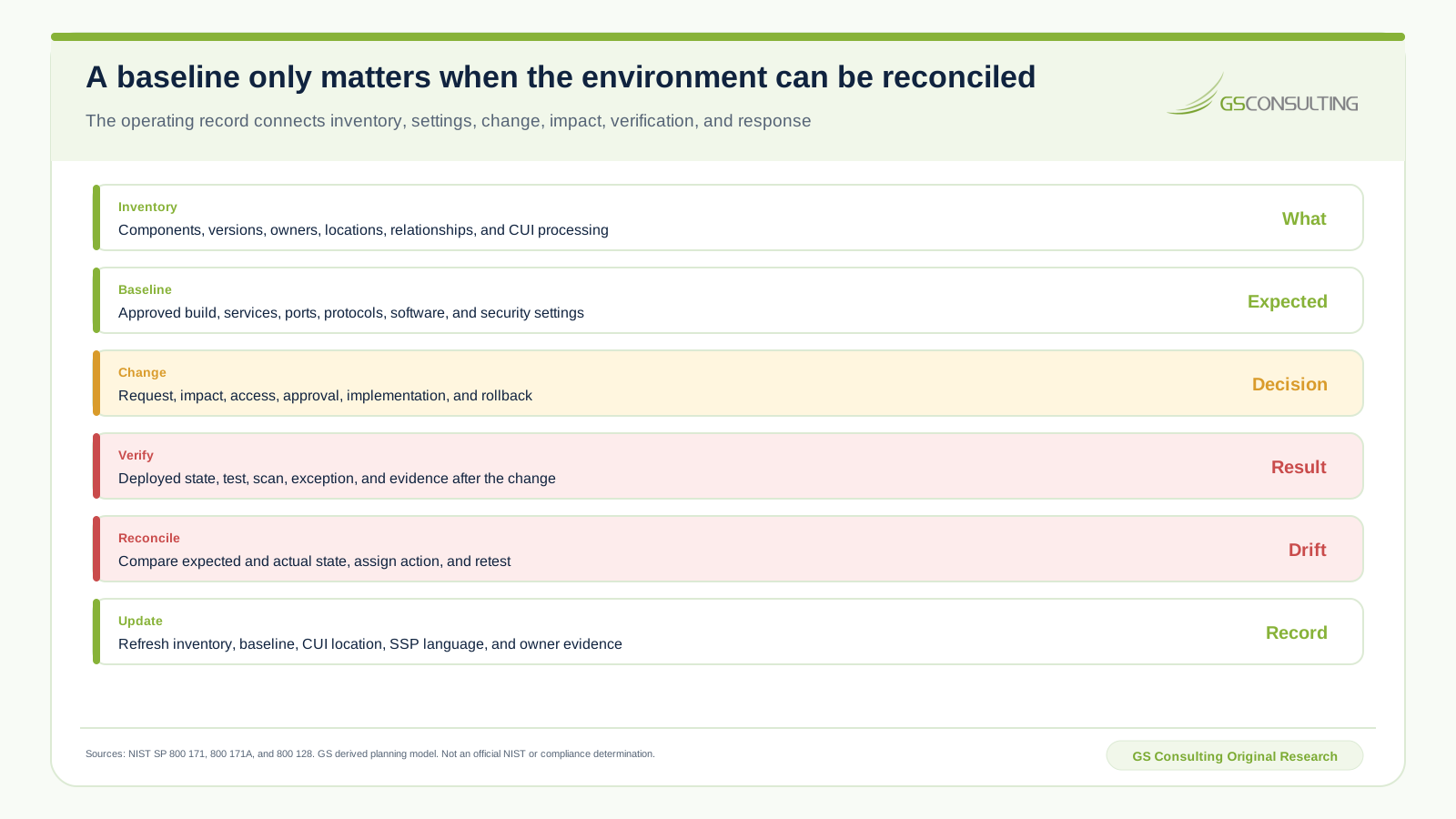
Inventory describes actual components. Record the asset, version, owner, location, relationship, role, CUI processing, provider, and lifecycle state. Discovery tools can supply observations. Owners still need to resolve identity and purpose.
Baseline describes expected state. Name the build, settings, services, ports, protocols, software, functions, security controls, exceptions, approval, and review trigger. Avoid phrases such as secure settings will be used. A baseline must be testable.
Change describes the decision. Connect purpose, affected scope, prior state, proposed state, security impact, access, authority, implementation plan, rollback, and expected test.
Verification describes the result. Record the deployed version and time, operator, scan, test, log, defect, rollback, exception, and approval. Ticket completion is an administrative state. Verification is the technical result.
Reconciliation closes drift. Compare inventory, baseline, deployed state, CUI location, system security plan, and exception records. Assign discrepancies, correct or approve them, retest, and update the authoritative records.
Make the Baseline Specific Enough to Test
NIST SP 800-128 describes security focused configuration management as an approach for controlling and monitoring configurations to manage risk while supporting business functions. It remains useful implementation guidance even though it predates Revision 3 and does not replace the current requirement text.
Build baselines by system class and component role, then preserve the exceptions that make a specific asset differ. For each setting, record the source, value, scope, implementation method, owner, rationale, enforcement, check method, exception authority, and review trigger.
Inventory and baseline are different records. Inventory says what exists. Baseline says what should exist. A configuration scan shows what the tool observed. None can substitute for the others. Their value comes from comparison.
Information Location belongs in the same model. A repository, backup, endpoint, provider service, or removable media location that holds CUI changes the component purpose and often the required baseline. Link the location map to the Media Protection record so configuration and custody cannot drift apart.
Control the Decision, the Access, and the Result
A complete change record begins before implementation. It names the purpose, affected components, CUI path, prior and proposed state, security requirements, provider effects, dependencies, risk, test, rollback, implementer, approver, and planned time.
Security impact analysis should answer concrete questions. Does the change create a new CUI location or connection? Does it alter identity, privilege, logging, encryption, backup, retention, public access, incident evidence, or provider responsibility? Does the system security plan still describe the environment? Which tests would reveal an unsafe result?
Access restriction is part of change control, not a separate administrator list. Prove who can alter each component, through which privileged path, under what approval, with what activity record, and how direct or emergency actions are reviewed. The Access Control guide provides the connected authorization and privilege model.
After deployment, compare the result with the approved change. Capture versions, settings, scan results, logs, functional tests, security tests, defects, rollback, exceptions, and acceptance. Then update the baseline, inventory, CUI location, diagrams, and system security plan where the change made them stale.
Drift Is a Finding Until Someone Resolves It
Drift is the difference between expected and observed state. It can result from an unauthorized change, a failed deployment, a provider update, an emergency action, a stale baseline, an inventory defect, or a legitimate change whose records never caught up.
Do not make a scanner the judge of intent. Use it as an observation source. Reconcile each meaningful difference to the approved baseline, change record, exception, and owner. Classify the result as unauthorized state, approved but undocumented state, tool error, inventory error, or accepted exception. Give every result a corrective action or a documented decision.
Exceptions need scope, reason, risk, compensating action, authority, start date, expiry, review, removal condition, and current validation. An exception without an expiry becomes the unofficial baseline. A baseline with too many silent exceptions stops being a baseline.
Set a recurring cadence and event triggers. Reconcile after significant change, provider change, incident, major finding, architecture change, CUI flow change, and exception expiry. Use faster checks where system change or exposure is higher.
A Practical Configuration Management Path
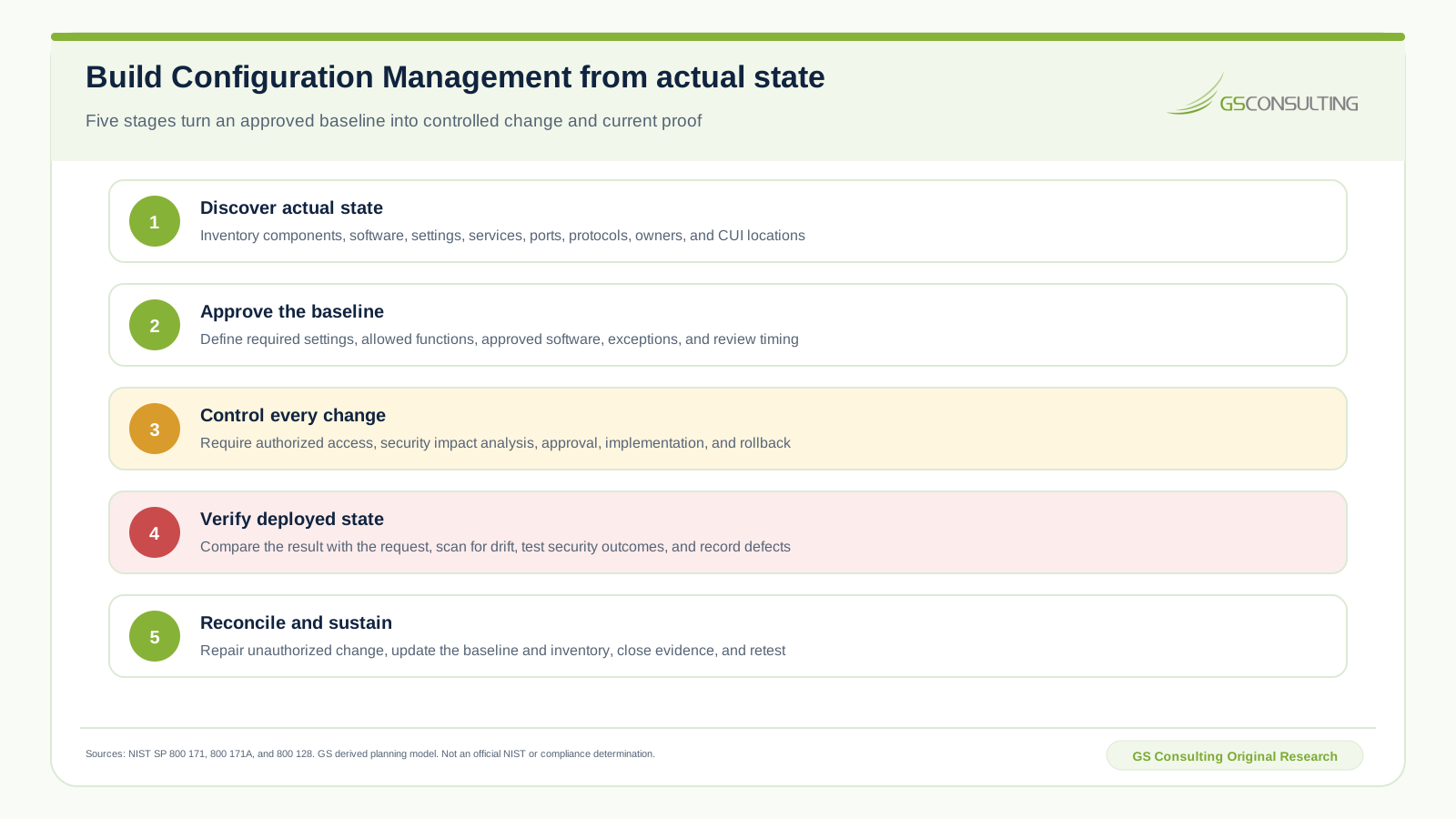
- Discover actual state. Inventory components, software, settings, services, ports, protocols, owners, relationships, provider duties, and CUI locations.
- Approve the baseline. Define required settings, essential functions, authorized software, exceptions, owners, evidence, and review timing.
- Control every change. Require authorized access, security impact, approval, implementation record, rollback, and expected tests.
- Verify deployed state. Compare the result with the request, test security outcomes, scan for drift, and record defects.
- Reconcile and sustain. Correct unauthorized state, update authoritative records, close evidence, and retest.
Six Configuration Management Failure Modes
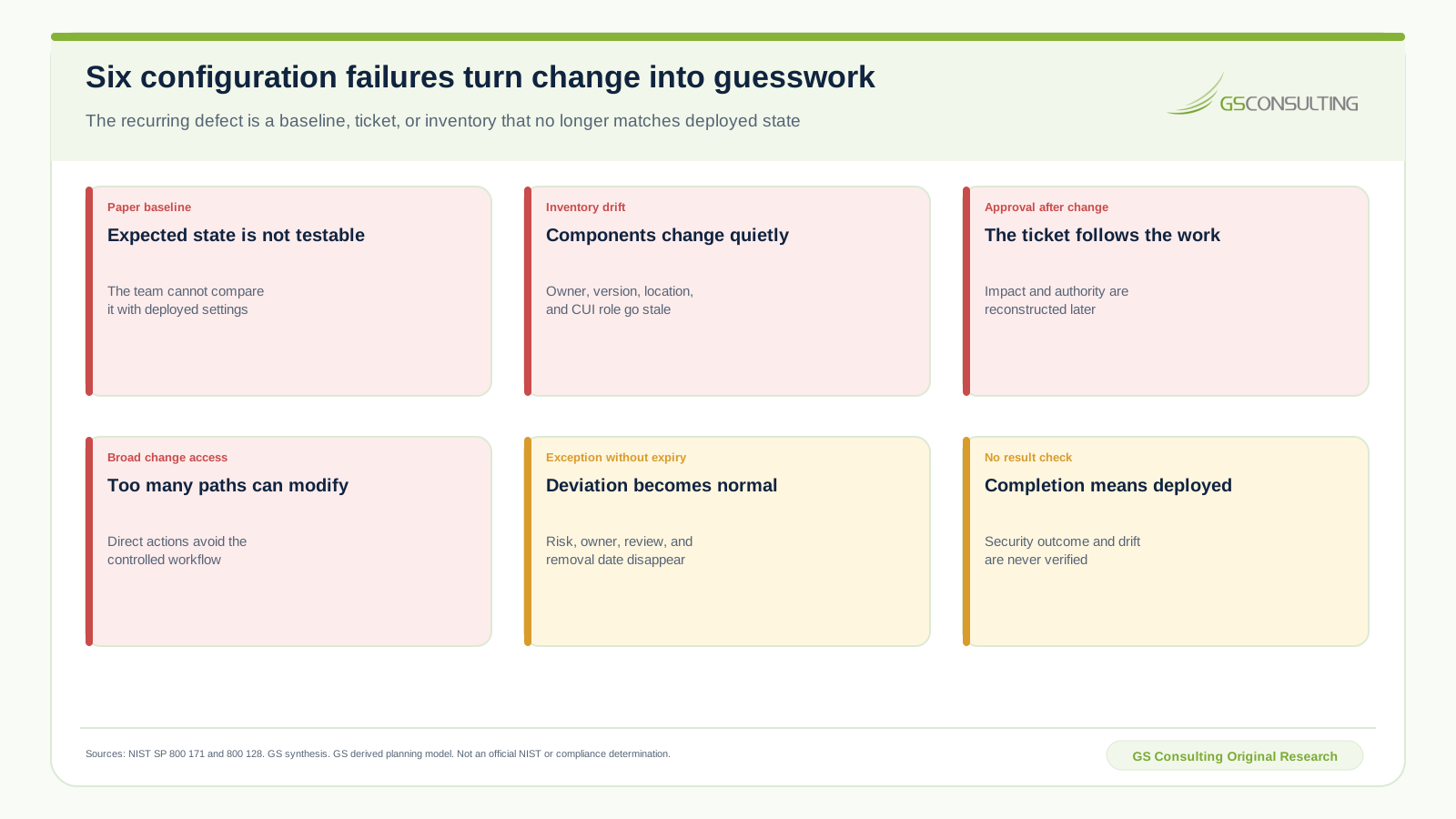
- Paper baseline. The document uses broad intent that cannot be compared with actual settings.
- Inventory drift. Components, versions, owners, relationships, locations, and CUI roles go stale.
- Approval after change. The ticket is completed after the work and authority is reconstructed later.
- Broad change access. Direct administrator paths can bypass the controlled workflow.
- Exception without expiry. A temporary deviation becomes normal and escapes review.
- No result check. Deployment success is treated as proof of the intended security state.
A 60 Day Configuration Management Plan
Days 1 through 10: settle scope and authority. Confirm the governing revision and covered systems. Name system owners, configuration owners, security reviewers, change approvers, implementers, inventory owners, provider contacts, CUI owners, and evidence custodians.
Days 11 through 20: discover actual state. Combine authoritative inventories, discovery data, architecture, software, services, ports, protocols, configuration observations, CUI locations, provider components, and owner interviews. Resolve duplicates and unknowns.
Days 21 through 30: approve testable baselines. Define system classes, required settings, essential functions, authorized software, prohibited state, evidence method, review interval, and exception rules. Record every organization defined parameter with scope, rationale, owner, and approval.
Days 31 through 40: repair change control. Add security impact, authorized access, deployment proof, rollback, result testing, record updates, emergency review, and provider change to the workflow. Remove direct paths that cannot be traced.
Days 41 through 50: reconcile and test. Compare samples of expected and deployed state. Test a standard change, denied change path, emergency change, unauthorized software event, unnecessary service, expired exception, and inventory update. Correct and retest defects.
Days 51 through 60: assemble evidence and cadence. Map records to assessment statements. Resolve contradictions between inventory, baseline, deployed state, CUI location, and system security plan. Put review and event triggers into normal operations.
Minimum Configuration Management Evidence Packet
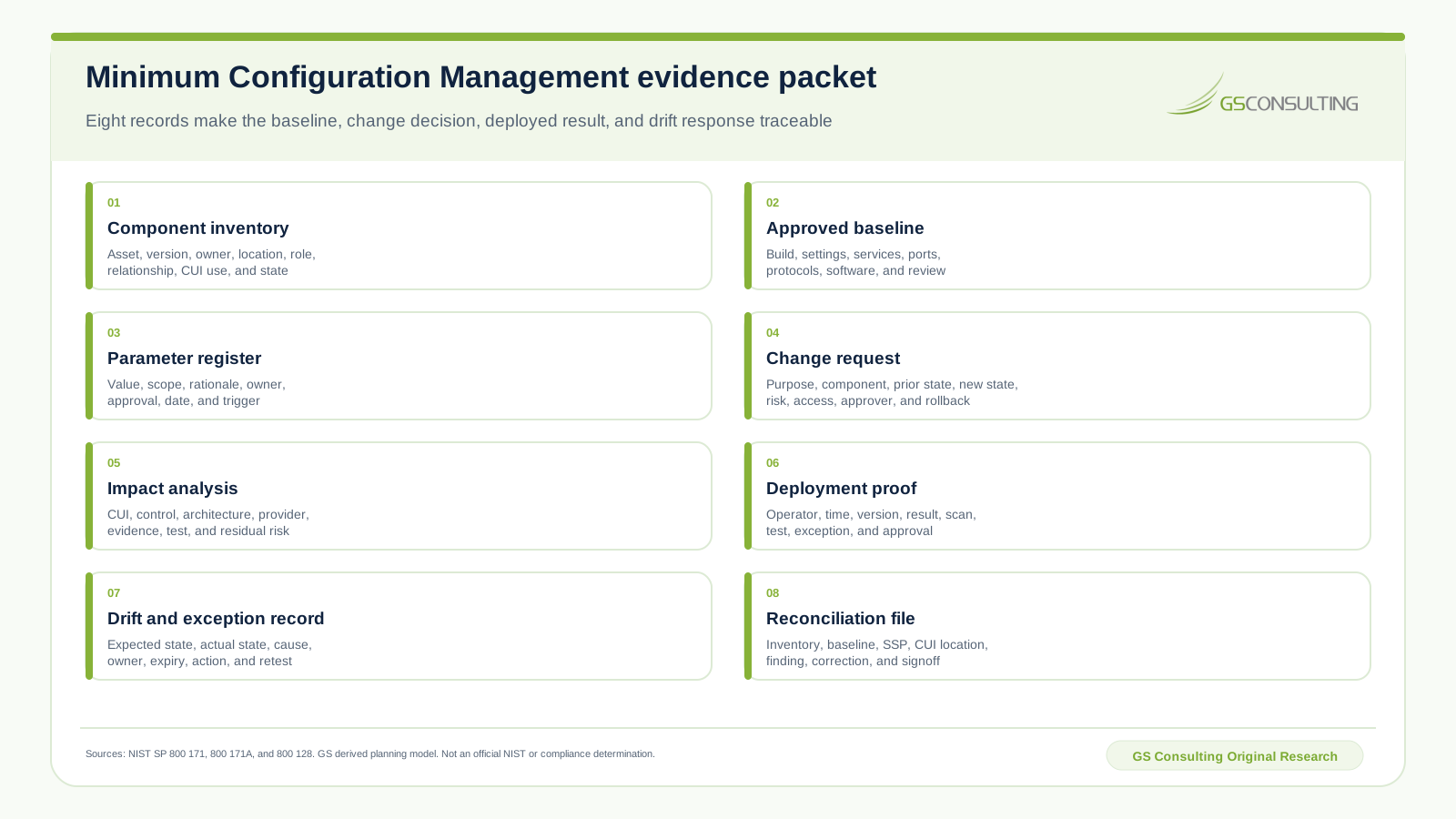
Keep the component inventory, approved baseline, parameter register, change request, impact analysis, deployment proof, drift and exception record, and reconciliation file under change control. Each record should name scope, source, owner, authority, date, result, exception, and trigger for update.
Use the packet as an evidence index, not a second configuration database. Point to current source records and preserve the evidence period. A spreadsheet copied months before assessment can be useful history, but it does not prove current deployed state.
Configuration changes also need a current risk decision and a protected audit trail. Link the security impact, approval, deployed result, scan or test, administrator activity, and residual decision so review can reconstruct why the state changed and whether it worked.
Sources, Method, and Caveats
The research package uses primary public sources from NIST, DoD, and Acquisition.gov. NIST SP 800-171 and 800-171A Revision 3 supply the requirement and assessment observations. NIST SP 800-128 supports the operating model. Public facts and GS analyst assumptions remain separate.
The GS Configuration Evidence Burden Index is a planning tool. It is not an official NIST score, legal opinion, contract interpretation, audit result, CMMC status, or compliance determination. The governing award, current direction, actual system, implementation, and assessment record control those conclusions.
Frequently Asked Questions About NIST 800-171 Configuration Management
What is NIST 800-171 Configuration Management?
It is the requirement family for approved baselines, secure settings, controlled changes, impact analysis, change access, least functionality, authorized software, component inventory, CUI location, and configuration in high risk areas. Its operating goal is to keep expected and deployed state aligned.
How many Revision 3 Configuration Management requirements are active?
Revision 3 has 10 active requirements. GS counted 49 determination statements and 12 organization defined parameters in NIST SP 800-171A Revision 3. The governing contract or program determines the required revision.
What should a baseline configuration include?
Include components, versions, roles, relationships, settings, allowed services, ports, protocols, functions, software, security controls, exceptions, owners, approval, and review triggers. The baseline must be specific enough to compare with deployed state.
What evidence proves configuration change control?
Use the request, affected scope, prior and proposed state, security impact, authorized access, approval, implementation record, test result, rollback outcome, exception, and updated authoritative records. Connect the decision to the deployed result.
How does least functionality support NIST 800-171?
Least functionality limits systems to essential capabilities and restricts unnecessary functions, ports, protocols, connections, software, and services. It works only when allowed state is explicit, exceptions expire, deployed state is tested, and drift is corrected.
How often should configuration baselines be reviewed?
Use a defined interval plus event triggers. Review after material change, new components, provider changes, findings, incidents, architecture changes, CUI flow changes, and expired exceptions. Set the cadence from risk, change frequency, contract terms, and operating context.
Make Configuration State Reproducible
Do not measure maturity by ticket volume. Measure whether the team can reproduce the approved state, explain every material change, compare it with deployed state, and close every difference. Keep the inventory, baseline, configuration, exception, and system security plan in agreement.
Not a change ticket. A controlled loop that makes every approved state, deployed result, and correction traceable.
Build Configuration Management that exposes drift.
GS Consulting can help your team discover actual state, approve testable baselines, repair change control, reconcile records, and prepare assessment evidence.
Discuss Configuration Management