Cybersecurity | | 27 min read
NIST 800-171 Audit and Accountability Controls Explained

Key Takeaways
An audit trail succeeds when it can explain a real event
Start with decisions, not log volume
Choose events and fields from CUI paths, privileged actions, threats, failures, response needs, and reconstruction questions.
36 statements test the complete chain
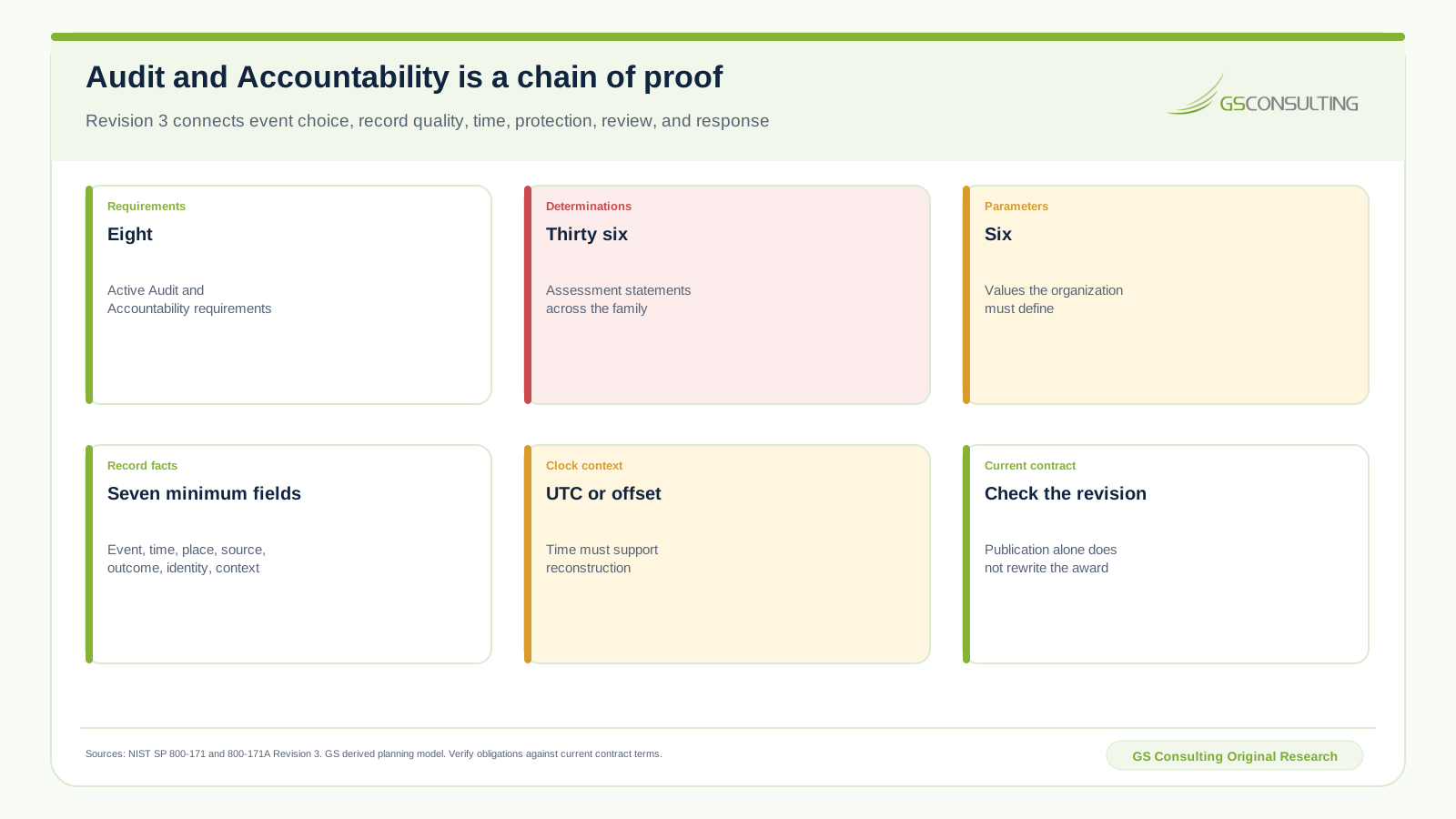
The eight active Revision 3 requirements contain 36 determination statements and six organization defined parameters.
A finding needs closure evidence
Review must lead to reporting, ownership, correction, verification, and a retained decision record when action is required.
NIST 800-171 Audit and Accountability is not a request to collect every available log. It requires a trustworthy chain from event choice through record generation, time, protection, review, response, and reconstruction.
A large log store can still fail. The CUI path may be missing. A service account may hide the actor. Clocks may disagree. Collection may stop without notice. Privileged administrators may be able to alter the same records used to review their actions. Alerts may close without investigation or correction.
The practical test is direct: create a known event in the real environment and ask whether the team can find the complete record, establish who did what and where, place it in the correct sequence, prove it was protected, explain who reviewed it, and show what happened when the process failed.
This guide belongs to the NIST 800-171 and CUI Security Hub and supports the secure AI and regulated automation service. Use it with the system boundary guide, access control guide, incident response guide, the assessment evidence guide, and the assessment and monitoring operating guide.
Make the audit trail useful before an incident.
GS Consulting helps contractors define events, align sources, protect records, run review, test reconstruction, and prepare current assessment evidence.
Review the Audit TrailNIST 800-171 Audit and Accountability: The Short Answer
Implement the family as one operating system. Define the events and added content the organization needs. Generate records with the required facts. Detect and respond when logging fails. Review, analyze, correlate, and report findings at the approved frequency. Support reduction and reporting without changing original content or time order. Use clocks that support reconstruction. Protect records and tools from unauthorized access, modification, and deletion.
NIST SP 800-171 Revision 3 contains eight active Audit and Accountability requirements. NIST SP 800-171A Revision 3 turns them into assessment procedures using examine, interview, and test methods.
Confirm the Revision and Contract Gate First
Revision 3 is the current NIST publication, finalized in May 2024. That publication status does not automatically amend an existing contract. The award, solicitation, clause version, program direction, and authorized contracting officer determine the applicable obligation and transition path.
The current DoD CMMC FAQ describes Level 2 using the 110 Revision 2 requirements and says future rulemaking will incorporate Revision 3. When DFARS 252.204-7012 applies, read the actual clause and award before choosing the required publication.
Maintain a revision decision record. Name the contract, information, system, applicable publication, approval authority, implementation plan, evidence set, and trigger for review. If operations are preparing for Revision 3 while an assessment still uses Revision 2, map both without claiming that one has already replaced the other.
The Eight Active Revision 3 Requirements
| Requirement | Operating outcome | Proof question |
|---|---|---|
| 03.03.01 Event Logging | Define event types and the frequency for reviewing and updating the selection. | Can the team connect every selected event to a risk, CUI path, response need, or accountability decision? |
| 03.03.02 Audit Record Content | Capture event, time, place, source, outcome, identity, and added context when required. | Can a reviewer interpret the record without guessing which actor, object, system, or result it represents? |
| 03.03.03 Audit Record Generation | Generate the approved records and retain them under policy. | Do all in scope sources produce the expected content and reach the approved repository? |
| 03.03.04 Response to Audit Logging Process Failures | Alert defined personnel in the defined period and take approved actions. | Does a broken source, collector, route, store, or capacity limit produce a visible and owned response? |
| 03.03.05 Review, Analysis, and Reporting | Review at the defined frequency, report findings, and correlate records across repositories. | Can the process turn records into an explained finding and track any required action? |
| 03.03.06 Audit Record Reduction and Report Generation | Support review, analysis, reporting, and later investigation while preserving original content and order. | Can analysts filter and report without damaging the source record or event sequence? |
| 03.03.07 Time Stamps | Use internal clocks with defined granularity, UTC, or a documented offset. | Can events from different systems be placed in a reliable sequence? |
| 03.03.08 Protection of Audit Information | Prevent unauthorized access, modification, and deletion, and limit audit management to a subset of privileged roles. | Can the team prove the records and tools were protected from the people whose actions they may record? |
Requirement 03.03.09 is withdrawn in Revision 3 and incorporated into protection of audit information. Do not count it as a ninth active requirement. Keep the mapping in transition records so older plans and evidence do not disappear without explanation.
GS Audit Trail Proof Load Index
GS counted 36 determination statements and six organization defined parameters in the official Revision 3 assessment procedures. Audit Record Content has the largest statement count at seven. Event Logging and Logging Failure Response each contain two parameter decisions.
The GS Audit Trail Proof Load Index combines those public counts with five documented analyst ratings: reconstruction dependency, tamper resistance demand, cross repository reach, recurring evidence demand, and operating urgency. Counts are normalized to family maxima. Base weights are 15, 10, 20, 15, 15, 15, and 10 percent. The sensitivity case moves five points from statement count to reconstruction dependency.
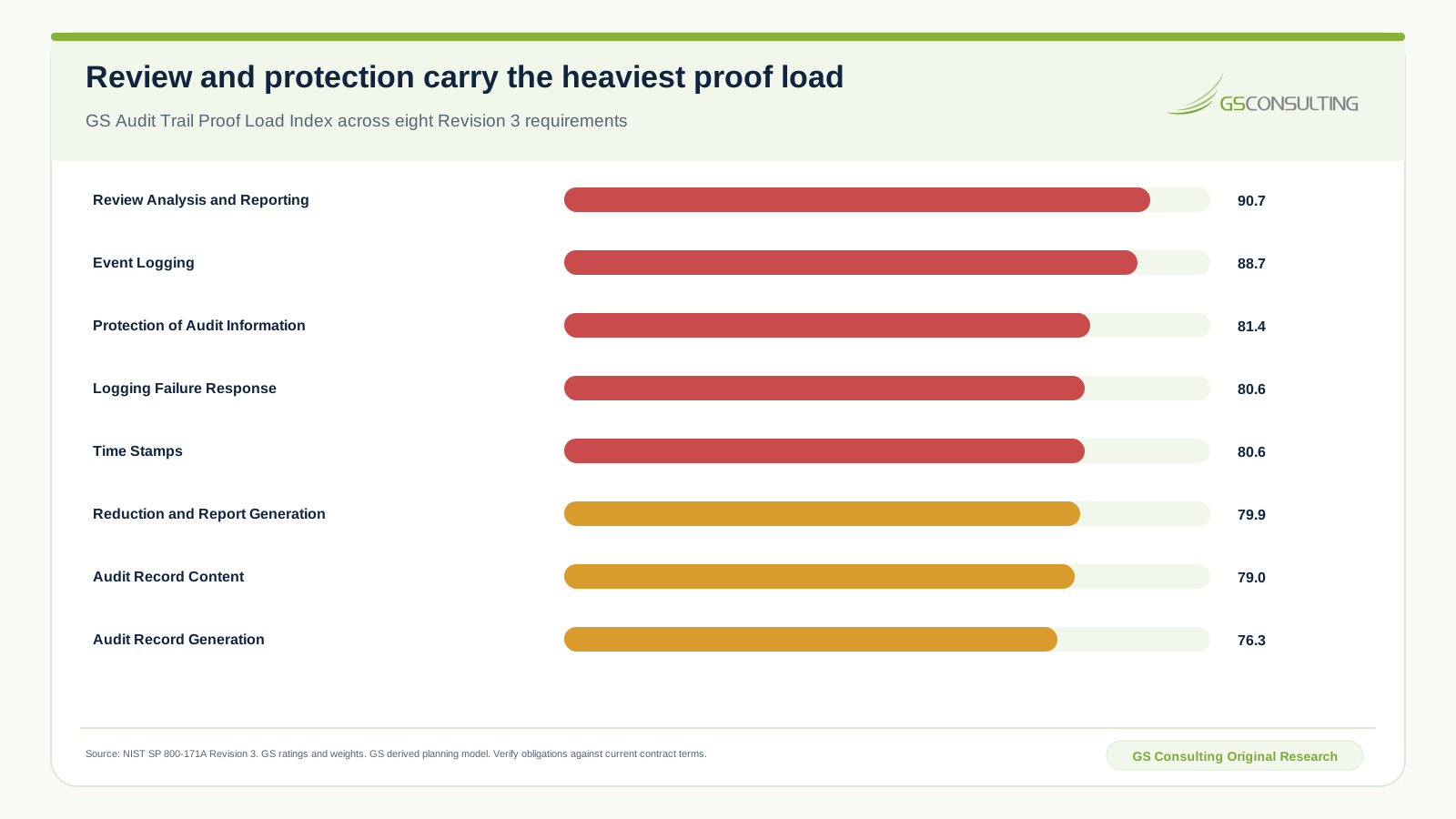
The model does not rank legal importance or predict assessment results. It supports implementation sequencing. The top control depends on the whole trail, so work should move as a chain: define events and content, generate and protect records, align time, detect failure, and prove review and response. The alternate weights preserve the top two, and no score moves more than 3.6 points.
Design One Audit Evidence Chain
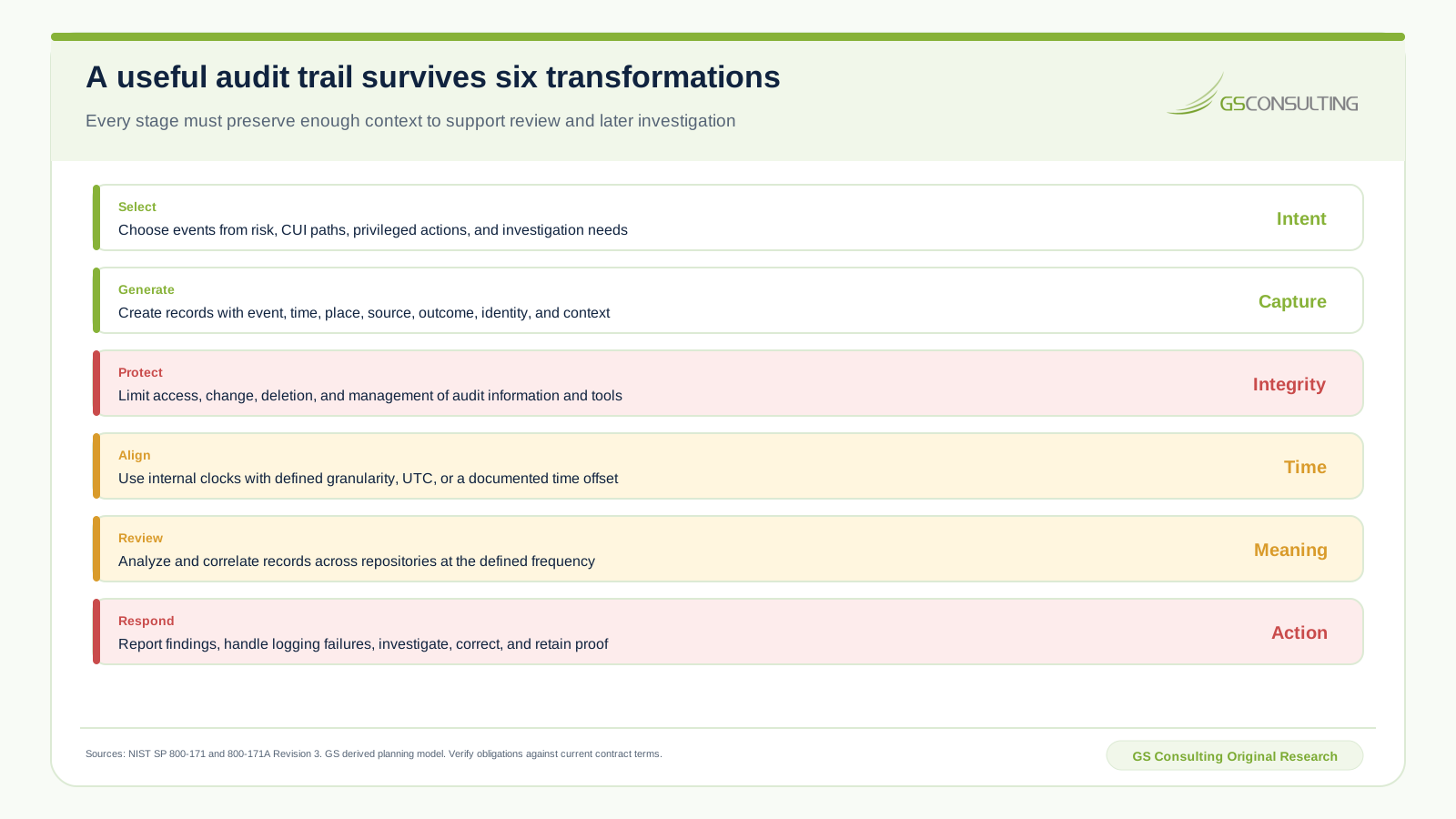
Start with use cases, not tools. List CUI access, export, sharing, administration, privilege change, authentication, policy change, configuration change, data movement, deletion, malware, collection failure, backup, and recovery events that matter to the actual boundary. Connect each event to the decision or investigation it must support.
Build a source map with system, owner, event, record fields, clock, route, collector, repository, retention, protection, review, alert, and test. Separate source coverage from repository coverage. A central platform can receive many records while one critical application or provider remains silent.
Use NIST SP 800-92 as supporting log management guidance for infrastructure and operating process. It does not replace the specific Revision 3 requirements or the applicable contract.
Make Every Record Interpretable
The minimum content has practical meaning. Event type explains what occurred. Time establishes sequence. Location names the system or place. Source identifies the component that generated the record. Outcome states success, failure, denial, change, or another result. Identity connects people, subjects, objects, or entities to the event.
Added content should be chosen deliberately. For a privileged configuration change, useful context may include the requesting identity, effective administrator, affected object, prior state, new state, approval, session, source address, device, ticket, and policy decision. For CUI export, useful context may include source, destination, volume, method, recipient, authorization, label, and protection path.
Do not solve ambiguity by recording secrets or unnecessary CUI. Define masking, minimization, token handling, sensitive field access, and secure analyst views. The record must be useful and protected. Both outcomes have to be designed.
Align Time and Protect the Trail
Clock quality is an evidence dependency. Maintain the approved time source, synchronization settings, granularity decision, UTC or offset representation, drift monitoring, failure alert, and exception record. Test a sequence that crosses endpoints, identity, network, application, cloud, and security tools. A timestamp that looks precise can still be wrong.
Separate operating privilege from audit management where practical. Define who can configure sources, manage collectors, administer stores, search content, export records, change retention, delete data, and review administrator activity. Record emergency access and review it after use. Backups and archives need the same integrity and access reasoning as the active store.
Protection also includes capacity, availability, and recovery. A full volume, expired credential, broken connector, licensing change, or provider outage can erase visibility without touching a record. Monitor the whole chain and test the failure response.
Turn Review into Findings and Closure
Define a review plan by source, event, risk, owner, frequency, query, correlation, report, escalation, and retention. Routine review can be scheduled. High risk events and failure conditions need faster triggers. Record the reviewer, scope, period, query or method, exceptions, findings, decisions, action owners, due dates, and closure evidence.
Correlation is not merely placing records in one product. Connect identity, endpoint, network, application, cloud, provider, and business workflow evidence so the reviewer can answer a meaningful question. Preserve source identity and original order when records are reduced or summarized.
Connect confirmed findings to the incident response process, configuration change process, and risk assessment process. One finding may need containment, a risk decision, a change, a repeated test, and an updated system plan. Closing an alert is not the same as closing the condition.
A Five Stage Implementation Path
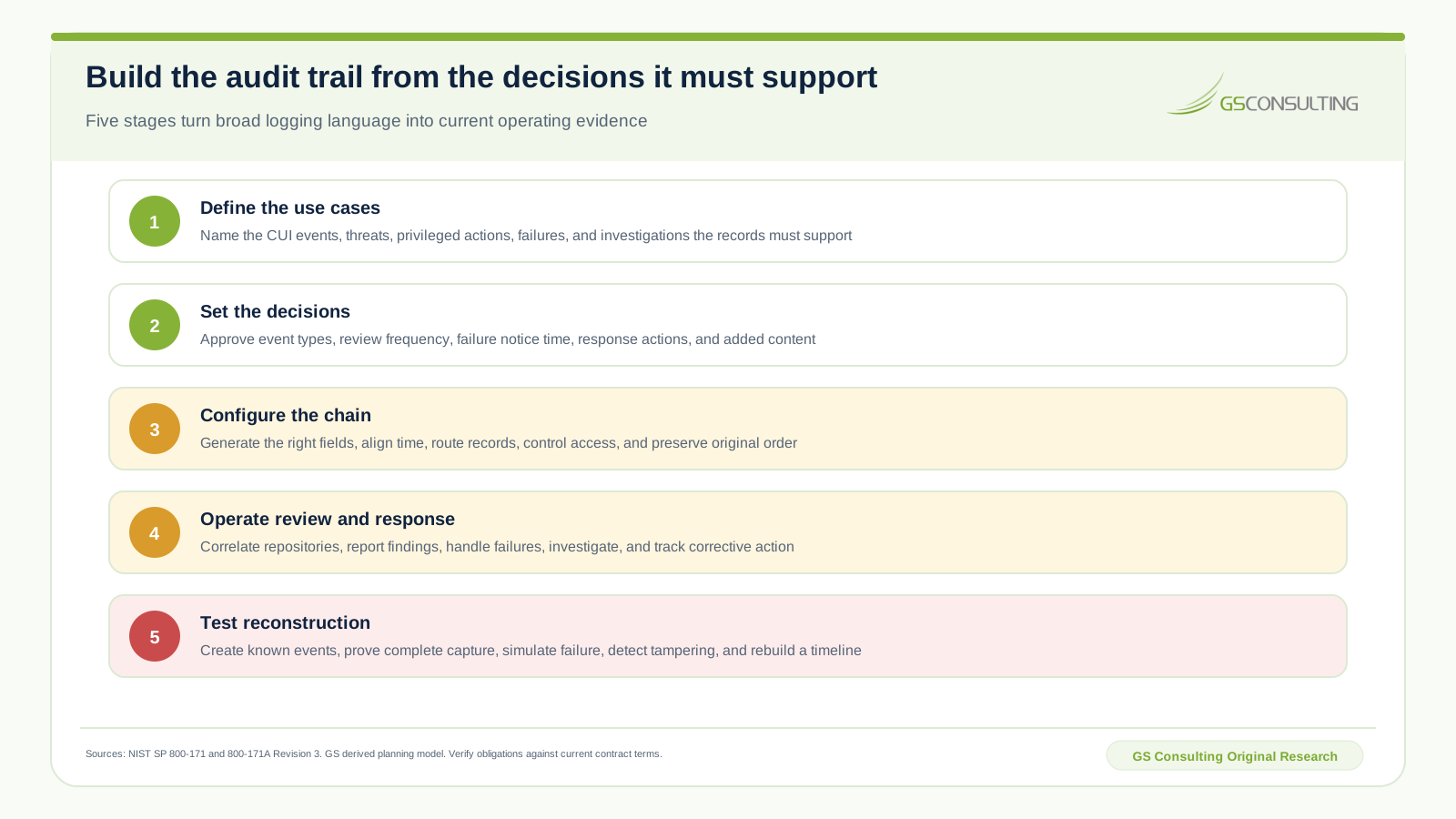
Use the first stage to map events to the system boundary and decision need. Use the second to approve every organization defined value. Use the third to configure sources, content, time, routes, storage, access, retention, capacity, and integrity. Use the fourth to operate review, correlation, reporting, failure response, investigation, and correction.
The fifth stage is a reconstruction test. Create known allowed, denied, privileged, configuration, and CUI movement events. Stop or break one logging path. Compare expected and actual records. Rebuild the sequence across repositories. Verify management restrictions and deletion controls. Record defects, fix the chain, and repeat the test.
Avoid Six Audit Implementation Failures
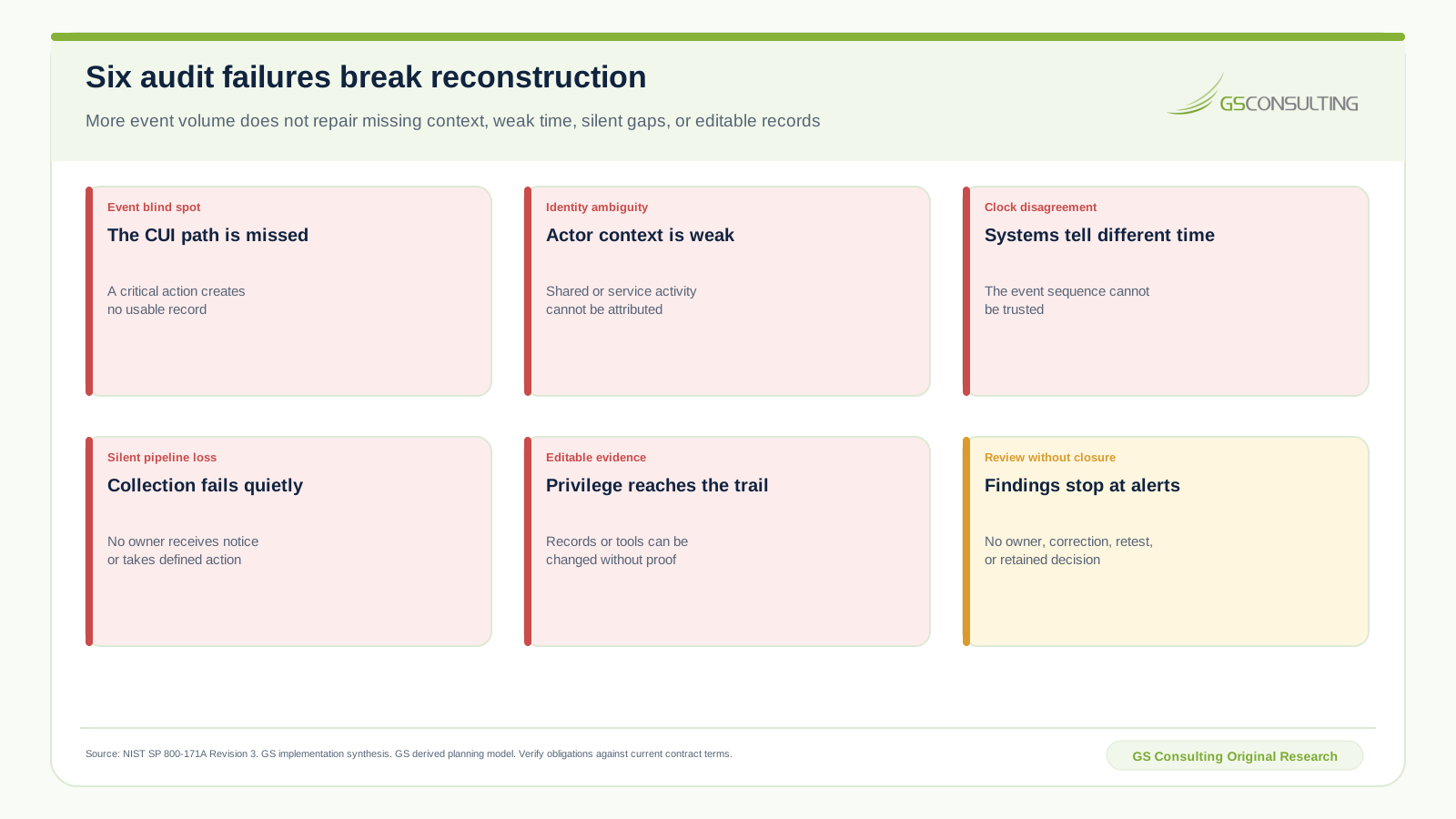
Event blind spot. One important CUI or privileged path is absent. Identity ambiguity. Shared accounts, service activity, or provider records cannot be attributed. Clock disagreement. Systems produce incompatible time and the sequence is unreliable.
Silent pipeline loss. Collection fails without visible notice or approved action. Editable evidence. Broad privilege reaches audit content or management tools without independent review. Review without closure. The report exists, but findings have no owner, response, verification, or retained decision.
Build a Minimum Audit Evidence Packet
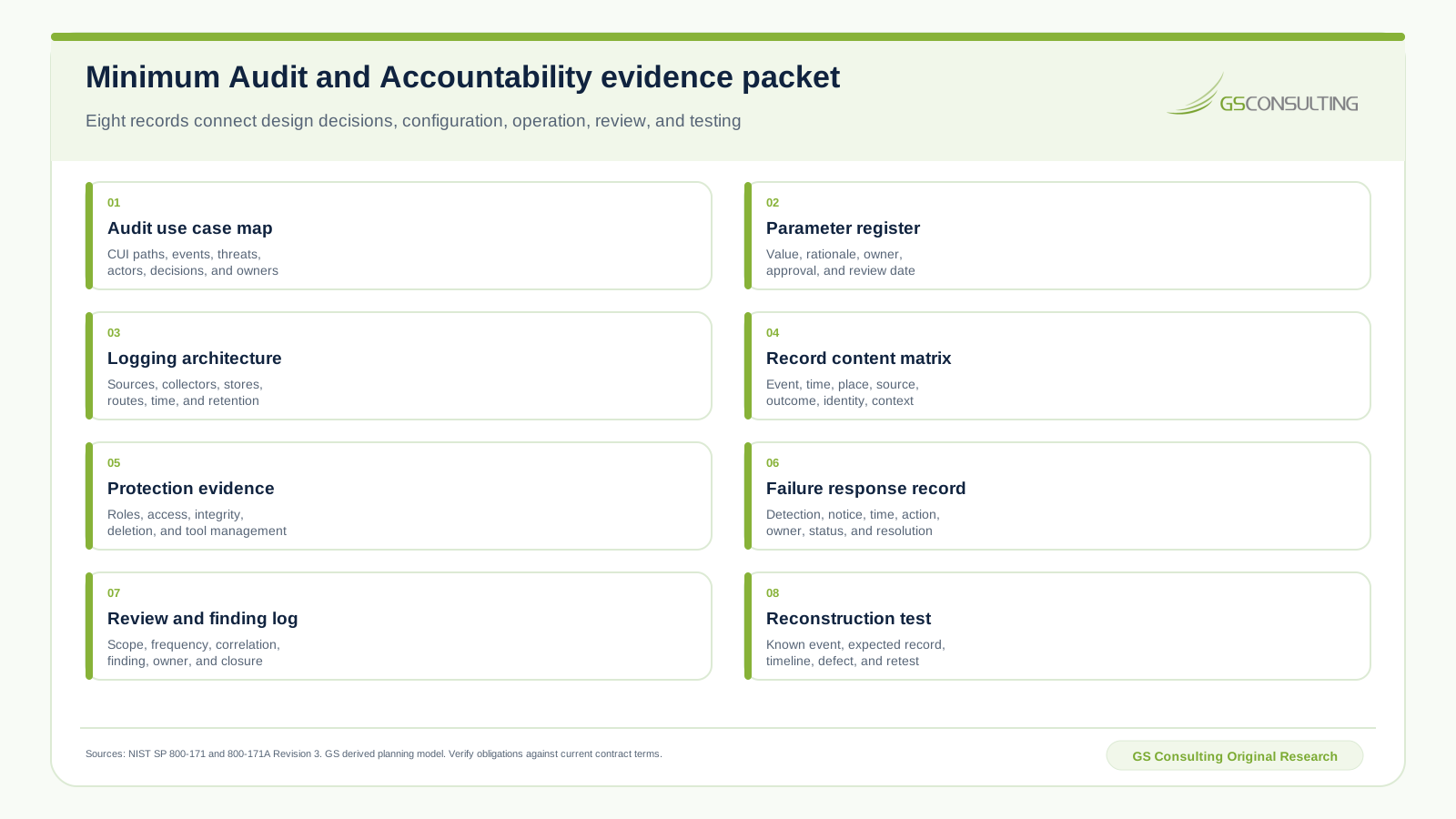
The packet should resolve to authoritative records, not frozen screenshots alone. For each item, keep a stable identifier, owner, approval, system and scope, version, operating period, source, sensitive content rule, replacement, review date, and assessment mapping.
Sample evidence should include successful and failed events, privileged activity, record content, time alignment, protected storage, an actual or tested collection failure, a completed review, a reported finding, corrective action, and a repeated reconstruction test. Use the NIST 800-171A assessment guide to map examine, interview, and test methods.
A 60 Day Audit Trail Plan
| Period | Operator action | Required output |
|---|---|---|
| Days one through ten | Confirm revision, CUI boundary, audit use cases, sources, owners, provider paths, and current evidence. | Revision decision, source map, use case register, gap list |
| Days eleven through twenty | Approve event types, added content, review frequency, failure notice period, failure actions, time, and retention decisions. | Parameter register, content matrix, review plan |
| Days twenty one through thirty five | Configure sources, clocks, routes, collectors, stores, access, integrity, capacity, recovery, and alerts. | Approved architecture, configuration evidence, protection map |
| Days thirty six through forty five | Run review, correlation, reporting, failure response, finding assignment, correction, and closure. | Review record, failure record, finding and response trail |
| Days forty six through sixty | Execute known events, denied events, collection failure, tamper checks, timeline reconstruction, and assessment rehearsal. | Test record, defects, repeated tests, approved evidence packet |
Research Sources and Caveats
The research package uses sources accessed September 4, 2026:
- NIST SP 800-171 Revision 3 for the eight active requirements and required outcomes.
- NIST SP 800-171A Revision 3 for assessment statements, parameter counts, and examine, interview, and test procedures.
- NIST SP 800-92 for supporting log management guidance.
- DoD CMMC FAQ for the current Revision 2 and Revision 3 program distinction.
- DFARS 252.204-7012 for contract context when the clause applies.
The research package contains the source register, public signals, model inputs, live workbook formulas, cached scores, sensitivity test, figure data, data dictionary, methodology, editable SVG files, browser rendered PNG files, and workbook. Public observations, GS ratings, and calculated outputs remain separate.
The GS Audit Trail Proof Load Index is a derived planning tool. It is not an official NIST score, legal opinion, contract interpretation, audit result, CMMC status, certification, or compliance determination. Verify the current award, required revision, system boundary, implementation, and evidence with the responsible authority.
NIST 800-171 Audit and Accountability FAQ
Suggested Future Reading
- NIST 800-171 and CUI Security Hub
- NIST 800-171 Risk Assessment Controls
- NIST 800-171 Incident Response Guide
- NIST 800-171 Configuration Management Guide
- NIST SP 800-171A Assessment Guide
- CMMC Assessment Evidence Guide
- Secure AI and Regulated Automation Services
Build an audit trail that can explain the event.
The standard is direct: complete sources, useful records, reliable time, protected evidence, visible failures, current review, owned findings, and tested reconstruction.
Request an Audit Readiness Review