GovCon Cybersecurity | | 26 min read
NIST 800-171 Assessment, Authorization, and Monitoring: Evidence That Stays Current

Key Takeaways
Assessment evidence should drive a current risk decision
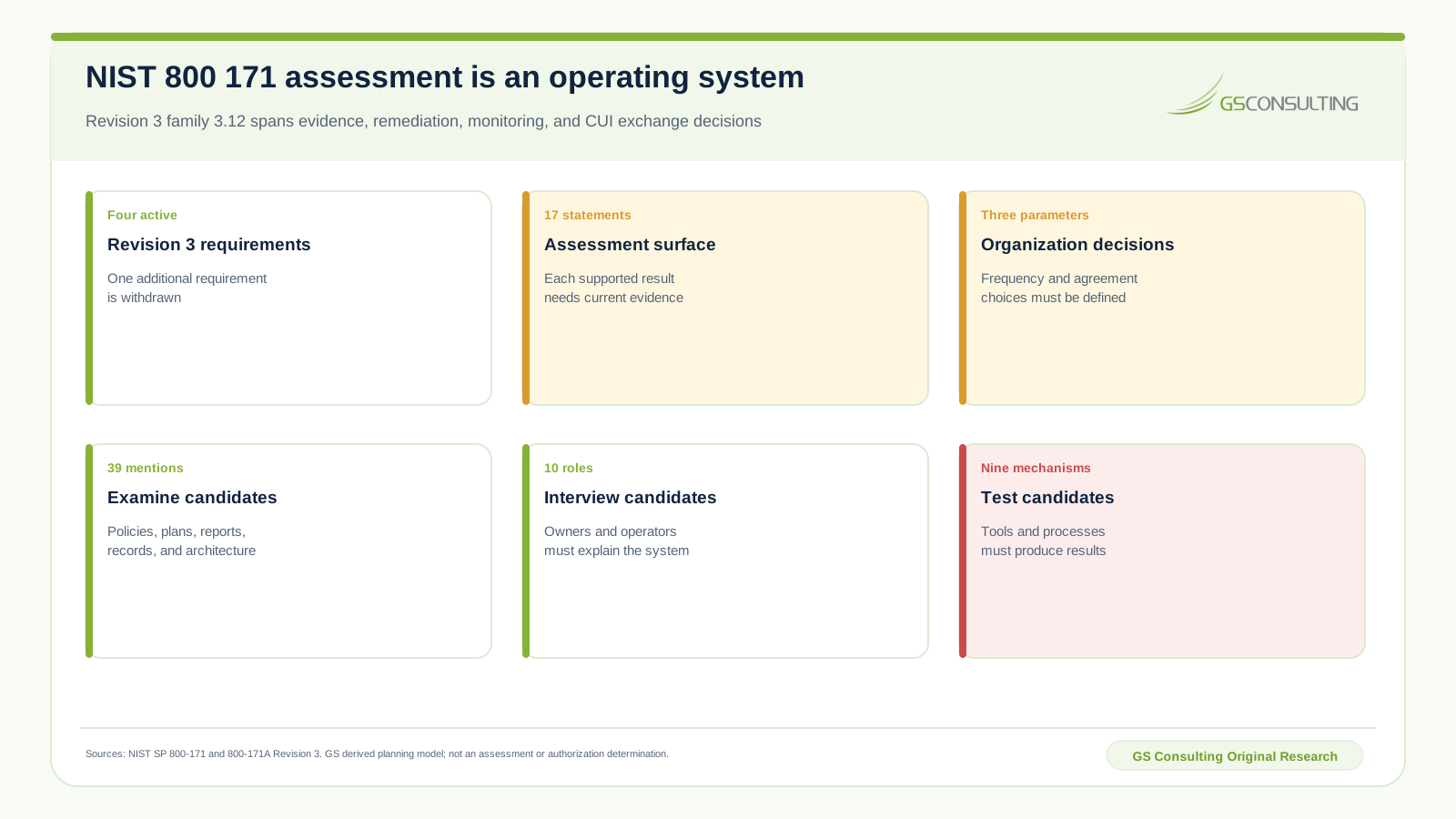
17 determination statements
Four active requirements contain three organization defined parameters and 58 examine, interview, or test method mentions.
Information exchange scores 91
External coordination, two parameter decisions, and change exposure create the highest modeled evidence pressure.
Close only after verification
A finding is not resolved when a ticket closes. Confirm the result, decide residual risk, and refresh affected records.
NIST 800-171 assessment is not an annual evidence scramble. It is the operating loop that turns current control facts into owned corrective action, informed risk decisions, and proof that safeguards still work.
That loop breaks when assessment, the plan of action and milestones, continuous monitoring, and information exchange live in separate tools with separate owners. The assessor sees an old artifact. The operations team sees a current alert. The risk owner sees a summary with no trace to either one. A defensible program connects all three views.
This guide explains NIST 800-171 assessment, authorization, and monitoring as a practical evidence system. It belongs to the NIST 800-171 and CUI Security Hub and supports our secure AI and regulated automation service. Use it with the NIST SP 800-171A assessment guide, risk assessment guide, System and Information Integrity guide, and audit evidence guide.
Can your evidence survive a current state review?
GS Consulting helps contractors connect assessment scope, evidence, findings, corrective action, monitoring, and risk decisions before the next customer or CMMC review.
Request an Evidence ReviewNIST 800-171 Assessment, Authorization, and Monitoring: The Short Answer
Define what must be assessed, who owns each decision, what evidence proves the requirement, how weaknesses enter a controlled plan of action, and which operating signals can invalidate prior evidence. Assess using examine, interview, and test methods. Record the result at the level of each determination statement. Route gaps to an owner and risk authority. Verify correction before closure. Refresh the system plan, assessment record, and monitoring scope when the system changes.
Authorization needs precision. NIST SP 800-171 defines security requirements for nonfederal components that process, store, or transmit CUI, or that protect those components. It does not let a contractor grant itself a federal authorization to operate. A government agency, customer, or other designated authority makes any formal authorization or acceptance decision under the applicable contract and program. Internal leadership can approve resources and accept risk within its authority, but the record should name the actual decision and decision maker.
Separate the Revision Gate from the Authority Gate
NIST SP 800-171 Revision 3 was published in May 2024. Its family is titled Security Assessment and Monitoring. Publication metadata may group it under Assessment, Authorization and Monitoring, but the requirements do not create an authorization process for a contractor. If a customer expects an authorization package, acceptance letter, or security decision, map that artifact to the governing program rather than inventing a NIST approval.
The contract gate is equally important. The Department of Defense CMMC FAQs state that CMMC assessments currently use Revision 2 until the applicable class deviation is superseded. A contractor may implement Revision 3 with the Department of Defense parameter values, but it must understand and cover any gap against the required Revision 2 assessment basis. Confirm the clause, assessment level, customer direction, and effective revision before changing the evidence baseline.
| Topic | Revision 2 | Revision 3 | Operating action |
|---|---|---|---|
| Family shape | Four requirements | Four active requirements | Map old identifiers to current outcomes and evidence |
| System security plan | Requirement 3.12.4 | Moved to Planning as 03.15.02 | Keep the plan connected even though the family changed |
| Information exchange | Covered across other practices and agreements | Explicit requirement 03.12.05 | Define exchange types, agreements, approvals, and reviews |
| Assessment method | Revision 2 assessment objectives | Revision 3 determination statements and methods | Use the assessment version required by the contract |
Operate the Four Active Requirements as One System
03.12.01 Security Assessment requires assessment of controls at an approved frequency to determine whether they are implemented correctly, operating as intended, and producing the desired result. Define the assessment scope and independence appropriate to risk. Do not treat artifact presence as proof of operating effectiveness.
03.12.02 Plan of Action and Milestones requires a current record for correcting weaknesses, reducing or eliminating vulnerabilities, and addressing deficiencies. Each plan needs resources, milestones, completion dates, and updates based on findings from assessments, audits, reviews, and monitoring. A list of overdue tickets without approved decisions is not a controlled plan.
03.12.03 Continuous Monitoring requires a strategy and implementation that includes metrics, frequencies, ongoing assessments, status monitoring, security analysis, and reporting. The purpose is not constant data collection. It is timely visibility into assets, threats, vulnerabilities, and control effectiveness so decision makers can respond to risk.
03.12.05 Information Exchange requires managing security and privacy risk before exchanging information and documenting the protections in agreements. Define the types of information exchanged, required safeguards, review frequency, and responsible parties. This is where contracts, supplier paths, cloud services, and system connections meet the assessment record.
Original Research: Where Evidence Pressure Concentrates
GS parsed the official NIST SP 800-171A Revision 3 assessment procedures for the family. The four active requirements contain 17 determination statements, three organization defined parameters, 39 examine mentions, 10 interview role mentions, and nine test mechanism mentions. These are candidate method mentions, not required artifact counts. One artifact, interview, or test can support several determinations, and the assessor tailors depth to the assessment plan.
The GS Assessment and Monitoring Evidence Pressure Index weights statement breadth, parameter load, examine, interview, and test breadth, change volatility, coordination demand, and decision consequence. Scores range from zero to 100. Information Exchange scores 91.0, Continuous Monitoring 80.3, Plan of Action and Milestones 75.2, and Security Assessment 60.4.
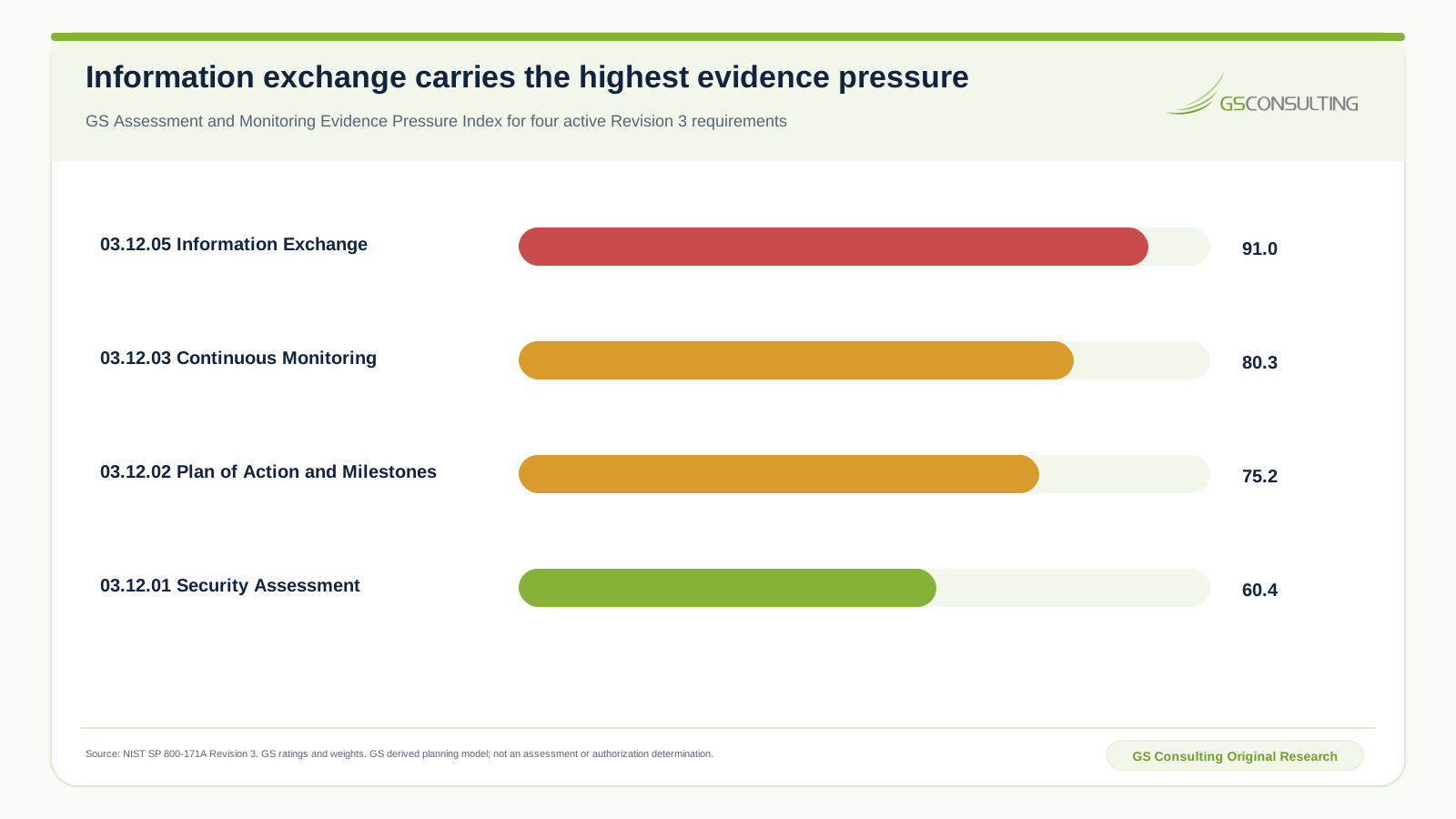
A sensitivity case moved five weight points from statement breadth to change volatility. The ordering and action tiers stayed stable. The largest score change was 3.3 points. That stability supports the sequencing choice: build information exchange evidence immediately, establish early operating proof for continuous monitoring and corrective action, and plan the broader assessment work around the approved assessment calendar.
The index is a GS planning model derived from public requirements and documented assumptions. It is not a NIST, Department of Defense, CMMC, legal, audit, compliance, certification, regulatory, or authorization determination. The workbook preserves the source register, inputs, formulas, weights, derived scores, sensitivity results, and figure data.
Build an Assessment Plan That Can Reach a Determination
Start with the exact system boundary and requirement baseline. Link each determination statement to the expected implementation, system components, owner, evidence, interview roles, test method, sampling rule, and decision criterion. Record where shared services or external providers supply protection. If the assessment team cannot tell which evidence applies to which component and period, the plan is not ready.
Use all three method types intentionally. Examine confirms what the approved records, configurations, outputs, and agreements say. Interview tests whether responsible people understand and execute the process. Test observes or exercises the mechanism to see whether it produces the intended result. A polished policy can pass an existence check and still fail the operating question.
Assessment independence should match the purpose and risk. A control owner can perform routine checks. A separate internal team can challenge evidence and sampling. A customer, authorized assessment organization, or government team may conduct the formal review. Name the role and authority in the plan. Do not call an internal readiness review an independent certification.
Make the POA&M an Accountable Decision Record
A useful POA&M starts with a precise weakness and evidence source. It names the affected requirement, system, CUI path, risk, owner, milestone, resource need, due date, interim protection, dependency, verification method, and approving authority. It also preserves date changes and explains why the approved plan changed.
Route findings from risk assessment, audit review, incidents, configuration drift, supplier reviews, and control tests into the same decision path. Link corrective changes to the configuration management evidence. Close only after the expected result is tested, residual risk is decided, and affected system plan and monitoring records are refreshed.
Use a Continuous Monitoring Register
A monitoring strategy becomes executable through a register. For each source, record the control or risk question, system coverage, owner, collection method, review frequency, event trigger, threshold, destination, response route, evidence location, retention rule, and health check. A dashboard without source health, ownership, and response criteria is only a display.
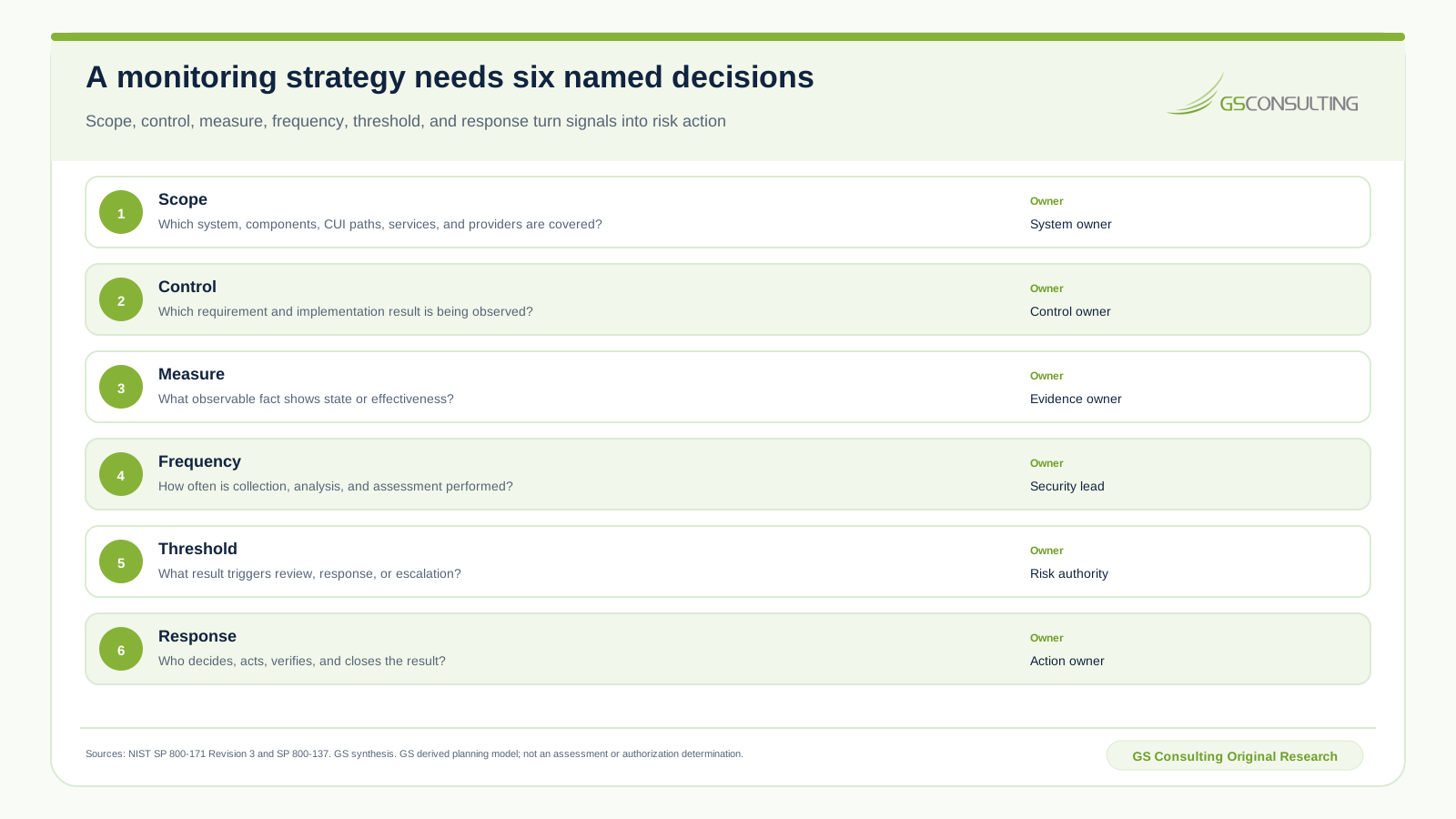
Balance calendar reviews with event triggers. Material configuration changes, incidents, new exploited vulnerabilities, failed collection, supplier changes, boundary changes, and repeated corrective action failures can invalidate evidence before the next scheduled review. Trigger a focused assessment when the signal can change the control conclusion or risk decision.
For a contract centered implementation, use the continuous control monitoring guide for government contractors. It adds applicability, source health, decision clocks, response authority, preservation, and matched closure to the register described here.
Connect Assessment to the Risk Authority
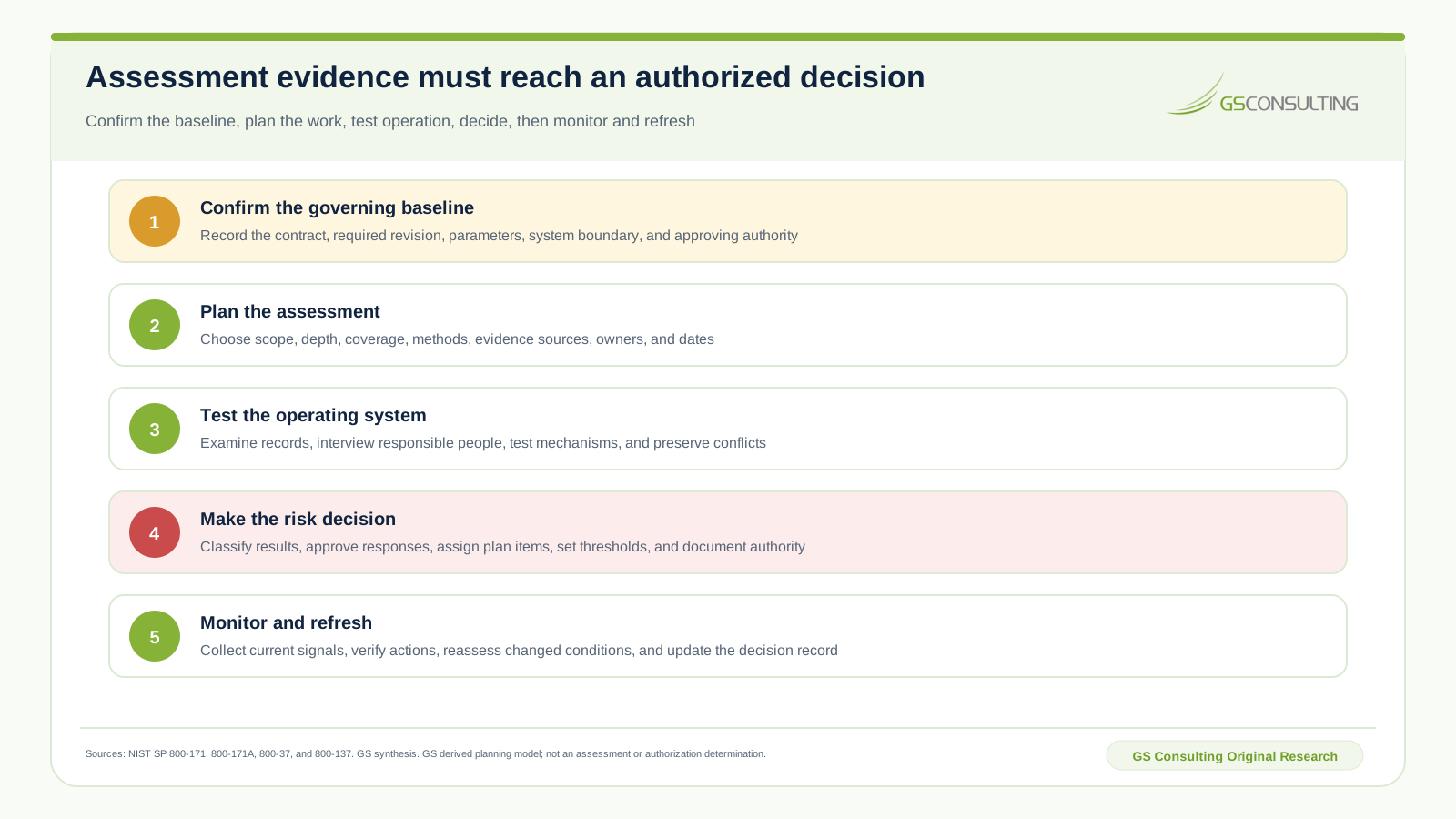
The NIST Risk Management Framework provides the broader context for connecting assessment, authorization, and continuous monitoring in federal systems. A nonfederal contractor should borrow the decision discipline without claiming an authority it does not possess: package the current evidence, identify the authorized decision maker, state the decision being requested, disclose uncertainty and open actions, and retain the outcome.
When evidence changes, determine whether the update affects a control conclusion, system risk, customer obligation, information exchange agreement, assessment scope, or prior acceptance. Then notify the correct authority. Continuous monitoring has little value when its results cannot change a decision.
Avoid Six Assessment and Monitoring Failures
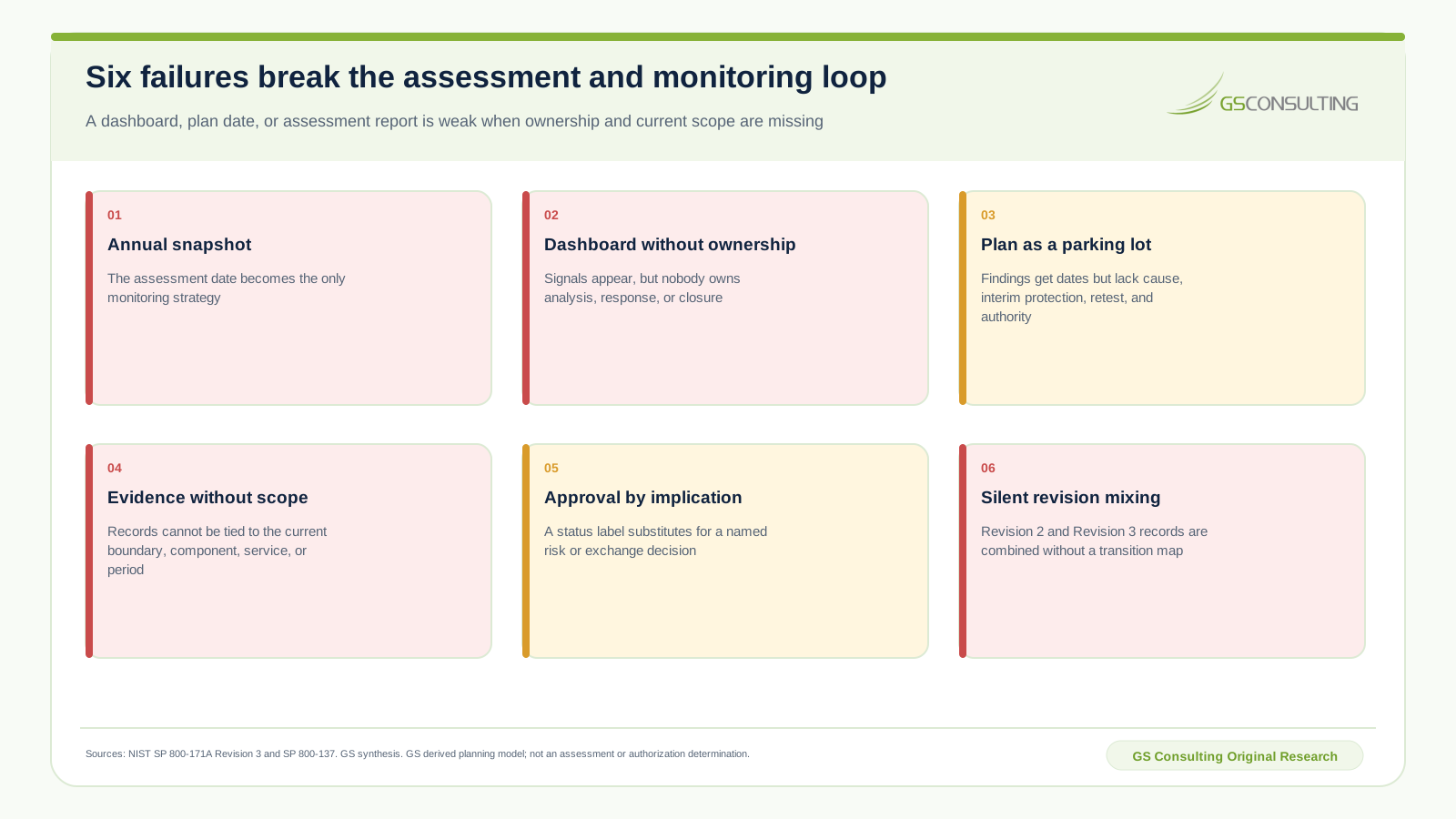
An annual snapshot becomes the only monitoring strategy. A dashboard without ownership shows signals but cannot assign response or closure. A plan used as a parking lot stores findings without funded action or authority. Evidence without scope cannot be tied to the current component and period. Approval by implication labels an internal act as a customer decision. Silent revision mixing combines baselines without a transition map. Each failure is preventable with explicit scope, owners, methods, verification, and decision authority.
Build the Assessment and Monitoring Evidence Packet
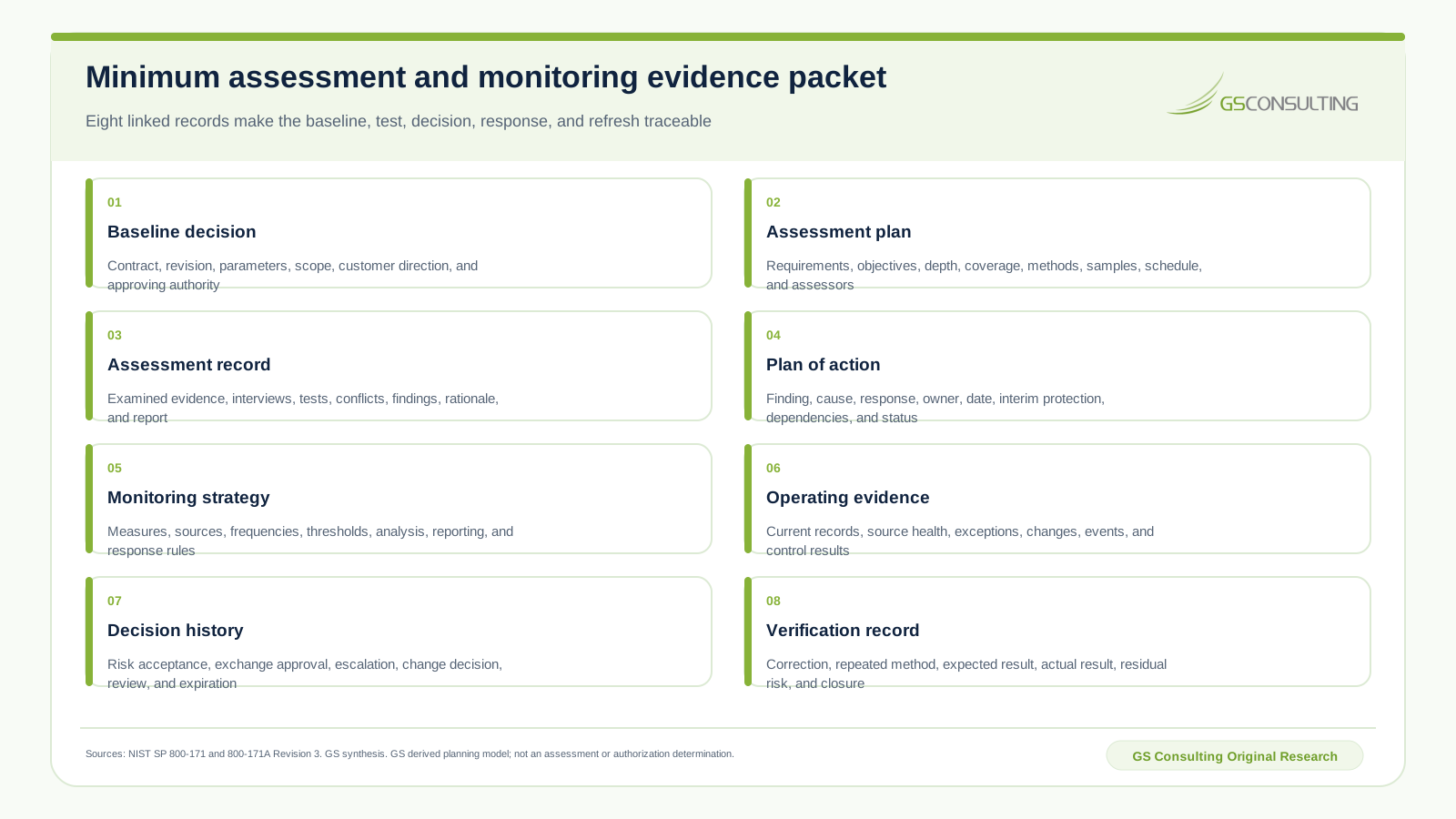
Keep the baseline decision, assessment plan, assessment record, plan of action, monitoring strategy, operating evidence, decision history, and verification record. The system security plan remains the anchor even though Revision 3 moved its requirement to the Planning family. The packet should let a reviewer move from one control statement to the current implementation and evidence. It should also expose the test, finding, response, verification, and residual decision without relying on tribal knowledge.
A 60 Day Assessment and Monitoring Plan
| Period | Operator action | Required output |
|---|---|---|
| Days one through ten | Confirm the contract revision, system boundary, requirement baseline, customer direction, assessment purpose, and decision authorities. | Approved scope and authority map |
| Days eleven through twenty | Map every determination statement to evidence, interview roles, test methods, component coverage, and result criteria. | Assessment plan and evidence map |
| Days twenty one through thirty | Reconcile findings, POA&M records, milestones, owners, dates, interim protections, resources, and verification rules. | Controlled corrective action register |
| Days thirty one through forty | Build the monitoring register with sources, coverage, cadence, triggers, thresholds, response paths, retention, and source health. | Continuous monitoring strategy and register |
| Days forty one through fifty | Map information exchanges, agreements, protection terms, approval, review dates, provider duties, and change triggers. | Current exchange inventory and agreements |
| Days fifty one through sixty | Run a focused assessment, verify selected findings, package the decision, and test the refresh path after a material change. | Assessment record, risk decision, and refresh evidence |
Research Sources and Caveats
The GS research package uses official sources accessed September 14, 2026:
- NIST SP 800-171 Revision 3 for the security requirements and family structure.
- NIST SP 800-171A Revision 3 for determination statements, organization defined parameters, and assessment methods.
- NIST SP 800-137 for continuous monitoring strategy, visibility, and timely risk response.
- NIST SP 800-37 Revision 2 for the relationship among assessment, authorization, continuous monitoring, and risk decisions.
- Department of Defense CMMC FAQs for the current CMMC revision transition statement.
Counts reflect the published Revision 3 assessment procedures and the parsing rules documented in the research workbook. Method mentions are not unique artifacts, people, tools, or mandatory samples. Requirements and assessment obligations depend on the governing contract, clause, program, customer direction, system, and effective revision.
The GS Assessment and Monitoring Evidence Pressure Index is a derived planning model. It is not official legal, audit, compliance, NIST, CMMC, Department of Defense, assessment, authorization, certification, or regulatory guidance. It does not predict an assessment result or substitute for the designated authority.
NIST 800-171 Assessment and Monitoring FAQ
What are the NIST 800-171 assessment and monitoring requirements?
NIST SP 800-171 Revision 3 has four active requirements in the Security Assessment and Monitoring family: Security Assessment, Plan of Action and Milestones, Continuous Monitoring, and Information Exchange. The System Security Plan requirement from Revision 2 moved to the Planning family.
Does implementing NIST 800-171 give an organization an authorization to operate?
No. NIST SP 800-171 defines security requirements for protecting CUI in nonfederal systems. An authorization decision belongs to the government, customer, or other designated risk authority under the applicable program and contract. Internal leaders can approve risk treatment, but should not present that act as a federal authorization.
How many assessment objectives are in the Revision 3 family?
GS counted 17 determination statements and three organization defined parameters across the four active requirements in NIST SP 800-171A Revision 3. The assessment procedures contain 39 examine mentions, 10 interview role mentions, and nine test mechanism mentions.
How often should NIST 800-171 controls be assessed?
Use the frequency defined by the governing requirement, approved organizational parameters, contract, and risk decision. Also assess after material changes, incidents, control failures, supplier changes, new threats, or other triggers that can make prior evidence unreliable.
What belongs in a NIST 800-171 POA&M?
Record the weakness, source, affected requirement and system, risk, owner, resources, milestones, due dates, interim protection, dependencies, status, verification method, evidence, residual decision, approval, and closure date. Preserve changes to dates and scope so the record remains accountable.
What evidence supports continuous monitoring?
Keep the monitoring strategy, source and control register, frequencies and triggers, collection health, current results, review records, findings, owner decisions, corrective actions, verification results, exceptions, risk acceptance, trend summaries, and updates to the system plan and assessment scope.
Suggested Future Reading
- NIST 800-171 and CUI Security Hub
- NIST SP 800-171A Assessments
- NIST 800-171 Risk Assessment Controls
- NIST 800-171 Audit and Accountability Controls
- NIST 800-171 Configuration Management
- NIST 800-171 Identification and Authentication
- NIST System Security Plan Guide
- Continuous Control Monitoring for Government Contractors
- Secure AI and Regulated Automation
Make every assessment result change the right decision.
Connect the approved baseline, operating evidence, findings, corrective action, monitoring signals, and actual risk authority in one traceable system.
Request an Evidence Review