GovCon Cybersecurity | | 21 min read
Microsoft GCC High Pricing: What It Costs in 2026

Key Takeaways
The seat price is visible. The boundary decision controls the bill.
$35.80 starts the conversation
Business Premium is the lowest current public planning price, but the authorized partner quote and required services set the actual amount.
$72,864 separates two scopes
In the GS model, a ten person G3 enclave plus forty commercial E3 seats costs that much less than putting all fifty users in G3 with the security add on.
Price the data boundary first
Count the people, systems, integrations, and evidence inside scope before choosing a license mix.
A cloud is not compliance
The platform can supply capabilities. Your configuration, procedures, monitoring, and evidence determine whether the control claim is supportable.
Microsoft GCC High pricing is not one number. It is a seat price sitting on top of a scope decision.
The current public figures are useful. They are not quotes. Microsoft sells GCC High through authorized government cloud channels after eligibility review, and the written partner proposal decides the actual price, rights, term, and discount. A budget built from an unlabeled web price can be wrong before migration even begins.
This guide does something more useful than repeat a list. It dates the public price signals, models six common license scopes over three years, and separates license spend from the work required to move and operate a defensible environment. If you first need to decide whether the environment fits your data, start with our complete GCC High guide and the GCC High and secure cloud hub.
Microsoft GCC High Pricing: The Public Snapshot
As of July 24, 2026, the clearest public reseller planning prices are $35.80 per user each month for Microsoft 365 Business Premium GCC High, $65.20 for Microsoft 365 G3 GCC High, and $97.50 for Microsoft 365 G5 GCC High. Microsoft 365 F3 GCC High is listed near $13.20. A Defender and Purview security add on is listed near $24.40 per user each month.
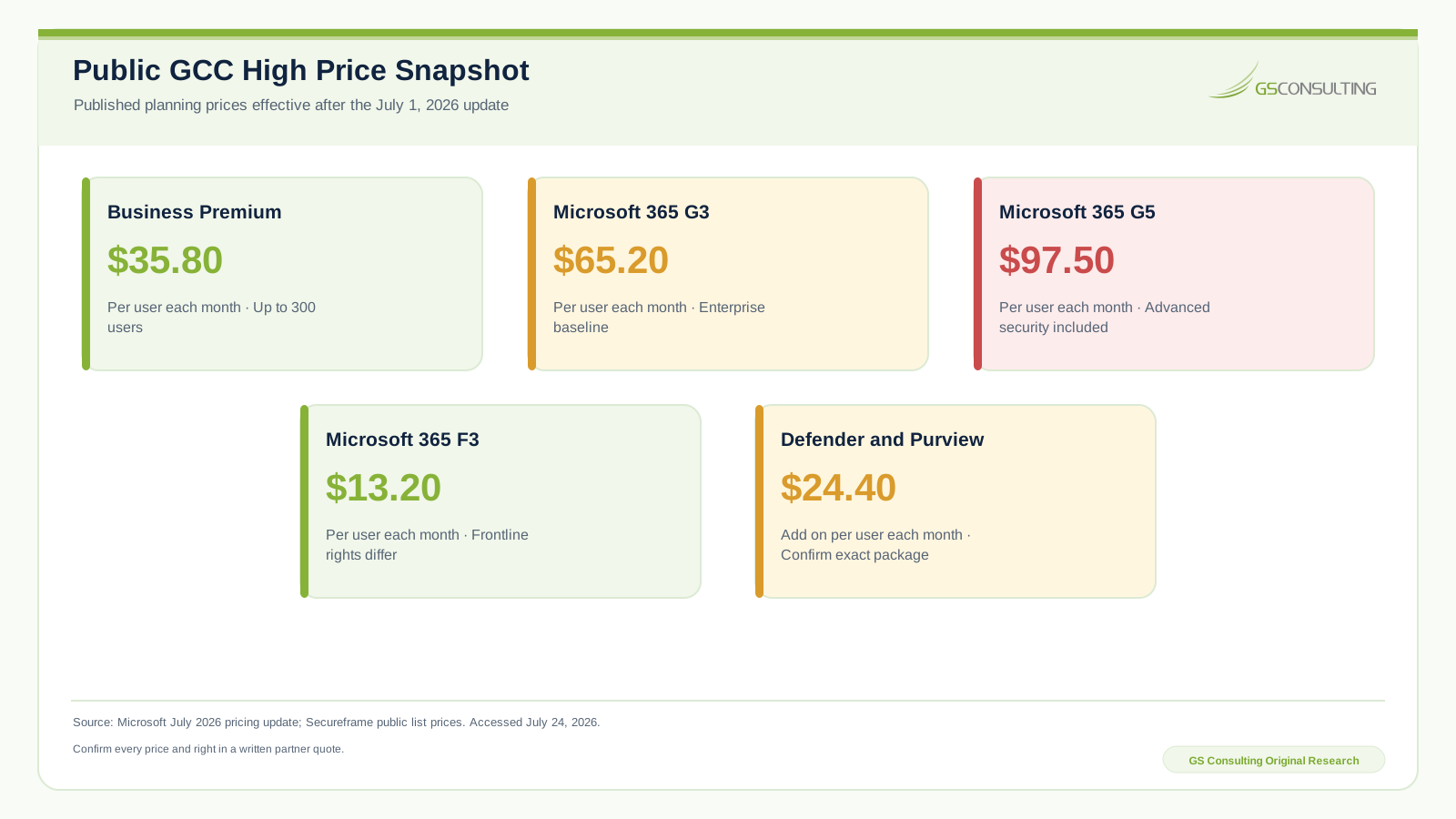
The date matters. Microsoft made a government pricing update effective July 1, 2026, increasing Microsoft 365 G3 GCC High by eight percent and G5 GCC High by five percent. Existing customers generally see the change at renewal. That means an old price page, an earlier agreement, and a current net new quote can all show different amounts without any one of them being a simple arithmetic mistake.
Business Premium also needs context. Microsoft announced the GCC High version in November 2025 for organizations with up to 300 users. It lowered the entry point for small and midsize defense contractors, but it did not erase the need to compare included capabilities, add ons, service limits, and the commercial systems that may remain outside the protected boundary.
What the Seat Price Includes, and What It Does Not
A license gives a user rights to a defined Microsoft service bundle. It does not buy a completed migration, an identity design, a compliant configuration, an incident process, or an assessment result. Those distinctions sound obvious until a budget labels the whole project “GCC High licenses” and leaves every operating cost unowned.
Business Premium can make sense for an organization under 300 seats that needs the core productivity suite with a small business security bundle. G3 is the common enterprise base. G5 adds advanced capabilities, but a buyer should verify whether those rights replace separate security or compliance services in the exact government plan being quoted. F3 is aimed at frontline users and is not a cheap substitute for a full information worker seat.
The separate Defender and Purview bundle deserves careful treatment. It can fill material security and information protection gaps for a given design. It is not automatically mandatory for every CMMC environment, and buying it does not prove any requirement. Map required capabilities to the system security plan, the shared responsibility with Microsoft and service providers, and the evidence the organization can actually produce.
Original Research: The GS GCC High License Exposure Model
GS Consulting built the GCC High License Exposure Model to show how a license decision behaves once scope and time are included. The model holds the organization at fifty users and compares six illustrative configurations. It multiplies current public price signals across thirty six months, then adds ordinal planning ratings for migration burden, operating burden, and feature gap burden.
The base exposure score weights normalized three year license cost at 50 percent, migration burden at 20 percent, operating burden at 20 percent, and feature gap burden at 10 percent. A sensitivity case shifts the weights to 40, 25, 20, and 15 percent. These weights are analyst assumptions. They make tradeoffs visible; they do not predict a quote or an assessment result.
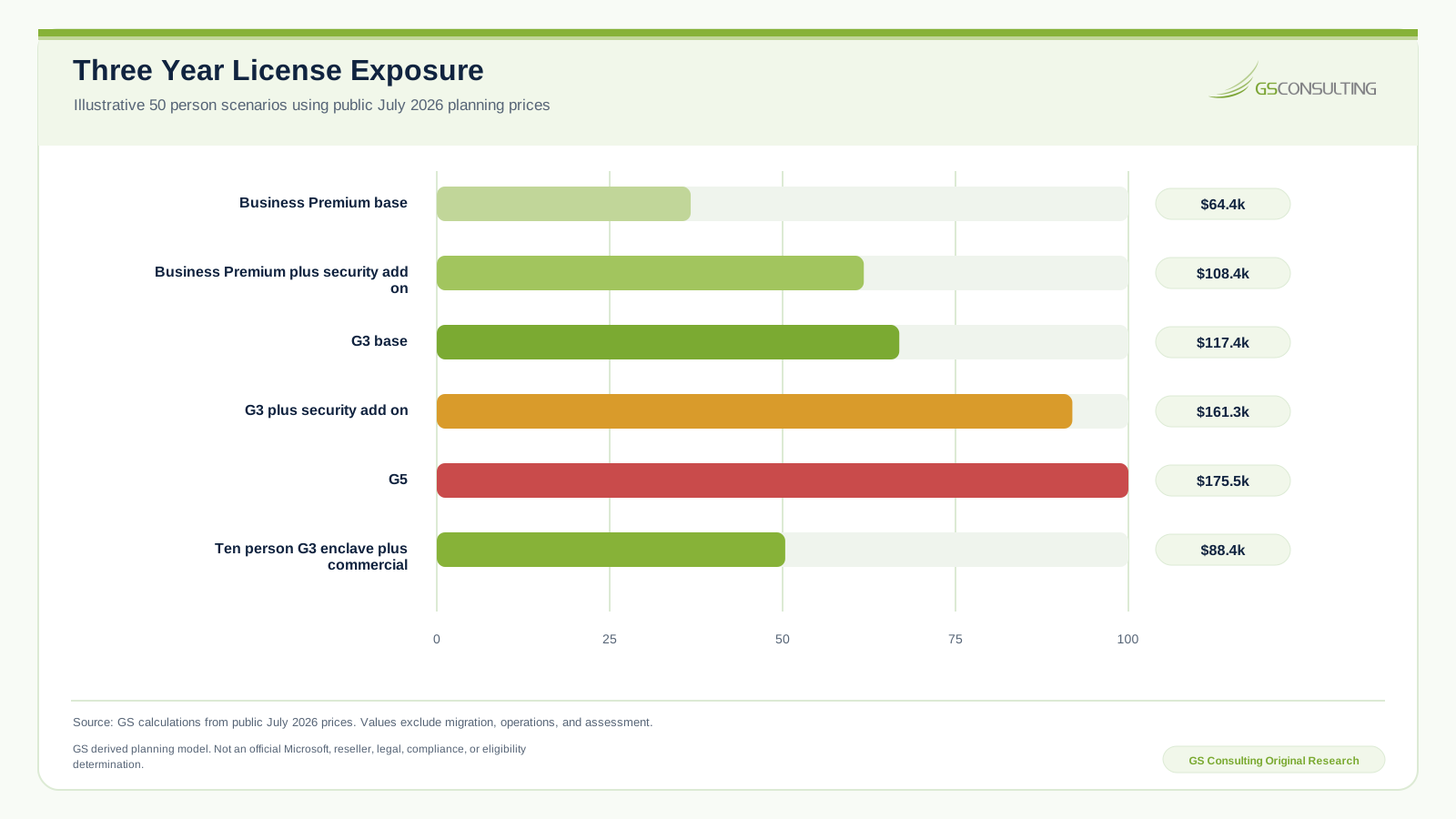
The ranking is deliberately not a recommendation. G5 scores highest at 84.0 because it has the greatest three year license cost in the model. G3 with the security add on follows at 79.6. Business Premium with the add on lands at 51.8, while a ten person G3 enclave plus forty commercial E3 seats lands at 56.8 because its migration and operating assumptions are higher even though its license total is lower.
That last result matters. A smaller enclave is not automatically simpler. It can reduce government cloud seats while adding boundary, identity, integration, and data handling work. A broad tenant can cost more in licenses while reducing some of those seams. The right answer depends on the data flow and the operating model, not on which bar in a price chart is shortest.
What Fifty Users Cost Over Three Years
Monthly prices hide the commitment. For fifty users, Business Premium base is $21,480 a year and $64,440 across three years. Adding the public $24.40 security bundle moves that scenario to $36,120 a year and $108,360 across three years. G3 base is $39,120 a year and $117,360 across three years. G3 with the add on reaches $53,760 a year and $161,280 across three years. G5 reaches $58,500 a year and $175,500 across three years.
Those totals exclude taxes, support, implementation, migration tools, service providers, and future price changes. They also assume every modeled seat remains assigned for all thirty six months. They are useful because they make the size of the license decision concrete, not because they are a substitute for a proposal.
Another useful comparison is G5 against G3 with the add on. In this model, the three year difference is $14,220. That does not mean G5 is automatically the better buy. It means the buyer should compare included rights and operating consequences closely because the apparent gap is smaller than the gap between the base seat prices.
Full GCC High Tenant or Smaller Enclave?
Scope is the strongest controllable cost lever. Putting all fifty users in G3 with the security add on costs $161,280 in modeled license spend across three years. Putting ten users in G3 with the add on and forty users in commercial Microsoft 365 E3 costs $88,416. The difference is $72,864.
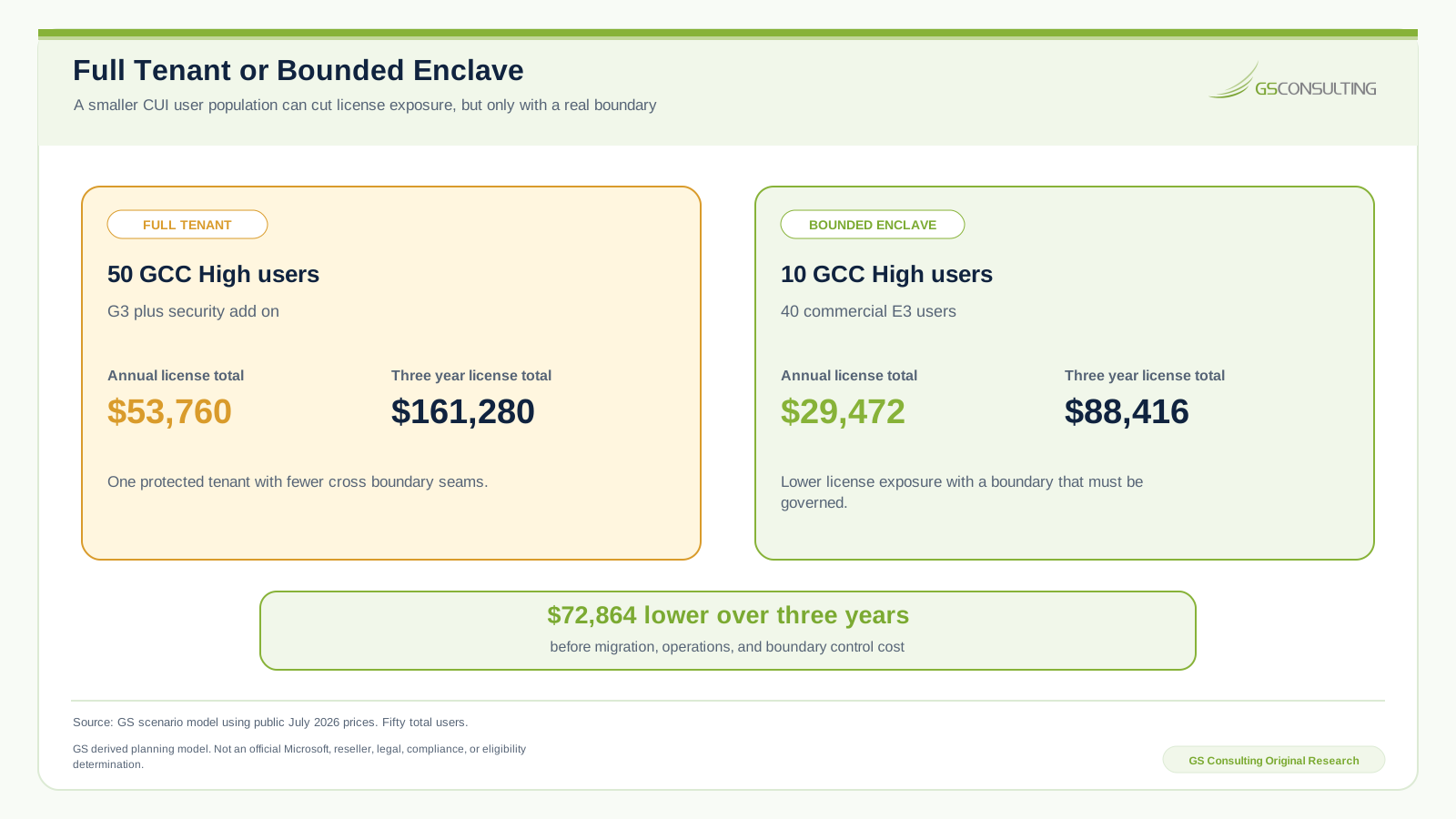
The saving is real only if the boundary is real. The ten protected users must be the people who need the data. Controlled files cannot drift into the commercial tenant. Identity, mail, collaboration, devices, backups, external sharing, and support access must follow the design. If daily work causes constant movement across the boundary, the smaller license count can become an expensive operating exception.
Start with the data flow, not the org chart. Our guide to secure cloud architecture for federal contractors handling CUI shows how to separate the protected enclave from the broader business. The same boundary should appear in the system security plan and in the scope used for any CMMC assessment.
The Total Cost Drivers Beyond Licenses
The largest omitted costs are not mysterious. They are simply absent from a seat price. Migration labor and tooling move mail, files, sites, devices, and applications between isolated tenants. Identity work establishes accounts, authentication, administration, recovery, and privileged access. Security configuration turns available features into operating controls. Integration work reconnects line of business systems that may not support the government cloud. Training changes how people share and handle data. Operations keep the environment patched, monitored, and evidenced.
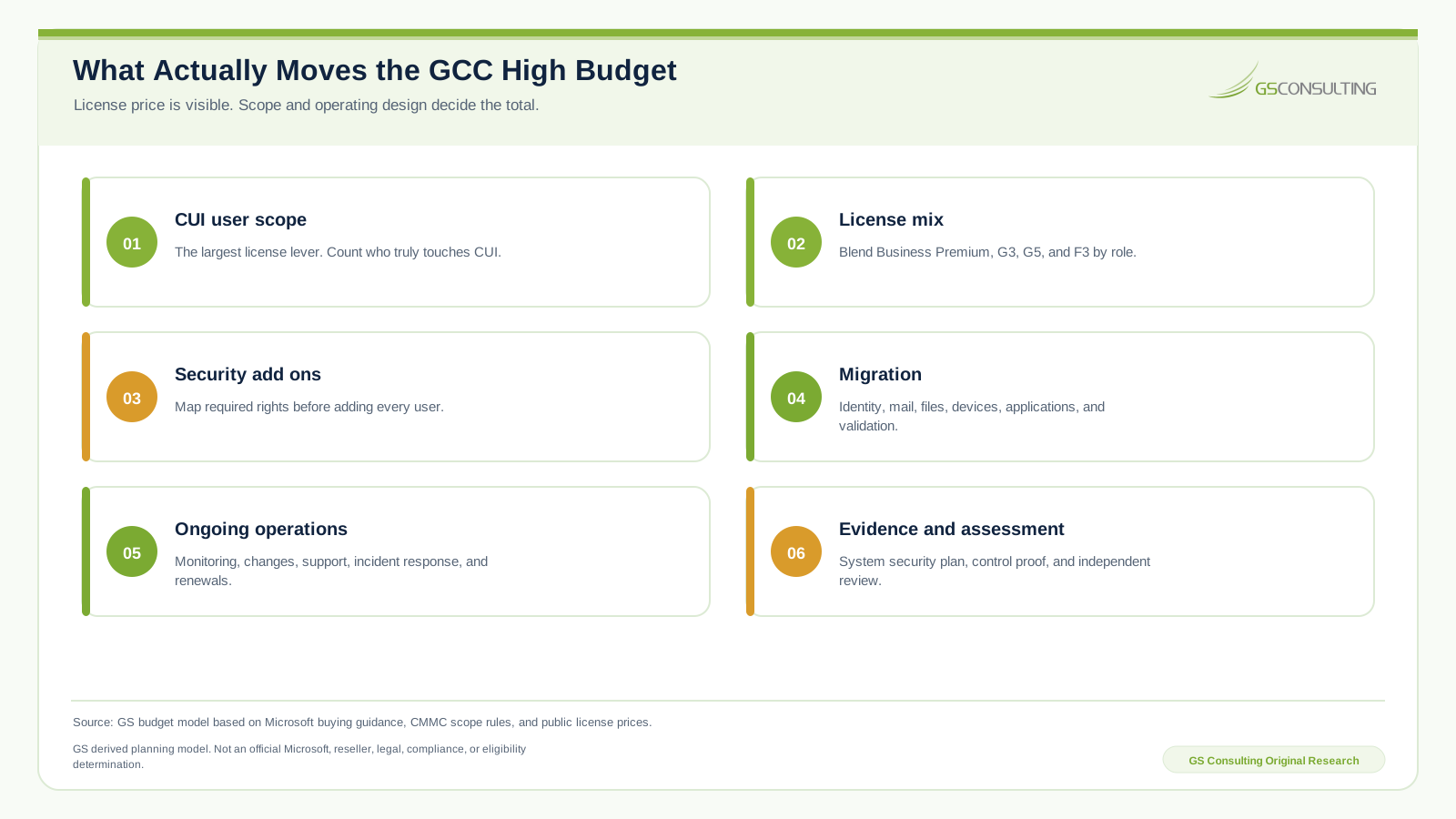
Duplicated licenses are another common miss. During migration, the old and new tenants may run together while data is copied, validated, and cut over. Some third party services also have separate government cloud editions or higher prices. Ask for these costs by name rather than hoping they are hidden inside a migration line. Then use the GCC High migration planning guide to price workload waves, coexistence, rollback, support, and source retirement.
CMMC cost should stay separate. GCC High can provide useful technical capabilities and a suitable external service for some controlled workloads. The contractor still owns scope, procedures, implementation statements, monitoring, training, incident response, and evidence. Our CMMC certification cost guide models that broader program cost.
How GCC High Buying Actually Works
GCC High is not a public self service checkout. Microsoft requires the organization to meet government eligibility criteria and validates eligibility before service. Microsoft directs organizations with 500 or more seats to a licensing solution provider and organizations below 500 seats to an authorized government cloud reseller under the relevant agreement path.
The practical sequence is simple. Establish the legal entity and eligibility evidence. Define the target services and seat counts. Give the partner a workload and capability matrix, not just the sentence “quote GCC High.” Compare included rights, add ons, support, agreement term, renewal treatment, and migration services. Then reconcile the proposal against the system design before signing.
Do not accept a quote that collapses product, implementation, and managed services into one number without quantities and assumptions. You need enough detail to see what changes when a seat count, migration wave, or control design changes.
A Budget Sequence That Prevents Rework
The safest sequence begins before procurement. First classify the information and read the contract flowdowns. Then map the users, systems, and integrations that touch it. Choose the boundary and architecture. Map required capabilities to product rights. Request a written quote. Plan migration and overlap. Finally, fund recurring operations and evidence.
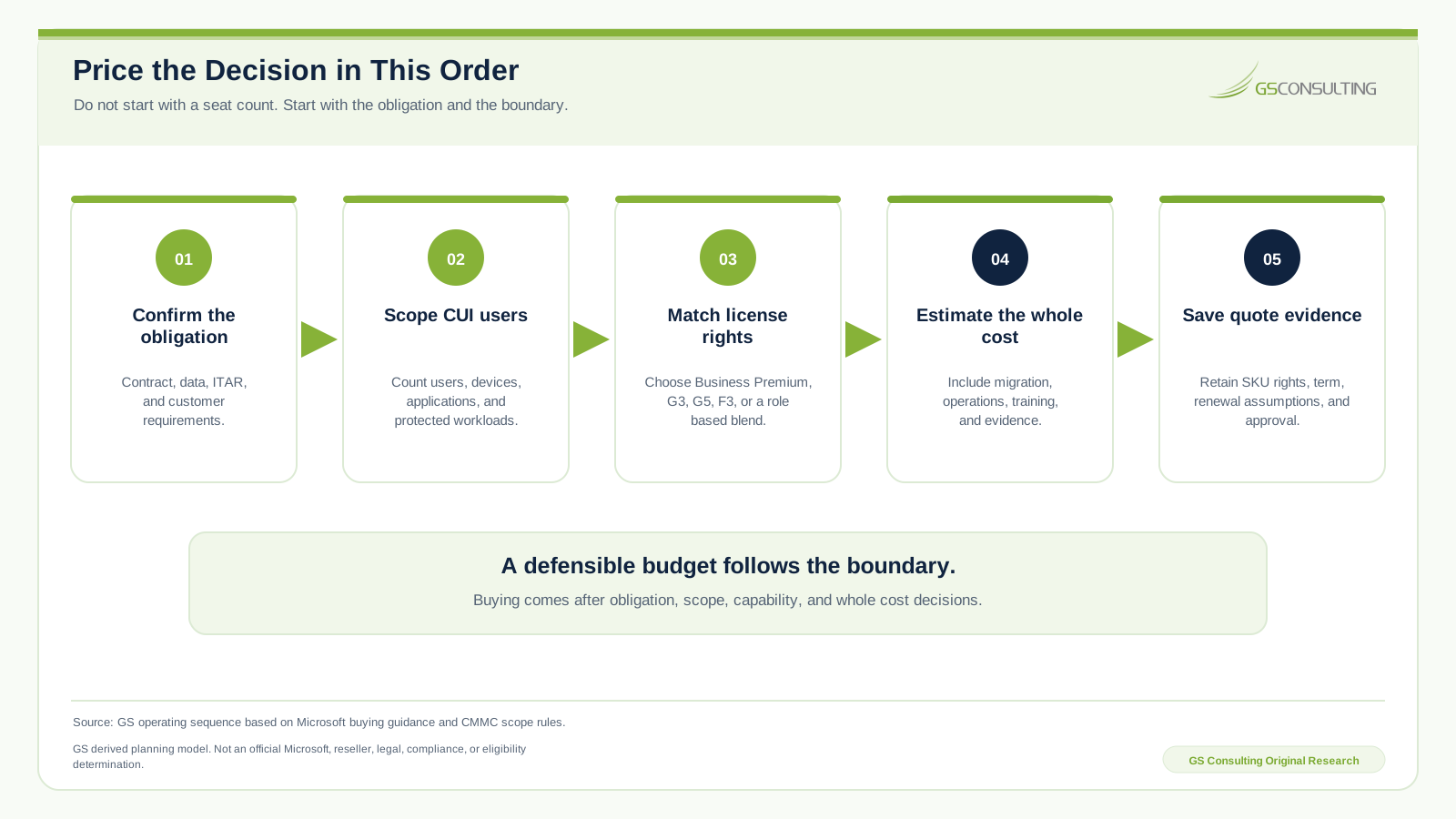
Teams often reverse the middle of that sequence. They buy a familiar plan, discover a missing capability, add another product, and then redraw the boundary because the operating cost is too high. A few days spent on a scope and capability matrix can prevent months of licensing and migration rework.
The planning standard is concrete: every license line should map to a named user group, a workload, a required capability, and an owner. If a line does not map, challenge it. If a requirement has no line or operating owner, the quote is incomplete.
Build a Quote Evidence Packet
A purchase decision should leave an evidence trail. Keep the dated source register, eligibility confirmation, data and user scope, capability matrix, and written quote. Add the agreement term, renewal assumptions, migration statement of work, and approval record. That packet explains why the organization chose the environment and what assumptions the budget depends on.
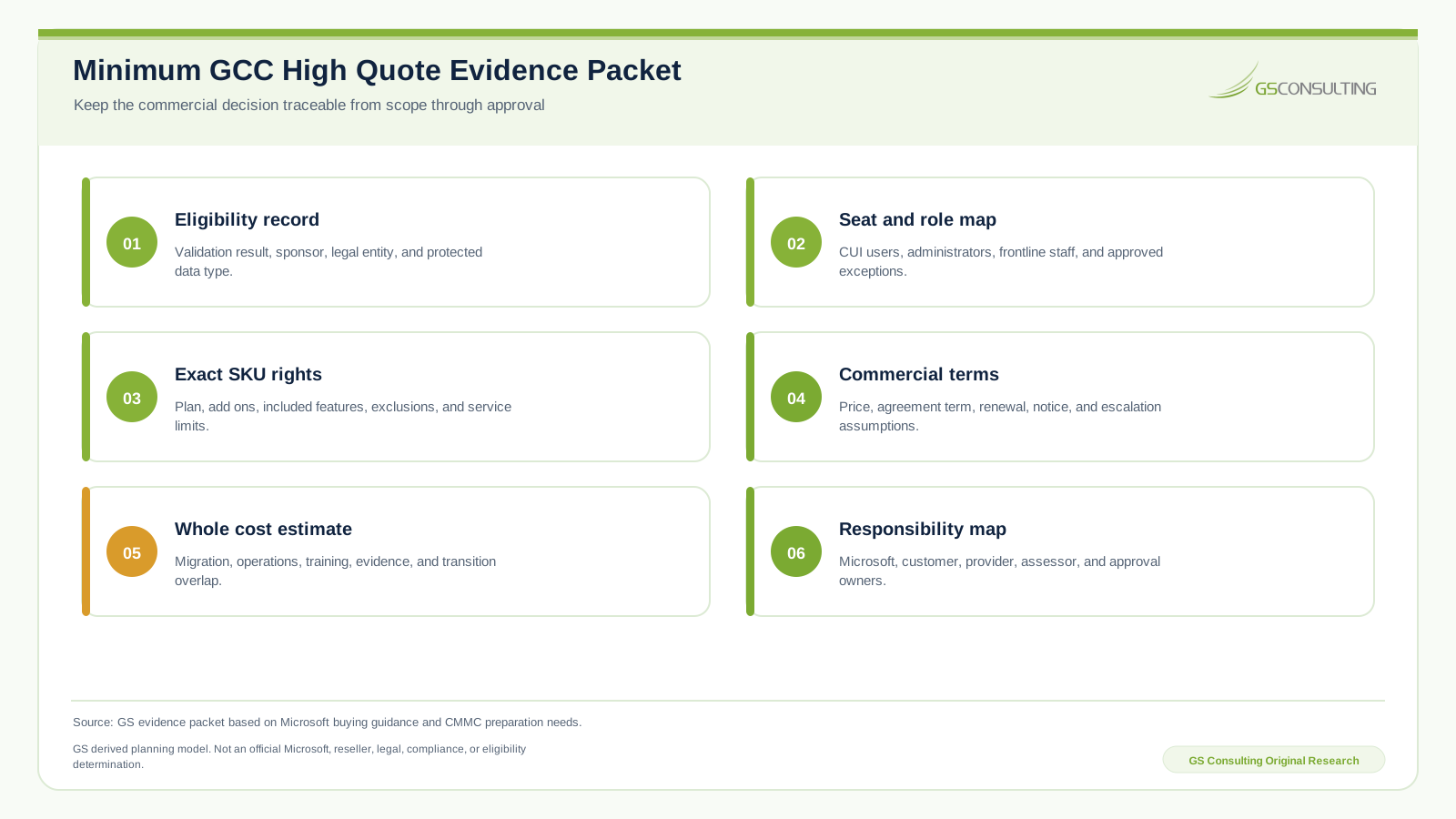
Update the packet when seat counts, data flows, agreements, product rights, or prices change. Microsoft service descriptions and reseller prices move. A budget should state its access date and renewal assumptions so the next operator can see which facts are current and which need confirmation.
Research Sources and Caveats
The GS GCC High License Exposure Model is a GS Consulting derived planning tool built from the public sources below and documented analyst assumptions. It is not an official Microsoft, reseller, legal, audit, compliance, eligibility, or regulatory determination. It does not predict a negotiated quote or guarantee that a license combination is suitable for a contract. Public reseller prices were checked on July 24, 2026. A written authorized partner quote controls actual price and rights.
The complete research package includes the source register, public signals, model inputs, derived scores, sensitivity analysis, figure data, data dictionary, methodology, and editable figures. Costs exclude taxes, discounts, support, migration, implementation, operations, and later price changes unless a line explicitly says otherwise.
- Microsoft: July 2026 Microsoft 365 packaging and pricing updates
- Microsoft Learn: How to buy Microsoft 365 Government
- Microsoft Learn: Office 365 GCC High and DoD service description
- Microsoft Public Sector Blog: Microsoft 365 Business Premium for GCC High
- Secureframe: Public GCC High pricing guide
- Electronic Code of Federal Regulations: 32 CFR Part 170
Frequently Asked Questions About Microsoft GCC High Pricing
How much does Microsoft GCC High cost?
Current public reseller planning prices start near $35.80 per user each month for Microsoft 365 Business Premium GCC High, $65.20 for Microsoft 365 G3 GCC High, and $97.50 for Microsoft 365 G5 GCC High. Those figures are public planning signals, not universal Microsoft prices. Your authorized partner quote, agreement, eligibility, term, discount, tax treatment, and exact services control the actual cost.
What is the price of GCC High Business Premium?
Secureframe publishes a planning price of $35.80 per user each month for Microsoft 365 Business Premium GCC High as of July 24, 2026. Microsoft limits the plan to 300 seats. A public price for the Defender and Purview security add on is $24.40 per user each month, making that illustrative bundle $60.20 before migration and operations.
How much do Microsoft 365 G3 and G5 GCC High cost?
Current public reseller data lists Microsoft 365 G3 GCC High near $65.20 per user each month and Microsoft 365 G5 GCC High near $97.50. Microsoft announced an eight percent government price increase for G3 and a five percent increase for G5 effective July 1, 2026. Compare the rights in a written quote rather than comparing the seat prices alone.
Does CMMC require Microsoft GCC High?
No. CMMC does not name Microsoft GCC High as a required product. The correct environment depends on your data, contract clauses, export obligations, external services, and assessment scope. GCC High can support a controlled environment, but buying it does not create CMMC compliance or replace your responsibility to configure controls and retain evidence.
What costs more than the GCC High license?
For many contractors, migration labor, identity redesign, security configuration, managed operations, evidence upkeep, and duplicated licenses during transition can equal or exceed the first year seat cost. The largest controllable driver is usually scope: how many users, systems, data stores, and integrations truly need to enter the protected boundary.
Related Reading
- GCC High and Secure Cloud Hub
- GCC High Migration Planning: Sequence, Cost, and Pitfalls
- What Is GCC High? Requirements, Costs, and Migration
- Secure Cloud Architecture for Federal Contractors Handling CUI
- CMMC Certification Cost: What Contractors Should Budget
- NIST SP 800-171 Explained
Price the protected boundary before the licenses.
GS Consulting helps defense contractors map CUI, choose a defensible cloud scope, and turn partner quotes into a complete operating budget.
Request a GCC High Budget Review