Cybersecurity Compliance | | 27 min read
Continuous Control Monitoring for Government Contractors

Key Takeaways
Monitor decisions, not dashboard color
Covered incident signals score 100
The condition leads the index because contract consequence, response urgency, preservation, scope, and decision authority converge immediately.
A missing source is a control event
A green metric is unreliable when an expected asset, identity, provider, or log source stopped reporting without detection.
Retest the original condition
A ticket status does not prove control recovery. Closure needs a matched test, a current scope check, and retained decision evidence.
Continuous control monitoring is not a dashboard problem. It is the operating system that turns control change into an accountable decision.
A government contractor can have a SIEM, a vulnerability scanner, endpoint tools, cloud alerts, GRC workflows, and a room full of dashboards and still miss the event that matters. A new provider starts handling controlled information. One assessment asset stops sending logs. A privileged service identity gains authority. A known exploited vulnerability matches the wrong inventory record. A corrective action closes without a repeatable retest. The dashboard is green because the source that would make it red disappeared.
The operating test is simple: can the team prove what changed, which contract and protected data were affected, whether the source was complete, who had authority to decide, which clock applied, what action occurred, and whether the original condition was actually closed?
This guide belongs to the GovCon Cybersecurity and Compliance hub. It connects the NIST assessment and monitoring model, AI supported threat detection, CMMC assessment evidence, and matched vulnerability retesting. GS Consulting applies this operating model through Cyber Situational Awareness.
Can your team trace a control signal to an authorized decision?
GS Consulting helps contractors map scope, validate signal coverage, define decision rights, connect response, and preserve current evidence.
Review Your Monitoring ModelContinuous Control Monitoring: The Short Answer
Build a monitoring register around decisions, not tools. For each important condition, record the expected source, complete population, collection cadence, quality test, applicable contract or rule, protected information, system boundary, accountable owner, response authority, target time, escalation, evidence, and closure test. Monitor whether the source is healthy before trusting the condition it reports.
Join technical signals to contract scope before triage ends. A vulnerability, identity change, control failure, or provider event has different consequences depending on the asset, data, clause, assessment status, and customer. Preserve the raw event, validate scope, classify consequence, obtain an authorized response, then retest the original condition. Every stage should leave a record another person can reproduce.
Do not advertise “continuous compliance.” Compliance depends on contracts, facts, scope, implementation, evidence, and authorized judgment. A useful system provides current control awareness and faster decisions. It does not make legal, assessment, or affirmation decisions on its own.
Contract Scope Comes Before Control Status
Monitoring starts with an applicability register. Name the contract, clause, protected information, customer, system, assessment level or status, responsible official, required reports, preservation duties, flowdown conditions, and review triggers. Keep direct links to the authoritative clause, rule, award language, modifications, and customer direction. A control status cannot be interpreted without this context.
Then map the operating scope. Include components that process, store, or transmit Federal Contract Information or Controlled Unclassified Information, plus components that provide protection and components that are not adequately isolated. Record assets, identities, flows, providers, subcontractors, management paths, protective services, evidence stores, and exclusions. Under 32 CFR Part 170, those relationships matter to CMMC scope. Under NIST SP 800-171 Revision 3, requirements apply to components that handle CUI or protect those components when a nonfederal organization follows that baseline.
Revision choice needs care. Revision 3 is the current NIST publication, but an existing contract or CMMC assessment basis may still call for Revision 2. Monitor the version that actually applies, maintain a crosswalk for sensible transition work, and label evidence by revision. Do not claim that publication alone changed the contract.
Different Duties Create Different Monitoring Clocks
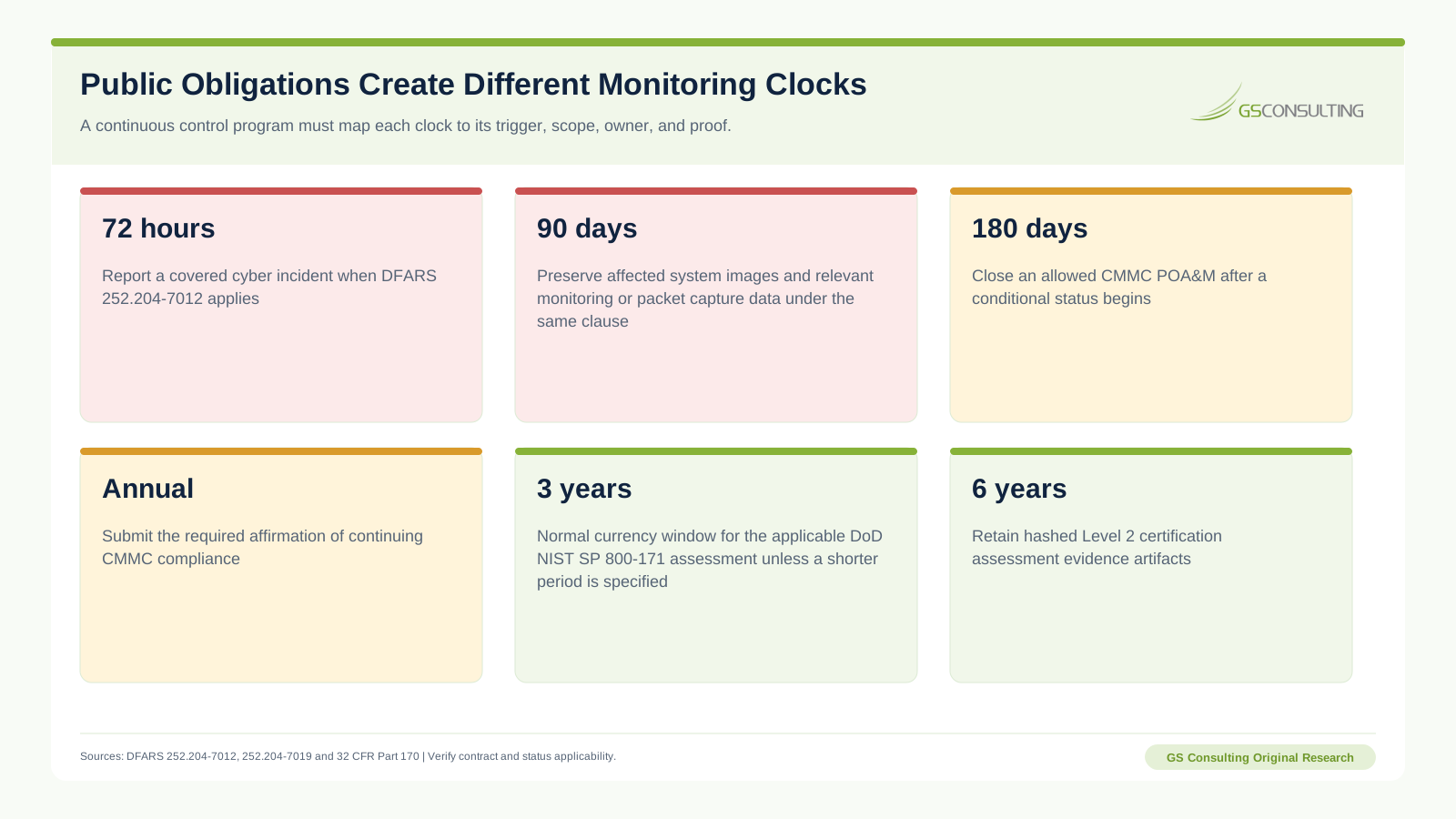
DFARS 252.204-7012 requires rapid reporting within 72 hours when a covered cyber incident and the clause apply. The same clause calls for preserving affected system images and relevant monitoring or packet capture data for at least 90 days from submission of the cyber incident report. These are not generic targets for every alert. They are duties tied to applicability and event classification.
DFARS 252.204-7019 normally treats a covered DoD assessment as current for three years unless a shorter period is specified. 32 CFR Part 170 contains distinct CMMC rules for conditional status, POA&M closeout, annual affirmation, and retention of hashed Level 2 certification assessment evidence artifacts. Each has its own trigger, scope, owner, and proof.
Put those clocks in the monitoring register. Record the event that starts the clock, the evidence that proves the start time, the applicable clause or rule, the person who can make the decision, the required submission or action, escalation points, acknowledgments, and closure. Never convert all periods into a single “compliance due date.”
Original Research: GS Continuous Control Decision Priority Index
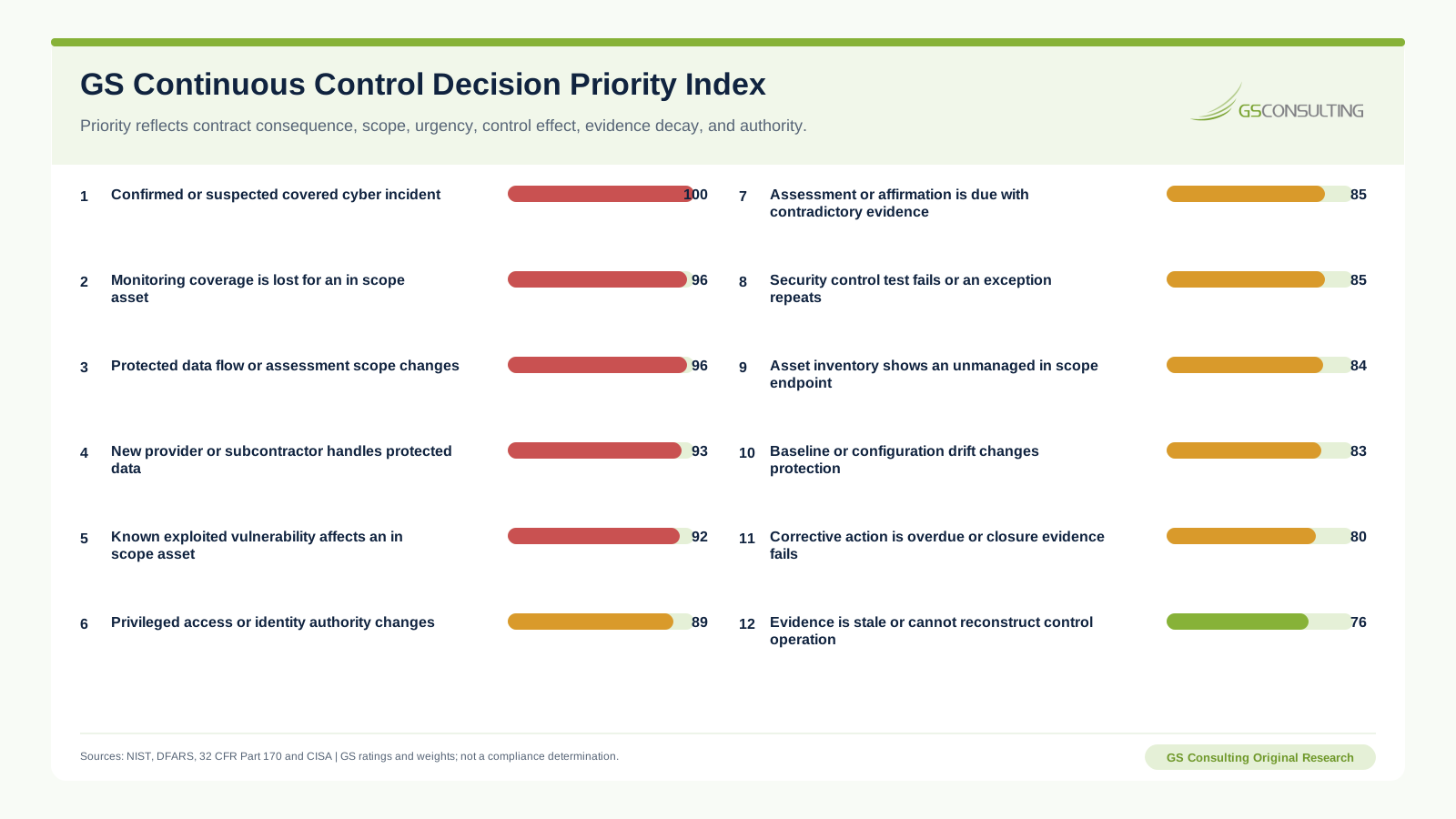
GS Consulting built a twelve condition model to answer one question: which monitoring conditions deserve the earliest scope, response, evidence, and authority design? Each condition receives an analyst rating from one through five across six factors. Baseline weights are contract consequence 25 percent, scope impact 20 percent, response urgency 20 percent, control effectiveness 15 percent, evidence decay 10 percent, and decision authority 10 percent.
The score is the sum of each rating multiplied by its factor weight and divided by five. A confirmed or suspected covered cyber incident scores 100. Lost monitoring coverage on an in scope asset and a protected data flow or assessment scope change each score 96. A new provider or subcontractor handling protected data scores 93. A known exploited vulnerability affecting an in scope asset scores 92. Privileged access or identity authority change scores 89.
Assessment or affirmation due with contradictory evidence and a failed security control test each score 85. An unmanaged in scope endpoint scores 84. Baseline or configuration drift scores 83. Overdue corrective action or failed closure evidence scores 80. Stale evidence that cannot reconstruct control operation scores 76. Lower rank does not mean optional. It means the condition usually allows more time or has less immediate consequence under the stated assumptions.
Two sensitivity cases shift weight toward incident response or evidence decay. The top five remain high priority, while scope changes rise under the evidence case and known exploitation rises under the incident case. The result supports a stable design sequence: incident authority, source health, scope change, provider entry, exploit relevance, and privileged authority first.
Connect Every Signal to a Decision and Minimum Proof
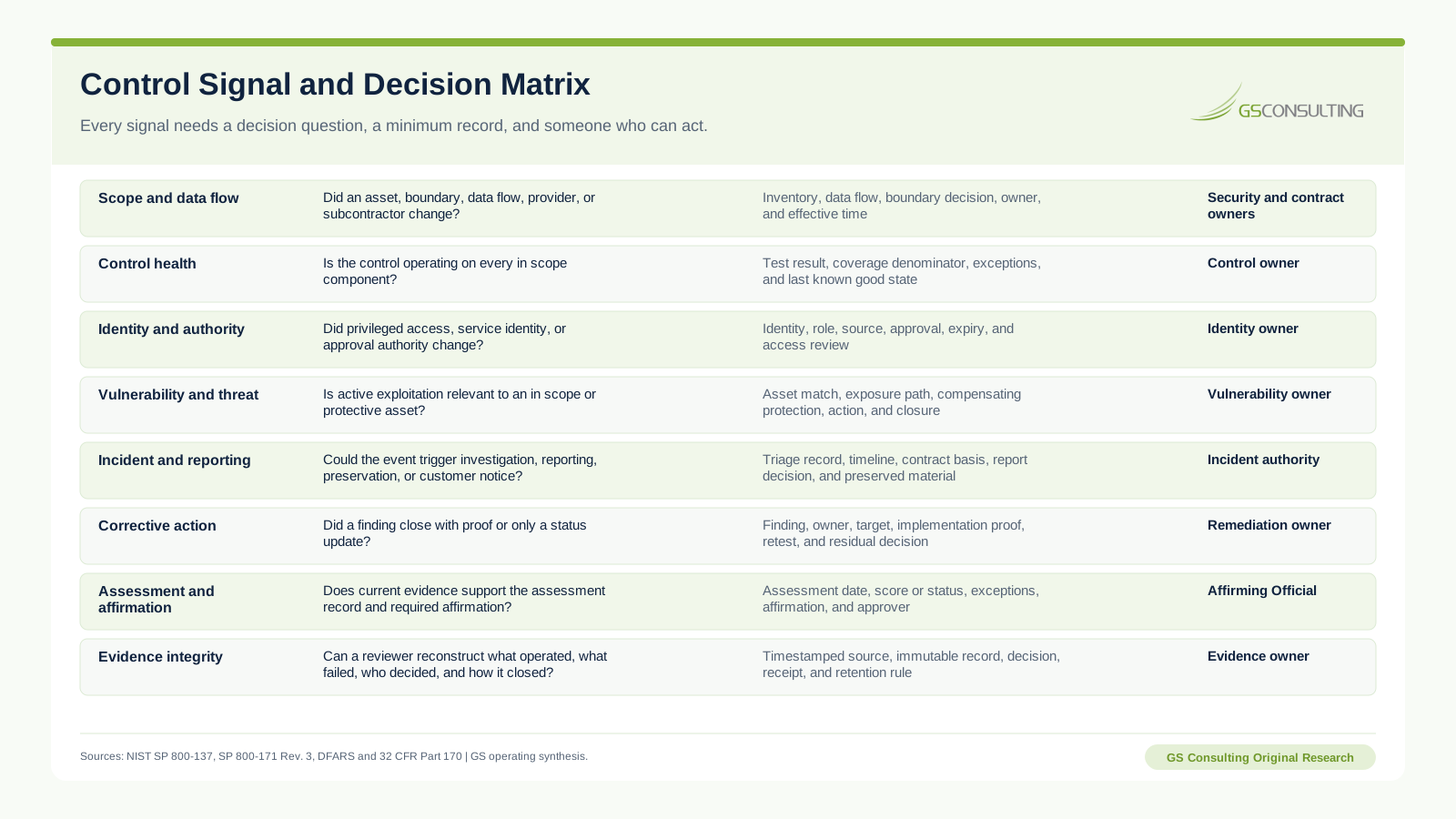
| Domain | Decision question | Minimum evidence | Authority |
|---|---|---|---|
| Scope and data flow | Did an asset, boundary, flow, provider, or subcontractor change? | Inventory, flow, boundary decision, owner, effective time | Security and contract owners |
| Control health | Is the control operating on every in scope component? | Test, population, coverage, exception, last known good state | Control owner |
| Identity and authority | Did privileged access or approval authority change? | Identity, role, source, approval, expiry, access review | Identity owner |
| Vulnerability and threat | Is active exploitation relevant to an in scope or protective asset? | Asset match, exposure path, protection, action, closure | Vulnerability owner |
| Incident and reporting | Could the event trigger investigation, reporting, preservation, or notice? | Triage, timeline, contract basis, decision, preserved material | Incident authority |
| Corrective action | Did the finding close with proof or only a status update? | Finding, owner, target, implementation proof, retest | Remediation owner |
| Assessment and affirmation | Does current evidence support the assessment record and affirmation? | Assessment, status, exceptions, affirmation, approver | Affirming Official |
| Evidence integrity | Can a reviewer reconstruct operation, failure, decision, and closure? | Timestamped source, decision, receipt, retention rule | Evidence owner |
Build a Monitoring Register That Operators Can Use
Use one row per decision condition, not one row per product alert. Name the condition in plain language: monitoring loss on an in scope asset, new external provider handling protected data, privileged authority change, known exploited vulnerability match, failed control test, overdue corrective action, or contradictory assessment evidence. A product event can feed several conditions. A condition can require several sources.
For each condition, record the expected source, source owner, complete population, stable identifier, collection method, expected arrival, quality test, last good event, missing data rule, correlation logic, false positive handling, decision owner, response authority, target time, escalation, evidence store, closure test, and review date. Add the applicable contract, system, protected information, assessment basis, provider, and subcontractor context.
Define state transitions. A practical set is observed, validated, in decision, action authorized, action in progress, ready for retest, closed, accepted, and reopened. Keep the original event and every transition. Do not overwrite a failed state with the latest status. The history is the evidence.
Give every condition a denominator. “98 percent log coverage” is weak without the expected source population and a reason for the missing two percent. “All critical findings closed” is weak without the original population, approved exception set, and repeatable test. A denominator makes silent scope reduction visible.
Monitor the Monitor Before Trusting the Result
Every source needs a health test. Confirm expected assets or identities, observed assets or identities, last event time, event volume, schema version, timestamp quality, duplicate rate, parsing success, transport errors, agent health, collector state, and storage retention. Watch for sudden silence and implausible stability. A zero count can mean no event, no coverage, or broken collection.
Reconcile sources that describe the same population. Compare asset inventory with endpoint protection, vulnerability scanning, identity, cloud, network, ticketing, and evidence systems. Differences are not data cleanup trivia. They can expose out of scope assets, unmonitored protective components, duplicate identities, stale records, or a control that never reached the full population.
Separate raw events from derived status. Retain the source identifier, original timestamp, collection timestamp, parser version, transformation, correlation rule, and final condition. If an analyst or automated process changes severity, scope, ownership, or disposition, retain the before and after values and the reason. That makes the result explainable and allows later correction.
Automation can assist with enrichment, matching, prioritization, routing, and evidence assembly. Use the guardrails in the AI threat detection and compliance monitoring guide: bounded inputs, known actions, confidence handling, human review for material decisions, observation, fallback, and retained provenance.
Name Decision Authority Before the Alert Arrives
Monitoring fails when operators can see a condition but cannot act. Define who may contain a system, disable an identity, block a connection, isolate data, stop a workflow, contact a customer, submit an incident report, preserve material, approve an exception, accept residual exposure, close a finding, update assessment records, and submit an affirmation. Separate technical execution from legal, contract, program, and executive authority where appropriate.
Create an escalation ladder with named roles and alternates. State what happens when the primary owner is unavailable, when a target time is at risk, when scope is uncertain, when evidence conflicts, or when customer direction is required. Put contact and authority data in the operating workflow, not in a document nobody opens during an event.
Record the decision basis. Include the facts available at the time, applicable contract or rule, options considered, chosen action, approver, clock, interim protection, residual condition, next review, and evidence location. A later reviewer should be able to understand why the action was reasonable without inventing context.
Move From Signal to Accountable Closure in Five Stages
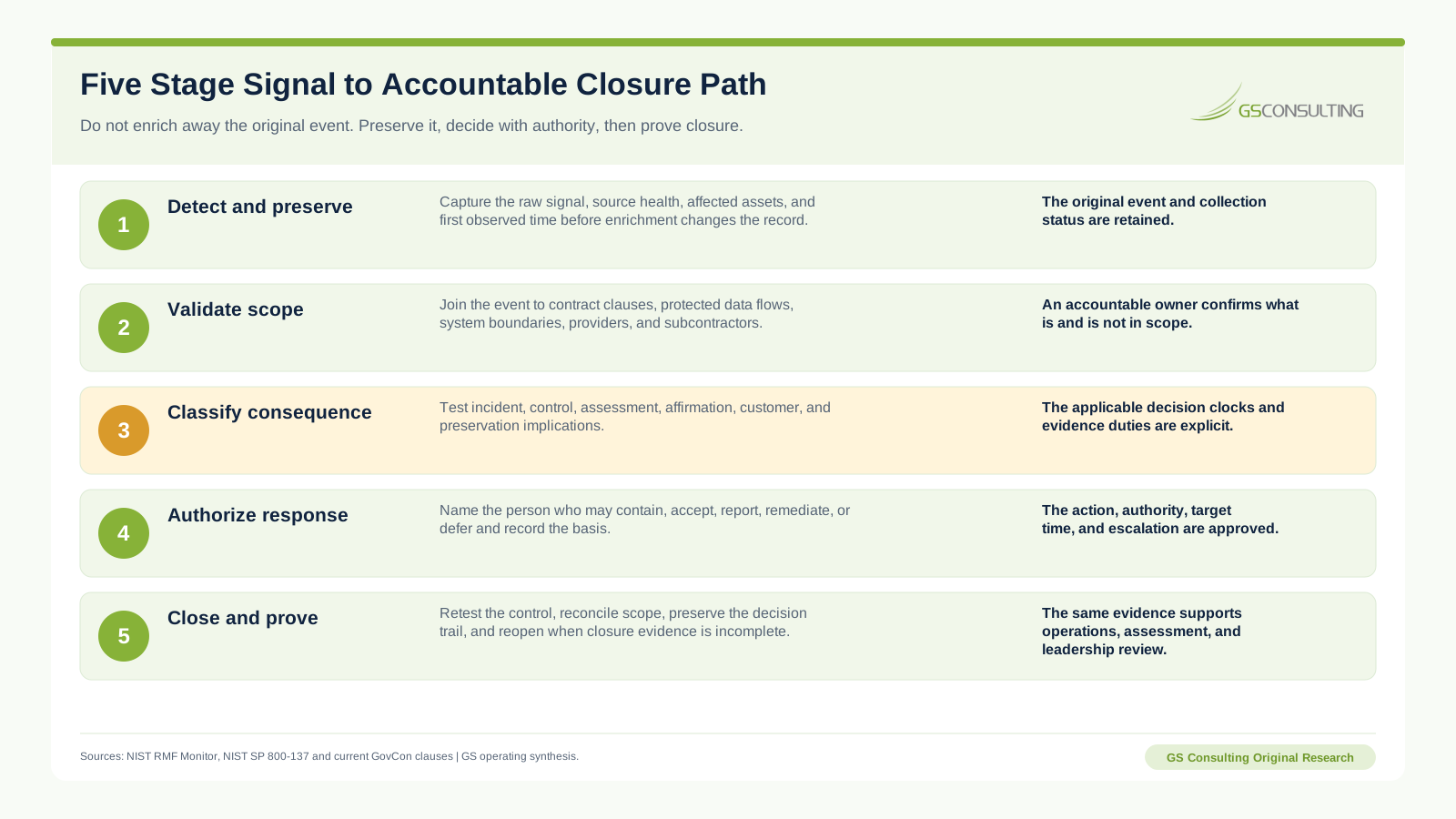
- Detect and preserve. Capture the raw signal, source health, affected identifiers, and first observed time before enrichment changes the record.
- Validate scope. Join the event to contracts, protected information, system boundaries, providers, subcontractors, and assessment status.
- Classify consequence. Test incident, reporting, preservation, control, assessment, affirmation, customer, and service implications.
- Authorize response. Name who may contain, report, remediate, accept, or defer. Record the action, basis, target, and escalation.
- Close and prove. Retest the original condition, reconcile the population, preserve the decision chain, and reopen incomplete closure.
Keep stages explicit even when automation makes them fast. Speed is useful; hidden decisions are not. A workflow that skips from alert to closed ticket can erase the facts needed for contract review, assessment, incident analysis, and improvement.
Six Failure Modes to Test Directly
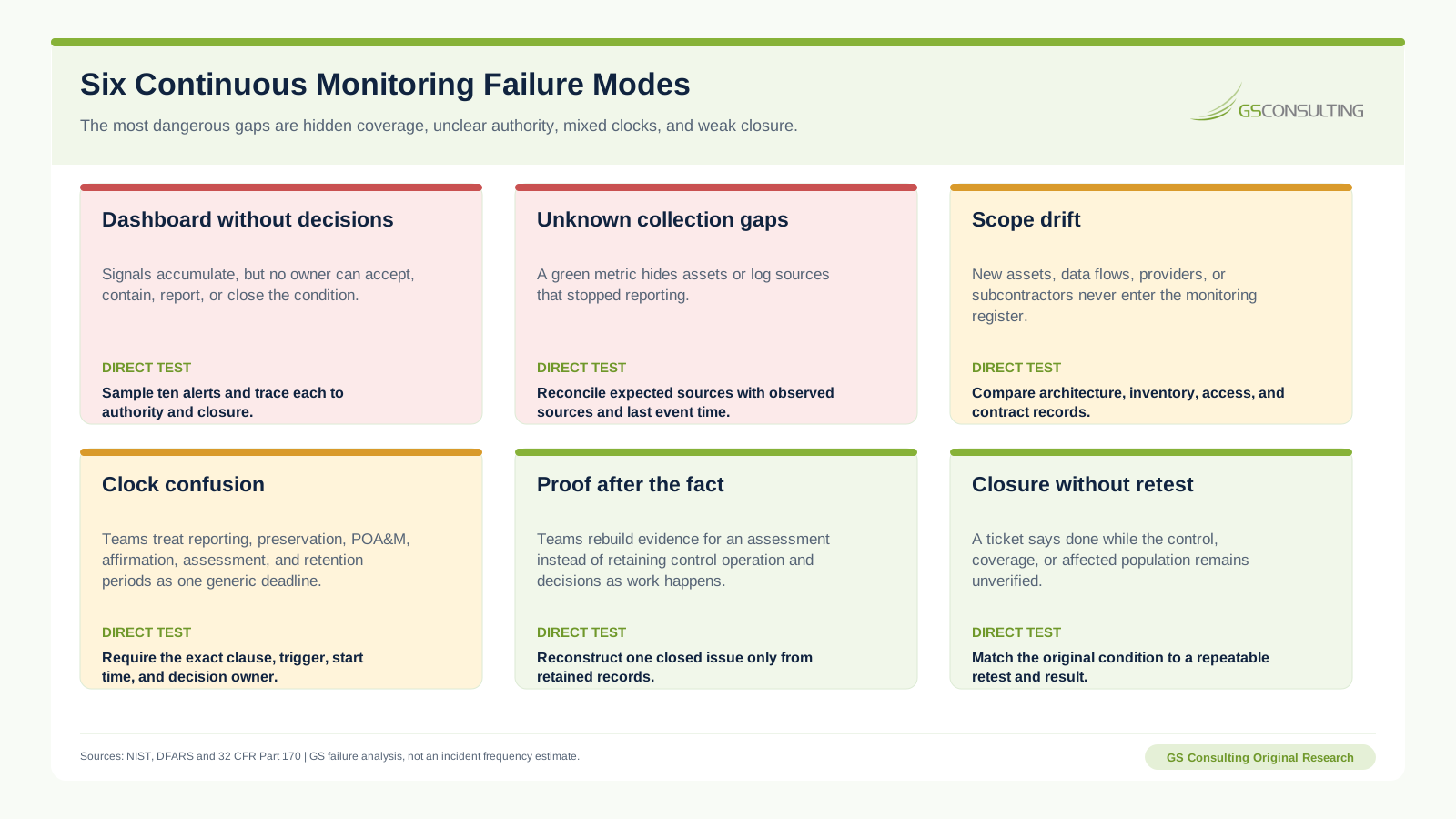
Dashboard without decisions. Sample ten material alerts and trace each to a person with authority, a recorded action, and closure. If the trace ends at a queue or committee, the model lacks decision rights.
Unknown collection gaps. Compare expected sources with observed sources and last event time. Test an approved loss of collection. The monitoring team should detect the missing source before the control owner reports it.
Scope drift. Compare recent architecture, asset, identity, provider, subcontractor, network, data flow, and contract changes with the monitoring register. Every material change should produce a scope decision or documented nonimpact result.
Clock confusion. Pick one incident, one corrective action, one assessment, and one evidence record. Ask for the precise trigger, start time, clause or rule, owner, required action, and proof. Generic due dates are a warning.
Proof after the fact. Reconstruct one closed issue from retained records without interviewing the person who handled it. If memory fills the gaps, evidence is being assembled too late.
Closure without retest. Match the original condition to a repeatable test and current result. If closure is only a ticket status, reopen it.
Keep a Minimum Continuous Control Evidence Packet
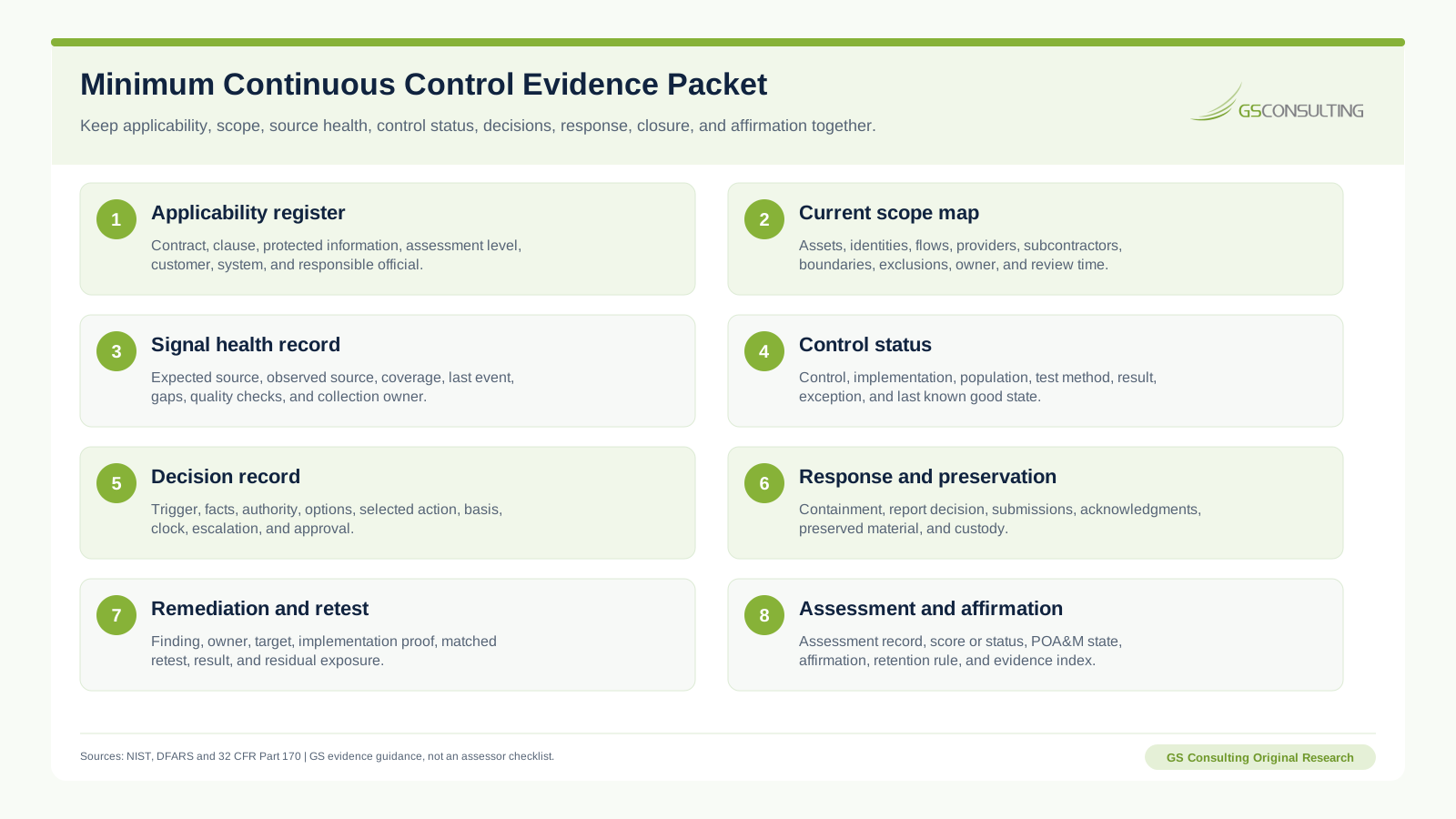
Applicability register. Keep the contract, clause, protected information, assessment level or basis, customer, system, and responsible official. Current scope map. Keep assets, identities, flows, providers, subcontractors, boundaries, exclusions, owners, and review time. Signal health record. Keep expected and observed sources, coverage, last event, quality checks, gaps, and collection owner.
Control status. Keep the control, implementation, population, test method, result, exception, and last known good state. Decision record. Keep the trigger, facts, authority, options, selected action, basis, clock, escalation, and approval. Response and preservation. Keep containment, report decisions, submissions, acknowledgments, preserved material, and custody.
Remediation and retest. Keep the finding, owner, target, implementation proof, matched retest, result, and residual exposure. Assessment and affirmation. Keep the assessment record, score or status, POA&M state, affirmation, retention rule, and evidence index.
Use the same stable identifiers across the packet. A system, asset, identity, control, finding, contract, and evidence record should resolve without manual guessing. Retain the source and transformation history for derived data. Protect evidence from silent alteration. Set retention from contract, regulatory, assessment, investigation, customer, legal, and operating needs.
A Practical 90 Day Implementation Plan
Days 1 through 30: Establish scope and authority
Create the applicability register and current scope map. Inventory existing monitoring tools, sources, populations, queues, decisions, and evidence stores. Select ten material conditions. Name control owners, response authorities, incident authority, contract counsel, the Affirming Official where applicable, and alternates. Trace five recent conditions from source to closure and record the breaks.
Days 31 through 60: Build source health and decision records
Define expected populations, stable identifiers, collection cadence, health checks, quality rules, and missing source alerts. Join signals to contract and protected information context. Implement explicit states, clocks, authority, escalation, and decision records. Preserve raw events and transformation history. Add matched retest requirements before closure.
Days 61 through 90: Exercise consequence and recovery
Run safe exercises for lost monitoring, scope change, known exploitation, privileged authority change, failed control test, incident classification, overdue action, and contradictory evidence. Measure detection time, validation time, decision time, action time, closure time, source coverage, reopened findings, and evidence completeness. Fix the operating breaks before adding more conditions.
Expand only after the first set works. Coverage count is not maturity. A smaller register that produces accurate scope, timely authority, verified action, and reproducible evidence is more useful than hundreds of automated checks that nobody owns.
Sources and Research Method
The research package uses NIST SP 800-137, NIST SP 800-137A, the NIST RMF Monitor step, NIST SP 800-171 Revision 3, NIST SP 800-171A Revision 3, current DFARS clauses 252.204-7012, 252.204-7019, and 252.204-7020, 32 CFR Part 170, and the CISA Known Exploited Vulnerabilities Catalog.
Official sources establish monitoring concepts, security and assessment procedures, contract clauses, reporting and preservation periods, assessment currency, CMMC affirmation and closure duties, evidence retention, and exploited vulnerability signals. GS Consulting defined the twelve monitoring conditions, six factors, weights, analyst ratings, ranking, sensitivity cases, operating matrix, decision path, failure tests, and evidence packet.
The complete research package contains the source register, public signals, model inputs, formula driven scores, sensitivity analysis, control matrix, decision path, failure modes, evidence packet, methodology, data dictionary, figure data, editable SVG files, browser rendered PNG files, inspection renders, and workbook. The model does not determine contract applicability, predict incidents, inspect a live system, or certify compliance.
Frequently Asked Questions
What is continuous control monitoring?
Continuous control monitoring is the operating system that observes control and environment signals, validates their coverage and quality, joins them to applicable scope, assigns decision authority, drives response, and preserves proof of closure. It is broader than a dashboard and narrower than a claim that every compliance decision is automated.
Does CMMC require continuous control monitoring?
CMMC does not turn every control into an automated continuous test. A contractor still needs current evidence that applicable requirements remain implemented across the assessed scope, must manage conditional status and POA&M rules where allowed, and must submit required affirmations. Monitoring should support those duties without overstating what the rule requires.
Which continuous monitoring signals should a government contractor prioritize?
Start with covered cyber incident signals, monitoring loss on in scope assets, protected data flow or scope changes, new providers or subcontractors handling protected data, known exploited vulnerabilities, privileged authority changes, failed control tests, overdue corrective action, and evidence that no longer supports the current state.
How often should continuous controls be reviewed?
Cadence should follow consequence, change rate, contract and rule triggers, evidence decay, and the time available to act. Some conditions require event driven review, some need daily or weekly reconciliation, and some require monthly, quarterly, annual, or assessment cycle review. One generic cadence is usually wrong.
Can a SIEM or GRC platform provide continuous control monitoring?
A SIEM or GRC platform can collect signals, calculate status, route work, and retain records. It cannot define contract applicability, prove that all expected sources are reporting, supply missing business context, or replace a person who has authority to report, accept, remediate, or affirm. The platform supports the operating model; it is not the operating model.
What evidence should continuous control monitoring retain?
Retain the applicability register, current scope map, signal health record, control status, decision record, response and preservation material, remediation and matched retest, assessment status, affirmation, and evidence index. Each record should identify source, scope, time, owner, authority, action, result, exception, and retention rule.
Suggested Future Reading
- GovCon Cybersecurity and Compliance Hub
- NIST 800-171 Assessment, Authorization, and Monitoring
- AI Threat Detection and Compliance Monitoring for GovCon
- CMMC Assessment Evidence Guide
- Vulnerability Assessment Reports and Retesting
Make every material signal end in a defensible decision
Not more dashboards. Current scope. Trusted signals. Named authority. Timely action. Verified closure. Evidence that survives review.
Build the Operating Standard