Microsoft GCC High | | 25 min read
GCC High Tenant Configuration: A Secure Setup Guide

Key Takeaways
A secure tenant is an operated configuration, not a cloud label
111 policy headings span six current baseline files
GS counted the CISA files for Entra ID, Exchange Online, Defender, Security Suite, SharePoint, and Teams at one exact repository commit.
Privileged administration scores 97
It leads the planning index because a privileged path can change every other control and must remain recoverable under pressure.
Protect recovery before broad enforcement
Emergency access, tested exclusions, and named decision rights come before a tenant wide access policy moves from report mode to enforcement.
A GCC High tenant is not secure because Microsoft provisioned it. The service boundary matters. Customer configuration decides what administrators, users, guests, applications, devices, and data can actually do.
The weak pattern is familiar. A contractor buys the right environment, copies a commercial tenant baseline, enables several broad policies, takes screenshots, and calls the setup complete. The result can still contain standing administrator access, unowned applications, fragile exclusions, permissive sharing, weak mail paths, missing audit exports, and no reliable recovery test.
The stronger standard is operational. Define the real tenant boundary, protect recovery, reduce privilege, and control identity and application access. Configure each workload deliberately. Test the result and keep dated evidence as the tenant changes.
The Microsoft GCC High hub connects this setup guide to the broader decision. Read what GCC High is for eligibility and service context, use the GCC High migration guide before moving production workloads, then apply the dedicated guides for Conditional Access policy and evidence, Secure Score priorities and proof, CUI data loss prevention, and email security. GS Consulting supports this work through secure AI automation.
Build a GCC High tenant that can survive change and review.
GS Consulting helps federal contractors define the boundary, configure identity and workloads, test control outcomes, and build the evidence system that keeps the tenant defensible.
Plan the Tenant SetupGCC High Tenant Configuration: The Short Answer
Configure a GCC High tenant in five passes. First, bound every user, administrator, workload, data type, device, domain, guest, application, and integration. Second, establish emergency access and administrative recovery. Third, secure privileged roles, authentication, Conditional Access, and application consent. Fourth, configure sharing, mail, collaboration, retention, audit, and device conditions. Fifth, export, test, approve, monitor, and review the operating state.
Do not treat a generic checklist as the configuration. A setting can be technically enabled and still miss the intended users. A restrictive policy can be dangerous if its exclusions are weak or its recovery path was never tested. A screenshot can prove a screen existed. It does not prove coverage, outcome, change control, or recurring operation.
Microsoft’s GCC High and DoD service description is the starting point for current feature and support boundaries. Verify the purchased license and present service behavior before copying a control from another cloud.
The Configuration Surface Is Larger Than the Admin Center
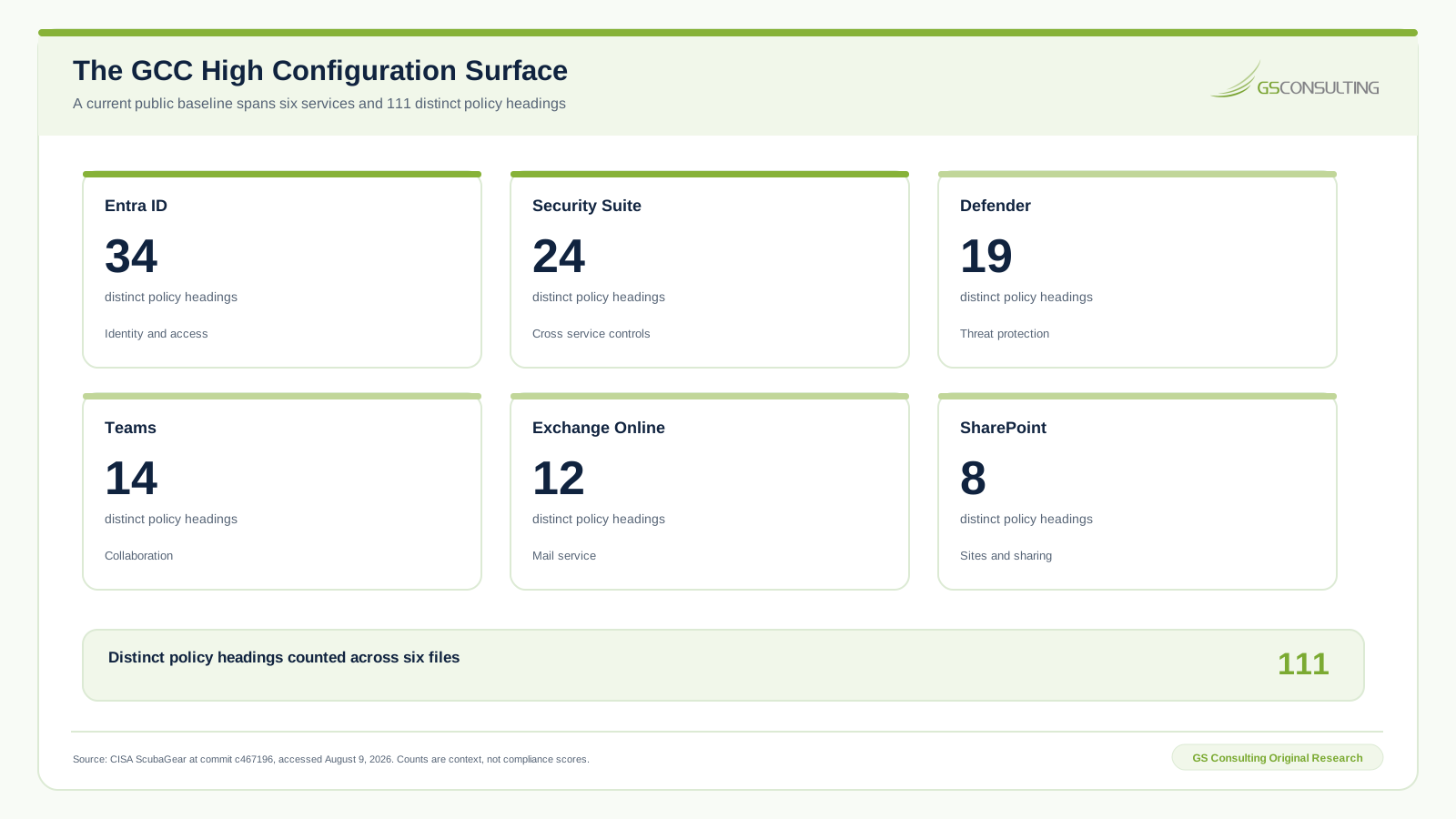
GS counted the public Secure Cloud Business Applications baseline files in the CISA ScubaGear repository at commit c4671964bef3975b8974758d369e4b79dd43c7ad. The six files contain 34 Entra ID policy headings, 24 Security Suite headings, 19 Defender headings, 14 Teams headings, 12 Exchange Online headings, and 8 SharePoint headings.
That is 111 distinct checks before tenant specific facts enter the picture. Device design, applications, data flows, user roles, exceptions, incidents, retention, and evidence still need tenant decisions. The count is useful because it breaks the illusion that one security portal contains the whole tenant.
The CISA baselines are not a contractor compliance certificate. CISA tailored them to federal civilian agencies and states that organizations outside that scope may use them for information. Settings and features also vary by environment. Use the files as a strong public reference, then map each applicable control to the organization’s contracts, system boundary, risk, license, and assessment method.
| Configuration plane | Decisions to make | Proof to retain |
|---|---|---|
| Identity | Authentication, access policy, roles, guests, applications, and recovery | Assignments, policy scope, exclusions, test results, reviews, and alerts |
| Workloads | Mail, sites, files, teams, meetings, external sharing, and retention | Policy exports, coverage, sharing tests, mail tests, and exception history |
| Devices | Approved platforms, compliance signals, administration, and application access | Device conditions, enrollment state, control results, and unresolved exceptions |
| Operations | Logging, export, monitoring, response, change, backup, and support handling | Audit sources, retention, alerts, tickets, approvals, exercises, and review history |
GS GCC High Configuration Evidence Priority Index
GS Consulting built a derived model to answer a practical question: which tenant configuration domains should an operator configure, test, and prove first? The model scores ten domains on dependency criticality at 30 percent, exposure impact at 25 percent, evidence reuse at 20 percent, change pressure at 15 percent, and recovery leverage at 10 percent. Each input is a one to five GS analyst rating grounded in the cited Microsoft, CISA, and NIST sources.
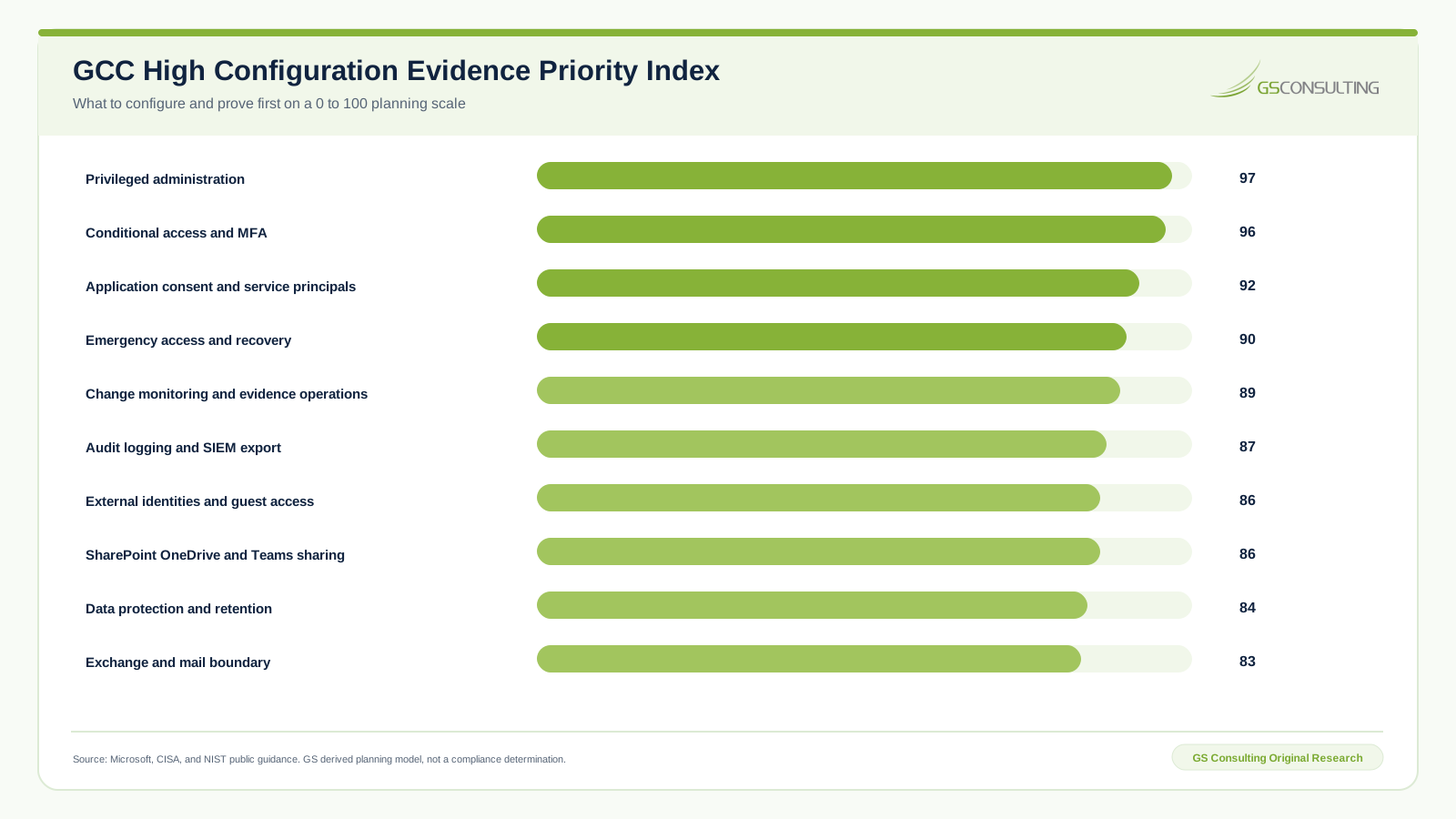
Privileged administration scores 97. Conditional Access and multifactor authentication score 96. Application consent and service principals score 92. Emergency access and recovery score 90. Change monitoring and evidence operations score 89. These are priority scores, not claims that a domain is 97 percent secure or compliant.
The order makes operational sense. An administrator can change every policy. A broad access policy can lock out the organization or admit the wrong population. An application can retain access after its business owner leaves. An emergency account can either preserve recovery or become an unmonitored bypass. Evidence operations determine whether the team can explain any of those states later.
The sensitivity test shifts five percentage points from dependency criticality to change pressure. No item moves more than two points, and the top action tier stays intact. The research package retains the source register, public observations, inputs, formulas, alternate weights, and CSV files. It also retains the editable SVG files and browser rendered PNG copies.
This index is a GS Consulting derived planning tool. It is not an official Microsoft, CISA, NIST, DoD, legal, audit, compliance, or regulatory determination. Replace analyst assumptions with tenant exports, license facts, test results, incident records, and assessment evidence.
Use a Secure Setup Sequence
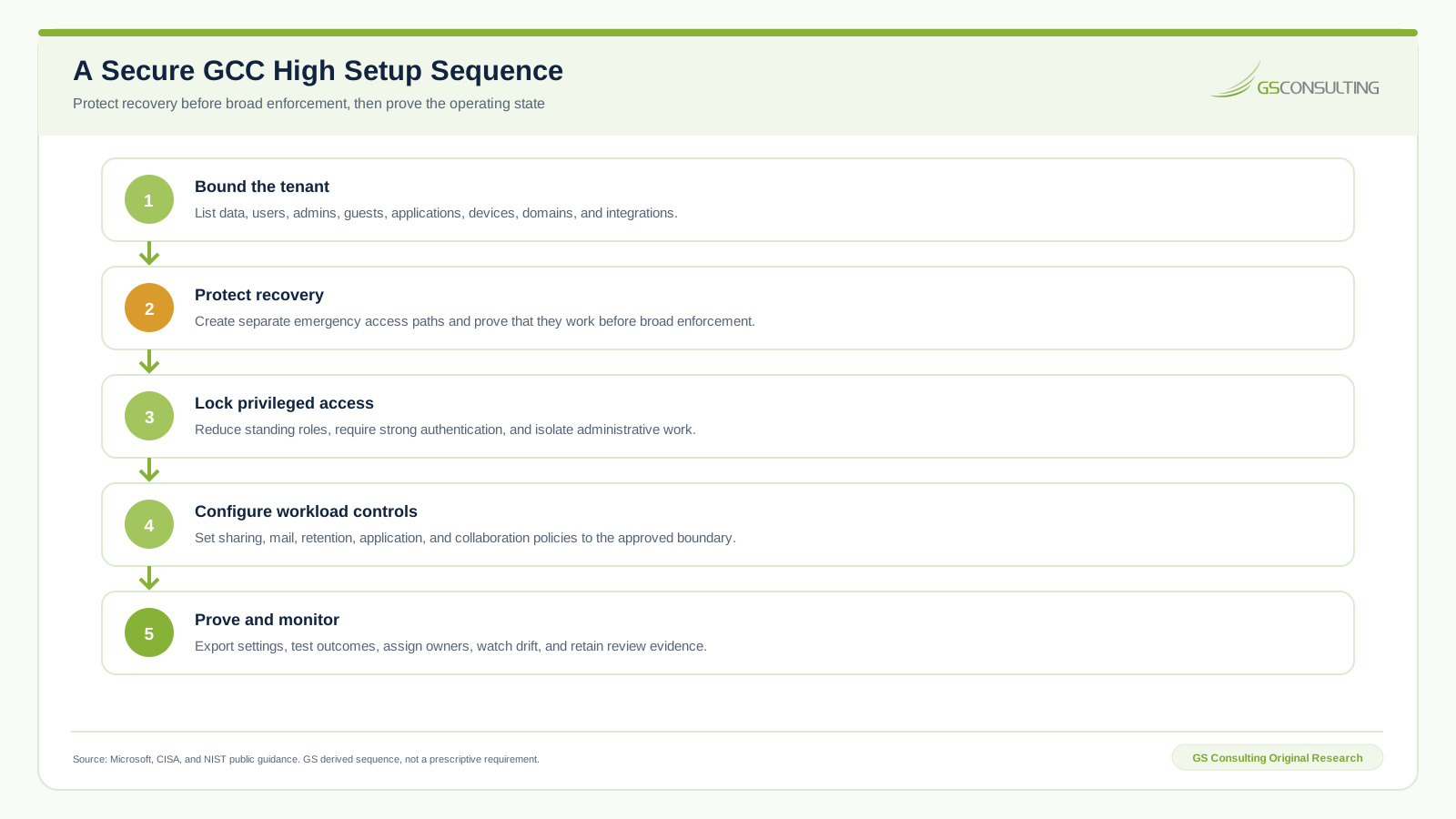
Bound the tenant. List the people, data, workloads, devices, domains, applications, and guests inside the controlled environment. Add automation, administrators, support paths, and external services. Record which systems sit outside and how data reaches them. If an integration processes CUI, the boundary decision needs more than the statement that the mailbox is in GCC High.
Protect recovery. Microsoft recommends at least two cloud only emergency access accounts. Keep them separate from normal administrator identities, use strong authentication that does not share the same failure mode as routine access, monitor every use, and test them on a defined schedule. Record exactly which policies exclude them and why.
Lock privileged access. Remove casual standing privilege. Separate administrator and daily work identities. Use the least role that can complete the task. Protect role activation, monitor assignments, review stale privilege, and document service accounts that cannot follow the human pattern.
Configure workload controls. Set intentional rules for mail, applications, sharing, guests, sites, and files. Then address teams, meetings, retention, audit, and device conditions. Do not assume a secure identity policy fixes permissive workload behavior.
Prove and monitor. Export the configuration, test allow and block outcomes, reconcile intended coverage to actual coverage, watch drift, review exceptions, and retain approvals. Configuration becomes a control only when the organization can operate it repeatedly.
Identity, Privilege, and Recovery Come First
Start with an identity population, not with a policy screen. Separate employees, guests, administrators, emergency accounts, and service accounts. Then distinguish managed devices, unmanaged devices, approved applications, legacy protocols, and high risk actions. Each access policy should name who and what it covers, what it excludes, what signal it trusts, what control it applies, and how the team tested both the allow and block path.
Move Conditional Access changes through report mode and representative testing where the feature supports it. Include remote users, administrators, service accounts, external collaborators, mobile devices, approved automation, and recovery scenarios. The goal is not to avoid enforcement. The goal is to reach enforcement without discovering hidden dependencies during an outage.
Privileged roles need an owner, business reason, assignment type, approval method, review date, and removal event. If a license or environment limitation prevents the preferred activation pattern, document the alternative control and its operating evidence. Do not write that a feature exists when the tenant does not own or support it.
Emergency access accounts are deliberately exceptional. That makes them high value and high risk. Alert on sign in and credential changes. Restrict routine use. Store access material through an approved process. Test recovery without weakening the normal policy set. After any use, review the event, rotate as needed, and preserve the record.
Applications, Consent, Guests, and Devices Define Quiet Access Paths
An application registration or service principal can hold broad permissions without appearing in a normal user access review. Build an application register with the owner, purpose, publisher, permissions, consent type, and data reached. Add the credential type, expiration, network path, support model, and review date. Remove unused grants. Treat new high privilege consent as a governed change.
Guest access requires the same precision. Record the sponsor, employer, purpose, allowed resources, authentication expectation, and terms. Add expiration, review interval, and the removal trigger. Then test what a guest can actually search, open, download, sync, share, and invite. A site owner’s action can widen the practical boundary even when the tenant policy looks restrictive.
Device signals are only as trustworthy as the device inventory and enrollment process behind them. Define which platforms can be managed, what compliance means, how stale devices age out, what administrators can use, and what happens to an approved exception. If a contractor permits unmanaged browser access, name the data and actions allowed through that path.
Third party services deserve separate review. Microsoft’s service description warns that support interactions and outside services do not automatically sit inside the same accreditation boundary. Confirm data handling, support access, identity, integration path, logs, contract terms, and incident duties before connecting a product to GCC High.
Configure Each Workload Against the Approved Boundary
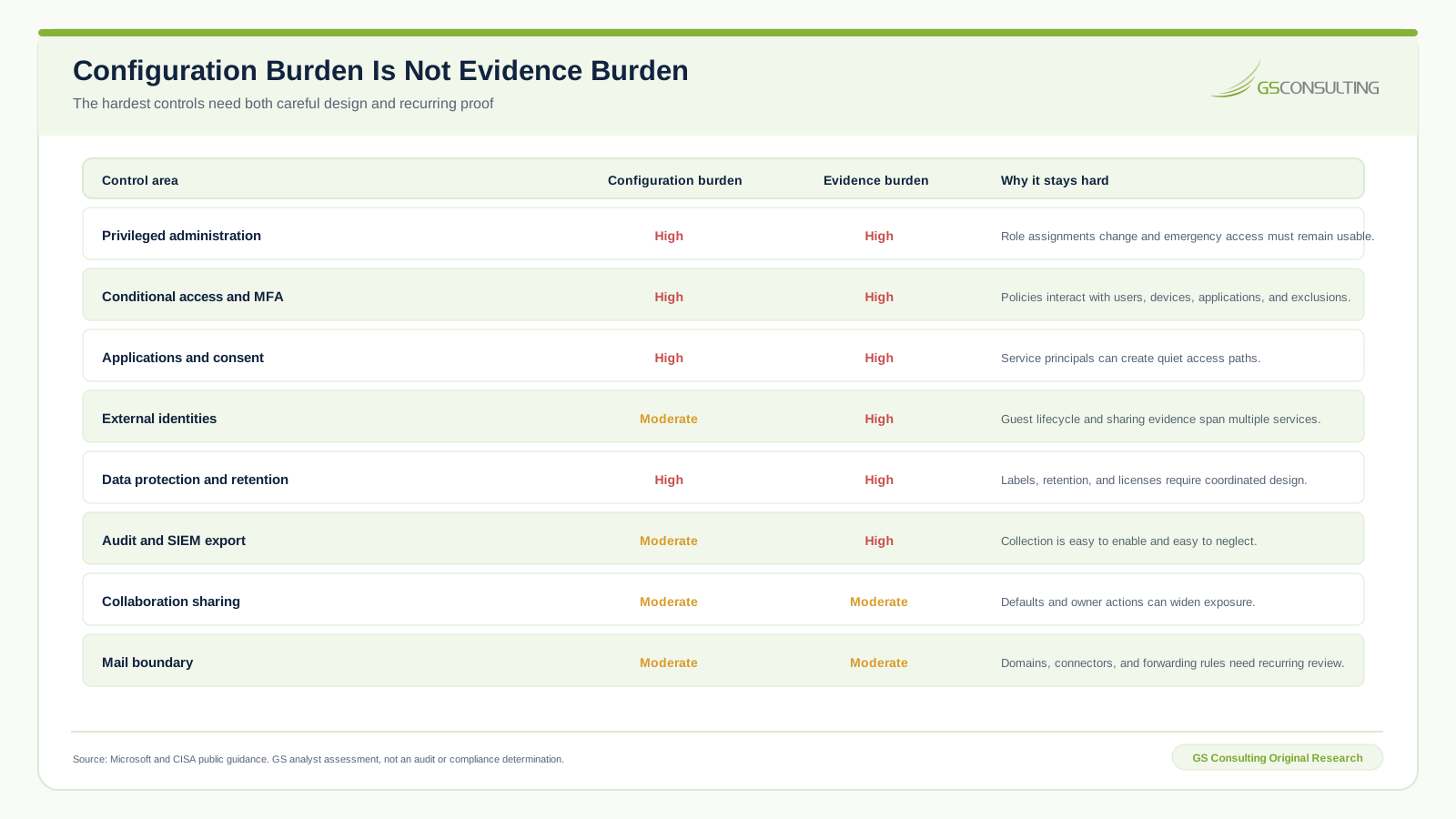
SharePoint, OneDrive, and Teams. Set tenant sharing defaults, guest rules, anonymous link behavior, default link types, expiration, and domain restrictions. Add site sensitivity, meeting controls, recording, application access, and owner duties. Then sample actual sites and teams. Tenant policy can permit a narrow design while old sites preserve broader settings.
Exchange Online. Inventory accepted domains, mail applications, connectors, relays, external forwarding, mailbox rules, transport rules, authentication records, and partner routes. The companion GCC High email security guide covers the mail defense sequence and evidence package in detail.
Data protection and retention. Decide what data is sensitive, where it is allowed, who can label it, what labels do, which records must be retained, what can be deleted, and which license enables the intended control. Use the GCC High CUI data loss prevention guide to connect classification, cloud locations, devices, exceptions, alerts, and evidence. Microsoft publishes separate Purview planning guidance for GCC High because availability differs from commercial environments.
Audit and monitoring. Confirm which events are generated, how long they remain available, where they are exported, who reviews them, which alerts create action, and how the organization retrieves evidence during an incident or assessment. Microsoft notes that audit capabilities and retention differ by license. “Audit is on” is not a retention or response plan.
Build Evidence Operations with the Configuration
Evidence should answer six questions without a meeting: what setting or process was evaluated, which users or resources it covered, when the evidence was produced, which source created it, who reviewed it, and what result or decision followed. A screenshot without scope or date usually answers only one.
Export settings in a structured form where the service allows it. Preserve the command, query, or collection method. Store the result with a control name, owner, period, approval, and hash or version reference where appropriate. If the evidence requires a manual portal view, record the navigation, filters, visible scope, and reviewer.
Use automated checks as one evidence source. CISA ScubaGear can compare supported Microsoft 365 settings with public baselines. Microsoft configuration tools can surface recommendations and drift for selected controls. Neither removes the need to prove coverage, exceptions, tenant context, operating results, and contract specific obligations.
Review drift by risk. Privileged roles, emergency accounts, application permissions, access policy exclusions, external forwarding, trusted connectors, and anonymous sharing need tighter attention than a low impact display preference. Every exception needs a reason, owner, approver, compensating control, review date, and expiration.
A Ninety Day GCC High Tenant Setup Plan
Days one through fifteen: define the boundary. Confirm eligibility, licenses, domains, users, administrators, data, and workloads. Add devices, guests, applications, support handling, and external services. Establish configuration owners, risk decisions, evidence locations, and a change path.
Days sixteen through thirty: protect administrative recovery. Establish emergency access, separate administrator identities, privileged role standards, strong authentication, named exclusions, monitoring, and recovery tests. Fix critical identity inventory gaps before broad policy enforcement.
Days thirty one through fifty: configure identity and applications. Build Conditional Access policies with representative coverage, review application consent, remove unused service principals, define guest lifecycle, and connect device conditions to the actual management system.
Days fifty one through seventy: configure workloads. Set mail, sharing, collaboration, meeting, retention, audit, and data protection controls. Test internal, external, mobile, administrator, guest, automation, and recovery scenarios. Record limitations instead of assuming commercial feature parity.
Days seventy one through ninety: prove operation. Export current settings, run control checks, reconcile coverage, and close material exceptions. Exercise recovery and incident paths. Schedule recurring reviews for access, applications, sharing, mail, logging, and drift.
Six Failure Modes That Make a Tenant Look Safer Than It Is
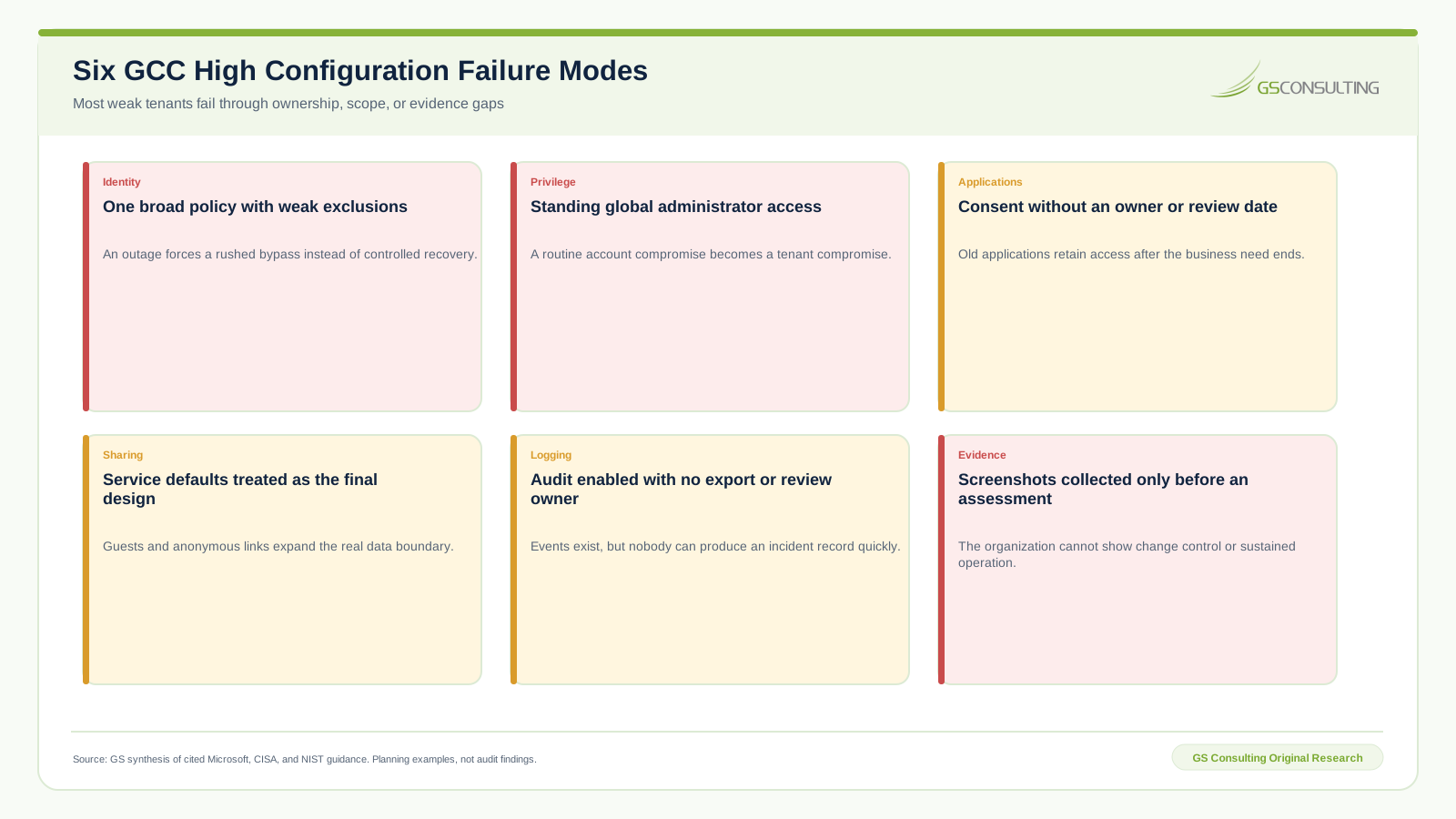
One broad access policy with weak exclusions. The policy is easy to describe and hard to recover. A hidden dependency fails, operators add a rushed bypass, and the bypass survives the incident.
Standing global administrator access. Routine work happens inside identities that can change the tenant. One compromised account becomes a control plane event.
Consent without an owner or review date. An old application retains access because nobody owns its removal. The permission exists long after the original project ended.
Service defaults treated as the final design. Guests, anonymous links, meeting behavior, and owner choices expand the real boundary even though the tenant was purchased for sensitive work.
Audit enabled with no export or review owner. Events exist, but the team cannot produce a fast incident trail, show retention, or explain who watches meaningful alerts.
Screenshots collected only before an assessment. The organization proves a point in time and cannot show approved change, recurring review, exception closure, or sustained operation.
The GCC High Tenant Evidence Packet
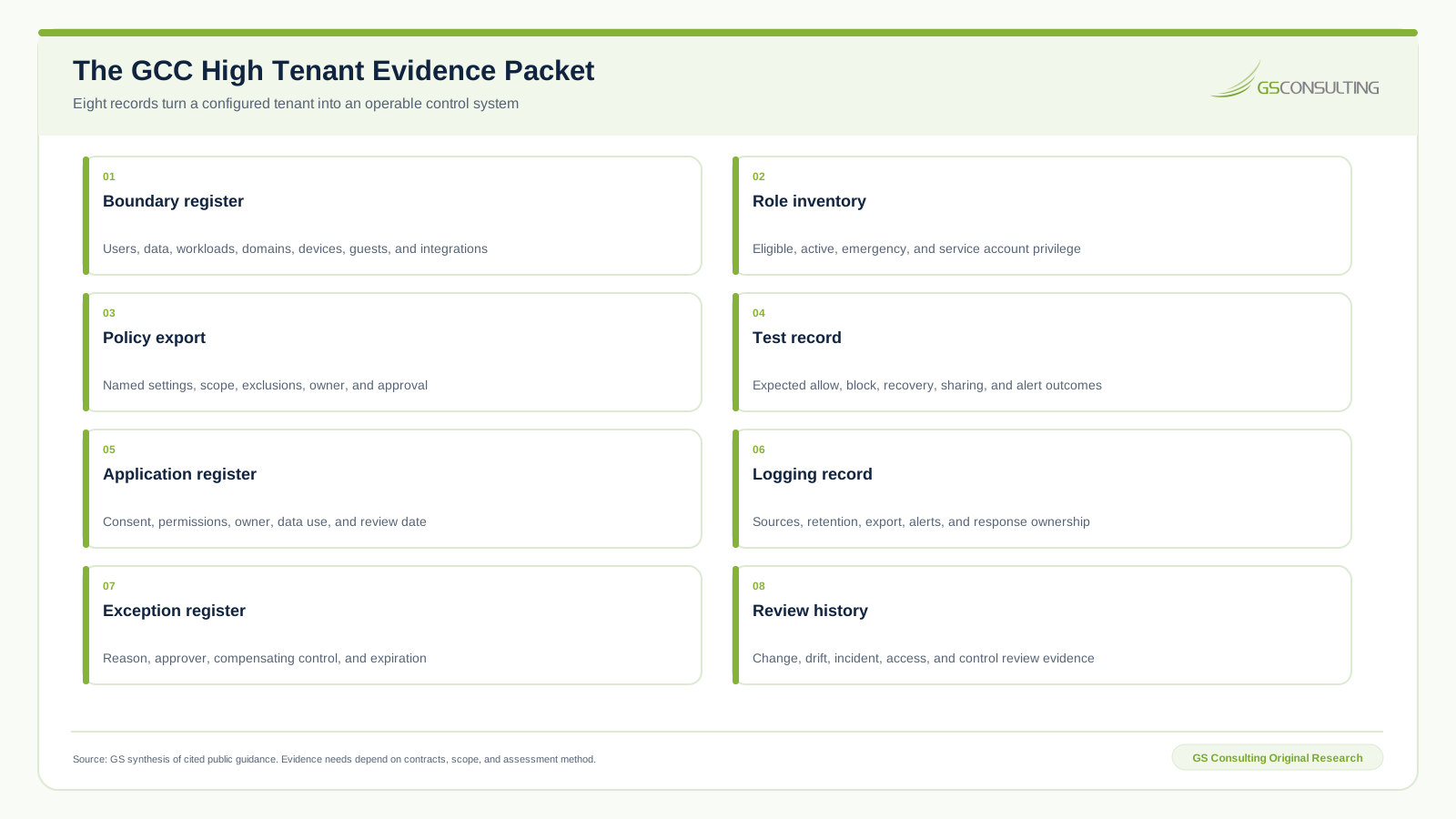
The minimum packet contains a boundary register, role inventory, policy exports, test record, application register, logging record, exception register, and review history. Each should name its owner, period, source, and scope. It should also record approval, retention, and the relationship to an applicable requirement or risk decision.
Keep the packet connected. An application change should update the application register, permission review, policy coverage, test result, approval, and audit history. A guest exception should connect the sponsor, resource, business purpose, expiration, access result, and removal evidence. A policy alert should lead to an owner, decision, ticket, result, and retained record.
Bottom Line
GCC High can be the right environment for controlled work. It does not make customer configuration disappear. Identity, privilege, applications, devices, sharing, mail, data protection, audit, recovery, and evidence remain an operating responsibility.
The decisive standard is simple: every material access path has an owner, every policy has tested coverage, every exception expires, every critical event is visible, and every control claim resolves to current evidence.
Turn tenant settings into a maintained control system.
GS Consulting helps teams move from scattered portal choices to owned configuration, repeatable tests, current evidence, and disciplined review.
Request a Tenant ReviewSources and Method Note
- Microsoft GCC High and DoD service description
- CISA ScubaGear baseline files at the counted commit
- Microsoft emergency access guidance
- Microsoft Conditional Access overview
- Microsoft Purview Audit overview
- NIST SP 800-171 Revision 3
GS Consulting Original Research. The GS GCC High Configuration Evidence Priority Index is a derived planning model based on cited public sources and documented analyst assumptions. It is not an official Microsoft, CISA, NIST, DoD, legal, audit, compliance, or regulatory determination. Verify current service availability, licensing, contract duties, system scope, and evidence requirements before implementation.
Frequently Asked Questions
What is a GCC High tenant?
A GCC High tenant is a Microsoft 365 US Government environment for eligible organizations with government cloud service terms and feature differences. Microsoft operates the cloud service, while the customer still configures identities, roles, applications, devices, sharing, mail, data protection, logging, recovery, and evidence.
How should a GCC High tenant be configured?
Start by defining users, data, workloads, devices, domains, guests, applications, integrations, and administrators. Protect emergency access, lock privileged roles, test Conditional Access, configure workload controls, export settings, test outcomes, assign owners, and review drift on a recurring schedule.
Does GCC High come securely configured by default?
GCC High provides a specialized Microsoft cloud environment, but customer settings still determine access and data handling. Defaults, licenses, and available features are not a complete tenant design. The customer must make, test, document, and maintain configuration decisions for its actual boundary.
Which GCC High tenant settings should be configured first?
GS research places privileged administration, Conditional Access and multifactor authentication, emergency access, application consent, and change monitoring at the top of the planning sequence. These domains create broad dependencies and can either protect or expose the rest of the tenant.
Can CISA ScubaGear prove GCC High compliance?
No. ScubaGear can assess supported Microsoft 365 settings against public Secure Cloud Business Applications baselines. CISA states scope and feature limitations, and the baselines do not establish a compliance determination. Contractors should use results as configuration evidence within their own contract, system, and assessment context.
What evidence should a GCC High tenant retain?
Retain the boundary register, role inventory, policy exports, coverage and test results, application register, logging record, and exception register. Add approvals, change history, drift reviews, incidents, and recurring access reviews. Evidence should identify the owner, period, source, scope, and result.