Microsoft GCC High | | 26 min read
GCC High Secure Score Operations: Priorities, Exceptions, and Proof

Key Takeaways
Treat the score as a signal, then prove the decision
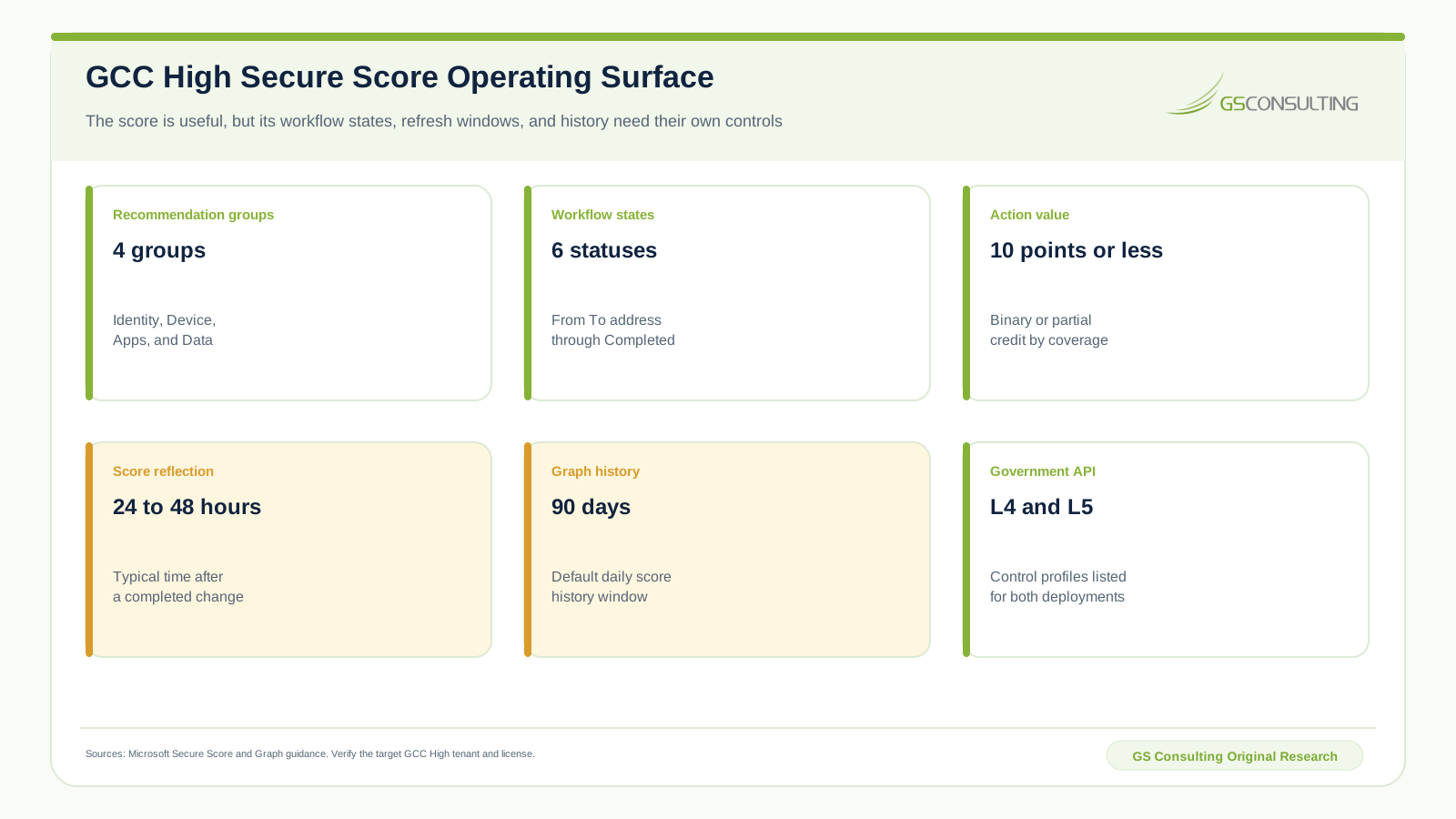
Four groups and six workflow states
Microsoft organizes actions across Identity, Device, Apps, and Data, with statuses from To address through Completed.
Scope and ownership score 100
A recommendation cannot become controlled work until tenant, service, population, owners, and expected proof are named.
Graph retains 90 days by default
Independent collection is necessary when investigations, audits, contracts, or review cycles require a longer record.
GCC High Secure Score is not the security program. It is a posture signal that becomes useful only when every recommendation has scope, an owner, a tested change, an exception path, and evidence.
A higher percentage can be good news. It can also hide a copied commercial procedure, an untested access change, an expired risk decision, a missing service, or history that disappears before the next review. The number is the beginning of an operating question, not the end of one.
The practical goal is not to chase every point. It is to make each recommendation reconstructable: which tenant and service it applied to, which people and data it affected, who made the decision, what changed, how recovery was tested, why an exception remained, and what proof supports the current state.
This guide extends the Microsoft GCC High hub, the GCC High tenant configuration guide, and the GCC High identity governance model. GS Consulting supports governed security operations through secure AI and regulated automation services.
Can you explain every point, exception, and regression?
GS Consulting helps teams turn GCC High security recommendations into owned work, tested changes, current decisions, and durable evidence.
Request a Secure Score ReviewGCC High Secure Score: The Short Answer
Use Secure Score to discover and organize improvement actions. Do not let its percentage become the control objective. Start with the current tenant, government cloud, enabled services, licenses, recommendation profile, affected population, current setting, score state, and decision owner.
For each action, decide whether it applies. If it does, define the expected security result, user effect, administrator effect, representative test, recovery route, and required evidence before implementation. If it does not, document alternate mitigation or accepted risk with authority, proof, expiration, and a renewal event.
After the change, verify the configuration directly. Microsoft says portal reflection can take 24 to 48 hours for completed changes, and some contributing products have different refresh schedules. Record both the technical result and later score reconciliation. Export enough history to explain new actions, lost points, changed populations, service changes, and recommendation model movement.
What Secure Score Measures, and What It Does Not
Microsoft describes Secure Score as a representation of security posture based on the recommended actions an organization has taken. Points can come from settings, user behavior, reports, and qualifying alternate mitigations. Some actions allow partial credit. Each improvement action is worth ten points or less.
The published workflow is richer than a percentage. Microsoft groups recommendations into Identity, Device, Apps, and Data. It provides current, planned, current license, and achievable views, and documents six statuses: To address, Planned, Risk accepted, Resolved through third party, Resolved through alternate mitigation, and Completed.
Those states are management aids. They are not proof that a technical control works across the intended population. Microsoft also states that it does not have visibility into the completeness of a third party action or alternate mitigation. The team that chooses those states owns the verification record.
Most important, Microsoft says the score is not an absolute measure of how likely the organization is to be breached and does not guarantee protection. A high score does not prove CMMC, NIST, contract, legal, privacy, audit, or security compliance.
GS GCC High Secure Score Operating Priority Index
GS modeled ten operating controls across five one to five ratings: security consequence, coverage breadth, change volatility, evidence value, and recovery urgency. Base weights are 30, 20, 15, 20, and 15 percent. Each rating is divided by five, multiplied by its weight, and summed on a zero to 100 planning scale.
Recommendation scope and accountable ownership score 100. Identity and privileged access actions score 97. Change testing, rollback, and break glass access score 96. Score regression, external baseline reconciliation, alternate mitigation, and risk acceptance all score between 93 and 94.
When a recommendation changes administrative authority, use the GCC High privileged access management guide to connect eligible assignment, activation, approval, use, expiration, review, emergency access, and retained audit evidence.
The lower ranked controls are still required: independent history retention scores 87, license and government endpoint verification scores 83, and leadership portfolio review scores 81. They rank lower only within this operating model. They are not optional.
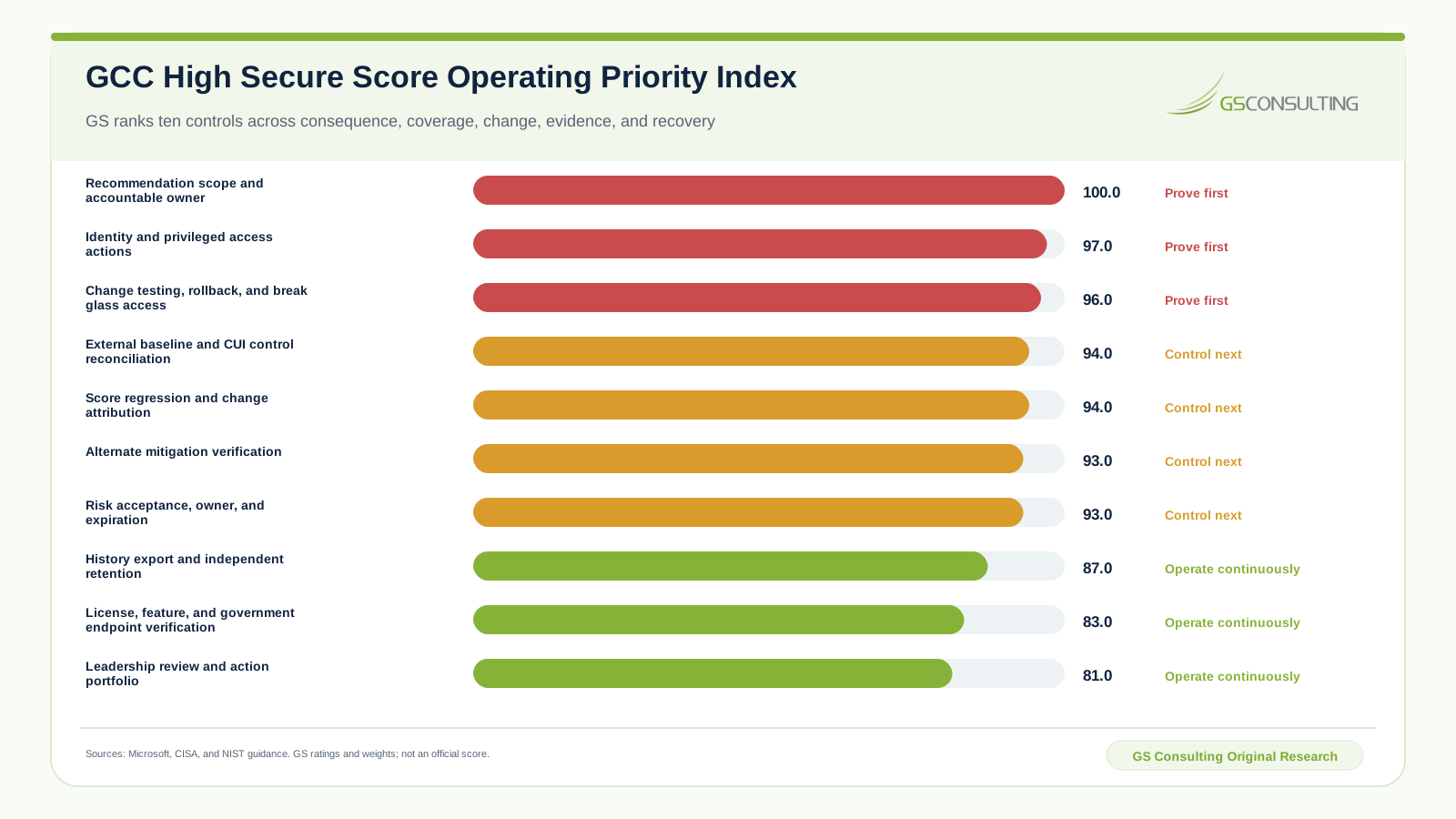
The sensitivity case moves five percentage points from security consequence to change volatility. No control moves by more than one point, and every priority tier remains stable. That stability supports the operating sequence without pretending the ratings are a universal standard.
This is a GS Consulting derived planning tool based on cited public sources and documented assumptions. It is not a Microsoft score, a tenant assessment, legal advice, an audit opinion, a CMMC result, a NIST determination, or proof of compliance.
Prioritize Exposure and Recovery Before Easy Points
Microsoft ranks improvement actions using points remaining, implementation difficulty, user impact, and complexity. Those are useful fields. A GCC High team should add its own consequence and recovery context before deciding the work order.
Prioritize actions that affect privileged identity, broad access, external sharing, sensitive data paths, administrator recovery, and emergency access. Then consider affected population, service coverage, prerequisite licenses, implementation effort, rollback, and the evidence needed to prove the result.
Do not sort only by available points. A ten point action with narrow exposure can be less urgent than a low point identity change that closes a material path or protects recovery. Conversely, a recommendation that cannot run in the target license should not sit forever as unexplained open work. Record the license boundary and escalate the decision.
Use three owners for material actions. The decision owner accepts the business and security result. The technical owner implements and recovers the change. The evidence owner preserves the record and reconciles the portal, direct configuration, and external baseline. One person can hold more than one role, but the responsibilities should remain explicit.
Match Change Burden With Proof Burden
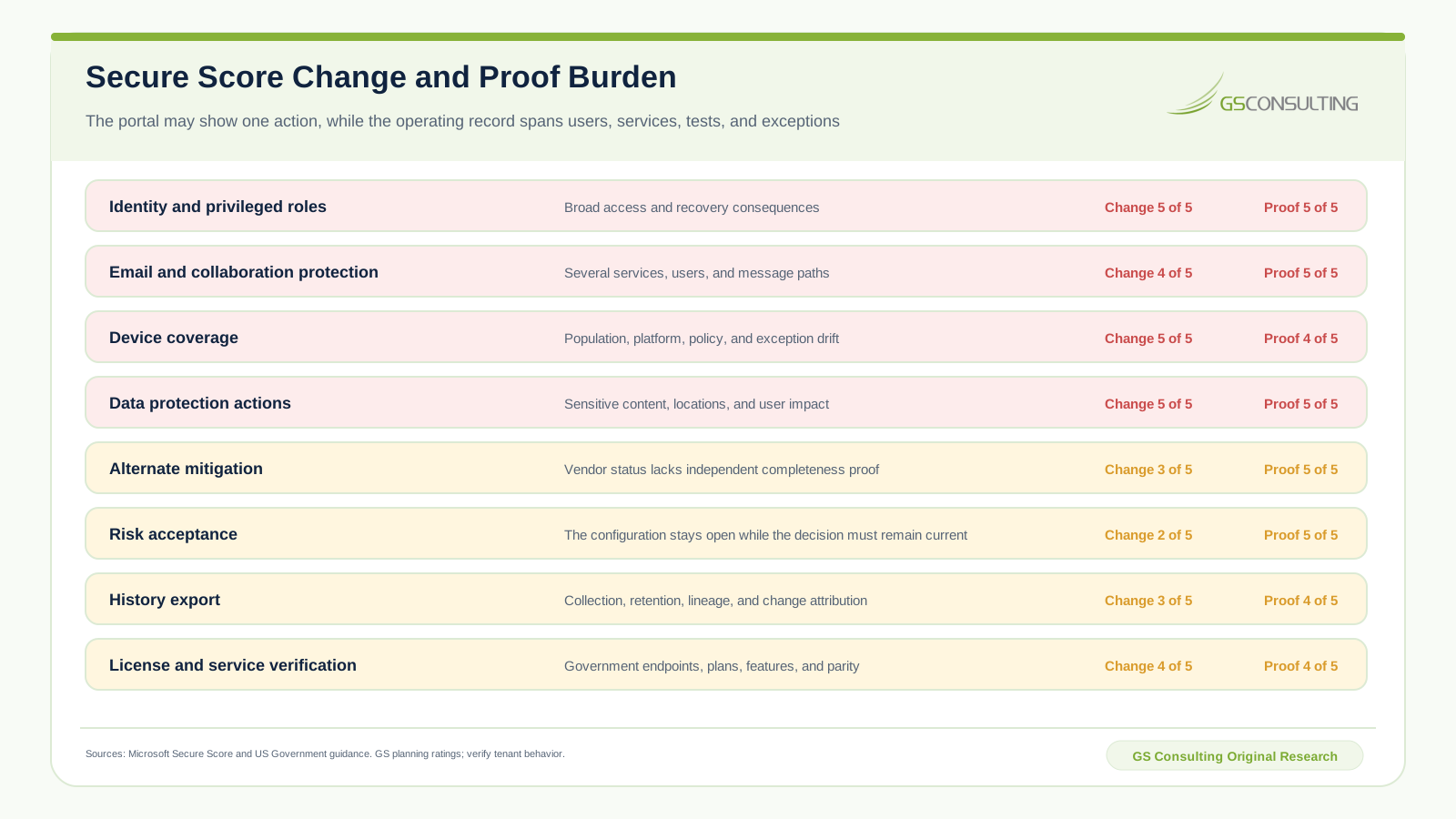
A portal row can look small while the real operating surface is broad. An identity recommendation may affect administrators, emergency access, service accounts, applications, conditional access, and remote recovery. A data recommendation may affect locations, content, users, investigations, and retention.
GS rates both change burden and proof burden. Identity, device, and data actions carry high values because the expected security result must survive user, service, policy, exception, and recovery tests. Alternate mitigation and risk acceptance can have lower change burden, but their proof burden remains high because the underlying configuration stays open.
Before implementation, write the expected result in testable language. Name the affected and excluded populations. Identify the prior state, target state, observation method, success rule, failure rule, rollback trigger, recovery owner, break glass route, and observation period.
Test a representative sample. Include ordinary users, privileged users, service identities, remote access, blocked and allowed paths, failure cases, excluded groups, and emergency recovery where relevant. A screenshot of the setting is useful configuration evidence. It is not the same as proof that the intended scenario works.
Run a Five Stage Secure Score Operating Sequence
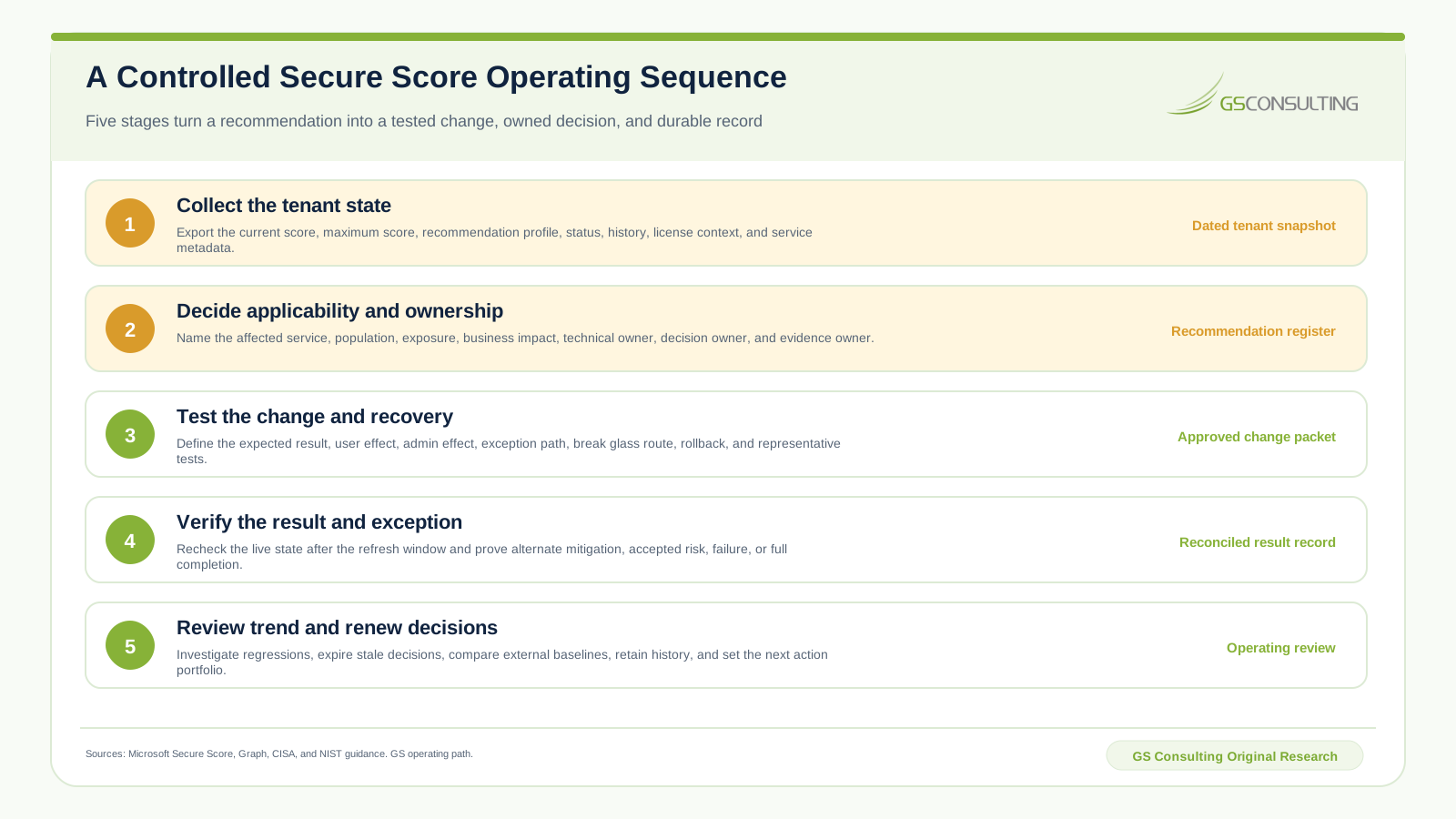
Collect the tenant state. Export the current score, maximum score, recommendation profile, status, history, enabled services, license context, source portal, source endpoint, and collection time. Preserve the raw result.
Decide applicability and ownership. Name the tenant, government cloud, service, population, exposure, business effect, technical owner, decision owner, and evidence owner. Link the action to the relevant security requirement or internal baseline without claiming the score itself proves that requirement.
Test the change and recovery. Define the expected result, user and administrator effects, prerequisite, sample, exception, break glass route, rollback, communication, and approval. Run the test in the safest representative environment available.
Verify the result and exception. Check the direct configuration before waiting for the score. After the documented refresh window, reconcile the portal. Prove full completion, failure, third party coverage, alternate mitigation, or accepted risk with the right owner and evidence.
Review trend and renew decisions. Investigate regressions, expired risk, changed services, new recommendations, lost coverage, and changed maximum score. Compare the tenant with an approved external baseline and set the next action portfolio.
Control Alternate Mitigation and Accepted Risk
Two Secure Score states deserve special discipline: Resolved through alternate mitigation and Risk accepted. Neither state closes the underlying exposure by itself.
An alternate mitigation record should identify the original recommendation, affected scope, alternate control, design, coverage, test, result, owner, evidence, remaining exposure, renewal date, and failure trigger. If a third party tool provides the coverage, include its version, configuration, population, telemetry, operating owner, and current test.
A risk acceptance record should name the decision authority, exposure, affected assets and people, business reason, existing safeguards, residual risk, conditions, approval date, expiration, review cadence, and exit event. An acceptance without an expiration can quietly become permanent.
Do not assume the status is complete because the portal allows it. Microsoft says it lacks visibility into the completeness of third party and alternate mitigation actions. The organization making the claim must preserve the proof.
Keep Enough History to Explain Change
Secure Score history can show points achieved, points regressed, risk acceptance, score zones, and comparison trends. Microsoft Graph exposes daily secureScore records with current score, maximum score, enabled services, control scores, and comparison values. The documented default retention is 90 days.
Ninety days may be shorter than a contract review, audit cycle, incident investigation, risk renewal, or leadership trend. Collect the record independently when a longer period is required. Preserve tenant, date, source, endpoint, request context, raw response, transformation, record count, checksum, collector version, and storage location.
A falling percentage is not automatically a control failure. It can reflect a reverted setting, changed population, new service, new recommendation, changed maximum score, license change, data delay, or product refresh. Reconcile the numerator, denominator, recommendation set, service state, and direct configuration before assigning cause.
An improving percentage is not automatically a controlled success. Verify that the expected population received the change, excluded users remain authorized, emergency access still works, the security result is present, and the evidence can be reproduced.
Six Ways Secure Score Operations Fail
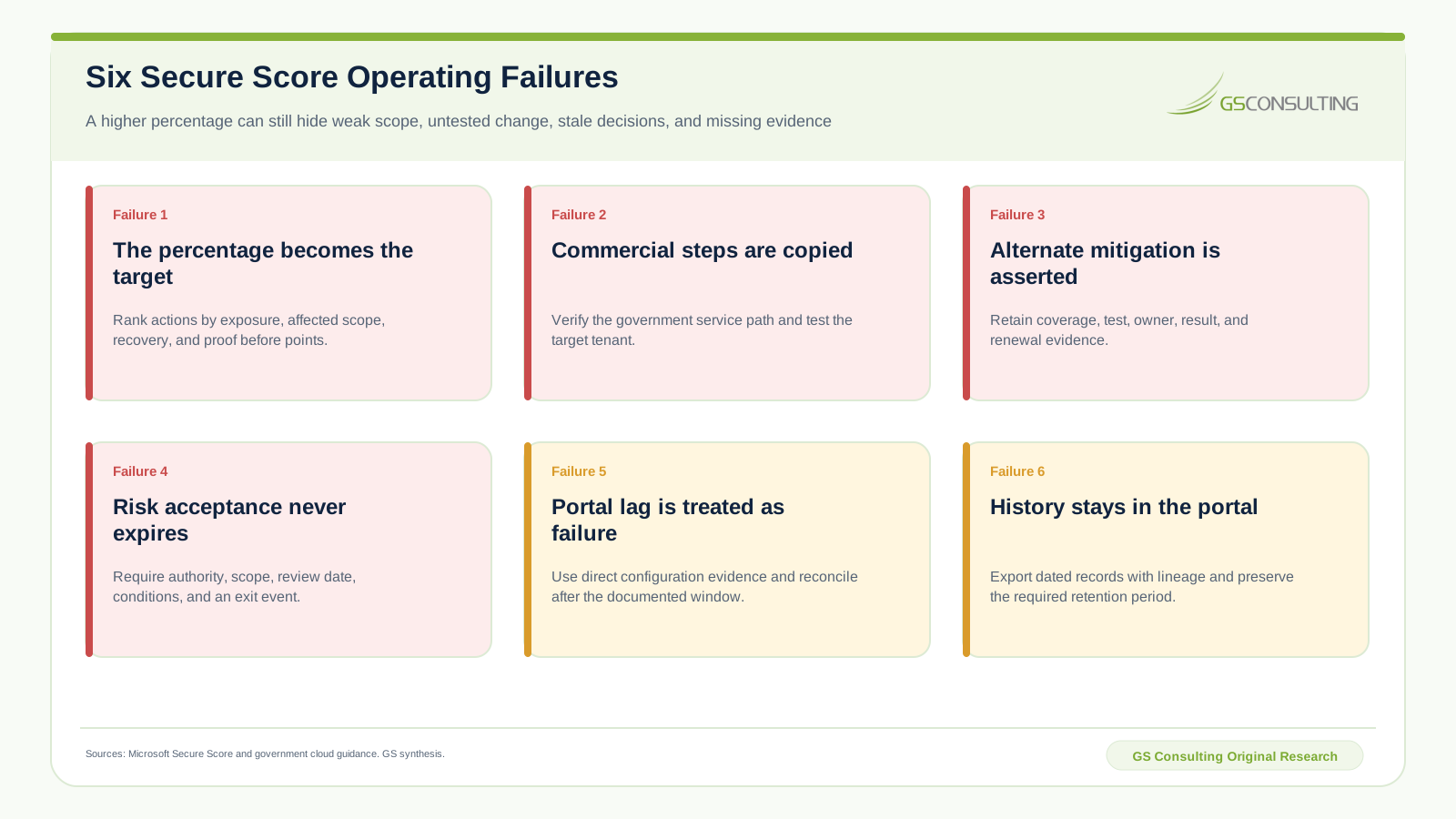
The percentage becomes the target. Teams pursue easy points while material exposure, recovery, or evidence remains weak. Rank actions by consequence, affected scope, recovery, and proof before points.
Commercial steps are copied. GCC High uses government portals and endpoints and does not always match commercial service behavior. Verify the government path, license, service, role, and live tenant.
Alternate mitigation is asserted. A status changes, but no coverage test or renewal proof exists. Keep the control design, population, test, result, remaining risk, owner, and expiration.
Risk acceptance never expires. The configuration stays open while the original decision becomes stale. Require an authority, review date, conditions, and exit event.
Portal lag is treated as failure. A correct change is reversed because points did not appear immediately. Verify direct configuration, record the change time, wait for the documented window, and reconcile.
History stays in the portal. The team loses the state needed to explain drift. Export dated records with source, lineage, integrity, and the retention period required by the decision.
Build the Secure Score Operations Evidence Packet
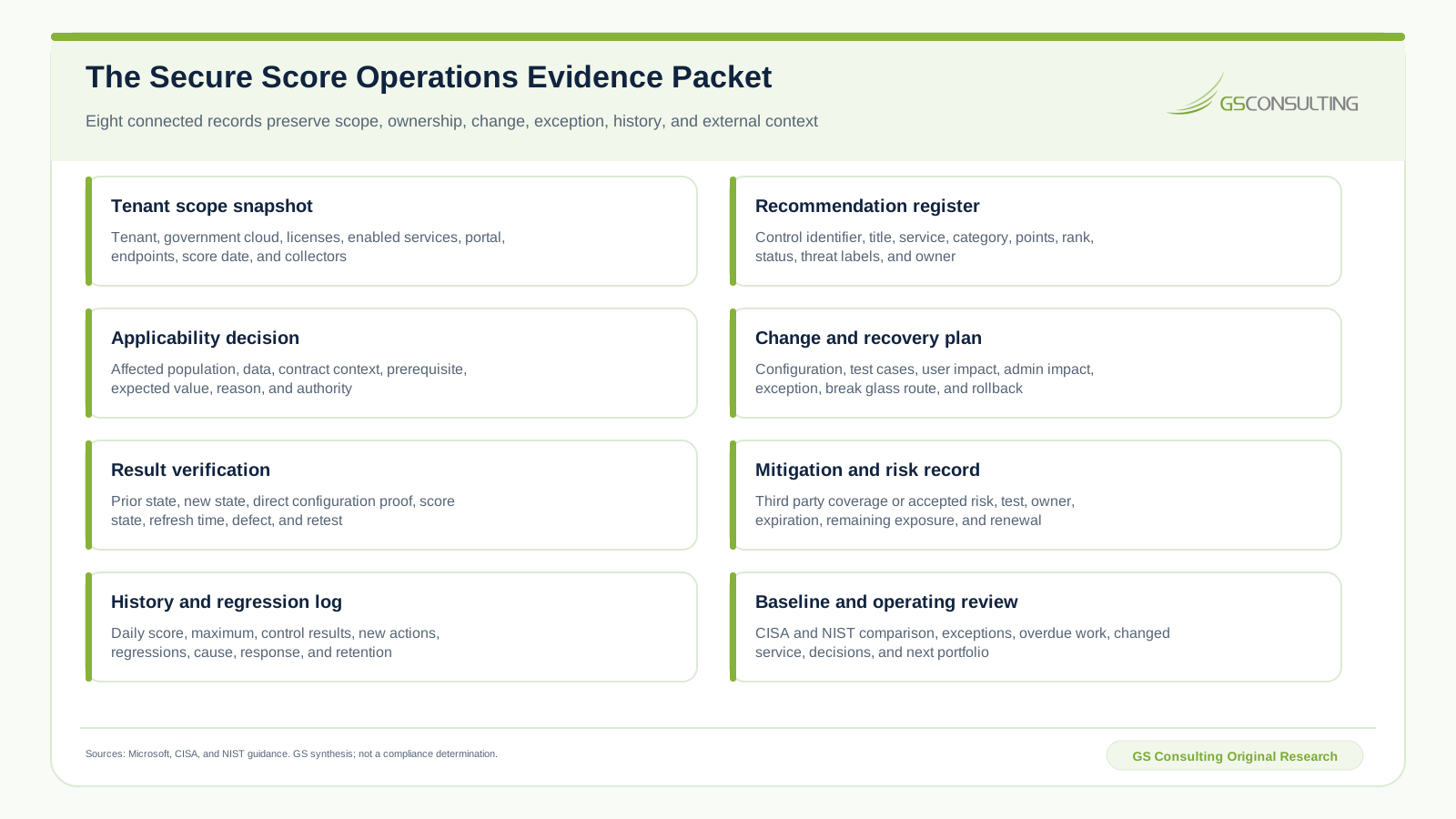
Keep eight records: the tenant scope snapshot, recommendation register, applicability decision, change and recovery plan, result verification, mitigation and risk record, history and regression log, and baseline and operating review.
Use stable identifiers for tenant, recommendation, control profile, service, population, change, test, exception, approval, evidence, and review. Link the prior state to the approved change, direct result, later score state, and any remaining exposure.
Store source material as well as conclusions. A spreadsheet row or ticket should point to the raw Graph response, portal export, configuration record, test result, approval, exception, and external baseline version. Preserve enough context for a reviewer to reproduce the decision without relying on the operator's memory.
A 60 Day GCC High Secure Score Operations Plan
| Period | Operator action | Required output |
|---|---|---|
| Days one through ten | Inventory tenants, government portals, Graph endpoints, licenses, enabled services, collectors, current score, action states, owners, and existing exceptions. | Tenant scope snapshot and recommendation register |
| Days eleven through twenty | Approve priority factors, owner roles, applicability rules, change tests, recovery rules, mitigation proof, risk authority, history period, and review cadence. | Operating standard and responsibility map |
| Days twenty one through thirty five | Pilot high consequence identity, device, app, and data actions. Test user effect, administrator effect, exclusion, failure, rollback, and break glass access. | Approved change packets and test evidence |
| Days thirty six through forty five | Verify live results, wait for the documented refresh window, reconcile score changes, test alternate mitigation, and renew or close risk decisions. | Reconciled results and current exception register |
| Days forty six through sixty | Automate approved history collection, compare CISA and internal baselines, investigate regressions, issue the evidence packet, and set the next portfolio. | History baseline, operating review, and next actions |
Research Sources and Limits
The research package uses sources accessed September 16, 2026:
- Microsoft Secure Score overview for meaning, point limits, partial credit, refresh context, product coverage, and stated limits.
- Microsoft improvement actions guidance for groups, score views, statuses, ranking factors, prerequisites, user impact, and reflection time.
- Microsoft history and trends guidance for achieved points, regressions, risk acceptance, goals, and comparisons.
- Microsoft Graph secureScore resource for daily score fields and the default 90 day history period.
- Microsoft Graph control profile resource for action type, category, implementation cost, user impact, rank, service, score, and threat fields.
- Microsoft Graph control profile API for documented United States Government L4 and L5 availability.
- Microsoft Defender XDR for United States Government for GCC High portal, endpoint, license, and service parity context.
- Microsoft 365 United States government service description for published Secure Score service availability context.
- CISA ScubaGear configuration parameters for the documented GCC High environment option used in external baseline review.
- NIST SP 800 171 Revision 3 for controlled unclassified information security requirement context.
The research package contains a source register, public signals, model weights, model inputs, formula driven scores, sensitivity analysis, methodology, data dictionary, change and proof burden, operating sequence, failure modes, evidence packet, figure data, editable SVG files, browser rendered PNG files, responsive previews, and an Excel workbook with formulas and cached results.
The GS GCC High Secure Score Operating Priority Index orders operating work. It does not assess a tenant, predict breach, certify Microsoft behavior, map every recommendation to a requirement, determine CMMC status, or prove compliance. Verify the current target tenant, license, services, government endpoints, contracts, security requirements, and responsible authority.
GCC High Secure Score FAQ
Suggested Future Reading
- Microsoft GCC High Hub
- What Is GCC High?
- GCC High Tenant Configuration
- GCC High Identity Governance
- GCC High Conditional Access
- GCC High Data Loss Prevention
- GCC High Records Management
- Secure AI and Regulated Automation Services
Make every Secure Score decision reconstructable.
The operating standard is direct: current scope, accountable owners, tested change, safe recovery, proven exception, retained history, and evidence that supports the real security decision.
Build the Secure Score Evidence Chain