Microsoft GCC High | | 25 min read
GCC High Records Management: Retention, Holds, and Proof

Key Takeaways
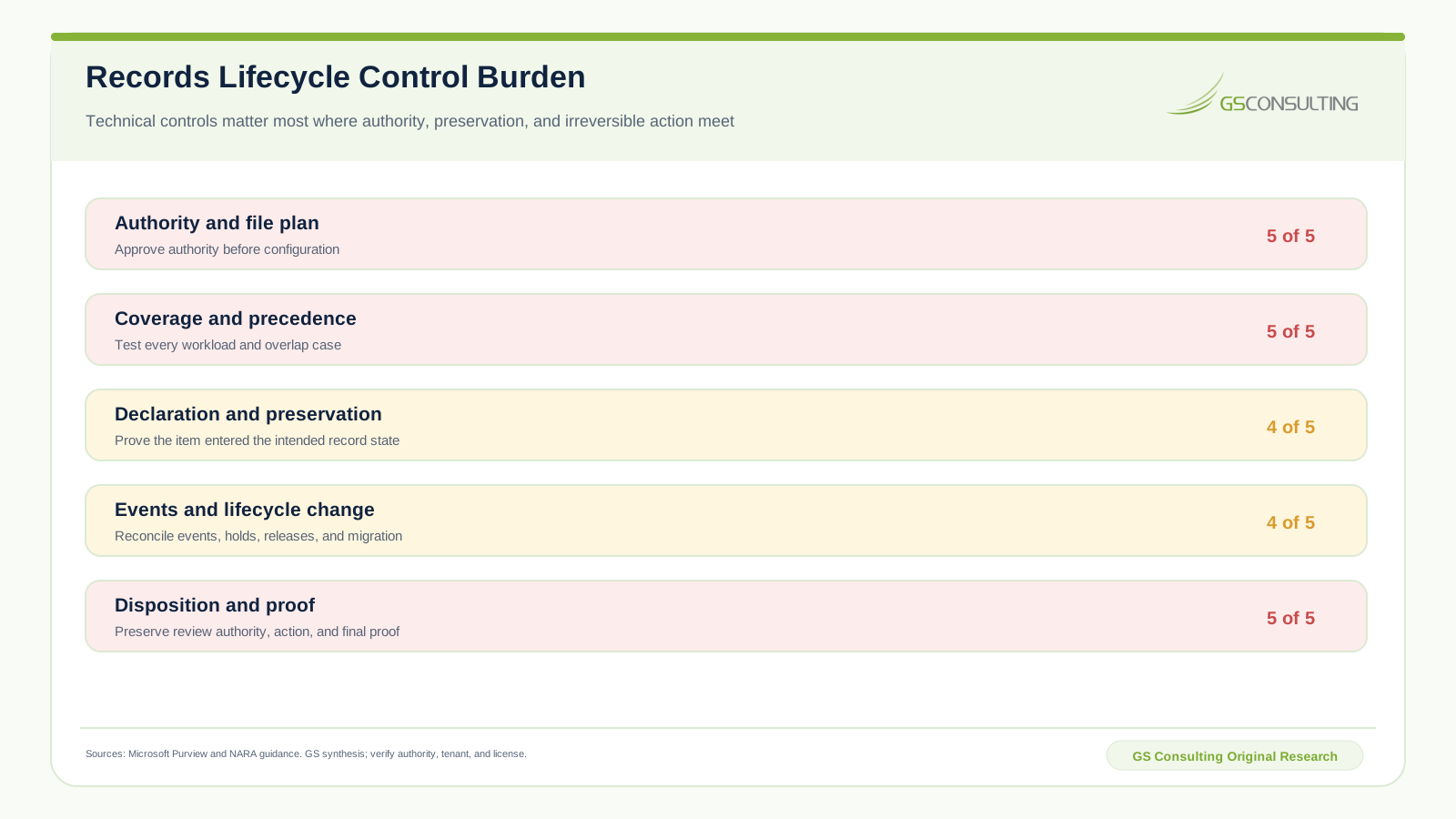
A label is only one step in the record lifecycle
11 of 15 listed features available
Four published capabilities were still in development, rolling out, or on the engineering backlog in the reviewed table.
Authority comes before configuration
Record class, schedule, trigger, final action, exception owner, and approval must be clear before a label goes live.
Review and disposal need their own record
Reviewer authority, decision, execution, audit result, and proof of disposal or transfer should stay connected.
GCC High records management is not a retention label project. It is a controlled record lifecycle from authority to verified disposition.
Microsoft Purview provides technical controls for file plans, retention labels, event based retention, records, regulatory records, disposition review, and proof of disposal. Those controls do not decide which content is a record, how long it must be kept, which event starts the clock, who may approve disposal, or whether a hold blocks the final action.
Those are operating decisions. They come from the applicable contract, law, policy, record authority, and authorized legal direction. GCC High can enforce part of that decision, but only after the organization translates it into tested tenant behavior.
This guide extends the Microsoft GCC High hub, the GCC High eDiscovery and legal hold guide, and the GCC High data loss prevention model. GS Consulting supports governed Microsoft 365 operations through secure AI and regulated automation services.
Can you reconstruct a record from authority to final action?
GS Consulting helps teams map records rules, verify GCC High capabilities, test preservation and disposition, and build durable evidence.
Request a Records Control Review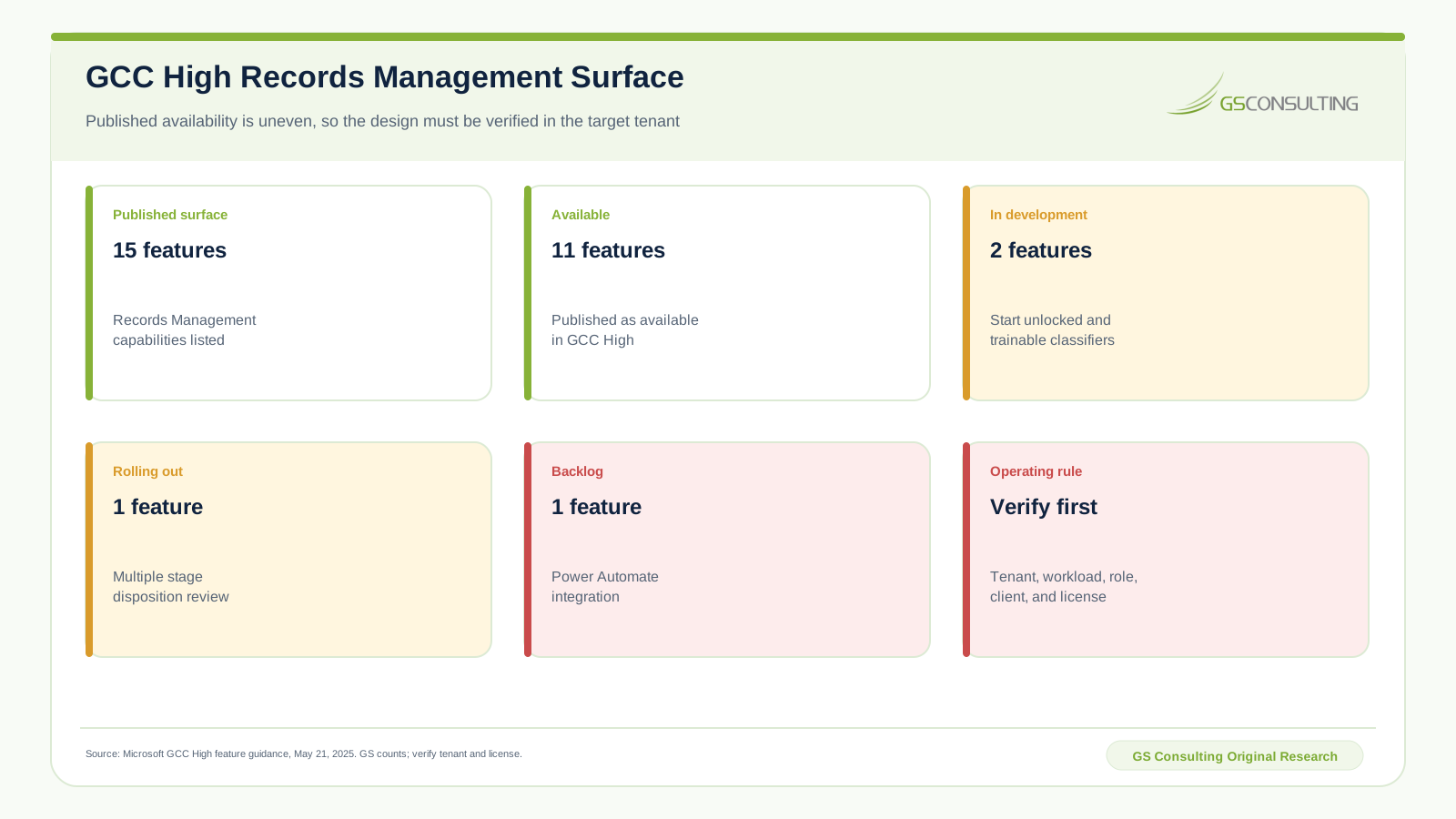
GCC High Records Management: The Short Answer
Start with authority, not the portal. For every record class, approve the governing authority, content definition, retention period, clock trigger, final action, exception path, legal hold relationship, responsible owner, and disposition authority. Then map those decisions to the target GCC High tenant.
Use a file plan to preserve the translation. Configure retention labels and policies only after the record rule is stable. Test application, declaration, edit restrictions, version behavior, hold precedence, event starts, review routing, disposal, audit, and final proof with representative content.
Microsoft's GCC High Purview deployment guidance explicitly says feature status can change. A published green check is useful context. It is not evidence that the feature exists in your tenant, covers your workload, behaves as assumed, or satisfies your authority.
Translate Record Authority Before Configuring a Label
A defensible record rule answers nine questions: what content qualifies, which authority governs, when retention starts, how long it runs, whether the item becomes a record, whether it becomes a regulatory record, what final action occurs, who handles exceptions, and who approves disposition.
Keep the authority citation and approval in the file plan. Microsoft documents descriptors, authorities, start triggers, record settings, and disposition actions in file plan manager. Export the file plan on a controlled cadence and after material changes. A portal view without history does not explain which rule existed when an item was declared.
The National Archives and Records Administration publishes Universal Electronic Records Management Requirements across capture, maintenance, disposal, transfer, metadata, and reporting. Those requirements provide public lifecycle context. They do not decide a contractor's specific schedule. Confirm the real authority with the responsible records owner and counsel.
Verify the GCC High Feature Surface
GS counted 15 Records Management capabilities in Microsoft's published GCC High table dated May 21, 2025. Eleven were marked available. Two were marked in development. Multiple stage disposition review was marked rolling out. Power Automate integration was on the engineering backlog.
| Published status | Count | Examples | Operating response |
|---|---|---|---|
| Available | 11 | File plan manager, disposition review, records versioning, regulatory records, proof of disposal | Verify tenant, workload, client, role, license, and scenario |
| In development | 2 | Start retention labels unlocked, trainable classifiers for records | Do not place the control design on an unpublished delivery assumption |
| Rolling out | 1 | Multiple stage disposition review | Confirm the feature in the target tenant before designing the review chain |
| Engineering backlog | 1 | Power Automate integration | Use a supported operating route and record the limitation |
Feature availability is only the first test. A capability can be present but unsupported for the intended location, client, record state, action, or role. Record the tenant identifier, license, workload, interface, role, test date, item, expected behavior, actual behavior, and limitation.
GS GCC High Records Proof Priority Index
GS modeled ten control domains using five one to five ratings: authority consequence, coverage exposure, lifecycle volatility, irreversible action, and proof burden. Base weights are 30, 25, 15, 15, and 15 percent. Ratings are divided by five, multiplied by their weights, and summed on a zero to 100 planning scale.
Retention authority and legal hold overlap both score 100. Source and workload coverage, label and policy precedence tests, record declaration, and disposition authority score 97. Event trigger evidence scores 95. The model puts migrated record validation at 89 and tenant capability verification at 86, but those items remain mandatory where they apply.
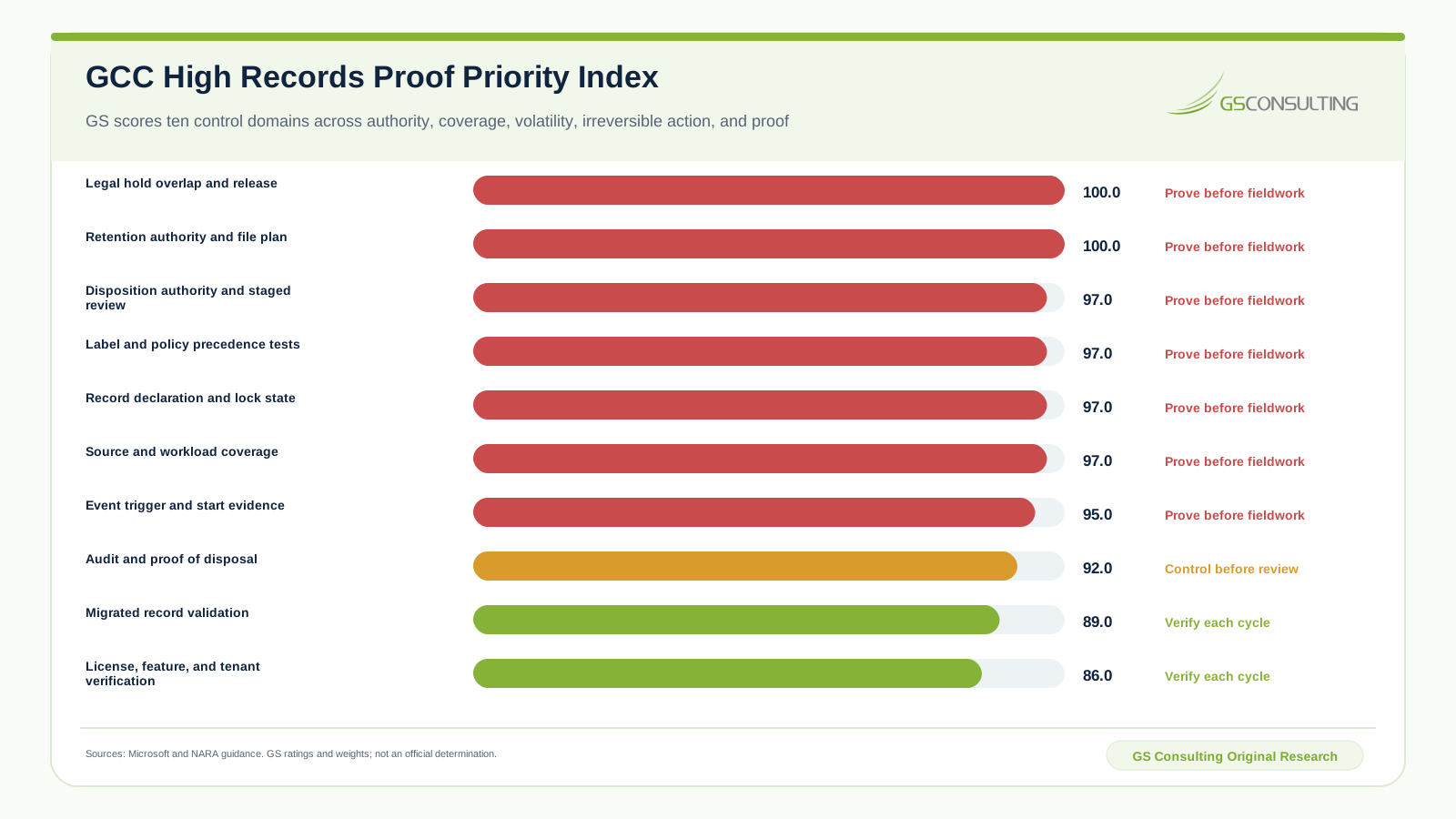
The sensitivity case moves five percentage points from authority consequence to irreversible action. No control domain moves more than one point. The sequence remains stable: approve authority, map coverage, test precedence, prove record state, and control final action.
This is a GS Consulting derived planning tool. It is not legal advice, a Microsoft score, a records schedule, a disposition authority, an audit opinion, or a compliance determination. The target tenant, current license, responsible record authority, counsel, contracts, law, and policy govern the real design.
Control the Record Lifecycle in Five Stages
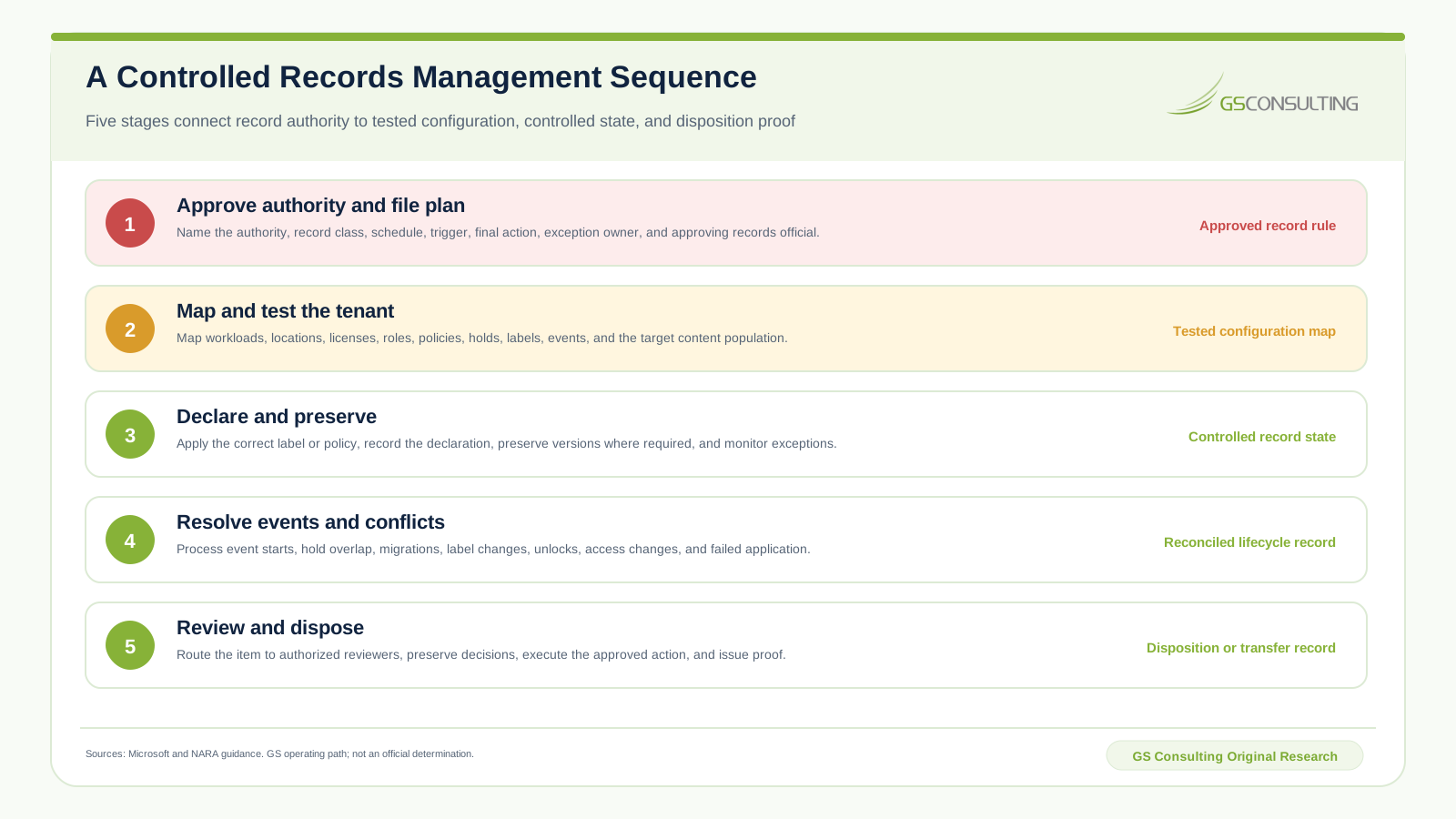
Approve authority and file plan. The record owner approves class, source, authority, period, trigger, final action, exception, and decision role. The file plan preserves the translation into a tenant control.
Map and test the tenant. Identify Exchange, SharePoint, OneDrive, Teams, other Microsoft 365 locations, endpoints, archives, backups, migration stores, and external systems. Test licenses, roles, labels, policies, holds, events, and supported clients with representative content.
Declare and preserve. Apply the label or policy through the approved method. Record item identity, label, method, actor or process, application time, audit event, record state, lock state, version behavior, and exception.
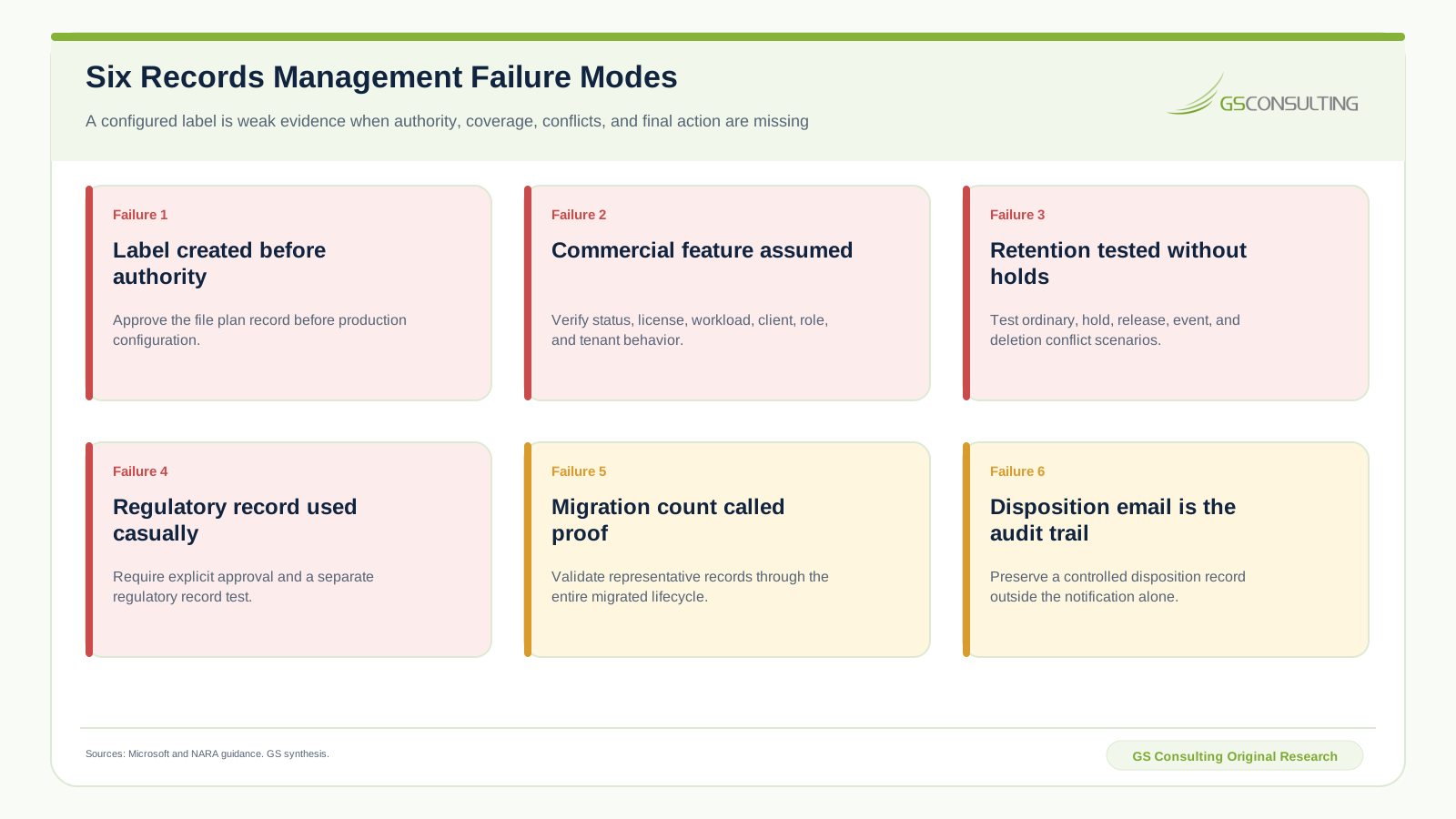
Resolve events and conflicts. Process event starts, label changes, unlocks, edits, failed application, hold overlap, releases, migrations, ownership changes, and scope changes. A lifecycle control that cannot absorb change will drift.
Review and dispose. Route the item to authorized reviewers, preserve decisions and conflicts, execute only the approved final action, verify the system result, and retain proof of disposal or transfer.
Test Holds, Labels, Policies, and Release Together
Microsoft's retention flowchart documents how holds, retention labels, and retention policies interact. A preservation control can retain content beyond the ordinary deletion path. The longest retention period can win among retention settings, while deletion actions follow different precedence rules.
Do not convert the diagram into a blanket promise. Test your actual scenarios: no hold, active hold, released hold, event not started, event started, label changed, policy changed, record unlocked, record locked, regulatory record, ordinary deletion, disposition review, and an item governed by more than one control.
Coordinate the hold record with GCC High eDiscovery and legal hold operations. Releasing an eDiscovery hold does not prove the item may be deleted. The team must identify every remaining preservation or retention mechanism and route the final decision to the authorized records and legal owners.
Regulatory records require a separate decision. Microsoft states that the label cannot be removed even by a global administrator, the retention period cannot be shortened, and the feature must be explicitly enabled. The design should require named approval, a narrow use case, a representative test, and clear operator warning before production use.
Make Disposition a Governed Decision
Disposition review is not an inbox task. Preserve the record class, item identity, authority, final action, review stage, reviewer authority, conflicts, reason, decision, time, escalation, and execution result. If the published multiple stage capability is required, verify that it has reached the target tenant before the process depends on it.
Microsoft documents up to five review stages in general Purview guidance. It also separates the Disposition Management role from ordinary administration. Use minimum access. Reviewers should see only the records and actions they are authorized to decide.
Proof of disposal should connect the approved decision to the actual item and action. Preserve the item identifier, label, review, approval, execution time, audit result, deletion or transfer result, exception, and evidence retention rule. A notification email alone is not a durable audit trail.
Treat Migration and Audit as Evidence Problems
A matching item count does not prove a record survived migration. Sample record identity, content, metadata, dates, versions, authority, label, declaration state, preservation, event start, hold state, disposition state, and final action. Document representation changes that can alter size or hash without changing the business content.
Microsoft notes in its records guidance that SharePoint metadata can affect migrated file characteristics and describes comparison methods for certain scenarios. Choose the migration proof before movement begins. Preserve source and target values, tool settings, exception logic, failed items, reruns, and approval.
Audit evidence has its own retention problem. Microsoft documents different audit retention based on solution and licensing. Confirm how long declaration, label, unlock, review, deletion, and administrative events remain available. If the required evidence period is longer, preserve an approved record outside the short audit window without weakening the regulated boundary.
Build the Records Management Evidence Packet
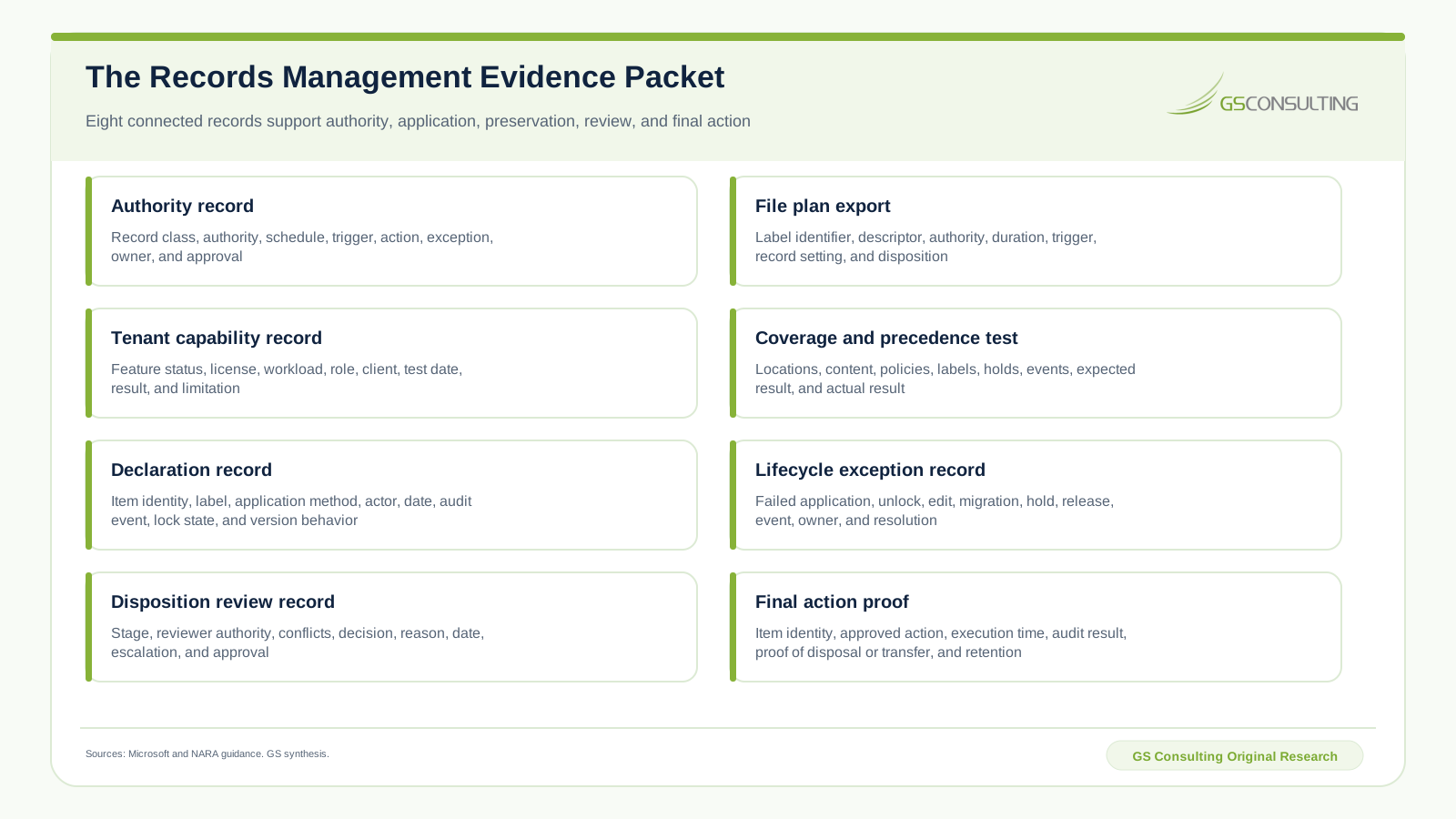
Keep the authority record, file plan export, tenant capability record, coverage and precedence test, declaration record, lifecycle exception record, disposition review record, and final action proof. Use stable identifiers for the record class, label, policy, item, location, event, hold, case, review, exception, and final action.
Sample both easy and difficult records. Include successful and failed applications, manual and automatic labels, active and released holds, moved content, changed owners, migrated records, unlocked records, regulatory records, event starts, multiple reviewers, disputed disposition, deletion failure, and completed disposal or transfer.
A 60 Day GCC High Records Management Plan
| Period | Operator action | Required output |
|---|---|---|
| Days one through ten | Inventory record classes, authorities, schedules, triggers, final actions, owners, holds, current labels, policies, licenses, and tenant features. | Authority map and capability register |
| Days eleven through twenty | Approve file plan fields, exception paths, regulatory record gates, reviewer authority, audit period, migration rule, and evidence retention. | Approved record rules and role matrix |
| Days twenty one through thirty five | Configure a limited pilot across representative workloads and content. Export the file plan and preserve every setting. | Pilot configuration and controlled file plan |
| Days thirty six through forty five | Test application, declaration, edits, versions, holds, releases, events, policy overlap, migration, review, disposal, and audit. | Scenario results, defects, and corrections |
| Days forty six through sixty | Repeat failed tests, approve exceptions, reconcile live content, issue the evidence packet, and set recurring reviews for authority, tenant status, and audit. | Approved production scope and evidence packet |
Research Sources and Limits
The research package uses sources accessed September 15, 2026:
- Microsoft Purview GCC High deployment guidance for the published Records Management feature surface.
- Microsoft records management guidance for file plans, records, regulatory records, disposition, proof, and lifecycle behavior.
- Microsoft file plan manager guidance for authority fields, triggers, imports, exports, and record settings.
- Microsoft disposition guidance for roles, review stages, decisions, audit, and proof.
- Microsoft retention flowchart for hold, label, policy, retention, and deletion interactions.
- Microsoft audit guidance for license dependent retention context.
- Microsoft record declaration guidance for label application and audit context.
- Microsoft record versioning guidance for supported edit, preservation, and review behavior.
- NARA electronic records requirements for lifecycle context.
The research package contains a source register, public signals, published feature status, model weights, model inputs, formula driven scores, sensitivity analysis, methodology, data dictionary, operating sequence, failure modes, evidence packet, figure data, editable SVG files, browser rendered PNG files, responsive previews, and an Excel workbook with formulas and cached results.
The GS GCC High Records Proof Priority Index orders operating proof. It does not determine whether content is a record, approve a schedule, authorize disposition, establish legal sufficiency, certify Microsoft behavior, or prove compliance. Verify current tenant behavior, licenses, contracts, authorities, law, policy, and legal direction.
GCC High Records Management FAQ
Suggested Future Reading
- Microsoft GCC High Hub
- What Is GCC High?
- GCC High Tenant Configuration
- GCC High Data Loss Prevention
- GCC High Identity Governance
- GCC High eDiscovery and Legal Hold
- GCC High Email Security
- Secure AI and Regulated Automation Services
Make the record lifecycle reconstructable.
The operating standard is direct: approved authority, verified tenant behavior, tested preservation, controlled record state, named disposition authority, verified final action, and evidence that lasts as long as the decision requires.
Build the Records Evidence Chain