Microsoft GCC High | | 24 min read
GCC High Migration Planning: Sequence, Cost, and Pitfalls

Key Takeaways
The operator view
Plan a workload portfolio
Identity, mail, files, Teams, apps, devices, and evidence have different routes and dependencies.
Identity scores 97
The GS sequencing model puts tenant foundation and access design first because every wave depends on them.
Every wave needs rollback
A cutover is ready only when acceptance tests, owner decisions, communications, and recovery steps are proved.
A GCC High migration is not a mailbox move. It is an operating environment rebuild with a data move inside it.
Teams get into trouble when they buy licenses, pick a weekend, and treat every workload as one transfer. Identity changes. Domains move. Permissions translate imperfectly. Teams depends on Exchange sequencing. SharePoint and OneDrive carry links, ownership, sharing, workflows, and application connections. Third party services can sit outside the Microsoft commitments the organization expects GCC High to provide.
The correct unit of planning is the workload and its dependencies. This guide shows how to discover that portfolio, score sequence pressure, build a credible cost range, run controlled cutovers, and preserve evidence. Pair it with the Microsoft GCC High Resource Hub, the GCC High environment guide, the GCC High tenant configuration guide, the GCC High email security guide, and the GCC High pricing guide.
Prove the migration before you book the cutover.
GS Consulting helps government contractors map the tenant, select the target boundary, test workload routes, and build an evidence backed wave plan.
Request a GCC High Migration ReviewStart With the Operating Boundary
First prove why GCC High is the target. Microsoft limits government cloud offers to eligible organizations and requires validation before establishing the tenant. GCC High can be the right choice when contract language, export controlled information, customer requirements, or a covered data boundary demands the environment. It is not automatically the right choice for every federal supplier.
Read the contracts, data types, user populations, partner connections, and customer access rules. Then name what will sit inside the target boundary and what will remain outside. A vague statement such as “move Microsoft 365” is not enough. The boundary needs users, domains, mailboxes, sites, storage, Teams, devices, applications, identities, logging, support, and records.
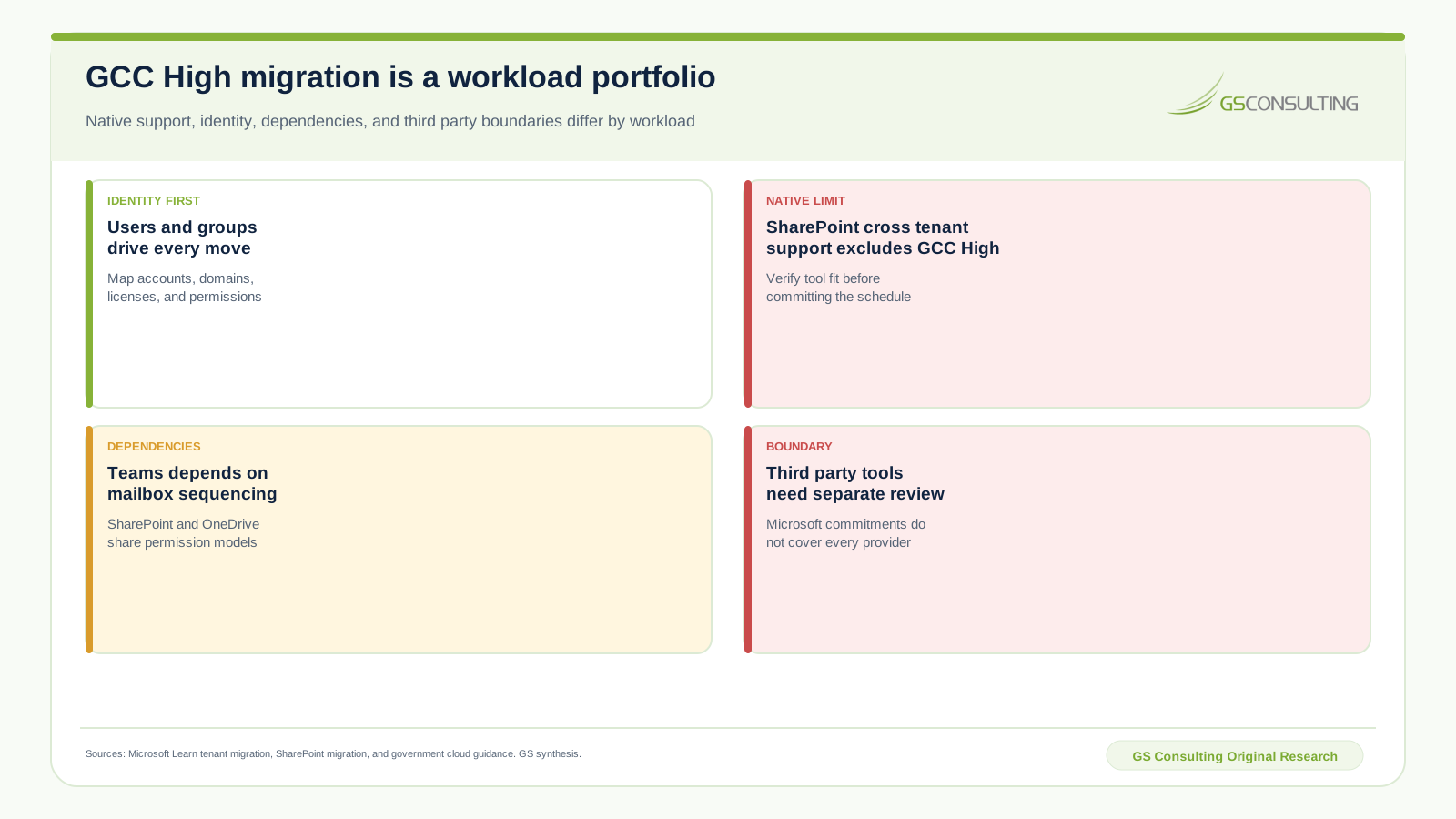
Microsoft states that only GCC High receives its stated ITAR contract language. The same service description warns that third party applications and services can process data outside Microsoft 365 commitments. That makes every connector, archive, signature tool, workflow, backup product, and line of business application part of the boundary decision.
Verify the Exact Tool Route
“Microsoft supports migration” is too broad to schedule against. Support depends on the source environment, target environment, workload, migration feature, and current release.
As of this research date, Microsoft says its native cross tenant SharePoint migration feature does not support GCC or GCC High. Microsoft Migration Manager has a government cloud setting for GCC High, but its specialty environment matrix lists file shares as the supported GCC High source scenario and does not list Box, Google, Dropbox, or Egnyte as supported for that route. A third party product may support more. That claim still needs a tested source and target pair, feature list, throttling plan, security review, and contract review.
Build a route register with one row per workload. Record the source, target, owner, selected tool, supported objects, excluded objects, throughput evidence, authentication method, error handling, delta method, rollback method, and validation test. If the vendor cannot demonstrate the exact route, keep the risk open.
GS Original Research: The Migration Sequencing Index
GS Consulting built the GCC High Migration Sequencing Index to answer a practical question: which workstreams belong earliest in discovery, design, and testing?
The model scores ten workstreams from 0 to 100. The base formula assigns 25 percent to dependency criticality, 25 percent to cutover failure impact, 20 percent to validation burden, 15 percent to rollback difficulty, and 15 percent to external or tool dependency. Each factor uses a one to five GS analyst rating grounded in Microsoft migration guidance and NIST SP 800-171 Revision 3 boundary concepts.
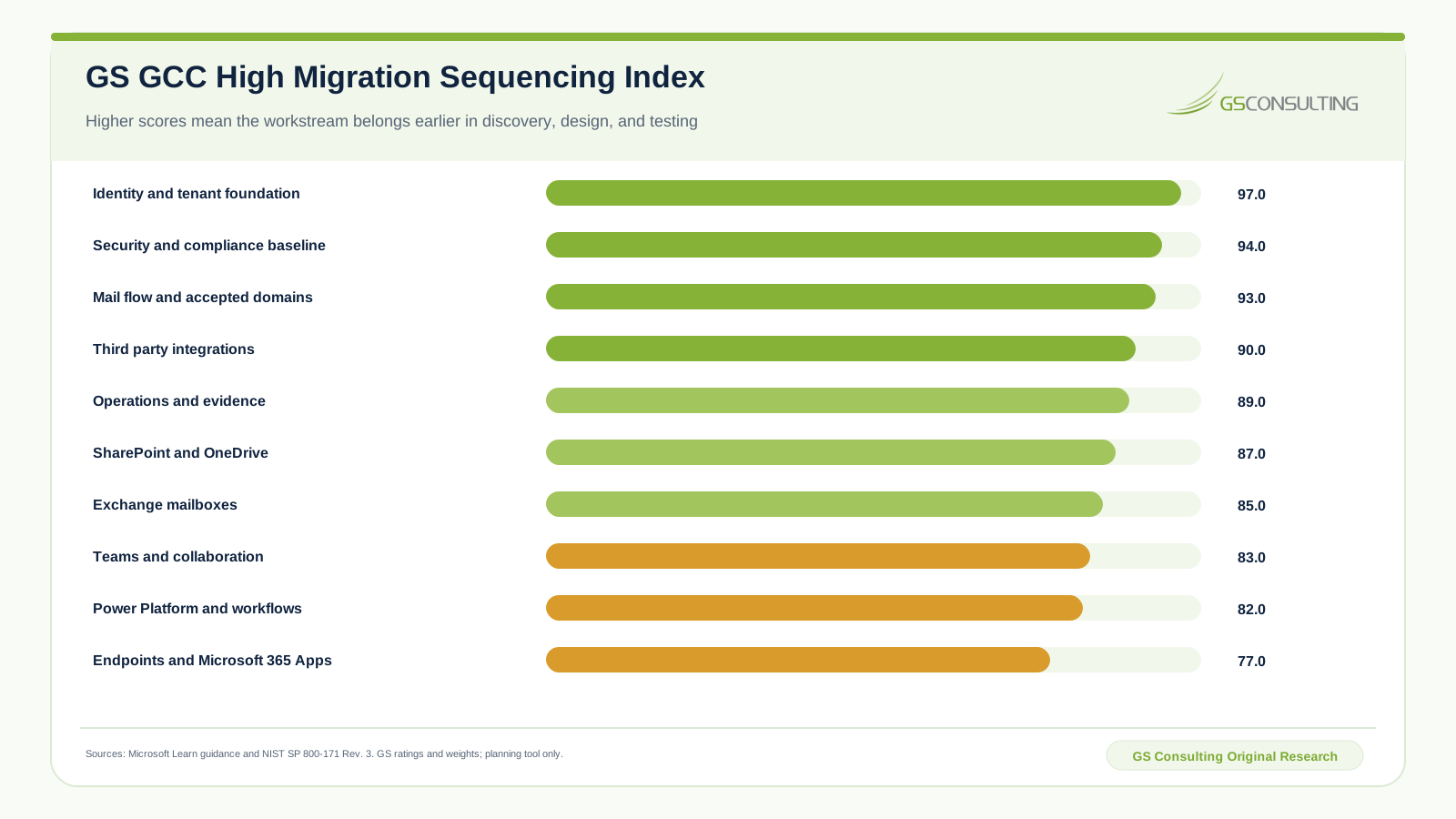
Identity and tenant foundation ranks first at 97. Security and compliance baseline follows at 94. Mail flow and accepted domains scores 93. Those workstreams shape the conditions every later move depends on. Teams and collaboration scores 83, Power Platform and workflows scores 82, and endpoints and Microsoft 365 Apps scores 77. Lower does not mean unimportant. It means those plans become more reliable after foundation decisions are fixed.
We also shifted five percentage points between dependency criticality and rollback difficulty. The largest absolute score change was small enough that the priority bands and main order remained stable. That does not validate the ratings as empirical performance data. It shows that the sequence is not driven by one fragile weight choice.
The complete source register, public signals, scored inputs, formula output, sensitivity file, figure data, dictionary, and methodology are preserved in the research package. This is a GS Consulting derived planning tool, not an official Microsoft, NIST, legal, licensing, migration, security, audit, compliance, or regulatory determination.
Sequence the Migration in Five Operating Stages
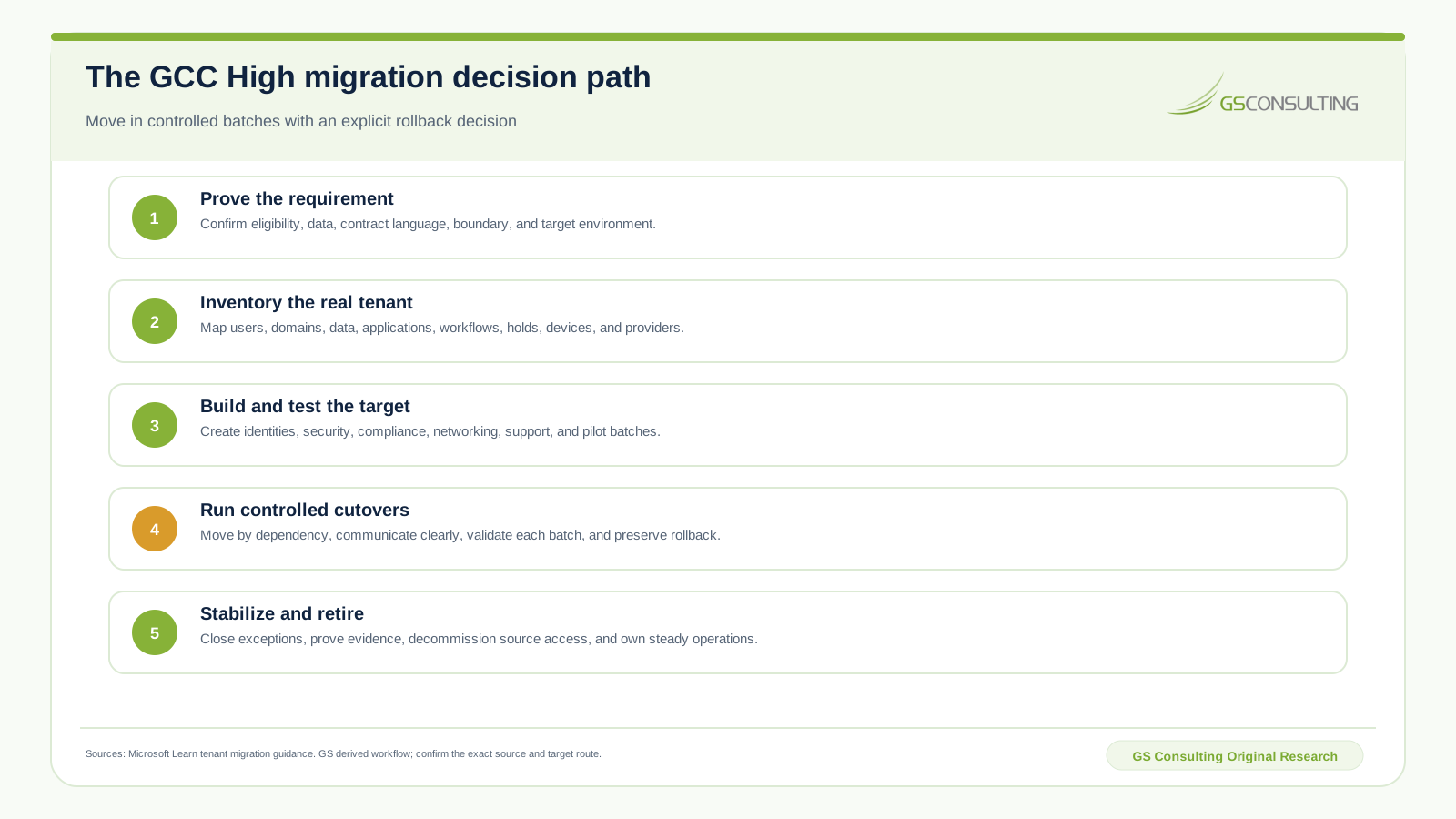
- Prove the requirement. Confirm eligibility, data types, contract language, sponsor, boundary, target offer, and shared responsibility. Document assumptions that still require counsel, customer, or provider confirmation.
- Inventory the real tenant. Map users, groups, guests, domains, mailboxes, aliases, sites, files, Teams, workflows, holds, devices, applications, identity providers, service accounts, and external sharing. Volume without dependency is not discovery.
- Build and test the target. Configure identity, licensing, security, compliance, networking, logging, support, retention, and a representative pilot. Test ordinary work and failure recovery.
- Run controlled cutovers. Move by dependency and business role. Communicate the freeze, run deltas, validate permissions and data, capture defects, and make an explicit accept or roll back decision.
- Stabilize and retire. Close exceptions, prove monitoring and support, reconcile records, remove old access, retain approved evidence, and retire source services only when owners sign off.
Tenant, identity, and security come before production data
The target needs more than user objects. It needs the account model, administrative roles, conditional access, multifactor authentication, device conditions, guest rules, emergency access, audit collection, retention, data loss prevention, incident handling, and support ownership that production users will depend on.
Do not copy every commercial tenant setting into GCC High without review. Some services, endpoints, integrations, and administrative paths differ. Use the target service descriptions and current product documentation. Then test the configuration with a representative pilot before it touches a critical business group.
Mail, Teams, files, and workflows need different acceptance tests
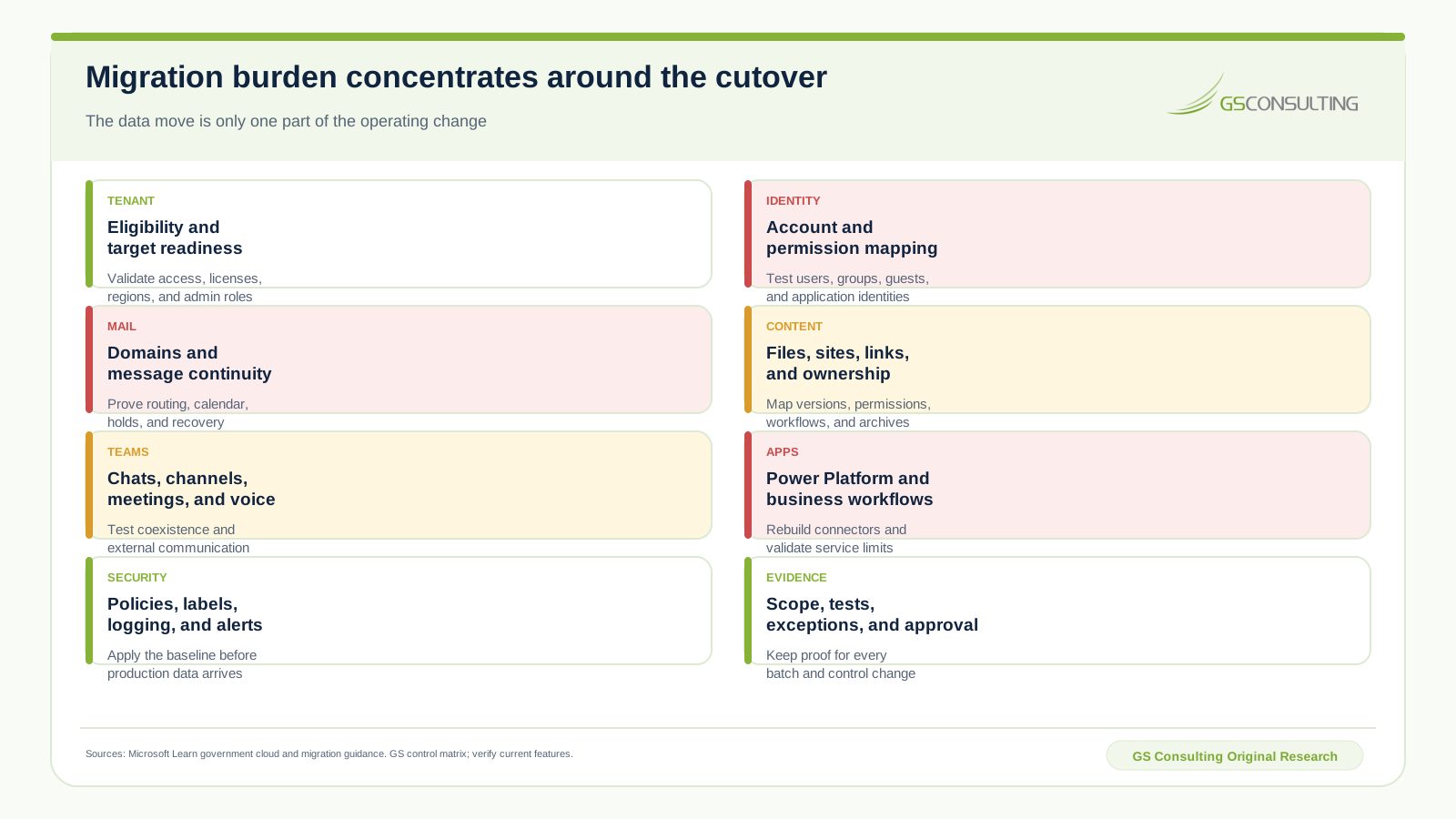
Exchange acceptance needs mailbox counts, item counts, sizes, folder checks, delegate access, shared mailbox behavior, holds, aliases, mail flow, calendars, mobile clients, and message continuity. Teams acceptance needs membership, chats or channels in scope, meeting behavior, voice if used, files, tabs, applications, and external collaboration. SharePoint and OneDrive acceptance needs ownership, permissions, links, versions, metadata, search, workflows, records, and shared access.
Power Platform and line of business applications need connector, environment, secret, identity, endpoint, data, and license tests. A successful file copy proves none of those conditions.
Build the GCC High Migration Cost From Work
A credible budget has at least seven parts:
- Target services. Licenses, security products, storage, calling, backup, archive, and support needed in the selected offer.
- Migration software and services. Tool subscriptions, partner delivery, specialist review, vendor support, and test environments.
- Internal labor. Identity, security, compliance, messaging, collaboration, endpoint, application, legal, procurement, communications, help desk, and business owner time.
- Coexistence. Duplicate licenses, routing, directory synchronization, support, and controls during the overlap.
- Remediation. Unsupported applications, bad permissions, stale owners, excess data, weak device posture, and undocumented workflows discovered during the move.
- Cutover and stabilization. Rehearsals, extended support, user communications, recovery capacity, defect correction, and acceptance work.
- Retirement. Export, retention, final evidence, access removal, contract closure, and source decommissioning.
Estimate by workload and wave. For each row, record quantity, unit assumption, labor owner, external price, uncertainty, dependency, and risk reserve. Replace estimates with measured pilot throughput and defect rates as soon as those facts exist. The GCC High pricing guide explains the license side. It should feed the migration budget, not replace it.
Make Cutover an Acceptance Decision
A migration weekend is a controlled change, not a calendar event. Each wave needs an owner who can accept it, an owner who can stop it, and a support team that can explain what users should do next.
Define the last responsible rollback point before the wave starts. Set quantitative checks for counts, errors, permissions, mail flow, authentication, search, application behavior, data protection, logging, and user critical tasks. Set qualitative checks for mission usability and owner confidence. If a check fails, the team needs a written decision rule, not a debate at 2 a.m.
Pilot selection matters. Include a senior user, a heavy mailbox, a large OneDrive, a shared mailbox delegate, a guest collaboration user, a mobile user, a workflow owner, an application owner, a records use case, and the help desk. Friendly volunteers with simple accounts create false confidence.
Six GCC High Migration Pitfalls
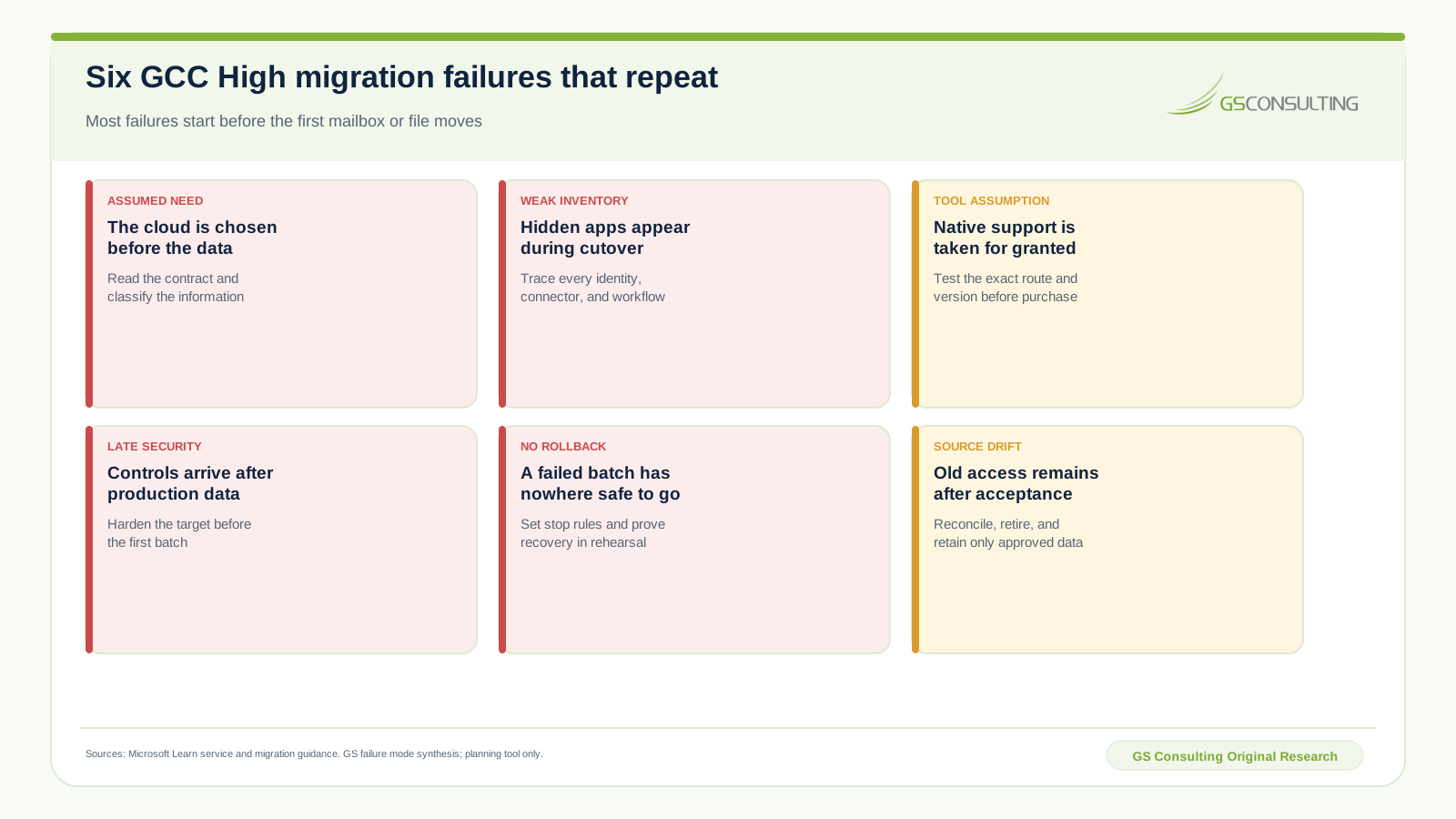
- The cloud is chosen before the data is classified. The result is an expensive environment that may not match the contract or boundary.
- The inventory counts objects but misses behavior. Hidden owners, guests, workflows, applications, permissions, and holds appear during cutover.
- Native support is taken for granted. A feature name is mistaken for support of the exact government route.
- Security arrives after production data. The target accepts real data before controls, logging, evidence, and operators are ready.
- A failed batch has nowhere safe to go. Domain changes, deltas, permissions, and user actions make reversal unclear.
- Old access remains after acceptance. Source accounts, applications, links, and data continue to create an unmanaged boundary.
Keep a Migration Evidence Packet
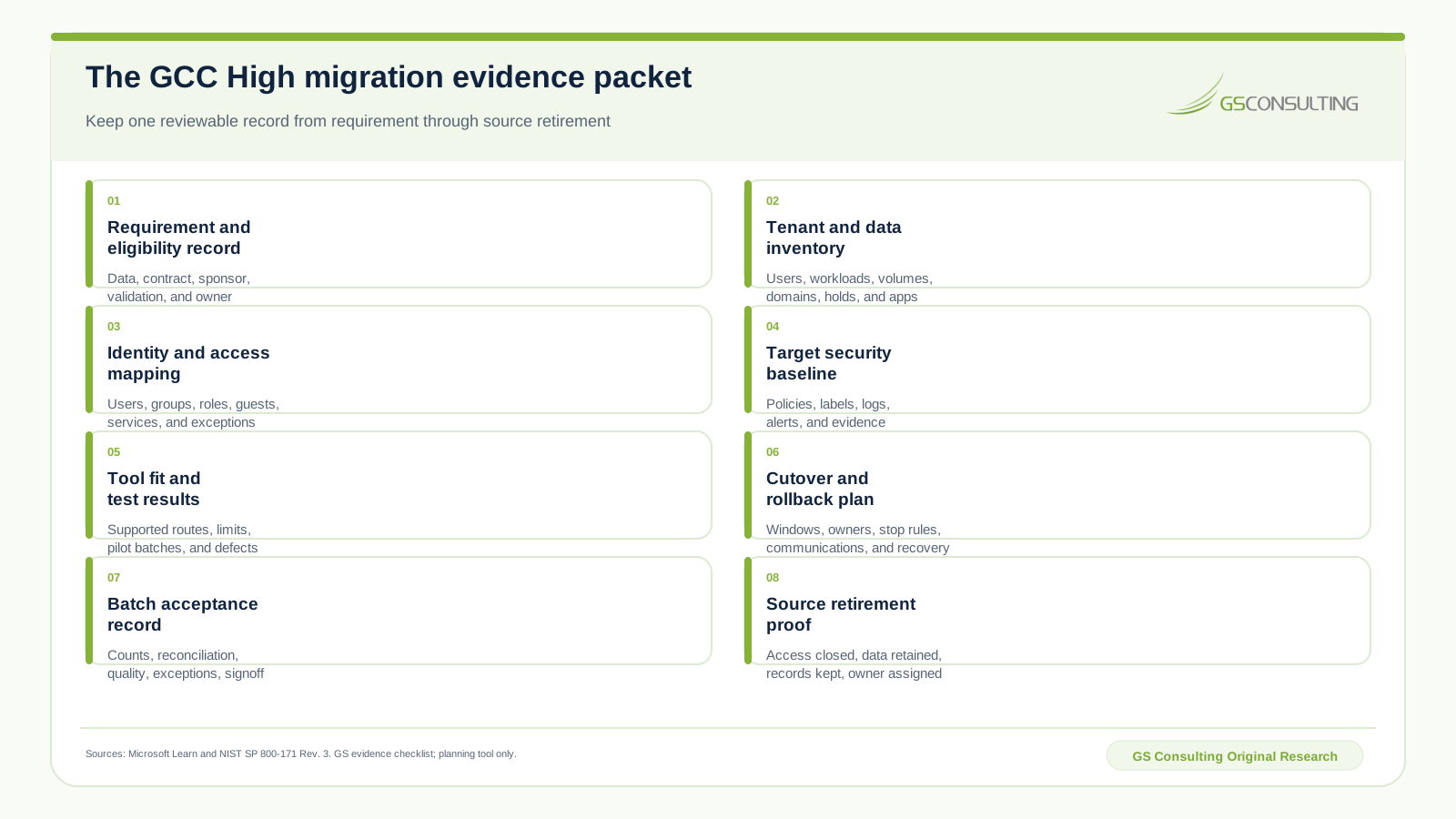
The packet should include the requirement and eligibility record, tenant and data inventory, identity mapping, target security baseline, tool fit tests, cutover and rollback plan, batch acceptance record, and source retirement proof. The artifact does not need to be one document. It needs stable ownership, version control, traceable decisions, and enough evidence for another operator to reconstruct what happened.
Security and compliance evidence should connect the target configuration to the organization system security plan, policies, procedures, risk decisions, logging, reviews, and contract facts. A vendor statement about the platform does not prove the customer configuration or operating practice.
The Practical GCC High Migration Checklist
Before procurement
- Confirm eligibility, target offer, contract and data drivers, tenant owner, sponsor, and decision authority.
- Classify the data and define the in scope users, systems, locations, partners, and applications.
- Inventory workload dependencies and verify current source to target tool support.
- Price licenses, tools, services, internal labor, overlap, remediation, risk reserve, and retirement.
Before the pilot
- Build the target identity, security, compliance, device, logging, support, and evidence baseline.
- Write acceptance and rollback tests for every pilot workload.
- Select representative users and data, including hard cases and critical dependencies.
- Train the help desk and approve user communications, contact paths, and escalation rules.
Before each production wave
- Reconcile source changes, holds, permissions, volumes, tool readiness, known defects, and owner availability.
- Confirm the stop decision, last rollback point, delta plan, monitoring, validation, and support coverage.
- Capture results, exceptions, approvals, and the next corrective action before opening the following wave.
Before retirement
- Prove all accepted waves, required retention, records export, application transition, access removal, and contract closure.
- Reconcile the final target inventory and update system documentation, procedures, training, and evidence ownership.
The Bottom Line
Do not schedule the tenant. Sequence the operating system around the work.
The standard is simple: every workload has a proved route, every wave has an acceptance owner, every critical dependency is tested, and every failed cutover has a safe decision. If the plan cannot show those four things, it is not ready for production.
Sources and Method Note
This guide and the GS model use official Microsoft guidance on tenant migration planning, cross tenant SharePoint limits, Migration Manager government settings and specialty support, Office 365 US Government service descriptions, mailbox migration, and government offer eligibility, plus NIST SP 800-171 Revision 3. Product capabilities and government cloud support can change. Verify the current source, target, route, version, contract, and service terms before execution.
- Microsoft: Plan a Microsoft 365 tenant to tenant migration
- Microsoft: Cross tenant SharePoint migration questions
- Microsoft: Migration Manager Government Cloud settings
- Microsoft: Specialty environments support
- Microsoft: Office 365 US Government service descriptions
- Microsoft: Cross tenant mailbox migration
- Microsoft: Microsoft 365 Government eligibility and buying
- NIST: SP 800-171 Revision 3
Planning caveat: The GCC High Migration Sequencing Index is a GS Consulting derived planning model based on cited public sources and documented analyst assumptions. It is not an official Microsoft, NIST, legal, licensing, migration, security, audit, compliance, or regulatory determination.