Microsoft GCC High | | 27 min read
GCC High Identity Governance: Access Reviews, Roles, and Evidence

Key Takeaways
Identity governance succeeds when every access path reaches a tested decision
Effective access is the real control state
Reconcile direct grants, group membership, role eligibility, application permissions, guest paths, tokens, and exceptions before accepting a review result.
Urgent revocation scores 100
Termination response ranks first because a wrong result can leave broad, durable access while the organization believes the identity is closed.
A completed task is not a completed outcome
Test the resulting access state, retain failed task and correction records, and close only when the intended allow or deny result is proved.
GCC High identity governance is the decision and evidence system around access. It connects authoritative identity data, joiner, mover, and leaver events, guests, groups, applications, privileged roles, approvals, expiration, access reviews, exceptions, tests, and correction.
A configured directory is not a governed directory. A disabled user can retain durable grants, a reviewer can approve an incomplete population, an eligible administrator can become permanent in practice, and an application credential can outlive every person who understood it. Governance must explain who has effective access, why, for how long, who approved it, what changed, whether removal worked, and how the team knows.
This guide belongs to the Microsoft GCC High hub and supports the secure AI and regulated automation service. Use it with the GCC High guide, tenant configuration guide, Secure Score operations guide, Conditional Access guide, and guest access and external sharing guide.
Make every access decision explainable.
GS Consulting helps regulated teams map identity authority, govern privileged and external access, test lifecycle outcomes, and build reusable evidence.
Review GCC High Identity GovernanceGCC High Identity Governance: The Short Answer
Begin with an authoritative identity and effective access map. Define joiner, mover, leaver, guest, privileged, application, and emergency decisions. Use approvals, expiration, access packages, role eligibility, access reviews, and workflow tasks where current GCC High features and licenses support them. Test the resulting access state across normal, failure, exception, and recovery paths. Retain the decision, configuration, result, correction, and review trail.
Do not design from the commercial cloud interface and assume parity. Confirm the current GCC High service description, Microsoft Entra licensing, resource support, administrative endpoints, automation methods, and actual tenant behavior.
Treat GCC High as Its Own Service Boundary
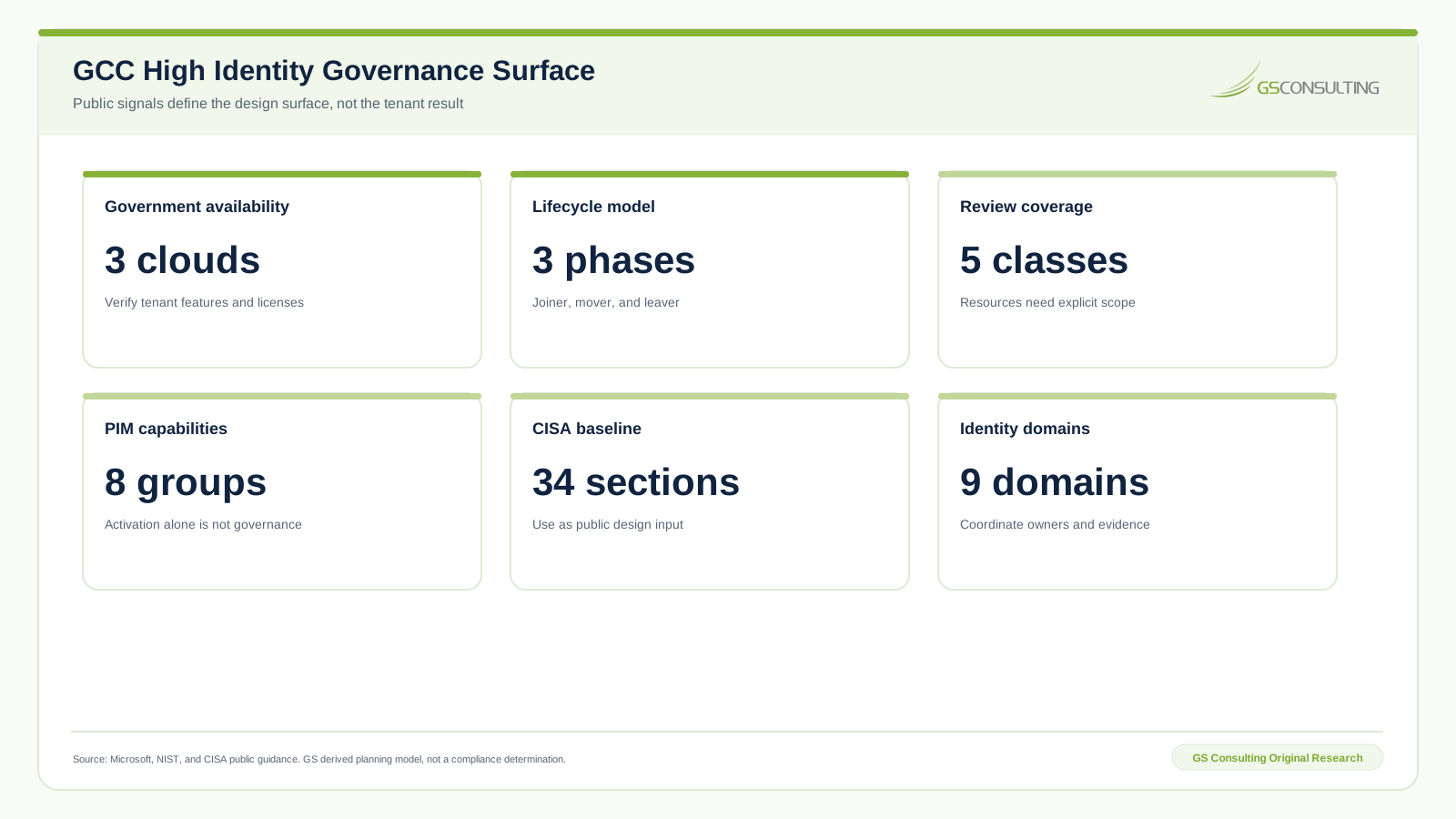
GCC High uses a separate government cloud service boundary. That affects endpoints, administrative experience, integrations, support, deployment timing, and feature availability. A control design copied from a commercial tenant can fail because the portal, application endpoint, automation module, resource connector, or license is different.
Create a feature decision record before promising a governance control. Name the required capability, target resource, tenant cloud, license, administrative role, portal, automation interface, documented limitation, test case, owner, and fallback process. Recheck the record when Microsoft changes service availability or the organization changes licenses.
Identity governance does not replace Conditional Access. Governance decides who should have access and for how long. Conditional Access evaluates conditions at sign in and during supported sessions. The two controls should share identity classes, protected resources, exception owners, emergency access rules, test scenarios, and evidence identifiers.
Use Public Guidance as Design Input
Microsoft describes employee access governance across three lifecycle phases: joiner, mover, and leaver. Access reviews can address groups, applications, Microsoft Entra roles, Azure resource roles, and access packages. Privileged Identity Management adds eligibility, limited activation, approval, authentication, justification, notification, review, and audit history.
The pinned September 3, 2026 version of the CISA ScubaGear Microsoft Entra ID baseline contains 34 policy sections across nine identity security domains. GS uses that count as a public design observation, not a tenant score or compliance claim.
Public guidance cannot reveal local source quality, direct grants, custom applications, emergency exclusions, stale credentials, guest sponsorship, review behavior, or failed workflow tasks. Replace those unknowns with tenant exports, application inventories, decision records, and scenario tests.
GS GCC High Identity Governance Proof Priority Index
GS modeled ten operating control domains using five one to five ratings: access consequence, privilege breadth, lifecycle volatility, evidence value, and recovery pressure. Base weights are 30, 25, 20, 15, and 10 percent. Each weighted result is rounded to a whole point on a zero to 100 planning scale.
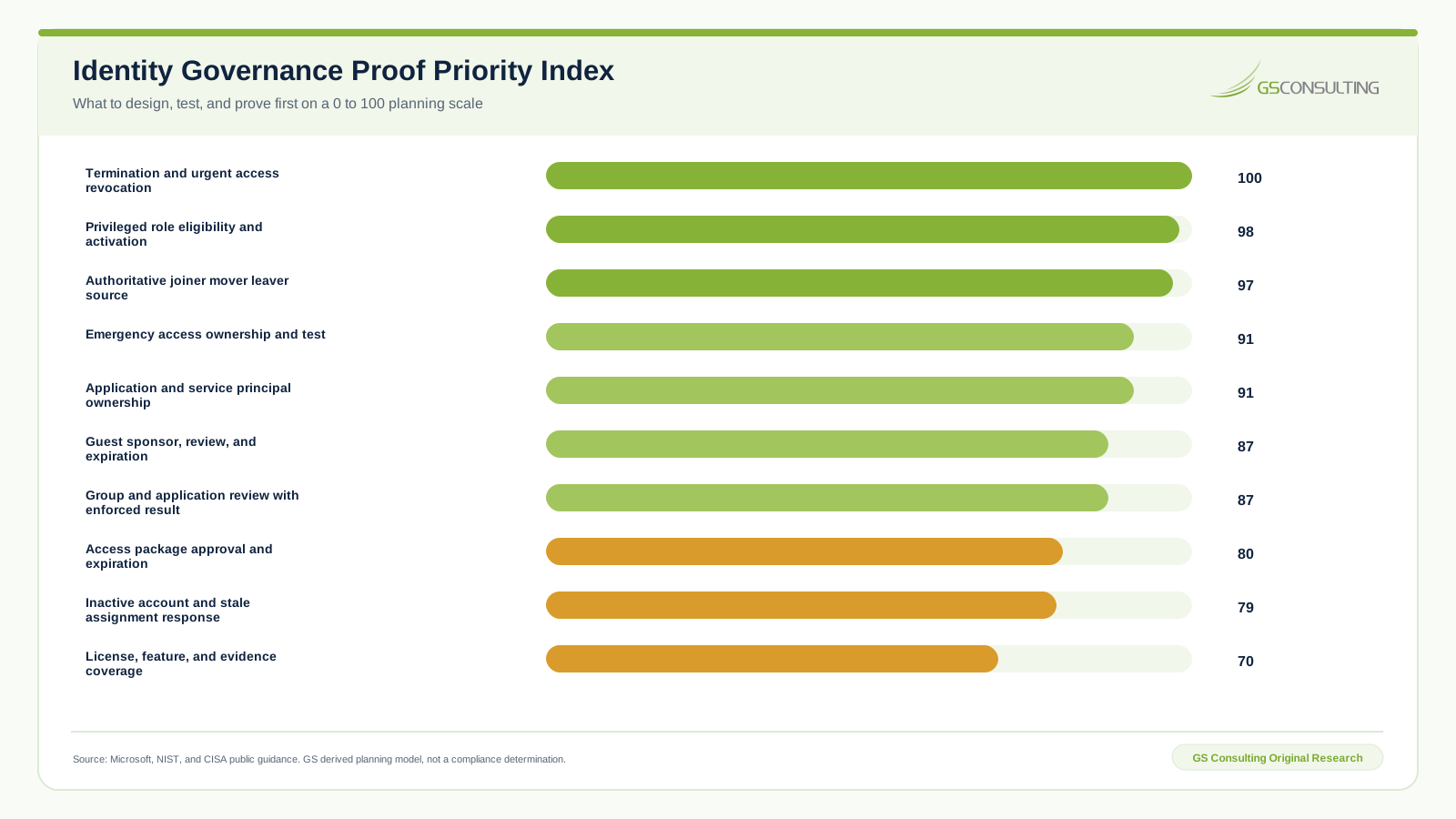
The result is an operating priority, not a Microsoft maturity score. Termination response ranks first because the event is urgent, the identity can hold broad access, stale rights can persist, and a false sense of closure has serious consequences. Privileged eligibility and the authoritative lifecycle source sit directly behind it because they shape many downstream decisions.
The sensitivity case moves five percentage points from access consequence to recovery pressure. No item moves more than two points, and the leading group does not change. That stability supports a practical sequence: prove authority, revocation, and privilege before optimizing lower consequence workflow convenience.
Build the Identity Lifecycle Around Authority and Reconciliation
Name the authoritative source for worker status, manager, organization, role, location, contract, citizenship or other approved attributes, start date, end date, and access sponsorship. Document who can change each field, how quickly it reaches the directory, what happens when it is missing, and which team reconciles conflicting records.
For joiners, require an approved role and resource basis before access appears. For movers, calculate what should be added, changed, and removed; do not only add the new role. For leavers, define urgent and scheduled lanes, disable interactive access, revoke supported sessions, remove privileged and group rights, rotate shared secrets where necessary, transfer owned resources, resolve application ownership, and verify effective access.
Lifecycle workflows can automate supported tasks, but the workflow result needs reconciliation. Record the input event, rules, tasks attempted, success and failure, resulting state, retry, manual correction, owner, and completion evidence. A green run status does not prove that every resource reached the intended state.
Govern Eligibility, Activation, Use, and Emergency Access
Inventory privileged roles across Microsoft Entra, Microsoft 365, Azure resources, security tools, applications, and service operations. For each role, record the purpose, scope, owner, eligible population, activation duration, approval rule, authentication requirement, justification, alerting, review frequency, emergency path, and prohibited combinations.
Privileged Identity Management supports several of these controls. It does not determine the correct role design, eliminate standing permissions outside its coverage, or prove that privileged work matched the approved purpose. Join activation records to administrative audit events and the change or incident that justified use.
The GCC High privileged access management guide provides the detailed role policy, activation case, emergency access, review, audit, and evidence model for this part of the identity lifecycle.
Emergency accounts need independent ownership, tightly controlled credentials, purposeful exclusions, immediate alerting, recurring sign in and recovery tests, and a review after every use. Do not place all emergency proof inside the same identity system that the account exists to recover.
Design Access Reviews That Produce Enforced Results
For every review, define the decision object, included population, reviewer, source of reviewer authority, decision context, response window, reminder path, fallback reviewer, treatment of no response, automatic application, exception process, and proof of removal. Give reviewers enough context to decide: resource purpose, user relationship, last activity, access path, role, sponsor, expiration, risk signal, and prior decision.
Microsoft access review guidance covers several resource classes. Coverage must still be reconciled against the effective access graph. Direct assignments, nested groups, application roles, external identities, Azure resource roles, local service roles, credentials, and unsupported resources can sit outside one selected review.
Measure outcome quality, not campaign completion. Useful signals include included access against expected access, reviewer response, removal rate, failed removal, overturned decision, stale sponsor, unsupported resource, overdue exception, repeat grant after removal, and time from decision to verified effect.
Include Applications, Service Principals, and Guests
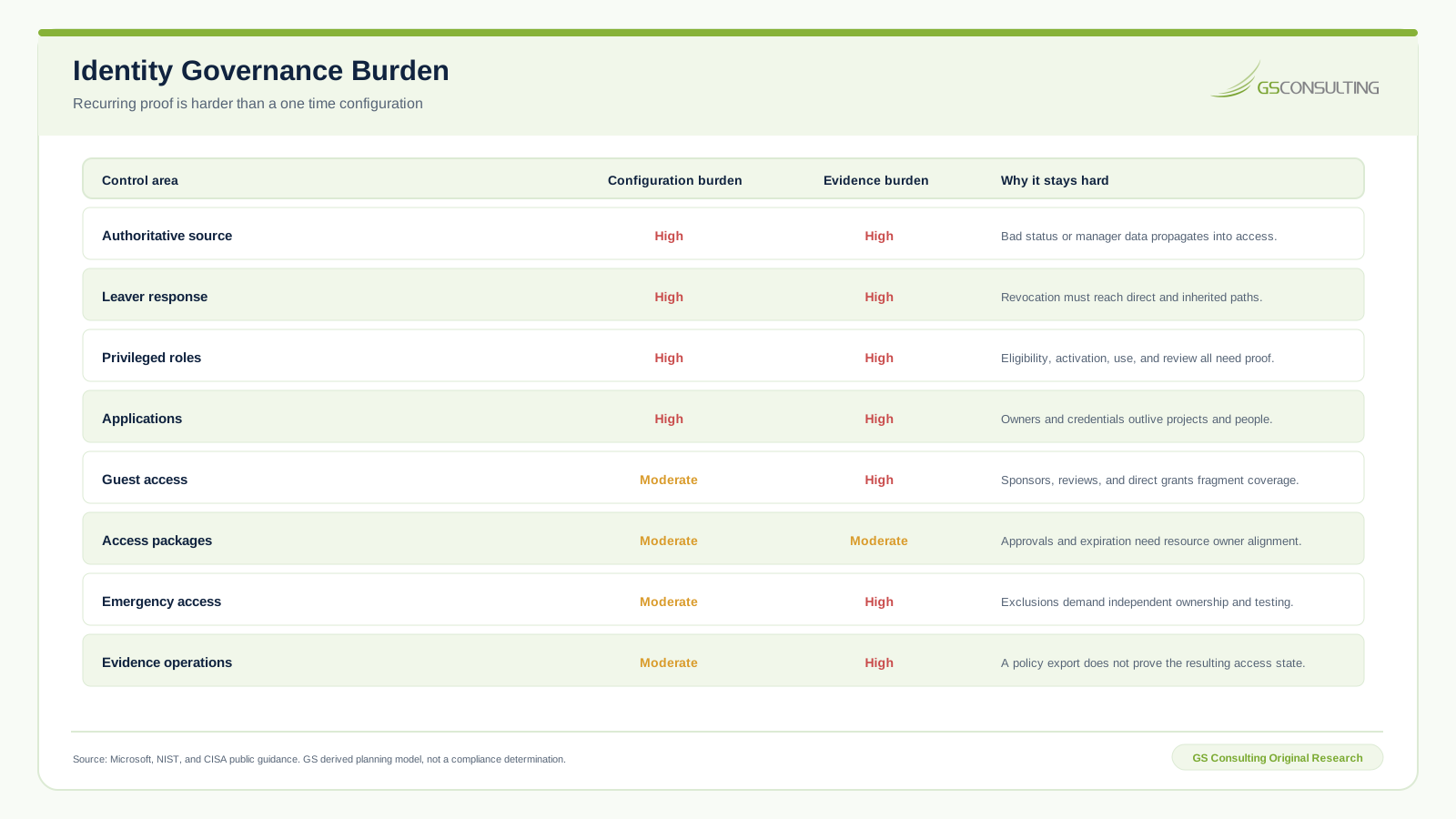
Human user governance is incomplete if applications and service principals are outside the program. Inventory application owners, business purpose, publisher, credentials, certificate dates, delegated permissions, application permissions, directory roles, consent authority, assigned users, data paths, last use, change history, and retirement decision. Require two accountable owners for important applications and a defined response when both leave.
Guest access needs a sponsor, approved purpose, named resources, identity assurance, device and session rules, end date, review, and tested removal. Coordinate the governance decision with the GCC High guest access and external sharing controls. A guest removed from one group may retain another direct resource path.
Access packages can combine resources, approvals, expiration, and review. Treat the package as a governed product. Maintain its owner, catalog resources, incompatible roles, approval route, duration, guest policy, review design, change history, and retirement test. Confirm that removing the assignment produces the intended result in every included resource.
Use a Five Stage Identity Governance Sequence
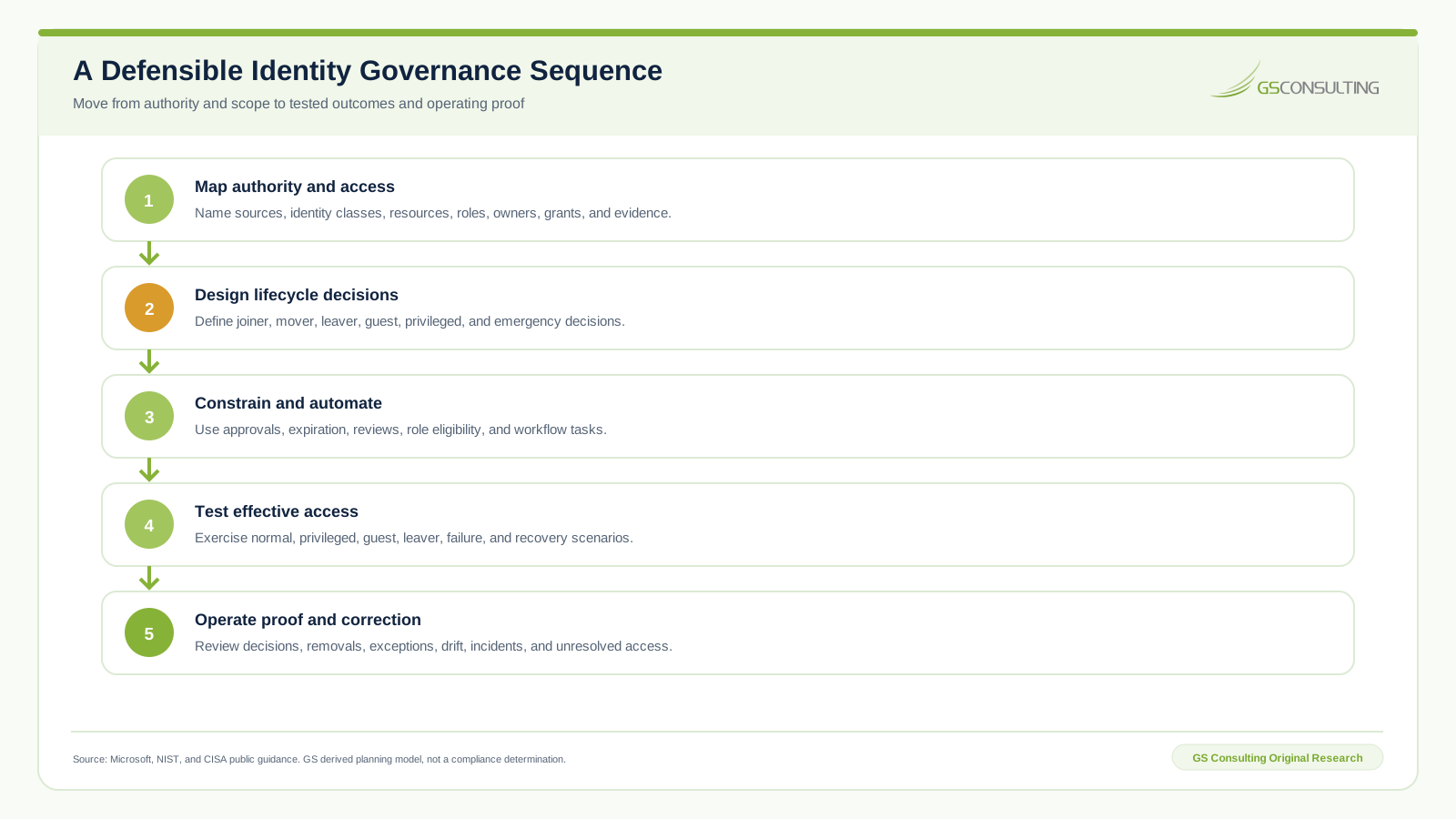
Start with authority and access, not tools. Approve the lifecycle and access decisions before automating them. Constrain rights through minimum scope, duration, approval, conditions, review, and exceptions. Test effective outcomes across users, guests, roles, applications, and resource paths. Operate the evidence as a correction loop.
Test at least one successful joiner, denied joiner, mover removal, urgent leaver, failed task, privileged activation, excessive role request, guest expiration, application owner departure, emergency account use, and access review removal. Capture the request, rule, input, output, observed access, defect, correction, repeated test, and acceptance.
Avoid Six Identity Governance Failure Modes
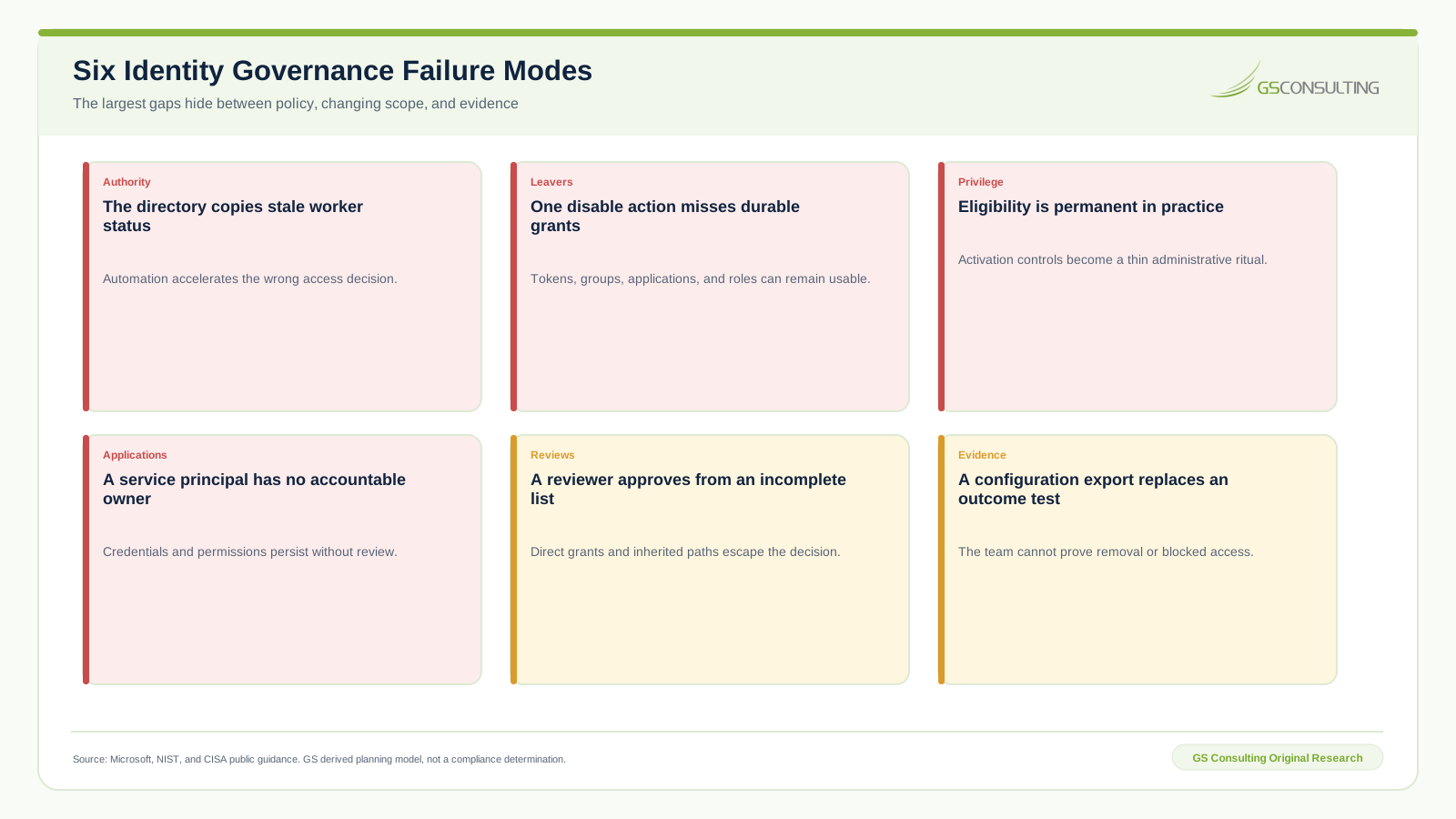
Stale authority. Incorrect worker state drives an automated wrong decision. Partial leaver action. The user is disabled while durable grants, sessions, applications, or shared credentials remain. Permanent privilege. Eligibility and activation rules exist, but assignments rarely expire or receive meaningful review.
Ownerless application. Credentials and permissions persist after accountable owners leave. Incomplete review. A reviewer decides from a population that omits direct or inherited access. Configuration as proof. The team retains policy exports but cannot demonstrate the effective allow, deny, expire, or remove result.
Build a Minimum Identity Governance Evidence Packet
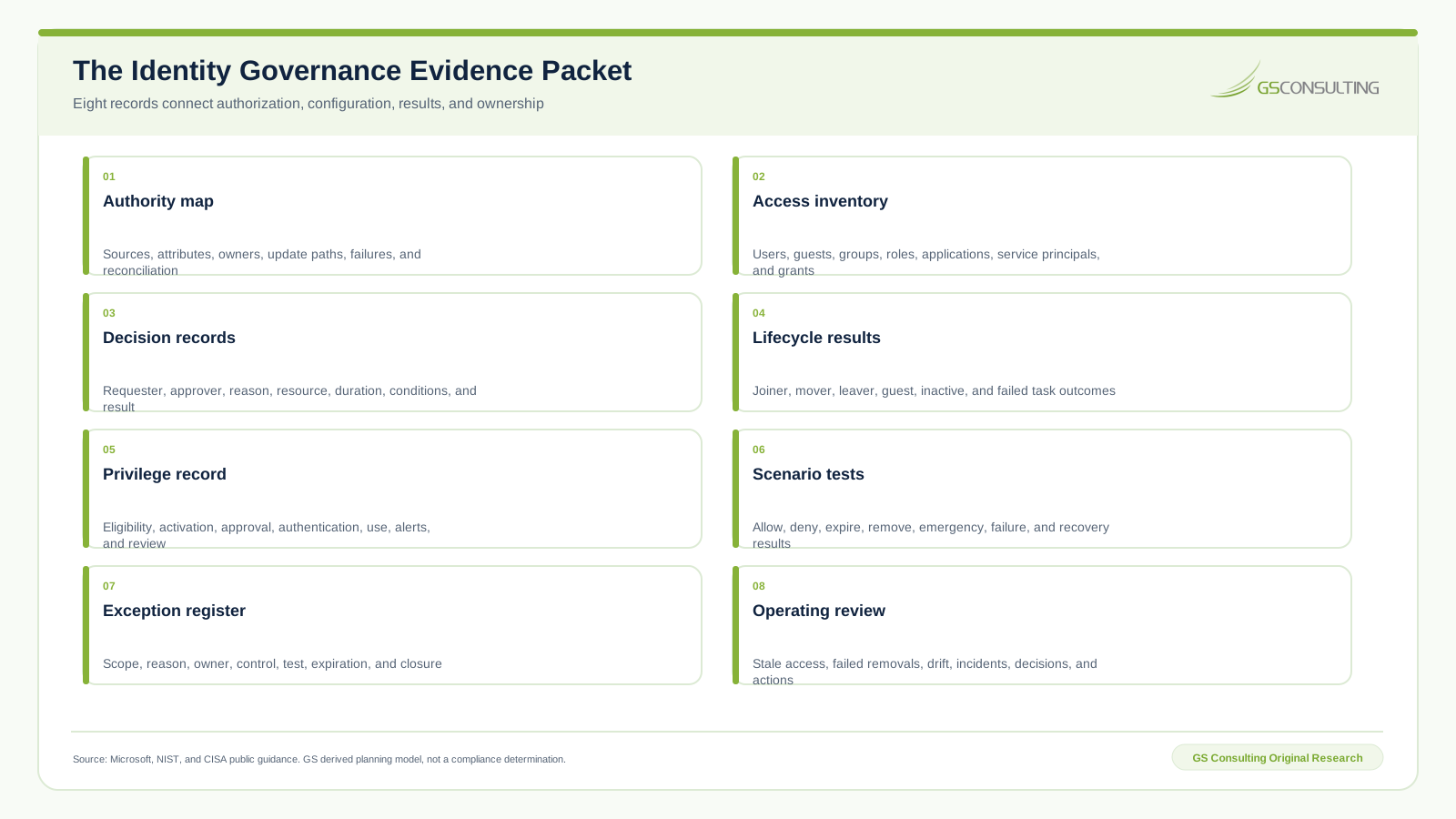
Keep the authority map, access inventory, decision records, lifecycle results, privilege record, scenario tests, exception register, and operating review. Use stable identifiers for identities, resources, roles, applications, requests, reviews, exceptions, and tests so a reviewer can follow one access path across systems.
Sample normal and difficult cases: urgent leavers, contractors, guest sponsors, privileged roles, inactive users, nested access, direct assignments, ownerless applications, failed removals, emergency accounts, expired exceptions, and repeated grants. Preserve the evidence available when the decision was made, the resulting state, and later correction.
A 60 Day GCC High Identity Governance Plan
| Period | Operator action | Required output |
|---|---|---|
| Days one through ten | Confirm tenant, licenses, authoritative sources, identity classes, access resources, owners, emergency paths, and current evidence. | Feature record, authority map, initial access inventory |
| Days eleven through twenty | Approve joiner, mover, leaver, guest, privileged, application, review, and exception decisions. | Decision matrix, role rules, review design |
| Days twenty one through thirty five | Configure supported workflows, approvals, expiration, role eligibility, access packages, review campaigns, alerts, and failure routes. | Configuration record, task map, failure ownership |
| Days thirty six through forty five | Reconcile effective access and execute normal, denied, failed, emergency, guest, privileged, application, and removal scenarios. | Test record, defects, correction evidence |
| Days forty six through sixty | Run the first operating review, resolve failed removals and owner gaps, retest corrections, and approve the evidence packet. | Operating review, approved exceptions, evidence packet |
Research Sources and Caveats
The research package uses sources accessed September 5, 2026:
- Microsoft GCC High and DoD service description for the government cloud boundary and feature verification context.
- Microsoft Entra feature availability in US Government clouds for the documented GCC, GCC High, and DoD identity governance surface.
- Microsoft Entra ID Governance for employees for joiner, mover, and leaver lifecycle design.
- Microsoft access review deployment guidance for resource coverage and review design.
- Microsoft Privileged Identity Management guidance for eligibility, activation, approval, alerts, reviews, and audit history.
- Microsoft lifecycle workflow guidance for supported workflow concepts and tasks.
- CISA ScubaGear Microsoft Entra ID baseline at the pinned September 3, 2026 commit for public policy section and domain counts.
- NIST SP 800-171 Revision 3 for CUI account, access, audit, and lifecycle control context.
The package contains the source register, public signals, model inputs, live workbook formulas, cached scores, sensitivity results, figure data, data dictionary, methodology, supporting operating tables, editable SVG files, browser rendered PNG files, and workbook. Public observations, GS ratings, and derived outputs remain separate.
The GS GCC High Identity Governance Proof Priority Index is a planning tool. It is not an official Microsoft score, legal opinion, contract interpretation, audit result, CMMC status, certification, or compliance determination. Verify the contract, CUI boundary, licenses, features, roles, configuration, and tested outcomes with the responsible authorities.
GCC High Identity Governance FAQ
Suggested Future Reading
- Microsoft GCC High Hub
- What Is GCC High?
- GCC High Conditional Access
- GCC High Guest Access and External Sharing
- GCC High Data Loss Prevention
- GCC High eDiscovery and Legal Hold
- Secure AI and Regulated Automation Services
Operate identity governance as a proof system.
The standard is direct: reliable authority, explicit decisions, minimum access, controlled privilege, complete reviews, tested removal, owned exceptions, and evidence that supports correction.
Request an Identity Governance Review