Microsoft GCC High | | 24 min read
GCC High Email Security: Configuration and Evidence

Key Takeaways
Mail defense depends on coverage, not a policy screenshot
55 policy headings span three mail related baseline files
GS counted Exchange Online, Defender, and Security Suite policy headings at one current CISA repository commit.
SPF, DKIM, and DMARC score 98
Domain authentication leads because it touches sender identity, broad message coverage, recipient trust, and reusable evidence.
Map every sender before enforcement
Applications, relays, partner routes, marketing systems, devices, and subdomains must be known before a strict authentication policy can hold.
GCC High email is not secure because the mailbox is in GCC High. Security comes from authenticated domains, explicit policy coverage, controlled mail paths, tested outcomes, monitored exceptions, and evidence that survives the next change.
The weak design is easy to recognize. A team turns on a few recommended settings, publishes one SPF record, assumes Defender covers every user, trusts several connectors, permits an urgent forwarding exception, and saves screenshots. Nobody can list every sender. Nobody tests impersonation, quarantine, relays, partner routes, or mailbox rules as one system.
The stronger design starts with the message path. Name every domain, sender, relay, connector, application, and route. Add forwarding conditions, policy populations, exceptions, and response owners. Then authenticate, protect, test, monitor, and retain the record.
The Microsoft GCC High hub gives the environment context. Use the GCC High tenant configuration guide for the foundation, the Conditional Access guide for identity policy and recovery, the CUI data loss prevention guide for mail content and action controls, and the migration guide for domain and cutover planning. GS Consulting supports the operating program through secure AI automation.
Make the mail path explicit before an incident does it for you.
GS Consulting helps federal contractors map GCC High mail flow, configure protection, test coverage, remove dangerous exceptions, and build evidence that stays current.
Review GCC High EmailGCC High Email Security: The Short Answer
A defensible GCC High email program has five connected parts. Map every mail path. Authenticate each sending domain with SPF, DKIM, and DMARC. Apply explicit anti phishing, Safe Links, Safe Attachments, anti malware, and anti spam coverage where licenses and service availability support them. Control forwarding, connectors, relays, allows, bypasses, and quarantine. Test outcomes, monitor drift, investigate detections, and retain evidence.
Microsoft publishes Standard and Strict recommended settings for Exchange Online Protection and Defender for Office 365. Those recommendations are valuable. They are not a substitute for knowing which users a policy covers, which mail routes bypass normal handling, which licensed features exist in GCC High, and which business exceptions remain open.
Do not claim a control because its policy exists. Prove that the intended population receives it, representative messages take the intended path, alerts reach an owner, releases follow defined authority, exceptions expire, and the current state can be reproduced.
Email Defense Spans More Than One Policy Set
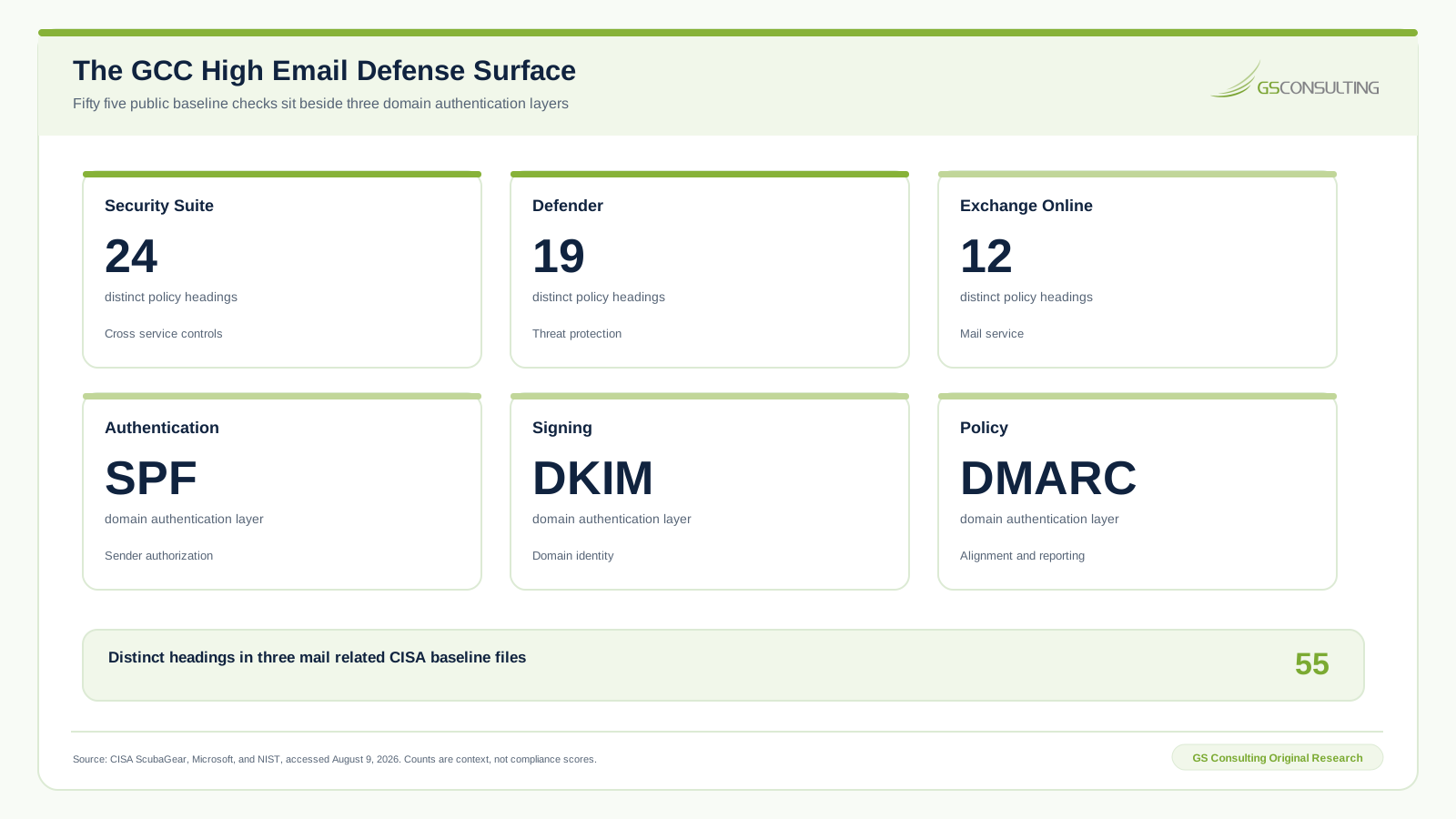
At CISA ScubaGear commit c4671964bef3975b8974758d369e4b79dd43c7ad, GS counted 12 Exchange Online headings, 19 Defender headings, and 24 Security Suite headings. The 55 combined headings touch policies, coverage, mail rules, auditing, protection, and cross service settings. The count is a measure of public configuration surface, not effectiveness or compliance.
NIST SP 800-177 Revision 1 adds the domain and transport view: SPF to identify authorized sending hosts, DKIM to sign messages, DMARC to evaluate alignment and publish domain policy, TLS to protect transport where applicable, and S MIME for message protection use cases. None works in isolation from the actual sender inventory and recipient behavior.
The Microsoft Defender for Office 365 service description covers Safe Links, Safe Attachments, anti phishing protection, reporting, and government cloud differences. Treat it as the current capability boundary. Confirm the environment, plan, and feature before writing a control statement.
| Defense layer | Primary question | Evidence that answers it |
|---|---|---|
| Sender identity | Is this infrastructure authorized to send for the visible domain? | Sender register, SPF record, DKIM signature, DMARC alignment, and aggregate reports |
| Message protection | Did the intended policy inspect the link, attachment, spoof, malware, and spam signals? | Policy export, coverage proof, headers, test message result, alert, and quarantine record |
| Mail flow | Did a connector, relay, application, forwarding rule, or allow entry change handling? | Connector inventory, route test, mailbox rule review, exception, and approval |
| Operations | Did a person detect, decide, investigate, recover, and improve the control? | Alert, ticket, investigation, release decision, incident record, and drift review |
GS GCC High Mail Defense Evidence Priority Index
GS Consulting built a derived planning index across ten mail control domains. The base formula weights attack interruption at 30 percent, identity and brand impact at 20 percent, message coverage at 20 percent, evidence value at 20 percent, and recovery leverage at 10 percent. Each input is a one to five analyst rating tied to the cited Microsoft, CISA, and NIST guidance.
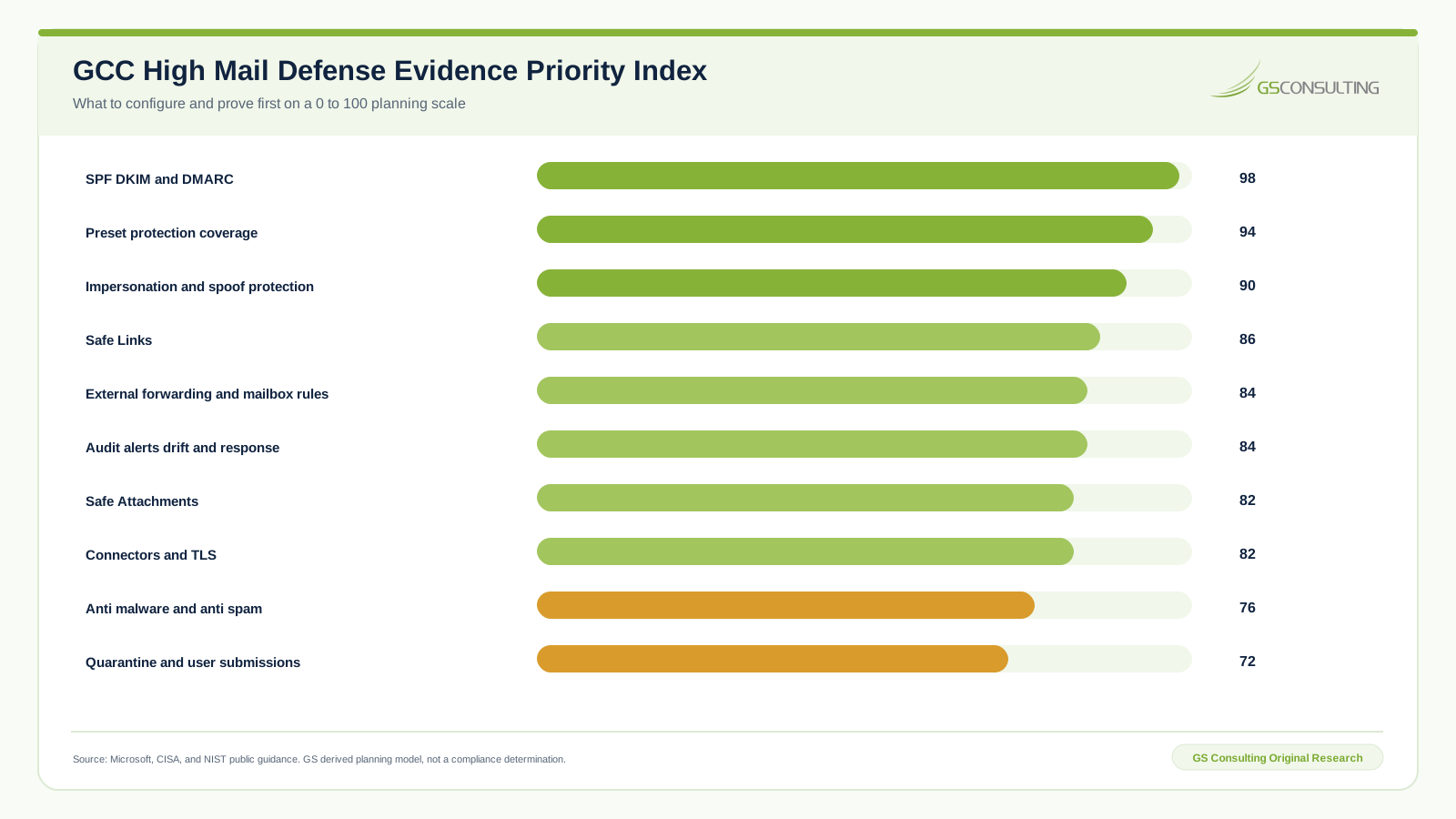
SPF, DKIM, and DMARC score 98. Preset protection coverage scores 94. Impersonation and spoof protection score 90. Safe Links scores 86. External forwarding and mailbox rules score 84. Audit, alerts, drift, and response also score 84. The lower scores are not permission to ignore anti malware, quarantine, or connectors. They indicate where foundational work creates the widest early leverage.
The alternate model shifts five points from attack interruption to evidence value. No item moves by more than one point, and the leading action tier does not change. That stability supports the sequence: map senders and routes, establish domain identity, apply explicit protection, control exceptions, then keep proving the operating result.
The research package preserves the exact source register, public counts, inputs, formula, alternate weights, and output scores. It also retains the setup sequence, burden assessment, failure modes, evidence packet, CSV files, editable SVG files, and browser rendered PNG copies.
This index is a GS Consulting derived planning tool. It is not an official Microsoft, CISA, NIST, DoD, legal, audit, compliance, or regulatory determination. Replace assumptions with real mail flow, tenant exports, licenses, message traces, DMARC reports, incident records, and assessment evidence.
Use a Defensible Email Security Sequence
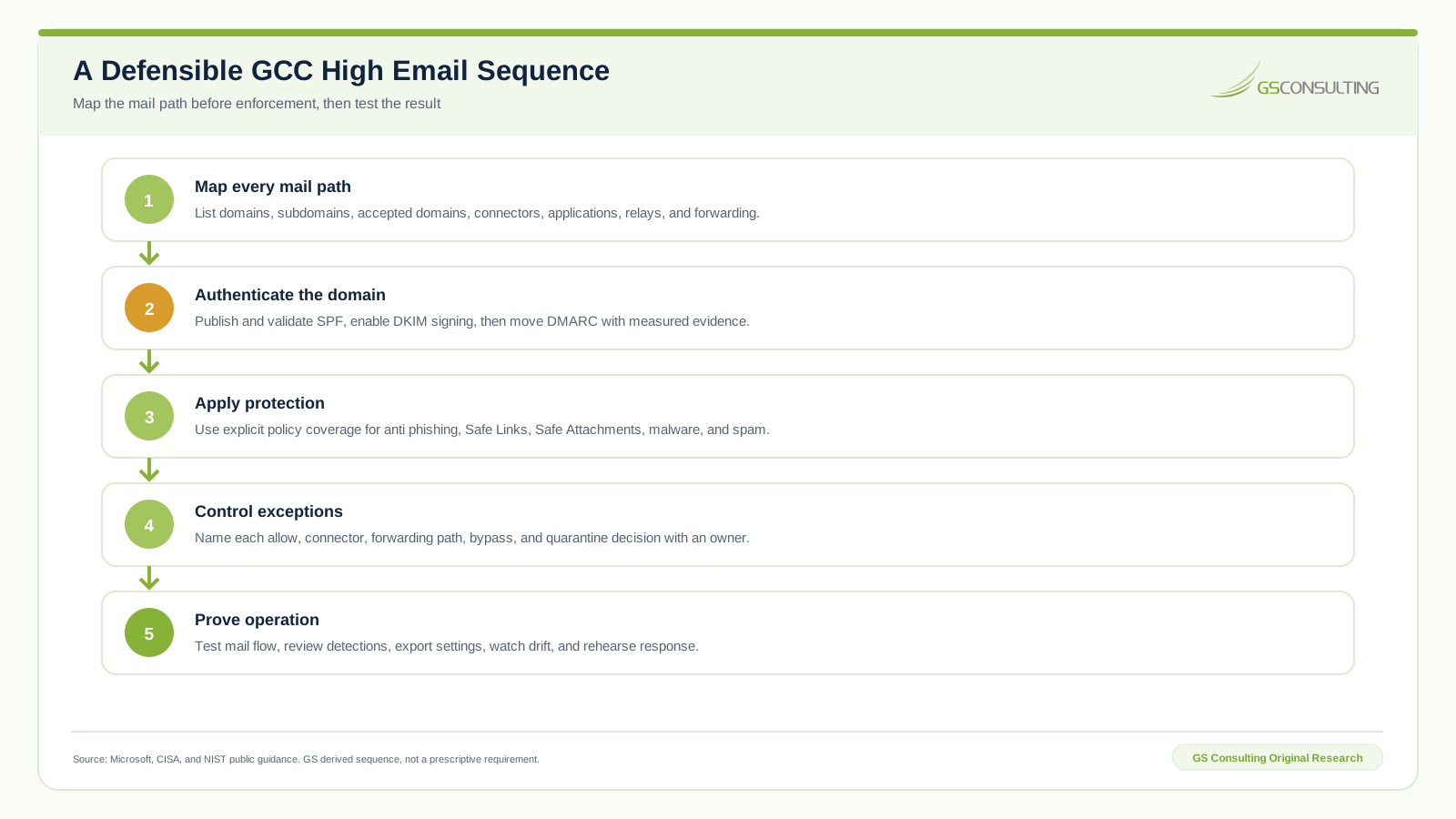
Map every mail path. Inventory primary domains, subdomains, accepted domains, applications, devices, scanners, and relays. Add connectors, partners, ticketing systems, marketing systems, encryption services, forwarding, and mailbox rules. Record the owner and expected authentication result for each.
Authenticate the domain. Publish accurate SPF records, enable DKIM signing for each sending domain, collect DMARC reports, repair alignment, and move the DMARC policy with evidence. Do not enforce a strong policy before every legitimate sender is known.
Apply protection. Scope recommended policies to the intended users and domains. Configure anti phishing, impersonation, spoof handling, Safe Links, Safe Attachments, malware, spam, and outbound controls based on current licenses and GCC High availability.
Control exceptions. Name every allow entry, bypass, connector, relay, forwarding path, protected user exclusion, quarantine permission, and release authority. Require an owner, reason, approval, compensating control, review date, and expiration.
Prove operation. Test mail flow, review headers and detections, export settings, reconcile coverage, investigate alerts, inspect DMARC reports, watch drift, and rehearse response.
SPF, DKIM, and DMARC Need One Sender Inventory
SPF lists infrastructure authorized to send for a domain. It has practical record and lookup limits, and forwarded mail can complicate the result. Do not keep adding services to the record without an owner and validation. Remove senders when systems retire. Include subdomains deliberately instead of assuming they inherit the right answer.
DKIM signs messages so recipients can validate that a responsible domain took ownership of the message and that signed content was not altered. Enable it for every supported sending domain and verify real messages, not only portal status. Third party senders may sign with their domain, the organization’s domain, or both. Record the arrangement and its effect on DMARC alignment.
DMARC evaluates whether the visible From domain aligns with an authenticated SPF or DKIM domain and publishes the domain owner’s requested handling policy. Start by collecting aggregate reports. Identify legitimate failures. Repair alignment. Then move from observation to quarantine or rejection based on measured results and business approval.
A strict DMARC policy with unknown senders creates outages. A permanent observation policy with no review preserves spoofing risk. The operating standard is measured progress: every legitimate sender known, every alignment failure assigned, every policy change tested, and every report reviewed by an owner.
For government mail, transport requirements and partner agreements can add TLS or certificate conditions. Test the exact inbound and outbound route. A DNS record does not prove the partner connector used the expected identity, certificate, encryption, or fallback behavior.
Explicit Coverage Matters More Than a Policy Name
Microsoft recommends Standard and Strict protection profiles. A common design applies Standard broadly and reserves Strict for selected high value users, but that is a planning pattern rather than a universal rule. Administrators, finance, executives, human resources, procurement, help desk, and program leaders may face different impersonation and business email compromise exposure.
Check coverage directly. Which users receive built in protection? Which receive Standard? Which receive Strict? Which custom policies apply first? Which groups are dynamic? Which accounts are excluded? Which shared mailboxes, resources, applications, and domains sit outside the expected population? Save the resulting membership and precedence as evidence.
Microsoft notes that the default anti phishing policy lacks impersonation settings. Configure protected users and domains, mailbox intelligence where supported, spoof actions, safety indicators, trusted senders and domains, and exception handling deliberately. Test display name impersonation, lookalike domains, spoofed internal domains, and external sender signals.
Safe Links and Safe Attachments are policy and license dependent. Confirm that the feature exists in the purchased GCC High plan, that the intended population is in scope, and that the configured action matches business operations. Test links in supported clients, malicious or simulated attachment handling, delayed delivery behavior, alerts, user notifications, and administrator investigation.
Anti malware and anti spam policies still matter. Review common attachment types, zero hour purge behavior where supported, bulk mail thresholds, outbound limits, notifications, blocked senders, and connection filters. Avoid broad allow lists. An allow can suppress several layers of judgment at once.
Forwarding, Connectors, Relays, and Allows Are Control Boundaries
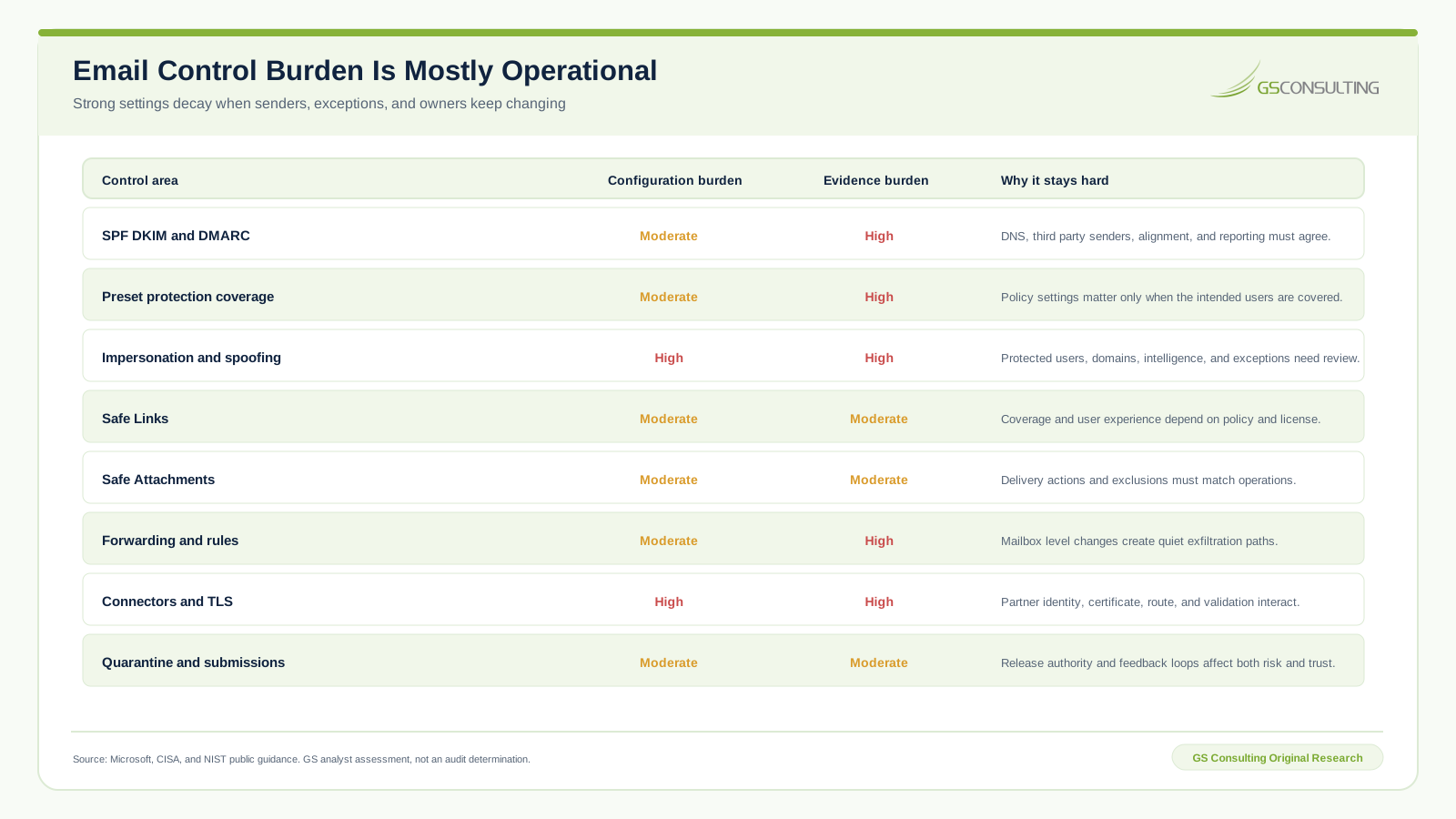
External forwarding creates an obvious data path, but it can appear through more than one mechanism. Review the tenant policy, remote domains, transport rules, mailbox forwarding attributes, inbox rules, automation, and applications. Alert on changes where supported. A documented exception needs the destination, data allowed, business owner, approver, compensating control, review date, and expiration.
Connectors deserve the same control. Record direction, sender and recipient scope, partner identity, certificate or address conditions, smart host, TLS requirement, validation result, owner, and change history. Test both expected messages and messages that should fail the connector conditions. A trusted route with weak identity can bypass normal judgment.
Relay devices and business applications often become the hidden source of authentication problems. A scanner, case system, monitoring product, or customer service platform may send high value messages without a clear owner. Put each in the sender register, decide how it authenticates, constrain what it can send, monitor failure, and remove it when retired.
Allow entries and bypass rules should be rare and temporary. Before adding one, identify the actual failure, confirm whether the message could be corrected at the sender, constrain the scope, document the risk, assign an owner, set an expiration, and test that other protections still behave as intended.
Quarantine, User Reports, Alerts, and Drift Need Owners
Quarantine policy decides who can view, release, request release, preview, or delete a message. Match authority to risk. A user self release model can reduce help desk pressure but may weaken control for high confidence phishing. An administrator only model can create delays and workarounds. Define the queue, response time, escalation, release decision, and evidence.
User reported messages are both a detection source and a trust signal. Decide where reports go, how Microsoft submissions and security team review interact, what the user sees, how false positives are corrected, and which events create incident work. If reports disappear into a mailbox nobody owns, the button is decoration.
Microsoft’s configuration analyzer compares selected controls with Standard and Strict recommendations and records policy drift for 90 days. Use it to find changes. Do not treat it as the whole evidence program. Coverage, connectors, authentication, mailbox rules, incidents, exceptions, and contract context still need separate proof.
Run a recurring mail review that covers DMARC reports, connector changes, forwarding, inbox rules, allows, bypasses, and policy scope. Review protected users, quarantine decisions, user submissions, high severity detections, false positives, and unresolved incidents in the same cycle. Trend the work. A stable dashboard can hide a shrinking policy population or a permanent exception.
A Ninety Day GCC High Email Security Plan
Days one through fifteen: map the mail system. List domains, senders, relays, applications, partners, connectors, and transport rules. Add forwarding paths, shared mailboxes, high value users, licenses, policy objects, and operational owners. Capture representative headers and message traces.
Days sixteen through thirty: establish sender identity. Correct SPF, enable and validate DKIM, collect DMARC reports, assign alignment failures, and document partner transport requirements. Do not advance enforcement on assumptions.
Days thirty one through fifty: apply explicit protection. Map users to built in, Standard, Strict, and custom policies. Configure impersonation, spoof handling, Safe Links, Safe Attachments, malware, spam, outbound controls, protected users, and supported safety indicators. Test representative cases.
Days fifty one through seventy: close quiet paths. Review forwarding, mailbox rules, connectors, relays, allows, bypasses, quarantine permissions, and application senders. Remove stale entries and put every remaining exception under approval and expiration.
Days seventy one through ninety: prove operation. Export current settings, reconcile policy coverage, test mail paths, and review DMARC results. Run a phishing response exercise. Inspect alerts and submissions, confirm evidence retention, and establish the recurring review calendar.
Six Email Security Failure Modes
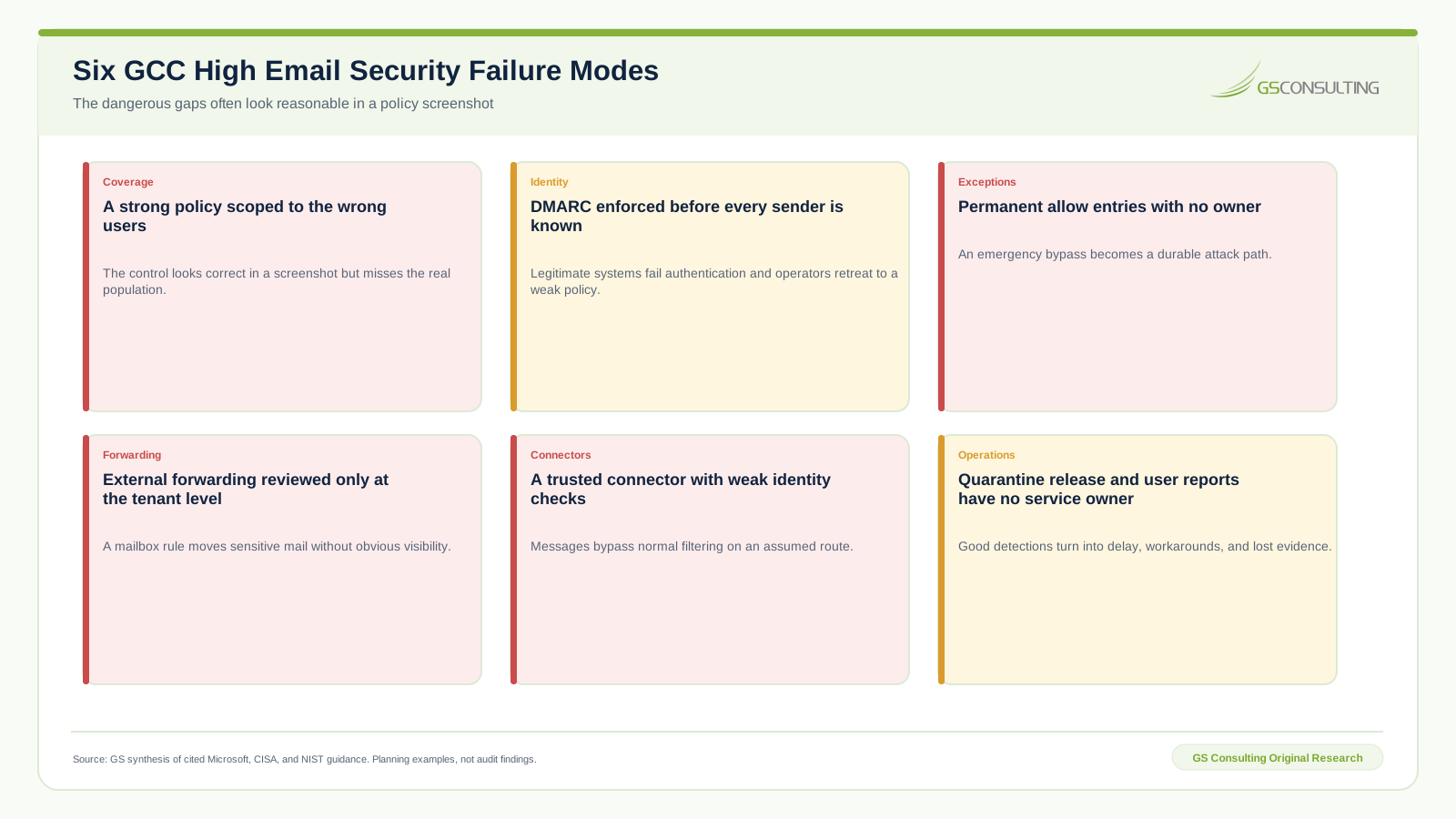
A strong policy scoped to the wrong users. The settings match guidance, but a group rule, precedence issue, exclusion, or stale membership misses the real population.
DMARC enforced before every sender is known. Legitimate systems fail authentication, business pressure rises, and operators retreat to a weak permanent policy.
Permanent allow entries with no owner. An emergency bypass becomes a durable attack path that outlives the incident.
External forwarding reviewed only at the tenant level. A mailbox rule or application moves sensitive mail without appearing in the expected control review.
A trusted connector with weak identity checks. Messages receive assumed trust on a route that is broader than the business agreement.
Quarantine and user reports with no service owner. Good detections turn into delay, workarounds, inconsistent release, and lost investigation evidence.
The GCC High Email Evidence Packet
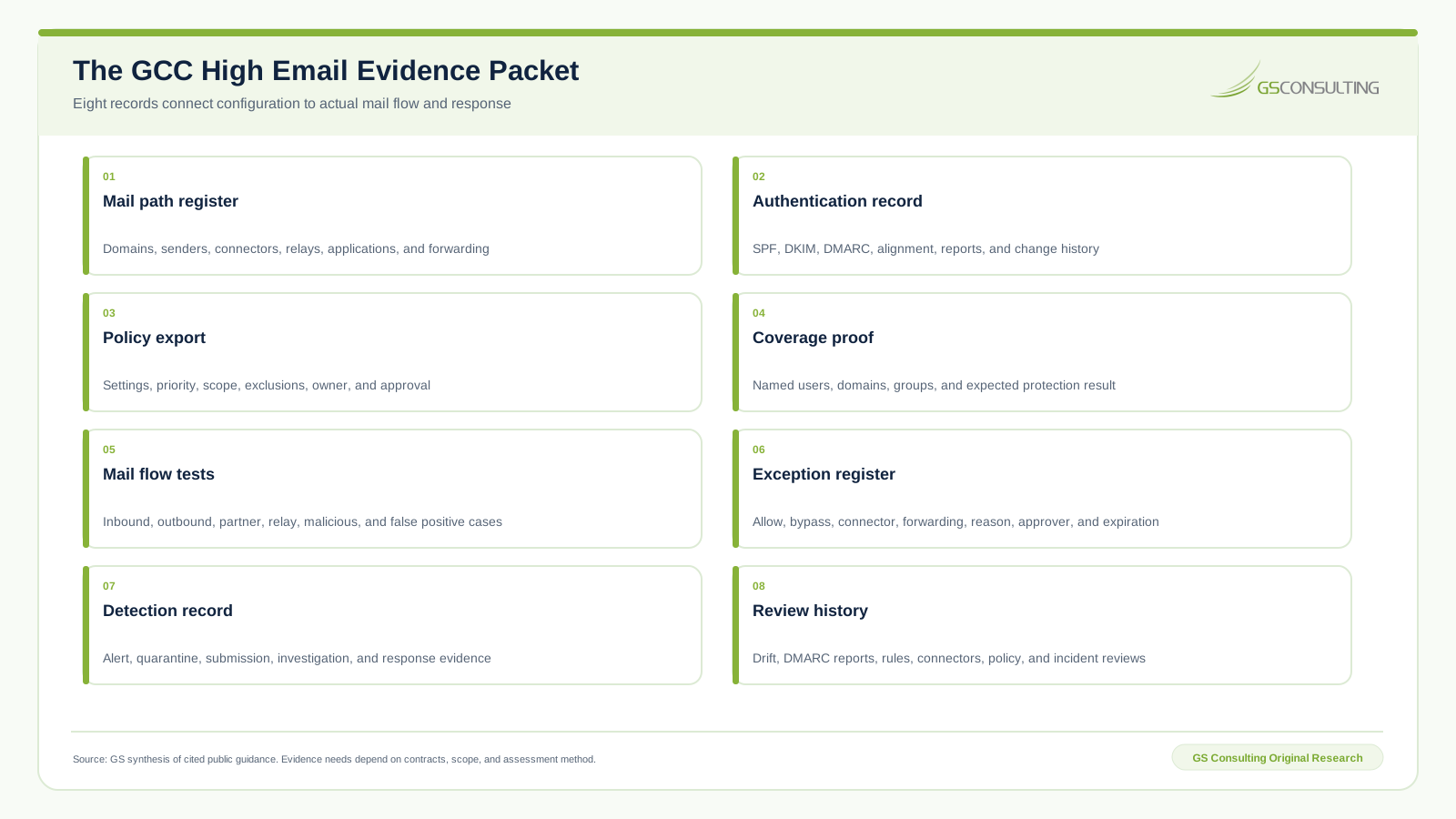
The minimum packet has eight records: mail path register, authentication record, policy export, coverage proof, mail flow tests, exception register, detection record, and review history. Each should carry a period, owner, source, and scope. It should also record approval, retention, and result.
Connect the records. A new sender changes the mail path register, SPF design, DKIM plan, DMARC evidence, connector or relay configuration, test cases, owner, and review history. A released phishing message should connect the quarantine action, person, reason, message details, investigation, affected users, response, and control improvement.
Bottom Line
GCC High supplies a specialized email service. The organization still owns the practical defense: sender identity, user coverage, policy precedence, message handling, mail routes, exceptions, response, and evidence.
The decisive standard is simple: every sender is known, every protected population is proven, every trusted route is tested, every exception expires, and every material email event reaches an accountable owner.
Make every mail route testable and owned.
GS Consulting helps teams inventory senders, repair policy coverage, constrain exceptions, test message outcomes, and retain the evidence.
Request an Email ReviewSources and Method Note
- Microsoft recommended EOP and Defender settings
- Microsoft Defender for Office 365 service description
- Microsoft configuration analyzer guidance
- CISA ScubaGear baseline files at the counted commit
- NIST SP 800-177 Revision 1
- Microsoft GCC High and DoD service description
GS Consulting Original Research. The GS GCC High Mail Defense Evidence Priority Index is a derived planning model based on cited public sources and documented analyst assumptions. It is not an official Microsoft, CISA, NIST, DoD, legal, audit, compliance, or regulatory determination. Verify current feature availability, licensing, mail flow, contractual duties, and evidence requirements before implementation.
Frequently Asked Questions
Is GCC High email secure by default?
GCC High provides a specialized government cloud service, but secure email still depends on licenses, policy settings, user coverage, domain authentication, connectors, forwarding, applications, exceptions, monitoring, response, and evidence. Default settings are a starting state, not a complete mail defense design.
Which GCC High email security settings matter most?
GS research places SPF, DKIM, and DMARC first, followed by preset protection coverage, impersonation and spoof protection, Safe Links, external forwarding and mailbox rules, audit and response, Safe Attachments, and trusted mail connectors. The exact configuration depends on available licenses and real mail paths.
Should GCC High use Standard or Strict preset security policies?
Microsoft recommends Standard and Strict protection profiles. Many organizations apply Standard broadly and use Strict for selected high value users, but the right scope depends on risk, user role, license, mail flow, and tested business impact. Explicit coverage and managed exceptions matter as much as the profile name.
Does GCC High support SPF, DKIM, and DMARC?
These domain authentication controls are part of a trustworthy email design. Operators should inventory every authorized sender, publish accurate SPF records, enable DKIM signing for each sending domain, collect DMARC reports, repair alignment, and move enforcement deliberately. Exact tenant and DNS steps should follow current Microsoft guidance.
How should GCC High external forwarding be controlled?
Define the approved default, inventory tenant and mailbox level forwarding paths, monitor inbox rules and changes, name business exceptions, test the result, and expire exceptions. A tenant setting alone does not prove that individual mailbox rules and application routes are controlled.
What evidence proves GCC High email security?
Use a mail path register, SPF and DKIM records, DMARC reports, policy exports, coverage proof, and representative mail tests. Add the connector and rule inventory, exception approvals, quarantine and submission records, alerts, investigations, drift reviews, and incident exercises.