Microsoft GCC High | | 29 min read
GCC High eDiscovery and Legal Hold: A Defensible Operating Guide

Key Takeaways
Preservation succeeds when authorized scope reaches every changing data location
Counsel directs the matter boundary
Technology operators implement approved custodians, sources, dates, changes, release, and closure without inventing legal scope or conclusions.
Scope and hold verification score 100
Counsel instruction and per location preservation share the top score because every later search, review, export, and release depends on them.
Case status is not location proof
Retain each intended location, state, error, retry, timestamp, verifier, and restamp after identity or site changes.
GCC High eDiscovery and legal hold should operate as a controlled evidence chain. Authorized scope must reach restricted cases, current custodians and data sources, verified preservation, explainable search and review, controlled export, approved release, and documented closure.
Creating a case is administrative work. Defensibility comes from the decisions and results around it. A renamed user can change a location identity, one mailbox can fail while a case appears active, another retention mechanism can continue preservation after a hold release, and an export can expire before custody is verified.
This guide belongs to the Microsoft GCC High hub and supports the secure AI and regulated automation service. Read it with the GCC High guide, data loss prevention guide, email security guide, and identity governance guide.
Make preservation, search, and release reconstructable.
GS Consulting helps regulated teams map GCC High data sources, restrict case duties, verify holds, test search and export, and build operating evidence.
Review the eDiscovery Operating ModelGCC High eDiscovery and Legal Hold: The Short Answer
Receive authorized legal instruction. Record the matter, trigger, scope, custodians, sources, dates, deadlines, and release authority. Open a restricted eDiscovery case, assign minimum roles, map current data locations, apply and verify holds by location, resolve failures, document retention overlap, validate searches and unindexed items, control review and export, and change or release preservation only through approved direction.
Microsoft includes eDiscovery in its Purview GCC High deployment guidance. Do not assume commercial feature parity. Verify licenses, roles, endpoints, supported locations, current workflow, support paths, and actual tenant results.
Separate Legal Authority, Service Scope, and Technical Execution
Authorized counsel or the organization role responsible for the matter directs legal scope. Technology and records teams should not infer custodians, dates, sources, search concepts, release, or disposition from a vague request. Convert direction into an implementation record with the exact matter identifier, authority, trigger, scope, exclusions, data classes, custodians, sources, dates, deadlines, preservation rule, review rule, export rule, change route, and release authority.
GCC High is a distinct service boundary. Confirm the Microsoft 365 cloud, tenant identifiers, administrative endpoint, case roles, licensing, supported content locations, cross cloud data, encryption behavior, support route, and any external review platform. If a matter crosses commercial, GCC, GCC High, DoD, on premises, endpoint, archive, backup, or third party systems, one case interface is not the complete source map.
This article describes an operating control model, not legal advice. Preservation duties, collection scope, review standards, privilege, production, release, and disposition depend on the matter, jurisdiction, contract, policy, and authorized legal direction.
Understand the Public eDiscovery Control Surface
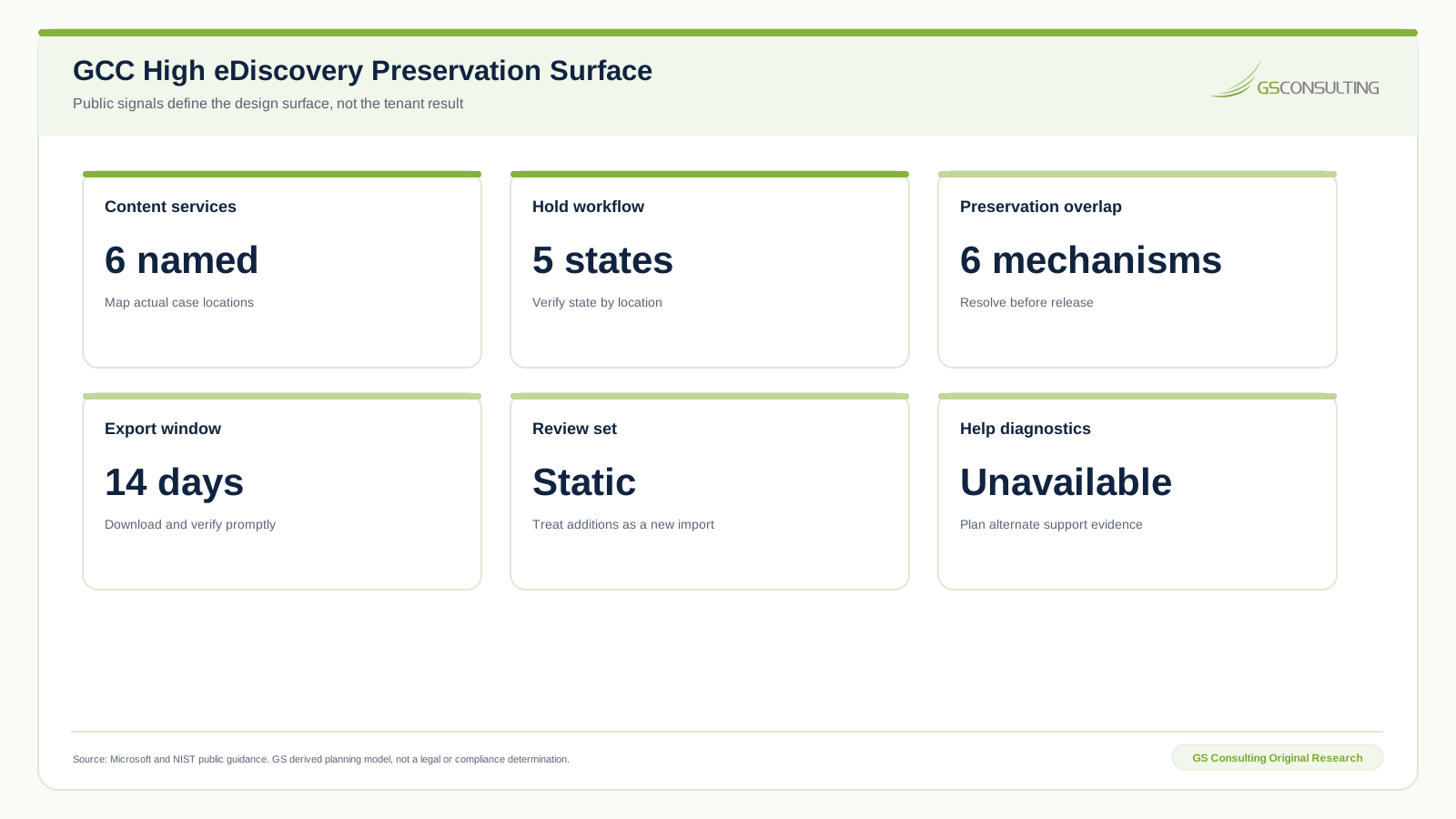
Microsoft documents eDiscovery across Exchange Online, Microsoft Teams, Microsoft 365 Groups, OneDrive, SharePoint, and Viva Engage. Cases can contain searches, holds, and review sets, while case membership and role groups restrict access. Verify which services, data types, and features are available for the target GCC High licenses and matter.
Microsoft hold guidance names Draft, On, Off, In progress, and Pending deletion states. It also warns that identity and location changes can require updates so preservation reaches the current mailbox, OneDrive, site, or other location. Treat status as an evidence source to inspect, not a conclusion to copy.
Microsoft documents a 14 day window for an export to remain available. Review sets are static collections, and items cannot be individually deleted from a review set. Help pane compliance diagnostics are unavailable in GCC High and DoD, so the operating plan needs another support and diagnostic evidence path.
GS GCC High eDiscovery Preservation Proof Index
GS modeled ten operating control domains using five one to five ratings: legal consequence, preservation exposure, scope volatility, chain of custody value, and failure recovery. Base weights are 30, 25, 20, 15, and 10 percent. Each weighted result is rounded to a whole point on a zero to 100 planning scale.
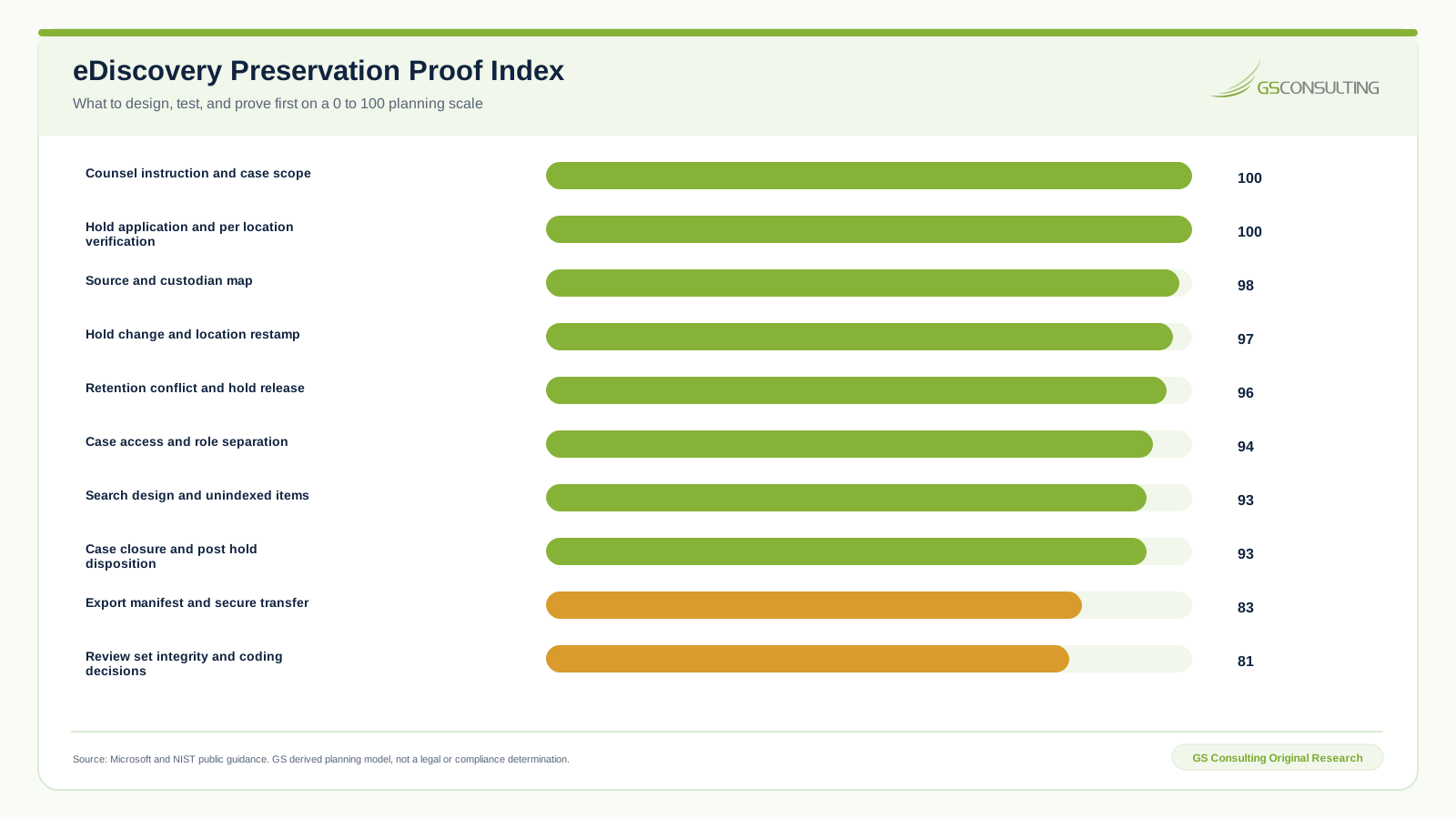
The index is a planning device, not a legal importance score. Scope ranks first because every hold, search, review, export, and release must follow authorized direction. Per location verification shares the top score because a case level state can mask a location error. Source mapping and restamping follow because custodians, names, mailboxes, sites, groups, aliases, and cloud locations change during a matter.
The sensitivity case moves five percentage points from legal consequence to failure recovery. No item moves more than one point, and the leading proof tier remains unchanged. The result supports a sequence that proves authority, location coverage, change handling, and release before treating review convenience as the primary risk.
Restrict the Case and Separate Duties
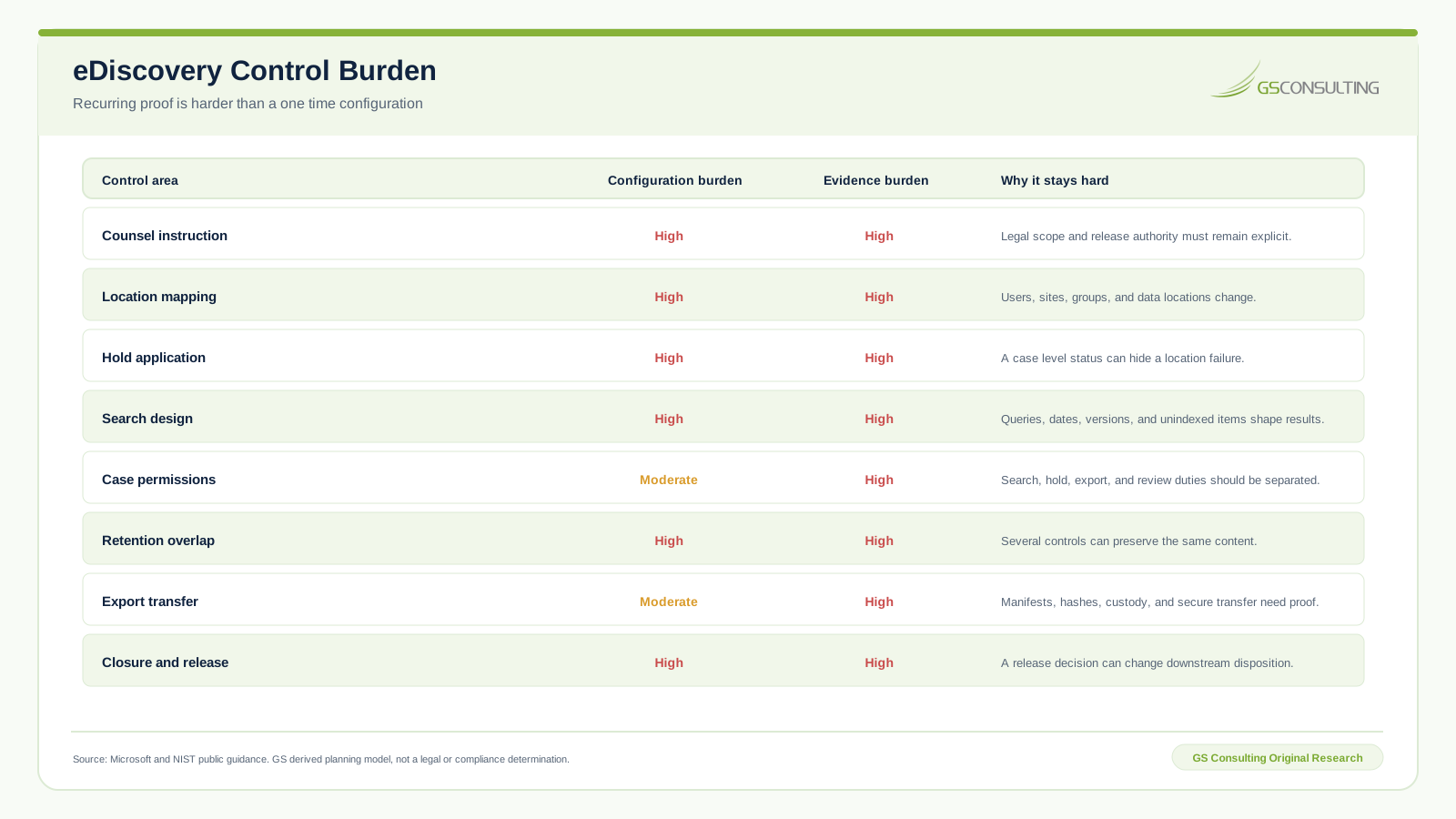
Use the minimum case membership and role permissions necessary for the matter. Microsoft separates capabilities for case management, search, custodians, holds, preview, review, tagging, export, decryption, and search and purge. Build custom role groups where appropriate instead of giving every participant the broadest eDiscovery role.
Record who requested access, who approved it, the matter role, permissions, start date, end date, authentication requirement, workstation or service path, export authority, review frequency, and removal result. Review membership when a person changes team, employer, matter responsibility, or clearance need, and when the case becomes inactive.
Separate destructive or consequential paths. The person approving release should not be the only person able to delete the case record. The person designing a search should not silently change preservation scope. Export access should be limited to operators with an approved transfer and custody path.
Maintain a Living Custodian and Source Map
For each custodian, record legal name, account identifiers, aliases, mailbox, OneDrive, sites, Teams, Microsoft 365 Groups, shared mailboxes, delegated access, data ownership, employment state, manager, matter role, location changes, and non Microsoft sources. Link each entry to the authorized scope and every preservation result.
Do not freeze the source map at case opening. User principal names, mailboxes, OneDrive locations, SharePoint sites, group membership, ownership, and cloud location can change. Establish triggers from identity, site, tenant, merger, separation, and migration events. When a location identity changes, update the case record, modify the hold where required, verify the new state, and preserve the old and new mapping.
Coordinate the source map with GCC High identity governance. Joiner, mover, and leaver records can reveal name, ownership, role, sponsor, and location changes that matter to preservation. A routine account cleanup must not undermine an active hold.
Verify Preservation by Location and Across Overlapping Controls
A defensible hold record includes the case, policy, authorized instruction, query or condition, intended locations, actual locations, state, errors, retries, timestamp, operator, independent verifier, and later changes. Investigate In progress, Pending deletion, and error conditions. Do not summarize partial success as complete preservation.
Content can remain preserved by an eDiscovery hold, retention policy, retention label, Litigation Hold, delay hold, or Single Item Recovery. These mechanisms have different purposes and behavior. Map them before changing a hold. An eDiscovery hold can take precedence over retention deletion, and removing one hold does not prove content is eligible for deletion.
Use eDiscovery holds for authorized matter scope and retention controls for broader lifecycle requirements. The GCC High records management guide explains how file plans, labels, record state, review, and disposal connect to that preservation boundary. Coordinate counsel, records, privacy, security, and service owners before release. Record the overlap analysis, decision authority, expected disposition, actual release state, and later system result.
Make Search, Review, and Export Explainable
Preserve search versions. Record the objective, locations, custodians, date logic, keywords, conditions, exclusions, syntax, estimate, sample, known limitations, unindexed item treatment, reviewer feedback, revisions, and approval. A small result can mean a precise query, missing location, unsupported data, processing delay, or syntax error.
A review set is a static collection. Record every import, source search, settings, processing result, deduplication or threading choice where available, item count, exceptions, and reviewer access. Preserve tags and coding decisions with definitions, reviewer, time, quality review, and change history. Do not treat the review set as a live view of changing source data.
Download exports before the documented 14 day availability window closes. Keep export settings, item counts, manifest, hashes where appropriate, encryption, storage location, chain of custody, transfer method, recipient, receipt, discrepancy, and resolution. Use an approved GCC High handling path and confirm whether data leaves the tenant or regulated boundary.
Release Holds and Close Cases Through Authorized Gates
A hold release should require the matter identifier, counsel or authorized approval, scope, affected locations, remaining preservation mechanisms, open exports, review material, related matters, records duties, privacy duties, security restrictions, expected disposition, operator, verifier, and completion time. Reconcile every location after the change.
Case closure is a separate decision. Confirm that legal work is complete, preservation changes have the intended result, exports and productions are accounted for, review material and decision records follow approved retention, access is removed, related matters are linked, and lessons or defects enter the operating backlog.
Deleting a case can remove case content, including review sets. Do not use deletion as ordinary cleanup without an explicit, approved record. Preserve the evidence required to explain what was held, searched, reviewed, exported, released, and closed.
Use a Five Stage eDiscovery Operating Sequence
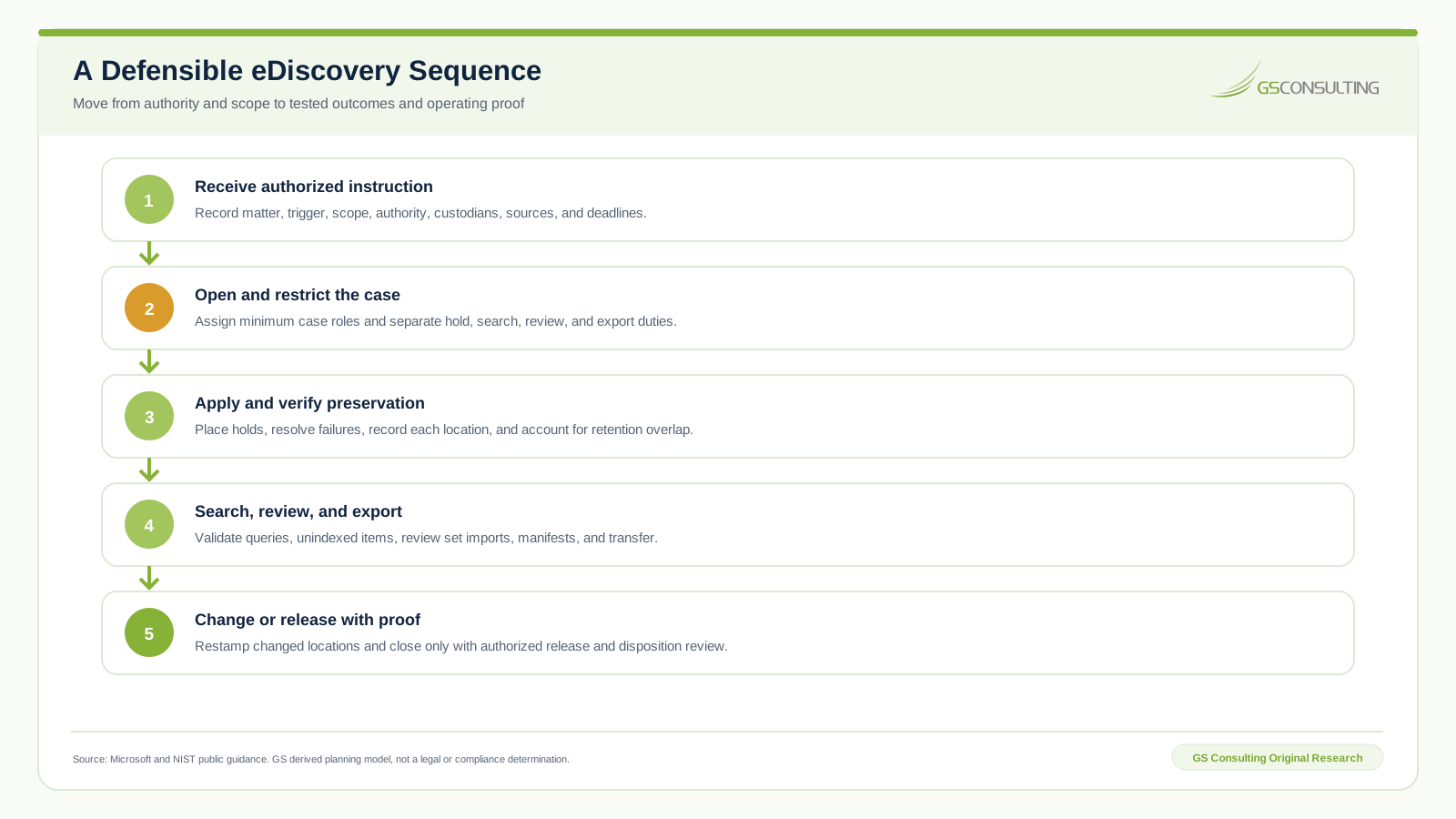
Exercise the sequence before a high pressure matter. Test a new custodian, renamed user, moved site, failed mailbox hold, added source, changed date range, unindexed item, review set import, expiring export, unauthorized export attempt, overlapping retention control, partial release, and case closure. Capture expected and actual results.
Route every failure to an owner and deadline. Repeat the relevant test after correction. Keep the first result, defect analysis, change, repeated result, approval, and any remaining limitation. A repaired hold is stronger evidence when the record explains the original gap and the verified correction.
Avoid Six eDiscovery and Legal Hold Failures
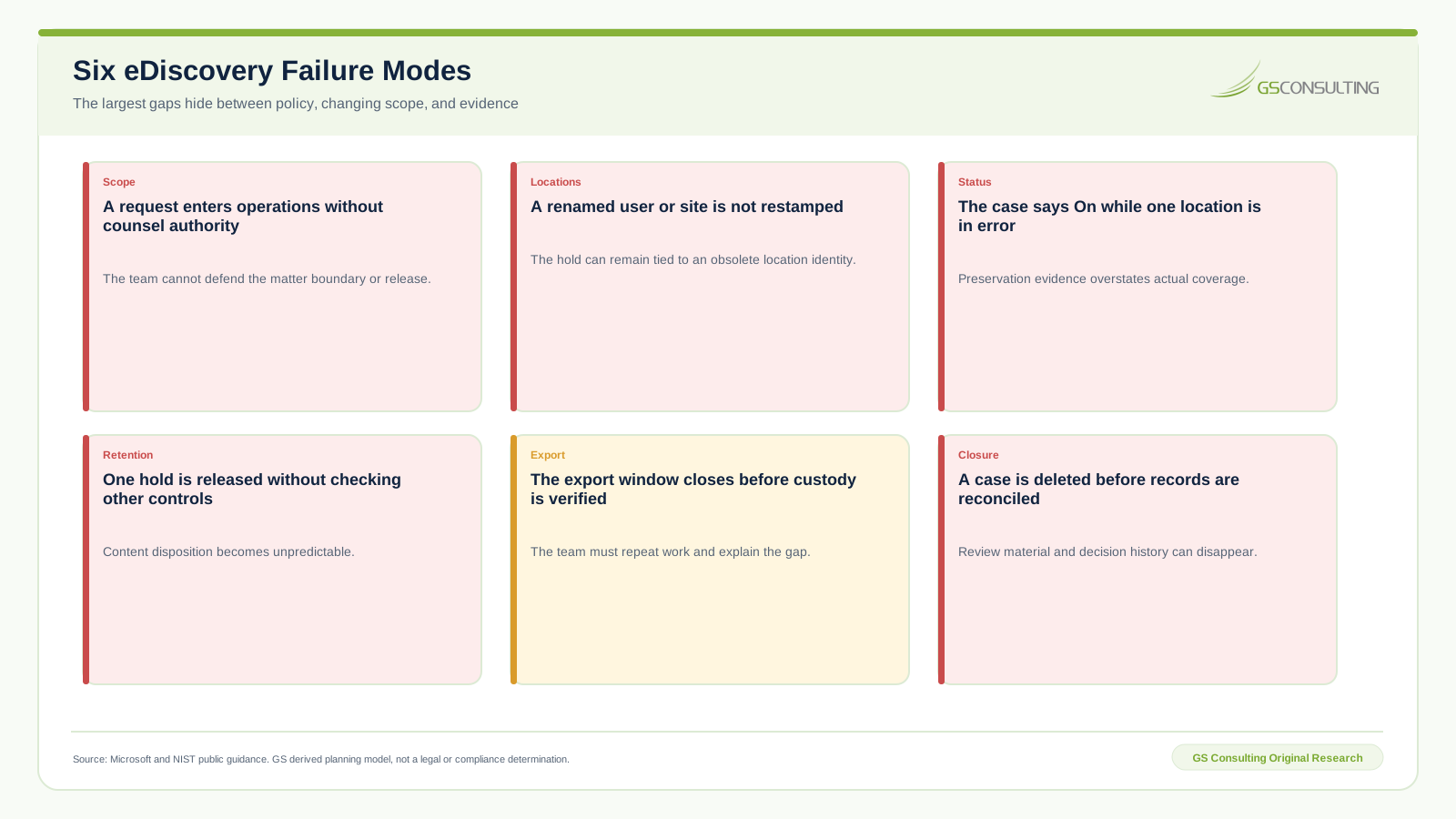
Vague scope. Operations begin without authorized custodians, sources, dates, or release rule. Stale location. A renamed user or moved site is not restamped. Case status as proof. The overall hold appears on while one location is in error.
Single control assumption. One hold is released without checking other preservation mechanisms. Missed export window. The download expires before custody and completeness are verified. Premature closure. A case is deleted before review material, decision history, access, disposition, and related matters are reconciled.
Build a Minimum eDiscovery Evidence Packet
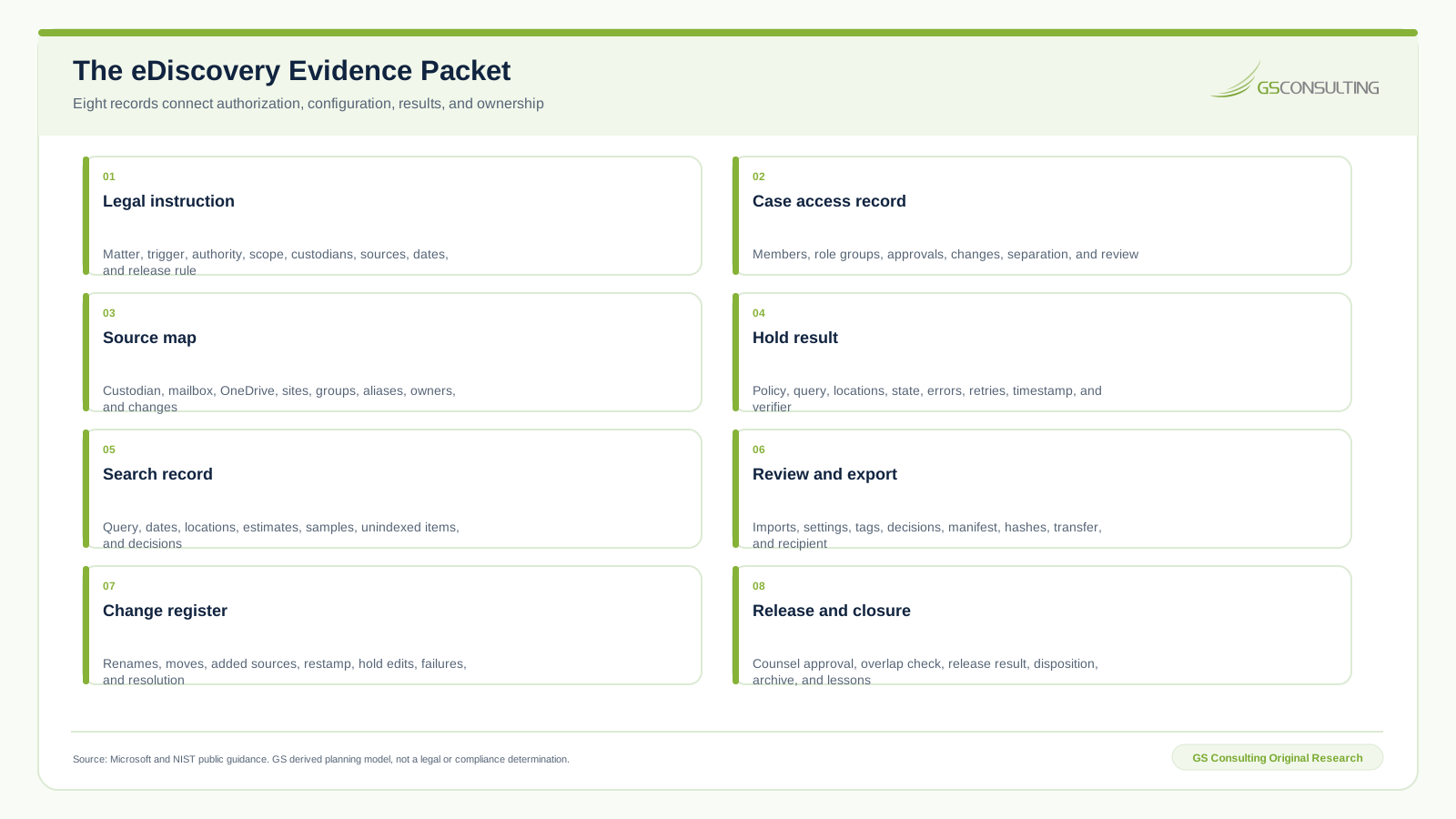
Keep the legal instruction, case access record, source map, hold result, search record, review and export record, change register, and release and closure record. Use stable identifiers for the matter, case, custodian, source, location, hold, search, review import, export, change, and approval.
Sample both routine and difficult records: successful and failed locations, renamed accounts, moved sites, inactive custodians, shared mailboxes, new sources, query revisions, unindexed items, repeat imports, disputed coding, expiring exports, custody discrepancies, overlapping holds, partial releases, and deleted or closed cases.
A 60 Day GCC High eDiscovery Operating Plan
| Period | Operator action | Required output |
|---|---|---|
| Days one through ten | Confirm tenant, licenses, roles, supported services, legal intake, matter authority, current cases, preservation mechanisms, and evidence. | Feature record, authority map, case inventory |
| Days eleven through twenty | Define case roles, source fields, change triggers, hold verification, search versioning, unindexed item treatment, export custody, release, and closure. | Operating procedure, role matrix, source schema |
| Days twenty one through thirty five | Configure minimum roles, intake records, location maps, hold evidence, search records, review imports, export manifests, alerts, and support routes. | Templates, configurations, controlled evidence store |
| Days thirty six through forty five | Test new, changed, failed, overlapping, exported, released, and closed scenarios across representative services. | Scenario results, defects, correction evidence |
| Days forty six through sixty | Reconcile live cases, resolve location and access gaps, repeat failed tests, approve the evidence packet, and assign recurring review. | Case review, approved exceptions, evidence packet |
Research Sources and Caveats
The research package uses sources accessed September 5, 2026:
- Microsoft Purview GCC High deployment guidance for the government compliance service context.
- Microsoft eDiscovery overview for cases, services, searches, holds, review sets, and export context.
- Microsoft eDiscovery workflow for the operating sequence and export availability.
- Microsoft eDiscovery permissions for role groups and separated case capabilities.
- Microsoft hold management guidance for hold states, location changes, preservation overlap, and release context.
- Microsoft retention guidance for the difference between retention and eDiscovery holds.
- Microsoft review set guidance for static collections, imports, and review set behavior.
- Microsoft Purview compliance diagnostics guidance for the GCC High and DoD Help pane limitation.
- NIST SP 800-171 Revision 3 for CUI access, audit, protection, and information lifecycle context.
The package contains the source register, public signals, model inputs, live workbook formulas, cached scores, sensitivity results, figure data, data dictionary, methodology, supporting operating tables, editable SVG files, browser rendered PNG files, and workbook. Public observations, GS ratings, and derived outputs remain separate.
The GS GCC High eDiscovery Preservation Proof Index is a planning tool. It is not legal advice, an official Microsoft score, a preservation decision, a discovery protocol, an audit result, certification, or compliance determination. Authorized counsel directs the matter, scope, hold, search, release, and closure. Verify current licenses, features, data locations, contracts, policies, and tenant results.
GCC High eDiscovery and Legal Hold FAQ
Suggested Future Reading
- Microsoft GCC High Hub
- What Is GCC High?
- GCC High Data Loss Prevention
- GCC High Email Security
- GCC High Identity Governance
- GCC High Tenant Configuration
- Secure AI and Regulated Automation Services
Operate eDiscovery as a controlled evidence chain.
The standard is direct: authorized scope, minimum case access, current sources, verified holds, explainable searches, controlled exports, approved release, and reconstructable closure.
Request an eDiscovery Readiness Review