Cybersecurity | | 29 min read
FedRAMP Vulnerability Management: The 2026 Operating Guide

Key Takeaways
A scanner finding is the start of the decision, not the end
Evaluation changes the clock
Exploitability, internet reachability, and potential agency impact determine which response window applies.
The response clock scores 96
Coverage, exploitability, impact, and known exploited vulnerability response follow close behind in the GS model.
A ticket is not proof
Verify the changed state, repeat the relevant test, update the report, and review why the condition reached production.
FedRAMP vulnerability management is not a monthly scan report. It is a persistent operating loop that finds conditions, evaluates federal impact, acts inside a clock, proves the result, and repairs its own blind spots.
The 2026 rules make that distinction explicit. Vulnerabilities include more than software flaws. Configuration drift, design weakness, supply chain exposure, incomplete coverage, and failures in the detection or response process can all create work. Severity still matters. It no longer gets to make the whole decision.
The practical burden sits between tools and authority. Operators need a current boundary, resource identity, complete detection paths, context, response lanes, due dates, change capacity, customer awareness, accepted risk control, reporting history, and verified closure. If those records do not connect, the program becomes a spreadsheet of aging findings.
This guide belongs to the FedRAMP Compliance Hub and supports the secure AI and regulated automation service. Use the FedRAMP POA&M management guide to turn evaluated findings into owned milestones, accepted vulnerability records, agency action, and verified closure. Pair both guides with the continuous monitoring guide, incident response guide, and significant change guide.
Find the blind spots before the response clock starts.
GS Consulting helps providers connect inventory, detection, evaluation, change, reporting, accepted risk, and closure into one reviewable system.
Review Vulnerability OperationsFedRAMP Vulnerability Management: The Short Answer
Know every resource in the Class D boundary. Detect flaws, drift, unsafe design, process failure, and relevant supplier conditions. Evaluate each detected vulnerability within two days. Record affected resources, exploitability, internet reachability, potential agency impact, grouping, and false positive basis. Choose a response lane, meet the applicable clock, verify the deployed result, report current history, and review recurrence.
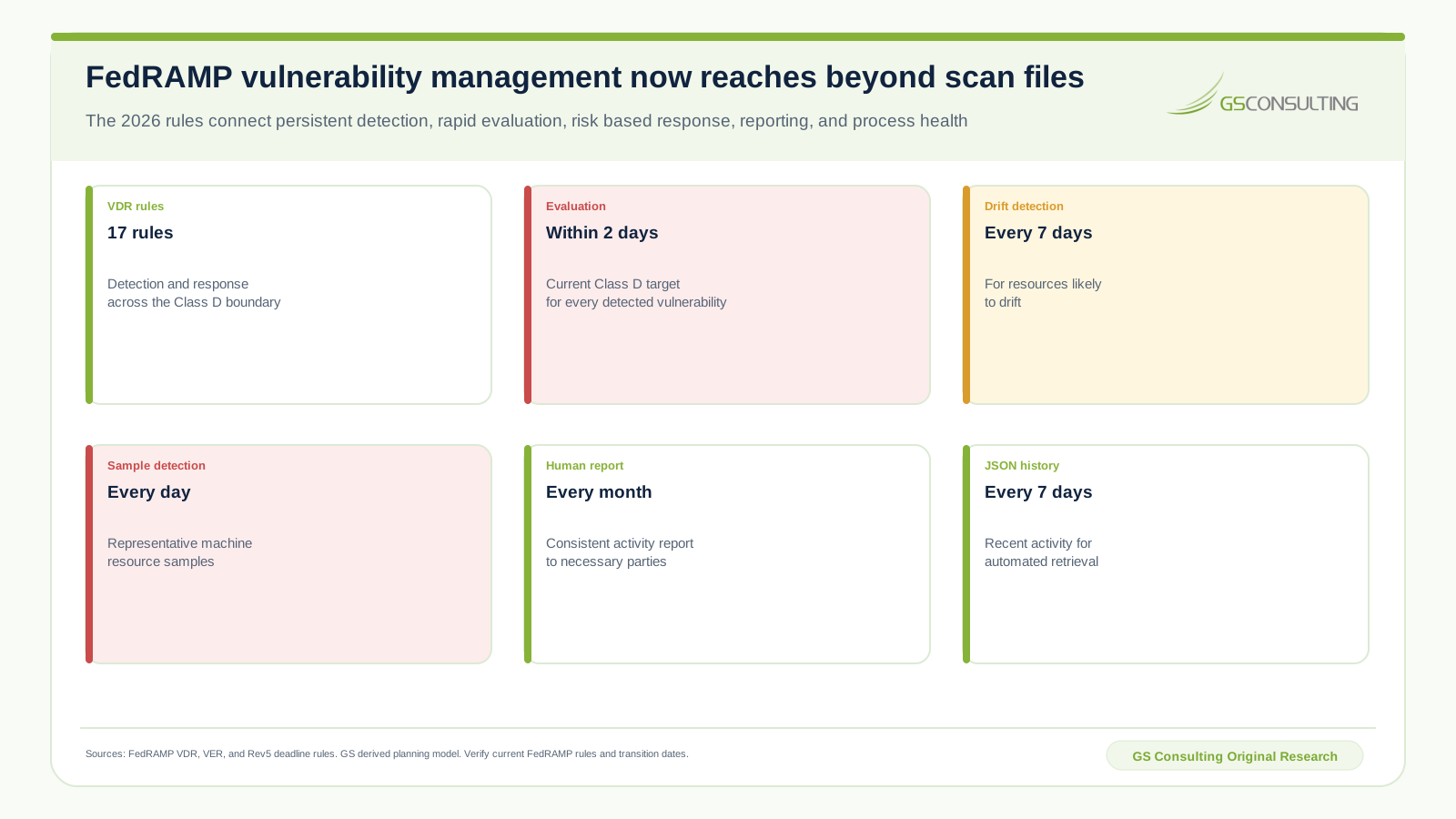
As of September 4, 2026, the Vulnerability Detection and Response document contains 17 rules. Resources likely to drift have a seven day detection target. Representative machine resource samples are checked daily, machine resources are verified monthly, and resources that cannot use machine verification are checked quarterly. Human readable reports are monthly, while recent machine readable history is updated every seven days.
Read VDR and VER Together
The Vulnerability Detection and Response rules define how providers find vulnerabilities and respond. The Vulnerability Evaluation and Reporting rules define the evaluation record, report content, history, and accepted vulnerability status.
Their obtain and maintain date is December 7, 2026, with a grace period through March 7, 2027. That schedule should drive preparation, not premature claims. A provider should map the new operating rules to its current authorization, contracts, agency direction, tools, staffing, reports, and change process before asserting conformance.
Read the rules beside the Revision 5 Risk Assessment controls and System and Information Integrity controls. The new operating detail does not remove the authorization baseline or agency obligations.
GS FedRAMP Vulnerability Response Pressure Index
GS modeled 12 operating capabilities using five one to five ratings: response urgency, federal agency impact, automation dependency, evidence burden, and coordination load. Base weights are 25, 25, 20, 15, and 15 percent. The score runs from zero to 100.
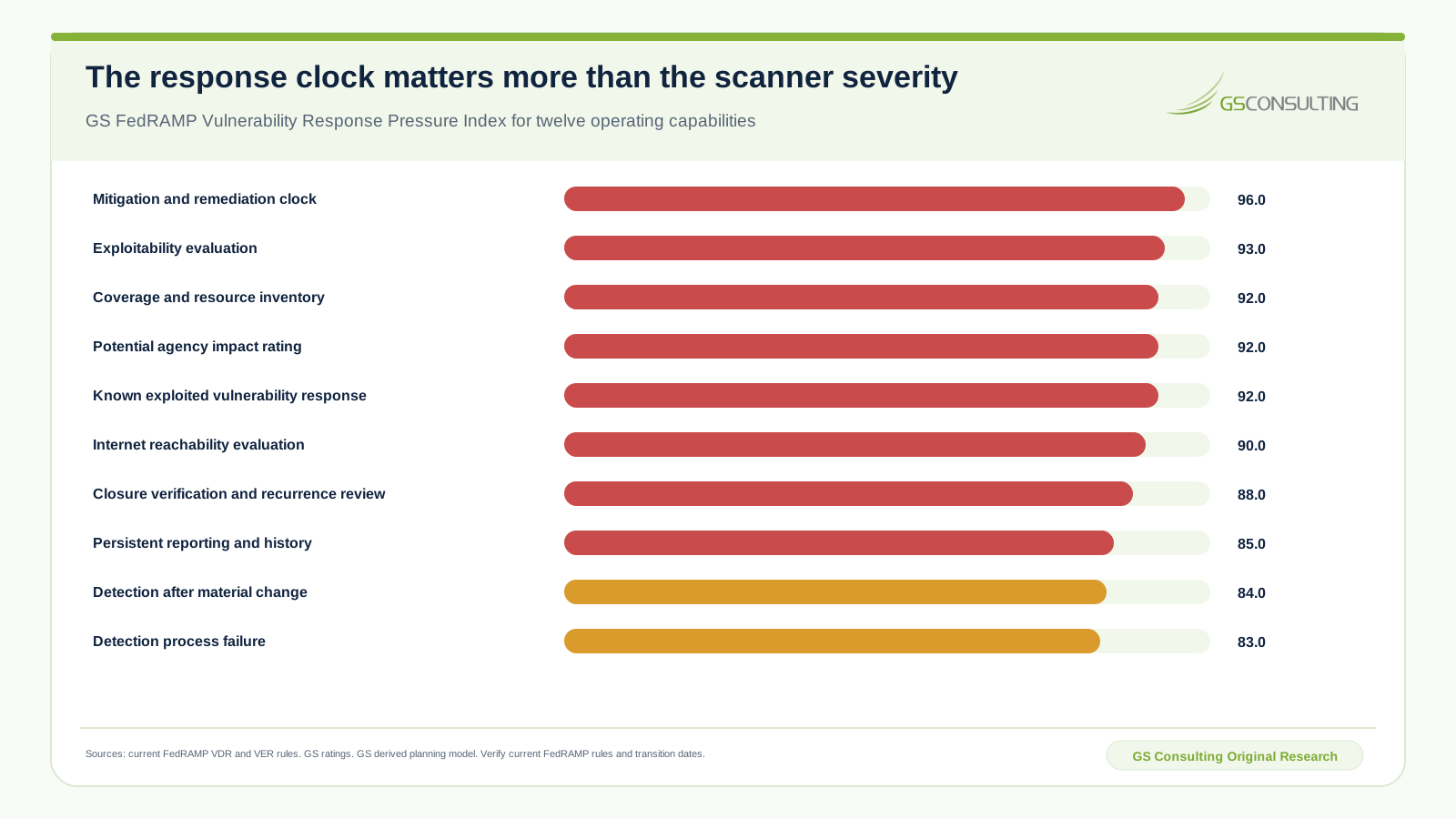
The index does not measure legal importance or predict an assessment. It exposes operating pressure. The response clock ranks first because it depends on a trustworthy detection time, a completed evaluation, a valid impact rating, an available response, authorized change, and proof before the deadline.
The sensitivity case moves five percentage points from urgency to agency impact. It preserves the immediate priority group, and no item moves more than two points. The result supports an integrated program: coverage and context deserve the same executive attention as deployment speed.
Prove Coverage Across the Real Boundary
Start with a resource identity model. Each resource needs a stable identifier, type, owner, environment, authorization boundary status, agency and data relevance, software or service version, exposure, drift likelihood, detection methods, provider responsibility, last successful result, and exception state.
Map scanners, agents, cloud controls, code analysis, image analysis, dependency tools, configuration rules, penetration testing, disclosure, supplier notices, threat intelligence, manual checks, and provider reports to that resource record. State what each method can detect, cannot detect, and requires for depth. Reconcile expected resources with observed resources.
Persistent detection uses several clocks. Resources likely to drift need detection at least every seven days. Resources not likely to drift still need monthly detection. A representative machine resource sample is checked daily, all machine resources are verified monthly, and resources that cannot support machine verification are checked quarterly. Material change must also trigger detection rather than wait for the calendar.
A failed scanner job, expired credential, broken agent, unsupported asset, stale feed, empty provider report, or incomplete route is not merely an operations note. The rules treat failures in the detection and response process as vulnerabilities that must enter the same controlled response loop.
Evaluate the Condition, Not Only the Score
Complete the evaluation within two days. Name every affected resource and the evidence for version, configuration, path, or condition. Determine whether the issue is likely exploitable and whether the resource is internet reachable. Estimate potential agency impact. Record grouping logic and false positive reasoning.
Use scanner severity and CVSS as inputs, not commands. Add asset presence, exploit evidence, privilege, reachability, data path, tenant scope, control strength, mission effect, supplier dependency, available mitigation, change consequence, detection confidence, and uncertainty. A critical score on an absent component is different from an exploited weakness on an internet reachable federal data path.
Check the CISA Known Exploited Vulnerabilities Catalog as an authoritative exploitation signal. Match the catalog record to the actual product and version. Use its due date when applicable. The catalog does not replace local impact analysis and does not prove the product exists in the boundary.
Use the Potential Agency Impact Clock Correctly
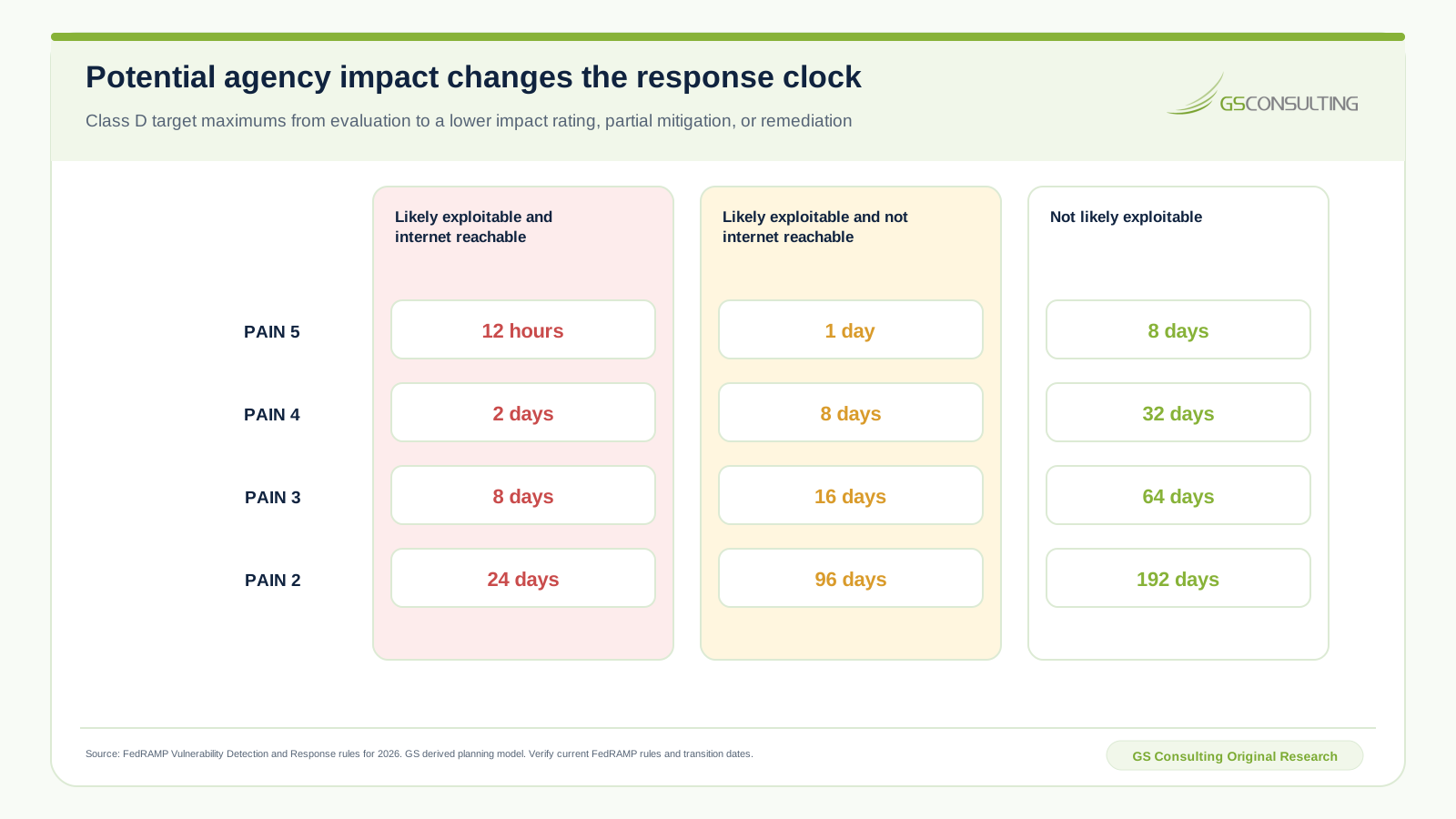
For vulnerabilities that are likely exploitable and internet reachable, the current maximums are 12 hours at PAIN 5, two days at PAIN 4, eight days at PAIN 3, and 24 days at PAIN 2. If likely exploitable but not internet reachable, the maximums are one day, eight days, 16 days, and 96 days. If not likely exploitable, they are eight days, 32 days, 64 days, and 192 days.
The clock runs from evaluation to a lower impact rating, partial mitigation, or remediation. Build deadline calculation into the record. Preserve detection time, evaluation time, assigned rating, context lane, computed due time, time zone, rule version, pauses if expressly allowed, status changes, and evidence for any impact reduction.
Do not lower the rating to make the queue look healthy. A lower rating needs changed facts, deployed safeguards, or new evidence. If a vulnerability is not fully mitigated or remediated within 192 days, mark it as accepted and maintain the governing decision record.
Operate Five Response Lanes
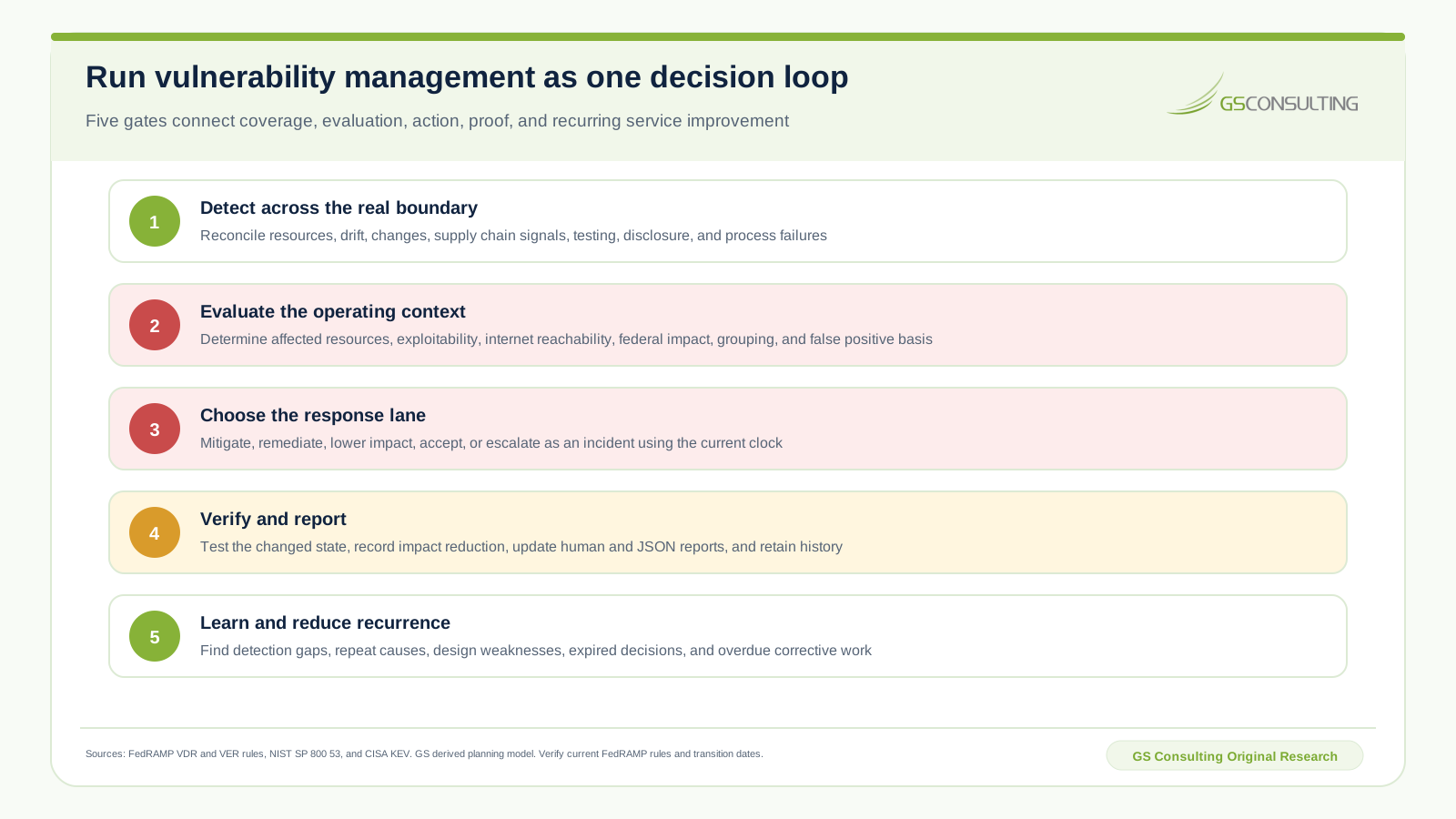
Remediate. Remove the vulnerable condition and verify the actual deployed state. Mitigate. Reduce exploitability, reachability, privilege, access, exposure, or consequence and recalculate impact with evidence. Lower impact. Use changed facts or controls to support a lower rating. Accept. Record authority, basis, safeguards, review, expiry, and customer considerations. Escalate. Treat a material condition as an incident when it affects or is likely to affect federal customer data.
Connect every lane to change control. Emergency change can be necessary, but urgency does not remove validation, rollback, approval, data protection, logging, or evidence. If a response changes the authorization boundary, security architecture, control implementation, service behavior, or customer risk, evaluate it under the FedRAMP significant change process.
Close against the original condition. Repeat the relevant test, reconcile the resource and version, confirm the control state, verify impact reduction, check for unexpected effect, update human and machine records, and review why the condition reached the environment. A ticket marked complete is administrative evidence, not technical proof.
Keep Human and Machine History Consistent
The current rules call for a consistent human readable activity report at least monthly and recent machine readable JSON history updated every seven days. Treat those as two views of one controlled record. Use stable identifiers, common status, version, timestamps, evaluation fields, due dates, response evidence, acceptance state, and closure history.
Reconcile totals and exceptions before distribution. Explain additions, removals, grouped items, false positives, overdue work, accepted items, reopened items, response failures, coverage gaps, and changed impact. Preserve history. A changed field should not erase the earlier decision or the evidence available at that time.
Limit access according to sensitivity and customer need. Vulnerability details can expose architecture and active weaknesses. Record who received each report, through which approved channel, when, and whether delivery succeeded. A generated file is not proof of communication.
Avoid Six Vulnerability Program Failures
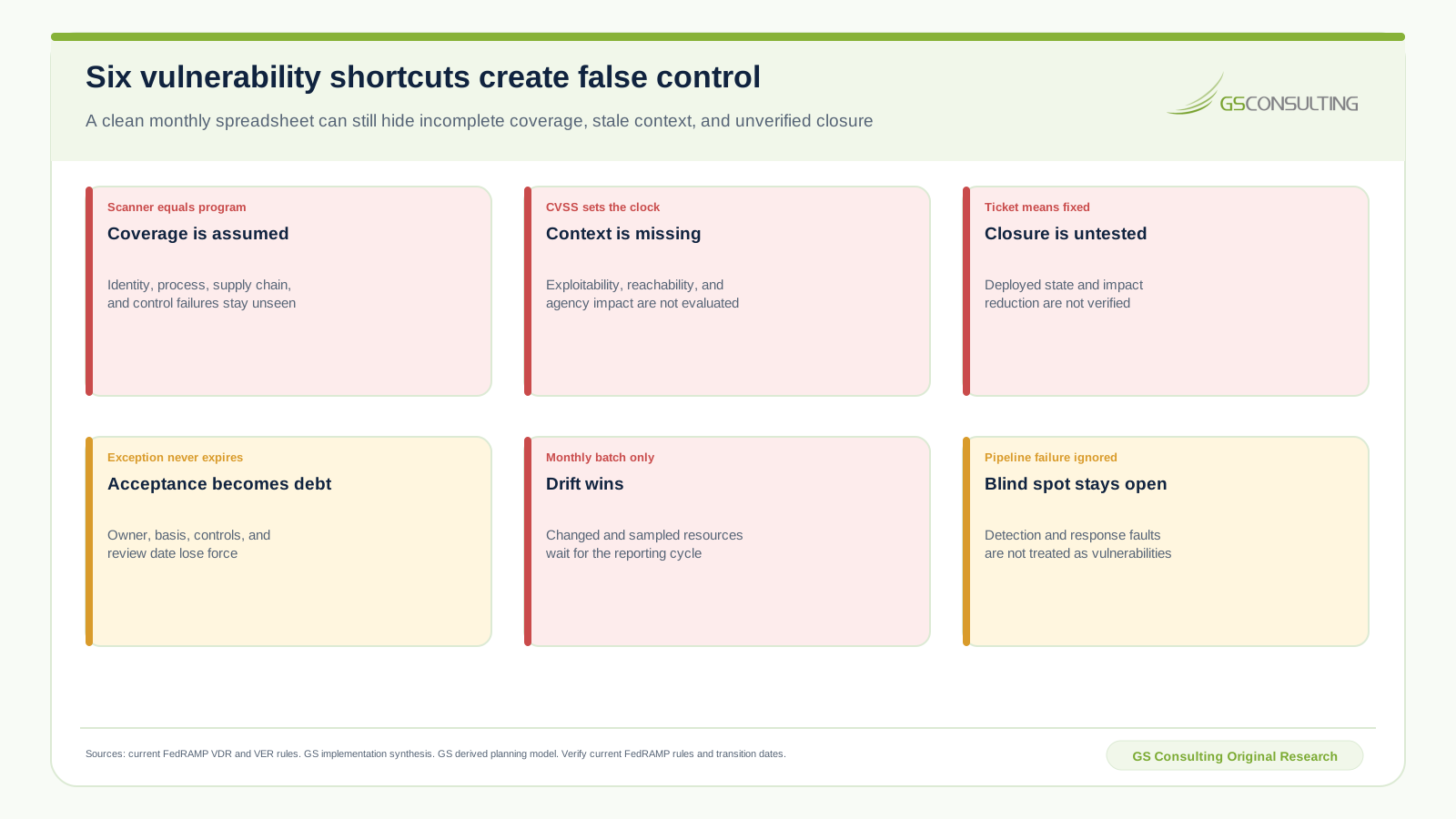
Scanner equals program. Identity, process, supply chain, configuration, and control failures remain unseen. CVSS sets the clock. Exploitability, reachability, and agency impact are not evaluated. Ticket means fixed. The deployed state and impact reduction are not tested.
Exception never expires. The owner, basis, safeguards, and review lose force. Monthly batch only. Drift and material change wait for the report cycle. Pipeline failure ignored. A broken detection or response path leaves a blind spot without entering the vulnerability queue.
Build a Minimum Vulnerability Evidence Packet
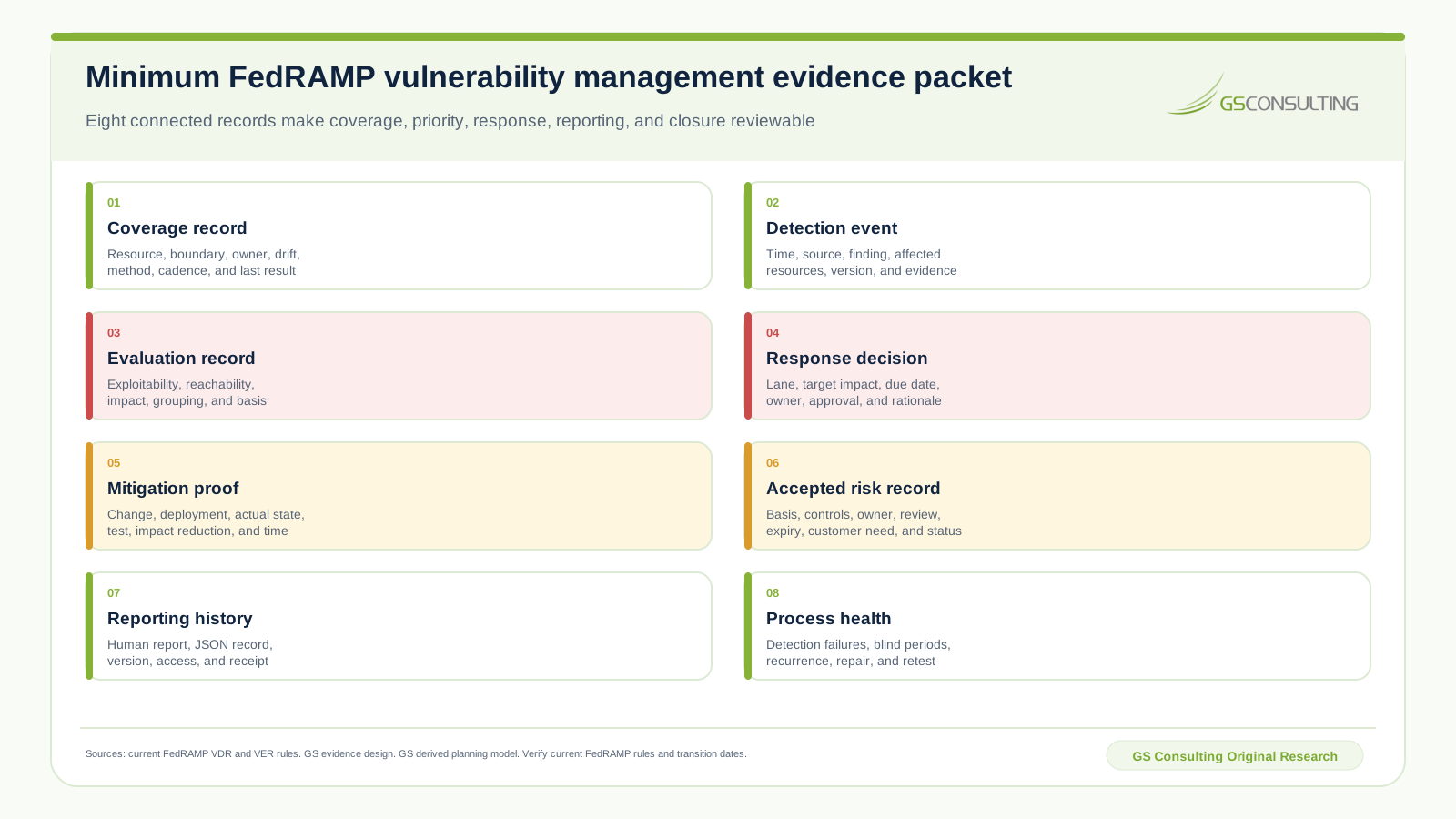
Keep the coverage record, detection event, evaluation record, response decision, mitigation or remediation proof, accepted vulnerability record, reporting history, and closure or recurrence review. Every record needs a stable identifier, owner, source, scope, time, version, evidence, decision authority, status, and links to related records.
Sample urgent, normal, accepted, false positive, grouped, provider dependent, failed detection, reopened, and verified closure cases. Retain raw evidence where authorized, plus the interpretation that drove action. Make the packet useful to operators first. Reviewers benefit when the operating record is already coherent.
A 60 Day Vulnerability Operations Plan
| Period | Operator action | Required output |
|---|---|---|
| Days one through ten | Confirm current rules, transition dates, authorization duties, Class D boundary, resource identity, federal data paths, and provider responsibilities. | Rule map, boundary record, resource reconciliation |
| Days eleven through twenty | Map detection methods, drift classes, cadence, material change triggers, supplier signals, failures, and uncovered resources. | Coverage matrix, cadence register, blind spot backlog |
| Days twenty one through thirty | Implement the two day evaluation record, impact method, exploitation and reachability evidence, grouping, and false positive controls. | Evaluation template, decision rules, sample records |
| Days thirty one through forty five | Connect clocks, response lanes, change authority, accepted risk, escalation, verification, and recurring reports. | Response workflow, deadline logic, report mapping |
| Days forty six through sixty | Run urgent, normal, failed pipeline, accepted, reopened, and incident escalation cases; correct defects and repeat the tests. | Test evidence, corrections, approved evidence packet |
Research Sources and Caveats
The research package uses sources accessed September 4, 2026:
- FedRAMP Vulnerability Detection and Response rules for detection scope, cadence, failures, response windows, and known exploited vulnerability duties.
- FedRAMP Vulnerability Evaluation and Reporting rules for the two day evaluation target, required context, reporting, history, and accepted vulnerability status.
- FedRAMP Revision 5 deadlines for optional use, obtain and maintain, and grace period dates.
- FedRAMP RFC 0012 for the rationale and public change context.
- FedRAMP Revision 5 Risk Assessment controls for vulnerability monitoring and scanning context.
- FedRAMP Revision 5 System and Information Integrity controls for flaw remediation, monitoring, and integrity context.
- CISA Known Exploited Vulnerabilities Catalog for authoritative exploitation signals and applicable due dates.
The research package contains a source register, public signals, model inputs, live workbook formulas, cached scores, sensitivity test, figure data, data dictionary, methodology, editable SVG files, browser rendered PNG files, and workbook. Public observations, GS ratings, and calculated outputs remain separate.
The GS FedRAMP Vulnerability Response Pressure Index is a derived planning tool. It is not an official FedRAMP score, PAIN rating, legal opinion, authorization decision, audit result, certification, or compliance determination. Verify the current rules, authorization, contract, agency direction, affected resources, response, and evidence with the responsible authorities.
FedRAMP Vulnerability Management FAQ
Suggested Future Reading
- FedRAMP Compliance Hub
- FedRAMP Compliance Guide
- FedRAMP Incident Response Requirements
- FedRAMP Continuous Monitoring
- FedRAMP Significant Change
- DevSecOps Vulnerability Management Workflow
- FedRAMP Authorization Package Guide
- Secure AI and Regulated Automation Services
Run vulnerability management as a proof system.
The operating standard is direct: complete resources, persistent detection, fast context, explicit clocks, authorized response, controlled acceptance, consistent reporting, and verified closure against the original condition.
Request a Vulnerability Operations Review