GovCon Cybersecurity | | 25 min read
FedRAMP Supply Chain Risk Management: Scope, Monitoring, and Evidence

Key Takeaways
Treat every dependency as a continuing decision
Map the effect, not the vendor label
Trace data, functions, access, locations, control inheritance, failure consequence, and authorization boundary treatment.
Convert due diligence into conditions
Record acceptance, required controls, evidence, notification, recovery, residual risk, owner, and review trigger.
Keep monitoring and package records aligned
Reconcile supplier changes, vulnerabilities, incidents, access, service health, renewal, and exit with the current package.
FedRAMP supply chain risk management is not a vendor questionnaire. It is an operating system for every external service, software dependency, support path, and device that can affect federal information or the cloud service.
The hard part is not collecting a supplier name. It is keeping the supplier's role, data path, control responsibility, access, contract duties, monitoring signals, incident route, recovery option, and authorization package treatment consistent as the service changes.
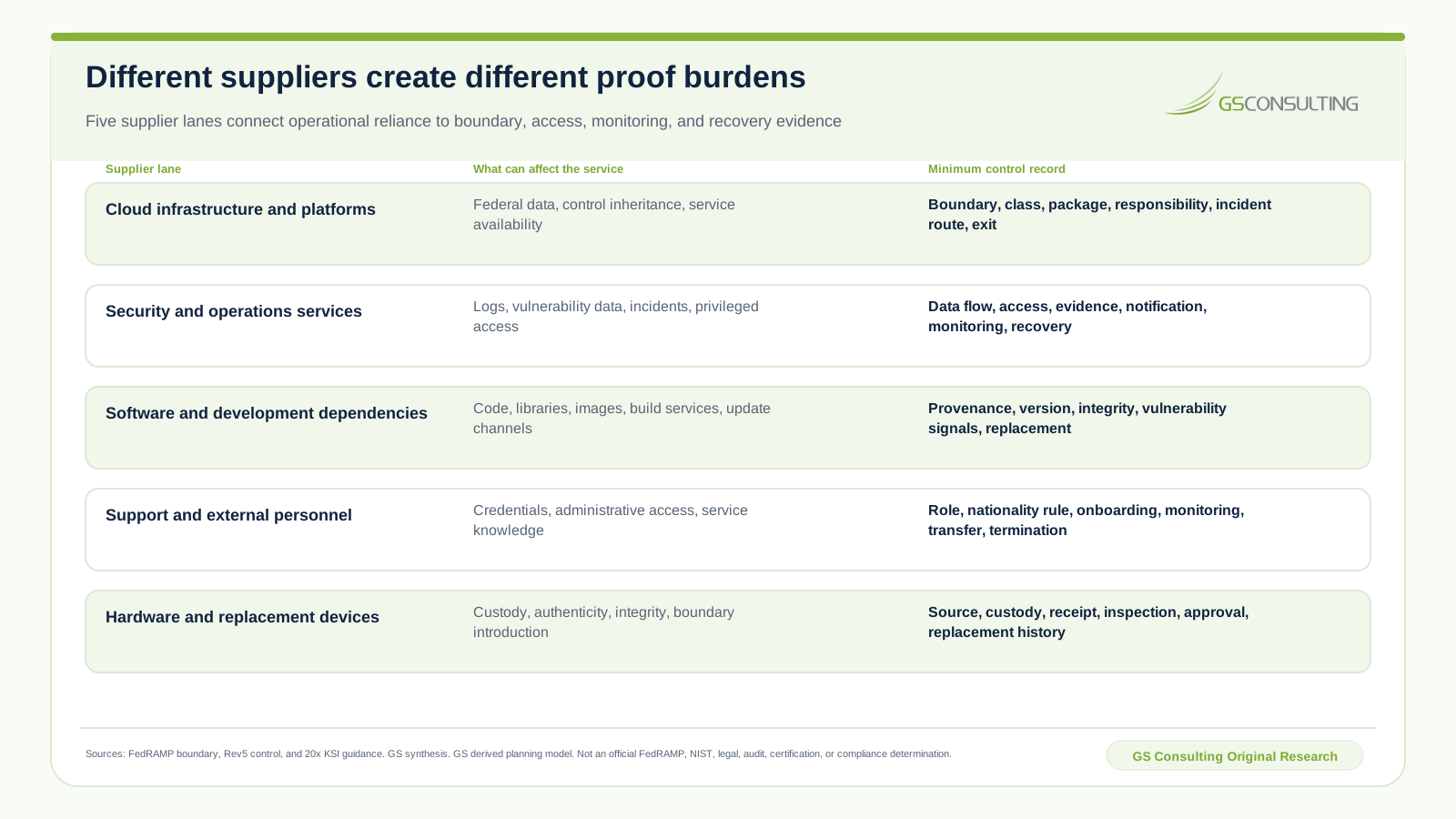
A cloud provider can inherit controls from an external platform, rely on a software library, grant an outside operator privileged access, accept replacement hardware, or route security data through a specialist. Each relationship creates a different proof burden. A single questionnaire cannot represent all of them.
This guide extends the FedRAMP compliance hub, the complete FedRAMP guide, the authorization package guide, and the continuous monitoring guide. GS Consulting supports governed implementation through secure AI and regulated automation services.
Can you trace every material supplier from scope to exit?
GS Consulting helps teams map external dependencies, define control and contract duties, build monitoring routes, and assemble evidence that remains consistent with the FedRAMP package.
Request a Supplier Risk Review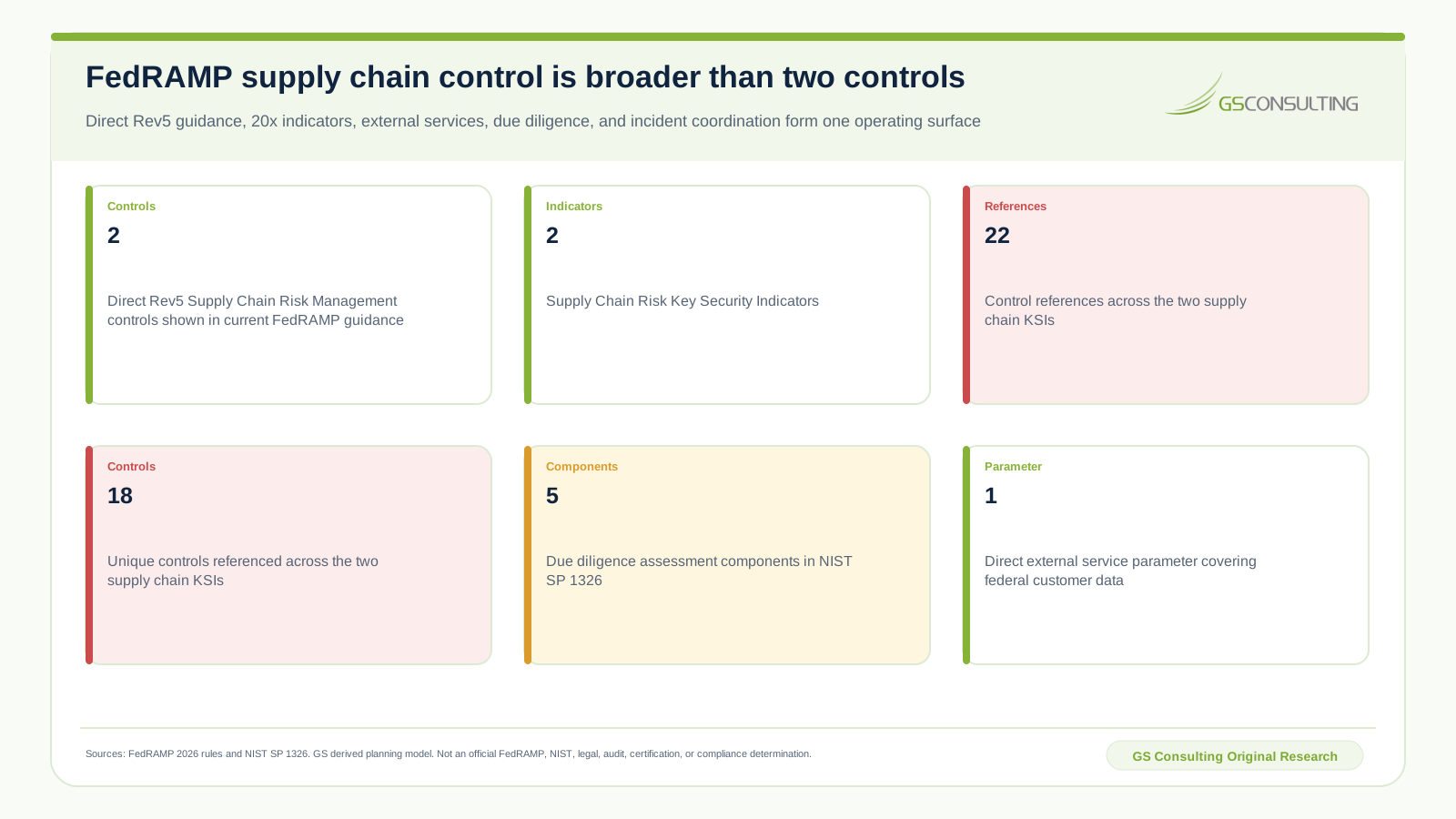
FedRAMP Supply Chain Risk Management: The Short Answer
Build one controlled supplier register for every external service, software dependency, support organization, external person, and hardware source that can affect the authorized service. Give each entry a stable identifier, owner, service description, data and function path, access, location, criticality, boundary treatment, control responsibility, contract record, evidence source, monitoring route, incident route, recovery option, and exit condition.
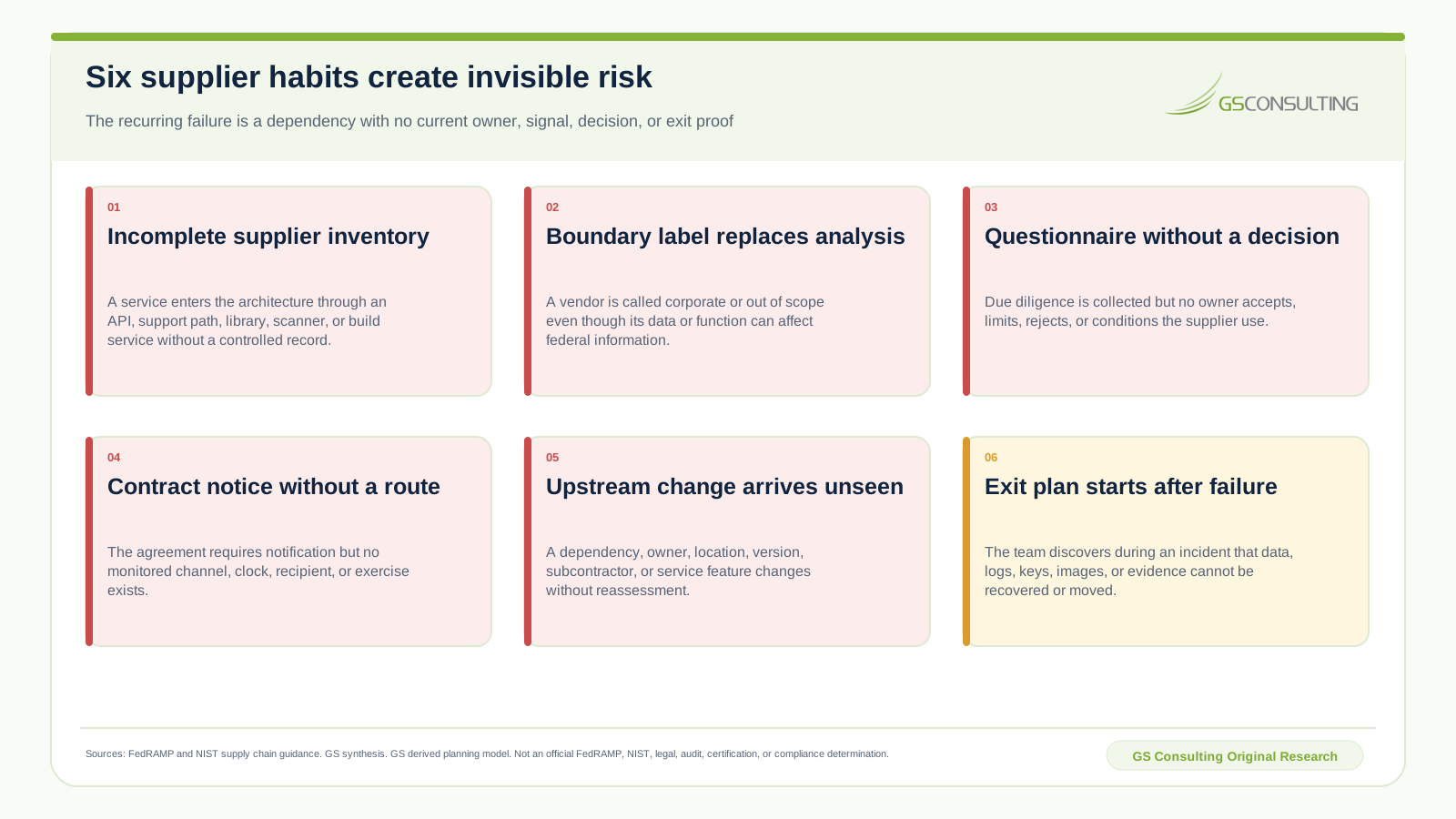
Do not classify a supplier only by company name. Classify the dependency. One supplier can provide an inherited cloud control, a support channel, a source code library, and a separate analytics service. Those uses can have different data, access, locations, failure consequences, and evidence.
For each material dependency, make an explicit risk and use decision. Accept it, accept it with conditions, limit it, replace it, or reject it. Then turn that decision into contract duties, technical controls, monitoring signals, incident coordination, evidence, and a review trigger. Reconcile the result with the authorization boundary and package.
Read the Current FedRAMP Surface as a Connected System
The current FedRAMP Supply Chain Risk Management guidance presents two direct controls. SR-03 addresses supply chain controls and processes. FedRAMP guidance also calls for custody records for relevant systems, components, or devices, including replacement devices. SR-08 addresses notification agreements and directs providers to the current incident evaluation and communication process.
Those two controls are not the whole operating surface. FedRAMP's current 20x Supply Chain Risk Key Security Indicators connect mitigation and monitoring to controls across several families. The official consolidated rules data accessed September 23, 2026 contains 22 references across the two indicators and 18 unique controls after removing four overlaps.
The counts describe the referenced rule surface in that data version. They are not a claim that the class has only 18 applicable controls, that every provider has identical duties, or that each reference carries equal effort. The live certification profile, class, transition position, system boundary, service design, and agency use still govern applicability.
Other control families carry supplier work. Current System and Services Acquisition guidance applies SA-09(02) to external systems where federal customer data is processed or stored and uses SA-09(05) for location and jurisdiction parameters. Current Personnel Security guidance addresses external provider personnel. Current Incident Response guidance includes coordination of supply chain incident information.
The practical conclusion is direct: do not assign supply chain risk to one compliance owner and one control family. Engineering, security, procurement, legal, privacy, operations, incident response, resilience, and package management all create or consume the record.
Scope the Dependency Before Assessing the Company
Start with the architecture. Identify every external function, interface, software source, support route, operator, data processor, update channel, build service, security service, infrastructure dependency, and replacement device. Compare architecture diagrams, cloud bills, identity records, code manifests, data flow maps, network paths, procurement records, contracts, payment records, support tickets, and package components.
For each dependency, record what enters and leaves, which federal information is processed or stored, which security function is inherited, whether the supplier can change production behavior, which people can gain access, where the service and support operate, what fails if it is unavailable, and how the dependency appears in the authorization package.
Boundary language must not replace analysis. FedRAMP's authorization boundary guidance distinguishes internal, external, leveraged, corporate, and development services. It also explains that an external service that affects the confidentiality, integrity, or availability of federal information needs transparent treatment. Use current rules and agency direction to decide the final boundary, but preserve the effect analysis that supports it.
A supplier register should answer five questions without opening another system: What does this dependency do? What can it affect? Why is its current treatment acceptable? Which evidence supports that decision? What event forces review?
Turn Due Diligence into a Risk and Use Decision
NIST SP 800-161 Rev. 1 Update 1 frames cyber supply chain risk management as an enterprise and system discipline, not a purchasing form. NIST SP 1326, finalized in July 2026, organizes product supplier due diligence around foreign ownership, control, or influence; provenance; stability and resilience; foundational cyber practices; and upstream supply chain tiers.
Translate those components into the service decision. Examine ownership and jurisdiction where relevant, origin and authenticity, service and financial resilience, vulnerability and secure development practices, upstream dependencies, incident history, data use, administrative access, recovery, and replacement. For hardware, include custody, inspection, authenticity, source, return, and replacement history. For software, include provenance, versions, integrity, vulnerability signals, build and update channels, and replacement options.
Evidence quality matters. A current independent assessment, relevant certification, tested configuration, service report, architecture record, vulnerability process, incident procedure, recovery result, and contract commitment can support different parts of the decision. A marketing page or undated questionnaire can inform discovery but should not carry a critical acceptance decision alone.
End the assessment with a named decision. Record the accepted use, constraints, required controls, evidence gaps, compensating measures, residual risk, accountable owner, approval, expiration, and triggers. If no owner accepts the limits and no monitoring route exists, due diligence is unfinished.
GS FedRAMP Supplier Proof Priority Index
GS modeled ten supplier work packets using five one to five ratings: boundary consequence, dependency criticality, change and exposure, monitoring and response, and evidence coordination. Base weights are 25, 20, 20, 20, and 15 percent. Each rating is divided by five, multiplied by its weight, and summed on a zero to 100 planning scale.
Supply chain incident coordination scores 100. Boundary and data flow dependency mapping scores 96. Supplier and service inventory and upstream vulnerability monitoring both score 92. External privileged personnel controls score 89. Evidence and package reconciliation scores 88. Due diligence and contract terms score 87. Supplier criticality and change, renewal, and exit review score 84.
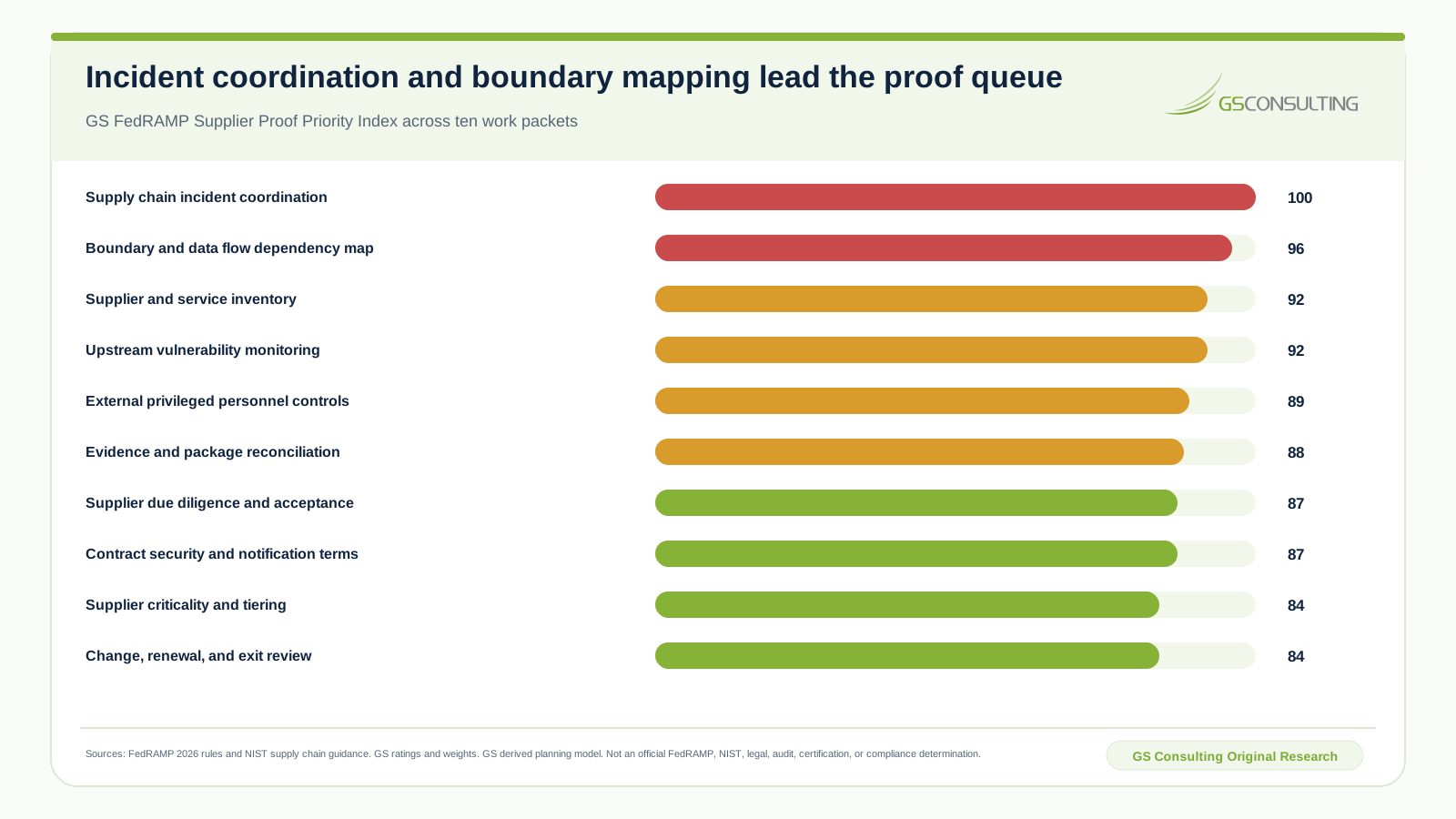
The sensitivity case moves five percentage points from boundary consequence to dependency criticality. No score moves more than one point, and the leading work packets remain stable. That does not make an 84 point item optional. The index orders build and review attention; it does not waive a requirement.
This is a GS Consulting derived planning tool based on the cited public sources and documented analyst assumptions. It is not an official FedRAMP or NIST score, a legal opinion, an audit conclusion, a certification decision, or a compliance determination. GS found no suitable public FedRAMP supplier failure benchmark and did not fill that gap with prevalence, probability, or loss estimates.
Make the Contract Carry the Decision
Contract language should operationalize the accepted use. Define the service and data scope, approved locations, control responsibilities, evidence, personnel access, subcontractor duties, security practices, notification events, notification clocks, cooperation, preservation, recovery, service levels, change approval, renewal, termination, data return, deletion, transition, and audit rights that the decision actually needs.
A broad promise to maintain reasonable security is not enough for a critical dependency. Name the events that must be reported: confirmed or suspected incidents, vulnerabilities under active exploitation where applicable, loss of certification or material assurance, ownership changes, location changes, new subprocessors, major version changes, administrative access changes, service degradation, and recovery events. Set the route, clock, recipient, required content, update cadence, and escalation.
Do not promise evidence the supplier cannot provide. If direct testing is unavailable, decide which independent reports, attestations, artifacts, technical signals, and contractual remedies are acceptable. Record the remaining gap and owner. A contract exception must be visible in the supplier risk decision and package treatment.
Monitor the Dependency, Not Just the Renewal Date
Supplier monitoring should combine current signals with scheduled review. Signals can include upstream vulnerabilities, versions, end of support dates, service health, certificate changes, ownership, locations, subprocessors, privileged access, findings, incidents, performance, recovery results, evidence age, contract milestones, and changes to inherited controls.
Assign each signal a source, collection method, frequency, threshold, owner, decision route, evidence location, and package impact. A threat feed without a mapped component does not tell the team what is affected. A service alert without an owner does not create action. A quarterly meeting without current evidence does not establish control effectiveness.
Connect the supplier ledger to FedRAMP vulnerability management, significant change review, POA&M management, and continuous monitoring. When a supplier change alters scope, inheritance, location, access, risk, or control behavior, the authorization package and agency communication may need to change too.
Reassessment is event driven as well as calendar driven. A new subprocessor, privileged support model, build system, software version, processing region, ownership structure, vulnerability pattern, incident, service failure, or exit constraint can invalidate the prior acceptance even when the contract has months remaining.
Prebuild the Supply Chain Incident Route
A supply chain incident is the wrong time to discover that the supplier notice enters a legal mailbox with no connection to incident command. Test the complete route before reliance: supplier trigger, delivery channel, receipt confirmation, internal clock, triage, service and data mapping, evidence preservation, agency communication, containment decision, recovery, status updates, lessons, and package correction.
Current FedRAMP Incident Response guidance includes coordination of supply chain incident information. Current SR-08 guidance points to FedRAMP incident evaluation and communication. Use the live process and applicable agency direction. The internal playbook should identify who can decide isolation, failover, version rollback, credential revocation, service suspension, supplier replacement, customer notice, and return to service.
Preserve both supplier and provider evidence. Keep the trigger, discovery time, notice time, affected dependency, versions, data and federal customers, actions, decisions, communications, containment, recovery, validation, residual risk, and required changes. Connect resulting findings to the right POA&M and continuous monitoring records.
Run One Supplier Management Path from Inventory Through Exit
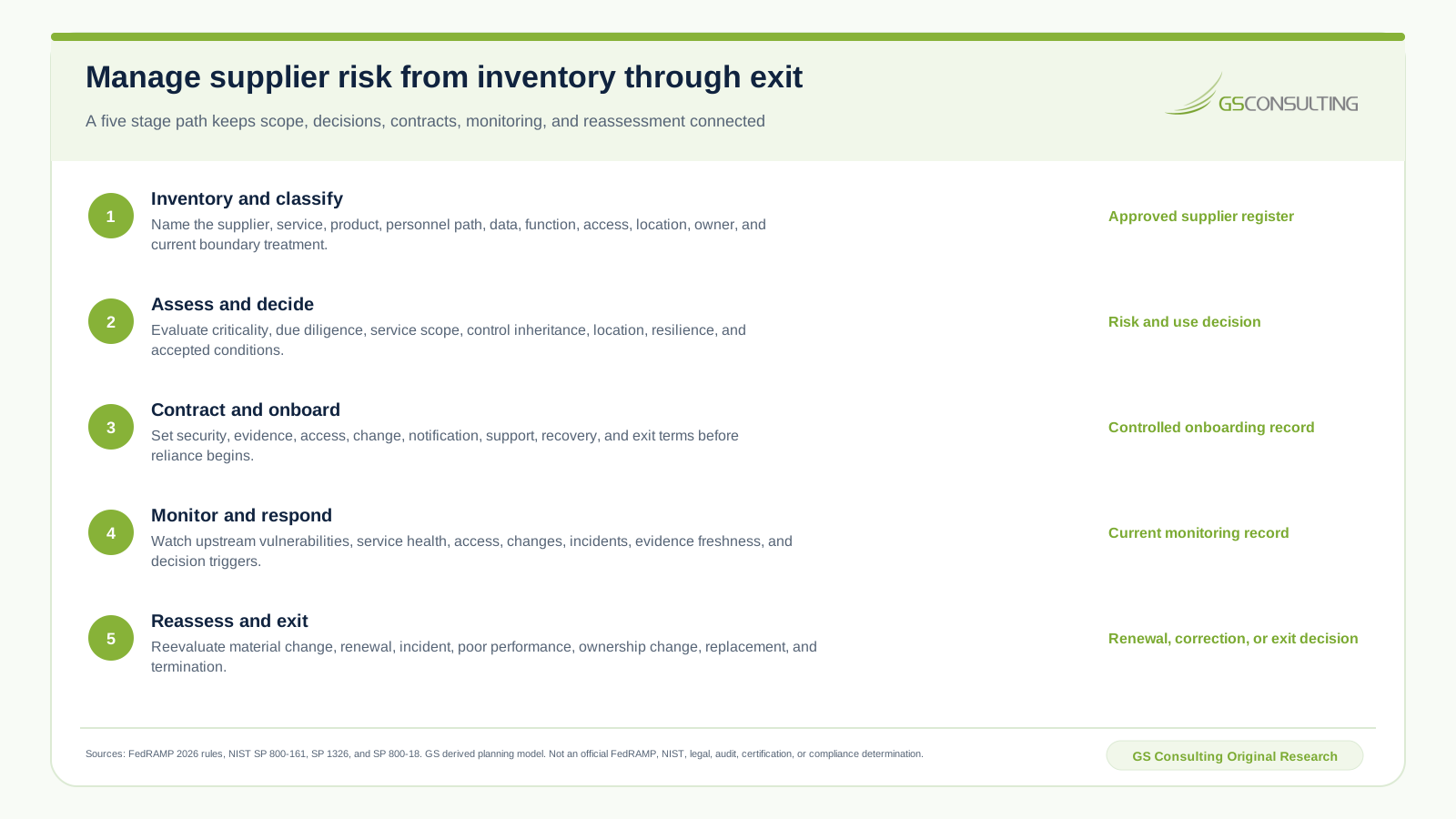
Inventory and classify. Name the supplier, service, product, personnel path, data, function, access, location, owner, criticality, and boundary treatment. Give each distinct dependency a stable identifier.
Assess and decide. Evaluate service scope, criticality, due diligence, control inheritance, location, resilience, access, and accepted conditions. Issue a risk and use decision rather than a questionnaire score.
Contract and onboard. Set security, evidence, access, change, notification, support, recovery, renewal, and exit terms before reliance begins. Confirm the live technical configuration and approved accounts.
Monitor and respond. Watch vulnerabilities, versions, service health, access, changes, incidents, evidence freshness, and decision triggers. Exercise notification, isolation, recovery, and escalation routes.
Reassess and exit. Review material change, renewal, incident, performance, ownership change, replacement, and termination. Verify return or deletion of data, revocation of access, recovery of evidence, and removal or replacement of the dependency.
Build a Minimum FedRAMP Supply Chain Evidence Packet
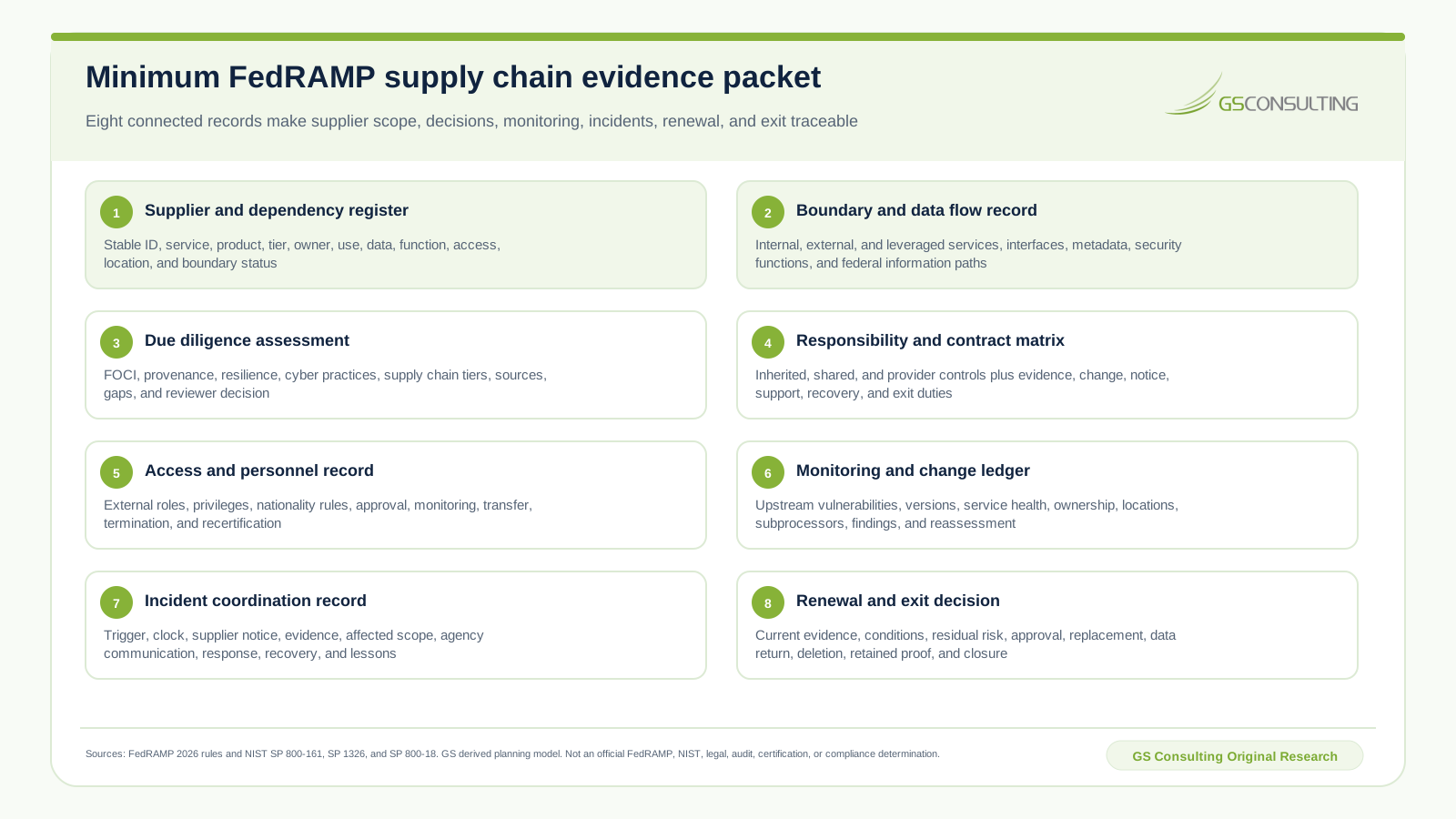
Keep eight connected records: the supplier and dependency register; boundary and data flow record; due diligence assessment; responsibility and contract matrix; access and personnel record; monitoring and change ledger; incident coordination record; and renewal or exit decision.
The supplier identifier should connect all eight. Also use stable identifiers for services, products, components, versions, accounts, people, locations, interfaces, contracts, controls, findings, incidents, evidence, decisions, and package sections. Reconciliation becomes much easier when the same dependency is not described by three different names.
Evidence needs freshness and context. Preserve producer, collection time, covered period, scope, method, version, reviewer, exception, approval, retention, and next trigger. A screenshot can show a setting at one moment, but it may not prove ownership, operation, monitoring, or response. Pair configuration with records that show the control actually worked.
NIST SP 800-18 Rev. 2, finalized in June 2026, connects system plans and cyber supply chain risk management plans with internal and external environments, data flows, roles, responsibilities, and machine readable information collection. Use that planning discipline to keep supplier evidence consistent with the service description and authorization package.
A 60 Day FedRAMP Supply Chain Risk Management Plan
| Period | Operator action | Required output |
|---|---|---|
| Days one through ten | Reconcile architecture, data flows, code dependencies, external accounts, cloud bills, contracts, support routes, security services, devices, and package references. | Supplier and dependency register |
| Days eleven through twenty | Classify boundary treatment, data and function effect, criticality, locations, personnel access, control responsibility, recovery, and exit difficulty. | Boundary and criticality record |
| Days twenty one through thirty | Assess due diligence, provenance, resilience, cyber practices, upstream tiers, contract coverage, evidence quality, and residual gaps. | Risk and use decisions |
| Days thirty one through forty | Correct contracts, approved configurations, access, notification routes, monitoring sources, thresholds, ownership, and evidence retention. | Responsibility and monitoring matrix |
| Days forty one through fifty | Exercise a supplier incident, upstream vulnerability, material change, service failure, privileged access review, recovery, and escalation. | Exercise results and corrections |
| Days fifty one through sixty | Reconcile decisions and evidence with the boundary, SSP or security decision records, inherited controls, continuous monitoring, findings, and agency communications. | Approved evidence packet and review cadence |
Research Sources and Limits
The research package uses public sources accessed September 23, 2026:
- FedRAMP Supply Chain Risk Management controls for SR-03 and SR-08 guidance.
- FedRAMP Supply Chain Risk Key Security Indicators and the official consolidated rules data for the current reference surface.
- FedRAMP System and Services Acquisition controls for external service and location parameters.
- FedRAMP authorization boundary guidance for external service and boundary context.
- NIST SP 800-161 Rev. 1 Update 1 for cyber supply chain risk management practices.
- NIST SP 1326 for product supplier due diligence assessment components.
- NIST SP 800-18 Rev. 2 for system and supply chain plan context.
- FedRAMP Incident Response controls for supply chain incident coordination.
- FedRAMP Personnel Security controls for external provider personnel context.
The research package contains a source register, source snapshots, public signals, model weights, model inputs, formula driven scores, sensitivity analysis, methodology, data dictionary, supplier lanes, decision path, failure modes, evidence packet, figure data, editable SVG files, browser rendered PNG files, responsive previews, and an Excel workbook with formulas and cached results.
The public rules and guidance change over time. Verify the current certification profile, transition guidance, class, boundary, contract, agency direction, and live source before making an authorization or supplier decision. The GS index prioritizes operating proof and does not determine scope, authorization, legal sufficiency, contract duties, or compliance.
FedRAMP Supply Chain Risk Management FAQ
What is FedRAMP supply chain risk management?
FedRAMP supply chain risk management is the set of decisions, controls, monitoring, incident coordination, and evidence used to manage external services, software, support personnel, hardware, and other dependencies that can affect federal information or the authorized cloud service.
Which FedRAMP controls directly address supply chain risk?
The current FedRAMP Supply Chain Risk Management page presents SR-03 for supply chain controls and processes and SR-08 for notification agreements. The broader 20x supply chain indicators reference controls from multiple families, so a complete operating model is wider than two direct controls.
Do all suppliers belong inside the FedRAMP authorization boundary?
No. Boundary treatment depends on what the supplier provides, where federal information is processed or stored, how the dependency can affect confidentiality, integrity, or availability, and the applicable FedRAMP rules. Every material dependency still needs a documented classification and rationale.
How should a cloud provider assess a FedRAMP supplier?
Assess the service and data path, criticality, ownership and location, control responsibility, personnel access, resilience, provenance, vulnerability exposure, incident duties, recovery, exit, and available evidence. Record the acceptance decision, conditions, residual risk, owner, and next review trigger.
How often should FedRAMP supplier risk be reviewed?
Use a risk based cadence plus event triggers. Review critical suppliers when contracts, ownership, locations, versions, data paths, personnel access, vulnerabilities, incidents, control inheritance, service health, or exit assumptions materially change. Reconcile the result with the authorization package and continuous monitoring records.
What evidence should a FedRAMP supplier record contain?
Keep the supplier register, boundary and data flow record, due diligence assessment, responsibility and contract matrix, access and personnel record, monitoring and change ledger, incident coordination record, and renewal or exit decision. Stable identifiers should connect those records to the same service and authorization scope.
Related Reading
- FedRAMP Compliance Hub
- FedRAMP Compliance: The Complete Guide
- FedRAMP Authorization Package Guide
- FedRAMP Continuous Monitoring Guide
- FedRAMP Vulnerability Management Guide
- FedRAMP Incident Response Guide
- FedRAMP Significant Change Guide
- FedRAMP POA&M Management Guide
- Secure AI and Regulated Automation Services
Make every supplier decision traceable.
The operating standard is direct: complete inventory, explicit scope, accepted conditions, enforceable duties, current monitoring, tested incident coordination, recoverable exit, and evidence that agrees with the authorization package.
Build the Supplier Evidence Chain