GovCon Cybersecurity | | 24 min read
FedRAMP Significant Change Guide for Cloud Providers

Key Takeaways
Classify the FedRAMP change before the release clock starts
Four paths replace one generic change queue
Class change, routine recurring, transformative, and adaptive paths create different decisions and evidence.
Transformative work starts at least 30 business days early
The current path has notices before release, after completion, and after verification or assessment.
Boundary and class changes score 100
The GS model places them first because customer effect, security scope, assessment, timing, and rollback all collide.
A FedRAMP significant change is not a release label. It is a classification decision that should happen before the delivery date controls the conversation.
The bad pattern is familiar. Engineering calls a release routine because the deployment pipeline has done something similar before. Security discovers a new trust boundary. The assessor sees affected controls after the plan is final. Customers learn that their configuration changed from a release note. The package stays stale. The code shipped, but the certification record did not.
The current 2026 Significant Change Notification rules create a clearer operating path. Evaluate the real service effect. Separate certification class changes, routine recurring changes, transformative changes, and adaptive changes. Use the selected path to set notice dates, assessment work, customer communication, release evidence, and package updates.
This guide connects change work to the FedRAMP hub, the authorization package guide, the continuous monitoring guide, the vulnerability management guide, the incident response guide, the FedRAMP 20x guide, and GS Consulting support for secure cloud operations and evidence automation.
Decide the change path before scheduling release.
GS Consulting helps providers classify service changes, map security effects, coordinate assessment, build notifications, and reconcile the certification package.
Plan the Change ReviewFedRAMP Significant Change: The Short Answer
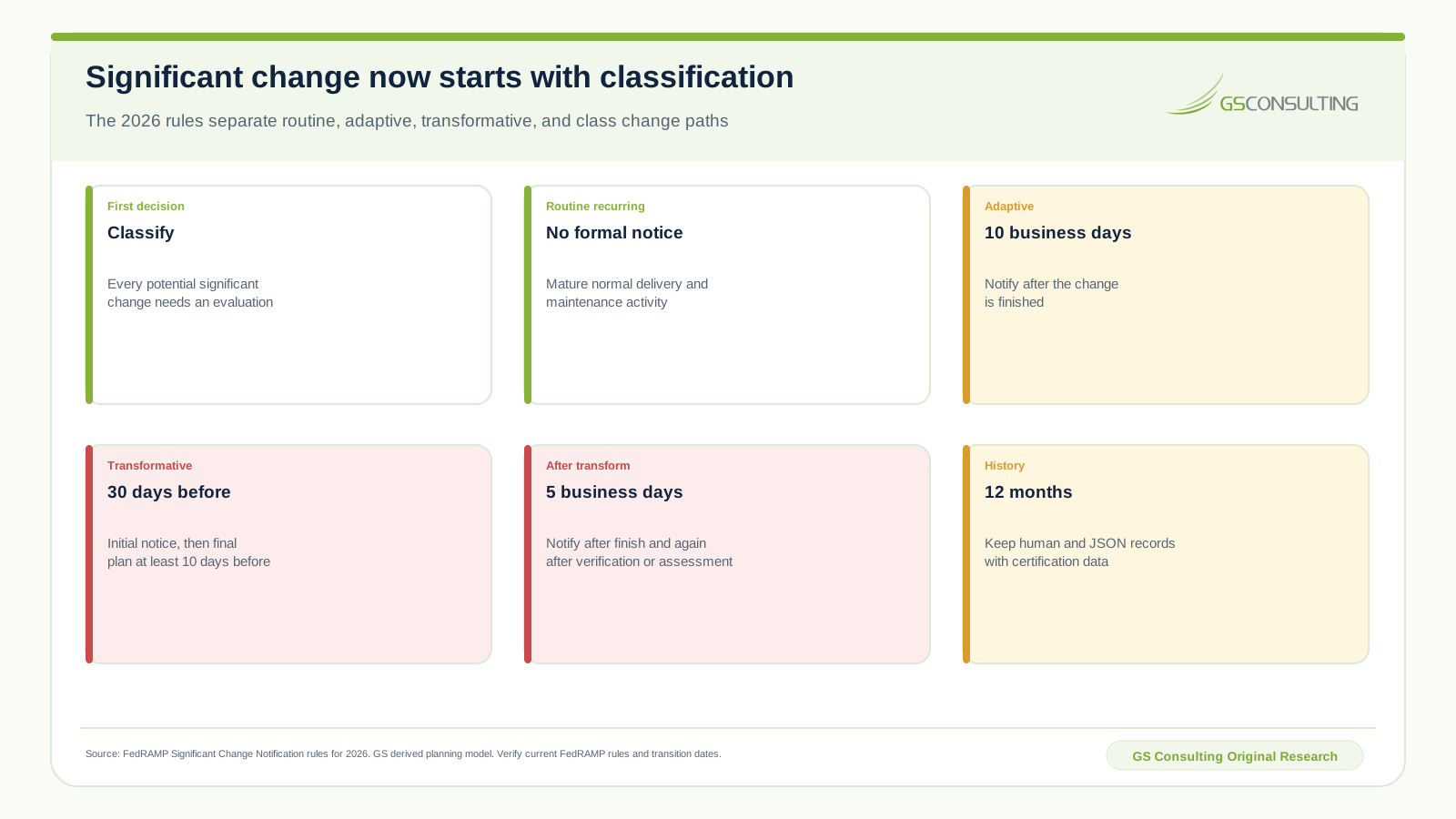
The FedRAMP Significant Change Notification rules for 2026 require providers to evaluate potential significant changes and select the applicable path.
A certification class change requires a new assessment and does not fit inside the notification path. A routine recurring change uses mature normal operations and should not receive a formal notification. A transformative change requires early coordination and several notices. A significant change that is not one of those paths is adaptive.
Every evaluation needs an auditable record. Formal notifications need the common required fields. Providers keep 12 months of notification history with certification data and make notifications and related audit records available in human readable and JSON formats.
The 2026 Rules Change the Operating Question
The old question was often, “Do we need approval for this release?” The better current question is, “What kind of change is this, who needs to know, what proof is required, and what record must stay current?”
FedRAMP introduced the new rules to let providers improve their services while keeping agencies informed and preserving risk discipline. That is not permission to skip change control. It puts more responsibility on the provider to classify honestly, document its reasoning, coordinate assessment, communicate customer effect, and prove the outcome.
Transition dates matter. The official Rev5 deadline schedule lists optional adoption from July 4, 2026, obtain and maintain dates of January 1, 2027, and a grace end date of June 1, 2027 for Significant Change Notification. Verify the profile and current schedule before treating a summary as binding.
Classify From Service Facts, Not Release Names
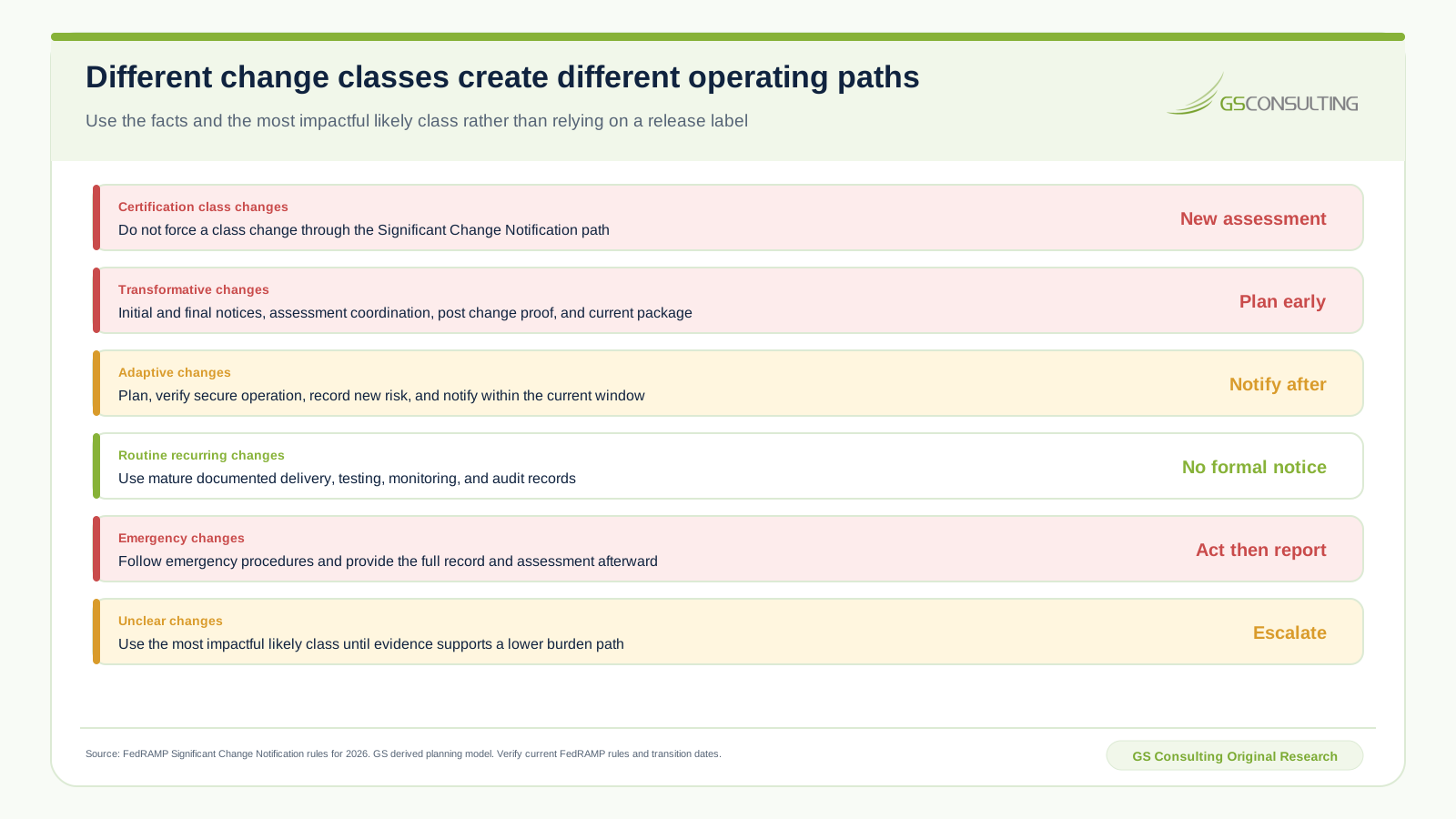
Certification class change. If the service is moving to a different certification class, the change requires a new assessment. Do not force it through the notification process.
Routine recurring change. This is mature normal care and delivery. Official examples include routine patching, normal capacity work, security signature updates, token maintenance, and ordinary code improvements that use established processes and do not introduce a more impactful change.
Adaptive change. This path covers many irregular but bounded improvements. Official examples include breaking operating system or library updates, a like for like component replacement that requires some plan changes, a larger incremental feature release, or adding a model to an approved AI service without exposing federal data to new services.
Transformative change. This is the path for material changes that need early customer and assessment coordination. Test for a major shift in service scope, architecture, information flow, security design, customer responsibility, availability risk, assessment work, or rollback complexity.
The release name is weak evidence. A small code change can alter a critical trust path. A large automated rollout can remain routine when it follows a mature pattern and does not change the service risk. Classify the effect, not the size of the ticket.
Notification Timing Is Part of Release Planning
| Path | Current timing | Core evidence |
|---|---|---|
| Routine recurring | No formal Significant Change Notification | Normal change, test, monitoring, approval, and audit records |
| Adaptive | Within 10 business days after finishing | Common notice fields plus new risk or vulnerability summary when applicable |
| Transformative initial plan | At least 30 business days before starting | Likely security impact and change in risk |
| Transformative final plan | At least 10 business days before starting | Updated plan, impact, assessment, customer effect, timeline, and approval |
| Transformative completion | Within 5 business days after finishing | Updated release facts and previously issued information |
| Transformative verification | Within 5 business days after verification or assessment | Results, new risk, vulnerabilities, and assessment report when applicable |
Put these dates in the delivery plan. A transformative notice clock that starts after development is nearly complete creates pressure to weaken classification or rush assessment. Start when the design is stable enough to describe the effect but early enough for feedback to change the result.
GS Original Research: Significant Change Coordination Pressure Index
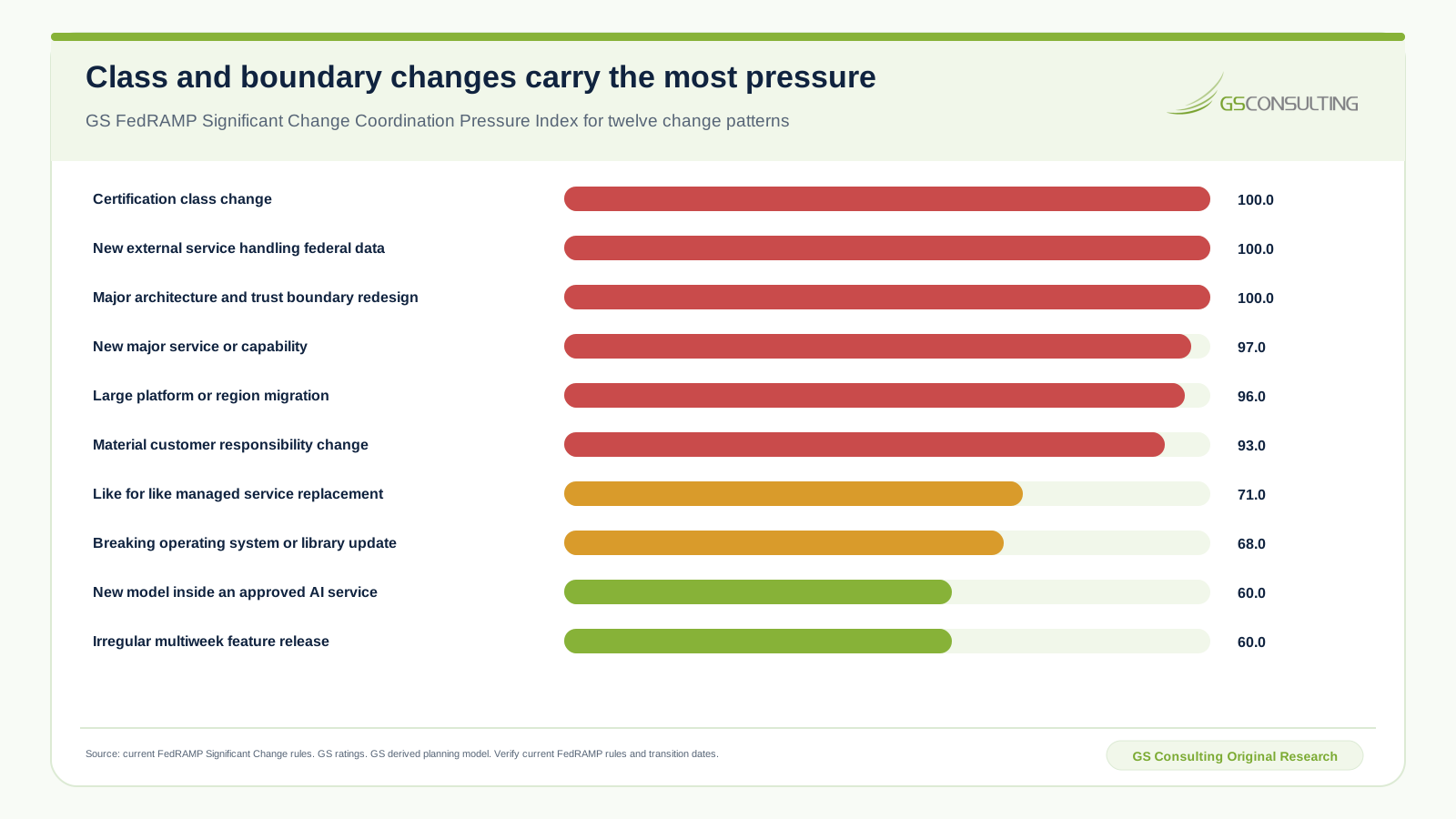
GS Consulting built the Significant Change Coordination Pressure Index to help providers decide which proposed changes need the earliest cross functional attention. It compares twelve common change patterns on a 100 point planning scale.
Five GS ratings from one to five measure customer impact, security scope impact, assessment load, notice timing pressure, and rollback complexity. Base weights are 25, 25, 20, 15, and 15 percent. The sensitivity case moves five points from customer impact to timing pressure.
| Factor | Weight | Operating question |
|---|---|---|
| Customer impact | 25 percent | Will agencies need new configuration, planning, communication, or risk decisions? |
| Security scope impact | 25 percent | Does the change alter services, resources, flows, trust boundaries, or protected information? |
| Assessment load | 20 percent | How much verification, validation, sampling, and independent work is needed? |
| Notice timing pressure | 15 percent | How early must the record be ready relative to release? |
| Rollback complexity | 15 percent | How difficult is it to restore the prior secure state? |
Certification class change, a new external service handling federal data, and a major architecture or trust boundary redesign each score 100.0. A new major service scores 97.0. A large platform or region migration scores 96.0. A material customer responsibility change scores 93.0.
The alternate weights preserve the leading tier, and no score moves by more than two points. That supports the operating conclusion: classify service boundary and customer effect before release scheduling locks the plan.
The patterns and scores are GS assumptions, not official FedRAMP classifications. Apply the current rule tests to the actual service facts. This model is not a legal opinion, authorization decision, assessment result, certification class decision, or compliance determination.
Build One Change Record That Can Feed Every Notice
The current common notification record has ten minimum fields: FedRAMP ID, assessor when applicable, related vulnerability when applicable, selected change type and rationale, description, reason, customer impact, plan and timeline, business or security impact analysis, and approver.
Do not create those fields from memory at each notice. Maintain one controlled change record and publish the appropriate view at each required point. Add services, resources, information flows, impacted controls or KSI, customer settings, new risks, assessment scope, rollback criteria, deployment result, incidents, verification result, package updates, and final closure.
Keep the record in both human readable and JSON forms. Validate identifiers, dates, enumerations, links, and required fields. The human record should explain the decision. The machine record should make the decision usable at scale.
Define Assessment Before the Change Reaches Production
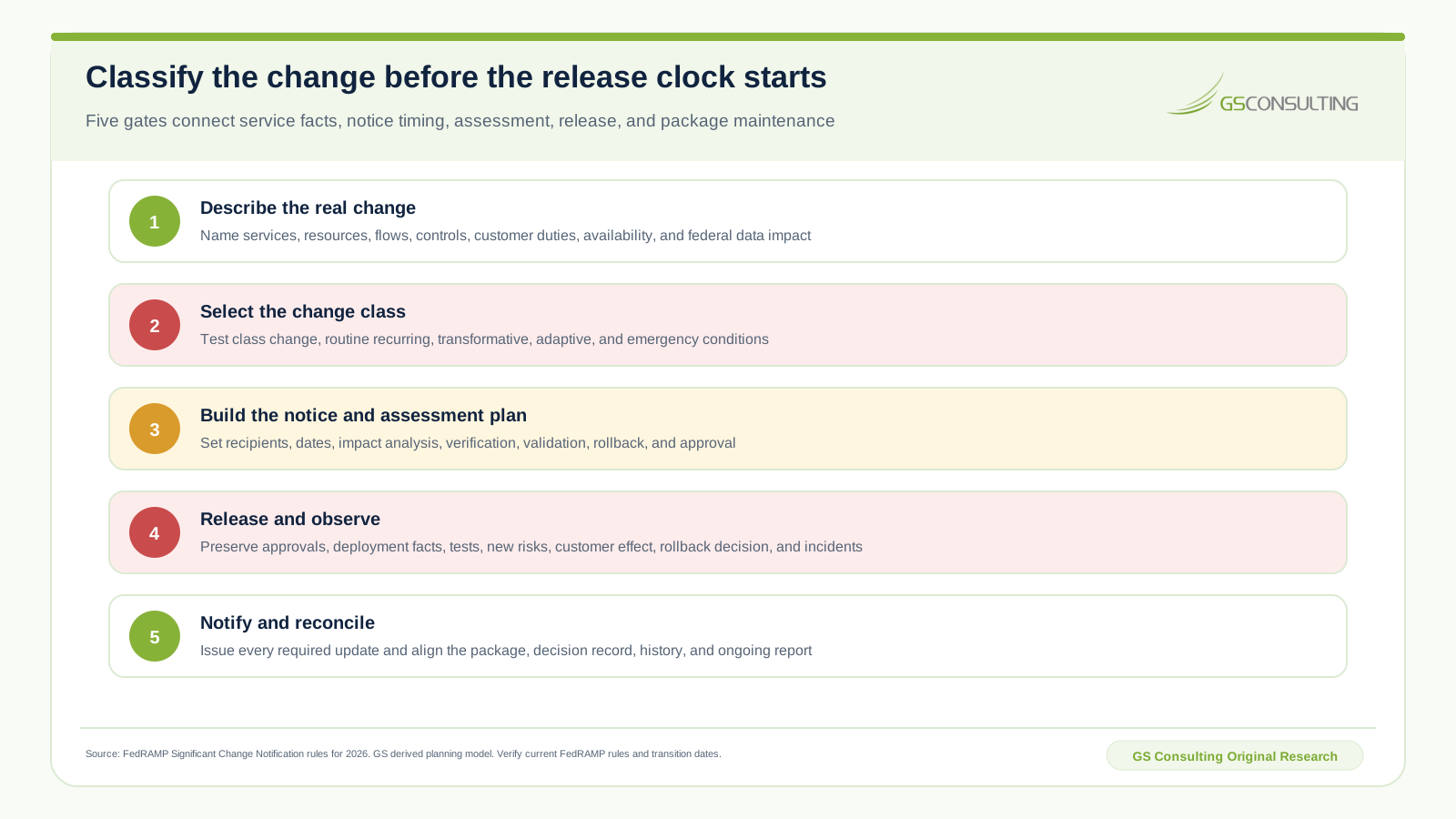
For each impacted control or KSI, record the expected security outcome, current measure, proposed change, verification method, validation method, sample, evidence source, expected result, assessor role, acceptance condition, and action if the result fails.
Test the new design and the migration path. A target state can be secure while the cutover creates weak access, missing logs, incomplete inventory, exposed data, or a rollback path that no longer works. Include negative cases and rollback tests.
For customer facing changes, test the customer action too. Confirm whether agencies need to enable a setting, rotate a secret, change an integration, update an allow list, revise training, or accept downtime. A provider can finish the release while customers remain in an insecure transition state.
Release, Observe, Notify, and Reconcile
At release, preserve the approved plan, deployed version, actual start and finish, participating services, test results, exceptions, observed customer effect, rollback decision, incidents, and new vulnerabilities. Do not let the ticket system overwrite the approved change record.
After release, issue every required update through the documented mechanism and confirm access. Record recipient, due date, issued date, exact material, version, delivery result, question, and response. Keep 12 months of history with certification data.
Then update the FedRAMP authorization package. Reconcile the service list, Certification Package Overview, Security Decision Record, control or KSI record, Secure Configuration Guide, assessment information, ongoing report, and change history. A notice sitting beside a stale package is not closure.
Significant Change Failure Modes
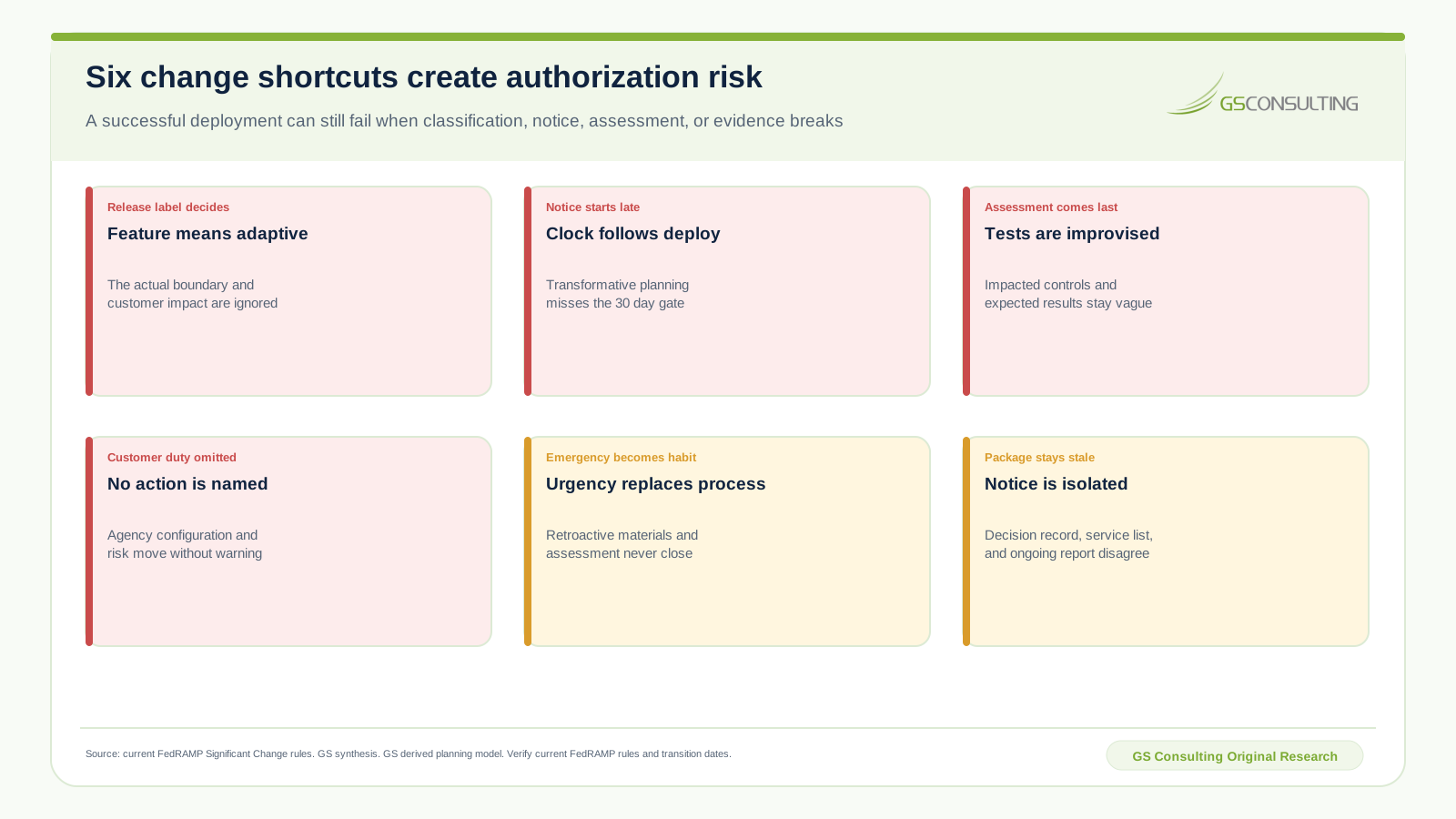
- Release label decides. Feature, maintenance, or migration becomes the classification without testing real service effect.
- Notice starts late. The team discovers a transformative path after the 30 business day gate is already impossible.
- Assessment comes last. Impacted controls, expected results, samples, and failure conditions are improvised after release.
- Customer duty omitted. Agencies need new action, but the change record describes only provider work.
- Emergency becomes habit. Delivery urgency replaces documented emergency conditions, retroactive materials, and assessment.
- Package stays stale. The notice is complete while the service list, decision record, configuration guide, and ongoing report disagree.
Emergency Changes Still Need a Complete Record
Current rules allow providers to execute a significant or transformative change during an emergency or incident without following the advance notice rules. That exception protects service and customers when waiting would create more harm. It does not erase the process.
Follow the emergency procedure documented in the certification package. Record the triggering condition, authority, time, affected service, risk, customer effect, action, verification, rollback decision, incident relationship, and evidence. Notify necessary parties, provide the required materials after the event, and complete the appropriate assessment.
Review emergency use after closure. If the same condition repeats, the operating system needs a routine or planned path. Emergency is a response mode, not a release strategy.
The Minimum Significant Change Evidence Packet
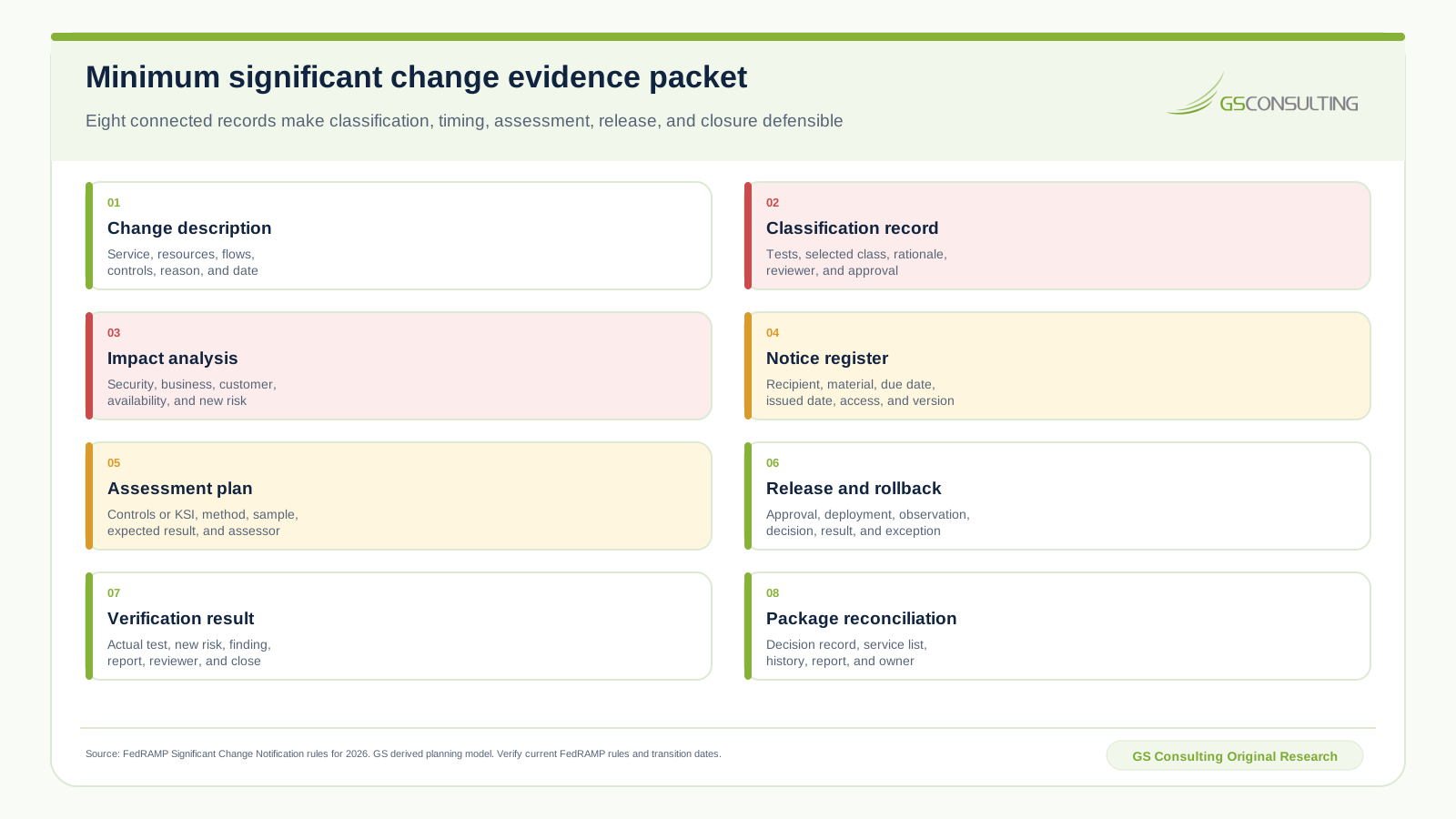
Maintain eight connected records: change description, classification decision, impact analysis, notice register, assessment plan, release and rollback record, verification result, and package reconciliation. Every record needs a stable identifier, owner, version, date, source, approval, relationship, and closure state.
Preserve the original classification and later updates. If new evidence changes the path, record who changed it, why, when, and what notice or assessment consequence followed. Silent reclassification destroys the audit trail.
Sources and Method Note
- FedRAMP Significant Change Notification rules for 2026
- FedRAMP Rev5 transition deadlines
- FedRAMP Security Decision Record
- FedRAMP Certification Data Sharing
- FedRAMP Delivering Significant Change
GS Consulting Original Research. The GS FedRAMP Significant Change Coordination Pressure Index is a derived planning tool based on cited public sources and documented analyst assumptions. It is not an official FedRAMP classification, legal opinion, assessment result, authorization decision, certification decision, or compliance determination. Verify change type, timing, effective dates, and evidence requirements against the current rules and applicable certification profile.
Frequently Asked Questions
What is a FedRAMP significant change?
A FedRAMP significant change is a change to a certified cloud service that must be evaluated under the applicable Significant Change Notification rules. Current rules separate certification class changes, routine recurring changes, transformative changes, and adaptive changes. The classification controls notification, assessment, customer communication, and package updates.
What is the difference between adaptive and transformative change?
Adaptive changes are significant changes that generally require careful planning, limited documentation updates, and verification of existing secure operation, but do not reach the burden of transformative change. Transformative changes can materially alter the service, security design, risk, customer effect, or assessment work and carry notice requirements before and after release.
When must a provider notify customers about a transformative change?
Current 2026 rules require initial plans at least 30 business days before starting, final plans at least 10 business days before starting, an update within 5 business days after finishing, and another update within 5 business days after verification, assessment, or validation is complete. Verify current effective dates for the actual certification profile.
Do routine patches need a FedRAMP Significant Change Notification?
Current rules say providers should not issue a formal Significant Change Notification for routine recurring changes. Routine patching, normal capacity work, token maintenance, and mature delivery activity may fit that path when the facts meet the rule tests. A team label does not make a change routine.
What information belongs in a FedRAMP change notification?
The common record includes the FedRAMP ID, assessor when applicable, related vulnerability when applicable, selected change type and rationale, description, reason, customer impact, plan and timeline, impact analysis, and approver. Additional information is required for some adaptive and transformative notices.
Can a provider make an emergency FedRAMP change before notice?
Current rules allow emergency or incident changes, including transformative changes, without advance notice when the provider follows its emergency procedures. The provider must notify the necessary parties afterward, supply the required materials, and complete the appropriate assessment.
Bottom Line
A FedRAMP significant change is controlled when the classification, notice, assessment, release, customer effect, and package update tell one story. The decisive operating standard is simple: classify from service facts, start the clock early, test the real security effect, notify every required party, and reconcile the package before calling the change closed.
Related Reading
- FedRAMP Compliance Hub
- FedRAMP Authorization Package Guide
- FedRAMP Continuous Monitoring Guide
- FedRAMP 20x Authorization Guide
- FedRAMP Moderate Baseline Guide
- FedRAMP Compliance: The Complete Guide
- Secure AI Automation
Close the certification record with the release.
Classify the change, set the notice gates, assess the security effect, prove the outcome, and reconcile the package.
Control the Change Path