GovCon Cybersecurity | | 26 min read
FedRAMP POA&M Management: Ownership, Clocks, and Closure

Key Takeaways
Manage the finding as one controlled record from owner to evidence
Provider data is not automatically an agency POA&M
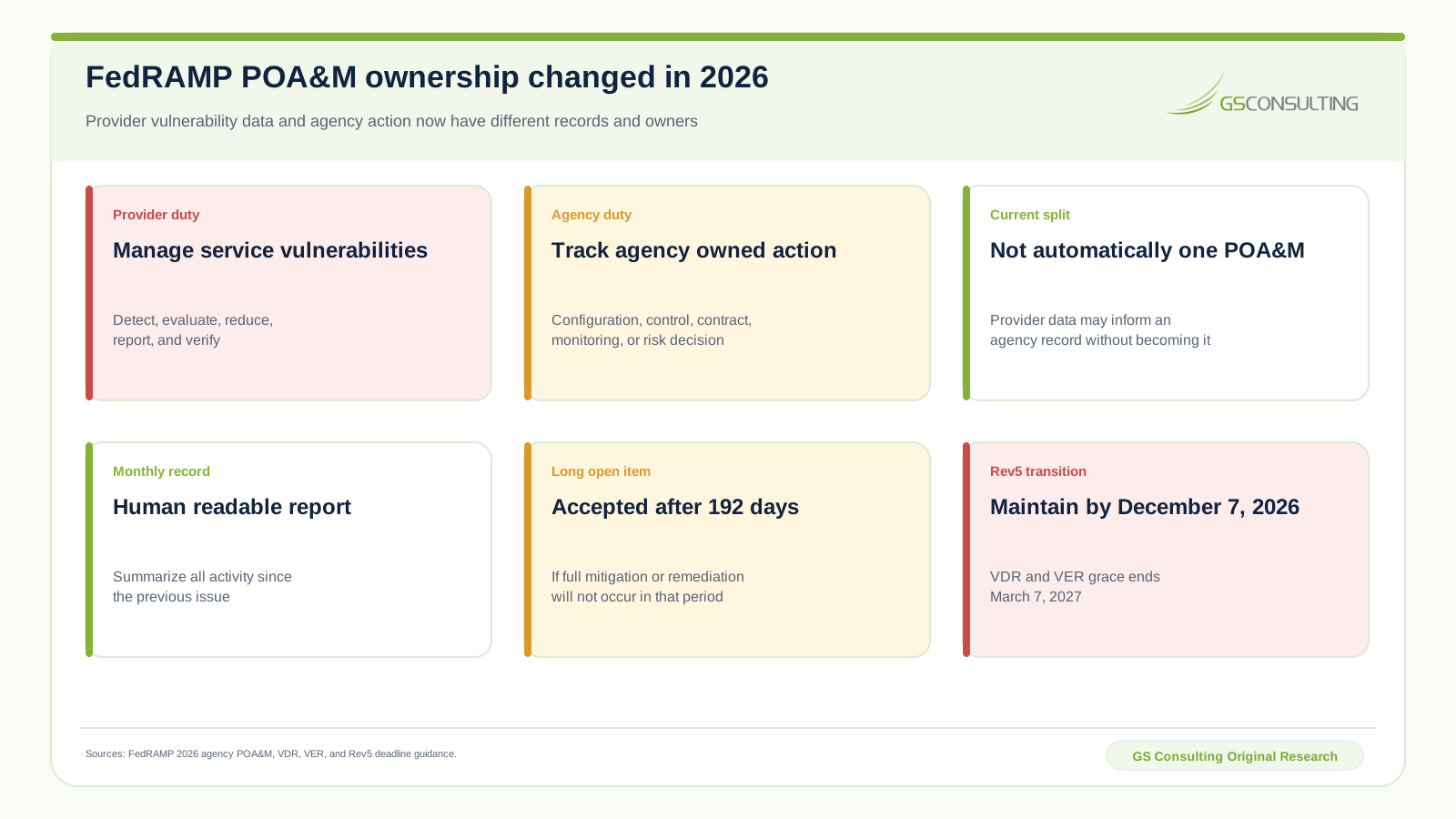
The provider owns service vulnerability response. The agency owns agency configuration, contract, compensating control, monitoring, and risk decisions.
The next mitigation target scores 98
A final date is not enough. Operators need the next reduction, owner, dependency, target rating, validation method, and fallback.
A state change needs technical proof
Implementation, verification, validation, residual exposure, approval, and reporting must agree before the record can close.
FedRAMP POA&M management is not spreadsheet cleanup. It is a finding ownership and closure system.
The work begins when a weakness, configuration issue, control gap, or response action is identified. It ends only when the correct owner has acted, the result has been tested, the current record has been reported, and the final disposition can survive review. Everything between those points needs one traceable identity.
The 2026 FedRAMP model makes ownership especially important. Provider maintained vulnerability information does not automatically become an agency Plan of Action and Milestones. The provider remains responsible for service vulnerability response. The agency creates and manages its own POA&M when agency configuration, contract action, compensating controls, monitoring, managed weaknesses, or risk decisions require agency work.
This guide belongs to the FedRAMP Compliance Hub. Use it with the FedRAMP vulnerability management guide, the continuous monitoring guide, and the authorization package guide. GS Consulting applies the same record discipline through secure AI automation and evidence engineering.
Make every open item actionable before the reporting date.
GS Consulting helps regulated teams connect vulnerability facts, accountable owners, official clocks, agency action, reporting, and defensible closure evidence.
Review the Finding ProcessFedRAMP POA&M Management: The Short Answer
Use a stable finding identifier that survives every rescan and tool change. It must also survive grouping, reopening, acceptance, and closure. Decide whether the record is provider vulnerability work, agency action, independent assessment evidence, or a linked combination. Evaluate the finding across service criticality and exposure. Test reachability and exploitability. Add prevalence, privilege, related weaknesses, and known threats. Start the applicable clock from the official event, not from the next reporting meeting.
Plan reductions as a sequence. Record the next action and target risk or impact rating. Give the action one owner, define its dependency, and set the due date. Name the validation method, escalation, and fallback. Preserve every completed reduction and the remaining exposure. Publish machine and human views from the same record. Close only after verification and validation support the new state.
A legacy POA&M row may still be part of the governing process during transition. Keep it accurate where required, but do not let its column layout hide the current provider record, accepted vulnerability record, agency decision, machine data, or evidence relationships.
Separate Provider Work From Agency Action
The FedRAMP agency POA&M guidance draws a clear boundary. Provider vulnerability information can inform an agency record without becoming that record. The agency creates a POA&M when an agency owned decision or action needs management.
| Record | Accountable party | What it controls | Decision boundary |
|---|---|---|---|
| Provider vulnerability record | Cloud service provider | Detection, evaluation, mitigation, remediation, proof, and provider reporting | The agency reviews it but does not automatically adopt it as an agency POA&M |
| Agency POA&M | Federal agency | Agency configuration, managed control, compensating control, contract action, monitoring, or agency risk acceptance | Agency policy and the authorizing official control the decision |
| Accepted vulnerability record | Cloud service provider | Current impact rating, rationale, useful context, and related provider detail | Provider status does not itself create agency acceptance |
| Independent assessment evidence | Independent assessor | Verification, validation, samples, findings, results, and limits | The provider remains accountable for package accuracy |
| Remediation work record | Engineering or control owner | Action, target, dependency, implementation result, and proof | It feeds the reporting record but does not replace it |
One person can participate in several records. The records should still name the accountable party and decision authority separately. A provider status label cannot silently become an agency risk decision. An agency request cannot silently transfer service remediation accountability back to the agency.
Use linked identifiers instead of copying whole rows between systems. Preserve the provider finding ID, agency action ID where one exists, and assessment evidence ID. Keep affected resource IDs with the package URI. Link acceptance and work ticket IDs. A reviewer should be able to move between the records without guessing.
Operate the 2026 Transition Deliberately
The FedRAMP Revision 5 transition schedule allows optional adoption of Vulnerability Detection and Response and Vulnerability Evaluation and Reporting beginning July 4, 2026. The obtain and maintain date is December 7, 2026, and the listed grace end is March 7, 2027.
As of September 15, 2026, optional adoption has opened and the obtain and maintain date is approaching. That does not mean every provider can discard its legacy monitoring agreement or POA&M file today. The applicable certification profile, authorization, agreement, agency direction, and live transition schedule still govern.
Build a crosswalk now. Map every active legacy row to the current provider vulnerability record and monthly activity report. Link accepted vulnerabilities and agency action where they apply. Connect the work record, evidence, and closure decision. Preserve the first seen date and source identifiers. Keep prior ratings, completed actions, delay reasons, and acceptance history. Do not reset age because the schema changed.
Set the Clock From Impact, Exposure, and Class
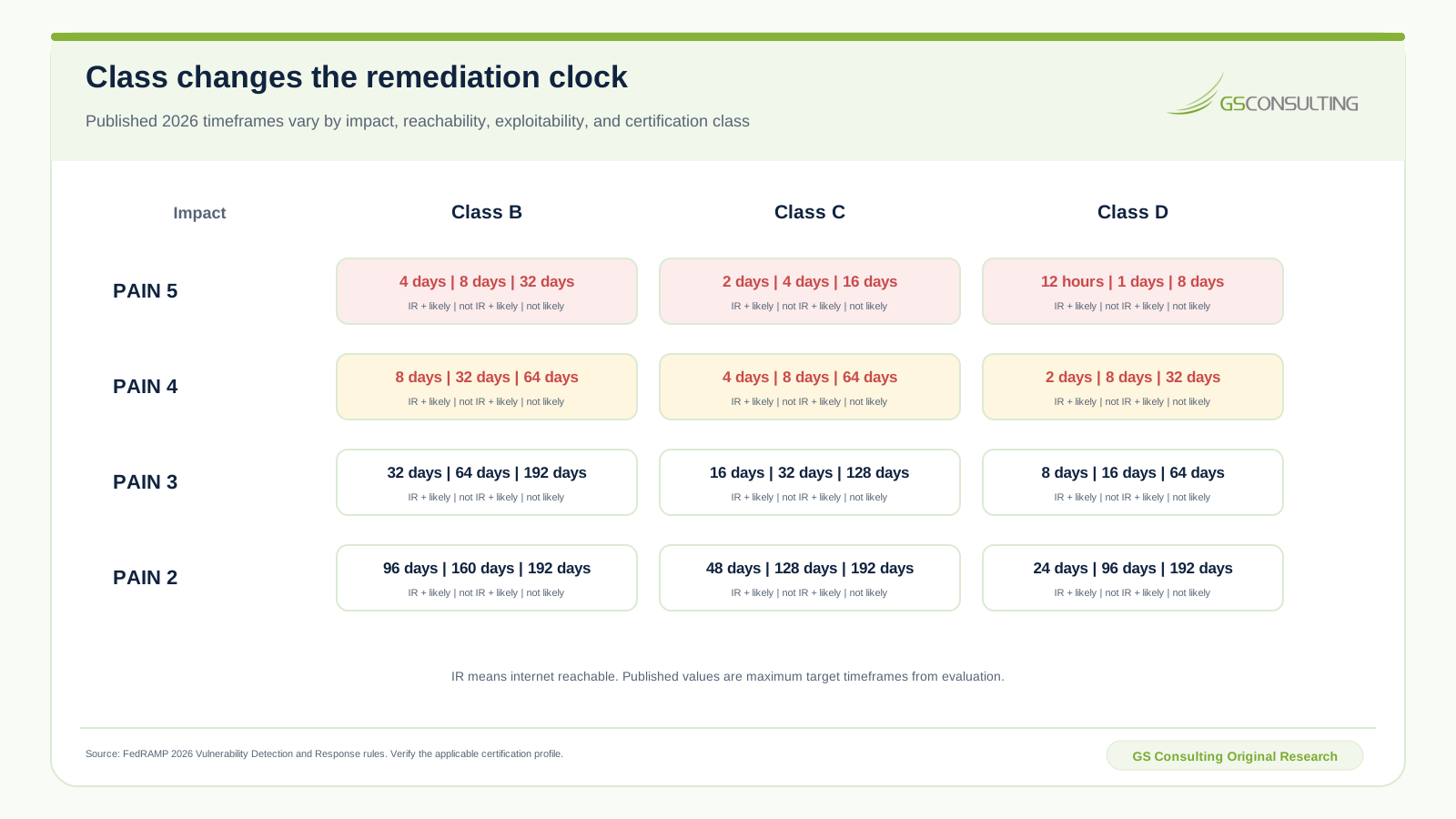
The current Vulnerability Detection and Response rules do not use one universal due date. The matrix varies by PAIN rating, likely exploitability, internet reachability, and class. Class D can require action in as little as half a day. The longest listed target is 192 days.
Do not copy a clock from raw severity. The evaluation has to consider service context and the current rule. Record the event that started the clock and the evaluation time. Name the applicable class, PAIN rating, exploitability conclusion, and reachability conclusion. Keep the target date beside completed action and current risk. Forecast a missed target while escalation can still change the result.
Mitigation and remediation are not the same state. Mitigation reduces impact without necessarily removing the weakness. Remediation removes the weakness or the relevant condition. Keep full mitigation, remediation, verification, validation, and acceptance separate so a risk reduction cannot be mistaken for final closure.
GS Original Research: Finding Closure Evidence Pressure Index
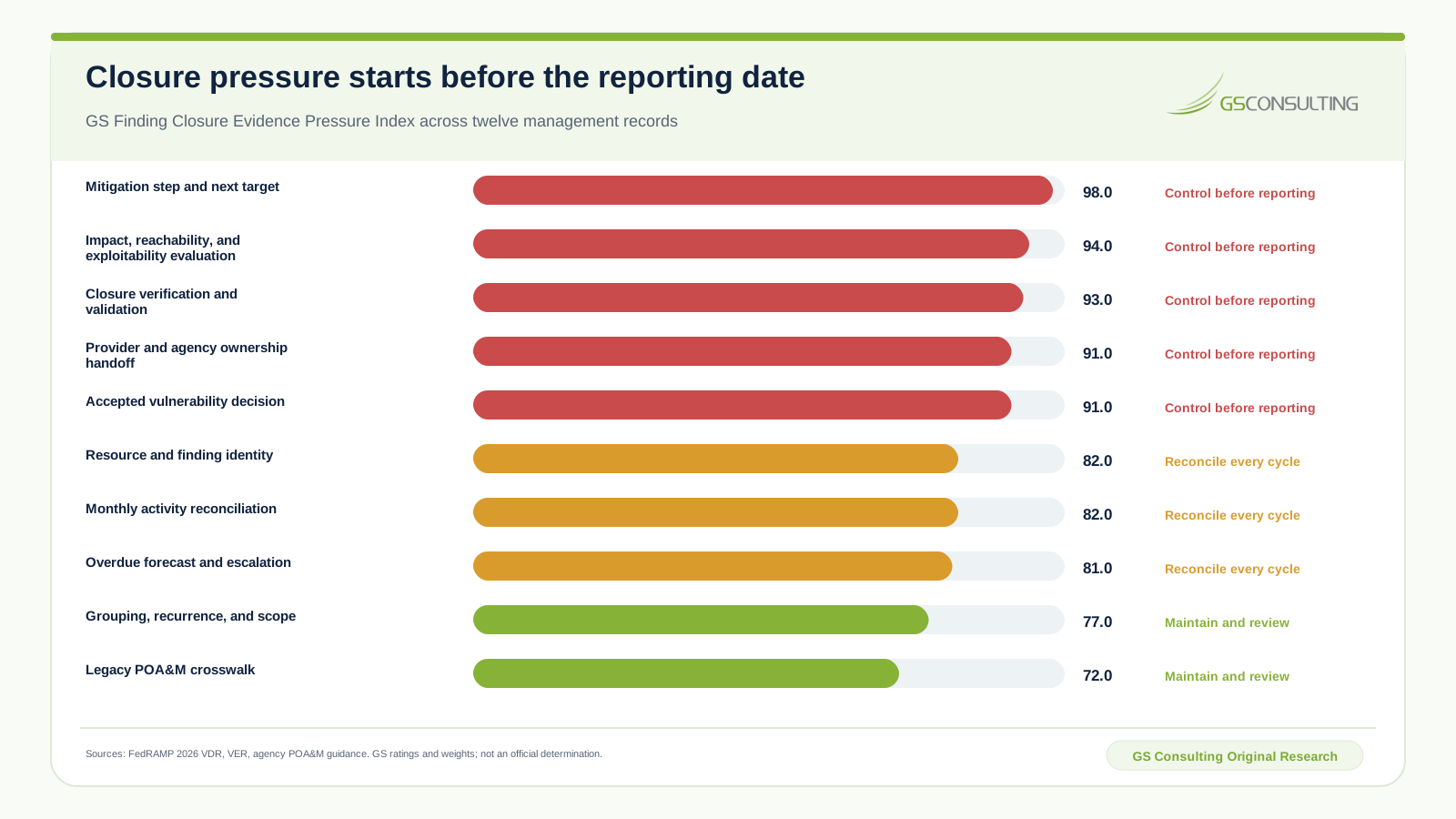
GS Consulting built the Finding Closure Evidence Pressure Index to answer one operating question: which management records should a provider control first from detection through closure and agency handoff? The model ranks twelve records on a zero to 100 planning scale. It does not score vulnerabilities, providers, agencies, authorizations, or compliance.
Five GS analyst ratings from one to five measure time pressure, agency decision consequence, cross record reconciliation, validation depth, and ownership ambiguity. Base weights are 25, 25, 20, 20, and 10 percent. The alternate case moves five points from agency consequence to time pressure.
| Factor | Base weight | What a high rating means |
|---|---|---|
| Time pressure | 25 percent | An official or operating clock makes delay costly |
| Agency decision consequence | 25 percent | The record can shape agency action, acceptance, or authorization context |
| Cross record reconciliation | 20 percent | Several source, work, evidence, and report records must agree |
| Validation depth | 20 percent | Current status requires technical proof of the intended result |
| Ownership ambiguity | 10 percent | Provider, agency, assessor, and control duties can be confused |
Mitigation step and next target scores 98. Impact, reachability, and exploitability evaluation scores 94. Closure verification and validation scores 93. Provider and agency ownership handoff and the accepted vulnerability decision each score 91.
The sensitivity test moves no record by more than two points. The leading group stays above 90. The result supports a practical rule: control ownership, exposure, next action, acceptance, and closure proof before the reporting deadline turns an incomplete record into an urgent review problem.
Build One Persistent Finding Record
The current Vulnerability Evaluation and Reporting guidance calls for useful detail. A nonaccepted provider record should connect the package and report period to the source finding and affected resources. It also needs vulnerability identity and detection history. Keep the current PAIN rating with its evaluation factors. Link response status and deadlines to completed reductions, planned action, and useful context.
Accepted vulnerabilities need their own record. Keep the provider detail link, current rating, rationale, and limiting facts together. Add status, decision context, and the report relationship. Current guidance identifies a vulnerability as accepted when full mitigation or remediation will not occur within 192 days. That classification does not erase the need to monitor, reassess, report, and route agency effects.
Use one internal finding ID that never changes. Store every scanner or source ID as an alias. A rescan that changes the source identifier should update evidence, not create a younger vulnerability. When several findings are grouped, preserve affected resource scope and the individual history needed to prove that every instance reached the claimed state.
Use a Five Stage Management Path
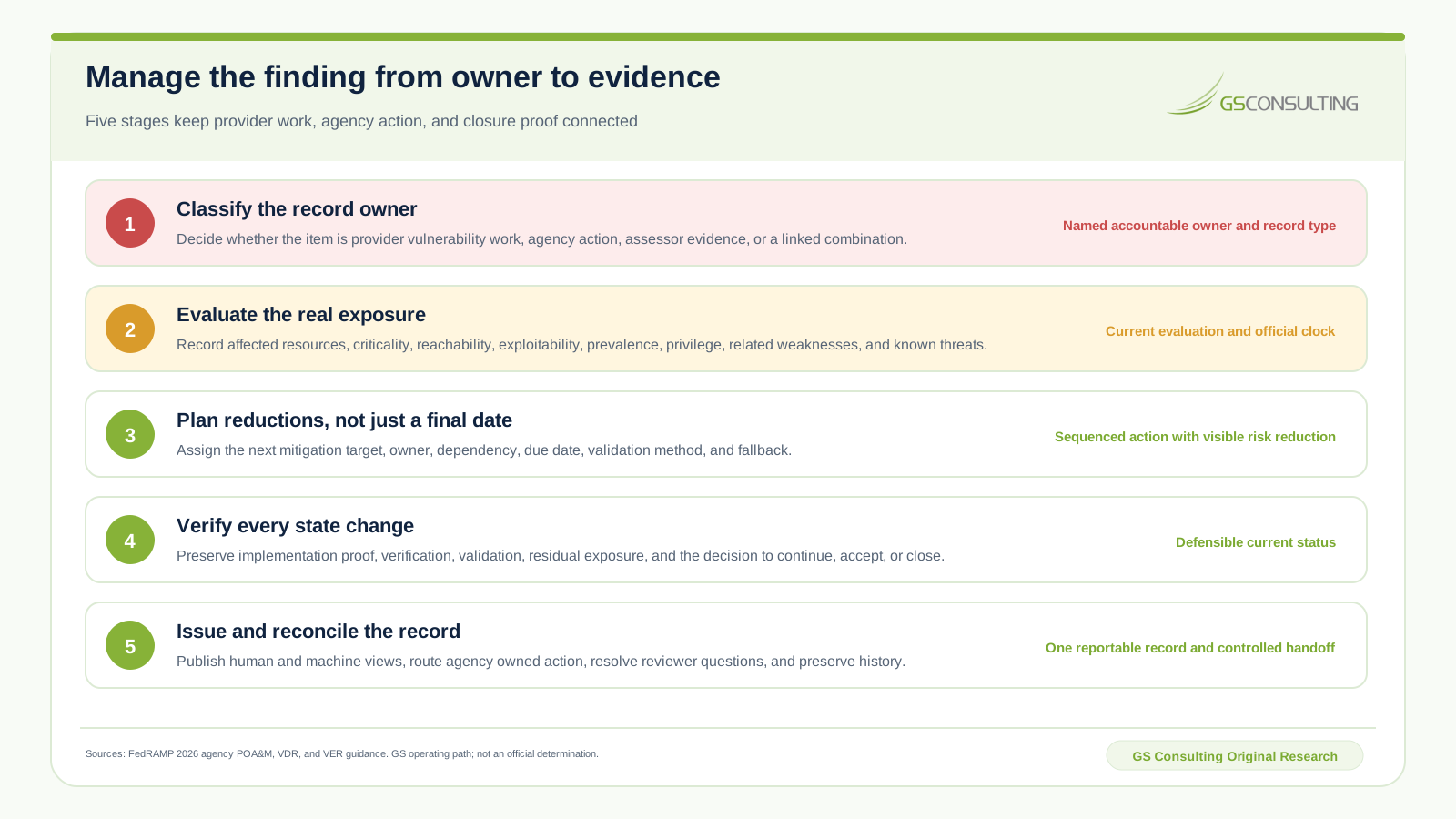
Stage one: classify the record owner. Decide whether the item is provider vulnerability work, agency action, assessor evidence, or a linked combination. Name the accountable owner, decision authority, record type, and handoff.
Stage two: evaluate the real exposure. Record affected resources and criticality. Assess reachability, exploitability, prevalence, privilege, related weaknesses, and known threats. Set the current PAIN rating and official clock. Preserve contrary evidence and review judgment.
Stage three: plan reductions, not only a final date. Assign the next mitigation target and expected rating. Name the owner, dependency, and due date. Define the validation method, escalation, and fallback. Update the plan after each action.
Stage four: verify every state change. Keep change proof and technical verification. Validate the intended effect and evaluate residual exposure. Preserve failures, corrections, and the decision to continue, accept, or close.
Stage five: issue and reconcile the record. Publish machine and human views from the same current data. Route agency owned action, resolve reviewer questions, preserve the exact report, and link the disposition back to source and work systems.
Treat Acceptance as a Governed Decision
Acceptance is not a status chosen by the remediation team. It needs defined authority and current impact. Explain why full mitigation or remediation will not occur and preserve the supporting evidence. Record remaining exposure, limiting measures, and affected resources. Set the review date, change triggers, and final decision path.
Keep provider acceptance and agency acceptance distinct. A provider can categorize and report a vulnerability under the current provider model. An agency still decides its own risk and action under its authority. Link the records when the provider condition affects agency configuration, monitoring, contract action, compensating controls, or authorization.
Reopen the decision when exploitability, reachability, affected resources, or threat activity changes. Do the same after a change to service architecture, customer use, compensating measures, or authoritative guidance. An acceptance with no trigger or review date becomes an archive, not a control.
Prove Closure Against the Original Condition
Closure needs more than a ticket, code merge, deployment note, or clean scanner line. Start from the original finding. Show the affected resource and condition. Show what was changed. Verify that the change exists in the intended environment. Validate that it reduced or removed the intended exposure. Evaluate residual risk. Reconcile every related provider, agency, report, and assessment record.
Use independent evidence where the governing path requires it. Record the sample, method, tester, environment, and time. State the expected and actual result. Preserve limits and defects beside each correction and repeated test. If closure depends on a compensating measure, test the measure and preserve the decision that allowed it.
Then challenge recurrence. Search for the same condition across equivalent resources, images, regions, service tiers, deployment paths, and recent changes. A fixed instance with an active recurrence path is not a closed management problem.
Six POA&M Habits Create False Closure
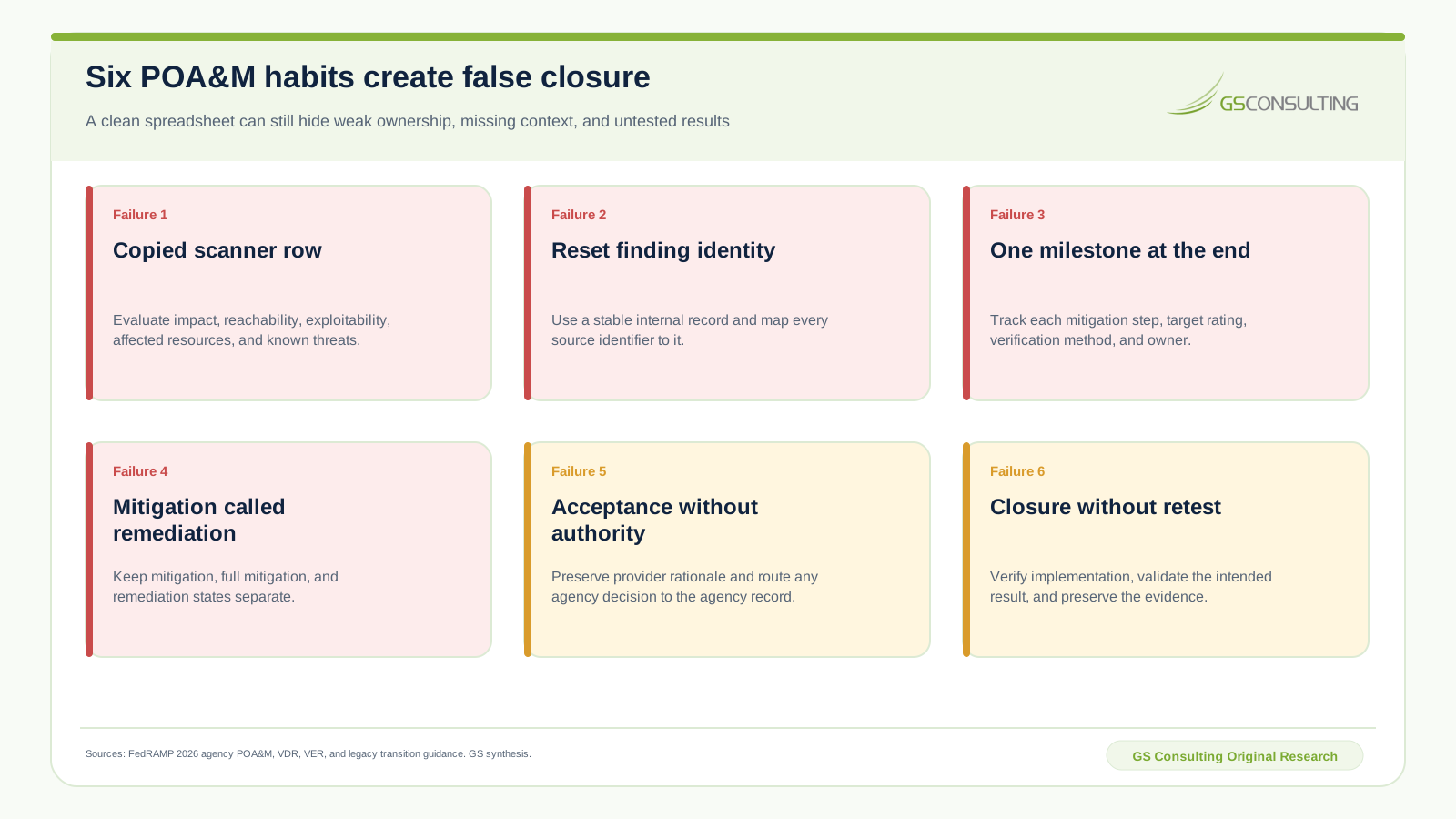
Copied scanner row. Raw severity and a date enter the record without service context. Evaluate impact, reachability, exploitability, affected resources, and known threats.
Reset finding identity. A rescan creates a new row and erases age or recurrence. Use a stable internal ID and map every source identifier to it.
One milestone at the end. The final patch date hides earlier reductions and dependencies. Track each action, target rating, validation method, due date, and owner.
Mitigation called remediation. Risk was reduced, but the weakness remains and the record closes. Keep mitigation, full mitigation, and remediation states separate.
Acceptance without authority. A provider status label is treated as an agency decision. Preserve provider rationale and route agency consequences to the agency record.
Closure without retest. A work ticket becomes proof. Verify implementation, validate the intended effect, assess residual exposure, and preserve the result.
Build the Minimum Finding Management Evidence Packet
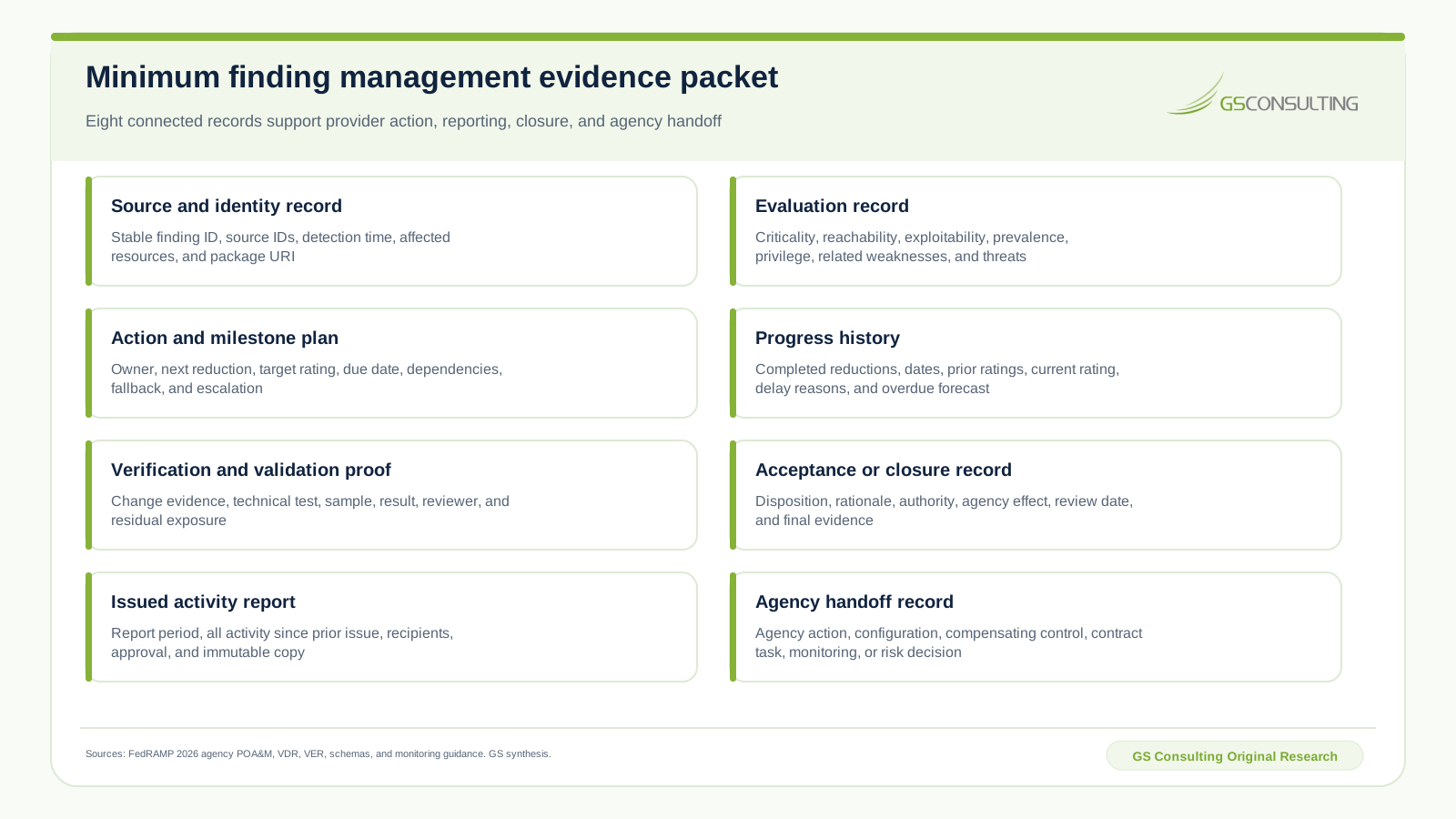
Maintain a source and identity record, evaluation record, action and milestone plan, and progress history. Add verification and validation proof, the acceptance or closure record, the issued activity report, and the agency handoff record. Give every artifact a stable ID and owner. Preserve its source, affected scope, date, status, and version. Add approval, retention, and the relationship to the certification package.
Keep the issued monthly report immutable. A correction should create a new version, explain the change, name the approver, and preserve the original. Reconcile report counts and status back to the provider detail records, work systems, accepted vulnerability records, and machine data.
The report should summarize activity since the prior report, not merely restate the current open list. It should show what appeared and changed. Explain which risk was reduced, what remains, and what moved into acceptance. Name what closed and which agency action is still open.
Sources and Research Files
- FedRAMP Agency Plans of Action and Milestones for provider and agency ownership boundaries.
- FedRAMP Vulnerability Detection and Response for provider duties and published response timeframes.
- FedRAMP Vulnerability Evaluation and Reporting for evaluation factors, provider detail, accepted vulnerability data, and human reporting.
- FedRAMP Revision 5 deadlines for optional adoption, obtain and maintain, and grace dates.
- FedRAMP CSP Authorization Playbook for legacy POA&M transition and crosswalk context.
- FedRAMP Continuous Monitoring Playbook for recurring package and remediation practices.
The complete research package under research/insights/fedramp-poam-management/ preserves four layers:
- Sources, public signals, data definitions, and explicit limitations
- Model inputs, live workbook formulas, derived scores, and sensitivity analysis
- Timing, ownership, workflow, failure, and evidence records
- Figure data, methodology, editable SVGs, rendered PNGs, previews, and saved workbook inspection
Public observations, GS ratings, and calculated outputs remain separate.
GS Consulting Original Research. The Finding Closure Evidence Pressure Index is a derived planning tool based on cited public sources and documented analyst assumptions. It is not an official FedRAMP score, PAIN rating, legal opinion, or assessment result. It also does not make an authorization, agency risk, certification, or compliance decision. Verify the applicable class and transition date. Confirm the authorization, agreement, agency direction, finding facts, clocks, and evidence with the responsible authorities.
Frequently Asked Questions
What is FedRAMP POA&M management?
FedRAMP POA&M management is the operating process for finding ownership, evaluation, risk reduction, current reporting, decision history, and closure proof. Under the 2026 model, provider vulnerability information and agency POA&Ms are related but distinct records.
Does a provider vulnerability list become an agency POA&M?
No. Current FedRAMP agency guidance says provider maintained vulnerability information is not automatically an agency POA&M. An agency creates a POA&M for agency owned configuration, control, contract, or monitoring action. It also uses the record for a managed weakness, compensating control, or risk acceptance action.
What changed for provider POA&M records in 2026?
The 2026 rules move provider vulnerability work toward distinct vulnerability detail reports, accepted vulnerability records, machine data, and human readable activity reporting. Legacy POA&M files can still matter during transition, but they should be crosswalked into the current record model without losing history.
How often must FedRAMP vulnerabilities be reported?
Current vulnerability evaluation and reporting guidance requires a human readable report each month and calls for recent Class B machine data to be available in JSON and updated at least monthly. Exact duties depend on the applicable certification class, transition date, authorization, and agency direction.
When does a FedRAMP vulnerability become accepted?
Current 2026 guidance categorizes a vulnerability as accepted when full mitigation or remediation will not occur within 192 days. Acceptance still needs a distinct record, current rating, rationale, related provider detail, and agency decision context where applicable.
How do you close a FedRAMP POA&M item?
Close only after implementation evidence shows what changed, verification confirms the change exists, validation shows it reduced the intended risk, residual exposure is evaluated, required reporting is reconciled, and the authorized owner approves the disposition. A ticket status or scanner result alone is not enough.
Bottom Line
The record is controlled when provider work and agency action tell one current story. Evaluation and clocks must agree with milestones and evidence. Acceptance, reporting, and closure must agree too. The operating standard is direct: name the owner and evaluate the real exposure. Plan the next reduction. Verify every state change. Issue one reconciled record and close only against tested evidence.
Related Reading
- FedRAMP Compliance Hub
- FedRAMP Vulnerability Management Guide
- FedRAMP Continuous Monitoring Guide
- FedRAMP Authorization Package Guide
- FedRAMP Compliance Guide
- Secure AI Automation
Close the finding with proof, not a status.
Connect the accountable owner to current facts and the next reduction. Keep the official clock, decision, report, and tested result in one record.
Strengthen POA&M Management