Cybersecurity | | 23 min read
FedRAMP Continuous Monitoring: Monthly Evidence That Matters

Key Takeaways
Continuous monitoring works when every evidence stream reconciles to one service
Ongoing Certification is broader than scan delivery
The 2026 framework joins vulnerabilities, changes, service health, accepted risk, quarterly review, certification data, and annual independent assessment.
Inventory and vulnerability evidence carry the most pressure
Asset inventory and vulnerability detection each score 97.0 because fast cadence, broad source coverage, reconciliation, and review consequences collide there.
Close each period before the next one starts
Resolve scope, missing assets, stale findings, acceptance, changes, ownership, and reviewer questions inside the cycle. Quarterly review should not become forensic reconstruction.
FedRAMP continuous monitoring is not a monthly scan upload. It is the recurring proof that the authorized service, its vulnerabilities, its changes, and its security decisions still agree.
A package can arrive on time and still be wrong. The scanner sees 842 assets, the inventory lists 817, the boundary diagram shows 790, twenty findings have new identifiers, three accepted risks expired, and a production change never entered the control record. More files do not repair that conflict.
The operating standard is direct: freeze the period and scope, collect from source systems, reconcile every exception, approve the decisions, deliver the required record, and carry open action into the next cycle without losing history.
The FedRAMP Compliance hub connects this guide to the full cluster. Use the vulnerability management guide for detection and response, the POA&M management guide to separate provider records from agency action and prove closure, the annual assessment guide to connect current scope, technical testing, prior findings, and package evidence, the incident response guide for reportability and recovery, the FedRAMP 20x guide to build measures and persistent validation, the class selection guide to set the assurance target, the Class C baseline guide for Rev5 structure, the authorization package guide for the review record, and the significant change guide for change classification and notification.
The FedRAMP supply chain risk management guide extends that cycle to external services, software dependencies, support personnel, hardware, supplier incidents, reassessment, and exit. Supplier signals belong in the same boundary, change, vulnerability, incident, and evidence history.
Make the monitoring package explain the service.
GS Consulting helps cloud teams reconcile inventory, vulnerabilities, changes, incidents, availability, accepted risk, reporting, and review into one current operating record.
Build the Monitoring CycleFedRAMP Continuous Monitoring: The Short Answer
FedRAMP continuous monitoring is the recurring evidence and decision process that keeps a service current after authorization or certification. Legacy Rev5 monitoring agreements commonly use monthly plan of action and milestones files, inventory, vulnerability results, and supporting records. The 2026 framework expands the operating concept and generally calls it Ongoing Certification.
That shift matters. Vulnerability scans remain important, but current certification also depends on service health, changes, accepted vulnerabilities, incidents, certification data sharing, quarterly reporting, synchronous review, and annual independent assessment. A provider must maintain the complete service history, not just a scanner export.
During transition, old and new duties can overlap. Keep a delivery calendar that names the requirement, rule version, agreement, period, due date, producer, reviewer, approver, recipient, format, access method, retention, and transition exit condition.
Continuous Monitoring Is Becoming Ongoing Certification
The 2026 Continuous Collaborative Monitoring rules introduce an Ongoing Certification Report every three months. The report covers changes since the prior period, planned changes for the next three months, accepted vulnerabilities, transformative changes, and recommendations. Class C adds a synchronous quarterly review.
The name change is not cosmetic. Monthly vulnerability work feeds a broader certification decision. Engineering, operations, compliance, customers, reviewers, and assessors need one controlled record of what changed, what was found, what was accepted, what was fixed, and what the service will do next.
Current adoption is staged. Optional use began in July 2026, many requirements take effect in 2027, and grace periods differ. Legacy Rev5 services can remain active during the wider transition. Confirm the rule and agreement that govern each deliverable before changing cadence or format.
Use one term carefully in internal work. Call the established agreement deliverables continuous monitoring. Call the new quarterly and certification model Ongoing Certification. Then map where they overlap so the team does not submit the same fact twice or drop a required record between them.
The Evidence Cadence Is Not Just Monthly
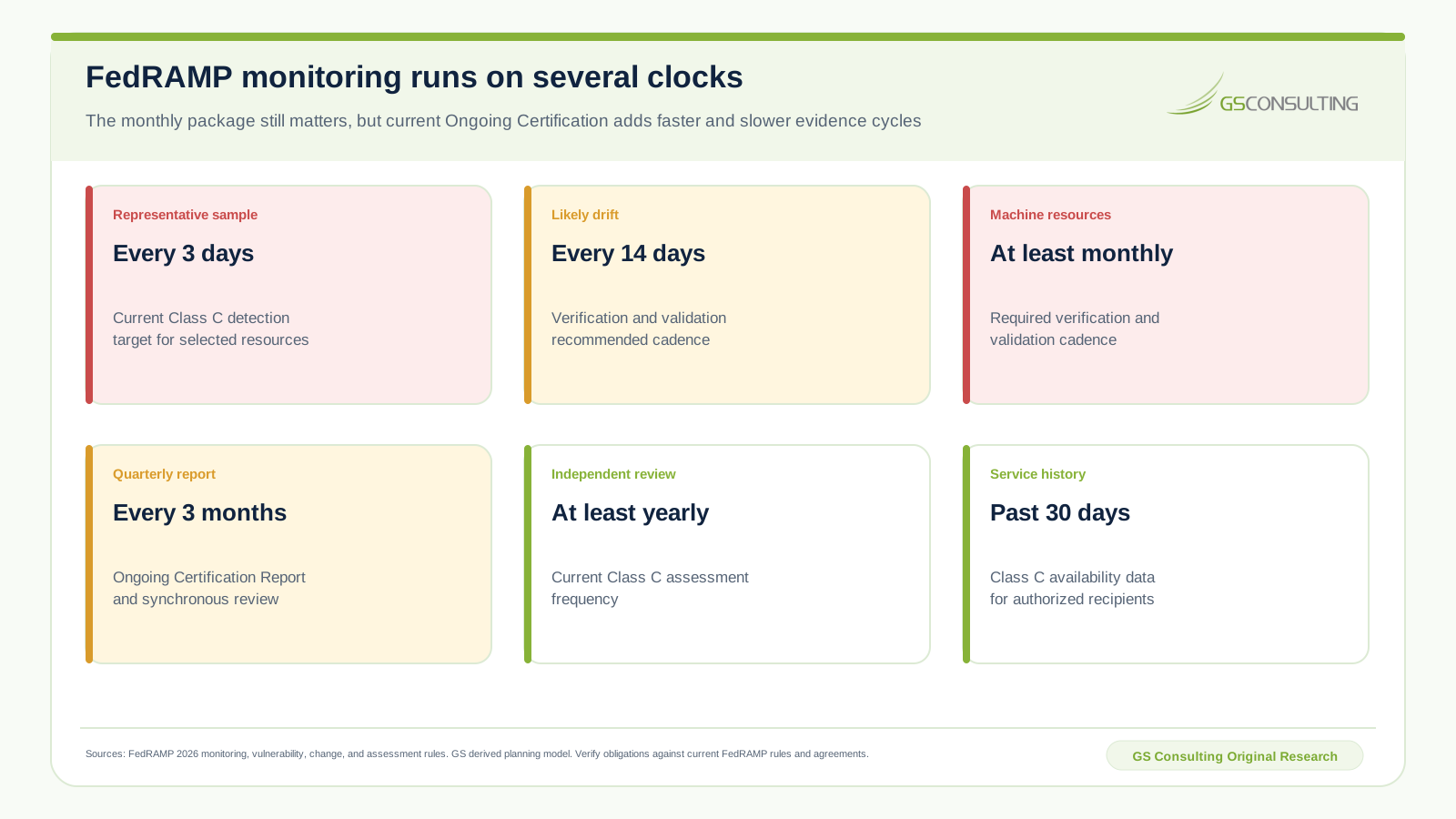
Current vulnerability detection and response rules distinguish several clocks. Machine based information resources must be verified and validated at least monthly. Nonmachine resources must be handled at least quarterly. Resources likely to drift should be checked every fourteen days, while other resources should be checked monthly. Representative samples should be checked every three days.
The words matter. FedRAMP uses mandatory language for some intervals and recommended language for others. Do not convert every recommendation into a legal claim. Do not ignore it either. Record whether each cadence is required by rule, monitoring agreement, agency direction, service risk decision, or internal operating standard.
| Cadence | Evidence or action | Control question |
|---|---|---|
| Every three days | Representative detection samples under current guidance | Does sampling expose blind spots before the monthly cycle? |
| Every fourteen days | Likely drift verification and validation under current guidance | Did a fast changing resource leave the approved state? |
| At least monthly | Machine resource verification, vulnerability activity, and agreement deliverables | Do inventory, findings, decisions, and evidence reconcile? |
| Every three months | Ongoing Certification Report and Class C synchronous review | What changed, what remains accepted, and what comes next? |
| At least annually | Class C independent verification and validation | Can an independent party reproduce the control conclusions? |
| Event driven | Incidents, significant changes, urgent findings, and material service effects | Which clock or notification duty starts now? |
A mature program uses one master calendar with faster source collection beneath slower formal review. The monthly package should already contain the history needed for quarterly review. The quarterly record should make annual assessment easier. If each cycle starts from a blank folder, the system is not continuous.
GS Ongoing Evidence Pressure Index
GS Consulting built a derived planning model across ten recurring evidence streams: vulnerability detection, vulnerability activity reporting, accepted vulnerability records, asset inventory and boundary, drift validation, change records and notices, availability and service health, incidents and communications, the Ongoing Certification Report, and annual independent assessment.
Five one to five analyst ratings capture cadence pressure, source system count, reconciliation demand, reviewer coordination, and failure consequence. The base weights are 25 percent, 20 percent, 25 percent, 15 percent, and 15 percent. The sensitivity case shifts five points from cadence pressure to failure consequence.
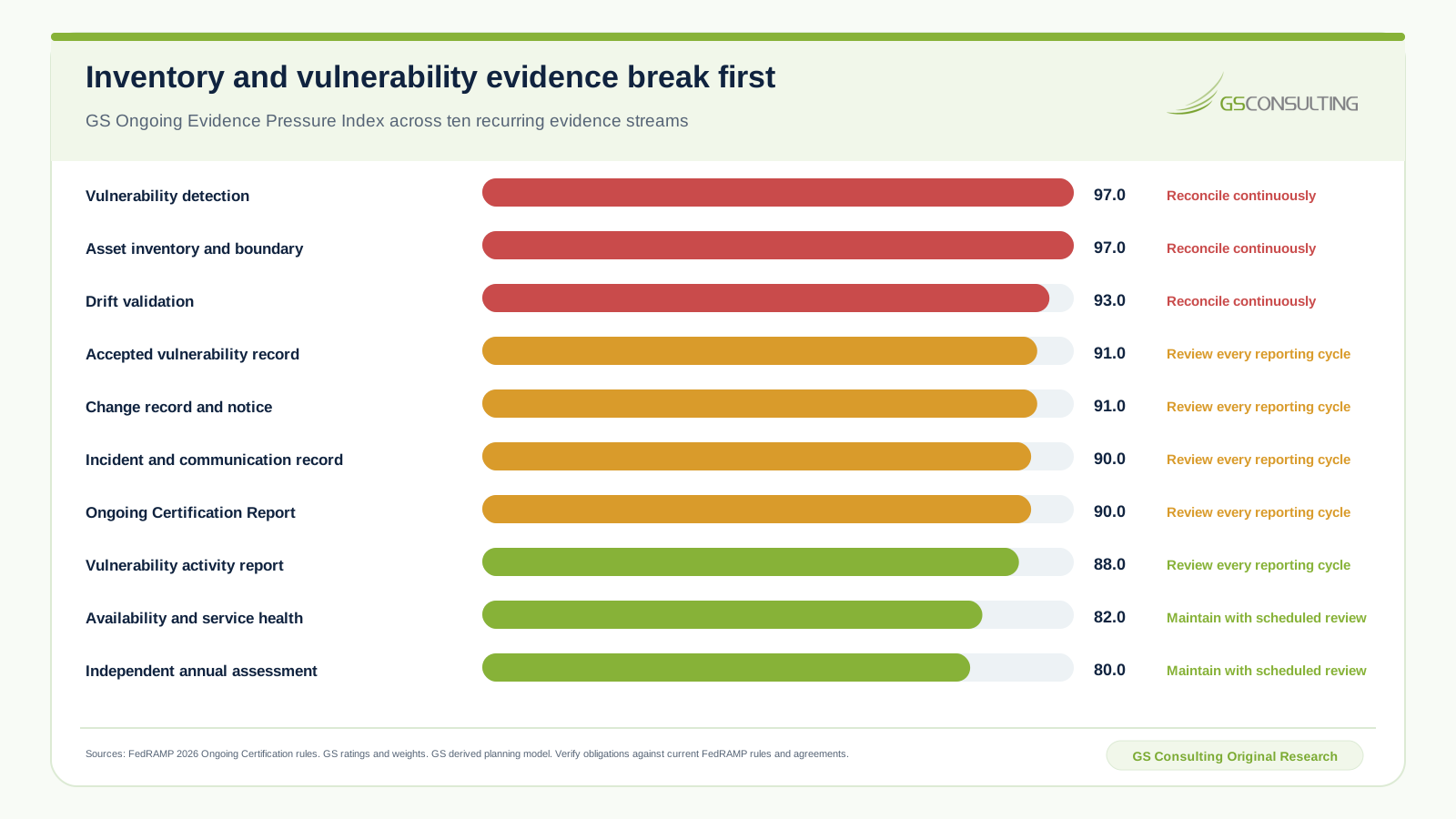
Asset inventory and boundary evidence scores 97.0. Vulnerability detection also scores 97.0. Drift validation scores 93.0. Accepted vulnerability records and change records each score 91.0. These streams sit where fast cadence, broad source coverage, repeated reconciliation, several reviewers, and material consequences collide.
The alternate weights preserve the top three and move no stream by more than four points. Annual independent assessment moves the most because its cadence is slower but failure consequences are high. That result reinforces the model boundary: the index estimates recurring evidence pressure, not legal importance or security value.
This is a GS Consulting derived planning tool, not a FedRAMP rating, vulnerability severity, risk acceptance, audit result, or certification decision. The research package preserves the public source register, ratings, formulas, sensitivity case, workbook, CSV files, figure data, and editable SVGs.
Build the Monthly Package as a Reconciliation
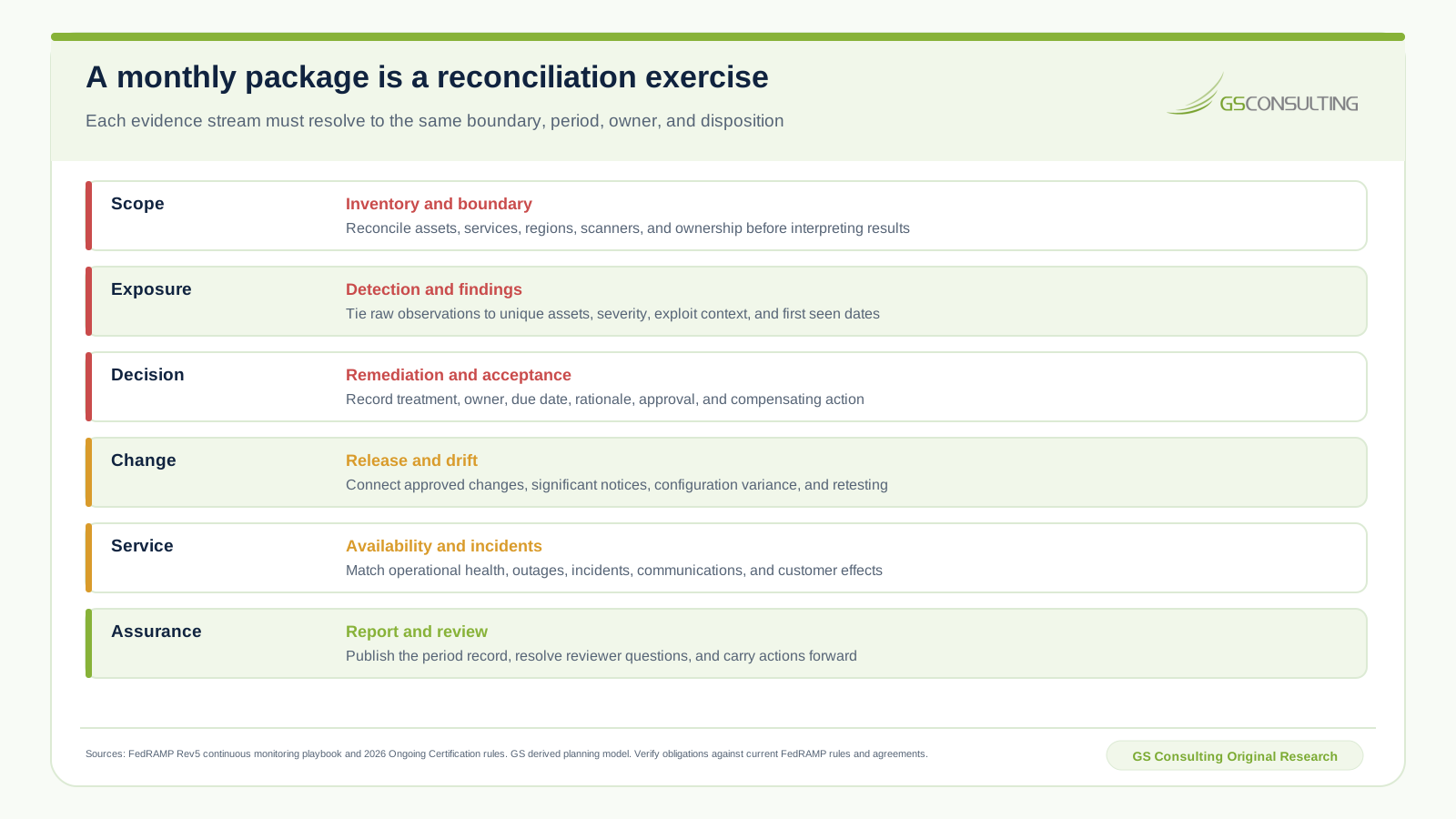
Start by freezing the reporting period and service scope. Pull the authoritative asset inventory, active regions, service list, scanner coverage, external connections, and ownership record. Reconcile counts before reviewing findings. A finding cannot be trusted if the program cannot explain whether the affected resource belongs in scope.
Then normalize findings. Keep a stable internal identifier even when tools change their identifier or wording. Record resource, weakness, first seen date, last seen date, severity, exploit context, source, status, treatment, owner, due date, acceptance, and closure evidence. Preserve history when a finding reappears.
Reconcile the plan of action and milestones to actual remediation work. A ticket should resolve to the finding and asset. The due date should resolve to the governing rule or accepted decision. Closure should resolve to a verified result, not a developer comment. If a date changes, preserve who approved the change and why.
Run a package control check before delivery: expected artifacts present, period correct, source totals reconciled, missing assets explained, aged findings reviewed, acceptance current, changes included, incidents linked, approvals recorded, file access tested, and prior reviewer questions answered.
Manage Vulnerabilities as Decisions, Not Rows
Vulnerability evidence has three separate jobs. It must show that the provider looked across the right service. It must show what the provider found. It must show what the provider decided and whether that decision was completed.
Coverage proof starts with inventory reconciliation. Record which resources are machine based, which scanner or method covers each class, where credentials or access failed, which resources were excluded, how representative samples were chosen, and how blind spots were handled. A clean scan result with incomplete coverage is not clean assurance.
Current vulnerability evaluation and reporting rules call for a human readable activity report at least monthly. Current materials also address accepted vulnerabilities that will not be fully remediated within defined time frames. Teams should verify the effective dates and applicable federal direction before stating a binding deadline in policy or customer communication.
Acceptance needs a real decision record: vulnerability, affected service, risk explanation, current exposure, compensation, decision authority, approval date, expiry, monitoring condition, remediation plan if any, and next review. Permanent acceptance without an owner or expiry is abandoned work.
Connect Changes, Incidents, and Service Health
Production changes are part of monitoring because they can alter boundary, control implementation, evidence, vulnerability exposure, customer duty, and certification data. The current significant change rules distinguish adaptive and transformative changes and require a twelve month history.
The rule sets different notification windows by change type. Because adoption and grace dates are staged, providers should verify the current timing before relying on a summary. Internally, record the proposed change, classification, security impact, affected controls, notice decision, approval, test, release, observed result, follow up, and final record update.
Incidents should connect to the same operating history. Record discovery, scope, service effect, control implications, reporting analysis, communications, containment, recovery, evidence, and corrective action. A monthly package should not expose an incident for the first time through a sudden finding count or availability gap.
Class C certification data sharing also includes service availability for the past thirty days. Availability is not a decorative service metric. It can explain outages, failed validation, delayed remediation, customer effect, and operational change. Make the availability record reconcile to incident and change history.
Make Quarterly Review a Decision Meeting
The Ongoing Certification Report should not be a larger monthly attachment. It should tell decision makers what materially changed, which accepted vulnerabilities remain, which transformative changes occurred, what is planned next, and what action the evidence supports.
Prepare the quarterly review from three monthly closure records. Show trend and exceptions, not only totals. Useful questions include:
- Which assets or services entered or left the boundary, and were all records updated?
- Which vulnerabilities aged, recurred, changed treatment, or missed a commitment?
- Which accepted decisions expire before the next review?
- Which changes altered control implementation, customer duty, or assessment scope?
- Which incidents, outages, or reviewer questions expose a systemic weakness?
- Which planned changes need early certification or assessment coordination?
End with decisions. Record the owner, action, due date, evidence for closure, escalation condition, and next review. Carry the action register into the following month. A review without controlled follow through is only a meeting record.
Monitoring Failure Modes That Create False Confidence
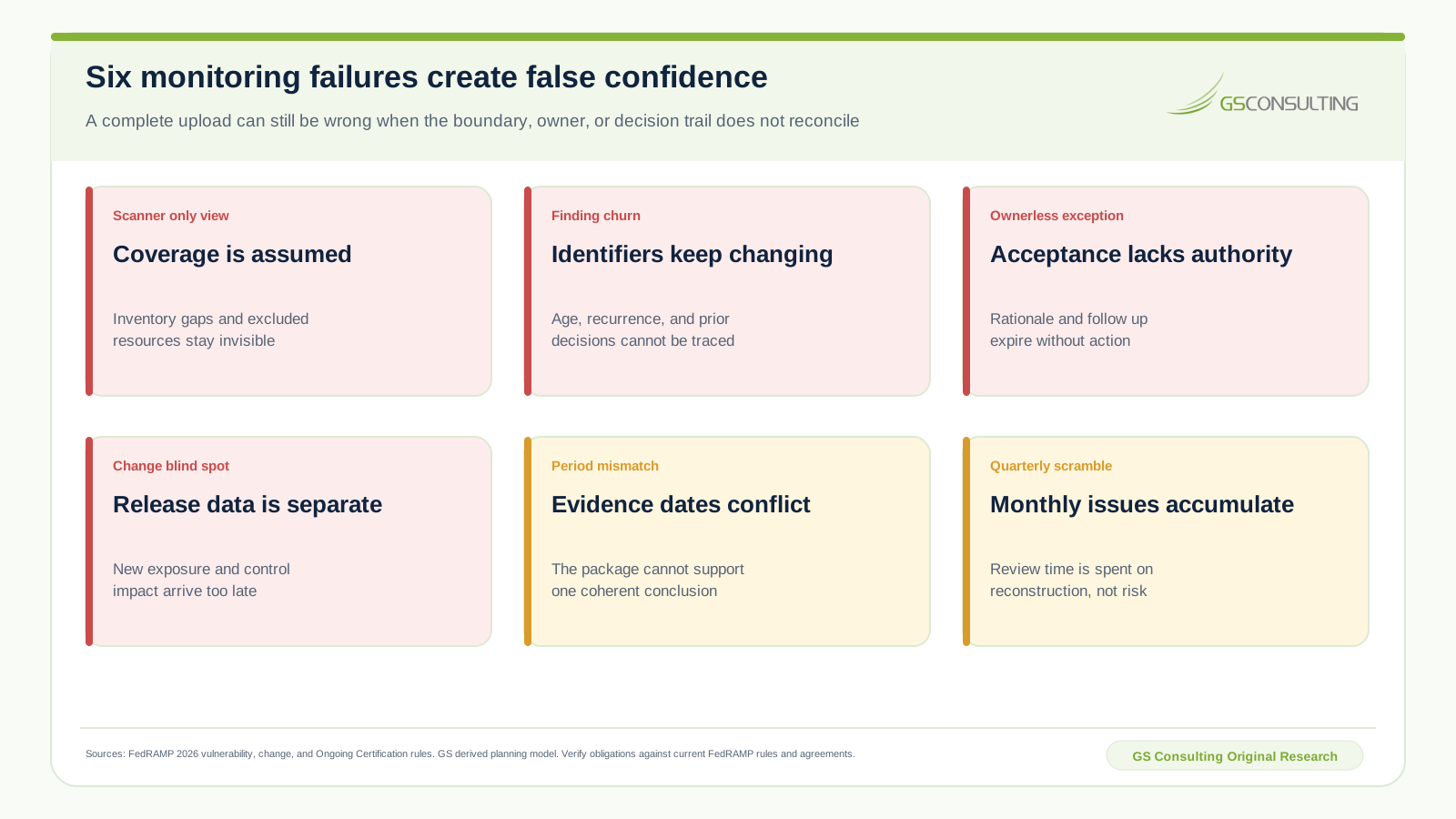
Scanner only monitoring. The program assumes tool coverage equals boundary coverage. Unscanned resources, failed credentials, manual components, and new services remain invisible.
Finding identity churn. Tool identifiers change and history breaks. The team cannot prove first seen age, recurrence, prior acceptance, or whether closure held.
Ownerless acceptance. A vulnerability remains open under vague business acceptance. Decision authority, compensation, expiry, and follow up are missing.
Change blindness. Release, architecture, and vulnerability records live in separate systems. New exposure arrives in the package after the service changed.
Period conflict. Inventory, scans, tickets, approvals, incidents, and availability cover different dates. The package cannot support one conclusion.
Quarterly reconstruction. Monthly questions and actions are never closed. The quarterly team spends its time rebuilding history instead of deciding what to do.
A Five Stage Monitoring Operating Cycle
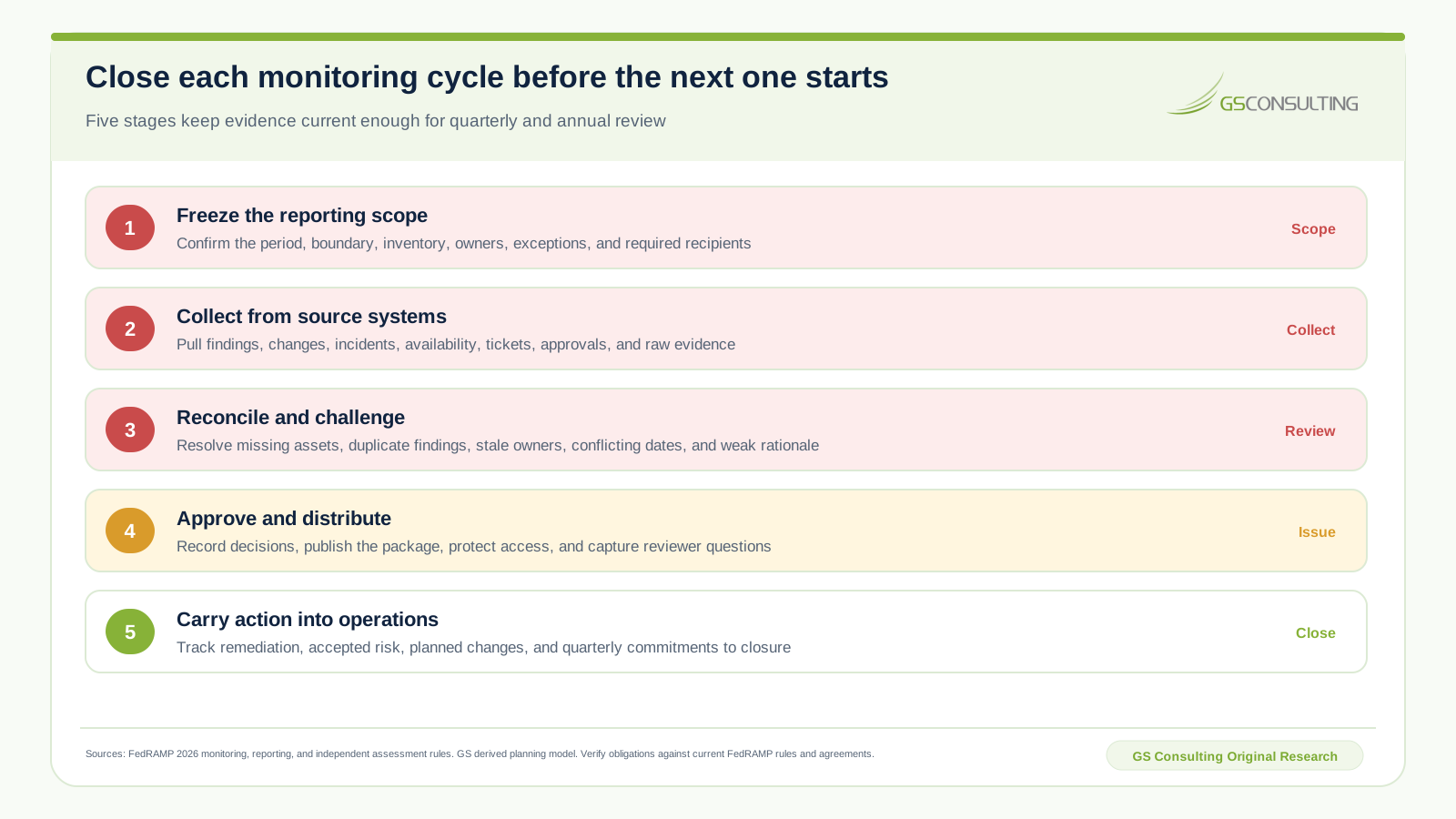
Stage one: freeze scope. Name the reporting period, service version, boundary, inventory source, evidence owners, exceptions, agreement, recipients, and due dates.
Stage two: collect from sources. Pull inventory, findings, raw validation evidence, remediation tickets, acceptance, changes, incidents, availability, customer communications, approvals, and prior actions.
Stage three: reconcile and challenge. Resolve missing assets, duplicated findings, stale owners, expired decisions, conflicting dates, unexplained count changes, evidence gaps, and weak rationale.
Stage four: approve and deliver. Record reviewer questions and dispositions, obtain accountable approval, publish the package through the required path, confirm access, and preserve the exact issued version.
Stage five: close action. Carry remediation, accepted risk, planned changes, certification questions, and review commitments into operations. Escalate missed dates while action can still change the outcome.
The Minimum Ongoing Certification Evidence Packet
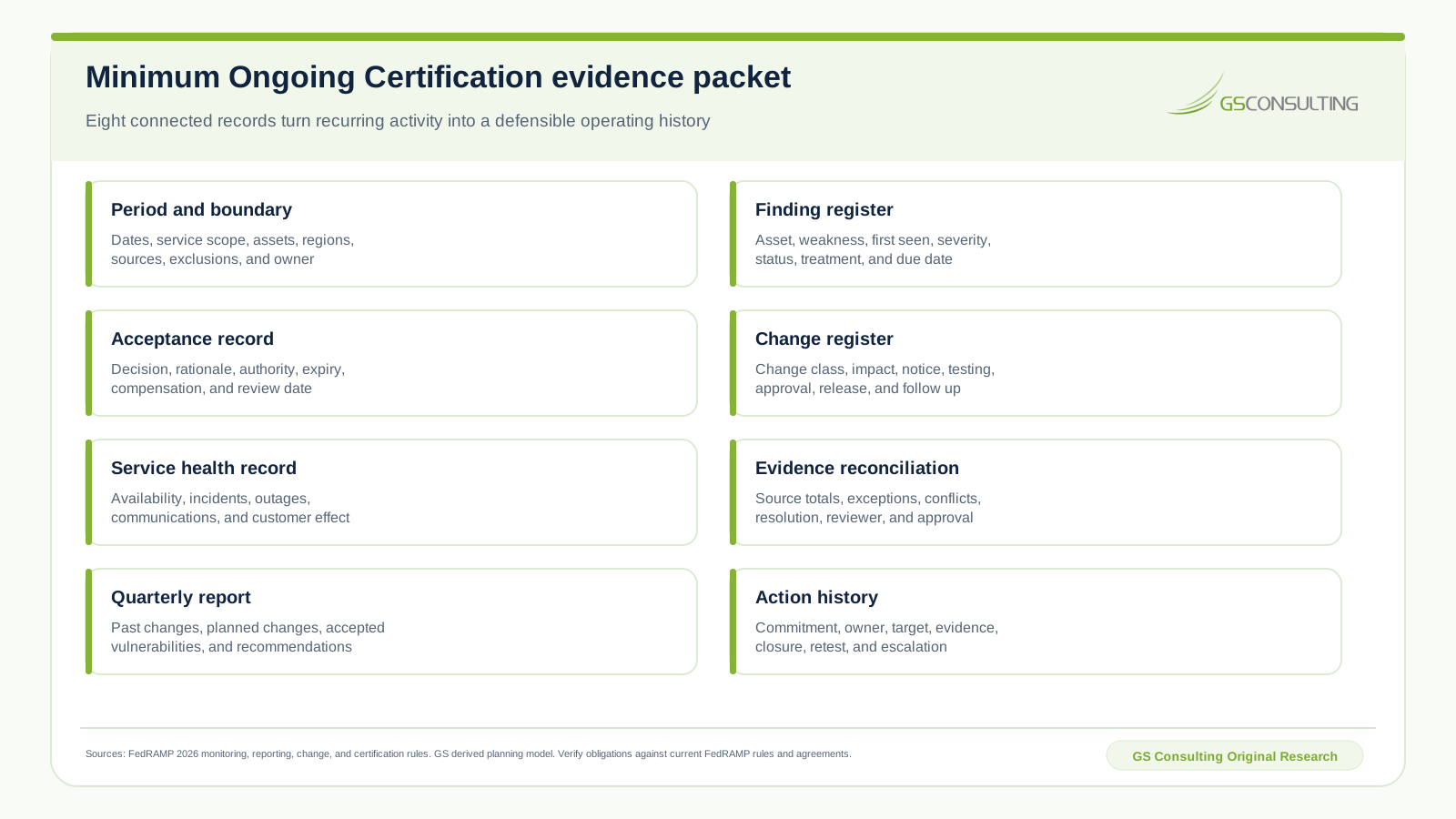
Maintain eight linked records: period and boundary, finding register, acceptance record, change register, service health record, evidence reconciliation, quarterly report, and action history. Each needs a stable identifier, owner, period, status, approval, retention rule, and relationship to the certified service.
Keep the issued package immutable. Corrections should create a version, explain what changed, name the approver, and preserve the prior record. Reviewers need to know what was known and decided at the time, not only what the latest spreadsheet says.
Bottom Line
FedRAMP continuous monitoring is a service control process with evidence, not an evidence upload process with a service attached. The current 2026 direction makes that distinction explicit through Ongoing Certification, quarterly review, service data, change history, and annual independent assessment.
The decisive operating standard is simple: reconcile the boundary, finding, decision, change, period, and owner inside every cycle, then close the action before the next cycle makes the history harder to recover.
Sources and Method Note
- FedRAMP Rev5 Continuous Monitoring Playbook
- FedRAMP Continuous Collaborative Monitoring
- FedRAMP Vulnerability Detection and Response
- FedRAMP Significant Change Notification
- FedRAMP Class C Independent Verification and Validation
- FedRAMP Class C Certification Data Sharing
- FedRAMP 2026 Provider Transition Guidance
GS Consulting Original Research. The GS Ongoing Evidence Pressure Index is a derived planning tool based on cited public sources and documented analyst assumptions. It is not a FedRAMP score, legal opinion, vulnerability severity, risk acceptance, assessment result, authorization, certification decision, or compliance determination. Verify obligations, dates, cadence, and evidence requirements against current FedRAMP rules, federal direction, and the applicable monitoring agreement.
Frequently Asked Questions
What is FedRAMP continuous monitoring?
FedRAMP continuous monitoring is the recurring work used to keep an authorized or certified cloud service and its security evidence current. It includes vulnerability activity, inventory, changes, incidents, service health, decisions, reporting, review, and independent assessment. Under the 2026 framework, FedRAMP generally calls this Ongoing Certification.
What is submitted monthly for FedRAMP continuous monitoring?
Legacy Rev5 agreements commonly require a plan of action and milestones, inventory, scan results or raw outputs, and related recurring evidence. The actual monthly package depends on the monitoring agreement, authorization, service, and current transition rules. Teams should use the governing delivery calendar rather than a generic checklist.
Does Ongoing Certification replace monthly reporting?
Not immediately in every case. The 2026 rules add Ongoing Certification reports and Class C quarterly reviews while legacy Rev5 agreements continue during transition. Providers should map both the current agreement and the staged 2026 rules, then retire old deliverables only when the governing path permits it.
How often are Class C vulnerabilities checked?
Current Class C vulnerability rules use several cadences. Machine based resources must be verified and validated at least monthly, nonmachine resources at least quarterly, likely drift should be checked every fourteen days, and representative samples should be checked every three days. The rule distinguishes required and recommended language.
What goes in an Ongoing Certification Report?
The current report covers changes since the previous report, planned changes for the next three months, accepted vulnerabilities, transformative changes, and recommendations. Class C also has a synchronous quarterly review. Providers should verify the current rule and transition date for their service.
Who should own FedRAMP continuous monitoring?
One accountable service owner should govern the cycle, but operations, security, vulnerability management, engineering, change management, incident response, compliance, legal, customer teams, and independent assessors may own parts of the evidence. Every recurring deliverable needs one producer, one reviewer, one approver, and a clear escalation path.
Related Reading
- FedRAMP Compliance Hub
- FedRAMP POA&M Management Guide
- FedRAMP Moderate Baseline Guide
- FedRAMP Compliance Guide
- Secure Cloud Architecture for Federal Contractors
- FedRAMP, CMMC, and NIST 800-171 Comparison
- Secure AI Automation
Close the evidence cycle while the facts are current.
The standard is decisive: freeze the scope, collect from sources, reconcile the exceptions, approve the decisions, deliver the record, and carry action to verified closure.
Operate the Monitoring Record