GovCon Cybersecurity | | 25 min read
FedRAMP Authorization Package: Documents, Evidence, and Review

Key Takeaways
A FedRAMP package works only when every record supports the same service and decision
The minimum package has three connected layers
Current rules connect the offering overview, implementation and assessment information, and a real or example Ongoing Certification Report.
The Security Decision Record scores 100
It leads the GS model because scope, technical proof, assessment, exceptions, and ongoing change all converge there.
Provider evidence does not become the agency SSP
The agency must document its own use, settings, integrations, duties, and authorization decision.
A FedRAMP authorization package is not a stack of documents. It is the evidence system behind a federal cloud decision.
Teams lose months when they confuse file presence with reviewability. The overview names one service boundary. The control record names another. The assessor tested a third. Customer responsibility says shared, but never names the setting, action, or owner. The package looks complete until a reviewer tries to use it.
The current 2026 framework makes the standard clearer. A provider must connect the cloud service offering, implementation and assessment information for each applicable rule, control, or Key Security Indicator, and evidence that shows the service can stay certified after the initial decision. The package is not finished when it is uploaded. It has to remain accurate as the service changes.
This guide connects the package work to the FedRAMP hub, the complete FedRAMP guide, the FedRAMP 20x guide, the companion significant change guide, and GS Consulting support for secure AI automation and evidence engineering.
Make the package usable before review starts.
GS Consulting helps cloud providers reconcile scope, security decisions, assessment evidence, customer duties, and ongoing records into one reviewable package.
Plan the Package ReviewFedRAMP Authorization Package: The Short Answer
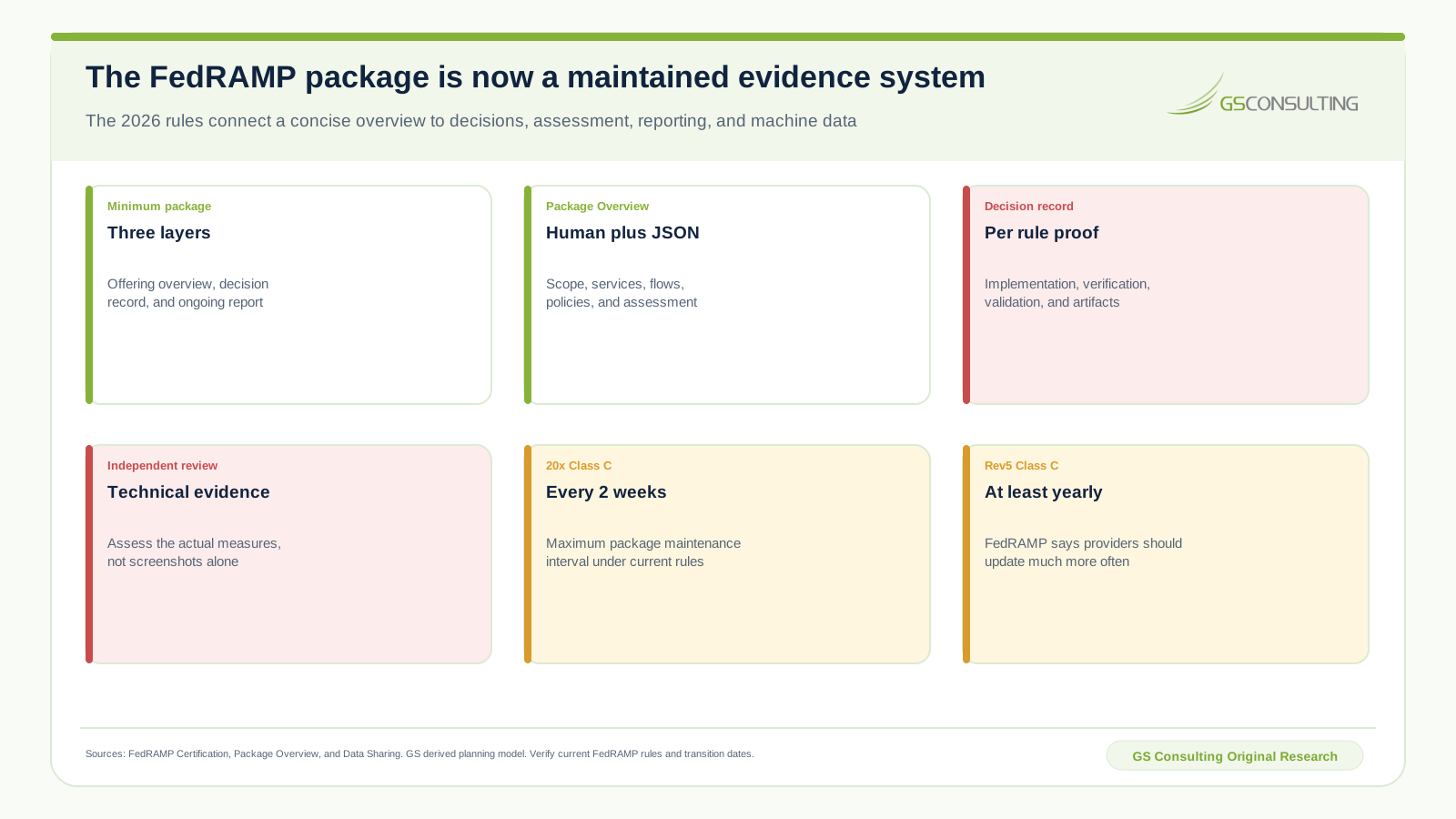
The FedRAMP Certification rules for 2026 define three minimum layers. The package includes information about the cloud service offering. It includes implementation, validation, and assessment information for every applicable requirement, control, or KSI. It also includes a real or example Ongoing Certification Report.
The current package uses both human readable and machine readable forms where a related JSON schema applies. The provider owns accuracy and completeness even when an assessor, advisor, or tool supplies part of the record. That accountability cannot be outsourced.
For an agency, the package shows how the provider protects the certified cloud service. It does not describe the full agency system, agency configuration, or agency authorization decision. Those remain agency work.
Stop Using the Legacy Checklist as the Current Architecture
Search results still point people toward the familiar SSP, SAP, SAR, Plan of Action and Milestones, scan files, policies, inventories, and appendices. Those records shaped the Rev5 package for years, and they can remain relevant during transition. They should not be treated as the complete current design.
The Certification Package Overview now supplies a concise view of the service offering. It connects metadata, public service information, relevant policies, minimum assessment scope, information flows, third party resources, cryptographic decisions, and the independent assessment summary. FedRAMP says this overview replaces the historically required base SSP for Rev5.
The Security Decision Record goes deeper. For each applicable item, it records how the provider follows the rule, verifies the implementation, validates that it works, captures independent review, resolves comments, and links artifacts. FedRAMP says this record replaces the traditional base SSP as a persistently maintained decision record.
Use the legacy documentation archive as transition reference, not as proof that an old file inventory satisfies the current model. The actual certification profile and transition dates control what a provider needs now.
What the Current Package Must Let a Reviewer See
| Evidence group | What it should explain | Review test |
|---|---|---|
| Certification Package Overview | What the offering includes, how the package is organized, who owns it, and when it changed | Can the reviewer identify the exact certified service? |
| Security Decision Record | How each applicable item is implemented, verified, validated, assessed, and supported | Can a claim be traced from decision to current technical proof? |
| Control or KSI information | Parameters, inheritance, measures, status, artifacts, exceptions, and assessment results | Do the details match the scope and operating measures? |
| Secure Configuration Guide | What an agency must configure, operate, monitor, and keep current | Can shared responsibility become specific actions and tests? |
| Independent assessment | What was tested, how it was tested, what failed, and what the assessor concluded | Did the assessor inspect actual technical measures? |
| Ongoing Certification Data | Changes, vulnerabilities, incidents, service health, reports, decisions, and open action | Does current history still support the conclusion? |
A good package does not make the reviewer infer relationships from file names. Use stable identifiers, exact service names, current versions, clear owners, timestamps, and direct cross references. If one artifact applies only to part of the offering, say which part.
Review the Package as Connected Questions
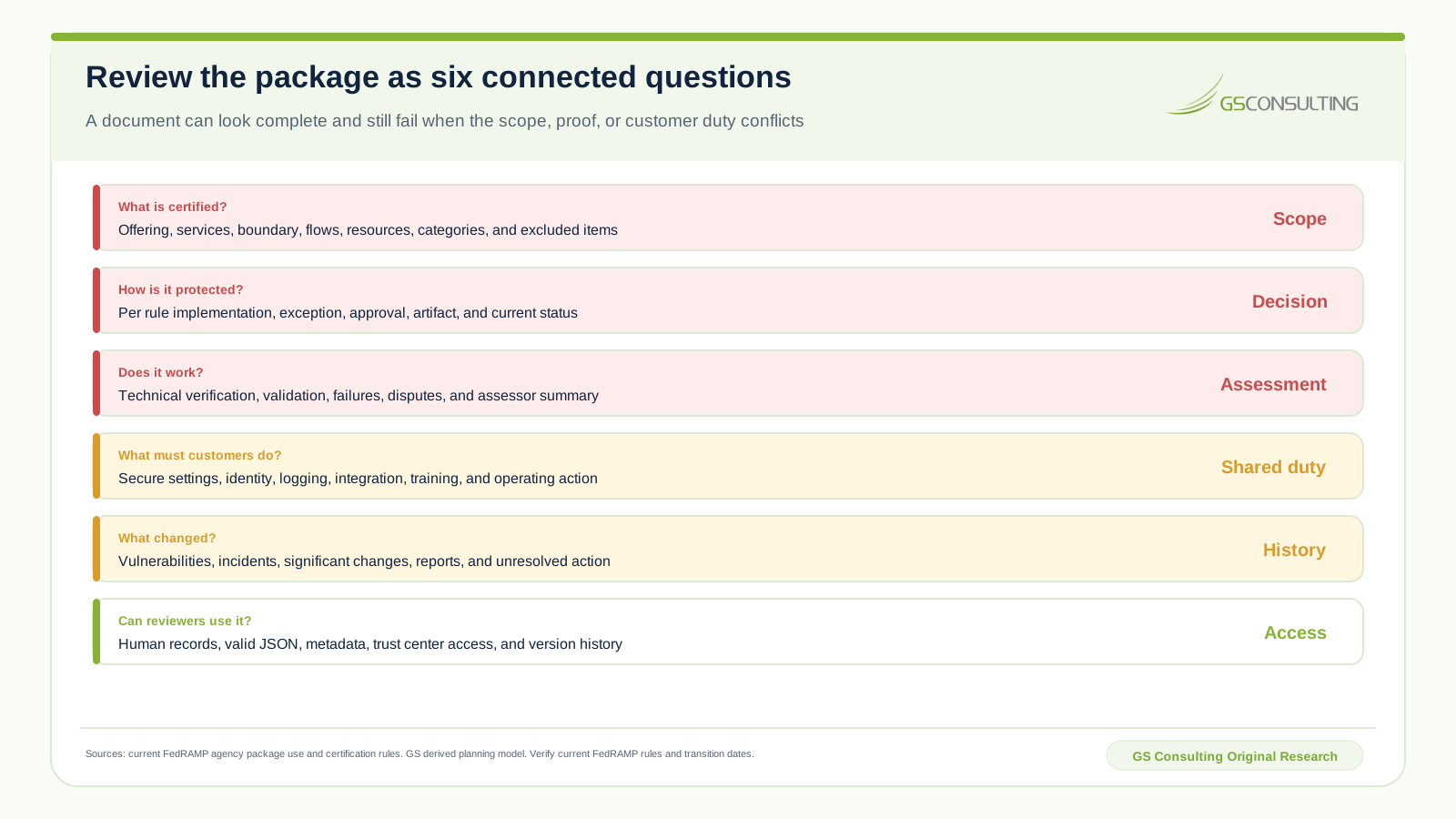
Start with what is certified. Confirm the FedRAMP ID, profile, class, path, service version, public service list, security categories, boundary, information flows, third party resources, and exclusions. Compare that answer with what the assessor tested and what the Secure Configuration Guide tells customers to use.
Next ask how the service is protected. Follow a material control or KSI from the overview into the Security Decision Record, technical measure, artifact, independent assessment result, and current evidence. Do not stop at the first screenshot. The current independent verification and validation rules tell assessors to review actual measures and validate effectiveness.
Then ask what the customer owns. A provider claim can be correct and still leave the agency exposed if a required setting, account model, integration, log source, training step, or operating action is not assigned. Shared responsibility is not a conclusion. It is a work queue.
GS Original Research: Package Review Friction Index
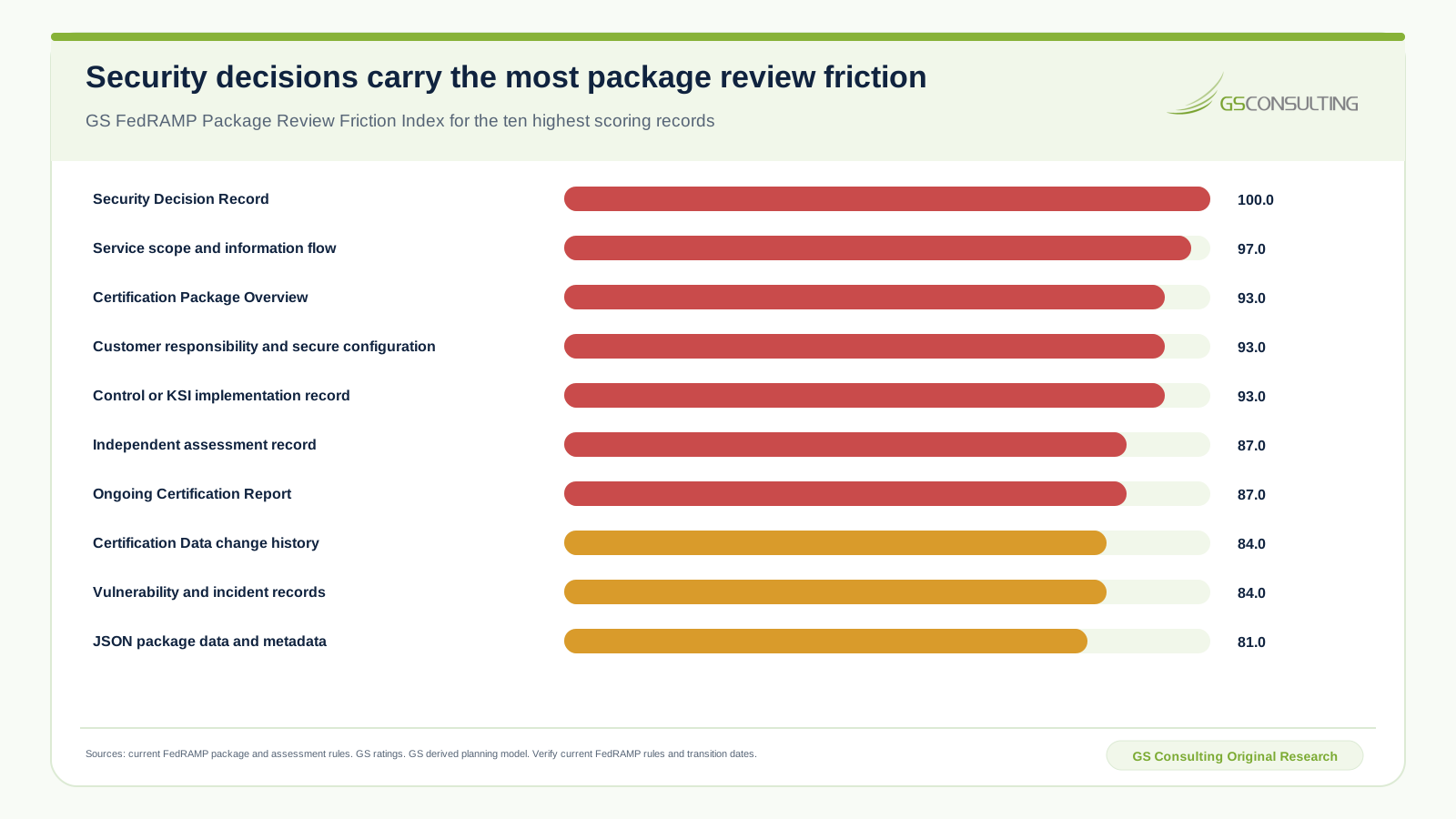
GS Consulting built the Package Review Friction Index to answer one question: which package records deserve the earliest reconciliation before provider or agency review? The model compares twelve records on a 100 point planning scale.
Five GS ratings from one to five measure reviewer decision dependency, cross record dependency, change exposure, evidence depth, and agency use consequence. Base weights are 25, 25, 20, 15, and 15 percent. The sensitivity case moves five points from reviewer dependency to change exposure.
| Factor | Weight | What a high rating means |
|---|---|---|
| Reviewer decision dependency | 25 percent | The record materially shapes a certification or agency use decision |
| Cross record dependency | 25 percent | Several other package records rely on the same answer |
| Change exposure | 20 percent | Normal service change can make the record stale quickly |
| Evidence depth | 15 percent | The answer requires technical proof, assessment, or detailed lineage |
| Agency use consequence | 15 percent | A weak answer can distort customer configuration or authorization work |
The Security Decision Record scores 100.0. Service scope and information flow scores 97.0. The Certification Package Overview, customer responsibility record, and control or KSI implementation record each score 93.0. Independent assessment and the Ongoing Certification Report each score 87.0.
The sensitivity case preserves the top four positions and moves no record by more than two points. The conclusion holds: settle scope and security decisions before polishing supporting files.
This is a GS Consulting derived planning tool, not a FedRAMP rating, package completeness decision, agency authorization, assessment result, legal opinion, or certification determination.
Reconcile Scope Before Reading Hundreds of Claims
Scope errors multiply. If the public service list omits a feature, the assessment may test the wrong surface. If the boundary map omits a third party resource, the Security Decision Record may assign controls to nobody. If flows are stale, customer guidance can authorize a path the package never assessed.
Run a scope reconciliation with one representative customer use case. Identify the certified service, selected features, service and deployment model, security category, data types, regions, resources, dependencies, identities, administrative paths, integrations, and customer duties. Trace federal information from agency entry through processing, storage, logs, backup, support access, and exit.
Use the FedRAMP supply chain risk management guide to classify material external services, software, support personnel, and devices by their actual effect on federal information. The supplier register, boundary record, risk decision, contract duties, monitoring, and exit evidence should agree with the package treatment.
Compare that trace with the public service list, overview, assessment scope, architecture, third party record, and Secure Configuration Guide. Resolve whether each difference is a documentation error, product change, customer use outside certification, or a question that requires FedRAMP coordination.
Trace Security Decisions Through Independent Assessment
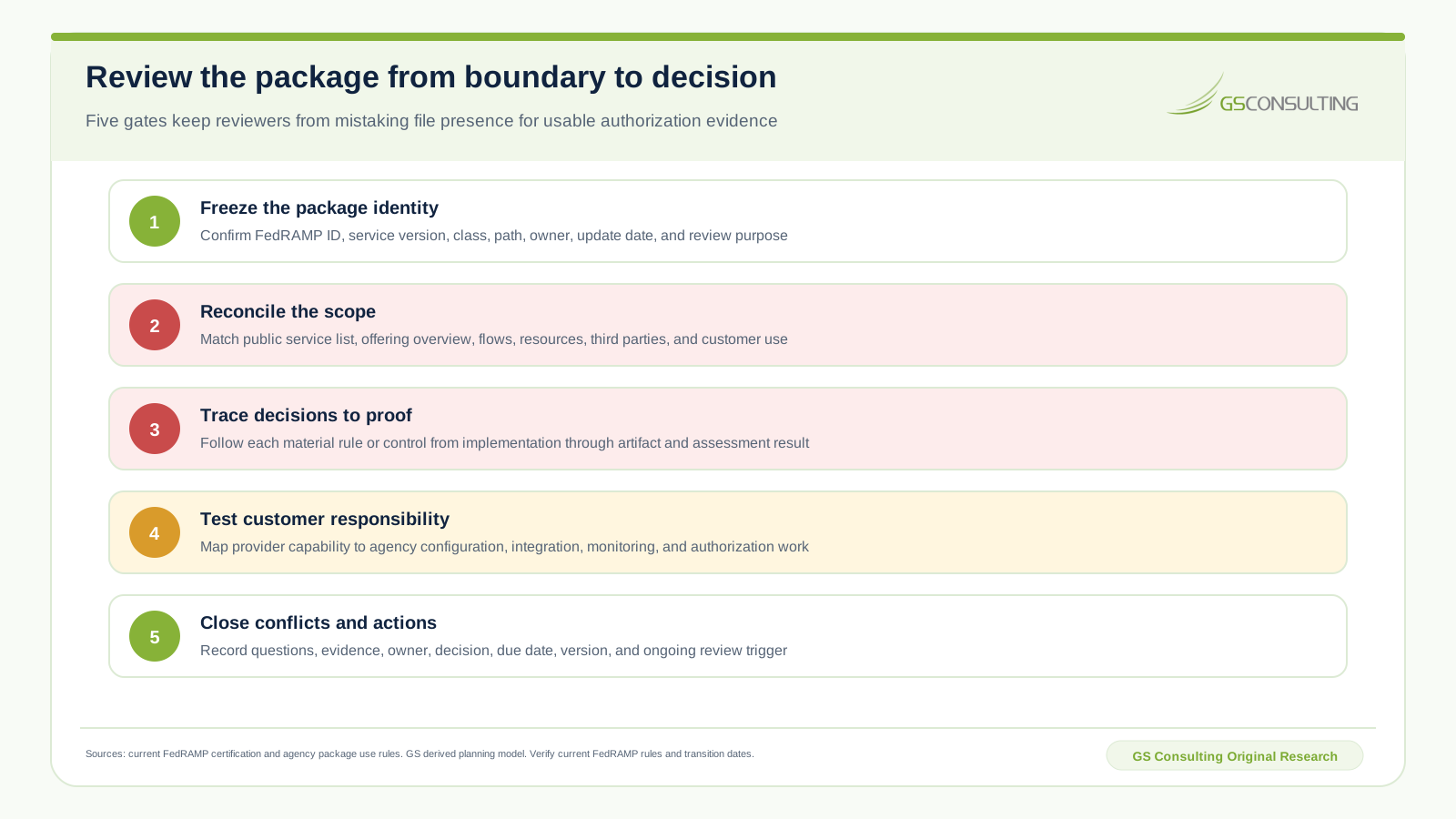
Select a material sample: identity and privileged access, encryption, logging, vulnerability detection, change control, incident response, or a KSI. Find the implementation decision. Confirm who owns it, where it applies, how it is configured, what artifact proves the current state, and what happens when the measure fails.
Verification asks whether the implemented measure matches the documented design. Validation asks whether it produces the intended security outcome. Independent assessment should add technical challenge, not restate provider prose. Failures, disputes, limitations, samples, and open questions should remain visible.
Close the loop with current certification data. A control that passed nine months ago may have changed through a platform migration, new integration, vulnerability response, or customer setting. The assessment result is history unless the package can show why it remains relevant.
Turn Customer Responsibility Into Agency Action
The FedRAMP agency package guidance is blunt: agencies should use provider evidence for provider capabilities, then document their own use, configuration, integration, monitoring, and authorization. Copying provider controls into an agency SSP hides the real agency work.
For every shared or customer owned item, record the service feature, required setting, accountable agency role, implementation step, test, evidence, review cadence, failure condition, and escalation path. Tie the record to the Secure Configuration Guide and agency architecture.
Package Failure Modes That Create Review Loops
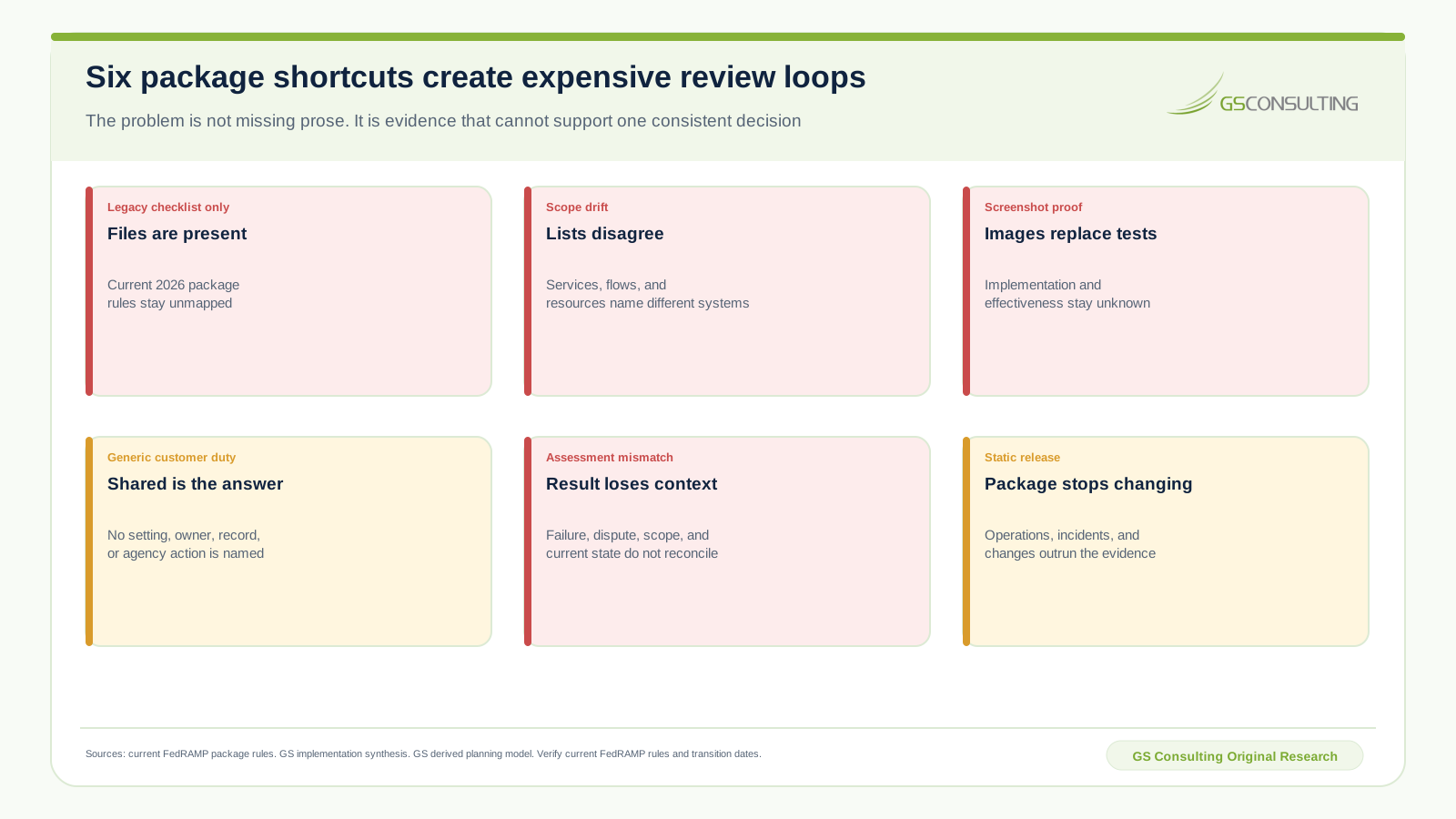
- Legacy checklist only. Old files exist, but nobody maps them to the current overview, decision record, JSON, assessment, and ongoing evidence requirements.
- Scope drift. The service list, diagrams, flows, assessment scope, and customer guide name different versions of the offering.
- Screenshot proof. Images show a setting but not coverage, source, period, owner, enforcement, exception handling, or operating result.
- Generic customer duty. Shared responsibility never becomes a specific agency setting, test, record, and accountable owner.
- Assessment mismatch. The package drops failures, disputes, samples, limitations, or context needed to interpret the result.
- Static release. The initial package remains polished while vulnerabilities, changes, incidents, and customer guidance move on.
A 60 Day Package Review Plan
- Days 1 through 10: set the frame. Confirm the profile, transition schedule, package version, service version, FedRAMP ID, purpose, owner, reviewers, access method, and issue register.
- Days 11 through 25: reconcile scope. Test the service list, boundary, flows, third party resources, assessment scope, security categories, customer guide, and a representative agency use case.
- Days 26 through 40: sample decisions. Trace material security decisions through implementation, artifacts, verification, validation, independent assessment, exceptions, and current evidence.
- Days 41 through 50: map customer work. Turn shared responsibility into agency settings, owners, tests, evidence, review dates, and escalation.
- Days 51 through 60: close and govern. Resolve conflicts, assign action, approve the package state, validate JSON, confirm access, and set change triggers.
The Minimum Package Review Packet
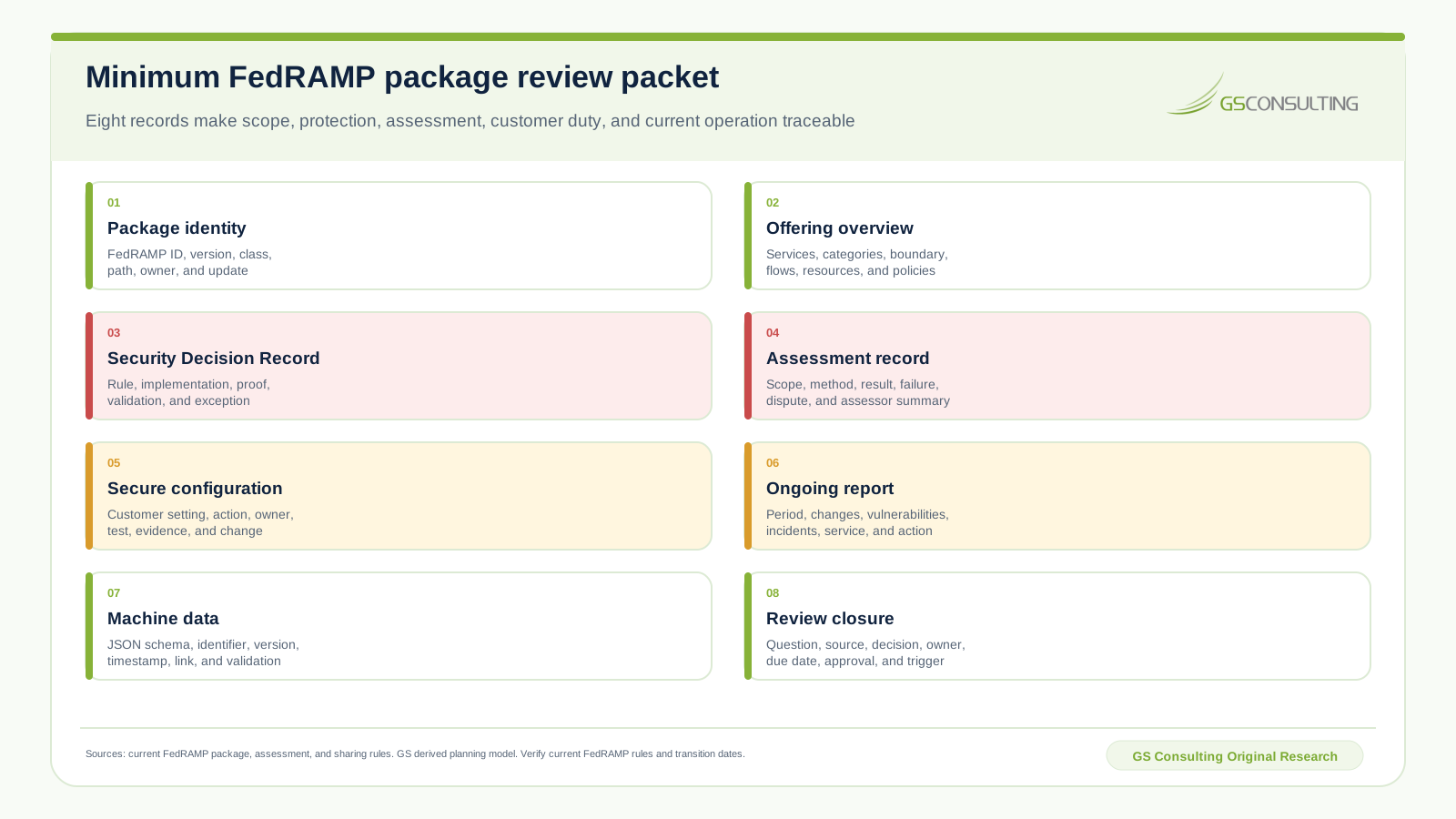
Maintain eight review records: package identity, offering overview, Security Decision Record trace, assessment record, secure configuration map, Ongoing Certification Report trace, machine data validation, and review closure register. Each needs a stable identifier, current version, owner, source, period, decision, approval, and update trigger.
Preserve the issued review state. Do not silently overwrite questions or decisions after a new package version arrives. Record what changed, which conclusion moved, who approved it, and what evidence supports the new answer.
Sources and Method Note
- FedRAMP Certification rules for 2026
- FedRAMP Certification Package Overview
- FedRAMP Security Decision Record
- FedRAMP Independent Verification and Validation
- FedRAMP Certification Data Sharing
- Using FedRAMP Rev5 Certification Packages
- FedRAMP Legacy Documentation
GS Consulting Original Research. The GS FedRAMP Package Review Friction Index is a derived planning tool based on cited public sources and documented analyst assumptions. It is not a FedRAMP rating, legal opinion, package completeness decision, assessment result, agency authorization, certification, or compliance determination. Verify package content and effective dates against the current rules and applicable certification profile.
Frequently Asked Questions
What is a FedRAMP authorization package?
A FedRAMP authorization package is the reusable security evidence for a cloud service offering. Under the current 2026 framework, the minimum package connects offering information, implementation and assessment information for each applicable FedRAMP rule, control, or KSI, and a real or example Ongoing Certification Report.
What documents are in a FedRAMP authorization package?
Current package materials generally include a Certification Package Overview, a Security Decision Record, applicable control or KSI information, secure configuration guidance, independent assessment information, and Ongoing Certification Data. Legacy Rev5 packages may still include an SSP, SAP, SAR, POA and M, scans, policies, inventories, and appendices during transition.
Does the Security Decision Record replace the FedRAMP SSP?
The 2026 rules say the Security Decision Record replaces the traditional base System Security Plan for provider certification. The Certification Package Overview also replaces the historically required base SSP overview for Rev5. Existing appendices, control information, and transition materials can still matter.
Who owns the accuracy of the FedRAMP package?
The cloud provider remains responsible and accountable for package accuracy and completeness, including information supplied by assessors, advisors, or tools. Each record should still name a producer, reviewer, accountable approver, current version, and update trigger.
How should an agency review a FedRAMP package?
The agency should confirm that its use case is within the certified scope, review provider controls and assessment results, follow the Secure Configuration Guide, document its own settings and responsibilities, and keep reviewing ongoing certification data. The provider package does not replace the agency SSP.
How often must a FedRAMP package be updated?
The cadence depends on certification type and class. Current rules include every two weeks for 20x Class C and at least yearly for Rev5 Class C, while telling providers to update as changes occur. Verify the applicable transition schedule before setting an internal deadline.
Bottom Line
A FedRAMP authorization package is only as strong as the decision a reviewer can trace through it. The decisive operating standard is simple: one certified service, one reconciled scope, one current security decision record, one honest assessment trail, specific customer duties, and ongoing evidence that still supports the conclusion.
Related Reading
- FedRAMP Compliance Hub
- FedRAMP Compliance: The Complete Guide
- FedRAMP Significant Change Guide
- FedRAMP 20x Authorization Guide
- FedRAMP Moderate Baseline Guide
- FedRAMP Continuous Monitoring Guide
- Secure AI Automation
Make every package claim traceable.
Reconcile the scope, trace the decisions, test the proof, assign the customer work, and keep the package current as the service changes.
Build the Reviewable Package