GovCon Cybersecurity | | 24 min read
FedRAMP Annual Assessment: Scope, Testing, and Evidence

Key Takeaways
The annual assessment is a technical evidence cycle
80 Class C controls
The current rules data places the fixed annual set across 13 control families. Six families contain 67 controls.
Every applicable control within three years
The annual set does not replace a controlled rotation for the rest of the applicable boundary.
Implementation and effectiveness
Policies and screenshots can support a test. They do not replace technical verification and validation.
A FedRAMP annual assessment is not a yearly document refresh. It is an independent technical test of the service that exists now.
The assessor needs to verify that required practices are implemented and validate that they are effective. The provider needs to prove the current boundary, give the assessor usable access, preserve the test result, resolve findings without editing away the independent record, and carry the result into the certification package.
The calendar matters, but the operating state matters more. A control narrative written eleven months ago can be accurate, stale, or partly true. The annual assessment has to distinguish among those conditions with evidence.
This guide extends the FedRAMP compliance hub, the FedRAMP Moderate baseline guide, and the continuous monitoring operating model. GS Consulting supports reviewable security operations through secure AI and regulated automation services.
Will the current service survive technical assessment?
GS Consulting helps teams reconcile scope, tests, findings, owners, and package evidence before the assessor begins fieldwork.
Request an Assessment Readiness Review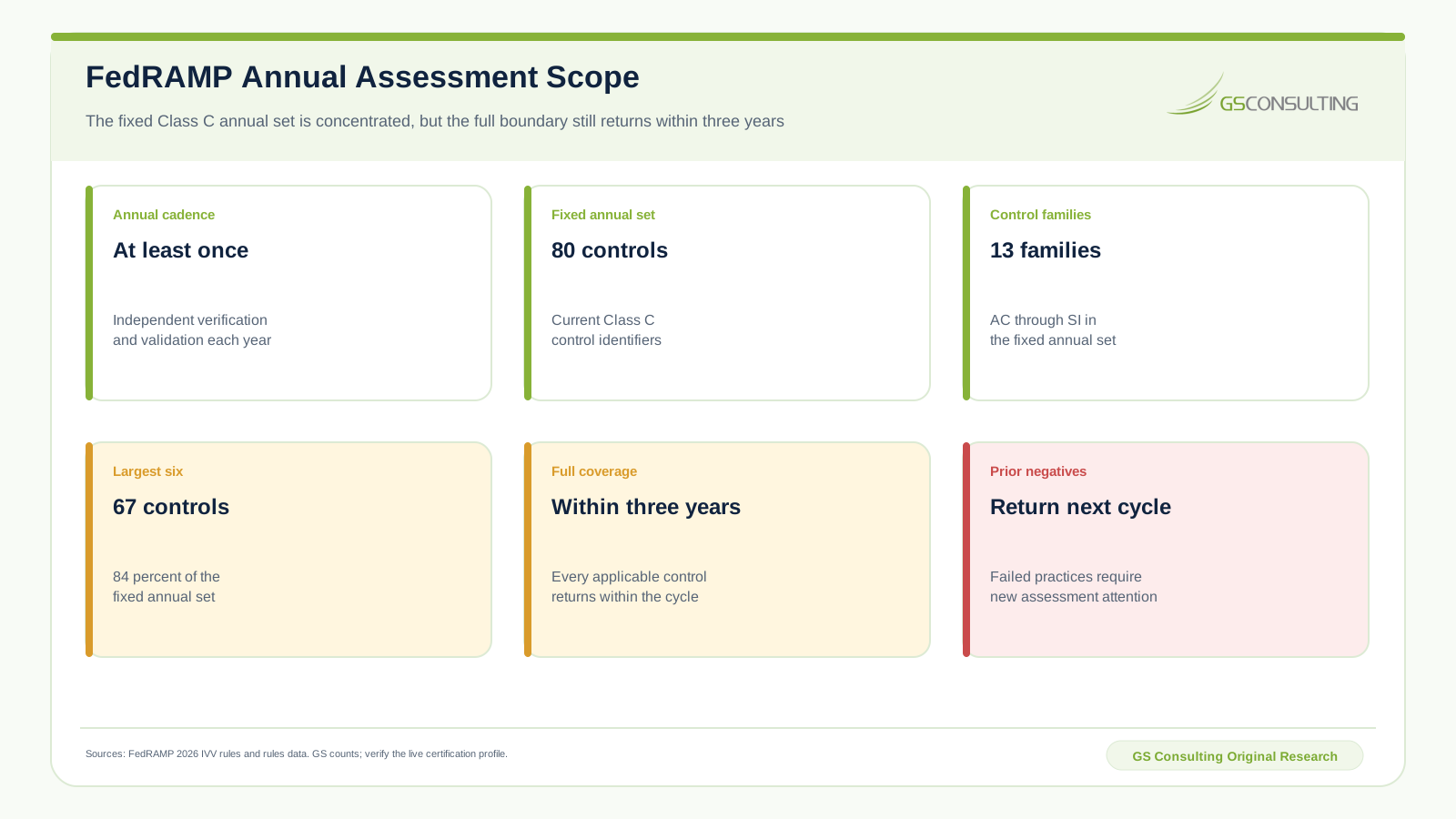
FedRAMP Annual Assessment: The Short Answer
For a Class C service under the current 2026 operating model, independent verification and validation occurs at least once each year. FedRAMP publishes a fixed annual subset. GS counted 80 controls across 13 families in the official consolidated rules data version 2026.09.13.02, accessed September 15, 2026.
That list is not the complete scope. Current guidance also brings prior negative findings into the next assessment, requires every applicable control to be assessed within three years, permits representative sampling only when its use is documented and explained, and connects the result to the certification package and Security Data Report.
The practical answer is simple: control one coverage register across annual controls, rotational controls, previous findings, significant changes, tests, results, and next cycle commitments. Separate spreadsheets owned by separate teams create avoidable gaps.
Read the Current Rule Before Reusing Last Year's Plan
FedRAMP launched consolidated 2026 rules on June 24, 2026. The current Class C independent verification and validation page differs from the familiar pattern many providers built around separate security assessment plan and security assessment report files.
The current rule says the independent assessment service verifies implementation, validates effectiveness, supplies practice summaries for the Security Data Report, and supplies an overall summary with findings and disputes for the certification package overview. It also says the provider includes results without inappropriate modification.
The Rev5 deadline schedule lists January 1, 2027 as the obtain and maintain date for independent verification and validation, with a grace rule tied to the first assessment begun after that date. Transition language can change. Confirm the live schedule, certification profile, agency direction, and contract before retiring an established deliverable.
Do not turn a format change into a control gap. Even when separate plan and report documents are not required by the current rule, the operating content still has to exist: scope, method, samples, evidence, results, findings, disputes, incorporation, and next work.
Build Scope From Four Inputs, Not One List
| Scope input | Question to answer | Controlled record |
|---|---|---|
| Fixed annual controls | Which controls does the live Class C rule require this year? | Rule version and control identifier list |
| Three year rotation | Which other applicable controls must return now to keep complete coverage? | Coverage year, last result, next due cycle |
| Previous negative findings | Which failed practices require a new technical assessment? | Finding identity, correction, retest, current result |
| System change | Which changes made prior evidence stale or expanded the boundary? | Change record, affected controls, assessment decision |
The 80 fixed annual controls are not evenly distributed. Access Control contributes 16. System and Communications Protection contributes 14. Audit and Accountability contributes 11. Identification and Authentication and System and Information Integrity contribute nine each. Configuration Management contributes eight. Together, those six families contain 67 controls, or 83.75 percent of the fixed set.
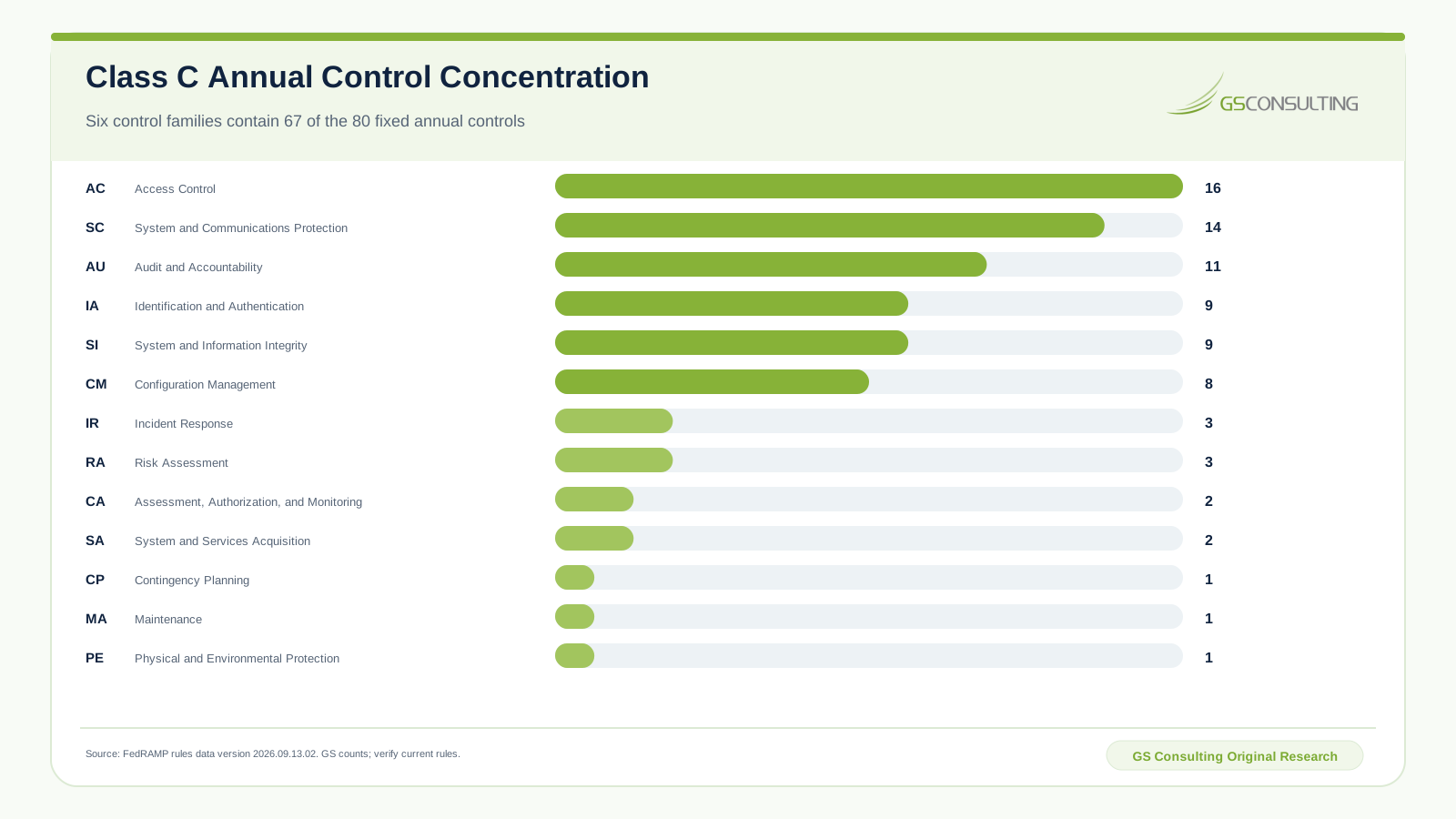
Concentration creates a staffing clue. Identity, access, logging, configuration, system protection, and integrity owners will carry much of the recurring fieldwork. It does not create permission to ignore the smaller families. A single contingency, maintenance, or physical control can still fail.
GS Annual Assessment Proof Priority Index
GS modeled ten work packets against five one to five ratings: scope consequence, technical validation depth, evidence reconciliation, change sensitivity, and assessor coordination. Base weights are 25, 25, 20, 15, and 15 percent. Each rating is divided by five and multiplied by its weight. Scores are rounded to one decimal point on a zero to 100 planning scale.
The coverage register and prior finding retest both score 100. The implementation source of truth and effectiveness test library score 97. Class and transition mapping, representative sample rationale, and package incorporation score 95. The lowest item still scores 86 because assessor access can stop otherwise mature work from being tested.
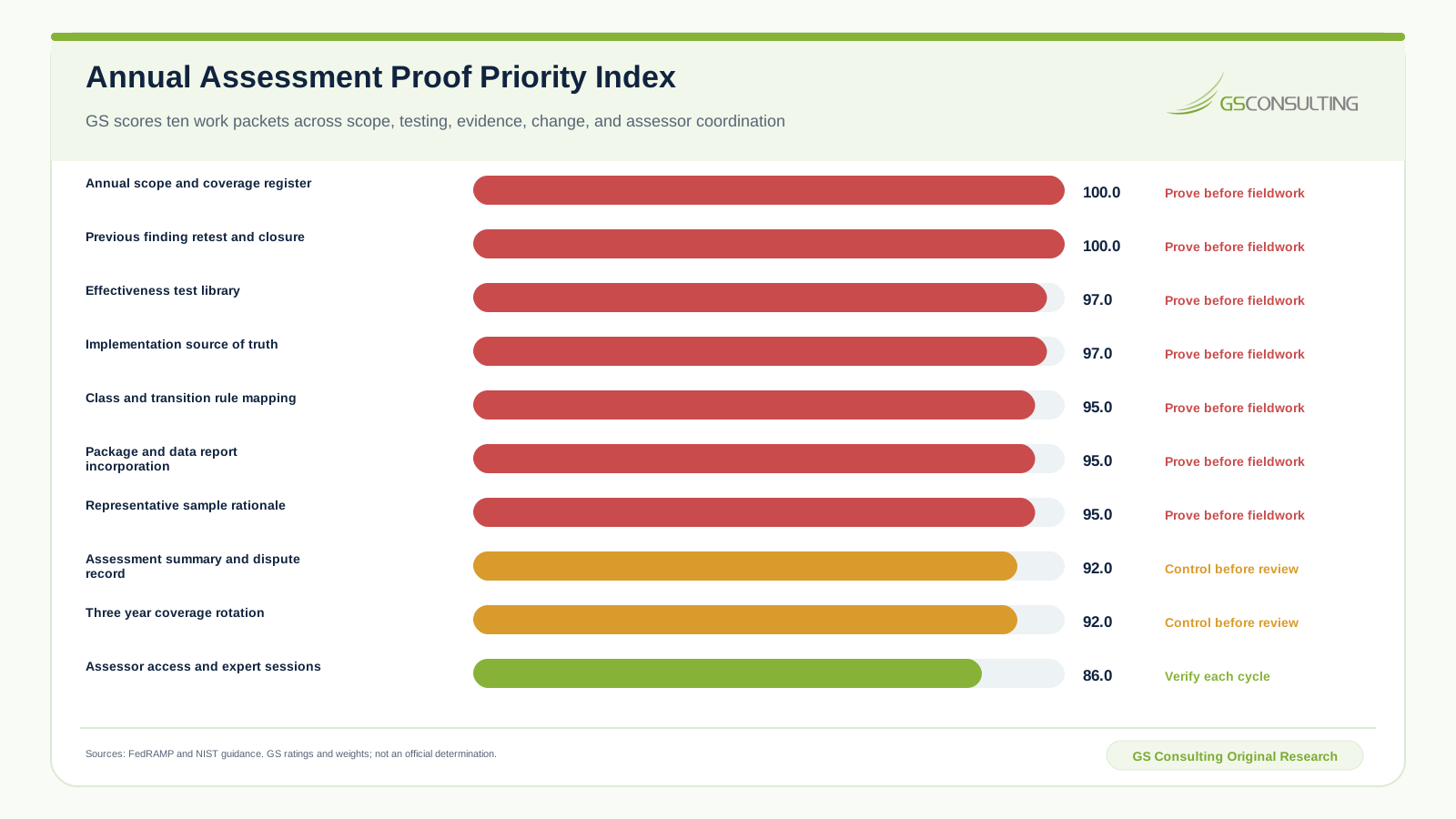
The sensitivity case moves five percentage points from scope consequence to change sensitivity. No work packet moves more than one point. The operating conclusion remains stable: freeze scope and the current implementation record before fieldwork, then protect technical testing and the independent result.
This is a GS Consulting derived planning tool, not a FedRAMP score, audit opinion, legal conclusion, authorization, or compliance determination. Ratings are documented analyst assumptions. The workbook and every CSV are available in the article research package in this repository.
Use a Five Stage Annual Assessment Sequence
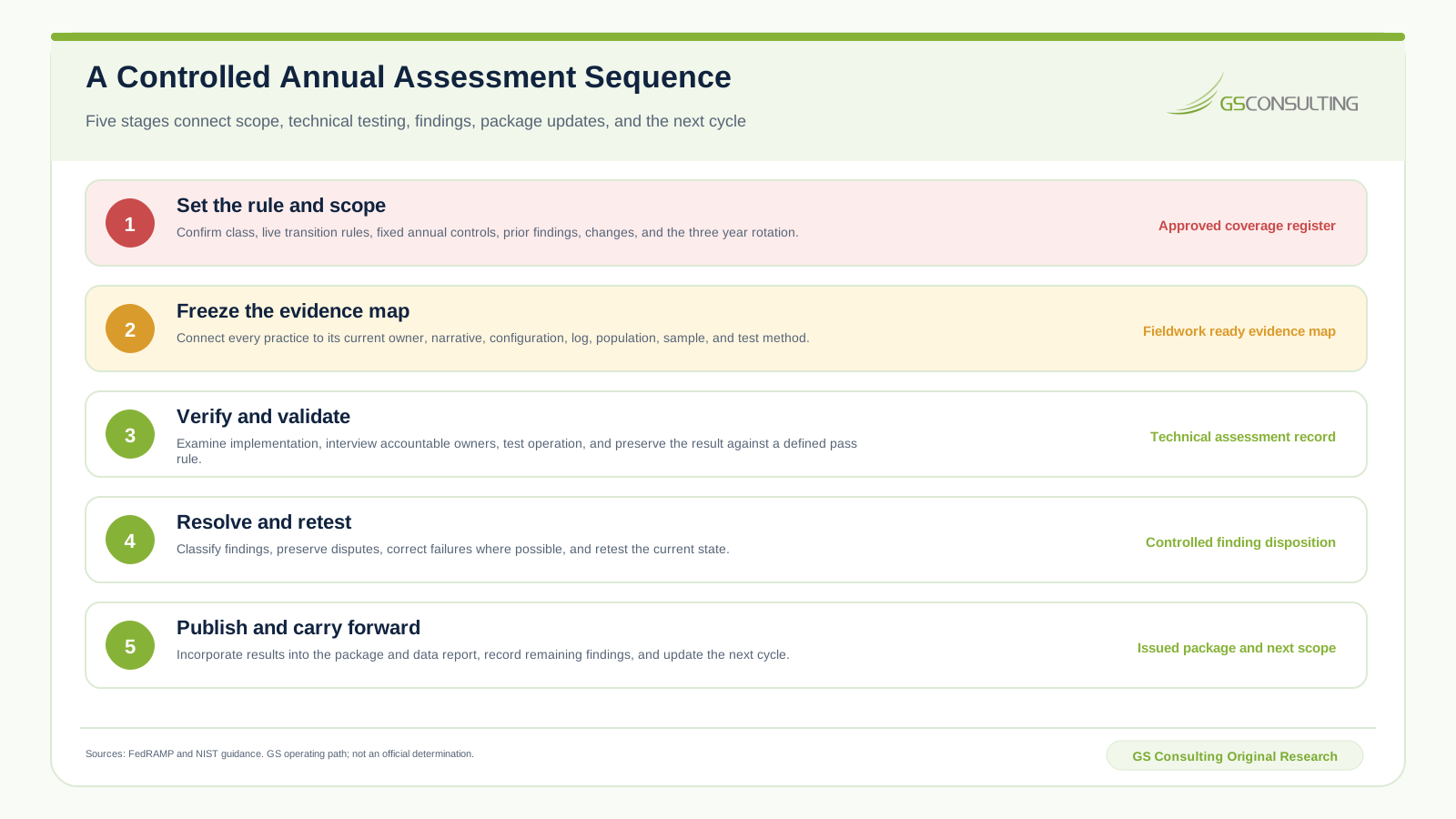
Set the rule and scope. Record the certification class, rules version, transition position, annual controls, rotation controls, previous findings, significant changes, and exclusions. Have the accountable provider leader approve the register before evidence collection spreads.
Freeze the evidence map. Connect each practice to its owner, current narrative, architecture, configuration, population, sample, evidence references, test method, expected result, and assessor access route. Freeze does not mean the service stops changing. It means every later change is visible and evaluated.
Verify and validate. The assessor examines records, interviews accountable people, and performs technical tests. The result should state what was tested, on which population or sample, against which pass rule, with what evidence, and with what limit.
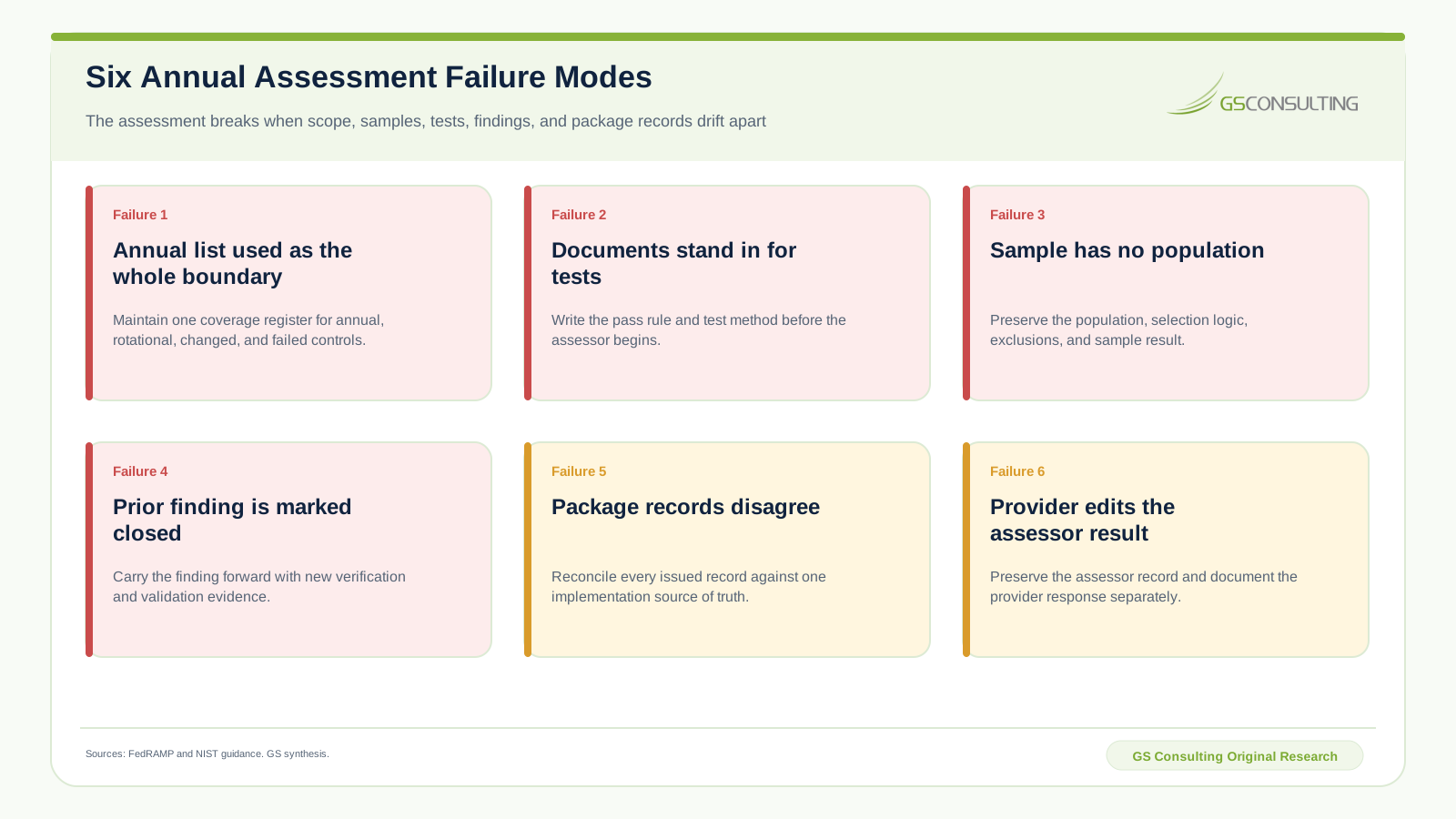
Resolve and retest. Classify the finding, preserve the assessor conclusion, record the provider response, make a correction where practical, and retest the current state. A dispute is a record to manage, not text to erase.
Publish and carry forward. Incorporate the assessment into the certification package and Security Data Report, reconcile affected control information, preserve remaining findings, and update the next coverage cycle.
Write the Pass Rule Before Fieldwork
Weak annual assessments begin with folders. Strong ones begin with claims that can be tested. For every practice, write the expected control outcome, the implementation being asserted, the population, the assessment method, the expected result, the failure condition, and the evidence that will support either conclusion.
NIST SP 800-53A Rev. 5 uses examine, interview, and test methods. The labels are useful because they prevent a common mistake. An approved policy can be examined. An owner can be interviewed. Neither one proves that a technical control operates as intended.
Use representative sampling with discipline. Define the complete population, why it represents the practice, how the sample was selected, what was excluded, which period is covered, what could bias the result, and how a failure expands the sample or scope. Preserve the query or export used to create the population where practical.
Give the assessor direct access to evidence and subject matter experts. Do not route every technical question through one compliance coordinator who cannot show the system. Independence becomes weak when the assessor sees only a curated story.
Treat Every Finding as a Current Technical Question
A finding record needs stable identity, affected practice, system context, evidence, assessor conclusion, impact, accountable owner, proposed response, correction, retest method, retest result, dispute, residual issue, package effect, and next assessment treatment.
Prior negative findings deserve special control because current FedRAMP guidance explicitly brings them into the next assessment. Do not offer the assessor a closure date as proof. Show the change, the current configuration, the technical retest, the result, and how the issued package now describes the state.
Coordinate recurring vulnerability findings with FedRAMP vulnerability management and FedRAMP POA&M management. The annual assessor should be able to trace the finding from detection and ownership through mitigation, validation, reporting, and disposition without reconstructing it from email.
Build the Annual Assessment Evidence Packet
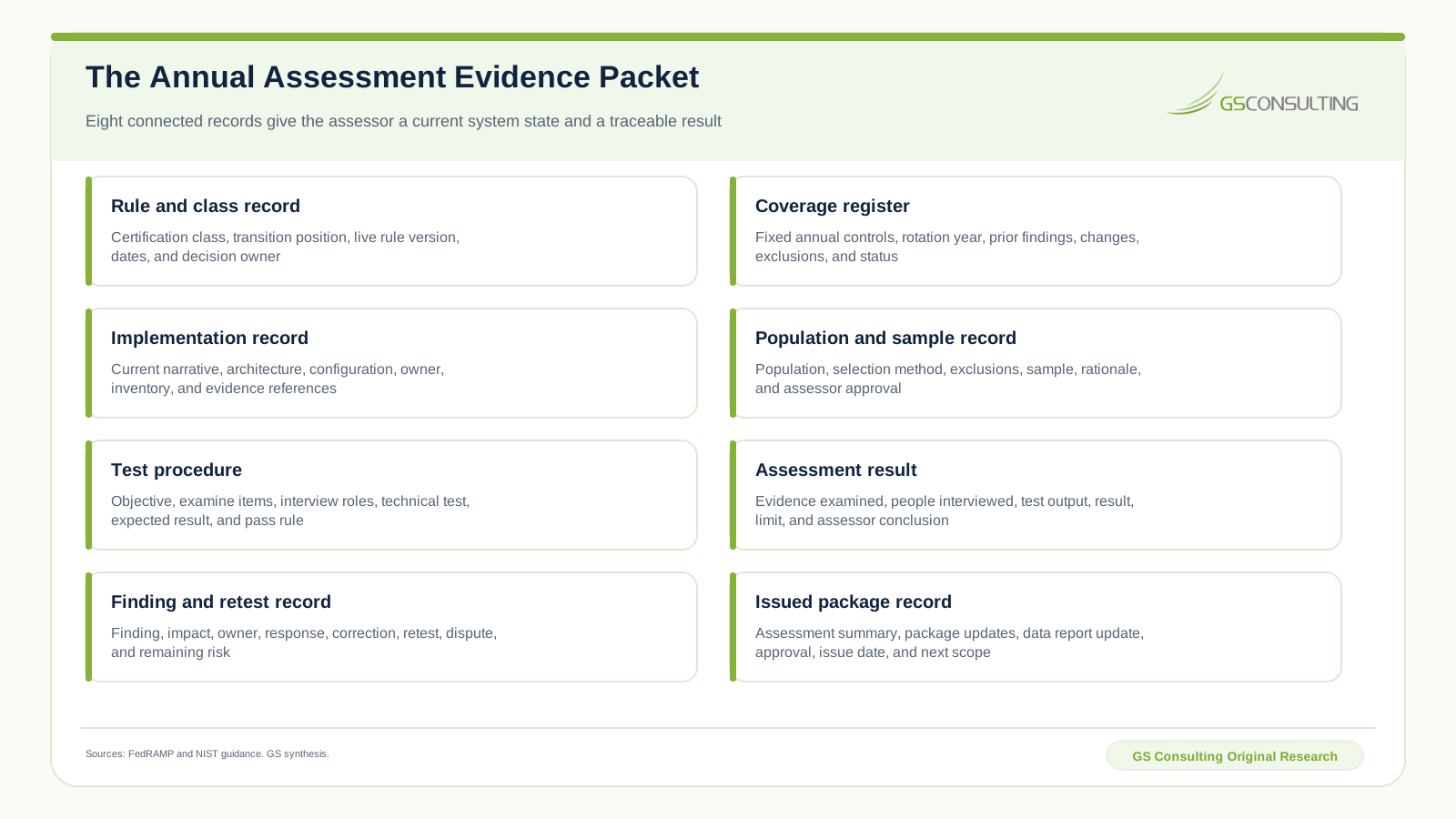
Keep the rule and class record, coverage register, implementation record, population and sample record, test procedure, assessment result, finding and retest record, and issued package record. Use stable identifiers for controls, findings, changes, samples, tests, evidence, package versions, and approvals.
The package should answer four questions without oral history. What rule and service state applied? What did the assessor actually examine, interview, and test? What failed or remained limited? Where did that result change the certification package and next assessment?
A 60 Day FedRAMP Annual Assessment Plan
| Period | Operator action | Required output |
|---|---|---|
| Days one through ten | Confirm class, transition, live rules, assessor, dates, annual set, prior findings, change activity, and rotation status. | Approved coverage register |
| Days eleven through twenty | Reconcile control narratives, diagrams, inventories, owners, configurations, evidence references, and package versions. | Current implementation source of truth |
| Days twenty one through thirty | Define populations, samples, examine items, interviews, technical tests, pass rules, access, and expert sessions. | Fieldwork ready evidence map |
| Days thirty one through forty five | Support fieldwork, preserve source evidence and results, classify findings, resolve access defects, and document limits. | Controlled assessment record |
| Days forty six through sixty | Correct and retest where practical, resolve disputes, incorporate the independent result, reconcile package data, and set the next scope. | Issued package and carry forward register |
Research Sources and Limits
The research package uses sources accessed September 15, 2026:
- FedRAMP Class C independent verification and validation rules for cadence, annual scope, three year coverage, sampling, findings, assessor duties, and reporting.
- FedRAMP Rev5 deadlines for transition dates and the first assessment grace rule.
- FedRAMP Rev5 certification package guidance for package contents.
- FedRAMP consolidated rules JSON version 2026.09.13.02 for the control level count.
- NIST SP 800-53A Rev. 5 for assessment methods.
- FedRAMP significant change rules for change sensitive scope and package context.
The package contains a source register, public signals, control family counts, model weights, model inputs, formula driven scores, sensitivity analysis, methodology, data dictionary, operating sequence, failure modes, evidence packet, figure data, editable SVG files, browser rendered PNG files, responsive previews, and an Excel workbook with formulas and cached results.
The GS Annual Assessment Proof Priority Index ranks work packets. It does not score a provider, assessor, control, authorization, or compliance position. Live FedRAMP rules, the certification profile, agency direction, contracts, system facts, and independent assessor conclusions govern the actual assessment.
FedRAMP Annual Assessment FAQ
Suggested Future Reading
- FedRAMP Compliance Hub
- FedRAMP Moderate Baseline
- FedRAMP Continuous Monitoring
- FedRAMP Authorization Package
- FedRAMP Significant Change
- FedRAMP Vulnerability Management
- FedRAMP POA&M Management
- Secure AI and Regulated Automation Services
Make the annual assessment a technical truth test.
The operating standard is direct: current scope, defined pass rules, representative samples, independent technical results, verified finding closure, controlled package updates, and an explicit next cycle.
Build the Assessment Evidence Chain