Cybersecurity | | 26 min read
FedRAMP 20x: What Cloud Teams Need to Prove

Key Takeaways
FedRAMP 20x replaces static confidence with current, testable proof
The official rules contain 46 indicators across ten domains
Class B requires 41 and treats five as optional. Class C requires all 46 and deeper automation and history.
Two automated methods per indicator change the architecture
Evidence collection, verification, validation, metric history, and independent review must be designed into the service rather than assembled at the end.
Architecture, configuration, and identity carry the most pressure
Those three domains lead the GS model because they combine indicator volume, broad control references, persistent operation, and several evidence owners.
FedRAMP 20x is not the old authorization package with fewer pages. It is a different proof system. Cloud teams need current measures, machine readable data, persistent verification, validation, independent review, and a decision record that stays aligned with the service.
That is the opportunity and the trap. A provider with strong infrastructure automation can move faster because evidence comes from the systems that operate the service. A provider with weak inventory, unclear scope, brittle queries, manual approvals, and no metric history cannot hide behind polished narrative.
The practical question is not whether the team can generate a dashboard. It is whether every security claim can be traced to a defined measure, a source, a collection cycle, an owner, a validation method, an independent procedure, and a current result.
The FedRAMP Compliance hub connects this guide to the class selection guide, the authorization package review guide, the significant change guide, the complete FedRAMP guide, the Class C baseline guide, and the Ongoing Certification guide. GS Consulting supports this operating model through secure AI automation, cloud architecture, and evidence engineering.
Design the proof before the assessment clock starts.
GS Consulting helps cloud teams define 20x scope, map Key Security Indicators, engineer automated measures, validate the evidence, and build a reusable certification package.
Plan the 20x EvidenceFedRAMP 20x: The Short Answer
FedRAMP 20x is the program approach for certifying cloud services with measurable security outcomes and current evidence. It uses Key Security Indicators, a Security Decision Record, machine readable certification data, automated verification and validation, independent assessment, secure configuration guidance, data sharing, and Ongoing Certification.
The full rules are available now for Classes A, B, and C. Class D is planned for 2027. The current Program Certification path lets the FedRAMP program certify 20x services, while agencies still make their own decisions about using the service inside a federal system.
Do not confuse less narrative with less work. The burden moves into engineering. Scope must be accurate. Measures must be meaningful. Automation must be tested. History must be retained. The package must be understandable by both people and machines.
FedRAMP 20x Is Current, Not a Concept
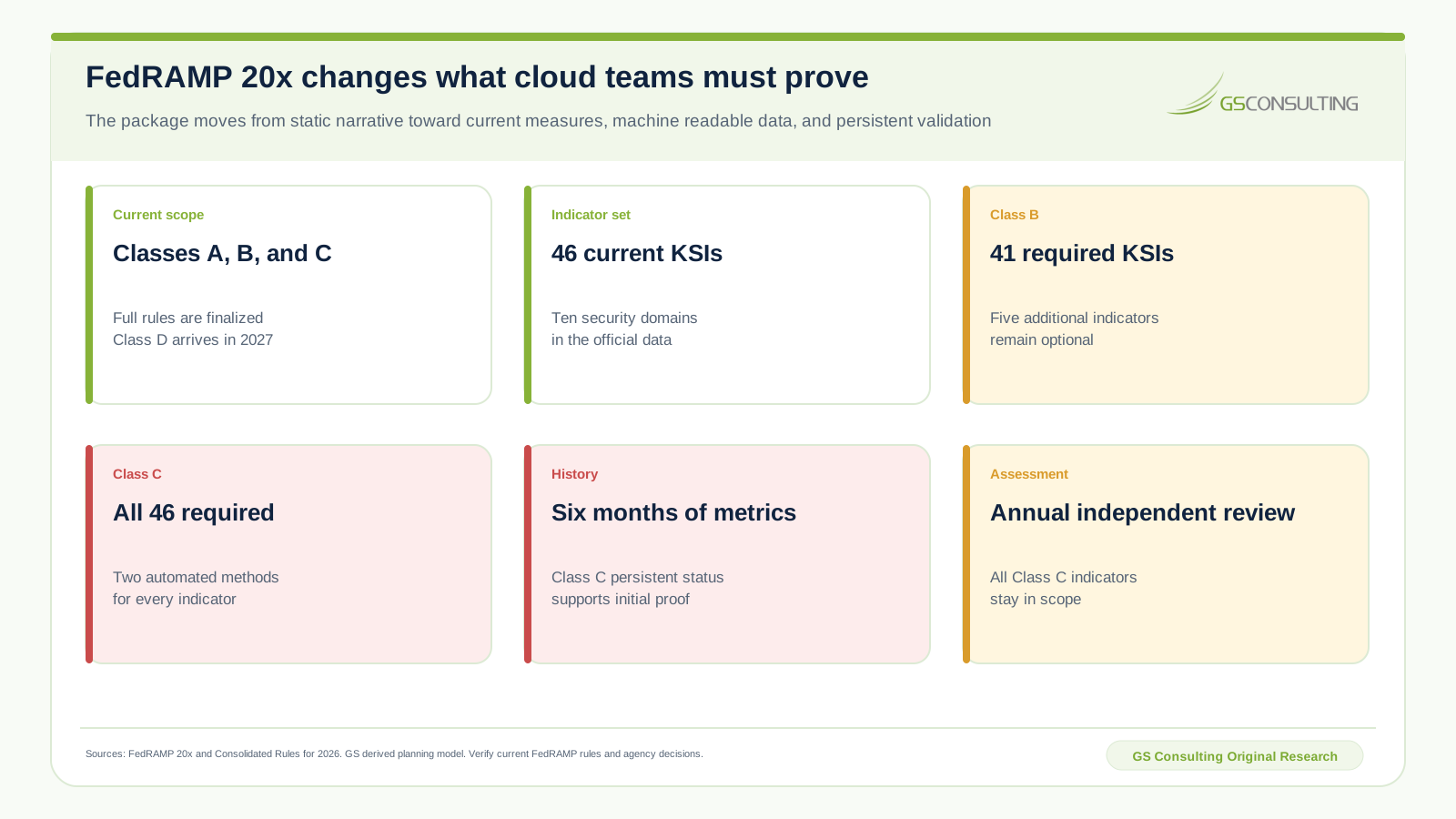
The official FedRAMP 20x page says pilot phases are complete and the full rules are finalized for Classes A, B, and C. The current roadmap places Class D in 2027.
That does not mean every provider should start with the same class. Class A uses a mature alternative security framework and a smaller set of program information. Class B expands the KSI set and annual independent review. Class C adds every current KSI, deeper automation, daily history, and broader assurance suitable for most Moderate objectives.
Choose the class with the agency use and package need. Use the FedRAMP class comparison to separate package assurance from the federal system impact decision.
What a Cloud Team Needs to Prove
A 20x package should let a reviewer answer six questions without reconstructing the service:
- What is the service? The overview, resources, data flows, dependencies, regions, public information, contacts, and minimum assessment scope agree.
- What security outcomes apply? Every current KSI has a stated measure or a documented reason and resulting customer risk.
- Where does the evidence come from? Each measure names the source, query, filter, period, owner, threshold, and expected result.
- Can the automation be trusted? Verification checks that the method is appropriate. Validation checks that it is accurate, complete, in place, and working.
- What has happened over time? Metrics show current status, drift, gaps, exceptions, changes, and enough history to support the applicable class.
- Can another party reproduce the conclusion? The independent assessor and agency can review the scope, methods, samples, outputs, decisions, and open actions.
The package is not one static folder. FedRAMP says it may live in a trust center, documentation portal, downloadable files, APIs, or a combination. The format can vary. Accuracy, currency, access, and required human and machine readability cannot.
The Current KSI Set
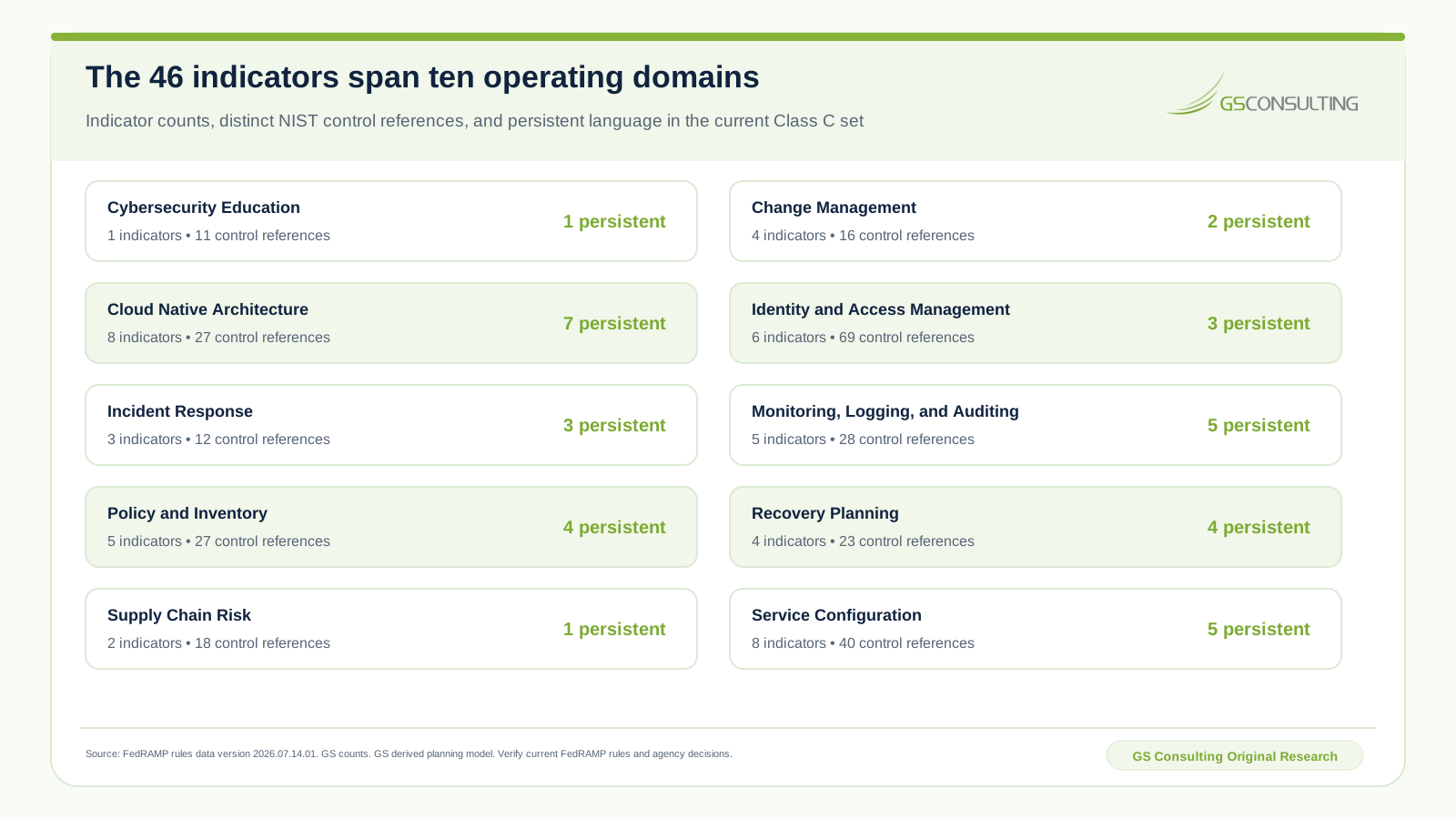
GS counted 46 Key Security Indicators across ten domains in the official structured rules version 2026.07.14.01. Service Configuration and Cloud Native Architecture each contain eight. Identity and Access Management contains six. Monitoring, Logging, and Auditing plus Policy and Inventory contain five each.
Indicator count is only one dimension. Identity and Access Management references 69 distinct NIST SP 800-53 controls across its six indicators. Service Configuration references 40. Monitoring, Logging, and Auditing references 28. Architecture and Policy each reference 27.
The mapping does not turn one KSI into dozens of separate control rows for 20x. It shows how much security behavior the outcome can touch. A short indicator statement can still depend on identity providers, cloud policies, deployment pipelines, logging, secrets, customer settings, people, and recurring review.
GS FedRAMP 20x Evidence Automation Pressure Index
GS Consulting built a derived planning model across the ten KSI domains. Three public inputs come from the official data: indicator count, distinct related NIST control references, and indicators using persistent operating language. Two one to five GS ratings capture evidence source spread and cross team ownership.
The base model weights indicator count at 25 percent, control reference breadth at 20 percent, persistent indicator count at 20 percent, evidence source spread at 20 percent, and cross team ownership at 15 percent. The sensitivity case shifts five points from indicator count to control reference breadth.
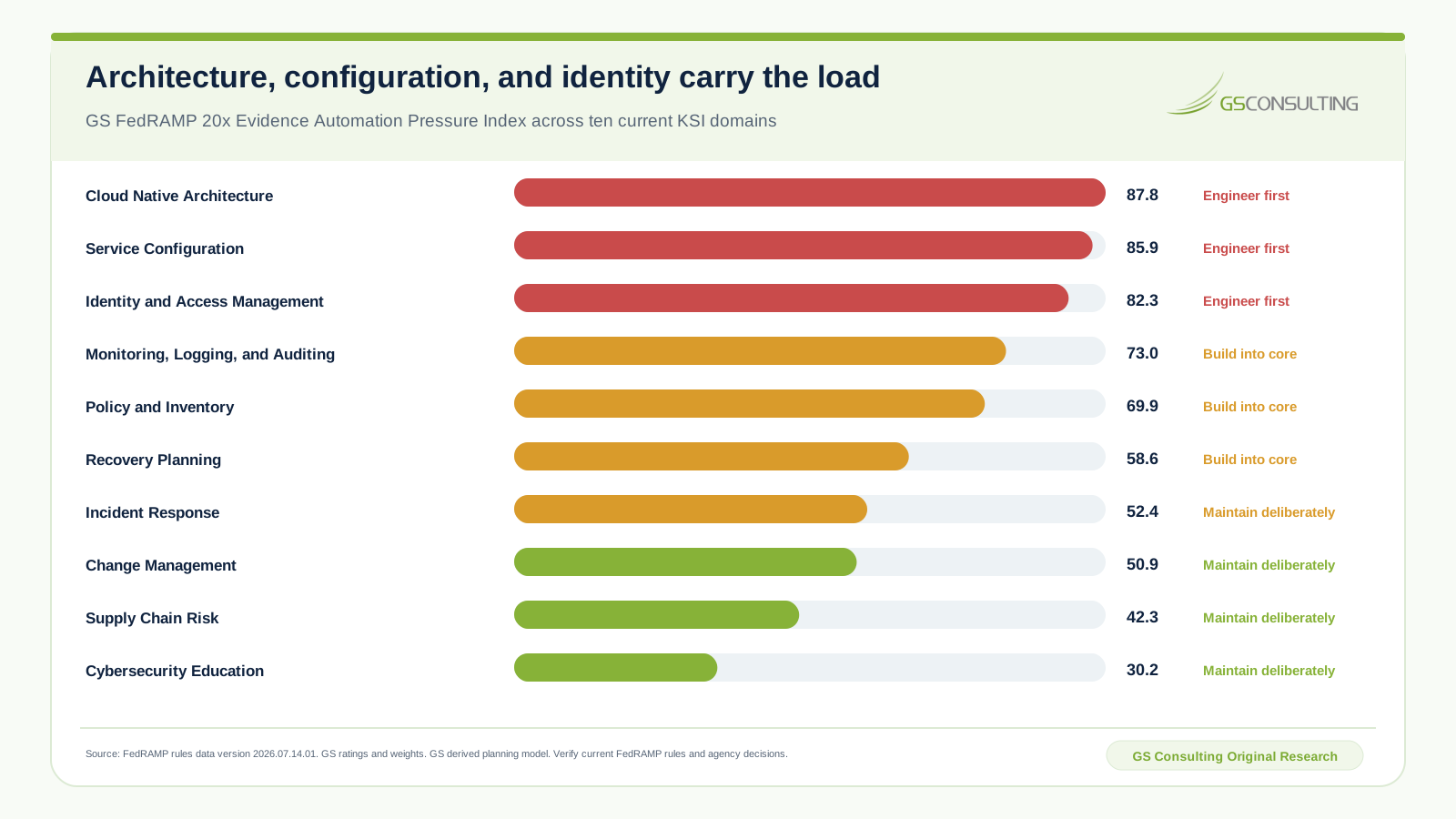
Cloud Native Architecture ranks first at 87.8. Service Configuration scores 85.9. Identity and Access Management scores 82.3. Monitoring, Logging, and Auditing follows at 73.0. Policy and Inventory scores 69.9.
The alternate weights preserve the top three and move no score by more than 3.0 points. That stability supports a practical sequence: settle architecture and service configuration first, build identity proof beside them, then connect monitoring and inventory before trying to automate every remaining indicator.
This is a GS Consulting derived planning tool, not an official FedRAMP score, KSI rating, security benchmark, audit result, certification decision, or regulatory determination. The workbook, CSV files, source register, assumptions, formulas, sensitivity results, and editable figures are preserved in the research package.
Class B and Class C Do Not Ask for the Same Proof
| Evidence dimension | Class B | Class C | Operating implication |
|---|---|---|---|
| KSI coverage | 41 required and 5 optional | All 46 required | Class C removes optional treatment for five current indicators |
| Automated methods | At least one per KSI | At least two per KSI | Class C needs independent paths or methods that test the claim from more than one angle |
| Initial metric history | At least 3 months | At least 6 months | Collection must start before the submission window |
| Decision record metrics | 30 day summary and up to one year | 30 day summary, up to one year, and daily data | Class C needs durable metric storage and traceable daily status |
| Independent assessment | All KSIs at least annually | All KSIs at least annually | Automation supports assessment but does not replace it |
Read the exact rule and its effective date before using this table as a delivery calendar. Some initial certification notes recognize that a provider may not yet have the full historical window, but the mechanism and commitment still need to exist.
Do not promise Class C while evidence history is still a future task. Architecture can be ready today and still lack the operating record needed to prove persistence.
Build 20x as an Evidence Pipeline
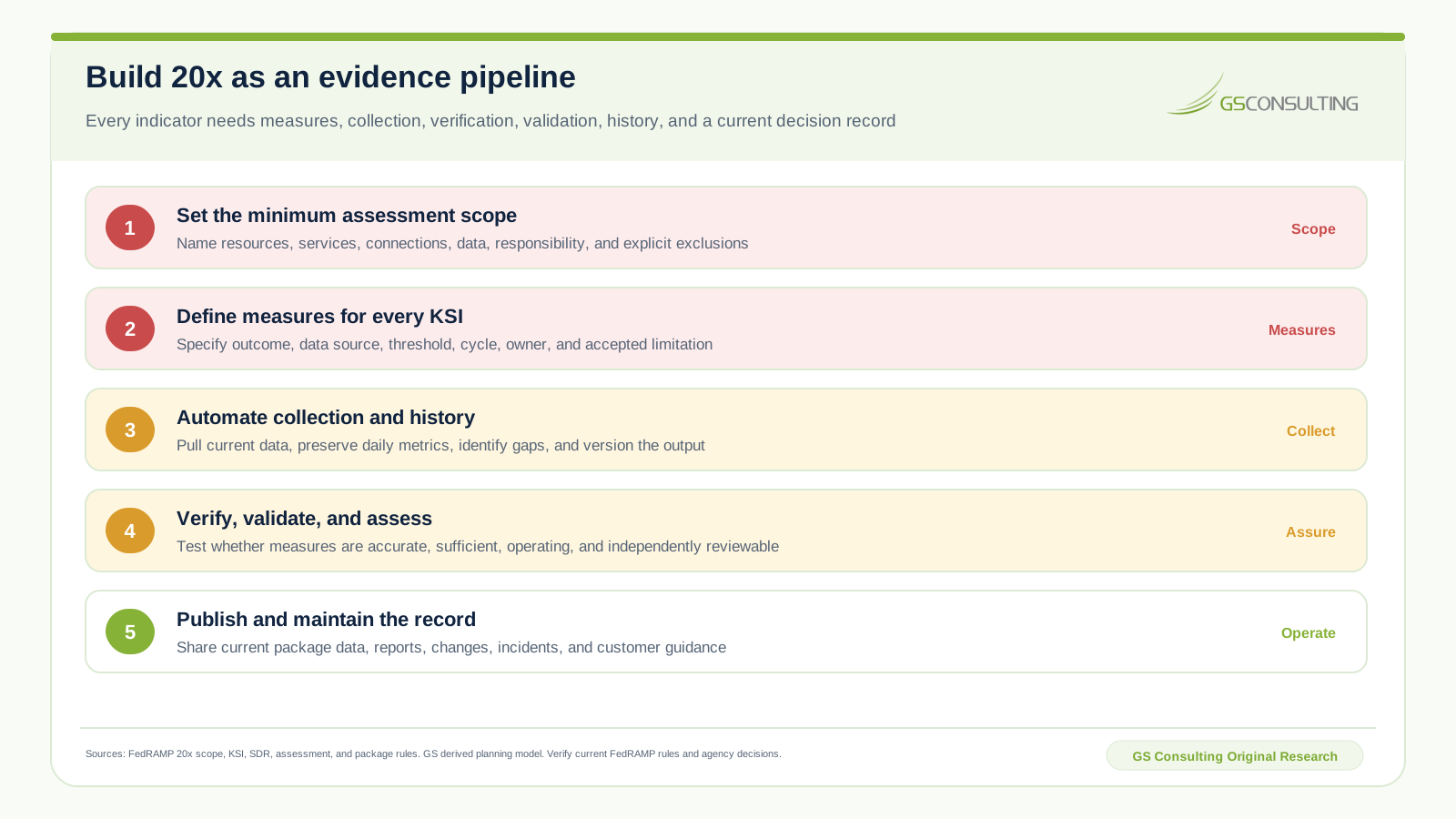
Set the minimum assessment scope
Name every resource, service, connection, data path, external dependency, customer duty, and explicit exclusion needed to understand confidentiality, integrity, and availability. Inventory should reconcile with diagrams, cloud accounts, deployment definitions, scanners, logs, and the package overview.
Define measures before collecting artifacts
For each KSI, record the outcome, measure, source, query, filter, threshold, cycle, owner, expected result, gap treatment, retention, and customer risk. A screenshot is not a measure. A measure can be run again and challenged.
Automate collection and history
Pull evidence from cloud configuration, identity, logging, deployment, vulnerability, incident, recovery, inventory, and ticket systems. Preserve enough raw context to explain the result. Store daily status where the class requires it.
Verify, validate, and assess
Verification asks whether the measure is suitable for the indicator. Validation asks whether the implementation and result are accurate and working. Independent assessment tests both without becoming the owner of the provider decision.
Publish and maintain the record
Keep the package overview, Security Decision Record, KSI status, secure configuration guide, Ongoing Certification reports, vulnerabilities, changes, incidents, and service health current. The published record should change when the service changes.
Use the Security Decision Record as the Evidence Index
The Security Decision Record replaces the traditional system security plan with a maintained record of provider decisions. For each applicable KSI, it captures the measures, cycle, verification, automation sufficiency, validation, and artifacts. Class B and C records also contain historical metric summaries, with Class C adding daily data where available.
Do not turn the record into another narrative document. Treat it as the index that links a statement to its live source, method, result, independent procedure, finding, response, and history.
A reviewer should be able to move from the KSI to the measure, from the measure to the source, from the source to the period result, from the result to verification and validation, and from any exception to a named decision. If one of those links is missing, the record is not ready.
Two Automated Methods Must Be More Than Two Exports
Current Class C rules call for at least two automated methods to persistently verify and validate each KSI. Two reports built from the same query are not independent evidence. Two dashboards backed by the same incomplete inventory repeat the same blind spot.
Use methods that challenge different failure modes. Compare desired infrastructure state with deployed cloud state. Compare identity policy with observed account and privilege activity. Compare asset inventory with network, logging, scanner, and deployment sources. Compare backup configuration with a restoration result.
Then test the automation itself:
- Does the source cover the full minimum assessment scope?
- Can a new resource appear without reaching the query?
- Do filters hide failed, unknown, or stale states?
- Can the same result be reproduced from the recorded version and period?
- Does a known bad condition create the expected failure?
- Who reviews changes to the collector, query, threshold, and schema?
That is not ceremony. It is how a provider proves the evidence generator deserves trust.
A Reusable Package Does Not Remove Agency Judgment
FedRAMP tells agencies to use 20x certification data as reusable evidence, then document the agency specific authorization decision in their own materials. The provider package reduces repeated assessment work. It does not decide whether every use is acceptable.
Agencies can ask clarifying questions when information appears incomplete, conflicts with the agency security determination, or creates a serious concern. Providers should therefore publish a package that is current, understandable, and accessible without forcing each buyer to commission a private reconstruction.
The secure configuration guide matters here. A technically strong service can still create risk when customer administrators choose weak settings. Record recommended defaults, security effects, exports, versions, and change history so the agency can connect provider assurance to tenant operation.
Six FedRAMP 20x Failures
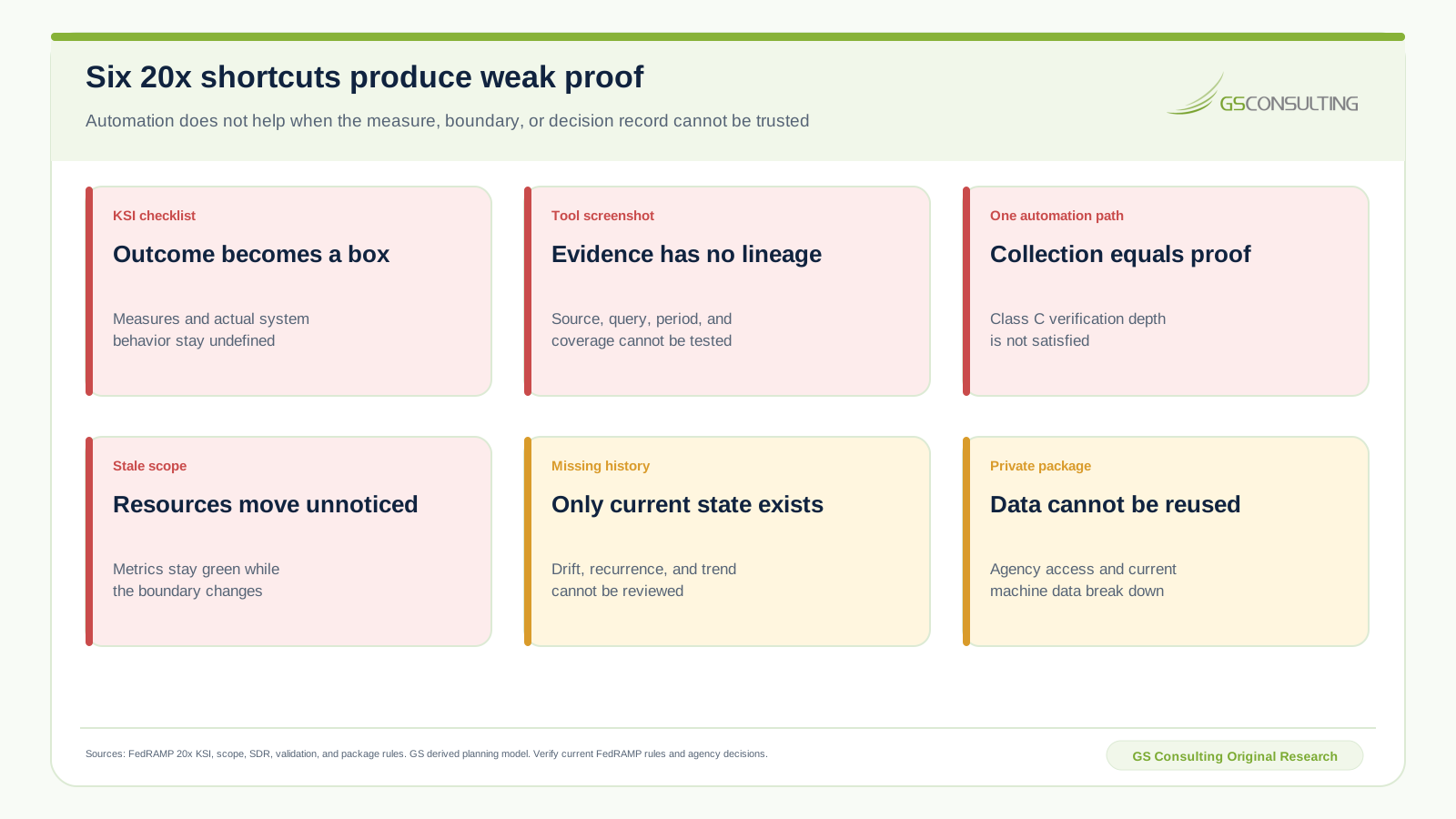
- The KSI becomes a checkbox. The team marks an outcome true without defining the measure or customer risk.
- A screenshot becomes the evidence model. Source, query, scope, period, owner, and reproduction are missing.
- One collection path is called two methods. Both outputs repeat the same source error and coverage gap.
- Scope trails production. New resources, regions, services, or connections never enter the measure population.
- Only current state exists. Drift, recurrence, duration, change effect, and prior decision cannot be reviewed.
- The package stays private and static. Agency access, reuse, machine data, and current customer guidance break down.
A 90 Day FedRAMP 20x Plan
Days 1 through 30: scope and map
- Choose the target class and confirm the current Program Certification path, dates, and independent assessor expectations.
- Build the package overview and minimum assessment scope from actual cloud accounts, deployments, data flows, dependencies, and customer configurations.
- Map every applicable KSI to candidate measures, source systems, owners, current evidence, known gaps, and historical data availability.
Days 31 through 60: engineer and test
- Define measure logic, thresholds, collection cycles, schemas, retention, exception states, and expected failure results.
- Build the first automated methods for architecture, configuration, identity, monitoring, and inventory, where the evidence pressure is highest.
- Test coverage against the minimum assessment scope and inject known bad states to confirm the methods fail correctly.
Days 61 through 90: assure and operate
- Populate the Security Decision Record with measures, verification, validation, automation sufficiency, metrics, artifacts, and open decisions.
- Run an independent readiness review using representative samples, source lineage, failed cases, history, and package access.
- Start the Ongoing Certification cycle before submission so changes, vulnerabilities, incidents, service health, and customer guidance already produce a current record.
Minimum FedRAMP 20x Evidence Packet
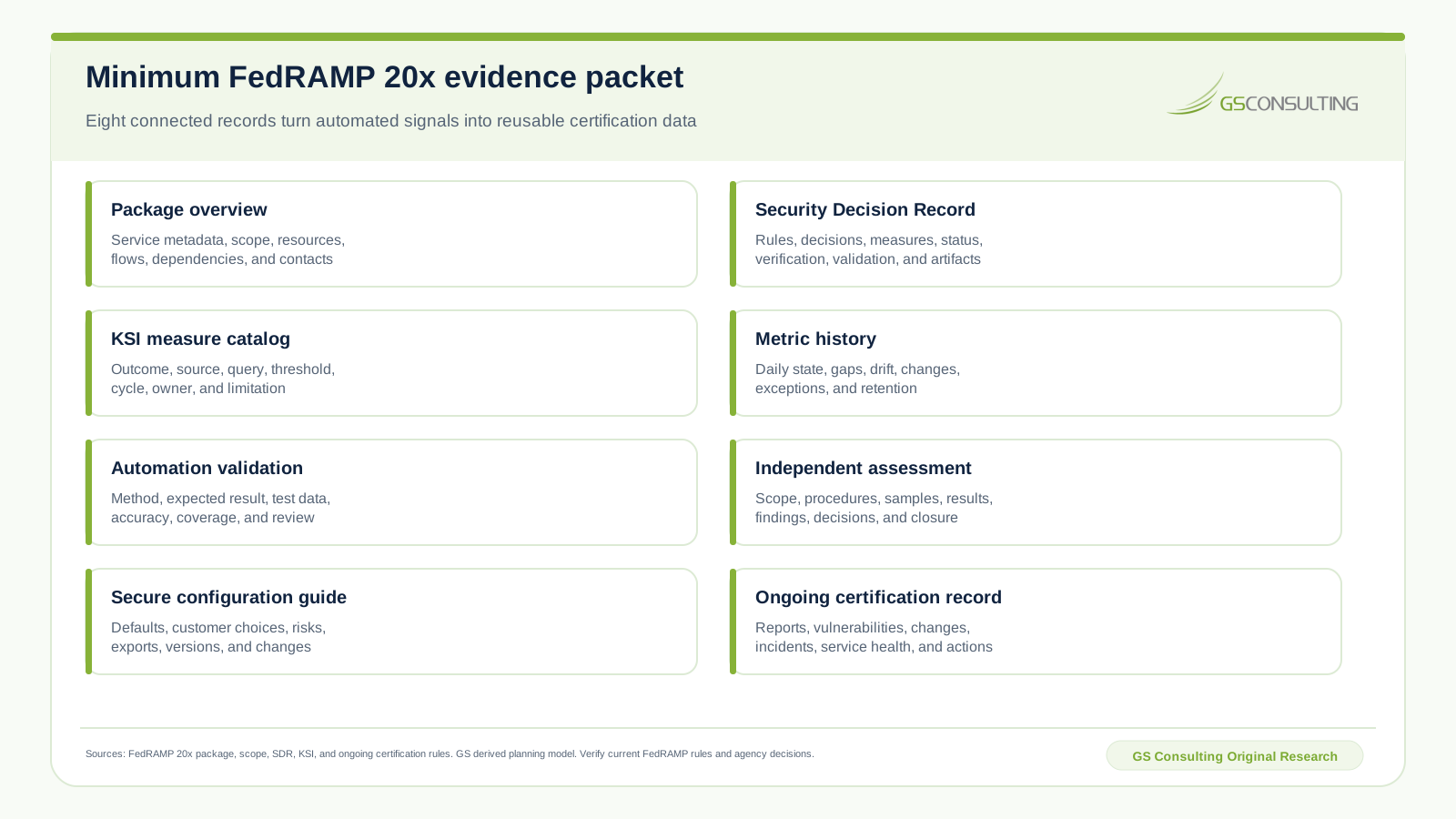
The eight records should point to one another. A KSI measure references a source and scope. Metric history references a method version. Validation references expected and observed results. Independent assessment references samples and findings. Ongoing reports carry open actions into the next cycle.
Bottom Line
FedRAMP 20x rewards providers that already operate security as code, evidence as data, and scope as a maintained system record. It exposes providers that only automate document production.
Start with the boundary. Define the outcomes. Engineer the measures. Test the automation. Keep the history. Invite independent challenge. Publish a package the agency can actually reuse.
That is the standard: current proof from the operating service, not confidence assembled for assessment week.
Need a FedRAMP 20x evidence engineering roadmap?
GS Consulting helps cloud providers connect architecture, Key Security Indicators, automated validation, independent assessment, and Ongoing Certification into one controlled delivery plan.
Request a 20x Readiness ReviewResearch Sources and Caveats
- FedRAMP 20x for current class availability and the program roadmap.
- FedRAMP Consolidated Rules repository, version 2026.07.14.01, for GS KSI, control reference, and persistent language counts.
- FedRAMP 20x Class C Certification rules for automation and metric history expectations.
- FedRAMP 20x Security Decision Record rules for measures, validation, metrics, and artifact structure.
- FedRAMP 20x Independent Verification and Validation rules for annual assessment scope.
- Using FedRAMP 20x Certification Packages for package reuse and agency decisions.
FedRAMP 20x rules, schemas, paths, terms, effective dates, and package expectations can change. Confirm the current materials and agency agreement before relying on this guide. GS models are derived planning tools, not official legal, audit, compliance, NIST, FedRAMP, OMB, agency, certification, authorization, or regulatory determinations.
Frequently Asked Questions
What is FedRAMP 20x?
FedRAMP 20x is the current outcome focused certification approach for cloud services. It uses Key Security Indicators, measurable evidence, machine readable certification data, persistent verification and validation, independent assessment, a Security Decision Record, and Ongoing Certification instead of relying on a large static document package alone.
Is FedRAMP 20x available now?
Yes. FedRAMP says the full rules are finalized for 20x Classes A, B, and C. Class D is planned for 2027. The Program Certification submission path and transition dates should still be confirmed against current FedRAMP guidance before a provider commits its plan.
How many Key Security Indicators are in FedRAMP 20x?
GS counted 46 current Key Security Indicators across ten domains in the official FedRAMP structured rules version 2026.07.14.01. In Class B, 41 are required and five are optional. In Class C, all 46 are required.
What automated evidence does Class C require?
The current Class C certification rules require at least two automated methods to persistently verify and validate the accuracy and completeness of each Key Security Indicator. They also require historical metrics showing persistent status for at least six months, subject to the current initial certification note and rule timing.
Does FedRAMP 20x eliminate the third party assessment?
No. Current Classes B and C require all applicable Key Security Indicators in a FedRAMP independent assessment at least once per year. Automation changes how evidence is produced and tested. It does not remove independent judgment.
Does FedRAMP 20x eliminate the agency authorization decision?
No. FedRAMP certification supplies reusable provider assurance. Agencies reference the package, evaluate the service inside their federal system, document their own authorization decision, and can seek clarification when the package conflicts with their risk determination or appears incomplete.