Enterprise AI Strategy | | 25 min read
Enterprise AI Portfolio Management: Fund, Hold, Stop, or Retire

Key Takeaways
The portfolio has to force decisions
Give every use a stable record
Join the owner, outcome, stage, risk, dependency, spend, evidence, and next decision.
End with one of four actions
Fund, hold, stop, or retire. A status color without an operating action is not governance.
Release money against proof
Set the gate before the review, preserve exceptions, and reopen decisions when conditions change.
Enterprise AI portfolio management is not a longer project list. It is the operating system for deciding where the enterprise will commit money, authority, scarce people, shared platforms, and risk.
Not another status meeting. A recorded choice.
Every material AI use should end a review with one of four decisions: fund the next stage, hold until a named condition is met, stop work that will not earn support, or retire a live use through controlled closure. If leaders cannot make that choice from the portfolio record, the record is incomplete.
This guide shows how to build that system. It combines official public guidance with original GS Consulting research across twelve portfolio controls. The goal is practical: help executives compare unlike AI investments without reducing them to a single promise of revenue, savings, or risk.
The Enterprise AI Portfolio Management Operating Standard
A usable portfolio has one record per AI use and one accountable decision owner. That record follows the use from idea through retirement. It is not rebuilt for each steering committee.
The minimum operating standard is simple:
- Identify the use. Assign a stable ID, sponsor, business owner, delivery owner, stage, and status.
- Name the outcome. State the business decision, current baseline, expected result, affected population, and period.
- Map the exposure. Record data, model, workflow, user, vendor, legal, privacy, security, safety, and compliance considerations as applicable.
- Expose dependencies. Join the use to data, identity, platform, integration, vendor, change, and shared service needs.
- Set the next gate. Define the evidence, owner, funding limit, decision date, and conditions before work advances.
- Monitor and close. Compare actual use and outcomes with thresholds, then preserve the fund, hold, stop, or retire decision.
The portfolio is therefore both a capital view and a control view. Finance can see committed and conditional spend. Business owners can see outcomes and adoption. Technology leaders can see capacity and reuse. Risk functions can see authority, evidence, and open conditions. Executives can see which choices they actually need to make.
Portfolio approval creates demand. Use the enterprise AI capacity planning guide to prove that technical, human, support, recovery, and budget supply can absorb the next wave before funding is released.
What Public Guidance Adds to the Portfolio
No public framework supplies a universal enterprise AI portfolio score. Several authoritative sources do define the disciplines a credible portfolio should connect.
The NIST AI Risk Management Framework organizes AI risk work across Govern, Map, Measure, and Manage. Its Core addresses inventories, resource allocation according to risk, decisions about whether development or deployment should proceed, and safe decommissioning. The NIST Manage Playbook extends that lifecycle with monitoring, override, incident response, recovery, change, and retirement actions.
The GAO AI Accountability Framework groups evidence around governance, data, performance, and monitoring. A separate GAO review of agile portfolio management reports that leading companies use business cases to update portfolios and reassess investments at least every six months.
For covered federal agencies, OMB Memorandum M-25-21 adds explicit inventory, impact, monitoring, and central tracking expectations. Those requirements do not automatically apply to private enterprises. They are useful evidence of what a more regulated public portfolio may need to show.
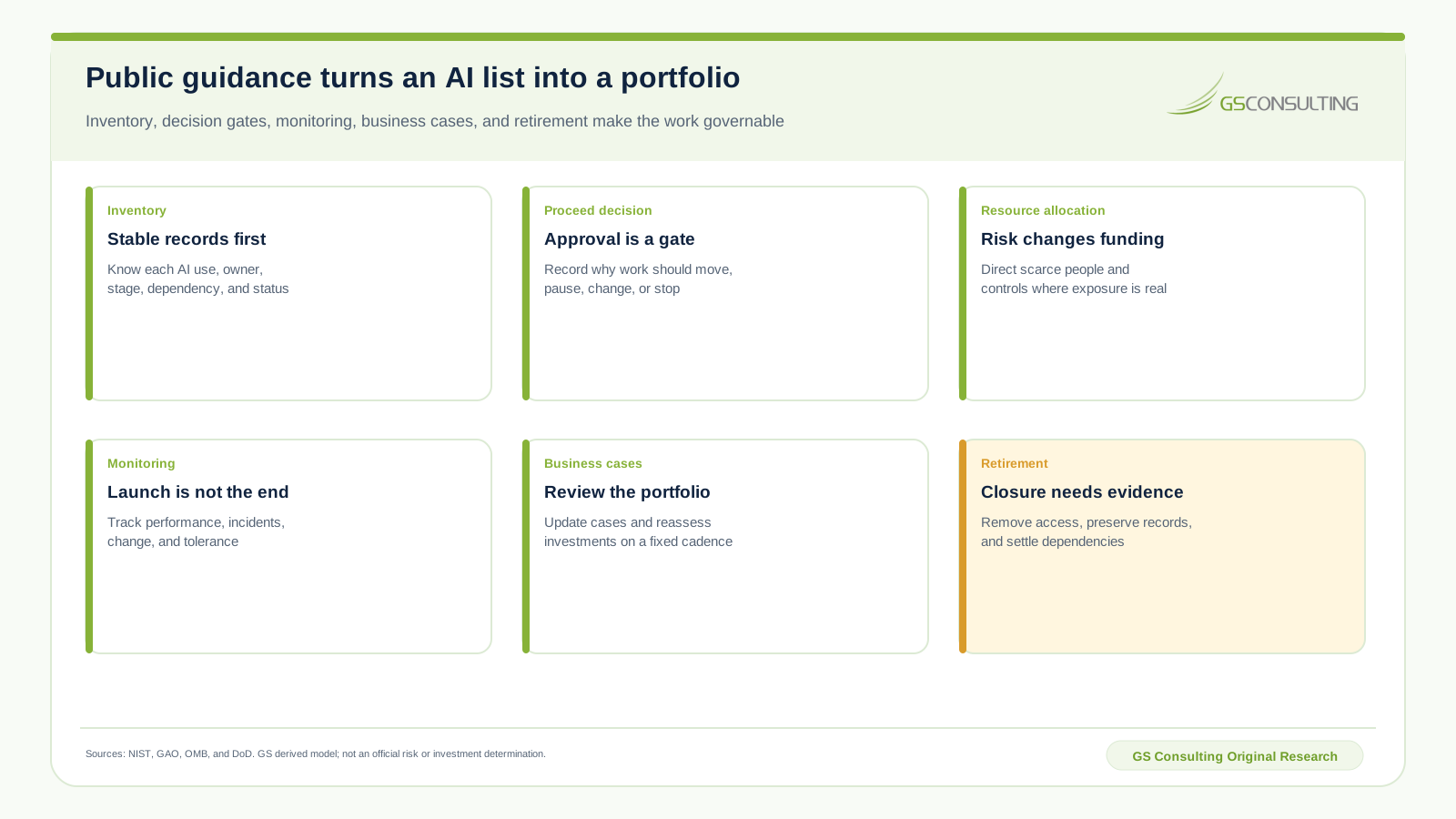
The inference is direct: an enterprise portfolio needs more than a value score. It needs a durable join between value, risk, evidence, resource use, monitoring, and closure.
Original Research: The GS Enterprise AI Portfolio Decision Priority Index
GS Consulting built a derived planning model to answer a narrow question: which portfolio controls deserve the earliest executive attention when leaders must fund, hold, stop, or retire AI work?
We scored twelve portfolio controls from one to five across six criteria. Decision consequence receives 25 percent. Portfolio reach receives 20 percent. Capital lock, evidence gap, and reuse leverage each receive 15 percent. Lifecycle urgency receives 10 percent. The weighted result is divided by five and reported on a zero to one hundred scale.
The ratings and weights are GS analyst judgments. Public sources support the operating disciplines, not the numbers. This separation matters. It prevents an official framework from being presented as if it issued GS scores.
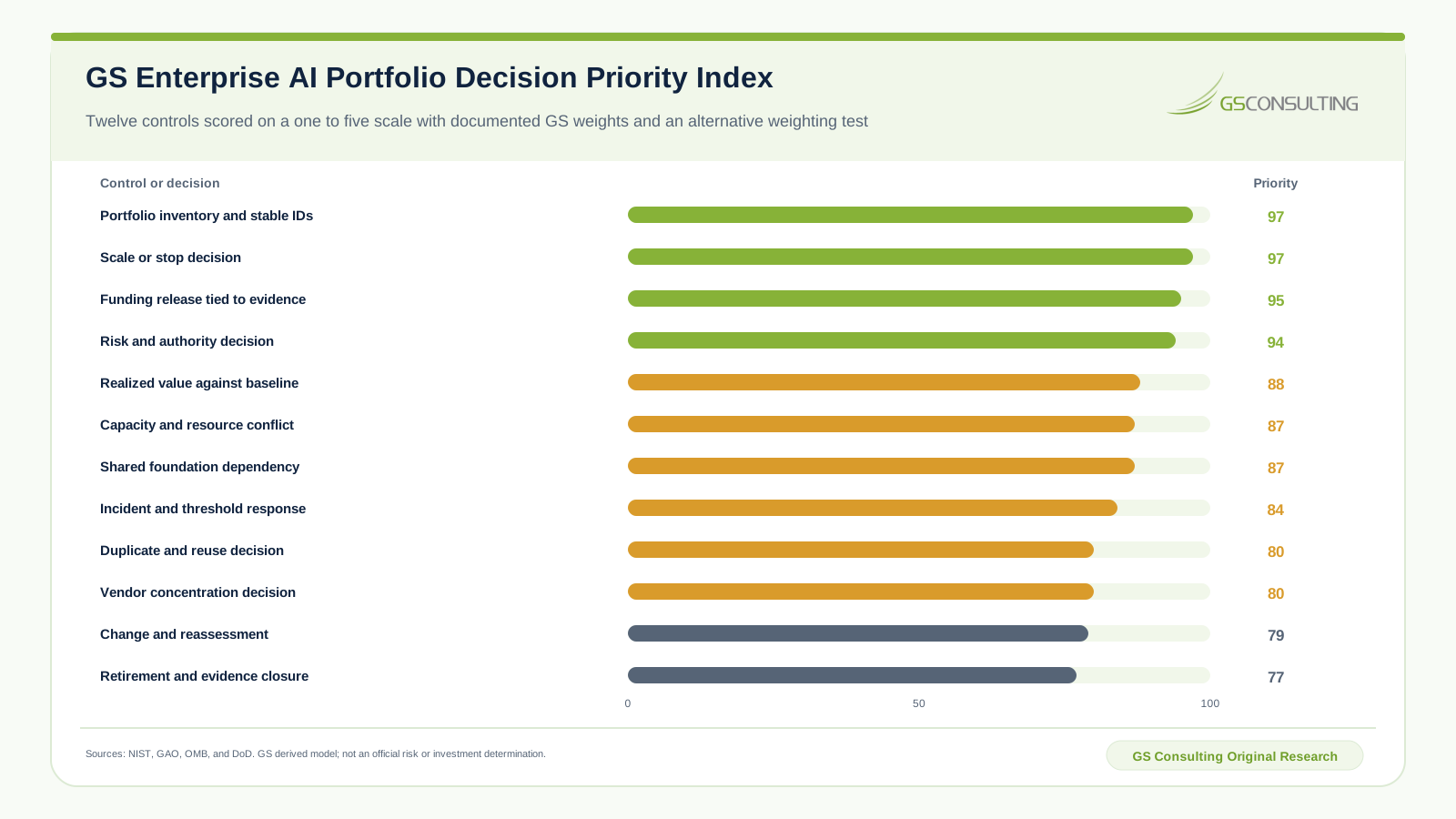
Four controls score 90 or more: portfolio inventory and stable IDs at 97, the scale or stop decision at 97, funding release tied to evidence at 95, and the risk and authority decision at 94. Six more land between 80 and 89. Change and reassessment scores 79, while retirement and evidence closure scores 77.
Those last scores do not mean change or retirement is optional. The index orders the first control backlog. It does not erase lifecycle duties. A lower score says the control usually becomes easier to implement after the portfolio has a stable record, an evidence gate, and a decision owner.
We also shifted five percentage points from decision consequence to reuse leverage. No score moved by more than two points. That limited sensitivity test suggests the highest priorities are not created by one small weight choice. It does not validate the ratings against a specific enterprise.
Build One Portfolio Record That Can Answer Eight Questions
Most portfolio failures begin with fragmented records. Finance has spend. Security has a review ticket. The business team has a slide. Engineering has a backlog. Legal has a contract note. Operations has an incident. Nobody has the full decision.
A stable portfolio ID is the join key. Do not ask every function to abandon its system. Require each material record to carry the same portfolio ID, accountable owner, and current decision date. Then build the executive view from linked evidence.
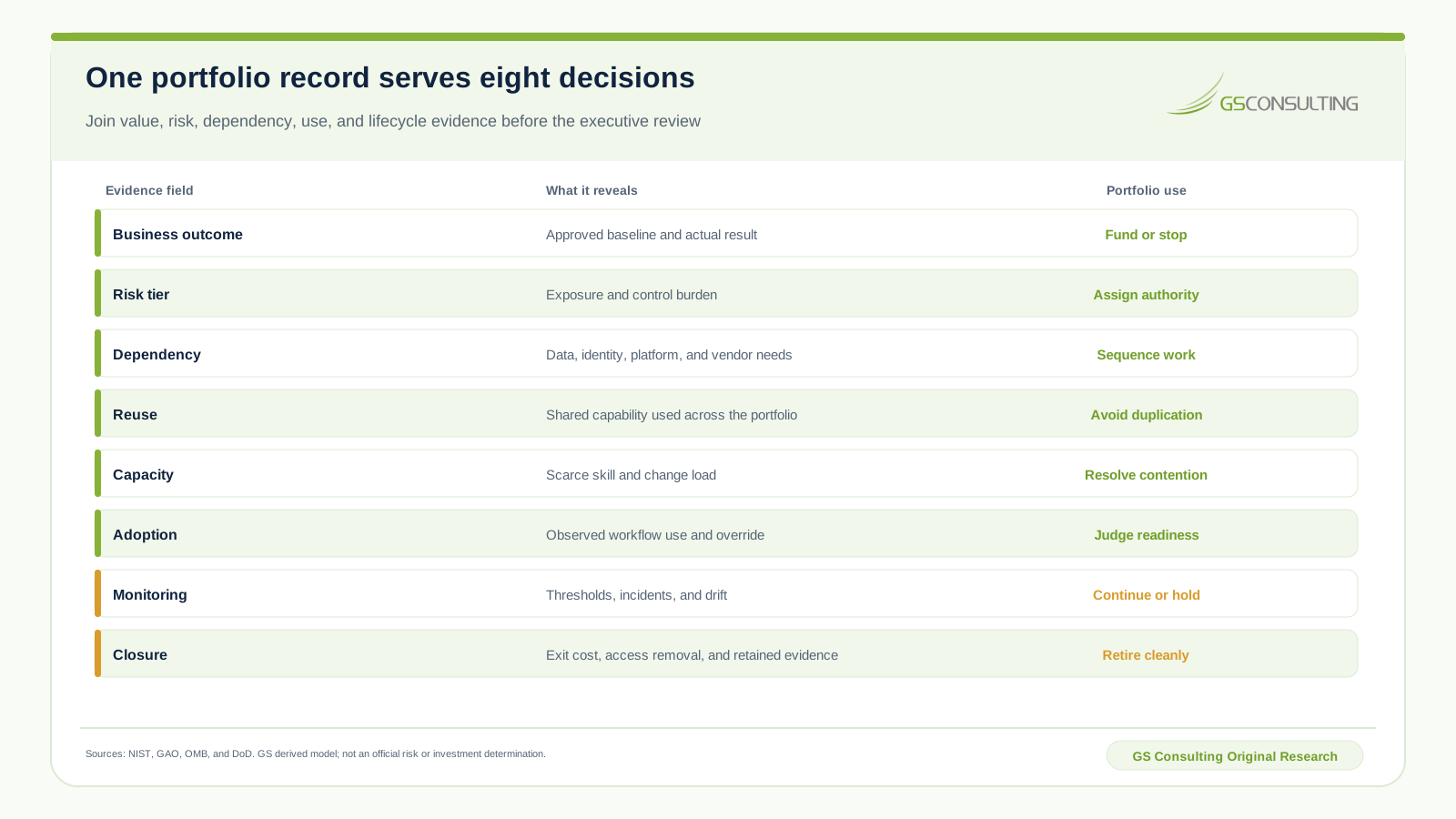
Keep the executive record small enough to maintain. Put detailed model tests, architecture, contract terms, and control evidence behind it. The summary should point to evidence, not copy all evidence into one spreadsheet.
Use Stage Gates That Change the Decision
A stage name has value only when it changes authority and funding. “Pilot” is not a meaningful stage if a team can spend indefinitely, add data, expand users, and connect more systems without a new decision.
A practical portfolio can use six stages:
- Intake. Confirm the business problem, owner, affected population, proposed AI role, and obvious exclusions.
- Discovery. Test data access, current workflow, risk, dependency, user need, and likely operating fit.
- Bounded pilot. Evaluate one defined population with stated quality, adoption, cost, and control gates.
- Production approval. Confirm authority, support, monitoring, recovery, change, contract, and funding evidence.
- Operate and improve. Review actual value, use, risk, incidents, drift, cost, and open conditions.
- Retire. Remove access, stop processing, settle contracts, preserve required evidence, and close dependencies.
Each gate needs an owner, evidence list, decision right, spend limit, and next date. If a pilot can quietly become production, the portfolio has no real gate.
Tie Funding to Evidence, Not Enthusiasm
AI business cases often mix three different claims: an observed result, a forecast, and a strategic option. Leaders need to see the difference.
Release discovery funds against a defined problem and owner. Release pilot funds against feasibility and evaluation design. Release production funds against measured operating value, control readiness, support capacity, and accountable acceptance. Release expansion funds against actual adoption, quality, cost, and outcome evidence.
Use conditions instead of vague caution. “Security review open” says little. “Production funding is held until the service identity is limited to approved repositories and the access test is signed by the security owner” creates an executable condition.
Cost should include more than the model or vendor fee. Count data work, integration, evaluation, security, privacy, legal review, change, support, monitoring, incident response, contract exit, and retirement. A cheap experiment can create an expensive operating obligation.
Separate Risk Evidence from Risk Authority
A risk score does not make a risk decision. The portfolio must name who can accept the exposure, who can impose conditions, who can override output, and who can stop operation.
Keep risk evidence specific to the use. A vendor may provide strong general security material while the local workflow still grants excessive access or makes a consequential recommendation without review. Conversely, a low consequence drafting aid should not inherit the same control burden as an automated eligibility or safety decision.
Regulatory and contractual applicability should be confirmed by qualified owners. A NIST framework, OMB memorandum, federal control catalog, customer term, or internal policy can inform the portfolio without creating the same obligation for every enterprise. Strong preparation means recording the authority and evidence. It does not mean overstating the law.
Measure Realized Value Against an Approved Baseline
Do not let every use invent its own definition of value. Require a baseline, a population, a period, a formula, a data source, and an owner who can explain what happens to the benefit.
Time released is capacity, not automatically cash savings. Better quality is not revenue unless it changes a measurable business outcome. Faster cycle time can be valuable even when headcount stays flat, but the portfolio should state who uses the capacity and what output improves.
For each material benefit, preserve four values: approved baseline, expected result, observed result, and credited result. The credited result is the amount leadership will actually use in the business case after quality, adoption, attribution, and finance review.
The companion AI governance metrics dashboard guide explains how to define decision ready measures. The enterprise AI maturity assessment provides an evidence based scorecard and downloadable workbook to identify capability gaps that can block otherwise attractive uses.
Manage Dependencies, Reuse, and Scarce Capacity
Project level ranking hides portfolio economics. Five teams may appear to have five separate use cases. In reality, all five can depend on the same identity pattern or document connector. They can also share a classification rule, evaluation service, or change team.
Map dependencies before choosing winners. A shared foundation may deserve funding even when it produces no direct business outcome by itself. A popular pilot may need to wait because its dependency has no owner. Two vendor purchases may collapse into one reusable capability.
Reuse is not a reason to force one model into every workflow. Reuse the stable parts: identity, logging, retrieval, evaluation, policy enforcement, evidence schemas, contract terms, support patterns, and incident routes. Preserve local choice where business context and risk genuinely differ.
This is where AI use case prioritization meets enterprise architecture. A use can rank well on its own and still wait because the portfolio cannot support it safely or economically.
Reopen Decisions When Reality Changes
Approval is a dated conclusion, not permanent truth. Data changes. Users change behavior. Models and vendors change. Costs move. New incidents reveal failure modes. A business process disappears.
Set thresholds at the same time as approval. Reopen the decision after quality decline, material adoption change, new sensitive data, or broader user access. Do the same after a model or vendor change, an incident, a contract event, a control failure, excess cost, or a missed business outcome.
NIST AI 800-4 describes deployed AI monitoring as an area with scattered and immature practice. That should make leaders more precise, not more theatrical. Pick a small set of signals that can reopen a real decision. Do not fill the dashboard with measures nobody owns.
Retirement Is a Portfolio Decision
AI portfolios accumulate dead weight when pilots are never closed and live uses are never retired. Licenses renew. Service accounts remain. Data copies persist. Users keep a workaround. Evidence becomes harder to reconstruct.
A retirement decision should identify the replacement or accepted gap and the last processing date. It should cover user communication, access removal, connector shutdown, and model or prompt disposition. Finish with authorized record and data actions, contract closure, monitoring closure, and final owner signoff.
Stop and retire are not identical. Stop ends work that should not continue. Retire closes a use that was live or materially integrated. Both release capacity only after the obligations are actually closed.
Run a Portfolio Review That Ends in Action
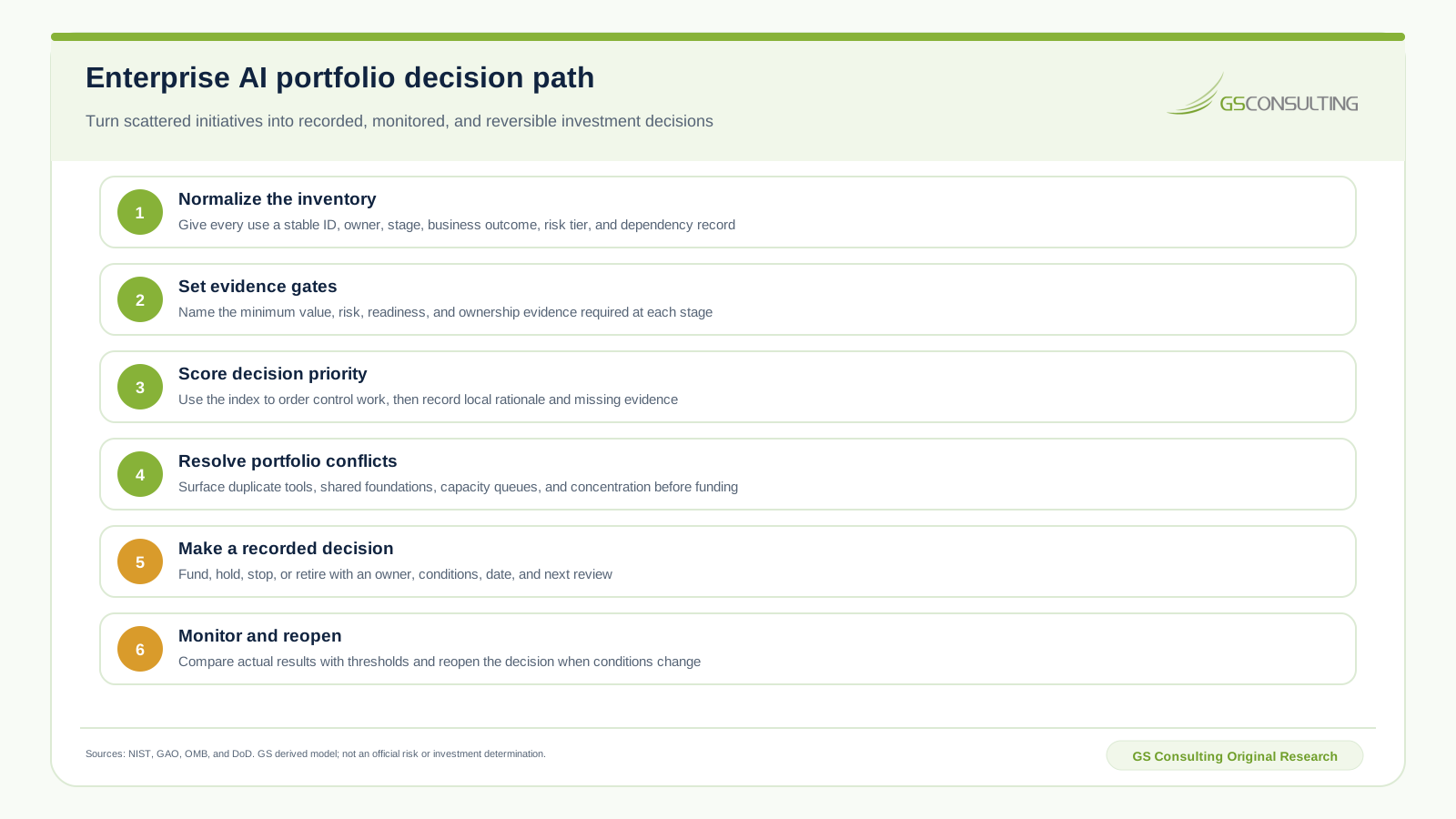
Send the evidence before the meeting. Use the meeting for decisions that cross authority or resource boundaries. The portfolio office should resolve data quality and missing field issues beforehand.
For each item, ask five questions:
- What decision is due now?
- What changed since the prior decision?
- Which evidence meets or misses the stated gate?
- Which portfolio dependency or conflict requires executive authority?
- Who owns the action, condition, and next date?
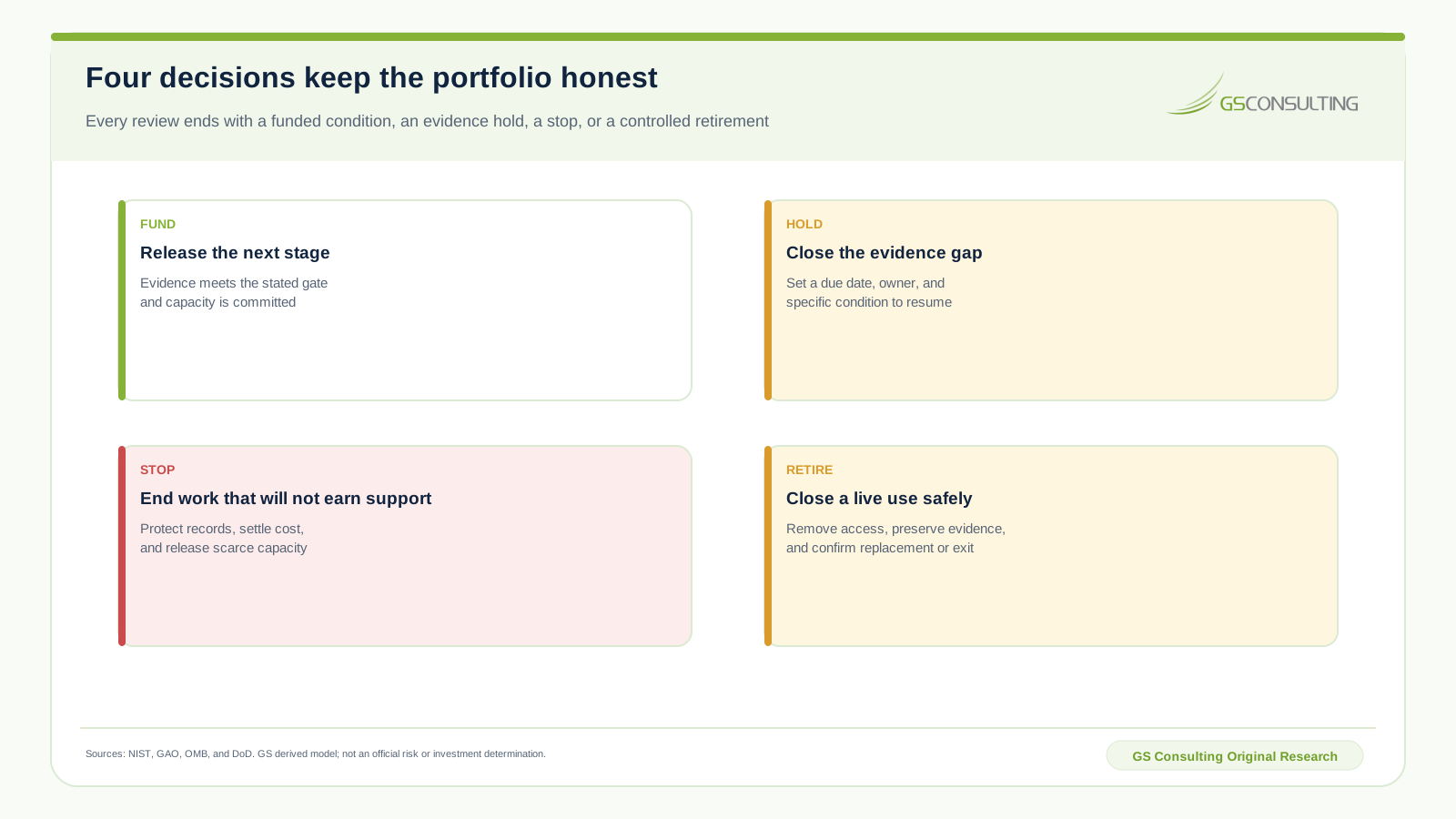
“Continue monitoring” is incomplete unless it names the threshold, owner, evidence source, and decision date. “Approved” is incomplete unless it names the approved scope and conditions. Precision is what makes the meeting worth attending.
The Minimum Enterprise AI Portfolio Evidence Packet
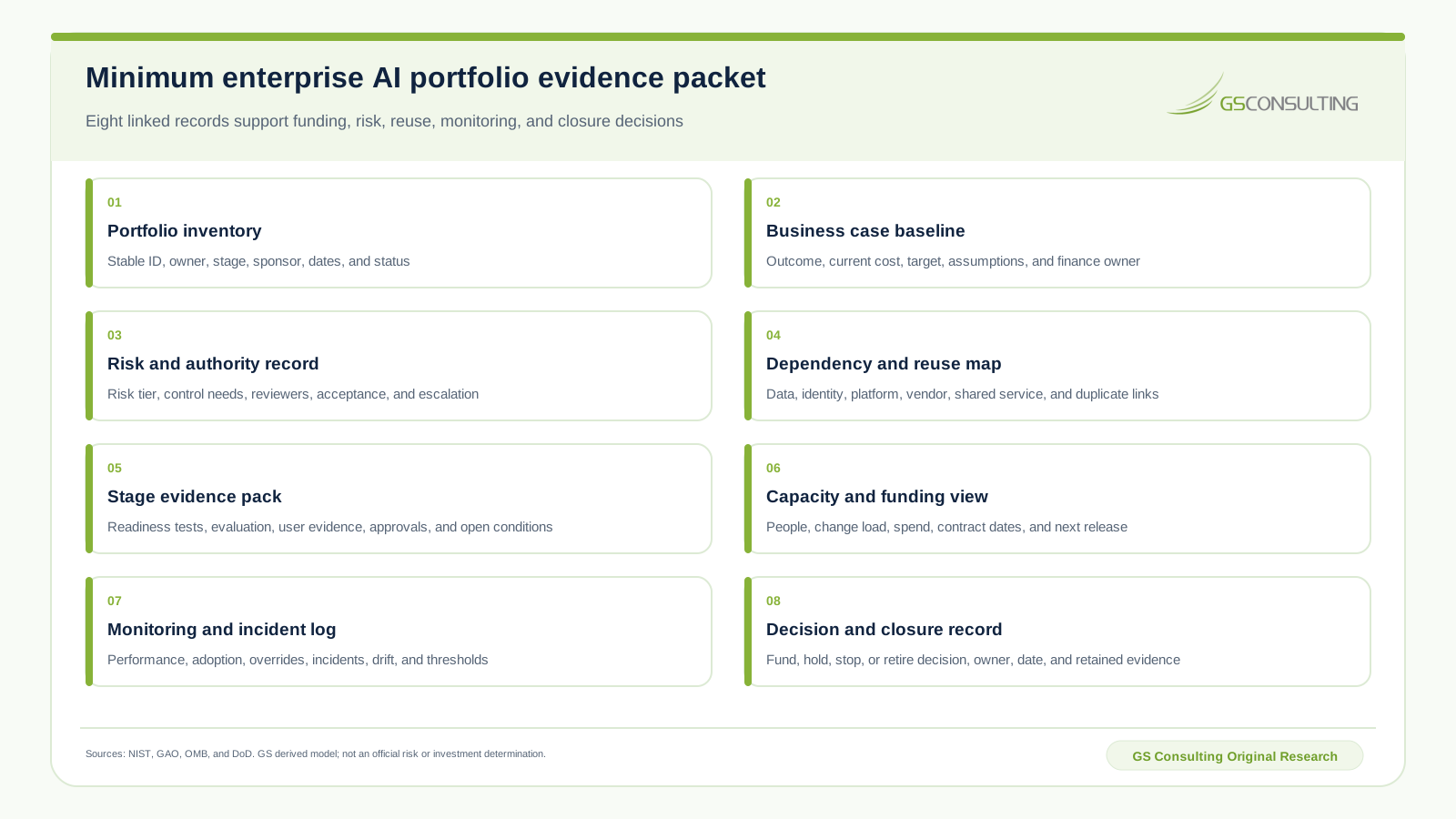
The workbook and companion CSV files preserve the source register, public observations, data dictionary, and ratings. They also preserve both weight sets, formula results, sensitivity analysis, figure data, the decision path, the operating matrix, four decision records, and the evidence packet.
The package is designed for replacement. Substitute local inventory, spend, incident, capacity, outcome, contract, control, and monitoring evidence. Revisit both ratings and weights with the accountable business, technology, finance, security, legal, privacy, risk, and compliance owners that apply to the portfolio.
A 90 Day Enterprise AI Portfolio Management Plan
Days 1 to 30: establish the record
Choose the stable portfolio ID. Reconcile known initiatives, embedded vendor AI, experiments, live uses, and unofficial use where discovery is authorized. Name owners. Define stages. Join spend, contracts, dependencies, risk reviews, and business cases. Do not wait for perfect inventory coverage before assigning the first decision dates.
Days 31 to 60: define gates and resolve conflicts
Set the evidence required for discovery, pilot, production, expansion, and retirement. Apply the priority index as a starting hypothesis. Identify shared foundations, duplicate tools, capacity queues, concentration, and uses with no valid sponsor. Record holds with exact conditions.
Days 61 to 90: make and monitor decisions
Run the first executive review. Release conditional funding, stop weak work, and assign retirement plans. Publish a concise dashboard that links to evidence. Set monthly operating reviews, quarterly portfolio reviews, and a business case refresh at least every six months. Reopen decisions when thresholds or material conditions change.
The Bottom Line
Enterprise AI portfolio management is not a catalog of ambition. It is a record of choices.
Build one durable record. Tie money to evidence. Separate risk analysis from decision authority. Fund shared foundations when the portfolio needs them. Stop work that will not earn support. Retire live uses with the same discipline used to launch them.
The operating standard is decisive: no material AI investment advances without a named owner, a stated outcome, a defined evidence gate, a recorded decision, and a monitored path to closure.
Need an enterprise AI portfolio that can make hard choices?
GS Consulting helps leaders connect AI strategy, use case evidence, governance, funding, shared architecture, and operating decisions.
Explore Enterprise AI Strategy Visit the Enterprise AI HubSources, Method, and Planning Caveat
Sources were accessed September 12, 2026. The public evidence set includes the NIST AI Risk Management Framework, NIST AI RMF Core and Manage Playbook, NIST AI 800-4, the GAO AI Accountability Framework, GAO-25-107130, OMB Memorandum M-25-21, and the Department of Defense Generative AI Responsible AI Toolkit.
Planning caveat: the GS Enterprise AI Portfolio Decision Priority Index is a derived planning tool based on cited public sources and documented assumptions. It is not an official legal, audit, compliance, NIST, GAO, security, privacy, financial, or regulatory determination. Scores do not approve investment, accept risk, or establish an obligation. Confirm applicable duties and decision authority with qualified owners.
- NIST AI Risk Management Framework
- NIST AI RMF Core
- NIST AI RMF Manage Playbook
- NIST AI 800-4
- GAO AI Accountability Framework
- GAO Agile Portfolio Management Review
Frequently Asked Questions About Enterprise AI Portfolio Management
What is enterprise AI portfolio management?
Enterprise AI portfolio management is the recurring discipline for inventorying AI work, comparing business and risk evidence, resolving shared dependencies, releasing funding, monitoring live use, and recording decisions to fund, hold, stop, or retire each investment.
How is an AI portfolio different from an AI use case list?
A use case list says what teams want to build. A managed portfolio connects each use to an owner, outcome, baseline, stage, risk tier, dependency, funding decision, monitoring record, and closure path. The second can support executive decisions. The first usually cannot.
How often should leaders review the enterprise AI portfolio?
Use a monthly operating review for material changes, thresholds, funding conditions, and blocked dependencies. Add a deeper quarterly review for portfolio balance and a formal business case refresh at least every six months. Higher consequence events should reopen a decision immediately.
What should an AI portfolio dashboard show?
Show the count and value of uses by stage, owner, risk tier, funding status, shared dependency, adoption level, outcome against baseline, open condition, threshold status, and next decision date. Every summary should link to source evidence and a named owner.
When should an enterprise stop an AI pilot?
Stop when the use cannot produce a material outcome, required data or authority will not be available, control cost overwhelms likely value, adoption remains weak after a fair test, a stronger shared capability replaces it, or the sponsor will not own the result. Record the reason and close access, contracts, records, and dependencies.
Does the GS priority index approve AI investments?
No. The index orders control and evidence work. Its ratings and weights are GS Consulting planning assumptions. Accountable leaders must replace them with local facts and make decisions under their own legal, financial, security, privacy, compliance, and governance authority.