Enterprise AI Strategy | | 31 min read
Enterprise AI Governance Frameworks for GovCon

Key Takeaways
GovCon AI governance has to answer operational questions
Can AI touch this information?
The framework needs clear rules for public, internal, confidential, FCI, CUI, controlled technical, proposal, security, employee, customer, and contract data.
Who can approve or stop the use case?
AI oversight committees should review higher risk workflows, but someone also needs authority to pause AI use when risk exceeds tolerance.
Can the company prove what happened?
If AI supports a contract workflow, audit response, customer action, or compliance decision, the organization needs records, logs, review evidence, and final ownership.
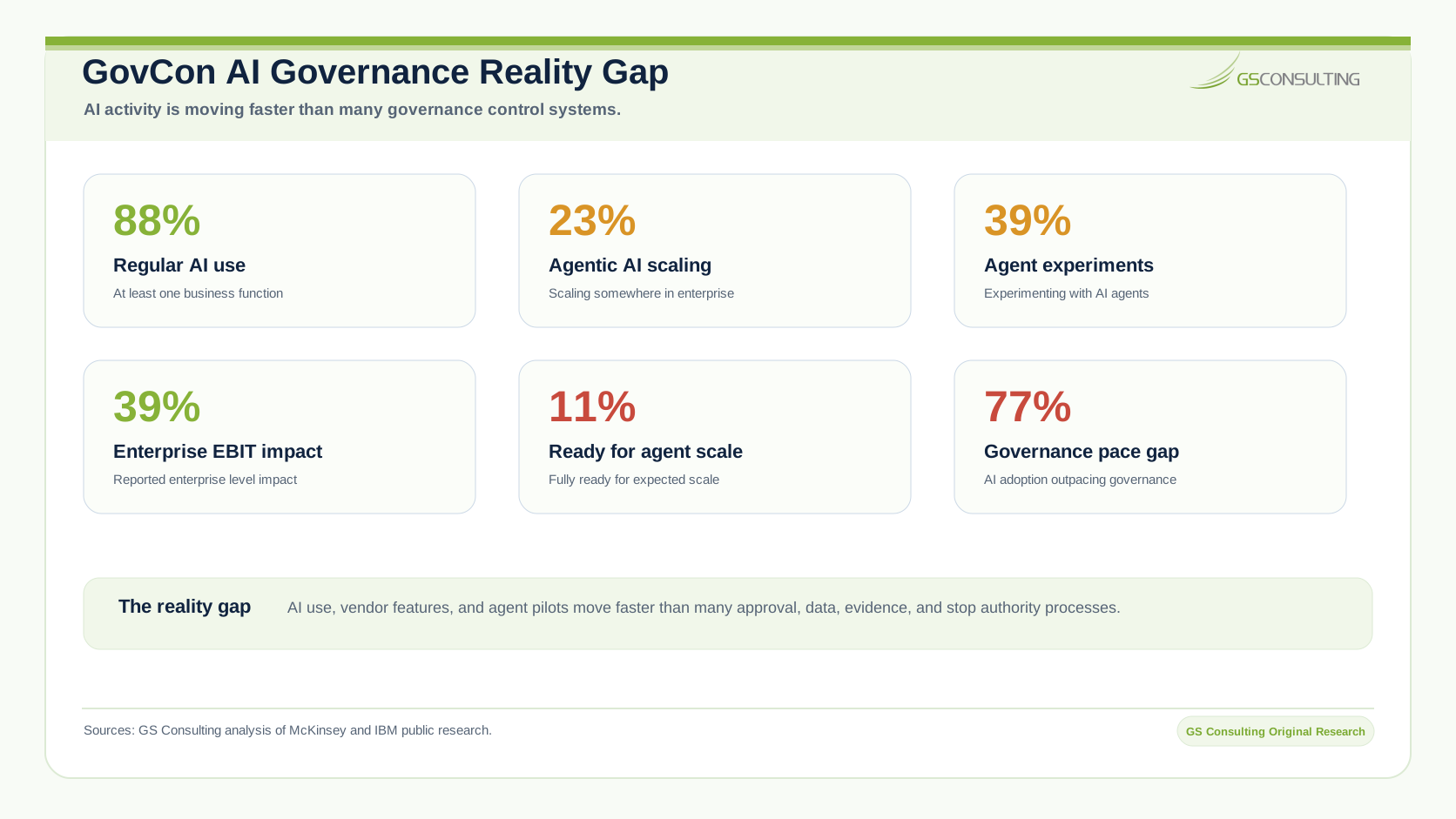
AI governance is not a policy problem. It is an operating problem.
A policy will not save a federal contractor when a capture team uses AI on proposal data, an engineer summarizes controlled technical content, an HR team tests an assistant, a security analyst uses AI on alert data, or a program manager asks a chatbot to draft a customer update.
The hard part is not writing that AI should be used responsibly. The hard part is answering basic questions once AI touches real workflows: who approved the use case, what data AI can use, whether it can touch CUI, whether the vendor keeps prompts, who reviews the output, whether the output becomes a contract record, and who can stop the workflow if it creates risk.
Governance without stop authority is advisory
For GovCon companies, AI governance has to be more than a nice policy document. It has to work when the business is moving, tools are being bought, employees are experimenting, and customer obligations are real.
Why GovCon Needs a Different AI Governance Model
Commercial companies can experiment with AI more casually. Federal contractors have less room for guesswork because the data and obligations are different.
A GovCon company may handle CUI, FCI, controlled technical information, proposal data, customer records, contract deliverables, security documentation, export controlled content, pricing, subcontractor data, and mission information. AI use can affect contract performance, CMMC scope, NIST SP 800 171 controls, customer trust, proposal integrity, data handling, cybersecurity, audit evidence, and disclosure obligations.
NIST AI RMF organizes AI risk work around Govern, Map, Measure, and Manage. In plain business language, that means ownership, context, testing, and ongoing management. A GovCon AI governance framework should turn those ideas into working controls.
The point is not to slow the business down. The point is to give the business a safe path to move.
The Problem With Informal AI Governance
An acceptable use policy by itself is not enough. A policy says what should happen. A governance framework makes sure it happens.
The common failure pattern is easy to spot. A business unit buys a tool. IT did not review the connector. Security did not review logs. Compliance did not review data categories. Contracts did not review customer obligations. Legal did not review vendor terms. The CISO finds out after people are already using it.
That is cleanup, not governance. In GovCon, cleanup gets expensive because controlled data, contract data, customer expectations, assessment evidence, and subcontractor obligations are involved.
Original Research: The GovCon AI Governance Operating Model Index
GS Consulting original research shows that GovCon AI governance is an operating control problem, not a policy maturity problem. GS Consulting analyzed public AI governance, defense AI, CMMC and CUI, AI security, and enterprise adoption sources against twelve GovCon AI governance capabilities.
The highest burden areas were data handling and CUI or FCI classification, use case intake and AI inventory, monitoring and stop authority, audit trails and evidence records, tool and vendor approval, risk tiers and prohibited use gates, oversight committee decision rights, and executive ownership.
The research also shows that governance gates should be driven by workflow risk. Public research and approved internal policy search can move through a lighter path. Proposal support, IT triage, compliance evidence organization, contract summaries, operations reporting, customer drafts, and security alert summaries need controlled review. CUI chatbots, RAG over CUI repositories, AI agents with tool calls or write back, customer responses from controlled data, cybersecurity response, compliance certification, and subcontractor AI use with flowed data need stronger governance gates.
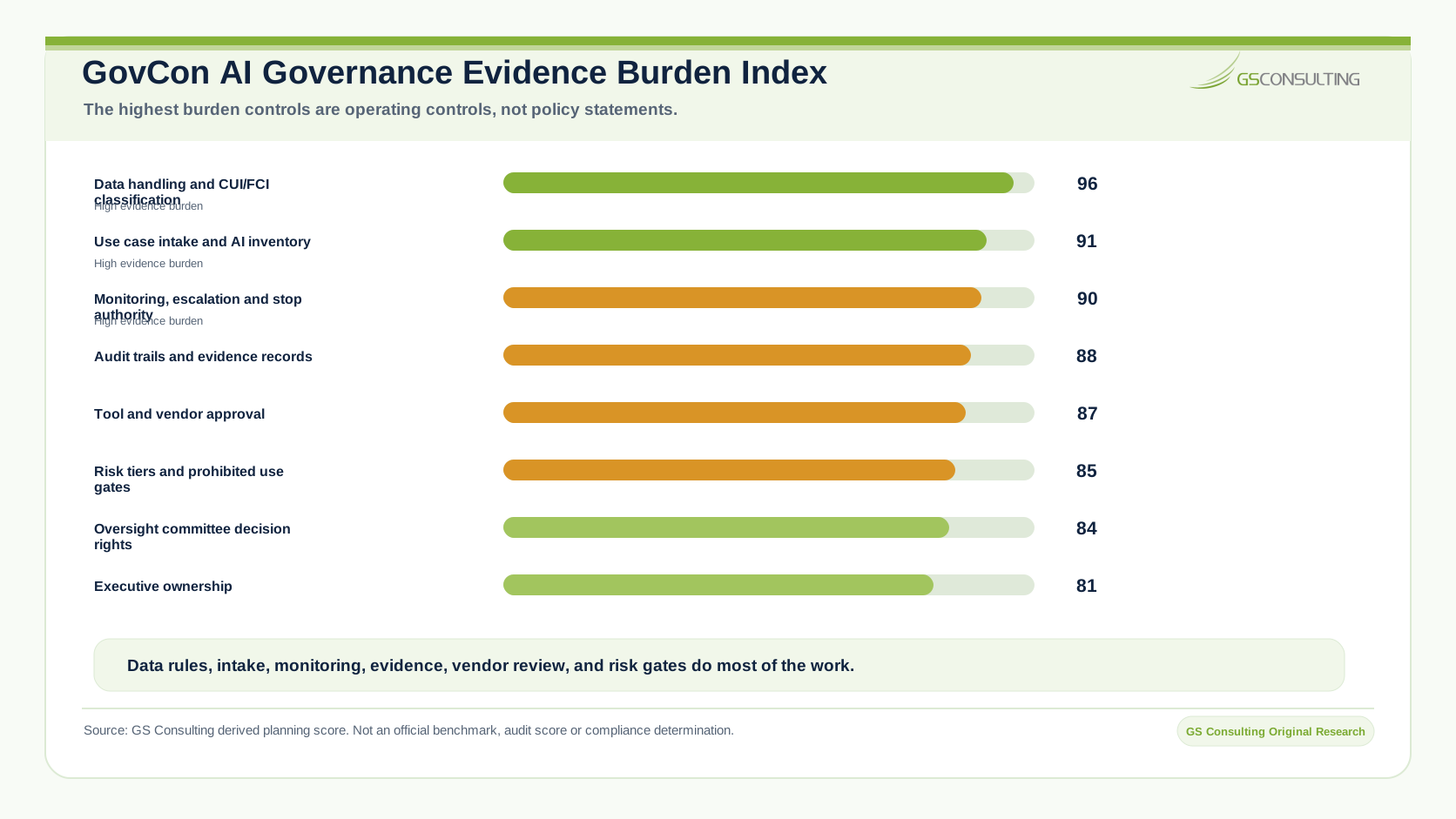
The caveat matters. The GovCon AI Governance Evidence Burden Score, Workflow Governance Gate Score, and Role Ownership Load Score are GS Consulting derived planning tools. They are not official NIST, DoD, CMMC, ISO, CISA, OWASP, CSA, IBM, McKinsey, ICD 505, legal, audit, or compliance determinations.
What an Enterprise AI Governance Framework Should Do
A practical AI governance framework should answer six questions:
- What AI use is allowed?
- What AI use is prohibited?
- Who approves AI use cases?
- What data can AI access?
- Who reviews AI outputs?
- How do we prove what happened?
If the company cannot answer those questions, it may be ready for controlled pilots. It is not ready for broad enterprise adoption.

The Core Components of AI Governance for GovCon
1. Executive ownership
AI governance needs a real executive owner. That may be the CIO, CISO, CTO, COO, or another senior leader with authority across technology, contracts, compliance, delivery, and risk.
The owner should answer who owns AI strategy, who owns AI risk, who settles disputes, who reports AI value and risk to leadership, and who can pause risky AI use.
2. AI oversight committee
The AI oversight committee should be a working group, not a ceremonial board. It should review higher risk use cases, set standards, approve thresholds, and keep the business moving.
A practical committee includes security, IT, compliance, contracts, legal, data owners, business delivery, HR where employee workflows are involved, capture where proposal workflows are involved, and program leadership where customer facing work is involved.
3. AI use case intake
Teams need a simple path to request AI use. The intake should capture the workflow, owner, tool, vendor, data, whether it touches FCI or CUI, whether it writes back to systems, whether outputs enter deliverables, who reviews output, what happens if AI is wrong, and what value is expected.
If the process is painful, people will work around it. If it is too weak, it will miss the risk. The right intake process is short enough to use and strong enough to force the right conversation.
Risk Tiers Keep Governance Practical
Not every AI use deserves the same review. Public research and approved internal policy search should not go through the same path as CUI RAG, compliance certification, cybersecurity decision support, customer responses from controlled data, or AI agents that can take action.

| Tier | Examples | Governance response |
|---|---|---|
| Green | Public research, general brainstorming, non sensitive internal drafts, training outlines from approved material. | Basic rules, approved tools, and clear data limits. |
| Yellow | Proposal support, IT ticket triage, compliance evidence organization, contract summary support, operations reporting, customer draft support, security alert summaries. | Approved tools, human review, logging, data handling rules, and business owner approval. |
| Red | CUI workflows, contract deliverables, customer responses from controlled data, HR decisions, cybersecurity response, compliance certification, tool calls, and system write back. | Senior review, security review, compliance review, architecture review, documented approval, audit trails, and monitoring. |
| Prohibited | CUI in public AI tools, personal AI accounts for contract data, AI approving payments, AI granting privileged access, AI certifying compliance, AI making final employment decisions. | Blocked unless a special approved environment and explicit authority exist. |
Data Handling and Vendor Review
Data handling is the heart of GovCon AI governance. The framework should define what data AI can use and what tools are approved for each category.
At minimum, classify public, internal, confidential, FCI, CUI, controlled technical information, export controlled information, customer restricted data, proposal data, security data, employee data, contract data, and restricted or prohibited data.
For each category, define which AI tools can process it, who can approve use, whether prompts can contain it, whether outputs inherit the same sensitivity, where outputs can be stored, whether logs must be retained, whether vendor terms must be reviewed, and whether customer approval is needed.
If CUI is involved, the default should be no public AI tools and no unapproved platforms. If AI summarizes CUI, the summary may still need CUI handling. If AI summarizes a contract, the summary may still be confidential. Governance has to cover both source data and generated outputs.
Vendor approval should review data retention, model training use, prompt storage, output storage, support access, subprocessors, cloud environment, identity integration, logging, export controls, contract terms, incident reporting, deletion, region control, and use with CUI or FCI.
Do not rely on vendor marketing language. Enterprise grade does not automatically mean approved for GovCon data.
Human Review, Audit Trails, and Stop Authority
Human review is not a magic phrase. A governance framework should define when human review is required and what the reviewer is responsible for.
The reviewer must have authority to approve, edit, reject, or escalate. If the reviewer can only click approve, that is not review. That is theater.
AI governance also needs evidence. If AI supports a decision, deliverable, audit response, contract workflow, or customer facing action, the organization should be able to reconstruct what happened: who used the AI, what tool was used, what data was accessed, what output was generated, who reviewed it, what decision was made, what action happened, and where the final record lives.
Monitoring matters because a workflow that is safe on launch day can become risky later. Models change. Vendors change. Data changes. Users change. Workflows change. Policies change. Customer expectations change.
The governance framework should say who reviews errors, overrides, data exposure events, vendor changes, cost spikes, user complaints, and AI incidents. It should also say who can pause an AI workflow.
What CISOs, Compliance Leaders, and Business Owners Should Own
The CISO should not own every AI decision. But the CISO should own the AI security risk model: sensitive data rules, access control requirements, logging, vendor security review, DLP, AI incident response, agent permissions, security monitoring, RAG and vector database security, and approval requirements for tools that touch CUI or security data.
Compliance leaders should own the compliance implications of AI use: CUI handling impact, NIST and CMMC implications, records requirements, audit evidence, policy alignment, customer obligations, questionnaire responses, regulatory and contractual review, and subcontractor flowdowns.
Business leaders should own workflow value. They should define what problem AI solves, what success looks like, who reviews outputs, what decisions remain human, what process changes, what users need training, what should scale, and what should stop.

The Governance Operating Rhythm
A governance framework needs rhythm. Without rhythm, it becomes a policy shelf.
Weekly, the team can review new AI intake requests, resolve pending tool approvals, and review urgent exceptions. Monthly, it can review active pilots, incidents, near misses, usage metrics, data exposure events, and vendor changes. Quarterly, it can update the AI inventory, risk thresholds, approved tool list, training completion, and executive dashboard. Annually, it can update policies, run an AI incident tabletop, review AI strategy, and brief senior leadership.
The cadence does not have to be complicated. It does need to exist.
Governance Artifacts to Build First
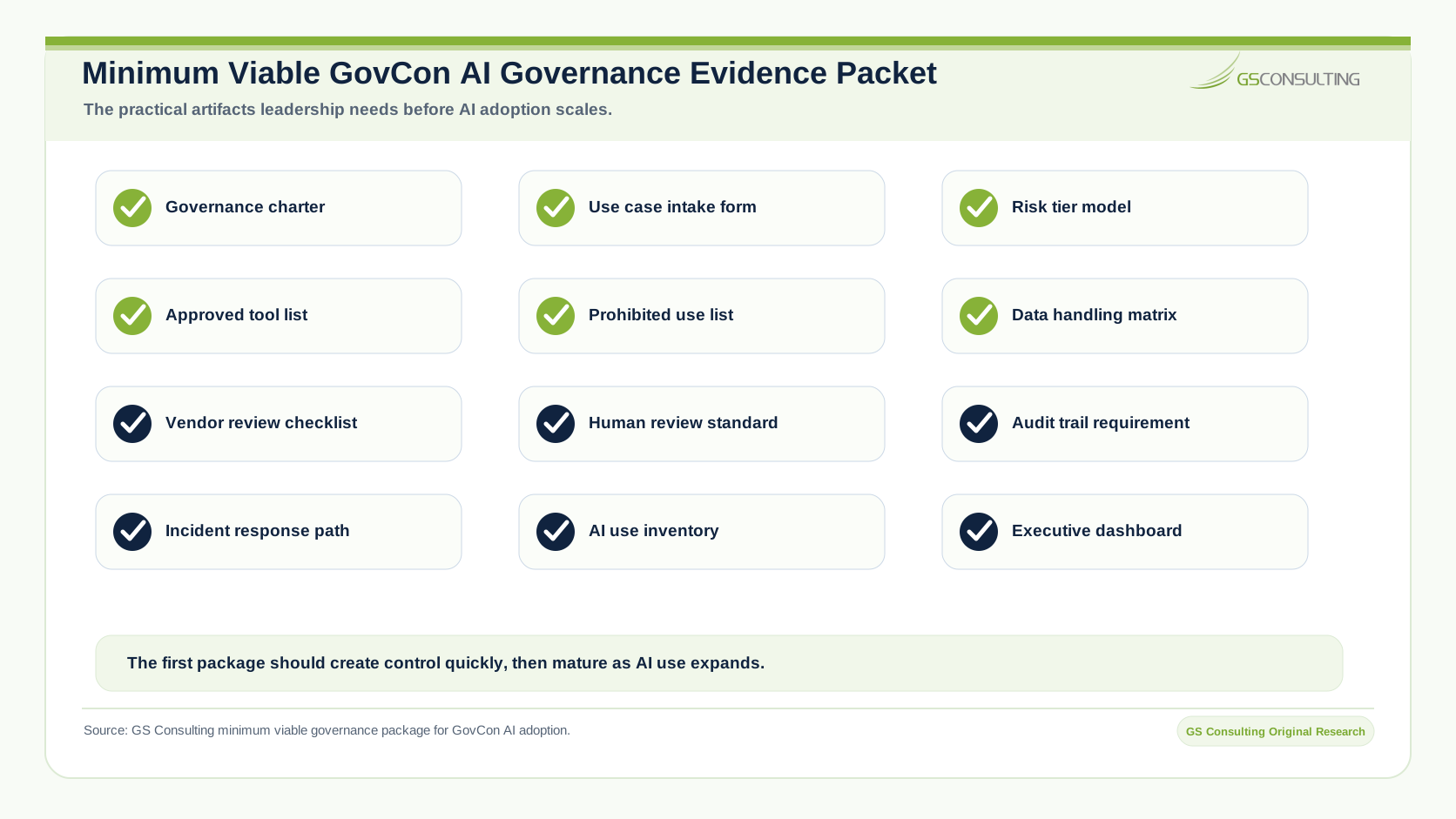
Start with practical artifacts. Do not overbuild. The first package should create control quickly, then mature as AI use expands.
A 30 Day AI Governance Start
- Week 1: Create visibility. Inventory current AI tools, pilots, vendor features, and shadow AI. Identify use cases that touch CUI, contracts, customer data, proposal data, employee data, or security data.
- Week 2: Define risk tiers. Create green, yellow, red, and prohibited categories. Map current use cases into those tiers.
- Week 3: Assign decision rights. Name who approves tools, use cases, data access, high risk workflows, and vendor exceptions. Stand up the AI oversight committee.
- Week 4: Launch the governance process. Publish the intake form, approved tool list, data handling matrix, and escalation path. Start reviewing use cases.
The goal in 30 days is not perfection. It is control.
How This Supports Secure Enterprise AI Strategy
Secure Enterprise AI Strategy explains how GS Consulting helps regulated organizations connect business goals, AI roadmap, data strategy, security, compliance, architecture, workforce adoption, and measurable outcomes.
This page answers the governance question: how does a federal contractor control AI use across the business before it creates contract, compliance, security, customer, or CMMC risk?
That question connects directly to Managing AI Vendor Risk in Regulated Industries, Developing a Phased Secure AI Adoption Roadmap, Enterprise AI Readiness Assessment, Building the Business Case for Secure Enterprise AI, Total Cost of Ownership for Secure Enterprise AI, Aligning AI Strategy with Legacy IT Modernization, What Is an Enterprise AI Strategy?, AI Governance Framework for Regulated Organizations, Establishing Guardrails for Enterprise Generative AI, and Preventing CUI Leakage in LLMs.
The Bottom Line
Enterprise AI governance is the control system for AI adoption.
For GovCon companies, it cannot be generic. It has to account for CUI, CMMC, NIST, contracts, customer trust, proposal integrity, subcontractors, security data, and audit evidence.
The framework does not need to be complicated. It needs to be real. Create executive ownership. Form an AI oversight committee. Build an intake process. Define risk tiers. Control data use. Approve tools. Require human review. Keep audit trails. Monitor use. Give someone authority to stop risky workflows.
That is how federal contractors move from AI curiosity to controlled adoption.
Ready to govern AI before it governs itself?
GS Consulting helps GovCon companies build enterprise AI governance frameworks, including AI oversight committees, use case review processes, risk thresholds, AI policies, data handling rules, vendor review, audit trail requirements, and responsible AI operating models.
Talk With GS ConsultingFAQ
What is an enterprise AI governance framework?
An enterprise AI governance framework is the operating model that controls how AI is approved, used, reviewed, monitored, and documented across an organization. For GovCon companies, it should cover executive ownership, oversight committees, use case intake, risk tiers, data handling, vendor review, human review, audit trails, monitoring, escalation, and stop authority.
Why do federal contractors need a different AI governance model?
Federal contractors may handle CUI, FCI, proposal data, customer restricted information, contract records, security data, export controlled content, and subcontractor data. AI governance has to account for those obligations before AI touches workflows, systems, prompts, outputs, logs, vendors, or customer facing deliverables.
Who should own AI governance in a GovCon company?
AI governance should have executive ownership, but control responsibility is distributed. The CISO should own security risk, compliance should own CUI and audit implications, IT should own architecture and approved tools, legal and contracts should review terms and commitments, and business owners should own workflow value and review standards.
What are AI risk tiers?
AI risk tiers sort use cases into practical lanes. Green use cases can move through basic rules. Yellow use cases need approved tools, data rules, human review, and owner approval. Red use cases need senior review and stronger controls. Prohibited use cases should be blocked unless a special approved environment exists.
What governance artifacts should a contractor build first?
Start with an AI governance charter, use case intake form, risk tier model, approved tool list, prohibited use list, data handling matrix, vendor review checklist, human review standard, audit trail requirement, incident response path, AI use inventory, and executive dashboard.
Related Reading
- Secure Enterprise AI Strategy
- Managing Change and Adoption in Secure AI Rollouts
- Managing AI Vendor Risk in Regulated Industries
- Developing a Phased Secure AI Adoption Roadmap
- Establishing Guardrails for Enterprise Generative AI
- Enterprise AI Readiness Assessment
- Building the Business Case for Secure Enterprise AI
- Total Cost of Ownership for Secure Enterprise AI
- Aligning AI Strategy with Legacy IT Modernization