Enterprise AI Strategy | | 26 min read
Enterprise AI Capacity Planning: Build the Operating Plan Before You Scale

Key Takeaways
Capacity has to follow the accepted outcome
Plan the whole service
Compute is one lane. Data, integrations, identity, review, assurance, support, recovery, and budget can stop the same workload.
Forecast past the lead time
Demand has to be visible before people, quotas, contracts, reservations, or architecture changes are needed.
Release scale against proof
Load tests, queue evidence, failure exercises, unit cost, and named ownership should support the next wave.
Enterprise AI capacity planning is not a GPU forecast. It is the operating plan for every constraint that can stop the organization from producing accepted work at the promised speed, quality, risk, availability, and cost.
Compute matters. It is not the whole service.
An AI workflow can have idle model capacity and still fail because retrieval is stale, an API quota is exhausted, identity provisioning takes weeks, reviewers cannot clear the queue, security cannot test releases, support cannot absorb incidents, or the budget has no room for peak demand. Buying more compute does not fix any of those constraints.
The practical question is not how much AI the enterprise can buy. It is how much useful AI work the enterprise can operate, support, recover, and defend. This guide turns that question into a measurable capacity plan.
Need a capacity plan before the next AI wave?
GS Consulting helps leadership teams connect AI demand, service targets, architecture, staffing, controls, support, cost, and release evidence into one operating plan.
Request an AI Capacity ReviewThis article belongs to the Enterprise AI Process Transformation hub and the broader Enterprise AI Strategy and Operating Models service. Use it with enterprise AI portfolio management to decide which uses deserve supply, and with the enterprise AI total cost guide to fund the operating model honestly.
The Enterprise AI Capacity Planning Operating Standard
A real plan begins with a service target, not a resource shopping list. Leaders should know what the workflow must deliver before technical teams estimate supply.
For each material AI service, define:
- Accepted outcome: the unit of work that met the business and quality rule.
- Demand: normal volume, peak volume, adoption growth, planned events, batch work, and uncertainty.
- Service target: latency, queue age, quality, availability, risk tolerance, recovery, and cost.
- Supply lanes: compute, model throughput, data, storage, network, integration, identity, review, assurance, monitoring, support, recovery, and budget.
- Limits: current use, tested limit, provider quota, scaling speed, failure condition, and safe headroom.
- Ownership: one accountable owner for demand, supply, exceptions, funding, and the next decision.
The plan ends with an action. Scale when evidence supports the next demand wave. Constrain intake when a queue or limit is near its threshold. Reserve scarce supply when lead time is long and demand is credible. Redesign when one shared dependency creates a dangerous bottleneck. Stop when the service cannot meet its target at a defensible cost or risk.
What Public Guidance Says About Capacity
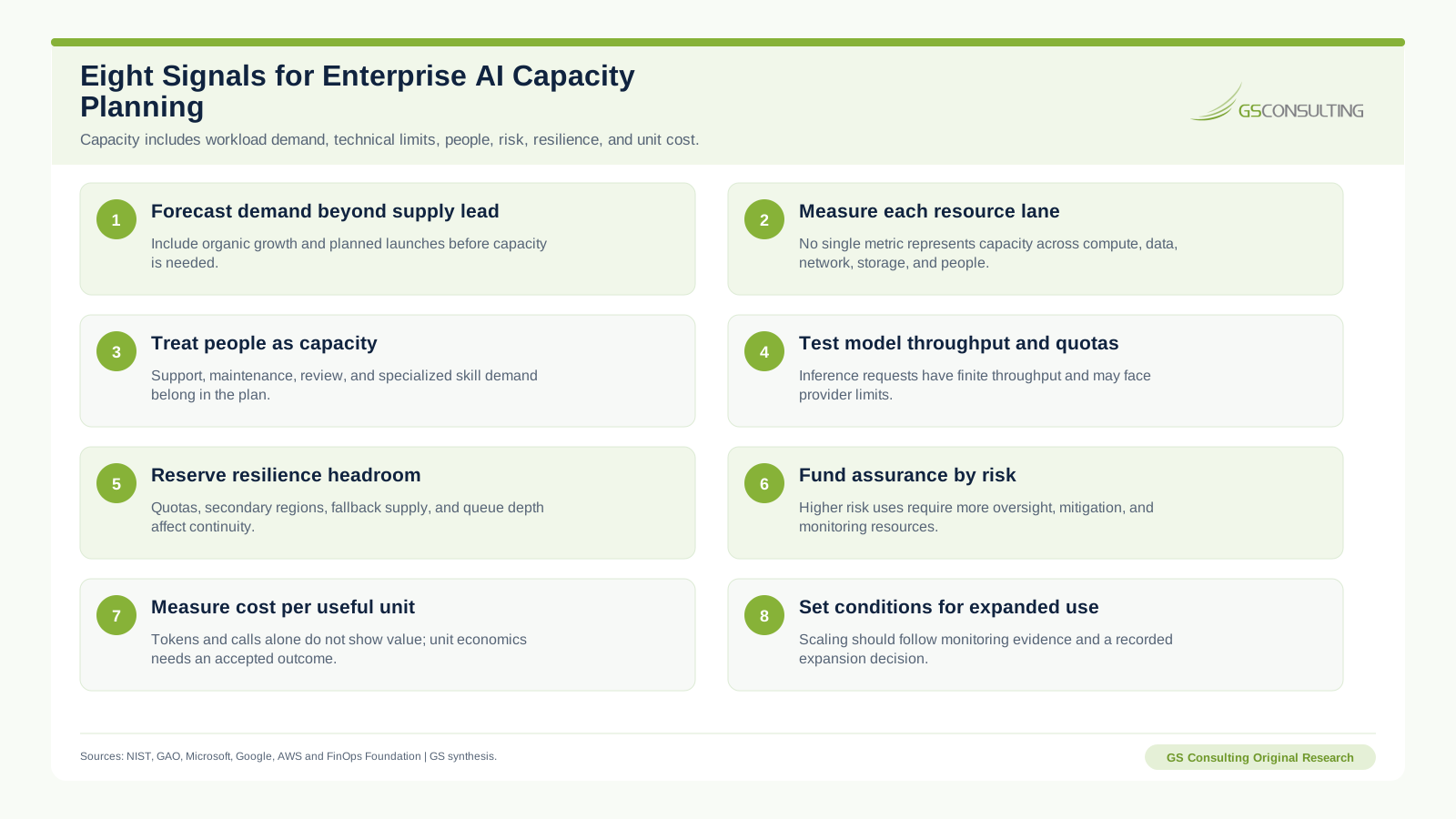
No public framework supplies a universal enterprise AI capacity score. The source set does converge on an operating pattern.
Microsoft capacity planning guidance defines capacity planning as predicting the resources a workload needs to meet performance targets. It calls for historic and predictive demand data, resource level metrics, known limits, load testing, and personnel planning. That last point matters. People are part of supply.
Google Site Reliability Engineering guidance says forecasts should include both organic growth and demand created by launches or other business events. The forecast should extend beyond the lead time required to acquire capacity. A plan that discovers a shortage after that lead time has already failed.
The NIST AI Risk Management Framework and NIST AI RMF Playbook connect measurement, monitoring, risk response, and resources. More consequential uses may need more oversight and mitigation capacity. Low technical latency does not excuse missing assurance capacity.
The GAO AI Accountability Framework adds multidisciplinary workforce, component and system performance, ongoing monitoring, and explicit conditions for expanded use. It was written for federal agencies and other entities, not as a universal private sector rule. The operating lesson is still useful: scale should follow evidence.
Cloud and cost guidance adds provider quotas, specialized hardware, queue depth, fallback regions, automatic scaling, usage measures, commitments, and cost per useful unit. These sources do not choose an architecture or staffing plan for a specific enterprise. They establish the questions the local plan has to answer.
Original Research: The GS Enterprise AI Capacity Constraint Priority Index
GS Consulting built a derived model to answer one decision: which capacity lanes deserve the earliest measurement and clearance before the next enterprise AI wave scales?
The model rates twelve lanes from one through five across five factors:
- Demand variability, 25 percent: how sharply can demand change across adoption, launches, peaks, retries, and incidents?
- Shared dependency, 20 percent: how many uses depend on the same supply lane?
- Lead time to add, 20 percent: how long does it take to add qualified people, approvals, contracts, quotas, reservations, or architecture?
- Failure impact, 20 percent: what happens when the lane saturates, fails, or cannot recover?
- Measurement gap, 15 percent: how weak is the current evidence for demand, limit, headroom, queue, quality, or cost?
The weighted score runs from zero through 100. Public sources establish the planning practices. GS Consulting supplies the lanes, ratings, weights, ordering, and operating artifacts. The baseline model puts accountable human review first at 97, service ownership and support at 92, incident response and recovery at 91, monitoring and evaluation at 88, and model inference throughput at 86.
That result challenges the usual assumption. The first constraint is not always specialized hardware. A high consequence workflow cannot scale when nobody can review uncertain output, own the service, recover from failure, or tell whether it still works.
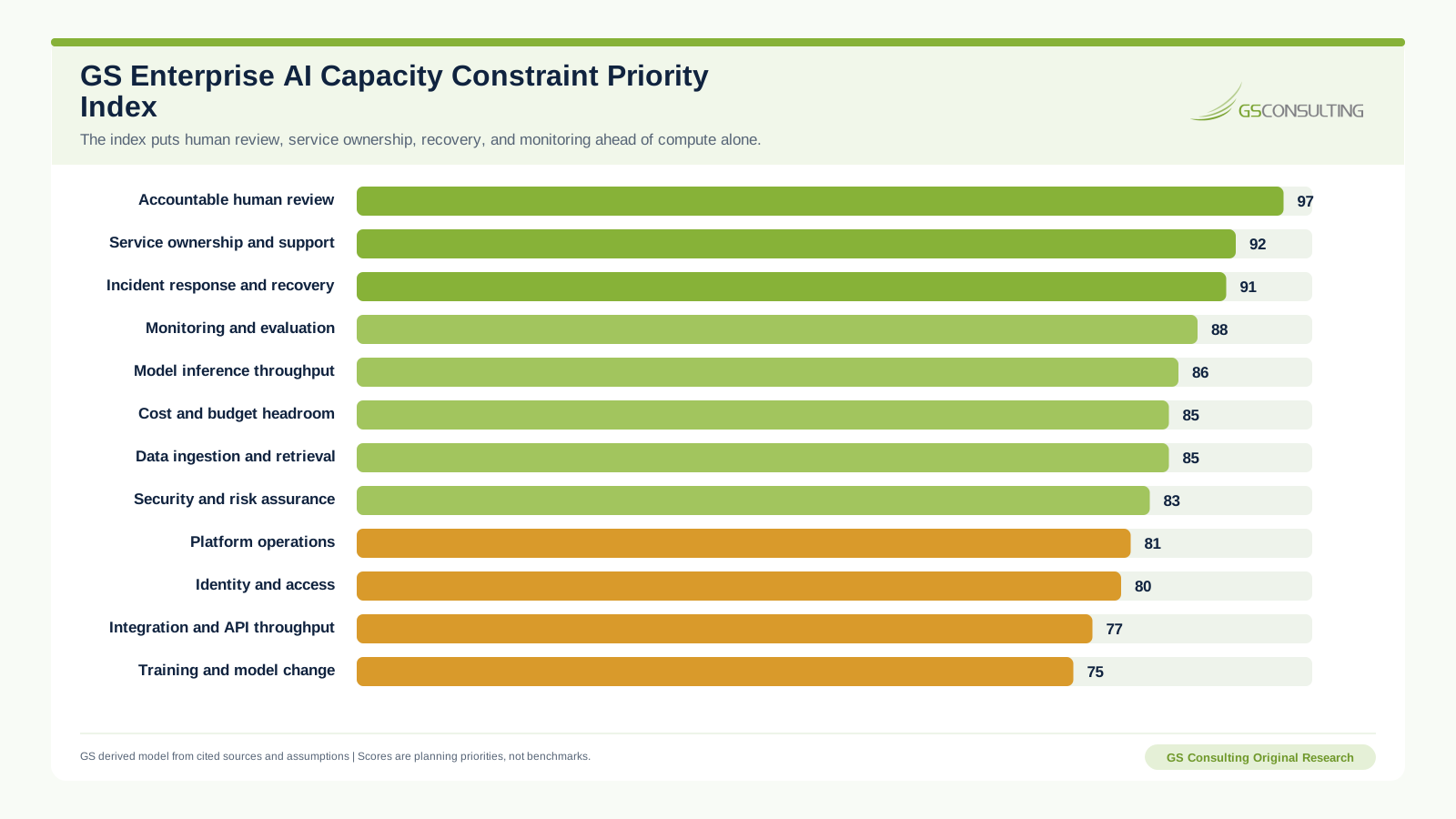
A resilience led sensitivity case increases the weight on failure impact. A cost led case increases demand variability, shared dependency, and measurement gap. Accountable human review remains first in both cases. The top four lanes remain human review, service ownership, recovery, and monitoring. This stability does not prove a universal ranking. It shows that the main conclusion survives reasonable changes to the planning weights.
Choose a Capacity Unit That Represents Useful Work
Tokens, calls, GPU hours, and seats are supply measures. They are not the business result.
Choose an accepted outcome that can join demand, quality, risk, and cost. A contract review service might use a clause package accepted by a qualified reviewer. A service desk assistant might use a ticket resolved without reopen or policy exception. A document workflow might use a record that passed source validation and destination acceptance.
The acceptance rule should be explicit. Record the source population, required fields, quality threshold, review rule, exception rule, and destination result. If the team cannot define the accepted outcome, it cannot calculate useful throughput or unit cost.
Measure rejects and rework separately. Ten thousand generated summaries are not ten thousand units of useful capacity if half need correction and a quarter never reach the workflow.
Forecast Demand Before the Longest Supply Lead Time
Start with the portfolio, not the provider calculator. The enterprise AI portfolio should show which uses are in discovery, pilot, production, expansion, hold, and retirement. Translate those stages into workload demand.
Separate five demand shapes:
- Normal demand: the repeatable daily or weekly workload.
- Peak demand: proposal windows, month end, audits, incidents, campaigns, releases, or seasonal events.
- Adoption demand: volume created as more teams, roles, and workflows move onto the service.
- Recovery demand: retries, replay, backlog clearance, reprocessing, and fallback operation after failure.
- Change demand: evaluation, migration, retraining, testing, and support work created by model, data, policy, or vendor changes.
Use a range when the future is uncertain. State the assumptions behind normal, expected, and high demand. Then extend the forecast past the longest supply lead time. Hiring a qualified reviewer, negotiating provider terms, raising quotas, reserving specialized supply, changing an integration, or approving a new boundary can take longer than adding a cloud instance.
Map Technical Capacity as a Chain
A workflow is only as fast as its tightest required dependency. Map technical supply from intake through accepted destination state.
Measure model and application throughput together. For inference, track requests, tokens, latency, concurrency, queue age, throttle rate, retry rate, and tested sustainable load. Managed foundation models can have finite request throughput and provider quotas. Self operated models add hardware supply, scheduling, memory, storage, network, runtime, and operator capacity.
Data deserves its own plan. Measure ingestion rate, retrieval rate, index freshness, document growth, write performance, storage, backup, replication, and rebuild time. A model can respond quickly with stale or incomplete context. That is not capacity. It is fast error.
Integrations need rate limits, locks, timeouts, retry budgets, duplicate control, downstream commit capacity, and reconciliation. Identity needs provisioning time, credential supply, approval capacity, access review, and revocation. Monitoring needs logs, metrics, storage, alert processing, evaluation runs, and an owner who can act.
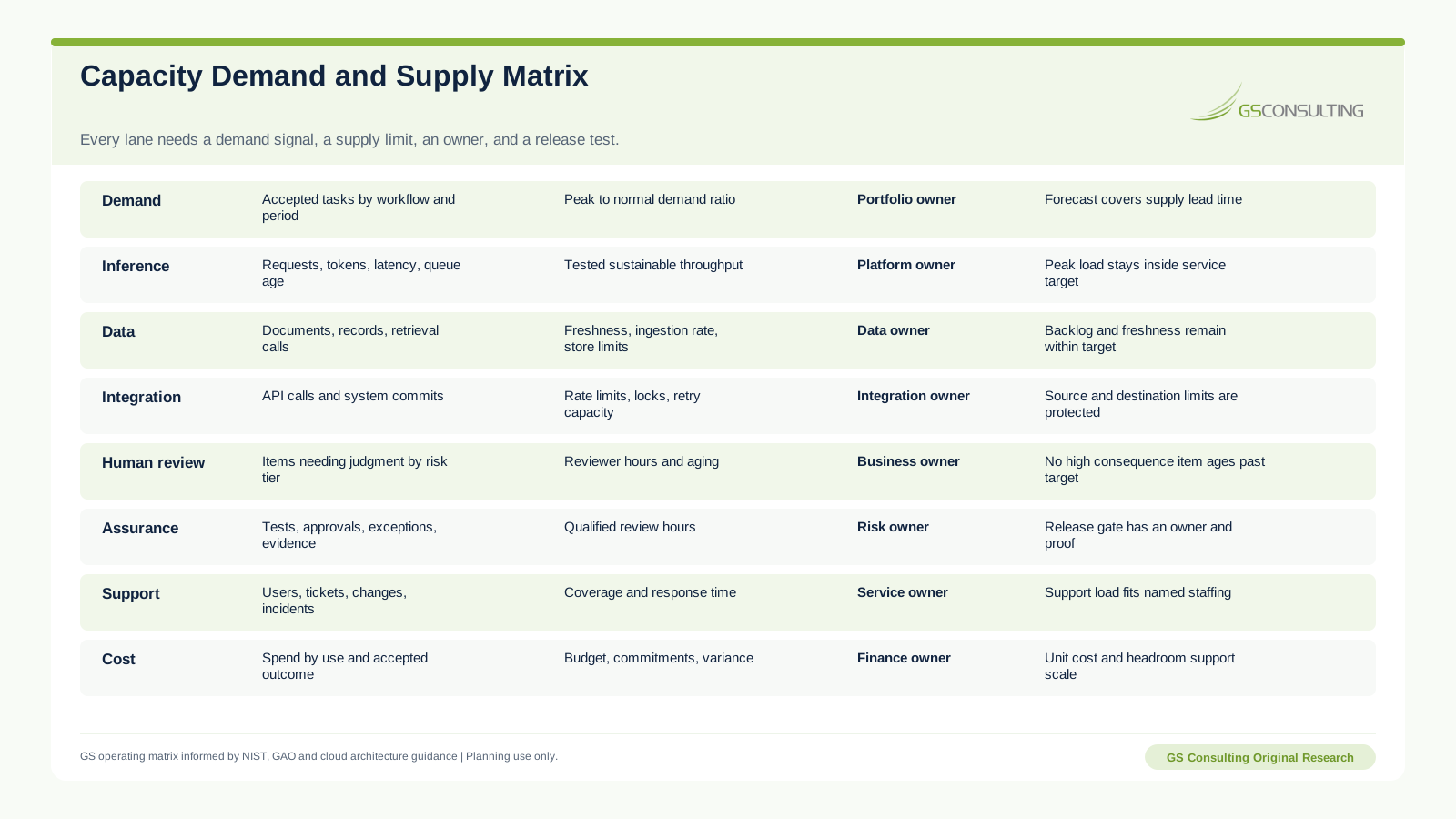
Plan Human Review, Assurance, and Support as Real Supply
Human capacity is often the least measured part of the AI service and the hardest to add quickly.
For review queues, segment demand by risk and skill. Count items, expected review minutes, queue age, rework, escalations, and the percentage that cannot wait. Do not use one average when a small high consequence queue consumes the most qualified reviewers.
Assurance capacity includes testing, approval, risk review, security review, privacy review, compliance evidence, change review, and exception handling as applicable. The point is not to require every function for every use. The point is to know which functions the selected use needs and whether qualified supply exists before the release date.
Support capacity includes service ownership, user help, vendor coordination, change communication, incident response, problem management, knowledge, and retirement. A pilot team can carry this work informally. A production service cannot depend on unnamed goodwill.
The clean test is simple: if one key person is unavailable for a week, does the service still meet its target? If not, the plan has a person dependency, not resilient capacity.
Keep Headroom for Error, Failure, and Recovery
There is no honest universal headroom percentage. The right margin depends on demand error, scaling speed, provider limits, dependency failure, recovery objectives, consequence, and cost.
Test the plan under several conditions:
- Expected peak demand arrives earlier or grows faster than forecast.
- The primary model endpoint throttles requests.
- A data pipeline slows or an index rebuild begins.
- A downstream API cuts its rate limit.
- A portion of qualified reviewers becomes unavailable.
- The service replays a backlog after an outage.
- A region, provider, or shared platform dependency is unavailable.
Record which work degrades, queues, routes to fallback, or stops. Protect higher consequence work first. Make the tradeoff explicit. Running every workflow at full priority during a shortage is not a capacity policy.
Join Capacity to Cost and Commitments
Overprovisioning hides bad architecture and burns cash. Underprovisioning breaks the service. The plan has to show both risk and economics.
The FinOps for AI guidance emphasizes granular usage measures, changing service and pricing choices, limits, reservations, and unit economics. Use that evidence without confusing provider billing units with business value.
Calculate cost per accepted outcome. Include model and cloud charges, data processing, storage, integration, review labor, assurance, monitoring, support, rework, and incident cost. Keep shared costs visible and state the allocation rule.
Commitments require a separate decision. Reserved or prepaid capacity can protect supply and lower rates. It can also lock money into a forecast that has not earned confidence. Record the demand evidence, break point, term, flexibility, owner, and exit condition before committing.
Use One Capacity Release Decision Path
The scale meeting should not begin with a request for more infrastructure. It should begin with the service target and end with a recorded action.
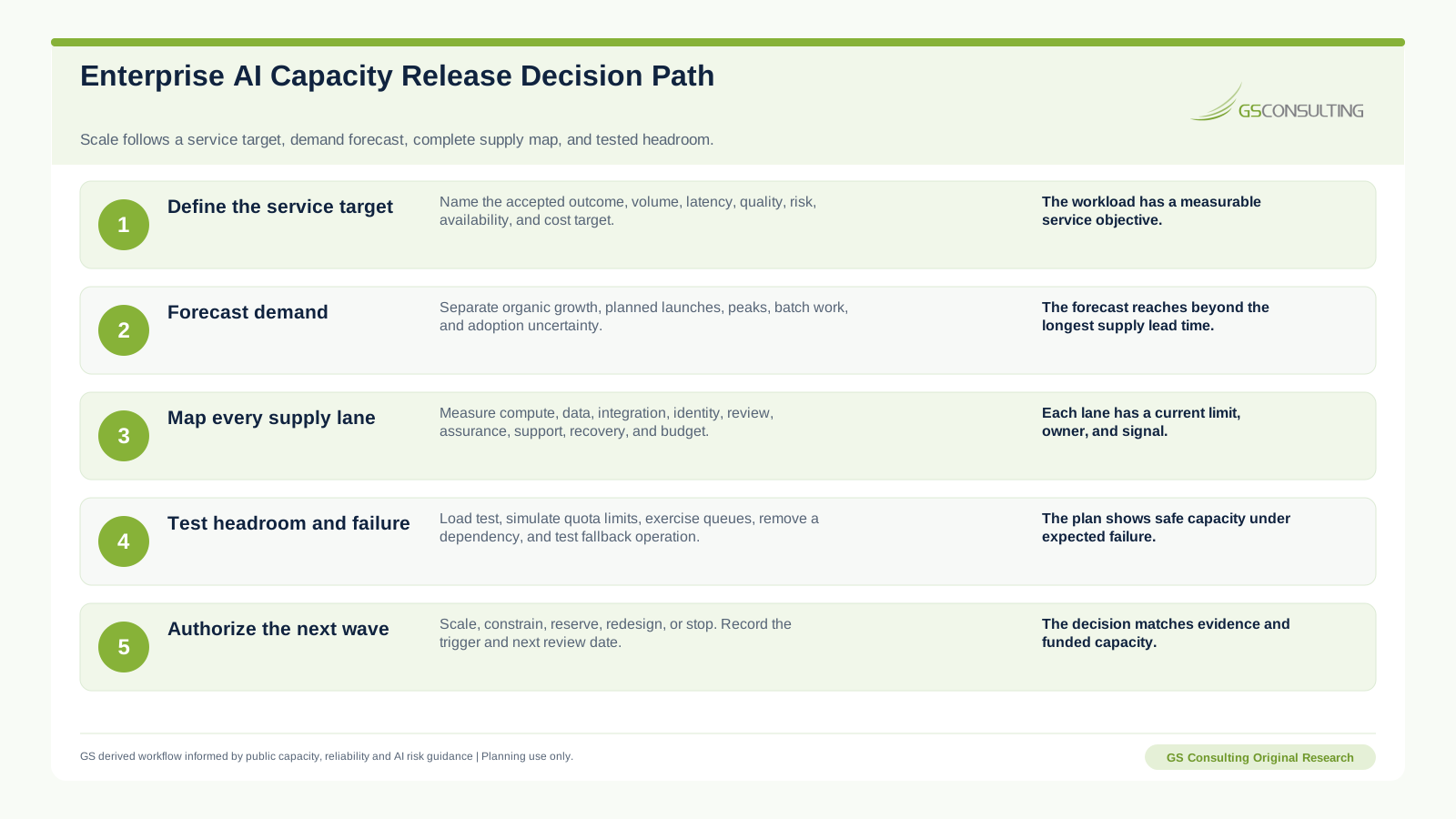
A capacity release can produce five actions:
- Scale: evidence supports the next demand range.
- Constrain: cap intake, users, workloads, or lower priority demand until supply recovers.
- Reserve: secure people, quota, region, hardware, vendor, or budget before the lead time closes.
- Redesign: remove the tight dependency, change the workload shape, reduce rework, or split service tiers.
- Stop: the service cannot meet its target at acceptable cost, risk, or support burden.
Record the evidence, decision owner, funding, conditions, exception, threshold, and next review. A capacity plan that cannot stop demand is only a forecast.
Six Capacity Plans That Break in Production
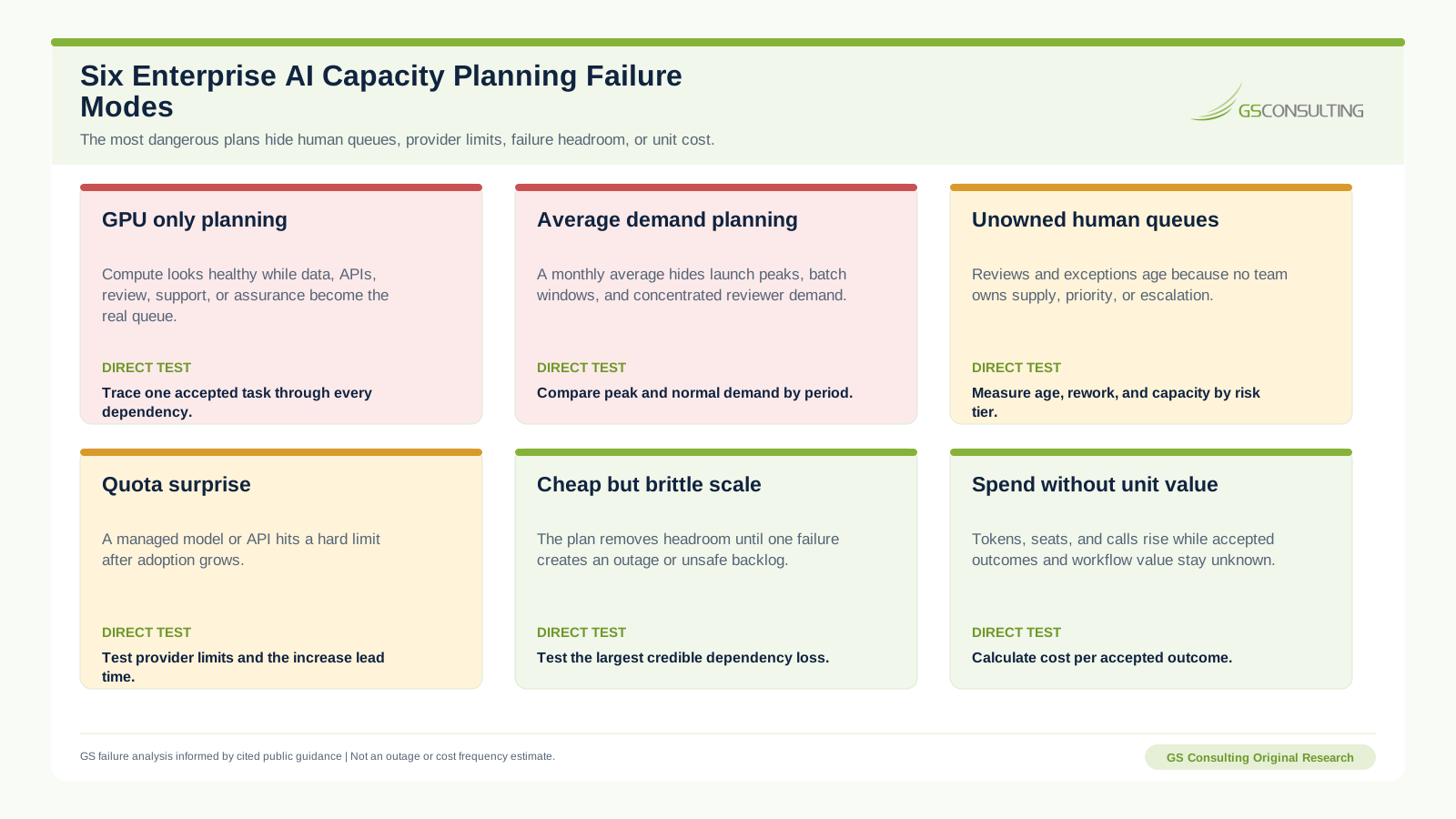
GPU only planning is the obvious failure. Average demand planning is quieter. It makes the plan look efficient until a concentrated proposal window, month end batch, incident, or launch produces demand that the average never showed.
Unowned human queues create a different kind of outage. Work continues to arrive, but reviews and exceptions age without a supply owner or escalation rule. Quota surprises appear when managed services are treated as infinite. Cheap but brittle scale removes the margin needed for failure and recovery. Spend without unit value lets activity grow while the business result stays unknown.
Test these failures before scale. Do not wait for a live queue to prove the model wrong.
Keep a Minimum Capacity Evidence Packet
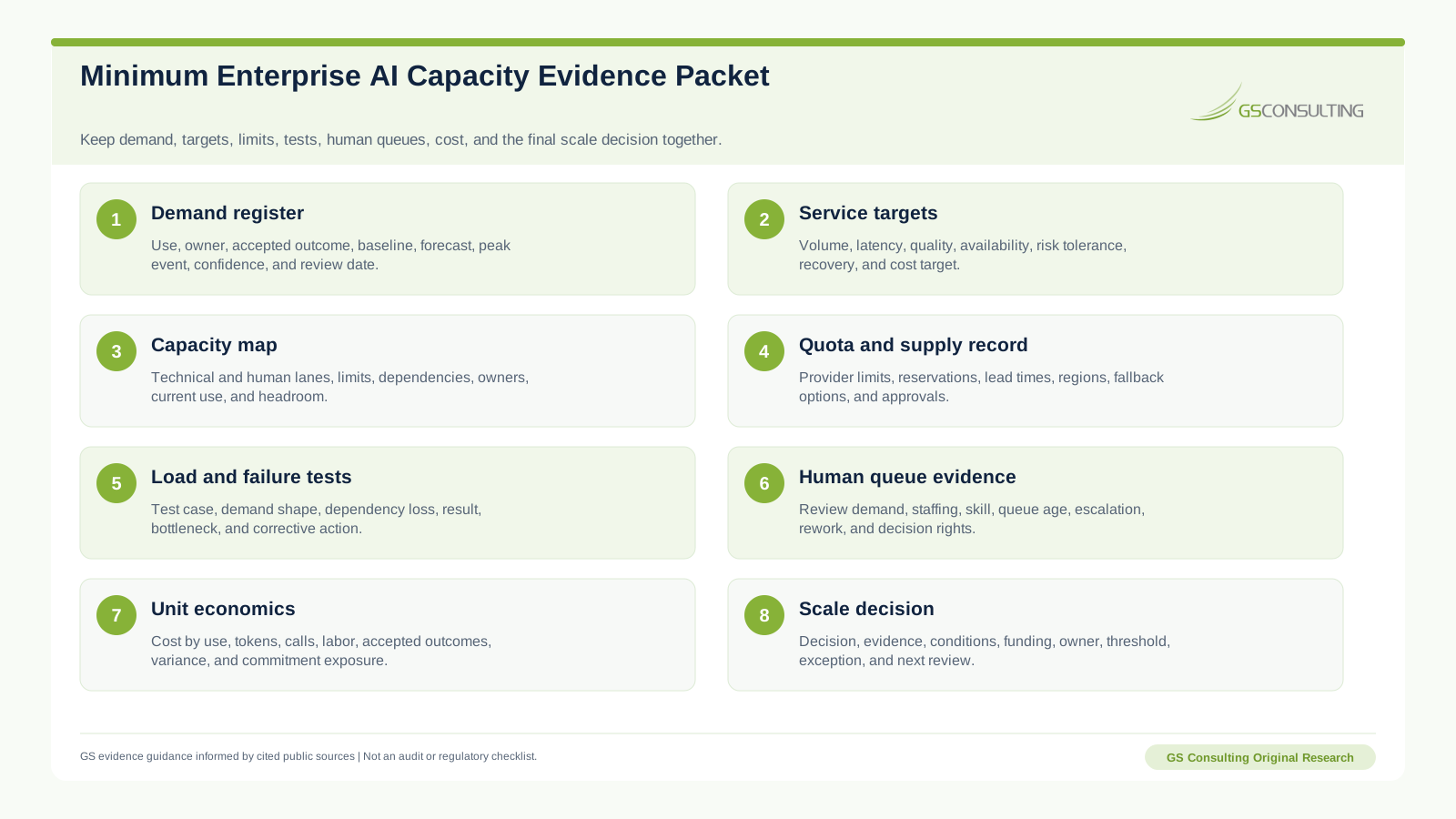
The packet should make the plan reproducible. A new leader should be able to see what demand was expected, what supply existed, what failed in testing, what cost was accepted, who owned the constraint, and why the next wave was approved.
Keep source dates and evidence age visible. Capacity changes. Quotas move. People leave. Models change. Adoption grows. A plan without a next review date is a snapshot pretending to be an operating system.
A 90 Day Enterprise AI Capacity Plan
Days 1 to 30: define demand and service targets
Select the AI services that matter to the next portfolio decision. Define the accepted outcome, current baseline, normal and peak demand, adoption assumptions, latency, quality, availability, risk, recovery, and cost targets. Identify the longest known supply lead times.
Days 31 to 60: map and test supply
Measure technical and human lanes. Confirm provider quotas, reservations, regions, data limits, integration limits, review queues, assurance hours, support coverage, incident roles, and budget. Run representative load and failure tests. Record every unknown as a constraint, not a green status.
Days 61 to 90: decide and instrument
Choose scale, constrain, reserve, redesign, or stop for each material service. Fund the selected supply. Add thresholds, dashboards, queue measures, unit cost, and review dates. Bind capacity review to the portfolio decision cadence so demand and supply change together.
The Bottom Line
Enterprise AI capacity planning is not about owning the most compute. It is about proving that the complete service can absorb the next unit of useful demand without hiding quality loss, unsafe queues, brittle recovery, or uncontrolled cost.
The operating standard is firm: define the accepted outcome, forecast past the lead time, measure every supply lane, test failure, fund the constraint, and release scale only when the evidence supports it.
Build the capacity plan before demand makes the decision for you
Not a GPU wish list. A service target, a demand forecast, complete supply evidence, tested headroom, clear unit cost, and one accountable release decision.
Build the Capacity PlanSources, Method, and Planning Caveat
Sources were accessed October 9, 2026. The research package includes nine public sources, eight public operating signals, twelve capacity lanes, primary and alternative weights, formula driven scores, sensitivity analysis, a capacity matrix, decision path, failure modes, evidence packet, data dictionary, exact figure data, six editable SVG figures, browser rendered PNG copies, responsive previews, and a fourteen sheet workbook.
Primary and first party sources include the NIST AI Risk Management Framework and Playbook, the GAO AI Accountability Framework, Microsoft capacity and AI workload guidance, Google Site Reliability Engineering and Cloud operations guidance, the AWS Generative AI Lens, and the FinOps for AI framework.
Planning caveat: the GS Enterprise AI Capacity Constraint Priority Index is a derived planning tool based on cited public sources and documented assumptions. It is not an official legal, audit, compliance, NIST, GAO, cloud provider, FinOps, financial, or regulatory determination. It does not inspect a live workload, predict demand, reserve cloud supply, set staffing, approve spend, or establish a service target. Replace the assumptions with local evidence.
- NIST AI Risk Management Framework Core
- NIST AI RMF Playbook Manage Function
- GAO AI Accountability Framework
- Microsoft Capacity Planning Guidance
- Microsoft Design Principles for AI Workloads
- Google Site Reliability Engineering Introduction
- Google Cloud Operational Readiness and Capacity Guidance
- AWS Generative AI Lens Throughput Quota Guidance
- FinOps for AI
Frequently Asked Questions About Enterprise AI Capacity Planning
What is enterprise AI capacity planning?
Enterprise AI capacity planning forecasts demand and proves that technical, human, control, support, recovery, and financial supply can meet a defined service target. It covers compute and model throughput, but also data, integrations, identity, human review, assurance, monitoring, incidents, support, and budget.
Why is AI capacity planning more than GPU planning?
A healthy GPU metric does not clear a data backlog, raise an API quota, staff a review queue, approve a high consequence use, investigate an incident, or fund ongoing support. Enterprise AI succeeds only when every lane required to produce an accepted outcome has enough measurable capacity.
What should an enterprise AI demand forecast include?
Include normal demand, peaks, adoption growth, planned launches, batch windows, retries, rework, quality failures, incidents, and demand created by downstream integrations. Forecast far enough ahead to cover the longest lead time for people, approvals, contracts, quotas, reservations, data work, and architecture changes.
How much capacity headroom should an AI service keep?
There is no universal percentage. Headroom should follow the service target, demand error, scaling speed, provider limits, dependency failure, recovery objective, workload consequence, and cost tolerance. Test the exact workload under expected peaks and a credible dependency loss before setting the threshold.
How should leaders measure enterprise AI unit cost?
Start with an accepted business outcome, not a token or API call. Join model and cloud spend, data processing, integration, review labor, assurance, support, rework, and incident cost to the number of outputs that met the defined quality and workflow acceptance rule.
Does the GS capacity index approve an AI scale decision?
No. The index orders capacity planning attention. Its factors, weights, ratings, and scores are GS Consulting assumptions. Accountable leaders must replace them with local demand, service targets, limits, staffing, risk, cost, and test evidence before deciding to scale, constrain, reserve, redesign, or stop.