Cybersecurity | | 22 min read
The DoD Zero Trust Strategy Explained for Contractors

Key Takeaways
The contractor operating view
Prove the trigger
Read the contract, identify the protected data and users, and define the system boundary before selecting products.
User, data, and device lead
The GS priority model puts those three pillars first because they shape every later access decision and evidence trail.
Evidence is part of the control
A decision that cannot be observed, tested, explained, and reviewed is not yet an operating Zero Trust control.
The DoD Zero Trust Strategy is not a shopping list. It is an operating standard for deciding who or what may reach a protected resource, under which conditions, for how long, and with what proof.
That distinction matters for defense contractors. A new identity platform, endpoint tool, or network control can improve security. None of them, by itself, creates Zero Trust. The real work is to connect identity, device condition, data sensitivity, workload context, policy, telemetry, and response into repeatable access decisions.
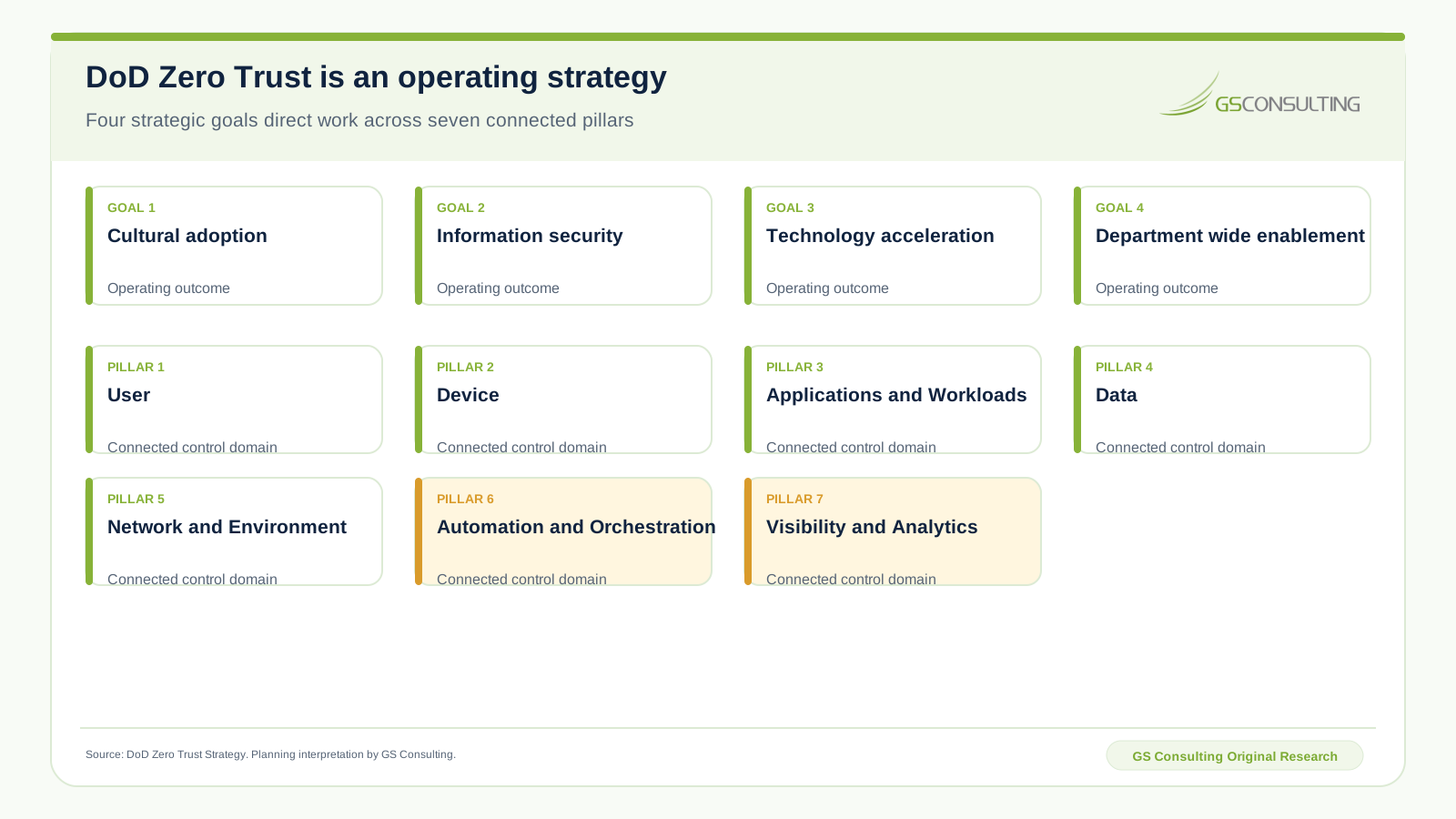
The Department of Defense published its strategy in October 2022 with four strategic goals, seven pillars, and a target to reach its target level outcomes by the end of fiscal year 2027. The current roadmap breaks those outcomes into connected capabilities and activities. Contractors should treat that material as a strong planning signal while still deriving obligations from the actual contract, clauses, customer direction, data, and system role.
For the activity evidence method, use the DoD Zero Trust Target Level assessment guide. It connects the public framework to scope, operating samples, direct tests, inherited services, exceptions, and closure.
Use the Zero Trust resource hub to connect this strategy to the supporting architecture, monitoring, control, and evidence guides. GS Consulting's cyber threat detection and response work applies the same operating discipline to telemetry and response.
Turn the strategy into an operating plan.
GS Consulting helps defense contractors map the authority, protected resources, access decisions, telemetry, exceptions, and evidence before selecting or expanding tools.
Request a Zero Trust Working SessionWhat the DoD Zero Trust Strategy Actually Means
Zero Trust replaces implicit confidence with explicit verification. Network location is no longer enough. A user on an internal network does not receive permanent confidence merely because the connection began inside a perimeter. A device does not remain acceptable because it passed a check last month. An application does not receive broad data access because it belongs to the company.
Each request should be evaluated against current facts. Who is requesting access? Is the identity strong? Is the device known and healthy? What resource is being requested? How sensitive is it? Is this action normal for the user and mission? What is the minimum access needed? What happens if a control fails?
The strategy organizes that work around four goals: cultural adoption, information security, technology acceleration, and Department wide enablement. Those goals cross seven pillars. The pillars are not seven procurement lanes. They are the inputs and operating capabilities behind one access decision system.
What the Strategy Means for Contractors
The blunt answer is conditional. The strategy directs Department of Defense implementation. It also calls for Zero Trust requirements to be incorporated into policy, frameworks, and contracts. It does not, by itself, impose one universal technical baseline on every contractor.
A contractor should resolve five questions before claiming that a Zero Trust requirement applies:
- What is the authority? Identify the solicitation language, award term, clause, customer policy, system connection rule, or written direction.
- What is the protected resource? Map CUI, mission data, credentials, administrative functions, applications, and connected services.
- Who participates? Include employees, subcontractors, customers, service identities, devices, and external providers.
- Where is the boundary? Document contractor systems, agency systems, cloud services, endpoints, interfaces, and inherited controls.
- What proof is expected? Name the decision record, log, test, review, approval, and exception evidence that must survive scrutiny.
That same analysis should align with the contractor's CUI and CMMC work. The NIST SP 800-171 requirements and the CMMC Level 2 assessment path answer different questions, but they touch many of the same identities, devices, resources, controls, and records. Reuse the boundary and evidence where the authorities genuinely overlap. Do not invent equivalence where they do not.
The Seven DoD Zero Trust Pillars in Contractor Terms
1. User
Establish a reliable identity, strong authentication, current role, approved purpose, and limited session. The contractor test is simple: can an operator explain why this person has this access today, who approved it, and when it expires?
2. Device
Make device identity and condition part of the decision. Inventory, ownership, configuration, protection status, vulnerability state, and connection context all matter. An authenticated user on an unknown or unhealthy device should not receive the same access as that user on a managed device.
3. Applications and Workloads
Protect applications, services, containers, virtual machines, and service identities as resources with explicit policy. Inventory dependencies and secrets. Limit workload communication. Test that administrative paths, interfaces, and service accounts cannot quietly bypass the user policy.
4. Data
Know what data exists, where it moves, who can use it, and what protection travels with it. Labels alone are not enough. The classification must change access, handling, sharing, retention, and monitoring behavior.
5. Network and Environment
Use segmentation, encryption, connection policy, and traffic observation to reduce uncontrolled movement. This pillar still matters. It just stops being the sole basis for trust.
6. Automation and Orchestration
Use automation to apply policy, contain risk, rotate access, collect evidence, and respond consistently. Automation should reduce decision delay without hiding authority. Every automated action still needs a defined owner, boundary, event record, and recovery path.
7. Visibility and Analytics
Connect logs and signals to decisions. A large telemetry lake is not an outcome. The contractor needs a small number of owned detections, decision metrics, exception trends, investigation paths, and response records that show whether the controls work.
GS Contractor Zero Trust Execution Priority Index
GS Consulting built a derived planning model to answer a practical sequencing question: which pillar should a contractor make operational first when every pillar matters?
The model rates each pillar from 1 to 5 across CUI relevance, access decision leverage, dependency leverage, evidence reuse, and operational continuity. The base weights are 25, 23, 20, 17, and 15 percent. Ratings are analyst assumptions grounded in the cited public strategy, roadmap, NIST architecture guidance, CISA maturity guidance, and contractor control context. They are not measured performance or official DoD priorities.
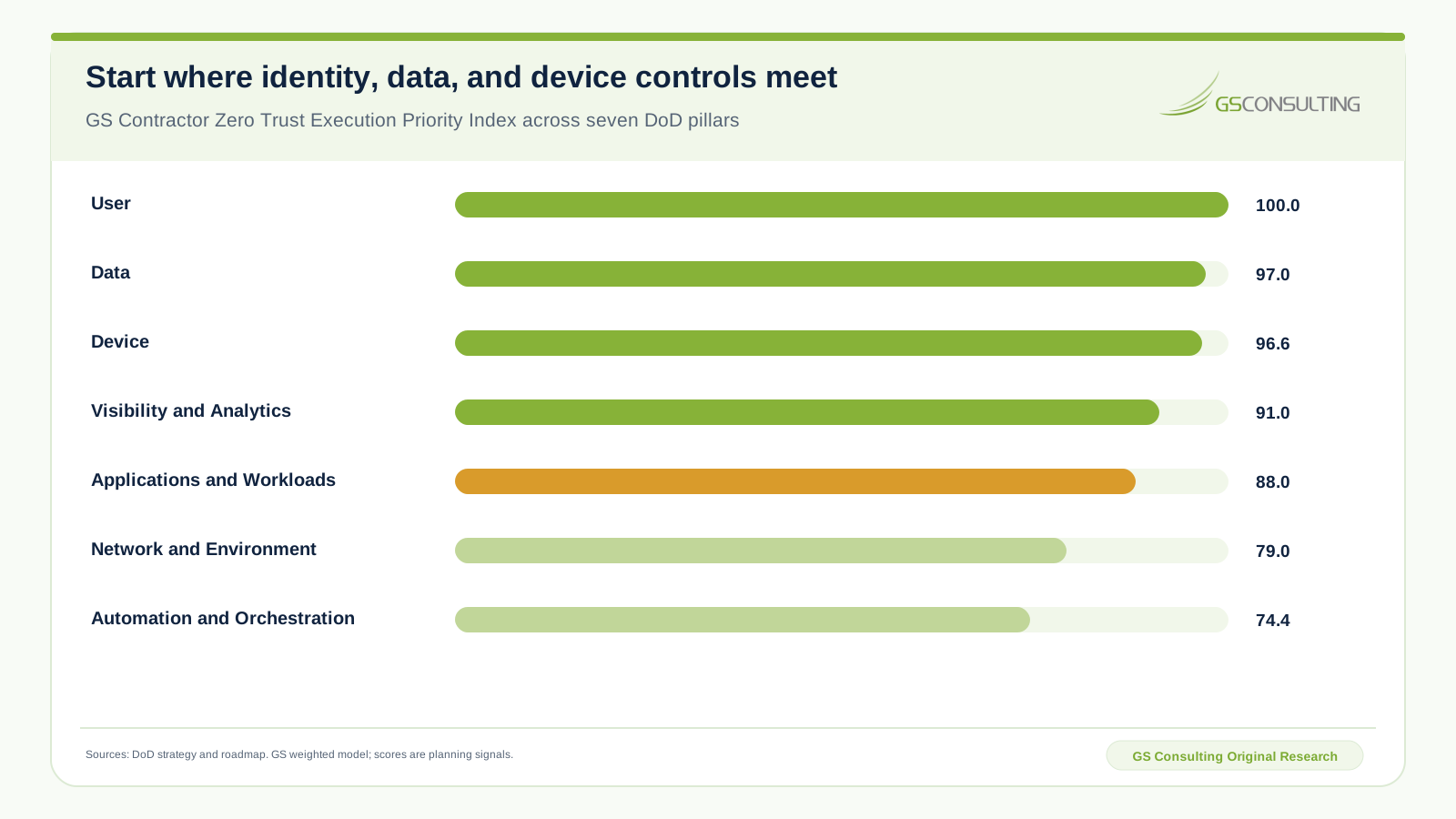
User, data, and device lead because they shape almost every access decision. Visibility and analytics follows at 91.0 because policy without observation cannot be managed. Applications and workloads scores 88.0. Network and environment scores 79.0, while automation and orchestration scores 74.4.
The lower scores do not mean those pillars are optional. They mean a contractor usually gets more leverage by defining identities, resources, device conditions, and evidence before automating complex policy. An alternate weight set changes no leading pillar and moves every score by 1.6 points or less. The sequencing is stable under that limited sensitivity test.
Implementation Burden Changes the Sequence
Priority is not effort. Applications and workloads and network and environment both score 93.4 on the separate burden model. Automation and orchestration scores 93.0. Those areas touch legacy systems, interfaces, specialized skills, and broad integration paths.
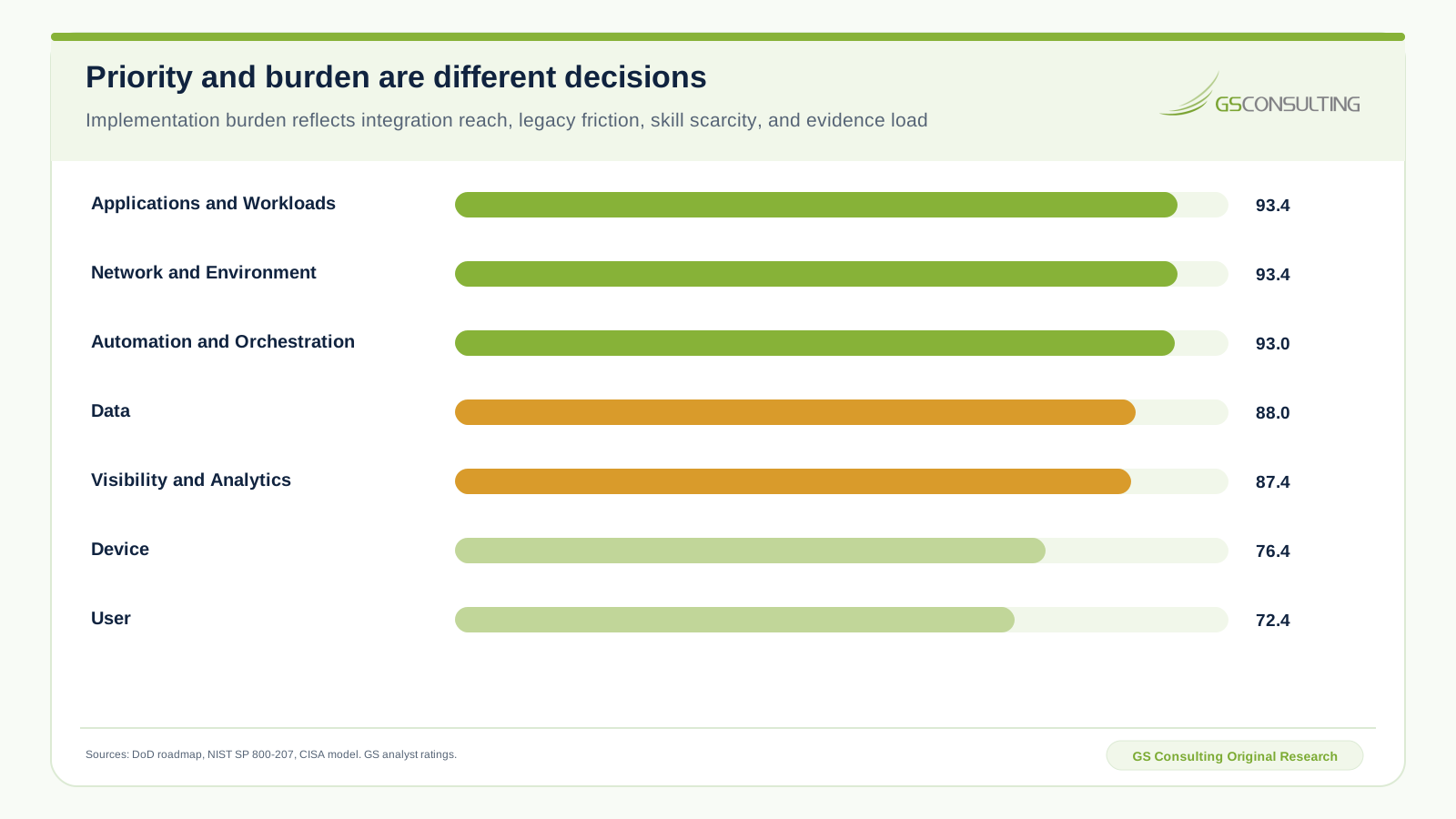
This is why a credible roadmap does not simply sort by score. Begin identity, data, and device foundations early. In parallel, discover the high burden dependencies that will slow later enforcement. If a legacy application cannot consume modern identity claims, find that in week three, not month eleven.
Use One Decision Path for Every Control
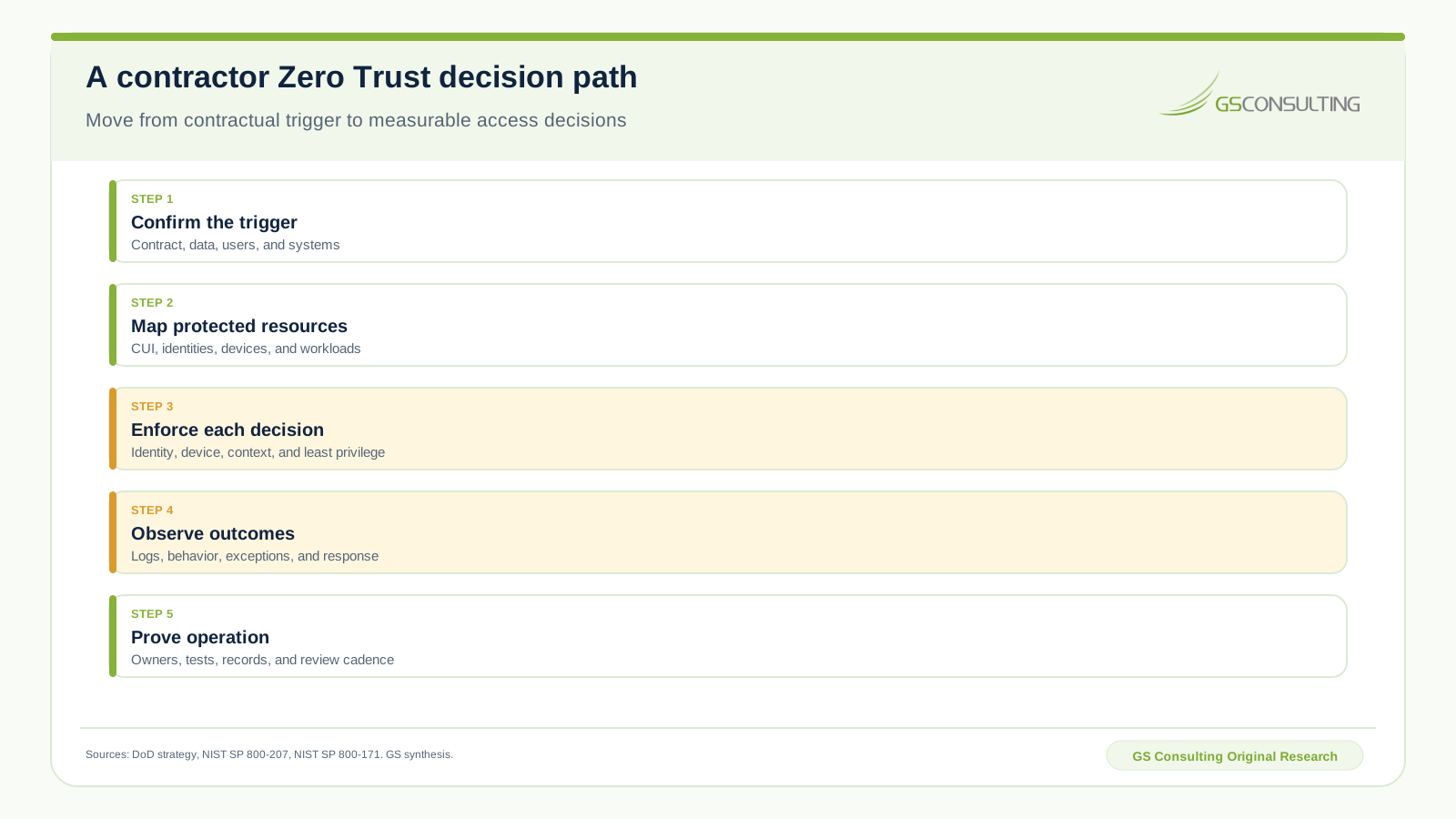
Confirm the trigger. Map protected resources. Enforce the decision. Observe the result. Prove operation. That sequence is deliberately plain because it can be used for a user role, an administrative interface, a service account, a cloud workload, or a data sharing path.
For example, do not say that multifactor authentication satisfies the user pillar. State which users and resources require it, which authentication strength is accepted, which device signals are evaluated, what happens when risk increases, where the event is recorded, who reviews failure, and how an exception expires.
Six Failure Modes to Stop Early
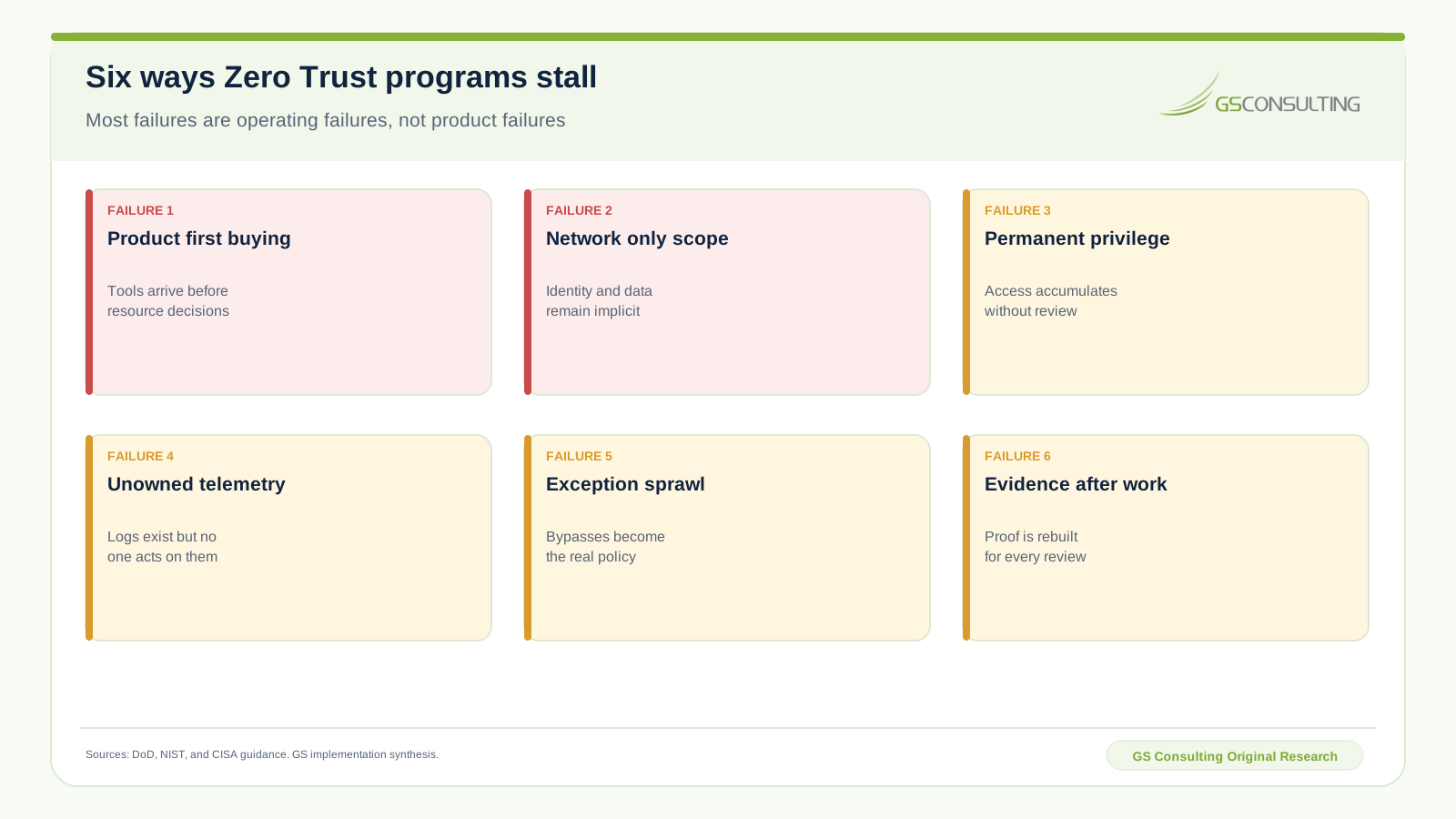
Product first buying creates disconnected controls. Network only scope ignores identity, data, and workloads. Permanent privilege lets access accumulate. Unowned telemetry turns logs into storage cost. Exception sprawl makes bypasses the real policy. Evidence after work forces the team to recreate intent during every review.
A Practical 90 Day Contractor Plan
Days 1 through 30: authority and boundary
- Collect contract language, customer policy, connection requirements, and current security plans.
- Map CUI, mission data, administrative paths, users, service identities, devices, applications, and external providers.
- Name a business owner and technical owner for each protected resource.
- Document current access decision inputs, privilege, telemetry, exceptions, and evidence.
Days 31 through 60: decisions and gaps
- Define the minimum access policy for the highest consequence resources.
- Connect user and device condition to those decisions.
- Identify applications, interfaces, or network paths that cannot enforce the intended policy.
- Assign every required event and exception to an owner and response path.
Days 61 through 90: operate and prove
- Test normal access, denied access, expired access, device failure, privilege change, and emergency removal.
- Review decision logs and exceptions with operators, not only security staff.
- Package the policy, implementation record, test result, exception, and review decision together.
- Choose the next resource based on consequence, dependency, and observed operating friction.
The Minimum Evidence Packet
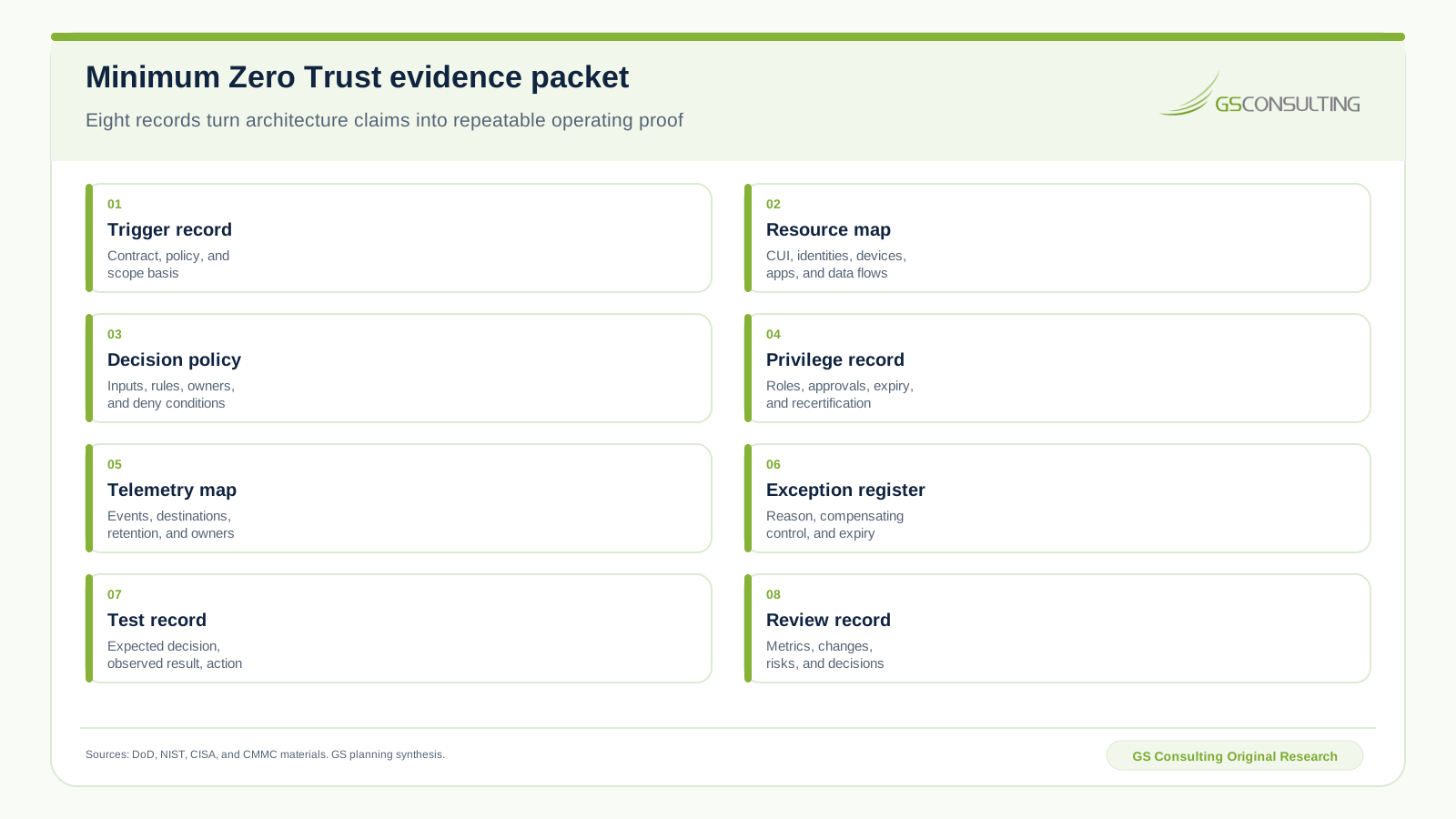
Keep a trigger record, resource map, decision policy, privilege record, telemetry map, exception register, test record, and review record. Link them by resource and decision. Update them when the contract, data, identity source, device policy, application, provider, access rule, or monitoring path changes.
This packet does not prove compliance by itself. It gives operators and reviewers a coherent trail from authority to control behavior. That is far stronger than a product inventory or a diagram with no test history.
Research Sources and Caveats
The GS Contractor Zero Trust Execution Priority Index and implementation burden scores are GS Consulting derived planning tools. They use public source facts and documented analyst assumptions. They are not official Department of Defense, NIST, CISA, CMMC, legal, audit, or contract determinations. Scores do not establish compliance, maturity, product quality, or required sequence.
- Department of Defense Zero Trust Strategy
- DoD Zero Trust Capabilities and Activities Roadmap
- NIST SP 800-207 Zero Trust Architecture
- NIST SP 1800-35 Implementing a Zero Trust Architecture
- CISA Zero Trust Maturity Model Version 2.0
- NIST SP 800-171 Revision 3
- 32 CFR Part 170
Frequently Asked Questions About the DoD Zero Trust Strategy
What is the DoD Zero Trust Strategy?
It is the Department of Defense plan for moving from implicit network trust to explicit, resource focused access decisions across seven connected pillars. It sets four strategic goals and an end fiscal year 2027 target for target level outcomes.
Does the DoD Zero Trust Strategy apply directly to every contractor?
No. Contractors should determine duties from the actual contract, clauses, data, system role, customer policy, and written direction. The strategy is an important planning source, not a universal contractor clause.
What are the seven DoD Zero Trust pillars?
They are User, Device, Applications and Workloads, Data, Network and Environment, Automation and Orchestration, and Visibility and Analytics.
Where should a defense contractor start with Zero Trust?
Start with the authority, protected resources, user and service identities, devices, current access rules, and expected proof. Then make the highest consequence access decisions explicit and observable.
Is Zero Trust the same as CMMC compliance?
No. Zero Trust is an architecture and operating strategy. CMMC verifies a specified assessment status for a Department of Defense contract. Controls and evidence can overlap, but one does not replace the other.
Related Reading
- DoD Zero Trust Resource Hub
- DoD Zero Trust Target Level Assessment
- Secure Cloud Architecture for Federal Contractors
- NIST SP 800-171 Explained
- CMMC Resource Hub
- Cyber Threat Detection and Response
Make every access claim testable.
GS Consulting helps defense contractors map the authority, resources, decisions, telemetry, and evidence before tools and exceptions harden into the architecture.
Request a Zero Trust Working Session