DevSecOps & Software Supply Chain | | 22 min read
DevSecOps Vulnerability Management: A Workflow Guide

Key Takeaways
A finding becomes useful when it reaches an accountable decision
Bind every finding to the deployed artifact
A scanner label without component, build, release, asset, and owner identity cannot drive reliable response.
Reachable KEV scores 100
Exploitation evidence, exposure, consequence, prevalence, time, and evidence duty converge in the model.
Verify production, then reconcile inventory
A code change is incomplete until the exact fixed artifact is deployed, checked, and recorded.
DevSecOps vulnerability management is the operating path from a finding to a verified production result. It must connect the vulnerability, exact component, build, artifact, deployed scope, priority decision, response, and closure proof.
Scanner volume is not the outcome. A useful program can explain what is affected, why it matters now, who owns the decision, what action was authorized, whether the changed artifact reached the intended environment, and what evidence closes the record.
The vulnerability assessment report and retest guide defines the upstream finding and closure evidence this workflow should preserve when an assessment feeds the engineering queue.
The DevSecOps resource hub connects this workflow to secure source, builds, release gates, metrics, and operations. Use the vulnerability scan, assessment, and penetration test comparison to choose the testing depth that feeds this workflow. Pair it with the software bill of materials guide for component identity, DevSecOps security gates for release decisions, DevSecOps metrics for measurable outcomes, and compliance evidence automation for reusable proof. GS Consulting applies the model through DevSecOps and software supply chain services.
Turn the finding queue into an operating decision.
GS Consulting helps delivery teams reconcile inventory, prioritize real exposure, define response lanes, verify production change, and preserve decision evidence.
Design the Vulnerability WorkflowDevSecOps Vulnerability Management: The Short Answer
Build one continuous workflow: collect findings from trusted sources, normalize identity, bind each finding to a component and deployed artifact, add reachability and operating context, select a response under named authority, implement the change, verify the target environment, reconcile inventory, and preserve the record.
Priority cannot come from severity alone. Combine exploitation evidence with reachable exposure, mission consequence, affected prevalence, time pressure, and the proof duty. A critical label on unreachable test code may need tracking and verification. A lower label that is actively exploited on an exposed identity service may need immediate containment.
Keep the release path and the response path connected. The release process should know which findings are present and which exceptions authorize promotion. The response process should know exactly which build and environment remain exposed. Runtime evidence should return to the product backlog and control design.
Treat Vulnerability Management as a Lifecycle
A lifecycle begins before scanning. Establish authoritative inventories for repositories, dependencies, base images, build systems, artifacts, services, assets, owners, environments, and releases. Define which source can establish each identity and how records are reconciled when tools disagree.
Detection should cover source, dependencies, containers, infrastructure definitions, hosts, services, and runtime where applicable. Every method has blind spots. Record scanner access failures, excluded paths, unsupported ecosystems, opaque components, and missing credentials. A clean result without coverage evidence is not a clean environment.
Response is a decision system. The choices can include contain, remediate, mitigate, accept temporarily, or track under named authority. Every lane needs entry criteria, an owner, a clock, escalation, expected proof, and a closure rule. Acceptance must expire and remain visible to monitoring.
Verification closes the loop. Test the fix, promote the exact artifact, confirm deployment, rescan or use an equivalent check, reconcile the component and asset inventory, and observe health. Feed repeat findings, slow decisions, fragile fixes, and coverage gaps into secure development improvement.
Public Guidance Supports Context and Verification
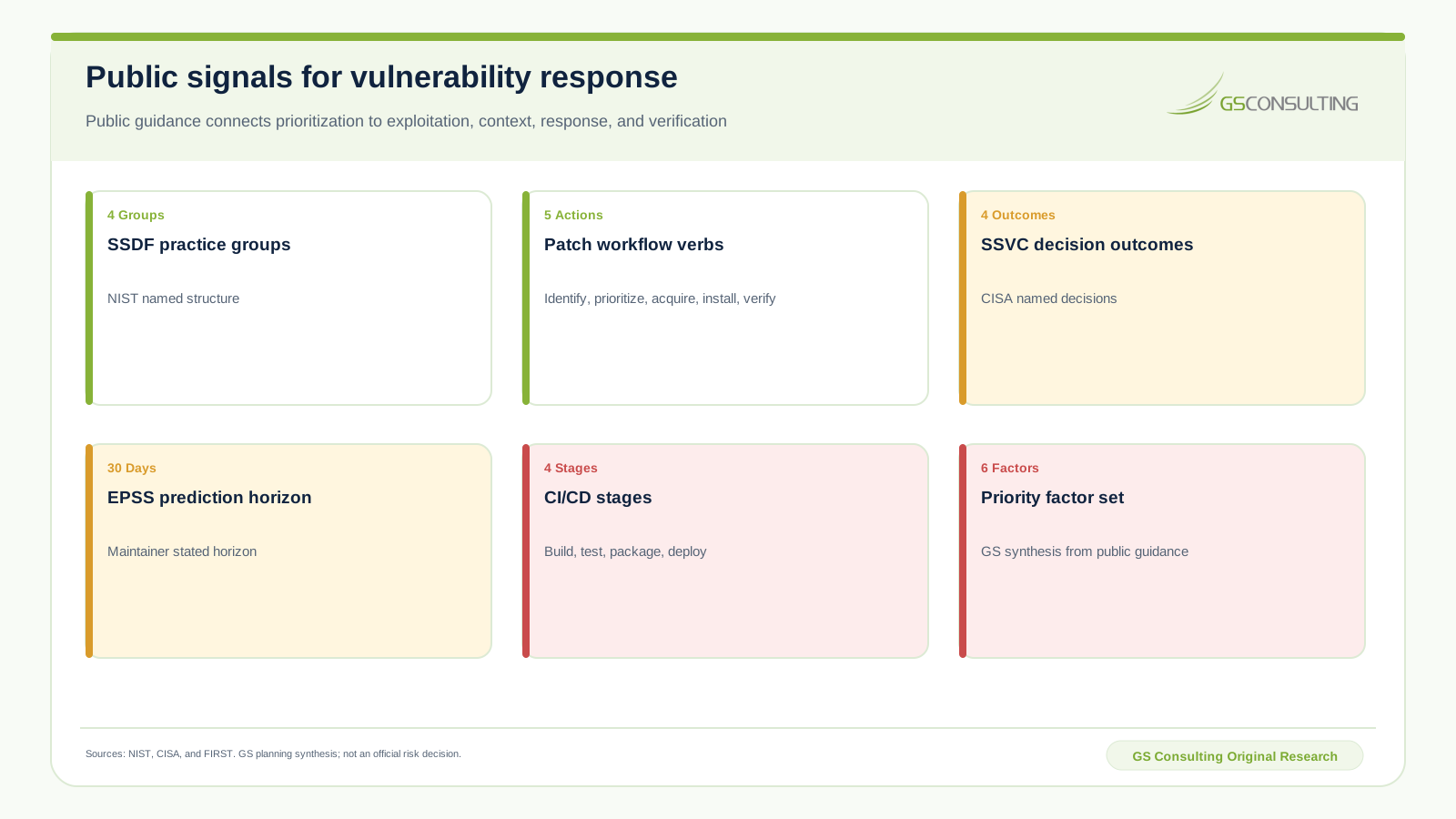
NIST SP 800-218 Secure Software Development Framework version 1.1 organizes practices into four groups and places vulnerability identification, confirmation, remediation, and learning inside secure development. The publication is a flexible practice framework. It does not set one universal remediation clock.
NIST SP 800-40 Revision 4 describes enterprise patch management through identify, prioritize, acquire, install, and verify activities. That last verb matters. Installation is an action; verification establishes whether the intended state exists.
The CISA Known Exploited Vulnerabilities catalog supplies evidence of exploitation in the wild. The CISA Stakeholder Specific Vulnerability Categorization guide shows how organizations can combine evidence and context into Track, Track*, Attend, and Act decisions. The FIRST EPSS model supplies a daily probability of exploitation in the next thirty days. None of these sources replaces local exposure and consequence analysis.
GS Vulnerability Remediation Priority Index
GS Consulting built a derived planning model for twelve representative finding classes. Six analyst ratings use a one to five scale: exploitation evidence, reachable exposure, mission consequence, affected prevalence, time pressure, and evidence duty. The base weights are 25 percent, 20 percent, 20 percent, 15 percent, 10 percent, and 10 percent.
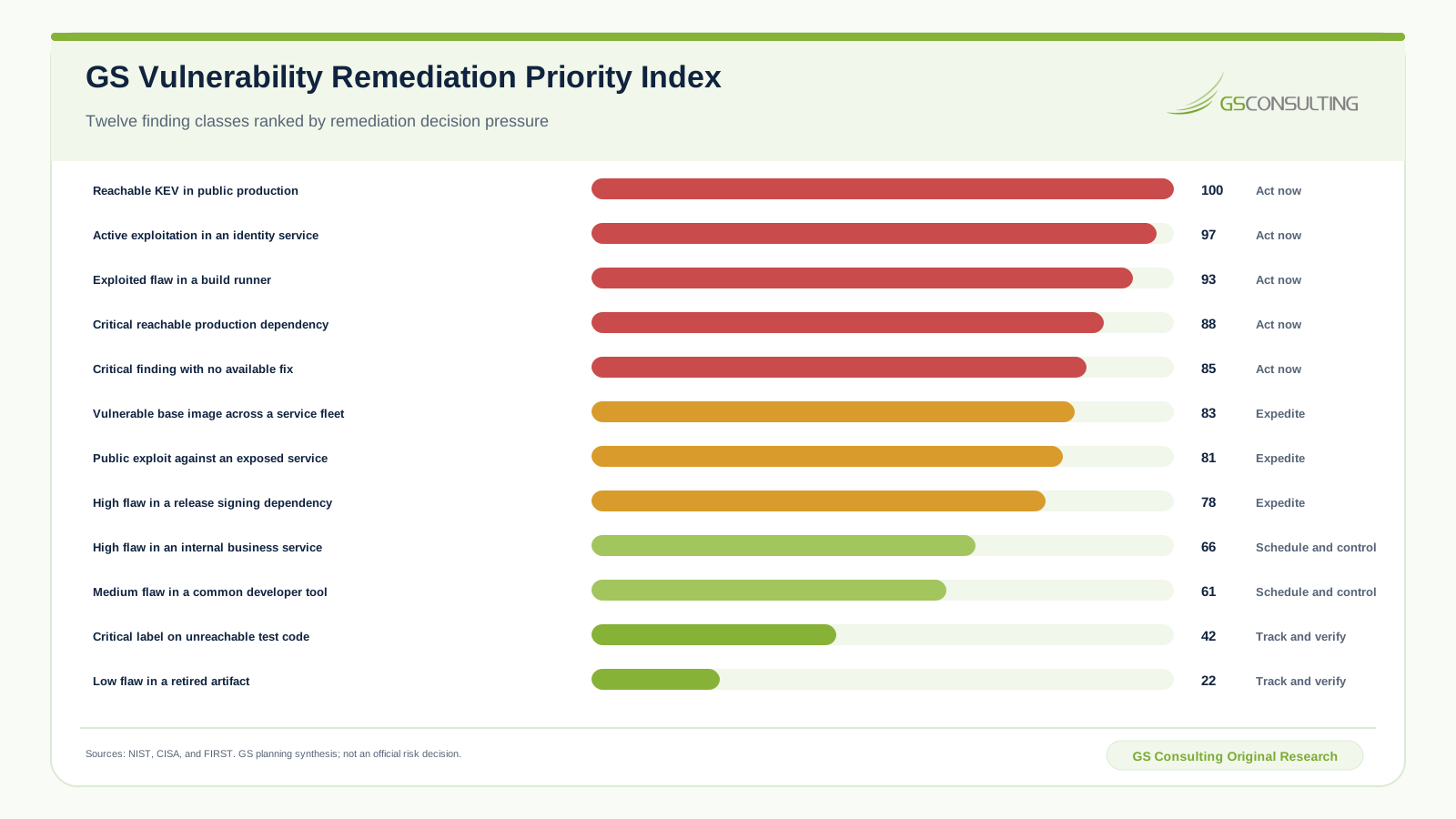
A reachable CISA KEV finding in public production scores 100. Active exploitation in an identity service scores 97. An exploited flaw in a build runner scores 93. A critical label on unreachable test code scores 42, while a low flaw in a retired artifact scores 22. The contrast is deliberate: context changes the action lane without erasing the underlying severity record.
A sensitivity case shifts five weight points from exploitation evidence to reachable exposure. No representative item changes its planning tier, and the largest score movement is two points. That stability is useful, but it does not validate the model. The item classes, ratings, weights, thresholds, and interpretations are GS analyst assumptions.
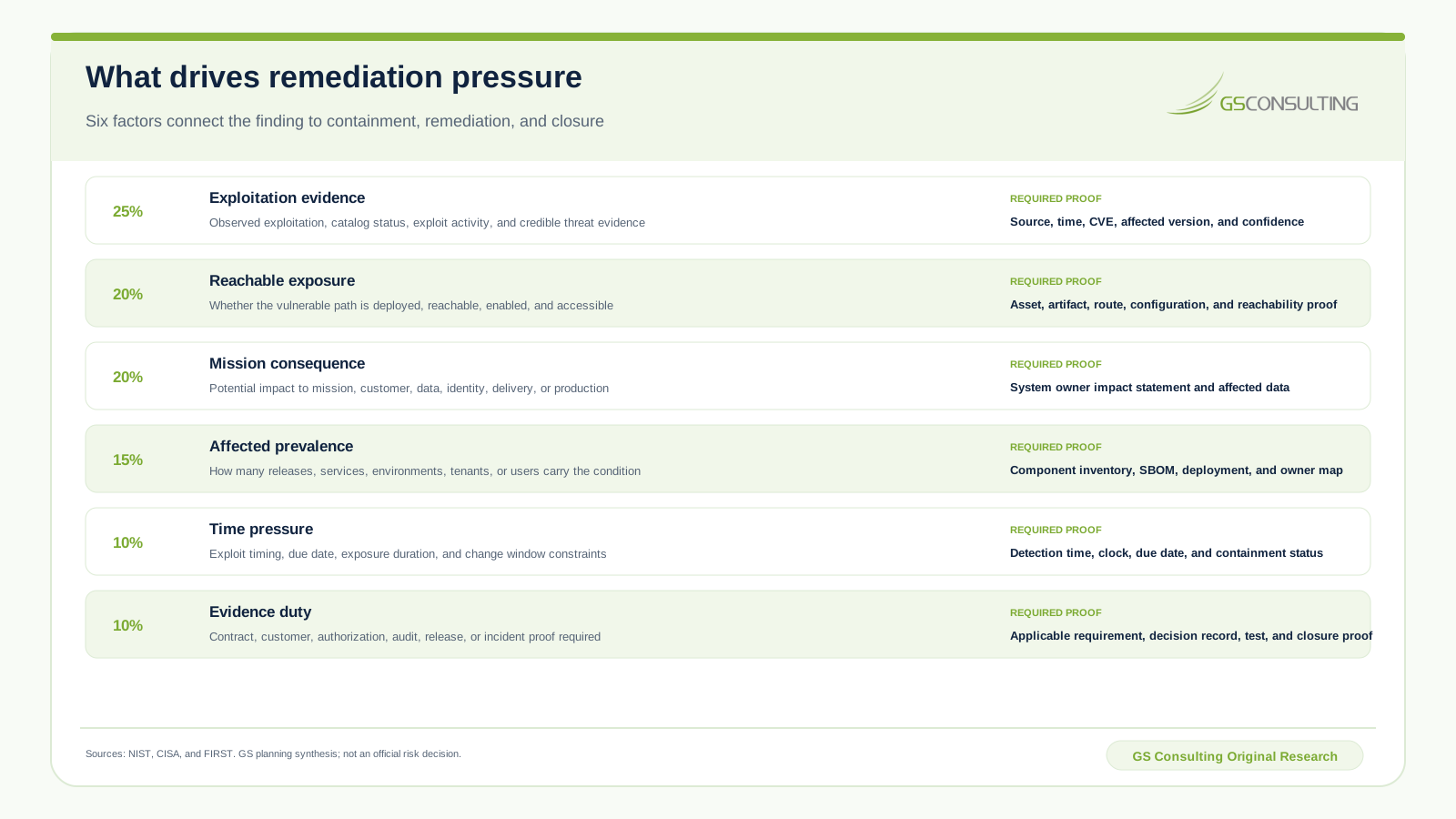
This index is a planning aid, not an official NIST, CISA, FIRST, federal, contractual, regulatory, or legal determination. Use the workbook to challenge the assumptions, substitute local factors, document missing data, and preserve accountable judgment.
Make Priority a Reviewable Decision
Start with finding identity: CVE or weakness, scanner, detection time, source result, component, version, package location, build, artifact digest, asset, service, environment, and owner. Deduplicate without deleting source history. Keep the raw finding and the normalized record.
Add context in a controlled order. Confirm whether the affected code or configuration is present. Test reachability. Determine exposure and trust boundaries. Identify observed exploitation, public exploit evidence, CISA KEV status, and EPSS as separate signals. Assess mission, customer, data, identity, delivery, and availability consequences. Count affected artifacts, environments, and users.
Then choose the response. Immediate action may combine containment and remediation. When no fix exists, reduce exposure, disable the vulnerable path, restrict authority, add detection, isolate the component, or remove the service. A temporary exception needs named authority, reason, conditions, expiry, monitoring, planned resolution, and automatic return to review.
Do not collapse all uncertainty into a middle score. Record unknown inputs, gather evidence, and use a constrained interim response where consequence warrants it. The model should reveal uncertainty, not hide it.
Use a Five Stage Decision Path
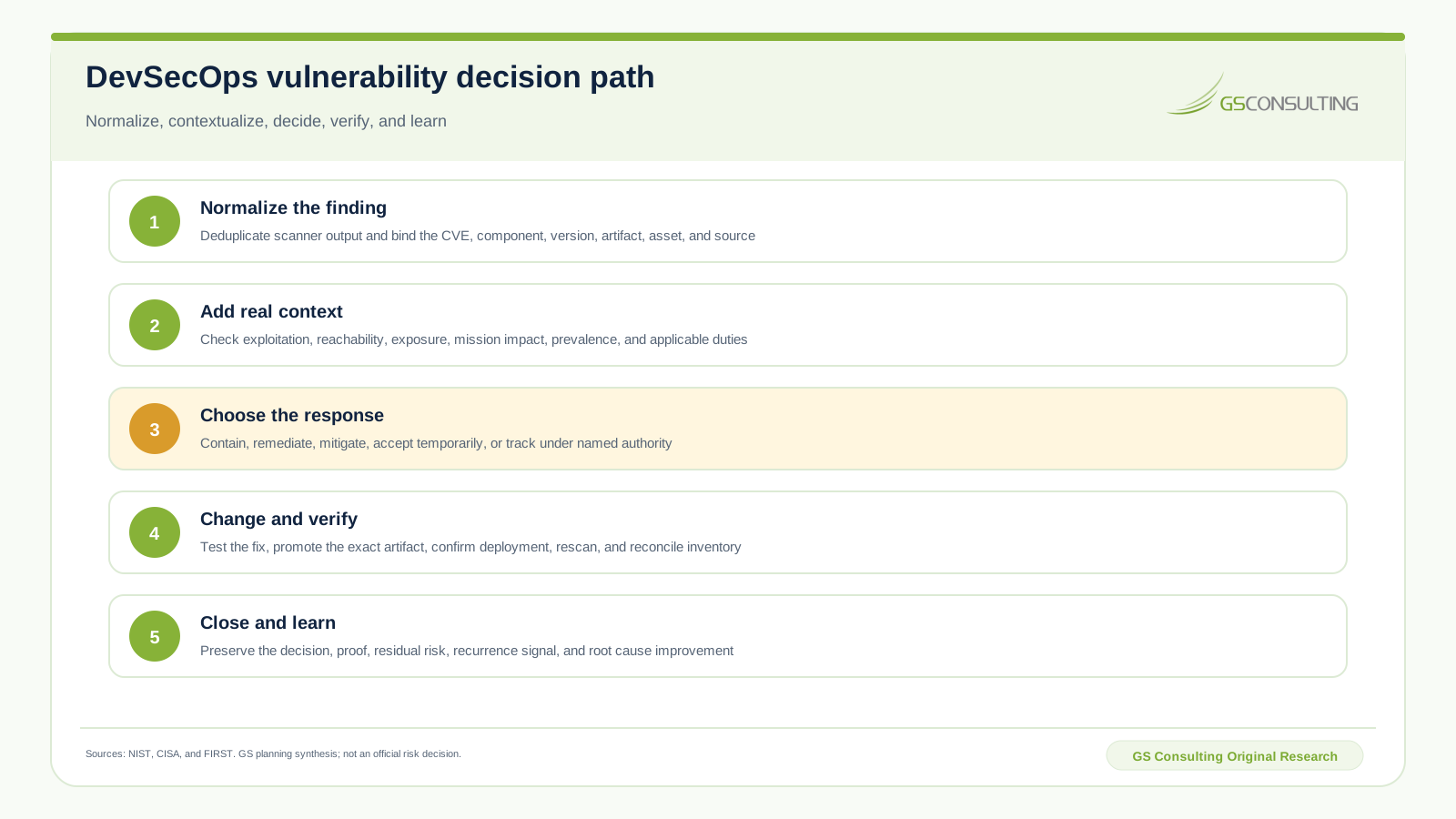
Normalize the finding. Preserve the source result, assign a stable record, resolve component and version, and bind the record to artifact, asset, service, and owner.
Add real context. Gather exploitation, reachability, exposure, mission impact, prevalence, current controls, applicable duty, and time signals.
Choose the response. Select containment, remediation, mitigation, temporary acceptance, or tracked observation. Record rationale, lane, authority, owner, clock, and expected proof.
Change and verify. Test the fix or mitigation, build and sign the exact artifact, approve promotion, confirm deployment, rescan, observe service health, and reconcile inventory.
Close and learn. Preserve proof, residual risk, notices, exception status, and closure time. Identify recurrence, root cause, control weakness, developer friction, and backlog change.
Three Decisions Show Why Context Matters
| Finding context | Likely response | Required proof |
|---|---|---|
| CISA KEV entry, reachable public service, active artifact, sensitive mission | Contain now, remediate under an urgent clock, notify the required authority | Exposure test, containment receipt, fixed artifact, deployment proof, rescan, owner approval |
| Critical scanner label in unreachable test code that never enters a release | Confirm isolation, track the dependency, remove or upgrade on a controlled schedule | Build graph, reachability test, release exclusion, owner decision, recurring verification |
| High flaw in a fleet base image with no vendor fix | Reduce exposure, add compensating controls, set an expiring exception, prepare replacement | Fleet inventory, control test, monitoring condition, exception authority, expiry, replacement plan |
These are planning examples, not universal decisions. The applicable contract, agency direction, policy, service boundary, actual exploit evidence, and decision authority govern the response.
Implement the Workflow in Twelve Weeks
Weeks one and two: select one product and production environment. Map repositories, manifests, builds, artifacts, assets, scanner sources, vulnerability records, owners, gates, change systems, and runtime evidence. Measure current inventory and detection coverage.
Weeks three and four: define stable finding identity, required context fields, response lanes, authorities, clocks, escalation, exception expiry, and closure criteria. Write the source and reconciliation rules.
Weeks five through eight: connect source, dependency, container, infrastructure, and runtime findings to the release record. Automate inventory binding and evidence capture. Route broken identity and missing proof as workflow errors.
Weeks nine through twelve: run representative scenarios, including an exploited public flaw, an unreachable critical label, a fleet issue with no fix, a reopened finding, and an expired exception. Review elapsed time, false priority, missing scope, verification quality, and recurrence. Update controls and owner training.
Avoid Six Common Workflow Failures
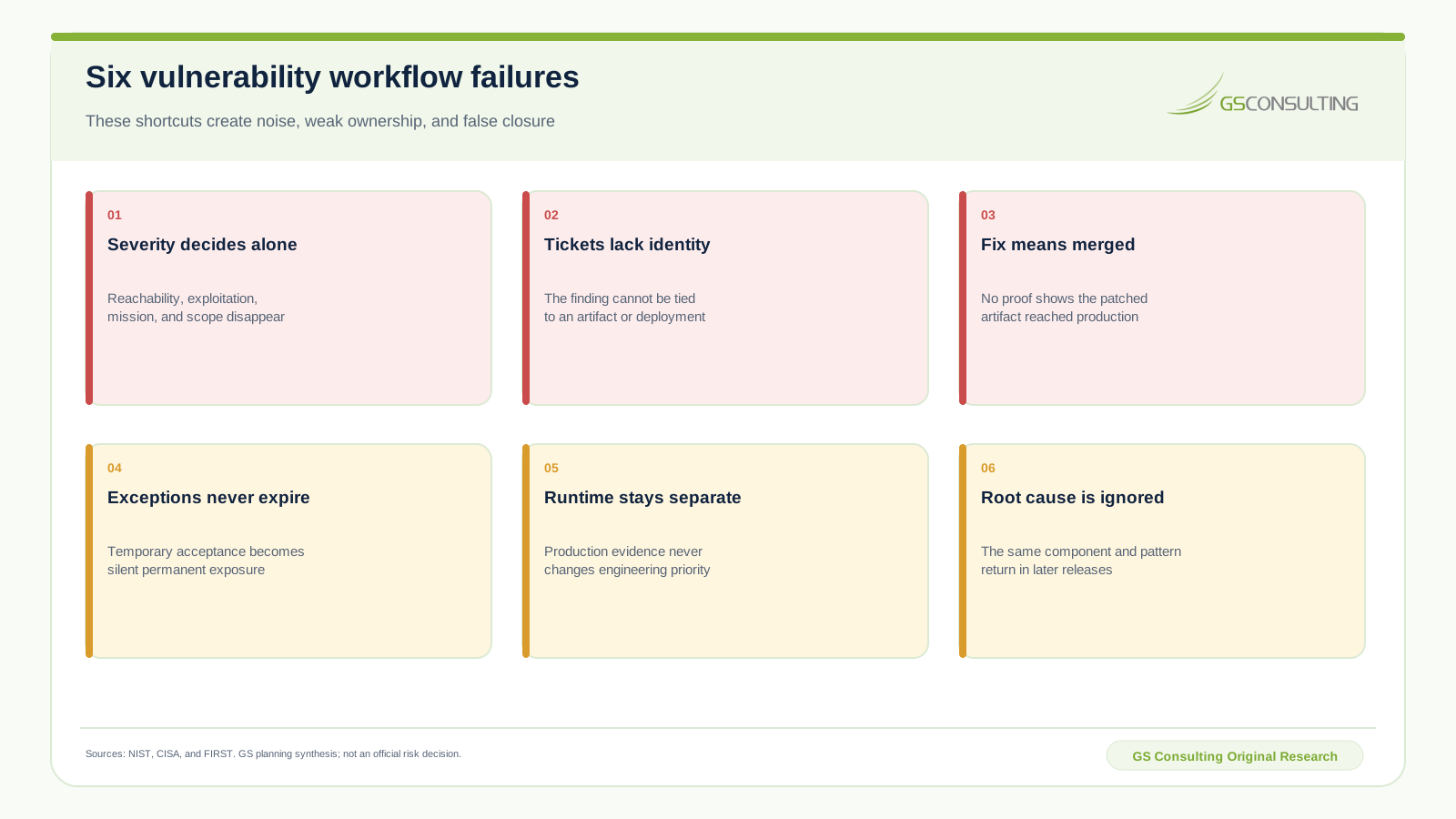
Severity decides alone. Reachability, exploitation, mission, scope, and duties disappear. Tickets lack identity. The record cannot resolve to an artifact or deployment. Fix means merged. No proof shows the fixed artifact reached production.
Exceptions never expire. Temporary acceptance becomes silent exposure. Runtime stays separate. Production evidence never changes engineering priority. Root cause is ignored. The same component, pattern, or missing control returns in later releases.
Keep a Minimum Vulnerability Evidence Packet
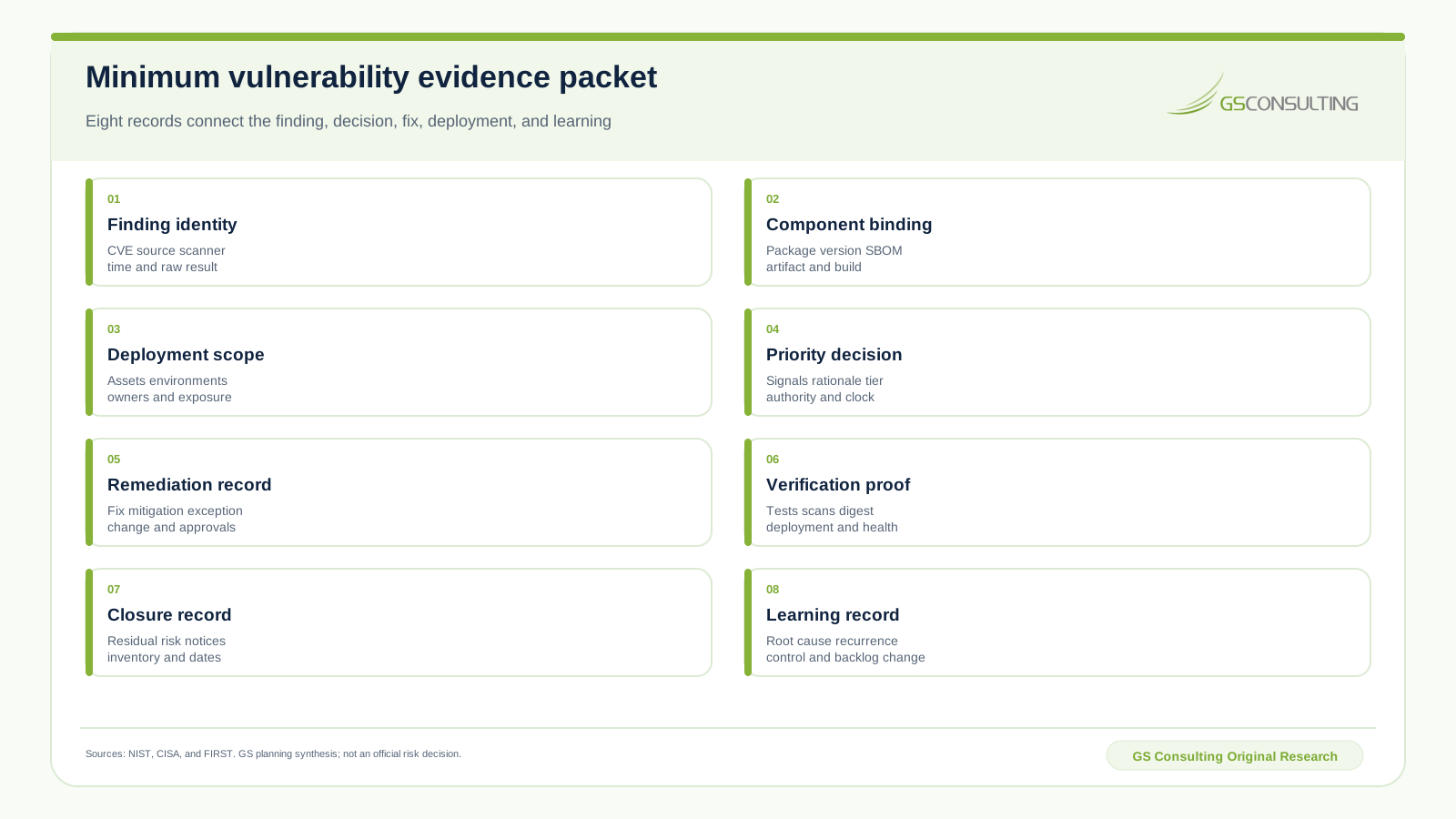
Keep the raw finding and normalized identity, component and build binding, deployment scope, priority decision, remediation or mitigation record, verification proof, closure and residual risk record, and learning record. Use stable identifiers across the systems.
The evidence can remain in connected platforms. A reviewer must still be able to reconstruct what was found, where it existed, what decision was made, who approved it, which artifact changed, where it deployed, how the result was verified, and what remains open.
Use DevSecOps compliance evidence automation to design those records at the source. The goal is not a larger archive. It is a reliable proof path for engineering, security, customers, assessors, and incident response.
Measure Coverage, Decision, Change, and Learning
Measure the share of in scope artifacts and assets covered by a current method. Track finding normalization success, time to owner, time to decision, age by response lane, and the share of high pressure findings with current context. Separate waiting for evidence, waiting for a fix, waiting for approval, and waiting for deployment.
For closure, measure verified remediation time, deployment confirmation, rescan success, exception expiry, reopened findings, and the share of records with complete proof. For improvement, track recurrence by component and root cause, vulnerable base image reuse, control changes, and time from runtime discovery to backlog action.
Always state the denominator. “Ninety percent closed” is meaningless without the period, scope, severity and context rules, reopen handling, and verification standard. Pair speed with recurrence and service health so teams do not close records faster by weakening proof.
Research Sources and Caveats
The GS Vulnerability Remediation Priority Index is a derived planning model based on cited public guidance and documented analyst assumptions. It is not an official risk score, exploit forecast, legal interpretation, regulatory decision, federal contract determination, or substitute for accountable local judgment.
- NIST SP 800-218 Secure Software Development Framework version 1.1
- NIST SP 800-40 Revision 4
- CISA Known Exploited Vulnerabilities Catalog
- CISA Binding Operational Directive 22-01
- CISA Stakeholder Specific Vulnerability Categorization Guide
- FIRST Exploit Prediction Scoring System
- NIST SP 800-204D
Frequently Asked Questions About DevSecOps Vulnerability Management
What is DevSecOps vulnerability management?
It is the continuous process for finding, contextualizing, prioritizing, remediating, verifying, and learning from vulnerabilities inside the delivery lifecycle. It connects scanner output to artifacts, deployment scope, decisions, and closure proof.
Should a critical vulnerability always block a release?
No. Consider exploitation, reachability, exposure, mission consequence, prevalence, controls, time pressure, and decision authority. Broken trust and active reachable exploitation can justify a block, while an unreachable condition may need tracking and verification.
How should teams use the CISA KEV catalog?
Treat catalog presence as strong exploitation evidence, then confirm product and version, reachability, deployed scope, applicable duties, response authority, and required verification.
Is EPSS a vulnerability risk score?
No. EPSS estimates exploitation probability over the next thirty days. It does not include local exposure, consequence, controls, contract duty, or remediation cost.
What proves that a vulnerability is closed?
Closure needs affected artifact and scope, approved response, tested change, deployed artifact identity, rescan or equivalent verification, residual risk decision, and updated inventory.
Which vulnerability management metrics matter most?
Measure coverage, time to decision, age by response lane, verified remediation time, exception expiry, reopen rate, recurrence, deployed exposure, and closure evidence completeness.
Related DevSecOps Guidance
- DevSecOps and Secure Software Delivery Hub
- DevSecOps Compliance Evidence Automation
- DevSecOps Security Gates
- Software Bill of Materials Guide
- DevSecOps Metrics
- DevSecOps and Software Supply Chain Services
Make every vulnerability decision traceable.
Connect finding identity, real exposure, accountable response, production verification, and improvement in one operating workflow.
Request a Vulnerability Workflow Review