DevSecOps & Software Supply Chain | | 26 min read
DevSecOps Toolchain Guide for Regulated Delivery

Key Takeaways
Design the control chain before choosing the product stack
Products do not define release trust
Start with authority, allowed transitions, required evidence, failure behavior, and recovery. Product comparison comes after those decisions.
Identity and workload access score 100
Identity leads the GS index, followed by secrets at 98 and source, build, and artifact controls at 96.
Bind one change to one operating result
A regulated release needs a trace from approved source through build, artifact, authority, deployment, telemetry, and retained receipt.
A DevSecOps toolchain is not a product stack. It is a control system for moving approved source into a trusted production service.
Most toolchain discussions start with categories, vendor logos, or a reference diagram. That is backwards. Regulated delivery fails at the joins: the build cannot prove its inputs, the release approval points to the wrong artifact, the deployment identity is too broad, or the audit record cannot survive a product change.
A useful DevSecOps toolchain closes those joins. It binds people and service identities to changes. It protects build and artifact trust. It turns tests and findings into governed decisions. It records what reached each environment and what happened next.
Make the release traceable before adding another tool.
GS Consulting helps regulated teams map toolchain boundaries, control transitions, release evidence, and recovery paths before product selection or platform modernization.
Plan a Toolchain Control ReviewThis guide belongs to the DevSecOps resource hub and supports the DevSecOps and software supply chain service. Use it with What Is DevSecOps, the security gates guide, DevSecOps secrets management, infrastructure as code security, the DevSecOps metrics guide, the software bill of materials guide, and the DoD DevSecOps reference design guide.
DevSecOps Toolchain: The Short Answer
A DevSecOps toolchain connects planning, source, build, test, and artifact work. It also connects release, deployment, runtime, monitoring, and feedback. Tools matter, but the controlled transitions matter more. Every transition should name the object and identity. It should state the policy, required evidence, failure response, and recovery owner.
That means a source repository is not merely a place to store code. It is an authority boundary for identity, review, branch policy, and change history. A build service is not merely automation. It is a trusted service that should bind declared inputs to a specific output. An artifact registry is not storage. It is the promotion boundary between something built and something approved for use.
Do not buy one product for every category and call the design complete. A smaller set of well connected services can produce stronger control than a crowded stack of scanners, dashboards, and approval queues that cannot share identity or evidence.
The Public Baseline Defines Capabilities, Not Products
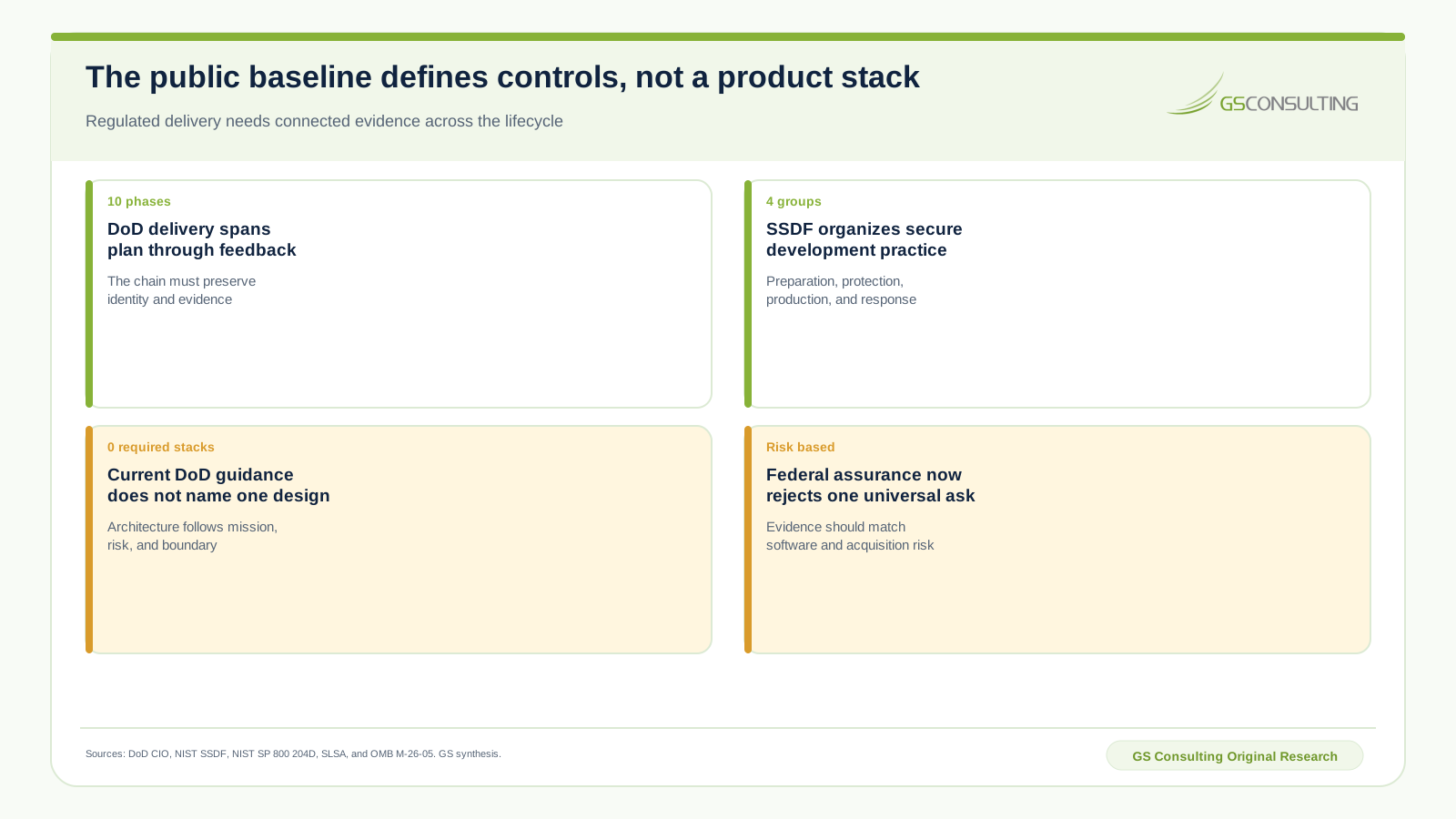
DoD Enterprise DevSecOps Fundamentals Version 2.5 names ten lifecycle phases. The first five are Plan, Develop, Build, Test, and Release. Deliver, Deploy, Operate, Monitor, and Feedback complete the cycle. The guide also says DevSecOps does not require a specific architecture, container model, or cloud. The practical implication is clear. Use the phases to test control coverage, not to copy a vendor diagram.
The DoD activities and tools guidebook separates required and preferred activities and uses tool categories rather than a universal shopping list. NIST Secure Software Development Framework Version 1.1 adds four practice groups. NIST SP 800-204D connects software supply chain security to delivery pipelines.
SLSA Version 1.2 build requirements give teams a vocabulary for provenance and build assurance. OMB Memorandum M-26-05 directs federal agencies toward risk based assurance rather than one universal evidence request. None of these sources removes the need to interpret the actual mission, acquisition, contract, system, and authorization context.
The Core DevSecOps Toolchain Capabilities
Product names change faster than control needs. Define the following capabilities in plain language before assigning a vendor or platform service:
| Capability | Control question | Minimum evidence |
|---|---|---|
| Planning and work control | Who approved the requirement, risk, and acceptance condition? | Work identifier, owner, scope, threat, acceptance, approval |
| Source and review | Who changed what, and which policy allowed merge? | Repository, branch, commit, author, reviewer, policy result |
| Build orchestration | Which trusted service produced the artifact from which inputs? | Builder identity, input digests, environment, log, provenance |
| Test and analysis | Which required behaviors and risks were checked? | Test identifiers, rules, results, findings, owner, disposition |
| Artifact trust | How is the approved object stored, signed, inventoried, and promoted? | Digest, signature, version, SBOM, registry state, promotion receipt |
| Release authority | Who may accept the evidence and release risk? | Approver, evidence set, decision, conditions, exception, expiry |
| Deployment and configuration | Did the approved artifact reach the approved target under the right identity? | Target, service identity, configuration, policy, time, result |
| Runtime and feedback | Does operating evidence confirm the release behaves inside its accepted boundary? | Health, alerts, incidents, exceptions, recovery, review decision |
Identity, secrets, evidence storage, and recovery cross every row. Treat them as shared controls with explicit ownership. If each product creates its own identity model, exception process, and retention rule, the toolchain will produce evidence islands instead of a release record.
GS DevSecOps Toolchain Control Coverage Index
GS Consulting built a derived planning model to rank fourteen common toolchain capabilities. Each capability receives a one to five analyst rating for control criticality, trust boundary impact, and evidence production. Integration dependency, recovery leverage, and replacement resilience complete the rating. The first three weights are 25, 20, and 20 percent. The remaining weights are 15, 10, and 10 percent.
The model is not a market ranking and does not score vendors. It answers a narrower operating question: which capabilities deserve the earliest architecture, ownership, and evidence work when a regulated team is building or repairing a delivery system?
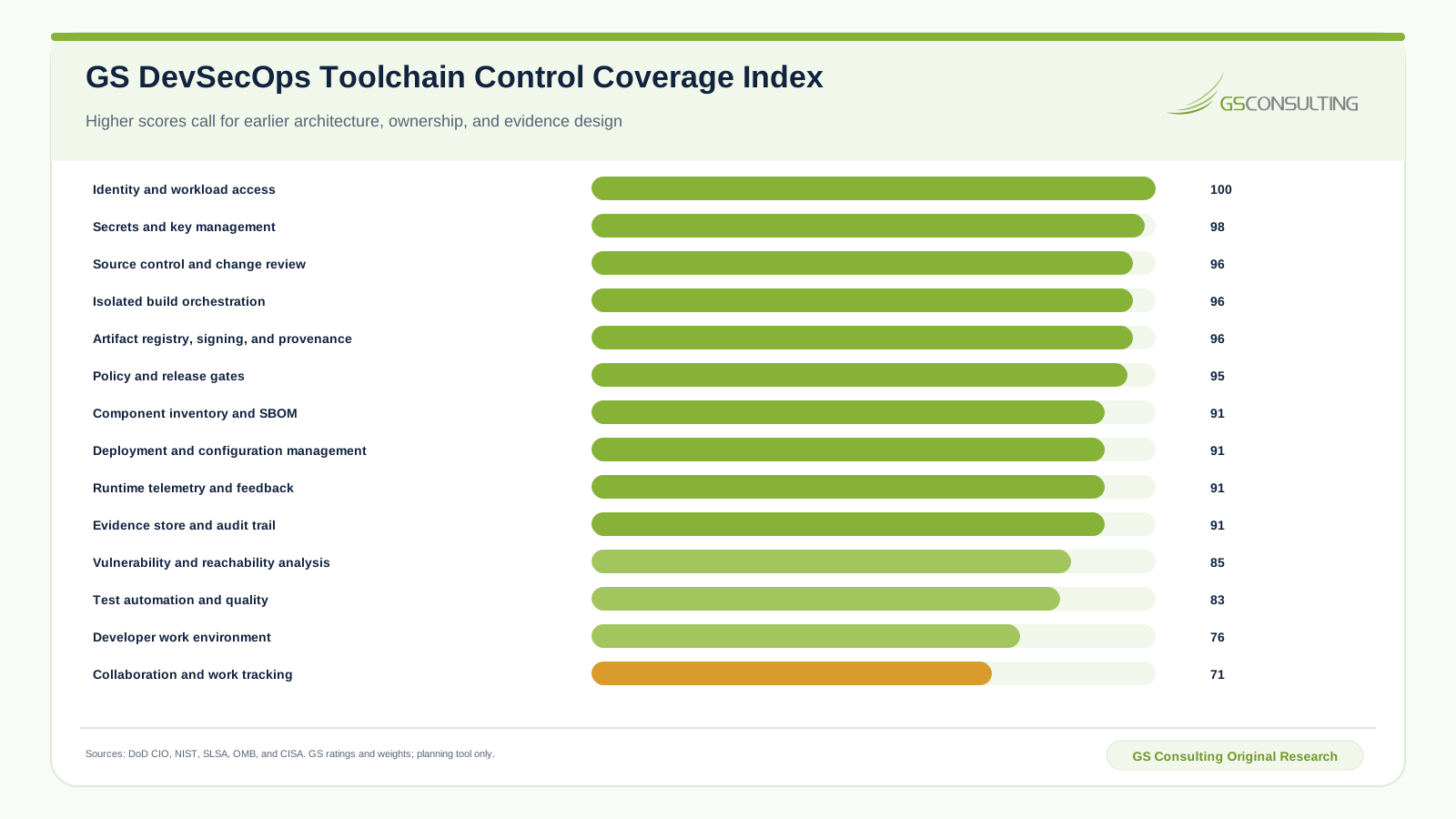
Identity and workload access score 100. Secrets and key management score 98. Source control and change review, isolated build orchestration, and artifact registry, signing, and provenance each score 96. Policy and release gates score 95.
Component inventory and SBOM, deployment and configuration management, runtime telemetry and feedback, and the evidence store each score 91. Vulnerability and reachability analysis score 85. Test automation and quality score 83. Developer work environment scores 76, and collaboration and work tracking score 71.
The ordering does not make collaboration unimportant. It means collaboration tools usually sit outside the most consequential trust and evidence boundaries. The alternate case moves five weight points from evidence production to trust boundary impact. No score moves by more than one point except the same small movement produced by rounding. The leading priorities remain stable.
Close the Toolchain Control Chain
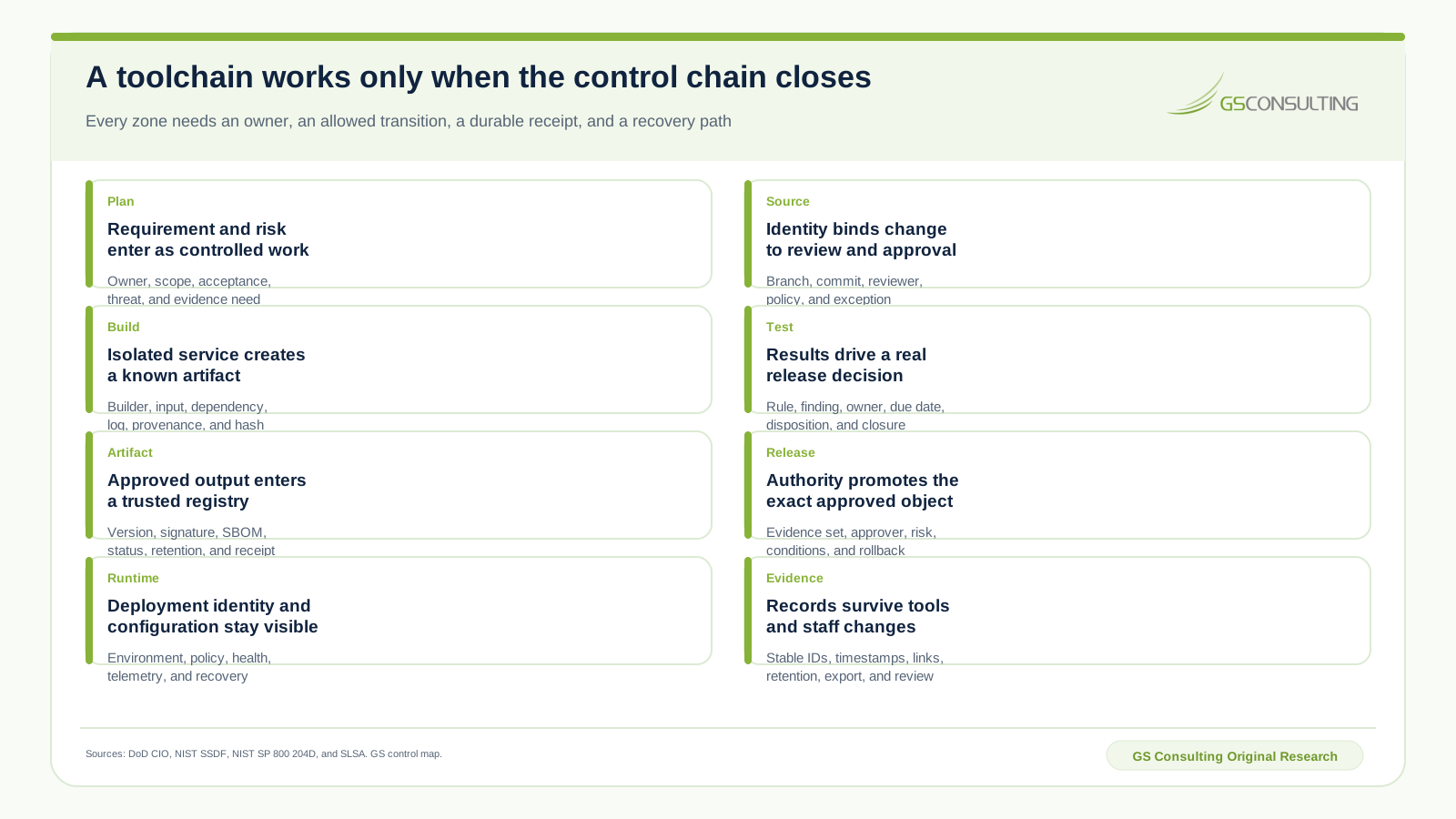
Use one stable change identifier across planning and source. Carry the commit and dependency inputs into the build record. Bind the build output to a digest, signature, provenance record, and component inventory. Make the release decision reference that exact artifact. Make the deployment record reference the release decision and target. Bring runtime health and exceptions back to the same release record.
This is where integrations earn their keep. A connector that copies a status badge into another screen is useful, but it is not control evidence by itself. The receiving system should know which object the result covers, who produced it, when it was valid, what policy interpreted it, and whether a later change invalidated it.
Design evidence export before a provider contract is signed. You may need to reconstruct a release after a product is replaced, an account is closed, or an investigation begins. Export should preserve identifiers, timestamps, decisions, and signatures. It should also retain exceptions and relationships in a usable format.
How to Select DevSecOps Tools
Start product evaluation only after the control path is written. Score each candidate against the same decision questions:
- Boundary fit: Can the service operate inside the required network, data, tenancy, identity, and administration boundary?
- Identity: Does it support separate human and service identities, least privilege, strong authentication, short lived credentials, and reviewable access?
- Evidence: Does every relevant action produce a durable record with stable identifiers, timestamps, actor, object, result, and policy?
- Integration: Can it exchange authoritative objects and decisions through supported interfaces without fragile screen scraping or hidden manual steps?
- Policy: Can teams express required gates, scope, exceptions, expiry, approvals, and environment rules without burying logic in one operator account?
- Failure: What happens when the service, identity provider, network, scanner, registry, signing service, or approval system is unavailable?
- Recovery: Can the team stop, roll back, restore, rotate, rebuild, and reconcile evidence after failure?
- Portability: Can data, policies, artifacts, and evidence be exported and migrated without losing traceability?
- Operations: Who patches, monitors, supports, tests, administers, and pays for the service over its full life?
Run a proof with a real change and a disposable environment. Test the normal path, an unauthorized change, a failed test, and a signature mismatch. Then test an expired exception, a service outage, and a rollback. Slideware will not expose those joins.
The Regulated Toolchain Decision Path
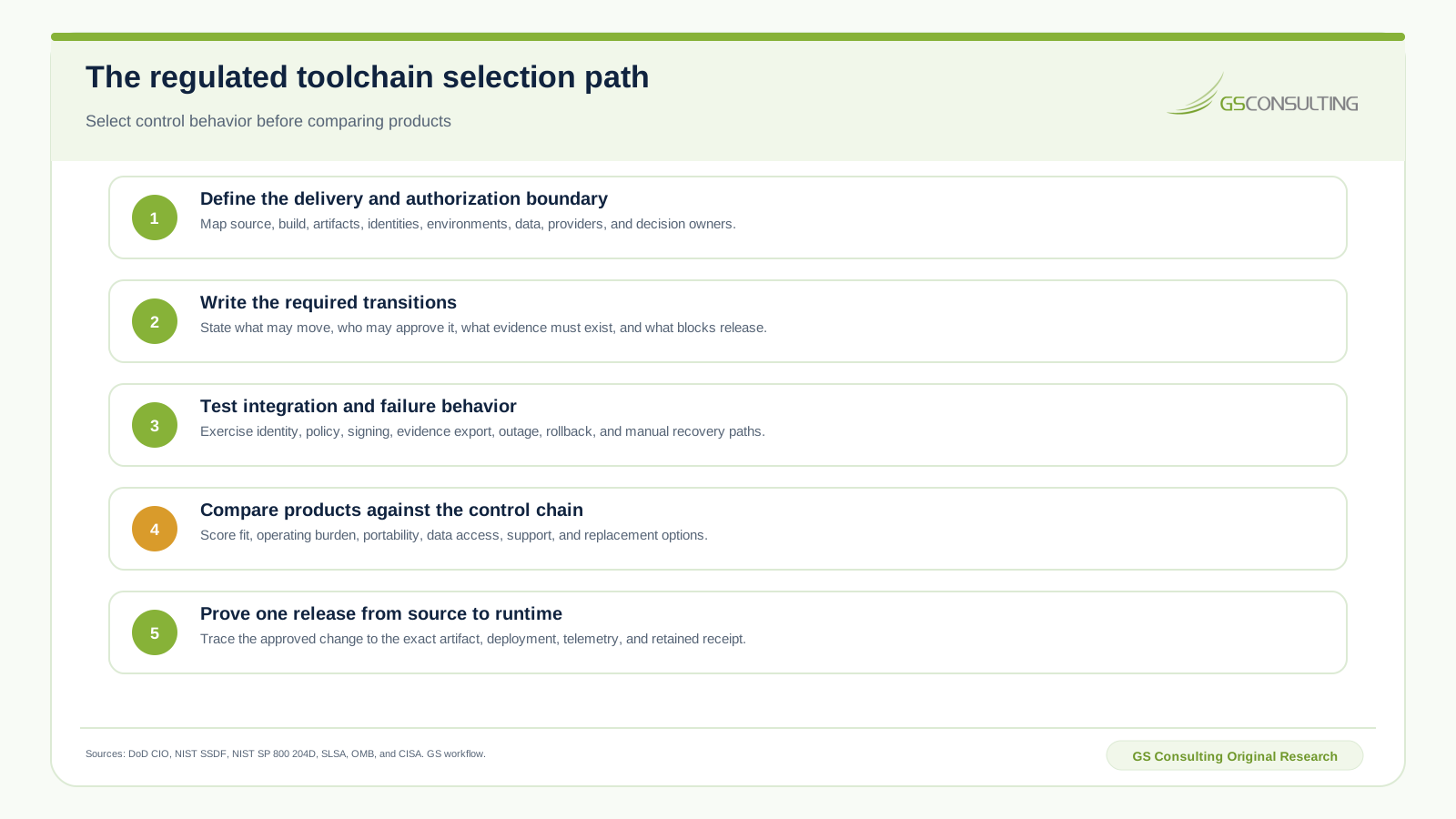
The first decision is the delivery and authorization boundary. Map repositories, builders, package sources, registries, and signing services. Then map environments, identities, data, providers, and decision owners. A tool outside the boundary can still affect it. Record that dependency.
The second decision is the allowed transition. State what may move, its origin, its destination, and its acting identity. Then name the required evidence and release authority. The third decision is failure behavior. Test outages, unavailable checks, corrupted artifacts, and expired credentials. Then test partial deployments and rollback.
Only then compare products. The final proof is one complete release trace from source to runtime. If a reviewer cannot reconstruct it without asking three operators to export unrelated screenshots, the control chain is not closed.
Choose a Delivery Pattern That Fits the Boundary
| Pattern | Good fit | Main burden | Control focus |
|---|---|---|---|
| Managed platform services | Teams that can use an approved provider boundary and standard delivery path | Provider dependence and inherited control interpretation | Shared responsibility, tenant identity, export, outage, and provider change |
| Central software factory | Programs that can share trusted services, patterns, and support | Platform governance, demand, exceptions, and mission variation | Service boundaries, tenant isolation, promotion, evidence ownership, and support |
| Program owned toolchain | Distinct missions with specific environments or delivery constraints | Staff depth, maintenance, duplicated services, and lifecycle cost | Local authority, patching, recovery, evidence continuity, and replacement |
| Separated delivery zones | Systems with strong network or classification boundaries | Transfer, synchronization, duplicate controls, and delayed feedback | Trusted movement, artifact identity, evidence transfer, reconciliation, and custody |
No pattern removes responsibility. A managed service creates provider and tenant duties. A central factory creates platform and mission duties. A separated design creates transfer and reconciliation duties. Write the matrix before calling a control inherited.
Six Toolchain Failures That Audits Expose
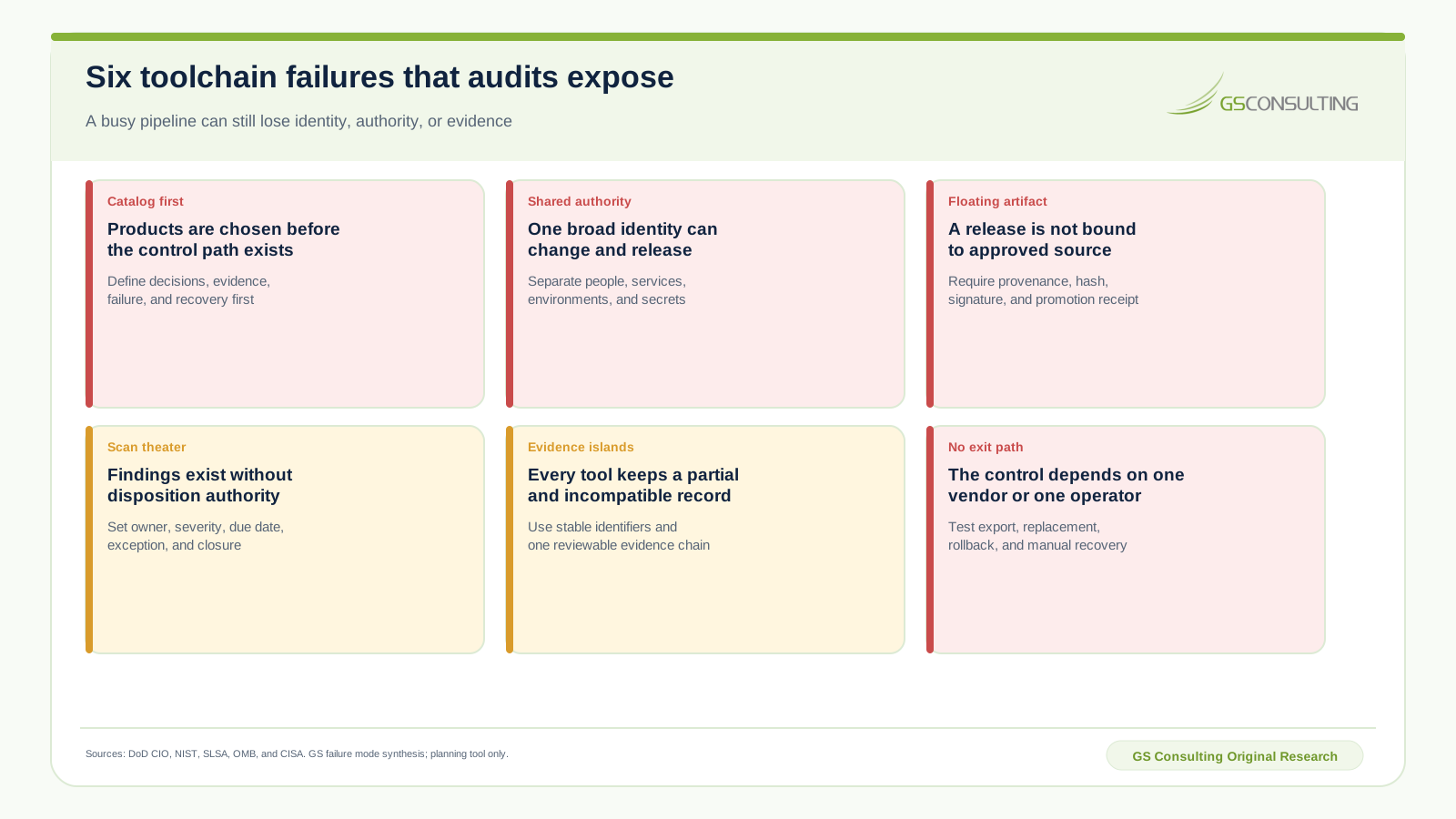
The first failure is catalog first selection. The team buys products before it defines the control path. Shared authority follows when one broad identity can change source, alter the build, approve the release, and deploy it. A floating artifact appears when release evidence cannot prove that the deployed object came from the approved source and build.
Scan theater creates findings without an owner or disposition authority. Evidence islands hold partial records with incompatible identifiers. The final failure is no exit path. The team cannot export, replace, roll back, or operate manually when a provider or operator is unavailable.
These failures are connected. A tool chosen without an evidence contract often creates an evidence island. A service identity added for convenience often crosses duties. A proprietary record with no export path becomes both an audit and replacement risk.
Build the Minimum Viable Toolchain Evidence Packet
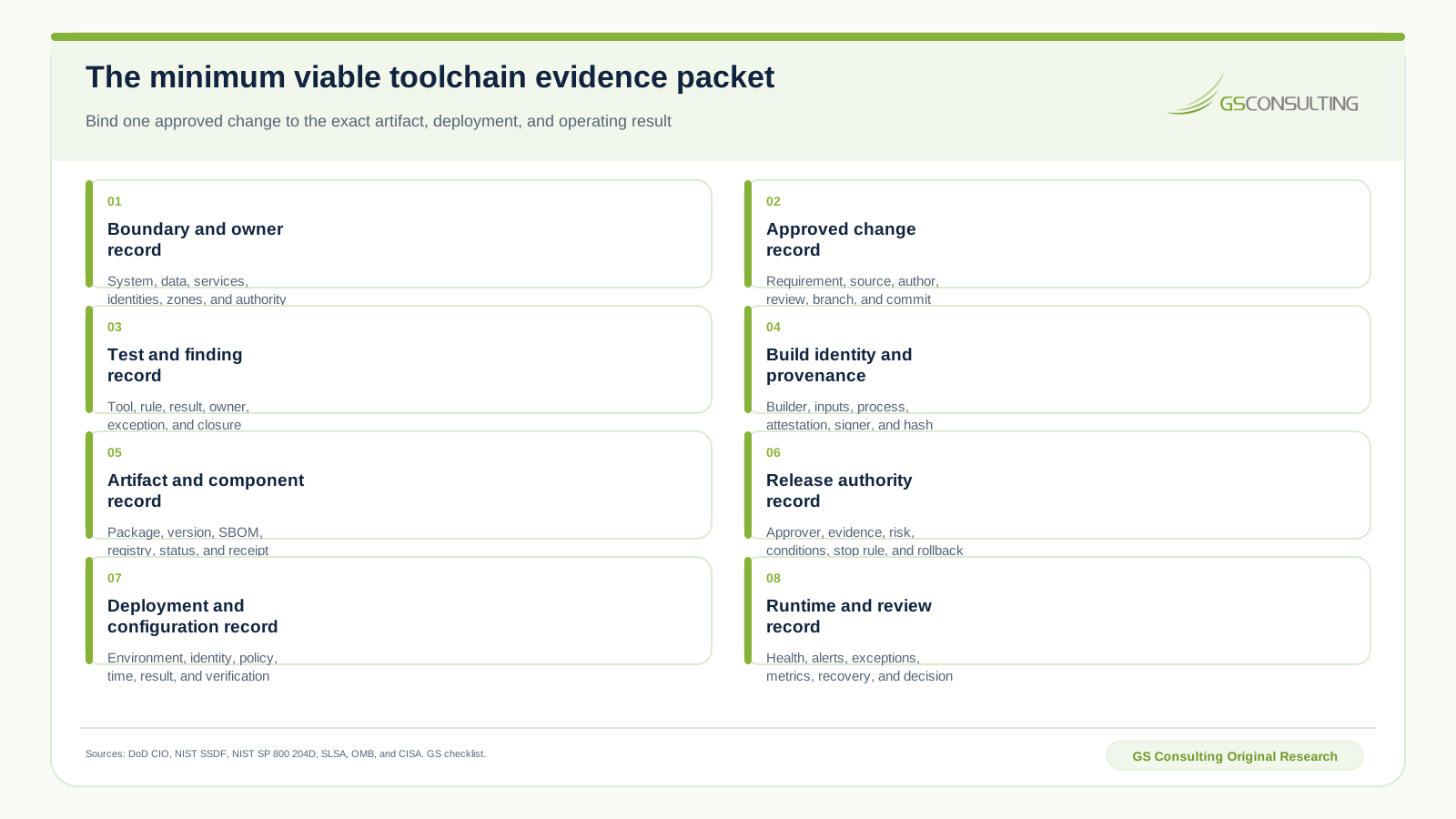
The packet begins with the boundary and owner record. Add the approved change, test and finding record, and build identity and provenance. Then add the artifact and component record, release authority, and deployment and configuration record. Close it with the runtime review.
Do not turn the packet into a manual document assembled after every release. Generate the records during normal work. Keep stable identifiers and links in an evidence store that can be reviewed without granting broad administration access to every delivery product.
Retention should match the actual legal, contract, acquisition, and agency need. Authorization, investigation, and operating needs also matter. More data is not automatically better. Keep the record that proves the decision, preserve its integrity, restrict access, and remove material when the approved retention period ends.
A 90 Day Toolchain Control Plan
- Days 1 through 20: map the delivery boundary, inventories, identities, providers, environments, current approvals, evidence stores, outages, and known manual joins.
- Days 21 through 40: define allowed transitions, mandatory evidence, release authority, exception rules, retention, recovery, and replacement criteria.
- Days 41 through 65: select one representative application and prove source, build, artifact, release, deployment, runtime, rollback, and evidence export.
- Days 66 through 90: repair the highest control gaps, set operating measures, assign service owners, document shared duties, and approve the next migration wave.
Use flow and security measures to test whether the repaired chain works. Use explicit gate decisions to keep findings from becoming an endless queue. Use the SBOM guide to connect component inventory to actual release and response work.
The Bottom Line
A DevSecOps toolchain earns trust through its transitions, not its logo count. The system must preserve identity, artifact integrity, authority, evidence, and recovery from source through operation.
The operating standard is plain: define the control chain, prove one release end to end, and reject any tool choice that breaks the evidence.
Turn the toolchain into a controlled delivery system.
GS Consulting helps teams design software factory controls, choose fit for purpose services, connect release evidence, and build a practical modernization sequence.
Request a DevSecOps Toolchain ReviewResearch Sources and Caveats
The GS DevSecOps Toolchain Control Coverage Index, control map, decision path, failure analysis, and evidence packet are GS Consulting derived planning tools. They are based on cited public sources and documented analyst assumptions. They are not official legal, audit, compliance, or authorization determinations. They are not DoD, NIST, CISA, or SLSA determinations. They are not OMB or regulatory determinations.
- DoD Enterprise DevSecOps Fundamentals Version 2.5
- DoD DevSecOps Activities and Tools Guidebook
- NIST Secure Software Development Framework Version 1.1
- NIST SP 800-204D
- NIST National Cybersecurity Center of Excellence DevSecOps Practices
- SLSA Version 1.2 Build Requirements
- OMB Memorandum M-26-05
- CISA Secure Software Development Attestation Form
Frequently Asked Questions
What is a DevSecOps toolchain?
A DevSecOps toolchain is the connected set of delivery services, policies, identities, records, and operating procedures that move approved source into a trusted production service. It should preserve authority and evidence from planning through feedback. That includes source, build, test, and artifact activity. It also includes release, deployment, and runtime activity.
Which tools belong in a DevSecOps toolchain?
The capability set usually covers work planning, source control, build orchestration, testing, and vulnerability analysis. It also needs artifact storage, signing, provenance, component inventory, and policy gates. Deployment and configuration need coverage too. Secrets, identity, telemetry, evidence retention, and recovery complete the operating path. The right products depend on the mission, system boundary, authorization approach, team, and existing platform.
Does DoD require one DevSecOps toolchain?
No. DoD Enterprise DevSecOps Fundamentals Version 2.5 says DevSecOps does not require one architecture, container model, or cloud. The DoD activities and tools guidebook describes capability categories and required or preferred activities. Programs still select an implementation that fits their mission and authorization boundary.
How should a regulated team select DevSecOps tools?
Define the delivery boundary, required transitions, decision owners, and required evidence before comparing products. Set outage behavior, recovery paths, and export needs at the same time. Then test each candidate for identity, integration, policy, and provenance coverage. Test retention, portability, operating burden, support, and replacement as separate criteria.
What evidence should a DevSecOps toolchain retain?
Retain the approved change and source identity. Keep reviews, tests, findings, and dispositions. Record the builder identity, inputs, and provenance. Keep the artifact digest, signature, and SBOM with them. Retain the release authority, deployment record, and configuration. Add the runtime result, exceptions, and recovery actions. Use stable identifiers so one release can be traced across tools.
Does the GS Toolchain Control Coverage Index prove compliance?
No. It is a derived planning model built from cited public sources and documented analyst assumptions. It helps teams sequence control design. It is not an official legal, audit, compliance, or authorization determination. It is not a DoD, NIST, CISA, SLSA, or regulatory determination.