DevSecOps & Software Supply Chain | | 25 min read
DevSecOps Security Gates: What to Block and What to Review

Key Takeaways
Block broken trust and review contextual risk
Stop when release trust is invalid
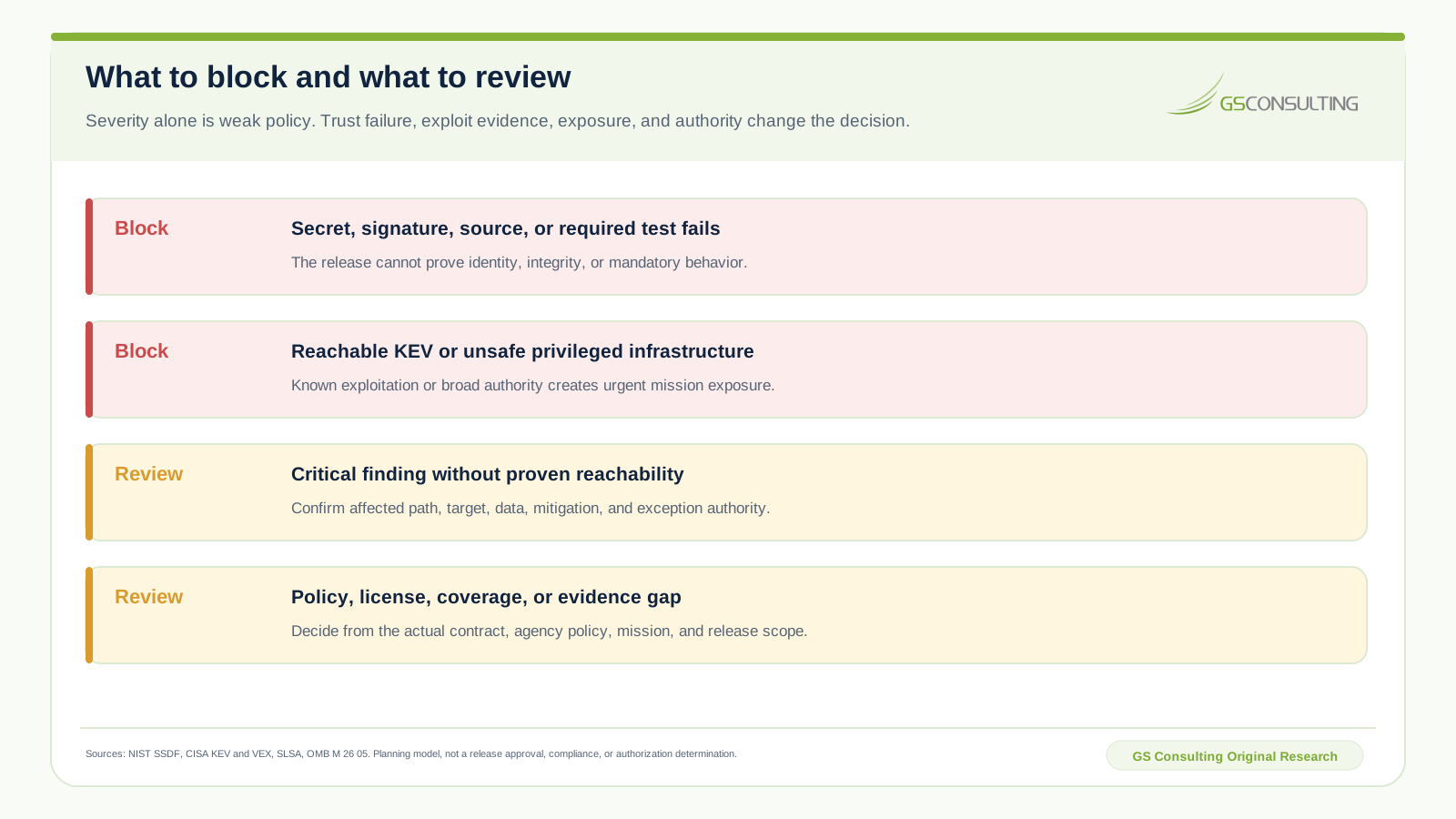
Secrets, failed required tests, untrusted sources, provenance mismatch, and unsafe privilege changes can justify automatic stops.
Six gate conditions lead the priority index
Three integrity failures score 100, followed by required test failure, reachable KEV exposure, and unsafe infrastructure change.
A finding is not a release decision
Bind every finding to reachability, exposure, mission, artifact, target, authority, expiry, and evidence before deciding.
DevSecOps security gates should block broken trust. They should not block every scanner finding.
A pipeline that stops on every high severity result becomes a queue. Teams bypass it, exceptions never close, and the real release risks lose priority. A pipeline that only reports results is worse. It creates activity without an enforceable decision.
A useful gate answers five questions: what changed, which artifact and target are affected, what condition failed, who may decide, and what evidence proves the disposition. The gate can then make one of three decisions: hard block, context review, or monitor and improve.
This guide belongs to the DevSecOps resource hub and supports the DevSecOps and software supply chain service. Use the DevSecOps toolchain guide to place each gate inside a complete control chain. The DevSecOps branch protection guide shows how review and required checks become an enforceable source decision. Then connect the gate with DevSecOps secrets management, infrastructure as code security, What Is DevSecOps, the DevSecOps metrics guide, the software bill of materials guide, and the DoD DevSecOps reference design.
DevSecOps Security Gates: The Short Answer
Hard block when the pipeline has objective proof that release trust is broken or a mandatory behavior failed. Typical candidates include an exposed secret, a failed required test, an artifact or provenance mismatch, a malicious package source, a reachable known exploited vulnerability, an unsafe privilege change, or an expired exception.
Review when the finding needs context that automation cannot settle. A critical vulnerability without proven reachability, a missing evidence item, a license conflict, an approved mitigation, or an agency specific requirement may need a named decision maker. Monitor and improve when the signal measures process health, such as medium finding volume or test coverage below an internal target.
Severity alone is not a gate policy. The decision also needs exploit evidence, reachability, exposure, artifact integrity, target, mission consequence, data, mitigation, contract, agency direction, exception authority, and recovery.
DevSecOps Gates Need Three Decision Classes
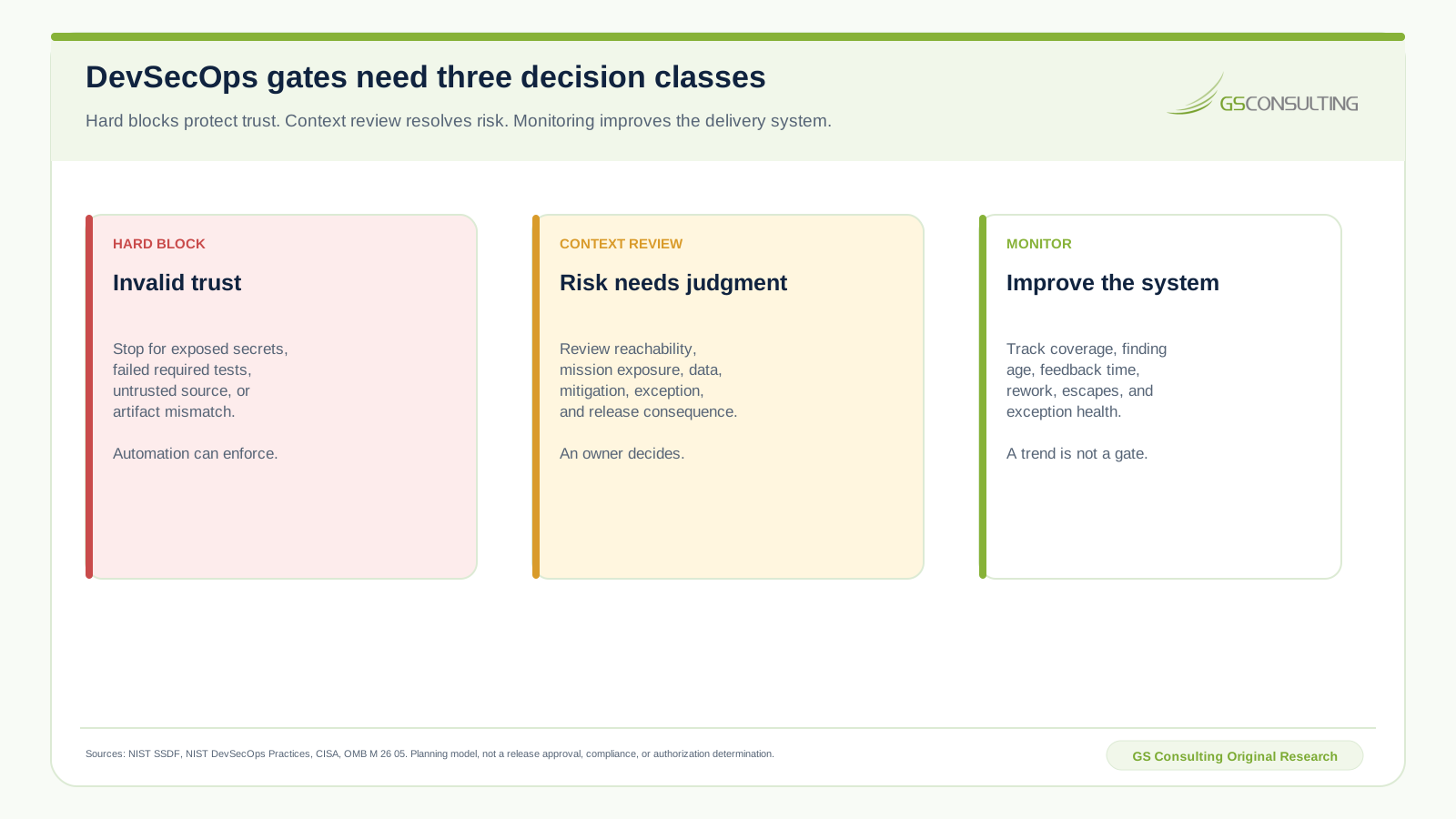
Hard block protects an invariant that automation can prove. A signature mismatch, untrusted source, exposed credential, failed mandatory behavior, or unsafe infrastructure plan should not depend on a meeting. Fix the condition or use an authorized exception path.
Context review handles questions that need judgment: reachability, mission exposure, affected data, compensating controls, mitigation, contract direction, authorization scope, and exception terms. Give that decision to a named owner with enough evidence to decide.
Monitor and improve tracks the health of the engineering system. Finding age, coverage, feedback time, rework, false positives, escape rate, and exception health belong in trends. Turning every trend into a hard release gate teaches teams to game the measure.
Design Every Gate as a Decision Contract
A gate needs more than a tool and threshold. Write a decision contract with the following fields:
- Condition: the exact fact that causes pass, block, or review.
- Scope: repository, branch, component, artifact, target, data, and release type.
- Source: test, scanner, signature, provenance record, SBOM, VEX, policy engine, or approval system.
- Authority: who owns the rule, who reviews context, and who may approve an exception.
- Evidence: immutable identifiers for change, build, artifact, finding, result, exception, approval, target, and time.
- Response: fix, contain, review, accept with expiry, deploy with conditions, roll back, or close.
Put each check at the earliest stage where its evidence is reliable. Secret and source policy can run before build. Dependency and static checks can run during integration. Required behavior, security, and negative tests run against the built software. Signature, provenance, SBOM, VEX, and release approval bind to the artifact. Deployment policy binds the approved artifact to the target. Production verification proves what actually arrived.
Never let a later build replace an approved artifact. The release decision should reference the digest, signature, provenance, test results, component record, exceptions, target, and approval. If the digest changes, the decision changes.
GS DevSecOps Release Gate Priority Index
GS Consulting built a derived planning model to compare twelve common gate conditions. Each condition receives a one to five analyst rating for threat evidence, exploitability and exposure, artifact integrity, mission consequence, recovery difficulty, and evidence value. The base weights are 25, 20, 20, 15, 10, and 10 percent.
The model includes conditions supported by current NIST, CISA, OMB, DoD, or SLSA sources and tied to an enforceable release decision. The sensitivity case moves five percentage points from threat evidence to exploitability and exposure.
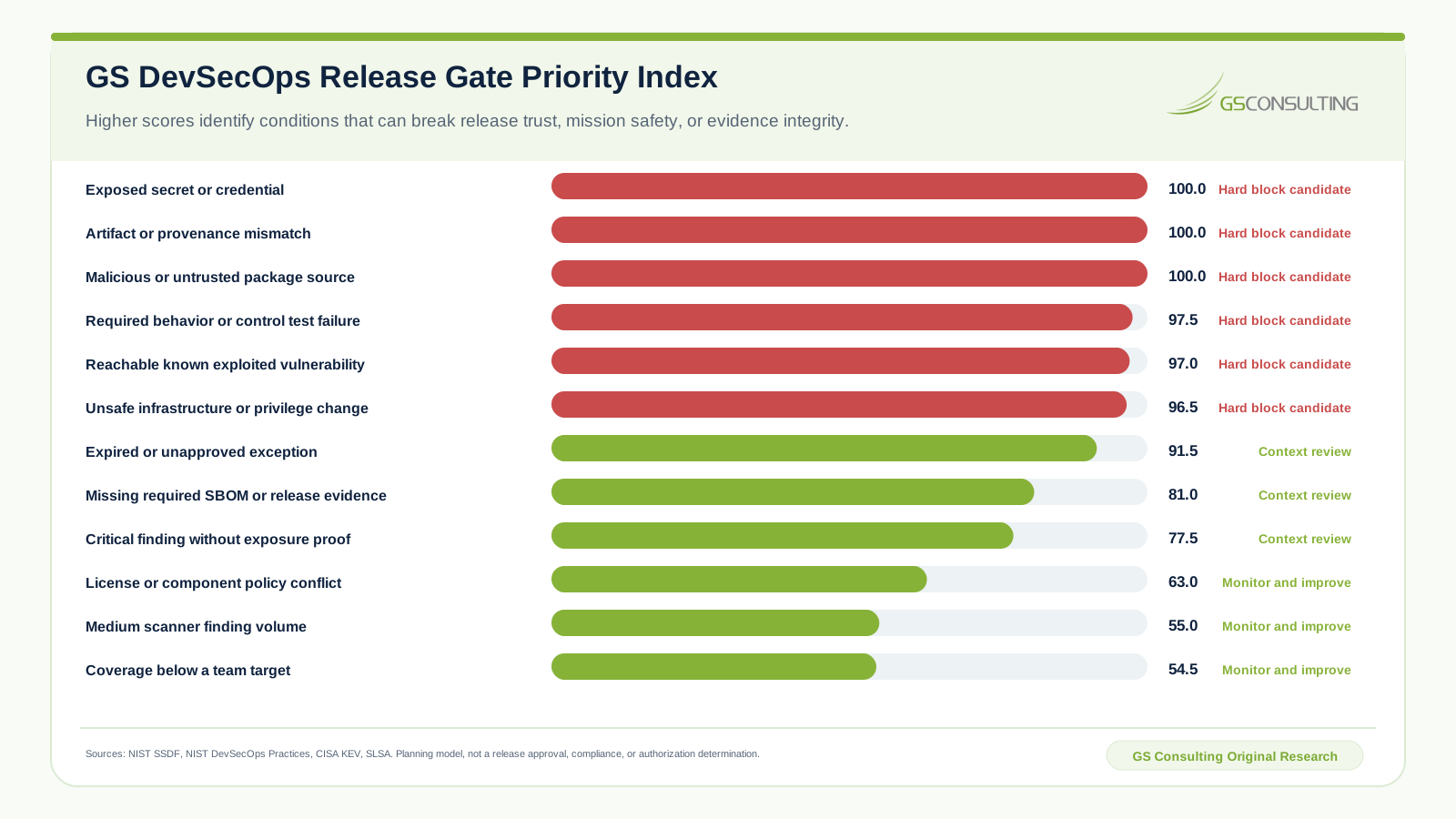
Exposed secrets, artifact or provenance mismatch, and malicious or untrusted package sources each score 100. Failed required behavior scores 97.5. A reachable known exploited vulnerability scores 97, and unsafe infrastructure or privilege change scores 96.5. These six lead because they provide direct evidence that trust, required behavior, exposure, or authority is broken.
An expired or unapproved exception scores 91.5. Missing required SBOM or release evidence scores 81. A critical finding without exposure proof scores 77.5. Those are context review conditions in the base model because the decision may depend on applicable requirements, reachability, target, mitigation, or named authority.
License or component policy conflict scores 63. Medium finding volume scores 55, and coverage below a team target scores 54.5. These can still stop a release when policy makes them mandatory, but their generic labels do not prove mission exposure. The alternate weights move no result by more than one point and preserve every main tier.
What to Block and What to Review
| Condition | Default class | Why | Required evidence |
|---|---|---|---|
| Secret exposed in source or artifact | Hard block | Credential trust is broken and use may already be possible | Secret identifier, affected scope, revocation, replacement, scan result |
| Artifact, signature, or provenance mismatch | Hard block | The release cannot prove what was built or approved | Digest, signature, builder, inputs, provenance, expected identity |
| Untrusted package source | Hard block | Component origin violates the accepted supply path | Package, version, source, policy, replacement, dependency path |
| Required behavior or control test fails | Hard block | The artifact does not meet an approved release requirement | Test identifier, expected result, actual result, artifact, run |
| Reachable KEV affects the target | Hard block candidate | Known exploitation plus reachable exposure creates urgent risk | KEV entry, component, reachability, target, exposure, mitigation |
| Unsafe infrastructure or privilege change | Hard block candidate | Broad authority or public exposure can change mission consequence | Plan, policy result, role change, target, reviewer, approved design |
| Critical finding without exposure proof | Context review | Severity alone does not establish the affected path or mission risk | Component, reachability, target, data, mitigation, exception authority |
| Evidence, license, or coverage gap | Context review or improve | Applicability depends on policy, contract, agency, mission, and scope | Applicable requirement, affected release, owner, plan, decision |
Current Federal Policy Requires Nuance
OMB Memorandum M 26 05, issued January 23, 2026, rescinded M 22 18 and M 23 16. The current memorandum directs federal agencies to use a risk based approach to software and hardware assurance aligned with mission needs. It does not support a blanket claim that every software producer must provide the same attestation on every acquisition.
Agencies can still request secure development attestations, SBOM data, VEX information, testing records, or other assurance evidence through current acquisition, contract, program, system, or agency direction. The CISA attestation form remains an available resource. Applicability comes from the current authority and acquisition facts, not from an old policy summary.
CISA's Known Exploited Vulnerabilities Catalog is another source that needs careful treatment. Binding Operational Directive 22 01 applies to Federal Civilian Executive Branch agencies. CISA urges every organization to use the catalog for prioritization, but that recommendation does not automatically create the same legal or contractual duty for every contractor.
NIST SSDF Version 1.1 remains the current final SSDF publication as of this article date. NIST's 2026 DevSecOps Practices project is an initial preliminary draft and rolling research effort. It is useful because it demonstrates risk based SSDF implementation and automated evidence, but it is not a final standard. SLSA Version 1.2 provides current build levels and provenance expectations, yet organizations still have to decide which level and evidence apply.
Use One DevSecOps Release Decision Path
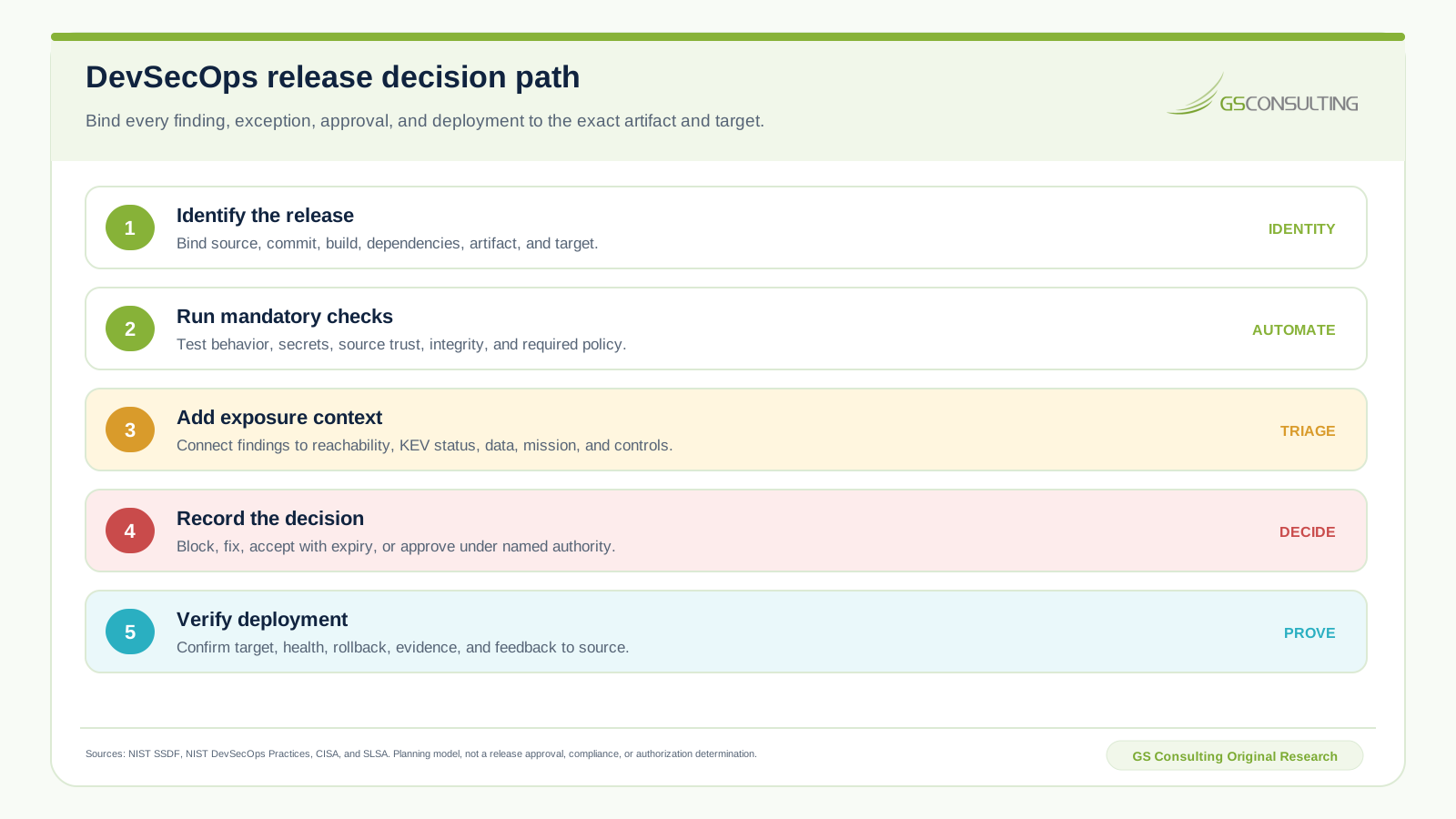
First, identify the release: requirement, source, commit, build, dependencies, artifact, and target. Second, run mandatory checks for required behavior, secrets, source trust, integrity, and approved policy. Third, add exposure context: reachability, KEV status, data, target, mission, compensating controls, and recovery.
Fourth, record the decision: block, fix, approve an exception with expiry, or release under named conditions. Fifth, verify deployment: target, artifact digest, health, rollback readiness, evidence capture, and feedback to the source system.
This path prevents a common handoff failure. Security approves a finding list, release engineering builds a different artifact, and operations deploys to a different target. The decision record must bind all three.
Six DevSecOps Gate Failures
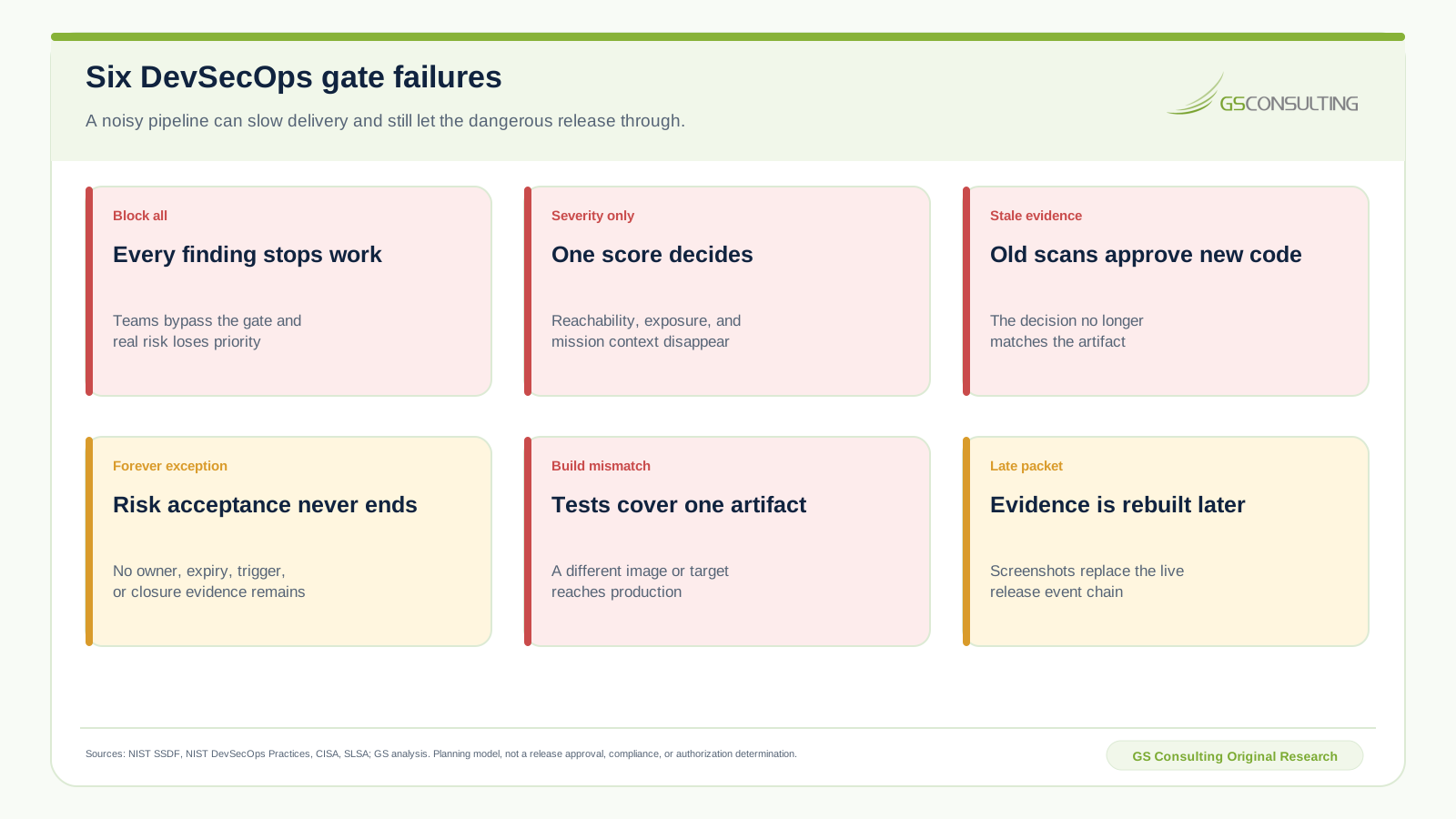
Every finding stops work. Teams bypass the gate and real risk loses priority. One severity score decides. Reachability, exposure, mission context, and exploit evidence disappear. Old scans approve new code. The decision no longer matches the artifact.
Risk acceptance never ends. No owner, expiry, trigger, or closure evidence remains. Tests cover one artifact. A different image or target reaches production. Evidence is rebuilt later. Screenshots replace the live release event chain.
The fix is not another dashboard. Write the decision contracts, bind evidence to immutable identities, limit exception authority, and measure whether the gates change real release outcomes.
Build One Release Evidence Packet
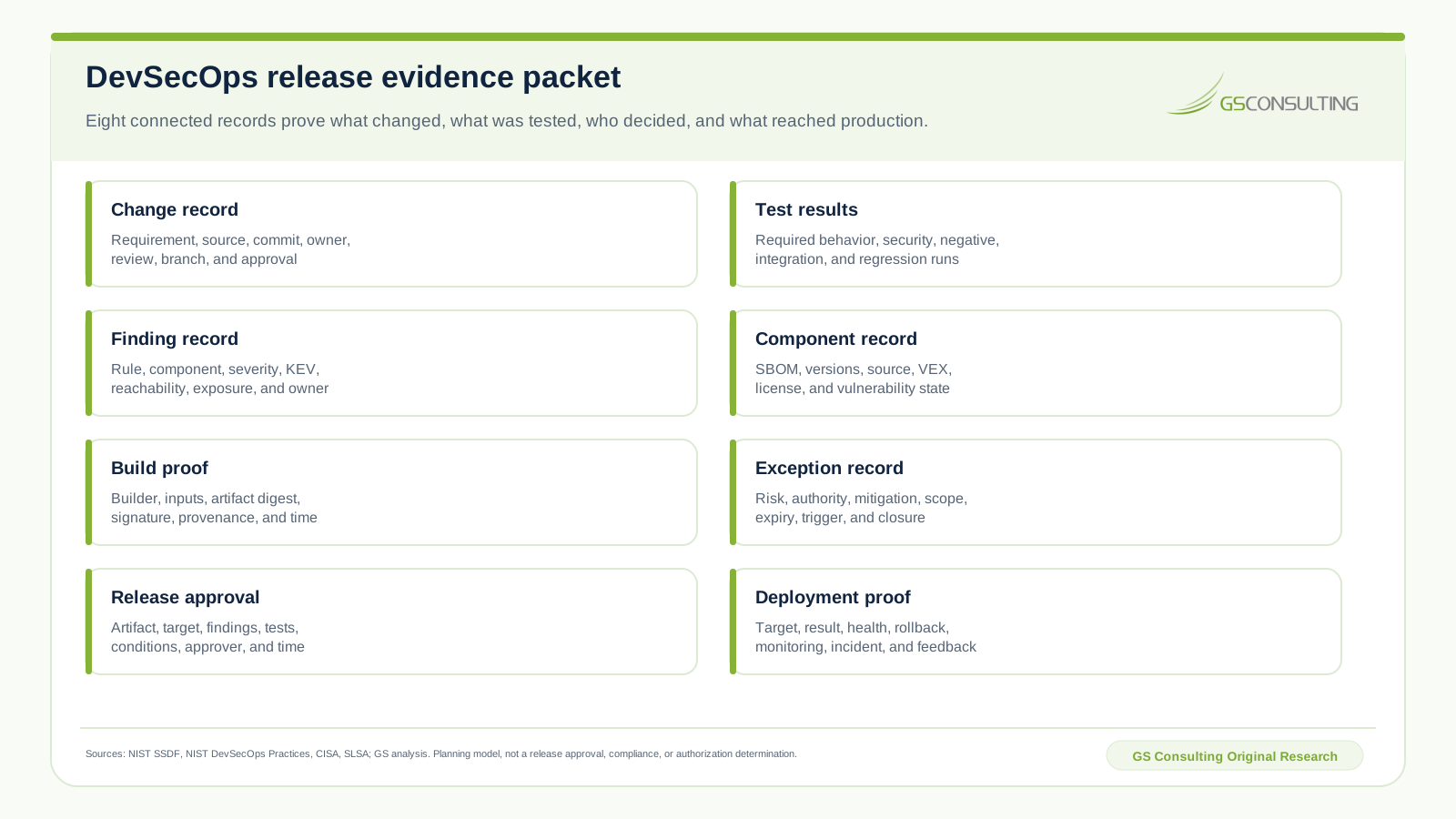
The packet needs a change record, test results, finding record, component record, build proof, exception record, release approval, and deployment proof. Every record should reference the same artifact identity and the target it may reach.
The component record should connect the SBOM, versions, source, VEX state, license, and vulnerability information. The build record should show builder identity, inputs, artifact digest, signature, provenance, and time. The exception record should show risk, authority, mitigation, scope, expiry, trigger, and closure. The release approval should state the artifact, target, findings, tests, conditions, approver, and time.
Generate this evidence during delivery. A live record chain is faster to review and harder to misunderstand than a folder of screenshots assembled after release.
A Practical Implementation Plan
- Inventory current gates. Record condition, stage, tool, owner, scope, evidence, consequence, exception path, and false positive burden.
- Define release trust. Identify secrets, sources, signatures, provenance, required tests, privilege rules, and approvals that cannot fail.
- Separate decision classes. Move objective trust failures to hard blocks, contextual risks to named review, and process health to trends.
- Add artifact and target identity. Bind every result and approval to digest, build, environment, deployment, and time.
- Build the exception service. Require authority, mitigation, expiry, trigger, affected scope, and closure proof.
- Automate the evidence packet. Produce records from the pipeline rather than reconstructing them after release.
- Measure gate quality. Track feedback time, bypass, exception age, false positives, escaped failures, rollback, and evidence completeness.
- Review policy against current authority. Confirm the contract, agency, mission, system, acquisition, and authorization facts before claiming a mandatory federal gate.
The decisive operating standard is this: block objective trust failures, review contextual risk under named authority, and bind every release decision to the exact artifact, target, and evidence that reached production.
Sources and Research Notes
- NIST Secure Software Development Framework Version 1.1
- NIST Secure Software Development Security and Operations Practices
- OMB Memorandum M 26 05
- CISA Known Exploited Vulnerabilities Catalog
- CISA SBOM Resources Library and VEX Guidance
- SLSA Build Track Levels Version 1.2
- CISA Secure Software Development Attestation Form
- DoD Enterprise DevSecOps Fundamentals Version 2.5
- NIST SP 800 204D
Frequently Asked Questions About DevSecOps Security Gates
What are DevSecOps security gates?
DevSecOps security gates are automated checks and governed review points that decide whether a specific software change, build, artifact, or deployment may continue. A useful gate has a clear condition, target, owner, evidence record, exception path, and release consequence.
What should a DevSecOps security gate block?
Strong hard block candidates include exposed secrets, failed required tests, artifact or provenance mismatch, malicious or untrusted package sources, reachable known exploited vulnerabilities, unsafe privilege changes, and missing mandatory approval. Actual policy must reflect mission, system, contract, agency, and authorization requirements.
Should every critical vulnerability block a release?
No. Severity matters, but the decision also needs reachability, exploit evidence, exposure, affected target, data, mission consequence, mitigation, exception authority, and release scope. A critical finding without exposure proof should receive urgent contextual review rather than an automatic universal conclusion.
Where should security gates run in a DevSecOps pipeline?
Run the earliest reliable check at source, dependency intake, build, test, package, release, deployment, and production. Bind later decisions to the exact artifact and target so an approved build cannot be replaced or deployed outside its approved scope.
How should DevSecOps exceptions work?
An exception should name the finding, artifact, target, risk, affected mission, mitigation, owner, approving authority, expiry, review trigger, and closure proof. Expired or unapproved exceptions should not release software.
Does federal policy require every software producer to submit a secure software attestation?
No universal current rule should be inferred. OMB Memorandum M 26 05 rescinded M 22 18 and M 23 16 and directs federal agencies to use risk based assurance aligned with mission needs. Agencies may still request attestations, SBOM data, or other evidence through current policy, acquisition, contract, or program direction.
Make every security gate earn its place.
GS Consulting helps delivery and security teams define release trust, tune gate policy, control exceptions, automate evidence, and align decisions with current federal and mission requirements.
Plan a DevSecOps Gate Review