DevSecOps & Software Supply Chain | | 22 min read
DevSecOps Secrets Management Across the Pipeline

Key Takeaways
Control the authority behind every secret
Deployment credentials score 98
Production cloud access creates the highest combined pressure for privilege, lifetime, exposure, reach, response, and evidence.
Issue identity for one job
Prefer scoped workload identity with a short lifetime over a reusable credential shared by repositories and environments.
Revoke before the meeting
Contain active authority first, then replace consumers, rescan every exposure path, reconcile delivery, and preserve closure proof.
DevSecOps secrets management is not a vault problem. It is an authority problem.
A protected value matters because of what it lets a person, job, tool, or service do. A deployment credential can change production. A package token can publish trusted software. A signing key can create apparent provenance. A database credential can expose or alter records. Moving those values into a vault is useful, but it does not answer who can retrieve them, which job receives them, how long they work, where they can appear, or how quickly they can be disabled.
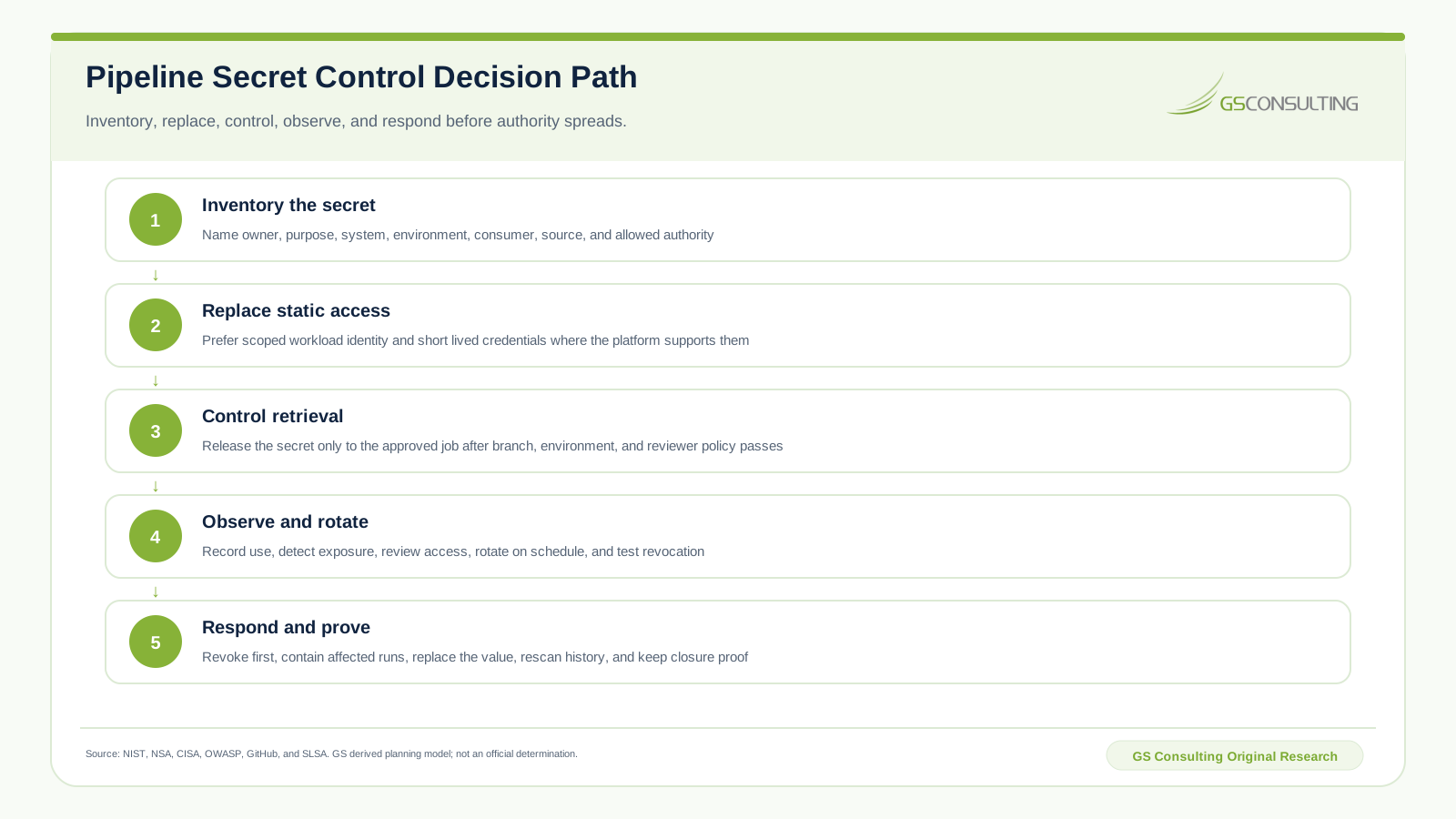
Manage each secret as a controlled grant of authority. Name its owner, purpose, issuer, consumer, environment, target, resources, lifetime, retrieval rule, exposure paths, rotation conditions, response owner, and required evidence. Remove static access where workload identity can issue a scoped token for one approved run.
The DevSecOps and Secure Software Delivery hub connects secrets to source protection, builds, release gates, and operating evidence. Pair this guide with DevSecOps Code Signing, DevSecOps Container Security, the DevSecOps Toolchain Guide, and Infrastructure as Code Security. GS Consulting applies the operating model through DevSecOps and Software Supply Chain.
Map pipeline authority before the next rotation.
GS Consulting helps regulated delivery teams inventory credentials, replace static access, constrain retrieval, test revocation, and preserve evidence from source through production.
Request a Pipeline Secrets ReviewDevSecOps Secrets Management: The Short Answer
Inventory every pipeline credential and the authority it grants. Replace reusable secrets with scoped workload identity where the platform supports it. Keep remaining secrets in a managed system. Release them only to approved jobs after repository, workflow, branch, environment, target, and reviewer policy passes.
Scan source, history, logs, artifacts, container layers, saved plans, state, caches, and output. Record use. Rotate from consequence and exposure, not a calendar alone. Test revocation. During suspected exposure, revoke first, contain affected runs, replace every consumer, inspect what the credential could reach, and retain closure proof.
Do not measure maturity by the number of values in a vault. Measure how much standing authority remains, how narrowly access is issued, how quickly the team can revoke it, and whether a reviewer can reconstruct the complete lifecycle.
Manage the Complete Secret Lifecycle
Start with discovery. Search repositories and history, but also enumerate platform secret stores, cloud identities, deployment environments, registries, package systems, signing services, databases, webhooks, third party services, and local automation. Unknown credentials cannot receive an owner, policy, rotation, or response path.
Classify by authority and exposure. Record whether a secret can read, write, deploy, publish, sign, administer, delete, or change identity. Name every account, repository, environment, tenant, region, service, and data class it can reach. Record whether it is shared and whether it appears in memory, logs, plans, state, images, artifacts, or caches.
Design issuance and retrieval next. The consuming job should present a verifiable identity. Policy should confirm the approved source, workflow, branch or tag, environment, audience, and target. The issued access should expire quickly and permit only the required action. A review gate belongs before retrieval when the action carries material production authority.
Close the lifecycle with observation, rotation, revocation, and retirement. A value removed from one repository can remain active in a forgotten consumer. Rotation succeeds only when all consumers use the new value and the old value is disabled. Retirement also removes access rules, aliases, service accounts, caches, and unneeded evidence copies.
Public Guidance Points to Lifecycle Control
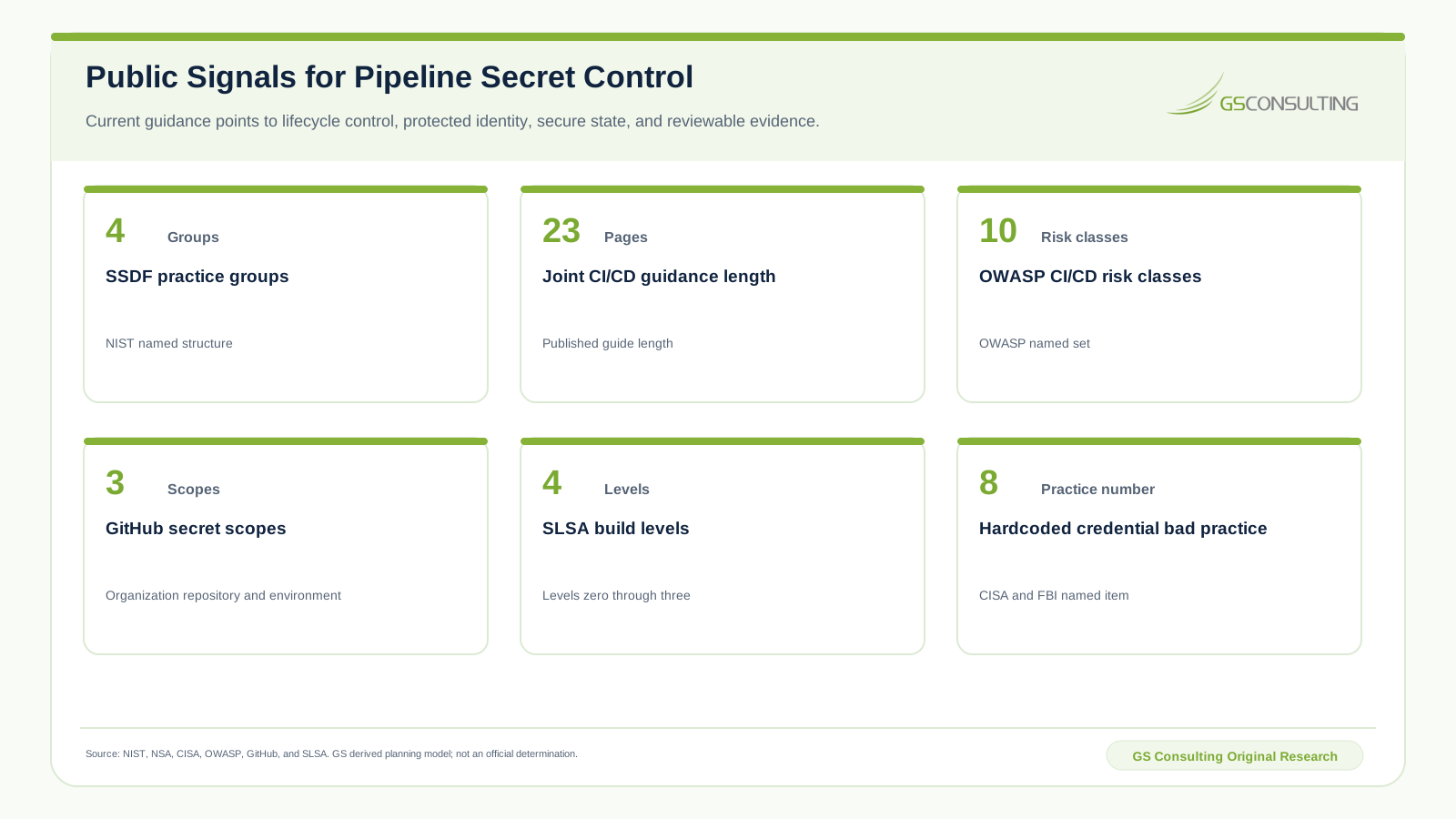
NIST SP 800-218 organizes the Secure Software Development Framework into four practice groups. NIST SP 800-204D applies software supply chain strategies across build, test, package, and deploy activity. Neither publication selects a secrets product. Both support treating credentials as part of the protected delivery environment.
The joint NSA and CISA guidance for CI/CD environments describes pipeline attack surfaces and recommends least privilege, temporary credentials, auditing, scanning, and protected infrastructure. The CISA and FBI Product Security Bad Practices guide identifies hardcoded credentials as named bad practice number eight for its covered product scope.
The OWASP CI/CD Security Cheat Sheet covers secrets, least privilege, temporary credentials, lifecycle, logging, and separation. GitHub documents organization, repository, and environment scopes while warning that redaction is not a complete security boundary. Its OpenID Connect guidance shows how workflow claims can support short lived cloud access. SLSA Build Requirements version 1.2 isolates provenance signing material from user defined build steps at Build Level 3.
Original Research: Pipeline Secret Control Priority
Production cloud deployment credentials score 98. CI platform administrator tokens score 96. Provenance signing keys score 93. Production database credentials score 91, and package publishing tokens score 90. These credential classes combine powerful actions with broad exposure, reach, response burden, and evidence duties.
GS Consulting rated twelve representative credential classes from one to five across privilege consequence, lifetime and reuse, exposure pathways, environment reach, revocation burden, and evidence duty. Base weights are 25, 20, 20, 15, 10, and 10 percent. The result is normalized to a zero to 100 control priority score.
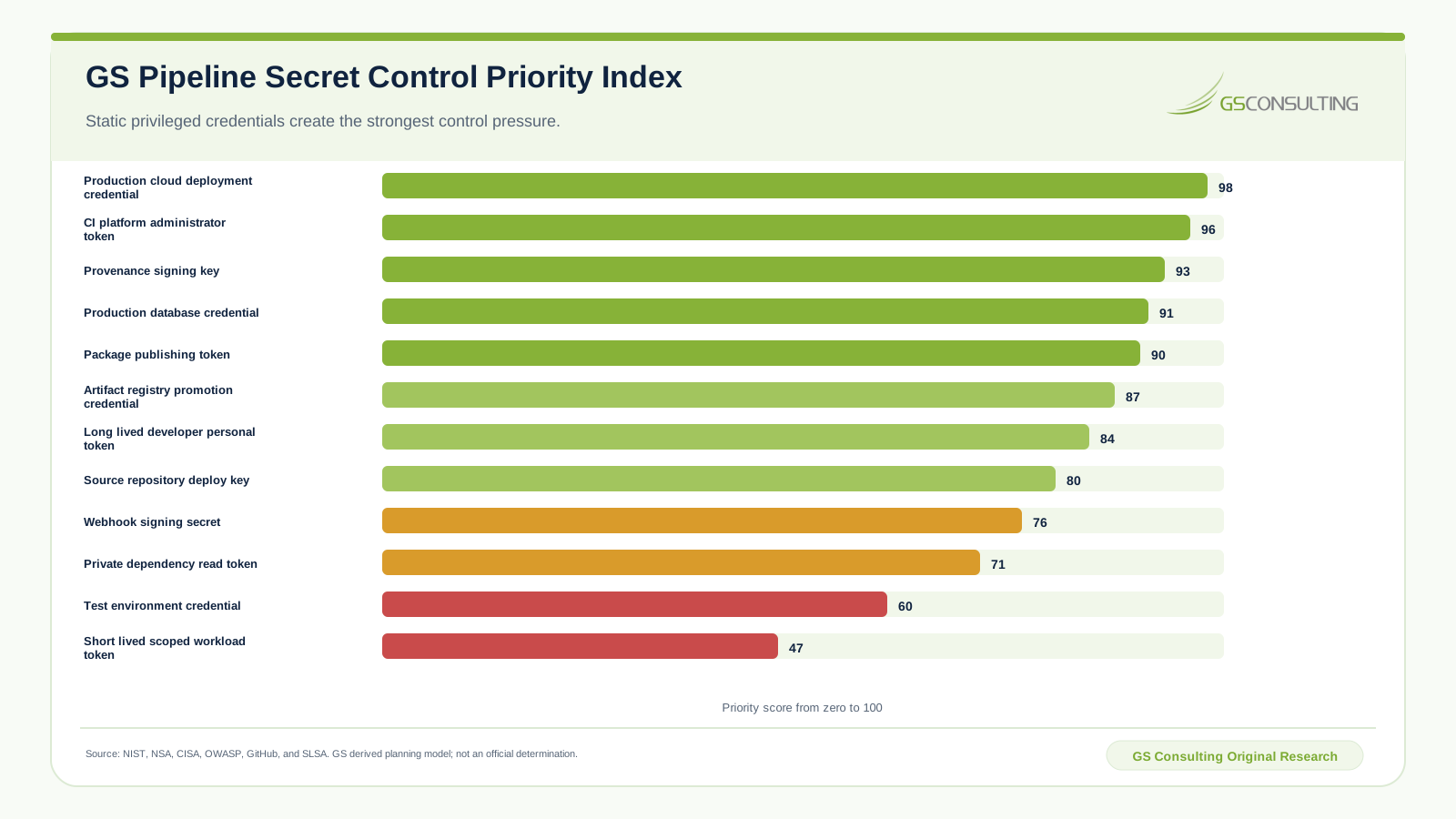
Artifact registry promotion credentials score 87. Long lived developer personal tokens score 84. Repository deploy keys score 80. Webhook signing secrets score 76, private dependency read tokens score 71, and test environment credentials score 60. A short lived scoped workload token scores 47 because the illustrative ratings assume limited lifetime, reuse, exposure, and reach. Its permissions still matter.
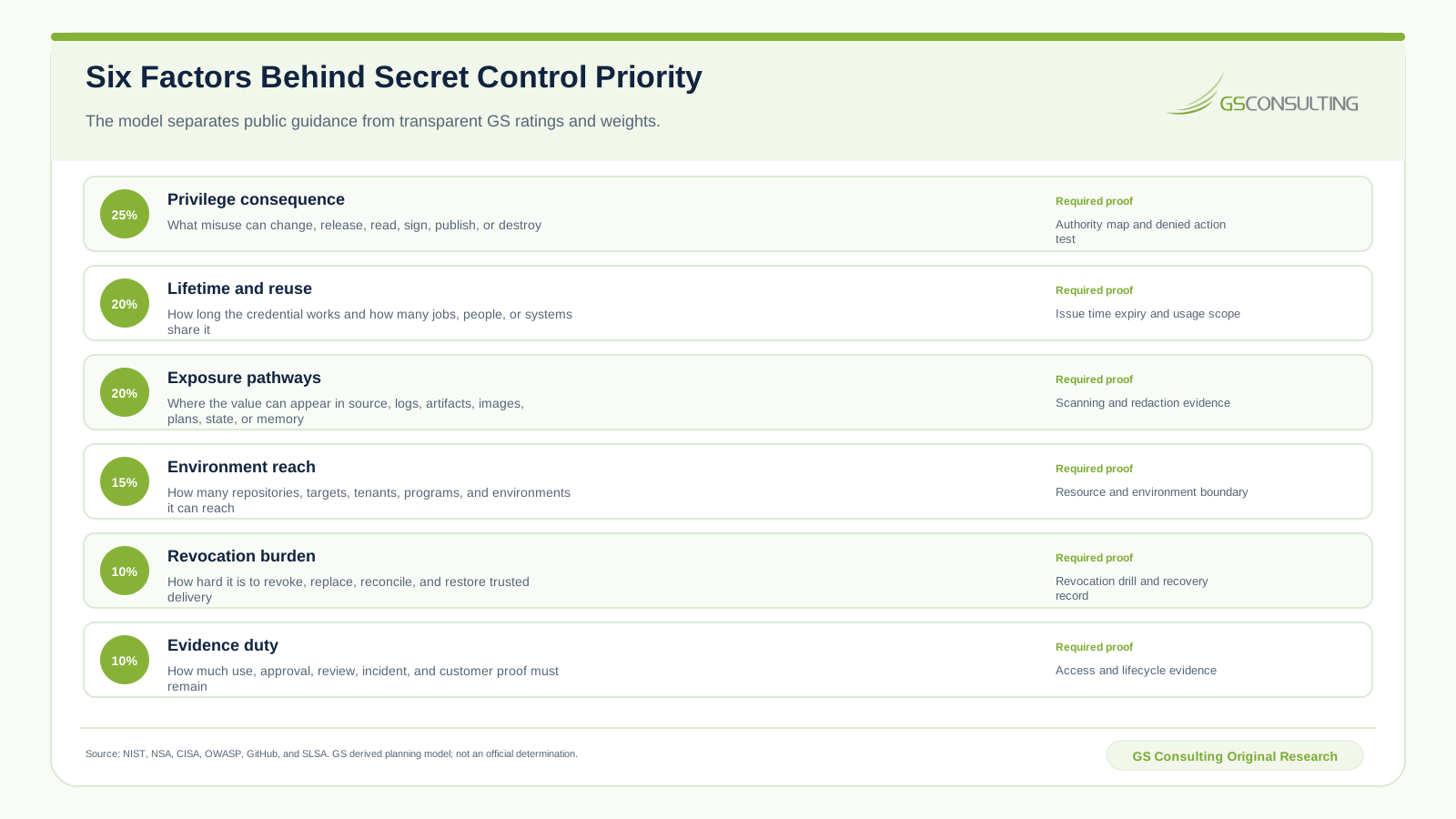
The alternate model increases lifetime and reuse weight to 25 percent and reduces exposure weight to 15 percent. Priority order remains stable and movement is small. This tests arithmetic sensitivity, not the validity of local ratings. Replace every input with actual permissions, consumers, platforms, environments, obligations, and response performance.
This is a GS Consulting derived planning model based on cited public sources and documented assumptions. It is not an official legal, audit, compliance, NIST, CISA, NSA, DoD, SLSA, OWASP, vendor, authorization, or regulatory determination.
Place Controls Across the Pipeline
At source, prevent active values from entering commits, history, issue attachments, sample files, and workflow definitions. Protect changes to pipeline code because a workflow edit can redirect, print, or exfiltrate a value even when application source is clean.
During build and test, separate untrusted steps from protected values. Dependency reads should not inherit deployment authority. Pull request jobs from forks should not receive production secrets. User supplied build steps should not reach provenance signing material. Keep credentials out of images, caches, test output, and reusable artifacts.
During package and promotion, bind publishing and signing authority to the trusted build service and exact artifact. A token that can overwrite packages or move an image into a production registry deserves narrow scope, protected retrieval, strong logging, and immediate revocation.
During deploy, require environment policy and named approval where consequence demands it. Issue access only after the exact artifact, target, branch or tag, workflow, reviewer, and change conditions are known. Do not place the production credential in every earlier job.
At runtime, keep application identity separate from delivery identity. Deployment should not leave its own broad credential in the workload. Runtime services should receive their own scoped identities, secrets, rotation, monitoring, and incident paths.
Replace Static Access with Workload Identity
Workload identity lets a pipeline prove who it is to an identity provider and request a short lived token. The trust policy can inspect claims such as organization, repository, workflow, branch, tag, environment, audience, or reusable workflow. The target then issues only the role required for that approved job.
This pattern reduces stored secret inventory and limits the value of copied material. It does not remove design work. A loose subject rule, broad audience, excessive role, unprotected workflow, or reusable token can recreate standing authority. Test allowed and denied paths. Verify that an unapproved branch, repository, workflow, audience, and target cannot obtain access.
Where a static value remains, isolate it behind the same decision logic. Use distinct values for environments and actions. Avoid shared human tokens. Limit readers and administrators. Monitor every retrieval and use. Keep a consumer map so rotation and incident response do not depend on memory.
Scan Every Place a Secret Can Appear
Source scanning is the beginning. Inspect version history, pull request text, build logs, test reports, debug output, package metadata, container layers, image history, caches, artifact bundles, deployment manifests, saved plans, infrastructure state, crash data, and support exports. Tune redaction, but assume unknown formats and transformed values can escape it.
A detection opens two questions. Where did the value appear, and what authority did it have while exposed? Remove the exposed copy, revoke the credential, inspect access records, replace consumers, rescan related paths, and determine whether unauthorized action occurred. Deleting the visible string alone does not close the event.
Keep useful evidence without copying the secret into the evidence store. Record an identifier, owner, issuer, purpose, fingerprint where safe, scope, issue and expiry times, retrieval policy, use result, rotation event, and revocation result. Evidence access should be narrower than general pipeline access.
Make Rotation and Revocation Operational
A rotation calendar is not a response capability. Test whether the owner can identify every consumer, issue replacement access, update jobs in order, disable the old value, detect remaining use, reconcile interrupted delivery, and prove closure. High consequence credentials need tested revocation before an incident.
During suspected exposure, revoke or disable active authority first when safe. Pause affected jobs. Preserve logs and the change context. Identify every resource the credential could reach and every artifact it could alter or sign. Replace consumers from a trusted path. Rebuild or reissue anything whose integrity cannot be established.
Separate emergency containment from later review. A credential should not keep working while a meeting decides who owns it. Give an incident role the authority and tooling to disable access, then require an after action review of root cause, scope, recovery, evidence, and control changes.
Six Pipeline Secret Management Failures
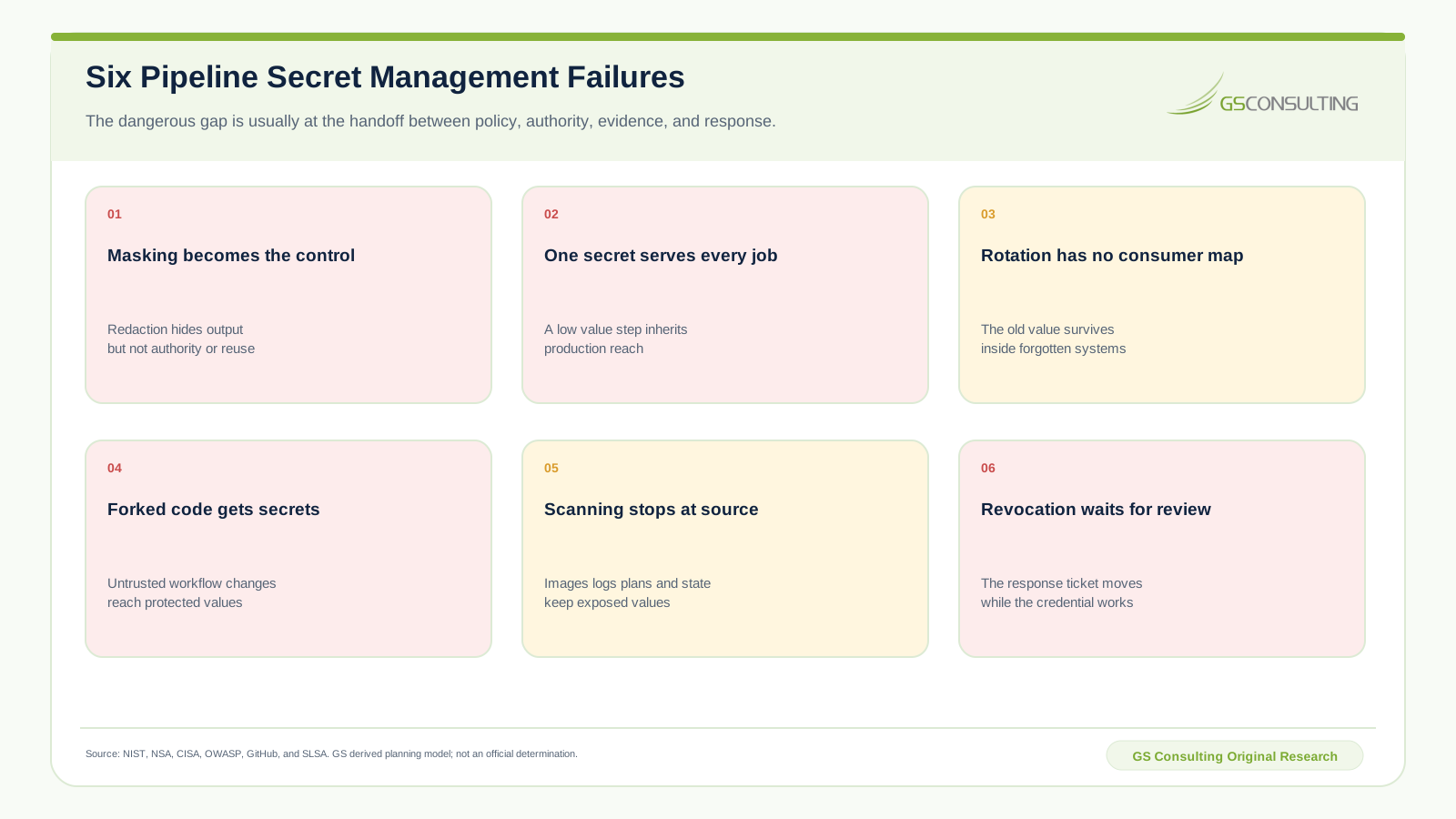
Masking becomes the control even though the credential still works. One value serves every job, so a low consequence step inherits production reach. Rotation lacks a consumer map, leaving the old value active. Forked or untrusted workflow code reaches protected values. Scanning stops at source while images, logs, plans, and state keep copies. Revocation waits for review while the credential remains usable.
Correct these failures with separate identities, short lifetime, protected workflow definitions, target bound retrieval, broad exposure scanning, owned consumer maps, tested revocation, and evidence that covers both allowed and denied behavior.
Keep a Minimum Secret Evidence Packet
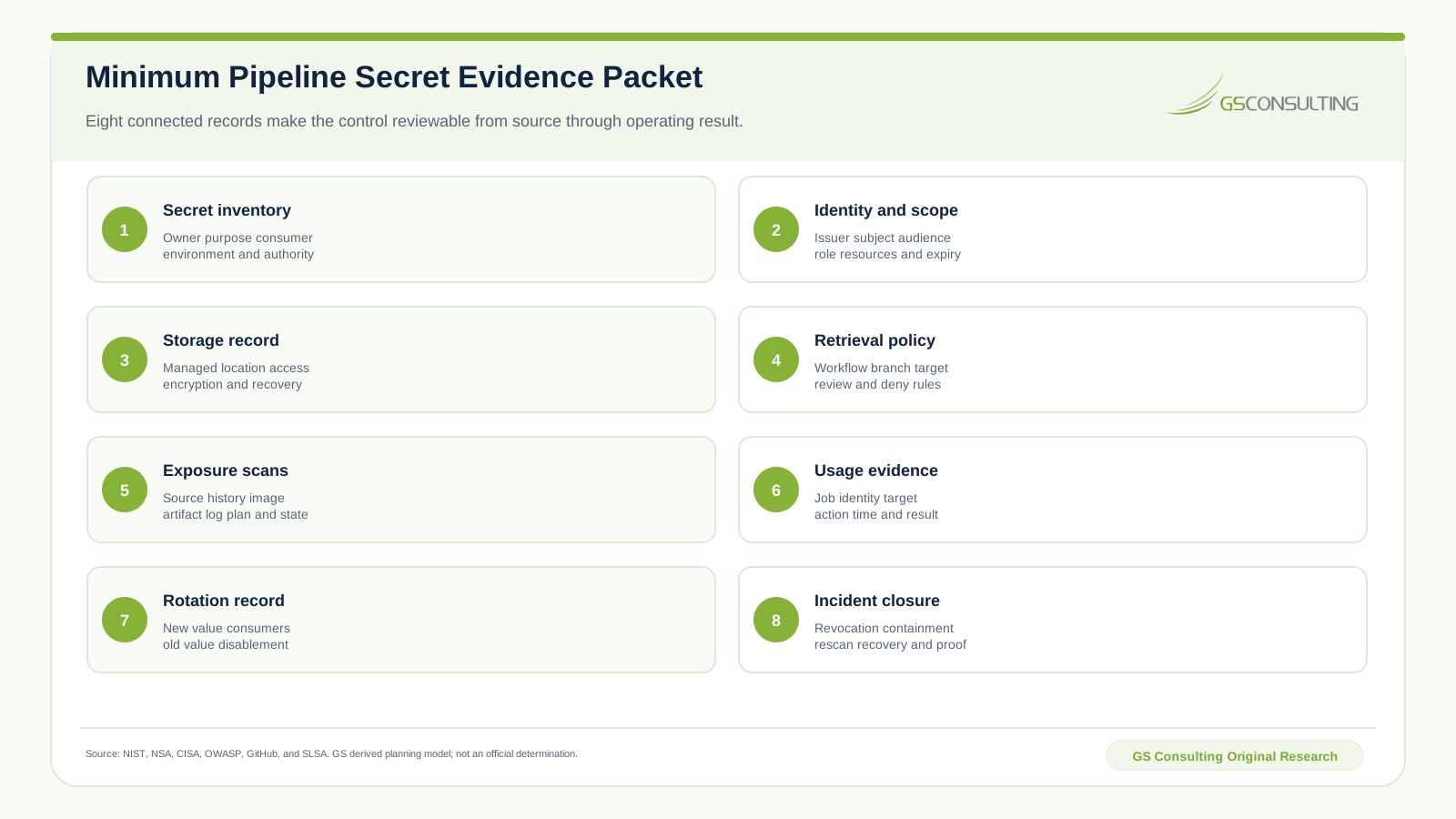
Keep the secret inventory, identity and scope record, storage record, retrieval policy, exposure scans, usage evidence, rotation record, and incident closure. Link them through a stable credential identifier without storing the active value in ordinary evidence. Record changes to owners, consumers, scope, trust rules, targets, and response paths.
The packet should answer: what authority existed, who or what could obtain it, what conditions applied, where the value could appear, when it was used, what was denied, when it changed, whether the old value stopped working, and how an exposure was closed.
A 30, 60, and 90 Day Plan
By day 30, inventory credential classes, owners, consumers, stores, permissions, environments, and exposure paths. Stop new secrets from entering source. Protect workflow definitions. Define emergency revocation owners and identify the five credentials with the greatest production authority.
By day 60, replace high priority static access with scoped workload identity where supported. Separate environments and actions. Add policy before retrieval, expand scanning beyond source, record use, create consumer maps, and rotate the most consequential remaining values.
By day 90, test denied identity paths, revoke high priority credentials, reconcile affected jobs, and review the evidence packet. Measure standing credential count, average lifetime, shared consumer count, exposure findings, revocation time, old value use, and unresolved ownership gaps.
Sources and Suggested Future Reading
- NIST SP 800-218, Secure Software Development Framework version 1.1
- NIST SP 800-204D, Software Supply Chain Security in DevSecOps Pipelines
- NSA and CISA, Defending CI/CD Environments
- CISA and FBI, Product Security Bad Practices
- OWASP CI/CD Security Cheat Sheet
- GitHub, Secrets in GitHub Actions
- GitHub, OpenID Connect Reference
- SLSA Build Requirements version 1.2
Frequently Asked Questions
What is DevSecOps secrets management?
DevSecOps secrets management is the lifecycle control for credentials, keys, tokens, certificates, and other protected values used by software delivery. It covers inventory, identity, storage, retrieval, scope, use, scanning, rotation, revocation, incident response, and retained evidence across the pipeline.
Should a pipeline use long lived cloud credentials?
Prefer short lived workload credentials when the delivery platform and target support them. Bind trust to the approved repository, workflow, branch, environment, audience, and target. Where a static credential remains necessary, reduce its authority, isolate retrieval, rotate it, monitor use, and test revocation.
Is masking a secret in logs enough?
No. Masking limits some display exposure but does not remove the credential, reduce its authority, prevent reuse, or prove that it did not enter artifacts, images, plans, state, caches, or history. Treat masking as one output control inside a broader lifecycle.
Where should pipeline secrets be stored?
Store them in a managed system with controlled access, encryption, audit records, recovery, and rotation support. Release a value only to the approved job and environment after policy passes. Do not keep active secrets in source, images, saved plans, state, or general configuration files.
How often should pipeline secrets be rotated?
Set rotation from consequence, exposure, lifetime, provider limits, contract duties, and incident conditions. Rotate immediately after suspected exposure, unauthorized use, owner departure, scope change, or trust policy failure. Test that every consumer moves and the old value stops working.
What evidence should a secrets program retain?
Retain the inventory, owner, purpose, issuer, subject, audience, resources, expiry, storage record, retrieval policy, scan results, usage records, rotation proof, denied action tests, and incident closure. Link each record to the credential class and affected delivery target.