DevSecOps & Software Supply Chain | | 23 min read
DevSecOps Compliance Evidence Automation Guide

Key Takeaways
Automation creates value when the evidence can support a decision
Start with the claim, not the log source
Define the control objective, assessment method, scope, reviewer, and decision before collecting records.
Bound release proof scores 100
Artifact identity, trusted source, replayability, freshness, and reviewer utility converge at release and deployment.
Sample automated evidence continuously
Fast collection can repeat the wrong mapping at scale. Reconstruct real decisions and fix silent gaps.
DevSecOps compliance evidence automation means creating trustworthy proof as code, builds, tests, approvals, releases, deployments, and operations change. The goal is a reviewable decision record, not a larger archive.
Manual collection often starts too late. Teams search chats, rebuild release history, capture screenshots, and copy scanner results after a review begins. The records may be accurate, but identity, scope, time, policy version, artifact binding, and approval are difficult to reconstruct.
A stronger design starts with the claim and expected assessment method. It instruments the delivery path, preserves source authenticity, binds records to immutable identifiers, normalizes them into a controlled model, routes exceptions, and samples the result. That makes evidence a property of the workflow.
The DevSecOps resource hub connects evidence automation to source protection, security gates, components, vulnerabilities, and operating metrics. Pair this guide with DevSecOps vulnerability management, DevSecOps security gates, the software bill of materials guide, and audit trails for automated workflows. GS Consulting applies the model through DevSecOps and software supply chain services.
Build evidence into the delivery path.
GS Consulting helps engineering, security, and compliance teams define claims, instrument source records, bind proof to artifacts, and improve reviewer decisions.
Design the Evidence WorkflowDevSecOps Compliance Evidence Automation: The Short Answer
Define the requirement, control objective, assessment method, scope, owner, reviewer, and decision. Identify the event that should prove operation. Generate a structured record at that event, bind it to the exact source, build, artifact, target, policy, tool version, and time, then protect and retain it. Validate schema and traceability, route exceptions, and preserve the review result.
Automate collection only after the evidence contract is clear. A deployment log can prove that a specific artifact reached a target at a time. It cannot by itself prove that the artifact passed required controls, that the approver saw the same record, or that the service remained healthy. Each claim needs the right combination of records.
Keep three boundaries separate. A control framework defines expectations. A delivery system creates operating records. An assessor or accountable authority evaluates whether those records are sufficient. Automation can strengthen and accelerate the connection. It cannot replace judgment, contract interpretation, or independent assessment where those are required.
Start With a Control Claim and Evidence Contract
Write the claim in testable language. Name the subject, expected behavior, scope, frequency or trigger, condition, and result. Then choose the assessment method. NIST SP 800-53A Revision 5 uses examine, interview, and test methods. A source record may support examination. A repeatable policy run may support testing. Neither makes a person interview unnecessary when the objective requires one.
The evidence contract defines the producer, event, schema, identifiers, required fields, integrity mechanism, delivery path, access, retention, freshness, validation, exception behavior, and reviewer. It also states what the record cannot establish. That limitation prevents a precise technical event from being stretched into a broader compliance conclusion.
Use stable identifiers across requirement, control, procedure, change, commit, build, artifact, component record, test, exception, approval, deployment, environment, service, and review. Record applicable policy, tool, rule, and schema versions. Without these bindings, a reviewer sees plausible documents but cannot determine whether they describe the same release.
Public Guidance Supports Structured and Reviewable Records
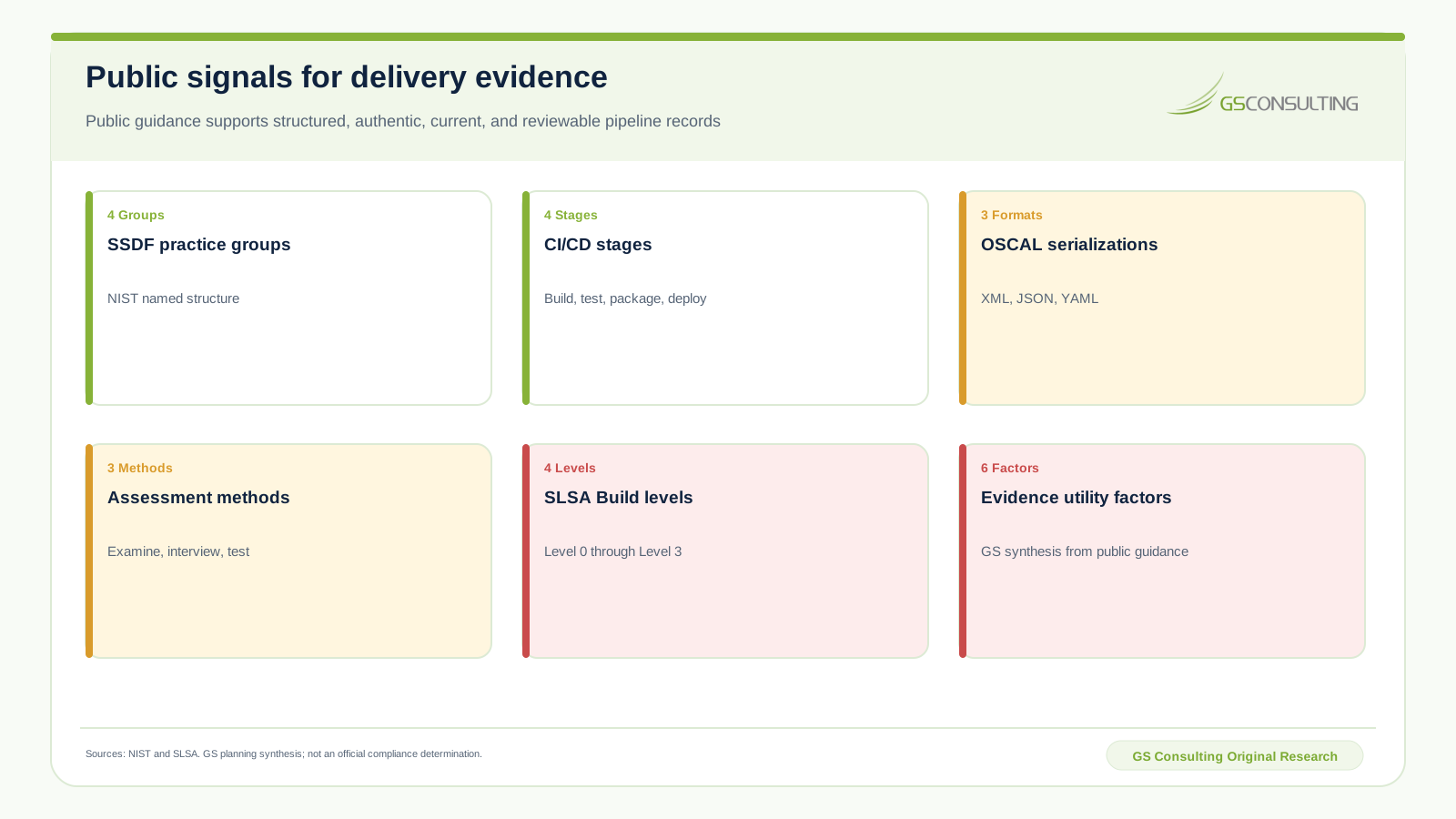
NIST SP 800-218 Secure Software Development Framework version 1.1 calls for recording and retaining secure development information and using vulnerability information to improve practices. NIST SP 800-204D organizes secure delivery across build, test, package, and deploy stages. Together they reinforce a lifecycle record rather than a final review folder.
The NIST Open Security Controls Assessment Language provides XML, JSON, and YAML models for control catalogs, profiles, implementation, assessment plans, results, and related content. OSCAL improves portability and machine processing. It does not prove that a mapped control operated or that a submitted artifact is authentic.
The SLSA version 1.2 Build track defines increasing expectations for build provenance and isolation. Provenance is valuable because it can connect an artifact to builder, inputs, process, and output. Its usefulness still depends on trusted generation, verification, and the local decision that consumes it.
GS DevSecOps Evidence Decision Utility Index
GS Consulting built a derived planning model for twelve representative pipeline evidence classes. Six analyst ratings use a one to five scale: control relevance, immutable binding, source authenticity, replayability, freshness, and reviewer utility. The base weights are 25 percent, 20 percent, 20 percent, 15 percent, 10 percent, and 10 percent.
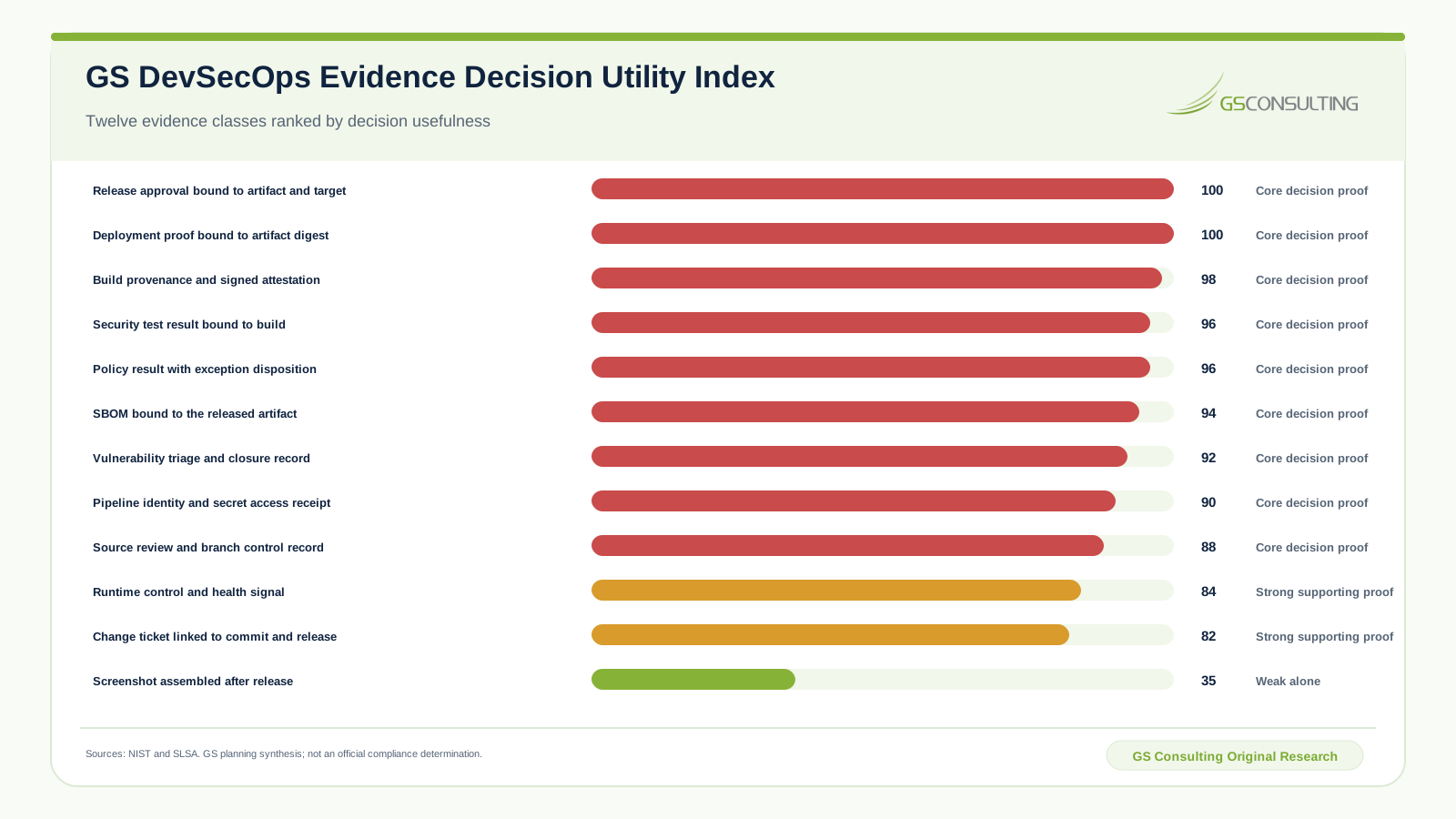
A release approval bound to artifact and target scores 100. Deployment proof bound to the artifact digest also scores 100. Build provenance with signed attestation scores 98, while a security test result bound to the build and a policy result with exception disposition each score 96. A screenshot assembled after release scores 35.
The model does not reject screenshots. It shows why screenshots are weak when they lack trusted source identity, durable binding, replayable context, and reviewer utility. A screenshot can still support a claim about visual configuration or human review when its origin, scope, time, and connection to the decision are preserved.
A sensitivity case shifts five weight points from immutable binding to source authenticity. No evidence class changes tier, and the largest score movement is one point. The result is stable inside this small scenario, but the classes, ratings, weights, thresholds, and tiers remain GS analyst assumptions.
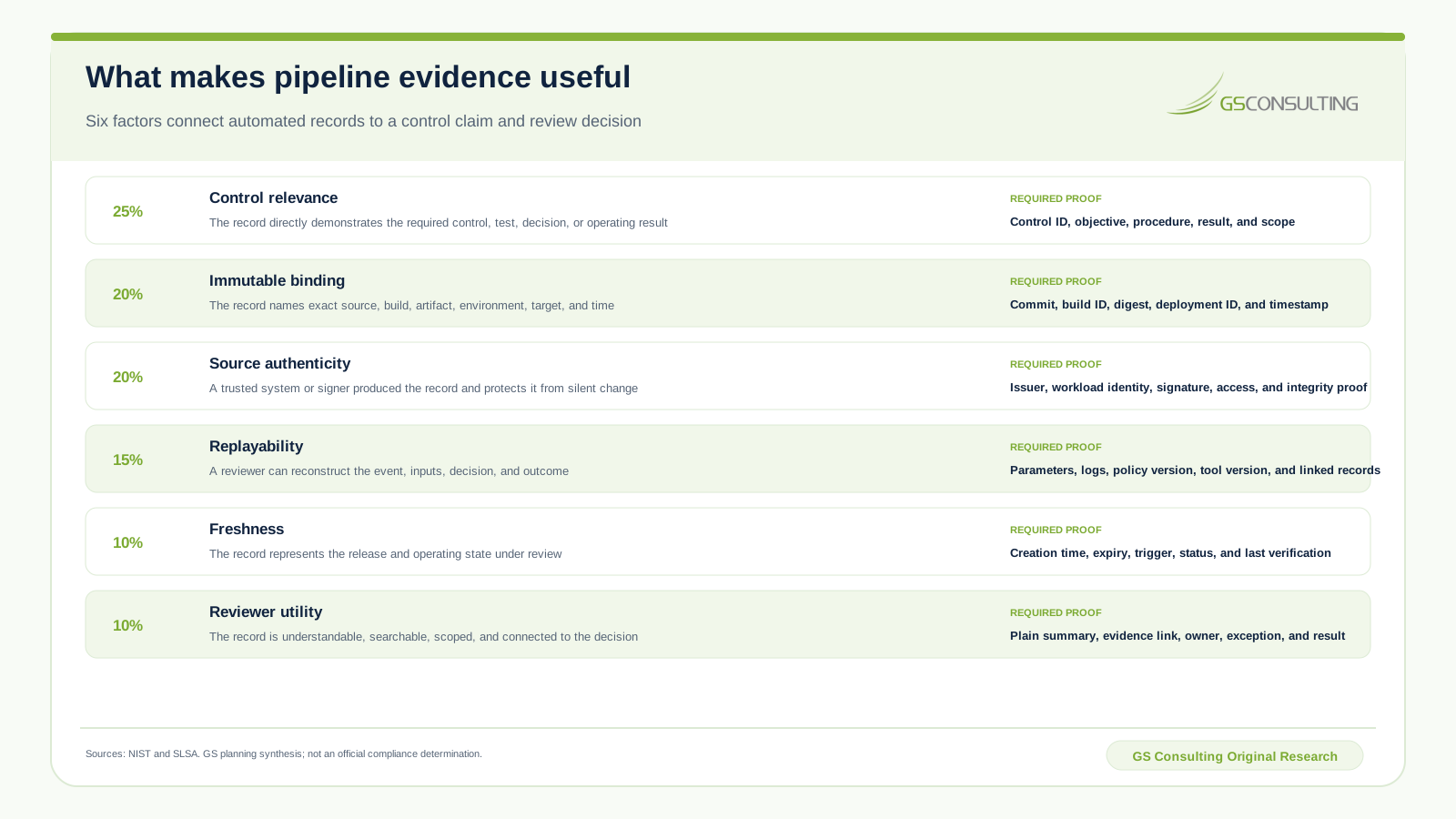
This is a planning model, not an official NIST, SLSA, federal, audit, certification, authorization, contractual, regulatory, or legal determination. Use the workbook to replace generic assumptions with the actual control, delivery architecture, reviewer, and evidence duty.
Design a Six Part Evidence Architecture
Claim map. Connect requirements, controls, procedures, systems, components, owners, assessment objectives, methods, and decisions. Avoid a simple many to many map that claims every log supports every control.
Event model. Define which delivery events create evidence: commit review, build, policy evaluation, security test, component inventory generation, exception approval, release approval, deployment, health check, vulnerability closure, and periodic review.
Identity graph. Bind source revision, build, artifact digest, component record, release, environment, service, and change. Preserve both human readable and machine identifiers. Detect missing or contradictory links before accepting the record.
Trust layer. Use authenticated workloads, controlled issuers, signatures or integrity checks, protected time, restricted write paths, versioned policy, and access records. A trusted store cannot repair an untrusted producer.
Evidence store and index. Retain structured records with controlled metadata, access, retention, legal hold where applicable, and search. Keep sensitive values out of the record unless the claim truly requires them. The index should point to authoritative evidence rather than copy every payload.
Review layer. Validate schema, identity, control mapping, time, scope, exception status, and completeness. Sample real decisions, capture reviewer findings, record acceptance or rejection, and feed defects back to the pipeline.
Use a Five Stage Automation Path
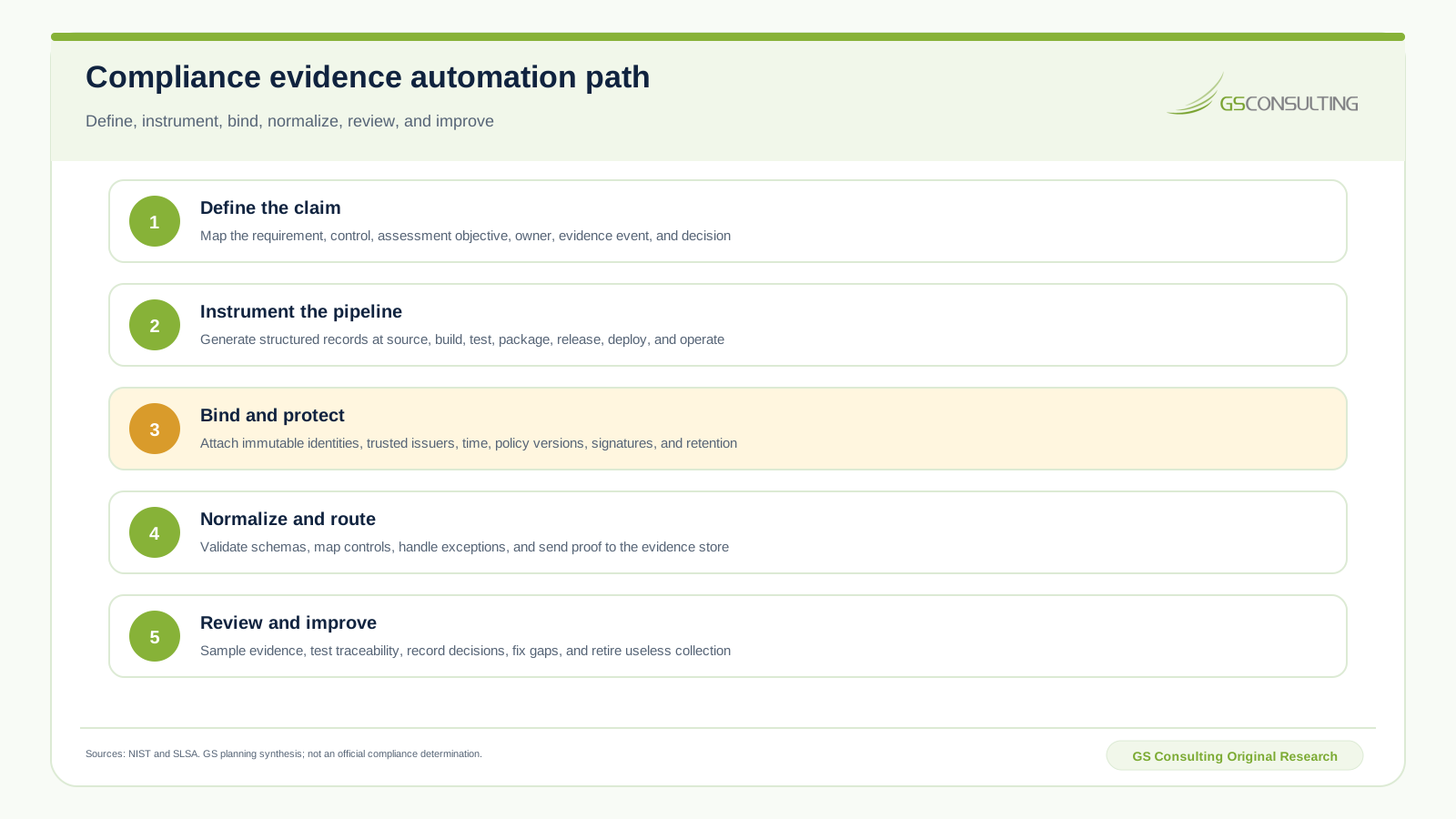
Define the claim. Map requirement, control, assessment objective, owner, evidence event, reviewer, and decision. State the expected proof and known limitation.
Instrument the pipeline. Create structured records at source, build, test, package, release, deploy, and operate events. Preserve raw source data when transformation could matter to review.
Bind and protect. Attach commit, build, artifact digest, component, environment, target, policy version, issuer, signature, and trusted time. Apply retention and access rules.
Normalize and route. Validate schema, map controls, detect missing fields, handle duplicates, route exceptions, and send the record to the evidence index. Fail safely when required identity or proof is absent.
Review and improve. Reconstruct decisions, sample evidence, test traceability, record findings, retire useless collection, and repair incorrect mappings. Evidence quality is an operating control.
Build Evidence Around the Decision
| Decision | Core evidence | Common gap |
|---|---|---|
| Approve a release | Change, tests, policy results, exceptions, component record, artifact digest, approver, target | The approval names a version but not the exact artifact |
| Trust a build | Builder identity, inputs, source revision, process, output digest, provenance, verification | Provenance exists but the verifier trusts any issuer |
| Accept a vulnerability temporarily | Finding, affected scope, exposure, controls, authority, expiry, monitoring, resolution plan | The exception has no automatic return to review |
| Confirm deployment | Release identity, artifact digest, target, environment, time, deploy result, health check | A successful job does not show which artifact is running |
| Assess a control | Objective, method, procedure, sample, source records, result, reviewer, disposition | Logs are attached without explaining how they satisfy the objective |
Use the minimum set that supports the decision. More records can reduce clarity, increase review cost, copy sensitive values, and make contradictions harder to see. Evidence quality depends on relevance and traceability, not file count.
Keep Federal Claims Current and Specific
Do not describe one universal federal software evidence mandate. OMB Memorandum M-26-05, issued January 23, 2026, rescinded M-22-18 and M-23-16 and directs agencies toward risk based software and hardware assurance. Agencies may select evidence suited to the risk and may create contractual requirements.
The applicable duty can come from law, regulation, agency policy, solicitation, award term, data item, security plan, authorization condition, customer direction, or an internal control. Record that authority with the evidence contract. If the authority changes, update the mapping and preserve the version that governed each decision.
NIST publications and OSCAL offer valuable structures, but NIST does not certify an organization through an OSCAL file or a pipeline record. SLSA provenance can support software supply chain trust but does not establish federal compliance by itself. When contract or legal interpretation matters, involve the contracting officer and qualified counsel.
Implement Evidence Automation in Twelve Weeks
Weeks one and two: select one product, one release decision, and five to ten material control claims. Map current records, systems, owners, reviewers, authorities, retention, and known gaps. Measure reconstruction time for a recent release.
Weeks three and four: write the evidence contracts. Define the events, schemas, identifiers, trust requirements, validation, exception handling, access, retention, and decision criteria. Remove records that do not support a claim.
Weeks five through eight: instrument source, build, tests, policy, component inventory, exceptions, approval, deployment, and health. Bind every record to the artifact and target. Create the evidence index and automated quality checks.
Weeks nine through twelve: reconstruct several releases, including a failed build, an approved exception, a rejected promotion, a rollback, and a vulnerability closure. Have an independent reviewer trace the evidence without oral explanation. Fix silent gaps, duplicate collection, sensitive data leakage, and unclear mappings.
Avoid Six Compliance Evidence Failures
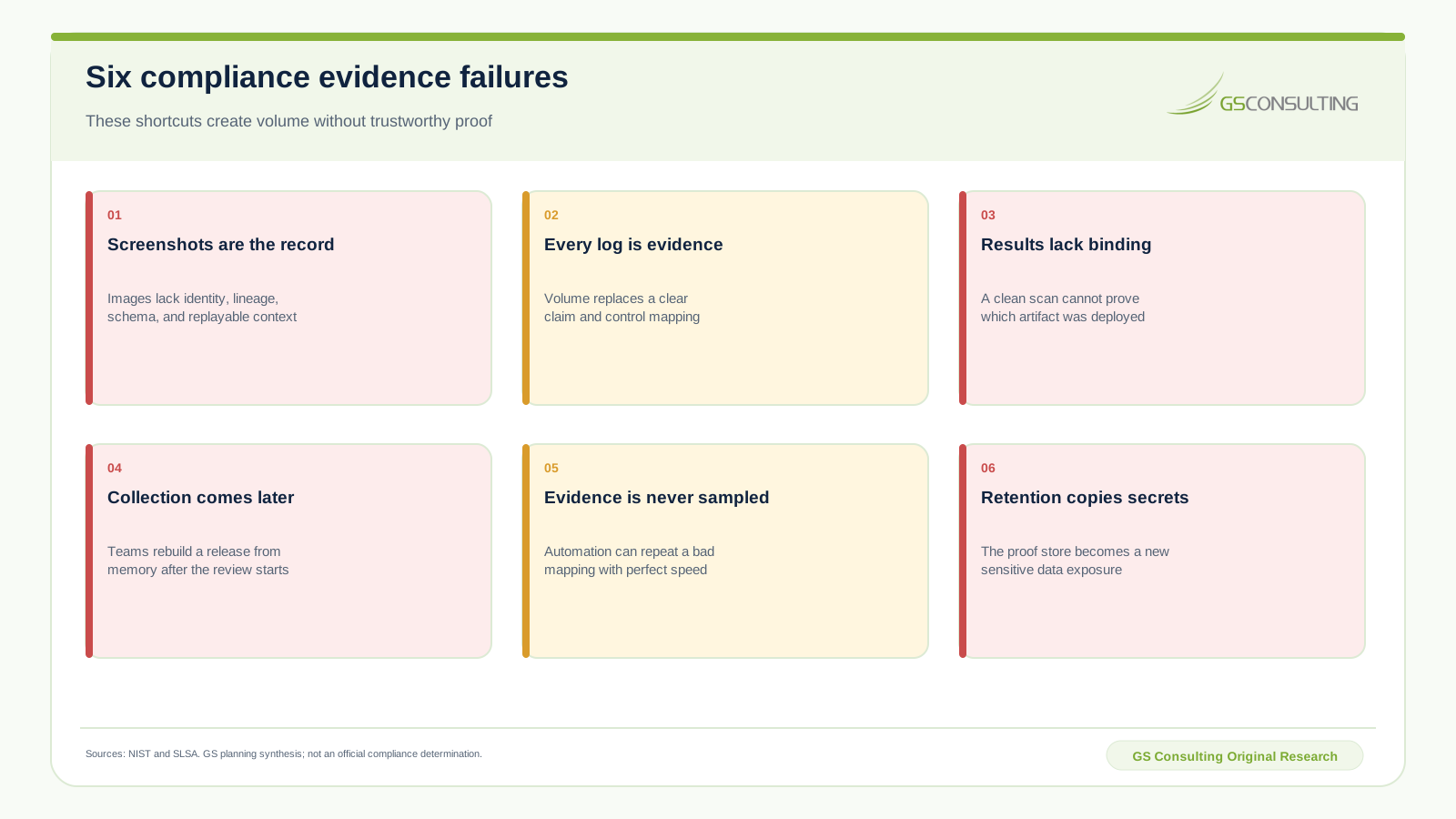
Screenshots are the record. Images lack machine identity, lineage, schema, and replayable context. Every log is evidence. Volume replaces a clear claim and control mapping. Results lack binding. A clean scan cannot prove which artifact was deployed.
Collection comes later. Teams rebuild a release from memory after review begins. Evidence is never sampled. Automation repeats a bad mapping with perfect speed. Retention copies secrets. The proof store becomes a new sensitive data exposure.
Keep a Minimum Delivery Evidence Packet
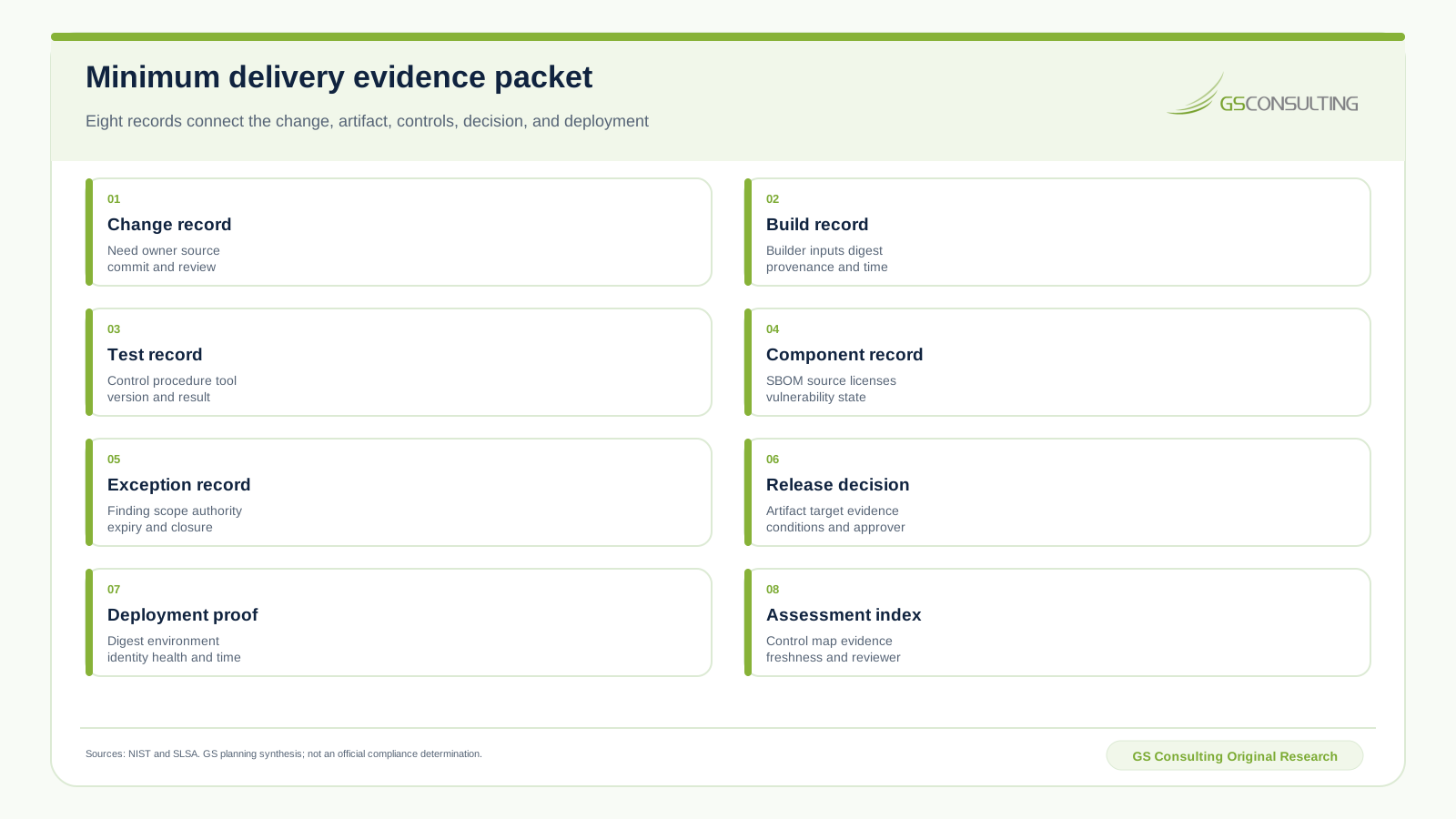
Keep the change record, build record, test record, component record, exception record, release decision, deployment proof, and assessment index. Each record should identify need, source, time, artifact, environment, owner, status, and related records where those fields apply.
The assessment index should not copy all evidence. It should name the claim, control, objective, method, source record, period, scope, sample, reviewer, decision, finding, freshness, and retention location. That lets a reviewer navigate to authoritative records and understand the limits.
Connect vulnerability evidence to the same release identity. The DevSecOps vulnerability management workflow shows how finding context, response, deployment, and closure records fit the packet.
Measure Evidence Quality and Review Utility
Measure claim coverage, required field completion, schema validity, source authentication, signature or integrity verification, artifact binding, environment binding, freshness, and retention success. Track exceptions for missing identity, failed validation, stale policy, unavailable source, and access denial.
Measure reviewer utility through retrieval success, time to reconstruct a release, traceability defects, rejected evidence, repeated questions, sample failure, control mapping changes, and the share of records that no longer support a decision. Record false confidence events where an automated check passed but the represented state was wrong.
Measure cost carefully. Collection time can fall while storage, sensitive data handling, and review noise rise. Pair automation coverage with duplicate volume, unused records, data exposure, reviewer time, and correction effort. The desired result is faster trustworthy judgment.
Research Sources and Caveats
The GS DevSecOps Evidence Decision Utility Index is a derived planning model based on cited public guidance and documented analyst assumptions. It does not measure compliance, control effectiveness, legal sufficiency, assessment acceptance, certification, authorization, or event probability.
- NIST SP 800-218 Secure Software Development Framework version 1.1
- NIST SP 800-204D
- NIST Open Security Controls Assessment Language
- NIST SP 800-53A Revision 5
- NIST SP 800-53 Revision 5 Release 5.2.0
- SLSA version 1.2 Build requirements
- NIST SP 800-40 Revision 4
- OMB Memorandum M-26-05
Frequently Asked Questions About DevSecOps Compliance Evidence
What is DevSecOps compliance evidence automation?
It is the design of delivery workflows that create, validate, bind, protect, route, retain, and review control proof as engineering work occurs.
Is every pipeline log compliance evidence?
No. Useful evidence must be relevant to a defined claim, authentic, correctly bound, protected, current, understandable, and sufficient for the selected assessment method.
Can screenshots serve as automated compliance evidence?
They can support a narrow visual observation, but they are weak alone. Prefer structured source records and preserve origin, scope, time, identity, and decision context.
How does OSCAL help DevSecOps evidence automation?
OSCAL provides machine readable control, implementation, assessment, and results models. It improves portability but does not prove control operation or evidence sufficiency.
What evidence should a software release preserve?
Preserve change, build, tests, component records, exceptions, approval, artifact identity, deployment proof, operating checks, and the assessment index.
How should teams measure evidence automation quality?
Measure claim coverage, authenticity, binding, schema validity, freshness, retrieval, traceability, exception completeness, reviewer acceptance, reconstruction time, duplicate volume, and sensitive data exposure.
Related DevSecOps Guidance
- DevSecOps and Secure Software Delivery Hub
- DevSecOps Vulnerability Management
- DevSecOps Security Gates
- Building Audit Trails for Automated Workflows
- Software Bill of Materials Guide
- DevSecOps and Software Supply Chain Services
Make the proof arrive with the decision.
Connect control claims, trusted events, artifact identity, reviewer utility, and continuous improvement in one delivery evidence system.
Request an Evidence Automation Review