DevSecOps & Software Supply Chain | | 25 min read
DevSecOps Branch Protection: Control What Can Ship

Key Takeaways
Protect the revision that can become a release
Untracked privileged bypass scores 100
The scenario leads the planning index because one trusted actor or app can defeat review, checks, detection, recovery, and evidence at once.
Protect every consumable ref
Default, release, environment, support, package, and deployment paths belong in one verified inventory. A protected main branch does not cover a forgotten release branch.
Bind the decision to the final revision
Approval and required checks must name the revision that enters the branch, the source that produced each result, and the authority that allowed any exception.
DevSecOps branch protection is not a repository setting. It is the control that decides what can ship.
A green badge can create false confidence. The rule may cover the default branch but miss the release branch. An approval may survive new commits. A required check may accept a familiar name from the wrong source. An administrator, app, deployment key, or emergency role may still push around the pull request. The history may be rewritten before anyone collects the evidence.
The operating question is direct: can the organization prove that every source revision entering a consumable branch was inside the active rule scope, approved for that exact revision, checked by expected systems, merged by allowed authority, and recoverable if the rule or history is damaged?
This guide belongs to the DevSecOps and Secure Software Delivery hub. It connects source authority to artifact repository security, DevSecOps security gates, DevSecOps code signing, DevSecOps compliance evidence automation, and the DevSecOps toolchain. GS Consulting applies the model through DevSecOps and Software Supply Chain.
Can you prove which source revision was allowed to ship?
GS Consulting helps regulated engineering teams map release paths, separate source authority, bind merge proof to the final revision, and close hidden bypass routes.
Review Your Branch Protection ControlsDevSecOps Branch Protection: The Short Answer
Start with the release path, not the platform checkbox. Inventory every default, release, environment, support, package, and deployment ref that can produce trusted output. Apply an effective rule to each one. Block direct push, force push, and deletion unless a narrow recovery design proves a stronger need.
Separate the people and workloads that propose, review, merge, push, bypass, change rules, and operate credentials. Require current independent approval for the final revision. Require checks from approved sources against the revision that will enter the branch. Protect workflow, ownership, deployment, and rule configuration files because they can weaken the control itself.
Treat bypass as an incident shaped event. Give it a reason, actor, scope, expiration, alert, affected revision, and after action review. Export effective rule state, compare it with the branch inventory, sample actual merges, and test restoration. If the team cannot show those records together, it has a setting, not an operating control.
Branch Protection Starts With the Full Release Scope
The usual scope error is protecting main and assuming the work is finished. Many delivery systems can consume other refs: a release branch, a long lived support branch, an environment branch, a package publication tag, a deployment manifest branch, or a repository that supplies shared workflow code. Any ungoverned path can become the practical release path.
Create a consumable ref inventory with six fields: repository, ref pattern, consuming build or deployment, destination, accountable owner, and active rule identifier. Build the list from pipeline configuration, registry publishing, environment deployment, release automation, and product support practices. Do not rely on naming conventions alone.
Then compare the inventory with the effective platform rules. GitHub rulesets can target branches and tags and may layer with other rules. Azure Repos applies branch policies to named or patterned branches. GitLab protected branches separate allowed merge and allowed push authority. The syntax differs. The control question does not: does every source path that can feed a trusted output have an active rule with the intended authority and proof?
Public Guidance Points to Continuous Source Control
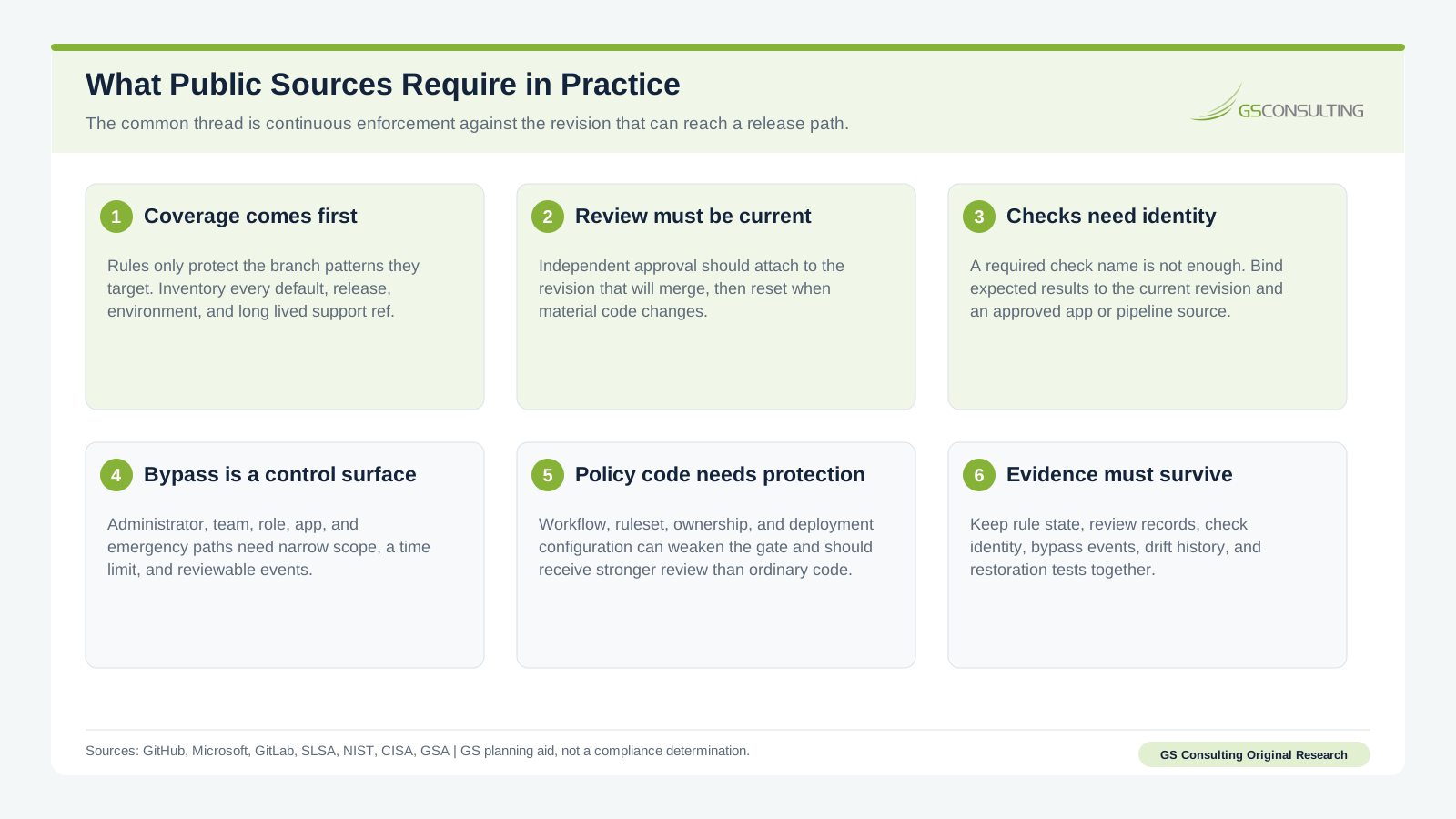
GitHub protected branch documentation exposes controls for required pull request review, required status checks, conversation resolution, signed commits, linear history, merge queue, deployment success, branch locking, force push, deletion, push restrictions, and administrator inclusion. The useful lesson is not to turn on every option. It is to select an explicit source trust policy and verify the effective result.
Microsoft guidance for secure Azure Repos recommends stronger separation for high value branches, including multiple reviewers, approval of the current iteration, and controls that keep the change author or most recent pusher from supplying the decisive review. GitLab Code Owner guidance makes another dependency clear: required ownership review depends on the target branch being protected, while direct push authority can route around the merge request.
SLSA v1.2 source requirements treat protected branches and tags as continuous technical controls and reserve the strongest source level for two person review. NIST SP 800-218 supplies the broader secure development practice and evidence context. Together they support a simple standard: branch claims should describe enforced behavior, not policy intent.
GS Protected Branch Exposure Index
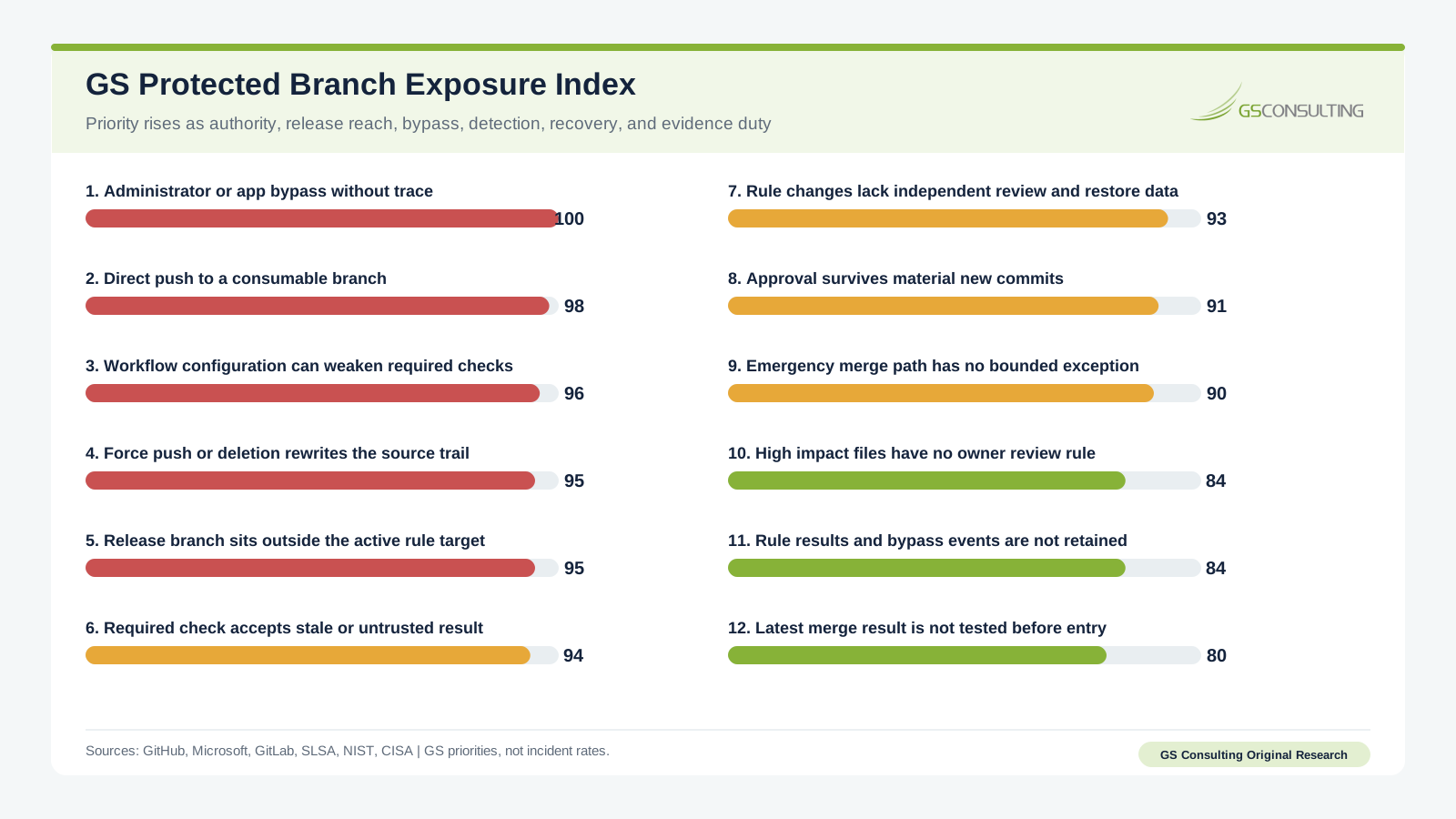
GS Consulting built a twelve scenario model to answer one sequencing question: which branch protection failures deserve the earliest engineering and evidence investment? Each scenario receives a one to five analyst rating across six factors. The primary weights are change authority 25 percent, production reach 20 percent, bypass exposure 20 percent, detection gap 15 percent, recovery burden 10 percent, and evidence duty 10 percent.
The score is the sum of each rating multiplied by its factor weight and divided by five. An administrator or app bypass without a reviewable trail scores 100. Direct push to a consumable branch scores 98. Workflow configuration that can weaken required checks scores 96. Force push or deletion and a release branch outside the active target each score 95. A stale or untrusted required check scores 94.
The model is intentionally severe because every scenario can affect source authority at the release boundary. Even the lowest score, failure to test the latest merge result, is 80. The useful output is the ordering: remove invisible privilege and direct entry first, protect the control code, close scope gaps, bind checks and reviews to the current revision, then harden evidence and recovery.
Two sensitivity cases shift weight toward authority or evidence. The highest score movement is four points, and untracked privileged bypass remains first in both cases. Every baseline scenario at 90 or above stays at 90 or above. The finding is stable enough for planning, but it is not a measured risk probability.
Turn Platform Settings Into an Operating Control
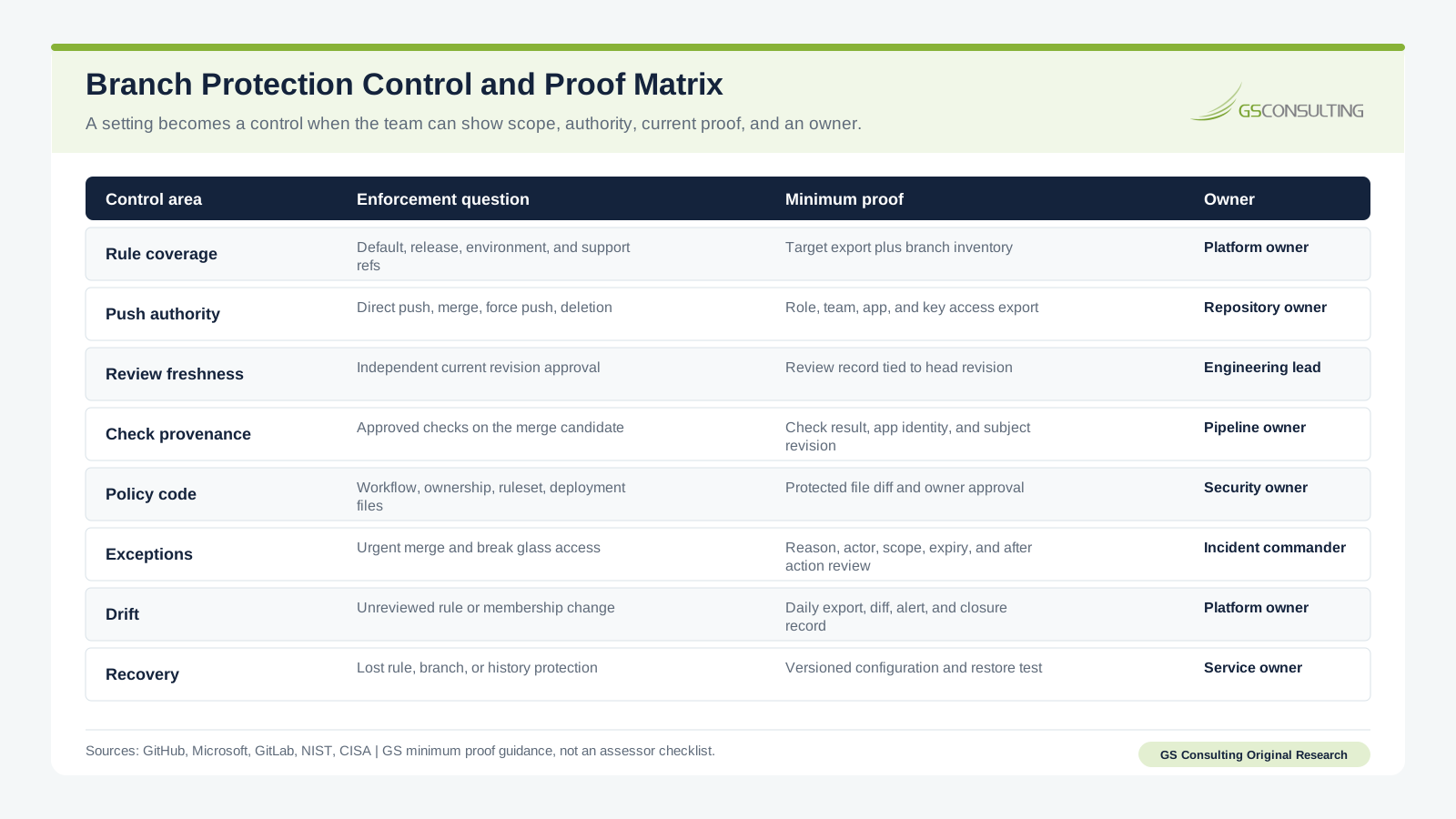
| Control area | Decision to enforce | Minimum evidence |
|---|---|---|
| Rule coverage | Every consumable ref matches the intended active rule | Branch inventory, target export, precedence, enforcement state |
| Push authority | Only named roles may merge, push, delete, change rules, or bypass | User, team, role, app, key, and permission export |
| Review freshness | Independent approval applies to the final source revision | Pull request, head revision, review event, dismissal history |
| Check provenance | Expected systems evaluated the actual merge candidate | Check name, app identity, subject revision, policy, result, time |
| Policy code | Control files receive stronger review and checks | Workflow, ownership, deployment, and rule configuration diff |
| Exception | Urgent access is narrow, time bound, visible, and closed | Actor, reason, scope, expiry, event, review, corrective action |
| Drift | Unexpected rule or membership change is detected and resolved | Scheduled export, diff, alert, owner, disposition, closure |
| Recovery | The team can restore intended rules and reconstruct entry | Versioned configuration, ref events, restore test, incident record |
Do not assign one person as owner of the entire matrix. The platform owner can maintain rules and exports. The repository owner can validate branch scope and merge authority. Security can define protected control files and evidence expectations. The incident commander can govern urgent access. The service owner must accept the release consequence and recovery design.
Current Review Means Review of the Revision That Enters
A review is useful only when it applies to the code that will merge. Configure the platform to dismiss or reset approval when material commits arrive. Require the final revision or current iteration to receive the needed approval. For sensitive paths, add an owner rule that covers workflow, deployment, identity, policy, infrastructure, and release configuration.
Separate authorship from decisive approval. A reviewer may also contribute useful code, but the final authority should not collapse into the person who most recently pushed the change. High value shared branches often justify two independent reviewers. Small teams can use a service owner, a security owner, or a rotating reviewer from another team, but the exception should be explicit rather than silently weakening the rule.
Reviewers need usable evidence. Show the final diff, test results, generated configuration or infrastructure plan, affected control files, open conversations, dependency changes, and policy findings. A formal approval on an unreadable change set is process theater.
Required Checks Need Source Identity and Revision Identity
A status name is not a trust boundary. A required check should prove five things: expected producer, expected policy, current source revision, actual merge candidate when the base can change behavior, and a completed result within the allowed time. Where the platform supports binding a check to a specific app or integration, use it.
Protect the workflow that produces the check. If a contributor can alter the workflow, disable a security step, change an action reference, replace a script, or widen a token and then receive the old required check name, the rule protects a label rather than an outcome. Put workflow files, ownership files, deployment manifests, and policy configuration behind owner review and their own required checks.
Decide how base branch change affects validity. Strict current branch checks or a merge queue can test the combined result before entry. When the platform allows a stale check or stale base, document why it remains safe. The default should be simple: a result for an earlier revision does not authorize a later revision.
Bypass and Exceptions Are Part of the Threat Model
List every path that can enter or alter the protected ref without the ordinary pull request decision. Include administrators, repository owners, roles, teams, service accounts, GitHub Apps, GitLab deployment keys, automation tokens, command line credentials, restoration procedures, and platform support operations.
Remove routine bypass. For the remaining emergency path, require a narrow actor, a specific repository and ref, a short expiration, an incident or change record, an affected revision, an alert to an independent owner, and a prompt review. GitHub rule insights can expose passed, failed, and bypassed evaluations. Azure Repos separates permissions to bypass policies during completion or push. GitLab separates merge authority from direct push authority. Collect the effective permission, not just the written policy.
Do not use administrator status as the exception design. Administration covers many unrelated duties and usually lasts too long. Create a dedicated recovery role or app with only the needed action. Test it, monitor it, and remove access when the event closes.
A Five Stage Operating Decision Path
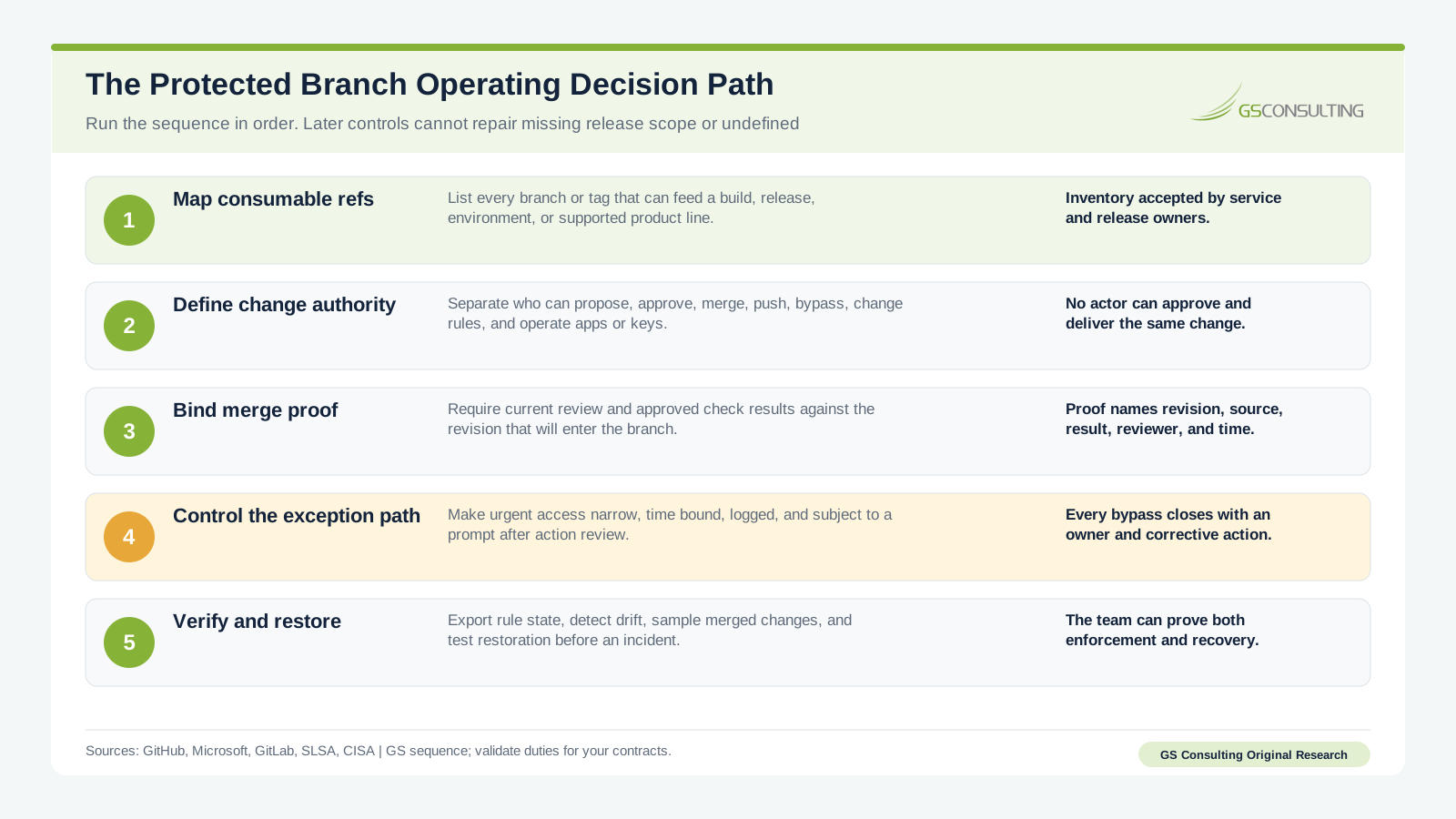
- Map consumable refs. Confirm every branch and tag that can feed a build, release, environment, or supported product line.
- Define change authority. Separate proposal, approval, merge, direct push, bypass, rule administration, app operation, and credential custody.
- Bind merge proof. Require current approval and trusted checks against the final revision and merge candidate.
- Control the exception path. Make urgent access narrow, time bound, logged, independently reviewed, and closed.
- Verify and restore. Export rule state, detect drift, sample real merges, retain ref events, and test restoration.
Each stage has an exit test. Do not progress because a meeting occurred. Progress when the branch inventory is accepted, the authority model has no quiet self approval path, merge proof names the final revision and source, every bypass has an owner and expiry, and restoration works in a controlled exercise.
Six Failure Modes That Survive a Green Badge
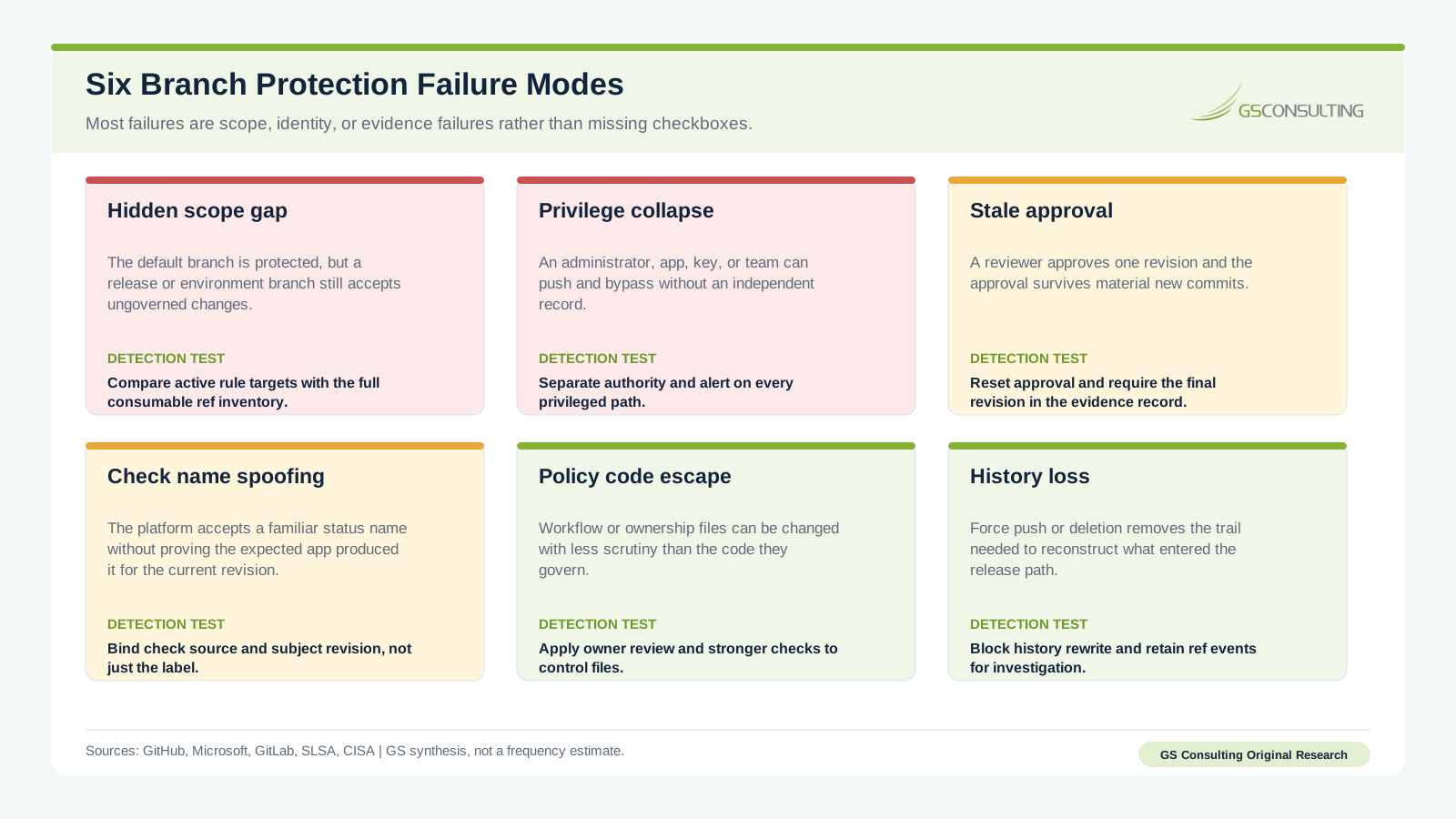
- Hidden scope gap: a release or environment branch sits outside the rule. Detect it by comparing pipeline inputs with active rule targets.
- Privilege collapse: an administrator, app, key, or team can push and bypass without independent review. Detect it with an effective permission export and a forced test event.
- Stale approval: approval survives material commits. Detect it by changing the head revision after approval in a test pull request.
- Check name spoofing: a result with the right label comes from the wrong source or earlier revision. Detect it by validating producer identity and subject revision.
- Policy code escape: workflow or ownership files receive less scrutiny than ordinary code. Detect it with a protected path inventory and sample change.
- History loss: force push or deletion removes the trail. Detect it by reviewing effective ref permissions, event retention, and a restoration exercise.
The Minimum Protected Branch Evidence Packet
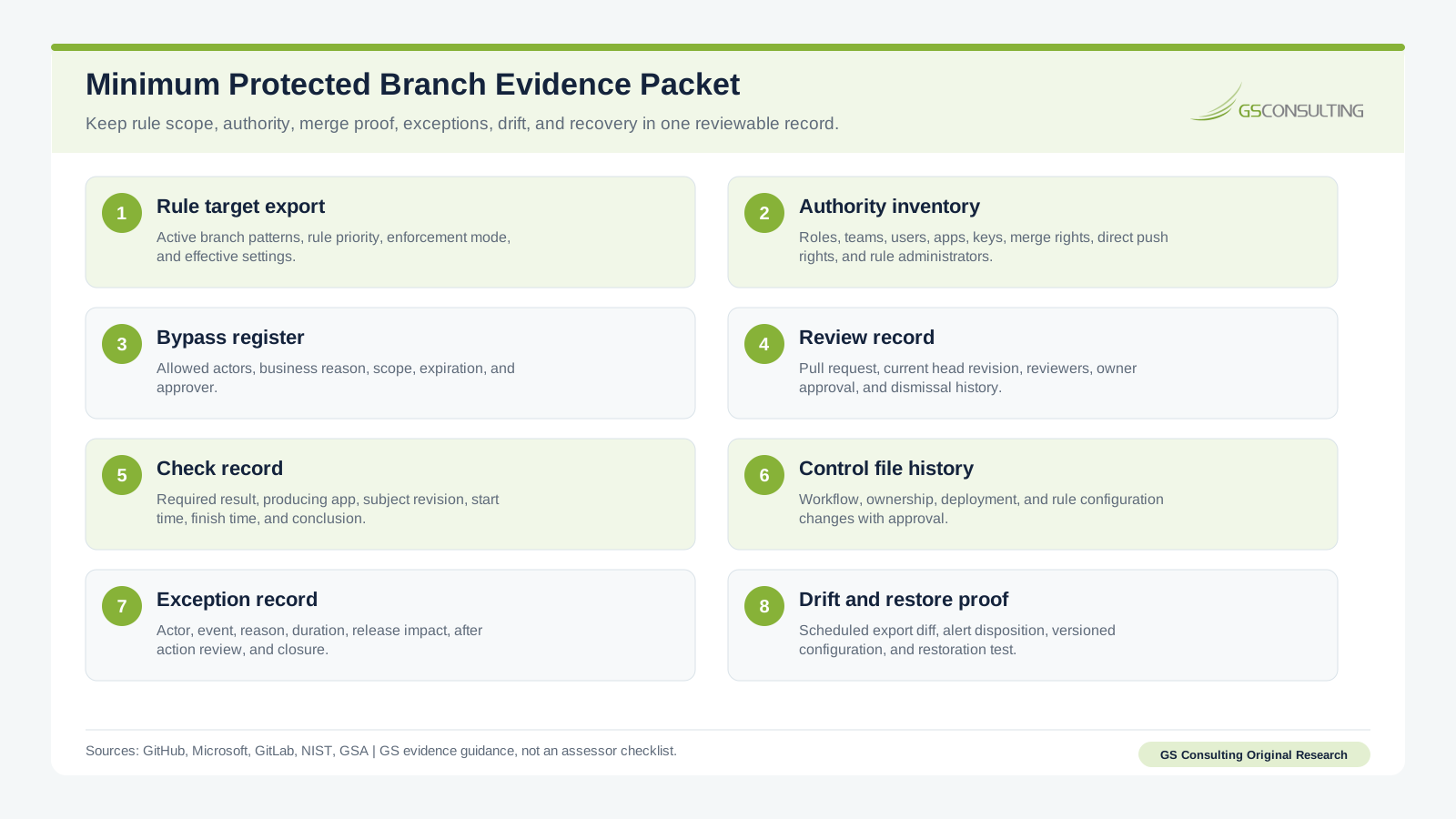
Keep eight records together: rule target export, authority inventory, bypass register, review record, required check record, control file history, exception record, and drift plus restore proof. A screenshot of the current settings is not enough. It cannot show what was effective when a specific revision entered, who held privilege, or whether an exception changed the decision.
Use stable identifiers. Record repository, ref, source revision, merge revision when distinct, pull request, rule identifier and version, review events, check run and producer, merge actor, bypass event, artifact or release identifier, deployment destination, and time. This chain lets source evidence join later artifact signing and compliance evidence.
Retention depends on system, contract, investigation, and legal needs. The operating principle is narrower: keep the records long enough to reconstruct a release and resolve an exception or incident. Validate specific obligations with the responsible authority.
A 90 Day Implementation Plan
Days 1 through 30: find the real release paths
- Inventory repositories, consumable branches and tags, release pipelines, environments, packages, and supported versions.
- Export effective branch rules, policies, push rights, merge rights, rule administrators, apps, keys, and bypass actors.
- Compare release inputs with rule targets and close every critical scope gap.
- Block direct push, force push, and deletion on the highest consequence refs.
Days 31 through 60: bind approval and automation to the final revision
- Require current independent approval and owner review for sensitive paths.
- Bind required checks to approved producers, policy versions, and the current revision or merge candidate.
- Protect workflow, ownership, deployment, infrastructure, and rule configuration files.
- Create a narrow emergency role with expiration, alerting, and independent review.
Days 61 through 90: prove operation and recovery
- Schedule rule, membership, app, and key exports and alert on unexplained drift.
- Sample recent merges and reconstruct scope, approval, checks, actor, artifact, and release destination.
- Run test cases for stale approval, wrong check source, direct push, privileged bypass, force push, deletion, and restore.
- Publish the evidence packet, assign closure owners, and review trends with engineering and release leadership.
Research Sources and Method
- GitHub: About protected branches for review, status, history, push, deletion, and bypass controls.
- GitHub: Managing a branch protection rule for check source, strict check, and approval behavior.
- GitHub: Creating rulesets for target patterns, enforcement, bypass actors, and pull request only bypass.
- GitHub: Managing rulesets for rule history, evaluation, failure, and bypass insight.
- Microsoft: Set and manage branch policies for reviewer, build validation, status, expiration, and bypass controls.
- Microsoft: Secure Azure Repos for current review and separation guidance.
- GitLab: Protected branches for merge, push, force push, and deployment key authority.
- GitLab: Code Owners for protected target dependencies and ownership approval behavior.
- SLSA v1.2 source requirements for protected refs, continuous controls, revision identity, and two person review.
- NIST SP 800-218 Secure Software Development Framework for secure development practice and evidence context.
- NSA and CISA guidance for defending CI/CD environments for pipeline access, configuration protection, logging, and recovery.
- GSA DevSecOps Program for protected branch review and governance context.
The research package contains the source register, public signals, model weights, analyst inputs, formula driven scores, two sensitivity cases, control matrix, decision path, failure modes, evidence packet, methodology, data dictionary, figure data, editable SVG figures, matching PNG exports, exact 760 and 390 pixel inspection renders, and a fourteen sheet Excel workbook.
The GS Protected Branch Exposure Index sequences planning work. It does not test a live repository, certify platform behavior, prove a branch rule was effective, determine legal or contractual obligations, or establish compliance. Validate current platform behavior, repository configuration, release paths, system risk, contracts, and responsible authority.
DevSecOps Branch Protection FAQ
What is DevSecOps branch protection?
DevSecOps branch protection is the enforced set of source control rules that decides which revisions may enter a branch that feeds a build, release, environment, or supported product line. It combines branch scope, push authority, current review, required checks, bypass limits, history protection, monitoring, and evidence.
Which branches should be protected?
Protect every branch or tag that can feed a release, deployment environment, supported version, package, image, or trusted build. The default branch alone is rarely the full scope. Keep an inventory of consumable refs and compare it with active rule targets on a schedule.
How many reviewers should a protected branch require?
Use enough independent reviewers to match the consequence and concentration of authority. High value shared branches often justify two reviewers, current revision approval, owner approval for sensitive paths, and a rule that prevents the most recent pusher from supplying the decisive approval. The exact count should follow the system risk, contract, and platform design.
Should administrators be allowed to bypass branch protection?
Routine administrator bypass should be disabled. If an emergency path is necessary, keep the actor list narrow, separate it from ordinary administration, limit the scope and duration, alert on every use, retain the reason and affected revision, and require a prompt after action review.
What makes a required status check trustworthy?
A trustworthy required check names the current source revision, the expected pipeline or app identity, the policy version, the result, and the completion time. The merge rule should reject a result from the wrong source, an earlier revision, or a build that did not evaluate the actual merge candidate.
What branch protection evidence should a team retain?
Retain the rule target export, authority inventory, bypass register, review record tied to the final revision, required check identity and result, control file history, exception events, drift findings, closure records, versioned configuration, and restoration test evidence.
Suggested Future Reading
- DevSecOps and Secure Software Delivery Hub
- What Is DevSecOps?
- DevSecOps Security Gates
- DevSecOps Code Signing
- DevSecOps Compliance Evidence Automation
- DoD DevSecOps Reference Design
- DevSecOps and Software Supply Chain Services
Make source authority explicit before the next release.
Not a protected default branch. A verified release scope. Not an administrator exception. A bounded and reviewable recovery path. Not a green status name. Current proof from the expected source for the final revision.
Build the Protected Branch Evidence Chain