Enterprise AI | | 25 min read
Data Classification Tools: How to Evaluate Them

Key Takeaways
The operator view
Name the handling rule
A label has value only when it changes access, sharing, retention, encryption, review, AI use, or another defined action.
Policy and enforcement lead
The policy model, permission integration, and enforcement capabilities each score 97.0 in the GS evaluation priority index.
Test on real movement
Prove what happens when data is copied, exported, indexed, shared, relabeled, denied, reviewed, and moved across a boundary.
Not a scanner purchase. Data classification tools matter only when a label changes how data is handled.
A clean demonstration can find a social security number, color a file red, and produce a dashboard in minutes. Production has to see the neglected repository, respect user permissions, distinguish a real identifier from a test value, keep the label through a copy, resolve exceptions, drive a control, and explain what happened months later.
That is why a feature checklist is a weak buying method. The evaluation should begin with the policy decision, the real data estate, and the control that must act. Product comparison comes after those facts are written as proof scenarios.
This guide provides that method. The new Data Classification and Governance hub organizes the full topic. Write the operating rule with the data classification policy guide. Teams preparing information for AI should start with data classification before AI automation. Architecture and access design are covered in secure AI architecture patterns and AI access control and permission design.
Turn the policy into a test before you invite vendors.
GS Consulting helps teams define the data classes, map the estate, write proof scenarios, run a controlled comparison, and build the operating model around the selected tool.
Plan a Classification Tool EvaluationWhat Data Classification Tools Must Actually Do
A practical data classification capability performs six connected jobs. It discovers data in approved locations. It identifies content, context, owner, source, and related facts. It classifies the asset under an approved policy. It applies and preserves a label or metadata value. It drives the required access, sharing, retention, encryption, review, or monitoring action. It supports exceptions and ongoing evidence.
Vendors divide those jobs differently. One product may excel at repository discovery. Another may embed labels in office files. Another may enforce cloud access or data loss prevention rules. A catalog with more detectors is not automatically a better fit. The required chain depends on the policy and the systems that must consume the result.
The February 2026 NIST SP 1800-39 Initial Public Draft demonstrates data discovery, identification, and labeling practices using commercially available technology. It is an initial public draft, not final NIST guidance and not a product ranking. Its value for evaluation is the technology neutral sequence and emphasis on usable classification practice.
A Data Classification Tool Is Part of a Control Chain
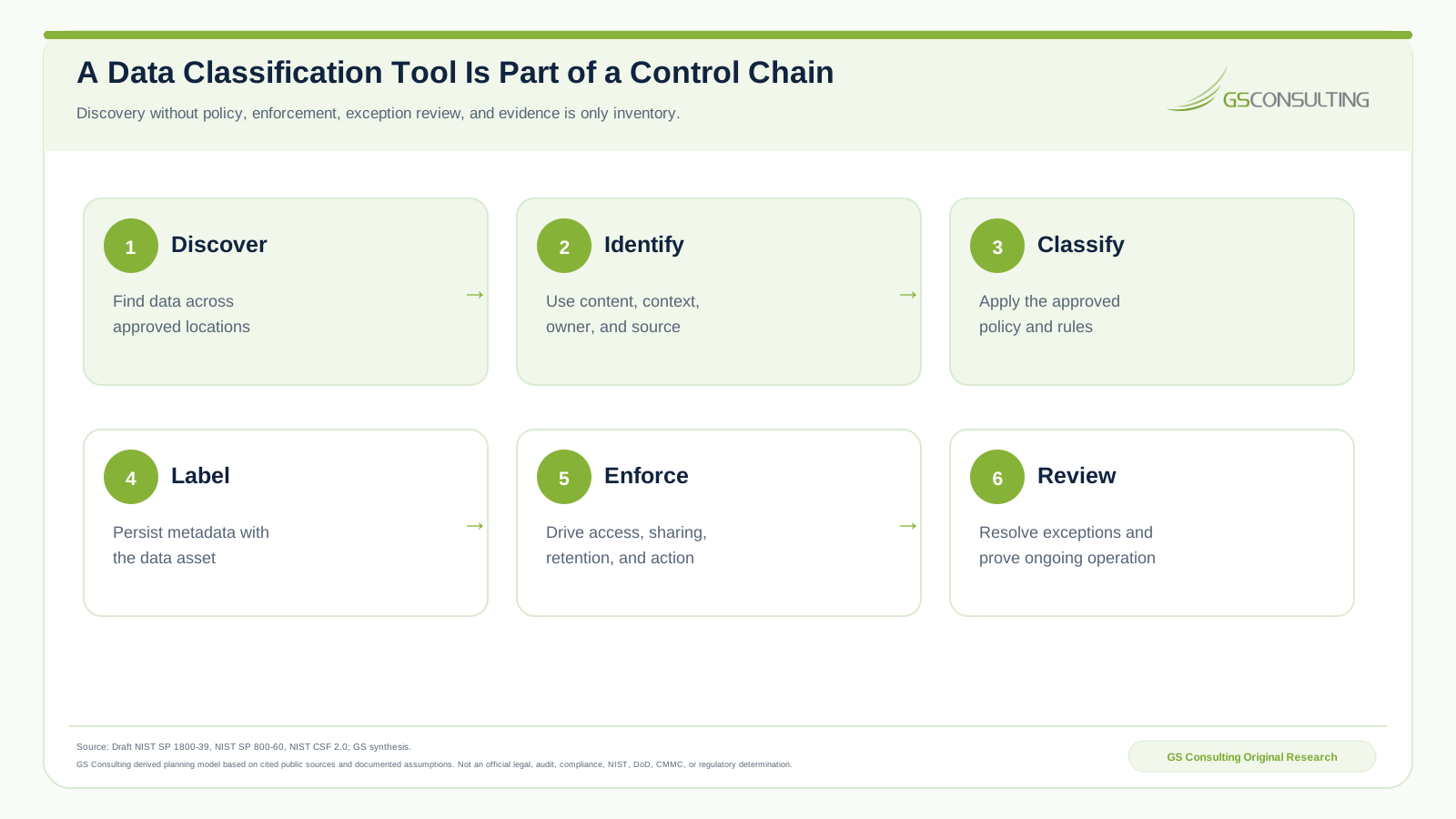
- Discover. Find data across the repositories, file types, endpoints, cloud services, databases, email, search indexes, and archives that are approved for inspection.
- Identify. Use content plus context such as source, owner, business process, permission, location, contract, and record type.
- Classify. Apply the approved class, label, category, impact, or handling rule. Record which policy and rule produced the result.
- Label. Preserve machine readable metadata with the data asset or in a durable associated record.
- Enforce. Drive access, sharing, retention, encryption, export, review, quarantine, monitoring, or AI use decisions.
- Review. Resolve exceptions, correct rules, measure drift, retest changes, and prove continuing operation.
Do not assume one product must own the full chain. A discovery service can feed a catalog. A labeling service can write metadata. Identity and data platforms can enforce access. A workflow service can route review. What matters is the contract between components: identifiers, policy versions, permissions, label values, action results, exceptions, and evidence.
Write Requirements From the Handling Decision
Start with the decision that the classification must support. “Find sensitive data” is too broad. “Prevent Controlled Unclassified Information from entering an unapproved AI index while preserving approved research access” is testable. So is “apply the records class and retention rule when a contract closeout packet reaches the archive.”
Build a policy map with these fields:
- Class or label. Use the approved name, definition, and authority source.
- Positive examples. Record representative content and context that belong in the class.
- Negative examples. Record similar content that should not receive the class.
- Owner and reviewer. Name who approves the policy and who resolves exceptions.
- Handling action. State what access, sharing, retention, encryption, review, or AI rule must change.
- Evidence. Define the scan, rule, label, action, exception, and change records that must be retained.
For federal information, NIST SP 800-60 Volume 1 Revision 1 connects information types to confidentiality, integrity, and availability consequences. The NARA CUI Registry provides CUI categories, markings, controls, and authority links. Neither source removes the need to confirm agency policy and contract specific handling terms.
GS Data Classification Tool Evaluation Priority Index
GS Consulting built a derived model across ten tool and operating capabilities. The priority index weights policy consequence at 25 percent, enforcement dependence at 20 percent, coverage breadth at 15 percent, evidence need at 15 percent, integration reach at 15 percent, and exception cost at 10 percent. Each capability receives a documented analyst rating from 1 to 5.
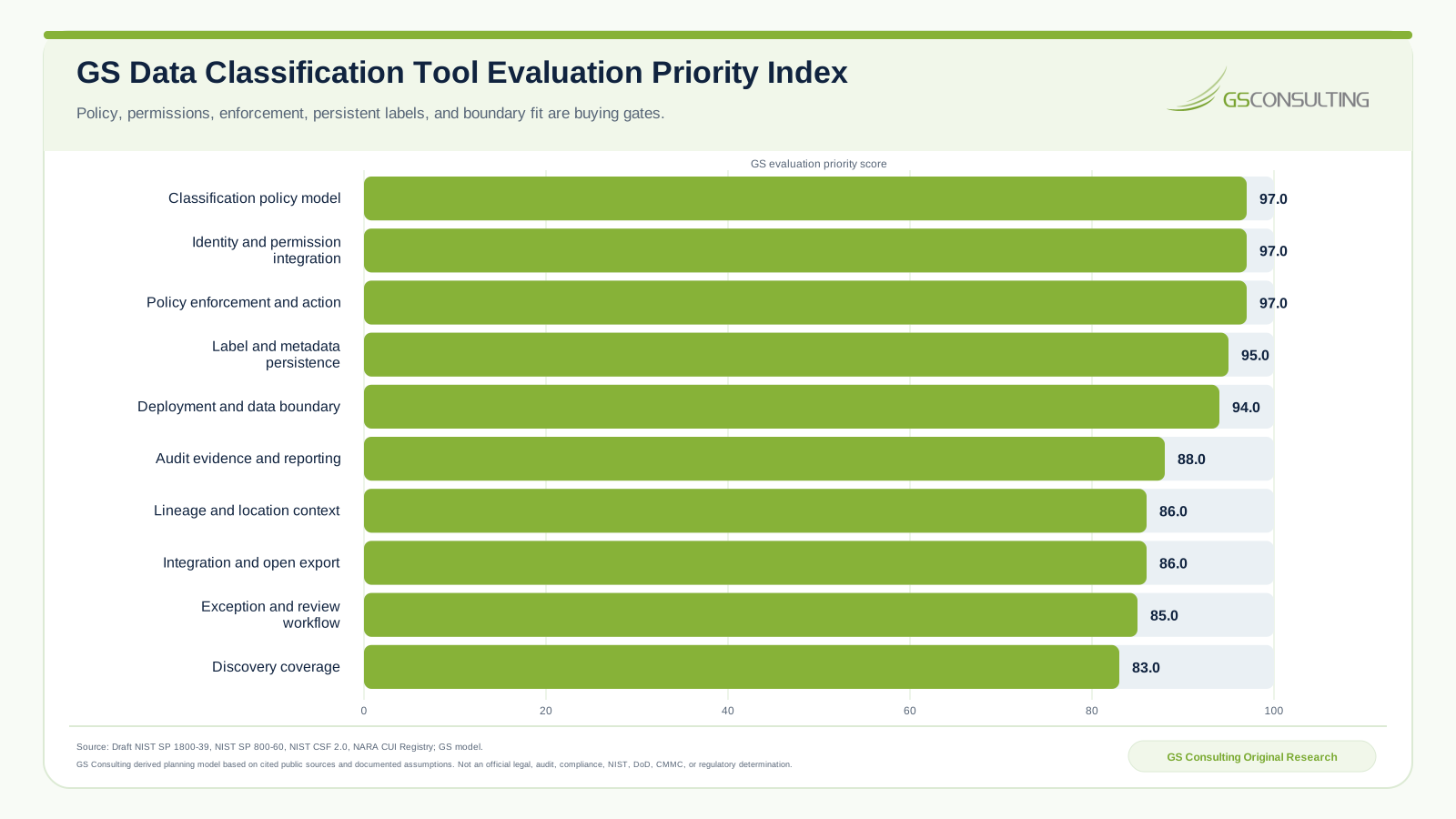
The classification policy model, identity and permission integration, and policy enforcement and action each score 97.0. Label and metadata persistence scores 95.0. Deployment and data boundary scores 94.0. Audit evidence reaches 88.0. Lineage and location context plus integration and open export each score 86.0. Exception and review workflow scores 85.0. Discovery coverage scores 83.0.
Discovery is not unimportant. It scores lower because discovery alone cannot define meaning, preserve a label, enforce a decision, or prove continuing control. A product with broad discovery and weak permission behavior can create a new exposure by revealing sensitive file facts to the wrong reviewer.
The index is not a vendor score and does not prove product quality. It establishes the capabilities that should receive the strongest proof requirements. An alternate weighting moves five percentage points from coverage breadth to enforcement dependence. No score moves more than one point and no decision tier changes in that limited sensitivity check.
Implementation Burden Does Not End at Discovery
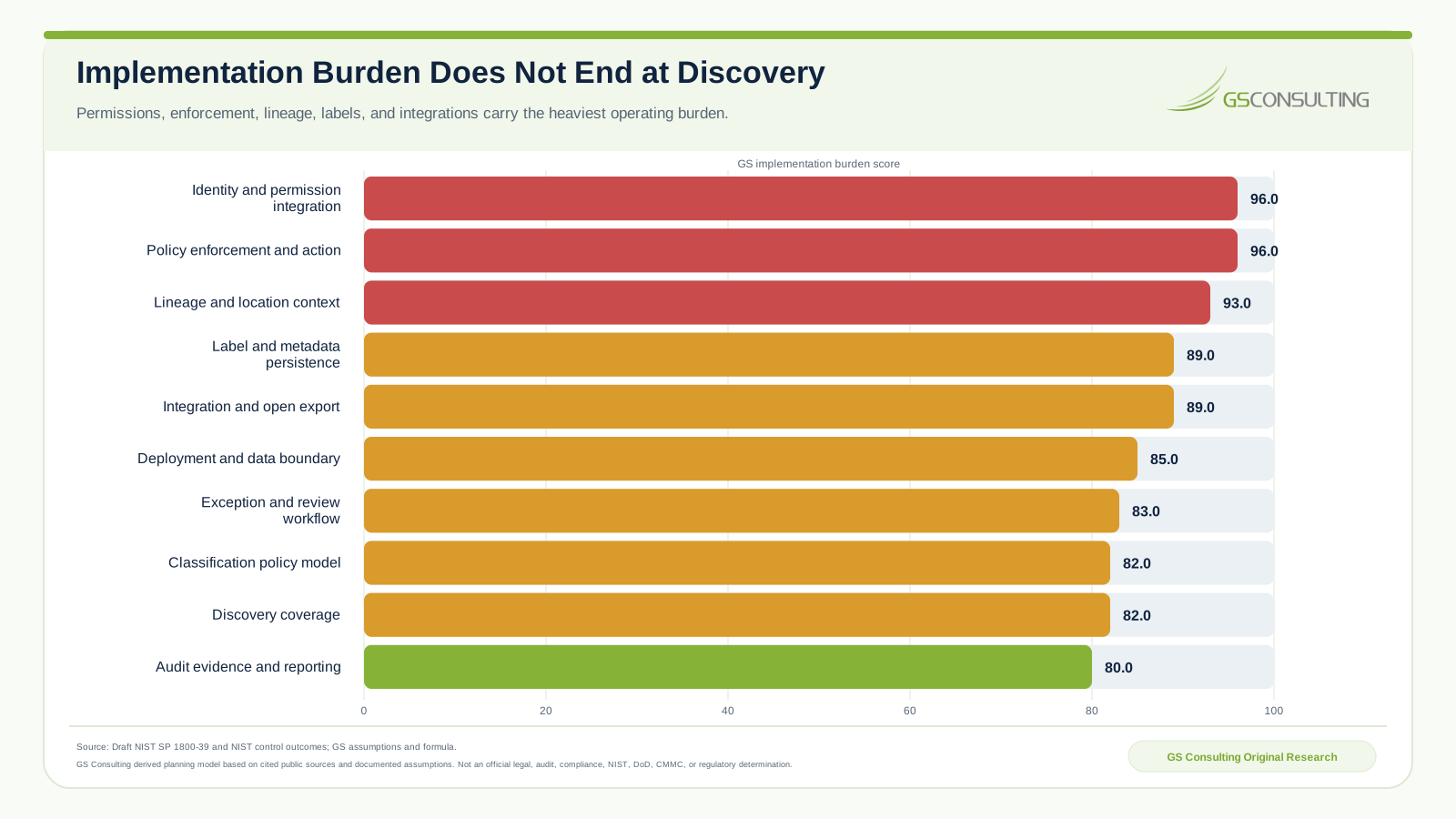
The burden model weights integration complexity at 25 percent, data variety at 20 percent, policy complexity at 20 percent, change surface at 20 percent, and operating review at 15 percent. Identity and permission integration plus policy enforcement each score 96.0. Lineage and location context scores 93.0. Label persistence and open integration each score 89.0.
That burden is not a reason to remove the capability from the evaluation. It is a reason to price and pilot it honestly. A cheap detector that sends thousands of findings to an unmanaged review queue can cost more than a platform with stronger policy and workflow integration. A label service that cannot survive export can create false confidence in every downstream control.
Estimate the full operating cost: repository connectors, network path, storage, scanning, identity, metadata, policy authoring, reviewer time, false positive handling, exception age, integration, change tests, evidence retention, and support. Separate the first deployment cost from the recurring operating load.
Metrics That Reveal Product Fit
A useful comparison requires a known test corpus. Build it from approved samples that represent the real estate. Assign a trusted expected result before the product runs. Include positive, negative, ambiguous, duplicate, mixed, damaged, protected, and unsupported items.
- Coverage. What percentage of the approved repositories, paths, file types, records, and identities did the tool actually inspect?
- Precision. Of the items the tool placed in a class, what percentage truly belong there under the approved answer set?
- Recall. Of the items that should be in the class, what percentage did the tool find and classify correctly?
- Permission fidelity. Did discovery, review, export, and remediation preserve the user and service authority defined for the data?
- Label persistence. Did the class survive copy, move, export, share, format conversion, indexing, backup, and restoration where required?
- Action success. Did the downstream access, sharing, retention, review, quarantine, or AI rule execute as intended?
- Exception load. How many items required review, how long did they wait, and how often did reviewers change the result?
- Evidence completeness. Can the team export the source, rule, policy version, result, reviewer, action, time, and change history?
- Processing performance. Measure time to first inventory, full scan duration, incremental scan delay, backlog, retry, recovery, and operating cost.
Do not combine precision and recall into one friendly percentage without preserving both values. A product can produce high precision by labeling only the easiest cases and missing much of the estate. It can produce high recall by labeling too broadly and flooding reviewers. The acceptable balance depends on the consequence of a miss and the cost of a false result.
Write Proof Scenarios That a Product Can Fail
A vendor demonstration should use the same written scenarios for every candidate. The scenario names the starting data, user, permission, expected class, expected action, expected evidence, and failure condition. This makes the result comparable and prevents the demonstration from moving to the product’s strongest path.
Scenario 1: known positive and negative
Place true examples and close false examples in the same approved repository. Require the product to classify both, explain the rule, and report precision and recall against the answer set.
Scenario 2: permission boundary
Use two reviewers with different access. Confirm that neither discovery results nor snippets reveal data outside each user’s authority. Test service identities and exported reports too.
Scenario 3: label movement
Copy, move, rename, export, share, compress, extract, convert, index, back up, and restore a labeled item. Record when metadata persists, when it is transformed, and when the control must rely on a separate registry.
Scenario 4: policy and exception change
Change a rule, correct a false result, approve an exception, and rerun the test. Require policy version, reviewer, reason, affected items, new result, and evidence of the change.
Scenario 5: downstream enforcement
Attempt the handling decision that the label is meant to control. Deny an unapproved AI index, restrict external sharing, invoke review, apply retention, or block an export. A colored dashboard without the action is not proof.
Scenario 6: failure and recovery
Interrupt a connector, expire a credential, create a backlog, send an unsupported file, and restore service. Measure alerting, retry, duplicate handling, recovery time, missed data, and evidence continuity.
The Data Classification Tool Selection Path
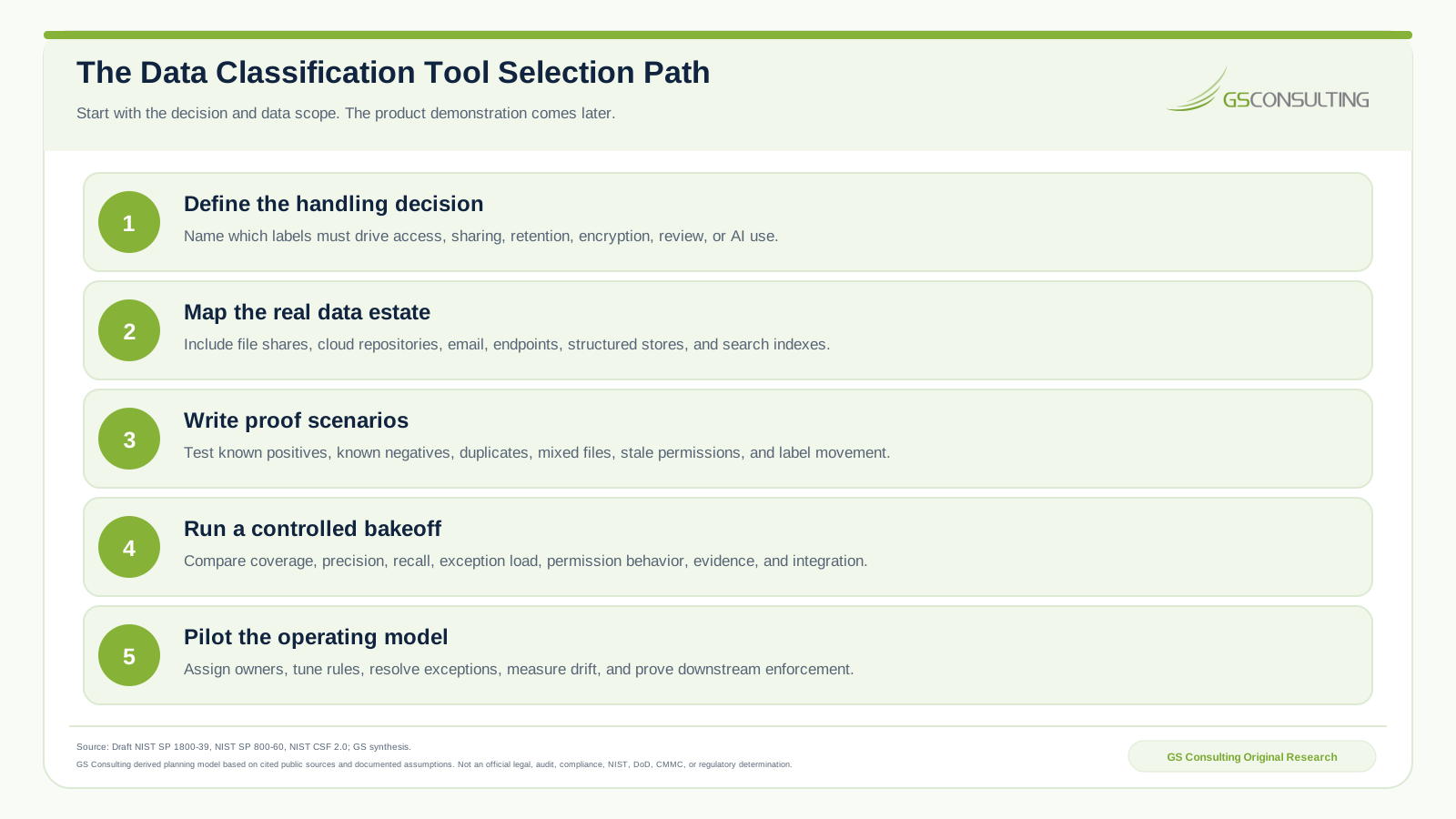
1. Define the handling decision
Name which classes must drive access, sharing, retention, encryption, review, monitoring, or AI use. Link each decision to an approved policy owner.
2. Map the real data estate
Inventory repositories, formats, locations, owners, permissions, service identities, data movement, archives, indexes, exclusions, and system boundaries. The earlier guide on classification before AI automation provides the operating groundwork.
3. Write the proof scenarios
Build the answer set, expected action, evidence requirement, and failure condition. Include the difficult data and denied paths that carry actual risk.
4. Run a controlled comparison
Use the same samples, scenarios, users, metrics, and scoring method for each candidate. Record unsupported cases and manual work. Do not let a roadmap promise score as present capability.
5. Pilot the operating model
Assign policy, platform, repository, identity, review, security, privacy, records, and support ownership. Operate a bounded scope long enough to measure exception load, drift, change, evidence, recovery, and enforcement.
Six Data Classification Tool Test Failures
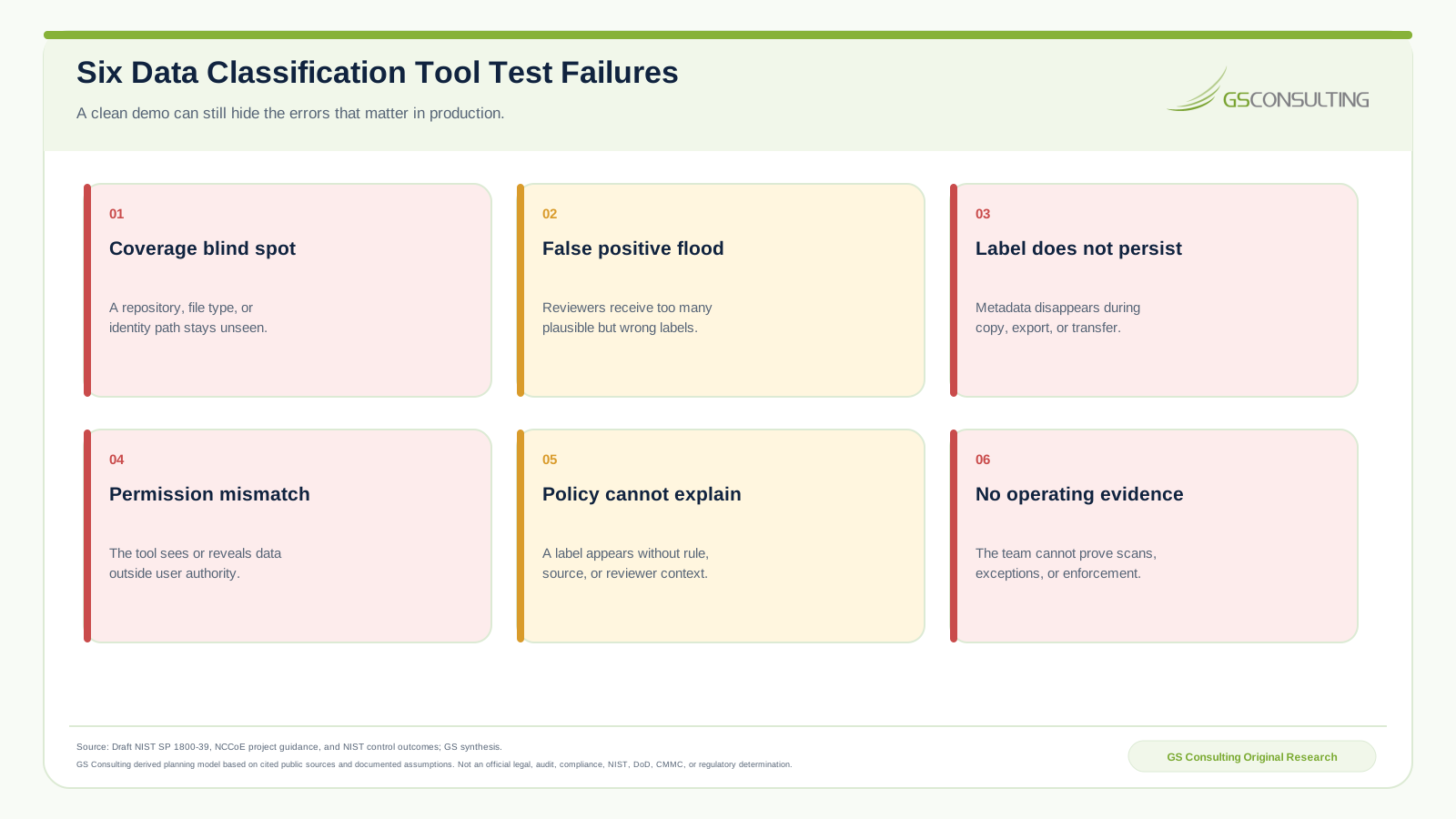
- Coverage blind spot. A repository, format, owner, archive, endpoint, or identity path remains unseen.
- False positive flood. Reviewers spend their time dismissing plausible but incorrect results.
- Label does not persist. Metadata disappears or changes during copy, transfer, export, indexing, or restoration.
- Permission mismatch. The product reveals data or result details beyond the user’s authority.
- Policy cannot explain. A label appears without a rule, source, policy version, reviewer, or confidence basis.
- No operating evidence. The team cannot prove what was scanned, excluded, changed, reviewed, enforced, or missed.
A 90 Day Data Classification Tool Evaluation
Days 1 through 30: policy and estate
- Name the sponsor, policy owner, system owners, reviewers, security, privacy, records, identity, and support roles.
- Map classes to consequences, handling decisions, authority sources, examples, exceptions, and evidence.
- Inventory the approved repositories, formats, identities, paths, volumes, and boundaries.
- Build the known test corpus and expected answer set with approved handling.
- Define coverage, precision, recall, permission, persistence, action, exception, performance, and evidence measures.
Days 31 through 60: controlled comparison
- Connect a representative but bounded data scope through approved access.
- Run the same proof scenarios against each candidate.
- Record product result, manual step, unsupported condition, operating burden, and remediation path.
- Test permission denial, label movement, policy change, downstream enforcement, load, interruption, and recovery.
- Review findings with the people who will own the operating queue and integrations.
Days 61 through 90: operating pilot
- Select the bounded use case based on evidence, integration fit, burden, and residual gaps.
- Run with real owners, review times, escalation, change control, support, and evidence retention.
- Measure drift, exception age, reviewer changes, missed data, policy changes, action success, and recovery.
- Document which data, systems, formats, labels, and actions remain unsupported.
- Expand only after the team can operate the queue and prove the full control chain.
The Minimum Data Classification Tool Evidence Packet
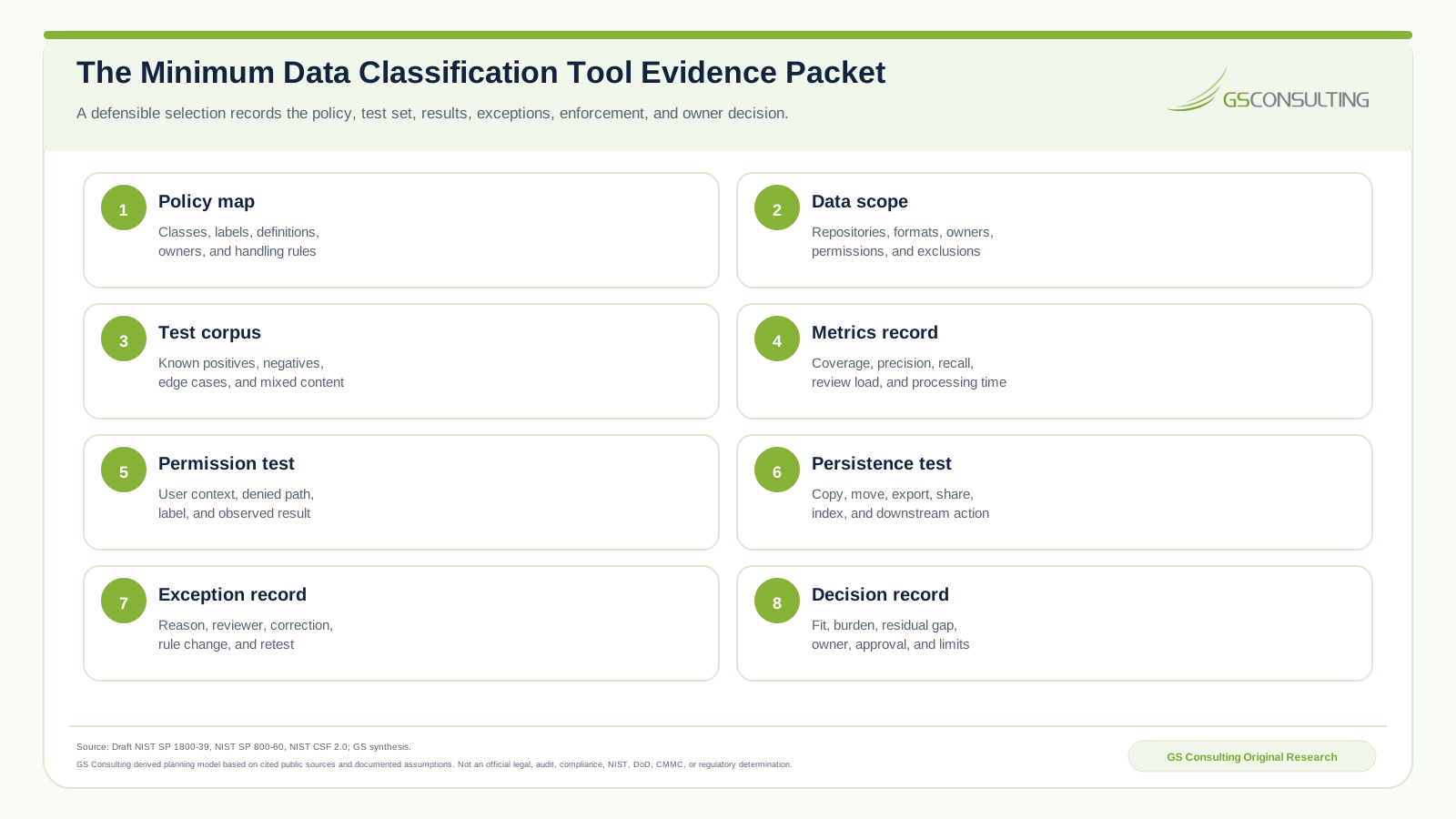
Keep the policy map, data scope, test corpus, expected answer set, metric results, permission tests, persistence tests, action results, exceptions, reviewer decisions, integration findings, cost assumptions, residual gaps, and approval record. The packet should make a failed scenario as visible as a passed one.
Product selection is only the start. The data classification automation workflow connects the chosen tool to policy authority, quality gates, label propagation, downstream handling, review, recovery, and evidence.
The NIST Cybersecurity Framework 2.0 is useful for connecting governance, inventory, protection, monitoring, response, and improvement outcomes. NIST SP 800-53 Revision 5 supplies deeper control context for categorization, access, flow, audit, media, and information protection. Those sources help define outcomes. They do not select the product.
Bottom Line
Data classification tools can make a large data estate visible and actionable. They can also create a persuasive dashboard that never reaches permissions, movement, enforcement, review, or proof. The difference is the evaluation method.
That is the operating standard: policy before product, real scope before demo, known answers before accuracy claims, permissions in every test, persistent labels, proven actions, owned exceptions, and evidence that survives product change.
Sources and Method Note
- NIST SP 1800-39 Initial Public Draft, Data Classification Practices
- NIST NCCoE Data Classification Practices Project
- NIST SP 800-60 Volume 1 Revision 1
- NARA Controlled Unclassified Information Registry
- NIST Cybersecurity Framework 2.0
- NIST SP 800-53 Revision 5
- NIST SP 800-171 Revision 3
- NSA and Partner Agencies, AI Data Security
GS Consulting Original Research. The priority and burden indexes are derived planning tools based on cited public sources and documented analyst assumptions. They are not vendor rankings, measured product accuracy, implementation duration, legal advice, privacy findings, security approval, CUI determinations, or compliance decisions. Replace ratings with the actual policy, estate, test results, integrations, costs, contracts, and risk decisions before selection.
Frequently Asked Questions
What are data classification tools?
Data classification tools discover data, identify content and context, apply an approved class or label, preserve metadata, support handling rules, and produce reviewable evidence.
How should a company evaluate data classification software?
Use a representative estate and known test corpus to measure coverage, precision, recall, permissions, persistence, enforcement, exceptions, evidence, integration, and burden.
What is the difference between data discovery and data classification?
Discovery finds data. Classification assigns meaning under an approved policy and should support a defined handling decision.
Can a data classification tool prove compliance?
No. A tool can support inventory, labeling, access, handling, monitoring, and evidence, but obligations depend on the governing context and operating controls.
What should be included in a data classification tool pilot?
Include known positive and negative samples, permission boundaries, label movement, exceptions, enforcement, evidence, load, failure, recovery, and change tests.
Related Reading
- Data Classification and Governance Hub
- Data Classification Automation
- Data Classification Before AI Automation
- AI Access Control and Permission Design
- AI Automation for Sensitive Data Workflows
- Secure AI Document Processing for CUI
- Secure RAG Architecture for GovCon
- Secure AI Automation
Make every label earn its place.
GS Consulting helps teams replace vendor feature tours with proof scenarios, measured results, and an operating classification control that reaches the real handling decision.
Build the Evaluation Plan