Cybersecurity | | 25 min read
Data Classification Policy: Build One People Will Follow

Key Takeaways
A classification policy works only when the label changes a real handling decision
Write the handling rules first
Handling rules score 100 in the GS adoption priority model. A class name has no value until it changes access, sharing, storage, retention, disposal, or AI use.
Use examples and defaults
People need close positive and negative examples at the point of work. Systems should carry approved labels into permissions and prompts where practical.
Own exceptions and system gaps
Marking rules score 92 on adoption friction and exceptions score 89. Policy rollout needs workflow owners, not just annual training.
A data classification policy is not a poster. It is a decision system.
The label matters only when it changes what someone does next. Who can open the file? Can it leave the tenant? Can it enter an AI tool? Must it be encrypted? How long is it kept? Who can approve an exception? What evidence proves the rule worked?
Most policies fail before those questions. They use vague labels, long definitions, and generic warnings. Then they ask every employee to make a legal, privacy, contract, security, and records decision in the middle of real work. People guess. Some treat everything as sensitive. Others treat nothing as sensitive. The label becomes decoration.
A useful data classification policy makes the common decision easy, the unusual decision reviewable, and the high consequence decision hard to bypass.
The Data Classification and Governance hub organizes the full series. Use the companion guide for data classification tool evaluation and the article on classification before AI automation. GS Consulting connects the policy to real systems through secure AI automation.
Turn the label into the handling decision.
GS Consulting helps teams define classes, map real workflows, write handling rules, design system controls, and build a policy people can use under pressure.
Plan the Classification PolicyWhat a Data Classification Policy Must Do
The policy should connect six things: the authority source, the information type, the consequence of misuse, the class, the handling action, and the evidence. If one link is missing, the user has to invent the answer.
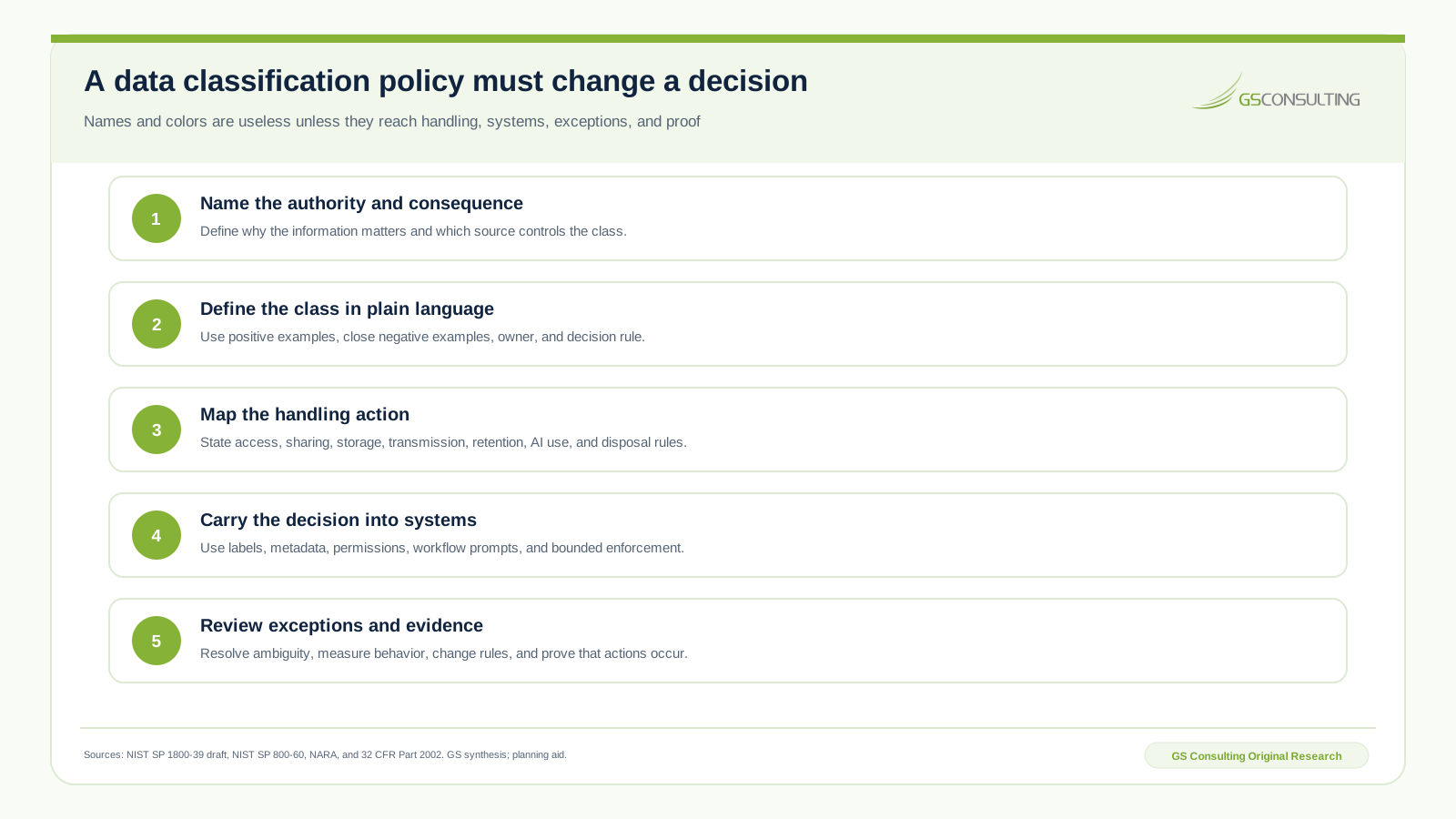
Start with authority and consequence. A privacy law, customer agreement, contract clause, records schedule, security policy, intellectual property decision, or federal program may shape the rule. The policy should name the source and the owner who interprets it for the business.
Then define the class in plain language. Give real positive examples and close negative examples. “Sensitive” is not enough. The user needs to know whether a test file, draft proposal, public release, personnel record, source code package, system log, or contract attachment fits.
Map each class to decisions people make every day. Define the access, sharing, storage, transmission, printing, and copying default.
Then cover search, analytics, AI use, retention, archive, disposal, and exceptions.
The February 2026 NIST SP 1800-39 Initial Public Draft demonstrates discovery, identification, and labeling of sensitive unstructured data. It is an initial public draft, not final NIST guidance. Its practical value is the operating chain and the connection between data knowledge and advanced security measures.
Choose the Fewest Classes That Change Behavior
There is no universal correct number of classes. Three can work. Four can work. Six can work if the systems and users can apply them consistently. More labels create more boundary disputes, training work, metadata mapping, tool rules, and exceptions.
A useful test is simple: if two proposed classes have the same handling rules, ask why both exist. Compare access and sharing. Compare storage and transmission. Then compare retention, disposal, and AI use.
The answer may be a formal marking or authority need. If not, merge the classes.
For a general enterprise policy, an illustrative four class model can provide a starting point:
- Public. Approved for external release by the named owner. Integrity, source, release state, and retention still matter.
- Internal. Routine business information for the workforce and approved service providers inside normal controls.
- Confidential. Information where unauthorized access or disclosure could create material business, privacy, security, customer, or employee harm.
- Regulated. Information governed by a specific law, regulation, contract, customer rule, or program that requires authority specific handling.
Regulated is not a magic umbrella. The policy still needs the exact rule. CUI, export controlled information, health information, payment data, tax records, and classified national security information do not become interchangeable because they all need care.
The Policy Components That Make the Rule Usable
- Purpose and scope. Name the people, data, systems, subsidiaries, providers, locations, and exclusions covered.
- Authority register. Link every regulated or contract driven class to the exact governing source and interpretation owner.
- Class catalog. Define the class, consequence, owner, positive examples, negative examples, and default when uncertain.
- Handling matrix. State access, sharing, storage, transmission, printing, copying, AI, retention, archive, and disposal rules.
- Marking standard. Define the label value, visible marking, metadata field, inheritance, movement, and system mapping.
- Decision roles. Name who classifies, approves, reviews, enforces, monitors, changes, and accepts exceptions.
- Exception process. Require the request, facts, owner, compensating action, expiry, review, and final decision.
- Decontrol and change. Define when a class can change, which authority approves, how copies inherit, and how systems update.
- Training and prompts. Put short guidance and examples where the decision occurs.
- Evidence and review. Keep policy versions, test results, exceptions, disputes, overrides, system coverage, training results, and owner approvals.
NIST SP 800-60 Volume 1 Revision 1 connects information types to confidentiality, integrity, and availability impact. It is federal categorization guidance, not a ready made enterprise label scheme. Use the consequence logic while tailoring the classes to actual obligations and operations.
GS Data Classification Policy Adoption Priority Index
GS Consulting built a derived model across ten policy components. The priority score weights handling consequence at 25 percent, decision frequency at 20 percent, cross system reach at 15 percent, user confusion risk at 15 percent, enforcement dependency at 15 percent, and evidence need at 10 percent. Each factor receives a documented analyst rating from 1 to 5.
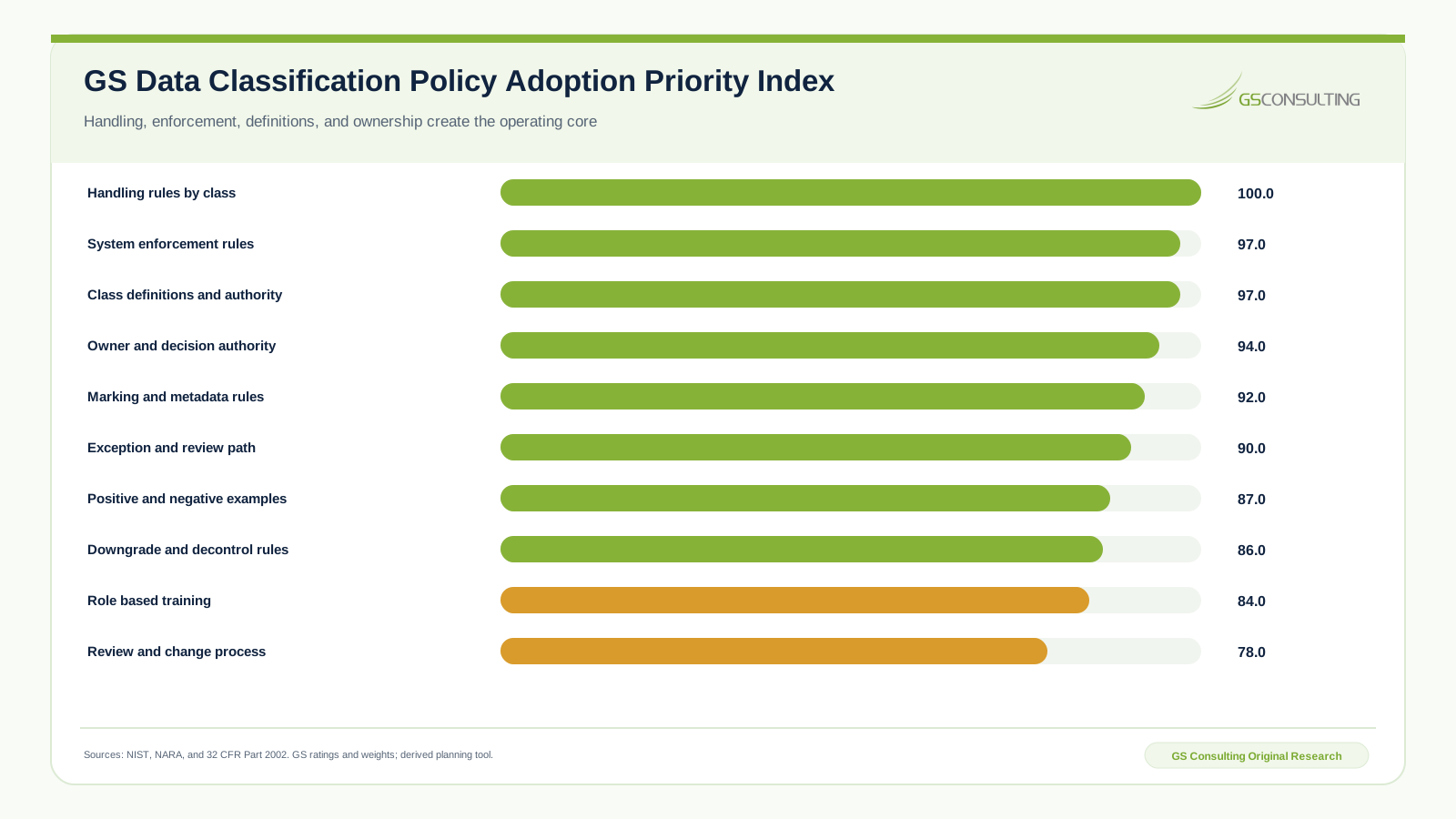
Handling rules score 100. System enforcement and class definitions each score 97. Owner and decision authority score 94. Marking and metadata rules score 92. The exception path scores 90.
Positive and negative examples score 87. Downgrade and decontrol rules score 86. Role based training scores 84. Review and change score 78. The lower scores do not mean those components are optional. They mean the operating core should exist before the program spends most of its energy on annual training or a review calendar.
The sensitivity case shifts five weight points from handling consequence to decision frequency. The largest score change is two points. System enforcement, class definitions, and handling rules keep their priority. The exception path moves from 90 to 89, which changes the planning tier by one point. That result is a useful warning against treating a threshold as certainty.
Adoption Friction Concentrates in Systems and Exceptions
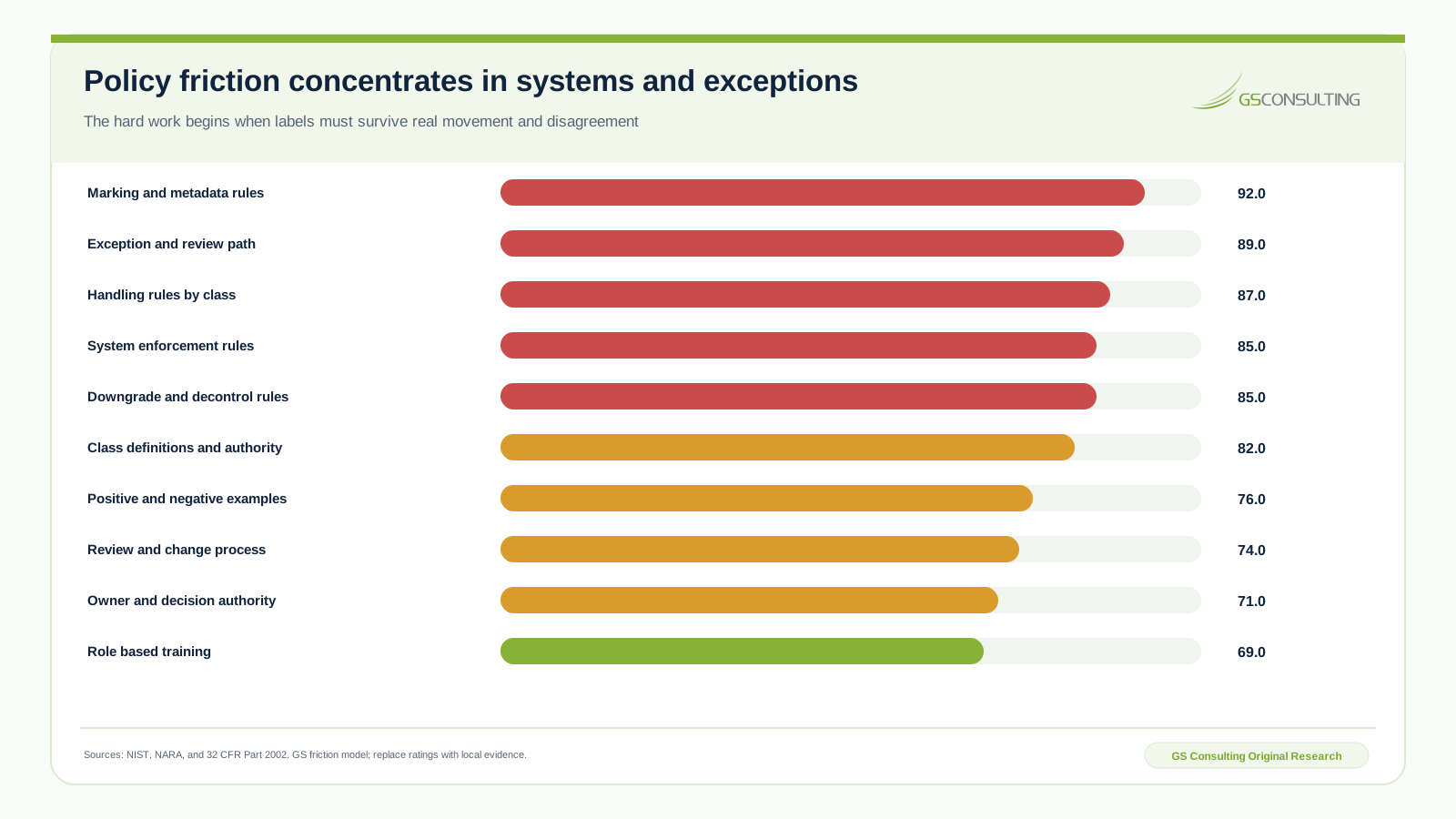
The friction model weights workflow change at 25 percent, system reach at 20 percent, judgment variance at 20 percent, legacy cleanup at 15 percent, reviewer load at 10 percent, and integration load at 10 percent. Marking and metadata rules score 92. Exceptions score 89. Handling rules score 87. System enforcement plus downgrade and decontrol each score 85.
This is why a signature on the policy is not the finish line. Existing file shares do not gain an owner. Old exports do not inherit a label. Email does not stop forwarding itself. Search and AI indexes do not understand a new class until metadata, permissions, connectors, and review rules are mapped.
Plan the friction honestly. Some systems will support persistent labels. Some will need a durable associated record. Some will only support a container rule. Some will need a manual prompt and review. Record the gap instead of pretending the policy reached every copy.
Build a Handling Matrix People Can Use
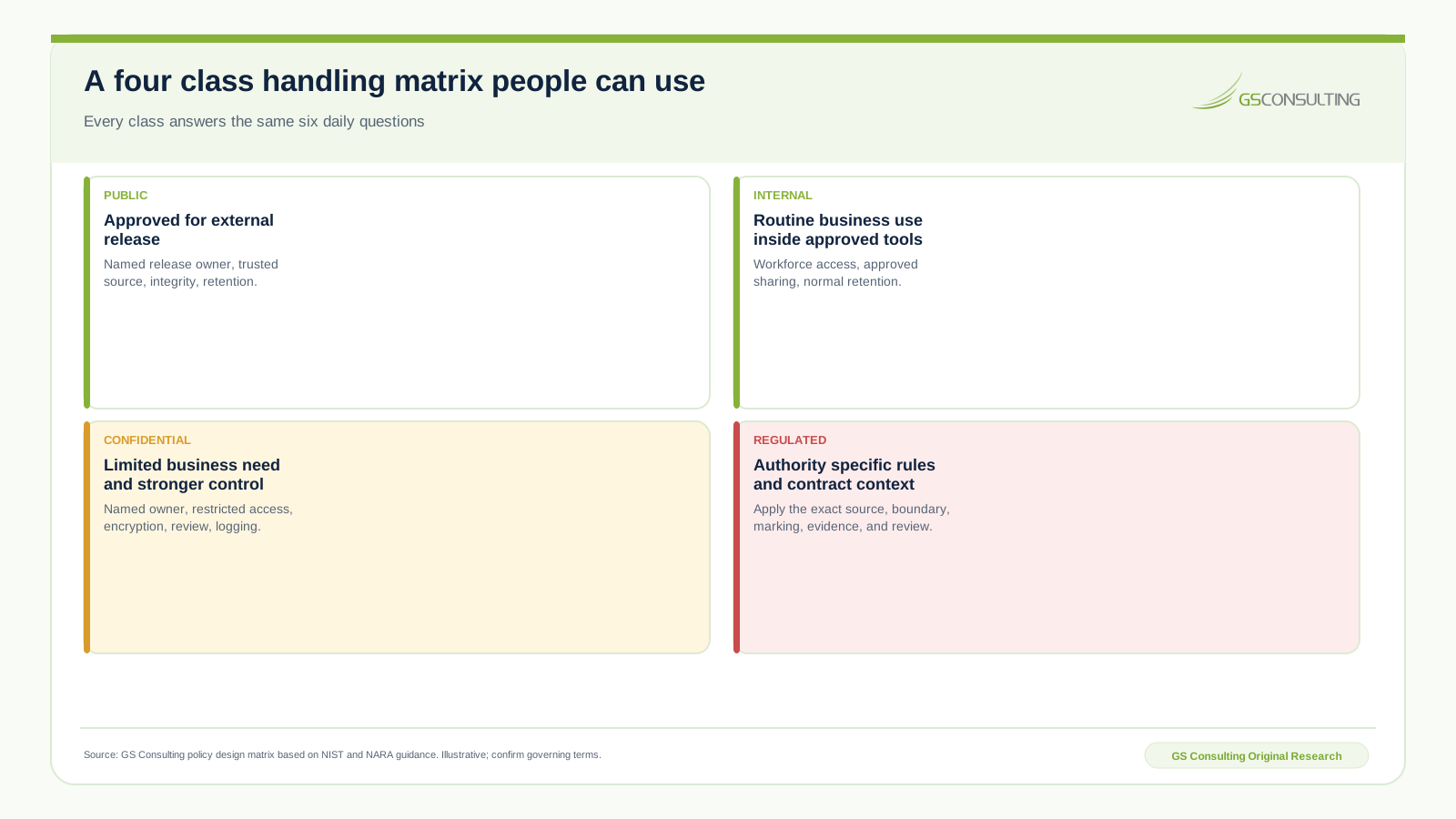
For every class, answer the same questions in the same order:
- Access. Who may access the data, under which role, from which environment, and with what approval?
- Share. Can the data move inside the company, to a customer, to a subcontractor, or outside the approved tenant?
- Store and transmit. Which systems, regions, devices, encryption methods, backups, and channels are approved?
- Use in AI and search. Can the data enter prompts, retrieval indexes, training sets, analytics, or vendor services? Which tenant, retention, logging, and human review rules apply?
- Retain and archive. Which schedule applies, what event starts the clock, and who can place a hold?
- Dispose and decontrol. Which method, approval, evidence, and downstream update are required?
Do not hide all six decisions behind “handle appropriately.” That phrase transfers the policy writer’s job to the user.
Put Every Classification Decision on a Named Role
Business owners should own the meaning and consequence of their data.
Security should translate the class into access, encryption, monitoring, and technical safeguards.
Privacy, legal, compliance, records, contracts, and export owners should interpret the authority within their scope.
IT and platform teams should implement the approved labels, defaults, integrations, and evidence.
Users should apply the policy within their role. They should not have to resolve a novel authority conflict alone. The review owner needs a service target, a decision record, and the power to correct the class or handling rule.
For CUI, the NARA CUI Registry is the Government wide repository for federal CUI policy and practice. NARA also tells agency personnel and contractors to consult agency implementing policy and program management. 32 CFR Part 2002 establishes the executive branch CUI program. A contractor policy should follow actual agency and contract context. It should not invent CUI status.
A 90 Day Data Classification Policy Rollout
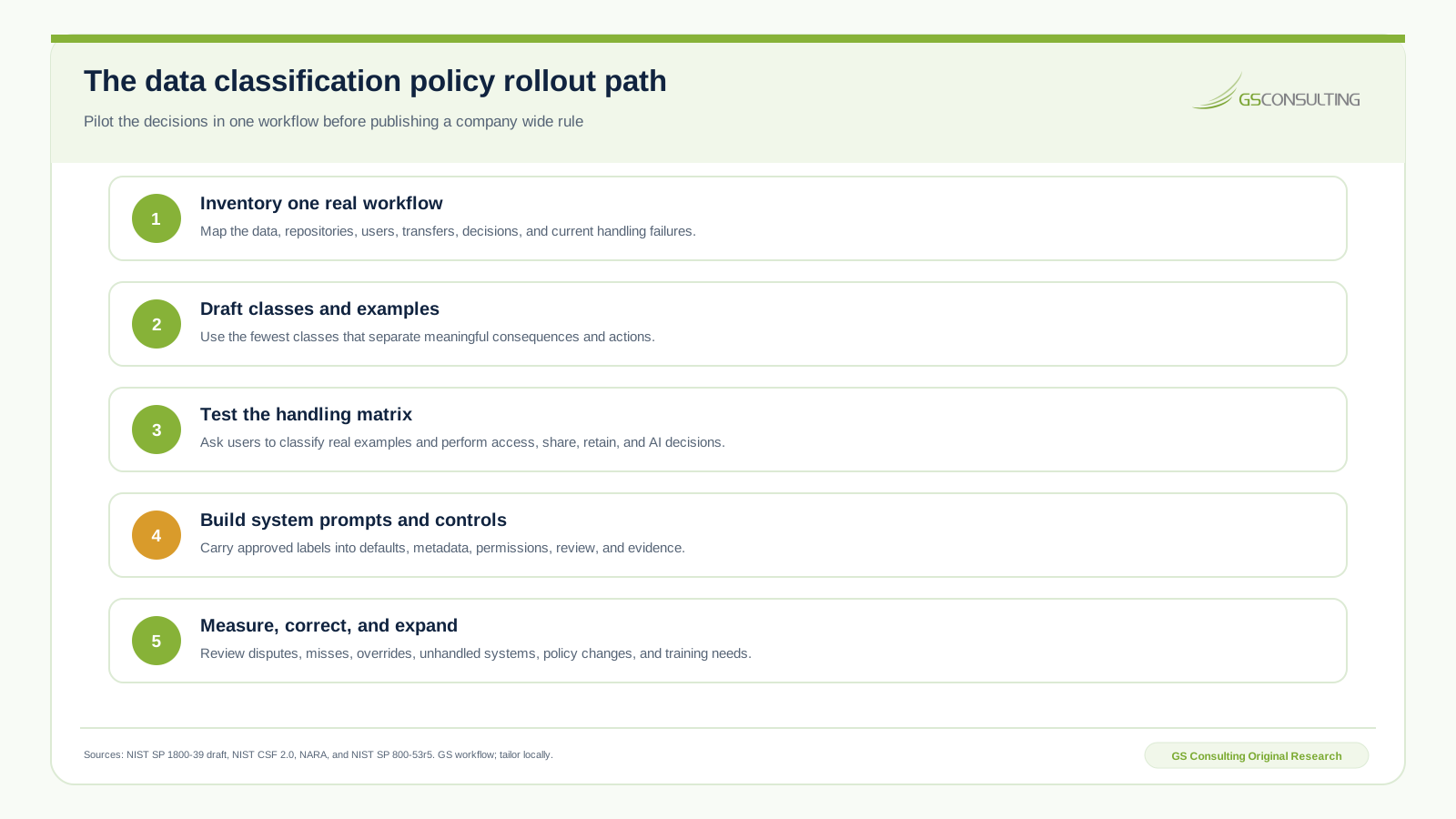
Days 1 through 30: learn the real workflow
- Select one document or data workflow with real sensitivity and repeated movement.
- Inventory the data, owners, repositories, users, providers, copies, exports, backups, search paths, AI use, retention, and disposal.
- Record current mistakes, disputes, uncontrolled shares, unavailable labels, and system gaps.
- Build the authority register and decide who can interpret each source.
Days 31 through 60: write and test the decisions
- Draft the fewest useful classes and the complete handling matrix.
- Create positive, negative, ambiguous, mixed, inherited, copied, exported, and expired examples.
- Ask users to make real decisions with the draft and record disagreements and slow questions.
- Test labels, metadata, permissions, sharing, AI restrictions, retention, exceptions, and evidence in the pilot systems.
Days 61 through 90: build the operating model
- Publish role specific guidance and put short prompts at creation, sharing, upload, export, and exception points.
- Assign policy, class, system, training, exception, monitoring, and change owners.
- Set measures for coverage, decision quality, exception age, overrides, control results, and policy change.
- Expand one workflow at a time and keep unsupported systems visible in the roadmap.
The Data Classification Policy Evidence Packet
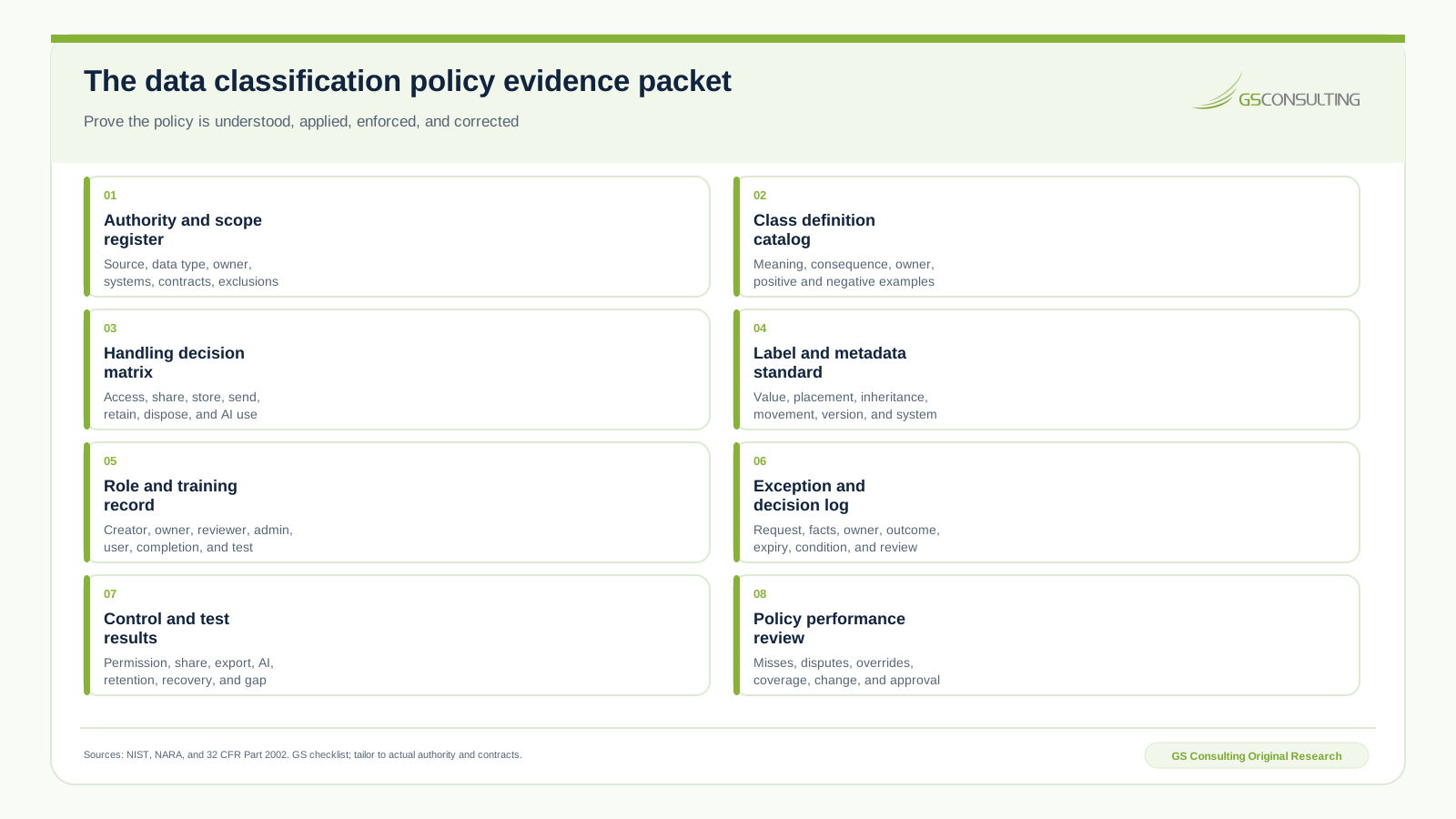
Keep the authority and scope register, class definition catalog, handling matrix, label and metadata standard, role and training record, exception log, control test results, and policy performance review. Preserve failed tests and unresolved system gaps alongside approvals.
When the policy decision becomes automated, the data classification automation guide shows how to test the label, preserve it across handoffs, enforce handling, route review, and repair failed runs.
NIST Cybersecurity Framework 2.0 is useful for linking governance, asset knowledge, safeguards, detection, response, and improvement.
NIST SP 800-53 Revision 5 provides deeper control context for information flow, media, access, audit, retention, monitoring, and protection. Neither source removes the need to tailor policy to the actual data and governing terms.
Bottom Line
A data classification policy can become a useful operating control or another document people click past. The difference is whether the policy makes the decision easier than the workaround.
That is the operating standard. Keep the classes few and the definitions plain. Use real examples, explicit handling, named owners, helpful defaults, and fast exceptions. Keep gaps visible, test the controls, and prove that the rule survives real work.
Sources and Method Note
- NIST SP 1800-39 Initial Public Draft, Data Classification Practices
- NIST SP 800-60 Volume 1 Revision 1
- NARA Controlled Unclassified Information Program and Registry
- 32 CFR Part 2002, Controlled Unclassified Information
- NIST Cybersecurity Framework 2.0
- NIST SP 800-53 Revision 5
GS Consulting Original Research. The adoption priority and friction scores are derived planning tools based on cited public sources and documented analyst assumptions. They are not legal advice, privacy findings, CUI designations, regulatory determinations, compliance decisions, control assessments, product rankings, or measured workforce behavior.
Frequently Asked Questions
What is a data classification policy?
A data classification policy defines how an organization identifies data classes and changes handling decisions based on sensitivity, consequence, authority, and business use. It should cover access; sharing; storage and transmission; retention and disposal; AI use; ownership; exceptions; and evidence.
How many data classification levels should a company use?
Use the fewest levels that create different handling decisions. Public, Internal, Confidential, and Regulated can work as a four class starting model. The right labels depend on the organization; its data, contracts, and law; its systems; and its user workflows.
Who owns data classification?
Business data owners should decide the class and handling need for their information. Security, privacy, legal, compliance, records, contracts, and IT translate those decisions into rules and controls. Users apply the policy, and a named review owner resolves exceptions.
How do you get employees to follow a data classification policy?
Use few classes, plain definitions, real examples, helpful system defaults, visible handling prompts, fast exception review, role specific training, and feedback from actual mistakes. Measure decisions and control results instead of training completion alone.
Can a company decide that information is CUI in its own policy?
No. CUI status comes from applicable federal authority and the CUI program context, not from a company choosing the label. Contractors should confirm the CUI Registry, agency policy, contract terms, markings, and program direction for the information they handle.
Related Reading
- Data Classification and Governance Hub
- Data Classification Automation
- Data Classification Tools: How to Evaluate Them
- Data Classification Before AI Automation
- AI Access Control and Permission Design
- AI Automation for Sensitive Data Workflows
- Secure AI Document Processing for CUI
- Secure AI Automation
Write the rule people need at the moment of action.
GS Consulting helps teams turn classification policy into clear handling decisions, practical controls, accountable review, and evidence that survives real work.
Build the Policy Operating Model