Data Classification | | 25 min read
Data Classification Automation: Build a Workflow That Enforces the Label

Key Takeaways
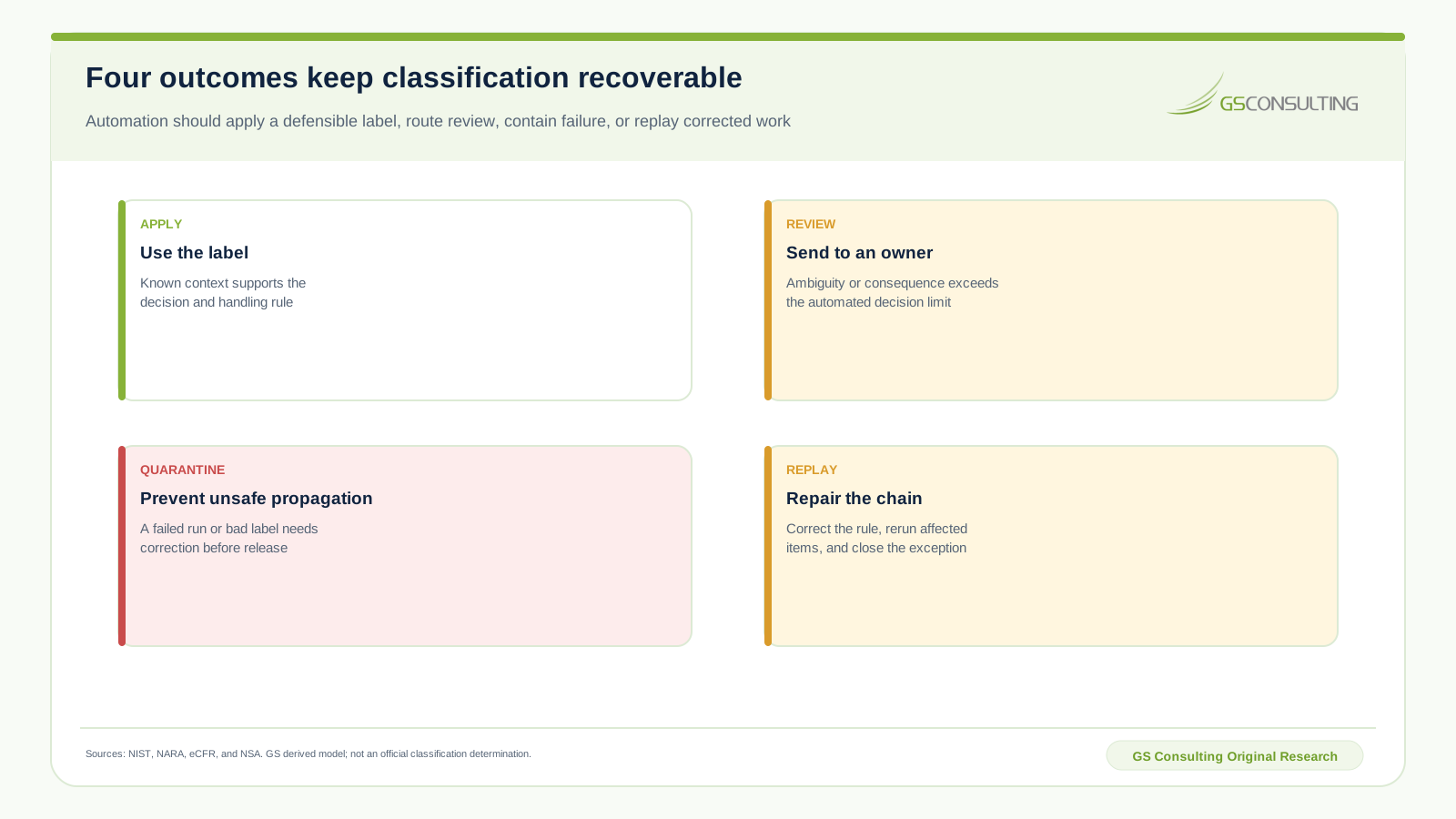
The label is only the middle of the workflow
Automate an approved decision
Define the taxonomy, source authority, owner, handling rule, exception path, and review right first.
Make the decision survive movement
Copies, messages, exports, derived records, and downstream systems need usable classification context.
Treat bad labels as operating failures
Quarantine affected output, correct the rule, replay the work, verify handling, and close the record.
Data classification automation is not a scanner that adds labels. It is a controlled chain from policy authority and scoped discovery to tested decisions, label propagation, enforced handling, human review, recovery, and evidence.
Not a colored tag. A handling decision that survives movement.
A tool can correctly identify a sensitive document and still fail the mission. The label may disappear during export. A downstream repository may ignore it. An automated rule may lock out the wrong team. A missed label may spread through search, analytics, an AI index, email, backup, or a partner workflow. Nobody may know which items need repair.
This guide builds the whole workflow. It uses official public sources and original GS Consulting research across twelve controls. The purpose is operational. Data, security, records, privacy, legal, compliance, and business owners need to agree on what to automate. They also need to decide where review belongs and how to recover when classification goes wrong.
The Data Classification Automation Workflow Standard
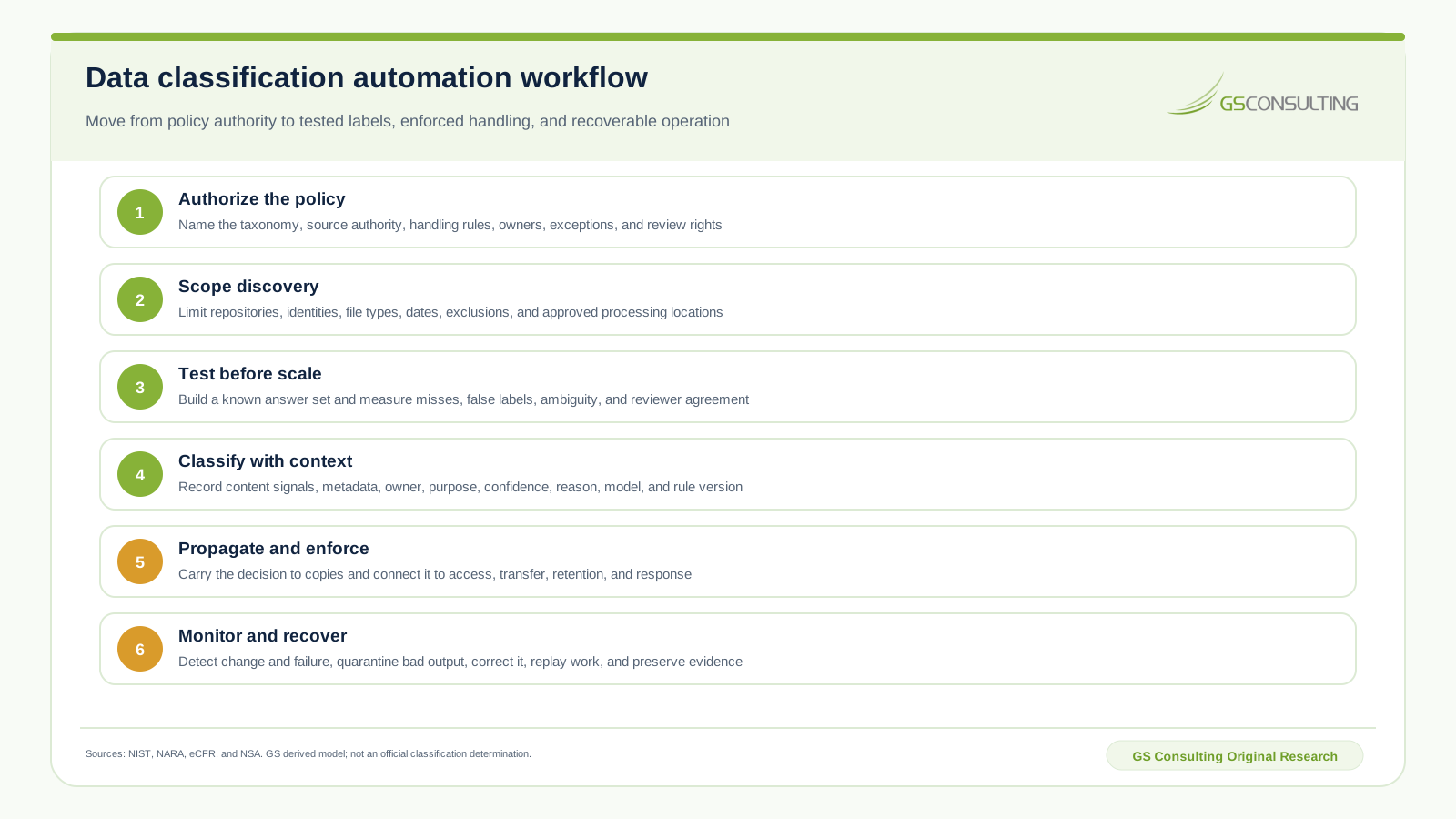
A production workflow should answer six questions in order:
- Who has authority? Identify the taxonomy, governing source, policy owner, information owner, handling rule, exception, and review right.
- What may be scanned? Limit repositories, identities, file types, dates, regions, processing locations, and exclusions.
- How is quality known? Test a reviewed set that reflects the exact population, including rare and ambiguous cases.
- What decision is recorded? Preserve the item, label, confidence, reason, context, model, rule version, time, and reviewer action.
- What control follows? Propagate the decision and apply the authorized access, transfer, retention, protection, monitoring, or response rule.
- How is failure repaired? Detect affected items, contain unsafe output, correct the cause, replay the work, verify the result, and close the evidence.
Automating only the middle two steps creates speed without control. The workflow must begin with authority and end with a verified handling result.
What Current Public Guidance Covers and What It Does Not
The strongest recent public reference is the initial public draft of NIST SP 1800-39, published in February 2026. The National Cybersecurity Center of Excellence demonstrates discovery, identification, labeling, cataloging, and reporting for sensitive unstructured data with commercial technology and a synthetic data set.
The draft is useful because it shows a reference workflow instead of describing classification in the abstract. It is also explicit about scope. The draft does not focus on protection after classification or error checking during the labeling process. Those are not minor details. They are the exact handoffs where an enterprise automation program can overstate control.
NIST SP 800-60 Volume 1 Revision 1 connects federal information types with provisional impact levels and organizational review. The NIST Cybersecurity Framework 2.0 provides outcome language across Govern, Identify, Protect, Detect, Respond, and Recover. NIST SP 800-53 Revision 5 and NIST SP 800-53A Revision 5 add relevant control and assessment disciplines.
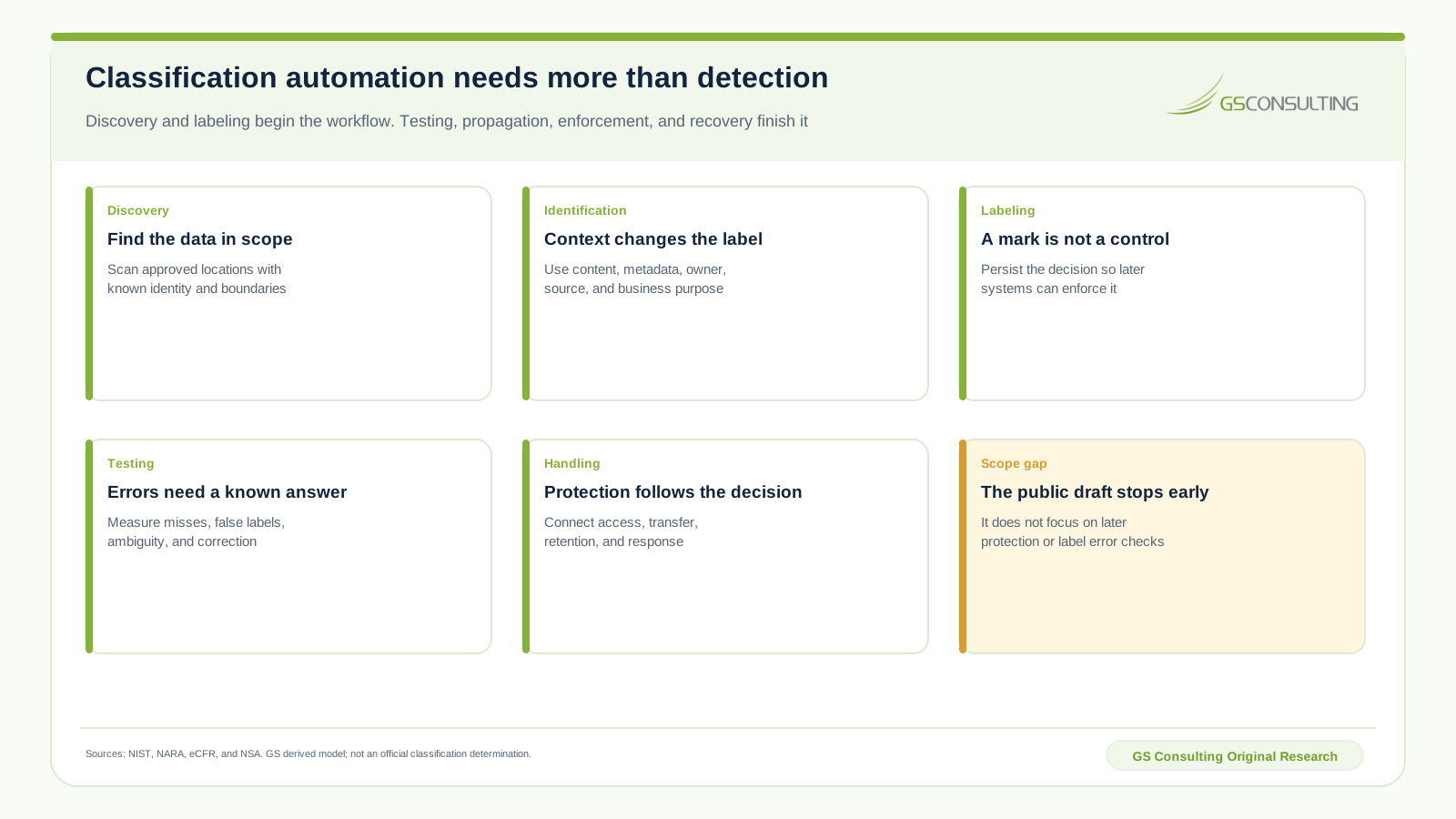
The result is not a claim that every organization must implement the same workflow. It is a clear engineering conclusion: when a label drives consequential handling, the decision and its downstream effects should be testable and recoverable.
Original Research: The GS Data Classification Automation Control Priority Index
GS Consulting built a derived planning model to answer a narrow question: which controls should operators implement first when automated classification must drive handling decisions across connected systems?
We scored twelve controls from one to five across six criteria. Handling consequence receives 25 percent. Propagation reach receives 20 percent. Classification error exposure, integration dependence, and evidence need each receive 15 percent. Review cost receives 10 percent. The weighted result is divided by five and reported on a zero to one hundred scale.
The public sources define relevant disciplines. GS Consulting selected the controls, ratings, weights, tiers, workflow, and evidence records. They are planning assumptions, not official source facts.
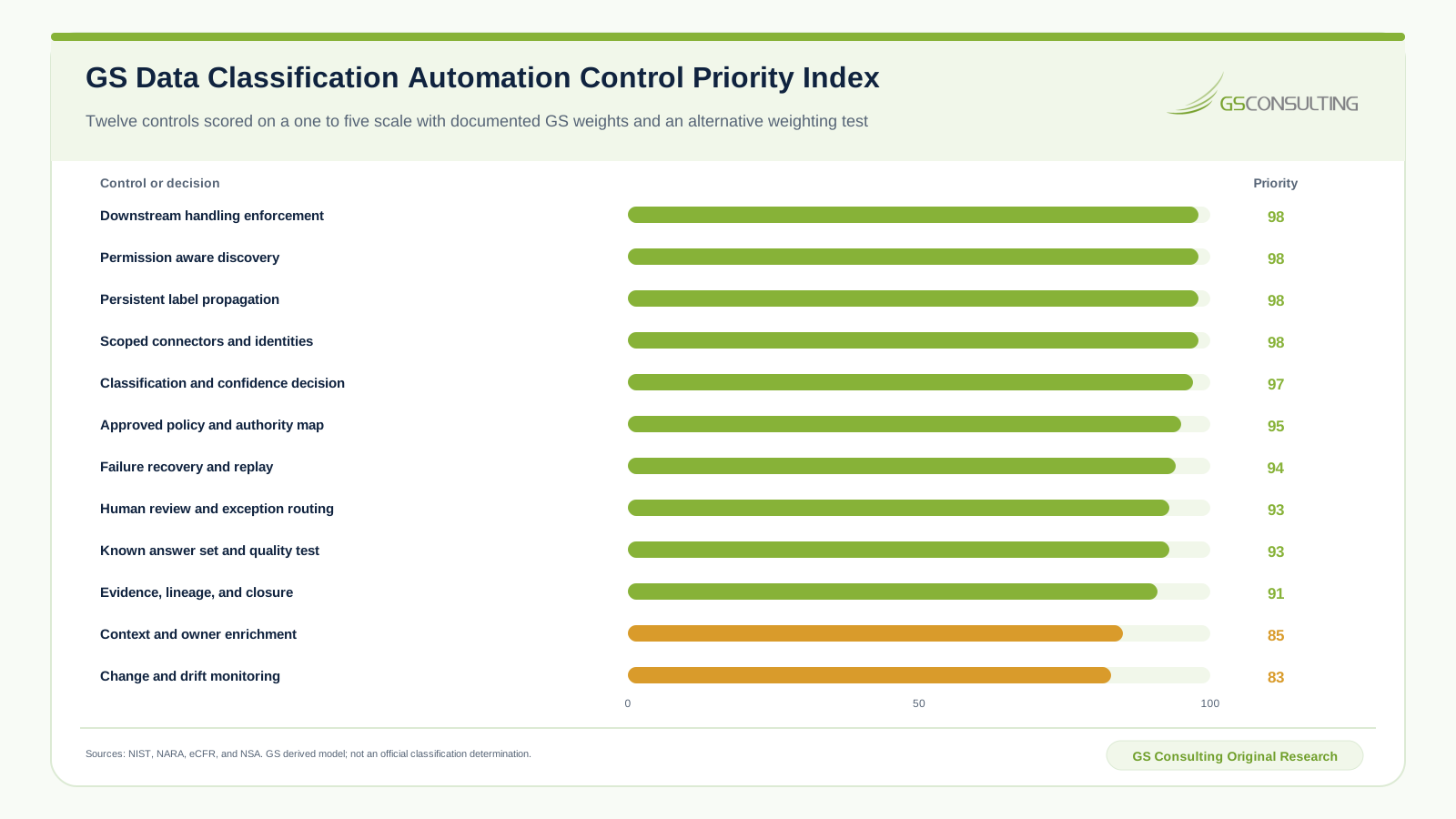
Ten of twelve controls score 90 or more. Downstream handling enforcement, permission aware discovery, persistent label propagation, and scoped connectors and identities each score 98. The classification and confidence decision scores 97. Approved policy and authority scores 95. Failure recovery scores 94. Human review and the known answer test each score 93. Evidence, lineage, and closure scores 91.
Context and owner enrichment scores 85. Change and drift monitoring scores 83. Neither is optional. The result shows how tightly coupled the workflow is: almost every stage can create broad handling consequences or expensive repair.
We shifted five percentage points from review cost to propagation reach. No score moved by more than one point. That limited sensitivity test suggests the result is not driven by one small weight choice. It does not prove performance in a specific environment.
Start with Policy Authority, Not a Detection Model
A classification model cannot decide what the organization has not defined. Before connecting a scanner, write the decision contract.
The contract should name the classification scheme, source authority, applicable information types, and owners. It should also define permitted automation, required handling, review rights, exceptions, retention, and change. Keep a formal regulatory or contractual category distinct from an internal business sensitivity label.
For example, “restricted” may be an internal label. Controlled Unclassified Information is a federal program category tied to a governing law, regulation, or government wide policy and an authorized context. A tool should not flatten those into interchangeable keywords.
The companion data classification policy guide explains how to define roles, labels, handling rules, and evidence. Automation should implement that policy. It should not quietly create a second one.
Scope Discovery with Identity and Source Permissions
Discovery creates access. That makes connector design a security decision.
Document the repository, service identity, permission scope, and approved processing location. Then record the included folders, tenants, regions, formats, dates, and message types. Make exclusions, temporary copies, logs, and output destinations visible. Confirm whether the connector honors source permissions or creates a separate broad view.
A useful rule is strict: the automation service should not gain access merely because a classification product can technically scan the source. Grant the smallest permission that supports the approved population. Test denied paths. Record the result.
Start with an inventory scan that does not change labels or handling. Compare discovered counts with repository records. Investigate items the connector cannot read, items it reads unexpectedly, encrypted content, archives, duplicate versions, links, deleted items, and unsupported formats.
The data classification tools guide covers tool selection. A feature checklist is not enough. Connector behavior, identity, export, recovery, and evidence often determine whether a tool can support the real workflow.
Use a Known Answer Set Before Automatic Action
A demonstration can prove that the tool recognizes an obvious sample. It cannot establish classification quality.
Build a known answer set from the exact repositories, formats, languages, templates, business contexts, and information types in scope. Have authorized reviewers label the set and preserve disagreements. Include easy positives, easy negatives, rare categories, nested content, scans, tables, partial identifiers, copied passages, stale templates, and deliberately ambiguous cases.
Measure at least:
- Missed sensitive items. Items that required a label or route but did not receive it.
- False labels. Items that received an unsupported restrictive or sensitive label.
- Accuracy by class. A total average can hide failure in a rare, consequential category.
- Reviewer agreement. Weak agreement can reveal an unclear policy, not just a weak model.
- Confidence calibration. A stated confidence should match observed correctness for that population.
- Handling outcome. Verify that the downstream system actually performed the authorized action.
- Correction time. Measure how long operators need to find, contain, repair, replay, and close an error.
Set separate gates for automatic application, human review, and quarantine. A model can be accurate overall and still be unsafe for a high consequence class.
Record More Than the Final Label
The classification decision should be explainable enough to review and replay. Preserve the item ID, source, current permissions, proposed label, and applied label. Keep confidence and reason with the content signals, metadata, owner context, model or rule version, and taxonomy version. Record the time, reviewer, override, and downstream result.
Do not treat confidence as authority. Confidence measures model certainty under a defined method. Authority comes from policy and accountable roles. A high confidence match can still be wrong because the governing context is missing.
Use human review when the label has high consequence, evidence conflicts, context is missing, a new category appears, confidence is outside the tested range, or the system proposes a broad handling change. Give reviewers a bounded queue, source context, decision options, and an escalation route. Otherwise review becomes an unmeasured backlog.
Make the Classification Survive Every Handoff
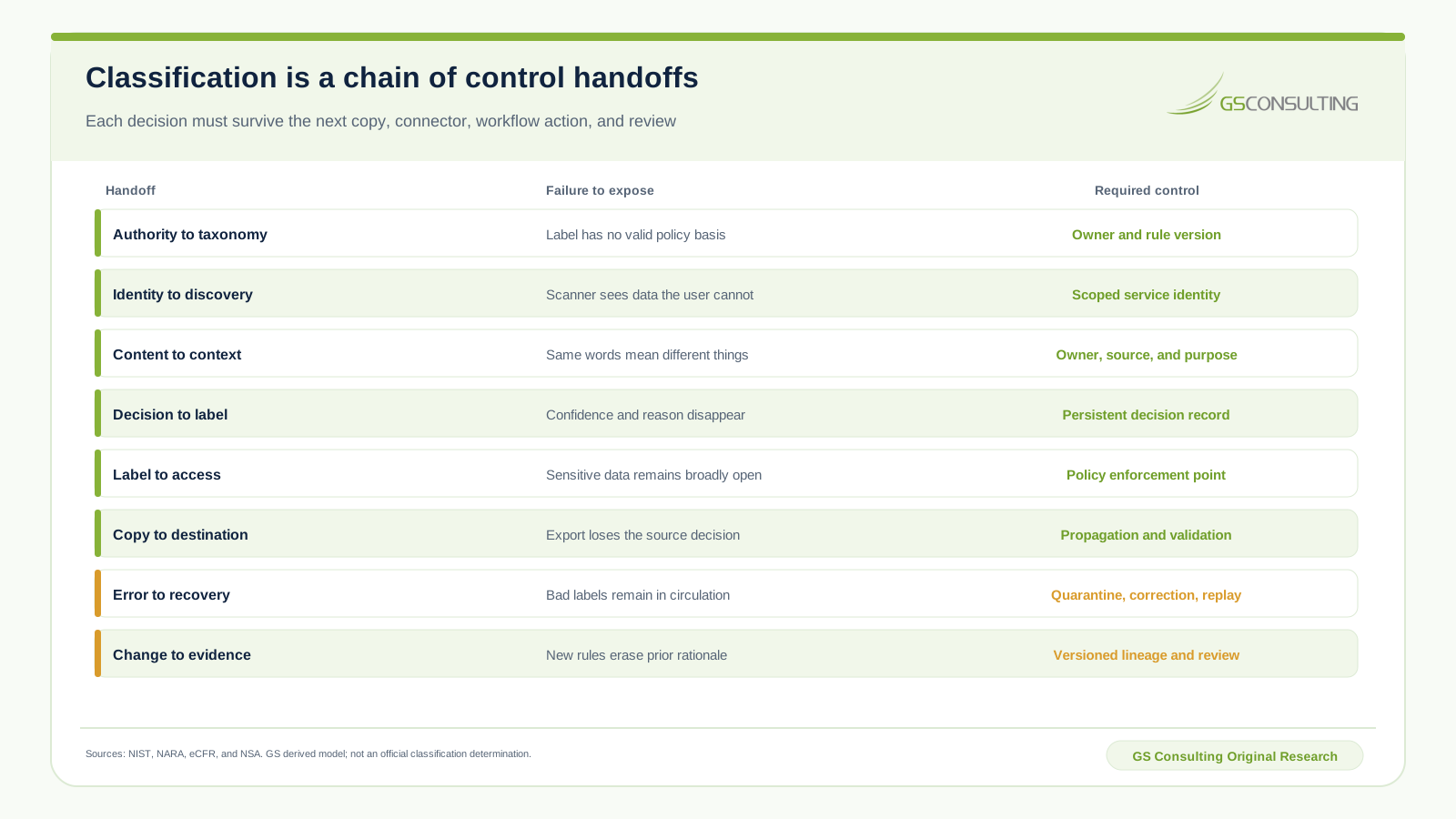
Decide which metadata travels with a copy, which stays in a central catalog, and how the destination resolves the current decision. A label stored only in one product has no power when data moves through email, export, synchronization, analytics, backup, an application interface, or an AI retrieval index.
Test renaming, copying, export, conversion, compression, and scanned content. Include excerpts, merged and split files, message attachments, search indexes, data pipelines, and derived records. The right response may be persistent metadata, a central lookup, content marking, a transfer block, a destination rule, or a new classification decision.
Do not assume the strictest source label always transfers unchanged to every derived record. Sometimes it should. Sometimes the derived output has a different basis. Define the rule and authority instead of leaving it to a connector default.
Connect Labels to Specific Handling Controls
A label creates value when an authorized system acts on it. Map each class to the exact controls that apply in each environment.
Possible actions include:
- Limit access or require stronger authentication.
- Restrict transfer, public sharing, or destination choice.
- Apply approved storage, encryption, retention, and monitoring rules.
- Add review, route an incident, or block an AI use.
Applicability depends on the data and governing context.
Test the enforcement point, not just the label event. If the workflow changes access, confirm the final access state. If it blocks transfer, test allowed and denied destinations. If it applies retention, confirm the record schedule and authorized disposition. If it restricts AI use, test the prompt, retrieval, log, output, and export paths.
The data classification before AI automation guide explains why classification must reach the actual workflow. A policy label that never reaches retrieval or output controls does not protect an AI system.
Design Failure Recovery and Replay Before Scale
Classification automation will fail. Connectors lose access. Files change during a run. Rules conflict. Models change. Metadata is rejected. A destination applies only part of the action. An owner reverses a decision.
Every run should produce a stable run ID, item state, source version, decision version, destination result, and error. Failed or uncertain items should move to an explicit queue. High consequence output may need quarantine until the result is verified.
Recovery has six parts:
- Identify the affected population.
- Stop unsafe propagation or handling where authorized.
- Preserve the bad decision and its cause.
- Correct the policy, rule, model, connector, identity, or destination action.
- Replay affected items with duplicate safe behavior.
- Verify final labels and handling, then close the exception.
Apply the Workflow to AI Inputs, Outputs, and Derived Data
AI systems expand the classification surface. Inputs can include source documents, prompts, retrieved passages, fine tuning data, evaluation sets, feedback, and logs. Outputs can create summaries, extracted fields, embeddings, decisions, recommendations, code, images, or new records.
A derived output may retain the sensitivity of its source, combine several sources into a more sensitive record, or omit details that supported the original label. Define how the workflow classifies prompts, retrieval results, output, logs, indexes, and exports. Test each path.
The 2025 NSA and partner guidance on AI data security emphasizes provenance, integrity, monitoring, access, and lifecycle protection. It is cybersecurity guidance, not a universal classification mandate. Its operating themes reinforce the need to preserve source and change evidence around AI data.
Preserve CUI Authority and Contract Nuance
The National Archives and Records Administration CUI program and 32 CFR Part 2002 provide the federal program context. Applicability depends on the information, governing authority, entity, contract or agreement, and handling environment.
Automation can search for indicators, join contract and source metadata, suggest a category, apply approved markings, route review, and test handling. It should not manufacture authority from a regular expression or a model score.
For government contractor workflows, preserve the source contract or agreement and the program role. Add the CUI category where established, information owner, marking basis, authorized systems, dissemination controls, and decision authority. Confirm requirements with qualified contracts, security, legal, and program owners.
The Minimum Classification Automation Evidence Packet
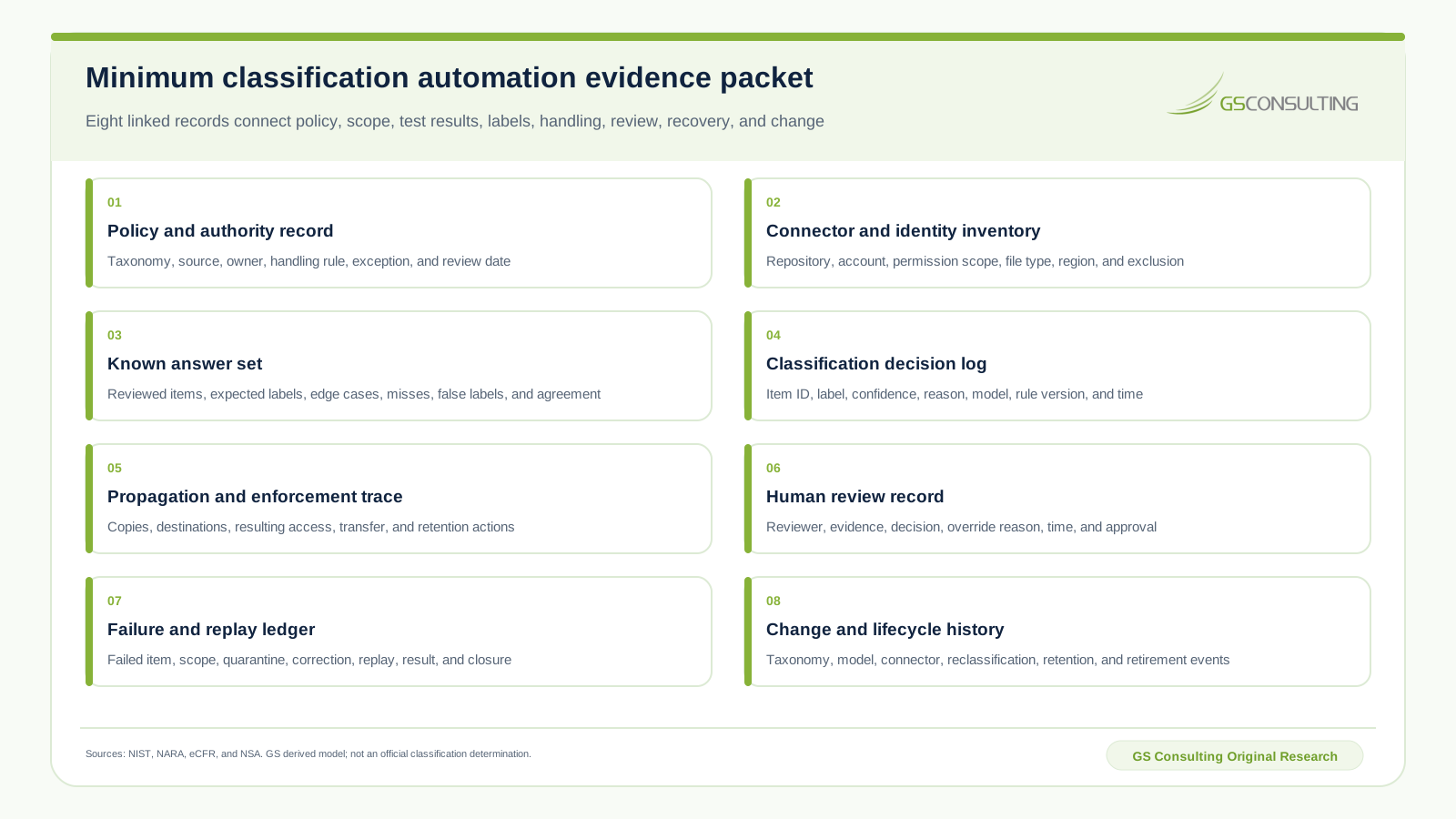
The research package preserves the full source register, public observations, data dictionary, and twelve input records. It also contains the ratings, both weight sets, formula results, sensitivity analysis, exact figure data, workflow stages, handoff matrix, operating decisions, and evidence packet.
Replace the GS planning ratings with local repositories, labels, permissions, error data, review effort, propagation paths, handling results, contracts, incidents, and owner decisions. A model that cannot be challenged with local evidence should not control sensitive data.
A 90 Day Data Classification Automation Plan
Days 1 to 30: authorize and scope
Select one bounded repository and information population. Confirm the policy authority, owner, labels, handling rules, exceptions, and review rights. Then confirm connector identity, permissions, formats, regions, processing locations, and evidence requirements. Run discovery without changing labels or access.
Days 31 to 60: test the decision
Build the known answer set. Preserve reviewer disagreement. Measure misses, false labels, class results, confidence, review effort, and handling outcomes. Set separate gates for automatic application, review, quarantine, and stop. Test copies and transformations.
Days 61 to 90: connect controls and prove recovery
Apply labels to the approved population. Connect only the handling actions that have named authority. Trace propagation to each destination. Run failure, rollback, correction, and replay exercises. Publish the operating dashboard and evidence packet. Expand only after the full chain passes.
The Bottom Line
Data classification automation is not successful when a scanner finds a number and paints a label. It is successful when the organization can defend the policy basis, prove the test result, preserve the decision, enforce the right handling, route uncertainty, repair failure, and trace the final state.
The operating standard is firm: do not automate a classification decision unless its authority, quality, propagation, handling effect, review path, and recovery evidence are all explicit.
Need classification that reaches the actual workflow?
GS Consulting helps organizations define data classification policy, connect sensitive data discovery with handling controls, and build evidence ready AI and automation workflows.
Explore Secure AI Automation Visit the Data Classification HubSources, Method, and Planning Caveat
Sources were accessed September 12, 2026. The evidence set includes the initial public draft of NIST SP 1800-39, NIST SP 800-60 Volume 1 Revision 1, the NIST Cybersecurity Framework 2.0, NIST SP 800-53 Revision 5, NIST SP 800-53A Revision 5, the NARA CUI program, 32 CFR Part 2002, and NSA partner guidance on AI data security.
Planning caveat: the GS Data Classification Automation Control Priority Index is a derived planning tool based on cited public sources and documented assumptions. It is not an official legal, audit, compliance, NIST, CUI, security, privacy, records, or regulatory determination. Scores do not classify information or establish handling authority. Confirm requirements and decisions with qualified owners.
- NIST SP 1800-39 Initial Public Draft
- NIST SP 800-60 Volume 1 Revision 1
- NIST Cybersecurity Framework 2.0
- NIST SP 800-53 Revision 5
- NIST SP 800-53A Revision 5
- NARA Controlled Unclassified Information
Frequently Asked Questions About Data Classification Automation
What is data classification automation?
Data classification automation uses approved rules, metadata, context, and sometimes statistical or AI methods to discover data, recommend or apply a label, route uncertain cases, propagate the decision, trigger handling controls, monitor change, and preserve evidence.
Can automated data classification replace human review?
Not for every case. Low ambiguity and lower consequence populations may support automatic application after testing. Ambiguous, novel, conflicting, or high consequence cases need a named reviewer with evidence, authority, and a clear time limit.
How do you test data classification automation?
Build a reviewed known answer set from the exact repositories and information types in scope. Measure missed sensitive items, false labels, label accuracy by class, reviewer agreement, confidence calibration, handling outcomes, correction time, and propagation success. Test edge cases and changed content separately.
What happens after an automated label is applied?
The workflow should persist the decision, carry usable metadata to authorized copies and destinations, trigger applicable access, transfer, retention, encryption, monitoring, or review rules, and record whether those downstream actions succeeded.
Does automated discovery determine whether information is CUI?
No tool can create CUI authority from a keyword match. CUI determinations depend on the information, governing authority, registry category, contract or agreement context, and authorized roles. Automation can support discovery and routing, but qualified owners must define the applicable policy and decision process.
Does the GS priority index make official classification decisions?
No. The index orders workflow control work. Its ratings and weights are GS Consulting planning assumptions. It is not a legal, regulatory, NIST, CUI, security, privacy, records, or official classification determination.