AI Workflow Automation | | 22 min read
Continuous Monitoring for Autonomous AI Agents

Key Takeaways
An AI agent can remain online while becoming less accurate, less current, less secure, and less valuable.
Define Healthy
Set quality, freshness, security, workflow, human review, value, and cost tolerances before launch.
Detect Quiet Failure
Connect structured telemetry with evaluation sets, source versions, tool activity, overrides, and business outcomes.
Make Pausing Real
Assign pause authority, contain pending work, review affected outputs, validate repairs, and control the resume decision.
AI agents do not fail loudly enough.
A normal application usually breaks in ways people recognize. A server goes down. A queue backs up. An API returns errors. An AI agent can keep running while routing the wrong document, using stale data, missing a security signal, calling the wrong tool, or producing confident output that reviewers no longer trust.
That is why continuous monitoring for AI agents is not an extra dashboard. It is the operating system that determines whether an automated workflow remains safe, useful, current, secure, and worth running after launch.
For GovCon firms and regulated organizations, day two is the hard part. The agent may touch CUI, contract records, CMMC evidence, incident data, vendor records, proposal material, or ERP information. A quiet failure can create business rework and a control problem at the same time.
Need to know whether production AI is still earning trust?
GS Consulting designs agent registries, production telemetry, and monitoring dashboards. We connect them to alert thresholds, runbooks, evaluation plans, and controlled recovery.
Request an AI Agent Monitoring AssessmentThis guide supports our main AI workflow automation service and the Agentic AI insights hub. Start with what agentic workflows are, then use this guide to define what must be observed after launch. Pair it with the AI workflow quality assurance guide so production signals feed the accepted test set and release record. It also connects directly to transitioning AI workflows from pilot to production, workflow orchestration for secure environments, human in the loop workflow architecture, and building audit trails for automated workflows.
The Bad Assumption: If the Workflow Runs, It Works
A workflow can complete and still fail the business outcome. A contract agent can miss a clause. A redaction agent can leave sensitive metadata behind. A security triage agent can downgrade a serious alert. A compliance agent can collect stale evidence. An ERP summary can answer from yesterday's extract while the user assumes the data is current.
In each case, the technical job completed. The operational result failed. Tracking AI workflow performance therefore requires more than uptime. Quality, freshness, access, and security need their own signals. Exceptions, human overrides, and business impact need measurement too.
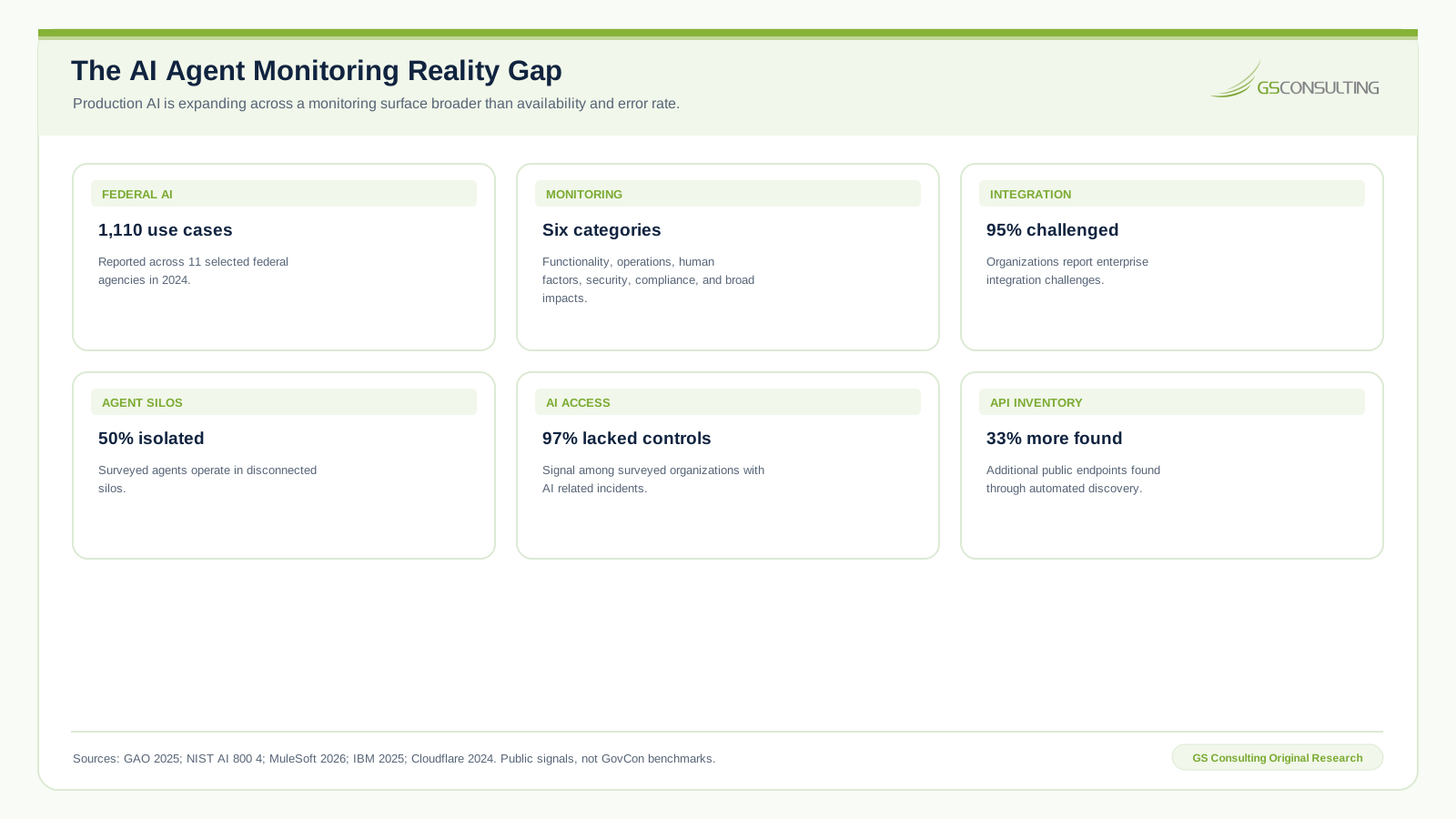
NIST SP 800 137 describes continuous monitoring as a program that provides visibility into assets, threats, vulnerabilities, and control effectiveness so organizations can respond to risk in a timely manner. The same principle applies to AI agents: do not monitor only what is easy to count.
AI Risk Management Continues After Launch
The NIST AI RMF Playbook calls for risks and benefits to be tracked throughout the lifecycle, including after deployment. It also asks who will maintain, verify, monitor, and update the system once deployed.
The risk changes after launch. Source data shifts. Business rules change. Models, prompts, and APIs are updated. Reviewers develop habits, threats evolve, and users find edge cases. Production governance therefore needs real telemetry and review queues. It also needs owned alerts and response procedures.
GovCon monitoring has a higher bar because the monitoring layer can become sensitive too. Logs may contain document context. Traces may expose system names and tool arguments. Dashboards may reveal contract or incident information. Feedback may contain reviewer notes. Monitor enough to detect risk without building an uncontrolled copy of every prompt and payload.
What Continuous Monitoring for AI Agents Should Track
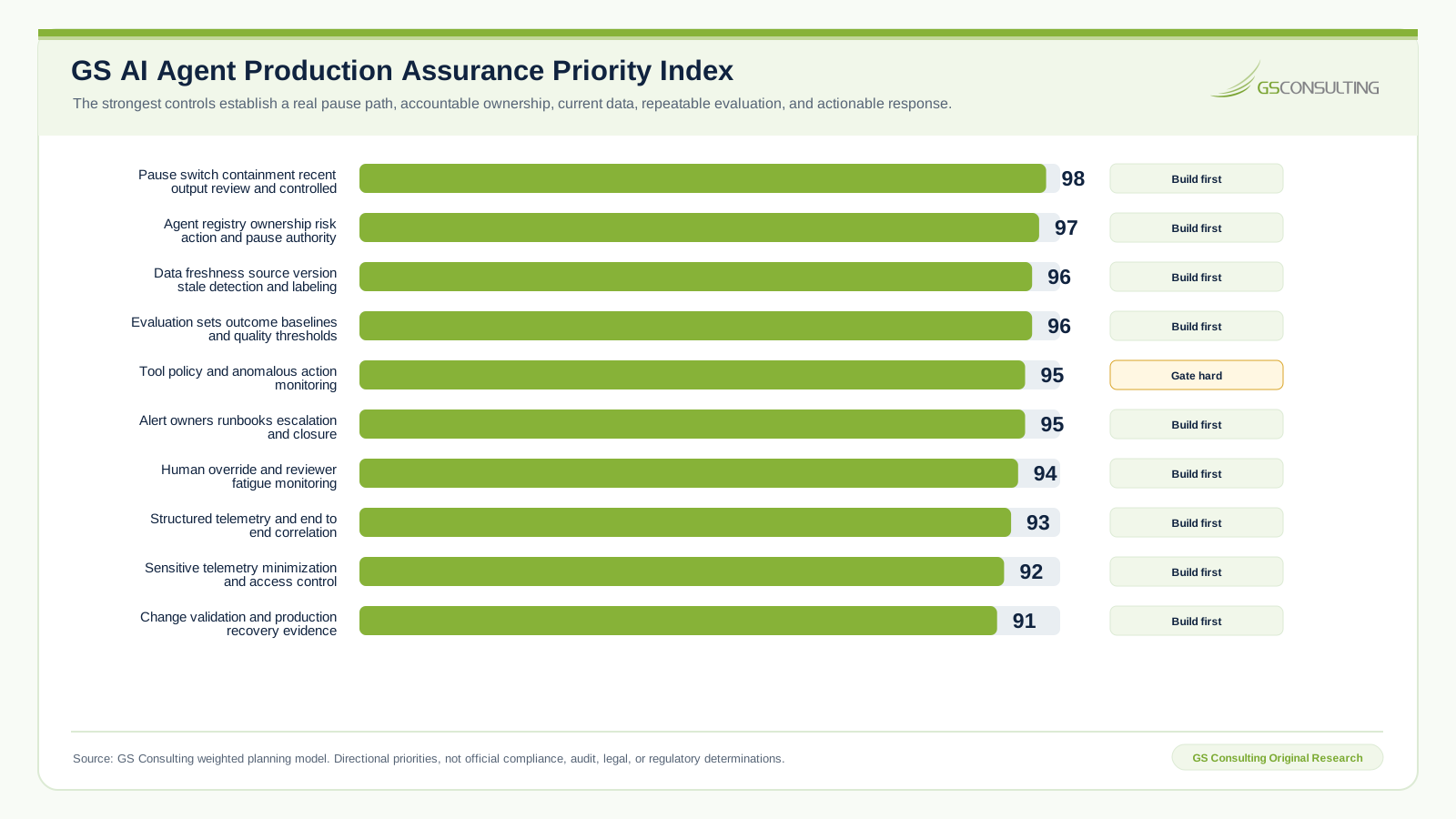
A production monitoring model should cover seven dimensions:
- Availability. Workflow uptime, job completion, queue health, service availability, timeouts, failed calls, retries, and error rate.
- Data freshness. Source sync time, index updates, extract age, source versions, failed refreshes, and stale data alerts.
- Output quality. Approval, rejection, modification, false results, confidence trends, escalations, corrections, and repeated failure patterns.
- Security behavior. Unauthorized access, blocked tools, sensitive data use, unexpected sources, suspicious volume, policy violations, and failed authorization.
- Workflow state. Review queues, approval aging, exception aging, latency, bottlenecks, expired decisions, unresolved rejections, and service level misses.
- Business impact. Manual effort, cycle time, errors, rework, adoption, user satisfaction, evidence speed, response speed, and measurable operational value.
- Drift. Changes in data, behavior, integrations, policies, human judgment, system access, telemetry, and outcomes.
The dashboard should make those dimensions actionable. It should distinguish healthy agents from degraded ones and expose stale data, stuck review queues, and blocked tools. It should also show worsening outcomes and identify agents that may need to pause.
AI Automation Drift Is Broader Than Model Drift
Model drift is only one failure mode. A stable model can still operate inside a changing system:
- Data drift: Document formats, contracts, logs, ERP fields, ticket categories, and evidence packages change.
- Process drift: Approval thresholds move, workarounds appear, manual steps return, and exceptions become normal.
- Policy drift: Security rules, customer requirements, contract language, and risk tolerance change.
- Integration drift: APIs, schemas, service accounts, webhooks, queues, reports, and retrieval indexes change.
- User drift: People ask different questions, rely on the agent more heavily, ignore warnings, or bypass review paths.
- Reviewer drift: Queues grow, review time falls, edits become repetitive, and meaningful approval turns into routine acceptance.
Detect drift by comparing live signals with a known baseline. Watch for falling approval rates, increasing reviewer edits, repeated rejections, and more low confidence results. Stale sources, missed fields, policy exceptions, tool failures, and worsening business outcomes provide additional warning.
Original Research: The AI Agent Production Assurance System
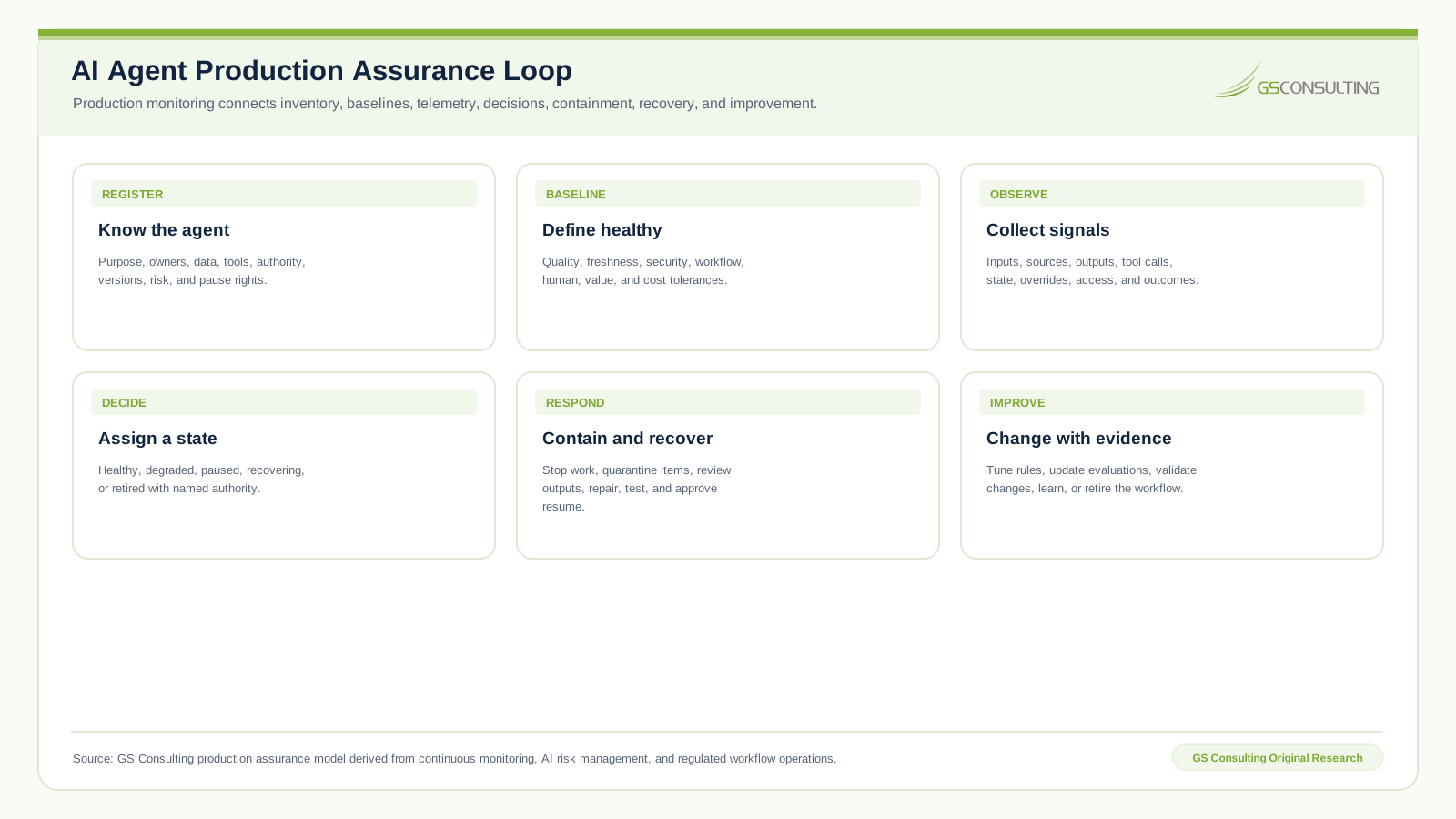
GS Consulting analyzed monitoring as an operating decision, not a reporting feature. The model assigns each agent one production state:
- Healthy: Operating inside approved quality, freshness, security, workflow, and value tolerances.
- Degraded: Continuing with reduced authority, tighter review, or an active investigation.
- Paused: Stopped because safety, authority, data, quality, traceability, or evidence has failed.
- Recovering: Repaired, evaluated, and operating under controlled validation.
- Retired: Removed because the workflow remains unsafe, unsupported, untrusted, or uneconomic.
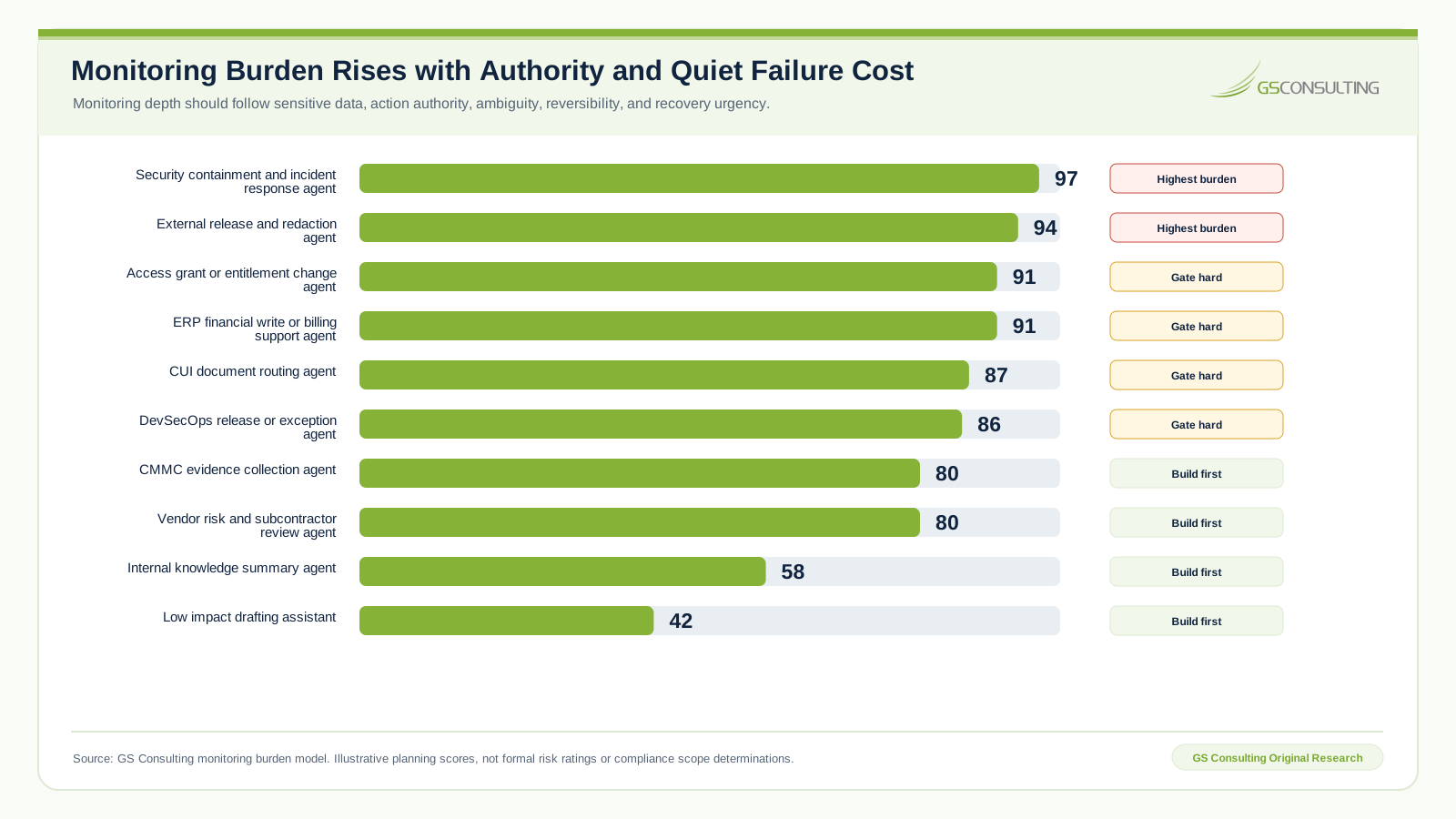
Pause control scored 98 out of 100 in the GS priority model. Agent inventory and ownership scored 97. Data freshness and repeatable evaluation each scored 96. Tool policy, alert ownership, runbooks, escalation, and closure scored 95.
The result is direct: a high consequence agent is not production ready because it has a dashboard. The organization must be able to define healthy behavior and detect degradation. It must also be able to stop work, review the affected window, validate repairs, and authorize a controlled return.
Build an Agent Registry
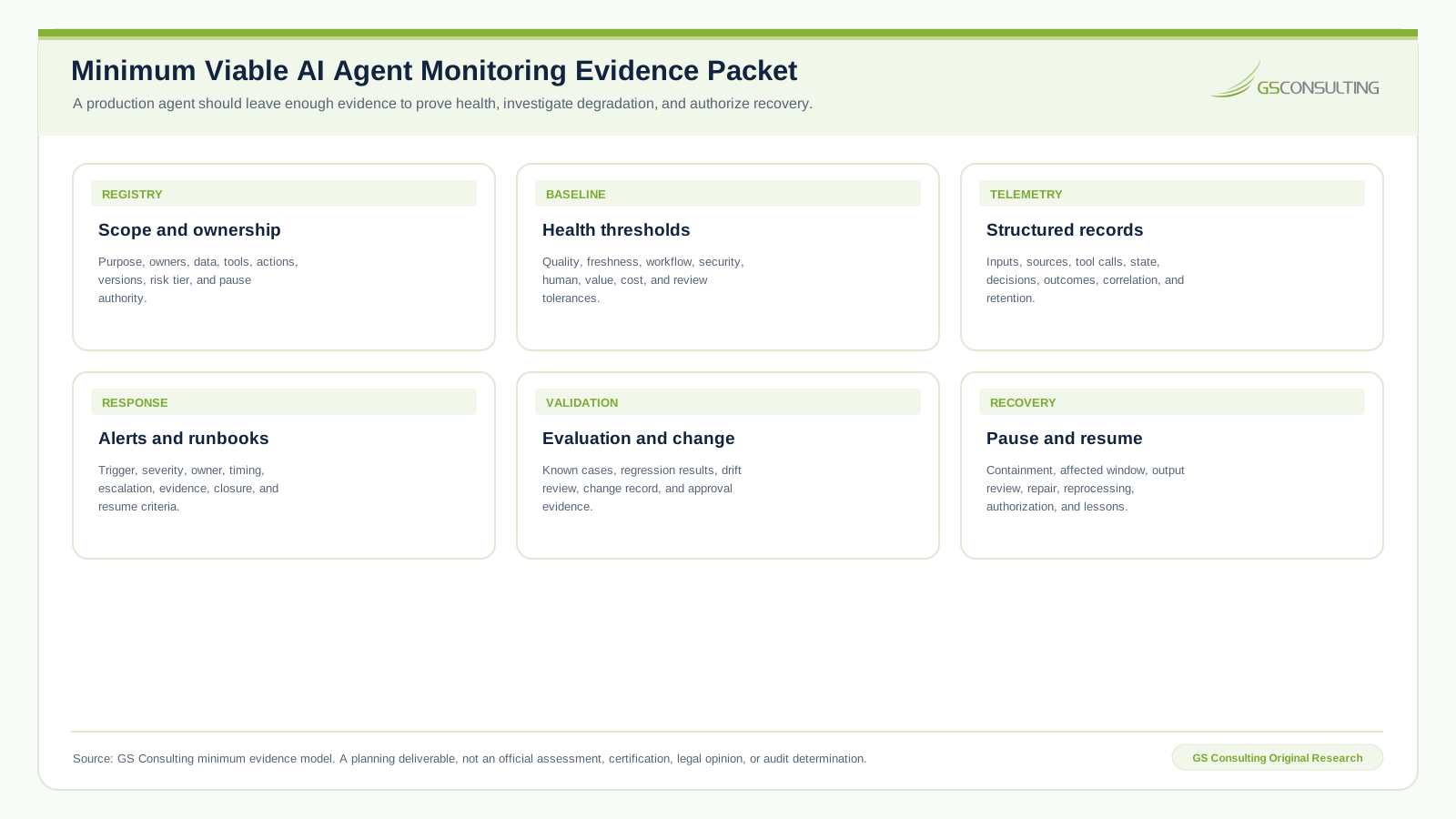
Every production agent needs a registry record. Group the required information so owners can scan and maintain it:
- Purpose and ownership: Business purpose plus the business, technical, data, security, monitoring, and support owners.
- Data and systems: Systems, providers, data categories, and CUI or PII status.
- Authority: Available tools, allowed actions, prohibited actions, and human approval points.
- Configuration: Model, prompt, retrieval, tool, policy, and validator versions.
- Lifecycle: Last review, current state, pause and resume authority, and retirement criteria.
This registry should connect to secure workflow orchestration. The orchestrator knows workflow state and action authority. The registry identifies what the agent is, who owns it, and how it should be controlled throughout production.
Use Structured Telemetry, Actionable Alerts, and Runbooks
Free form logs are not enough. Structure telemetry around four groups:
- Identity and configuration: Agent, workflow, version, user context, and service identity.
- Source context: Source system, source version, data category, and sensitivity.
- Action and decision: Tool request, policy decision, validation, human review, approval, and exception.
- Operations: Correlation identifier, timestamp, latency, cost, and outcome.
Use a metadata first posture. OpenTelemetry's generative AI observability example captures model, token, duration, trace, and tool metadata. It does not collect prompt content or tool arguments by default because those values may be sensitive. Full content collection should be a deliberate exception with its own access, retention, and data handling controls.
Every meaningful alert needs an operating contract:
- Detection: Trigger condition and severity.
- Accountability: Named owner, response time, and escalation path.
- Response: Runbook and required evidence.
- Resolution: Closure and resume conditions.
Useful triggers include:
- A critical source exceeds its approved freshness threshold.
- The human rejection or modification rate moves beyond its baseline.
- An agent attempts a blocked tool call or crosses a data boundary.
- A service account fails or receives unexpected access.
- An approval queue exceeds its aging limit.
- Output validation fails repeatedly or source references disappear.
- A high consequence workflow runs outside its approved schedule or state.
A dashboard nobody owns is only a reporting surface. A runbook turns detection into response. It identifies the affected users and data, determines whether work should pause, and sends the issue to the right operational owner. It also defines output review, dependency repair, rollback, and reprocessing.
Human Overrides and Reviewer Fatigue Are Monitoring Signals
Human activity provides two kinds of monitoring signal:
- Decision changes: Rejections, edits, escalations, classification changes, added evidence, conditional approvals, unsafe markings, and pauses.
- Reviewer workload: Queue depth, review time, items per reviewer, overdue work, and batch approval patterns.
- Review quality: High consequence approvals without comments or without viewing source evidence.
Repeated corrections often reveal a data, prompt, rule, or workflow defect before a technical error appears. A human approval architecture fails when workload turns review into automatic acceptance.
The Pause Button Matters More Than the Dashboard
A real pause path must stop new work and address work already in motion. It should:
- Prevent pending actions and quarantine uncertain items.
- Identify the affected time window and review recent outputs and tool calls.
- Roll back or reprocess work where possible.
- Notify the right operational, security, compliance, and business owners.
- Run regression evaluations and require authorized approval before resuming.
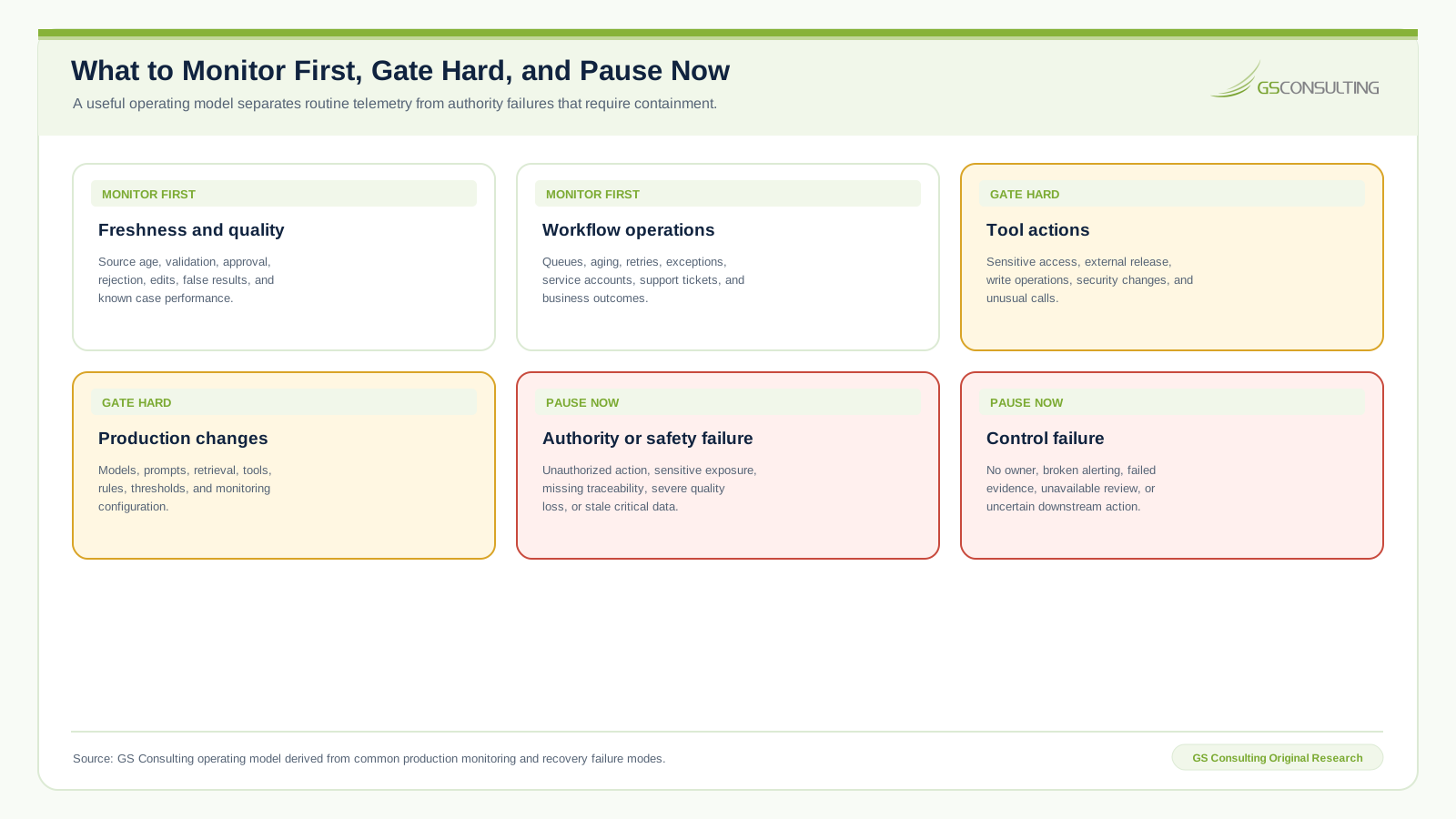
Pause when authority, safety, or evidence fails:
- The agent takes or attempts an unauthorized action.
- Sensitive data is exposed or source traceability is lost.
- Critical data is stale or quality exceeds the approved tolerance.
- Required evidence or the human review path is unavailable.
Recovery is not simply turning the service back on. Preserve the failure, affected records, containment action, cause, and repair. Then record test results, residual risk, the resume decision, the increased monitoring period, and any lessons that change the baseline or runbook.
What to Monitor First, Gate Hard, and Pause Now
Start with signals that expose quiet failure:
- Source freshness and known case evaluation results.
- Human approval, rejection, and correction patterns.
- Tool activity, service identities, and source references.
- Exception aging and business outcomes.
Apply the strongest gates to actions that change authority, sensitive data, or production behavior:
- Sensitive access, external release, financial writes, and entitlement changes.
- Production deployment and incident containment.
- Model, prompt, retrieval, tool, and policy changes.
- Monitoring thresholds and configuration changes.
A Practical First 90 Days
- Days 1 to 30Define the monitoring model.
Register one agent and map its data, tools, and owners. Define healthy behavior, risk based thresholds, pause authority, and known evaluation cases.
- Days 31 to 60Instrument the workflow.
Emit structured telemetry and propagate correlation. Monitor sources and tools, capture human feedback, protect sensitive records, and assign alert owners.
- Days 61 to 90Operationalize response.
Exercise runbooks and simulate stale data or failed access. Test pause and recovery, tune thresholds, and establish recurring governance review.
Measure whether the program improves detection and response time. Track source freshness, output quality, exception closure, review quality, and tool policy compliance. Evidence completeness, business outcomes, and user trust should improve as well. Do not count dashboard tiles and call that operational maturity.
What Leadership Should Demand Before Production
- One accountable business owner, technical owner, monitoring owner, support owner, and pause authority.
- Documented data, tools, actions, systems, versions, approval points, and prohibited behavior.
- Approved baselines for freshness, quality, security, workflow state, human review, and business outcomes.
- Structured telemetry that supports investigation without becoming an uncontrolled sensitive repository.
- Alerts with owners, runbooks, escalation, closure evidence, and tested pause and recovery paths.
- Evaluation sets and change control for models, prompts, retrieval, tools, rules, thresholds, and monitoring logic.
If those answers are weak, the agent may be useful as a pilot. It is not ready for durable regulated operations.
What GS Consulting Builds
GS Consulting helps GovCon firms and regulated organizations operate AI agents after launch. Engagements can include:
- Agent inventories plus ownership and authority models.
- Monitoring architecture, structured telemetry, and operational dashboards.
- Quality evaluation, drift detection, alert design, and runbooks.
- Sensitive data review, human feedback analysis, and audit evidence.
- Pause and recovery testing plus ongoing managed support.
The launch gets attention. Day two determines whether the workflow survives contact with real operations.
The Bottom Line
Continuous monitoring for AI agents is not about watching a model on a dashboard. It is about proving that the complete automated workflow remains safe, current, useful, secure, and worthy of trust.
Track the workflow. Track the data. Track the tools. Track the humans. Track drift and business outcomes. Do not launch an agent and assume it will keep behaving. Build the monitoring system that proves it.
Build the monitoring layer that keeps AI automation trustworthy after day one.
GS Consulting helps teams design dashboards, telemetry, evaluation, and alerts. We connect those signals to runbooks, evidence, and a support model for secure production operations.
Request an AI Agent Monitoring AssessmentResearch Sources and Caveats
The GS priority index and burden model are planning tools. The same applies to the assurance loop, operating model, and evidence packet. They are not official risk ratings or audit results. They also do not represent CMMC determinations, legal opinions, or regulatory findings.
- NIST SP 800 137, Information Security Continuous Monitoring
- NIST AI Risk Management Framework Playbook, Manage
- NIST AI 800 4, Challenges to the Monitoring of Deployed AI Systems
- U.S. GAO, Generative AI Use and Management at Federal Agencies
- NIST SP 800 171 Revision 3
- OpenTelemetry, Generative AI Observability
- MuleSoft Connectivity Benchmark Report
- Cloudflare Application Security Report
Frequently Asked Questions
What is continuous monitoring for AI agents?
Continuous monitoring for AI agents measures whether the technical workflow remains available and secure. It also tracks data freshness, output quality, human feedback, business impact, and drift to determine whether the complete process remains worthy of operational trust.
How is AI agent monitoring different from normal application monitoring?
Normal monitoring emphasizes uptime, errors, latency, and infrastructure. Agent monitoring adds source quality, output accuracy, tool authority, and policy compliance. It also examines reviewer behavior, source traceability, workflow outcomes, and quiet degradation.
What kinds of drift should an AI workflow monitor?
Monitor technical drift across data, retrieval, models, prompts, tools, integrations, and access. Also monitor changes in policies, user and reviewer behavior, security threats, business outcomes, telemetry, cost, latency, and retries.
When should an AI agent be paused?
Pause an agent when it exceeds approved risk or quality thresholds or attempts an unauthorized action. Sensitive data exposure, lost source traceability, stale critical data, missing evidence, and unavailable review paths also require a pause decision.
What should a GovCon AI monitoring evidence packet contain?
The packet should define the agent, its owners, its authority, and its approved data and tools. It should preserve health baselines, telemetry, runbooks, and evaluations. Change records, incidents, recovery evidence, and the final lifecycle decision complete the packet.
Suggested Future Reading
- AI Workflow Automation
- Enterprise AI Process Transformation
- Transitioning AI Workflows from Pilot to Production
- Measuring Workflow Automation ROI in GovCon
- Workflow Orchestration for Secure Environments
- Human in the Loop Workflow Architecture
- Building Audit Trails for Automated Workflows
- AI Cybersecurity Incident Response Workflows