Cybersecurity | | 24 min read
CMMC for Small Business Subcontractors: A Practical Guide

Key Takeaways
Small business CMMC readiness begins with a narrow, owned information boundary
Read the subcontract and trace the data
Company size does not set the level. Record the clauses and required status, identify FCI and CUI, then map every person, device, service, store, path, and provider that handles it.
The CUI boundary is the first dependency
Boundary and data flow score 100 in the GS model. The system security plan and asset inventory score 98.9. Buying tools before those decisions usually expands cost and confusion.
Make status review part of sales operations
The prime may need to verify the required current status and affirmation before placing covered work. Treat SPRS, affirmation, scope, and change review as an award gate.
CMMC for a small business subcontractor is not a paperwork project. It is a boundary and award problem.
The wrong starting point is a policy bundle. The right starting point is the work. What does the subcontract require? Which information will the company receive or create? Where will it move? Who will touch it? Which systems and providers will handle it? What status must exist before the prime places the award?
A ten person firm can create an expensive CMMC program by putting every laptop, mailbox, file share, phone, and provider in scope. The same firm can create a defensible path by keeping FCI and CUI inside a deliberate environment, limiting access, assigning every responsibility, and collecting proof as the work happens.
Small does not mean exempt. It does mean every unnecessary system, unclear provider duty, and manual evidence step hurts more.
The CMMC Compliance hub organizes the full program. Use the CMMC Level 1 requirements guide for an FCI only path, the CMMC scoping guide for asset and provider decisions, and the CMMC POA&M guide before assuming a Level 2 gap can wait. GS Consulting supports this work through secure AI automation.
Put the boundary before the binder.
GS Consulting helps small subcontractors translate flowdowns into scope, responsibilities, evidence, status gates, and an operating readiness plan.
Plan Small Business ReadinessCMMC for Small Business: The Short Answer
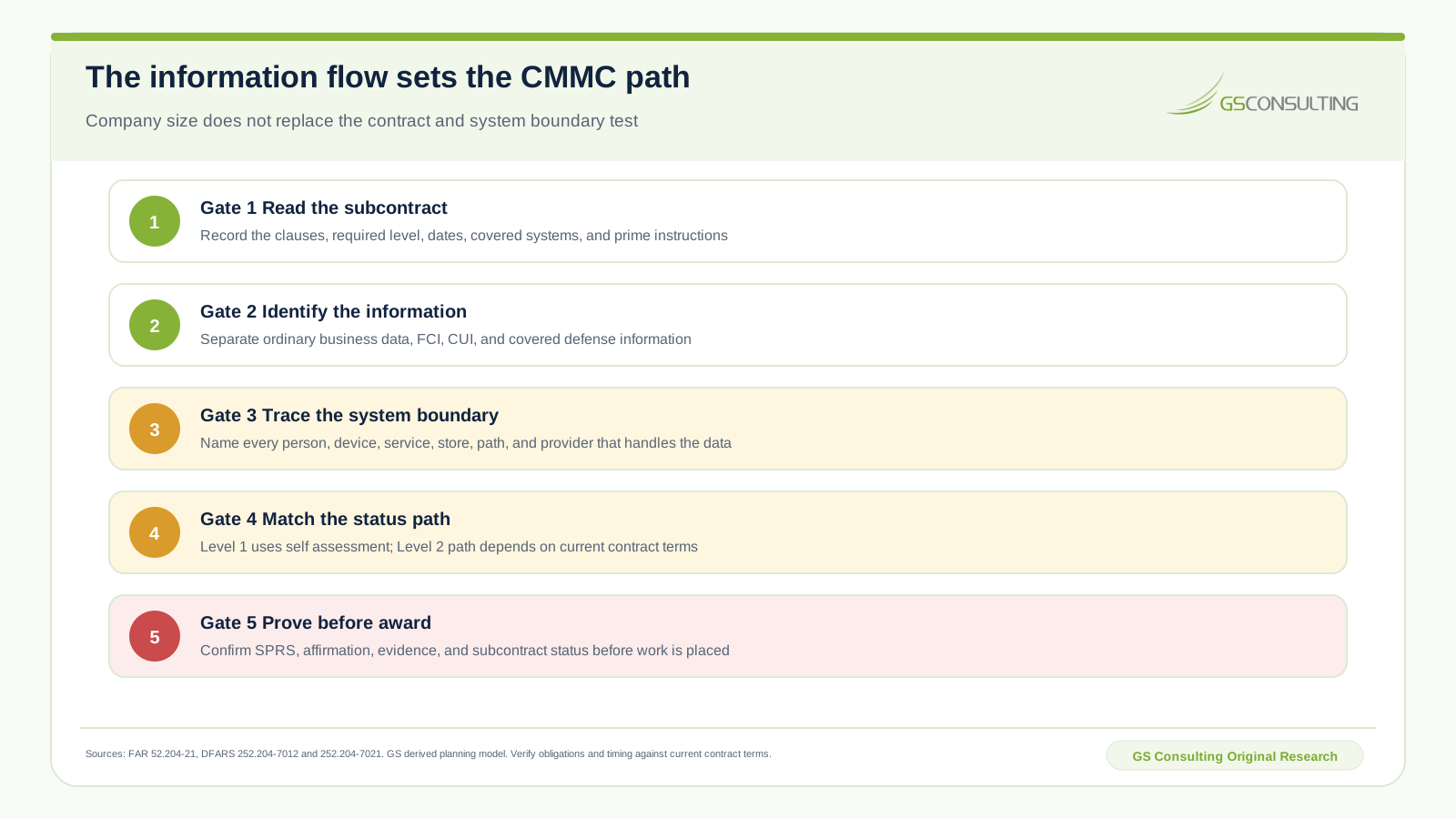
A small subcontractor needs a CMMC path when the covered work and contract terms require one. Under current rules, systems that process, store, or transmit Federal Contract Information or Controlled Unclassified Information drive the level and status duty.
FAR 52.204-21 defines 15 basic safeguards for covered contractor information systems that handle FCI. Current DoD CMMC materials align Level 1 to those safeguards.
DFARS 252.204-7012 addresses covered defense information and covered contractor systems. Current CMMC Level 2 materials use the 110 requirements in NIST SP 800-171 Revision 2 for CUI.
Do not infer the level from revenue, headcount, contract value, or a prime email alone. Record the exact subcontract, clause, required level, system, information type, status path, due date, and prime direction.
Who Needs CMMC and What Triggers It
DFARS 252.204-7021 ties the required CMMC level to contractor information systems that process, store, or transmit FCI or CUI during contract performance. The clause also requires primes to make sure subcontractors have a current affirmation before award and to verify the subcontractor status needed for the information involved.
The flowdown has a COTS exception, but commercial status alone is not the same as COTS. Read the actual acquisition category and clause direction. A product or service can be commercial without meeting the COTS definition.
Build a contract register before the technical gap assessment. One row per opportunity or subcontract should include:
- Prime, customer, program, solicitation, and subcontract identifier.
- Applicable FAR and DFARS clauses.
- Required CMMC level and assessment path.
- FCI, CUI, and covered defense information determination.
- Covered system and provider boundary.
- Required status, affirmation, and SPRS dates.
- Prime verification contact and written direction.
- Open decisions, owner, due date, and award gate.
If the prime has not identified the information and required status, ask. Preserve the answer. A vague flowdown creates technical spend without a stable target.
Level, Status, and Current Program Timing
| Path | Information | Current requirement basis | Status cadence |
|---|---|---|---|
| Level 1 | FCI | 15 FAR 52.204-21 safeguards | Annual self assessment and annual affirmation |
| Level 2 self path | CUI | 110 NIST SP 800-171 Revision 2 requirements | Self assessment every three years and annual affirmation |
| Level 2 certificate path | CUI | 110 NIST SP 800-171 Revision 2 requirements | C3PAO assessment every three years and annual affirmation |
| Conditional status | Eligible Level 2 gaps | Program and clause limits apply | Close every eligible item within 180 days |
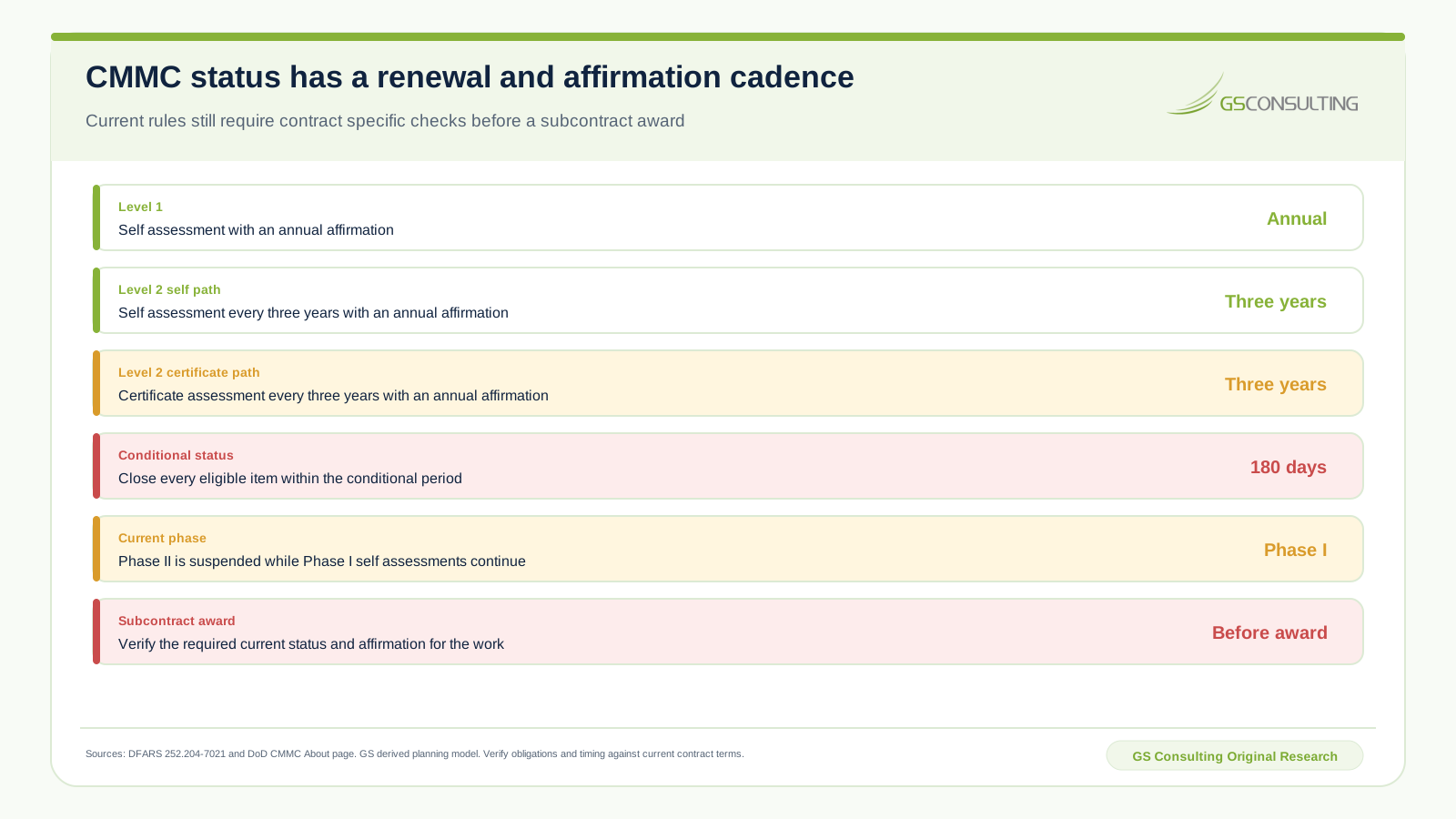
Program timing is unusually important as of this publication date. The current DoD CMMC program page says DoD suspended Phase II on July 13, 2026 while Phase I self assessments remain in effect. DoD continues enforcement of NIST SP 800-171 Revision 2 through self assessments and select government led assessments.
That does not erase contract duties. It does mean a subcontractor should verify the current phase, clause, assessment path, award date, and prime direction rather than building from an old rollout chart.
Conditional status is also narrow. The CMMC POA&M rules set score, item, and closure limits. Level 1 does not provide a deferral lane. A small firm should not base an award plan on the hope that a major gap can sit on a POA&M.
GS Small Subcontractor Readiness Dependency Index
GS Consulting built a derived planning model across ten workstreams that commonly determine whether a small subcontractor can turn contract language into defensible status. Each workstream receives a one to five rating for award dependency, scope leverage, foundational dependency, evidence lead time, and external dependency.
The base model weights award dependency and scope leverage at 25 percent each, foundational dependency and evidence lead time at 20 percent each, and external dependency at 10 percent. The resulting scores are indexed to the highest raw workstream score at 100.
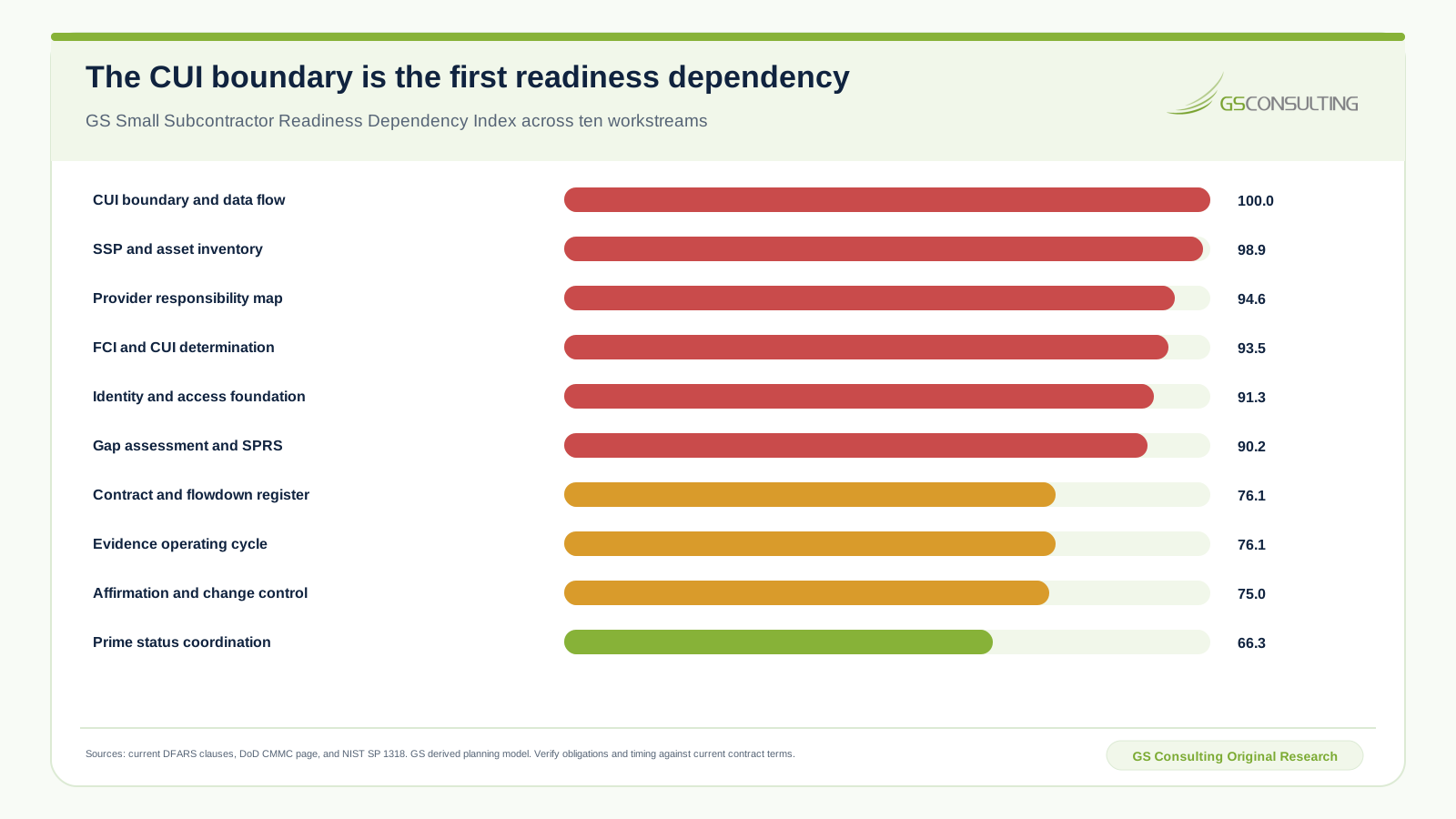
CUI boundary and data flow score 100.0. The system security plan and asset inventory score 98.9. Provider responsibility mapping scores 94.6. FCI and CUI determination scores 93.5. Identity and access foundation scores 91.3.
These results explain why template first programs stall. The system security plan cannot describe a boundary that does not exist. A provider cannot produce proof for a responsibility nobody assigned. An access control cannot be tested against an unknown user and device population.
The sensitivity case moves five weight points from scope leverage to award dependency. The same two workstreams remain first and second, and every score changes by less than four points. The sequence is stable enough for planning, but the ratings remain assumptions. Replace them with local contract, system, provider, evidence, and schedule facts.
The index is not a certification score or legal opinion. It does not say a low scoring workstream can be ignored. It shows where unresolved decisions tend to block more downstream work.
Control Scope Before Tool Cost
The acquisition rule analysis estimated 337,968 affected entities, including 229,818 small entities. That is about 68 percent. The numbers are estimates from the 2025 CMMC acquisition final rule, not current certification counts. They still make one point clear: small business implementation is central to the program, not an edge case.
The rule analysis does not solve a small firm cost estimate. Assessment and program cost estimates do not include every implementation change. Real cost depends on the boundary, current systems, required level, provider terms, evidence quality, internal labor, remediation, and the need for an external assessment.
Use four scope questions before requesting quotes:
- Can the work avoid CUI? Ask whether the subcontract can be structured around products or services that do not require CUI access.
- Can FCI and CUI stay in one approved environment? Separate routine business systems from covered work where practical.
- Can the user and device population shrink? Limit access to people and endpoints that need the information.
- Can provider evidence be obtained before purchase? Verify responsibility, configuration, logs, incident support, retention, assessment boundaries, and proof.
Scope reduction must be real. A written enclave boundary is not enough if users copy CUI into personal mail, unmanaged devices, chat tools, support tickets, source code services, or local backups.
Map each data path from receipt through creation, storage, use, sharing, archive, incident handling, and disposal. Then map every service that protects those paths, including identity, endpoint, logging, network, backup, ticketing, and security operations.
Prime Contractor and Provider Duties
Small subcontractors often depend on the prime for information markings, scope direction, required level, award timing, and status verification. That dependency needs a named operating channel, not scattered sales email.
Ask the prime for the exact flowdown, required assessment path, CUI category or source, system expectations, reporting contacts, award check, and any program specific architecture rule. Preserve each answer in the contract register and system plan.
Providers need the same discipline. An MSP, managed security provider, cloud service, or compliance platform can operate capabilities. None of them can own every contractor decision.
Build a four column responsibility map for each requirement:
- Company duty: user approval, local configuration, policy, incident decision, training, change control, or affirmation.
- Provider duty: platform configuration, monitoring, backup, patching, logging, support, or supplied evidence.
- Shared duty: a control that works only when provider operation and customer configuration agree.
- Proof: the document, setting, log, ticket, report, interview, or test that shows the outcome.
Contract language such as “CMMC ready” is not a responsibility matrix. Ask what is included, excluded, customer configured, retained, testable, and available during an assessment or incident.
A Five Stage Small Business Readiness Path
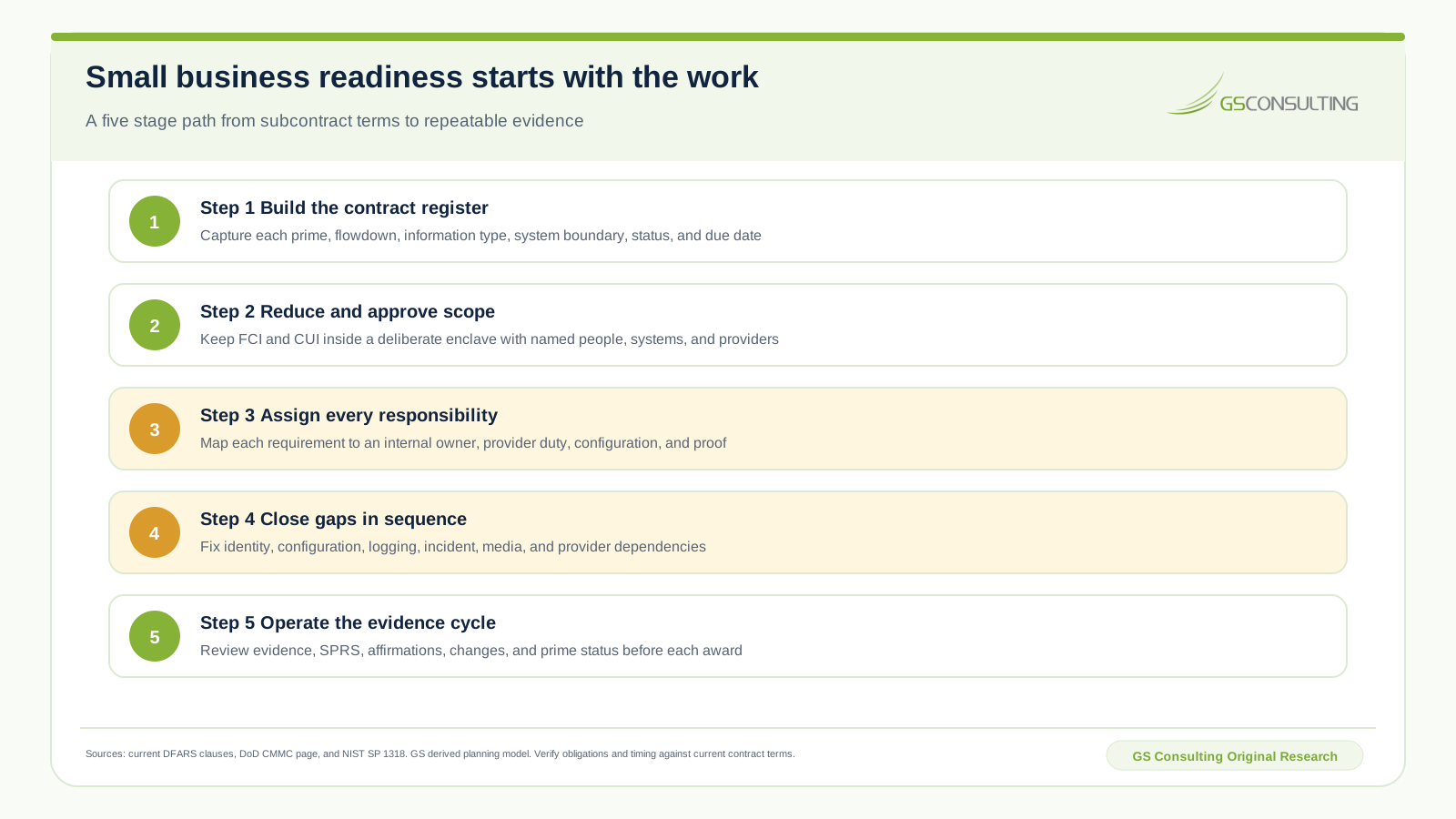
- Build the contract register. Capture every prime, clause, information type, required level, status path, covered system, date, and open decision.
- Reduce and approve scope. Keep covered information inside a deliberate environment with named people, devices, services, paths, and providers.
- Assign every responsibility. Map each requirement to an internal owner, provider duty, configuration, operating record, and test.
- Close gaps in sequence. Work identity, configuration, logging, incident, media, provider, and evidence dependencies before polishing policy language.
- Operate the evidence cycle. Review evidence, assessment and SPRS status, affirmations, changes, open items, and prime award checks on a fixed cadence.
Use the SPRS score guide to understand the assessment record and the CMMC cost guide to separate assessment fees from implementation, provider, labor, and remediation cost.
Six Small Subcontractor Failures
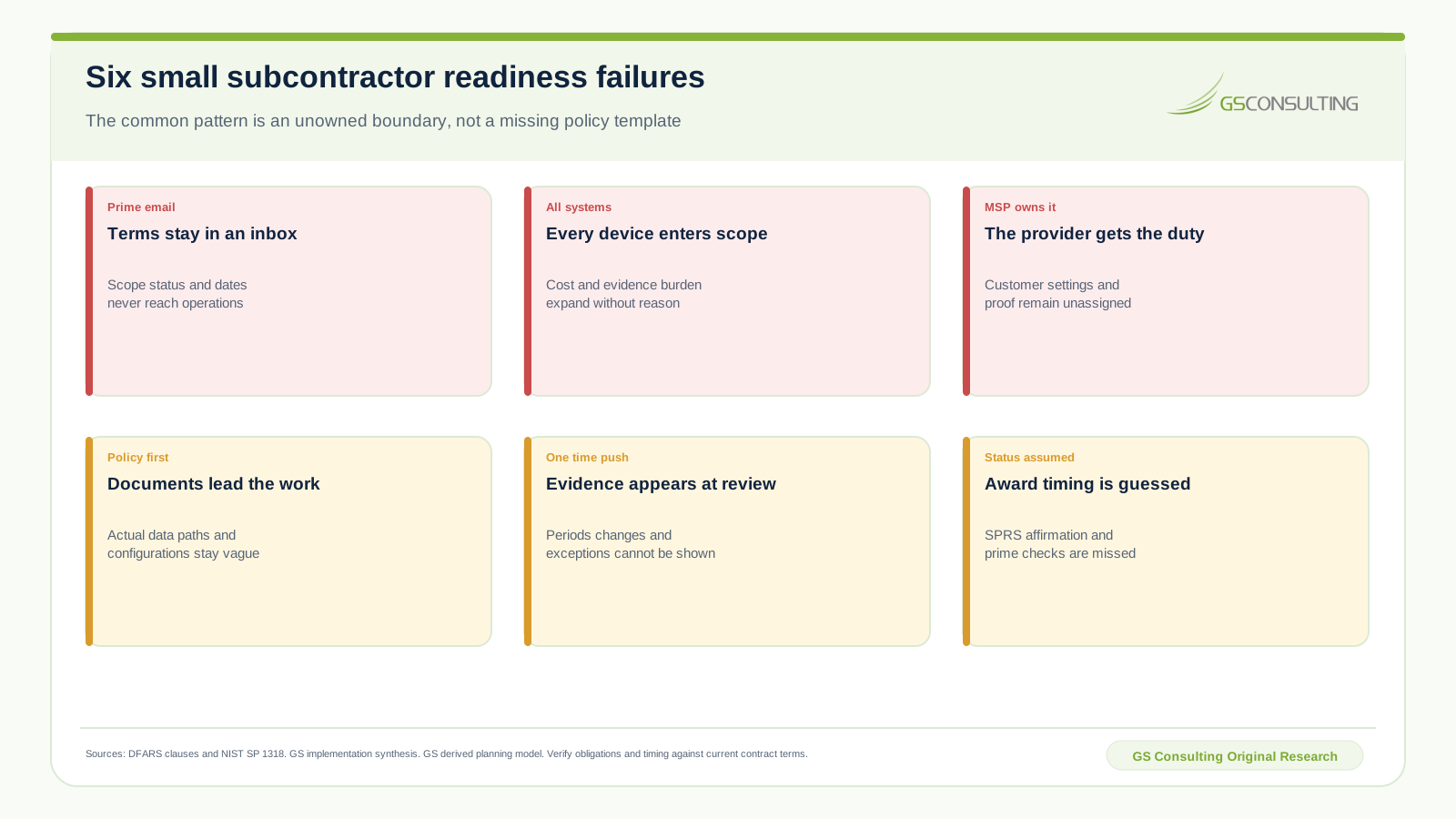
Prime direction stays in email. Sales, IT, leadership, and the system owner work from different requirements.
Every system enters scope. The firm protects covered data by expanding the assessment boundary instead of containing the data.
The MSP owns it. Provider duties are assumed while customer settings, users, evidence, incidents, and affirmations remain unassigned.
Policy leads the program. Documents describe an ideal state before data paths and configurations are known.
Evidence appears at review. Screenshots are collected once, so periods, changes, exceptions, approvals, and operating results cannot be shown.
Status is assumed. The team does not check assessment currency, SPRS, affirmation, conditional work, or prime verification before award.
A Practical First 90 Days
Days 1 through 15: assign the accountable leader, build the contract register, request missing prime direction, identify FCI and CUI, and stop uncontrolled new data paths.
Days 16 through 35: draw the boundary and data flow, inventory assets and users, map providers, choose the target environment, and document scope decisions.
Days 36 through 60: write the system security plan from the real environment, map requirements to owners and proof, run the gap assessment, calculate the score where required, and create a sequenced remediation register.
Days 61 through 75: close foundation gaps in identity, configuration, logging, incidents, media, backups, provider duties, and evidence retention. Test each fix.
Days 76 through 90: run a readiness review, resolve evidence gaps, update SPRS or status duties as applicable, complete affirmation preparation, and make the prime award check visible to contracts and sales.
The first 90 days should produce a controlled operating path, not a claim of certification. If the environment or evidence is not ready, say so and show the plan, owner, dependency, and date.
The Minimum Evidence Packet
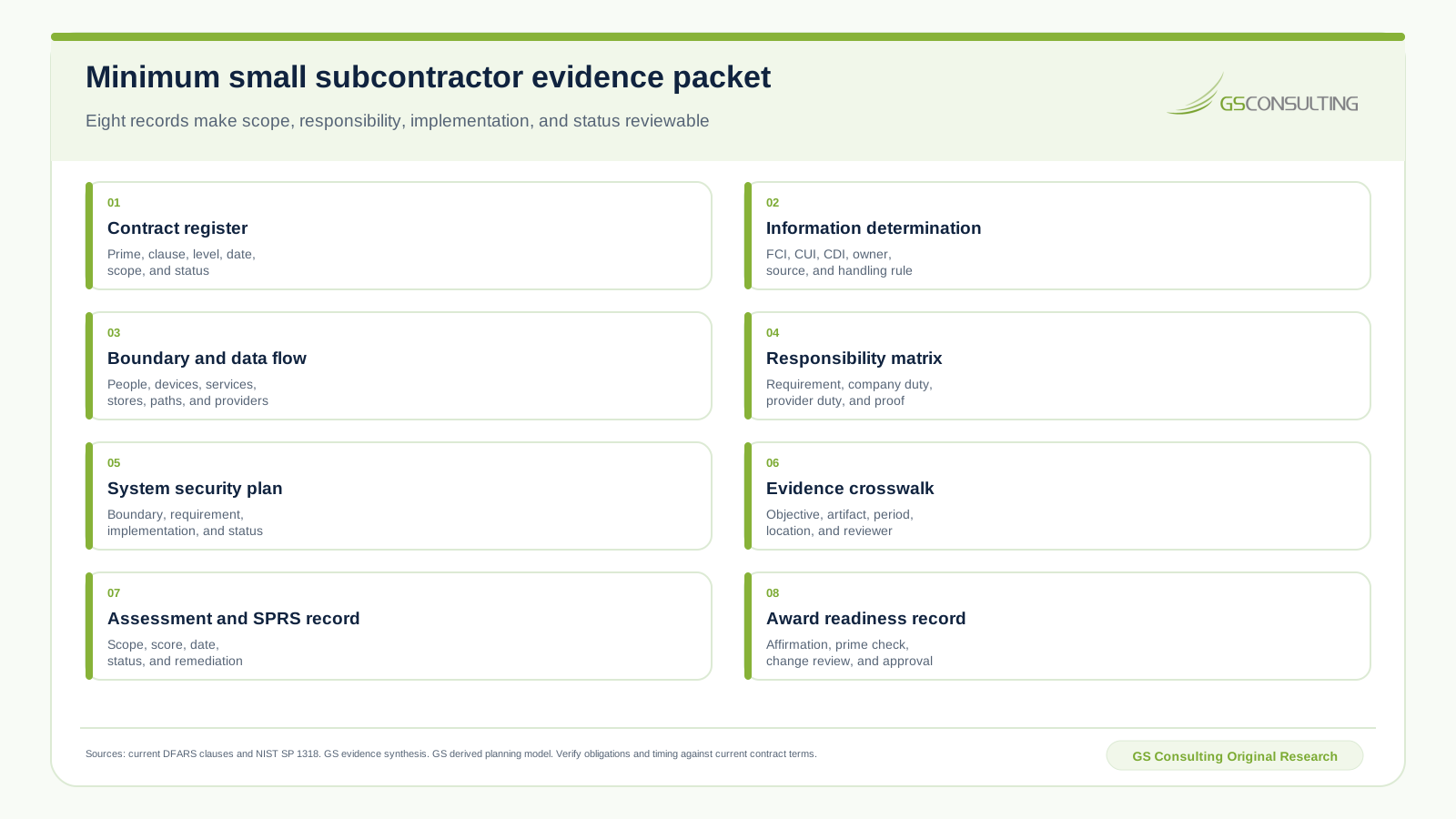
- Contract register: prime, clause, level, assessment path, date, scope, and current status.
- Information determination: FCI, CUI, covered defense information, source, owner, marking, and handling rule.
- Boundary and data flow: people, devices, services, stores, paths, providers, and protective components.
- Responsibility matrix: requirement, company duty, provider duty, shared duty, configuration, and proof.
- System security plan: boundary, requirement, implementation, owner, evidence, and status.
- Evidence crosswalk: assessment objective, artifact, period, location, owner, and reviewer.
- Assessment and SPRS record: scope, score, date, method, status, remediation, and approval.
- Award readiness record: affirmation, prime check, change review, open work, decision, and date.
Research Method and Sources
The research package separates public facts from GS ratings. It includes a source register, public signal table, model inputs, derived and sensitivity scores, a data dictionary, figure data, methodology, source copies, and editable figures.
- DFARS 252.204-7021 CMMC Requirements
- DFARS 252.204-7012 Safeguarding and Incident Reporting
- DFARS 252.204-7020 Assessment Requirements
- FAR 52.204-21 Basic Safeguarding
- DoD CMMC Program Information
- NIST SP 1318 Small Business Primer
- 2025 CMMC Acquisition Final Rule
GS Consulting Original Research. The GS Small Subcontractor Readiness Dependency Index is a derived planning tool based on cited public sources and documented analyst assumptions. It is not legal advice, contract interpretation, an official CMMC score, an assessment result, a certification decision, or a guarantee of award. Verify obligations and timing against current contract terms, DoD direction, and qualified advisers.
Frequently Asked Questions
Do small business subcontractors need CMMC?
A small business subcontractor may need CMMC when its subcontract requires a CMMC status and its covered information system will process, store, or transmit Federal Contract Information or Controlled Unclassified Information. Company size does not create a general exemption. The actual subcontract, clauses, information, system boundary, and current DoD phase determine the path.
What CMMC level does a small subcontractor need?
The required level should be stated in the solicitation, contract, or subcontract for the system that handles the covered information. Level 1 aligns to 15 FAR basic safeguards for FCI. Level 2 aligns to 110 NIST SP 800-171 Revision 2 requirements for CUI under current CMMC materials. Do not choose a level from company size or contract value alone.
Can a managed service provider handle CMMC for a small business?
A provider can operate systems and supply evidence, but the contractor still owns contract interpretation, scope, customer configuration, user behavior, provider oversight, incident coordination, affirmation, and the final representation. Map every requirement to provider duty, company duty, shared duty, and proof.
How can a small business reduce CMMC cost?
Reduce unnecessary scope before buying tools. Keep FCI and CUI inside a deliberate boundary, limit users and devices, choose services that support required evidence, remove duplicate systems, assign owners, and operate one evidence cycle. Cost falls when the boundary and responsibilities are clear.
What should a small subcontractor prove before award?
Prove the contract and level, information determination, system boundary, provider responsibilities, system security plan, assessment and SPRS status, current affirmation, open remediation, evidence coverage, change review, and prime verification needed for that award.
Related Reading
- CMMC Compliance Hub
- CMMC Compliance Guide
- CMMC Levels Explained
- CMMC POA&M Rules
- SPRS Score Guide
- CMMC Certification Cost
- NIST 800-171 and CUI Security Hub
- Secure AI Automation
Make readiness part of every covered award.
The operating standard is direct: read the flowdown, trace the information, approve the boundary, assign every duty, prove the control, verify the status, and stop the award when evidence is not ready.
Build the Award Readiness Gate