Cybersecurity | | 26 min read
CMMC Security Protection Assets: Scope, Controls, and Evidence

Key Takeaways
Scope follows the protection function
No CUI does not mean out of scope
A person, technology, or facility can belong in scope because it provides a security function for the assessed environment.
Twelve capability patterns ranked
Identity and MFA services, security operations, and secrets management lead the discovery model. The ranking orders investigation only.
Map function, data, and relevant proof
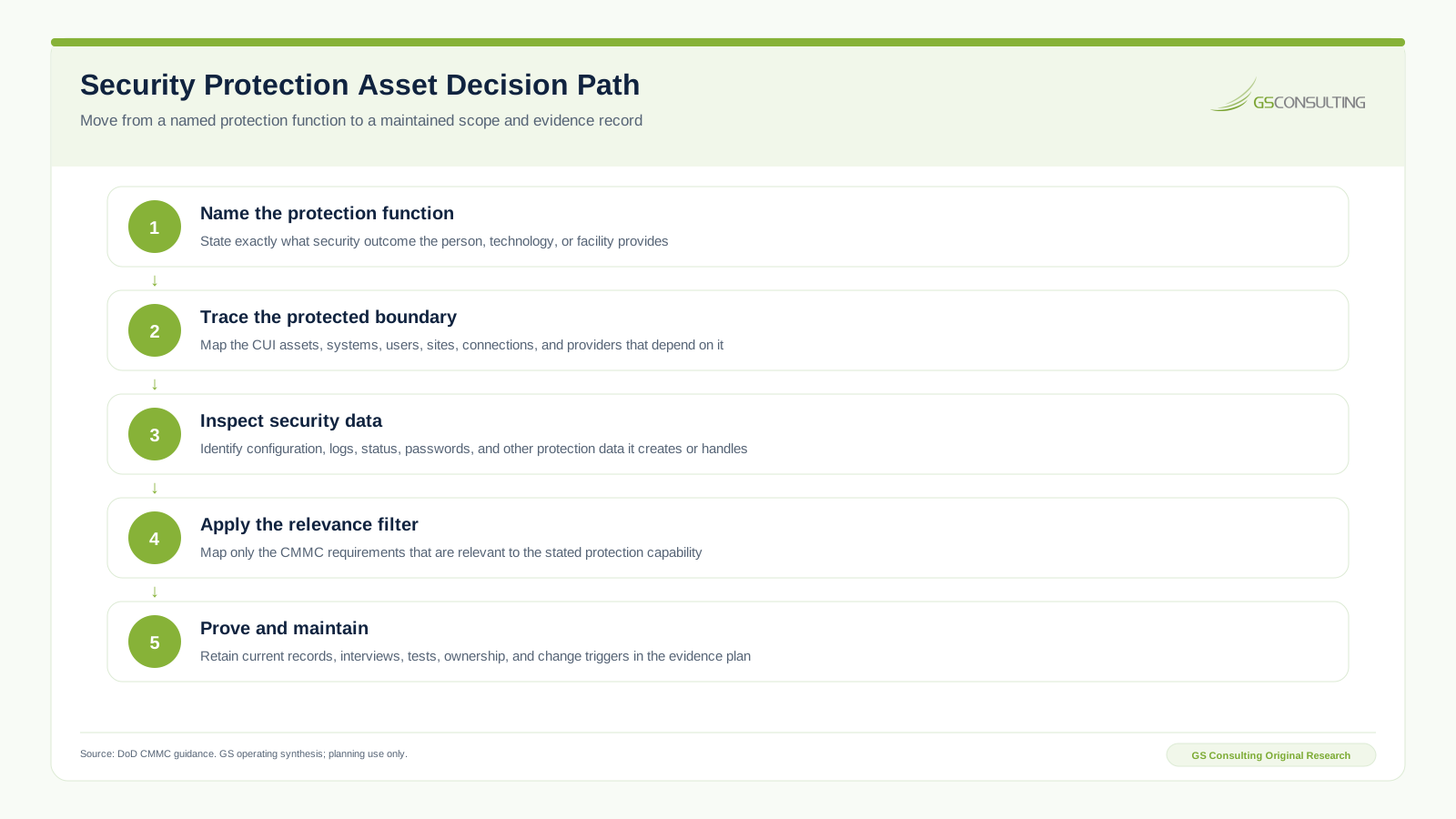
Name what the asset protects, trace Security Protection Data, assign an owner, map relevant requirements, and test the evidence path.
CMMC Security Protection Assets do not become out of scope merely because they do not store CUI. If a person, technology, or facility protects the assessed environment, its protection role can pull it into the CMMC Level 2 assessment scope.
That distinction catches teams off guard. They draw the CUI path, put security tools outside it, and call the remaining environment out of scope. The diagram looks clean. The protection dependencies are false.
Not a product list. A protection dependency map. The practical work is to name the security capability, trace what it protects, identify the Security Protection Data it handles, map only the relevant requirements, and prove the control is operating.
Use the CMMC Compliance hub for the full program, the CMMC scoping guide for all asset categories, and the external service provider guide when another organization supplies the capability. The System and Communications Protection evidence guide connects boundary services, cryptographic controls, sessions, devices, and tested traffic paths to the same protection dependency map. GS Consulting supports this work through secure AI automation.
Make the protection boundary defensible.
GS Consulting helps contractors trace CUI and security dependencies, classify assets, assign provider duties, and prepare current evidence.
Plan the Scope ReviewCMMC Security Protection Assets: The Short Answer
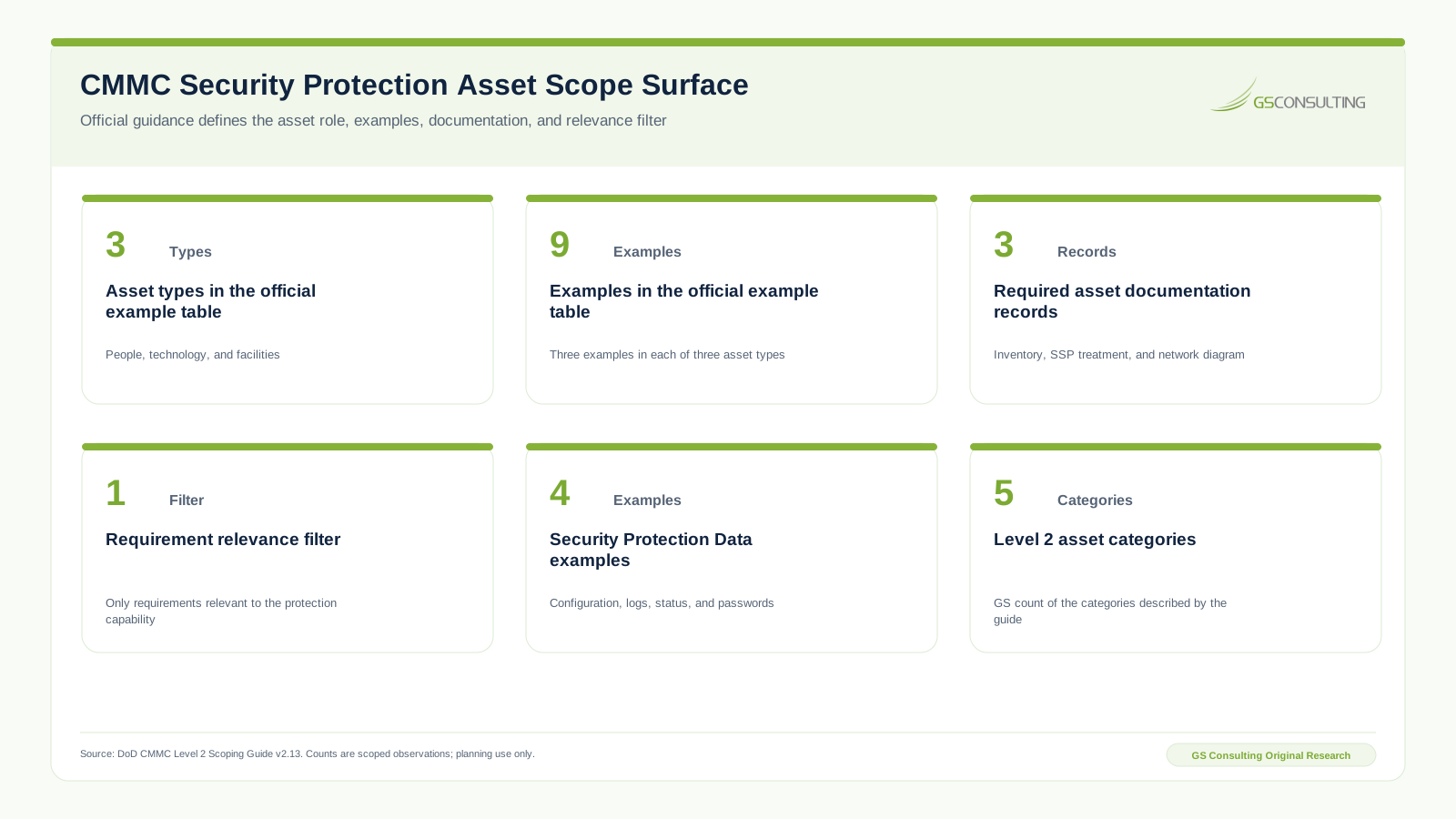
A CMMC Security Protection Asset is a person, technology, or facility that provides a security function or capability within the CMMC assessment scope. The asset may never process, store, or transmit CUI. It still matters because the assessed environment depends on it for protection.
The official Level 2 scoping guide gives examples across three types. People include cybersecurity consultants, managed service provider personnel who perform maintenance, and enterprise network administrators. Technology includes cloud security solutions, a hosted VPN, and a SIEM. Facilities include colocation data centers, security operations centers, and organization office buildings.
For every candidate, answer five questions:
- What specific security function does it provide?
- Which CUI assets, systems, users, sites, or connections depend on it?
- What Security Protection Data does it create, use, expose, or retain?
- Which CMMC requirements are relevant to that capability?
- Who can produce current records, explain the work, and run a safe test?
Check the Current CMMC Status and the Contract
Program timing and a contract obligation are separate questions. As of July 13, 2026, the DoD CMMC Resources and Documentation page states that Phase II requirements are suspended while Phase I self assessment requirements remain. That direction can change.
The current solicitation, contract, subcontract, modification, required level, CUI path, affirmation duty, and customer direction still govern a specific award. Read them with the current clauses and program documents. Ask the contracting officer when the baseline or applicability is unclear.
Do not wait for a future assessment date to identify the systems and people that protect CUI. Scope defects affect architecture, provider terms, access, logging, monitoring, incident response, cost, and evidence. Early discovery is cheaper than rebuilding the boundary after an assessor asks who operates the VPN or SIEM.
The Definition Turns on Capability, Not Location
The CMMC Level 2 Scoping Guide, version 2.13, defines Security Protection Assets by what they do. They provide security functions or capabilities within the assessment scope.
Location alone does not settle the issue. A cloud SIEM can be logically separate from the CUI environment and still receive logs that help satisfy requirements. A security operations center can be a separate facility and still protect the environment. A provider administrator can work outside the contractor site and still perform a critical security function.
Product ownership does not settle it either. A contractor owned tool is not automatically a Security Protection Asset if it does not protect the assessed environment. A provider owned service is not automatically outside scope if the environment depends on it for a security function.
The first artifact should therefore be a capability statement, not a vendor list. State the security outcome, protected assets, enforcement or observation point, responsible owner, provider role, data handled, failure consequence, and evidence source.
Separate Security Protection Assets from the Other Asset Categories
Classification gets easier when the team asks the official question for each category in order.
| Category | Core test | Assessment treatment |
|---|---|---|
| CUI Asset | Processes, stores, or transmits CUI. | Assessed against all Level 2 requirements. |
| Security Protection Asset | Provides a security function or capability for the assessed environment. | Assessed against requirements relevant to that capability. |
| Contractor Risk Managed Asset | Can but is not intended to process, store, or transmit CUI because controls and policy restrict it. | Documented and reviewed under the official category treatment. |
| Specialized Asset | Fits an official specialized type such as operational technology, Internet of Things, test equipment, or restricted information system. | Documented and treated under the specialized asset rules. |
| Out of Scope Asset | Cannot process, store, or transmit CUI and does not provide security protections for CUI assets. | Separated from the CMMC assessment scope. |
Do not use one category to avoid the test for another. A management server may be restricted from CUI but still administer a CUI asset. A log platform may not ingest CUI but still provide required monitoring. A provider console may not hold business data but still control the service that protects it.
Original Research: The GS Discovery Priority Index
GS Consulting built the Security Protection Asset Discovery Priority Index to answer a narrow planning question: which common security capabilities deserve the earliest boundary, ownership, data, provider, and evidence investigation?
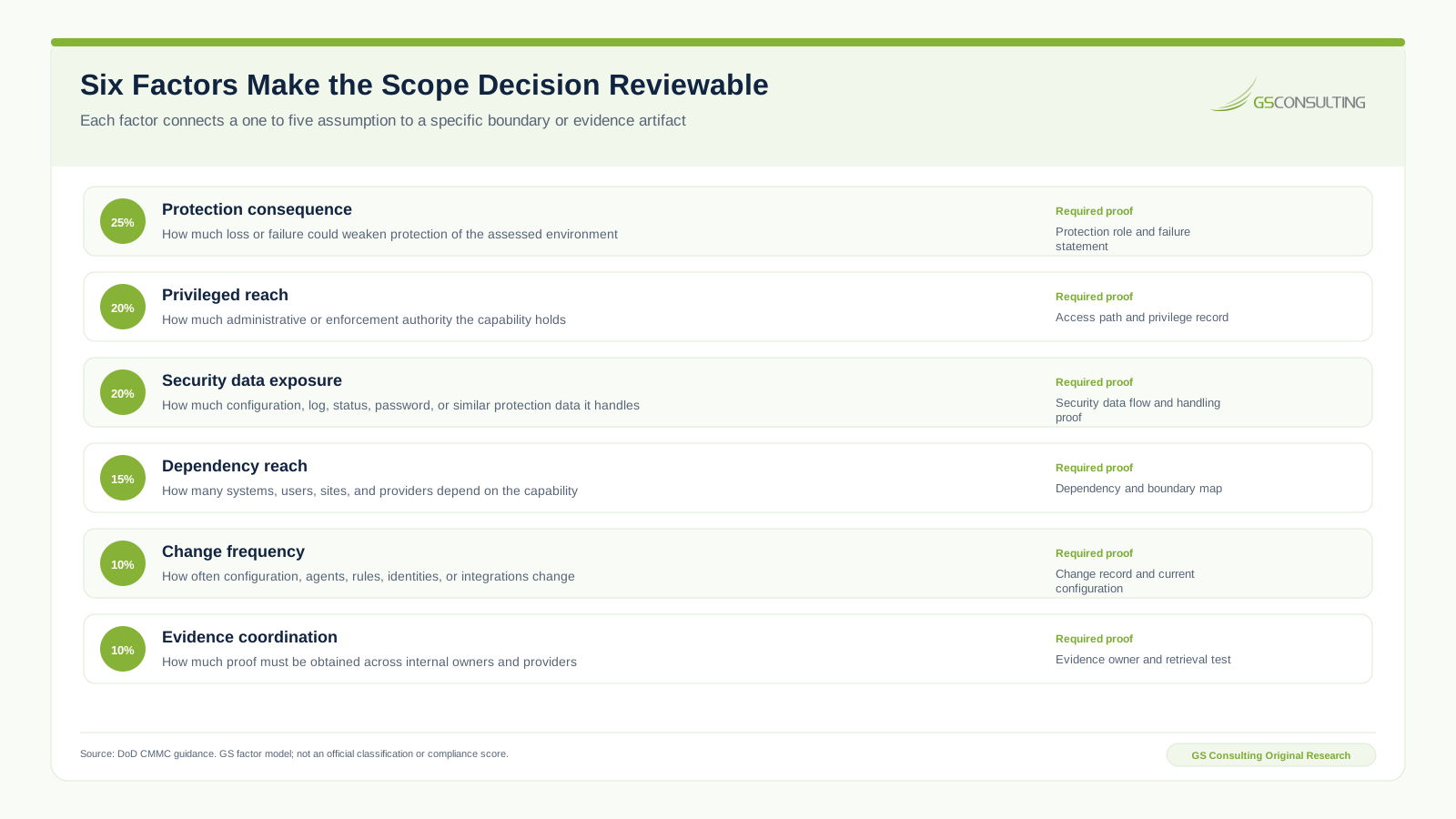
The model scores twelve candidate capability patterns against six factors. Protection consequence carries 25 percent. Privileged reach and Security Protection Data exposure each carry 20 percent. Dependency reach carries 15 percent. Change frequency and evidence coordination each carry 10 percent. Every rating uses a one through five scale, and the weighted result is reported from zero through 100.
The public foundation comes from the official DoD scoping and assessment guides. The capability list, ratings, weights, thresholds, tiers, failure modes, and packet design are GS analyst assumptions. They are exposed in the workbook so a contractor can replace them with local facts.
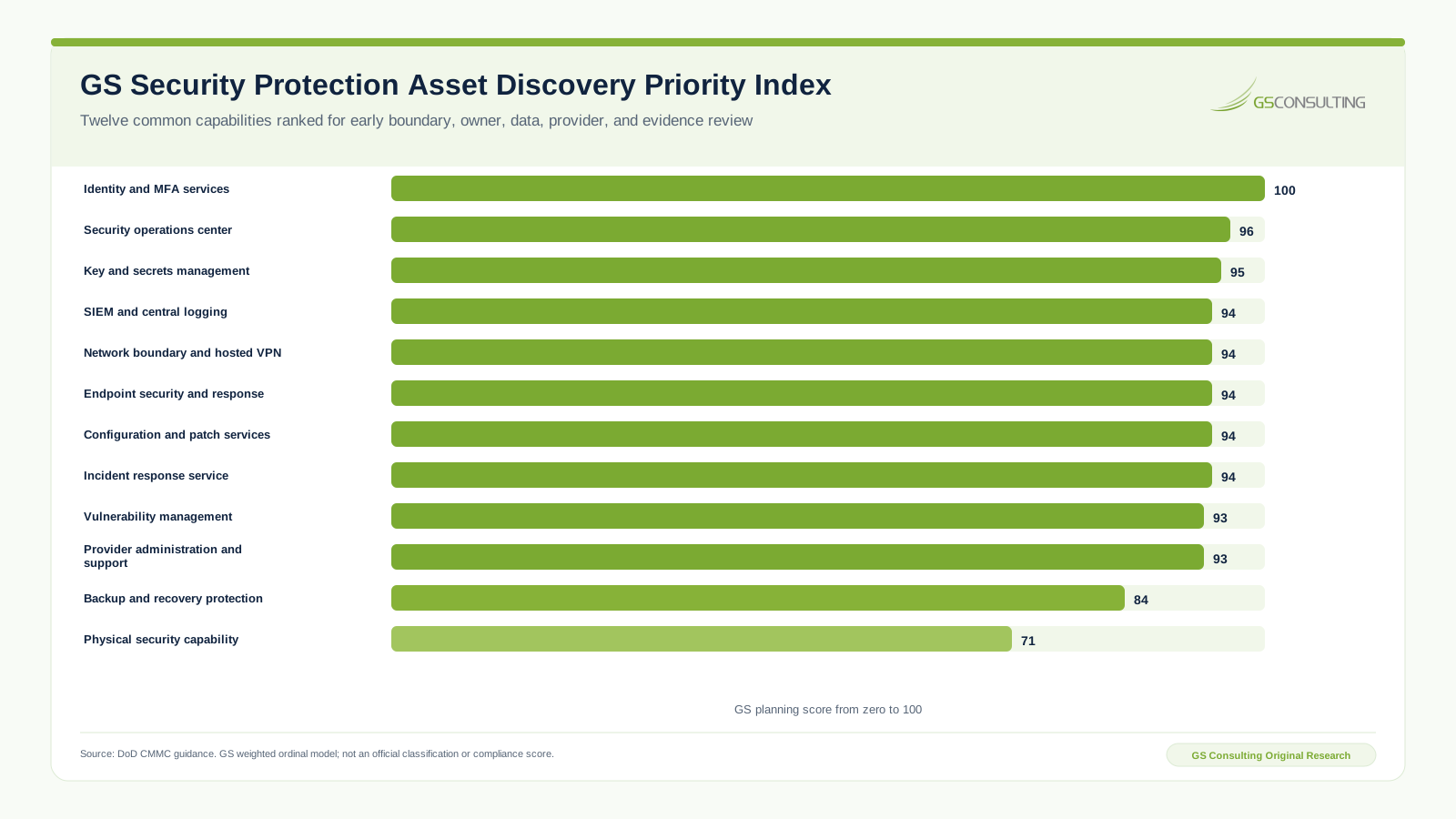
The high scores share one pattern. They protect many components, hold broad authority, handle sensitive security data, change often, or depend on evidence held by another team or provider. A lower score does not mean out of scope. It means the generic assumptions create less pressure for early investigation.
The sensitivity case moves five percentage points from privileged reach to Security Protection Data exposure. No capability moves more than one point, and the leading order remains stable. This limited test checks weight sensitivity only. It does not validate local scope, implementation, cost, or assessment status.
Run Discovery by Protection Function
Start from the security outcomes the environment relies on. Identity enforcement, network boundary control, endpoint protection, log collection, vulnerability discovery, secure configuration, key protection, backup protection, physical protection, and incident response are useful lanes. Then identify the people, technology, facilities, and providers that perform each lane.
For every lane, trace both the control plane and the evidence plane. The control plane shows how the capability protects assets. The evidence plane shows where configurations, logs, approvals, reviews, alerts, changes, exceptions, and tests can be retrieved.
Use the same names across the asset inventory, SSP, network diagram, provider register, requirement map, and evidence index. If the inventory says hosted VPN, the diagram says remote gateway, and the SSP says secure access service, add a stable asset identifier so reviewers can tell they are the same capability.
Map Security Protection Data as Carefully as CUI Dependencies
The scoping guide calls out Security Protection Data such as configuration data, logs that are generated or ingested, vulnerability or configuration status, and passwords that grant access. These records may reveal the architecture, control state, weaknesses, administrative paths, or credentials used to protect the environment.
For each data type, document the source, destination, storage, viewer, administrator, transfer path, retention rule, integrity control, backup, export method, and deletion path. Note whether the data crosses organizational or provider boundaries.
Security Protection Data is not automatically CUI. Classification and handling depend on the source, content, contract, customer direction, and applicable policy. The point is not to relabel everything. The point is to stop sensitive security records from disappearing between the CUI diagram and the evidence plan.
Test retrieval before the assessment. A provider portal that keeps only thirty days of logs may not support the intended evidence period. A security platform that shows live state but cannot export configuration history may require another record. A password vault that protects secrets but has no owner for access review creates a separate proof gap.
Map Relevant Requirements, Not Every Requirement by Default
Security Protection Assets are assessed against the Level 2 requirements relevant to the capabilities they provide. That is a disciplined filter, not an exemption phrase.
Build a relevance map with one row for each asset and requirement combination that needs review. Record the protection capability, requirement, rationale, implementation, source evidence, owner, interview role, test method, result, and change trigger. For a requirement marked not relevant, retain the capability based rationale and the reviewer.
A SIEM may support audit log collection, review, alerting, incident response, and system monitoring. A hosted VPN may support remote access, session protection, boundary control, and authentication. An enterprise administrator may support access control, configuration management, maintenance, and flaw remediation. The exact map depends on what the asset actually does.
Do not copy the provider feature list into the relevance map. Available capability is not implemented capability. The row should show the contractor configuration, shared responsibility, operating action, retained record, and test result.
Treat External Providers as Evidence Dependencies
A provider can supply a Security Protection Asset, administer one, host one, or retain its evidence. Each role creates a different dependency.
Record the service, asset identifier, protection function, protected assets, provider personnel, privileged paths, Security Protection Data, customer duties, provider duties, requirement relevance, evidence location, retention, access process, incident contact, change notice, exit plan, and accountable contractor owner.
Ask for evidence before renewal or assessment pressure. Confirm that the organization can obtain the current configuration, user and administrator population, logs, review records, incident records, change history, and test support it expects. Record any contractual or technical limit.
A provider certification or authorization can support due diligence. It does not automatically prove the contractor configured and operated the shared control correctly. Preserve the shared responsibility map and the customer side records.
Build Evidence Around the Capability Claim
The CMMC Level 2 Assessment Guide, version 2.13, uses examine, interview, and test methods. The three methods should support the same capability claim.
- Examine. Inspect the inventory, SSP, diagram, configuration, access, logs, provider records, reviews, changes, incidents, and exceptions.
- Interview. Ask the accountable owner, operator, administrator, user, security reviewer, and provider contact to explain the actual process.
- Test. Exercise an approved function and a relevant denied or failure condition, then capture the expected and observed result.
A hosted VPN claim might be tested with an approved user and device, an unapproved device, a stale account, a privileged session, a logging check, and an evidence retrieval check. A SIEM claim might be tested with a known event, ingestion confirmation, rule response, analyst handling, evidence export, and a source outage scenario.
Coordinate tests that can affect production, access, logging, alerts, or provider operations. Use approved test data and an authorized change window. Record any defect, correction, retest, and final approval.
Six Ways Security Protection Asset Scoping Fails
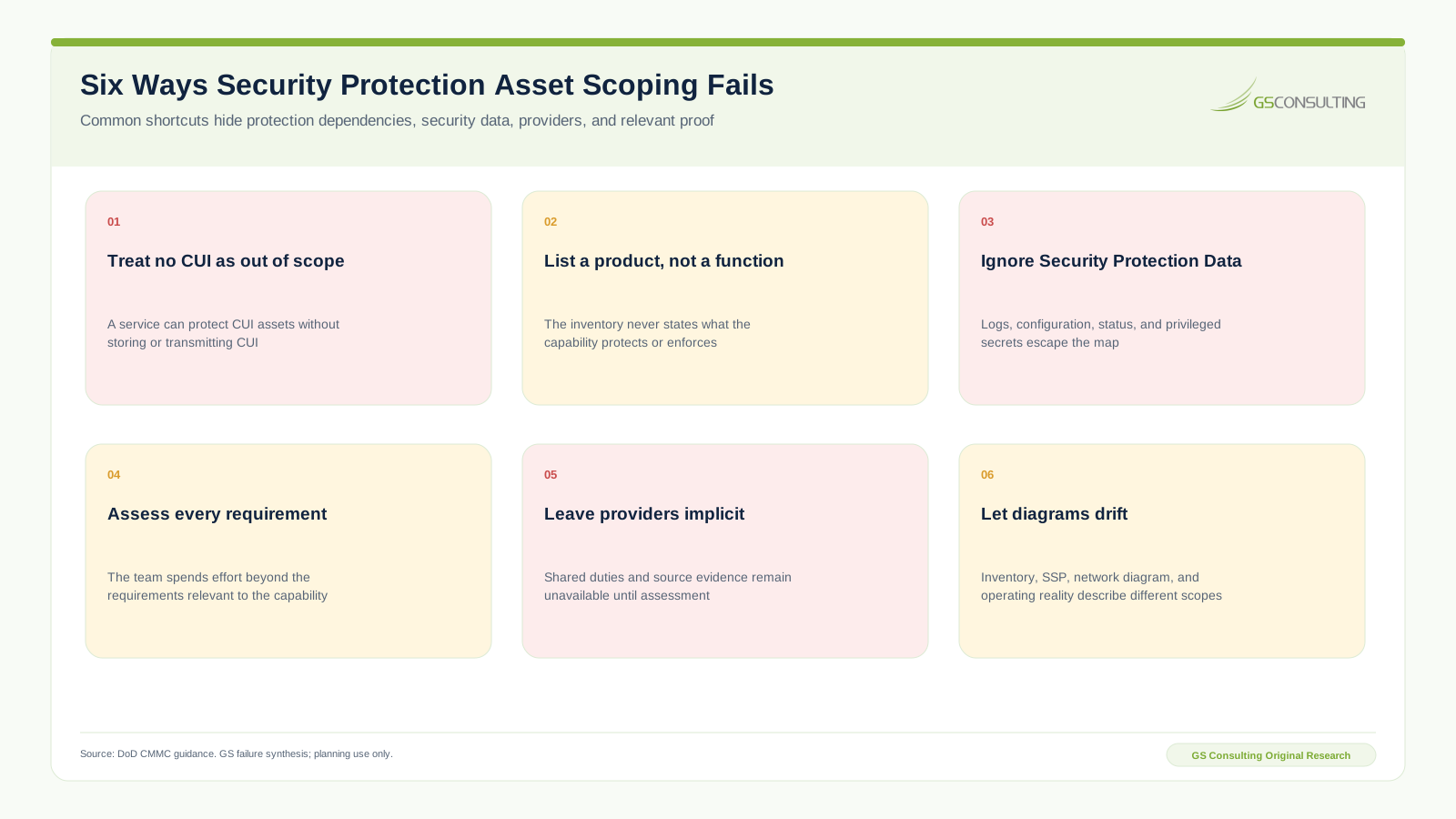
Look for these six defects before the scope package reaches final review:
- Treat no CUI as out of scope. The team ignores a capability that protects CUI assets without holding CUI.
- List a product, not a function. The inventory never says what the tool or service protects.
- Ignore Security Protection Data. Logs, configuration, status, and privileged secrets disappear from the map.
- Assess every requirement. The team creates work beyond the requirements relevant to the capability.
- Leave providers implicit. Shared duties and source records remain unavailable until assessment.
- Let diagrams drift. The inventory, SSP, network diagram, and operating environment describe different boundaries.
A 45 Day Security Protection Asset Plan
Days 1 through 7: confirm the governing facts
Review the solicitation, contract, current program direction, required level, CUI flow, customer instructions, and existing scope. Name one scope owner and one decision authority.
Days 8 through 15: inventory protection functions
List the security outcomes the environment depends on. Map the people, technology, facilities, and providers that deliver each outcome. Give every candidate a stable identifier.
Days 16 through 25: trace dependencies and security data
Map protected assets, administrative paths, service connections, Security Protection Data, provider boundaries, retention, and evidence retrieval. Reconcile the inventory, SSP, and network diagram.
Days 26 through 35: apply the requirement relevance filter
For each confirmed Security Protection Asset, map the relevant requirements, rationale, implementation, evidence, owner, interview role, and test. Review decisions with the people who operate the capability.
Days 36 through 45: test, retrieve, and approve
Run safe capability and evidence tests. Correct missing owners, stale records, weak provider duties, broken retrieval, and diagram drift. Approve the current scope package and define change triggers.
The Minimum Security Protection Asset Evidence Packet
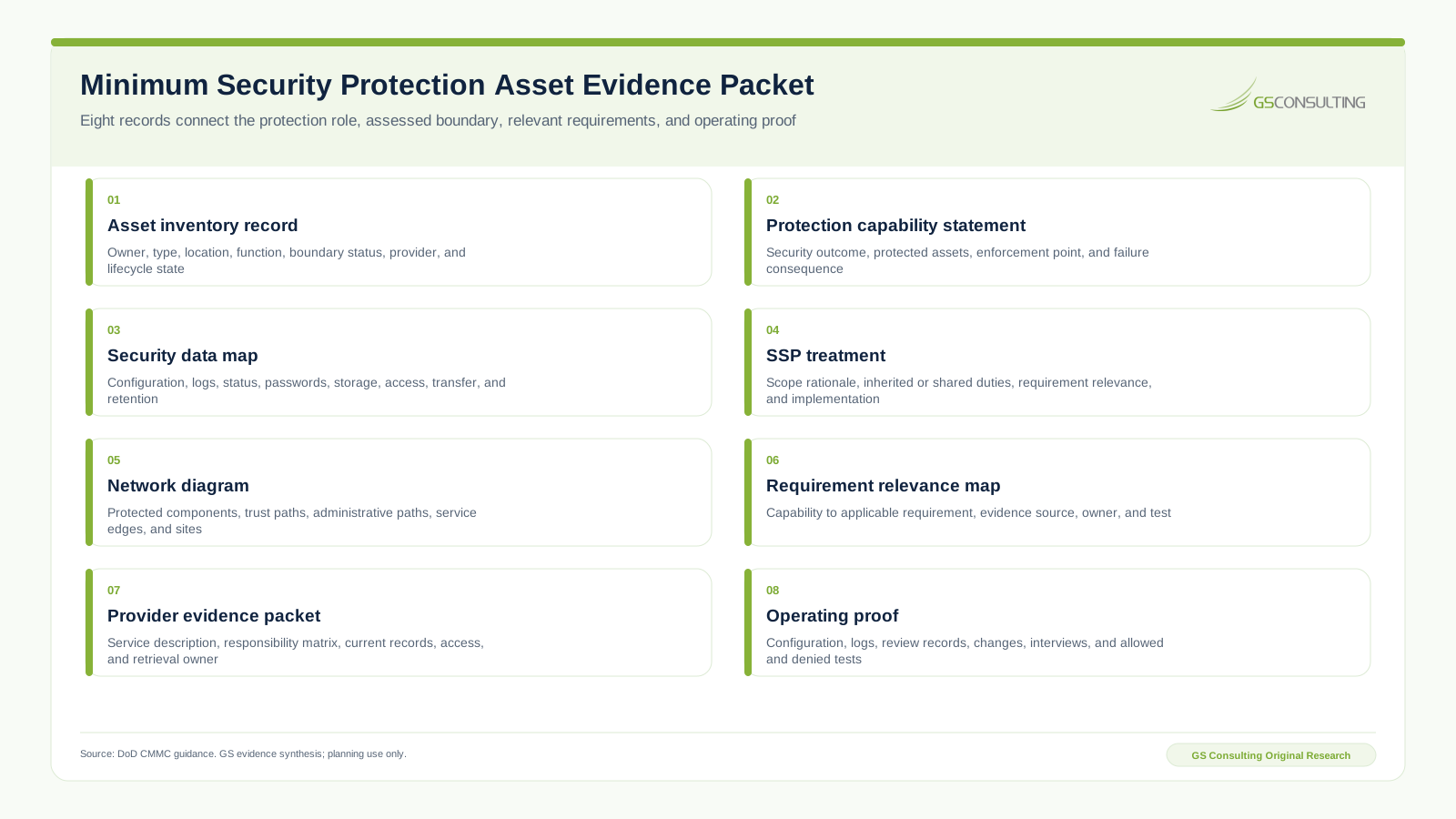
Keep these eight records connected by a stable asset identifier:
- Asset inventory record. Owner, type, location, function, category, provider, and lifecycle state.
- Protection capability statement. Security outcome, protected assets, enforcement point, and failure consequence.
- Security data map. Configuration, logs, status, passwords, access, transfer, storage, and retention.
- SSP treatment. Scope rationale, shared duties, requirement relevance, and implementation.
- Network diagram. Protected components, trust paths, administrative paths, service edges, and sites.
- Requirement relevance map. Capability, applicable requirement, rationale, evidence, owner, and test.
- Provider evidence packet. Service, responsibility map, current records, access, retention, and retrieval owner.
- Operating proof. Configuration, logs, reviews, changes, interviews, and allowed and denied tests.
Research Sources, Method, and Caveat
The research package uses the CMMC Level 2 Scoping Guide, version 2.13, the CMMC Level 2 Assessment Guide, version 2.13, the DoD CMMC Resources and Documentation page, and DFARS 252.204-7012.
The full package under research/insights/cmmc-security-protection-assets/ contains the source register, public observations, official example extract, analyst inputs and rationales, formula driven workbook, derived scores, sensitivity analysis, figure data, decision path, failure modes, evidence packet, editable SVGs, browser rendered PNGs, and display previews.
Model caveat: this is a GS Consulting derived planning tool based on cited public sources and documented assumptions. It is not an official legal, audit, compliance, NIST, CMMC, DoD, assessment, certification, asset classification, or regulatory determination. Local contracts, customer direction, architecture, data, providers, and control facts can change the result.
Frequently Asked Questions About CMMC Security Protection Assets
What is a CMMC Security Protection Asset?
A Security Protection Asset is a person, technology, or facility that provides a security function or capability within the CMMC assessment scope. It can be in scope even when it does not process, store, or transmit CUI.
Are Security Protection Assets assessed against all CMMC Level 2 requirements?
No. The CMMC Level 2 Scoping Guide says they are assessed against the requirements relevant to the capabilities they provide. The organization still has to document and support its relevance decisions.
Can a cloud security service be a Security Protection Asset?
Yes. The official guide lists cloud security solutions, a hosted VPN, and a SIEM as technology examples. The actual classification depends on the protection role and the assessed environment.
What is Security Protection Data?
The official guide describes data such as configuration information, logs, vulnerability or configuration status, and passwords that grant access. Map where this data is created, stored, viewed, transferred, and retained.
What documentation is required for a Security Protection Asset?
The CMMC Level 2 Scoping Guide calls for each asset to appear in the asset inventory, the SSP, and the network diagram. A useful operating record also names the owner, protection function, relevant requirements, provider duties, evidence sources, and change triggers.
Does the GS discovery index determine whether an asset is in scope?
No. The index only orders investigation. Its ratings, weights, tiers, and evidence design are GS Consulting assumptions. Official guidance, the actual environment, the contract, and the authorized assessment process determine the result.
The operating standard is blunt: every protection dependency has a stable identity, every scope decision has a capability based rationale, every relevant requirement has an owner and proof source, and every provider record can be retrieved before anyone calls the boundary complete.
Close the gap between the diagram and the real protections.
GS Consulting helps government contractors build a current, defensible CMMC scope and evidence system.
Start the Protection Asset ReviewContinue the CMMC Research
Use these guides to connect the asset decision to the full scope and assessment method: