GovCon Cybersecurity | | 25 min read
CMMC Evidence Repository Architecture: A Practical Guide

Key Takeaways
A repository succeeds when evidence stays authoritative and retrievable
Index the source before copying the file
Keep provenance, ownership, scope, period, approval, access, and replacement logic with every evidence record.
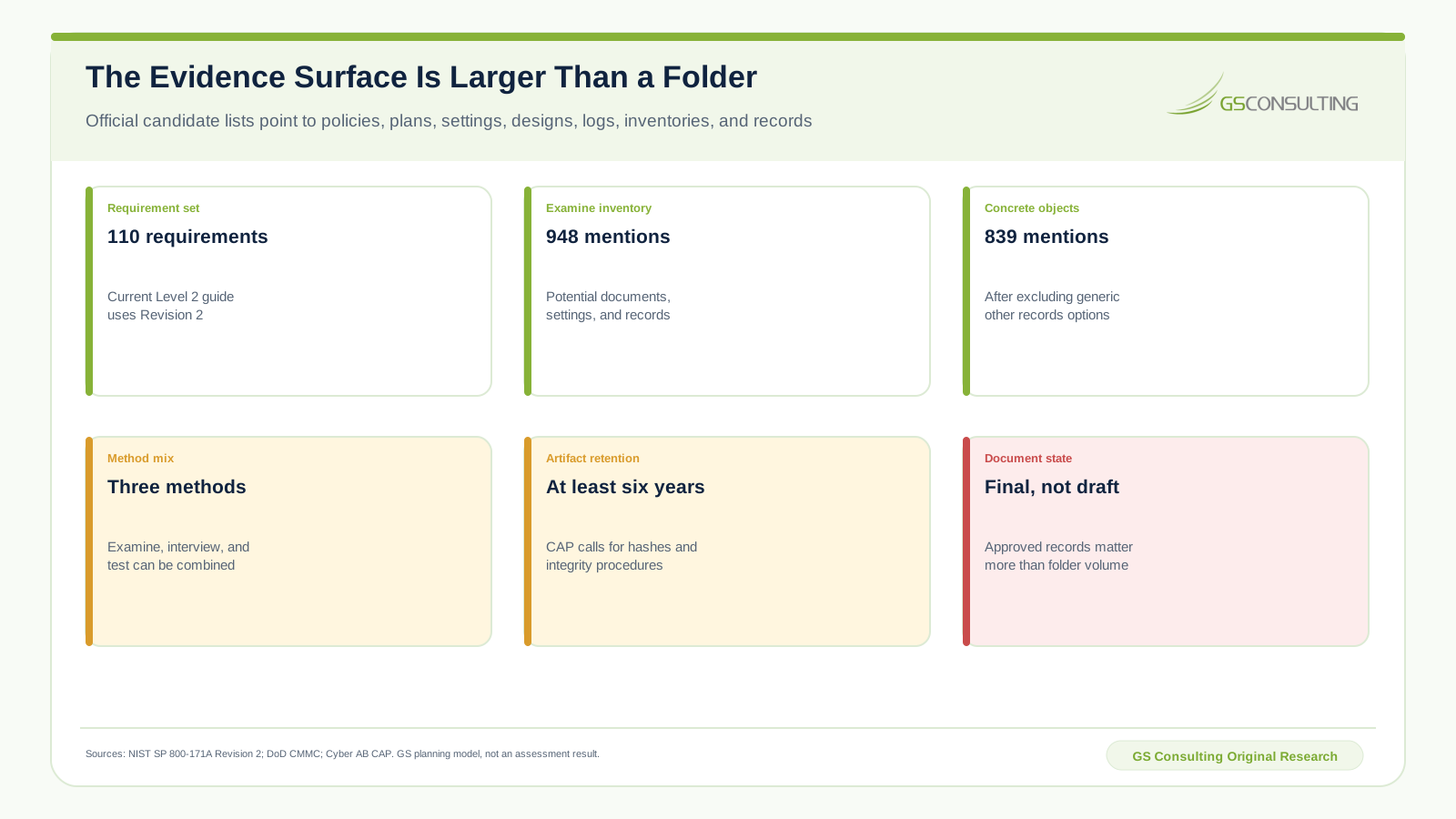
948 examine object mentions reveal the retrieval surface
GS classified 839 concrete candidate objects after separating 109 generic other records options in the official dataset.
Test retrieval before an assessor requests it
Run timed requests, verify permissions and links, open the exact record, and reconcile it with interviews, tests, the SSP, and provider duties.
A CMMC evidence repository is not a shared drive with better folders. It is the control system that keeps proof authoritative, traceable, protected, and retrievable.
The folder dump feels productive. Teams collect policies, screenshots, tickets, logs, exports, diagrams, and provider files. Then the problems begin. Nobody knows which version is final. A screenshot has no source or date. Access is broader than the system it documents. A provider record covers the wrong service. The same artifact appears in five folders and disagrees with the live system.
Build the repository around records, not files. Each record needs a stable identity, objective link, scope, provenance, operating period, owner, approval state, handling rule, integrity value, retention rule, and request history. The artifact can stay in its authoritative source when that path is controlled and reliable.
This guide belongs to the CMMC resource hub and supports the secure AI and regulated automation service. Use it with the CMMC assessment evidence guide, the CMMC assessment interview preparation guide, the CMMC assessment findings guide, and the CMMC external service provider guide.
Make the evidence path faster and safer.
GS Consulting helps contractors define the record model, connect source systems, protect CUI, map objectives, test retrieval, and retire stale assessment evidence.
Design the Evidence RepositoryCMMC Evidence Repository Architecture: The Short Answer
Use five connected layers. Keep authoritative documents and operating records in their source systems. Maintain a governed evidence registry with stable identifiers and objective mappings. Create controlled assessment packages only when needed. Route assessor requests through a logged response process. Apply access, CUI handling, integrity, retention, replacement, and disposal rules across the full path.
Do not create one folder for each security requirement and copy everything into it. A single artifact can support several objectives. One objective can need several records, interviews, and tests. Duplication breaks provenance and makes updates unreliable. The repository should answer what the item proves, where it came from, which version controls, who owns it, and whether the assessor can retrieve it now.
Five Architecture Principles Keep Evidence Defensible
Source authority comes first. Identify the system that creates or approves each record. A ticketing system, identity platform, configuration service, learning system, log store, document system, or provider portal can remain authoritative. The evidence registry points to it and records the relevant version and period.
Objective traceability is explicit. Map the artifact to the exact security requirement and assessment objective it supports. Record whether it is intended for examine, interview support, test support, or several methods. Do not assume the filename explains relevance.
Protection follows the content. Classify the evidence before collection. Logs, screenshots, tickets, diagrams, vulnerability results, and provider records can expose CUI, security protection data, credentials, personal information, or system weakness. Storage and sharing must match that sensitivity.
Integrity and lifecycle are designed. Record approval, collection, hash, retention start, replacement, legal or incident hold, and disposition. A retained artifact should remain attributable and readable. A replaced artifact should not silently disappear from assessment history.
Retrieval is tested. A link that worked six months ago is not evidence readiness. Run timed requests with the people and access paths that will be used during the assessment. Confirm the exact record opens, its context is clear, and it agrees with the live system.
GS CMMC Evidence Retrieval Priority Index
GS Consulting parsed the official NIST SP 800-171A Revision 2 supplemental assessment procedures. The 110 requirement header rows contain 948 examine candidate object mentions, 356 interview candidate role mentions, and 208 test candidate object mentions.
The examine inventory includes 109 instances of the generic phrase “other relevant documents or records.” We retained those phrases in the source inventory but excluded them from artifact class scoring. That leaves 839 concrete candidate mentions. We assigned each concrete phrase once to one of twelve named classes using ordered phrase rules.
The base index gives 30 percent to candidate mentions, 30 percent to requirement reach, 20 percent to family span, and 20 percent to the number of linked requirements that also contain test candidates. Each measure is normalized to the largest artifact class value.
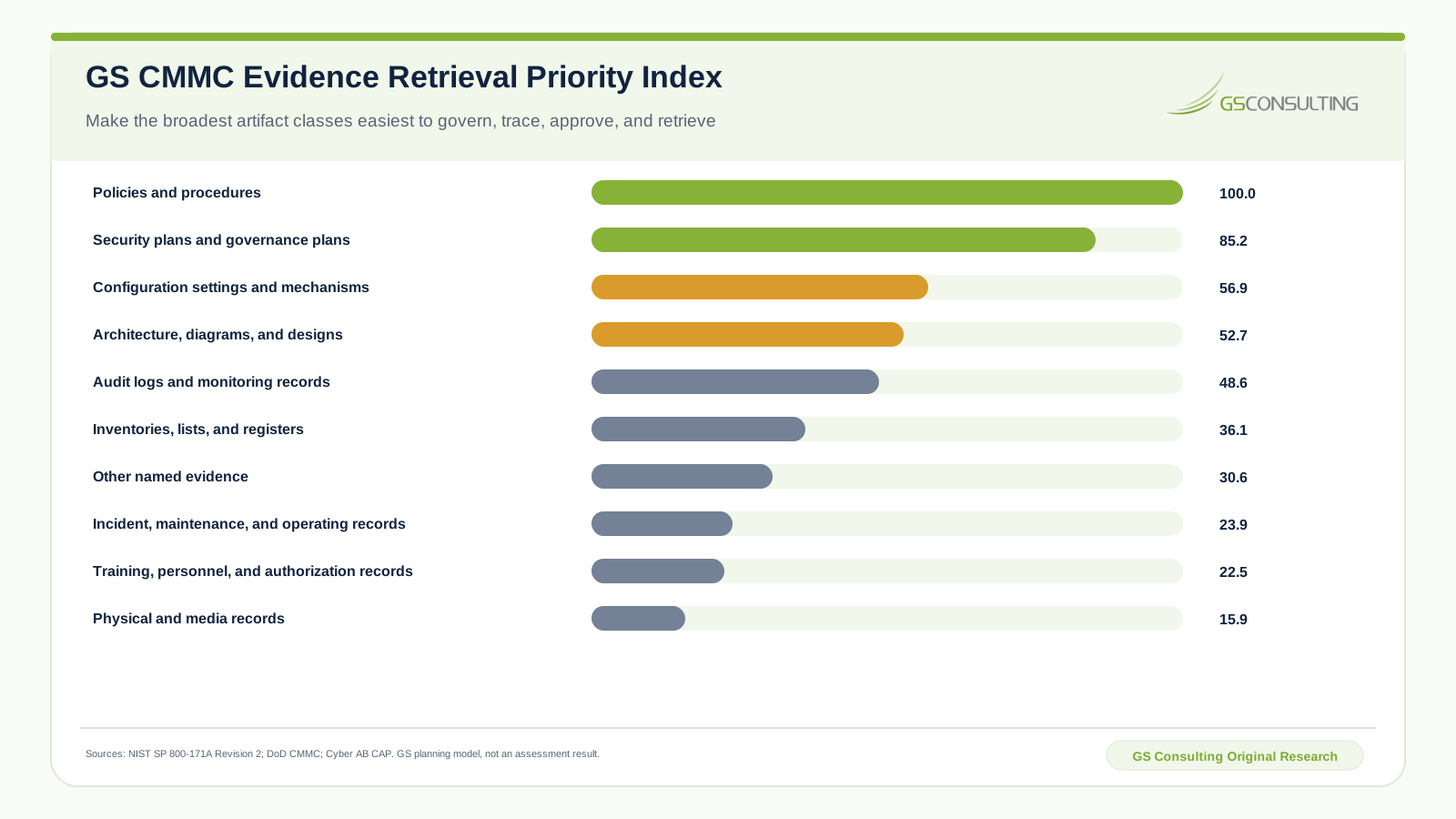
Policies and procedures reach 109 requirements and all 14 families. Security plans and governance plans reach 108 requirements and all 14 families. Configuration settings and mechanisms reach 72 requirements across nine families. Architecture, diagrams, and designs reach 67 requirements across nine families. Audit logs and monitoring records reach 63 requirements across eight families.
The sensitivity case moves five percentage points from candidate mentions to requirement reach. The top artifact class remains the same. The largest score movement is 2.3 points. The source counts are public observations. The classification rules, weights, and interpretation are GS planning choices.
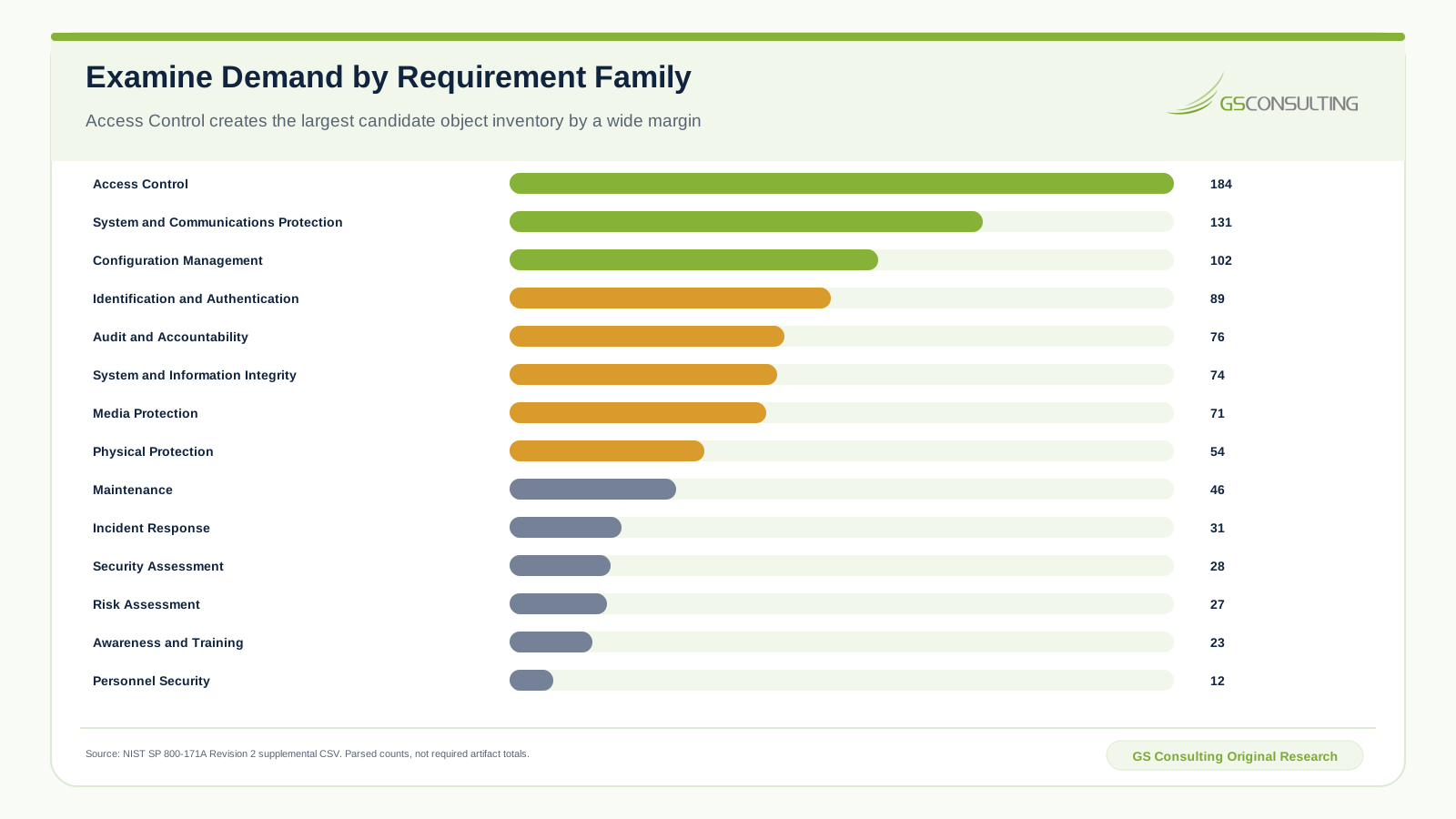
These values are not required file counts and do not measure control importance. The DoD Level 2 Assessment Guide provides potential objects. The assessment team selects evidence needed for sufficient confidence in the actual implementation. Use the index to prioritize repository design, not to manufacture one artifact per mention.
Use Five Connected Repository Layers
| Layer | Purpose | Required controls |
|---|---|---|
| Authoritative sources | Create and approve documents, configurations, logs, tickets, inventories, training, and provider records | Ownership, access, change, time, backup, retention, system identity |
| Evidence registry | Index what each item proves and where it lives | Stable ID, objective mapping, source, scope, period, version, owner, status |
| Controlled package | Stage limited copies when source access or assessment exchange requires it | Approval, CUI handling, least privilege, encryption, hash, expiry, replacement |
| Request workflow | Receive, review, release, and track assessment requests | Requester, purpose, authorization, response, artifact ID, time, decision |
| Lifecycle record | Preserve assessment use, change, retention, hold, and disposition | Hash, reviewer, result, replacement, retention start, hold, disposal proof |
The registry is the spine. It can be a controlled database, list, or purpose built application. The tool matters less than the record discipline. Every entry should resolve to one authoritative artifact or an explicitly controlled assessment copy. Links must be permission aware and testable. Search must not expose content to unauthorized users.
A package is temporary unless a retention rule says otherwise. Freeze the approved contents, record hashes, limit access, and prevent silent replacement. When an artifact changes during preparation, preserve the prior assessment record and link the successor. Do not overwrite history to make the package look cleaner.
Operate the Repository in Five Stages
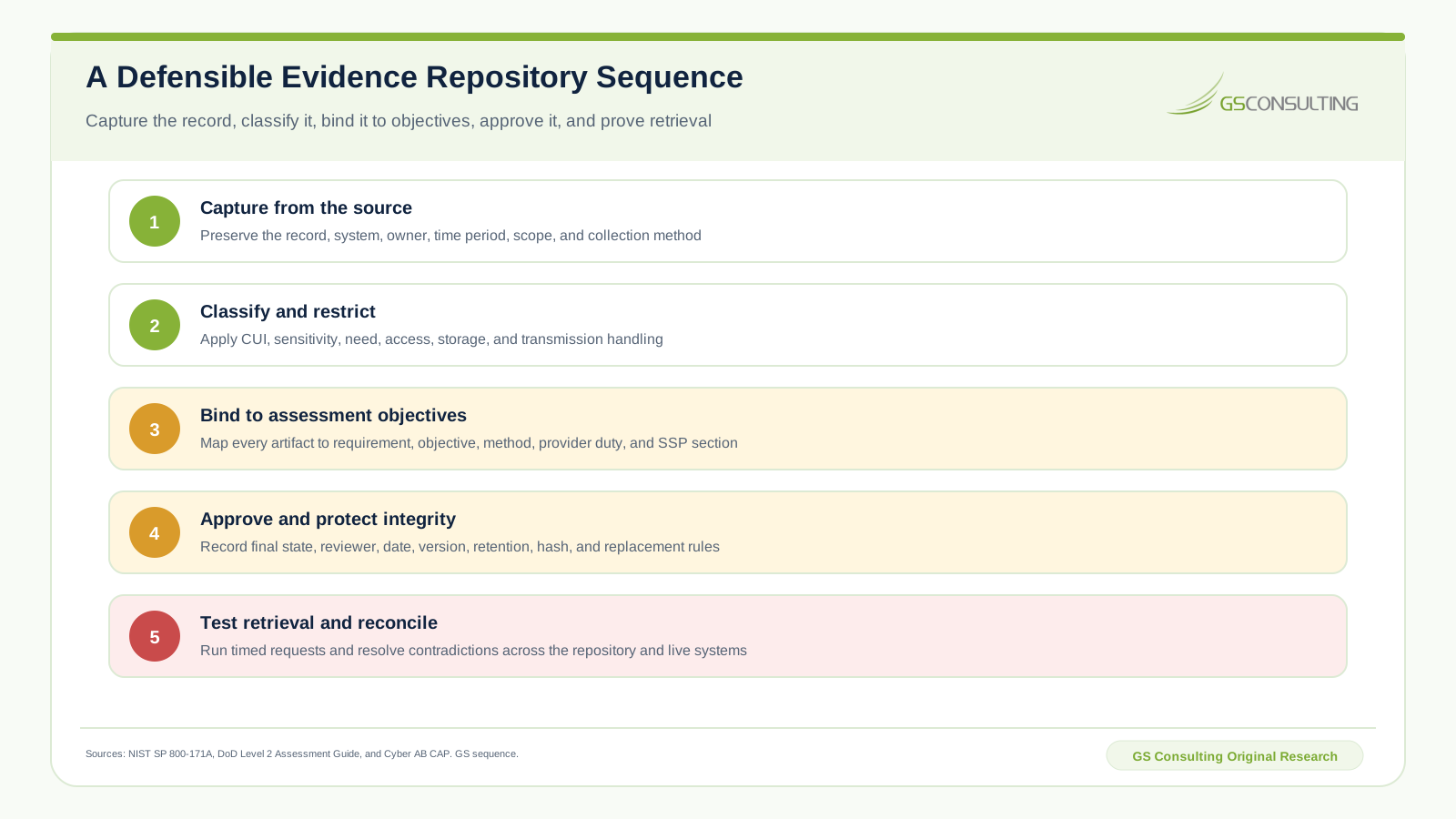
Capture from the source with the record owner, collection method, scope, system, and time period. Classify sensitivity and restrict access before broader preparation begins. Bind the item to requirements, objectives, methods, provider duties, and SSP sections. Approve the version, record integrity and retention, then test retrieval with the expected assessment user.
Reconciliation is the final gate. Compare the repository record with the live setting, interview answer, test result, scope, inventory, SSP, and provider responsibility. A technically valid artifact can still be misleading when it describes the wrong boundary or time period.
Define a Minimum Evidence Record
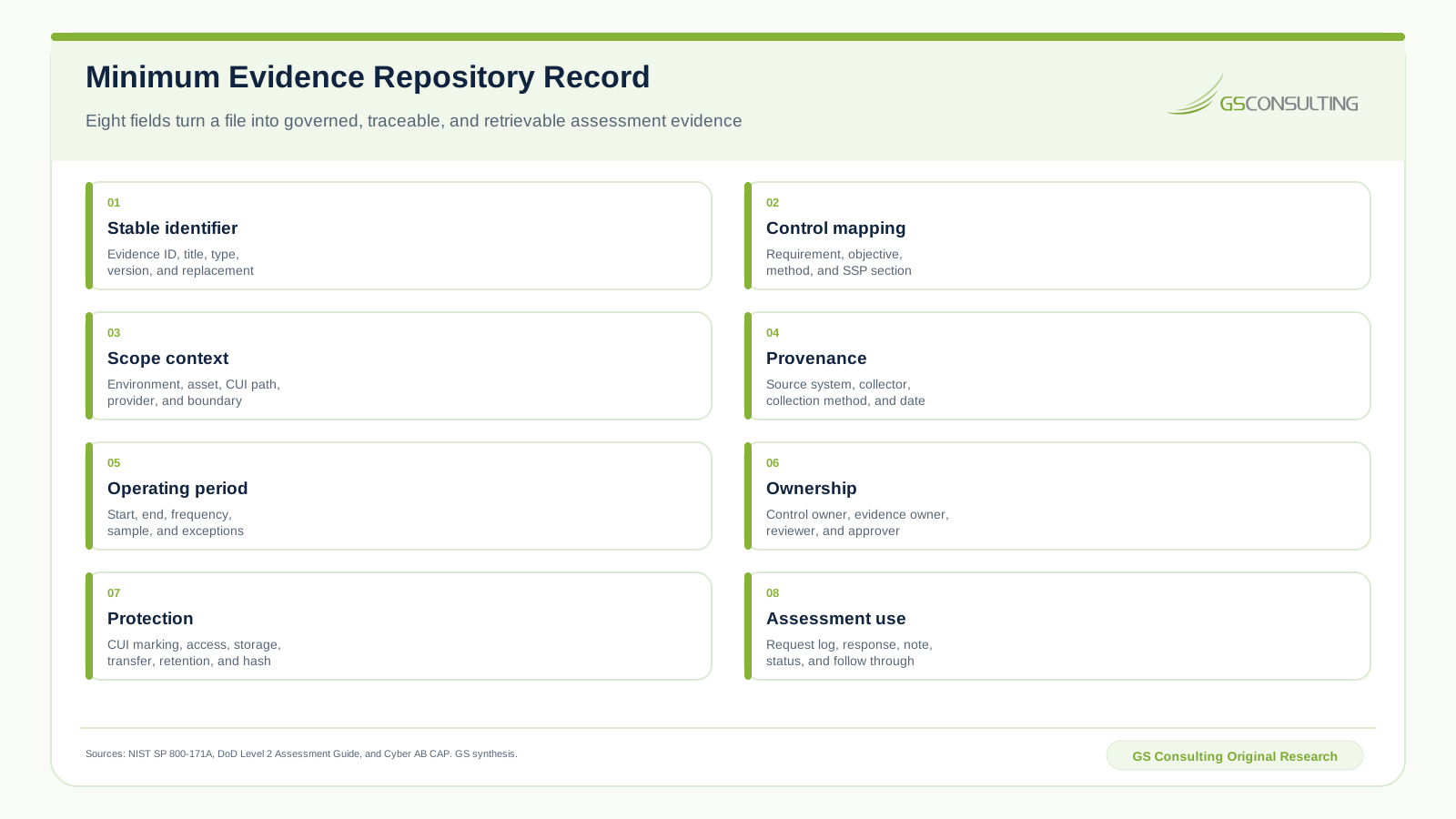
The stable identifier should survive renaming and folder movement. Record artifact type, title, version, source, replacement, and current status. Map the evidence to requirement and objective, but also record the implementation claim it supports. An objective number without a claim still leaves the reviewer guessing.
Scope context should name the system, environment, asset, component, CUI path, provider, and boundary where relevant. Provenance should identify the source system, collector, method, and collection time. Operating period matters for recurring controls. One approved policy may remain current while the supporting review record expires every quarter.
Ownership needs several roles: control owner, evidence owner, reviewer, and approver. They can be the same person in a small company, but the duties should be explicit. Assessment use should record the request, response, release authority, assessor note, finding link, follow through, and final status.
Protect CUI, Integrity, and Retention
The repository can become one of the most sensitive systems in the environment. It may contain network diagrams, security settings, access lists, vulnerabilities, incident records, provider dependencies, personal information, and CUI. Do not place it outside the assessed protection path merely because its purpose is compliance.
Apply least privilege, strong identity, logging, approved storage, approved transmission, backup, recovery, change control, monitoring, and incident response. Separate preparation access from broad collaboration. Review exports and local copies. Test that revoked users and expired links truly lose access.
The Cyber AB CAP says the organization seeking assessment must retain hashed assessment artifacts for six years. It also calls for artifact integrity procedures and a list that records artifact names, hash values, and the NIST approved algorithm used. Treat that statement as a minimum assessment process input, then reconcile it with the current contract, DoD direction, legal holds, incident duties, privacy, and company records policy.
A hash can show that a retained file has not changed. It does not prove the file was correct, complete, approved, or relevant. Keep provenance and review evidence with the hash. Test that future staff can verify the value and open the artifact in a usable format.
Design Provider Evidence as a First Class Record
Provider evidence fails when teams save a certificate and stop. Record the exact service, covered boundary, current assurance state, customer configuration, CUI and security protection data path, shared duties, provider contacts, evidence rights, change notices, incident support, and exit terms.
The current customer responsibility matrix should link each provider supported requirement to a company action, provider action, evidence source, interview owner, and test path. If the provider record is confidential or portal only, document who can retrieve it, how access is approved, what can be shown to an assessor, and what happens if access disappears.
Use the CMMC external service provider guide to resolve scope and responsibility. Use the interview preparation guide to prepare knowledgeable provider respondents. Repository architecture and provider contracts have to agree before assessment activity begins.
Avoid Six Repository Architecture Failures
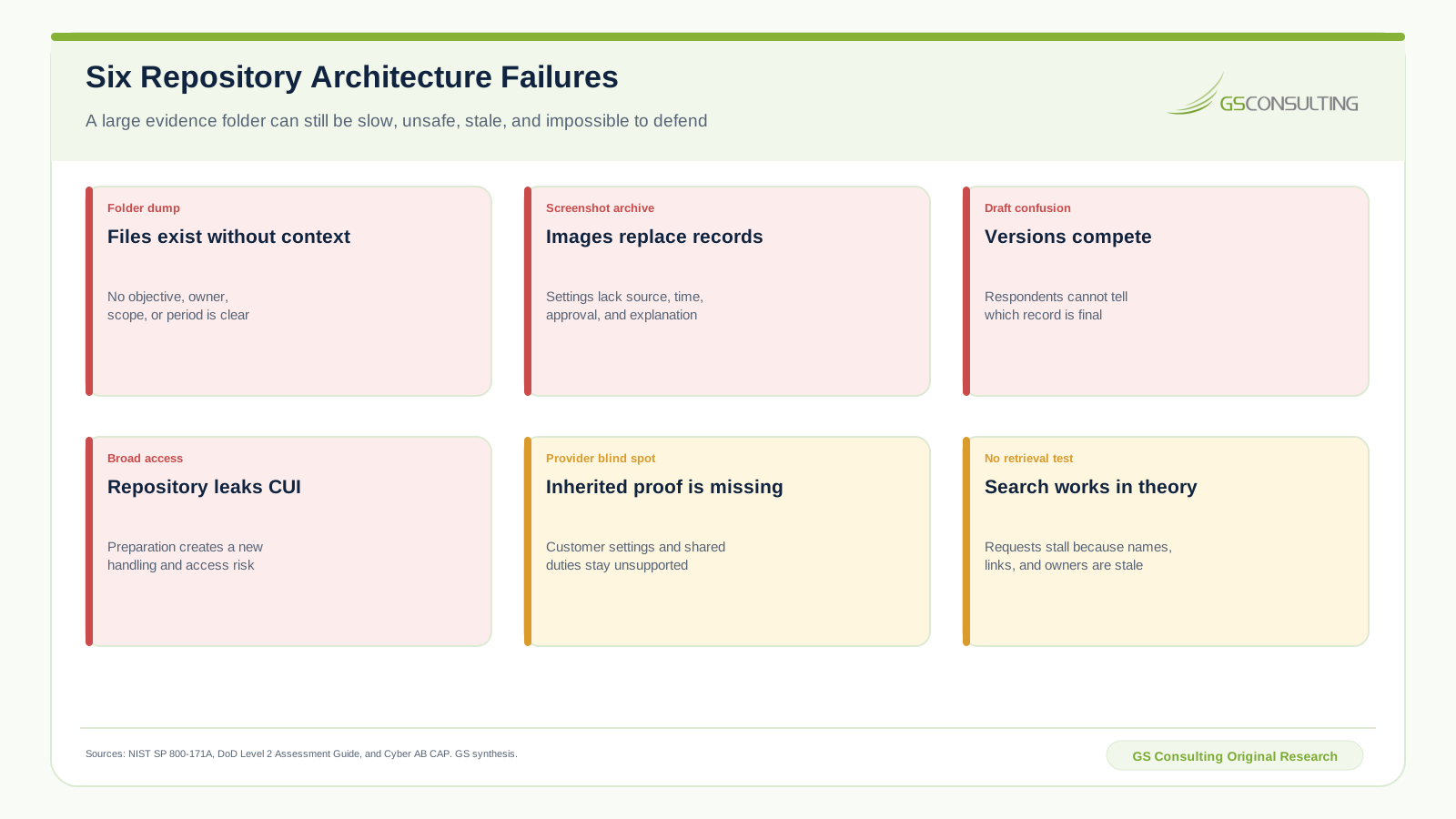
Folder dump. Files have no objective, owner, scope, or period. Screenshot archive. Images lack source, collection time, approval, and operating context. Draft confusion. Several versions compete and nobody knows which one governs.
Broad access. Preparation creates a new CUI and security exposure. Provider blind spot. A certificate replaces customer configuration and shared responsibility proof. No retrieval test. Names, links, permissions, and owners fail when the request arrives.
Implement the Architecture in Eight Weeks
| Period | Operator action | Required output |
|---|---|---|
| Weeks one and two | Inventory evidence sources, owners, artifact classes, scope, CUI handling, provider paths, and current folders. | Source map, risk list, duplicate and stale content report |
| Weeks three and four | Define the record schema, objective map, source authority, access roles, package rules, and lifecycle states. | Approved data dictionary, workflow, ownership, retention design |
| Weeks five and six | Load a representative slice from Access Control, System Communications Protection, and Configuration Management. | Working registry, stable links, controlled copies, hashes, request log |
| Week seven | Run interview, test, provider, access revocation, failed link, replacement, and hold scenarios. | Scenario results, gaps, corrections, repeated tests |
| Week eight | Measure retrieval, review the sensitive content path, approve operation, and schedule recurring reconciliation. | Production decision, open risks, metrics, review calendar |
Start with a representative slice, not a mass migration. If the schema cannot handle policies, plans, settings, logs, inventories, provider records, and recurring samples, fix the model before scaling. Moving bad evidence faster only produces a larger cleanup.
Measure Repository Quality, Not Upload Volume
Measure objective coverage, authoritative source coverage, final approval state, current operating period, valid links, access success, request response time, retrieval success, reviewer acceptance, and contradiction rate. Track stale items, duplicate versions, expired provider evidence, missing hashes, unresolved ownership, and uncontrolled copies.
Use sampled reconstruction as the hard test. Give a reviewer an objective and ask them to find the implementation claim, source artifact, period, owner, provider duty, interview support, test result, exception, and assessment history. Measure time and errors. A repository that cannot reconstruct the control is an archive, not an evidence system.
Do not reward teams for file count. High upload volume often signals duplication and weak selection. Reward current coverage, traceability, safe retrieval, contradiction closure, and evidence reuse across self assessment, certification preparation, customer review, change, and incident response.
Research Sources and Caveats
The GS CMMC Evidence Retrieval Priority Index uses sources accessed September 3, 2026:
- NIST SP 800-171A Revision 2 supplemental assessment procedures for the candidate examine, interview, and test inventory.
- NIST SP 800-171A Revision 2 for assessment methods and procedures.
- DoD CMMC Level 2 Assessment Guide Version 2.13 for evidence selection, final documents, interviews, and tests.
- Cyber AB CMMC Assessment Process Version 2.0 for artifact access, integrity, hashing, retention, provider participation, and assessment workflow.
- DoD CMMC program page for current implementation status.
- DFARS 252.204-7021 for contract specific CMMC requirements.
The research package contains the source register, public signals, 948 row examine inventory, family counts, model inputs, live formulas, cached results, sensitivity test, figure data, methodology, editable SVG figures, browser rendered PNG files, and workbook. The index is a GS Consulting derived planning tool. It is not an official evidence checklist, required artifact count, DoD, NIST, Cyber AB, C3PAO, legal, contract, assessment, certification, audit, or compliance determination.
CMMC Evidence Repository FAQ
What is a CMMC evidence repository?
It is the governed system used to index, protect, retrieve, review, and retain proof for an assessed environment. It can reference controlled source systems instead of copying every file.
Should all CMMC evidence be copied into one folder?
No. Keep authoritative evidence in controlled sources when practical. Use a registry and stable links, then create a limited controlled package only when the assessment path requires a copy.
How long should CMMC assessment artifacts be retained?
The Cyber AB assessment process says the organization seeking assessment must retain hashed assessment artifacts for six years. Confirm current contract, records, legal, incident, and privacy duties.
What metadata should a CMMC evidence record contain?
Use stable identity, objective mapping, method, scope, source, collection time, operating period, ownership, approval, handling, access, retention, integrity, replacement, request history, and status.
Can a CMMC evidence repository contain CUI?
Yes. Evidence can contain CUI and sensitive security information. Classify content and use approved storage, access, transmission, logging, backup, retention, and disposal controls.
Does the GS index define required CMMC evidence?
No. It ranks artifact classes in the official candidate inventory. Actual evidence depends on implementation, scope, contract, method, sampling, and assessor judgment.
Related CMMC Guidance
- CMMC Resource Hub
- CMMC Assessment Evidence Guide
- CMMC Assessment Interview Preparation
- CMMC Assessment Findings
- CMMC External Service Providers
- Secure AI and Regulated Automation Services
Make every evidence record explain itself.
The operating standard is direct: no stable identity, no objective link, no source, no owner, no safe retrieval, no accepted evidence record.
Request an Evidence Architecture Review