GovCon Cybersecurity | | 24 min read
CMMC Assessment Interview Preparation: A Practical Guide

Key Takeaways
Prepare the owner, the proof, and the demonstration together
Interviews are one part of the assessment
Respondent explanations must agree with final documents, operating records, scope, provider duties, and what the system does under test.
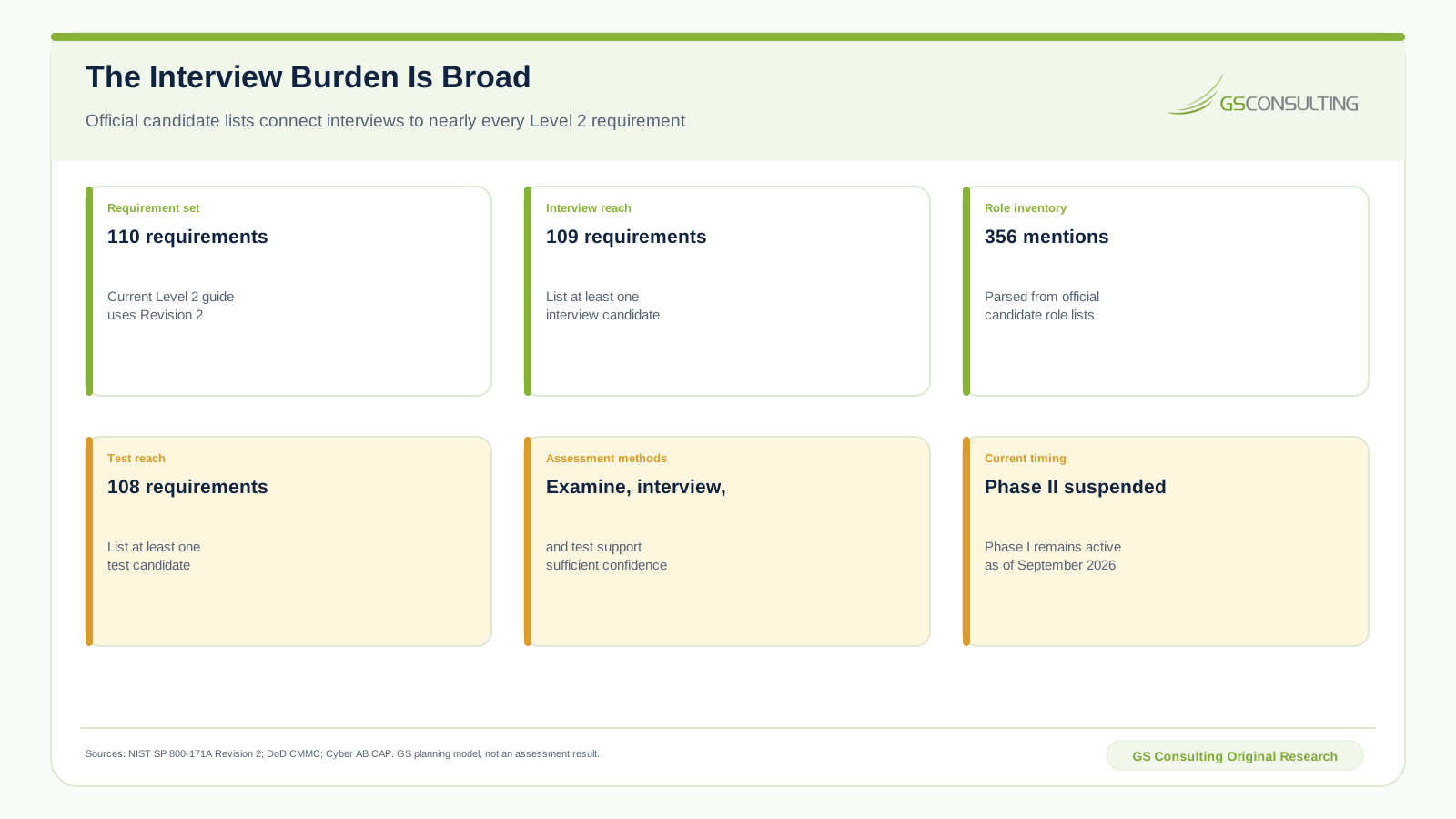
109 of 110 requirements list interview candidates
GS parsed 356 candidate role mentions from the official NIST supplemental dataset and grouped them into ten preparation cohorts.
No scripts and no invented certainty
Teach people to explain their own work, find current evidence, show the normal and exception paths, and say when another owner must answer.
CMMC assessment interview preparation is not answer coaching. It is the work of making ownership, evidence, and system behavior tell the same story.
A polished script can hurt. An assessor asks for a recent example, a failed attempt, an escalation, a provider handoff, or a live setting. The respondent repeats policy language but cannot find the record. The administrator shows a control that works differently. The system security plan describes a third version. Confidence falls because the stories do not agree.
Prepare from the requirement outward. Name the person who owns the process, the person who performs it, the record that proves it, the system view that demonstrates it, and the exception path that shows the control still works under pressure. Rehearse the handoffs. Fix contradictions before the interview.
This guide belongs to the CMMC resource hub and supports the secure AI and regulated automation service. Use it with the CMMC assessment evidence guide, the CMMC evidence repository architecture guide, the CMMC assessment findings guide, and the CMMC external service provider guide.
Make every interview answer easy to prove.
GS Consulting helps contractors map respondents, repair proof gaps, rehearse system demonstrations, and resolve conflicts before assessment activity begins.
Plan an Interview Readiness ReviewCMMC Assessment Interview Preparation: The Short Answer
Build one respondent map at the assessment objective level. For each objective, identify the primary owner, operating respondent, backup, evidence source, system demonstration, provider dependency, and exception path. Give each respondent only the scope and proof they need. Then conduct scenario based rehearsals with current records and the real system.
Do not promise a universal question list. The DoD CMMC Level 2 Assessment Guide Version 2.13 explains that assessors select assessment methods and objects needed for sufficient confidence. The candidate lists guide preparation. They do not require every named role to be interviewed for every requirement.
Current CMMC Status Still Requires Precise Preparation
The DoD CMMC program page states that Phase II requirements were suspended on July 13, 2026, while Phase I self assessment requirements remain active. That timing can change. Read the current solicitation, award, clauses, assessment direction, and DoD notice before setting an interview calendar.
The pause does not erase an applicable NIST SP 800-171 duty, a required self assessment, an SPRS record, or an affirmation. It also does not make false preparation useful. Build the interview discipline now because it exposes control drift during self assessment, customer review, government assessment, and later certification work.
DFARS 252.204-7021 is contract specific. The clause, required level, current implementation phase, and award facts must be read together. Preparation should be strong. Claims about current obligation should remain careful and documented.
What a CMMC Interview Actually Tests
An interview helps the assessor understand whether people know and perform the implementation. The Level 2 guide says interview evidence can address implementation, resources, training, and planning. It also expects documentary evidence to be final rather than draft. A strong answer therefore connects a person, an approved rule, an operating action, and a current record.
The three methods serve different purposes. Examine looks at specifications, mechanisms, and activities through documents, configurations, logs, plans, diagrams, and records. Interview asks knowledgeable people to explain the work and ownership. Test exercises a mechanism or process to compare actual behavior with the expected result. Most objectives will need more than talk.
| Interview subject | What a credible answer contains | What should support it |
|---|---|---|
| Ownership | Who decides, performs, reviews, approves, and escalates | Role assignment, procedure, access, workflow, responsibility map |
| Normal operation | What happens, when, in which system, and with what result | Current record, system view, schedule, sample, review history |
| Exception handling | How failures, overrides, delays, and disputed cases are controlled | Ticket, alert, approval, escalation, correction, closure evidence |
| Change | How the team detects and approves a material change | Change record, impact review, test, updated plan, new evidence |
| Provider duty | What the contractor performs and what the provider performs | Contract, responsibility map, provider record, customer setting |
| Control result | Why the respondent believes the requirement works now | Final document, operating history, live test, exception trend |
GS CMMC Interview Coordination Priority Index
GS Consulting parsed the official NIST SP 800-171A Revision 2 supplemental assessment procedures. The 110 requirement header rows contain 356 interview candidate role mentions. Of the 110 requirements, 109 list interview candidates and 108 list test candidates.
We assigned every interview phrase to one of ten respondent cohorts with ordered phrase rules. The base index gives 35 percent to candidate mentions, 25 percent to requirement reach, 20 percent to family span, and 20 percent to the number of linked requirements that also contain test candidates. Each measure is normalized to the largest cohort value.
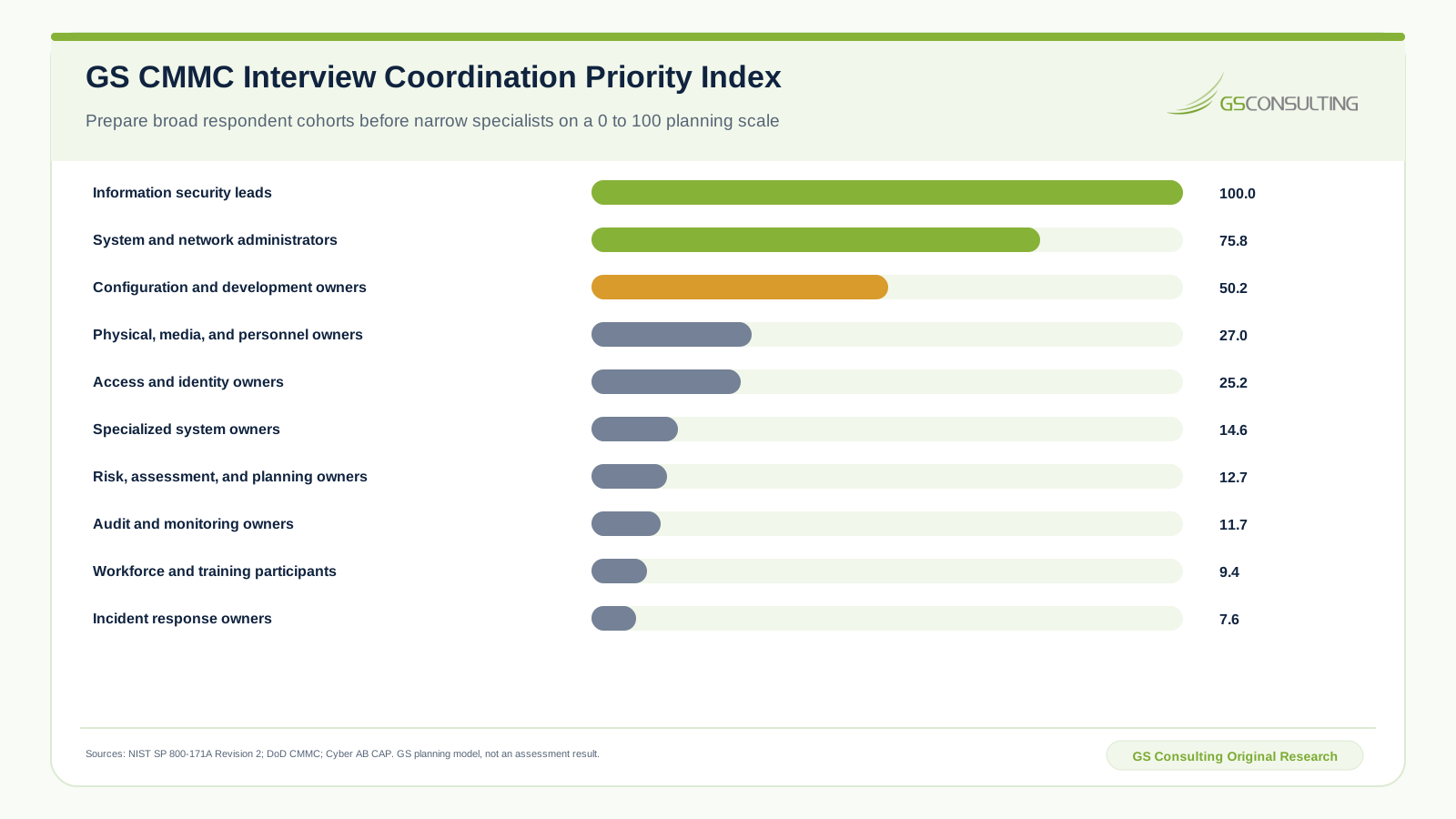
Information security leads score 100 because candidate wording reaches 108 requirements and all 14 families. System and network administrators score 75.8 across 78 requirements and ten families. Configuration and development owners score 50.2 across 52 requirements and seven families. The model does not say one cohort matters more to security. It says broad cohorts deserve early coordination because more requirement discussions can depend on them.
The sensitivity case moves five percentage points from candidate mentions to requirement reach. The top cohort stays the same, the ordering stays stable, and the largest score movement is 0.5 points. The source phrases and counts are public observations. The cohort rules, weights, and interpretation are GS planning choices.
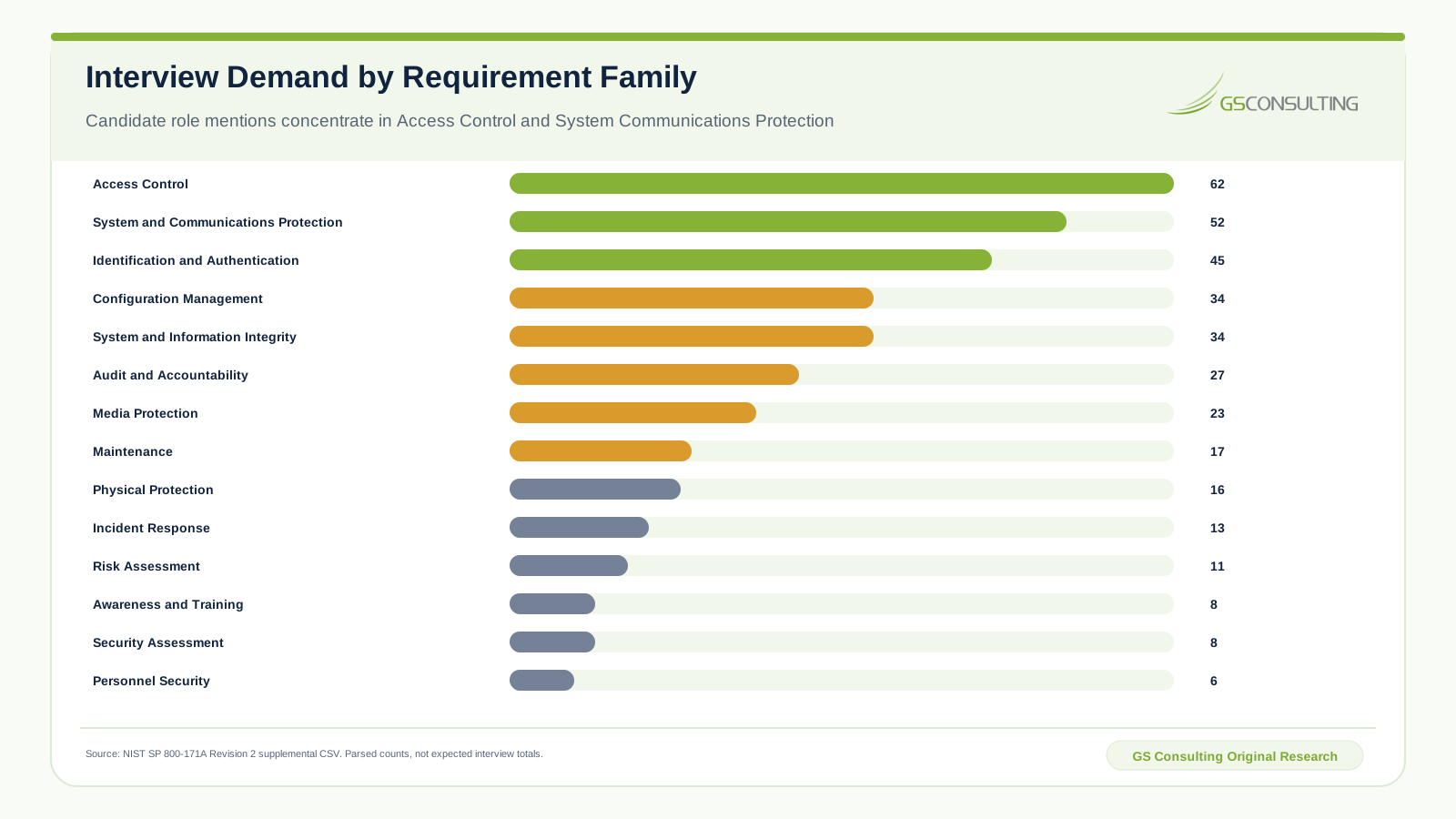
These counts are not expected interview totals. The source lists potential objects. Actual selection depends on the assessed system, implementation, sampling, risk, and assessor judgment. Use the model to order preparation, not to forecast an agenda.
Build the Respondent Map Around Real Ownership
Start with the people who can answer across many requirements. Information security staff often connect policy, scope, risk, monitoring, and evidence. Administrators can show account, configuration, logging, identity, network, endpoint, and protection behavior. Bring those groups into preparation early, but do not make them speak for work they do not own.
Then map narrower owners. Access and identity staff should explain account approval, authentication, privilege, review, and revocation. Configuration and development owners should explain baselines, changes, impact review, approved software, and build behavior. Incident staff should show reporting, handling, tests, and lessons. Physical, media, personnel, training, maintenance, audit, risk, and planning owners need their own proof paths.
| Map field | Required entry | Readiness test |
|---|---|---|
| Requirement and objective | Exact identifier and applicable determination statement | Respondent knows which part they own |
| Primary respondent | Person who performs or directly owns the work | Can explain a recent real example |
| Backup | Second knowledgeable person | Can answer without inventing a new process |
| Evidence | Final rule and current operating record | Can retrieve the correct version promptly |
| Demonstration | Safe system or process test | Expected result and test data are known |
| Exception path | Failure, override, escalation, and closure route | A recent exception can be traced |
| Provider dependency | Company, provider, shared, or inherited duty | Current responsibility and proof agree |
Prepare in Five Stages
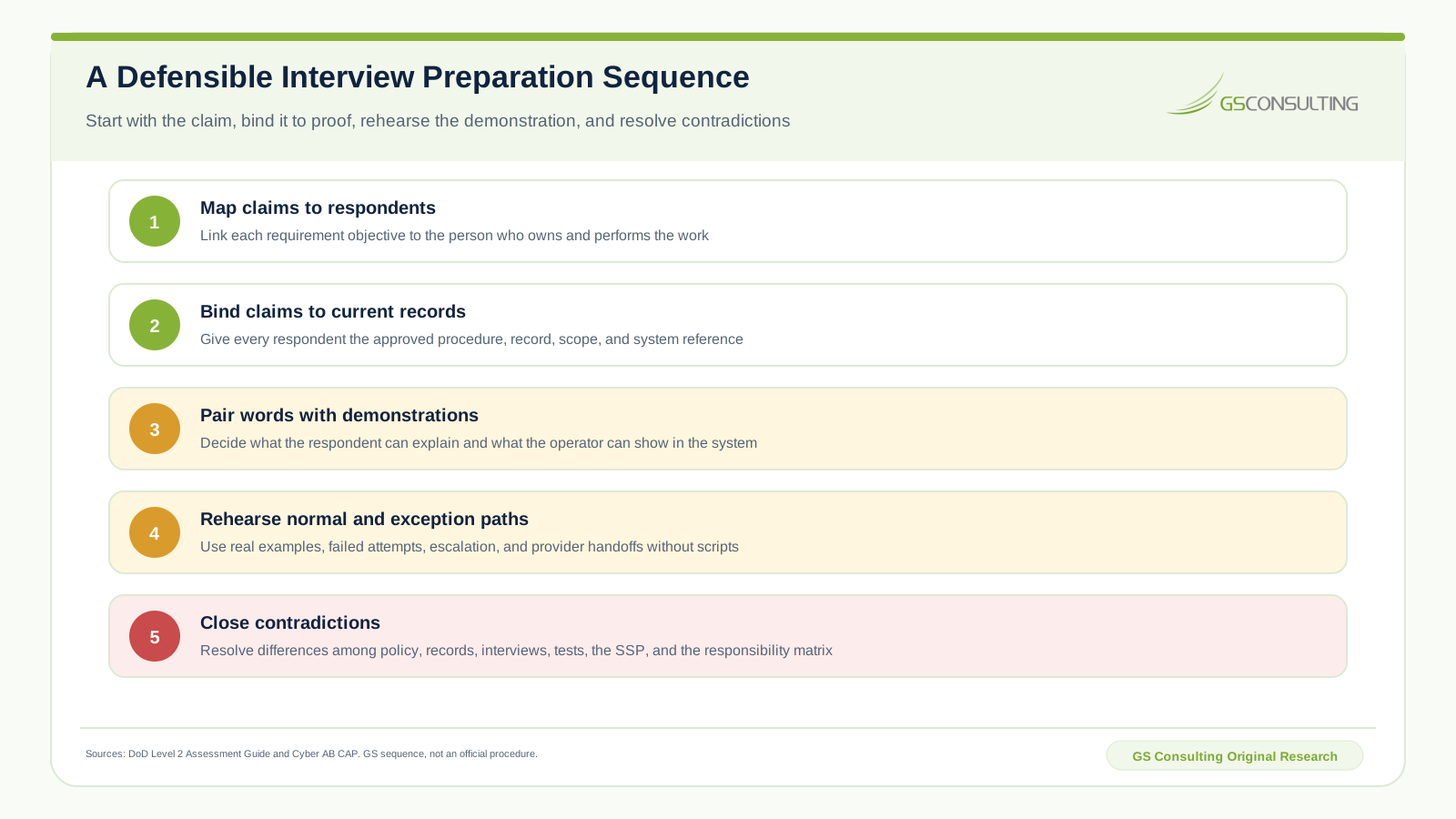
First, map claims to respondents. Second, bind those claims to approved documents and current records. Third, decide what the person can explain and what the operator can demonstrate. Fourth, rehearse normal operation and exception handling with representative samples. Fifth, close contradictions among the interview, system, evidence, scope, SSP, and responsibility map.
Rehearsal should create corrections, not confidence theater. Record every uncertain answer, stale link, inaccessible record, failed test, unclear provider duty, and conflicting procedure. Assign an owner and due date. Repeat the relevant scenario after correction. If the same uncertainty returns, the issue is probably process design, not presentation skill.
Practice Questions That Reveal the Control
Useful questions force a respondent to connect the rule to real work. Ask for the most recent completed case. Ask what happens when the normal path fails. Ask who approves an exception and how it expires. Ask where the authoritative record lives. Ask how a reviewer knows the population is complete. Ask what changed since the last sample.
For administrators, ask them to show how an account is approved, provisioned, reviewed, disabled, and logged. For security staff, ask how the scope, SSP, assessment results, risks, and open actions are reconciled. For incident staff, trace one exercise or event from report through containment and closure. For workforce members, ask how they recognize and route controlled information without turning the interview into a trivia test.
Do not teach a respondent to guess. A strong answer can be: “That decision belongs to the identity owner. I perform the approved request in this system, and this record shows my part.” Boundaries improve credibility. Improvised authority damages it.
Prepare Providers and Remote Assessment Activity Early
The Cyber AB CMMC Assessment Process Version 2.0 calls for knowledgeable provider participation when an external service provider is in scope. The respondent should have enough knowledge and ownership to explain the implemented requirement. A sales representative who can forward a certificate is not a control owner.
Confirm provider contacts, availability, evidence rights, customer settings, shared duties, test support, and escalation before the assessment schedule is final. Use the current customer responsibility matrix. If the matrix says shared but neither side can identify the action and record, the duty is unresolved.
For remote activity, test the approved meeting environment, identity, screen sharing, access, recording rules, CUI handling, safe test data, and fallback plan. The CAP places conditions on electronic CUI exchange. Confirm those conditions with the assessment team and keep CUI inside authorized handling paths.
Avoid Six Interview Preparation Failures
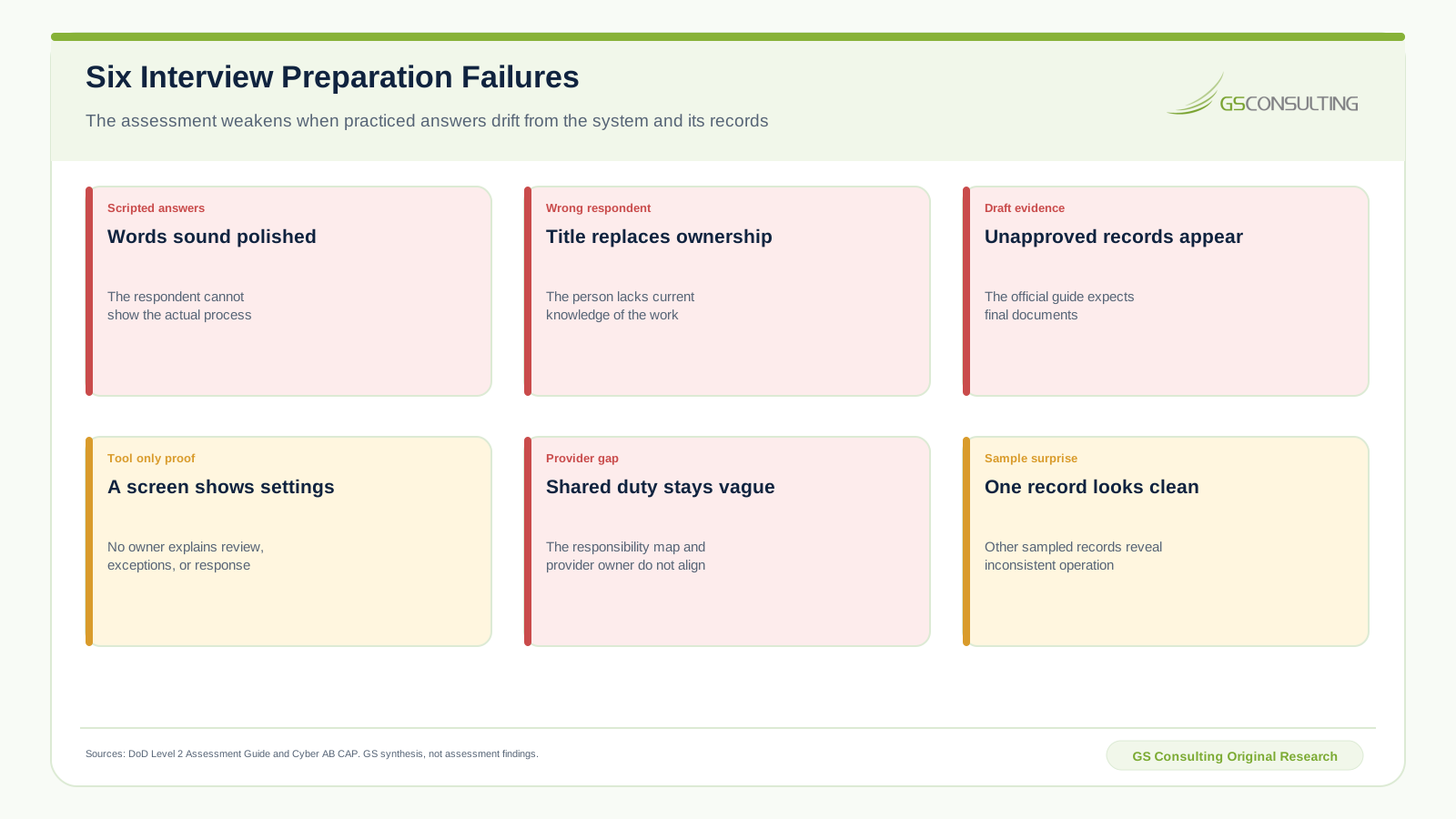
Scripted answers. The person can repeat policy but cannot show a recent case. Wrong respondent. An executive title replaces current operational knowledge. Draft evidence. An unapproved document describes a future process. Tool only proof. A setting appears without ownership, review, or exception handling.
Provider gap. The contractor and provider describe different responsibilities. Sample surprise. One curated record looks clean while the population reveals inconsistent practice. Fix the operating weakness. More rehearsal cannot make conflicting evidence reliable.
A 30 Day Interview Preparation Plan
| Period | Operator action | Required output |
|---|---|---|
| Days 1 through 5 | Freeze the assessment scope, requirement set, provider map, and current objective status. | Approved preparation boundary and objective inventory |
| Days 6 through 10 | Map primary respondents, backups, evidence, systems, demonstrations, and provider duties. | Respondent and proof map |
| Days 11 through 16 | Retrieve representative records and run safe demonstrations. | Sample inventory, failed tests, missing records, stale links |
| Days 17 through 22 | Conduct scenario rehearsals by family and across shared workflows. | Question log, contradictions, actions, owners, dates |
| Days 23 through 27 | Correct implementation, documents, responsibility, and evidence access. | Approved corrections and repeated tests |
| Days 28 through 30 | Run timed retrieval, provider handoffs, remote checks, and final escalation review. | Readiness decision with open risks and named authority |
Thirty days can expose and organize the work. It cannot guarantee readiness. A material control gap, missing provider right, inaccurate scope, or failed test should change the plan and the claim. Do not force a date to win an internal status meeting.
Keep a Minimum Interview Readiness Packet
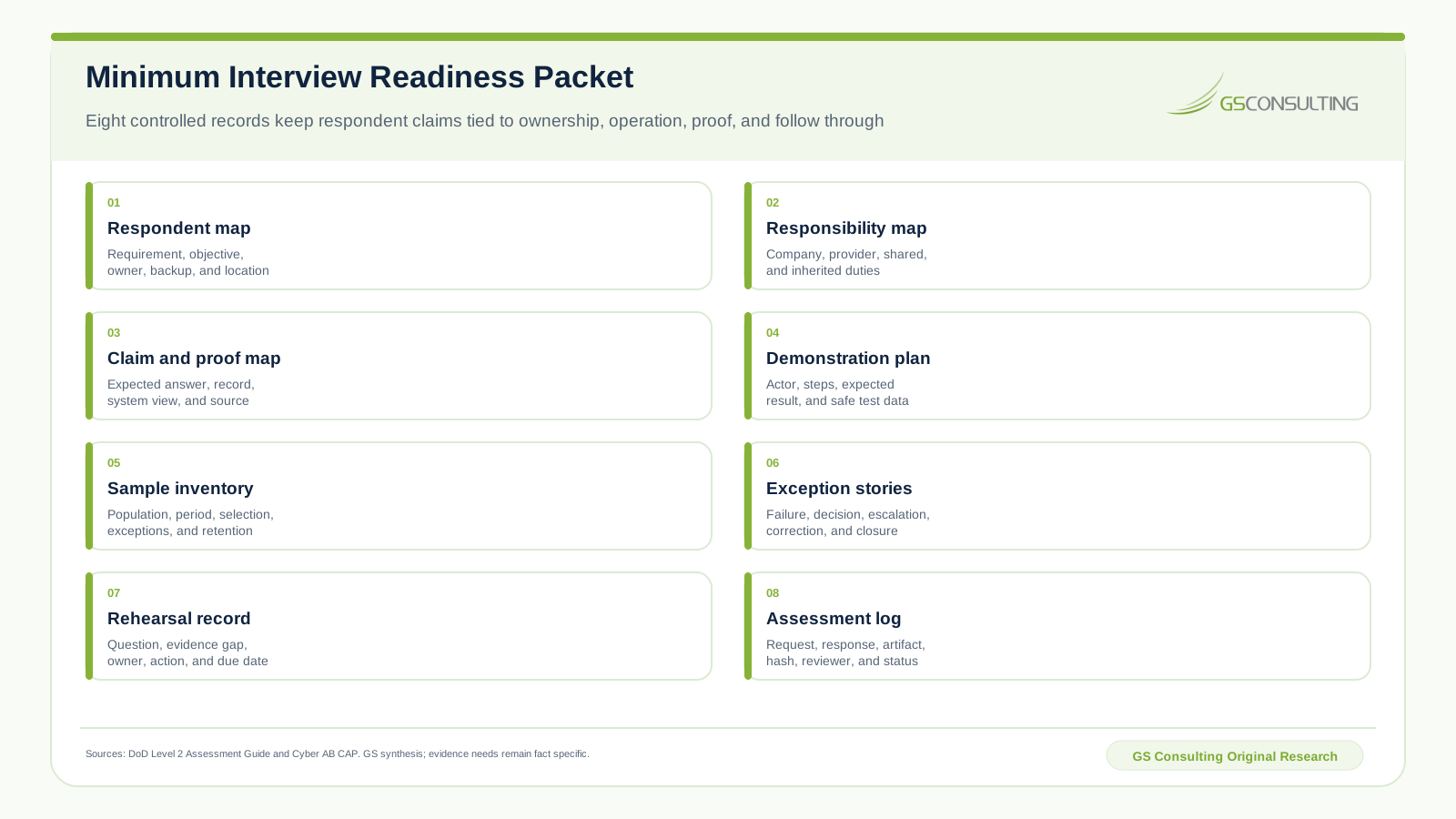
The packet is an index, not a second evidence dump. Keep authoritative records in controlled source systems where practical. Use stable links, version and period metadata, access checks, and a request log. The related CMMC evidence repository architecture guide explains how to govern retrieval, integrity, and assessment use.
Protect the packet as assessment information. It can contain system details, vulnerabilities, security protection data, and CUI. Apply approved storage, access, transmission, retention, and disposal controls. Interview convenience cannot create a new uncontrolled information path.
Research Sources and Caveats
The GS CMMC Interview Coordination Priority Index uses sources accessed September 3, 2026:
- NIST SP 800-171A Revision 2 supplemental assessment procedures for the candidate role, object, and test inventory.
- NIST SP 800-171A Revision 2 for assessment procedures and methods.
- DoD CMMC Level 2 Assessment Guide Version 2.13 for CMMC evidence and method guidance.
- Cyber AB CMMC Assessment Process Version 2.0 for respondent ownership, provider participation, sampling, and assessment logistics.
- DoD CMMC program page for current implementation status.
- DFARS 252.204-7021 for contract specific CMMC requirements.
The research package contains the source register, public signals, parsed role inventory, family counts, model inputs, live formulas, cached results, sensitivity test, figure data, methodology, editable SVG figures, browser rendered PNG files, and workbook. The index is a GS Consulting derived planning tool. It is not an official DoD, NIST, Cyber AB, C3PAO, legal, contract, assessment, certification, audit, or compliance determination.
CMMC Assessment Interview FAQ
What happens in a CMMC assessment interview?
An assessor asks knowledgeable people to explain how a requirement is implemented. The answer is considered with examined records and tested mechanisms in the assessed environment.
Who should attend a CMMC assessment interview?
Select people who own and perform the work for the applicable objectives, plus backups and relevant provider personnel. A title alone does not establish knowledge or ownership.
Should employees memorize answers for a CMMC interview?
No. Respondents should understand the approved process, explain what they do, retrieve current proof, show exceptions honestly, and route questions outside their responsibility.
Can a CMMC assessment interview be remote?
Virtual activity can be possible under the assessment plan and stated conditions. Confirm the method, protect CUI, use approved environments, and test evidence and demonstration access.
What evidence should support a CMMC interview answer?
Use approved rules, the SSP, current operating records, system views, exception records, provider responsibility, and repeatable tests with clear source, scope, owner, period, and review state.
Does the GS index predict who an assessor will interview?
No. It ranks coordination demand in the official candidate role inventory. Actual methods, objects, and samples depend on the assessed system and assessor judgment.
Related CMMC Guidance
- CMMC Resource Hub
- CMMC Assessment Evidence Guide
- CMMC Evidence Repository Architecture
- CMMC Assessment Findings
- CMMC External Service Providers
- Secure AI and Regulated Automation Services
Make every claim survive the next question.
The operating standard is simple: a knowledgeable owner, a current record, a working demonstration, and an honest exception path. If those four do not agree, the interview is not ready.
Request an Interview Readiness Review