GovCon Cybersecurity | | 25 min read
CMMC Assessment Findings: Response, Evidence, and Closure

Key Takeaways
Close the requirement, not the administrative record
Classify the consequence before assigning a date
A No Score condition, a barred plan item, an eligible conditional item, and an operational deficiency have different exits.
Phase II is suspended, but Phase I remains active
Use current DoD guidance and the live contract. Keep self assessment records, safeguarding, and affirmations truthful now.
No Score conditions lead the priority model
System security plan failure and a score below 88 both score 94 because they block a valid status path.
CMMC assessment findings are not closed when the ticket says done. They are closed when the requirement works and the evidence survives the right assessment methods.
That sounds obvious. It is not how many response teams behave. They rewrite a policy, take a new screenshot, change the task state, and call the problem closed. The original test is never repeated. The operator still describes a different process. The provider still owns an undocumented dependency. The status claim gets better while the control stays the same.
CMMC findings need a status decision before they need a project plan. Some conditions block a score. Some cannot enter a conditional plan. Some may support conditional status if the official floor and time limit are met. A temporary operating deficiency can belong on an operational plan only when the requirement is otherwise implemented. Treating those conditions as one generic backlog is how a fix becomes a failed closeout.
Make every finding traceable from cause to retest.
GS Consulting helps defense contractors classify findings, correct the control, build the closure packet, and rehearse the evidence before an assessment or customer review.
Plan a CMMC Finding ReviewThis guide belongs to the CMMC compliance hub and supports the secure AI and regulated automation service. Use it with the CMMC assessment evidence guide, the CMMC assessment interview preparation guide, the CMMC evidence repository architecture guide, the CMMC POA&M rules guide, the SPRS score guide, and the guide to CMMC external service providers.
CMMC Assessment Findings: The Short Answer
Record a CMMC finding at the requirement and assessment objective level. Preserve the original documents, interview notes, test output, boundary, and rationale. Decide whether the result creates No Score, No Status, a barred plan item, an eligible conditional item, a temporary operational deficiency, or a dispute path. Then correct the actual implementation, repeat the relevant examine, interview, and test methods, and approve closure with current evidence.
Do not merge the Cyber AB ten business day reevaluation path with the regulatory 180 day conditional closeout. They serve different moments and different records. The first is a narrow C3PAO procedure around the active assessment. The second is the time limit for closing eligible items after conditional status. Neither path turns a weak control into a passing result.
Current CMMC Status Changes the Assessment Path
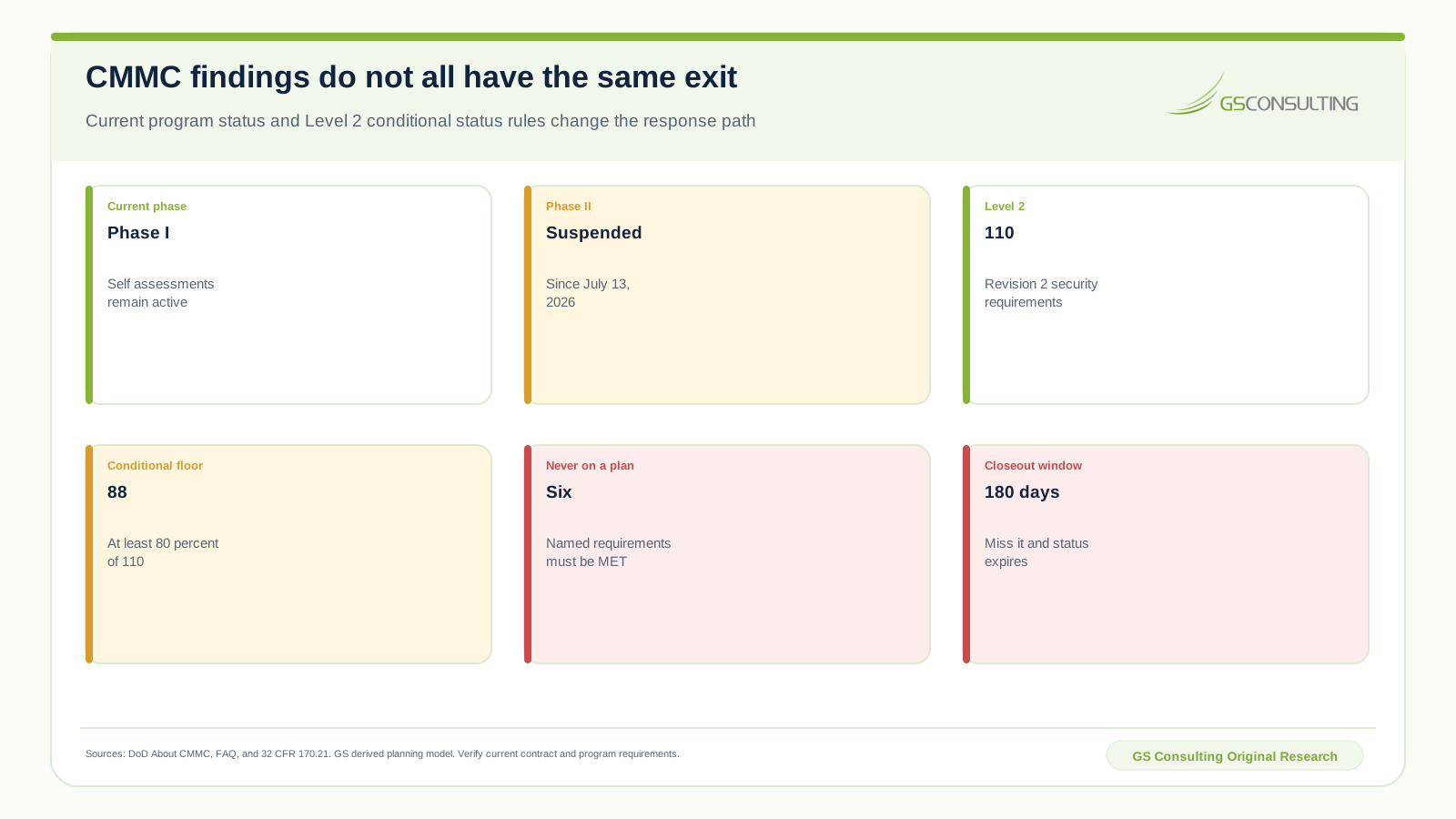
The DoD CMMC program page states that Phase II requirements were suspended on July 13, 2026, while Phase I self assessment requirements remain in place. Current DoD direction focuses Phase I enforcement on NIST SP 800-171 Revision 2 self assessments and selected government led assessments. A planned C3PAO certification date is therefore not a substitute for reading the live solicitation, award, and current program instruction.
The pause does not erase an applicable safeguarding clause. It does not make an inaccurate SPRS record acceptable. It does not excuse an affirmation that no longer matches the assessed system. During Phase I, a contractor should still correct known gaps, maintain a defensible scope and system security plan, update the required assessment record, and make only supportable claims.
The Cyber AB CMMC Assessment Process Version 2.0 remains useful procedural guidance for certification assessments. It describes finding recheck, evidence retention, quality review, appeal, and conditional closeout. It is subordinate to current DoD regulations and direction. Use it to design a durable evidence process, not to pretend that a suspended Phase II requirement is currently active.
Classify the Finding Before You Fix It
A useful finding record names the security requirement and every applicable objective that was not satisfied. It identifies whether the result came from examination, interview, testing, or a conflict among them. It identifies the affected assets, people, provider services, and evidence period. It also records the current status effect.
The status vocabulary matters:
| Condition | Meaning | Immediate response |
|---|---|---|
| MET | Adequate evidence supports every applicable objective for the requirement. | Retain the proof and monitor the control. Do not stop at the assessment date. |
| NOT MET | At least one applicable objective is not adequately satisfied. | Record the objective, method, evidence, consequence, owner, and correction path. |
| Not applicable | The requirement or objective does not apply to the assessed implementation under the approved scope and rationale. | Preserve the technical and scope basis. A label alone is not evidence. |
| No Score | The system security plan requirement is NOT MET, so a Level 2 score cannot be assigned. | Correct the plan and the implementation it describes before seeking a valid result. |
| No Status | The score is below 88 or another conditional status rule is not satisfied. | Close enough valid requirements to reach an allowed status path. |
| Conditional status | The official floor and plan restrictions are satisfied, but eligible items remain open. | Control every item to final closeout inside 180 days. |
Do not describe a status consequence from memory. The current regulation and FAQ control. A single finding can change the score, the plan eligibility, the assessment result, the affirmation, and the bid position. Put those effects in the record before the remediation meeting.
GS CMMC Finding Closure Priority Index
GS Consulting built a derived planning model to compare twelve common finding conditions. Each condition receives a one to five analyst rating for status consequence, time pressure, implementation breadth, evidence and retest load, and owner coordination. Base weights are 30, 20, 20, 15, and 15 percent. The weighted result is scaled from zero to 100.
The alternate model moves five points from status consequence to time pressure. The top four positions do not change. System security plan NOT MET and a score below 88 both score 94. Prohibited plan requirements and ineligible higher value requirements score 90. No score moves by more than one point, so the status first conclusion is stable under the stated sensitivity test.
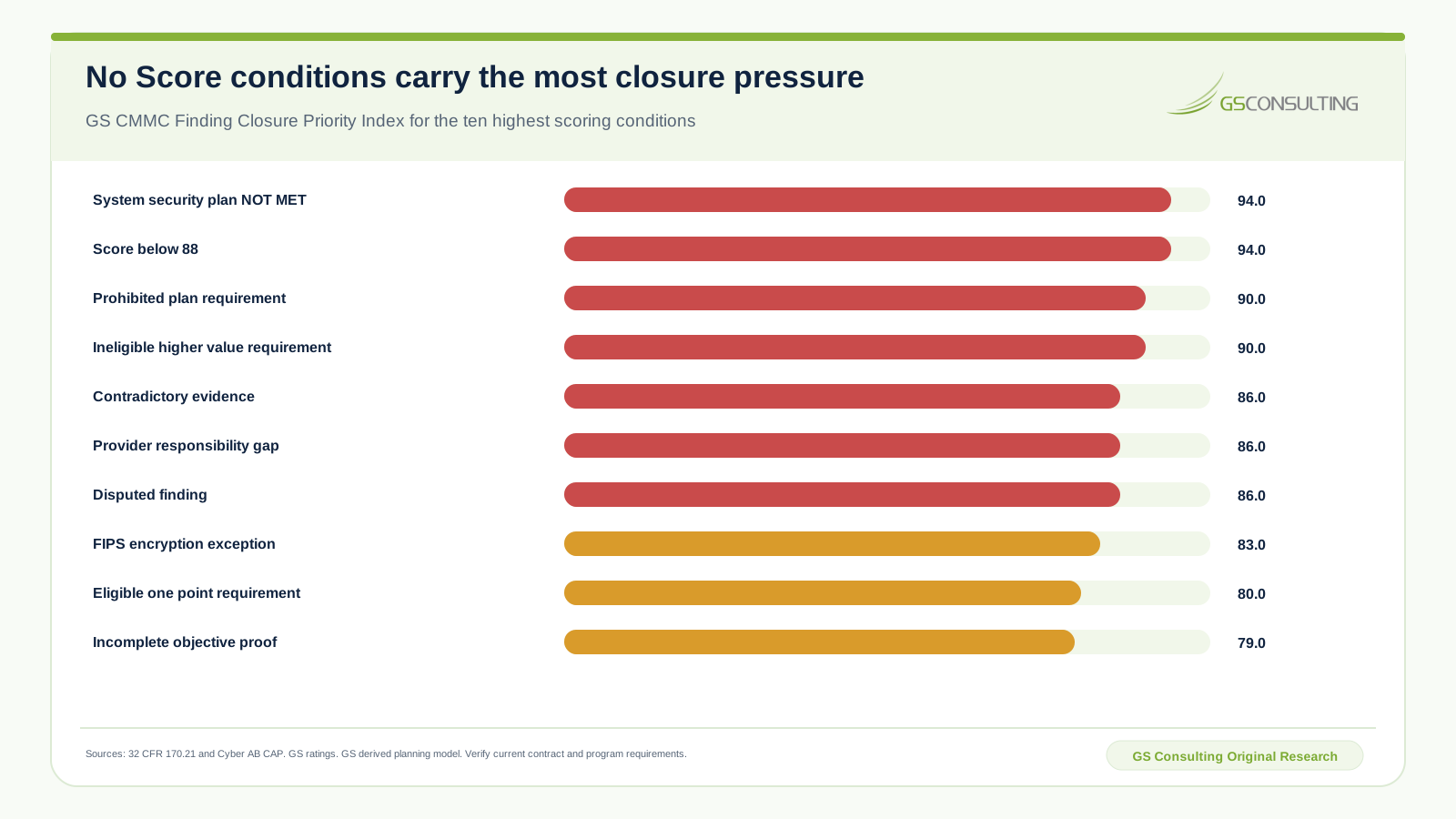
The model uses public rule facts as its frame, but the conditions, ratings, weights, and planning tiers are GS assumptions. It is a sequencing tool, not a status calculation. The complete source register, inputs, formulas, alternate weights, figure data, and workbook are in the article research package.
Use a Response Matrix, Not One Generic Backlog
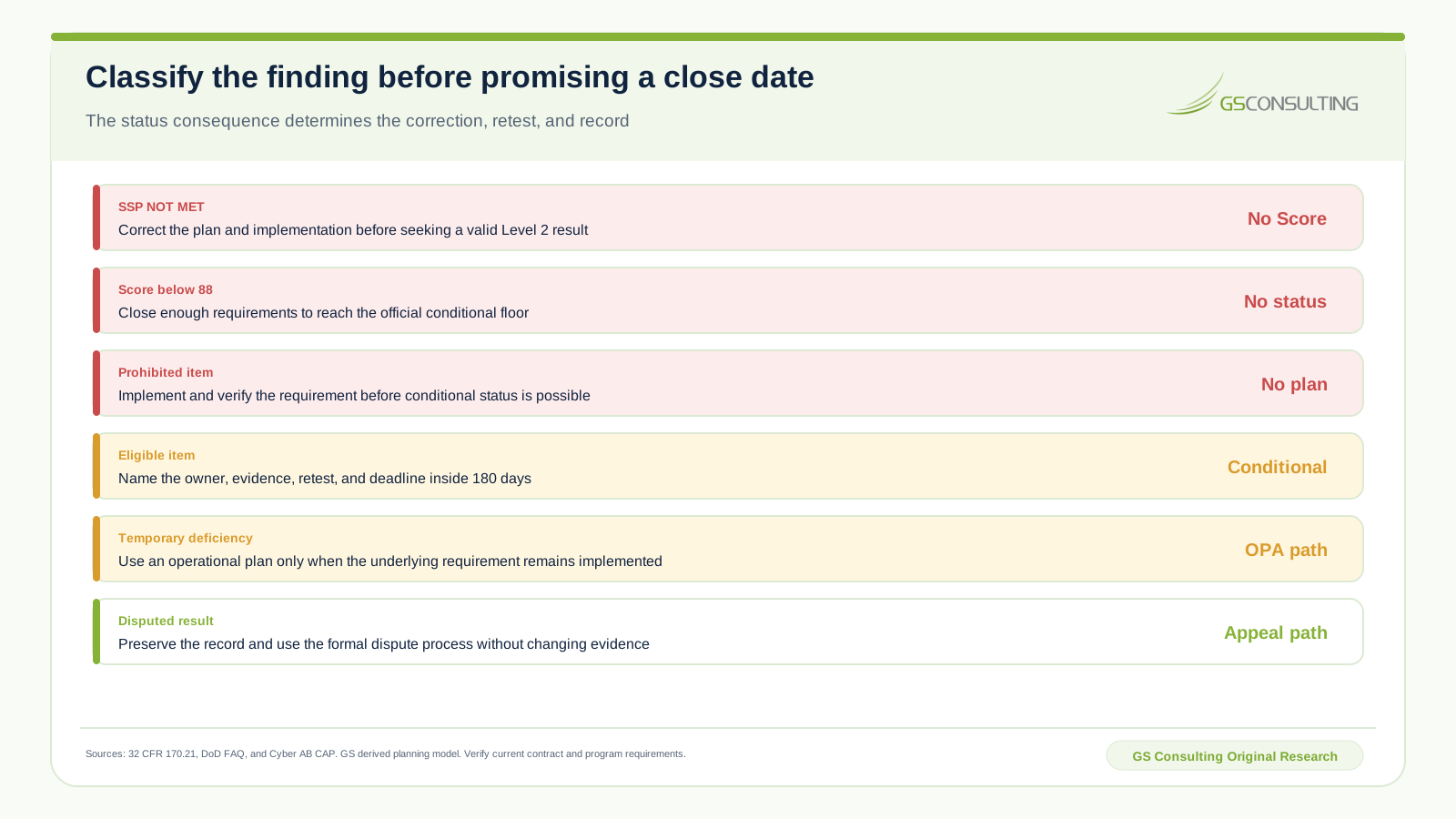
A finding caused by a missing system security plan is not merely a documentation task. The plan must describe the real assessed system, requirement implementation, scope, dependencies, and current status. If the underlying environment does not match, both the plan and the control need work.
A contradictory evidence finding needs a convergence test. Compare the written rule, approved procedure, current configuration, operating record, operator explanation, and live test. Mark the exact point where the stories diverge. The correction is complete only when the artifacts and the behavior agree.
A provider responsibility gap needs a service path review. Confirm what data and security protection information reaches the provider, which assets perform the work, who configures the service, who retains records, and who can participate in an assessment. The companion CMMC external service provider guide provides the full responsibility and evidence method.
Conditional Status Has Hard Edges
32 CFR 170.21 sets the Level 2 conditional rules. A score divided by 110 must be at least 0.8, which means at least 88 points. Level 1 does not allow a POA&M. For Level 2, requirements valued above one point are generally not allowed on the plan, except for the stated System and Communications Protection encryption case when encryption is used but not yet FIPS validated.
Six named requirements cannot be placed on a conditional plan:
| Requirement | Control subject | Planning rule |
|---|---|---|
| AC.L2 3.1.20 | External system connections | Must be MET |
| AC.L2 3.1.22 | CUI on publicly accessible systems | Must be MET |
| CA.L2 3.12.4 | System security plan | Must be MET |
| PE.L2 3.10.3 | Escort visitors and monitor activity | Must be MET |
| PE.L2 3.10.4 | Physical access audit logs | Must be MET |
| PE.L2 3.10.5 | Physical access devices | Must be MET |
The closeout period is 180 days from the conditional status date. The current DoD FAQ says one POA&M closeout can be finalized in eMASS during that period. If any required item remains NOT MET at the end, conditional status expires and a new assessment is needed for a new status. Your task tracker cannot extend the regulatory clock.
Close the Control in Five Stages
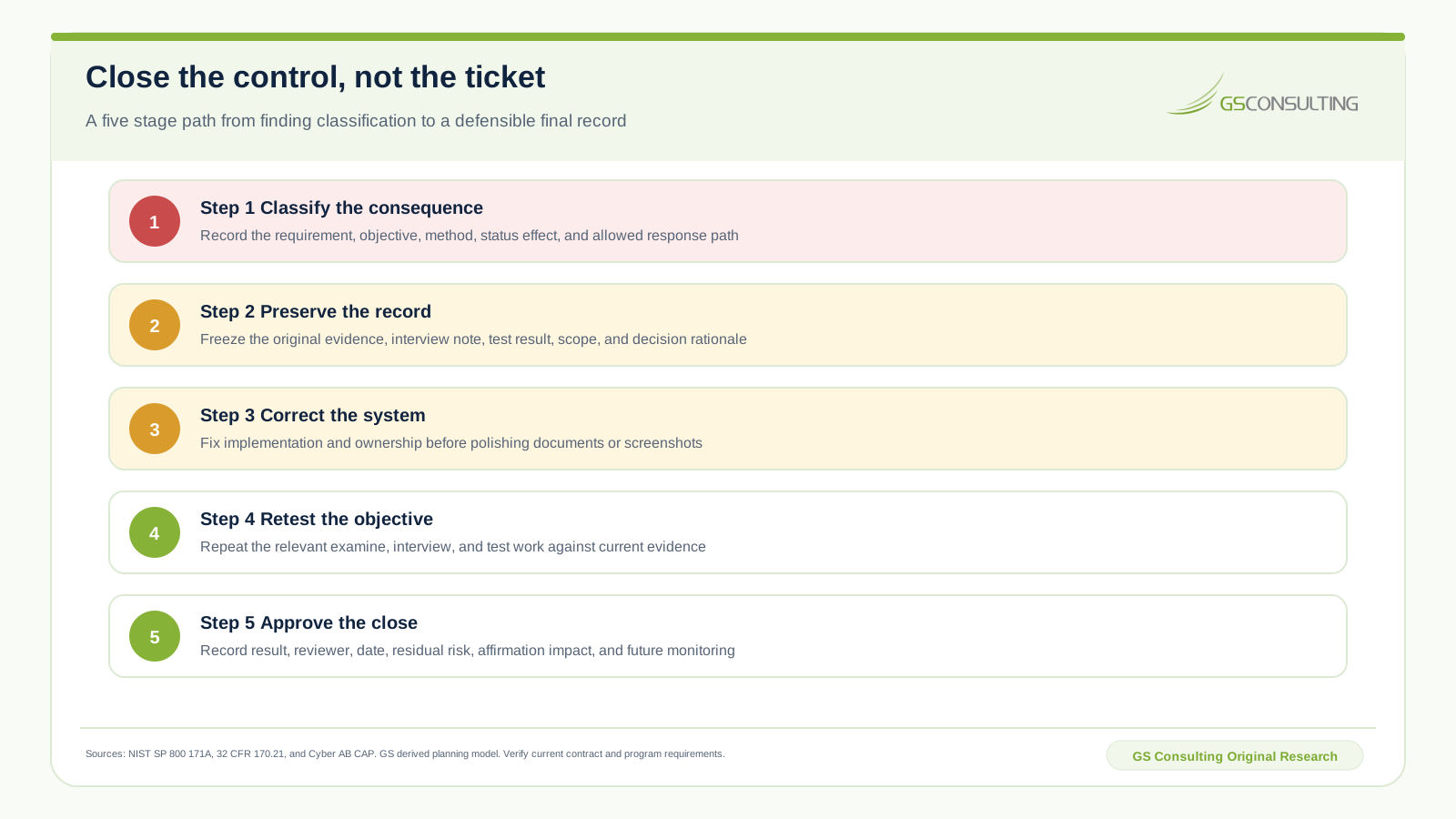
First, classify the consequence. Name the requirement, objective, method, result, score effect, plan eligibility, and deadline. Second, preserve the original record. A response team should never replace the evidence that produced the finding. Freeze it with the interview note, test output, scope, date, and decision rationale.
Third, correct the system. Find the control cause, not merely the presentation flaw. Was the configuration wrong? Was ownership missing? Did a change bypass review? Did the provider fail to supply its part? Did the operator follow a different procedure? Correct that cause before collecting the new evidence.
Fourth, retest the applicable objective. Fifth, approve the close. The approval should identify who accepted the retest, what status changed, which evidence supports that decision, whether an affirmation or SPRS update is needed, and which signal will reveal recurrence.
Retest With the Original Assessment Logic
NIST SP 800-171A Revision 2 and the DoD Level 2 Assessment Guide use three methods: examine, interview, and test. A good closeout repeats the methods relevant to the failed objective.
Examine current, approved material. That can include the system security plan, policy, procedure, configuration, record, ticket, log, contract, responsibility matrix, and review output. Interview the people who own and perform the activity. Test the actual mechanism under a controlled scenario. The three methods should describe the same control.
The Cyber AB process allows reevaluation of a NOT MET result during the active certification assessment and for ten business days after the active period. That window is not an invitation to build a missing program while the assessor waits. New evidence must be relevant, current, and adequate. The assessor and quality process still decide the result. With Phase II currently suspended, treat the procedure as a design standard for durable evidence and confirm whether it applies to the actual review in front of you.
Build One Closure Packet
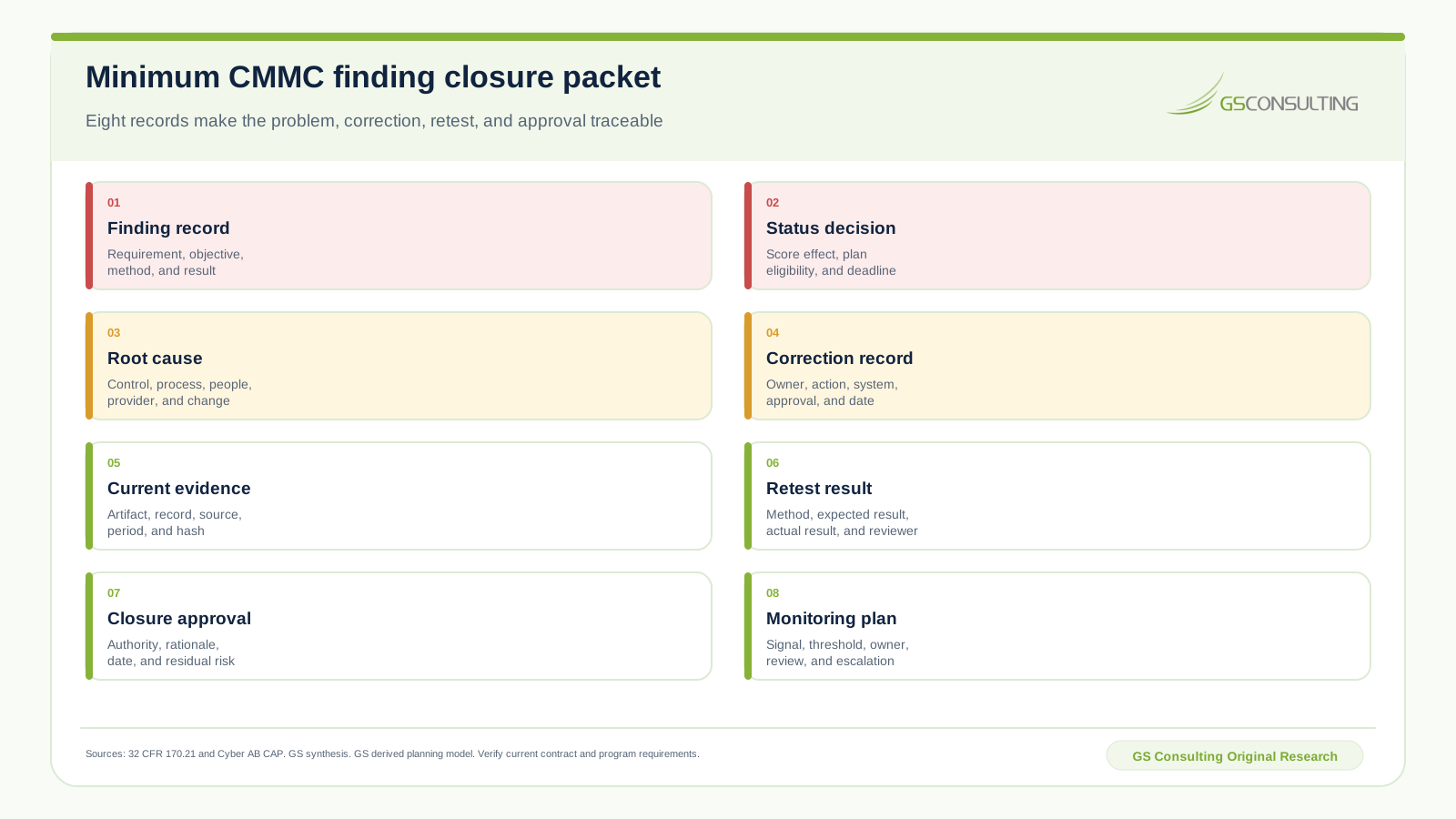
Use stable identifiers across the finding, correction, evidence, and retest. Record the artifact name, source system, owner, date, review period, and location. For a certification assessment package, the Cyber AB process calls for evidence retention of at least six years and a hash produced with a NIST approved algorithm. Confirm the current procedure and engagement instructions before transferring evidence.
Keep sensitive records inside an approved evidence path. Do not send CUI, credentials, configuration secrets, vulnerability detail, or security protection data through an ordinary collaboration channel because it is convenient. The closure process is part of the assessed security system.
The packet should be understandable without the task tracker. An independent reviewer should be able to answer four questions: what failed, why it failed, what changed, and what proves the current result.
Six Shortcuts That Do Not Close a Finding
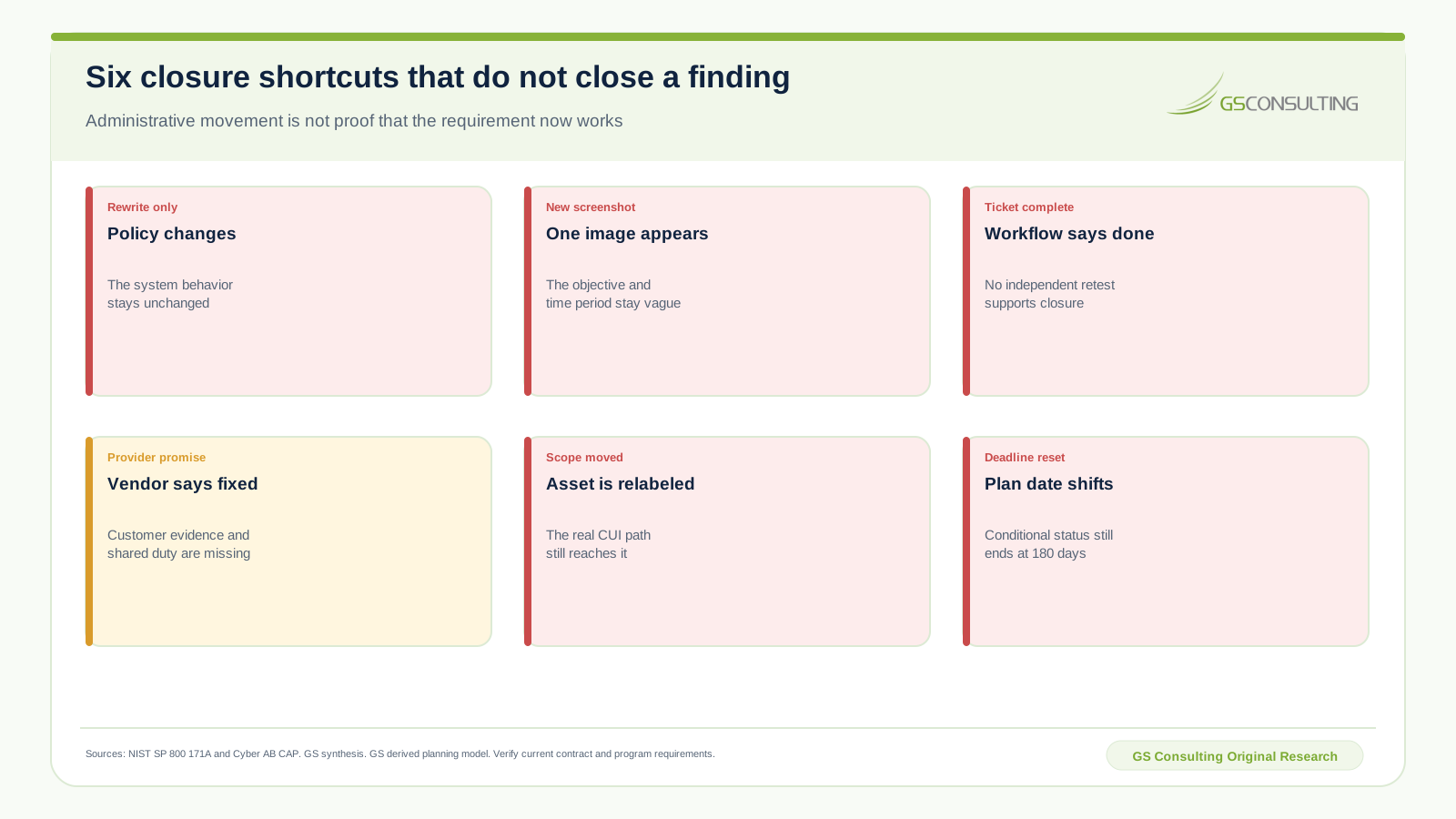
A policy rewrite can clarify intent, but it cannot prove operation. A screenshot can support one objective, but it cannot explain a review period or owner by itself. A complete ticket proves that a workflow moved, not that the control works. A provider statement does not replace shared responsibility evidence. Relabeling an asset does not remove it from scope while the same CUI path remains. Moving an internal due date does not extend the official closeout limit.
The most dangerous shortcut is quiet scope change. If the contractor removes an affected service, asset, user group, or connection from the assessed boundary during response, the new scope needs its own technical basis, diagram, inventory, data flow, system security plan update, and separation test. Scope is an engineering fact, not a remediation label.
A 30 Day Finding Response Plan
| Period | Operator action | Required output |
|---|---|---|
| Days 1 through 3 | Freeze the result and classify every status consequence. | Finding register, evidence hold, score effect, plan eligibility, official deadline |
| Days 4 through 7 | Confirm root cause, affected scope, owner, provider dependency, and correction test. | Cause record, scope impact, correction design, retest plan |
| Days 8 through 20 | Correct implementation and generate current operating evidence. | Approved change, configuration, procedure, records, operator readiness |
| Days 21 through 25 | Repeat the relevant examine, interview, and test methods. | Objective level retest result and reviewer record |
| Days 26 through 30 | Approve closure, update status records, and set recurrence monitoring. | Closure decision, affirmation or SPRS action, monitoring owner and threshold |
Thirty days is an operating target, not a regulatory promise. Some engineering corrections will take longer. If conditional status is involved, schedule backward from the official 180 day end date and leave time for retest, quality review, record finalization, and rejected evidence. Do not plan to finish on day 180.
Sources and Research Package
The GS model is built from official public sources checked on August 24, 2026:
- DoD About CMMC for current Phase I and Phase II status.
- DoD CMMC Frequently Asked Questions for status, closeout, and current implementation explanations.
- 32 CFR 170.21 for the score floor, prohibited plan items, and 180 day limit.
- Cyber AB CMMC Assessment Process Version 2.0 for the certification assessment procedure.
- NIST SP 800-171A Revision 2 and the DoD Level 2 Assessment Guide for assessment objectives and methods.
- CMMC final program rule for the federal regulatory record.
The research package includes the source register, public signals, model inputs, derived scores, sensitivity analysis, figure data, data dictionary, methodology, editable SVG figures, browser rendered PNG files, and a formula driven workbook. The GS CMMC Finding Closure Priority Index is a derived planning tool. It is not an official contract, legal, assessment, audit, certification, DoD, Cyber AB, NIST, or compliance determination.
CMMC Assessment Findings FAQ
What should a CMMC finding record contain?
Record the requirement, applicable objective, method, evidence, asset or service scope, assessor rationale, status effect, score effect, plan eligibility, owner, official date, correction, retest, and closure authority. Preserve the original evidence even after the result changes.
Can a policy update close a CMMC finding?
Only if the failed objective was limited to the policy artifact and the updated approved document now provides adequate evidence. Most control findings also require current operating records, knowledgeable interviews, or a repeatable test. Retest the objective instead of assuming the new document is enough.
Who closes a Level 2 conditional plan?
For a Level 2 self assessment, the organization seeking assessment performs the closeout self assessment. For a Level 2 certification assessment, a C3PAO performs the closeout assessment under the applicable process. Current Phase II timing is suspended, so confirm the live program and contract path.
What happens if the 180 day deadline is missed?
Conditional status expires. The current rule requires a new assessment to obtain a new CMMC status. An unfinished internal action, a revised project date, or evidence awaiting review does not preserve the expired status.
What is the operating standard?
Every CMMC finding gets one immutable source record, one explicit status path, one accountable correction owner, one objective level retest, and one approved closure packet. No retest, no close.