Cybersecurity | | 24 min read
CMMC Assessment Evidence Guide: What Assessors Need to See

Key Takeaways
CMMC evidence has to prove one operating story
Examine, interview, and test
The Level 2 guide uses all three methods. Final documents establish the rule, operators explain the work, and tests show whether the control performs in the assessed environment.
Access Control carries the largest load
Access Control scores 100 in the GS model because it combines 70 objectives with broad operator, test, evidence, and scope dependencies. Configuration Management follows at 80.1.
Index the proof, do not duplicate it
Keep authoritative records in the systems that create them. Use one objective crosswalk to show what each item proves, who owns it, and how the assessor can inspect or test it.
CMMC assessment evidence is not a screenshot archive. It is proof that the assessed system does what the contractor says it does.
A policy can state the rule. It cannot prove that accounts were reviewed, logs were retained, incidents were tested, media was controlled, or a security setting worked on the day of the assessment. A folder with thousands of files can still fail if nobody can connect those files to the assessment objectives.
The stronger approach is an evidence system. Every applicable objective has an implementation statement, an owner, final documents, current operating records, an interview path, and a test path. Those forms of proof agree. Exceptions are visible. Changes are controlled. An assessor does not have to guess what a screenshot means.
Start with scope, then map objectives, then collect evidence. Not the other way around.
The CMMC Compliance hub connects this guide to the full program. Use the CMMC Level 2 controls guide for the requirement structure, the NIST SP 800-171A assessment guide for method design, and the CMMC enclave architecture guide for boundary decisions. Use the CMMC Access Control evidence guide to turn all 22 family requirements into current source records and allowed and denied tests. Use the CMMC assessment interview preparation guide to connect respondents to proof and demonstrations. Use the CMMC evidence repository architecture guide to govern source links, integrity, access, and retrieval. When review exposes a gap, use the CMMC assessment findings guide to control correction and closure. When the proof depends on a provider, use the CMMC external service provider guide to map the service, shared duties, and evidence. GS Consulting supports this operating work through secure AI automation.
Make the implementation easy to prove.
GS Consulting helps contractors map assessment objectives, repair evidence gaps, rehearse interviews and tests, and build an evidence cycle that survives change.
Plan the Evidence ReviewCMMC Assessment Evidence: The Short Answer
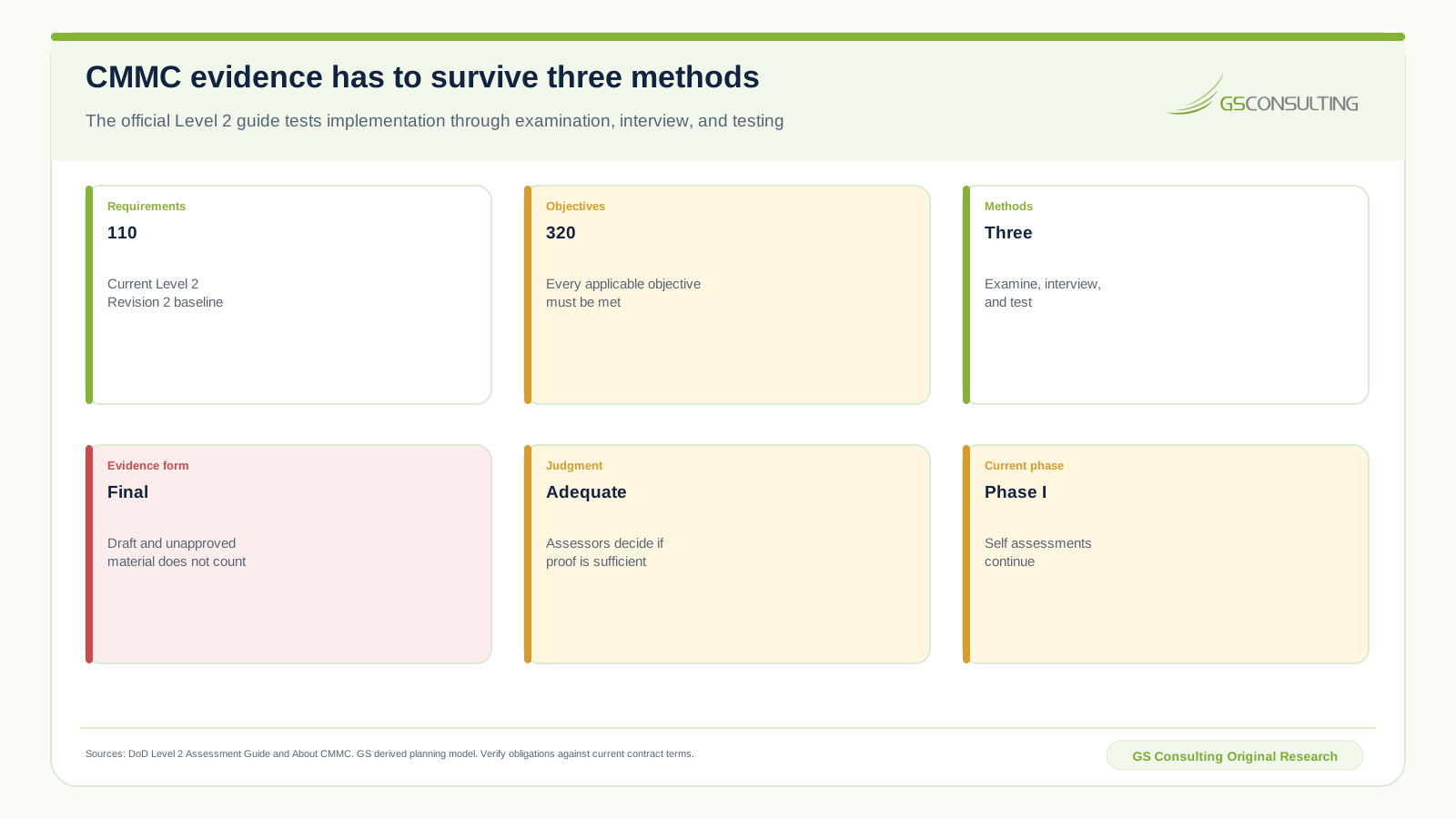
The current DoD CMMC Level 2 Assessment Guide, version 2.13, uses the 110 security requirements in NIST SP 800-171 Revision 2. GS counted 320 assessment objectives across the 14 requirement families in that guide.
For a requirement to be met, every applicable objective must be assessed as met or not applicable. One objective assessed as not met makes the requirement not met. That fact is why a control level folder is too blunt. Evidence must be traced to the objective level.
The guide uses three methods from NIST SP 800-171A: examine, interview, and test. The assessment team selects methods and evidence that it considers sufficient and adequate. The guide provides potential objects and methods, not a mandatory file list for every contractor.
Current timing needs equal care. As of August 5, 2026, the DoD CMMC program page says Phase II is suspended while Phase I self assessments continue. That does not erase a live contract requirement. Verify the solicitation, contract, subcontract, required level, assessment path, and current DoD direction before setting the schedule.
What Assessors Need to See
Assessors need evidence that supports a conclusion about the defined assessment scope. The exact evidence depends on how the contractor implements each requirement, but the quality tests stay consistent.
| Evidence quality | What it means | Weak example | Stronger example |
|---|---|---|---|
| Relevant | The item directly supports the objective | A generic security policy | An approved access review procedure plus the current review record |
| Final | The governing document is approved and in force | A draft with comments | An approved version with owner, date, and revision history |
| Current | The proof represents the assessed system and period | A screenshot from a retired tool | A current configuration export linked to the asset inventory |
| Traceable | The item has an owner, source, date, and objective link | An unlabeled image file | A named record with collection metadata and crosswalk reference |
| Consistent | Documents, interviews, and tests support one implementation | Policy says quarterly, operator says annual | Policy, calendar, records, and interview all show quarterly review |
| Repeatable | The control can perform again under observation | A claim that the setting exists | A test script with expected result, capture, and retest rule |
The official guide names common documents such as policies, processes, procedures, training material, plans, system diagrams, network diagrams, and data flow diagrams. That list is not prescriptive. A contractor can use other evidence when it proves the objective. The burden is to make the relevance clear.
Final form matters. A draft policy can describe future intent, but it cannot establish the current rule. An approved policy can still be weak evidence if the objective requires an operating record or technical behavior. Match the evidence to the claim being tested.
Build an Objective Evidence Map
The objective map is the control surface for the assessment. Do not make it a second document repository. Let source systems remain authoritative, then use the map to identify and retrieve the right proof.
One row per assessment objective should record:
- The requirement and assessment objective identifier.
- The implementation statement for the exact scope.
- The evidence item and its authoritative location.
- The examine, interview, and test methods that apply.
- The system, asset, provider, and operating period covered.
- The internal owner and the interview role.
- The reviewer, review date, status, exception, and retest date.
A single item can support several objectives. Reuse it by reference. Do not create five copies of the same approved procedure. Duplication creates version conflicts at the exact moment the team needs confidence.
The map also reveals false coverage. If the same policy file appears in every method column, the team probably has written intent but no current operating proof. If a technical control has no operator who can explain it, the responsibility model is incomplete.
GS CMMC Evidence Coordination Load Index
GS Consulting built a derived planning model across the 14 Level 2 requirement families. The public signal is the official assessment objective count in the DoD guide. The model adds four one to five analyst ratings for method convergence, operator spread, recurring proof demand, and scope dependency.
The base model weights objective count at 40 percent, method convergence at 20 percent, operator spread and recurring proof at 15 percent each, and scope dependency at 10 percent. The objective count is divided by 70, the largest family count, to put it on the same one to five scale. Alternate weights shift five points from objective count to recurring proof.
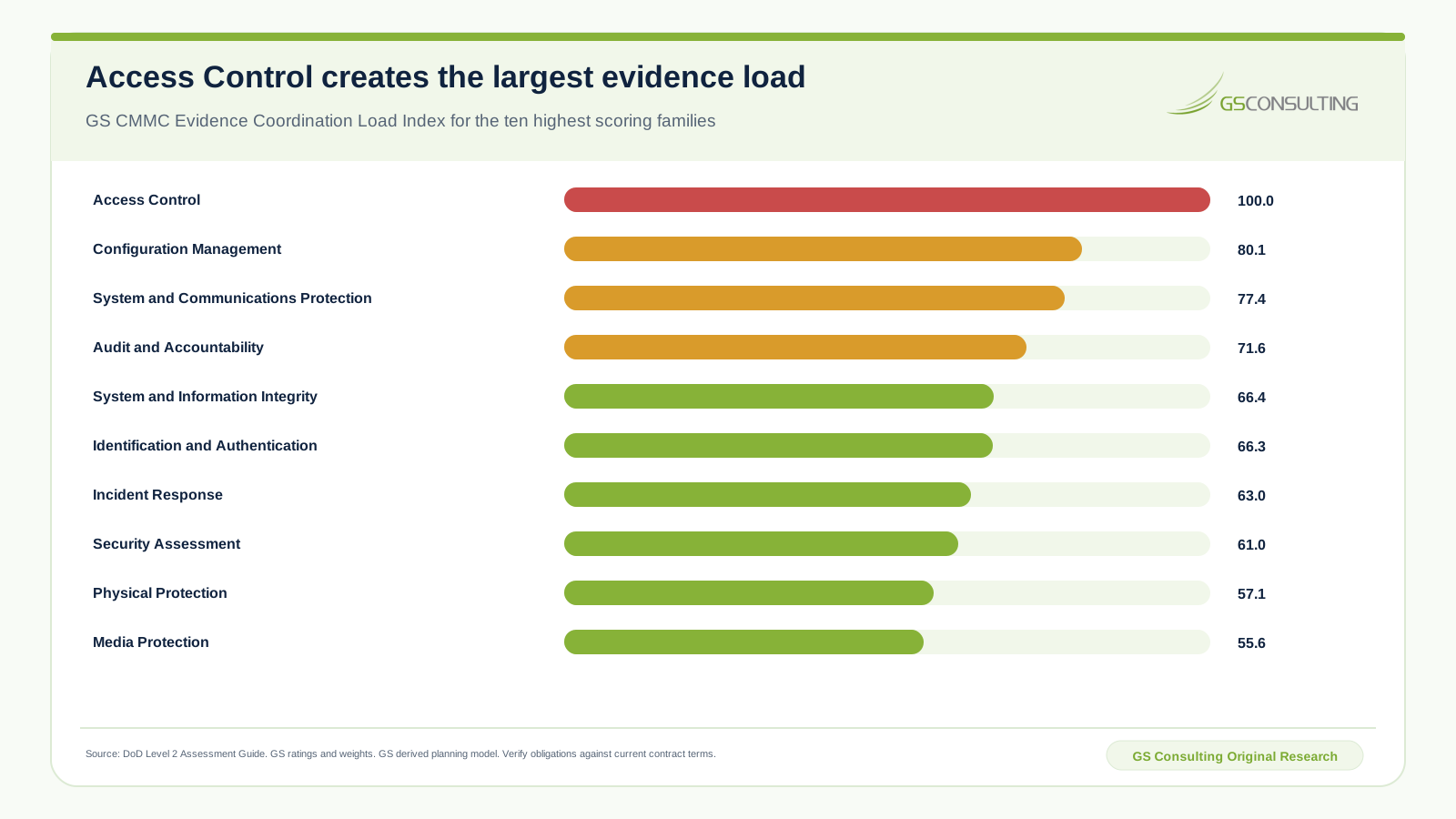
Access Control scores 100.0. Configuration Management scores 80.1. System and Communications Protection scores 77.4. Audit and Accountability scores 71.6. System and Information Integrity and Identification and Authentication form the next pair at 66.4 and 66.3.
The ranking does not measure control importance or predict an assessment result. It estimates the coordination work needed to align artifacts, operators, recurring records, tests, and scope. A single failed objective in a lower scoring family can still create a serious finding.
The alternate weights preserve the first three positions. The largest score movement is four points. That sensitivity check supports the same practical sequence: begin with access, configuration, communications protection, audit, and identity dependencies, then use the objective map to pull the remaining families into the evidence cycle.
This is a GS Consulting derived planning model, not a DoD or NIST benchmark. The workbook, source register, ratings, formulas, sensitivity case, and figure data are preserved in the article research package.
Make Examine, Interview, and Test Agree
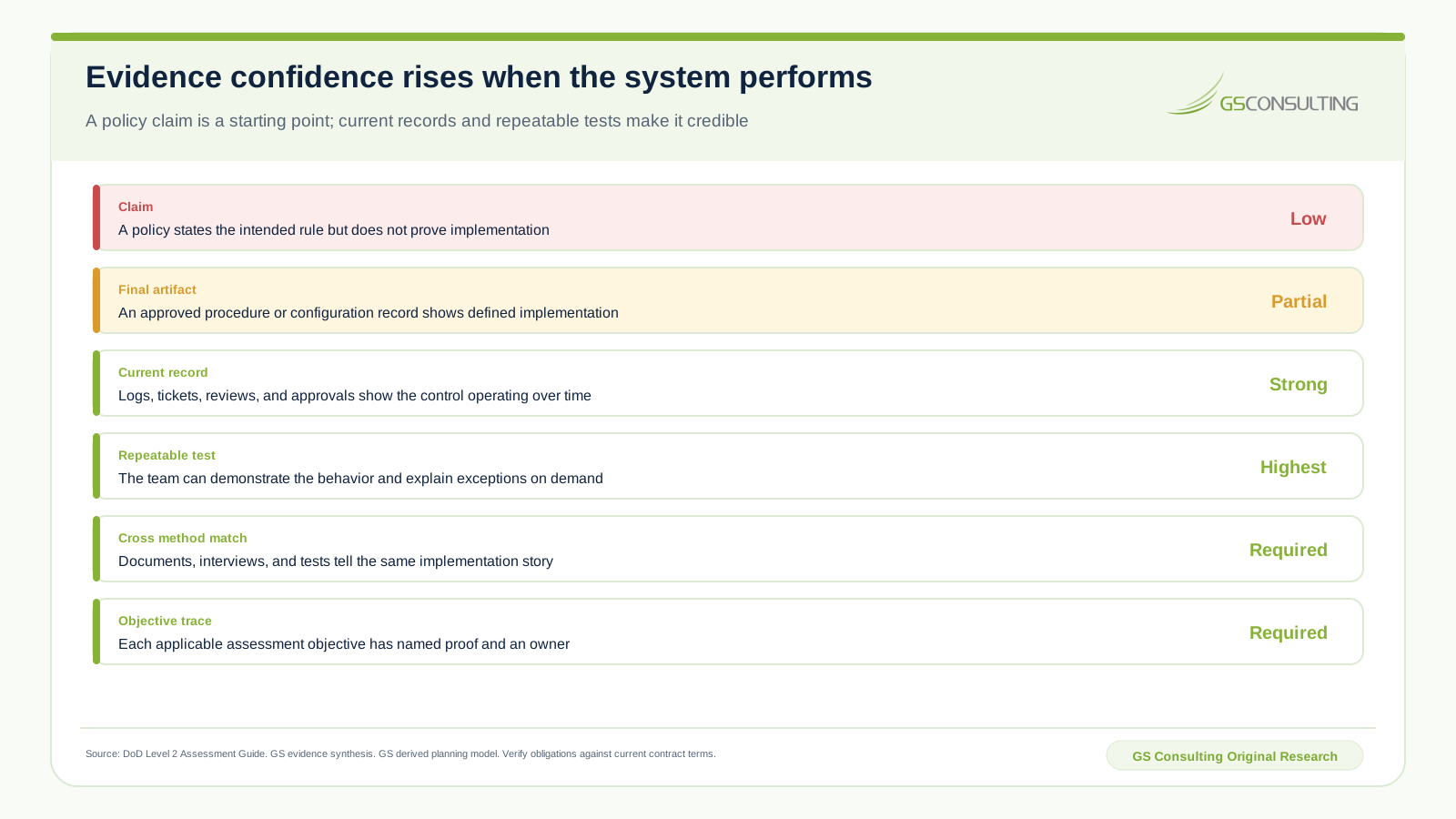
Examine reviews specifications, mechanisms, and activities through documents, configurations, records, diagrams, and other observable material. Prepare the authoritative item, not a presentation that paraphrases it.
Interview asks people to explain roles, decisions, actions, exceptions, and actual practice. Choose the person who performs or owns the work. A polished executive answer is not a substitute for an operator who can explain the process.
Test exercises a mechanism or activity and compares the actual result to the expected result. The DoD guide indicates that most objectives will require testing. Build scripts that define the setup, action, expected result, evidence capture, cleanup, and retest rule.
Rehearsal should look for disagreement, not train people to recite language. Ask the operator to show the task. Compare the result with the procedure and the current record. If the three methods diverge, fix the implementation or the document before assessment.
Stage Evidence by Family Dependency
Access Control: prove account authorization, privilege, remote access, session behavior, information flow, and restrictions across the actual user and device population. Static settings are only part of the record. Include approvals, reviews, exceptions, and tests.
Configuration Management: connect the approved baseline to deployed settings, change records, security impact review, inventory, and drift response. A baseline that cannot be compared with the environment is a document, not a control.
System and Communications Protection: show the real boundary, traffic paths, encryption decisions, interfaces, session controls, and provider components. Network and data flow diagrams must agree with the asset inventory and test path.
Audit and Accountability: define what is logged, who reviews it, how long it remains available, what creates an alert, how time stays consistent, and what happens when collection fails. Preserve samples across a representative period.
Identification and Authentication: connect identity source, account type, authenticator, multifactor behavior, device path, privileged access, lifecycle events, and test results. Provider capability does not prove customer configuration.
Use the CMMC POA&M guide before treating an evidence gap as deferrable. Current program rules restrict which items can remain open and how quickly eligible work must close.
A Five Stage CMMC Evidence Path
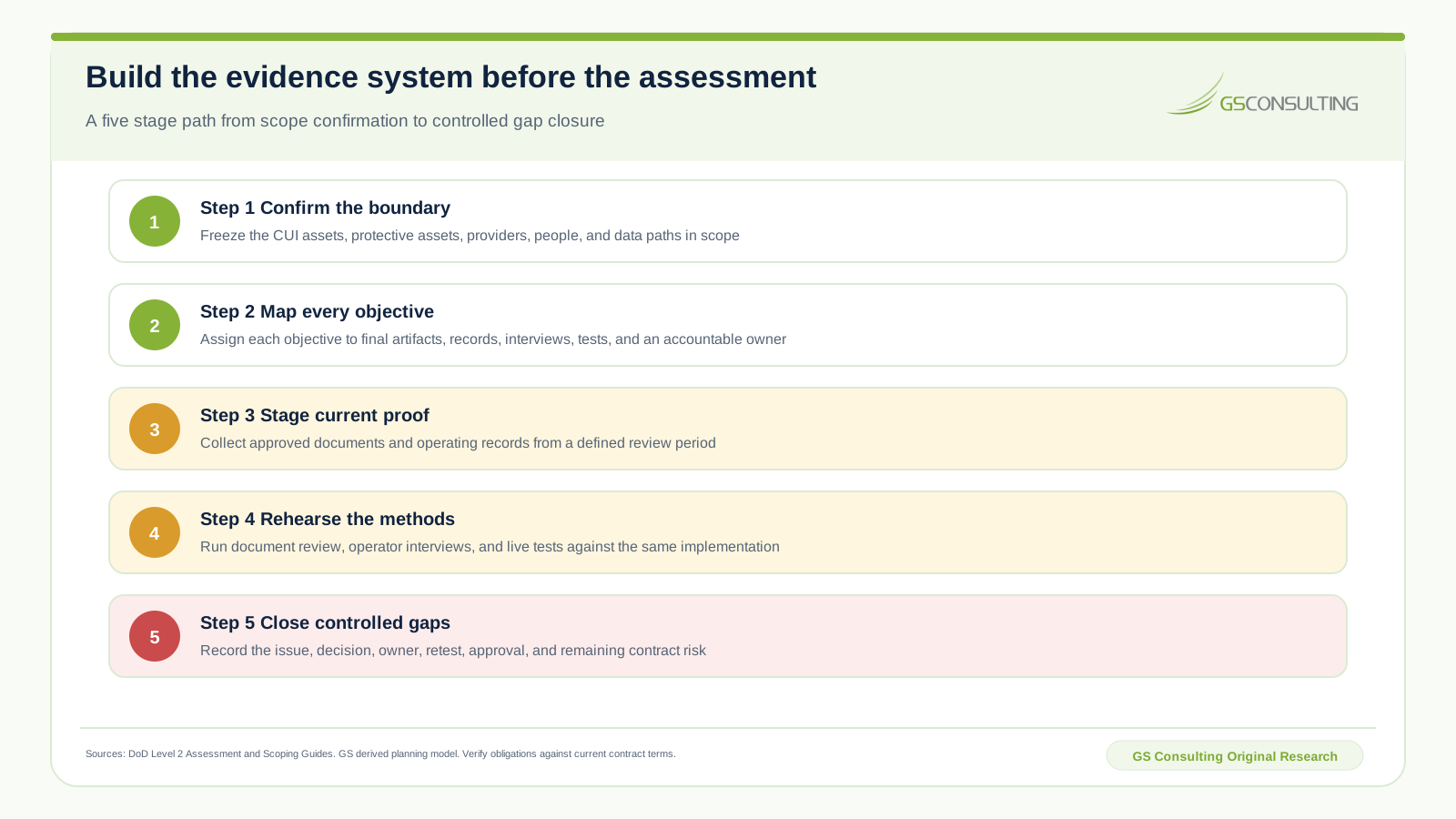
- Confirm the boundary. Reconcile CUI assets, security protection assets, risk managed assets, specialized assets, providers, people, and data paths across the inventory, diagrams, and system security plan.
- Map every objective. Assign implementation, proof, method, system, period, owner, interview role, and test path. Mark a true gap instead of attaching a weak file.
- Stage current proof. Approve governing documents and collect operating records from a defined period. Preserve source metadata and avoid uncontrolled copies.
- Rehearse the methods. Review documents, interview operators, and run tests against the same objective and scope. Record disagreement and repair the root cause.
- Close controlled gaps. Record the issue, score effect, eligibility, owner, decision, action, date, retest, approval, and remaining contract risk.
Use a review cadence that matches the control. Some proof changes on every event, some monthly, some quarterly, and some only when the system or contract changes. One collection date for all evidence is a warning sign.
Six CMMC Evidence Failures
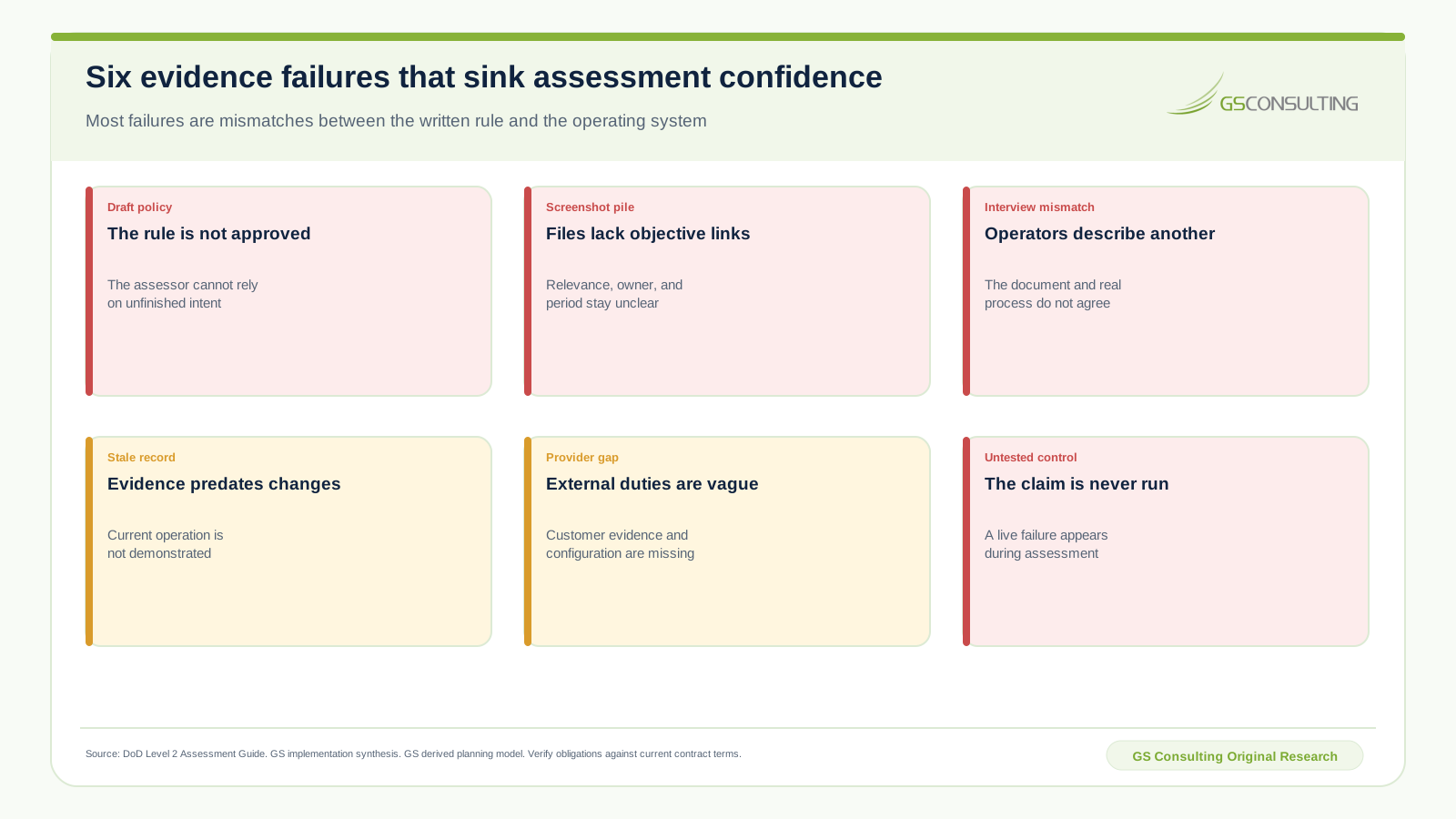
Draft policy: the document describes intent but has not been approved or put into force.
Screenshot pile: files lack the objective, source system, date, owner, period, and reason they matter.
Interview mismatch: the operator describes a process that conflicts with the procedure or cannot show the actual task.
Stale record: the evidence predates a material system, provider, user, or configuration change.
Provider gap: the service performs part of the control, but customer configuration, responsibility, logs, retention, or assessment support remain undefined.
Untested control: the team relies on a setting or claim that fails when exercised in the assessed path.
A Practical 45 Day Evidence Plan
Days 1 through 7: confirm assessment type and dates, freeze the working scope, reconcile the inventory and diagrams, load all 320 objectives into the crosswalk, and assign family owners.
Days 8 through 18: map final documents and current operating records. Flag missing approval, stale records, unclear periods, provider gaps, and evidence that does not point to a specific objective.
Days 19 through 28: build the interview roster and test scripts. Run focused rehearsals for access, configuration, communications protection, audit, identity, and the boundary.
Days 29 through 38: fix implementation and evidence gaps. Update documents only when the operating process actually changed. Preserve decisions, exceptions, test results, and approvals.
Days 39 through 45: run a sample assessment across every family, review the evidence index, confirm retrieval access, close duplicate or conflicting files, and produce an honest readiness decision.
Forty five days is a review sequence, not a promise that a weak system can become ready in six weeks. Significant technical, provider, staffing, or scope changes need the time required to implement and operate.
The Minimum CMMC Assessment Evidence Packet
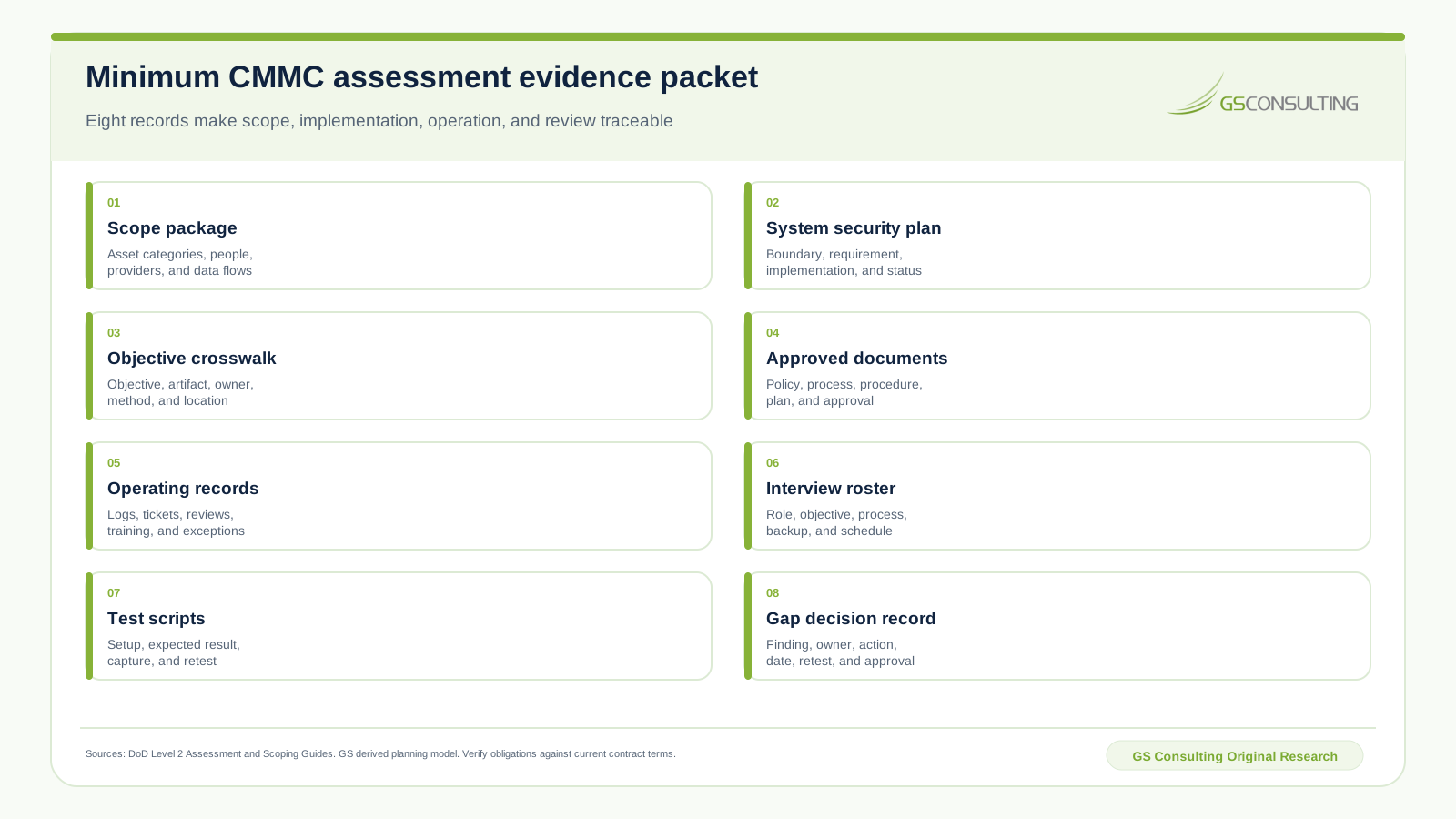
- Scope package: asset categories, users, providers, locations, network boundary, CUI stores, and data flows.
- System security plan: current scope, implementation statements, dependencies, status, and document control.
- Objective crosswalk: every applicable objective linked to evidence, methods, owners, systems, periods, and review status.
- Approved documents: final policies, processes, procedures, plans, diagrams, training material, and approval records.
- Operating records: logs, tickets, reviews, approvals, training completions, incidents, exceptions, changes, and maintenance history.
- Interview roster: roles, objectives, process ownership, backup contacts, and assessment schedule.
- Test scripts: setup, action, expected result, capture, cleanup, exception handling, and retest record.
- Gap decision record: finding, requirement, score effect, eligibility, action, owner, date, retest, approval, and contract consequence.
The decisive standard is simple: every applicable objective has final, current, traceable proof, and the people and system can reproduce the same story under examination, interview, and test.
Frequently Asked Questions
What counts as CMMC assessment evidence?
Approved documents, configurations, diagrams, logs, tickets, reviews, training records, interviews, and test results can all count when they are relevant, current, traceable, and sufficient for the objective.
How much evidence is needed for CMMC Level 2?
There is no fixed file count. The assessment team selects enough evidence to reach a sufficient and adequate conclusion for the objectives and scope.
Can screenshots be used?
Yes, as supporting evidence. Add the source, date, system, owner, configuration context, objective link, and related operating record or test.
Can draft policies be used?
Draft or unapproved documents do not satisfy the guide's final form expectation. Approval still needs operating proof when the objective tests behavior.
What if one objective is not met?
The requirement is not met when one applicable objective is not met. Current scoring and conditional status rules then determine the program consequence.
How should the evidence be organized?
Use one objective crosswalk that points to authoritative source records. Avoid copying the same artifact into many folders.
Build proof that survives the room.
GS Consulting helps teams turn the objective list into an operating evidence system with clear owners, reliable records, tested controls, and visible decisions.
Review CMMC Evidence