AI Workflow Automation | | 24 min read
Automating DevSecOps Pipelines with AI

Key Takeaways
AI should improve the release decision, not become the release authority.
Context Beats Alert Volume
Use AI to connect scanner results to exposure, reachability, data, ownership, and release impact.
Evidence Runs with Delivery
Capture reviews, dispositions, approvals, artifact identity, and deployment proof as the pipeline runs.
Humans Retain Authority
Keep merge, exception, infrastructure, and production release decisions with accountable reviewers.
Most software security problems do not start in production. They start in the pipeline.
A developer pushes code. A build runs. Tests pass. A scanner fires. A ticket gets created. Nobody owns it. The release deadline is close. The finding looks noisy. The exception process is vague. The compliance evidence is missing. Security gets pulled in late. Engineering says security is blocking delivery. Security says engineering ignored the process.
Everyone is partly right. That is why automating DevSecOps pipelines with AI matters. Not because AI writes better code than your engineers. Not because a model can certify an application. It matters because secure delivery contains too many repetitive checks, review steps, evidence requirements, and handoffs that still depend on people remembering what to do at the worst possible time.
For GovCon software teams, this is a contract, compliance, delivery, and customer trust issue. If software supports federal missions, processes CUI, integrates with government systems, or sits inside a CMMC boundary, the pipeline cannot be treated like an internal developer convenience. The pipeline is part of the control environment.
Need a controlled AI DevSecOps workflow?
GS Consulting helps GovCon and regulated software teams map release controls, secure pipeline integrations, automate evidence, and design accountable AI assistance.
Request a DevSecOps Automation AssessmentThis guide supports the DevSecOps insights hub. Start with the DevSecOps definition, pipeline, and operating model, then use the DevSecOps metrics guide to measure secure delivery and the software bill of materials guide to control component evidence. The DoD DevSecOps reference design guide separates the expired 2021 Kubernetes pattern from the current Fundamentals and cATO evidence model. It also connects directly to AI cybersecurity incident response workflows, secure API development for AI automation, AI audit trails and activity logging, and automated NIST SP 800 171 evidence.
The Bad Assumption: DevSecOps Means Adding More Scanners
Many organizations think DevSecOps means buying scanners and putting them in CI/CD. Static analysis, dependency scanning, container scanning, secret scanning, infrastructure checks, license checks, and code quality tools all belong in a serious pipeline.
But adding scanners is not the same as building a secure pipeline. A scanner can find a problem. It does not decide who owns it, whether it is exploitable in your environment, whether a compensating control exists, whether an exception was approved, or whether the same issue has been ignored for six releases.
The goal is not more alerts. The goal is better decisions inside the delivery path.
Why GovCon DevSecOps Is Different
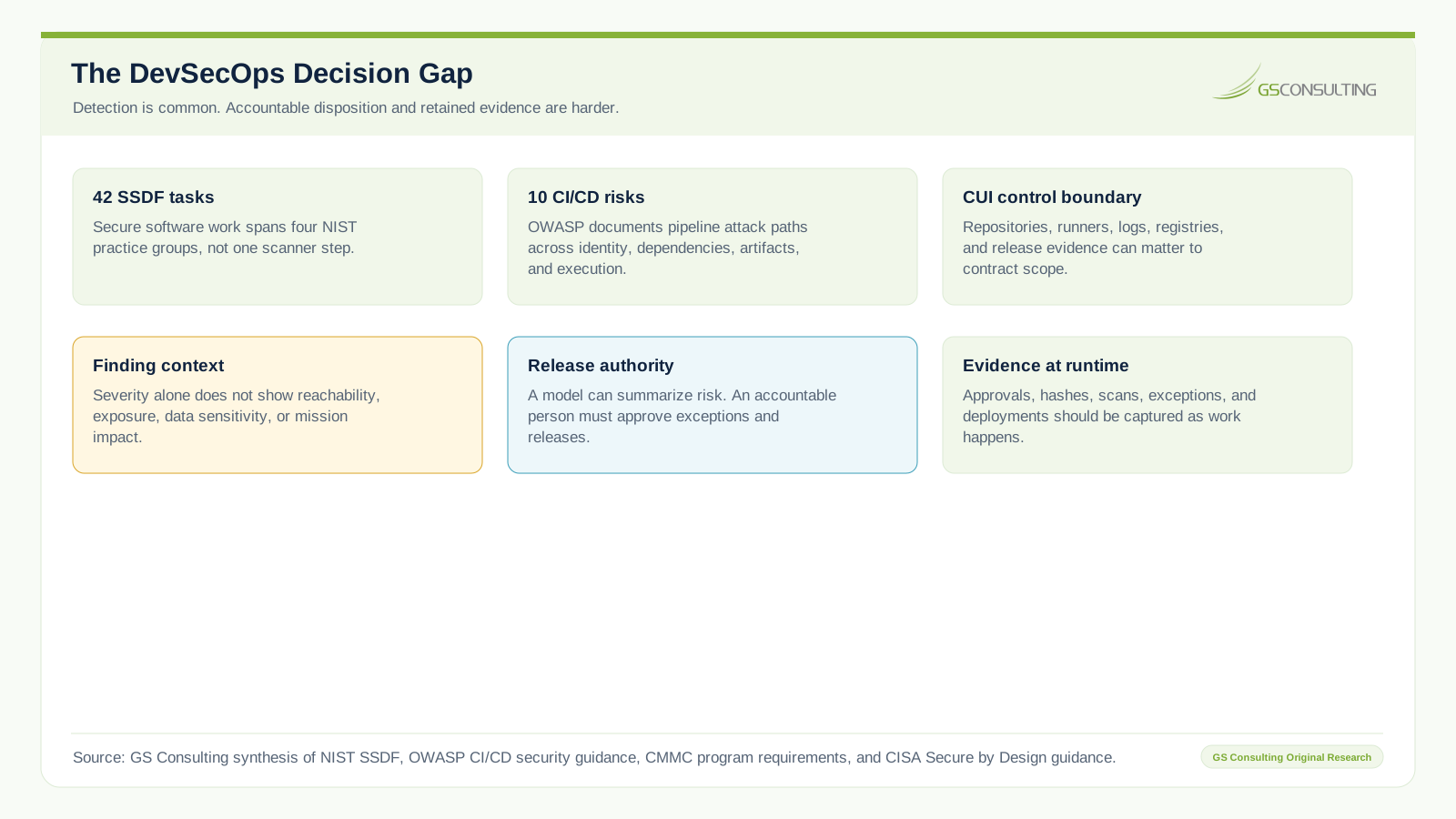
A normal software team already faces pressure to ship faster, fix defects, keep systems stable, and reduce security risk. A GovCon team also deals with contract requirements, federal customer expectations, CUI handling, NIST controls, CMMC requirements, secure software attestations, change approvals, subcontractor code, deployment boundaries, and mission impact.
The CMMC Program is designed to ensure defense contractors safeguard Federal Contract Information and Controlled Unclassified Information. Repositories, CI/CD platforms, artifact stores, registries, build runners, secrets managers, test data, deployment scripts, and release approvals can all matter when they build, test, deploy, or protect software inside that environment.
Secure software development already has a framework. NIST SP 800 218, the Secure Software Development Framework, provides practices that can be integrated into different software development life cycle models. NIST makes the central point clear: many life cycle models do not address software security in enough detail, so secure practices must be added deliberately.
Security does not appear because the team uses Agile, owns a CI/CD tool, or runs a scanner. It appears when the process is designed to prevent vulnerable code, detect issues early, protect artifacts, document decisions, control exceptions, retain evidence, and feed lessons back into engineering.
Where AI Actually Helps in DevSecOps
AI is useful when it reduces repetitive analysis and helps engineers act faster. Strong use cases include summarizing code changes, explaining findings, grouping duplicate vulnerabilities, drafting remediation guidance, checking pull requests against secure coding rules, reviewing infrastructure templates, generating test ideas, mapping findings to control evidence, summarizing release risk, and preparing change approval packets.
An engineer should not spend half an hour reading scanner output just to understand whether a finding applies. A security engineer should not rewrite the same remediation note fifty times. A release manager should not build compliance evidence by hand after deployment. AI can reduce that drag when its output is tied to source evidence, pipeline state, human review, and approval rules.
AI should not approve production releases, mark vulnerabilities as false positives without review, silently change regulated code, modify infrastructure without approval, suppress scanner rules, decide that a compliance requirement is satisfied, or merge a pull request because its summary sounds reasonable.
The model assists. The workflow controls. The accountable person decides.
The Pipeline Is the Control Surface
The CI/CD pipeline touches source code, secrets, build artifacts, container images, deployment keys, infrastructure scripts, test data, production credentials, release approvals, security findings, and evidence records. OWASP created its Top 10 CI/CD Security Risks project to help defenders focus on attack paths and real breaches involving delivery systems.
A compromised pipeline can be worse than a compromised application server because an attacker may influence what gets built and deployed. Adding AI to that pipeline requires more discipline, not less.
The First Rule: Limit Repository and Tool Access
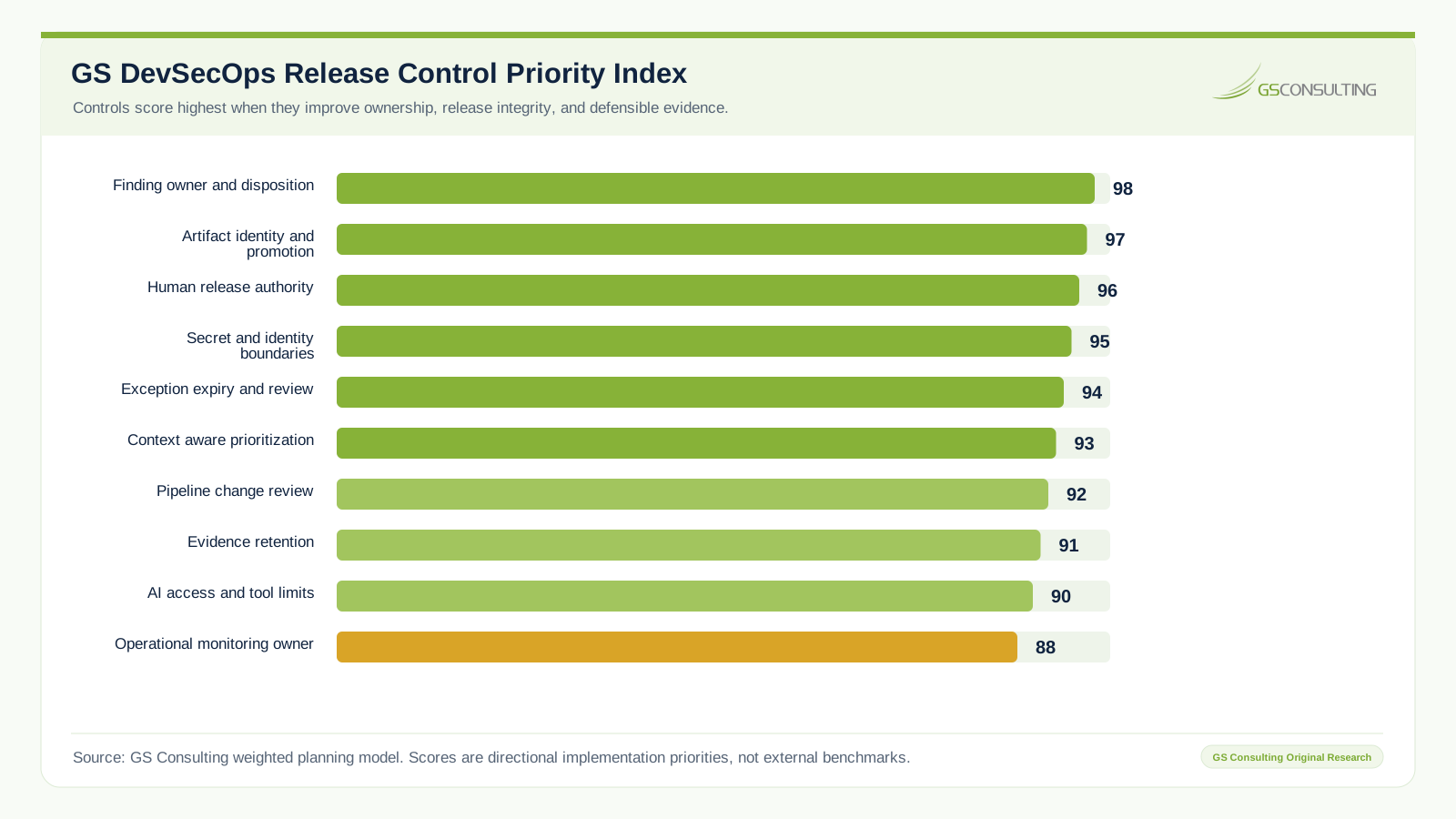
A common mistake is giving an AI tool broad access to every repository, branch, commit, issue, build log, and internal document. The model rarely needs the entire software estate to comment on one pull request.
Scope access to approved repositories, selected branches, pull request diffs where possible, and only the metadata required for review. Exclude secrets and unrelated projects. Define whether code can be retained or used for vendor training. Log repository access. Treat customer restricted repositories as a separate approval decision.
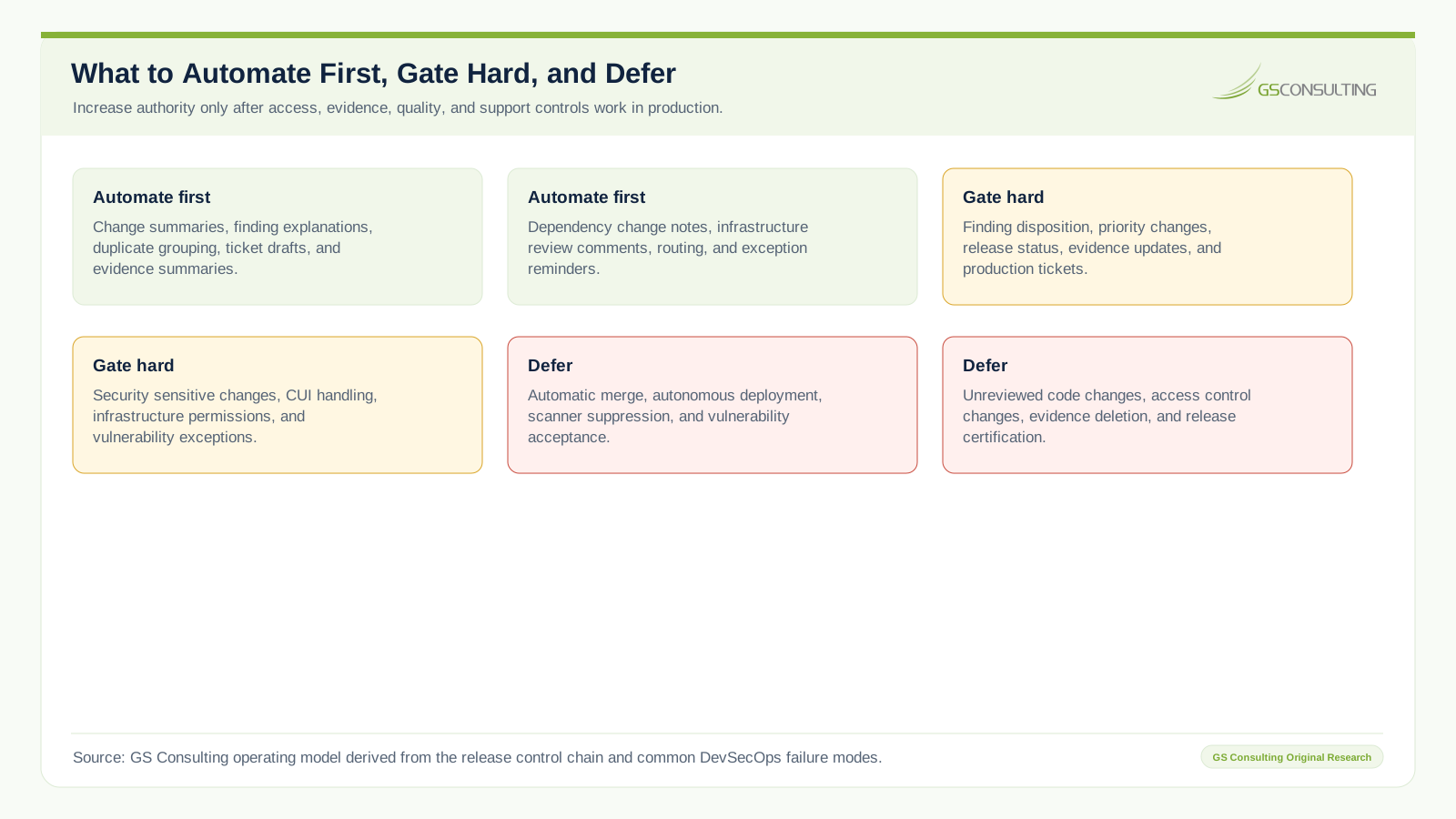
The same discipline applies to tools. Low risk actions can read a diff, read a scan result, create a draft review comment, summarize release evidence, or recommend a reviewer. Actions that create production tickets, change priority, update release status, or close a finding require approval. Merge, deploy, access control modification, scanner suppression, and evidence deletion should not be exposed early.
A model with powerful tools is not merely a helper. It is an operator. Design its identity, permissions, logs, approval tokens, time limits, and emergency revocation accordingly. The deeper API control pattern is covered in Secure API Development for AI Automation.
Automate Code Review Without Replacing Engineers
AI review is valuable when the target is specific. It can look for input validation, authorization gaps, unsafe error handling, secret exposure, sensitive logging, dangerous defaults, weak tests, unusual permission changes, and risky data flows.
A weak comment says, “This code may have security issues.” A useful comment says, “This endpoint checks authentication but does not verify whether the current user owns the requested object before returning the record. Add object level authorization before returning data.” Engineers need source referenced, actionable comments, not vague warnings on every pull request.
Review should include data handling. Ask whether the change reads, stores, transmits, logs, exports, or changes access to CUI or other sensitive fields. A small logging change can create a compliance problem. A new queue can create a storage location. A new API response can expose information when object authorization is missing.
Automated Code Vulnerability Scanning Needs Context
Scanner severity is an input, not the full decision. A critical issue in an unused internal library may be less urgent than a high severity issue in an exposed service handling sensitive data.
Use a defined risk model that considers severity, exploitability, reachability, asset criticality, internet exposure, authentication, active exploitation, data sensitivity, deployment environment, compensating controls, CUI or FCI impact, contract impact, fix complexity, ownership, and prior exceptions.
AI can collect and summarize those factors. Security leadership must define the rule set. Do not let the model invent a new risk model for every finding.
False positive decisions still need a record: why the result is not applicable, who reviewed it, which evidence supports the decision, whether it applies to one instance or a pattern, and when it should be reviewed again. That history stops the same alert from consuming time every week.
Protect Secrets, Logs, Dependencies, and Artifacts
Pipelines are full of API keys, signing keys, cloud credentials, database passwords, deployment tokens, registry tokens, and service account credentials. AI should not casually see them. Filter and mask inputs before model processing, and never repeat a detected secret inside a chat response, ticket, or log.
Build logs can expose environment variables, file paths, internal service names, repository names, test data, tokens, and architecture clues. Define which log fields can be sent, where they are processed, and how long prompts and outputs are retained.
AI can summarize new packages, licenses, vulnerabilities, transitive dependencies, maintenance health, and upgrade impact, but software composition analysis and dependency policy remain the enforcement layer.
Artifact integrity closes the loop. If an artifact can change after scanning, the scan record is weak. If deployment uses a different artifact from the one approved, the approval is meaningless. Preserve hashes, signatures, promotion paths, registry records, and the identity of the artifact that actually reached the target.
Secure Software Needs Evidence as It Runs
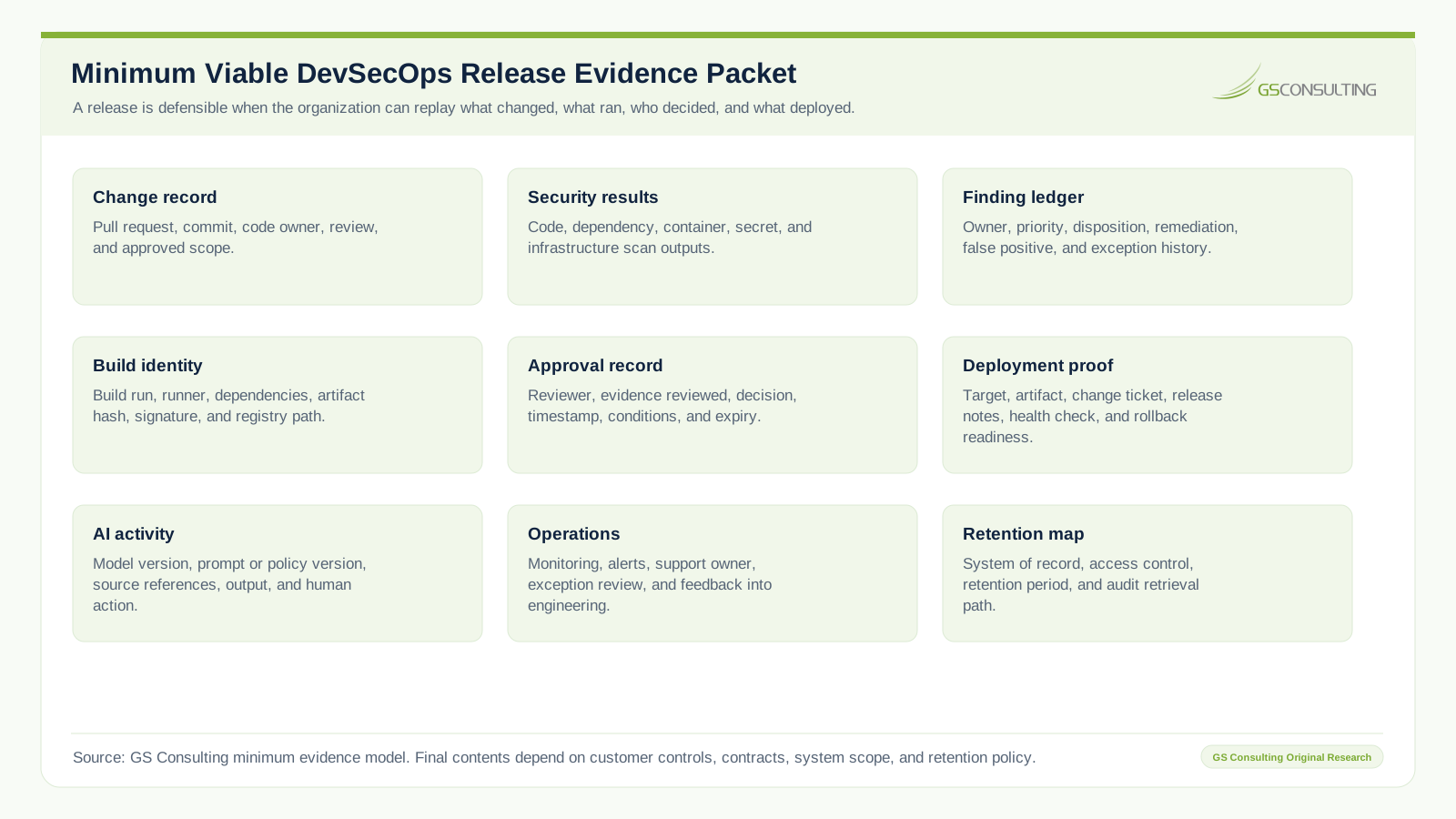
Compliance evidence should not be reconstructed after release. The pipeline should capture pull request reviews, scan results, tests, approvals, exceptions, artifact hashes, deployment records, change tickets, release notes, rollback readiness, remediation tickets, and risk acceptance notes as the work happens.
AI can turn those records into a release summary, open finding list, exception summary, dependency change review, test status, infrastructure change summary, and control evidence package. But every statement must link back to the real scan, ticket, approval, build, or deployment record.
A summary without source references is a narrative. Narratives are useful. Evidence is required.
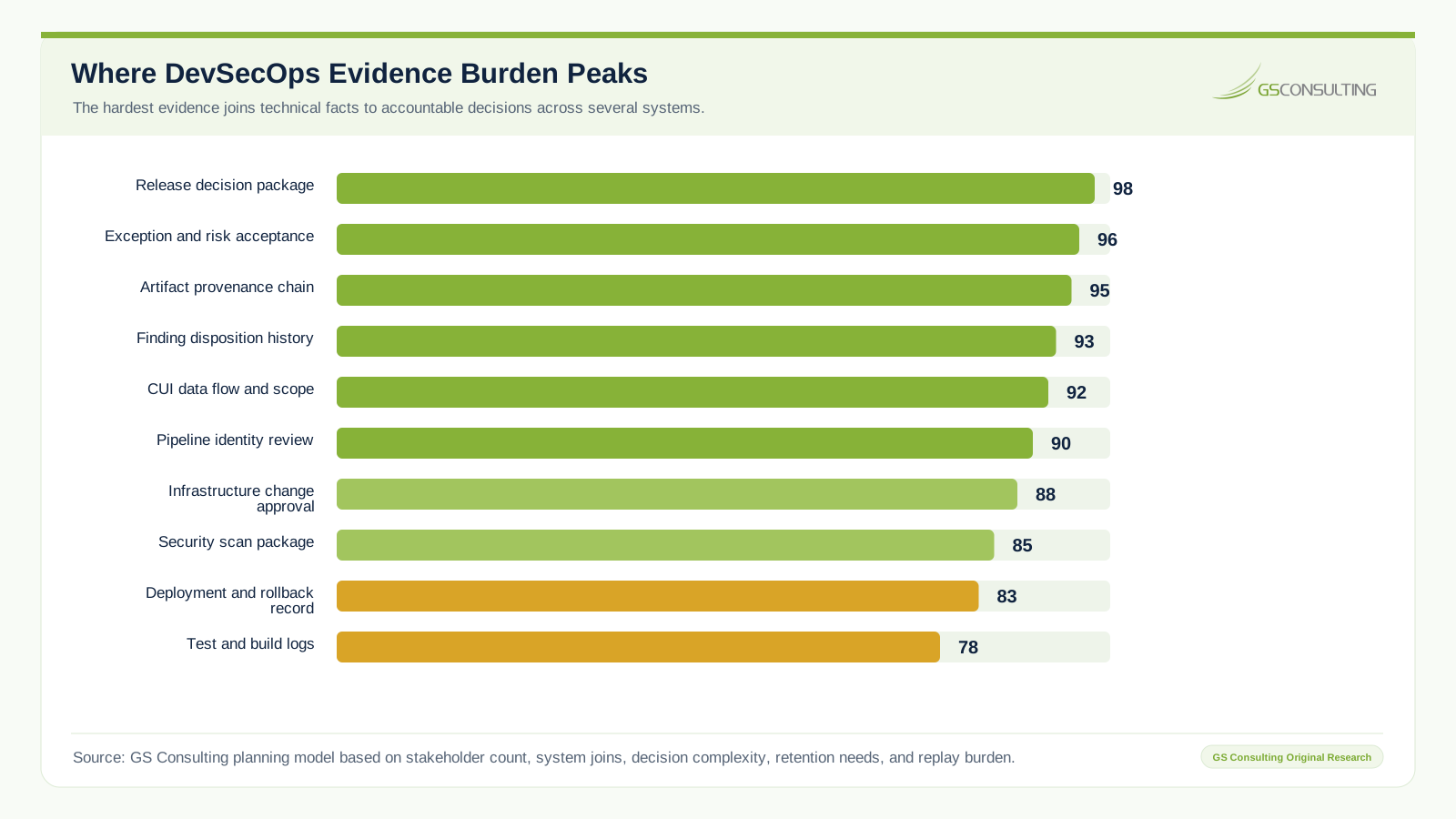
This is also why AI audit trails and activity logging belong in the architecture from the beginning. Record the model and policy version, input sources, output, tool calls, reviewer action, decision, timestamp, and correlation identifier needed to replay an event.
Put Human Approval at Specific Gates
“Security will review it” is not a process. Define the gate, reviewer, evidence, decision, conditions, and exception expiry.
- Security sensitive code requires application security review.
- A critical vulnerability requires security approval before release.
- A CUI handling change requires data owner and compliance review.
- An infrastructure permission expansion requires cloud security review.
- A pipeline configuration change requires DevOps lead approval.
- A secret exposure requires security incident review.
- A vulnerability exception requires an authorized risk decision and expiry date.
- A production release requires the named release owner.
Exceptions need finding details, affected component, reason, approver, approval date, expiry date, compensating control, remediation owner, due date, business justification, review cycle, and closure evidence. AI may draft the summary and remind the owner. It should not accept the risk.
The Right Operating Model for AI in DevSecOps
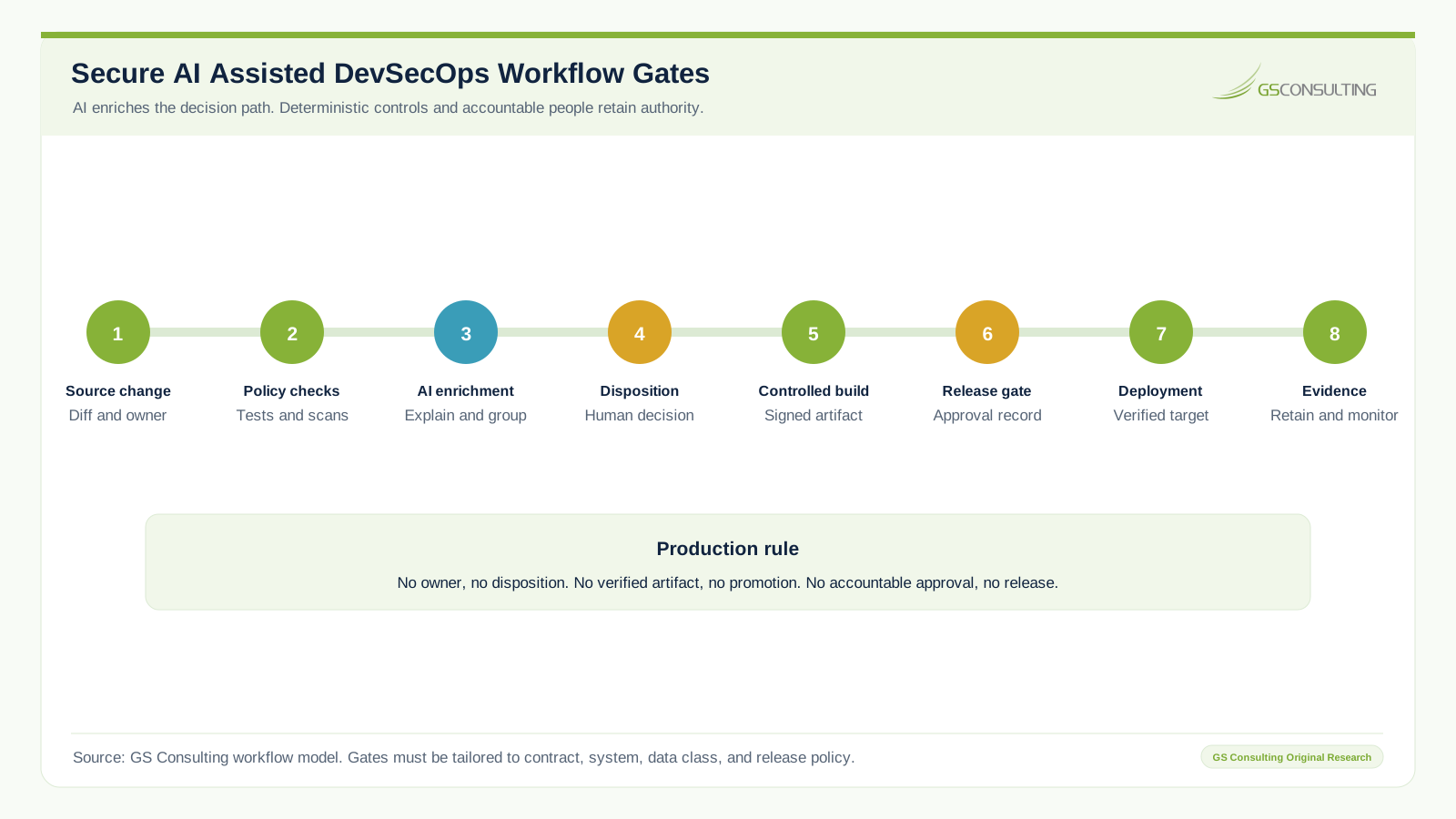
A practical architecture has seven layers: source control, pipeline execution, security analysis, AI assistance, human review, evidence, and monitoring. AI summarizes, explains, groups, drafts, recommends, and maps. Humans decide. Deterministic controls enforce hard rules. The evidence layer records the result.
Start with assistive automation: pull request security summaries, scanner finding explanations, duplicate grouping, critical finding routing, secret response guidance, dependency summaries, infrastructure review comments, release evidence generation, exception reminders, and security ticket drafts.
Do not start with automatic merge approval, autonomous production deployment, vulnerability acceptance, exception approval, unreviewed code changes, infrastructure modification, scanner suppression, secret rotation without an incident process, or release certification.
What Usually Breaks Inside Engineering Teams
Findings have no owner. Release gates are vague. Evidence gets reconstructed later. AI comments become noise. Test data contains sensitive production records. Pipeline credentials have too much privilege. Exceptions never expire. Nobody supports the automation when scanner output, repositories, or model behavior changes.
These are operating failures. A technically impressive model will not fix them. Assign owners, define service levels, monitor quality, test prompt and model changes, track misses and false positives, and maintain a manual path when the AI service is unavailable.
A Practical First 90 Days
- Days 1 to 30Map one pipeline.
Inventory repositories, build steps, scanners, secrets, approvals, deployment flow, evidence needs, recent findings, owners, and failure points. Choose one assistive use case.
- Days 31 to 60Build the controlled workflow.
Connect only approved data, summarize changes, explain findings, add source references, route work, record human disposition, and store evidence.
- Days 61 to 90Validate and harden.
Test on real pull requests, compare output with human review, measure misses and noise, inspect logs for sensitive data, tune rules, train developers, and assign production support.
Measure time to understand findings, remediation time, critical response time, duplicate reduction, review cycle time, false positive handling time, exception age, evidence completeness, review coverage, pipeline failure rate, and releases with complete approval records. Do not count comments and call that value.
What Leadership Should Demand Before Production
Leadership should know which repositories the workflow can access, whether it sees secrets or sensitive data, whether it processes CUI related code or test data, which tools it can call, where prompts and outputs are stored, whether vendor training is disabled, where human approval is required, how scanner context is validated, which evidence is retained, who supports failures, and how model or prompt changes are tested.
If those answers are weak, the workflow may be useful as a pilot. It is not ready for regulated production delivery.
What GS Consulting Builds
GS Consulting helps GovCon software teams use AI in DevSecOps pipelines without weakening software security, compliance evidence, or release control. Engagements can include workflow mapping, CI/CD security review, AI code review design, scanner finding enrichment, secure pipeline architecture, secrets workflows, infrastructure review automation, release gate design, exception management, audit trail design, CUI data review, integration engineering, and production monitoring.
This is not adding a chatbot to a repository. It is secure software delivery engineering.
The Bottom Line
Automating DevSecOps pipelines with AI is not about replacing developers, security engineers, or release managers. It is about removing the manual drag that makes secure delivery slow and inconsistent.
AI can explain findings, review code changes, summarize release risk, route security work, draft remediation guidance, and assemble compliance evidence. The pipeline still needs access control, deterministic scans, human approval, exception expiry, secret protection, artifact integrity, evidence retention, audit trails, and production support.
Do not bolt AI onto the pipeline and call it DevSecOps. Build the secure workflow so AI helps the team ship better software without hiding the risk.
Build a pipeline that makes secure delivery easier to prove.
GS Consulting helps GovCon software teams map release friction, design AI assistance, secure integrations, automate evidence, and establish the human review structure required for production use.
Request a DevSecOps Automation AssessmentSources
- NIST SP 800 218: Secure Software Development Framework
- NIST AI Risk Management Framework
- NIST Generative AI Profile
- OWASP Top 10 CI/CD Security Risks
- CISA Secure by Design
- DoD Cybersecurity Maturity Model Certification Program
Frequently Asked Questions
How can AI automate a DevSecOps pipeline?
AI can summarize pull request changes, explain scanner findings, group duplicates, add business context, draft remediation guidance, review infrastructure changes, route security work, and assemble release evidence. Deterministic tests and scans should still enforce hard policy, and accountable people should approve exceptions and production releases.
Should AI approve code or production releases?
No. AI can provide a source referenced recommendation, but it should not merge code, accept a vulnerability, approve an exception, or deploy to production on its own. Those actions need explicit authority, recorded human approval, and an audit trail.
How does AI improve automated code vulnerability scanning?
AI can enrich scanner output with reachability, internet exposure, authentication, data sensitivity, asset criticality, deployment environment, prior findings, and ownership. That context helps teams turn a raw severity score into prioritized engineering work without treating every alert as equally urgent.
What DevSecOps evidence should a GovCon pipeline retain?
A useful release packet includes the change and review record, security scan results, finding dispositions, exceptions, tests, build identity, artifact hash and signature, deployment target, release approval, rollback readiness, AI activity, monitoring, and the system where each record is retained.
What should a GovCon team automate first?
Start with assistive workflows that have clear inputs and limited authority: pull request security summaries, finding explanations, duplicate grouping, critical finding routing, dependency change summaries, infrastructure review comments, exception reminders, ticket drafts, and release evidence summaries.
Suggested Future Reading
- AI Workflow Automation
- AI Document Processing: A Practical Implementation Guide
- AI Document Processing Hub
- Enterprise AI Process Transformation
- AI Cybersecurity Incident Response Workflows
- Secure API Development for AI Automation
- AI Audit Trails and Activity Logging
- Automating NIST SP 800 171 Compliance Evidence
- Workflow Automation Security Risk Assessment